 Block
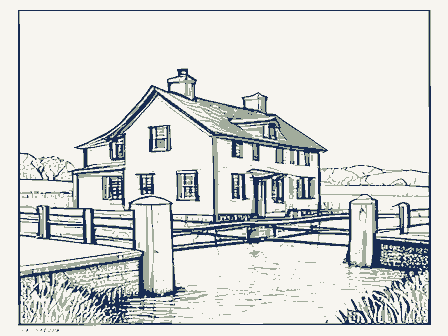
Congress Township
The complete chapter on this township from History of Wayne County, Ohio, from the Days of the Pioneers and the First Settlers to the Present Time, published 1878; History of Wayne County, Ohio, published 1910. 3,379 words, covering 5 settlements. Source changes inside the text are labelled at the exact paragraph where the next book begins.
Contents
2 sectionsThe section headings the book prints inside this chapter. Each one jumps to where it begins.
The modern record here
5 settlementsWhat the federal record holds for each settlement inside this township: wildfires and storm reports since the 1950s, mineral workings, and museum specimens collected nearby. These are counted within a few miles of each settlement, so neighbours share them and the columns are deliberately not added up. Every row links to the settlement's own page, where each figure is broken out.
| Settlement | Fires | Storm reports | Mines and quarries | Specimens |
|---|---|---|---|---|
| Armstrong | 2 | - | - | 1,386 |
| Aukerman | - | - | 8 | 101 |
| Congress | - | 8 | - | 180 |
| Pleasant Home | 8 | 1 | 2 | 126 |
| West Salem | 9 | 22 | - | 64 |
Settlements in this township
5 placesEvery populated place the Geographic Names Information System records inside this township's Census boundary. 3 of the 5 are named in the chapter; the rest were founded later or were never more than a post office.
The chapter
3,379 wordsReproduced complete and unedited from History of Wayne County, Ohio, from the Days of the Pioneers and the First Settlers to the Present Time, published 1878; History of Wayne County, Ohio, published 1910. The text is machine-read from scans, so expect recognition errors: misspelled names, dropped words, and stray characters. Nothing has been corrected, because correcting a proper name invents one. The headings below are the books' own; source changes are labelled in place.
Chapter Xxxiii
This township was organized October 5, 18 18. By the census of 1870 its population was 2,581. The following is the list of officers of the township, as appears upon the township records :
1868. Trustees - P. R. Henney, W. W. Reid, A. G. Rittenhouse ; Assessor - Thomas Ferguson ; Treasurer - John Moyers ; Clerk - G. A. Whitmore.
1869. Trustees - W. W. Reid, A. G. Rittenhouse, Daniel Gable ; Assessor - Thomas Ferguson ; Treasurer - John Myers ; Clerk - G. A. Whitmore.
Reminiscences of Congress Township by Hon. Michael Totien and James Carlin. - In 1815 the first families moved into what is now Congress township. Some time during the first week in February Michael and Henry Totten accompanied George and Isaac Poe, and cut a trail from Wooster to where the village of Congress stands, which at that time was all forest, the lands having not been entered. We encamped with George Poe, about one-half mile from the village, until we could erect a cabin, which we built on section 27, on the lands owned by John Garver. When we got our cabin completed, some time during the month of February, 1815, Henry and myself went to Wooster and moved our mother and our sister Catharine the first two white women in the township) and all the household furniture on a sled from Wooster to our cabin.
On the first of» April following George and Isaac Poe and other families came into the township and settled upon the same section. The same spring Peter Warner, with his family, moved into the south-west corner of the township. In 1816 Matthew Brewer and James Carlin, with their families, moved to the same farms upon which they lived till their deaths.
The next to come were George Aukerman and John Nead, with their families. After this period emigrants came in so fast and settled in such widely different parts of the township that it would be impossible to trace them, or where they located. The first white person who died was Mrs. Amasa Warner, and the second my mother. The first school ever taught was by John Totten in the first cabin built. George Poe was the first Justice of the township. The first school-house was built in 1819, on the south-west quarter of section 37. The first year after moving into the township my brother Henry and I cleared five acres and planted it in corn, which we cut off in the fall and put down in wheat, and which was the first corn and wheat raised in the township. Game was very plenty, and for some time after our arrival it was our chief article of food. We could not raise hogs or sheep after our settlement, as they would be devoured by wolves. One winter we had twelve sheep enclosed in the same lot in which the house stood, thinking they were safe, and that the dogs would guard them, but a herd of wolves, during the night, assailed them and destroyed eleven ; the remaining and last one escaped, and running into the house, awoke the family, but the hungry scavengers of the woods had fled. The next day, there being snow on the ground, I pursued them as far as the Harrisville Swamp, in Medina county, but got no opportunity of shooting at them. Near this swamp were encamped about 30 or 40 Indians. Among other early settlers of the township were John Jeffrey, Walter Elgin, David Gardner, Jacob Holmes, Jacob Shellebarger, Peter and Samuel Chasey, G. W. Howey, David Nelson, the father of James Grimes, James Boyd, Hector Burns, Samuel Sheets, N. N. Perrine, A. Yocum, John Vanasdoll, Rev. John Hazard and family, Isaac Matthews, and others.
James Carlin says : The first couple married in Congress township was Jesse Matteson and Eleanor Carlin, the ceremony by Judge James Robison, and that the first sermon preached was by a Presbyterian minister, Matthews, who spoke with a sword girded to his body. The first grist-mill was built by Naftzger, where a man named Buchanan was killed, waiting for a grist. George Howey was the first blacksmith, and Michael Funk the first merchant. The first physician was a Mr. Mills, and the first carpenter and joiner was Jacob Matthews.
Daniel Chasey was a native of Saratoga county, N. Y. , and with his wife immigrated to Wayne county as early as 1814-15, settling a mile north-west of Lattasburg, on old Appletree Moyer's place. He died at his son Samuel's, west of Congress village, about 1867. He married Miss Elizabeth Allen. Samuel Chasey was born in Saratoga county, N. Y., October 21, 1802, and immigrated to Ohio with his father. He was married to Selona Warner July 26, 1826, and had twelve children, as follows: Abner G., Andrew, Ithamer, Daniel, Martha Ann, Mary E., Cyrus, Amanda, Samuel H., Jeremiah, Obadiah and Margaret. His wife died May 2., 1873, he surviving her until July 15, 1876.
Thomas McKee was born in Northampton county. Pa., June 22, 1796, but came from Westmoreland when he removed to Wayne county, Ohio, in 1818. He at once commenced milling for Joseph Stibbs,with whom he remained ten years, during which time, in 1824, he married Anna Brown, daughter of Frederick Brown. In 1830 he removed to Congress township, on a farm he had purchased there eight years previously, and where he now resides, but which in later years was largely added to by other lands. His wife died January 25, 1 8 5 1 , aged 46 years. They had ten children , as follows : Joseph, Mary, Thomas, Margaret, Ephraim, William, John, George B., A. E. and Sindalena. By industry and good management he has succeeded in surrounding himself with the wealth and comforts of life, and now, in his old age, enjoys the proceeds of a remarkably well-spent life. He is the firmest of Democrats, and popular with his fellow citizens, having been elected Trustee and to other township offices, and was honored with being made one of the first County Infirmary Directors under the new constitution.
Jacob Leatherman came to Congress township March 26, 1842, settling on a farm two miles southwest of the village of Congress, land which his father, Peter Leatherman, in early days had entered from the Government, Jacob afterwards purchasing the same from him. He was married January 16, 1841, to Miss Urith Sherrod. In 1857 he quit farming and removed to Congress village, there engaging in the dry goods business, and in April, 1864, went to West Salem, where he continued in the mercantile trade until 1869, and where he at present resides, at the same time owning and managing his farm near Congress village. His life has been an earnest one, and his business career characterized by the strictest probity. For years he has been one of the most enterprising and leading business men of the township, closely identified with all its projects for improvement, and by dint of unflagging industry and perseverance, aided by good common sense and clear judgment, has secured a competency. He is courteous in manner and of kindly disposition - will go all lengths to befriend a friend, but, on the other hand, will exert himself just as much to punish a person who has done him an injury. He is an uncompromising Democrat, taking a prominent part in local and state politics ; and as a man, to a great extent, commands the respect and esteem of the community at large.
John Dulin was born near Wellsburg, West Virginia, and with his wife came to Wayne county in 1834, settling upon the farm now partly owned by Abraham Billhammer, where he died May 21, 1845, at the advanced age of eighty-five years. Mr. Dulin served one year in the Revolutionary war and drew a pension until the time of his death. He was married to Miss Sarah Sharp, of
Virginia. His son, John Dulin, came to Wayne county about a year prior to his father and settled on a farm about three miles south-west of Congress, in Congress township. He was married to Miss Mary Cope, of the city of Dublin, Ireland, and had eleven children. He was a soldier in the War of 1812, and died February 2, 1 86 1. His wife died September 26, 1864. To his daughter, Margaret J., who married C. H. Weltmer, we are indebted for these facts.
John Keeler was born within four miles of Philadelphia, Pa., August 20, 1819. His father came to Wayne county at an early date, bringing his family, and worked for a period on the Samuel Funk farm in Chester township. He then removed to Gallon, Ohio. John, however, remained in Wayne county, and was married to Hannah Matthews, of Wooster, whose mother was Catherine Poe, sister of Mrs. Kuffel, and daughter of old Adam Poe, the Indian fighter. After marriage they removed to Congress village, and lived there until Mr. Keeler's death, February 14, 1875. They had four children, two of whom are dead, one dying when a child. William, a son, was a soldier in Company F, I02d Regiment, and was killed by the explosion of the steamer Sultana, on the Mississippi river, April 28, 1875. Sarah C. is the wife of Joseph McVicker. Thomas B. , married to Ida J. Weltmer, is a lawyer in practice in West Salem.
Congress. - This village, originally called Waynesburg, was laid out March 6, 1827, by Philip Gates and David Newcomer, and surveyed by Peter Emery; plat and certificate recorded March 27, 1827, and can be found in vol. 6, page 24, County Records.
Robert Lowry, a gallant soldier of the Mexican war and the last conflict between the North and South, informs us that Michael Funk and Elmer Yocum built the first house in the village of Congress, and that it was situated upon the site of the present Methodist church ; that Jacob Hare was the first postmaster, the office being kept on lot No. 5, in the village ; that Dr. Mills was the first permanent physician ; that George Wicks kept the first hotel, and that David W. Poe established the first tannery in the village. An Indian died in the house now occupied by the Beard family, and was buried in the old Congress graveyard. The old Indian and his wife were on a tramp, and stopped at Griffith's Tavern, where they got tight and abusive, and the landlord's wife threw a pot of boiling water on him^ and he died.
Source changes here: from History of Wayne County, Ohio, published 1910; 1,615 words in this source stream.
Congress Township
Congress is the extreme northwestern sub-division in Wayne county; is south of the line of Wayne and Medina county, west of Canaan township, north of Chester township and borders on the Ashland county line. Wayne township was organized October 5. 1818. Hon. Michael Totten and James Carlin gave the following concerning the settlement of this part of the county :
In 1815, the first families moved into what is now Congress township. Sometime during the first week of February, Michael and Henry Totten, accompanied by George and Isaac Poe, cut a trail from Wooster to where the village of Congress stands, which at that time, was all forest, the lands not yet having been entered. These gentlemen camped until they finished their cabin on section 27. Mrs. Catherine Totten was the first white woman in the township. The first furniture within the township was drawn on a sled from Wooster by the Totten boys, in February, 1815. The first 'week in the following April, George and Isaac Poe and a few other families came in and settled upon the same section. Peter Warner and family moved into the southwest part of the township that spring. In 1816 Matthew Brower and James Carlin, with their families, moved onto the same farm, where they spent the remainder of their lives. The next to invade this fair domain was George Aukerman and John Nead, with their families. After this period emigrants came from different sections of the country and settled the township in various sections. The first white person who died in Congress township was Mrs. Amasa Warner, and the second was Mrs. Totten.
George Poe was the first justice of the peace. The first school house was erected in 1819, on the southwest cjuarter of section 27. The first clearing was made by the Tottens and consisted of five acres, which was planted to corn and cut in the autumn for fodder purposes, and the same fall winter wheat was sowed on the land, these crops being tbe first corn and wheat grown within Congress township. Game was very plentiful, and for some time after the arrival of the first families was the chief article of diet. Hogs and sheep could not at first be raised, on account of the wolves that would devour such animals at sight. One early-day winter the first settlers - the Tottens - had twelve sheep enclosed in the same lot with the cabin, and they were believed to be safe there, but one night a pack of wolves assailed the pen and killed all of them but two and one of these escaped and ran into the house, awoke the family, but the hungry wolves had finished their work and fled for the woods. The next day one of the Tottens pursued them as far as the Harrisvillc swamp, in Alediua county, but got no opportunity of shooting at them. Near the swamp was a camp of Indians, numbering about thirty or possibly forty.
Among the earliest settlers in Congress township may be recalled : John Jeffrey, Walter Elgin, David Gardner, Jacob Holmes, Jacol) Shellel)arger, Peter and Samuel Chasey, G. \\\ Howey, David Nelson, James Grimes' father, James Boyd, Elector Burns, Samuel Sheets, N. N. Perrine, A. Yocum, John
James Carlin is the authority for the statement that the first marriage in Congress township was that of Jesse Matteson and Eleanor Carlin. The first sermon was preached by a Presbyterian minister, named Matthews, who spoke with a sword girded to his body. The first grist-mill was built by Naftzger, where a man named Buchanan was killed, waiting for his grist. The earliest doctor in the township was Mr. Mills, while the first carpenter was Jacob Matthews.
Royce Summerton, away back in the seventies, gave the following reminiscence on Congress township in early times when his father was numbered among the pioneer settlers :
"When father and his family moved into the county there were but five neighbors within a radius of several miles. Isaac Matthews came as early as 1814, and the Poes were here and Peter Chasey and his son, Samuel. On one occasion, when father and I were coming home from Naftzger's mill with the wagon drawn by two oxen and a horse hitched on in front, I mounted on the horse, the wolves gathered in large numbers at our side, and I got greatly alarmed, but father just laughed and said there was no danger. After butchering day the wolves were very troublesome, and on one occasion a large liog was missing for three days, when it returned mangled and flyl)lown, liaving been, as was supposed, attacked by a bear.
"In the early days the woods were infested with pea-vines, which crept over the ground and would climb small shrubs and trees to the height of two or three feet, and in the fall of the year the cattle would eat it and fatten on it, and many of them died, and it came to be believed that it was from the overeating of this pea-vine.
"In the first log (Methodist Episcopal) church in Congress, Harry O. Sheldon was preaching at a quarterly meeting, and there being a large crowd present, it was difficult for all to be seated. Joseph Ewing stood up defiantly in the center of the room. Mr. Sheldon came back to him and asked him to be seated, which he refused, when Sheldon caught him violently on his hip, carried him out and forced him to kneel down while he prayed for him."
The Poe family was one of much historic note, and the encounter with Bigfoot, the noted Indian, is narrated in the Miscellaneous chapter of this volume.
Congress was originally called Waynesburg. It was platted March 6, 1827, by Philip Gates and David Newcomer, Peter Emory doing the surveying. The first house in this village was built by Michael Funk and Elmer Yocum and was situated upon the site of the present Methodist church. The first postmaster was Jacob Hare. The pioneer physician was Doctor Mills. George Wicks kept the first hotel and David W. Poe established the first tannery in the village. Among the early deaths after the village was platted was an old Indian. He and his wife were on a tramp and stopped at Griffith's tavern, where they got tight and abusive, and the landlord's wife threw a pot of boiling water on him, and he died.
Congress village was incorporated in 1837. The first officers were: Mayor, John Tarr; recorder, William Rogers; councilmen, Joe Fish, John Zuber, P. Pancost, R. Summerton and John Potts.
West Salem was platted by Peter and John Rickel, June 14, 1834. It became an incorporated place in 1868, the first officers being: Mayor, D. H. Ambrose; trustees, D. Eshleman, D. Gable, J. Georget, J. J. Shank, Ah R. Huber; recorder, E. Fritzinger; treasurer, John Zehner. This town is located in the extreme northwestern part of the township and county.
In 1878 Mrs. Peter wrote the following reminiscence that now, after a third of a century almost, is appropriate in the history of Congress township :
"It was fifty-five years ago yesterday (October 10, 1877) when Peter and I landed here with our two children, coming from Bedford county, Pennsylvania, where he was a farmer. We settled in the woods near where I now live, built a cabin with a puncheon floor and stick chimney. My first neighbors were Rev. John Hazzard, Mr. Ford and Charles Crile. Peter, however, had been out here two years before we moved and entered a quarter of land on which West Salem is now largely built. There were no roads then around here, and we had a hard time getting the two-horse wagon through. Peter was born in Virginia, January 30, 1794, and died October 7, 1865. My maiden name was Nancy Rickel and I was born in old Lancaster, Pennsylvania, May i, 1803. We had seven boys and two girls. I used to work in the field and fainted in the field once while husking corn. Folks had to work then indeed, and I used to help haul logs and such things, and now would like to live again in the woods, instead of in town, for then I could hear the wild birds sing as in the old days. John Rickel, who, with Peter, laid out West Salem, was a brother of mine. He was a native of Lancaster, Pennsylvania, and came to Wayne county three years before we did.
"Joseph Harbaugh put up the first house in West Salem after it was laid out. It was an old-fashioned frame and he paid about twelve dollars for the lot. Jacob Hyatt rented the house and died in it three months after he moved in. James Hyatt kept tavern there afterwards and it was the first public house in Salem. Cass and Emerson were among the first doctors. William Cass started the first store, without any counter save a bench. He bought eggs, butter, etc. Reverend Beer was an early preacher."
An agricultural society was formed in AVest Salem in 1867, when bylaws were adopted and first officers elected as follows: William Buchanan,
In the village of Congress, in 1909, the following were the business factors: George AA'. Michael, general merchandise; C. A. Wiler, general dealer; A. AAk Mowrey, hardware and paints ; Ebert & Eby, furniture and undertaking; Bert AA^. Mowrey, furniture and undertaking; C. C. Eresh, hotel and feed barn ; Clemen C. Holmes, harness and shoemaking ; Arthur J. Garver, wagonmaking and blacksmithing ; Clifton Martin, hay, grain and potatoes; Simson & Ginter, hay, grain and potatoes ; David Moser, furs, skins and pelts.
Provenance
Text from History of Wayne County, Ohio, from the Days of the Pioneers and the First Settlers to the Present Time, published 1878; History of Wayne County, Ohio, published 1910, in the public domain in the United States and digitised by the Internet Archive. The settlements listed against this township are matched by point-in-polygon test of each Geographic Names Information System coordinate against the Census Bureau's county subdivision boundary, not by name.