 Block
Block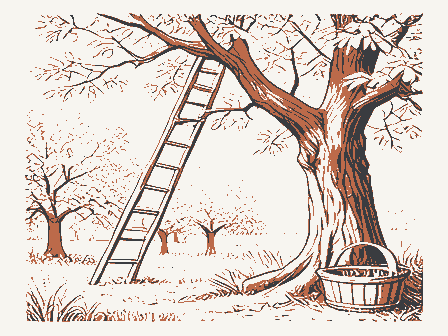
Coshocton City (part 7 of 11)
Part 7 of 11 of the account of this township in Historical of Coshocton County Ohio, published 1876. 15,977 words, covering 4 settlements. Source changes inside the text are labelled at the exact paragraph where the next book begins.
Contents
19 sectionsThe section headings the book prints inside this chapter, on this part. Each one jumps to where it begins.
Parts
11 pagesThe source prints this as one continuous account. It is split here so no single page grows too heavy to load; the text runs straight on across the parts and nothing is omitted.
The chapter
15,977 wordsReproduced complete and unedited from Historical of Coshocton County Ohio, published 1876. The text is machine-read from scans, so expect recognition errors: misspelled names, dropped words, and stray characters. Nothing has been corrected, because correcting a proper name invents one. The headings below are the books' own; source changes are labelled in place.
Chapter Vi
THE wealth of the first settlers of Coshocton county was almost wholly in their bold hearts and brawny arms. Some of them readily carried all their stuff in a small watercraft or on horseback. A few of them had in addition their broad, uncleared acres. Many of these were entered with land-warrants at nominal cost. Many acres were bought for from one to three dollars apiece. Even as late as 1830, the farm now occupied by J. W. Dwyer was bought at nine dollars an acre. It had, however, it is only fair to say, been sold for ten dollars, and the lower price above given was owing in part to the depression in lands on the east side of the river, in consequence of the canal having been built upon the other side. About the same time, some good lots in Coshocton were sold at sheriff's sale for from six to ten dollars. A few years later, after the bridges had been built, the land again changed hands at fifteen dollars per acre. Some of the early settlers spent the first season in bark or branch huts. The rifle and fishing-line secured much of the subsistence. It is claimed that old Michael Miller lived for weeks upon bear and deer meat, most of the time being even without corn-bread. For many years barter was the only kind of trade, and at first the skins of wild animals entered into it largely.* As late as 1825, the only surplus products of the county were ginseng, maple sugar, honey, bacon, and whisky. But lands were being cleared and improved, and appreciated every year. Do-
* Bear and deer meat occasionally graced the tables of the settlers as late as 1830. Bagnell and Retilley, of Roscoe, about that time traded for many a venison ham at twenty-five cents apiece. Still later, General Burns took a wolf-skin as pay for a marriage-license. Rattlesnakes were never quite so plenty after the exploit of Joseph Williams, who reports himself as having killed eighty-four in the summer of 1812.
mestic stock was increasing rapidly, and soon hogs and cattle were marketed in large numbers. Droves were taken east, and store-goods brought back. Afterthe opening of the Ohio canal, the advancement of the county, in wealth as in population, was quite marked. Even the mineral resources of the county began to be regarded as elements of wealth. Coal was shipped to Newark and Columbus. Flour, bacon, and whisky, and even dried fruits,* became very considerable features of commercial transactions. Then fine cattle and sheep began to count largely. The opening of the railroad gave an impulse to the improvement and advancement of the county unequalled by anything else in its history. Butter and eggs and domestic fowls soon had more in them than would pay all the taxes of the people. Shipments of coal in an extensive and systematic way began, and, despite occasional interruptions, steadily grew, bringing into the county large sums to flow into other wealthbearing channels. Better buildings were erected in both town and country, and fitted with more costly furniture.+ Much improvement was made in farm appliances, the growing scarcity of labor, especially during the war, necessitating these. Manufacturing interests were much enlarged ; and at length when, in 1875, an examination was made by the proper officers, it was found that the valuation for taxation of the real and personal property was $13,672,770. As the valuation in 1850 was only $5,026,561, it appears that even duly allowing for the fact that the later valuation was affected by the current inflation, the county has in the last twenty-five years more than doubled its wealth; and this, too, in the face of a diminishing population, as elsewhere noted. Of the total valuation about nine and a half millions are in real, and the other four in personal property. The principal items of the latter are as follows: horses,
*" Johnny Appleseed," an eccentric but far-seeing man, had frequently journeyed from Wheeling to Mansfield, donating his little sacks of seeds, and planting his little nurseries in out-of-the-way places -suited for them.
Land subject to taxes was, in the early days, divided into three classes. Of the one hundred and thirty-eight resident land-holders in 1814, only Robert Darling, Isaac Evans, Patrick Miller, James Meskimens, Benjamin Robinson, and Charles Williams had "first class" land. James Meskimens, on one hundred and sixty acres of first class and five hundred and sixty of second class land paid in that year fourteen dollars taxes. Besides the tax on land there were license fees paid into the county treasury for keeping taverns, ferries, and stores. Taxes on personal property were specific, and not according to value. In 1822 horses, mares, mules, and asses were each taxed thirty cents; neat cattle, ten cents per head, and town-lots one-half per cent. on their returned value.
The taxes collected in 1812, amounted to something over $1,000, of which $260 were paid over to the State. The county treasurer for 1816 reported the collections at $1,319. In 1822, the number of resident tax-payers was 1279. In 1825, the collected tax was $2,932.34, and the delinquent list counted up some $700. The tax collected in 1840 was $23,000. The State tax alone in 1875 was $42,417. The paying of the bonds given by the county and townships for the railroad; the great improvements in school line; the construction of half a dozen large and many more small bridges (many of them of iron), and the erection of the new jail and sheriff's house and court-house, have for some years demanded very heavy local taxation. The levy for 1875, for county purposes, was $68,414, and for other local purposes $80,523.
The indebtedness of the county, March 1, 1876, is an inconsiderable sum, and the townships and villages are in debt but a few thousands in the aggregate.
Chapter Vii
Some of the earliest settlers of Coshocton county came into it by the route taken by Broadhead's military expedition, and others by that taken by Boquet's expedition - the former from Wheeling, and the latter from Pittsburg to the Tuscarawas valley. The roads were of course Indian trails and bridle-paths. Others of the pioneers used canoes or other water conveyances, floating or poling up or down, as the case might be, the rivers and creeks.
In 1812, the legislature provided for roads from Cambridge to Coshocton ; from the head of White Eyes plains to Cadiz, and from Coshocton westwardly. Congress appropriated three per cent. of moneys derived from the sale of land to the making of roads. For the making of State roads, or the principal ones, commissioners were designated by the legislature. Many roads laid out in early times have in more recent years been somewhat altered, but the chief ones are in alignment wonderfully near the old Indian trails. An immense proportion of the time occupied in the sessions of the county commissioners has been from the beginning, even to this writing, taken up with road matters. With all the alterations and improvements, Coshocton county has even yet little to boast of in the way of roads. There is not prabably at this writing a mile of turnpiked or macadamized road in the county. Fortunately in many parts of the county, especially along the valleys, the natural grade is such and the soil of such composition as to give for most of the year quite fair facilities for traveling.
Ferries were established very early in the century at Coshocton and near New Comerstown. Later they were numerous on the Tuscarawas and Walhonding rivers and on Will's creek and Killbuck creek. The business was never a very remunerative one to those operating the ferries, and the appliances rather rude. In 1817 the price of license for the ferry at Coshocton was put at sixteen dollars, and for the upper Tuscarawas at seven dollars. The authorized charge for ferriage was: for footman, six and one-quarter cents; horse and rider, twelve and one-half cents; loaded two-horse wagon, seventy-five cents. As might be expected, the attention of the ferryman was not always close. A witness in the court once declared that he " had been entertained (detained) for two hours waiting in the rain for the coming over of the ferryman." At another time the ferryman in charge declining on account of ice to come over, a settler famed for his courage and strength, and fresh from a visit to his girl "up the country," swam over the river, and not stopping to fully dress, "threshed" the ferryman and a dozen bar-room loafers in the tavern near by. At the ferry at the mouth of Will's creek John H. Hutchinson lost a valuable pair of horses, and barely escaped with his own life, the flat having been carried away by the force of the swollen stream, when the horses had not got a complete footing, and were dragged down by the wagon, which was heavily loaded with iron castings being brought from Zanesville for the Coshocton mill. It is said that one of the earlier ferrymen (perhaps an employe of Williams) at Coshocton for a time lived with his family in the trunk of an immense tree, quite after the big kind now attracting so much attention in the Yosemite (California) region.
A toll-bridge was built for the county over Killbuck in 1818 by Adam Johnston, at a cost of $495. Thomas Johnston and others, authorized by the legislature, built one over Will's creek. After many years this was turned over to the county, on condition that it should be repaired and kept up. A bridge was built over the Tuscarawas at Coshocton in 1832 by Elisha Gibbs, Robert Hay, and William K. Johnson, under the supervision of James Renfrew, Samuel Lee, and Benjamin Ricketts, who were designated for the purpose by the county commissioners, and especially represented the citizens, who made donations (amounting to $1,200) for the building of this bridge, in order to have it a free bridge. It was carried away in a freshet about a year after it was finished.*
In 1836 a contract for the present bridge over the Tuscarawas, and also the one over the Walhonding at Roscoe was made with William Renfrew, James Hay, Thomas Johnson, and Robert Hay. The Tuscarawas bridge was finished in 1837, and the other in the following year. The contractors received for both bridges $19,900. That was a large sum for a county expenditure in those days, and there was some difficulty in obtaining it. Sealed proposals for the loan were invited, without response. General Burns was sent by the commissioners to Baltimore to get the money, but failed. Ten thousand dollars of it were at length obtained through the Bowmans of Brownesville, Pa., legal custodians for some parties in Columbiana county, Ohio, and the other $10,000 from the " Ohio Life and Trust Company." For the first ten years the county was to pay only the interest and in the second ten the interest and $2,000 per year of the principal.
The next considerable bridge erected was a wooden one at Walhonding about 1854. It got out of shape, and was regarded by many as insecure, and was rebuilt in 1860.
Again giving way, it was superseded by an iron bridge in 1872. Some of the material in the old bridge was used in the masonry of the new. A mistake in dimensions was made, increasing the expense of the masonry; which (almost wholly for labor) cost some $1,200. The masons were Bachman Brothers and N. W. Buxton. The superstructure - was furnished by the Coshocton Iron and Steel Works, and cost. $7,844. The ice in the winter of 1874 carried away a picr and two spans of this bridge. The latter were replaced by the Cincinnati Bridge Company (of which for a time the Coshocton Iron and Steel Works was a partner) in 1875.
The next bridge built was the Meskimens bridge, on the upper Tuscarawas, about 1854, costing some $10,000. This also was disturbed and somewhat rebuilt. The river having in 1861 cut a new channel, necessitated a new bridge a few hundred yards east of this one, the cost of which was about $9,000.
In 1868-9, the Warsaw and Fry's Ford bridges (wooden) were built. John Shrake, of Newark, was contractor for masonry on both. The superstructure of the former was contracted for by B. & J. Haggerty, and of the latter by Johu Hesket. The masonry of the Warsaw bridge cost $6,765 ; of the Fry's Ford, $6,709. The superstructure of the former cost $8,893, and of the latter, $6,100.
The Orange bridge was built in 1870; the masonry - N. W. Buxton, contractor - cost $8,311; the superstructure (iron), J. W. Davenport, contractor, cost $7,258.
An iron bridge was built over the Mohican, a little above Walhonding, in 1871. N. W. Buxton constructed the piers and abutments for $4,465, and the Massillon Iron Bridge Company furnished the superstructure for $5,070. :
The Lafayette bridge (iron) was built in 1873; stonework by N. W. Buxton; cost, $6,290; superstructure by Cincinnati Bridge Company (J..W. Shipman & Co., of Cincinnati, and Coshocton Iron and Steel Works) ; cost, $8,746.
The commissioners are proposing to mark the centennial year by building a bridge near Morris' Ford (two miles below Coshocton), and another at Robinson's Ford (seven miles below Coshocton), over the Muskingum river. The masonry of the upper one has been let to 8. H. Moore, of Tuscarawas township, and of the lower one to Perry Collins, of Knox county. The superstructure of both is to be furnished by the Smith Bridge Company, of Toledo. They will be sixteen feet wide (wooden), and cost, together, some $21,000.. STEAMBOATS.
Until the Ohio canal and Muskingum improvements were made, steamboats occasionally came up to Coshocton. The original proprietors of the town designated certain lots on the river bank as " warehouse lots," looking to shipments by river. By act of the legislature, the Muskingum, Walhonding, and Tuscarawas rivers, and Killbuck, Mohican, and Will's creeks, within Coshocton county, have been declared " navigable streams."
In 1875, a little steamboat was built at Jacobsport by Mr. Parker, proprietor of the mill, and was running as a . pleasure and burden boat for short distances on Will's creek.
That part of the Ohio canal (from Cleveland and Lake Erie to Portsmouth, on the Ohio river) lying in Coshocton county was built in 1827-80. Among the chief contractors were the following citizens of the county, viz.: Thomas Johnston, Wm. Renfrew, Matthew Stewart, Solomon Vail, A. Ferguson, Ephraim Thayer, and A. G. Wood.
A sad incident in the construction of the canal was the death of Judge Brown, a citizen of Coshocton, who had a contract, and was killed while superintending his work by a falling rock. An amusing incident was the exploit of one of the M - e girls, who was employed as cook for a gang of hands. Picking up the rifle of one of the boys who was preparing for a Sunday hunt, she declared she would shoot a man on the other side of the river, who was only an old bachelor, and, therefore, as she alleged, of
The first boat - the " Monticello " - arrived from Cleveland, August 21, 1830. She remained several days at the point of the hill above the aqueduct, attracting wonderstricken visitors in multitudes from this, and even adjoining counties.
The Walhonding canal was commenced in 1836, and finished in 1842. In the engineering corps were William H. Price, Charles J. Ward, John Waddle, Jacob Blickensderfer, Henry Fields, and Sylvester Medbery. Several of the gentlemen named above as contractors on the Ohio canal were also connected with this. In addition to these were John Frew, 8. Moffitt, Isaac Means, John Crowley, W. K. Johnson, and others. This canal lies wholly within the county, extending from Roscoe to Rochester, twenty-five miles. It cost $607,268.99, or an average of $24,290.76 per mile.
The first superintendent of the Ohio canal, residing at Roscoe, was S. R. Hosmer, now of Zanesville. Alonzo Ransom, James Hay, John Mirise, James Carnes, and Wm. E. Mead, also held this office. The first collector was Jacob Welch, from Boston, Massachusetts, who (and also John M. Sweeny) had been in the engineering corps under Leander Ransom. At his death E. Bennett was appointed. The following persons have held that position, viz.: John D. Patton (now of Washington City), Houston Hay (of Coshocton), Chauncey Bassett (now in Illinois), Wm. M. Green (ex-postmaster of Dayton), C. H. Johnston (of Coshocton), James Gamble (deceased, of Walhonding), and Foght Burt (now in Ilhinois).
The first canal-boat launched in the county was called the " Renfrew," in honor of James Renfrew, a merchant of Coshocton. It was built by Thomas Butler Lewis, an old Ohio keel-boatman.
to the northwestern part of the State, but there was already (1842) much talk of a speedier mode of conveyance. The work had been very expensive, and the members of the legislature from districts where canals were not regarded as practicable were indisposed to continue the appropriations. In the days of the prosperity of the canals, several gentlemen were required to look after their interests in the capacity of collector, superintendent, and lock-tender, but of late years Samuel Gardiner has held all these offices, and served besides as justice of the peace and county infirmary director. RAILROADS.
The Steubenville and Indiana Railroad (now merged in the Pittsburg, Cincinnati and St. Louis Railway) was built 1850-54 - that part of it in Coshocton county in 1852-53. It was originally planned to go from Coshocton up the Walhonding valley, taking much the same direction as was once proposed for the Walhonding canal, and striking for Northern Indiana and Chicago. But the movements of another company anticipated part of this plan, and the road was built to Newark. <A few individual subscriptions of stock were made, but most of the stock, afterward in the possession of individuals, came through the contractors to whom it had been given for work, or was given to the holders of it for right of way, etc. The county, in 1850, took $100,000 of the stock of the company, and the townships along the line of the road (except Oxford) $80,000 more - viz; Lafayette, $20,000; Tuscarawas, $30,000; Franklin, $15,000 ; Virginia, $15,000; for all of which bonds were issued. Subsequently, in processes of consolidation and extension, nearly one-half of this stock was relinquished, leaving the rest in possession of the county and townships, No dividend has ever been paid on it, and it is all regarded as practically sunken. The road paid into the county treasury, as taxes for 1875, the sum of $5,578.68.
The citizens now readily recalled as having contracts for building the road are Samuel Brown (since remoyed to IIlinois), John Frew, J. W. Rue, John, Ninian, and Geo. Ross. Neither these nor any other citizens specially confeoads, Ferries, Bridges, Steamboats, etc. 59 nected with the building of the road, reaped much benefit from it, but many have gained immensely, and the general advancement of the county, though it has in amount exceeded many times over all that was ever invested in it. Until comparatively recent years, one of the board of directors was taken from Coshocton county. Wm. K. Johnson served in that capacity from the inception of the road until his death, and was succeeded by his brother, Joseph K. Johnson, now of New York city.
In 1872, a railroad was located (as a branch of the Cleveland, Mt. Vernon and Columbus Railroad) through Clark, Bethlehem, Jefferson, Bedford, and Washington townships, and some work was done on it. But "the panic" of 1873 prevented any further progress for some three years. At this writing fresh efforts are being made to complete the work.
The Massilon and Coshocton Railroad, branching from the Cleveland, Tuscarawas Valley and Wheeling Railroad near Massilon (Beach city), and running to Coshocton, was located in 1875, and by the hearty assistance of parties along the line, under the direction of R. B. Dennis, W. L. Holden, and others interested in the C., T. V.& W.R. R,, and also in coal-fields near Coshocton, is at this writing being rapidly constructed. A. H. Slayton, J. C. Fisher, E. T. Spangler, and J. C. Pomreue, of Coshocton, have been actively and officially connected with this enterprise. Several other railroads, notably one from Liberty, in Guernsey county, to Coshocton, and thence up the Walhonding valley (a part substantially of T. 8. Humrickhouse's projected " Lake Michigan and Tidewater'" Railroad); but up to this writing no effective measures have been taken in relation to them.
Chapter Viii County Buildings And Officers
For a number of years the courts of Coshocton county were held in Colonel Charles Williams' tavern, near the corner of (now) Water and Chestnut streets. Williams was one of the county commissioners at the time the first court was held, and then, and for some years afterward, the only tavern-keeper in the town. He received thirty dollars a year rent for the court-room, and two dollars per term for room occupied by juries. Asher Hart occasionally furnished a jury-room. When Alex. McGowan became clerk to the commissioners (in 1821) they entered into a contract "with Wilson McGowan for a court-room in the building occupied by Wm. Whitten," standing near corner of Second and Main streets (now), the site of part of the present "' Central Hotel," and the courts were held there for some four years.
In 1821 the commissioners determined to take some measures for building a court-house, and the auditor was directed to write letters to the townships touching the matter, "as an address to the feelings of the people." Twentyeight hand-bills, pressing the necessity for such a building, were ordered to be printed and posted up in the several townships. Subscription papers were prepared, soliciting all sorts of building material, and in addition pork, rye, oats, and corn. At the next meeting of the commissioners it was determined to receive only money on subscription. At the April meeting in 1822 a plan was settled upon - a brick building, one story, thirty-two by forty feet, embracing a court-room and two small rooms for juries. Notices inviting proposals were ordered to be printed in the
Zanesville Messenger and Tuscarawas Chronicle; the bids to be opened July 9, 1822. On that day the letting was postponed until December, and the plan was somewhat changed. At the December meeting of commissioners it was concluded not to build at all unless citizens would aid by subscription, and papers were ordered to be again circulated, it being agreed this time to receive, as at first proposed, produce as well as building materials and money. The letting was fixed for April 18, 1823. At the April session, however, the plan was again changed, and it was resolved to have a house forty by forty feet and two stories high. On the day of the sale (April 18th), Peter Darnes bid $2,185. The commissioners were not willing to award, and adjourned until next day. Then the contract was given to Charles Williams, he being authorized and instructed to associate with him Peter H. Darnes, Abraham Richards, and Andrew Daugherty. It was substantially finished in 1824. The contract price was $1,984. A small allowance was afterward made for extra work, ete. The belfry was completed in 1830 under the supervision of John Elliott. The bell, still in use on the new court-house, was purchased, at the request of the commissioners, by William K. Johnson in 1834,
It will thus be seen that the building stood for somewhat more than fifty years. Before it was finished a grand ball was given in it, and during all its history it was used for business, political, educational, and religious meetings, and was doubtless beyond anything else the theater of agents and operations affecting and manifesting the character and condition of the people of Coshocton county. Like the men of the day in which it was built, it had a measure of incurable roughness and few trappings, but was thoroughly square and true and strong and abundantly useful.
The matter of building a new court-house having been agitated for several years, was submitted to a vote of the people in the fall of 1872, and decided against by a very large majority. The following winter the legislature passed a special enabling act,* and the matter was proceeded with steadily, according to the requirements of the law and of the case. The contract for the new building was in due time let to S. Harold & Co., of Beaver county, Pa. Work was begun in 1878. The plans had been prepared and the work was superintended by Carpenter & Williams, of Meadville, Pa.
The structure was turned over to the commissioners in July, 1875, the county officers moving in the latter part of that month, and the District Court sitting therein the following month. The contract price was some sixty-five thousand dollars. Additions, extra work, furniture, and appliances vastly added to that sum, and the whole cost may be put down at a round $100,000. On either side of the old court-house there were built, in 1834, county offices (brick), one story, about forty by thirty feet. William C. Blodgett was the contractor, and the contract price was $1,360.
In 1849 an additional story was built on the north building by William McFarland. In 1854 the south building also received an additional story, and W. H. Robinson and William Welch were the contractors. These buildings were sold and removed at the same time with the old court-house. Just on the site of the present court-house stood the first jail, built of logs by Adam Johnston for $1,397 ; some $900 of this sum being the proceeds of sales of lots in south public square; also the second jail of brick. The latter, with sheriff's house adjoining, was built for $2,200 by Eldridge & McGowan in 1836. The present jail, built of stone, and sheriff's house of brick, were built jn 1873. The whole cost of this undertaking was about $30,000. The contractors were M. Johnston and A. Wimmer, the former being a grandson of Charles Williams, the contractor for the first court-house. The plan was fur-
*On the urgent solicitation of the citizens of Coshocton, who, by their course in the matter, drew upon themselves the censure of many in the rural districts. A vigorous effort was made by the village of Warsaw to have the new court-house built there.
nished by Carpenter & Williams, of Meadville, Pa., who were consulting superintendents, John Dodd, of Roscoe, being the acting superintendent.
The county infirmary was erected (on the farm of two hundred acres, two miles east of Coshocton, purchased at $15 per acre from W. K. Johnson & Co. in 1848) by E. Davis and others in 1849. It is a two-story brick building, and cost about $3,900. Subsequently an adjoining tract of land was bought from Henry Wheeler for $2,500, making the whole farm nearly four hundred acres. | attend, and Adam Johnston was appointed to his place, and held the office until 1821. The salary at that time was forty dollars per year. The following persons have held that office since Johnston ; the dates following being the dates of their appointment or election :
TAPES MicGowaMsecsussecnsssece ces 1821 Wm. Himebaugh..............068 1854 JOS. DUENS Se cacrsessetercesect esse 1824 SamuclePorkeries .sescleseer as acre 1858 J, WAG iia cceontniceeiocctes tectes 1SSSe CeaHer OWMStOIM ne seasons ences 1862 He Cantwell irc ten. ccscheotscetes, SAS I AWiselts BOUKe tiew.y ec ccceestoner sien 1866 HH .Rahauser sc. sevsteccsvecess sae ASSO Witte Wialerinis.se cc eusasccenenses 1871 Bink Well scarcemessscscsesss merece TSd2 Winn Wioli-secscessscrcasccecss ses 1875
County Clerks
SCAT OMNS LOM geese seeeesenees TSU SAS MAS Williams. .w.scscesesccdeses 1854 JOM PNG Wissecesaasceceesdeswesessstes 1829" Vemuel Kinsey. gacccscescecleoees 1857 AG Men MeGowaltesssceuteccasneees 1SSOm@aasee Ke emGlcasseesseeseaesees 1863 VOSEPMEBULNS weavascacasennseceeeee 1843 SGereBar eon. scscssecsrmesne ces 1869 Be RES aiwaniiccne.stevenrecee ences SSA sracleDilOMn. ce ccsecccecstess snes 1875
County Treasurers
The first treasurer of the county was Wm. Whitten, holding office from 1811 t0 1817. Dr. Samuel Lee succeeded him, and held the office until 1825. The pay of the office for a few years was five per cent., then three per cent. on moneys received, and amounted to from forty to sixty dollars per year prior to 1818. Dr. Lee was succeeded by James Renfrew, who agreed to serve for three per cent., and obligated himself " not to speculate on the county's money." John B. Turner was treasurer for 1827 and 1828. A.M. McGowan for 1829 and 1830. Samuel Reat became treasurer in 1831.
{ Rea was a son of the well-known Rev. John Rea, of Harrison county. He studied law, and wasa man of ability. But he was of too social a turn - fond of " good fellows" - a fine violinist. He was drowned at Fry's Ford, on Walhonding river, in 1834, on his way home from a convivial party which had been keeping late hours. His estate and securities satisfied the county's claim.
In December, 1832, ,he was removed from office and a suit begun against his securities for a "shortage" of nearly $2,000. Robert Hay was appointed in Rea's stead, and held the office until 1834. Wm. G. Williams was elected in 1834, and held the office until 1846. Benjamin Bonnett succeeded himin 1846. In 1849, he left the county very abruptly, sending in his resignation.* J. W. Rue was appointed to complete the term of office, ending in 1850. Wm. P. Wheeler held the office 1850-52. Lewis Demoss was his successor, and served two terms, going out in 1856. Samuel Ketchum was treasurer from 1856 to 1859; in October of the latter year, owing to the hue and cry about the treasury robbery,y he resigned, and Samuel Lamberson fin-
* His cash-box was discovered to be in a very bad shape, and his securities were required by the county to respond. He is understood to have gone to California.
+ Ketchum was found by some persons who heard his outcry n seemingly exhausted condition in the treasurer's office, about midnight, January 21,1859. He alleged that having kept the office open to pay some witnesses from abroad who desired to take a late train, two men came in, and, throwing a shawl over his head, bound and gagged him, and took what moneys were in the safe, reported afterward at about $20,000, the larger part of it Statemoneys. Subsequently he confessed that the thing was a job, and implicated James M. Brown, from whom he said he had in a strait borrowed some money. They were indicted by the grand jury. A change of venue having been asked by Brown, the case was tried in Licking county, and on law points carried to the Supreme Court at Columbus, but in 1870 Brown was sentenced to pay double the amount abstracted, and spend five years at hard labor in the Ohio penitentiary. Ketchum plead guilty, after Brown was sentenced, and received the same sentence. While in the penitentiary, Ketchum failed rapidly in health, and in this view, having been pardoned, came to his home in West Lafayette, and there died in the summer of 1872, a sad, penitent victim of his own folly, and possibly of the wiles of even more cunning and unscrupulous men. Brown was pardoned by Governor Allen in 1874. A considerable sum was realized by sale on execution of some of the property held in Coshoc-- ton by Brown, but finding the legal complications increasing, growing out of claims put forward by his relations, the commissioners compromised on a less amount than originally assessed. The State, however, obtained $10,000, and the county nearly the amount lost. But nearly or quite all that amount was expended in the legal proceedings connected with the case, and the treasury never got back its own.
ished the term, and, being elected and re-elected, served until 1864. His successor was Samuel Burrell, 1864-68. Then Thos. Jones came into office, and held the place for two terms, 1868-72. .Richard W. McLain was in the office from 1872-76. John Waggoner succeeded him, and is the present incumbent.
County Recorders
The first recorder was Adam Johnson, appointed in 1811, and dying in 1829, Jos. Burns was put into his place, and held it until 1836, when Geo. W. Price was appointed. He died in 1840, and Russell C. Bryan took his place 1840-46. The following is the succession, with date of election; G. F. Cassingham, 1846 ; John F. Williams, 1855 (resigned in 1857, and R. M. Hackinson filled out his time) ; A. McNeal, 1858; C. W. Stanford, 1861; L. L. Root, 1864; and M. W. Wimmer, 1870.
Prosecuting Attorneys
Wright Warner was appointed, at the September term of court, in 1811, for seven years, but resigned in 1814. Alex. Harper was then appointed, and continued until 1823, when, having been elected judge, he was succeeded by Chas. B. Goddard, who served until 1827. W. Silliman, David Spangler, and Richard Stillwell served for terms of court until 1830 (March term), when Noah H. Swayne was
* Sells left the county very abruptly, and his bondsmen had certain claims to satisfy. Platt succeeded him by virtue of being at the time coroner of the county.
County Surveyors
appointed for a full term. But in 1833, Josephus Ricketts having been elected, came into cfice. He resigned in 1834, and G. W. Silliman was appointed and afterward elected in 1835, and his health failing in 1841, the latter part of his term was filled out by T. S. Humrickhouse by appointment. In 1843, and also in 1845, Thomas Campbell was elected. Then the succession was Wm. Sample in 1849; John T: Simmons in 1851 and 1853; John D. Nicholas in 1855; and Charles Hoy in 1857 and 1859. Hoy, in 1860 resigned, and Thomas Campbell finished his term. In 1860, Richard Lanning was elected, but in the second year of his service resigned his office to take that of Major in the army, and Thomas Campbell filled out his term. In 1862, Asa G. Dimmock was elected, and again in 1864 and 1866. His health having failed, and he having resigned and removed in the spring of 1868, R. M. Voorhes was appointed to eomplete his term, and having been elected in the fall of 1868, and also in 1870, continued in the office until it was taken by the present incumbent, Win. 8. Crowell, who was elected in 1872. COUNTY SURVEYORS.
The first county surveyor was Wm. Lockard, appointed 'in 1812. He served until 1817, when James Ravenscraft became surveyor. He resigned in 1819, and Wm. Coulter was appointed until 1824. Wm. G. Williams then came into office, and served till 1830. Jas. Ravensecraft was in the office from 1830 to 1836. Then came John M. Sweney,and then John M. Fulks. Henry Seevers was Fulks' successor, and served until 1852, when Lemuel Kinsey was elected. C. W. McMorris was elected in 1855; R. L. Baker in 1858; T. P. Latham in 1861; he having resigned, Levi Gamble was appointed in 1864, and then elected in 1865 and 1868. John A. Hanlon was elected in 1871, and Geo. Miller in 1874, being in office at this writing.
Infirmary Directors
The following have served the county as infirmary directors: Lewis Row, Jas. Jones, Henry Wheeler, Isaac W. Miller, John M. Johnson, Stephen D. Sayer, Thomas Dwyer, D. E. Laughlin, Geo. McCune, J. C. Frederick, 'Wm. Simons, James McBriar, John Chambers, Nathan Buckalew, John Hawley, Wm. McCoy, C. F. Sangster, Samuel Gardiner, and Thomas Wiggins.
State Senators
For some years after its organization, Coshocton county was combined with Guernsey and Tuscarawas in a state senatorial district. From 1820 to 1830, the district was made up of Coshocton and Tuscarawas, and after 1824, Holmes, which was in that year organized. Still later, Knox and Coshocton made the district. Since 1850, Coshocton and Tuscarawas have formed the district.
The representative was elected, until 1820, by Tuscarawas and Coshocton. Occasionally, at a much later day, to make the proportionate representation, Coshocton would elect a representative, and then Coshocton and Knox or Guernsey together, would have an additional representative.
In 1814, Charles Williams was elected representative by Tuscarawas and Coshocton; in 1816 and also in 1818-20, and 1823, Joseph W. Pigman was chosen ; in 1817, Squire Humphrey. In 1820, Coshocton itself became a representative district, and James Robinson was the representative, 1820-21, also 1824; Charles Williams, 1825; John Smeltzer, 1827-28 ; N. H. Swayne, 1829; James Robinson, 1830; Charles W. Simmons, 1831; James Matthews, 1832; John Crowley,
In 1812, Coshocton county gave Return J. Meigs, candidate for governor, 65 votes; and to Thomas Scott, opposing candidate, 21 votes. In 1814, 248 votes were cast for Thomas Worthington, and one for his opponent. In 1824, Jeremiah Morrow received 634 votes, and Allen Trimble 5381 votes, for governor. In 1834, Robert Lucas got 885, and John Findley, 705 votes. In 1844, Mordecai Bartley got 1,749, and David Todd, 2,156 votes. In 1855, William Medill got 2,007, and Salmon P. Chase, 2,064. In 1865, J. D. Cox got 1,979, and G. W. Morgan, 2,374. In 1875, R. B. Hayes got 2,821; and Wm. Allen, 2,913.
In the state constitutional convention of 1851, Coshocton county was represented by John Johnson; and in that of 1874, by Wm. Sample, Esq. The opposing candidates were Captain J. M. Love and E. T. Spangler, Esq.
James Gamble was chosen a member of the board of public works in October, 1862 - entering upon his duties in February, 1863. He died in March, 1864, and James Moore was appointed by the governor to fill the vacancy in April, 1864. He was elected in October, 1866, and held thus the legal term of three years.
Coshocton county has furnished four congressmen to represent the district of which it has formed a part, under the decennial apportionments. David Spangler, Esq., was the first of these - elected by Coshocton, Holmes, Knox, and Tuscarawas counties. He was re-elected - thus serving from 1833-37. The next was James Matthews, Esq., also serving two terms, 1841-45. John Johnson was the congressman, 1851-53; and Joseph Burns, 1857-59. Since 1870 the district hasbeen composed of Coshocton, Licking, Muskingum, and Tuscarawas counties.
Miscellaneous
J. W. Dwyer was for some time (in Delano's administration of internal revenue affairs) supervisor of internal revenue for the northern district of Ohio, with office at Coshocton. He was, at a later date, pension agent, with oftice at Columbus. W. A. Johnson served, for several years, as deputy United States Internal revenue assessor ; and John Frew and James Dryden, and Dr. 8. H. Lee as deputy collectors.
Adam Johnson, 1811-29; postoffice on Water street: Wilson McGowan, 1829-30; postoftice on Third street: Wm. K. Johnson, 1830-45; postoftice on Second street: C. H. Johnson; on Water street: R. F. Baker; on Second street: Samuel Rich, 1853-54; on Chestnut street; H. N. Shaw, 1854-61; on Second street: Asa L. Harris, 1861-64; on Second street: A. H. Fritchey, part of 1864; on Second street: W. A. Johnson, 1864-65; on Second street; R. M. Voorhees, 1865-68; on Main street one month, then back on Second st.: T.W. Collier, 1869; Main street, corner of Fourth; between Third and Fourth; between Fifth and Sixth.*
The Courts And The Bar
Tue first term of the Court of Common Pleas for Coshocton county was held on the Ist day of April, 1811. By the legislature the county was placed in the judicial district over which Hon. William Wilson, of Licking county, was president judge. William Mitchell, Peter Casey, and Isaac Evans, three substantial citizens of the county, were also designated as associate judges. The court sat in the parlor of Colonel Charles Williams' hotel, as elsewhere stated. Some choice hickory-wood had been cut for the occasion, and "mine host" was doubtless in his best humor, feeling the importance of the occasion and his own importance as one of the head men of the new county and the host of the court. It is said new hunting-shirts were plenty in town that day. It must, however, have somewhat diminished the glory of the occasion that the president judge did not put in an appearance. The three associates were on hand, and the court "sat" with becoming gravity. Cornelius Van Kirk was sheriff, and the court appointed Adam Johnston clerk for the term. Johnston was also appointed recorder for the term of seven years, and the only other business transacted at that term was the ordering of elections for justices of the peaee for the townships of Tuscarawas, Washington, and New Castle, one each, and for Franklin two. The legislature had provided for three terms of court for that year, as was done for many years thereafter. The second term was held in September. At that Judge Wilson was present, as also the three associates already named. The full-blown dignity of the court was then attained. Thomas L. Rue was appointed clerk pro tem. A grand jury was sworn, consisting of the following persons, viz: James Turner, James Craig, Benjamin Fry, Samuel Clark, Samuel Hardesty, John Harrison, Isaac Workman, Charles Miller, Michael Miller, Windle Miller, Henry Miller, Philip Wag- goner, Francis McGuire, and John Mills. The jury reported "no business." The docket showed three cases. In two the writs were quashed, and the other case was " continued." At the December term the judges were again all present, and business began to grow more lively. Adam Johnston was appointed clerk for seven years. Elections for two more justices of the peace were ordered for Tuscarawas township and one for Oxford. The most important case tried was that of Charles Williams against Adam Markley ; verdict, nine dollars and sixty cents damages for plaintiff. Lewis Cass (afterward so prominent even in National affairs) was Williams' attorney.
The legislature had provided that no term of the court should extend beyond twelve "working days." For the first few years actually from one to five days were occupied. The cases were largely criminal, and especially relating to crimes against the person, assault and battery and slander abounding. The sums involved in civil suits seem insignificant in these days. Pretty large figures were, however, sometimes put upon the records, as, for instance, when a decree was, without resistance, taken requiring Matthias Denman * to execute a certain conveyance on penalty of having to pay $30,000. Among the curiosities as now regarded of the criminal proceedings of the early days is the sentence passed at the December term in 1814 upon one Zeba French, convicted of passing a counterfeit note of the " Miami Exporting Company," viz., that he should be tied to the public whipping-post and receive thirty-nine lashes upon his bare back; also be fined twenty dollars and costs, and be imprisoned thirty days in the county jail. The two "unpardonable sins" with the early settlers of most countries have been passing counterfeit money and stealing horses.
* He was the grand-father of A. D. and Martin Denman, living in Springfield, N. J., and at that time a very large landholder in Coshocton county.
ville.* He served two terms, and was succeeded in April, 1836, by C. W. Searl, also of Zanesville. Richard Stillwell, of Zanesville, was the next president judge. Owing to ill health he was not able to attend for several terms of court in Coshocton. About the end of his term of oftice Coshocton county was placed in another district, and James Stewart, of Mansfield, became president judge. He was present at only a few terms of the court before the change was made under the new constitution. The first judge to sit at Coshocton under that instrument was Martin Welker, then of Holmes county, now judge of the United States District Court for the Northern District of Ohio. Having served one term of five years, Judge Welker was succeeded in 1857 by William Sample, of Coshocton. He served for nearly two terms - ten years - (C. F. Downing, of Wayne county, serving two months in consequence of Sample's resignation), and was succeeded in 1867 by William Reed, of Holmes county, the present incumbent.
Under the old constitution three citizens were designated by the legislature to occupy the bench as associate judges. Their terms of office were the same as those of the president judges, viz., seven years. The following citizens served in that capacity: Isaac Evans, William Mitchell, Peter Casey, Lewis Vail, Joseph W. Pigman, Thomas Johnson, Benjamin Robinson, Mordecai Chalfant, John Mitchell, James Robinson, John Crawford, James Le Retilley, Robert Crawford, Benjamin R. Shaw, Samuel Elliott, Josiah Harris, and James M. Burt. Messrs. Casey, Johnson, John Crawford, and Le Retilley were reappointed. John Mitchell served for a brief time, filling a vacancy. Messrs. Harris and Burt served only a few months, having been inducted just before the adoption of the new constitution, by which the office was abolished. B. R. Shaw now resides in Knox county. Messrs. Harris and Burt are still in the county. The others are all dead, and their sepul-
* Harper had frequently visited Coshocton as a lawyer, and for several years had acted as prosecuting attorney for Coshocton county. He was exceedingly popular with the bar and also with the citizens, A. H. Spangler and A. H. Fritchey are witnesses - by their names - for this appreciation by both classes.
chers, except that of Peter Casey, who was buried in what is now Holmes county, are with us to this day. For the times and their work, it is claimed that these gentlemen were, almost without exception, well chosen. It has been insisted by some of the ablest lawyers that the associate judge courts oftentimes correctly accomplished an amount of business not always attained under the present system.
There was little claim, by or for these associate judges, of any special knowledge of the law, and the system under which they served came in time to be reyarded as a sort of wagon with five wheels - a third estate between the judge properand the jury, and not demanded in settling either the law or the facts. One of the commonest jokes of their day was that telling of the man who declared that it was terrible to be brought before a court of a thousand men - the president judge being one ee and the three associates the three ciphers (000).
Under the old Constitution, a term of the Supreme Court of the State was to be halien in each county. In pursuance of this order, the first term of that court was held in Coshocton in 1814, and every year (except one) thereafter until 1851. The judges who were first detailed were W. W. Irwin and Ethan Allen Brown. Afterward came P. Hitchcock, Jacob Burnet, John C. Wright, Charles R. Shernan, Rufus P. Spalding, and others - indeed, most of the judges of the Supreme Court.
Under the Constitution of 1851, a District Court was provided for, and has annually sat in Coshocton. For some years one of the three judges required for this court must be of the Supreme Bench, but under a more recent law the court is made up of the Common Pleas judges of the district.
The Probate Court having special relation to social conditions and primary cognizance of all forms of disposal of property, whether by assignment, testament, or ordinary rule of inheritance, together with concurrent jurisdiction in certain matters of criminal sort, was organized under the Constitution of 1851. It is in daily (week day) session for some kinds of business, while for criminal and some other matters terms are appointed. The first judge of this court was Thomas Campbell, Esq., of Coshocton, who came into office in 1852, and served (the prescribed term) until 1855. OC. 8. Barnes, of Bedford township, was the next incumbent. Then John T. Simmons, Esq., of Coshocton, served two terms, 1858 to 1864. M. C. McFarland, Esq., of Coshocton, served from 1864 to 1870.
Joseph Burns, of Coshocton, was the next judge, taking the office in 1870. He died in May, 1875, and Governor Allen appointed F. W. Thornhill, of Coshocton, to serve until the fall election, and at that he was elected to fill out Burns' unexpired term. Alex. Hanlon, of Mill Creek township, at the same time was elected for the full term, and is the present incumbent. .
The Bar
Wright Warner was the first lawyer resident in Coshocton, coming to the place in the spring of 1811. At the September term of the court in that year, he was appointed prosecuting attorney for the county. Im a little time he incurred the displeasure of Colonel Williams, and there was a rencounter, followed by several lawsuits for assault and battery, slander, etc., and in 1814 he left the place, removing to New Philadelphia, where, for a number of years, he was in practice, serving also as prosecuting attorney of Tuscarawas county. Nearly cotemporaneous with him was Aaron M. Church - a New Englander and protege of Dr. S. Lee. He died very suddenly with the "cold plague " in 1815. Neither the amount of business done by these gentlemen (Warner received sixty-five dollars for his year's service as prosecuting attorney, and Church left property valued at forty-five dollars), nor their experience was very encouraging to other lawyers to settle in the place. Indeed, for several years the little legal business done seems to have been attended unto by "foreign lawyers," chiefly from Zanesville, such as Lewis Cass, Alexander Harper, Wyllis Silliman, E. B. Munroe, 8S. W. Culbertson, and Ebenezer Granger.* The next resident lawyer seems to
* One lawyer set up in 1819, but the poor fellow was driven, by dull times, to picking up a little in a merchant's store, and soon "lit out." He may have done better in later years, and so his name is withheld.
have been Wm. G. Carhart, in practice about 1821. His practice does not seem to have absorbed his time, and other matters increasingly received his attention. He was of the Carhart family, still well represented in the county. He was born near the mouth of Little Miami river; studied law in Louisville, Kentucky ; came to Coshocton county in 1821 ; was a partner in a store, in a tannery, in the " Union Flouring Mill;" went to California, and is now living in Ottumwa, Iowa.
About 1825, Samuel Rea commenced practice. He was from Harrison county ; was elected county treasurer ; continued to practice more or less until his death, which occurred (by drowning, as detailed under head of county officers,) in 1834. The next resident lawyer was Noah H. Swayne, coming primarily from Virginia, but directly from Belmont county, in 1827. He was prosecuting attorney for several years; in 1832 removed to Columbus, and is now on the bench of the United States Supreme Court, in Washington, D. C.
James Matthews, born in Columbiana county, read law with Hon. H. H. Leavitt, of Steubenville; came to Coshocton in 1829; was in the Legislature and in Congress; removed to Knoxville, Lowa, in 1855.
Geo. Willys Silliman, native of Muskingum county, educated at Ohio University and at West Point Military Academy; studied law and was admitted at Zanesville; came to Coshocton about 1830. Soon went to Spain as bearer of dispatches from United States government to C. P. Van Ness ; returned to Coshocton in 1838; served several years as prosecuting attorney, holding the office till his death. Went to Europe in summer of 1843, and died at sea on the return voyage.*
The lawyer next becoming a resident was David Spangler. He was born in Sharpsburg, Maryland ; came to Muskingum county in 1802; studied with Alexander Harper ; admitted in 1824; came to Coshocton in 1832; was two terms (1834-38) in Congress ; died in 1856.*
T. S. Humrickhouse, born in Fayette county, Pennsylvania; graduated at Washington College ; studied law with T. M. T. McKennan, of Washington, being admitted in 1832. In November of that year came to Coshocton ; abiding a year to acquire citizenship, was admitted at Lancaster in 1883; served a few terms of court as prosecuting attorney for G. W. Silliman; disabled by accident in 1847, and soon gave up practice; now in the nursery and sheep business.
Josephus Ricketts, born in Muskingum county; read with N. H. Swayne; succeeded him as prosecuting attorney ; resigned, and soon gave up practice; removed to Millersburg and went into real estate operations ; now in Toledo.
Thomas Campbell, born in Jefferson county (Steubenville) ; came with his father's family to Adams township, Coshocton county, in 1831; studied at Franklin College ; came to the town of Coshocton in 1835; taught school and read law with James Matthews; commenced practice in 1841; has been prosecuting attorney and probate judge.
Thomas W. Flagg was born in Rochester, New York; came to Coshocton in 1838; commenced practice in 1840; gave up practice and was chiefly engaged in newspaper work; died May 16, 1863.
J. M. Love, from Virginia, was engaged in engineer's department on the Muskingum improvement; read law in Zanesville; came to Coshocton in 1842; was in military service (Mexican war), 1846-7; removed in fall of 1851 to Iowa; now judge of United States District Court.
Wm. Sample, born in Crawford county, Pennsylvania ; studied law in Steubenville with Oliver C. Gray ; admitted March 8, 1843; came to'Coshocton November, 1845; was prosecuting attorney one term (two years) ; elected judge of Court of Common Pleas, 1856, and served two terms (ten years) ; in 1866 removed to Wooster, and subsequently to Newark, returning to Coshocton in 1878.
James Irvine, born in Wayne county; studied law with Sapp & Welker, of Millersburg,*and admitted there in 1846 ; went to Mexican war in 1847; came to Coshocton in 1849; taught school and posted up, and in 1850 went into partnership with J. 8. Love; was in military service in late war in 1861, and also 1863-65.
John C. Tidball, born in (now) Lawrence county, Pennsylvania; graduated at Jefterson college; labored as a Presbyterian minister some seventeen years at Island creek, Jefferson county, and at Morriston, Belmont county ; studied law with C. C. Carroll, of Belmont county, and was admitted in 1843; came to Coshocton in 1848; died in 1863.*
John T. Simmons, a native of Maryland, resided for a time in Belmont county ; came to Bedford township, Coshocton county, 1842; taught school and farmed, being the champion tobacco raiser of the county; studied under Wm. Sample, and was admitted in 1850; was prosecuting attorney two terms, also probate judge two; prompted by tastes, and driven by necessities of family, turned to farming for a few years during the war.
B. 8. Lee, born in Genessee county, N. Y., September 12, 1812; came to the county (Newcastle township), in 1838; studied with William Sample; admitted September 26, 1850; moved to Coshocton about 1859; died August 2, 1874.
C. C. Leonard, from Knox county; practiced a few years, part of the time in partnership with J. D. Nicholas, about 1855 ; removed in 1857 to Illinois, and was, a few years later, killed by being run over by a locomotive.
E. T. Spangler, born in Muskingum county ; was brought to Coshocton when one year old; graduated at Kenyon College ; studied with father (David Spangler), and admitted in 1853; by United States Supreme Court at Washington in 1860.
A. H. Spangler, born in Coshocton county ; graduated at Kenyon; studied law with father (David), and admitted in 1853; practiced a few years; gave attention to other matters; now in banking business at Cedar Rapids, Lowa.
John E. Irvine (brother of James), admitted in 1853; went to Mississippi to teach; returned to Coshocton in 1859, and in 1866 removed to Monmouth, IIl., where he continued to practice until his death.
A. M. Williams, born in Culpeper county, Va.; came to Coshocton county November, 1833; was a "forty-niner" in California; studied with Matthews and Stone; admitted in 1858; clerk of court in 1855-58; gave up practice in 1867; since connected with Coshocton Planing Mill Company.
John D. Nicholas, born in Howard county, Md.; read law under direction of William Sample; admitted in 1854; was in military service some time in 1861 and again in 1864-65 ; was prosecuting attorney one term.
J. C. Pomerene, born in Holmes county; studied under William Reed, of Millersburg, graduating at " Ohio State and Union Law College ;" admitted in 1859, and came that year to Coshocton.
Rk. M. Voorhees, born in Harrison county; studied law with Barcroft and Voorhees, of Millersburg; admitted July 6, 1860; came same month to Coshocton, and went into partnership with Thomas Campbell; was in military service in 1861-65; spent the summer of 1866 at Independence, Mo.; was post-master at Coshocton in 1866-67 ; prosecuting attorney 1868-1872; admitted to United States District Court at Cleveland in 1875.
Gilbert H. Barger, born in Coshocton county ; studied with B. 8. Lee; graduated at Cleveland Law School in 1861 ; commenced practice in 1862; same year went into army; returned to practice in 1868; served as clerk of court from 1870 to 1876.
L. L. Cantwell, native of Coshocton; studied law under Charles Hoy, being admitted by Supreme Court January 9, 1867 ; has been justice of the peace ever since; served two terms as mayor of Coshocton.
E. W. James, born in Coshocton county ; studied with Nicholas and Williams; graduated at Law School of Michigan University ; admitted in 1867; spent a few months in practice at Kansas City, Mo.
A. H. Stillwell, born in Holmes county ; studied with C. Follett, of Newark; admitted in 1874; practiced for a time in Muskingum county ; came to Coshocton December, 1874.
W. R. Gault, native of Coshocton county; graduated at Wittenberg College ; studied profession with Nicholas and Jones; admitted July 20, 1875.
T. H. Ricketts, native of Tuscarawas county ; studied with A. Neeley, of New Philadelphia; graduated at Albany (N. Y.) Law School; practiced in Iowa and in Chicago, Ill.; was recognized as an attorney by District Court at Coshocton in July, 1876.
A. E. Creighton, of Coshocton county ; studied at Wooster University ; read law with William Sample, of Coshocton; was admitted by District Court July, 1876.
A. J. Wilkin, from Washington county, Pa.; was an admitted attorney in 1856, but soon turned to other avocations; was in legislature; now resides in New Comerstown.
Asa G. Dimmock and Richard Laning were about the same time recognized attornies. Each was prosecuting attorney, but not otherwise much concerned with court practice.
Josiah Given, from Holmes county, entered upon practice in Coshocton county in 1857; he gave up practice to enter the army in 1861; removed to Iowa, where his name now floats at the head of a county paper as its candidate for next president.
William Humrickhouse studied with his brother Thomas, and was admitted in 1853, but soon found more congenial employment; now merchandising.
he gave up practice to become a partner (financial and legal man) in an extensive live-stock dealing firm in Pittsburg, Pa., where he now resides.
B. F. Church, having read law with Leonard and Nicholas, practiced at the Coshocton bar, residing in Monroe township from 1857 to 1875; he removed in the latter year to Holmes county.
Robert Beer studied law in his home county (Ashland), and having studied further at Coshocton, was admitted hy District Court in 1853; in 1857 he entered upon the study of theology, and is now pastor of the Presbyterian church in Valparaiso, Ind.
Under the old state constitution a specific tax from two dollars and fifty cents to five dollars per year was assessed on each practicing attorney by the county commissioners.
Chapter Xi
Tue agricultural interests of Coshocton county have in all its history vastly exceeded all others in the amount invested and the revenue derived. Manufactures, mines, and commerce never have, even combined, borne any imposing proportion to agriculture. There are in the county something more than three hundred and fifty thousand acres of land, and it is estimated that with the exception of some fifty thousand* all have been productive of crops, of fruit, or pasturage.
The number of cultivators of the soil probably reached its limit about 1850; since which time, there has been little increase in the number of acres tilled. From the outset among the crops raised "corn" has been "king." More acres of it have been planted, and more bushels gathered, than of anything else. In 1857, when the cultivation of this crop reached its maximum, when there was much discouragement in relation to the growing of wheat in consequence of the pests to which it had been for a succession of years subjected, and when the sheep interest had not yet become so great, there were more than a million and a half bushels of corn raised.
The wheat crop has always in Coshocton county ranked next to corn in amount and value. The period of its most successful cultivation may be set down at from 1835 to 1850. The largest crop ever secured was in 1846. The roads to the canal-warehouses and mills were often studded thickly for many rods with wagons waiting their turn to unload. In 1850, there was a larger acreage than in 1846, but the yield was not so great. In 1862, a half a million of bushels was reported as the yield. About 1850, the Hessian fly made its appearance; it was succeeded by the weevil;
84 Historical Collections of Coshocton County. then there was serious trouble about winter freezing, and for twenty years this interest was much depressed. About 1870, farmers began to take good heart again, and in 1874 there was a magnificent crop. The crop of 1875 was very seriously affected by an unusually rainy season just at the harvest time. In earlier and better days the average yield was quite up to eighteen or twenty bushels per acre, but in late years thirteen to fifteen is regarded as good. In the days of high prices, three dollars and twenty-five cents per bushel was paid for good wheat - the lowest price now within the memory of men hereabouts was twenty-five cents.
Rye was more cultivated in earlier days than now, but was never a very big item in Coshocton county. In 1867, the largest acreage for a number of years was put in, viz.: Four thousand seven hundred acres.
Flax in early days received considerable attention. During the war (1861-5), when cotton goods got so high, renewed interest was manifested in this crop. In 1862, there were sixty acres of it planted.
From 1820 to 1835, maple-sugar and syrup were " big things." Even as late as 1865, there were reported as produced in the county four thousand pounds of the sugar, and three thousand gallons of syrup.
In a good season, forty thousand bushels of Irish potatoes .are produced in the county. The Colorado beetle, in 1872-5, affected the yield, but not so largely as they increased the dabor in caring for the crop.
There have been several efforts in the cheesery line, but they have not been long persisted in, nor very satisfactory. The most notable cheese factory was one set up, about 1866, in Clark township. The farmers became tired of the constant and regular effort in the matter of furnishing the milk, and competition was heavy, and the factory, after running seven or eight years, was closed.
A considerable amount of tobacco has been raised in Coshocton county. More than forty years ago there was the " tobacco fever." The farmers all went to raising it; the supply exceeded the demand, and there was considerable disgust. In 1858, there were only two and one-half acres raised. During the war, there was a temporary extension of this interest, but not a very wide one.
Sheep
The first Merino sheep of thorough blood brought into this county were bought by old Major Robinson and Major Simmons, from old Seth Adams, who, as partner or agent of General Humphries, brought to the Muskingum valley some of General Humphries' importation from Spain, and had them in Muskingum county, near Dresden, as early as 1812. They were not cared for, and no trace is left of them. Fine-wooled sheep, of uncertain and mixed blood, were gradually introduced by farmers from eastern counties, and from the Pan Handle and Western Pennsylvania, between 1830 and 1836 or 1887, when Beaver & Bowman brought out from Washington county, Pennsylvania, about two thousand, and placed them on Bowman's section, adjoining Coshocton. This movement proved a failure, most of the sheep dying the next spring, and the remainder being disposed of and scattered so as to leave no trace.
About 1842, 8S. T. Thompson and one or two of his neighbors brought from Washington county, Pennsylvania, a few sheep, and founded flocks. These were the first really good Merinos that have left their mark, and still exist.
In 1846, or thereabouts, Wm. Batchelor and George Wolf brought out a few sheep obtained from General Harmon in the State of New York; they were selected by Mr. Batchelor, and, compared with what were here before, were heavier-wooled and stronger sheep. They did well.
In 1850, Howe & Batchelor brought out from Vermont a French ram, of thorough Merino blood, which had been imported from France by 8. W. Jewett, from the government flock at Rambouillet. After trial, thcy rejected him, and disposed of his increase. They then, in connection with T. S. Humrickhouse, brought out some thirty head of Humphries' Atwood sheep, obtained from Edwin Hammond, of Addison county, Vermont. These are the kind now recognized on all hands as the best, and improving all other fine-wooled sheep. They have been added to from time to time by Mr. Batchelor and others.
In 1834, Isaac Maynard emigrated from England, and settled in this county. He brought with him a small flock of South Downs and a few Lincolnshires. The Lincolnshires were entirely lost, and most of the South Downs. In 1842 or thereabouts, Wm. Henderson, Dr. Edmund Cone, and James Meskimens furnished old Mr. Bache with money to go to England, and bring back with him some sheep. He brought back quite a number of Ellman South Downs and a few Leicestershires, or, as sometimes called, Dishleys or Bakewells, which were divided among the owners. The Leicestershires soon disappeared, but the South Downs are the source of most of the South Downs now in the county. They have been added to by Bluck and others, who purchased rams at different times from various sourees. The Cotswolds have been of late tried by various parties - those of Judge Thornhill, Wm. Hanlon, Robert Moore, and J. W. Dwyer having attract-1 much attention and commendation.
Many were sold at one dollar per pound - one fleece brought twenty-two dollars and fifty cents. When prices fell after the war, and the condition of things was unsatisfactory otherwise as to the profitableness of sheep raising, thousands of the poorest sheep were killed and fed to hogs, the pelts selling for about as much as the live sheep. Thirty years ago there was some talk in certain localities of the county about the sheep having sore feet, but about 1866 there was much complaint of "foot rot." Remedies were devised, and care was taken in the selection of pasturage, and the evil soon passed away.
A Coshocton county Wool-growers' Association was organized about 1864. In February, 1876, the National Merino Sheep Breeders' Association was organized at Coshocton, in a meeting attended by delegates from Pennsylvania, West Virginia, Missouri, and other states.
Fine Cattle
In comparatively early times, John Meskimens, Judge Robinson, and Daniel Miller brought some fine cattle into the county. More than thirty years ago, Frank McGuire and Geo. Wolf bought some superior stock in this line from EK. P. Prentiss, of Albany, New York, and afterward some -from D. D. Campbell, of Schenectady, New York. About 1851, Arnold Medberry and Samuel Brown made purchase of some very fine cattle from Dr. Watts, of Chillieothe. In 1855, Thomas Darling imported a lot from Kentucky, and not long thereafter Samuel Moore, Frank Mc- Guire, and T. 8. Humrickhouse became prominently connected with the same line of work. John G. Stewart, a few years ago, exhibited a very superior herd, and has taken much interest in that kind of "stock." J. W. Dwyer has of late also interested himself greatly, especially in the Jerseys and Alderneys.
The hogs of the earlier day in Coshocton county were all that could be made by an abundance of corn and_-little care ; but the original stock not being very good, and little effort being made to improve it, long snouts and blue skins were the rule. The McQGuires and the Wolfs were about the first to give attention to improved breeds. Afterward the Lennons, the Burrells, and Matthew Johnson interested themselves in the same line. G. W. Silliman, after his visit to Europe, took an interest in the Berkshires, and brought into the county some of that breed. The Chester Whites became and continued great favorites. The Leicestershires have found many approvers, and are just now with many the favorites.
In early days, one and a half cents per pound was considered a fair price for hogs, live weight. In 1864, Wm. E. Hunt got fourteen cents a pound for a few Chester White hogs, but he must have received the usual " Preacher's favors," inasmuch as farmers McGuire and Moore got only eleven and three-fourths cents for their best specimens.
Blooded Horses
"Blooded" horses have from the first received a good deal of attention in Coshocton county. Old Colonel Williams and his compeers had the Virginia notions about these things. The race-course was not then, as now, circular and leveled and rolled, but they had one from the earliest days down. There was one on the Butler place up the Walhonding. The road to Lewisville has been used. But the favorite track for years was on whatis now Fifth street in Coshocton, along which two parallel narrow tracks were cleared. " Tests of speed " were there made - not witnessed by elegantly dressed ladies and gentlemen, such as now-a-days throng the county fair-grounds, but by the " homespun" crowd. It is claimed that if the associations of the place were less refined, the honesty was not less than now. They meant square business or simple fun in those days, and were severe on "jockeying." They did not then sell " pools."
Among those actively interested in the horse line, the following may be named: One of the Butlers, in New Castle township, had charge of two horses belonging to Peter Casey, one of the first associate judges of the county, brought in before 1812. They were called " Whistle Jacket" and " Highflyer."" Colonel Williams, of Coshocton, bought in from Virginia a horse, long famed in this region, called " Medley." Robert Farwell brought from New England to Keene township "Sir Archie." Joseph W. Rue, about 1830, introduced "John of Jersey," and "Patrick Richards," colts by a horse entered for a race against "Eclipse," the famous trotter on Long Island course, but withdrawn on account of lameness. Matthew Stewart is remembered in connection with " Hickory." Lewis Rice and John Johnson had a horse called " Premium,"' and A. G. Wood one called 'Sir Charles." Sam. Baker's horse was " Snowball."
In 1866, D. L. Triplett and Wm. Bachelor brought from Kentucky " Abdallah," who met the sad fate of being burned to death in a stable consumed in the fall of 1869. The County Horse Fair Association was organized in 1866.
Fruit Culture
The first orchards planted in Coshocton county were, for the most part, if not entirely, from seedling trees. Top grafting upon these was afterward resorted to in a small degree, but without materially changing the general character-of the fruit, except in a few instances. Some of the early settlers coming in from Maryland and Virginia brought with them sprouts from the orchards of their home regions, and these of course contained those varieties. Some of these still have a place in the orchards of the descendants of those who brought them.
In 1832 Joshua B. Hart, of Tiverton township, had a bearing orchard of grafted fruit, consisting of the kinds brought out by the Ohio company when they settled at Marietta. Mr. Hart propagated some by grafting, but could not sell his trees, and quit in a short time.
Joseph F. Munro had a large orchard planted for him by old John Matthews, also of the Marietta sorts. The Robinsons had a few trees of the same.
George Henderson had a bearing orchard of apples, and practiced grafting in a small way. His orchard was on White Eyes, and consisted of Western Pennsylvania kinds.
Old Mr. McFetridge had planted an orchard, not then yet in bearing. He brought his trees from Steubenville, and they were of the kinds grown in the Kneisley nurseries.
A nurseryman in Fairtield county, about 1830-31, brought by canal a large lot of grafted apple trees, but found no sale for them for orchard planting, and traded or in some way disposed of them to Nathan Spencer, who planted them in a kind of nursery, and sold them to John Frew. Eighty of them were planted by T. 8. Humrickhouse in an orchard on Mill Creek in the fall of 1833.
Old John Elliott planted an orchard of the same kind on his farm in Bethlehem township. Every tree of this lot was true to name, and the whole selection proved most admirable.
Wishing to plant two or three apple orchards, and not being able to find all the kinds he wanted in any one nursery, T. S. Humrickhouse, about 1835, commenced making a collection and grafting in nursery. He took from all the orchards above meutioned all the varieties they contained, and added from a distance all the kinds he could hear of that gave promise of being valuable, and has continued that sort of work to this day.
When James Matthews was in Congress he procured most of the native and many foreign varieties, and they were thoroughly tried. Most of the foreign and many of the native were discarded. Both Mr. Matthews and Mr. Humrickhouse, about 1840, gave considerable attention to pears, peaches, plums, and grapes, introducing many fine varieties.
For the last twenty years very heavy importations of fruit trees have been made. In one year the sales of tree-peddlers reached nearly $8,000. Those who experimented most largely in the purchase of these trees do not exult much at their success. An immense proportion of the trees died, and many of the varieties which were most highly commended proved really very inferior; and it has been discovered that it is sometimes better to go to a home nursery and get a few good varieties than to get a larger list pressed upon them by some one from without.
Joseph K. Johnson probably planted the largest peach orchard ever set out in the county - some eighty acres - on his place, about a mile east of Coshocton.
Among the most successful fruit-growers of late, as indicated by county fair displays and premiums, have been John Vance and Hugh McFadden, of Tuscarawas township; Simeon Ellis, of Washington ; William McCormick, of Keene; and William C. Saunders, of White Eyes.
In this connection it may be stated that in 1855 J. K. Johnson planted quite a considerable vineyard on his place, one mile east of Coshocton, and for a few years soon thereafter a considerable quantity of wine was made under his direction. The most of this was used by sick friends, of whom there proved to be a good many, and for church purposes. From the experiment, as made by him, there was no disposition on the part of himself or neighbors to enlarge this interest.
Some years subsequently, J. B. Elliott and F. Seward established a vineyard in Keene township, but the operation was not accounted a large success.
A Mr. Shitz, in Crawford township, is perhaps the only one now operating in this line in the county. Most excellent grapes of such varieties come into the county as individual tastes approve, are grown in domestic way, and soils
As early as 1835, the county commissioners, under provisions of law, directed a call to be issued for a meeting looking to the formation of a county agricultural society. But nothing effective was done under that call, or in any other way, for many years. The association of those chiefly interested in the cultivation of the soil progressed slowly. The matter at length was taken up by such men as Dr. H. Williams, Colonel C. F. Sangster, Dr. E. Cone, Judge Burt, John Davis, and determined and successful efforts accomplished the organization.
* The earlier records can not be found, after much inquiry. Plenty of people in this, as in other matters, 'can tell who can tell" where they are.
For a number of years the expenses of the society, including the premiums, were defrayed by annual fees paid by the members. Any one may become a member by the payment of one dollar per year; receiving, also, four tickets of entrance to fairs.
The first fair under the auspices of the society was held at Jacobsport, in 1850. The fairs for several years thereafter were held in the public square at Coshocton. From the first there was a choice selection of stock, and a gradual increase in other lines. The Elliotts and John Davis soon had some good displays of agricultural implements. The farmers' wives and daughters warmly seconded their husbands and fathers.
The fair of 1856 was not remarkable for display, but the talks among farmers and stock-breeders had their effect in awakening interest, and then settled these annual gatherings as things to be kept up. That year an arrangement was made for leasing for a term of years the John Burt fair ground (since laid out into lots), extending from Seventh street to the foot of the bluff, and from Main street to the south side of Hiram Beall's property. This tract contained about nine acres. It was properly fenced, and buildings and stalls erected on it, and the fair of 1857 was held there. By 1865, these grounds became insufficient, and in that year the society purchased from Dr. 8. H. Lee twenty acres, about four hundred yards east of the Burt tract, and proceeded to fit up more extensive and, as was supposed, more permanent buildings. The amount paid for these grounds was $3,200. To assist the society in purchasing these grounds, the county commissioners agreed to donate $500, and to loan the society $500 more, to be repaid out of their receipts whenever the commissioners should require. It is understood that this was repaid when the grounds were sold by the society, as they were in the winter of 1872-8, having been cut up into lots, the society having in November, 1872, purchased of J. W. Dwyer the grounds now used for fair purposes. These grounds, lying a quarter of a mile south of the Burt fair ground, include a large grove (which was a chief attraction in the purchase), and are more convenient in the matter of access to water, not lying so high above the river level as the Lee ground. The amount of land embraced is thirty-four and fifty-eight onehundredth acres, and the cost of it $10,488. Of this, from proceeds of sales of old grounds and otherwise, some $4,000 have been paid. For improvements on the new ground nearly $6,000 have been expended. The fair receipts for 1875 were $2,389, and the premiums paid about $1,500.
It is not understood that there are any granges of the Patrons of Husbandry in the county, but there are several 'farmers' clubs ;" those of Franklin, Linton,and Lafayette townships being seemingly the most vigorous and successful.
The " Centennial Fourth of July celebration" for Coshocton county was held on the grounds of the society, and under its auspices. Messrs. Elliott, De Moss, Dwyer, and Miller were the committee of arrangements. Despite the frequent showers of rain, there was a very large attendance of people from all parts of the county, the number present being in excess of any company of people assembled previously in the county. Music and flags and banners lent interest to the occasion. Thomas Campbell, Esq., was the president of the day. The Declaration of Independence was read by J. M. Compton, Esq. R. M. Voorhees, Esq., read a sketch of the history of Coshocton county, prepared by Rev. William E. Hunt (previously appointed, but detained from the ground by illness). William Sample, Esq., delivered an " Address on the Agricultural Interests of Coshocton County." Appropriate songs were sung by the whole company, led by J. Glover and by the Welsh Quartette, under the leadership of E. Prosser.
Milling
THE earliest settlers relied for the most part on hominy or pounded corn. The hominy block was an indispensable article. The finest particles of the crushed grain were made into cakes and the coarser boiled. The hand-mill was the next appliance ; then the little neighborhood mills, turned by a run ora horse; then the "one run of burr" mills were set up - one or two in a township. One of the earliest settlers tells how, having grown weary of hominy meal, and having heard that there was a power mill between Dresden and Zanesville, he put some grain in his canoe, and started down the river from near Oxford. The mill was discovered to be quite a patent affair. Two canoes had been fastened just at a ripple in the river, and a small paddle-wheel set between the boats, and this, turned by the rippling waters, furnished the power to turn a large sized hand-mill.
In the " Notices of some of the Earliest Settlers by Township,' in a preceding part of this volume, mention has been made of many of the " corn-crackers," as the primitive mills were often designated. Of the earlier mills the more famous were those of Isaac Evans and Michael Miller. Probably the first mill that rose much above the dignity of a "corn-cracker" was that built in Linton township by Thomas Johnson and Jacob Waggoner in 1817, having four run of burrs.
In 1840 the "Union mill" was built in lower Roscoe by the Union Mill Company (R. M. Lamb, Dr. 8. Lee, and John Frew, of Coshocton; Wm. and John Carhart, Jos. Le Retilley and George Bagnall, of Roscoe; and Peter Marquand, of Will's creek). Becoming embarrassed, the company sold this mill to D. N. Barney & Co., of Cleveland, and it was by them sold to Arnold Medberry. It was burned in 1855.
About 1846, the Linton mill was built by J. V. Heslip, Joseph Heslip, and M. L. Norris. In 1850, Robert Long started the mill at Warsaw; it afterward passed into the hands of N. Rector, subsequently was run by Burrell & Donley, and then by Robert Darling & Son. In 1856, the Empire mill in Roscoe was started by A. Medbery. After his death (in 1862) it was bought by F. E. Barney, Lewis Demoss, 8. Lamberson, and D. L. Triplett. These gentlemen, within a few years, have added very largely to the machinery, and extended the buildings, making the establishment one of the largest in the State of Ohio.* In 1874, the Beebe Brothers started their mill in Lower Roscoe. Robert D. Boyd also built one at Wild Turkey Lock. In 183-, a flouring-mill was built, corner of Second and Main streets, by James Renfrew & Co. After a few years it was burned down, and subsequently another, on the same site, was erected by a company, embracing the principal merchants of the town of Coshocton and a few others. It was not very successfully run, and after some years passed into the hands of Love & Hay, distillers, as elsewhere noted. In 1875, C. Balch & Co. started the "City Mill," the large brick mill just east of the freight depot in Coshocton. The following is the list of mills now in operation in addition to those already indicated, viz.: New Princeton, operated
LVotes on Manufacturing, Mining, etc. 97 by Beck & Brother; Helmick Mills, Beck and Miller; Clark's Mill, Beck & Co.; West Bedford, Darr; Chili, John Bowman; Avondale (formerly Boyd's) Mill, Thos. Elliott ; Emerson's Mill, near Orange.
The manufacture of whisky must be fairly set down as, for many years, one of the leading industries of Coshocton county. Much of the wealth of the county has come through it. A number of substantial citizens have been connected with it. It had the credit of being, for the most part, honestly carried on; and the article made had a good reputation. Even a clergyman of the county advised his remote friends, ''if they must have whisky, to be sure and get Coshocton county whisky." Passing by ruder and smaller still-houses, a. noticeable one was in operation, nearly forty years ago, near Walhonding, conducted by James Gamble, and a lictle later, one at that place by Collins, Gamble, and others. Another was on Lower Wills creek, operated by Munroe and others. A few miles below Roscoe was a quite substantial structure, turning out large quantities of corn-juice from 1830 to 1840, owned by John Frew & Co. (the Bowmans, of Brownsville, Pennsylvania). In later times there was a large whisky-mill at Conesyille, operated by Cone, and then J. W. Beebe, and then Barney, Corning & Co., during whose administration the establishment was burned. It was rebuilt by Beebe, and a second time burned.
Wm. Renfrew and Robert Hay commenced operations in this line in 1831-2, in Upper Roscoe. The firm afterward became Love & Hay (Samuel Love afterward removed to Champaign county, Illinois, being in first, and afterward his brother Thomas Love). Subsequently, the distillery in Roscoe having burned, they came over to the old flouring-mill at the corner of Main and Second streets in Coshocton, and there continued for many years.* In 1863, T. Love & Co. sold a thousand barrels of their whisky to parties who immediately shipped it to California, and brought back, as the return cargo, thirty thousand barrels of flour. The very heavy capital involved and to some extent imperiled in the seasons of highest prices for corn, and especially the difficulties of competing with less honest distillers, wh would run " crooked" whisky, and the ample returns already secured, led to the giving up of the business. There is at this writing no recognized still in the county, and no whisky has been made in the county for some ten years.
Andrew Lybarger was the first man to start a tannery, setting up in that line, about 1808, in Coshocton, on the northwest corner of Second and Walnut streets. This yard afterward passed into the hands of John and Joseph K. Johnson, and, at a still later day, was owned by Andrew Wilkins. It was abandoned some years since. Probably the tannery next started was the one a mile above Roscoe, by the Carharts. Not long after was one at East Plainfield under the control of Thomas Johnston. Among the old establishments of this sort was one near Keene, operated by Geo. Wolf - afterward by Sprague; one at Hast Union, started by McVey and Bonnett, now run by the Blues; and one near West Bedford, under Wm. Renfrew. At this writing there is a tannery at Plainfield, run by Lewis Carhart; one at Coshocton, by H. N. Shaw & Sons; at Roscoe, by J. & H. Carhart ; at New Princeton, by Wm. Wolfe; at East Union, by the Blues; at New Castle, by Jonathan Knight ; at West Carlisle, by Lewis Bonnett; and one at Chili, by Gotlieb Feller.
The first iron foundry in the county was started in Coshocton by George Conwell and Morris Burt. It still stands on the lot just south of Dr. Wm. Stanton's residence, corner of second and Locust streets. The Roses, of Roscoe, started the Roscoe foundry. The Coshocton one passed into the hands of J. C. Maginity, and the Roscoe one into Mr. Brown's, and these parties consolidated, making the Roscoe foundry the principal and, after a time, the only one. It is now operated by Henry King, of Coshocton, and James Mirise, of Roscoe.
Shaw & Sons. His son, Hiram, and Henry King, some eight years ago started a foundry near the Tuscarawas bridge, and operated it (having James Hay also for a partner for a time) until they removed to Roscoe.
A few years ago, a young man, named Edward Kirk, from Pittsburgh, started the foundry on Fifth street in Coshocton. It afterward passed into the hands of T. C. Ricketts, and was operated by Kirk and Robert Hay, then by Ricketts & Evans, and, still later, by Hirt, Palm & Evans. '
In May, 1871, a stock company was formed, called the 'Coshocton Iron and Steel Company." The company proceeded to erect quite extensive buildings, and put in them the machinery for making springs and axles and iron bridges. The president of the company was Houston Hay ; vice-president, F. E. Barney ; treasurer, T, C. Ricketts (and they, with Lewis Demoss and John Davis, were directors). The secretary was John A. Barney. James W. Shipman was general manager. He had formerly operated an establishment of the same kind at Fort Plain, N. Y., and the company bought the machinery of his establishment and removed it to Coshocton. This arrangement was made after a committee had visited the works there. Everything needful pertaining to the concern was obtained either from Shipman or other parties. For a time everything went well; but, after running some three years, the company made an assignment. The working capital had all been borrowed at high rates of interest ; a boiler had exploded (June 10, 1873), entailing several thousands of dollars of loss; very large sums were paid for salaries and wages, and in some cases not much return in the way of service made ; and these and other causes soon swamped the company, and more or less embarrassed the stockholders. The establishment was idle for a number of months, and was then bought on the second offer at sheriff's sale by Houston Hay, who held nearly one-third of the stock of the original company. The price paid was $33,334. Hay soon started the axle department, and not long after, in partnership with J. W. Dwyer, resumed work in the spring department.
This is, at this writing, the largest iron manufacturing establishment in the county, giving employment to nearly one hundred men and boys. George Ayres is the superintendent of the axle department, John Hoban of the spring shop, and Farley Connerty of the foundry.
There are in the county deposits of iron ore - at least one large deposit of black-band (on the farm of William Hanlon, near Coshocton) - but as yet nothing has been done in either shipping or working these mineral riches.
More than forty years ago certain gentlemen came from Bucks county, Pa., and undertook the erection of a furnace near New Princeton, in Monroe township; but, after cutting immense quantities of cord-wood, and doing some work in building, the enterprise was abandoned. One of the principal operators (B. F. Williams) removed to Richmond, Ind.
A couple of miles northeast of Coshocton is a blackmarble quarry. It is claimed to be of the sort used for tiling, etc. A movement was made a few years ago to utilize this, but the project was not well braced, and the capital requisite was not secured. Another effort was made in 1876, with some promise of success.
There was a carding-mill, in very early days, at Plainfield. At a later day, one near Warsaw and another at Bakersville. The first complete mill was started in 1833 in upper Roscoe by Samuel Moffat. After a few years it was burned down, and another built by C. 8S. Miller and 8S. Moffat. Miller went to California, and Moffat died, and the property passed into the hands of Thomas Wilson in 1855. With this enterprise, Wilson McClintock, afterward removing to Butler, Missouri, was for some years identified. The building was a frame one, stood a little above the planing-mill, and was burned down in 1867. Wilson proceeded promptly, after the fire, to build the large brick mill now operated by him, upon a site a little west of the old one, drawing water from the Walhonding canal, instead of the Ohio canal.
James Taylor operated a woolen mill in Coshocton for some years about 1840. Within a few years one has been erected by a stock company at Bakersville.
The paper-mill in Coshocton was built in 1863. Thompson Hanna (of Steubenville for many years) was its projector and builder. Messrs. Hay, Johnson, Spangler, Denman, and others countenanced the movement, and aided with the loan of fands. Daniel W. Hanna and Robert Sinclair (son and son-in-law of Thompson Hanna) afterward operated the mill. Want of working capital - made more oppressive by a boiler explosion * and other misfortunes - caused a failure of the proprietors. After some temporary arrangements, the property came into the hands of John W. Cassingham and A. D. Harvey, of Coshocton, and Hugh McElroy, of Pittsburg, Pa., and has been by them successfully operated for some years.
Among the more considerable saw-mills of the earlier days were those of Isaac Evans, on Evans' creek, Thomas Johnson on Will's creek, and Sherry Odell on Mill creek.
The Coshocton Planing Mill Company commenced operations in 1869. The company was originally composed of Addison M. Williams, Martin Weiser, and W. H. Robinson, Jr. Robinson soon withdrew, and Dr. Wm. Stanton became a partner fora time. For several years the establishment has been owned and operated by Williams & Weiser. The building first used was Jackson Hay's old warehouse, from Canal Lewisville, which the company took down, hauled to Coshocton on wagons, and re-erected. Very considerable additions have been made to this original structure.
There are still several water saw-mills doing considerable in their way, but a very large part of work in this line has been done for some years by portable steam mills. Among those most largely operating with these have been Messrs. Stafford, Talmadge, Seward, and Joseph Elliott.
The first hatter's shop in the county was probably set up in East Union. Morris Burt was the first in this line in Coshocton. M. Ferguson worked in it for more than a quarter of a century in Roscoe. James H. Donohew, a veteran of the line, now represents the interest in the county at Coshocton. .
The first brewery in Coshocton was started in the house opposite the office of Dr. J. Harris, on North Second street, about 1852, by L. Mayer.
A small soap-factory was built twenty-five years ago near the bridge in Coshocton by J. Mayer. . Some six years ago, the establishment was bought by W. H. Robinson, Jr., and C, Skinner, and torn down, to be replaced with the "Coshocton Soap Works," now owned and operated by D. Adams.
J. K. Marsh was the first to manufacture cigars on any noticeable scale - running into the millions. He set up in Coshocton in 1870. A Mr. Horton made a few some years before.
The manufacture of flour and whisky made the coopering business at one time quite an important industry. Among the long-engaged in this line were, of the earlier days, Jonathan Fisk and J. Huff, and of later times, John Mulligan, Robert Crawford, N. Schott, and K. Klossen, of Roscoe, and C. Marks, of Warsaw.
Tn 1857, E. McDonald and Alex. Manner, from Dresden, set up a carriage manufactory on West Walnut street. After a couple of years, Manner engaged in other business.
Provenance
Text from Historical of Coshocton County Ohio, published 1876, in the public domain in the United States and digitised by the Internet Archive. The settlements listed against this township are matched by point-in-polygon test of each Geographic Names Information System coordinate against the Census Bureau's county subdivision boundary, not by name.