 Block
Block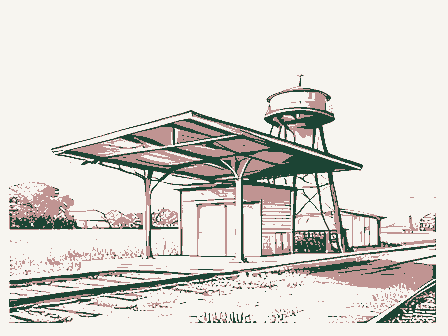
Crawford Township
The complete chapter on this township from The History of Wyandot County, Ohio, Containing a History of the County: Its Townships, Towns, Churches, Schools, Etc.;, published in 1884. 1,621 words, covering 2 settlements.
Contents
2 sectionsThe section headings the book prints inside this chapter. Each one jumps to where it begins.
The modern record here
2 settlementsWhat the federal record holds for each settlement inside this township: wildfires and storm reports since the 1950s, mineral workings, and museum specimens collected nearby. These are counted within a few miles of each settlement, so neighbours share them and the columns are deliberately not added up. Every row links to the settlement's own page, where each figure is broken out.
Settlements in this township
2 placesEvery populated place the Geographic Names Information System records inside this township's Census boundary. All 2 are named in the chapter.
The chapter
1,621 wordsReproduced complete and unedited. The text is machine-read from a scan of the 1884 printing, so expect the errors a machine makes reading a century-old page: misspelled names, dropped words, stray characters. Nothing has been corrected, because correcting a proper name invents one. The headings below are the book's own.
Crawford Township
Crawford township is perhaps more replete with historic incidents than any other township in Wvyandot county, for it was here that the lamented Colonel Crawford suffered death by the Indians by being burnt at the stake, in 1782, and here a monument has since been erected to his memory. And it was in the wilds of this locality that the seven-year-old child of Mathew Brayton was captured by the Indians and never found.
Crawford township was organized in the county of Crawford in 1825, and became a part of Wyandot county in 1845. It is one of the northern tiers of townships of the county, and is bounded on the north by Seneca county, on the east by Tymochtee township, on the south by Salem township and on the west by Ridge township.
The soil of this township is very fertile, and the farming community is a prosperous one. Tymochtee creek courses through the southeast corner of the township, and the other portions are drained by numerous artificial and natural drains, which renders the production of grains and vegetables profitable.
The territory comprised in this township was once one of the most famous of the Indian sporting grounds, being the seat of an extensive village of Delaware Indians, who, under command of Captain Pipe, the notorious Delaware chief, executed Col. William Crawford. The exact spot where the burning took place is not now positively known.
In many instances land was purchased or entered and settled upon when nothing but the leafy canopy of the forest trees served the eager and determined home-seekers as a shelter from the wrath of the elements.
As has already been stated, Asa Lake was first to locate in this township, and in 1819, he erected the first abode that graced the primeval solitudes of this locality. It was a double log cabin, about 18x20 feet, and was located on Section 26. About two years later, Daniel Hodges founded a home near the village of Crawfordsville, and in 1823 John Carey built a hewed-log house on the south bank of the Tymochtee, nearly opposite the old Delaware village of Captain Pipe. William Brown erected his cabin in the same year, but probably after Mr. Carey had built his. However, this is uncertain, as we arrive at this conclusion by the fact that Carey was already in the vicinity at the time of Brown's arrival.
The first regular thoroughfare constructed in the township extended from T'ymochtee to Carey's mill. It passed through sections 25 and 26, and in Tymochtee extended through section 16 and 20. The early settlers went to Delaware for supplies usually, though as early as 1823, John Carey, and Elijah Brayton erected a saw and grist mill on lands owned by Mr. Carey, in what is now Tymochtee township. <A carding machine was also operated in connection with this mill. At present the township can boast of five mills - one saw mill' at Crawford, two.saw mills at Carey and two grist mills at the latter place. The first store of this territory was kept at Crawfordsville, by William M. Buell, who was also the first merchant of Carey.
The first settlers of Crawford township were not blind to the necessities of education, and, as early as 1828, erected a schoolhouse on what is now the southeast quarter of section 26. Among the first teachers were William Hackney and Adeline Potterfield. Others were James Heron, John A. Morrison, Jane Coddington, Mrs. Maynard, Laura Starr, Erastus Ranger, Clem Allen, J. Newman, Miss Eliza Ingram, S. Johnson, Dr. Kirkham, Hiram J. Starr, Jesse Wilson, Eliza Lewis, Emma Carey and McD. M. Carey. As the population of the township increased, other districts were formed and school rooms were erected.
According to our best authority, Asa Lake and Nehemiah Earls located here as early as 1819. They were men of families, and settled in what is now Section 26, then Government land, though afterward entered and settled upon by Daniel Hodges, who was also one of the earliest residents of the township. As early as 1830, he built a brick house, the first of the kind in the township. He located in Crawfordsville in 1821.
Hon. John Carey, generally known as ''Judge'' Carey, and whose biography appears elsewhere in this work, came to this township and located with his family in 1823 or 1824. He was born in Virginia in 1792.
Christopher Baker came to this locality in 1822, and located on Section 11. In reaching his land, he came via Harrison's army trail through Delaware, Marion and Upper Sandusky to the Tymochtee, and then cut a path from Lish's Ferry. The Wyandot trail, running from Big Springs to the twelve-mile reservation, passed near Mr. Baker's cabin. His son, John Baker, one of the old residents of the township, was born in Ross county, Ohio, August14, 1815.
Curtis Berry, Jr., was born in this township April 19, 1831. He came with his parents, Curtis and Sally (Cavitt) Berry, to this county from Ross county in 1827, and located with them in this township in 1829. His father was born in 1782, and was reared in Virginia. He came to Ross county about 1804-6. His mother was of Irish descent, her father Francis Cavitt, coming from Ireland. The parents were married in 1812, while living in Ross county. On coming to this county, Mr. Berry purchased eighty acres of land, but at his death owned a whole section. He died December 29, 1855; his wife September 4, the same year. They had ten children. The mother of Curtis Berry, Sr., was a resident of Philadelphia, and an intimate acquaintance of Colonel Crawford. In playful kindness, she tied his necktie for him the morning he departed on his fatal expedition against the Indians of Ohio.
George James moved to this township with his parents, John and Elizabeth James, in 1822. He was born in Beaver county, Pennsylvania, March 9, 1807. His parents moved to Pike county in 1810, and from that point to this county. They entered eighty acres in this township, and reared ten children.
Smith Kenfield was one of the early and prominent farmers. of the township, having located here prior to 1825. Hiram J. Starr, a grain and stock dealer of the township, came in 1880. William Brayton came in the '20s, and located with his parents in Tymochtee township, settling later in Crawford in 1834. His father, Elijah Brayton, was one of the first millers in the county, beginning operations by erecting a saw and grist mill in Tymochtee township, in 1823. He and John Carey also owned and operated a saw mill and carding machine, located on the Carey road.
William Brown was one of the few first white settiers of Crawford township. He was born in Maryland September 12,1796. His wife, Eliza Kooken, was born in Berks county, Pennsylvania, February 14, 1804, and they were married July 3, 1822. From an old diary begun by Mr. Brown in 1822, we obtain some interesting facts given in entries as follows:
"July 20, 1823, left Columbus, Ohio, for my land, with the intention of building a cabin, digging a well, ete. On my arrival, my heart for the first time failed me. The day was dark and rainy. We had spent more than half of it driving from Tymochtee out, the road being nothing but mire and water. The ground where we halted was clothed with a heavy growth of timber, so much so that we could scarcely see the sun at noon, and to add to our misfortune, we could not work without being stung by nettles, neither could we remain at ease for the hungry mosquitoes. The difficulties I could have borne with fortitude had I been there on a visit for a few days only, but when I reflected that they could be removed only by years of hard labor, I was ready to conclude that I had acted the idiot in purchasing the land, and the lunatic in attempting to settle it.
''The next day I set Orra Harris, the young man who came with me, to digging a well. I took Mr. Carey's horse to Squire Hodges, and he soon discovered that all was not right with me. He therefore immediately set about to aid me to obviate my difficulties by telling me a long flattering story, the purport of which was that he had not the least doubt that should I set in and continue with determined perseverance, my undertaking would be crowned with complete success, that I would not only make a good living, but that, in a few years, I would become independent.
about dusk and was greeted with the joyful news that Orra had got water! The next morning the clouds dispersed and the sun once more visited our lonesome woods.
''Squire Hodges' flattering advice, getting water so conveniently, and the appearance of fair weather, in a great measure dissipated my dreadful forebodings, and I began work quite cheerfully. We remained six weeks, built a cabin, laid the lower floor, put up the chimney to the mantel-piece, laid the back wall and hearth and returned home. * * * \
''October 7, loaded up my goods and chattels and with my family 'set sail' for my intended home. After a prosperous journey of four and one-half days we landed at our lonesome abode October 12, 1824.
Crawford And Crawfordsville
Crawford is a local stop on the Hocking Valley railroad between Lovell and Carey, and is adjacent to Crawfordsville, a hamlet in Crawford township, founded shortly after the organization of the county. It was platted with about twenty lots and the place has not improved nor the population increased as the years went by.
Provenance
Text from The History of Wyandot County, Ohio, Containing a History of the County: Its Townships, Towns, Churches, Schools, Etc.;, by Leggett, Conaway & Co., Chicago, Pub. [from Old Catalog], published 1884 and in the public domain in the United States. Digitised by the Internet Archive. The settlements listed against this township are matched by point-in-polygon test of each Geographic Names Information System coordinate against the Census Bureau's county subdivision boundary, not by name.