 Block
Block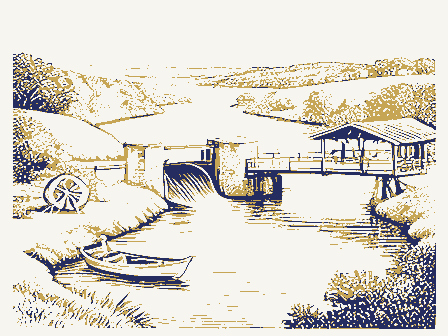
Israel Township
The complete chapter on this township from History of Preble County Ohio: Her People, Industries and Institutions, published in 1915. 5,510 words, covering 5 settlements.
Contents
9 sectionsThe section headings the book prints inside this chapter. Each one jumps to where it begins.
The modern record here
5 settlementsWhat the federal record holds for each settlement inside this township: wildfires and storm reports since the 1950s, mineral workings, and museum specimens collected nearby. These are counted within a few miles of each settlement, so neighbours share them and the columns are deliberately not added up. Every row links to the settlement's own page, where each figure is broken out.
| Settlement | Fires | Storm reports | Mines and quarries | Specimens |
|---|---|---|---|---|
| Claysburg (historical) | - | - | - | 700 |
| Fairhaven | - | 7 | - | 700 |
| Fosterville | - | - | 2 | 836 |
| Morning Sun | - | 8 | 2 | 408 |
| Talawanda Springs | - | - | - | 259 |
Settlements in this township
5 placesEvery populated place the Geographic Names Information System records inside this township's Census boundary. 1 of the 5 are named in the chapter; the rest were founded later or were never more than a post office.
The chapter
5,510 wordsReproduced complete and unedited. The text is machine-read from a scan of the 1915 printing, so expect the errors a machine makes reading a century-old page: misspelled names, dropped words, stray characters. Nothing has been corrected, because correcting a proper name invents one. The headings below are the book's own.
Israel Township
A glance at the map of Preble county shows Israel township occupying its traGt of six miles square, in the southwest comer, being bounded on the west by the state of Indiana and on the south by Butler county.
When the three associate judges of the county, on March 15, r8o8, divided the county into townships, they made Israel township include the four congressional townships in the west range of the county. But, one year later, the county commissioners cut off the north sixteen miles and called it Jefferson, while, still later, chi June 1, 1812, the extent of land was reduced by the county commissioners to its present proportions.
Natural Features
Israel township's most interesting natural feature is a creek, which flows from north to south through the entire length of the township, and which, with its branches and many tile ditches, drains the land. This stream first made its appearance in history when General Wayne, on his raid against the Indians, crossed it four -miles above Fort Hamilton and named it Four Mile. This name it still bears, although further down the stream, where the "classic shades of Oxford" overhang its banks, it is known as the Tallawanda river, and there is a story current that its pools were reserved by the Indians as bathing places for the maidens of the tribe. But the sturdy Scotch-Irish population of Israel township, with a fine disdain for romance, prefer history to tradition and truth before poetry, so with them it is still Four Mile creek. This stream has played no small part in the lives of the "Israelites:"
In early days, when trade was scattered and every locality must produce its own necessities, its banks were dotted with mills, where its waters supplied the motive power which ground food for the farmers and sawed their timber into lumber. But as "big business" gradually monopolized trade, these mills, one by one, disappeared and, with the looms and spinning wheels of the * housewives, have become but a memory of the past.
With the passing of the mills, Four Mile lost some of its prestige as a factor in the lives of the people, but it still plays an important part in their recreation. Its waters are well stocked with fish, which allure many sportsmen to its banks. In wrinter its frozen surface is the scene of gay skating parties; but, best of all, is its "old swimmin' holes."
A few times in its history Four Mile has gotten so far beyond its banks as to invade the sacred precincts of the homes along its borders. To the great flood of 1913 it contributed its full quota, sweeping through many houses and doing much damage before joining the raging waters of the Miami. Four Mile is spanned by many bridges of wood, iron or cement, but "the bridge" crosses the stream at Fair Haven, and is known as the "old red bridge," albeit for some years past it has been white. It was built in 1847 by Wiley & Glover, local contractors, and is of the type known as "covered." The roof and weatherboarding, and even the stone abutments, have had to be renewed, but the old frame is still as sound as when it came from the hands of the builder, and some of the planks of the original flooring are still in use. Lost in amazement at the mechanical principle upon which this bridge was constructed, and filled with admiration of the wisdom and skill of the builders, a local poet gave expression to the feeling as follows :
The three main streams of Israel township are Four Mile creek, flowing from north to south across the township a short distance west of the center. It is joined by Little Four Mile creek, from the west, about a mile north of the south line of the township, and also joined by Hopewell creek, from the northeast, about a mile and a half north of its south line. Along these streams and for only short distances on each side of them are all the rough and hilly lands of the township; the last two and a half miles of Four Mile creek and the same distance along Little Four Mile creek, and about a mile along Hopewell creek, are blufify hills and gulches that in some respects rival the Devil's Backbone hill. From the tops of some of the hills of Four Mile may be had some of the finest vistas of the county.
These three streams, with their tributaries, drain the whole township, except a narrow fringe along the eastern side, which goes to Seven Mile creek. The greater part of the land is level or gently rolling, the slopes being so gradual that the plow goes right on over the top of the ridge. The soil is
Of the present population of Israel township, which numbered one thousand four hundred and one in 1910, as against one thousand five hundred and eighty in 1890, quite a large proportion are descendants of the original settlers. Those early homeseekers came from Virginia, New Jersey, Kentucky, Georgia and the Carolinas, but fully two-thirds of them were from South Carolina. Nineteen or twenty years before the state of Ohio was carved opt of the Northwest territory, a colony of Scotch-Irish, psalm-singing Presbyterians, known as the Associate Reformed Presbyterians, organized a church in Chester county, South Carolina, and named it Hopewell. A fair portrait of these people may be found in the men and women of "Drumtochty," whom Ian Maclaren has immortalized in his "Beside the Bonnie Brier Bush," and other works. When this church was but a quarter of a century' old, a number of its families shook the South Carolina dust from off their feet, in indignant protest against the institution of slavery, and, having gathered together their worldly goods, turned their backs upon their homes and set their, faces toward the north. On their march over the weary stretch of miles which lie between Chester county, South Carolina, and Preble county, Ohio, many incidents of interest occurred, one of which is especially worthy of note, as illustrating the wisdom of remembering the Sabbath day to keep it holy. On the- first Saturday night of the journey, the question arose whether they should resume the march on the morrow or spend the day in camp. Opinion was divided on the subject. One party held that to rest quietly in camp was their obvious duty, while the other party insisted that the Sabbath could be kept quite as well on the road. Neither side being willing to yield the point, the next day they parted company, and throughout the trip one party spent the Sabbath in camp and the other on the road. But each Saturday night the "camping" party overtook the "traveling" party and they spent the night together, only to part company again in the morning, They reached their destination together, the party which had rested one day in seven in fine condition, as were also their horses; the party which, to save time, had never ceased traveling, was worn and jaded and their horses reduced to mere hacks.
The first of the South Carolina settlers reached Israel township in the year 1806, and through the next few years were followed by many others. In
Early in the century, homeseekers from New Jersey, belonging to the Society of Friends, settled in the northeast corner of the township, where they built their house of worship. They called their society Westfield, in honor of their New Jersey church, which bore the same name.
No one but a Scotchman, born and bred, and versed in Scottish church history, can tell the difference between some of the churches holding the Presbyterian faith ; but to the members of the various bodies the differences are vital. So those settlers holding the views of the Reformed Presbyterians, or Covenanters, were organized into a church known as the Beech Woods, or Morning Sun, church. Their building was located east of Morning Sun.
Schism Among Covenanters
In 1834 the Covenanter denomination was divided into two parts, known as the Old School and New School. The Morning Sun congregation, with their pastor, the Rev. Garvin McMillan, sided with the New School. But there were those among their number who refused to think with the majority and claimed possession of the house of worship on the grounds that they were the church. The majority they regarded as backsliders. Owe Sabbath morning the conservative party entered the church to hold a service of their own. The doors in the balustrade which surrounded the high, oldfashioned pulpit were closed and Elder Ramsey took .his station beside tlie pulpit and was about to begin the service when the Rev. Mr. McMillan entered the church. Mr. McMillan was not long in reaching the pulpit, where he nimbly swung himself over the balustrade and was in possession. But the day was not yet won. In scathing tones, Mr. Ramsey exqlaimed, "He that entereth not in by the door, but climbeth up some other way, the same is a thief and a robber." But by this time Mr. McMillan had opened the pulpit Bible, and such was their reverence for the Word that the belligerents quietly retired to the school house across the way and left the progressives in posses^ sion of the house of worship. Most of the families of the Old sqhool party subsequently found for themselves new homes in other places among people who worshipped as they did. But one member retired in high dudgeon to his farm. Not wanting to be buried by the side of his backsliding neighbors, he built for himself a burial vault and carved his own tombstone. On this stone he recorded at length his religious views. But, unfortunately, the stone fell and by the accident his leg was broken, from which injury he died soon afterward. His body was laid to rest in the vault of his own building. But he had not reckoned with the ravages of time, and the vault finally crumbled to dust. His remains were removed to Cedarville, Ohio, and the tombstone was ground up by the stone crusher to make road.
The Beech Woods congregation united with the United Presbyterian denomination in 1870, and in 1876, together with one hundred members from Hopewell, built a church in the village of Morning Sun. The site of the old church building is marked only by the graves by which it had been surrounded.
Meanwhile the Hopewell church was rapidly growing. It was ministered to bv the Rev. Alexander Porter, D. D., himself a South Carolinian. Their first house of worship, a log building, was found to be too small before it was completed and thirty feet were added to the end. In 1827 the present brick church was erected. Although it is the largest building in the township, and has the greatest seating capacity, it was soon found to be too small.
For twenty-six years, winter and summer, through storm and through sunshine, every Sabbath day the people on the outskirts of the settlement found their way to the Hopewell meeting house, with never a thought of hardship nor a wish for change.
But the church building was too small and it was clear that something must be done. The Christian Intelligencer for September, 1834, had this notice: "The First Presbytery of Ohio will meet on the call of the moderator, at Hopewell meeting house, Preble county, Ohio, the first day of October, to organize a new congregation to be composed of a portion of the members of Hopewell congregation and to grant them the moderation of a call if thought expedient." The congregational records of the time state that the Presbytery set off about fifty families by the name and title of Fair Haven congregation, and adds that the heads of four of these families were elders. This new congregation built their house of worship in Fair Haven, then a town of two years of age. In 1837 a church of the same denomination was organized at Oxford, Butler county, and the people in its direction moved their membership to it, thus again reducing Hopewell's number. There was another flitting in 1849, when the church at College Corner was organized. This congregation's first building was on the Indiana side of the state line, but a few years since a new building was erected on the Ohio side and they are now numbered with the Israel township churches.
Fusion Of The Two Churches
In 1858 the Associate Reformed Presbyterian denomination formed a union with the Associate Presbyterian, under the name and title of the United Presbyterian Church of North America; thus these Israel township churches became known as United Presbyterians. As has been stated, in the year 1876 the Hopewell congregation lost one hundred more of its members to the new organization at Morning Sun. This last flitting left the mother church must reduced in strength and circumscribed in territory, but still the congregation maintains the regular services, ministered to by one of its own sons. In 1908 Hopewell church celebrated its one hundredth anniversary, on which occasion she had the pleasure of being greeted by personal representatives from her mother church in South Carolina and from her four daughters at home. At this time there were also letters of greeting from various "Hopewells" situated in the Western states, which were namesakes of hers, for the pioneering spirit which resulted in the settlement of Israel township also caused many of its people to seek new homes as the great West opened up to immigration.
There were those among the pioneers who established their homesteads far from the church and each Lord's Day traveled four or five, or even six, miles to the meeting house. The Hamilton and Richmond turnpike, which was built some time in the forties, was a thing for the future to develop, and the roads of that time were far from ideal. Carriages were an unheard-of luxury, but there was always an old horse or two which were ready to carry the father and mother, and perhaps the babies, while the younger people thought it no hardship to walk. The man who invented barbed-wire fences had not yet been born, and there was nothing to prevent the worshippers from taking a bee line to the meeting house, except those obstacles which nature herself laid in the way. Between the God of Nature and the God of Revelation there exists no chasm, save only to the sin-blinded eyes of His creatures, and that walk through the beech woods must have been fitting preparation for His worship. As these little companies made their way to the rude man-made meeting house, through the aisles of the great cathedral of the Master Builder, the arches of which were vocal with the worship of the wood folk, it is a marvel that some "mute, inglorious Milton" among them did not break his silence and burst into song. But there is no record that any of them ever did. Indeed, if one had been so bold, he would no doubt have been promptly snubbed into silence by those groups of practical people, who were less concerned with the glorious things of nature than in keeping their Sabbath clothes from coming to grief. The go-to-meeting shoes were kept from harm by being wonTover the shoulders of their owner, tied together by the strings. There was always some convenient log near the meeting house where the women could sit while they put them on. The same log found a shelter for the stout shoes which had been worn over the rough path, anid there they remained during the two long sermons at the meeting house. The bad boy of the period seems not to have been alive to the opportunity of those waiting shoes. When the sun began to cast long shadows on the east side of the beech trees, the shoes were always found ready to do duty on the homeward walk.
The Knight And The Lady
An old lady of sainted memory, who had great fund of anecdote, used to entertain her young folks with stories of quilting parties, husking bees, apple parings and other functions whereby the forefathers cunningly combined business with pleasure. There was one harrowing tale among them, in which a promising romance was stamped quite out of existence by a pair of those homely shoes, lurking so guilelessly under the lea of the log. An apple paring was in progress just across the woods from her father's home, and Dame Rumor reported that a stranger knight would grace it by his presence.
The occasion called for careful dressing, but even such an event could not cause our prudent heroine to grow reckless. The general utility shoes were worn as usual and left at the edge of the wood, where the dainty toilet was completed by a smart little pair of slippers whose "light fantastic toe" betrayed a forbidden acquaintance with the Virginia reel and the "miller boy who lived in the mill."
The knight was there. It was the old story over again. "He came, he saw, he conquered" - and was conquered. All went well until he asked for the privilege of "seeing her safe home." What was she to do? She could not well refuse his escort, but if she walked home in those slippers there was her mother to be reckoned with, and to stop for her shoes, in such company, was not to be thought of. Reversing the decision of Hamlet, she chose to avoid the present ills and to let the future take care of itself. The walk was not a success. She was so distraught with anxiety as to the fate of her slippers and so filled with forebodings as to her own fate, that he ceased to be charmed ; while, on her part, she wished him anywhere but by her side.
last she ever saw of him. Nevertheless, the story had its sequel. As the morning light revealed no trace of the footpath on her slippers, all might yet be well. There was a young brother, afterwards supreme judge of Ohio, who was willing to go for the shoes, and was not above taking a bribe as the price of his silence. But the guilty secret was long held over her head and became the "open sesame*' to all the desires of the young tyrant heart.
In addition to these churches which were transplanted with the first settlers, Israel township has also a Methodist Episcopal church, which is located in Fair Haven. The history of this church begins as does that of many other churches of that denomination. A few Methodist families having moved into Fair Haven and vicinity, the circuit preachers began visiting them early in the forties. Later an organization was effected, and in 1849 a house of worship was erected. The early growth of this church was spasmodic. At one time the field was abandoned and again reorganized. It was not until the year 1873 that the Fair Haven and Sugar Valley churches were off from the Camden circuit and became separate charges. Since that time the growth of the church has been steady and it is now a strong body doing a splendid work in the community.
Next in importance to its churches are the schools of the township. The beginning of the education of the youths of Israel township was simultaneous with the township's settlement. What the fathers knew they taught to their children. The chief text books were the Bible and the Westminster Confession of Faith, popularly known as the "Shorter Catechism," with a copy of "Baxter's Call to the Unconverted" as a bit of lighter reading.
The people of that day thought more in grooves, it may be, than the people of today, and their knowledge was not so broad as at the present time, but certainly it reached deeper down, and as a character builder has not been surpassed.
As the people of the settlement became able, they employed teachers for their children, paying them by subscription so much per child. The teacher eked out his slender salary by "boarding around." The early teachers were mostly chosen from among the home boys, many of whom were preparing themselves for college. These teachers were, some of them, disciples of the Pete Jones "school of philosophy" - "No lickin', no lamin', sez I."
But others had unique methods of their own for coaxing the younger ideas to shoot. One who held school in the session house of the church at Fair Haven had small tickets upon which the word "superior" was printed, which he used as bait to induce the children to put forth their best efforts to earn the coveted prize. The unambitious and the dullard who failed to reach a certain mark received like tickets bearing the word "inferior." The scheme worked well, too well in fact. The supply of "superiors" soon became exhausted and there was not inducement for further exertion on the part of the scholars until the resourceful teacher hit upon the plan of making two "inferiors" equal a "superior." The children, always ready to value quantity above quality, eagerly agreed to the new arrangement, and soon astonished their parents by proudly exhibiting quantities of the questionable trophies.
In the year 1825 the state of Ohio provided for the education of its youth by taxation, at which time Israel township was divided into eight school districts. In addition to these district schools, there were a number of private schools where more advanced branches, especially the classics, were taught. These efforts after higher education crystallized into the Morning Sun Academy, established about the year 1850 by a stock company. In the year 1891 the township inaugurated the present high school. This high school has a three-year course. It has two buildings, one at Fair Haven and one at Morning Sun, and employs three teachers, one at each school and one who divides his time between the two.
The villages of the township, which are scarcely more than "wide places in the pike," are two in number, Fair Haven, in the north, and Morning Sun, in the center of the township. The town of College Corner, which is located in the extreme northwest comer of Oxford township, Butler county, and which takes its name from its location (Oxford township belonging to Miami University), has wandered across the state line into Indiana and has also crossed the county line into Israel township. But it must be reckoned with the Butler county towns; Israel township can not properly claim it.
On April 13, 1833, one year after the birth of Fair Haven, and on the same day that Morning Sun was called into being, the plat for the town of (16)
Claysburgh was recorded. Fair Haven, which was located in the same section and was one year old, had received a "boom" in its new tavern, and proved the more popular site for a village. So Claysburgh never grew any larger. "There was neither hammer, nor ax, nor any tool of iron, heard in the town while it was in building," for it had the distinction of living and dying without ever having had a house in it. The town was destroyed, neither by fire nor by flood, but, a few strokes of the pen and Claysburgh ceased to exist, for the present owner of the land, tired of paying town taxes on a part of his farms, had Claysburgh wiped off the map.
Commerce And Industry
In the early days of these villages, merchants, weavers, saddlers, cabinet makers, brick makers, tinners and blacksmiths all plied their trades to supply the necessities of the citizens. Farm produce was carried to the Cincinnati market in Conestoga wagons, drawn by from four to ten horses, proudly bearing their large fur collars and arches of bells. Live stock was driven to market. The log tavern at Fair Haven furnished entertainment for the drivers. Later this log tavern was replaced by "Bunker Hill," the large, threestory, brick building now owned by Miss Laura Harves.
Many a tale of wonderland was related by men who had been to Cincinnati, and boys looked upon that trip as the goal of their ambitions. Women did not expect to attain to such dizzy heights. They were quite content to purchase their bonnets and gowns from the village milliners and storekeepers. The left-over supply of last season's hats, minus the trimmings, were put on the market as l>oys' hats. That the brims were narrow at the sides, stuck up in the back and flared out in the front, was not considered a reasonable objection to their sale. Merchants were honest and never misrepresented their goods.
At one store, last week's eggs were still held at ten cents per dozen because they had been bought at nine, but this week's supply could be purchased for eight cents because they had cost but seven. It is related of one of the storekeepers that he carefully explained to a prospective buyer, who was examining a set of furs, that the tails with which the set was trimmed were not "real teals, for no animal livin' ever had more than one teal." But he was also careful to protect his own rights. The little maid who had timidly asked for a pint of molasses was quite frightened by the stern rebuke: "If molasses is sixty cents a gallon no man on earth could tell how much a
There was a pork-packing establishment at Fair Haven which did a large business in the forties, using barrels of home manufacture. With the coming of the railroads and good roads, making transportation easy, rural manufactories could not compete with the output from large factories, and the business of the villages became limited to the merchants and the blacksmiths. There is also a saw-mill at Morning Sun and one at Fair Haven. And there is a cider-mill at the latter place, which does a large business in years when fruit is plentiful.
Israel township's contributions to commerce are wholly farm products, grain, live stock and poultry, but its people have ideals other than the mere accumulation of property. To raise corn to feed hogs to sell; to buy more land to raise more corn to feed more hogs to sell ; to buy more land and so on to the end of life, is not with them "the chief end of man." By the men and the women who have made their life's work felt in the world, and who have called Israel township home, must the township ever be known.
The War Spirit
When war between the North and the South was declared and President Lincoln had issued his call for volunteers, there was instant and generous response by Israel township's boys. The sons of men who had fled from the hated institution of slavery were ready to help the President strike the shackles from the bondmen of the South. Many of the boys followed the Union's flag through the five years of war, and many gave their lives for the cause. On a beautiful mound in the cemetery at Fair Haven stands a monument erected to the memory of the township boys whose bodies fill nameless graves in the Southland. There are eighteen names engraved upon it.
Sons Who Have Risen To Distinction
Among Israel township's sons, she numbers more than forty who have given themselves to the gospel ministry. And they are not wanting in doctors, lawyers, educators and journalists. In all these professions there have been men who have risen to distinction. A very few have entered politics, but from among these the township has been represented in Congress and in the gubernatorial chair of one of the Western territories and the governorship of the home state. Added to these, there is a great army of people in private life who, by their sterling qualities, have made their impress upon their home communities. Near the close of his fifty years' pastorate, an Israel township pastor was much cheered on being told that he was doing a grand work out on the Pacific coast. In many other parts of our country are men and women who can point to Israel township as their spiritual birthplace. Indeed, it may be said! of her, as of the ancient city of Zion : "Jehovah will count when he writeth up the peoples. This one was bom thine."
Early Settlers
Many of the early settlers were from the South, especially the Carolinas, who, like the Quakers of Gratis township, objected so seriously to slavery that they moved out. Before the Civil War, the village and vicinity of Morning Sun was one of the well-known stations of the "underground railroad," from which none was ever returned.
Joseph Kingery is claimed to be the first settler. In 1803 he settled in section 32. Samuel and James Houston came a little later in 1803 and built cabins near College Corner. William Ramsay came in 1805 and started a home in section 23. In 1805 Abraham Miller settled in section 34. These all came from Virginia.
Peter Ridenour, in 1806, settled in section 33, and next year built tire first mill and the first distillery. He came from Maryland and left a family of sixteen children. In 1805, Joseph Caldwell, from North Carolina, settled where Fair Haven now stands. Judge Caldwell, of Cincinnati, is one of his descendants. In 1806, William McCreary, from South Carolina, settled in section 36. In the same year Ebenezer Elliott, from the same state, settled in section 26.
In 1806, the widow, Martha Faris, with her four children, from South Carolina, settled on the farm of William McCreary, and the next year David Faris, from the same state, settled on section 25. David McDill, from South Carolina, settled on section 26 in 1806.
Caleb Pegg, in 1805, settled near Fair Haven. In 1807 came James Royce, James Brown and Richard Slow, all from the Carolinas. Hugh Mc- Quiston settled in section 24 in 1808. George R. Brown in 1809, John Bishop in 1810, and Thomas McDill and William McGaw in 1811.
Just after the War of 1812, William Van Skiver, Samuel Bell, Samuel Hamilton, James Marshall, Robert Gilmore, Joseph Steele, William Gilmore, Jonathan Paxton and William Brown, William Hays, James Graham and
The first child bom in the township is said to have been Hugh Elliott, in 1808. The first death was that of a little daughter of John Ramsay, in 1807.
It has been handed down as a tradition that for several years after the first settlement of the township, the wild turkeys and squirrels were so plentiful that every spring the farmers had to stand guard over their newly planted corn for two or three weeks to keep them from destroying it. Also, it is reported that just before the War of 1812 the farmers of the township suffered from a plague of mice, that overran everything for a year or two and then disappeared as mysteriously as they came. In 1858, a South Carolina planter named Sloan, desiring to free his slaves before he died, came to Morning Sun, bought some land east of the town and placed the freedmen on the land, with the title thereto. He returned home and died shortly afterward, thus escaping the terrors of the Civil War, both for himself and his freedmen. A number of the freedmen yet live in the township.
The towns of Fair Haven and Morning Sun are not incorporated. College Corner is an incorporated village. Oxford township, Butler county, is a college township, owned by Miami University. The first settlement at the village was in the northwest corner of that township, hence the name. But the village spread west across the state line into Indiana, and that is now much the larger village.
On the Ohio side it spread north across the county line into Preble county, and a few years ago they incorporated the village on the Ohio side; it has about four hundred population, about equally divided between Butler and Preble counties. W. R. Stewart is mayor. In 1893 the population became so great that the people of the two states got together and decided that they ought to have a graded school, if it could be arranged. There is a country road running north from the village on the state line. They had the surveyor mark the line, and just at the north edge of the village they erected a fine two-story, eight-room, brick school house, with a wide hall through it, north and south, exactly straddling the state line, four rooms on each side. The school has since been run by the joint board, each side paying its proper proportion, and they have succeeded in maintaining a most excellent school.
The headwaters of each of the streams named are tile ditches in Preble county; Hopewell creek, in section 14, Dixon township; Four Mile creek, in section 10, Jackson township, and Little Four Mile, in section 31, Jackson township.
Provenance
Text from History of Preble County Ohio: Her People, Industries and Institutions, by R. E. Lowry, published 1915 and in the public domain in the United States. Digitised by the Internet Archive. The settlements listed against this township are matched by point-in-polygon test of each Geographic Names Information System coordinate against the Census Bureau's county subdivision boundary, not by name.