 Block
Block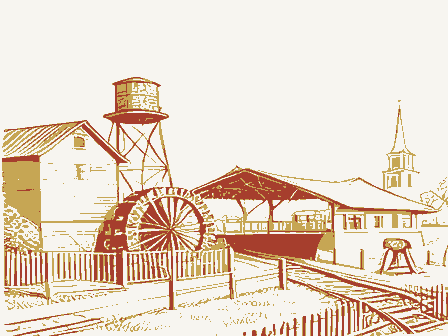
Wayne Township (part 1 of 22)
Part 1 of 22 of the account of this township in A History of Knox County, Ohio, from 1779 to 1862 Inclusive; Comprising Biographical Sketches, Anecdotes .., published 1862; History of Knox County, Ohio, Its Past and Present, Containing a Condensed, Comprehensive History of Ohio, Including an Outline History of the Northwest; a Complete History of Knox County ... a Record of Its Soldiers in the Late War; Portraits of Its Early Settlers and Prominent Men ... Biographies and Histories of Pioneer Families, Etc, published 1881. 15,928 words, covering 3 settlements. Source changes inside the text are labelled at the exact paragraph where the next book begins.
Contents
3 sectionsThe section headings the book prints inside this chapter, on this part. Each one jumps to where it begins.
Parts
22 pagesThe source prints this as one continuous account. It is split here so no single page grows too heavy to load; the text runs straight on across the parts and nothing is omitted.
The people it describes
4 namedEveryone the 1862 history stops to write about in this chapter. Each name opens the passage itself.
The modern record here
3 settlementsWhat the federal record holds for each settlement inside this township: wildfires and storm reports since the 1950s, mineral workings, and museum specimens collected nearby. These are counted within a few miles of each settlement, so neighbours share them and the columns are deliberately not added up. Every row links to the settlement's own page, where each figure is broken out.
| Settlement | Fires | Storm reports | Mines and quarries | Specimens |
|---|---|---|---|---|
| Dorema | - | - | 3 | 509 |
| Green Valley | 1 | - | 2 | 566 |
| Lucerne | - | - | 3 | 468 |
Settlements in this township
3 placesEvery populated place the Geographic Names Information System records inside this township's Census boundary. 2 of the 3 are named in the chapter; the rest were founded later or were never more than a post office.
The chapter
15,928 wordsReproduced complete and unedited from A History of Knox County, Ohio, from 1779 to 1862 Inclusive; Comprising Biographical Sketches, Anecdotes .., published 1862; History of Knox County, Ohio, Its Past and Present, Containing a Condensed, Comprehensive History of Ohio, Including an Outline History of the Northwest; a Complete History of Knox County ... a Record of Its Soldiers in the Late War; Portraits of Its Early Settlers and Prominent Men ... Biographies and Histories of Pioneer Families, Etc, published 1881. The text is machine-read from scans, so expect recognition errors: misspelled names, dropped words, and stray characters. Nothing has been corrected, because correcting a proper name invents one. The headings below are the books' own; source changes are labelled in place.
Wayne Township
One of the first townships was named for the distinguished, brave General Wayne, more generally known by the sobriquet " Mad Anthony." In the general reorganization it was reduced to its present limits. The general appearance of the surface of the country is beautiful. It is well watered, well timbered, healthy, and possessed of uncommon attractions for a home. In 1830, it listed 16,258 acres of land for taxation, and contained 1,017 inhabitants; in 1850, 1,861; and in 1860, 1,789. We have given the ofiicers and voters at the first election. In 1811, the Judges were Joseph Denman, Daniel Ayres, James Trimble ; Clerks, John Trimble and Wm. Johnson. In 1812, Henry Roberts listed the township. John Kerr, Samuel Wilson and Daniel Beers were then Judges ; Willis Speakman and Joseph Townsend, Clerks. In the list of Justices and names heretofore given will be found most of the earlv settlers who exerted an influence upon the society of this section. It can not be expected that we shall enumerate all the good citizens of different periods ; the limits prescribed for our work preclude such an idea. The lands upon the South Eork and East Eork of Owl Creek are unsurpassed in fertility, and the water
EiiEDERiOKTOWS^, the princii)al mart of business for the farmers of the north western portion of Knox, was laid out in 1807, by John Kerr, with its streets - "Eirst or Donation," "Second st.," "Third or Sandusky st.," "Fourth st.," "Yine alley," " Chambers st.," " State road and Main st.," and *' Strawberry alley." The original tract upon which it is situated belonged to Mr. Sullivant, of Eranklinton, who, vfith commendable liberality, gave John Kerr his choice of 50 out of 4,000 acres, including a mill seat, if he would settle upon and build a mill there. Accordingly, in the fall of 1807, he constructed a dam, raised a little log house and set one run of stone to grinding, or " cracking corn." On this 50 acres the town was laid out, and Kerr then bought 150 acres around it. W. Y. Farquhar was the surveyor, and the name of Frederick in honor of the old home, in Maryland, was o-iven to this town in the wilderness. W. Y. Far- ([uhar erected and occupied the first cabin in Fredericktown ; it was a little stake and rider pen 18 feet square.
The next family to pitch their habitation within the plat, was that of Mrs. Ayres, and her sons, David and Abner, at once became leading men. John Milligan and Jcduthan Dodd, from Ten Mile, I^a., came sliortly after, with their connections, John and Jacob Cook and Jacob Haldeman. In 1809, Rachel Kichardson bought out the little improvement of John Cook, and settled there with her family, consisting of William, Isaac K., Polly and Nancy, who subsequently married Samuel Watson anil John Wright. Charles McGowan, a droll old Irishman, took a lease near by, and Thomas Durbin, Samuel Wilson and Thomas Townsend, Quakers, and John Walker, who subsequently married a Shurr, came also. In 1812, within the town were nine log cabins and one frame building ; dwellings, shops, huts all told. Willis Speakman, Rachel Richardson, John Garrison, John Yennum, and the Ayres' families, at one time occupied all these.
Mr. Garrison opened the tirst store in 1812, and then dwelt in the only frame ; it was situated where the Methodist Church now stands. He is the only one of the then settlers within the village now living, and has led a migratory life. He is a native of New Jersey ; married near Philadelphia ; moved to New York; thence to Knox county, where he sold goods for several years ; thence to Mansfield ; from there to Detroit ; back again to Knox ; off again to Chicago, 111. ; and now resides at Cedar Ealls, Iowa. He has been merchandising at each point, and in his 91st year enjoys good health. Three of his children are in Iowa, one in Detroit, and another, Mrs. Richard Roberts, in this countv. This year he visited this county, and saw his greatgreat-grandchild and many other descendants in Berlin and Wayne.
Nicholas McCarty was the second merchant. He moved from Mount Yernon to this place. In July, 1817, N. McC. & Co. closed up their mercantile business and left their notes and accounts with
Abner Ayres, Esq., for settlement, and also a quantity of lake fisb. Tlie motber of Mr. McOarty died at Fredericktown ; be moved to Indiana, and for many years drove a prosperous trade at tbe State capital. In 1853, be returned to Erederick on a mission of filial aifection, and erected a monument at bis motber's grave. In 1855, be paid tbe debt of nature, leaving a large family in prosi)erous circumstances. During bis life be was a zealous Wbig, and represented tbe capital district in tbe Senate of Indiana, and was also tbe candidate of bis party for Governor of tbe State. He bad tbe respect and confidence of all, and well deserved tbe title be bore, - " Honest Mc. McCarty."
James Bigby, wbo so long and faitbfully followed mercbandising bere, is yet living in tbe enjoyment of good bealtb, surrounded by bis cbildren and friends, one of tbe oldest inbabitants. George Girty was anotber mercbant, wbo left tbis section about 1815 for otber parts. Josbua Yennum, tbe first bouse-joiner, built tbe first frame bouse in tbe village. None of bis name survive in tbis county.
Mrs. Wolf kept tbe first boarding-bouse. Sbe is dead long since. Her oldest son, Peter, lived on a farm near tbe Burkbolder flat, wbicb be sold to Henry B. Carter, wbo was a brotber to Jacob Cook's wife, and moved to Knox County in 1810. Samuel Wolf was a sterling man - lived in Bicbland, and served as Sberiif. Wben tbe county went wild for Jackson be was an Adams man, and consequently "done for politically." Her daugbters bave done well. Artemissa mai'ried lawyer May, of Mansfield; Eliza, as elsewbere related, Mr.
Drennan, and Mary married and lived in tlie neighborliood of Lancaster. The first tavern was opened by Abner Ayres, and with a slight intermission during the war, when, for good and sufficient reasons, his brother Daniel took it; the same hotel was kept up for more than forty years. "Uncle Abner" was not any "great shakes" in the way of dancing attendance on guests, but "Aunt Amy" did know how to have the culinary department carried on ; and, we do affirm, that for making good brandy mince pies, and brandy peaches, she was unsurpassed by any of womankind since Eve eat the forbidden fruit. She knew just when, where, and how to apply the spirit to make it most j)alatable, as all of the generation, who feasted there during sleighing excursions, well know. They have both departed to a better land, leaving the record of a life spent in contributing to the happiness of their fellow-creatures. Abner served as Captain in the war of 1812, as a Justice of the Peace fifteen years, and Associate Judge seven years, a County Commissioner three years, and Postmaster near forty years. He was as quiet, unassuming and well disposed man as ever wore shoe-leather.
The first preaching was in the little school-house, heretofore spoken of as a Fort, etc. In it ministers of various denominations held forth at stated times. About 1820 the Presbyterians undertook to build a church, but, having started out on too large a scale, they were compelled to succumb, and the building, in its unfinished state, a mere shell, was sold to Absalom Thrift, who converted it into a ware-house, and it is to this day used as a livery stable. Some time after, tlie Universalists, who have ever been quite numerous in this locality, erected a spacious frame church, which they have since occupied, until for a few years past the supply from some cause has ceased. The Presbyterians made another effort, and built the present excellent edifice ; and the Methodists and Baptists have also fine churches. The population is of a decidedly "go to meeting" character; they have also been noted for their zealous efforts in behalf of Temperance, and have kept up various organizations of a reform class for many years.
The first blacksmith was Thomas Ayres, who went to work in 1808, and continued for many years. The first school was kept by Wm. Y. Earquhar ; the first shoe-shop by Osgood Dustin. The first hatter was Celestial Le Blond, a little frisky Erenchman, whose vote, in 1811, is entered as "Celestial Light" on the poll-books. He was the son of a wealthy Erench gentleman, and had to flee from his native land in consequence of having killed an antagonist in a duel. He frequently received from his father remittances of $500, or so, but made very foolish bargains. With money once sent he bought a mill-seat, set about erecting a mill where Shalers now is, and "broke flat" by the time he got a saw-mill up. The premises were then sold to Christopher Brollier, and by him to David Shaler, an energetic millwright. Sliortly after this Celestial received another remittance and moved to Bellville. In 1838 he went to Erance, obtained a considerable sum of money, and returned with a large stock of goods. He died at
Bellville learing a very respectable family. An old man named McCoy, a sort of cobbler, tried bis hand at making cloth shoes for the women at an early day. The men then generally wore moccasins. A singular freak of another creature, in 1809, has been related to us. His name was Ebenezar Taylor, and he undertook to do work in the shoe line, but before he got fairly started an itinerant preacher came along, and Ebnezar was so taken with his discourse that he followed him off, leaving his kit of tools, and an estray animal, which he had taken up and advertised, and has never been heard of since. Speaking of shoemakers reminds us of a somewhat noted man in these parts, Jedediali Peck, who attempted to get up a patent Avay of making boots, having last and tree all together, but found that it was easier to make them on than to get the boot off the tree, which, after vain attempts, he concluded to fasten to the house and hitch a mule to pull it off. His house was built around a walnut tree, and it was considerable of a curiosity to travelers to see a tree growing out of the top of a house. Jedediah and his wife died without issue, and liis two pretty nieces, who dwelt with him, are gone also.
In 1815, Oapt. John Williams, of Frederick, Md., bought out John Kerrs' mill property, and at the same time started a store in the village. He brought out $10,000 in money, and dissipated through the country. He was a man of talent, clever and sociable, and is spoken well of by all old settlers. He came to this county in 1811 with his family. His children are much scattered.
William lives in Peoria, Illinois ; Thomas in Henry county, in that State, as also Eachel, wife of Ool. Prather, in the same county. Eliza, wife of Milton Bevans, in Fulton county, Illinois. Pendy died in Illinois, Abraham in this county, and Gist W. in Missouri, in 1852. His son States, now lives in Morris. But two of Oapt. John William's family are to-day living in this county, Emaline, wife of Prank Wilkins, of Liberty, and Dan., who is living with States, his nephew, in Morris. Dan. was born in Prederick, Md., October 6th, 1792. His four sons are doing well. Clark and Charles reside in West ISTewton, Allen county, John and Milton B. in Berlin. Clark married Ellen Lane, and Charles her sister Jane. Milton married Elizabeth, daughter of Bichard Boberts. The post office kept from its establishment by Abner Ayres, until in 1850, B. J. Lewis succeeded him ; in May, 1852, Thomas A. Beed vice Lewis, resigned; L. S. McCoy followed, and his successor was Geo. Ball.
In 1810, Predericktown contained 500 inhabitants ; in 1850, 712 ; and in 1860, 790, of whom 16 were negroes. The place, some twelve years since, put on city airs, and with Geo. W. Woodcock as mayor, and T. A. Beed, Becorder, carried on a right sharp crusade against the "doggeries." The warfare was subsequently taken up by the Common Pleas Courts, and for a time better "order reigned in Warsaw. Of late years, however, we have been informed that there has been "something rotten in Denmark," and the spirits have assumed at times a very bold and thi'catening ap- pearance. Taken altogether, however, Fi-ederick may be said, during its existence, to have been a model town in the line of "laAv and order." In 1816, the entire township cast but 81 votes.
The l:th of July, 1817, was duly commemorated at Anson Brown'' s, in Predericktown. Daniel Beers was chosen Moderator, and Anson Brown, Clerk. The Committee of Arrangements consisted of Christian Holderman, Job Allen, Munson Pond, Joseph Talmage, Jacob Young and Henry Markley . Munson Pond was Officer of the Day. Job Allen commanded the volunteer company ; Jabez Beers was Beader; Truman Strong, Orator. Benjamin Jackson, Anson Brown and Benjamin Jackson, jr., conducted the Singing. The Bev. John Cook and James Scott were present - and last, but not least, Alvin Bateman was Toast Master. A good dinner was eaten, and all felt glorious. The McCutchens, Strubles, Cochrans, Cravens, Sagerses, Beerses, Leonards, Thrifts, Harters, Strongs and Corbins, were among the early settlers. Of the Cochrans, William and Samuel were young men of good mind. The former is dead, and the latter, a preacher of celebrity, in ]N^. Y. ; Josiah M. is quartermaster in 43d Beg't., O. V. Jabez Beers was one of the old settlers, and his son, Joseph, lived in Frederick at an early day.
Dr. John Byers located here in 1812. He moved west about 1835, and is now living in Hardin co. His three sons emigrated to Arkansas ; Thomas and John are both dead - William yet lives at Batesville, Ark. The boys acquired considerable distinction as Attorneys. The old gentleman was one of the earliest practitioners of medicine in this township. Dr. David Wadsworth, another physician, died many years agO; His son, T. B., died a sohlier in the Mexican war ; and his daughter, Eliza Ellen, Mrs. Strnble, is the sole survivor of the family. The Bryants have been quite numerous in Wayne, and among them James has been prominent ; he was a very strict man, of the steady and straiglit "Sunday go to meeting" kind, and as his neighbors to the west did not walk in his ways, he called their settlement " Sodom," a name it has ever since borne notwithstanding that it has had in it many first rate citizens. * Mcknames, once given and received, are hard to be obliterated.
An old settler upon Granny's Creek is Truman K-ansom, who with his family located, in 1824, where he has ever since resided. Mr. Bansom was a native of Connecticut, and, with his father's family, moved to this State in 1812, and settled on the Muskingum, near its mouth. He there married Miss Temperance, daughter of Thomas Lord, whose grandmother was a daughter of Col. Oliver, one of the officers in command at the time the Marietta settlement was attacked by the Indians. Her father was Judge of the Court of Washington county, and a prominent member of the " Ohio Company." Of Mr. B.'s seven children, one is dead ; Edwin and Albert are living in Missouri ; Thomas in Liberty ; Bryan, William Wallace and Bobert Bruce in Wayne. Mr. B. has been a hard working man, and has met with various streaks of ill luck ; his losses have been heavy, by fire and water, and his escape from the jaws of death has been almost miraculous. His dwelling-liouse, with mucli furniture, was burnt up in tlie spring of 1852 - to his damage some $2000. In attempting to cross Owl Creek with a wagon and four-horse team he lost all, amounting probably to f SCO, and did well to get off Avitli his " own skin whole." Having a small mill site on Granny's Creek, he erected, in 1828, a saw-mill, that is yet in operation.
In the Granny's Creek school-house a Temperance Society was gotten up many years ago, and also a Sabbath-School, which has been well attended. Regular preaching has been had also since 1830, by the Methodist, Episcopal, Presbyterian and other denominations.
But two men arc now living in the neighborhood of Frederick who were young men grown in 1812 - Kichard Roberts, of Berlin, and Jacob Mitchell. The tirst of these helped cut the first road out from Mt. Vernon to Erederick, under the supervisorshij) of Joe Walker ; and the second rode express for General Harrison in the war of 1812. Then thev were both boys full of mettle and spirit, and their fathers were among the old men of the settlement ; and now their fathers are dead, and thev in turn are old men - heads of families - grandfathers - yes, great grandparents - and a new generation is upon the stage of action. What changes they have witnessed in their lifetime, little as we may be disposed to think things change before our vision in this fast age !
Source changes here: from History of Knox County, Ohio, Its Past and Present, Containing a Condensed, Comprehensive History of Ohio, Including an Outline History of the Northwest; a Complete History of Knox County ... a Record of Its Soldiers in the Late War; Portraits of Its Early Settlers and Prominent Men ... Biographies and Histories of Pioneer Families, Etc, by Hill, N. N. (Norman Newell), Comp, published 1881; 323,466 words in this source stream.
Wayne Township
THE original Wayne township was No. i in the division of the county into four townships by the county commissioners at their session May 2, 1808. The journal reads:
Ordered. That the following bounds be laid off into a separate township, to-wit: Beginning at west boundary line of said county between the fifth and seventh township line, and running east to the west of the thirteenth range line, thence north to the centre of the seventh township line; thence on the east to the
Ordered, That all that part of Knox county lying north of Wayne township be attached to the said Wayne township, and henceforth be considered a part of the same.
Ordered, That the boundaries of Wayne township shall be altered, and that in future the following shall be the boundaries, and recorded as such : Beginning at the southeast corner of township number seven, range number fourteen, and running to the southwest corner of the same ; thence due north to the north boundary of Knox county; thence east on said boundary so far that a line running due south would strike the old boundary line where the line between the thirteenth and fourteenth range in the old purchase strikes the old boundary; thence to run south on the last described south line to the place of beginning.
Ordered, That the east boundary line of Wayne township be altered as follows, to-wit: The alterations to begin at the northwest corner of EUicott's section in the eighth township and thirteenth range, and running east to the southeast corner of lot number eleven; thence north so as to strike the centre of section number four, township number eighteen; thence north to the county line, which line shall henceforth be the division line of said township.
In 1830 it listed sixteen thousand two hundred and fifty-eight acres of land for taxation, and contained one thousand and forty-eight inhabitants. In 1850 it contained one thousand eight hundred and sixty-four inhabitants, in i860, one thousand seven hundred and eighty-nine; in 1870, one thousand six hundred and fifty-eight, and in 1880, one thousand six hundred and eighteen.
The above quotations from the journal of the commissioners are unintelligible to the general reader, owing in part to the fact that the whole of Richland county, which included parts of the present Ashland and Crawford counties, was at first a part of Knox, as was also a part of the present Morrow county. Wayne was named in honor of "Mad Anthony" Wayne, the hero of Stony Point and Fallen Timbers, and at one time embraced within its limits the present townships of Franklin and Chester, in Morrow county, and Middlebury, Berlin, Wayne, and the north half of Morris townships in this county. Reductions were made from time to time, and it reached its present dimensions in 1825, as stated in the commissioner's report.
Topographically considered, the township, at the present day, presents a beautiful appearance, every acre of its soil, except the timber land, being under a high state of cultivation. It is well watered, the surface gently rolling, and possesses uncommon attractions to the agriculturalist and the seeker after a prosperous and happy home.
In its primitive condition it was densely timbered with all varieties of hard wood - beech, oak, hickory, ash, sugar, black walnut, and other varieties, the beech, perhaps, predominating. Possibly one or two little patches of prairie' appeared on the Owl creek bottom, whether cleared of timber by Indians or white men, or whether natural prairies will probably remain unknown. The south branch of Owl creek passes across the township near its centre, from west to east, and this, with its numerous branches, waters the northern and central portions, while the pretty and historical little stream called Granny's creek, with its tributaries, waters the southern portion. Many mills were, in an early day, erected along these two streams, and around these mills clustered a large amount of fact and romance that might profitably enter into these pages could it be gathered and truthfully presented.
Centuries before any white man set foot on its soil, possibly before any white man had an existence in the now known world, this same territory of Wayne township was inhabited, perhaps densely populated, by that "lost race" known as the Mound Builders. Where they came from, who they were, and what became of them, are questions as yet unanswered - problems yet unsolved and probably unsolvable.
So far as known none of their works now exist in this township, with the single exception of one in the woods, not well preserved, in the southern part ; but when the first settlers came a very perfect work existed within the present limits of the town of F'redericktown. The older inhabitants of this place yet remember this work. Its location was ilpon the highest point of the hill, upon which the town stands, directly in Sandusky street, a little east of the public square. The entire work covered perhaps an acre of ground, and included a portion of the lots upon which the present Methodist and Baptist churches stand, and also contiguous lots. In the grading of the street and building of the houses, the work has entirely disappeared. The embankment was in a circular form, two or three feet in height, with ditch inside, and a gateway opening toward the east. A mound was within this enclosure, and in size was thirty or forty feet in diameter at the base and seven or eight feet in height at the date of the first settlement. The soil here is somewhat sandy and loose, and favorable to the erection of these works. The Mound Builders seemed to have a preference for sandy, loamy soil, and seldom erected their works upon other soil. From the summit of this mound an extensive view could be had of the valley of the Owl creek, several miles to the southward, and across the valley to the hills some distance eastward. Some three or four other mounds, located in Morris and Berlin townships, were evidently connected with this one, and would be in view were the timber cleared away, a condition of thmgs probably existing when the Mound Builders occupied the territory.
It is not unlikely that many other works of this mysterious people existed in this vicinity, but all have disappeared, except those mentioned. What could be expected to survive the ravages of a thou sand years or more? The wonder is that any trace of this people remain.
The next race to occupy the soil of this township, so far as known, was the red Indian; a race almost as mysterious as the Mound Builders. They have no written history and even tradition is silent as to their origin. Several such races might have inhabited this territory and passed away, leaving no trace of existence, as the Indian will leave no permanent footprint behind when he is gone; and were it not for the little history of him preserved by the white race, coming peoples, who may occupy this territory in the coming centuries, would not know of his existence. This race was here, however, when the white race came to drive him out and subdue the wilderness. Probably many permanent Indian camps were located along Owl creek and its wild and pretty tributaries; but about the time of the first white occupation no permanent Indian camp existed within the limits of Wayne township. Temporary camps for hunting purposes existed along Owl creek, and occasionally an Indian hunter and his family occupied a lone wigwam in the depths of the forest, where he fished, hunted, and lounged away his life in happy ignorance - like the beasts of the field, of whom Joaquin Miller thus sings:
It was probably within the limits of this township that the Indian horse-theives were killed, by Hughes and Ratliff from the Licking valley, in Licking county. They were overtaken and killed in the bottom, just south of Fredericktown - probably on the south branch of Owl creek. The facts are that in 1801, a party of Indians stole some horses from a little enclosure near the cabins of Elias Hughes and John Ratliff, who, in 1798, had located on the Bowling green about four miles below the present city of Newark, on Licking river. Hughes and Ratliff were the first settlers of Licking county, were related, the latter being a nephew of the former, and lived near each other with their families on a beautiful natural prairie. At the time the horses were stolen, a Mr. Bland, who lived further down, at the mouth of the Licking, was a visitor at Hughes' cabin, and his horse was among the number stolen. In the morning, finding the horses gone, these three men started in pursuit, following the trail of the savages, gaining rapidly upon them, and overtaking them on Owl creek, at the place mentioned. They came upon their camp at daybreak in the morning, shot the Indians, recovered their horses, and returned unmolested to their cabins on the Licking. It is said that Bland and Rat- liff relented when they saw they had the Indians in their power, and were in favor of taking the horses and letting the Indian thieves go; but Elias Hughes was not that kind of a man ; he was an old Indian fighter and hater, and he expressed his views in such emphatic language that the others gave up to his way of thinking and the Indians were killed.
Elias Hughes was a well known pioneer of Licking county, and died near Utica, Ohio, in December, 1844, at the age of ninety years or thereabouts. His son, Jonathan, is yet living in Utica at an advanced age.
The information comes from William Mefford, an old citizen of this township, that when he was clearing off the ground on which to erect his house, on Mile run, he plowed up the remains of the two Indians killed by these pioneers; also a rusty gunbarrel, brass guard, and other pieces of a gun, which had not decayed. This was in 1835, and these relics were placed in the hands of Jacob Mitchell. George Conkie gathered up the bones and reburied them, and the house was built on the spot. It is the old Peck place on Mile run bottom, where Mrs. Acre has since lived.
In early days there was a favorite camping ground about three-fourths of a mile from where these Indians were killed. Large parties camped here for the purpose of hunting. They were the Delawares and Wyandots from the Sandusky plains, as well as the Greentown and Jerometown Indians, under Chiefs Armstrong and Captain Pipe, who were often seen in this vicinity.
Indians remained in this vicinity until the War of 18 1 2, when they generally disappeared, never to return. The bear, deer and wolf rapidly followed the retreating savages, and upon their heels came the all-conquering white race.
The first settler in this township was the first permanent settler within the present limits of Knox county. His name was Nathaniel Mitchell Young. Andrew Craig, who was in the territory embraced within the county limits several years before Mr. Young, can hardly be called a settler at all. He was not a permanent resident, he did not purchase or enter land; he was a sort of renegade, living among the Indians, and shortly after the whites began a settlement he went away to Greentown, where a small tribe of Indians were encamped under Chief Armstrong. It was within the present limits of Ashland county. Mr. Young may, therefore, be called the first settler of Knox county. He was from New Jersey, and wandered up into the this wilderness in the spring of 1805. He was a hardy, adventurous fellow, and a sort of blacksmith. He probably came by way of Zanesville and Newark, the latter place having been laid out the year before, after leaving which he found no further white settlers, until he reached the cabin of Craig on Owl creek. Why he continued on up Owl creek to the spot where he ever afterward lived, is not certainly known, but it is probable that he had a land warrant in his pocket, was hunting for, and found up here, the land it called for. It must be remembered that this belonged to the United States military lands, and was consequently first settled, either by Revolutionary soldiers or their heirs, with land warrants. The "axe maker," as the Indians soon named him, had probably one of these warrants, and he located upon his land on the south branch of Owl creek in the western part of this township, five to six miles a little south of west of the present town of Fredericktown. From the fact that several of his kinsmen soon followed him and settled around him, this came to be known far and wide as the "Jersey settlement," and one of the most important settlements in the county.
Mr. Young erected a little log pen for a shelter, and as Indians visited him often, he soon began to employ his leisure time, between hunts, having a few tools with him, in repairing the knives, tomahawks and guns of his red neighbors; hence the sobriquet of "axe maker," which for more than half a century afterward clung to him. He was soon followed by Jacob Young, Abraham and Simeon Lyon, and not long afterward by Eliphalet and John Lewis, and James Bryant - all from New Jersey.
In the winter of 1805-6 this settlement entered into a written agreement among themselves to give nine bushels of corn for each wolf scalp that might be taken; and during the winter some of them, did a flourishing business catching wolves, three of them securing forty-one in steel traps and pens.
The early history of this settlement is similar to that of every other pioneer settlement They erected cabins, chopped and cleared their farms, hunted the game in the forest and fished from the stream at their leisure; erected mills; tried to build a town; lived to see such changes as they never dreamed of, and passed away; most, if not all are dead, but their descendants and others occupy the farms staked out by them in the wilderness. These lands are probably unexcelled for productiveness. James Bryant was followed by several others of the same name, who settled in the vicinity. James was a strict, steady man, with a "Sunday-go-tomeeting" face, and because his neighbors to the west of him did not walk as near to his way as he thought they should, he called the place Sodom, a name it has ever since borne.
In 1806 a party of Quakers came from Maryland and settled on Owl creek, though the first who came, William Y. Farquhar, and his cousin, Henry Roberts, probably first settled within the present limits of Morris township. These were soon followed by William W. Farquhar and family, and in 1807 by Samuel Wilson and John Kerr, all Quakers, the two latter making, probably, the second settlement within the limits of this township, upon the site of Fredericktown. These good people, by their sobriety, industry, and honesty, placed some of the best material in the foundation of the present structure of society in this township. They composed the first settlement of Friends in this part of the country. Amariah Watson was also a settler in this township, near the site of Fredericktown, in 1806. His place was subsequently sold to Jacob Ebersole.
The next settlement made in this township, as before stated, was in 1807, on the site of Fredericktown, by Kerr and Wilson. The former began immediately the erection of a grist-mill upon the site of a mill yet standing near Fredericktown; he also laid out Fredericktown on the first quarter, seventh township, fourteenth range, United States military district, which, on the eleventh of November, 1807, he acknowledged in the presence of George Chambers, before William W. Farquhar. The history of this settlement will be followed up in the next chapter, on Fredericktown.
Poll-book of an election held in the township of Wayne, in the county of Knox, and State of Ohio, the eleventh day of October, 1808, at the house of Daniel and Abner Ayers, in the town ol Fredeiick. John Kerr, chairman, Nathaniel M. Young, John Cook, Henry Roberts, judges, and Jacob Young, William W. Farquhar, clerks of the election, were duly sworn as the law directs, previous to their entering on the duties of their respective offices.
Samuel Huntington had at the above election, for governor, a majority of twenty-three votes (all the votes that were cast); Jeremiah Morrow, for Congress, received twenty-one, and Philemon Beecher tuo.
An examination of the above list of voters, will give a pretty fair idea of the number and names of the settlers in Wayne township in 1808, though Wayne township then occupied a large territory, and only a portion of those named then lived within the present limits of this township. There was no opportunity then, and probably no inclination, to "bulldoze" the voters, stuff the ballot-boxes with tissue ballots, and miscount the ballots in favor of one party, as is done at this age of the Republic,
Roads were of primary importance to the first settlers of Wayne, as of many other townships not located on navigable streams. Preliminary steps were taken as early as 1809 to open the first regular highway through this part of the county. On the twenty-third of January of that year "Mr.
Holden presented to the legislature a petition from sundry inhabitants of Licking county; also a petition from sundry inhabitants of the counties of Licking, Knox, and Richland, setting forth their remote situation from water carriage, and the necessity of having good roads; that they have no road whereby they can receive letters, or any kind of intelligence, or any property from any part of the United States, or this State, except by chance or private conveyance, nearer than Newark or Zanesville, and praying for the establishment of a road from Newark, in Licking county ; thence to Mt. Vernon, in Knox county; thence to Mansfield, in Richland county, and thence to the mouth of Huron river, Lake Erie," etc.
The petition for this road was granted, and in March of the same year a portion of the route was surveyed by William W. Farquhar, and the road opened that spring from Mt. Vernon to Fredericktown and thence to Joseph Denman's, by James Colville and Matthew Merritt. About the same time a road was opened through the influence of the Youngs and Bryants, from Douglass,' in the present township of Morris, near the forks of Owl creek, to the Jersey settlement on the South branch. These two roads gave the people an outlet for their produce, and communication with the outside world. It was not, however, until 1811, that the north and south road was finished through to the lake.
Mills were a most necessary thing in the early settlement. Before the erection of the Kerr mill at Fredericktown, the settlers were compelled to get along with hominy blocks, horse-mills, and other crude structures, occasionally, however, packing their grist to Ten Mile, beyond Mt. Vernon, where the first mill in the county was erected; or over on the Mohican, or down on the Licking river. There were but few settlers in this township when Kerr built his mill in 1807-8. Subsequently many mills were erected along Owl creek and its branches, both grist- and saw-mills, for this stream furnished plenty of water for milling purposes - much more in those days than at present. Several mills were erected on the South branch, in Wayne township, also on Granny's creek in the southern part of the township; the saw-mills were especially numerous. But the days of the old water saw-mills are gone forever, because they are no longer needed. Timber is getting scarce and the saw-mills are now confined to the cities and larger towns, except in unsettled portions of the State. Probably the second mill in this township was the Young mill in the Jersey settlement. It was a primitive affair at first, like all other early mills - a mere "corn-cracker" - but improved as the years went by; has changed hands several times, and is yet doing business. It is now a good-sized frame structure and owned by James Cunningham. A saw-mill was connected with it as long as there was sawing to be done.
The Lyons were early settlers in the vicinity of this Jersey settlement, and many of that name yet reside there. They were also, probably, from New Jersey. These go-ahead and enterprising Jerseymen, in addition to the grist-mill and several sawmills, which they erected at different times, attempted the building up of a town, which they called Lucerne. Daniel and Jabez Beers owned the land and started this town about 1835 or 1840. John Beebe had previously located his saw-mill there, and established a factor)' for making windmills. He sawed his own poplar lumber, from which the mills were made, and did, for some years, quite a business in that line. The Beers built a frame dvveUing house and a woollen-mill, and for fifteen or twenty years, run a carding and fulling mill. These mills were very common in those days, but have long since disappeared. Messrs. Byrant & Leonard, probably fifty years ago, also erected a still on the creek near this place. Several dwellings were erected in this place, a blacksmith shop, a church, and for some years Conger & Lewis kept a small store. A post-ofifice was first established at Young's mill, and afterward moved to the store in the village. Like so many other places, however, with bright prospects, it has almost disappeared. Four or five dwellings remain; the mills have generally disappeared, as has also the business of the place. In 181 2, when the war with Great Britain broke out, and an Indian invasion threatened, these settlers erected a block-house for the protection of their families. John Lewis now owns the land upon which this stood. It was built in a circular form, on a high bank above the creek, of logs set on end and standing fifteen feet above the surface of the ground, a stockade. It has long since disg .=
Chapter Lxvi
Location - Lucas Sullivant - John Kerr and his Mill - Laying Out the Town - First Cabin and First Brick House - The Quakers - Names of the Earliest Settlers - The Ayers - Appearance of the Town IN 1812 - Garrison and his Store - Nicholas McCarty - The Business and Whereabouts of a Few of the Settlers - Captain Williams - First Fourth of July Celebration - The Block-Houses and Incidents Connected with Them - "Uncle Abner" and his "Tavern" - Hotels OF Fredericktown - The Mills around the Town - Produce Dealers - Banks - Newspapers - Mayors - A Summary of the Business - Schools- Churches.
It was once a city only in name, The houses and barns had not yet a frame, The streets and the squares no mortal could see, And the woodman's ax had scarce hit a tree.
SEVEN miles from Mt. Vernon lies the pretty, quiet village of Fredericktown, situated on a bluff, on the west bank ot the east fork of Owl creek. It is in the northeastern corner of Wayne township as at present defined, though when first brought into life, it was in the midst of a vast Avilderness, and surveyor's lines were few and far apart. The foot of the Mound Builder had pressed the soil centuries before, and the red Indian had hunted through the silent forest for other intervening centuries, but the savage white man came at last, to destroy and build up, to sweep the ground of everything old, and build upon it a new civilization.
This particular military section of four thousand acres was purchased from the Government by Mr. Lucas Sullivant, of Franklinton, and it may be of interest to the good people of Fredericktown to know something of the man who first owned the land upon which their beautiful village stands. Mr. Sullivant was born in Mecklenburgh county, Virginia, in 1765. He was well educated and adopted surveying as a profession, being employed fn Kentucky in that business in early life, and afterwards in Ohio. He was appointed deputy surveyor under Colonel Richard C. Anderson, a distinguished officer of the Revolution, and surveyor-general of the Virginia Military Land district, of which a large part was in this State. The surveying operations of Mr. Sullivant gave him an extensive knowledge of Ohio lands, and in 1797, having possessed himself of lands on the Scioto, he laid out the town of Franklmton, opposite the present city of Columbus. . He married Sarah Starling, daughter of Colonel William Starling, of Kentucky, and settling at Franklinton, remained there until his death. His descendants are yet living in that neighborhood. He died August 8, 1823, aged fifty-eight years. Among his early acquirements of landed property was the Sullivant section in Wayne township, lying between the south and east forks of Owl creek. Mr. Sullivant early discovered the excellent facilities for a mill seat, afforded by the east fork of Owl creek, on his land, and with commendable liberality, and a view to the enhancement of the value of his property, gave John Kerr his choice of fifty out of four thousand acres of land, including the mill seat, if he would settle there and erect a mill. Accordingly in the fall ot 1807 Mr. Kerr constructed a dam, raised a little log building, and set one riin of stone to grinding or "cracking" corn. This was the beginning of the future village. Very few settlers had then penetrated the wilderness to that point.
The Jersey settlement, with Nathaniel Mitchell Young at its head, had been in existence four years; there were a few settlers in the region further south, about Mt. Vernon and Clinton; but settlers were rapidly coming, the old Revolutionary heroes, with land warrants in their pockets, were seeking homes in the west, and Mr. Kerr knew that his mill would not be idle, and it never was idle; settlers came from far and near to patronize it. For several years afterwards it was the main reliance for those pioneers north of it, in Richland county.
Upon the fifty acres given Kerr, and near his mill he laid out the town of Frederick, November II, 1807, and soon after, he purchased four hundred and fifty acres of land around it. William Y. Farquhar surveyed and platted the town, and erected the first cabin in it, giving it the name Frederick, in honor of his old home in Maryland. Mr. Farquhar afterward moved to Mt. Vernon, and became a prominent man in the county, holding many offices of trust and profit.
alluded to in the previous chapter. The original plat of the town was in the form of a parallelogram, the length being north and south, and greater by one square than the width. It extended from Mulberry street on the west to the present township line on the east, and from one square beyond Donation street on the north to Sixth street on the south, with an ample public square in the centre. Additions have since been made to the east and west; that on the east side extending into the present limits of Morris township. The streets were named First or Donation, Second, Third or Sandusky, Fourth, Vine alley. Chambers, State Road or Main, and Strawberry alley.
Mr. Kerr built his cabin upon the lot now occupied by Mr. Simons, the merchant; and upon this same lot Mr. Williams, who bought out Kerr in 1 8 14, erected the first brick house in the village, and probably in the township.
VV. W. Farquhar, a brother of W. Y. Farquhar, and a cousin, Henry Roberts, were very early settlers in this neighborhood. They were Quakers, and with some others comprised the first settlement of that society in this county. W. W. Farquhar was justice of the peace in 1815 and 1818 in this township. He was subsequently a resident of Middlebury township, where some of his descendants yet reside.
Among the earliest settlers in Fredericktown are found the names of Abner, Thomas, and David Ayers, John Milligan, Jeduthan Dodd, John and Jacob Cook, Jacob Haldeman, William and Isaac N. Richardson, Samuel Watson, John Wright, Charles McGowan, Thomas Durbin, Samuel Wilson, Thomas Townsend, John Walker, Willis Speakman, John Garrison, John Vennum, Nicholas McCarty, James Rigby, George Girty, Joshua Vennum, Samuel Wolf, Anson Brown, Absolom Thrift, Osgood Dustin, Celestial LeBlond, Amariah Watson, Mr. McCoy, Ebenezer Taylor, Jedediah Peck, John Williams, and Dr. John Byers.
The next family to locate within the town plat after Farquhar and Kerr, was that of Mrs. Ayers; her sons, David, Abner, and Thomas, soon becoming leading citizens. There were quite a number of Ayerses, and some of them subsequently moved further north, into the northern part of Richland county, where, in connection with Abraham Trux,
John Milligan and Jeduthan Dodd were from Ten Mile, Pennsylvania, and came shortly after the Ayerses to Fredericktown, with their relatives, John and Jacob Cook and Jacob Haldeman. In 1809 Rachel Richardson purchased the little improvement of John Cook, and settled there with her family, consisting of William, Isaac N., Polly, and Nancy. The girls subsequently married Samuel Watson and John Weight.
In 1812 there were in the town nine log cabins and one frame building, and they were probably occupied by Willis Speakman, Rachel Richardson, John Garrison, W. Y. Farquhar, John Kerr, John Vennum, and the x\yerses.
Mr. Garrison opened the first store in 1812, and lived in the only frame house; it was situated where the Methodist church now stands. He led a somewhat migratory life ; was a native of New Jersey; married near Philadelphia; moved to New York; thence to Knox county, where he sold goods several years; thence to Mansfield; from there to De« troit; then back again to Knox; thence to Chicago, Illinois; and when last heard from resided in Cedar Falls, Iowa, in the ninety-first year of his age.
In July, 1817, Nicholas McCarty & Co. closed up their mercantile business and left their notes and accounts with Abner Ayres, esq., for settlement, and also a quantity of lake fish. The mother of Mr. McCarty died at Fredericktown; he moved to Indiana, and for many years drove a prosperous trade at the State capital. In 1853 he returned to Frederick on a mission of filial affection, and erected a monument at his mother's grave. In 1855 he paid the debt of nature, leaving a large family in prosperous circumstances. During his life he was a zealous Whig, and represented the capital district in the senate of Indiana, and was also the candidate of his party for governor of the State. He had the respect and confidence of all, and well deserved the title he bore - "Honest Nic. McCarty."
James Rigby long and faithfully followed merchandising here. George Girty was another merchant, who left this section about 1815 for other parts. Joshua Vennum, the first house-joiner, built the first frame house in the village. None of his name survive in this county.
Mrs. Wolf kept the first boarding-house. She is dead long since. Her oldest son, Peter, lived on a farm near the Burkholder flat, which he sold to Henry B. Carter, who was a brothcj to Jacob Cook's wife, and moved to Knox county in 1810.
Samuel Wolf was a sterling man - lived in Richland, and served as sheriff. When the county went wild for Jackson he was an Adams man, and consequently "done for politically." Her daughters have done well. Artemissa married lawyer May, of Mansfield; Eliza, as elsewhere related, Mr. Drennan, and Mary married and lived in the neighborhood of Lancaster. The first tavern was opened by Abner Ayres, and with a slight intermis- .sion during the war, when, for good and sufficient reasons, his brother Daniel took it; the same hotel was kept up nioie than forty years. "Uncle Abner" was not any "great shakes" in the way of dancing attendance on guests, but "Aunt Amy" did knovy- how to have the culinary department carried on; and for making good brandy mince pies, and brandy peaches, she was unsurpassed by any of womankind since Eve eat the forbidden fruit. She knew just when, where, and how to apply the spirit to make it most palatable, as all of the generation, who feasted there during sleighing excursions, well know. They have both departed to a better land, leaving the record of a life spent in contributing to the happiness of their fellow-creatures. Abner served as captain in the War of 1812, as a justice of the peace fifteen years, and associate judge seven years, a county commissioner three years, and postmaster near forty years. He was as quiet, unassuming, and well disposed man as ever wore shoe-leatPier.
The first preaching was in the little school-house, hereafter mentioned as a fort, etc. In it ministers of various denominations held forth at stated times. About 1820 the Presbyterians undertook to build a church, but having started out on too large a scale they were compelled to succumb, and the building in its unfinished state, a mere shell, was sold to Absalom Thrift, who converted it into a warehouse, and it is to this day used as a hvery stable. Some time after this the Universalists, who have ever been quite numerous in this locality, erected a spacious frame church, which they have since occupied, until for a few years past the supply from some cause has ceased. The Presbyterians made another effort, and built the present excellent edifice ; and the Methodists and Baptists have also fine churches. The population is of a decided "go to meeting character ; they have also been noted for their zealous efforts in behalf of temperance, and have kept up various organizations of a reform class many years.
The first blacksmith was Thomas Ayres, who went to work in 1808, and continued many years. The first school was kept by William Y. Farquhar; the first shoeshop by Osgood Dustin. The first hatter was Celestial Le Blond, a little frisky Frenchman, whose vote, in iBii, is entered as "Celestial Light" on the poll-books. He was the son of a wealthy French gentleman, and had to flee from his native land in consequence of having killed an antagonist in a duel. He frequently received from his father remittances of five hundred dollars or so, but made very foolish bargains. With money once sent he bought a mill-seat, set about erecting a mill where Shaler's now is, and "broke flat" by the time he got a saw-mill up. The premises were then sold to Christopher Brollier, and by him to David Shaler, an energetic millwright. Shortly after this Celestial received another remittance and moved to Bellville. In 1838 he went to France, obtained a considerable sum of money, and returned with a large stock of goods. He died at Bellville, leaving a very respectable family. An old man named McCoy, a sort of cobbler, tried his hand at making cloth shoes for the women at an early day. The men then generally wore moccasins. A singular freak of another in 1809, has been related. His name was Ebenezer
Taylor, and he undertook to do work in the shoe line, but before he got fairly started an itinerant preacher came along, and Ebenezer was so taken with his discourse that he followed him oft, leaving his kit of tools and an estray animal, which he had taken up and advertised, and has never been heard of since. Speaking of shoemakers brings to mind a somewhat noted man in these parts, Jedediah Peck, who attempted to get up a patent way of making boots, having last and tree all together, but found that it was easier to make_them on, than to get the boot off the tree; and after vain attempts, he concluded to fasten the tree to the house and hitch on a mule to pull the boot off. His house was built around a walnut tree, and it was considerable of a curiosity to travellers to see a tree growing out of the top of a house. Jedediah and his wife died without issue, and his two pretty nieces, who dwelt with him, are gone also.
In 1815 Captain John Williams, of Frederick, Maryland, bought out John Kerr's mill property, and at the same time started a store in the village. He brought out forty thousand dollars in money, and dissipated through the country. He was a man of talent, clever and sociable, and is spoken well of by all old settlers. He came to this county in 1814 with his family. His children are much scattered. William moved to Peoria, Illinois; Thomas to Henry county, in that State, as also Rachel, wife of Colonel Prather, to the same county; Eliza, wife of Milton Bevans, to Fulton county, Illinois; Pendy died in Illinois, Abraham in this county, and Gist W. in Missouri, in 1852.
The post office was kept, from its establishment, by Abner Ayres, until 1850; B.J. Lewis succeeded him; in May, 1852, Thomas A. Reed was acting postmaster, in place of Lewis, resigned; L. S. McCoy followed, and his successor was George BaU.
In 1840, Fredericktown contained five hundred inhabitants; in 1850, seven hundred and twelve; in i860, seven hundred and ninety, of whom sixteen were negroes, and in 1880, eight hundred and fifty. The place in 1850 put on city airs, and with George W. Woodcock as mayor, and T. A. Reed, recorder, carried on a light sharp crusade against "doggeries." The warfare was subsequently taken up by the common pleas courts, and for a time better "order reigned in Warsaw." In later years, however, the "spirits" assumed, at times, a very bold and threatening appearance; and in 1873 a second grand crusade was inaugurated, which had the effect of closing all the saloons. They have since opened out, but, taken ahogether, Frederick may be said, during its existence, to have been a model town in the line of "law and order." In 1816, the entire township cast but eighty-one votes.
The fourth of July, 1817, was duly commemorated at Anson Brown's, in Fredericktown. Daniel Beers was chosen moderator, and Anson Brown, clerk. The committee of arrangements consisted of Christian Haldeman, Job Allen, Munson Pond, Joseph Talmage, Jacob Young, and Henry Markley. Munson Pond was officer of the day; Job Allen commanded the volunteer company; Jabez Beers was reader; Truman Strong, orator; Benjamin Jackson, Anson Brown and Benjamin Jackson, jr., conducted the singing. The Rev. John Cook and James Scott were present - and last, but not least, Alvin Bateman was toast master. A. good dinner was eaten, all felt glorious. The Mc- Cutchens, Strubles, Cochrans, Cravens, Sagerses, Beerses, Leonards, Thrifts, Harters, Strongs, and Corbins, were present. Of the Cochrans, William and Samuel were young men of good mind. The former is dead, and the latter became a preacher of celebrity in New York. Jabez Beers was one of the old set- ilers, and his son, Joseph, lived in Frederick at an early day. Dr. John Byers located here in 1812. He moved about 1835 to Hardin county. His three sons emigrated to Arkansas; Thomas and John are both dead. The boys acquired considerable distinction as attorneys. The old gentleman was one of the earliest practitioners of medicine in this township. Dr. David Wadsworth, another physician, died many years ago. His son, T. B., died a soldier in the Mexican war; and his daughter, Eliza Ellen, became Mrs. Struble.
In 1812, when the Zimmer and Copus families were murdered by Indians on the Blackfork, and Jones was ambushed and shot near Mansfield by the same stealthy foe, the few settlers at Fredericktown, as well as along the entire frontier, were greatly alarmed, and immediately sought the protection of block-houses. Three were constructed in Wavne township. The Lewis block-house, on the South fork, has been mentioned.
William Mitchell prepared his cabin for a siege by making heavy batten doors, with iron bars, portholes for guns, etc. One of his boys rode the express; another kept out with scouting parties, and the old man, with the two workmen, who were with him, were constantly on the lookout for an attack. The girls practiced shooting with rifles, so as to be ready for a large force of Indians at any lime ; and with the two dogs, Gunner and Rover, that two-story log cabin was prepared for emergencies.
The block-house at Fredericktown was a light frame building, enclosed in a heavy stockade, and located on the bluff overlooking the railroad depot, in rear of the present Presbyterian church. The building was constructed on the square, under the direction of Captain Ayers. Mr. W. B. Cox, of Fredericktown, thus writes of it :
The block-house was surrounded by a stockade, commencing a few feet southeast of the southeast corner of David Struble's dwelling house, and running west to the southeast comer of the Presbyterian church lot, thence north to the brow of the hill, above the Baltimore & Ohio depot; thence east to a point near the centre of David Struble's garden; thence south to the place of beginning. The stockade was so arranged as to be nearly bullet proof, and moved on wheels to its position, a commanding one, overlooking the valley of Owl creek. This building was used for a school-house and church for several years after.
The settlers were several times alarmed and fled to this block-house. Upon the occasion of the killing of Jones, Captain Douglas had followed the Indians in the direction of Upper Sandusky, but not finding them, and thinking it unsafe to return by the way he went, came back by way of Fredericktown. His men, some fifteen in number, were roughly dressed, and had handkerchiefs tied about their heads instead of wearing hats. They looked more like Indians than white men, and as they were going into Fredericktown they fired off their guns, by way of salute, and greatly frightened the inhabitants. Two women fainted in the street, and a general stampede for the block-house took place. The news of the kiUing of Jones was carried to Fredericktown by Johnny Appleseed, who went as a volunteer from the fort at Mansfield to alarm the settlers and obtain re-enforcements from further south, as it was supposed an attack would be made on the fort at Mansfield. Johnny ran all night barefooted through the woods, stopping at the cabin of every settler on the way, and arriving at Fredericktown in the morning. The news, of course, caused the greatest excitement along his route, and many amusing and ludicrous things were said and done.
Samuel Wilson, who then lived near the Quaker meeting-house, within the present limits of Berlin township, was so badly scared that he sprang from his bed, and putting on his overcoat and taking his pantaloons under his arm, ran in that condition all the way to the Fredericktown block-house.
Abner Ayers, who kept the tavern in Fredericktown at that time, raised a company of twelve rangers, by authority of Governor Meigs, and went to the assistance of the garrison at Mansfield.
Uncle Abner Ayers, as he was called, was an important citizen of the village. On the commissioner's records of February, 1808, it appears that the Ayerses were licensed to keep a house of entertainment in Fredericktown on payment of five dollars. Abner, in addition to his tavern, kept the post office, was justice of the peace, judge, etc. In his later years, he was fond of telling how General Harrison stopped at his tavern, and how he and the general consulted together regarding the war, and seemed to be under the impression that he and General Harrison were two of the greatest men in the world. His tavern stood on the present site of the Wagner house, and was a hewed log; a very solid, substantial building, and was patched up and added to from time to time, and weather-boarded over, but finally was compelled to succumb to the
While on the subject of hotels, it may be well to mention that the next one was erected on the southwest corner of the square. It is yet standing, is a large square frame, was used many years as a hotel and is now used as a boarding-house.
Abner Ayers and most of his cotemporaries have long since passed away, and many of the younger generation will call to mind the appearance of that sedate old man as he walked the long porch that surrounded two sides of his brick hotel (now the Wagner house), with his hands crossed behind him, and his clay pipe in his mouth, ready to greet a friend or join in pleasant reminiscence of the past, or tell some laughable story of his early life, for which he was much noted.
The Kerr mill property has always been considered among the important industries of Fredericktown. Williams sold it about thirty years ago, or more, to Mr. Struble, who, in turn, sold it about 1873 or 1874, to Cuykendall & Seller, of Plymouth, Ohio, and shortly after it was destroyed by fire. The owners, however, rebuilt it, with some help by the citizens, and conducted it a few years, but were unable to recover from the effects of the fire, and sold out to S. S. Tuttle and others, who still keep its wheels turning.
When the Baltimore & Ohio railroad (then the Sandusky, Mansfield & Newark) was completed to Fredericktown, the village took a long step forward. It had been in existence about forty years before this important event occurred. John D. Struble built the first warehouse and began a shipping business, and for many years this was comparatively a large produce market. Struble's old warehouse is yet standing, having been purchased by the railroad company and moved to its present location; being now used as a depot and warehouse by the company.
Peter Boyce was also an early grain dealer, as were Messrs. Charles Strong & Sons. The latter took in grain at their mill, located about a mile above Fredericktown, within the present limits of Berlin township. This mill was also destroyed by fire.
Charles R. Hooker, now a resident of Mansfield, was many years a resident of this place, a laige produce dealer and an influential and honored citizen.
-/'Cfter the war a bank was started in. the town by Daniel Struble and William Merrin; other partners were connected with it in the course of time, and a large business conducted several years, but it failed through the dishonesty of Merrin, who succeeded in getting away with most of its funds. Within the year succeeding the failure, Daniel Struble and his father-in-law, N. M. Young, started a private bank, which they are yet conducting. S. S. Tuttle is also in the banking business as well as engaged in other business enterprises, including merchandising, manufacturing sash, doors, etc. He, with others, is also conducting a foundry, at which farm-bells constitute the principal article manufactured. Mr. C. Hosack, the druggist, and Mr. Cummings are also connected with this foundry business.
- But three newspapers have made their appearance in town to date. The first of these was the Rainbow, a migratory journal, which opened out at Mt. Vernon, and removed to Fredericktown about 1845; removing thence in about a year to Bellville, and when last heard of was at Tiffin, It was conducted by Rev. A. Laubach. In 1871 Mr. A. M. Smith started the Independent, and was succeeded in 1872 by W. S. Ensign, now of the Cardingfon Independent. He sold out to C. W. Townsend who conducted it until April, 1875, when he failed for want of proper support, caused, probably, by the strong prohibition tendencies of his paper. M. F. Edwards purchased the press and material, and the first issue of the Free Press made its appearance June i, 1875. This was conducted by Mr. Edwards until October, 1880, when the present pioprietor, Mr. H. P. Johnson, took charge of it. In politics it is Independent Republican ; is a five-column quarto, and a live paper.
The mayors of Fredericktown have been George W. Woodcock, A. Greenlee, W. B. Cox, C. R. Hooker, Morgan LeFever, and Gideon Elliott, the present incumbent.
The following is very nearly a correct summary of the present business of the place: There are two hardware stores, kept by H. Cassell, and Hill & Haggerty; two stove and tin stores, by C. W. Lyon, physicians, S. B. Potter, W. E. Edwards, E. M. Hall, and William Burch; one leather and findings, G. A. Kraft; lawyers, J. L. Baldwin, and B. F. Moree ; S. S. Tuttle & Co. conduct the bell foundry, the sealing wax factory, the planing-mill and lumberyard, and the Fredericktown flouring-mill; they run two steam engines; the marble works are conducted by John Getz; the steam feed-mill by Elliott & Co.
The benevolent societies consistof three churches; the Masonic Hall Lodge No. 176; the Ellicott Lodge Independent Order of Odd Fellows, No. 267; the Sons of America; Washington Camp No. 2^, and Royal Arcanum.
It is believed the first school in the place was taught either by Artemas Corbin or William Y. Farquhar in the little frame building erected during the War of 181 2 for a block-house. About the same time a school was opened in the cabin that stood on the Columbus road, within the pres ent limits of Morris township, on the farm of Benjamin Dowler. Alma Ashley was a teacher here, as was also Artemas Corbin and Mr. Curtis Allen; the last of whom taught four years. Asa B. Woodward and Mr. Ausburn were among the first teachers.
Mr. Philo Doolittle was one of the early, prominent, and long continued teachers in Fredericktown. He erected for himself a dwelling house with school-room attached, on the ancient earthwork near the public square, and taught a select school until he died. He taught altogether, probably, twenty-five years.
The second school-house was erected very near the old block-house, and is yet standing, being used for a cabinet shop by Mr. Sargent. It is a good sized frame building, and was used twenty years or more, or until the present brick was erected.
Asa B. Woodward was one of the teachers in the old block-house. He taught here as late as 1828, and must have been its last teacher. This fact throws light upon the time the block-house stood, and when the second school-house was built.
The system of Union or graded schools was established in 1852. At the first meeting in the district for the election of a board of education, W. B. Cox and Philo Doolittle were elected to serve one year; Dr. L. Dwyer and Thomas A. Reed two years; and S. W. Woodruff and C. R. Hooker three years. Mr. Cox had been in the board several years prior to this, and is yet a member of it. The first board under the new law organized by electing Dr. Dwyer president, Philo Doolittle secretary, S. W. Woodruff, treasurer; Rev. John M. Farris, Philo Doolittle, and Rev. H. D. Webb, school examiners. The district deeming it necessary to furnish more extensive accommodations, directed the board to levy a tax, purchase and erect a new building. After much deliberation the present site was selected, containing about two and a half acres in the west part of town, in Woodruff's addition, and the present substantial and beautiful edifice erected. It is thirty-eight by fifty-eight feet on the ground, two lofty stories in height, and divided into four spacious rooms, two recitation rooms, and a hall, furnished in modern style. The building is surmounted by a cupola. Before deciding upon the particular arrangement of the house, the board consulted a number of experienced teachers, and spared no pains, compatible with the means placed at their disposal, in securing the best possible adaptation to the wants and conveniences of the schools. In the early part of September, 1853, t^£ schools were formally opened with the following instructors: William Mitchell, of Columbus, Ohio, superintendent and teacher in the high school; Miss Mary S. Rogers, teacher in the grammar school; Miss C. E. Gates, secondary department; Miss Ohve E. Weatherby, primary department. This school has been in successful operation since, and yearly turns out into the world of strife its proportion of educated young people.
The Presbyterian church was the first organized in Fredericktown; this being accomplished as early as 1808, by Rev. Mr. Wright. The members of this organization were Jacob Cook, Matthew Merritt, Jeduthan Dodd, Abner Brown, and Ziba Leonard. Their meetings were held in the old blockhouse after its erection, and prior to this, in the cabins of its members. As before mentioned they attempted to build a church about 1820, but faiHng to pay for the same, it passed into other hands. The building is now used as a livery stable. This congregation was associated with the Mt. Vernon and Martinsburgh churches until September, 1827, under charge of Rev. James Scott. Rev. John Mc- Kinney, of Washington county, Pennsylvania, was probably the first pastor regularly installed in this church. The present building, which is on Main street, near the site of the old block-house, was erected about 1840. It is frame, about thirty by fifty feet, with columns in front, cupola and bell.
In 1836 Rev. Simeon Brown was called by the Fredericktown church. While he was perhaps the most inferior looking minister the church ever had, yet much the most interesting in the pulpit. He had a low retreating forehead, one leg shorter than the other, so that his carnage was not very graceful, and one of his fiock v.'ho got offended at him gave him the name of ' ' Old Limpy. " During his administration the church prospered, and the present house was built, finished and paid for.
Among those that followed him as ministers were Revs. John W. Ferris, Mr. Colwell, Mr. Engleson, Mr. Brough, and others for shorter terms. The church, perhaps, never had a minister
Mr. M. Ferguson is pastor of the church at this time. He came here from Columbus, Ohio, where he served as chaplin of the Ohio penitentiary during Governor Bishop's administration.
The Methodist Episcopal church is located on Sandusky street, near the public square. It was organized about 1818, the first subscribers being Catharine Haldeman, Mr. and Mrs. Aker, Mr. Fidler and wife, Hannah Benedict, S. Doty, and probably some others. Its first meetings were held in the old block-house, and afterward in Mr. Haldeman's shop, until the erection of the first church about 1840.
Christian Haldeman was not a member of any church at that time, but a clever old Pennsylvanian, who swept out his shop on Saturday evening and placed temporary seats for the accommodation of the audience. His shop and dwelling stood near the place on which Dr. Hosack's dwelling now stands.
The. new church was a frame and stood on Sanr dusky street. It is still standing on the same street west of the square, being used as a dwelling by David Condon. The present beautiful brick struct-" ure was erected in 1856. It is an honor and ornament to the place. A few of the early ministers were Revs. Havens, Crawford, Camp, Oldfield, and others. The present minister is Rev. E. O. Mclntyre, and the present membership about two hundred.
The Sunday-school connected with this church was organized in Mr. Haldeman's shop about 1828, and has been in successful operation ever since. Its present membership is about one hundred. A Protestant Methodist church was organized here about 1830, and continued several years, but went down, the members generally joining other churches.
The Fredericktown Regular Baptist church was organized by Rev. John Thomas, sr., Saturday, March 17, 1838. The members constituting this first organization were five in number, viz: Mrs. Mary Struble, now the widow of the late John D. Struble; Mary. Wright, wife of Dr. Lyman Wright; Miriam Corbin, Jacob Mitchel, and John Colgrove, all of whom are now dead except the first named, who is yet active and influential in the church.
ful in his labors. During the single year of his pastorate about forty members were added to the church. He was succeeded, for a few months only, by Rev. Stovers as supply.
In 1843 Rev. H. B. Fuller entered upon a five years' pastorate. He was an excellent pulpit orator and a man of a good deal of business ability. It was during his pastorate that the present house of worship was erected and paid for, he having the hearty cooperation of a united and active congregation. The lot upon which the building stands was donated by the wife of Judge Ayres, and the stone for the foundation of the church by Absalom Thrift. H. H. Struble gave one hundred dollars towards securing the bell and placing it in the tower, which was accomplished in 1856.
Rev. A. P. Mather supplied the pulpit from 1848 to 1 851; Rev. J. C. Miller, a short time in 1852; Rev. E. D. Thomas was recalled, and served from 1852 to 1855. A great revival resulted from his labors, as many as twenty-five persons being baptized in a single day.
Rev. Amos Pratt was pastor from 1855 to 1858; Rev A. J. Buell served as supply during six months ot the latter year. Rev. J. B. Pratt served the church during the stirring times incident to the breaking out of the war, from 1859 to 1862. He was a man unusually devoted to his duties, both to the church and country and as a citizen, and, withal, an excellent preacher.
Rev. J. Hall, I). D., president of Denison university, at Granville, Licking county, Ohio, was pastor from 1863 to 1865; Rev. G. VV. Miller served the church during the year 1866, and was succeeded by the Rev. William B. Watson, who was ordained in 1866, and continued to labor with much success for five years. He was very popular and efficient, many members being added to the church during his pastorate.
Rev. D. B. Simms became pastor in 187 1, and was followed in 1872 by Rev. B. F. Siegfreid, who in turn was succeeded by Rev. B. F. Tulloss in 1875. R^v. J. B. Tuttle was the next pastor, and closed his labors of sixteen months in 1879.
The church during all its history has been singularly fortunate in the high moral and intellectual standing of its ministers. It has included in its membership during its career many wealthy and prominent families. The membership is now a large and active one, numbering at present about one hundred and sixty, though this is less than it has been heretofore
The foUowmg have been the deacons of this church: James Mitchel, David Brown, James Jackson, Usual Ball, David Cosner, S. Wright, John Cosner, Daniel P. Kenyon, William J. Struble, William McClure, James F. Ghrist, and H. C. Simons. All these were good and true men, and some of them have passed to the "shadow land."
The present pastor. Rev. J. A. Kirkpatrick, M. D., began his labors in 1879, but did not enter fully upon his work until January 18, 1880, when he brought his family and settled in town. A revival in 1880 resulted in twenty-two additions to the church.
The church has for many years maintained an interesting and prosperous Sunday-school under the leadership of James F. Ghrist as superintendent. It promises grand results for the future. The church and school are in the habit of contributing liberally to every benevolent work.
A Universalist church was organized in Fredericktown about 1831. It was quite weak at first and grew very slowly for several years. After building a good house of worship and securing a minister that attracted attention, the increase in members was more rapid, and for a few years the society was in a flourishing condition. The members of the first organization were principally eastern people; among them the Strongs, Corbins, Clarks, Doolittles, Benedicts, Wadsworths, Johnsons, Ponds, Gillits, and others. Truman Strong was their preacher many years, and was a very exemplary man. The organization went out of existence many years ago. For many years their church edifice was used as a masonic hall.
A Congregational church was organized in Fredericktown about 1 841, by a Mr. Mead, who was at that time preaching to a church in Mt. Vernon. The prime movers in the organization were Joseph Hitchcock, and Pascal Dunklee, both men of means and liberality. Among the early members of the society were Messrs. Dunklee, Hitchcock, Dr. Allen, J. M. Allen, James Richards, Daniel Richards, Gavin Blair, S. H. Sherwood, L. W. Foot, Mrs. Cone, Mrs. Hitchcock, Miss Wright,
Mrs. Dunklee, Mrs. Sherwood, and others. The society built a very good church edifice on East Sandusky street, and for some time their meetings were well attended, but it began to decline, and in the course of fifteen years was extinct. The lot and building were purchased by D. C. Lewis, and the timber and lumber now forms a part of his dwelling house.
The Protestants and Methodists some forty years ago had a flourishing society and a comfortable house of worship, but they, too, have long since disappeared.
The Fredericktown lyceum was organized October 12, 1832, by electing James Rigby president, William Byers, secretary, and Philo Doolittle, treasurer.
Among its first members may be found the names of James Rigby, William Allen, Philo Doolittle, James Shaw, Asa Gregg, G. W. Woodcock, Eli Smedley, James Reed, Rev. John McKinney, Dr. John Byers, Eli Gregg, and others.
The society had a continued existence from 1832 to 1856. The records show that during that time it had a membership of over two hundred. Its last recorded meeting was held at the schoolhouse in the fall of 1856.
The village at an early day had a public library comprising about a hundred and fifty volumes. James Rigby was president, and George H. Bull was librarian many years, but no record of it appears anywhere to-day.
The charter members were Benjamin J. Lewis, Israel Underwood, William McK. Amadon, Delano Dexter, John Garrison, Thomas Trahern, H. M. Shafer, Jesse L. Holley, Truman Strong, Abner Ayres, B. H. Taylor, and Benjamin F. Smith.
Mr. Israel Underwood, formerly sheriff of Knox county, now a citizen of Mt. Vernon, and Benjamin F. Smith, now a citizen of Minnesota, are the only charter members now living. Mr. Underwood still retains his membership in Thrall lodge.
Ellicott Lodge, No. 257, L O. O. F., Fredericktown, was instituted April 11, 1855, by M. W. Grand Master T. J. McLain, assisted by Past Grands William M. Bunn, John W. White, J. Frank Andrews, R. C. Kirk, J. W. Lybrand, A. C. Elliott, of Mt. Vernon Lodge, No. 20, and George W. Shurr, of Chester Lodge, No. 204, of Chesterville, Morrow county.
Number of deaths since organization, four. Present number of members, one hundred and ten. Representatives to Grand lodge, J. Z. Griffith, and Issacher Rowley.
In 1872 the lodge dedicated their new hall, situated on Main street, with appropriate ceremonies. The building is a frame one, sixty-five by sixty feet, and three stories high. The first story is intended for commercial purposes; the second is used as a public hall, and on the third floor is the lodge. The building and finishing of the whole, cost the lodge six thousand dollars, and is considered one of the neatest halls devoted to Odd Fellowship in central Ohio, outside of the cities.
The following persons were initiated at the first meeting: H. C. Simons, E. S. Winterbotham, Harrison Rowley, Alex. Trahern, S. R. Glosser, Robert Darling, and George W. Ditwiler.
THE act establishing the county of Knox was passed January 30, 1808, and was to go into effect March i, 1808. An act establishing Richland county was also passed January 30, 1808, which contained a provision placing it under the jurisdiction of the county of Knox until the legislature may think proper to organize it. In pursu. ance of said provision, the commissioners of Knox county, on the eighth of June, 1809, declared the entire county of Richland a separate township, named Madison, which at the annual election of said year cast seventeen votes, and only nineteen votes at the annual election in the year 181 1. The first judges of election were Melzar Tanneyhill, Isaac Pierce, and Samuel Lewis. Peter Kinney and Thomas Coulter were the clerks.
The election judges in 1810 were James Copus, William Gardner, and John Foglesong; and John C. Gilkison and James Cunningham were the clerks. At one of the early elections Madison township cast fourteen votes for Jeremiah R. Munson for the legislature, and three votes for William Gass. In 181 1 Winn Winship and John C. Gilkison were the election clerks. Archibald Gardner was elected justice of the peace in May, 1809; Henry McCart, in 1810; George Coffinberry and Peter Kinney, in 1812: and James McClure and Andrew Coffinberry, in 1814.
On the seventh of January, 181 2, the county commissioners divided Madison township, and established Greene township, which at the annual election of this year cast forty-one votes. The common pleas court of Knox county on the fourteenth of March, 181 2, ordered that three justices of the peace be elected in Greene township.
By act of the legislature passed January 7, 181 3, which took effect on the first Monday in March of said year, Richland county was organized. On the second of April, 1809, John Heckewelder, John M. Connell, and Moses Ross, as commissioners, established Mansfield as the county seat. In February, 1813, Thomas Coulter, William Gass, and Peter Kinney, were elected associate judges of the Richland common pleas court, who subsequently elected Winn Winship clerk of said court. He was also the first postmaster of Mansfield.
Knox county in 1848 contributed the three townships of Chester, Bloomfield, and Franklin, toward the creation of the county of Morrow. Chester was organized April 10, 181 2; Bloomfield township June 23, 1817, and Franklin was erected December 23, 1823. They were three important townships of the count)*, diminishing its population nearly four thousand, and their detachment from Knox county destroyed its symmetry and marred its form and proportions.
The first election in Chester township was held April 25, 1812, the judges being Joseph Duncan, Henry George, and Evan Holt. William and Samuel Johnson were the clerks.
A branch of Owl creek passes through this township, and Chesterville is its chief town or village. The population of the township in 1830 was seven hundred and seventy-eight; in 1840 it
Enos Miles was the proprietor of Chesterville, which was situated on the road from Mt. Vernon to Mt. Gilead, distant from the former fourteen miles, and from the latter ten miles. As early as 1830 its population was two hundred and fifty.
Evan Holt, who served six years in the Revolutionary war, and who settled in this section of Knox county in 1808, was one of the most noted men hereabouts. He lived here nearly forty years, and died at the age of more than eighty-three years.
The following is a list of the justices of the peace of Chester township from its organization until it became a part of Morrow county, together with the time of service of each:
This was another of the western townships of Knox county that was attached to Morrow county in 1848. In 1840 the inhabitants of Bloomfield township numbered one thousand two hundred and fifty-two; in 1850 they had increased to one thousand three hundred and ninety-five. In 181 8, the year after Bloomfield was organized, Benjamin H. Taylor served in the office of assessor of taxable property. There were but sixteen voters in the township. The first post office established in Bloomfield was Clark's X Roads, and was located at the intersection of the road leading from Johnstown to New Haven, with the road leading from Mt. Vernon to Delaware - a central point - being thirteen miles from Berkshire, Mt. Vernon, Chesterville and Johnstown. It was subsequently called Bloomfield. The second post office was established at Sparta, a small village situated on the old State road leading from Mansfield to Columbus; Sunbury and Fredericktown being intermediate towns.
The first brick house built in Bloomfield township was erected in 1825, by Roswell Clark: and the first two-story frame building was built in 1828, being the one long occupied by Sheldon Clark. The first church erected in Bloomfield township was by the Methodist Episcopal church in 1839. The same denomination built the second church in Sparta in 1846; and in the same year the Christian church erected a church edifice in Sparta. Revs. Thomas Kerr and Mr. Cooper, of the Methodist church, and Rev. James Smith and a Mr. Britton were Christian or New Light pioneer preachers. In 1850 the Wesleyan Methodists built a small church near Sparta, in which the distinguished abolitionist, Rev. Edward Smith, officiated, and near which he was buried in 1859.
Marshall Clark died in 18 18, and was the first death in the territory that soon after became Bloomfield township. The family of Artemas Swetland settled in this section of the county in 1 81 2, and are generally regarded as the first settlers. Those that succeeded them not long after were the Clarks, Walker Lyon, Preston Hubbell, Seth Nash, John Helt, William Ayres, John BHnn, Dr. Bliss, Samuel Whitney, Lucius French, Stephen Marvin, Samuel Mead, Lemuel Potter, and others. The Clarks were from New Haven county, Connecticut; as were also Lyon, Hubbell, Nash, Whitney, French, Marvin, and Mead. Helt and Ayres were from Washington county, Pennsylvania.
In Norton's History of Knox County it is stated that Bloomfield township received its name in this wise: Several of the settlers were at the house of Sheldon Clark early in the spring of 1817, talking about the prospective township, when John Blinn called attention to the flowers in the field in which they were, and suggested that as the field was in bloom the new township should be called Bloomfield, and it was so called.
An aeronaut by the name of F. H. Westbrook met with a terrible end on the Fourth of July, 1862. There was a large concourse of people at Sparta, commemorating our nationaj anniversary, who were addressed by Rev. Mills Harrod, W. L. Bane, esq., and Hon. A. Banning Norton, and at 5 o'clock P. M., as previously announced, a balloon went up with Westbrook in it, to the height of perhaps five hundred feet, when it burst in pieces and fell to the earth, killing him instantly. About three thousand people witnessed the sad termination of an otherwise joyful occasion.
Franklin is the third and last of the western townships of Knox county that were annexed to the county of Morrow in 1848. It was authorized December 3, 1832, named in honor of Benjamin and the first election for township officers was held on the first Monday of April, 1824. The population of Franklin township in 1830 was eight hundred; in 1840 it was one thousand three hundred and forty-three; and in 1850 it was one thousand four hundred and fifty-six. Pulaskiville is the principal business place of the township. Allen Kelly, an emigrant from Northumberland county, Pennsylvania, was one of the earliest settlers here. David Peoples, David Shaw, William T. Campbell, Washington Strong, the Petersons, Hickmans, Blairs, and Van Buskirk's were also pioneer settlers.
Abraham Blair, of Perth Amboy, New Jersey, settled upon the farm in 181 1, on which, he died in his ninetieth year, on the second of October, 1846. He served as a minute-man during the Revolutionary war, and participated in the battles of Trenton and Monmouth.
Colonel Strong was one of the noted military men and politicians of Franklin township. So also was Lieutenant Bernard Fields. Among office holders or prominent men of Franklin township may be named the Swingleys (emigrants from Hagerstown, Maryland), Samuel Livingston, Henry Weatherby, Anson Prouty, William Faris, William Gordon, Benjamin Corwin, Alexander Wilson, Jonathan Olin, William Lavering, Caleb Barton, H. P. Eldridge, C. Sapp, William Linn, B. O. Pitman. David Ewers, Ebenezer Hartwell, B. and E. Lyon, Benjamin Hathaway, and Thomas Morrison.
Upon the organization of this township William Van Buskirk, a justice of the peace within the territory, who had been reelected in 1822, continued to act until again elected in 1824. In 1824 John Truas was also elected, and in 1827 David Shaw was again elected, and reelected until 1848, when the township was carried over into Morrow county. H. W. Strong was elected in 1834, and reelected in 1837. William Van Buskirk was elected in 1840, reelected in 1843, and in 1846, and during his term of service the connection with Knox county was severed.
piKE TOWNSHIP was established June 8, 1 1819, by act of the county commissioners and given the name of Pilce in honor of General Pike. The following extract is taken from their journal for the date above given :
Ordered. That the following boundaries be and are hereby set apart into a separete township, viz. : Beginning at the southeast corner of township number eight, and range number twelve, and running west to the east line of range number thirteen; thence north to the southeast corner of township number eight in range thirteen; thence west to the southwest corner of said eighth township; thence north on the line between the thirteenth and fourteenth ranges to the north boundary of said Knox county; thence east on said boundary to where the line between the eleventh and twelfth ranges intersects said boundary; thence north on said range line to the place of beginning, which shall henceforth be considered a separate and distinct township, and enjoy all the privileges of such, which shall be called and known by the name of Pike township.
At their session the next day the commissioners ordered an election to be held at the house of Michael Harter, on the twenty-sixth day of June instant, for the election of township officers.
Pike township is situated in the northern part of the county, and contains thirty-six square miles of territory, a portion of which lies north of the Greenville Treaty line, adjacent to Richland county. The surface of the country is somewhat broken by Sche nek's creek, which traverses the township from north to south. The soil is not of the best, being principally composed of the debris of the Waverly sandstones, but is well adapted to the production of grass, oats and wheat. About one-fourth of the township is still in woods, chestnut, white oak and hickory predominating. By judicious farming Pike township has been enabled to rival her more favored sisters in wealth and improvement.
The date of the first settlement has not been ascertained; but in 181 6 an Irishman named Henry Lander was found living on the southwest quarter of section No. 13. He was a man of giant stature and Herculean strength, and had been a member of the Irish dragoons, the exploits of which he used to relate with great gusto. -He was six feet six inches high, weighed two hundred and fifty pounds, and would wager whiskey for the crowd that seven men could not take off his hat. He would then back up against a wall or tree, and with his long arms swinging in the air defy all approach of his adversaries.
John Arnold was born in Maryland in r785, came to Pike township in 1816, and located on the southwest quarter of section No. 8, where he reared his family, one of whom, William Arnold, is still living in the township, aged seventy-seven.
Charles McBride also came from Maryland, and settled on the southwest quarter of section No. 4, in 18 1 6, where he lived and died. His sons, Hugh and William, moved to the west about 1855. None of his descendants now live in the township.
Aaron Bixby came from Huron county, Ohio, to Howard township, and moved from there to Pike township in 18 16, and located on the southeast quarter of section No. 16, known as the Josiah Crawford place. Mr. Bixby taught school in the first school-house built in the township. It was a rude, round log structure, and stood about one-half mile south of the present town of North Liberty, in 1823. He has now no representative in the township.
Philip Armentrout located on the northwest quarter of section No. 8, where he remained fill his death. None of his family now reside in the township.
Nicholas Headington was born in Baltimore county, Maryland, and moved to Pike township, Knox county, in 1822. His son, Nicholas, brought the first tobacco seed to Knox county, and raised the first tobacco for shipment.
Aaron Wilson was also an early settler and a useful citizen. He moved west in 1837. His son Lewis still lives in the township, and has reared a large family.
The first election was held at the house of Michael Harter, June 26, 18 19, but as no records have been preserved the names of the officers elected cannot be given. The entire number of voters in the township in 1822 was nineteen. Their names were John Arnold, Robert Kennedy, Jacob Swartz, Thomas Elwell, William Wright, Aaron Wilson, John Scoles, William Smith, Thomas Scoles, Andrew Scoles, George H. Scoles, Phillip Armentrout, Benjamin Austin, John Butler, William Spry, Francis Popham, David Holloway, John Gordon, and Cyrus McDonald.
Provenance
Text from A History of Knox County, Ohio, from 1779 to 1862 Inclusive; Comprising Biographical Sketches, Anecdotes .., published 1862; History of Knox County, Ohio, Its Past and Present, Containing a Condensed, Comprehensive History of Ohio, Including an Outline History of the Northwest; a Complete History of Knox County ... a Record of Its Soldiers in the Late War; Portraits of Its Early Settlers and Prominent Men ... Biographies and Histories of Pioneer Families, Etc, published 1881, in the public domain in the United States and digitised by the Internet Archive. The settlements listed against this township are matched by point-in-polygon test of each Geographic Names Information System coordinate against the Census Bureau's county subdivision boundary, not by name.