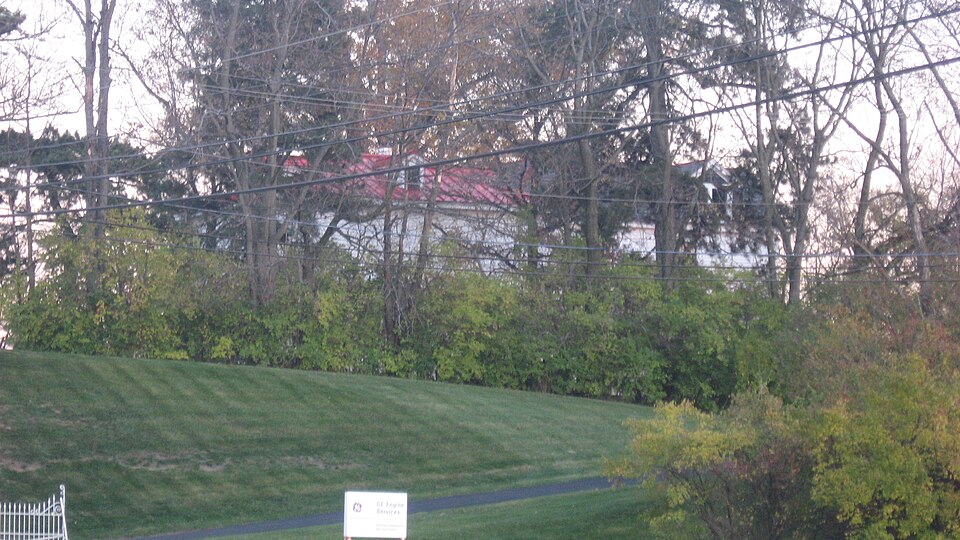
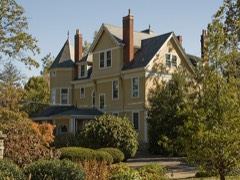
Listed on the National Register of Historic Places in
1974. A historic map-sheet match is not published yet. The record needs a coordinate-quality review before it can be joined to a sheet boundary.
From the record
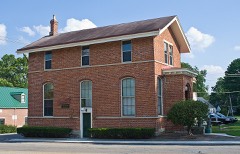
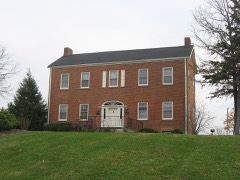
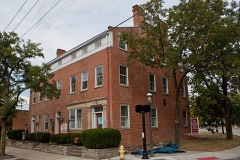
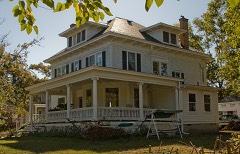
“The Becker House is a historic house on the outskirts of the city of Springdale, Ohio, United States. Constructed in 1830 as a farmhouse, it was for a time home to a prominent figure in the national debate over slavery.”
Wikipedia article Becker House, CC BY-SA 4.0.
one of 314 National Register listings in Hamilton County · listed in 1974 · category: Building · one of 9 National Historic Landmarks in Hamilton County.
National Register reference number.74001522- the number the National Park Service assigned this property when it was listed, and the key its nomination file is catalogued under at the National Archives.
Some of the earliest tradesmen and mechanics of the village are thus recalled by Mr. Anthony Hilts, one of the very oldest survivors of the early day in Springdale: John Baldwood, proprietor of the town, blacksmith; John McGilliard, postmaster; Captain John Brownson, hotelkeeper; Garret Lefferson, and Isaac Larrne, blacksmiths; Colonel William Chamberlain, dry goods merchant; John Swallow, dealer in dry goods and groceries ; N. S. Schorey, tanner and currier; the father of Governor O. P. Morton, of Indiana (who was brought up in Springdale), hotel-keeper; William Creager, cabinetmaker and undertaker; John Rogers, manufacturer of Windsor chairs; Hatfield Williams, wheelwright; James Cogg, hatter; Joseph Hagerman, physician. It is also remembered by old citizens that one Birder made hats in Springdale about sixty years - of rabbit and other fur, great bellcrowned affairs, that would hold a peck apiece, the fur sticking out of them half an inch or more. It is thought that James Cogy preceded Creager as cabinetmaker, and was the first in the village; and that Creager was followed by Garrett Williamson.
The old brick store in Springdale was erected in 1833, and the old pork-house on the other side of the street in 1838. Among the oldest dwellings in town, some of which go a long way back, are the Hunt, Prigg, and Creager houses.
Regional context, not property-specific
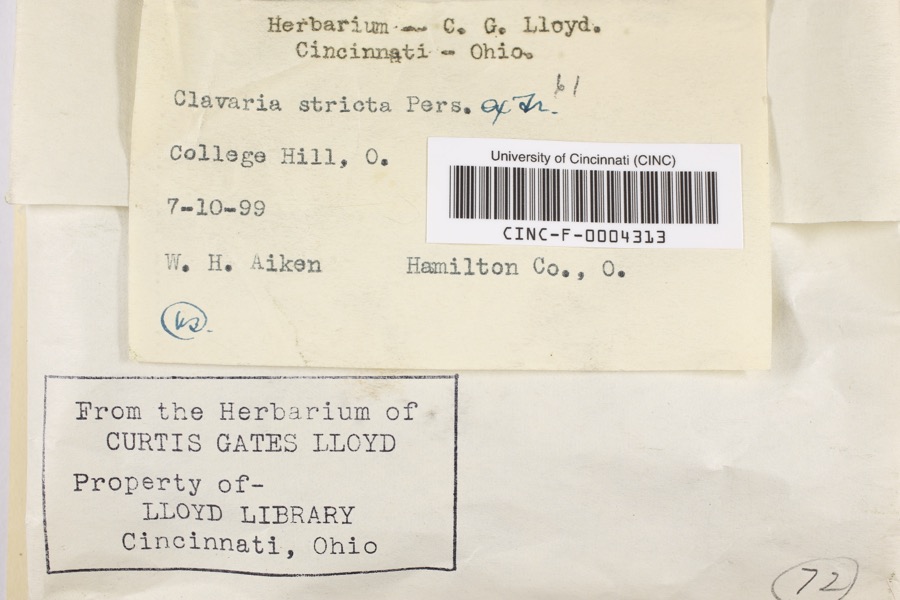
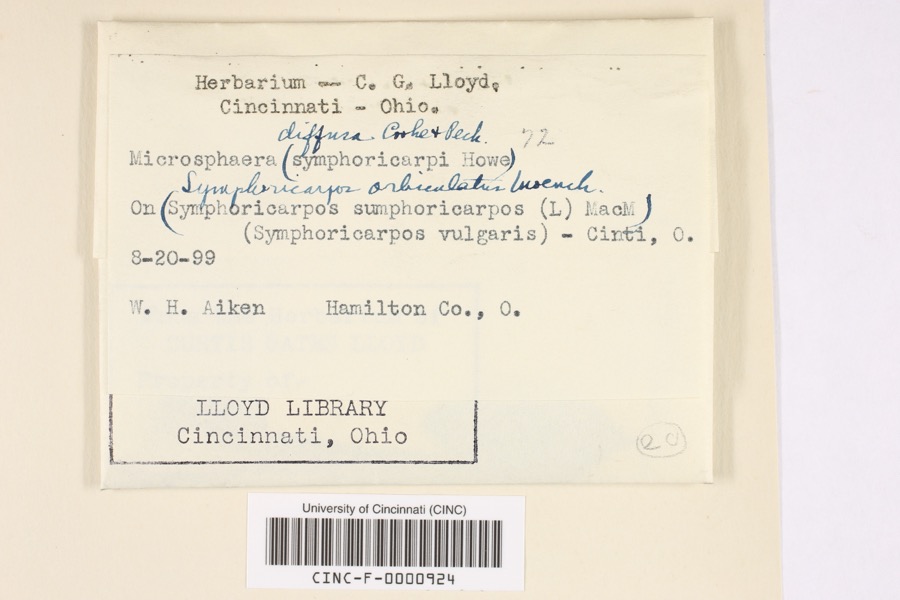
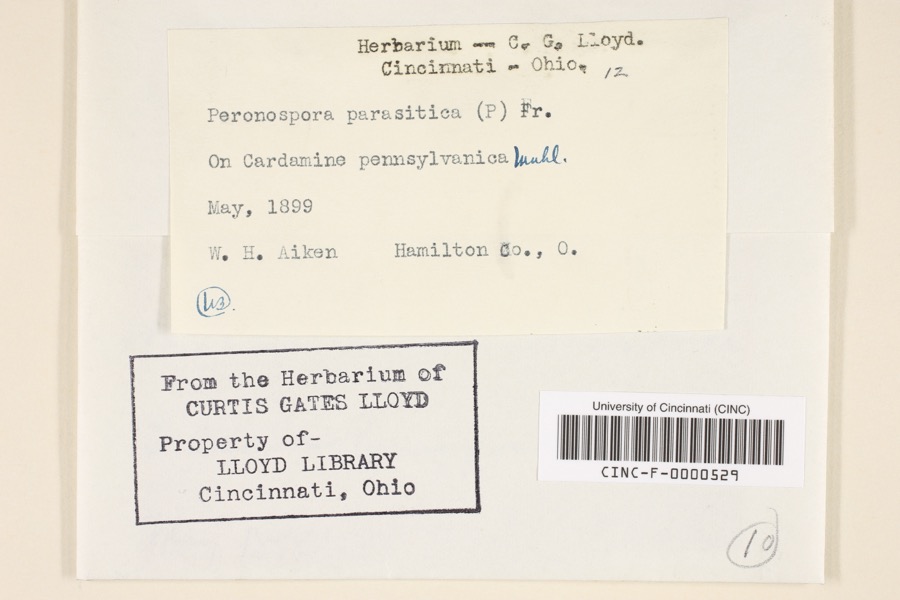
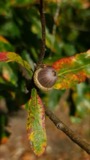
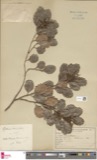
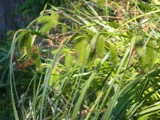
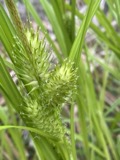
evidence. Museums hold 3,147 specimens
collected within 10 miles of Becker House between 1819 and
1975: 1,933 Fungi, 722 Animalia, 325 Plantae, 138 Protozoa, 16 Chromista, 12 Unrecorded, 1 Bacteria. 12 distinct Species records are shown.
Collected by A. Braun, A. Gaufin, A. H. W. Povah and others. Each is a
physical object with a catalogue
number, and each entry opens the museum's record. This is what was
collected and kept, not a survey of what lives here - nothing can be
concluded from a species being absent.
Regional context, not property-specific
evidence. The National Weather Service names
Springdale, the town this property stands in, in 10 storm reports between 1996 and 2023: 5 hail, 3 thunderstorm wind, 2 flash flood.
No death or injury is recorded in these reports. Each account below is quoted exactly as the forecast office
filed it, from the NOAA Storm Events Database, and each date
opens the federal record of that event.
A large supercell moved across the northeastern parts of the county causing widespread damage. Trees and/or power lines were downed in Springdale, Sharonville, Glendale, and Wyoming. A roof was blown off a manufactoring plant onto Interstate 75 in Lockland. In addition, three-quarter inch diameter hail occurred in Blue Ash and 1 inch diameter fell in Sharonville.
No historic map-sheet match is published
for this property yet. That does not mean no map exists. This record needs
a coordinate-quality review before it can be joined to a sheet boundary.
Browse the county's mapped places while that work is
pending.
From the nomination file
1,772 words on record
When this property was proposed for the
National Register, someone wrote the case for it: what the building is,
and why it matters. That document is a federal record in the public domain.
It is quoted below word for word, never summarised. The text was read off the scanned case file by machine, so the
occasional stray character is the recogniser's and the 1970s
typewriter's.
Description of the property
consisting of small, vertical, turned elements. The roof of the addition highway, is square in shape and has a one story high flat porch roof RECEIVED cornice.The roof of the original section is of a low hip construction with a small dormer centrally placed on each side.All of the windows
Statement of significance
estate transferred the title to John Burgoyne, Jr. Records indicate century, resided there from 1860 to 1864. William Henry Harrison, In 1864 John Burgoyne, Jr. transferred the deed to Mary Regan, who as Rheinbolt Hill and it was probably Rheinbolt who, during almost well landscaped hill, it serves as a visual indentity to the surrounding community, once rolling farmland but now a rapidly developing industrial Historically, lt was the home of Judge John Burgoyne Sr., who was both is threatened by the planned widening of Crescentville Road, from S.R. 4 to S.R. 747. JUL 1 1 1974 park.
Conservation Commerce Communications losophy Architecture Aboriginal REGISTER Science Transportation Theater NATIONAL Education Prehistoric Landscape Agriculture itarian Music Invention Pre-Columbian Burgoyne was the first to pronounce the unconstitutionality of the Industry Political Social/Human- Sculpture teenth century rural homestead and its present excellent condition the clerk of the Court of Common Pleas from Judge Burgoyne.They a local and a national figure.Architecturally it typifies a mid-nine- Cincinnati law and politics during the later part of the nineteenth Religion/Phi retains a strong nineteenth century rural character.Perched on a small, The Becker House has historic as well as architectural significance. remained close friends until Harrison's death in office in 184l.
During his term on the Court of Common Pleas bench in Cincinnati, President of the United States (l84l),received his appointment as thirty years of residence built the large addition to the rear of the Fugitive Slave law. SPECIFIC DATE(S) (If Applicable and Known) that his father, John Burgoyne, Sr., a well known personality in The original portion of the Becker House was built in 1830 by Joseph 1830-1879 Art Engineering RECEIVED Hough ona 63acre tract of 1and.In 1854,executors for the Hough Biographical Publishing Co., 1891, Vol. V. Smalley, Stephen B., Documentation of Becker Residence. July 1973.
Quoted from the National Register nomination
for reference 74001522, 12 pages, held by the National Archives in Record
Group 79. See the
catalogue record.
Listed places nearby
6 within 8 miles
Other National Register properties close
enough to walk or drive between, ordered by distance from this one. Both
positions come from the same geocoding pass that matched these properties
to their map sheets.
Listing record. National Park Service National Register of Historic Places, listed-properties dataset, current to 2026-05-22.
Map join. Address geocoded through the United States Census geocoder, then tested against the published boundary of every sheet in the USGS Historical Topographic Map Collection.
How this page is made. Listing fields come from federal records; map-sheet coverage is a labelled coordinate-to-boundary calculation, not a source-field claim.
Specimens. Global Biodiversity Information Facility (GBIF), https://www.gbif.org/. Only records licensed CC0 or CC BY are used. Records licensed CC BY-NC are excluded because this site carries advertising. Images are checked individually and any whose licence is non-commercial, no-derivatives or unreadable is refused.
Storms. NOAA National Centers for Environmental Information, Storm Events Database https://www.ncei.noaa.gov/stormevents/ A work of the United States government, no copyright under 17 U.S.C. 105. Narratives are quoted verbatim from the National Weather Service report and are not edited or summarised.
 Block
Block