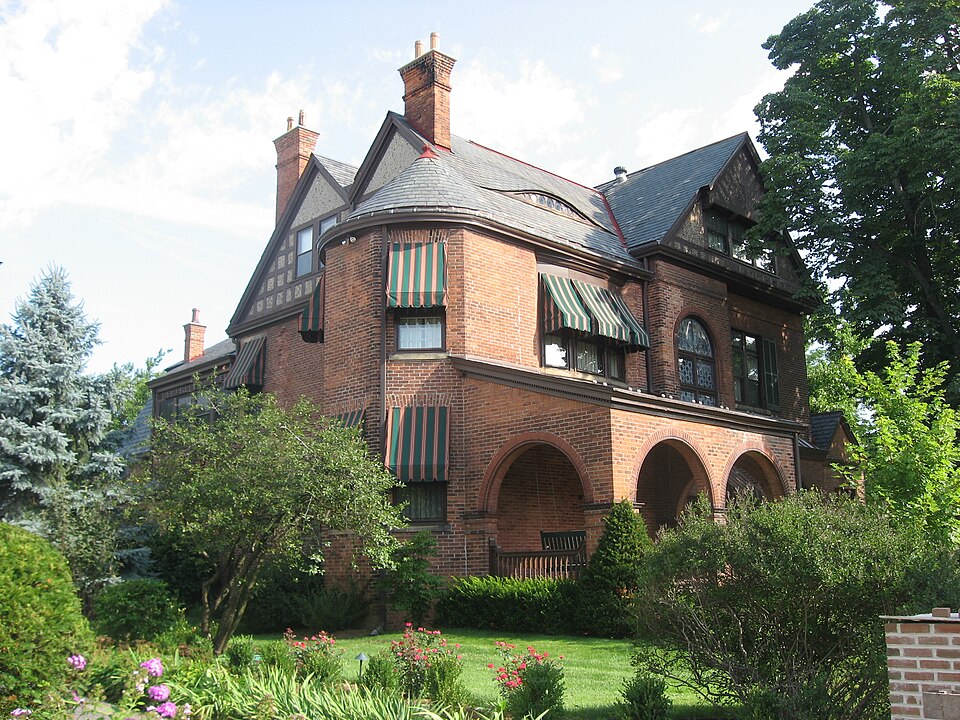
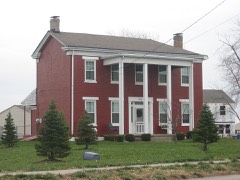
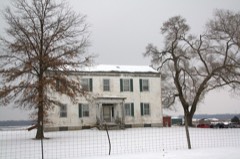
A National Historic Landmark. Listed on the National Register of Historic Places in
1975. A historic map-sheet match is not published yet. The record needs a coordinate-quality review before it can be joined to a sheet boundary.
From the record
“Tytus House is a historic house at 300 South Main Street in Middletown, Ohio, United States. Built in 1865, it was the home of John Butler Tytus (1875-1944), who invented a practical hot wide-strip continuous steel-rolling process that transformed the American steelmaking industry.”
Wikipedia article John B. Tytus House, CC BY-SA 4.0.
one of 63 National Register listings in Butler County · listed in 1975 · category: Building · one of 3 National Historic Landmarks in Butler County.
National Register reference number.75001335- the number the National Park Service assigned this property when it was listed, and the key its nomination file is catalogued under at the National Archives.
The original town plat of Middletown, laid out in 1802 by Stephen Vail and James Sutton, reads as follows: "The above town is laid out in the fractional section No. 28, in township and fourth range, between the Miami Rivers. ach lot is six poles one way, agreeably to the plan, except the lots Nos. 43, 46, 47, and 50, which are six poles square. The streets are each four poles wide. The course of those running from the river is south, sixty degrees east. Water and Main Streets cross the other at right angles. North Alley and South Alley are each two poles wide. East Alley and West Alley are each one pole wide. The alleys are parallel with the streets. The streets and alleys to be perpetually kept open for public use. The lots Nos. 10 and 11, which are colored green, are set aside for the public, to be appropriated to county purposes. First, Second, and Third Streets are always to be kept open to the river."
In 1816 the first addition was laid out, as follows: 'Tn addition to Middletown, in the county of Butler, the subscribers have laid off fifty-seven lots, of the same dimensions of the whole lots in the old plat, excepting Lot 65, containing one hundred and fifty-six poles and fourfifths. Broad Street is five poles wide. What was called South Alley is made three poles wide and called Fourth Street, and the one south of it three poles wide and called Fifth Street. What is called East Alley, in the old part of the town, between the lots on Broadway Street and Main Street, is continued at one pole wide and called Middle Alley; and the one east of the lots, on the east side of Broadway, is one pole wide and called East Alley. The streets and alleys are parallel with those of the old town plat, as recorded, and are to be opened at any time a majority of the subscribers may think necessary, as witness our hands this the twentyseventh day of March, 1816. Broad Street is to be continued at each end thereof the same course until it intersects the county road to Franklin and the one south to Middletown, leading to Reading and thence to Cincinnati." This is signed by Hugh Vail, Shobal Vail, John Cummings, Daniel Doty, and Abner Enoch.
Regional context, not property-specific
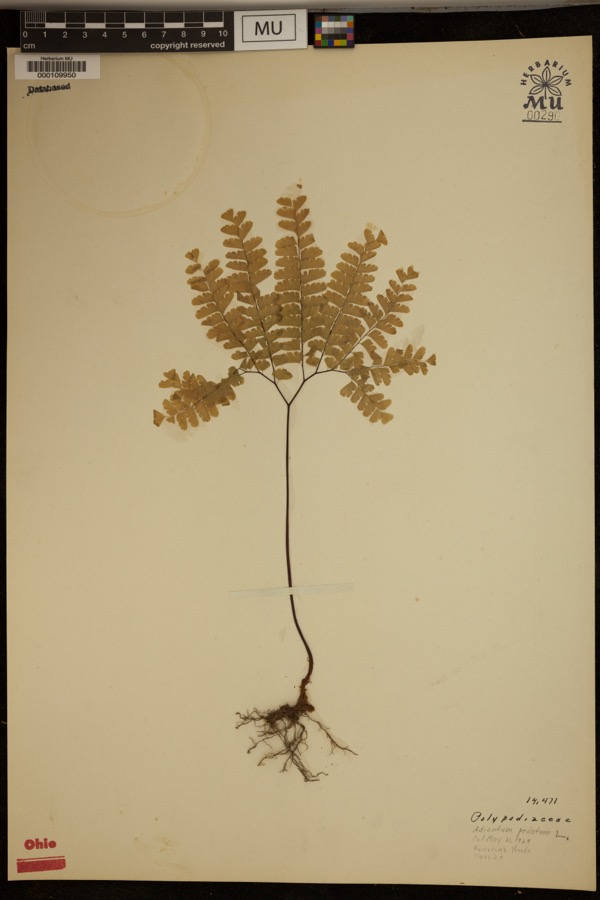
evidence. Museums hold 197 specimens
collected within 10 miles of Tytus, John B., House between 1879 and
1973: 111 Fungi, 74 Animalia, 12 Plantae. 12 distinct Species records are shown.
Collected by ?, A. C. Billups, A.R. Gaufin, H.H. Ross and others. Each is a
physical object with a catalogue
number, and each entry opens the museum's record. This is what was
collected and kept, not a survey of what lives here - nothing can be
concluded from a species being absent.
Regional context, not property-specific
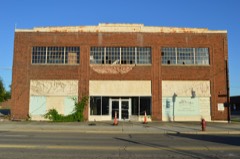
evidence. The federal mineral resources record lists
8 workings within 5 miles of Tytus, John B., House: 3 past producers, 3 producers, 1 unknown, 1 plant.
4 still produce. What was taken out: Sand and Gravel, Construction, Iron. Distance is straight-line from the
map coordinates, so a quarry counted here may appear on a neighbouring
settlement's page as well.
Regional context, not property-specific
evidence. The National Weather Service names
Middletown, the town this property stands in, in 37 storm reports between 1994 and 2024: 22 thunderstorm wind, 12 hail, 2 flash flood, 1 lightning.
The reports record 2 injuries. Each account below is quoted exactly as the forecast office
filed it, from the NOAA Storm Events Database, and each date
opens the federal record of that event.
A woman was injured when a tree fell on her. She suffered a concussion and some cuts and bruises. Numerous trees were downed in the Middletown and in New Miami areas.
Heavy rainfall caused flooded streets. Many vehicles were stranded in the high water including an ambulance that was transporting a patient to a hospital.
No historic map-sheet match is published
for this property yet. That does not mean no map exists. This record needs
a coordinate-quality review before it can be joined to a sheet boundary.
Browse the county's mapped places while that work is
pending.
From the nomination file
2,129 words on record
When this property was proposed for the
National Register, someone wrote the case for it: what the building is,
and why it matters. That document is a federal record in the public domain.
It is quoted below word for word, never summarised. The text was read off the scanned case file by machine, so the
occasional stray character is the recogniser's and the 1970s
typewriter's.
Description of the property
Built of red brick, the John Tytus House combines elements of Romanesque and Tudor revival styles. L-shaped in plan, the house features a shed sided bay at the south end of the main facade which ends with a short conical roof, intersecting gable rooflines (one of which has an elliptical dormer), and various arched and rectangular windows, some with leaded St., originally contained the four principle rooms of the first floor, a service stair, four bedrooms flanking a hall on the second, and three oak paneling, stairway and banisters. The room is lighted on two sides and alcove space to the left of the fireplace contain cherry woodwork in brown paper. glass.
CONDITION Excellent DESCRIPTION fireplace just behind the reception room and contains some wide woodwork The stairway which divides this room from the reception room is original Detailing and materials are identical for both portions. the mantle piece and wainscot.The mantle shelf features carved Adam and oak with elaborate panelling.The dining room and the study are are architecturally detailed with reed and fluted pilasters flanking the (Check One) large attic rooms on the third. The second stage, built onto the rear, condition and the wooden portion is badly deteriorated.
Though interesting architecturally, the Tytus House is important as the childhood and later years home of John Butler Tytus (1875-1944) who invented the "hot strip" or continuous rolling mill, which is facet of steel-making. In 1917, with the country at war, the mills As with any revolutionary idea, there were numerous obstacles. Finally, in 1921, the mill produced a ribbon of steel so thin it crackled. something other than heroism or lifesaving. In 1935, the American Iron and Steel Institute presented Tytus with he Gary Memorial Award, the highest honor in the industry, for his outstanding achievements. operation.
losophy Engineering Commerce Conservation Architecture Communications Aboriginal Prehistoric SIGNIFICANCE Literature Agriculture Music itarian Political Science Education Pre-Columbian Sculpture ten greatest inventors of modern times. Landscape Tytus was given the idled mill at Ashland,Kentucky for his experiments. through twenty-two rolls until it was thin enough.Tytus was convinced Distinguished Service Award in 1926,the first person awarded it for Tytus became a vice-president of Armco and received that company's that the same continuous rolling process used in the paper mill could be family paper mill and then in a bridge construction company in Dayton. adapted to steel-making.
of hot steel could be pushed through the rolls in one continuous After graduating from Yale in 1897,Tytus worked for a short time in the million needed to build a continuous rolling mill. They decided to risk He tore out the mill stands and placed them end to end so that the bars of strip steel.A team of men pushed a bar of steel twenty-two times had invested half a billion dollars in 27 continuous wide-strip mills. it was rolling 40,000 tons a month.
Quoted from the National Register nomination
for reference 75001335, 12 pages, held by the National Archives in Record
Group 79. See the
catalogue record.
Listed places nearby
6 within 8 miles
Other National Register properties close
enough to walk or drive between, ordered by distance from this one. Both
positions come from the same geocoding pass that matched these properties
to their map sheets.
Listing record. National Park Service National Register of Historic Places, listed-properties dataset, current to 2026-05-22.
Map join. Address geocoded through the United States Census geocoder, then tested against the published boundary of every sheet in the USGS Historical Topographic Map Collection.
How this page is made. Listing fields come from federal records; map-sheet coverage is a labelled coordinate-to-boundary calculation, not a source-field claim.
Specimens. Global Biodiversity Information Facility (GBIF), https://www.gbif.org/. Only records licensed CC0 or CC BY are used. Records licensed CC BY-NC are excluded because this site carries advertising. Images are checked individually and any whose licence is non-commercial, no-derivatives or unreadable is refused.
Mines and quarries. USGS Mineral Resources Data System (MRDS) https://mrdata.usgs.gov/mrds/ A work of the United States government, no copyright under 17 U.S.C. 105.
Storms. NOAA National Centers for Environmental Information, Storm Events Database https://www.ncei.noaa.gov/stormevents/ A work of the United States government, no copyright under 17 U.S.C. 105. Narratives are quoted verbatim from the National Weather Service report and are not edited or summarised.
 Block
Block