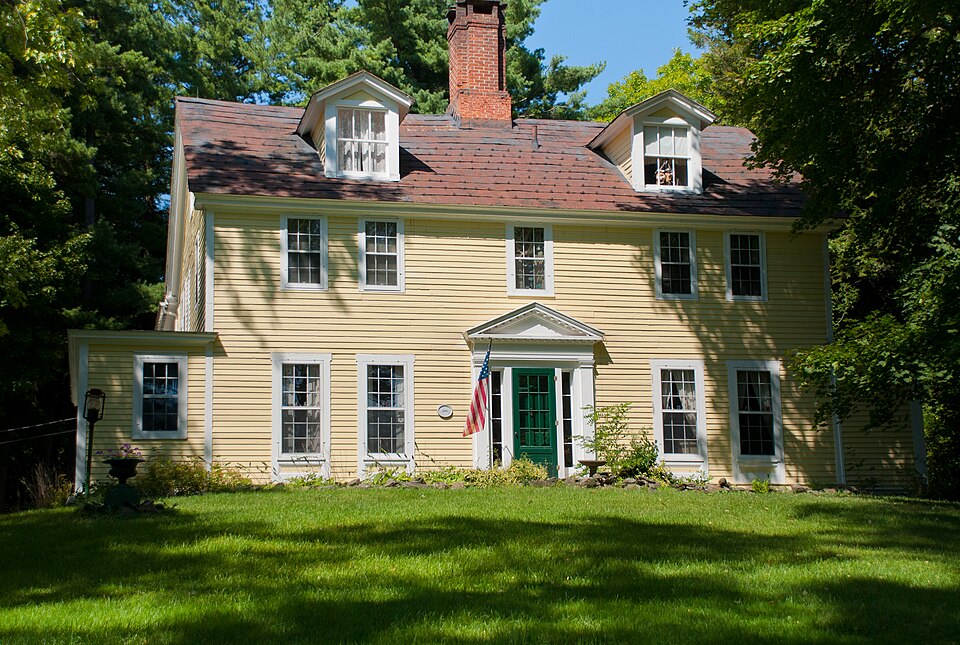
Built in 1792 in the Georgian architecture. Listed on the National Register of Historic Places in
1976. A historic map-sheet match is not published yet. The record needs a coordinate-quality review before it can be joined to a sheet boundary.
From the record
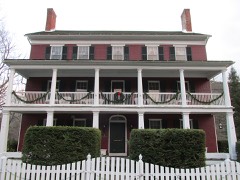
“The Hyde House is a historic house at 144 West Park Street in Lee, Massachusetts. built in 1792 for the town's first minister and subsequently altered significantly, it is important for its historical association with education in the town, hosting a boarding school in the 19th century. It was listed on the National Register of Historic Places in 1976.”
Wikipedia article Hyde House (Lee, Massachusetts), CC BY-SA 4.0.
one of 94 National Register listings in Berkshire County · listed in 1976 · category: Building · built in 1792, Georgian architecture · one of 1 National Historic Landmarks in Berkshire County.
Architectural style. Georgian architecture, colonial architecture
National Register reference number.76000239- the number the National Park Service assigned this property when it was listed, and the key its nomination file is catalogued under at the National Archives.
Fires near this property
27 since 2003
Regional context, not property-specific
evidence. The
federal wildfire occurrence database
lists 27 fires within 5 miles of Hyde House between
2003 and 2020, burning about 15 acres in total. 1 started naturally. None was recorded as arson.
Distance is straight-line from the map coordinates, so a fire counted
here may appear on a neighbouring settlement's page as well.
Reported cause
Fires
Debris and open burning
11
Recreation and ceremony
5
Missing data/not specified/undetermined
4
Equipment and vehicle use
4
Other causes
2
Natural
1
The most recent of
them, most recent first, with the day each was reported and the service
that recorded it.
Regional context, not property-specific
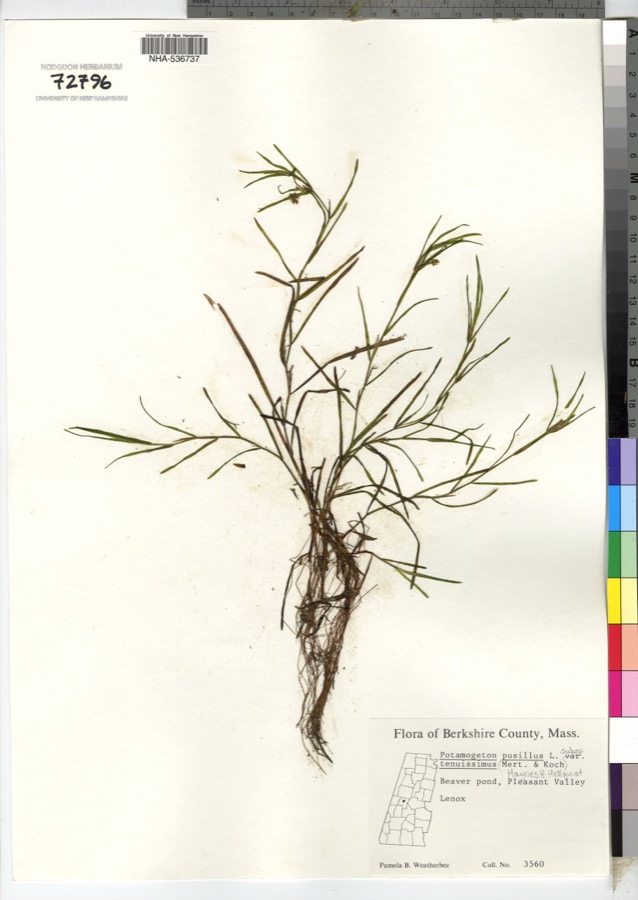
evidence. Museums hold 2,277 specimens
collected within 10 miles of Hyde House between 1833 and
1975: 1,122 Animalia, 870 Plantae, 277 Fungi, 3 Protozoa, 3 Unrecorded, 2 Chromista. 12 distinct Species records are shown.
Collected by A W Evans, A. Brown, A. E. Treat and others. Each is a
physical object with a catalogue
number, and each entry opens the museum's record. This is what was
collected and kept, not a survey of what lives here - nothing can be
concluded from a species being absent.
Regional context, not property-specific
evidence. The federal mineral resources record lists
15 workings within 5 miles of Hyde House: 8 past producers, 6 producers, 1 unknown.
6 still produce. What was taken out: Sand and Gravel, Construction, Iron, Marble, Dimension, Calcium. Distance is straight-line from the
map coordinates, so a quarry counted here may appear on a neighbouring
settlement's page as well.
Regional context, not property-specific
evidence. The National Weather Service names
Lee, the town this property stands in, in 40 storm reports between 1993 and 2026: 30 thunderstorm wind, 5 hail, 5 flash flood.
No death or injury is recorded in these reports. Each account below is quoted exactly as the forecast office
filed it, from the NOAA Storm Events Database, and each date
opens the federal record of that event.
Heavy rainfall from slow moving thunderstorms resulted in flash flooding in Lee. Fairview street was closed due to high water and a car was trapped within the flood waters on Fairview Street beneath the Massachusetts Turnpike overpass.
Numerous thunderstorms developed ahead of a cold front during the afternoon and evening hours of August 2 across Berkshire County. One of the storms briefly pulsed to severe levels, depositing one inch diameter hail in the town of Lee.
Emergency Management, state police and Skywarn observers reported trees and wires downed in many parts of Berkshire County. Some roads were blocked in Stockbridge. About 1,500 customers were without power.
No historic map-sheet match is published
for this property yet. That does not mean no map exists. This record needs
a coordinate-quality review before it can be joined to a sheet boundary.
Browse the county's mapped places while that work is
pending.
From the nomination file
2,210 words on record
When this property was proposed for the
National Register, someone wrote the case for it: what the building is,
and why it matters. That document is a federal record in the public domain.
It is quoted below word for word, never summarised. The text was read off the scanned case file by machine, so the
occasional stray character is the recogniser's and the 1970s
typewriter's.
Description of the property
The Hyde House is a large, vernacular Georgian style dwelling. It was built in 1792 and is located at 144 West Park Street in a residentially zoned area near the center of Lee. The house is set well back from the street with a landscaped lawn in front and large trees surrounding the sides and rear. The original house, which forms the central part of the current house, is built on a fieldstone foundation. It is of wood frame, plank construction and covered with four inch clapboard. The geometric shape of the house is rectangular; the facade is synmetrical with five bays of nine over nine windows and the center entrance on the first floor, and six over six windows on the second floor. The doorway is graced with fluted pilasters and capped with a triangular pediment.
The door itself is not original. It was reproduced according to an original design, but made wider to meet tire satety regulations. . The house is two and one half stories, with a medium height pitched roof that is pierced by two dormers. The interior design of the original house has been altered considerably. On the first floor, the original synmetrical layout of the rooms along a central hallway has been changed. The two front rooms remain, but the central staircase has been removed and the partitions that formed the back rooms have been taken out to create one Large room. Paneling has been put on the walls, doors have been changed and large planks have been put across the bottom of the first floor windows.
However, the original detail remains around the ceilings and fireplaces in many of the rooms.
/ARCHITECT The Hyde House has played a significant role in the educational and religious life town of Lee. It has served as the rectory of the First Congregational Church, a boys' boarding school and a private residence. Architecturally, the Georgian style Hyde House is also noteworthy, reflecting the tastes of an eighteenth century clergyman and town. Hyde House was built in 1792 by Reverend Alvan Hyde, the first settled minister of the Lee First Congregational Church. Upon the death of Reverend Hyde, the house was inherited by his son, Alexander Hyde. house called "Hyde Park Family Boarding School for Boys." The large addition at the rear of the house was built to accommodate the school. In 1867, the boarding school closed and the house was again used only as a private residence.
It was owned by the Hyde family until 1967, when the house was given to the newly founded Lee YMCA. Both Alvan and Alexander Hyde played significant roles in the early history of Lee. forty-one years, had an important impact on the religious life of the commmity. He was instrumental in the founding of Lee Academy which later became Lee High School. His own boarding school attracted boys from New York, Boston and Chicago and included F.D.R.'s father James Roosevelt and Arthur Gilman, a well-known educator who was one of the founders of Radcliffe.
Alexander also served as the first president of the Berkshire Historical and Scientific Society, contributed weekly articles on scientific agriculture to the New York Times, and was asked to be president of Massa- chusetts Agricultural College at Amherst - the present University of Massachusetts, an invitation he declined. In 1880 he was elected to the Massachusetts Legislature, and died a year later in Boston while attending a legislative session.
Quoted from the National Register nomination
for reference 76000239, 12 pages, held by the National Archives in Record
Group 79. See the
catalogue record.
Listed places nearby
6 within 8 miles
Other National Register properties close
enough to walk or drive between, ordered by distance from this one. Both
positions come from the same geocoding pass that matched these properties
to their map sheets.
Listing record. National Park Service National Register of Historic Places, listed-properties dataset, current to 2026-05-22.
Map join. Address geocoded through the United States Census geocoder, then tested against the published boundary of every sheet in the USGS Historical Topographic Map Collection.
How this page is made. Listing fields come from federal records; map-sheet coverage is a labelled coordinate-to-boundary calculation, not a source-field claim.
Wildfire. Short, Karen C. 2022. Spatial wildfire occurrence data for the United States, 1992-2020 [FPA_FOD_20221014]. 6th Edition. Fort Collins, CO: Forest Service Research Data Archive. https://doi.org/10.2737/RDS-2013-0009.6 Collected with United States Government funding and usable without additional permissions or fees.
Specimens. Global Biodiversity Information Facility (GBIF), https://www.gbif.org/. Only records licensed CC0 or CC BY are used. Records licensed CC BY-NC are excluded because this site carries advertising. Images are checked individually and any whose licence is non-commercial, no-derivatives or unreadable is refused.
Mines and quarries. USGS Mineral Resources Data System (MRDS) https://mrdata.usgs.gov/mrds/ A work of the United States government, no copyright under 17 U.S.C. 105.
Storms. NOAA National Centers for Environmental Information, Storm Events Database https://www.ncei.noaa.gov/stormevents/ A work of the United States government, no copyright under 17 U.S.C. 105. Narratives are quoted verbatim from the National Weather Service report and are not edited or summarised.
 Block
Block