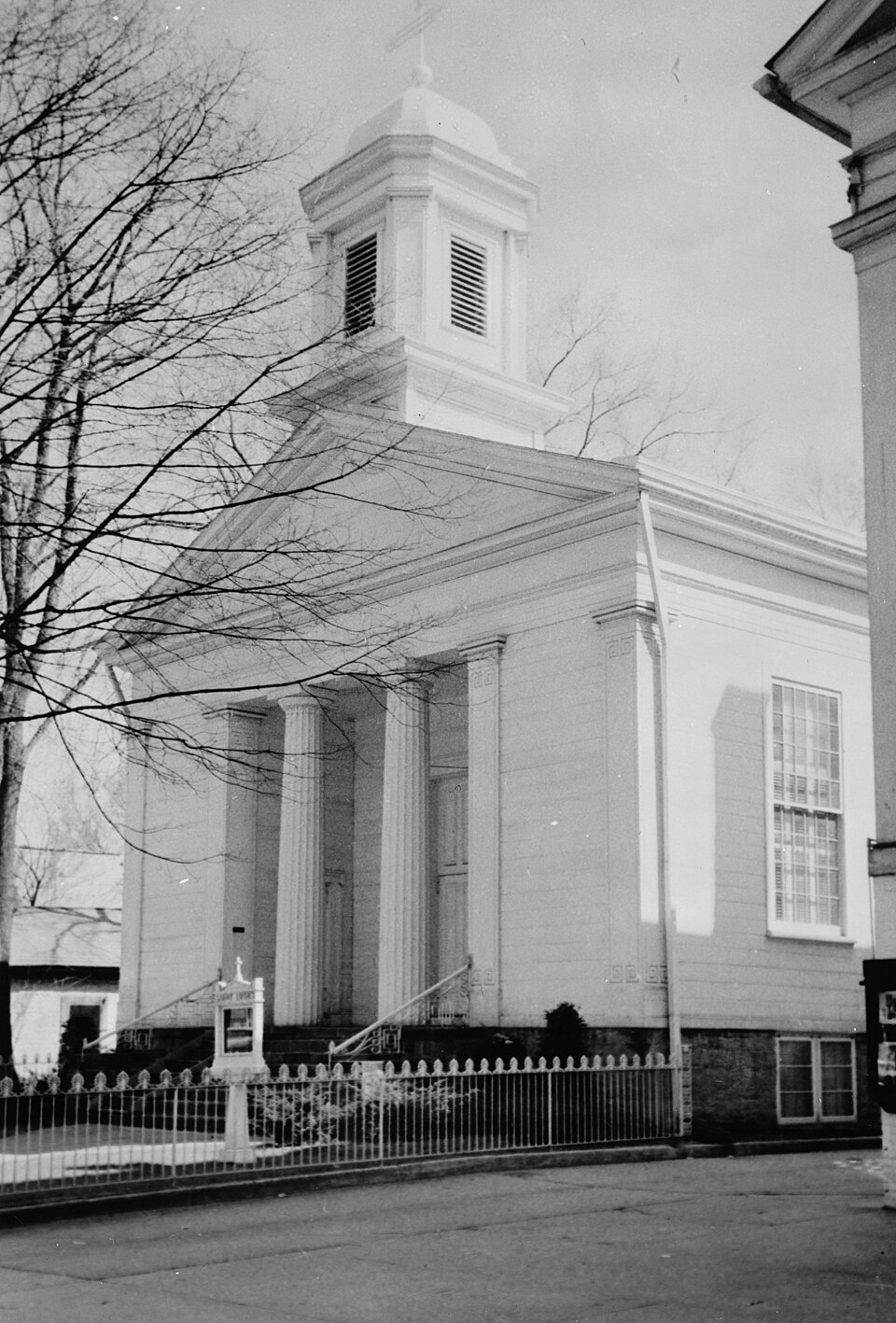
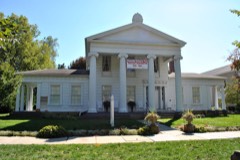
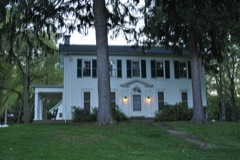
Photograph by Perry E. Borchers, Public domain. Via
Wikimedia Commons.
St. Luke's Episcopal Church
Listed on the National Register of Historic Places in
1976. A historic map-sheet match is not published yet. The record needs a coordinate-quality review before it can be joined to a sheet boundary.
From the record
“Luke's Episcopal Church in Granville, Ohio is a historic church located at 111 E. It is a congregation of the Episcopal Diocese of Southern Ohio.”
Wikipedia article St. Luke's Episcopal Church (Granville, Ohio), CC BY-SA 4.0.
one of 52 National Register listings in Licking County · listed in 1976 · category: Building.
National Register reference number.76001465- the number the National Park Service assigned this property when it was listed, and the key its nomination file is catalogued under at the National Archives.
The township was organized in 1807, out of the west half of Licking township, Fairfield county. The latter township then embraced all of what is now Licking county, except the Refugee lands. This being cut in two in the center, the west half was named Granville, and was, therefore, the second township organized in this territory.
The works of the Mound Builders in this township are very numerous and interesting; indeed, in number and varied character are scarcely excelled by those of Newark township. The Raccoon valley and contiguous territory constitute, probably, the most interesting territory in the State, or even in the United States for the antiquarian. Mounds of different sizes and heights, earthworks of every kind known to the historian exist here in great numbers. Numbers yet to be seen and traced may almost be counted by the hundred, while many, very many, have disappeared entirely, by the ravages of time and the plow, and live only in the memory of the oldest inhabitants. No particular care seems to be taken to preserve these mounds and works. Wherever they are in the way of the tiller of the soil, they are ruthlessly plowed down or dug away. They are disappearing with comparative rapidity, and very soon, with few exceptions, will live only in history. Occcasionally they are erected upon high peaks, or places inaccessible to the plow and cultivator, and in such places are, of course, in the best state of preservation. The traveler between Newark and Granville will observe many of these mounds, a few yet pretty well preserved, even on the extensive and rich bottoms of the Raccoon; but the better preserved works, and those probably the most interesting, are located upon the hills that shut in the valley. Captain M. M. Munson, who occupies a beautiful farm in the midst of these mounds, and who has made them something of a study, is confident that around the great Aligator mound, located not far from his house, is a complete system of mounds and earthworks that point to it as a common center. However this may be, there is certainly a large circle of works in this vicinity, extending several miles in every direction, and seemingly connected with each other and with the "Old Fort" near Newark and its contiguous works.
Regional context, not property-specific
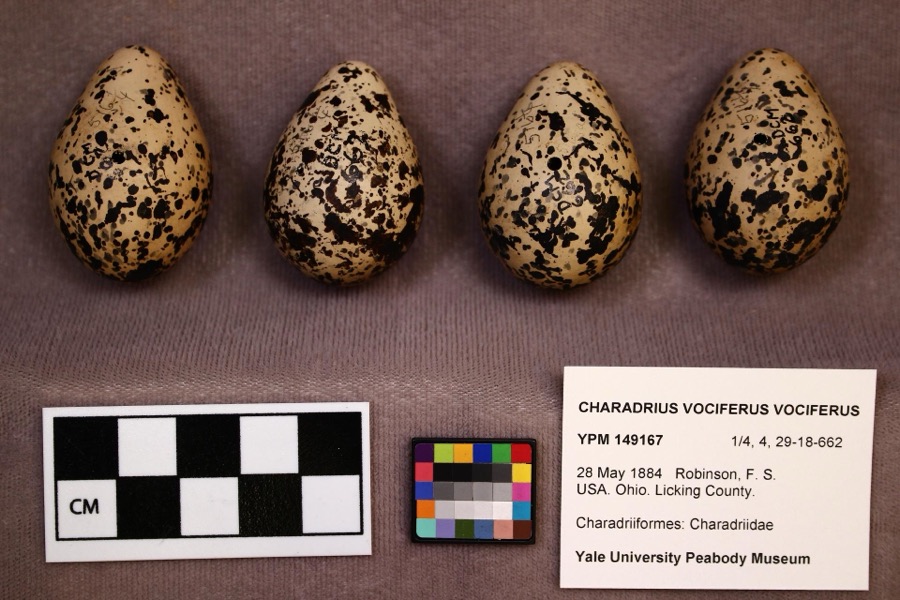
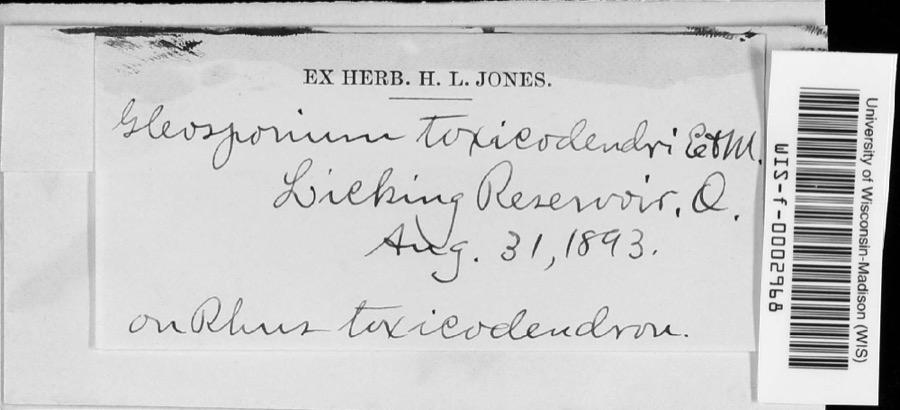
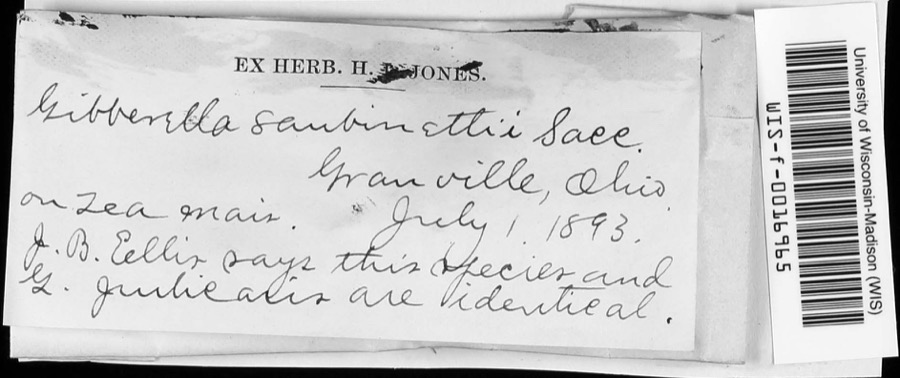
evidence. Museums hold 3,046 specimens
collected within 10 miles of St. Luke's Episcopal Church between 1843 and
1975: 2,724 Animalia, 244 Fungi, 49 Plantae, 26 Protozoa, 3 Chromista. 12 distinct Species records are shown.
Collected by A. Gray; W. S. Sullivant, A. P. M., A. P. Morgan and others. Each is a
physical object with a catalogue
number, and each entry opens the museum's record. This is what was
collected and kept, not a survey of what lives here - nothing can be
concluded from a species being absent.
Regional context, not property-specific
evidence. The federal mineral resources record lists
1 working within 5 miles of St. Luke's Episcopal Church: 1 producer.
All of them still produce. What was taken out: Sand and Gravel, Construction. Distance is straight-line from the
map coordinates, so a quarry counted here may appear on a neighbouring
settlement's page as well.
Regional context, not property-specific
evidence. The National Weather Service names
Granville, the town this property stands in, in 32 storm reports between 1995 and 2026: 26 thunderstorm wind, 3 hail, 2 flash flood, 1 heavy rain.
No death or injury is recorded in these reports. Each account below is quoted exactly as the forecast office
filed it, from the NOAA Storm Events Database, and each date
opens the federal record of that event.
Heavy rainfall caused flash flooding in the area. There were numerous reports of water flowing over roads in Union Township, Hebron, and the Buckeye Lake area. One woman was trapped in a car due to high water.
No historic map-sheet match is published
for this property yet. That does not mean no map exists. This record needs
a coordinate-quality review before it can be joined to a sheet boundary.
Browse the county's mapped places while that work is
pending.
From the nomination file
2,567 words on record
When this property was proposed for the
National Register, someone wrote the case for it: what the building is,
and why it matters. That document is a federal record in the public domain.
It is quoted below word for word, never summarised. The text was read off the scanned case file by machine, so the
occasional stray character is the recogniser's and the 1970s
typewriter's.
Description of the property
the wrought iron fence has the same motif. The weathervane is original, but the but modern fire laws forced a conversion to a door. The garden at the back of medallion, a seven-light brass chandelier is suspended. The organ is at the back the church on either side are choir pews. A door on the east front leads into the The undercroft contains a pine paneled room, a larger assembly room, a small kitchen, the rector's office, a furnace room and restrooms.
CONDITION DETERIORATED FAIR RUINS Exterior:St.Luke's Episcopal Church is one of the finest examples of Greek with the original sandstone slabs set in sand.The double front doors at center front open into the narthex and a single door on the right side of the portico the corners of the building are squared off with pilasters which are decorated the church is surrounded by a native sandstone curved wall which contains a Interior:The double front doors open into a front narthex which opens at each The front yard is fenced in with a wrought iron fence which opens with a double weathervane.The weathervane is a Greek Athenian flower design and the top of 38 ft. across the front and 64 ft.deep. The siding is black walnut timbers.
sacristry and the west front door opens into the rector and acolyte gowning room. form in which it was erected in 1837. It is a white frame building measuring double iron gate on the south and a single gate next to the church on the east.
up until his last illness of tuberculosis, and the testimony of his enlighten- design for this bell tower. 1400-1499 1837 1700-1799 LAW THEATER RELIGION EXPLORATION/SETTLEMENT ARCHEOLOGY-HISTORIC EDUCATION PERIOD PREHISTORIC BUILDER/ARCHITECT AGRICULTURE TRANSPORTATION ENGINEERING SCULPTURE SCIENCE PHILOSOPHY CONSERVATION LITERATURE SIGNIFICANCE INDUSTRY MILITARY XARCHITECTURE _COMMUNICATIONS MUSIC _POLITICS/GOVERNMENT The design for the bell tower was an adaptation of Asher Benjamin's designs St.Luke's Episcopal Church is nominated as an excellent example of the Greek revival style used in church architecture in Ohio. famous New York architect whom the Vestry of 1837 consulted and he sent drawings for the interior of the church.
_1500-1599 during the winter of 1838 on the moldings and cornices of deep relief and Columbus, and he designed the church and one Granville residence for Alfred -1600-1699 by the conversion of his brother Lucius.Lucius D.Mower had been a skeptic used the Asher Benjamin book for workmen and builders guides to get his St.Luke's was erected as an Episcopal meeting house in 1837,with funds The ceiling and all lathing and plastering was done by Orren Bryant of _COMMERCE The architect was Benjamin Morgan (l808-185l) born in England and resided in -ECONOMICS -1900- _COMMUNITY PLANNING INVENTION ARCHEOLOGY-PREHISTORIC rich design.Minard Lafever designed the interior of the church.He was a donated for the building by Sherlock Mower.Mower had been deeply affected State Capitol in Columbus and was a consultant in its building.
he requested to be buried from this church.He also submitted plans for the
Quoted from the National Register nomination
for reference 76001465, 23 pages, held by the National Archives in Record
Group 79. See the
catalogue record.
Listed places nearby
6 within 8 miles
Other National Register properties close
enough to walk or drive between, ordered by distance from this one. Both
positions come from the same geocoding pass that matched these properties
to their map sheets.
Listing record. National Park Service National Register of Historic Places, listed-properties dataset, current to 2026-05-22.
Map join. Address geocoded through the United States Census geocoder, then tested against the published boundary of every sheet in the USGS Historical Topographic Map Collection.
How this page is made. Listing fields come from federal records; map-sheet coverage is a labelled coordinate-to-boundary calculation, not a source-field claim.
Specimens. Global Biodiversity Information Facility (GBIF), https://www.gbif.org/. Only records licensed CC0 or CC BY are used. Records licensed CC BY-NC are excluded because this site carries advertising. Images are checked individually and any whose licence is non-commercial, no-derivatives or unreadable is refused.
Mines and quarries. USGS Mineral Resources Data System (MRDS) https://mrdata.usgs.gov/mrds/ A work of the United States government, no copyright under 17 U.S.C. 105.
Storms. NOAA National Centers for Environmental Information, Storm Events Database https://www.ncei.noaa.gov/stormevents/ A work of the United States government, no copyright under 17 U.S.C. 105. Narratives are quoted verbatim from the National Weather Service report and are not edited or summarised.
 Block
Block