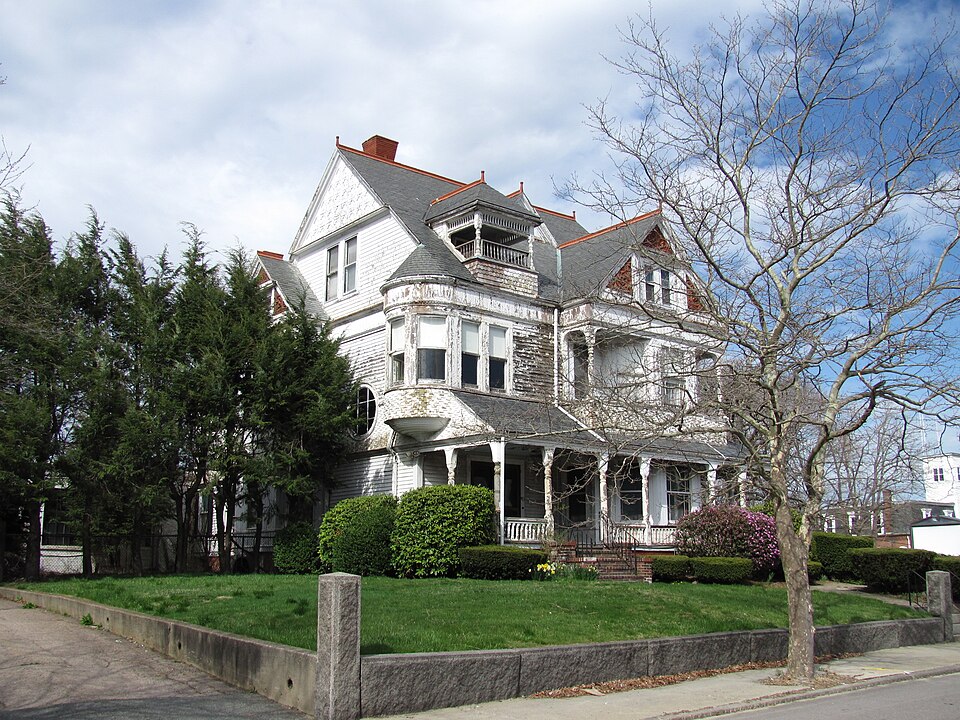
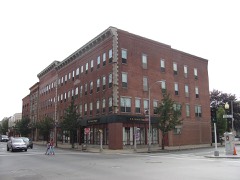
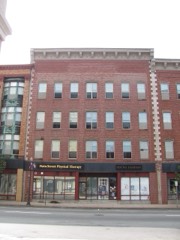
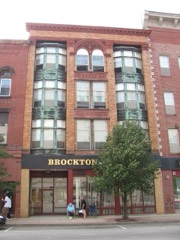
Architectural style. Queen Anne style architecture in the United States
National Register reference number.78000471- the number the National Park Service assigned this property when it was listed, and the key its nomination file is catalogued under at the National Archives.
TJniversalist Society. - Since the settlement of Rev. Mr. Surt, in 1864, the pulpit of the Universalists of Brockton has had a varied experience, and the supply been somewhat irregular. Rev. Stephen L. Rorapaugh was pastor from May, 1864, to Dec. 16, 1806, when he resigned, though he continued preaching till March 24, 1867. The next pastor was the Rev. Isaac M. Atwood, from May, 1807, to 1872. Rev. S. S. Hcbard, April, 1872.
Several changes took place in the affairs of the society from 1872 to 1877. About that time Rev. Samuel L. Beal removed to Brockton from Provincetown, and gathered a new organization of members of the disbanded society, and preached in the old Universalist Church, which was then unoccupied, where he remained for a few months, and then removed to the Grand Army Hall, East Elm Street, where he remained for two to three years. His first great effort was to organize a Sunday-school, which he did on the 5th day of June, 1877. In 1880 this society removed to Cunningham Hall, formerly the old Universalist Church, where he continued for about three years. On the 9th of November, 1880, a new and legal organization of the society took place, under the name of New Universalist Society. The success uf the society has been largely through the efforts and labors of Rev. Mr. Beal, who had gatliercd au assembly representing nearly one hundred families, and a Sunday-school having a library of about one thousand volumes. Mr. Beal was an active and earnest man in the pulpit. He was also deeply interested in temperance and other reforms in the city, and labored vigorously with tongue and pen to check the tide of intemperance and vice, and often with telling effect. Mr. Beal did faithful service on the school committee in 1882. Rev. Mr. Beal retired from the service of this church in August, 1883.
Regional context, not property-specific
evidence. The
federal wildfire occurrence database
lists 437 fires within 5 miles of Dr. Edgar Everett Dean House
between 2005 and 2020, burning about 186 acres in total. 5 started naturally. 8 were recorded as arson.
Distance is straight-line from the map coordinates, so a fire counted
here may appear on a neighbouring settlement's page as well.
Reported cause
Fires
Debris and open burning
212
Missing data/not specified/undetermined
134
Misuse of fire by a minor
30
Recreation and ceremony
30
Smoking
17
Arson/incendiarism
8
Natural
5
Fireworks
1
The most recent of
them, most recent first, with the day each was reported and the service
that recorded it.
Regional context, not property-specific
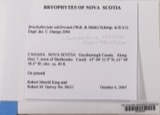
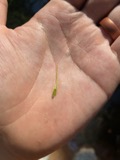
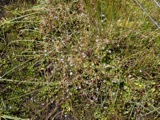
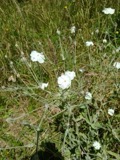
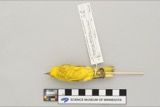
evidence. Museums hold 793 specimens
collected within 10 miles of Dr. Edgar Everett Dean House between 1857 and 1975: 441 Plantae, 216 Fungi, 133 Animalia, 1 Chromista, 1 Protozoa, 1 Unrecorded.
12 distinct Species records are shown.
Collected by A. A. Eaton, A. B. Seymour, A. Clark and others. Each is a
physical object with a catalogue
number, and each entry opens the museum's record. This is what was
collected and kept, not a survey of what lives here - nothing can be
concluded from a species being absent.
Regional context, not property-specific
evidence. The federal mineral resources record lists
12 workings within 5 miles of Dr. Edgar Everett Dean House: 9 past producers, 2 producers, 1 plant.
3 still produce. What was taken out: Sand and Gravel, Construction, Stone, Crushed/Broken. Distance is straight-line from the
map coordinates, so a quarry counted here may appear on a neighbouring
settlement's page as well.
Regional context, not property-specific
evidence. The National Weather Service names
Brockton, the town this property stands in, in 26 storm reports between 1994 and 2023: 8 thunderstorm wind, 8 hail, 3 heavy rain, 3 lightning.
The reports record 60 injuries. Each account below is quoted exactly as the forecast office
filed it, from the NOAA Storm Events Database, and each date
opens the federal record of that event.
Numerous trees and wires were downed by thunderstorm winds throughout Brockton. This includes trees and wires on Warren Avenue in front of the Boys and Girls Club, near the high school, on Route 14, on French and Perkins Avenues, and on Ash Street. One of these trees fell on a dentists office on South Street in the Campello neighborhood.
A line of thunderstorms moved across parts of central and eastern Massachusetts with wind gusts to 40 to 50 mph. In Lowell, two children received minor injuries when a tree fell on them after it was uprooted by winds gusting to an estimated 50 mph. In Southboro, large tree limbs were downed. In Swampscott, a tree fell on an automobile. In Belmont, Cambridge, and Watertown, tree limbs and a few power lines were reported blown down. In Brockton, two large tree limbs were knocked down. In downtown Boston, a street sign was blown down and hit a man on the head.
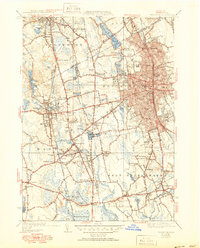
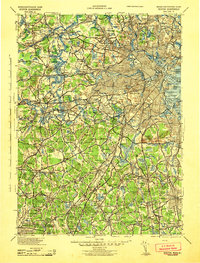
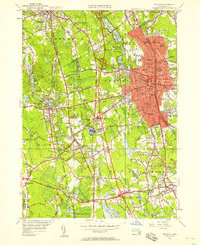
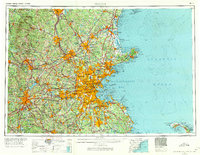
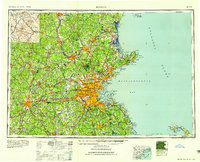
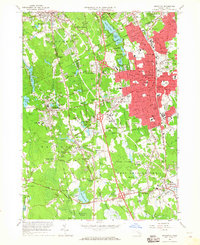
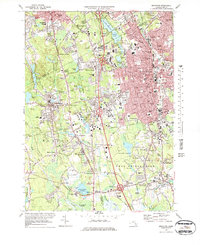
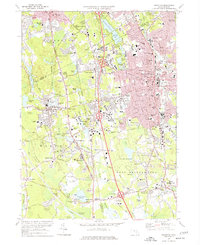
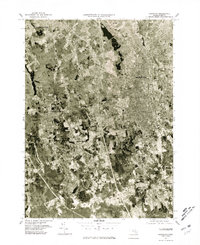
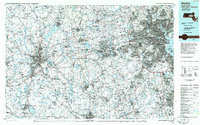
United States Geological Survey topographic
sheets whose coverage includes this point. Matched by taking the coordinate the National Park Service records for this property, then
testing that coordinate against the published boundary of every sheet.
When this property was proposed for the
National Register, someone wrote the case for it: what the building is,
and why it matters. That document is a federal record in the public domain.
It is quoted below word for word, never summarised. The text was read off the scanned case file by machine, so the
occasional stray character is the recogniser's and the 1970s
typewriter's.
Description of the property
The Dr. Edgar Everett Dean House is located at 81 Green Street in a residential area of Brockton. The Dean House was designed by Wesley Lyng Minor and built in 1884. It is a 2½ story building with a I-plan or irregular massing. The structure is sheathed in a variety of materials. The first and second stories consist of clapboards separated by a butt-end flored belt. The third story has both regular and imbricated patterns of shingles. A course of tongue and groove between the second and attic floors acts as an entablature. Fenestration is 1/1 of varying sizes. The multiple peaks of the slate roof are topped by finials. The facade faces south on Green Street. A two-story three-sided projecting bay extends at the eastern end of the facade.
It is topped by a gable, stepped out in medieval style, with two recessed windows, creating an open porch supported by turned posts. The upper roof level has a pedimented gable dormer at the western end of the roof. A one story porch with balustrade and a shed roof supported by turned posts extends along the entire facade and turns in a northerly direction to the southern end bays of the east and west elevations. The east elevation has a two story, three-sided projecting bay with French doors at the first floor level at its northern end. It is topped by a stepped gable in medieval style with two recessed windows. S curve brackets. A one story porch with turned posts occupies the northern end of the elevation. A pedimented gable with a sawn wood screen-like ornament tops the east elevation.
The west elevation has a 2½ story, three-sided projecting bay topped by a stepped gable in medieval style with one recessed window.
/ARCHITECT Wesley Lyng Minor The Dr. Everett Dean House is an outstanding example of the Queen Anne style. Built in 1884 and designed by Wesley Lyng Minor, the Dean House is the earliest known house designed by Minor in Brockton. As the leading late 19th century architect in Brockton, Minor designed the Brockton City Hall (NR). He began his training in the late 1860's in New Bedford as an apprentice carpenter to his father, John Wesley Minor. At the same time he studied drawing and architecture with Professor Hamblin, a retired architect. Minor then worked for James McArthus, Jr., architect of the Philadelphia City Hall, and later for Richard Morris Hunt in New York City. Minor settled in Brockton in 1882 and became the architect for many of the city's finest buildings.
Among these are the W.L. Douglas House, Bixby Block (NR), and the Gardner J. Kingman House (NR). The house was built for Dr. Edgar Everett Dean, a prominent physician. Dr. Dean was born in Easton and received his education at town schools, the Bristol Academy in Taunton, and Harvard Medical School, graduating in 1861. After first practicing in Boston, he moved to Brockton (then North Bridgewater) and took over the practice of Alexander Hickborn. Dr. Dean was also very active in Brockton politics. He was originally an ardent Republican but became a Democrat when his close friend, General Benjamin F. Butler of Lowell changed to that party. Dean ran twice unsuccessfully as the Democratic candidate for Congress. In 1882 he was elected to the Board of Aldermen from Ward I.
In 1885 he was appointed to the Board of Health by Major J.J. Whipple. He returned to the Republican Party in 1888.
Quoted from the National Register nomination
for reference 78000471, 13 pages, held by the National Archives in Record
Group 79. See the
catalogue record.
Listed places nearby
6 within 8 miles
Other National Register properties close
enough to walk or drive between, ordered by distance from this one. Both
positions come from the same geocoding pass that matched these properties
to their map sheets.
Listing record. National Park Service National Register of Historic Places, listed-properties dataset, current to 2026-05-22.
Map join. Address geocoded through the United States Census geocoder, then tested against the published boundary of every sheet in the USGS Historical Topographic Map Collection.
How this page is made. Listing fields come from federal records; map-sheet coverage is a labelled coordinate-to-boundary calculation, not a source-field claim.
Wildfire. Short, Karen C. 2022. Spatial wildfire occurrence data for the United States, 1992-2020 [FPA_FOD_20221014]. 6th Edition. Fort Collins, CO: Forest Service Research Data Archive. https://doi.org/10.2737/RDS-2013-0009.6 Collected with United States Government funding and usable without additional permissions or fees.
Specimens. Global Biodiversity Information Facility (GBIF), https://www.gbif.org/. Only records licensed CC0 or CC BY are used. Records licensed CC BY-NC are excluded because this site carries advertising. Images are checked individually and any whose licence is non-commercial, no-derivatives or unreadable is refused.
Mines and quarries. USGS Mineral Resources Data System (MRDS) https://mrdata.usgs.gov/mrds/ A work of the United States government, no copyright under 17 U.S.C. 105.
Storms. NOAA National Centers for Environmental Information, Storm Events Database https://www.ncei.noaa.gov/stormevents/ A work of the United States government, no copyright under 17 U.S.C. 105. Narratives are quoted verbatim from the National Weather Service report and are not edited or summarised.
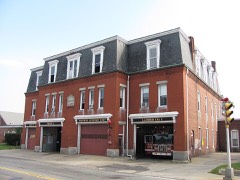
 Block