Listed on the National Register of Historic Places in
1978. A historic map-sheet match is not published yet. The record needs a coordinate-quality review before it can be joined to a sheet boundary.
From the record
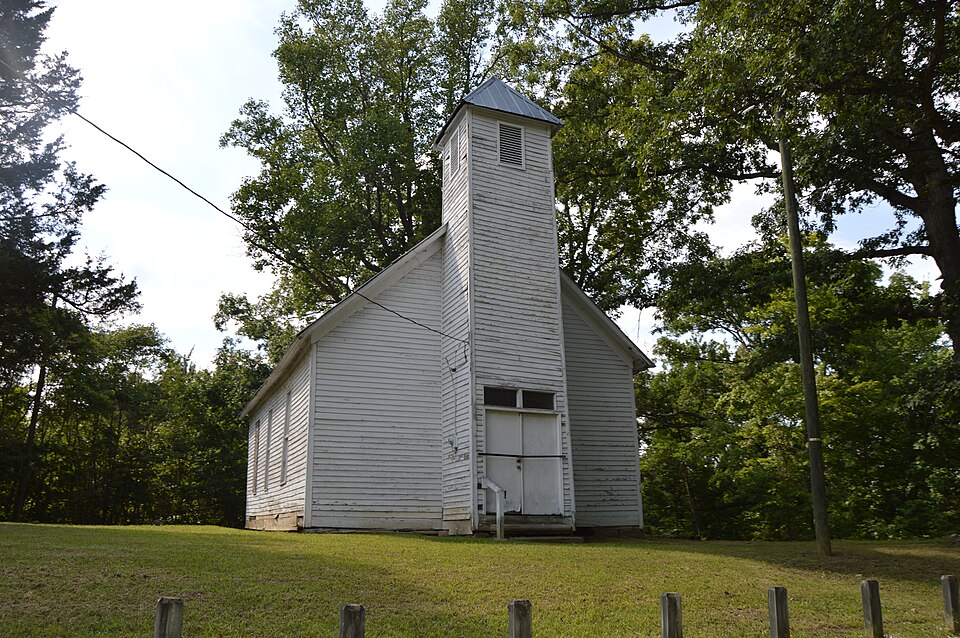
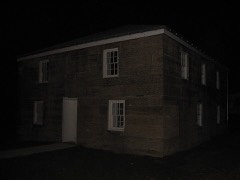
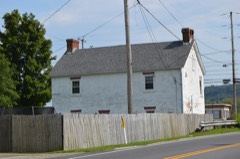
“The Macedonia Baptist Church is a historic former Baptist church building near the community of Burlington at the southern point of the U.S. state of Ohio. Constructed in the middle of the nineteenth century, it held a significant place in the culture of the local black population, and it has been named a historic site.”
Wikipedia article Macedonia Baptist Church (Burlington, Ohio), CC BY-SA 4.0.
one of 16 National Register listings in Lawrence County · listed in 1978 · category: Building.
National Register reference number.78002096- the number the National Park Service assigned this property when it was listed, and the key its nomination file is catalogued under at the National Archives.
Fires near this property
33 since 2001
Regional context, not property-specific
evidence. The
federal wildfire occurrence database
lists 33 fires within 5 miles of Macedonia Church between
2001 and 2020, burning about 75 acres in total. None started naturally. 1 was recorded as arson.
Distance is straight-line from the map coordinates, so a fire counted
here may appear on a neighbouring settlement's page as well.
Reported cause
Fires
Debris and open burning
21
Missing data/not specified/undetermined
5
Recreation and ceremony
4
Arson/incendiarism
1
Other causes
1
Power generation/transmission/distribution
1
The most recent of
them, most recent first, with the day each was reported and the service
that recorded it.
Regional context, not property-specific
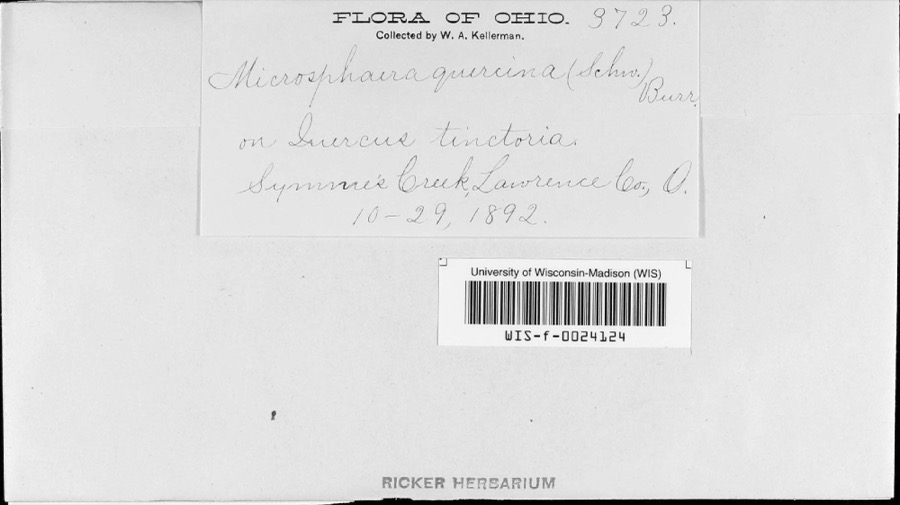
evidence. Museums hold 883 specimens
collected within 10 miles of Macedonia Church between 1840 and
1972: 629 Animalia, 116 Plantae, 115 Fungi, 20 Protozoa, 2 Unrecorded, 1 Chromista. 12 distinct Species records are shown.
Collected by Archer W. A., BARBOUR, DOUGLAS I, BARUCH and others. Each is a
physical object with a catalogue
number, and each entry opens the museum's record. This is what was
collected and kept, not a survey of what lives here - nothing can be
concluded from a species being absent.
Regional context, not property-specific
evidence. The federal mineral resources record lists
9 workings within 5 miles of Macedonia Church: 6 past producers, 2 producers, 1 unknown.
2 still produce. What was taken out: Sand and Gravel, Construction, Clay, Sulfur, Nickel. Distance is straight-line from the
map coordinates, so a quarry counted here may appear on a neighbouring
settlement's page as well.
Regional context, not property-specific
evidence. The National Weather Service names
Burlington, the town this property stands in, in 4 storm reports between 2005 and 2024: 4 thunderstorm wind.
No death or injury is recorded in these reports. Each account below is quoted exactly as the forecast office
filed it, from the NOAA Storm Events Database, and each date
opens the federal record of that event.
No historic map-sheet match is published
for this property yet. That does not mean no map exists. This record needs
a coordinate-quality review before it can be joined to a sheet boundary.
Browse the county's mapped places while that work is
pending.
From the nomination file
1,640 words on record
When this property was proposed for the
National Register, someone wrote the case for it: what the building is,
and why it matters. That document is a federal record in the public domain.
It is quoted below word for word, never summarised. The text was read off the scanned case file by machine, so the
occasional stray character is the recogniser's and the 1970s
typewriter's.
Description of the property
The facade, shorter than the sides of the building, is one bay in width. Moved: Because of the dampness of the original site, the church was CONDITION DETERIORATED DESCRIPTION UNALTERED RUINS of rough plaster was covered in recent years by imitation wood paneling The building is constructed of frame with beveled siding and was moved.Three large crystal ceiling lights with red shades were The gabled tin roof has overlapping eaves with no exposed rafters. plain surrounds and are surmounted by small rudimentary entablatures. XALTERED rests upon a foundation of short pillars of random coursed field stone. such as wooden box pews, stove, woodwork around windows and the pulpit. are located to the right rear of the church as one faces the building.
CHECK ONE -EXCELLENT with small rectangular openings,devoid of sash, on each side of the -UNEXPOSED The Macedonia Church consists of a one story rectangular block, ap- moved approximately 200 yards in 1870. proximately 2o feet by 3o feet, with the gable ends at the front and In the center of the facade is a2 story projecting square bell tower and comes to a point at the top. -GOOD Alterations:The church originally had exterior paneled wooden doors. with double hung sash and two lights over two.lights.The windows have The handsome pressed tin ceiling probably dates from the The sides are divided into three bays by three rectangular windows Outbuildings:One story cinder block restroom facilities built c.1955 wall paper. removed approximately 20 years ago. They dated from the 19th Century.
Plain wooden double doors were added c.l95o.The interior wall surface latter l9th Century, perhaps having been installed after the building AREAS OF
Statement of significance
George Bryant, Charles Roberts and Henry King. Before 1849 the church Massachusetts abolitionist congressman and founder of Ceredo, Virginia freed 37 slaves, Thomas Walker Fry, & preacher, doctor and foreman on the Virginia plantation, became a famous evangelist and built a church in Proctorville, Ohio in 1866. Other notable personalities connected with Macedonia Church were: Rev.
Ike Bryant, a widely respected minister it was moved in 1870; and, Eliza Jane Smith, a Sunday school teacher 1849 1400-1499 LAW EDUCATION 1900- PHILOSOPHY PERIOD BUILDER/ARCHITECT AGRICULTURE PREHISTORIC X1800-1899 ECONOMICS ENGINEERING CONSERVATION POLITICS/GOVERNMENT SCULPTURE SIGNIFICANCE ART ARCHEOLOGY-HISTORIC THEATER INDUSTRY _1700-1799 LITERATURE XARCHITECTURE _TRANSPORTATION ual idealism and industry of Burlington's refugees from slavery. XRELIGION The new immigrants joined with the existing congregation of the church Ridge and erected the present structure. The Macedonia Church is significant as a religious and cultural milestone _EXPLORATION/SETTLEMENT small gifts for perfect attendance out of her own money.
The church, which was the religious and social focal point for the black The Macedonia Church remains today as an important reminder of the spirit- members had worshiped in cabins belonging to the individuals in the churches organized in l830 by Burlington area black religious leaders _COMMUNICATIONS which had been an abolitionist sanctuary for runaway and freed slaves since 1799. in the progress of black history in Southern Ohio.The church building the temporal skills of reading and writing and purchased her students and speaker, whose services were obtained for the church by Eli Thayer; to Burlington to settle as free people on farmland deeded to them Oct. 3l, approximately eight of which are still extant in Ohio and West Virginia.
_1600-1699 West Virginia).o The former slaves and their white neighbors carried XSOCIAL/HUMANITARIAN In the autuum of 1849,a group of 32 freed slaves arrived in Burlington.
Quoted from the National Register nomination
for reference 78002096, 9 pages, held by the National Archives in Record
Group 79. See the
catalogue record.
Listed places nearby
4 within 8 miles
Other National Register properties close
enough to walk or drive between, ordered by distance from this one. Both
positions come from the same geocoding pass that matched these properties
to their map sheets.
Listing record. National Park Service National Register of Historic Places, listed-properties dataset, current to 2026-05-22.
Map join. Address geocoded through the United States Census geocoder, then tested against the published boundary of every sheet in the USGS Historical Topographic Map Collection.
How this page is made. Listing fields come from federal records; map-sheet coverage is a labelled coordinate-to-boundary calculation, not a source-field claim.
Wildfire. Short, Karen C. 2022. Spatial wildfire occurrence data for the United States, 1992-2020 [FPA_FOD_20221014]. 6th Edition. Fort Collins, CO: Forest Service Research Data Archive. https://doi.org/10.2737/RDS-2013-0009.6 Collected with United States Government funding and usable without additional permissions or fees.
Specimens. Global Biodiversity Information Facility (GBIF), https://www.gbif.org/. Only records licensed CC0 or CC BY are used. Records licensed CC BY-NC are excluded because this site carries advertising. Images are checked individually and any whose licence is non-commercial, no-derivatives or unreadable is refused.
Mines and quarries. USGS Mineral Resources Data System (MRDS) https://mrdata.usgs.gov/mrds/ A work of the United States government, no copyright under 17 U.S.C. 105.
Storms. NOAA National Centers for Environmental Information, Storm Events Database https://www.ncei.noaa.gov/stormevents/ A work of the United States government, no copyright under 17 U.S.C. 105. Narratives are quoted verbatim from the National Weather Service report and are not edited or summarised.
 Block
Block