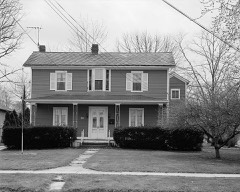
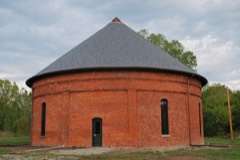
Listed on the National Register of Historic Places in
1979. A historic map-sheet match is not published yet. The record needs a coordinate-quality review before it can be joined to a sheet boundary.
From the record
“His present station indicates the estimate placed upon him by the trustees of the Teachers' Seminary, Andover, Mass., among whom are men best qualified to judge. Many applied for the superintendence of that seminary, but were all rejected in favor of Mr.”
Oberlin: the Colony and the College, 1833-1883 (1883). Machine-read text.
one of 113 National Register listings in Lorain County · listed in 1979 · category: Building · one of 2 National Historic Landmarks in Lorain County.
National Register reference number.79001886- the number the National Park Service assigned this property when it was listed, and the key its nomination file is catalogued under at the National Archives.
One of the young men especially, who left his studies at Oberlin to help Mr. Shiphcrd and his family on their journey, Albertus Green, from Lan- N.Y., proved himself a most enterprising and efficient business manager ; and the little community again and again assessed upon themselves the cost of some new extension or addition to the advantages of the college, thus proved their vitality, and secured the confidence of the people of the State. For many years they drew their teachers almost wholly from Oberlin, but at length they could call men from -crn colleges, and have now reached the stage where they find satisfactory professors among their own alumni.
A few families went out from Oberlin to Southa, in 1848, with the purpose of establishing a Christian settlement and Christian institutions in advance of the tide of emigration which turning in that direction. They first settled upon the Missouri bottom, a few miles north of the State line. Th< y had no minister, and only at rare intertching of any kind ; but they maintained re- 1 ings and a Sabbath-school, organized a ' the co-operation of
Regional context, not property-specific
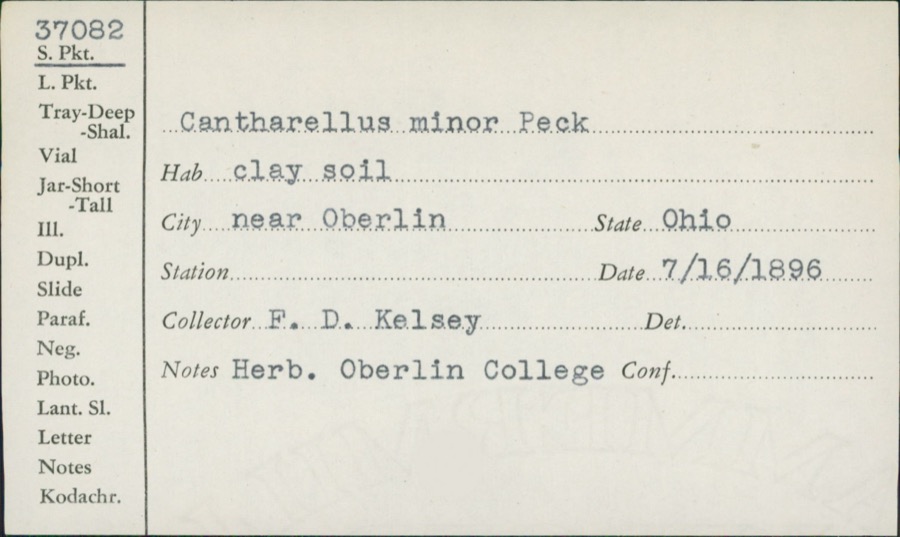
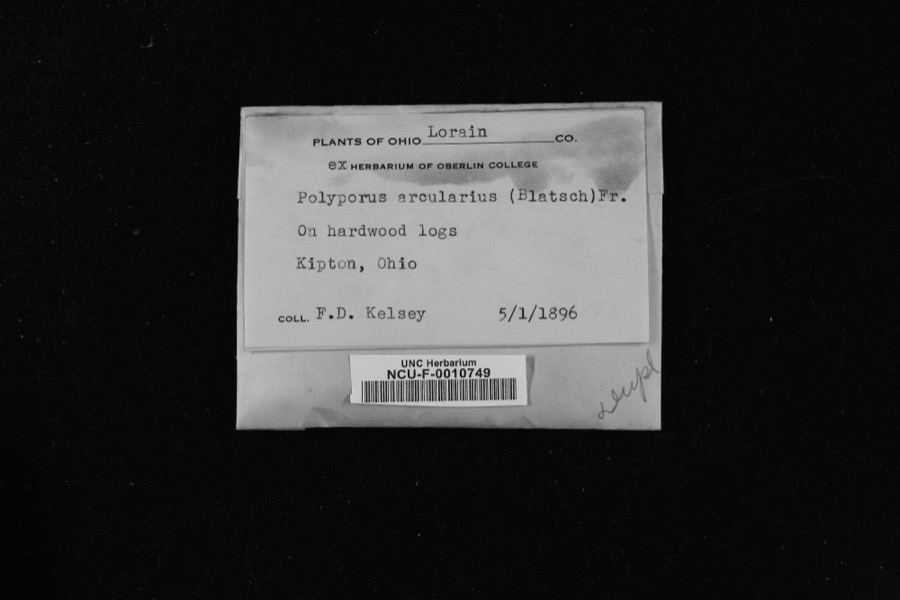
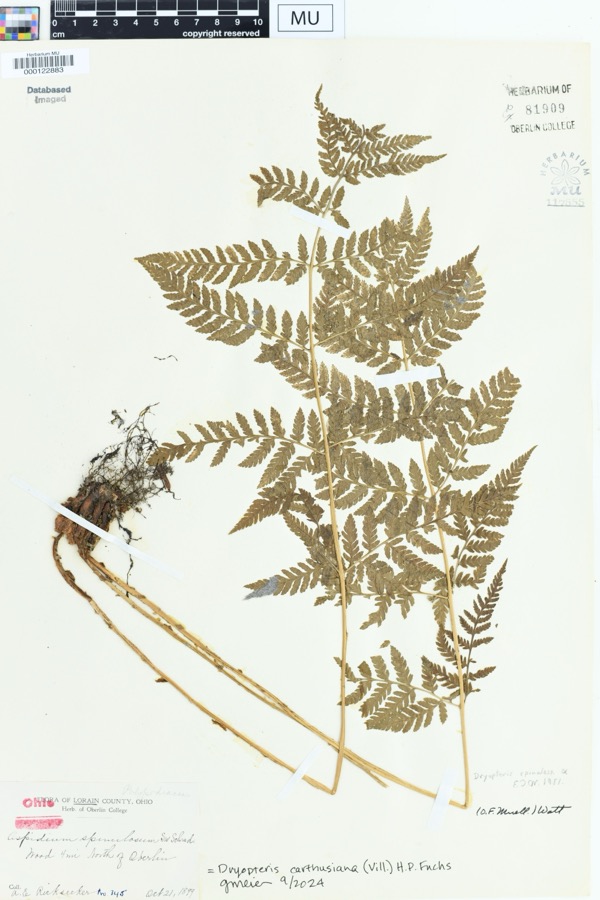
evidence. Museums hold 1,779 specimens
collected within 10 miles of Burrell-King House between 1852 and
1975: 909 Animalia, 611 Fungi, 223 Plantae, 15 Protozoa, 13 Chromista, 8 Unrecorded. 12 distinct Species records are shown.
Collected by A. E. Recksecker, A. E. Ricksecker, A. M. Evans and others. Each is a
physical object with a catalogue
number, and each entry opens the museum's record. This is what was
collected and kept, not a survey of what lives here - nothing can be
concluded from a species being absent.
Regional context, not property-specific
evidence. The National Weather Service names
Oberlin, the town this property stands in, in 28 storm reports between 1997 and 2024: 17 thunderstorm wind, 7 hail, 4 flash flood.
No death or injury is recorded in these reports. Each account below is quoted exactly as the forecast office
filed it, from the NOAA Storm Events Database, and each date
opens the federal record of that event.
Flash flooding reported in Oberlin and Pittsfield Township due to heavy rainfall. Several reports of flooded basements. OH-303 closed between Pitts Road and Quarry Road due to flash flooding. Radar estimated 2.5 to 3.5 inches of rainfall in a three hour period.
Thunderstorm winds downed many trees and large limbs across the county. The Oberlin, Kipton and Elyria areas were especially hard hit. A barn was blown down in Eaton Township. A car was crushed by a tree in Elyria. A peak wind gust of 54 mph was measured at the Lorain County Airport near Elyria.
Six to eight inches of flowing water was reported across US-20 near the OH-511 interchange east of Oberlin. Radar estimated around 2 inches of rainfall in one hour at this location.
Strong thunderstorms with rain, wind, and hail moved over portions of Lorain County. Rainfall rates approaching two inches per hour were reported with this storm. Flooding occurred in Oberlin with several roads impassable with water up to the hoods on cars.
Heavy thunderstorm rains caused widespread street flooding in Oberlin. Water on some roads was over two feet in depth forcing several motorists to abandon their vehicles.
No historic map-sheet match is published
for this property yet. That does not mean no map exists. This record needs
a coordinate-quality review before it can be joined to a sheet boundary.
Browse the county's mapped places while that work is
pending.
From the nomination file
1,843 words on record
When this property was proposed for the
National Register, someone wrote the case for it: what the building is,
and why it matters. That document is a federal record in the public domain.
It is quoted below word for word, never summarised. The text was read off the scanned case file by machine, so the
occasional stray character is the recogniser's and the 1970s
typewriter's.
Description of the property
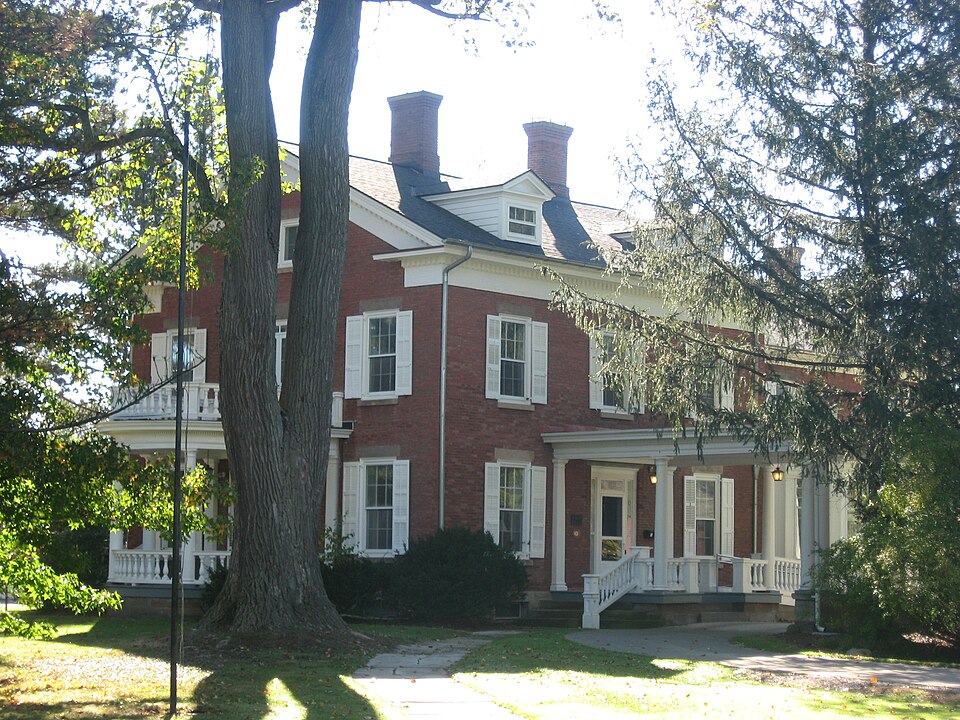
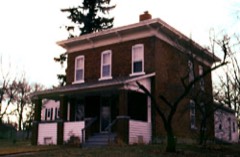
feature of the exterior is the massive entablature, which has partial returns on the front and has a of two small raund windows in the rear gable end of the main building. These windows are set at the extreme sides of the attic. an elaborate cornice with dentil molding, and ornate baluster railings around the base and on the top added to the east side of the house. Entrances have been cut through the east and west sides of the was changed in the remodeling around the turn of the century, making it more elaborate. siderablylarger than that of the house. Its low profile and placement behind the house serve to College Street. As a part of the project in which this new building was constructed, all offices were removed from the house and it was restored for use once again as a residence.
CONDITION UNEXPOSED MOVED 7DESCRIPTION DATE main portion was constructed, but is similar in style. An unusual feature of the house is the presence delicate dentil course beneath the cornice. The window openings are long and rectangular and have minimize its visual impact on the house and grounds, although this new building is visible from East though its Greek Revival heritage remains very much in evidence. The interior features ornamental gable end facing the front. It has three bays across the front and five bays along the sides. A major and shrubbery surround the house, which is set back from the road about two hundred feet, giving the woodwork around the door and window openings. The original Greek Revival character of the house bly the late nineteenth century.
To the east of this barn and directly behind the Burrell-King House constructed of brick but is smaller in scale than the central portion.
that had important associations with the history of Oberlin College. Jabez Lyman Burrell was the son of Jabez Burrell, who was among the first group of sett lers in nearby effect on its Greek Revival character, but they serve to make the house even more impressive, and residence, although the grounds contain a new building which is used as a child care facility. PERIOD 1900- COMMERCE ARCHEOLOGY-HISTORIC THEATER SIGNIFICANCE ART COMMUNICATIONS TRANSPORTATION LAW time he constructed this house, Burrell was a man of considerable independent wealth. In 1882 INDUSTRY RELIGION MILITARY SCIENCE INVENTION Sheffield Township. Jabez Lyman Burrell was born in western Massachusetts and came to Lorain County AGRICULTURE MUSIC POLITICS/GOVERNMENT College.
Burrell became one of the first trustees when Oberlin College was formed in 1833. By the King's long term as president, this house became the center for the official social life of the college. It is still known today by many townspeople as the President's House. The primary significance of this house lies in its association with two men who played important _EXPLORATION/SETTLEMENT are valid statements of early twentieth century neoclassicism. In recent years, the house has been owned by Henry Churchill King, who served as president of Oberlin College for twenty five years. roles in the history and development of Oberlin College. It was built in 1852 by Jabez Lyman Burrell, ENGINEERING carefully restored to its appearance when it was the residence of President King.
It still serves as a in 1831, where he met and became a disciple of John Jay Shipherd, who was later to co-found Oberlin Revival architecture, and is among a relatively small number of pre Civil War buildings still standing _1400-1499 - PHILOSOPHY - CONSERVATION son of one of Sheffield's first settlers and one of Oberlin College's first trustees.
Quoted from the National Register nomination
for reference 79001886, 9 pages, held by the National Archives in Record
Group 79. See the
catalogue record.
Listed places nearby
6 within 8 miles
Other National Register properties close
enough to walk or drive between, ordered by distance from this one. Both
positions come from the same geocoding pass that matched these properties
to their map sheets.
Listing record. National Park Service National Register of Historic Places, listed-properties dataset, current to 2026-05-22.
Map join. Address geocoded through the United States Census geocoder, then tested against the published boundary of every sheet in the USGS Historical Topographic Map Collection.
How this page is made. Listing fields come from federal records; map-sheet coverage is a labelled coordinate-to-boundary calculation, not a source-field claim.
Specimens. Global Biodiversity Information Facility (GBIF), https://www.gbif.org/. Only records licensed CC0 or CC BY are used. Records licensed CC BY-NC are excluded because this site carries advertising. Images are checked individually and any whose licence is non-commercial, no-derivatives or unreadable is refused.
Storms. NOAA National Centers for Environmental Information, Storm Events Database https://www.ncei.noaa.gov/stormevents/ A work of the United States government, no copyright under 17 U.S.C. 105. Narratives are quoted verbatim from the National Weather Service report and are not edited or summarised.
 Block
Block