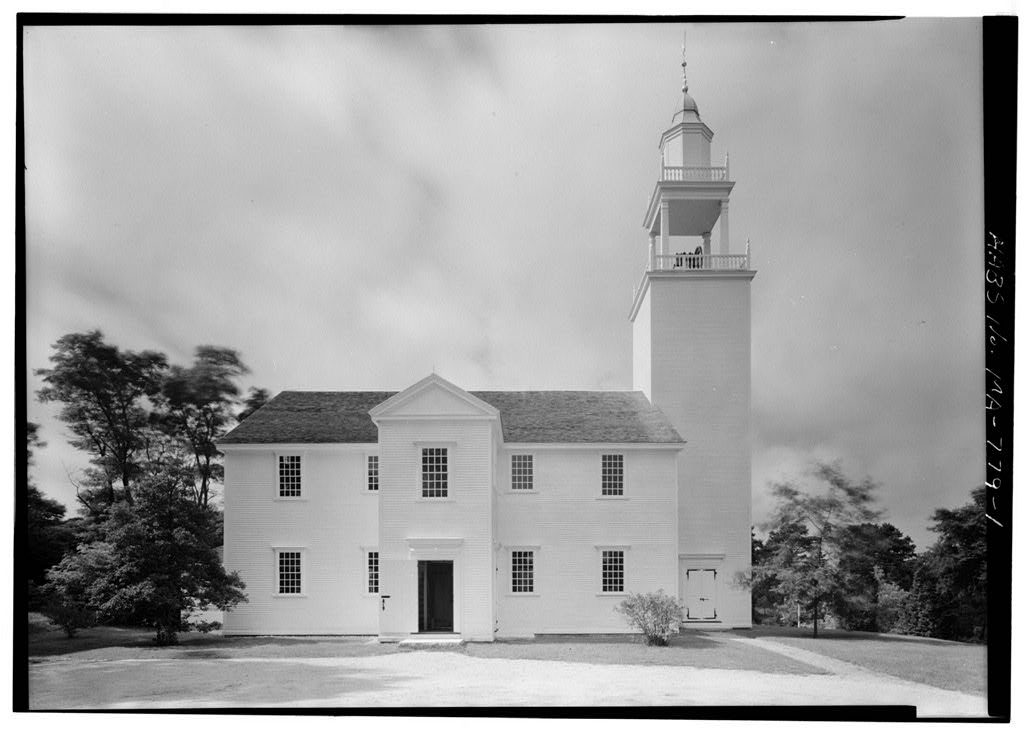
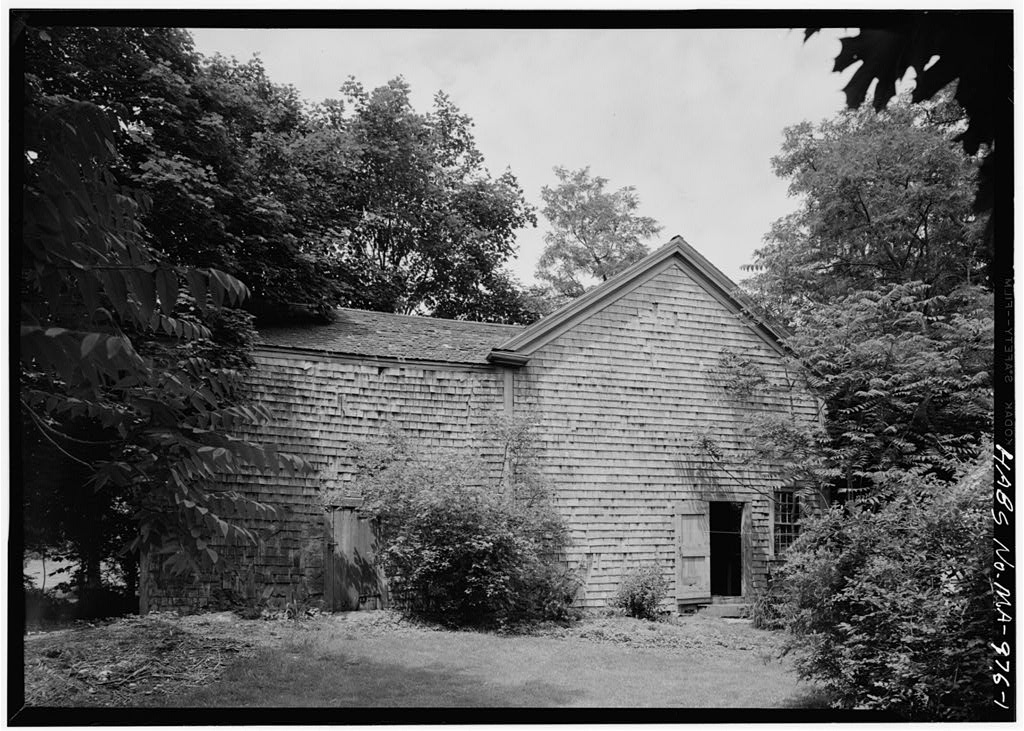
West Parish Congregational Church, State Route 149, Barnstable
West Parish Congregational Church, State Route 149, Barnstable, Barnstable County, MA. Surveyed as HABS MASS,1-BAR,6-, with 1 photograph and a 1,540-word written history.
From the record
“Structurally, this meeting house, "built in subsequently enlarged, remodelled in and restored in resembles the noted Old Ship Church in Hingham, Massachusetts.”
Written record, HABS MASS,1-BAR,6- survey. Machine-read text.
surveyed by the federal HABS program as HABS MASS,1-BAR,6- · the record runs 1540 words · one of 148 surveyed structures published for this county.
Source document
Quoted word for word from HABS MASS,1-BAR,6-.
Not written, edited or summarised by this site.
Structurally, this meeting house, "built in subsequently enlarged, remodelled in and restored in resembles the noted Old Ship Church in Hingham, Massachusetts. The Barnstable building houses the oldest organization, gathered in England in of the Congregational Church in America. PART
Historical Information
The following anonymous "brief history of the West Parish Church and Meetinghouse" was available at the church in mimeographed form in In the year a small group of men and women gathered in the Borough of South- ward, . . . just across London Bridge from the City of London. "Joining hands, they solemnly convenanted with one another in the presence of almighty God to walk together in all his ways and ordinances according as he had revealed them in his word, or should further make them known." The Southwark Church was not the first Independent or Separatist Church to be gathered in England. It was, however, the first Independent (Congregational) Church that was to survive to the present time. . . .
Most of the early Independents fled to Holland after they had braved persecution and imprisonment ... in England. The little Church chose Henry Jacob their first pastor. He had been a priest in the Church of England, was a graduate of Oxford University, and in had just re- turned from six or seven years with the Church of Leyden, Holland, that was to send a group of its people to the New World in Under the leadership of Henry Jacob the Church in Southwark continued ... It was Henry Jacob who first used the term "Congregational: to describe a Church of the faith and order that has come down to us with that name. In Henry Jacob, now sixty years old, left the Church in Southwark to move to Virginia.
His will was probated in and the inventory of his estate was filed in the Court of the Jamestown Colony in He was succeeded in Southwark Church in by the Rev. John Lothrop, a graduate of Cambridge University, who had also been ordained to the priesthood in the Church of England. . . In the Spring of . . . John Lothrop and forty-two of his congre- gation were imprisoned in the Clink. . . In the course of the next two years most. , . were released, until in only the Reverend Mr. Lothrop remained in prison. . . WEST PARISH CONGREGATIONAL CHURCH HABS No. MA-779 (Page 2) In Mr- Lothrop petitioned the king for permission to leave the country, and on release from prison sailed for New England on the ship "Griffin" with some . . . members of the Church.
They settled in Scituate where others of the Southwark Church had preceeded them. Five years later minister and people moved ... to Cape Cod where they were attracted by the rough hay of the salt marshes and by lands the Indians had cleared. This migration in marked the founding of the Town of Barnstable. The Church, . . had continued a worshipping community through more than twenty years of persecution and hardship. . . Mr. Lothrop and those who came with him "brought with them the sacramental vessels of the Church; a handsome pewter tankard, pewter plates, and a simple baptismal vessel. It is believed that these vessels were used . . . before . . . These vessels are in the possession of the West Parish Church, and the baptismal vessel is used . . .
as it has been for more than three centuries. In the years that followed the migration to Barnstable the settlement grew. Attendance at Church became more and more difficult for those living on farms at the extreme east and vest ends of the Parish, and in agitation began in Town Meeting for the town to be divided into two Parishes with a Meetinghouse in the east and another in the west. Work began on the Meetinghouse in the West Parish in Great timbers of pine and oak were cut from the hillsides near the site chosen for the build- ing. Beams and posts were sawed and trimmed over a saw pit dug near the Meet- inghouse, then carefully chamferred or beaded by skillful craftsmen of the village working with simple tools.
The oaken beams that were to support the roof of the new Meetinghouse were hung with weights at either end for a year to bend them in a graceful arc. The high pulpit and sounding board, the gal- leries and panels and pews were fashioned by village craftsmen who were build- ing the largest and grandest structure in the village, and built it to stand for many generations. The Reverend Jonathan Russell, who succeeded his father, Jonathan Russell, to the ministry of the Church in was given choice whether he would serve the East or West Parish. He chose to serve the West Parish, and carried with him the old records of the Church, the ancient pewter, and the handsome early American silver which the Church had acquired in Barnstable.
The West Parish Meeginghouse was not finished until and the first service held on Thanks- giving Day of that year. A few years later (tradition gives the date as the new Meetinghouse was already too small. Accordingly, the building was cut in half, the ends pulled apart and two bays added in the middle lengthening the structure about eighteen feet. It was at that time that a ceiling was built covering the handsome beams left exposed by the first builders, and a bell tower erected at the east end of the building. The cock that has crowned the tower since that time was brought from England in It was not until that the Parish secured a large bell to swing in the open belfry, but in that year a bequest in the will of Colonel James Otis made it possible for the Parish to commission Mr.
Paul Revere and Son to cast a fine bell of about half a ton weight. % WEST PARISH CONGREGATIONAL CHURCH HABS No. MA-779 (Page 3) Other changes were made in the building through the years. Major repairs were made necessary "by the storyJTown Meetings that were held in the Meet- inghouse particularly during the Revolution and the War of Much work was done in I83U when the high pulpit was moved to the west end of the build- ing and necessary changes made in the galleries. But in the Meetinghouse was again in a "bad state of repair. There was discussion of tearing it down ... and building new, but the Parish was poor, and there was such feeling for the "old house" that it was' decided to preserve the structure, but to remodel and "modernize" it.
Accordingly the old bell tower was torn down and a new belfry and spire erected on the roof to carry the Revere bell and the old cock. The galleries and box pews and high pulpit were removed, and new plastered ceiling and walls fashioned to hide all of the old beams. From until the Meetinghouse stood as a new-classic building characteristic of the mid- teenth century. The restoration of the Meetinghouse began in under the direction of the architect, Mr. Edwin B. Goodell, Jr. The work was finished by early with the exception of the great organ which was completed the following year. The prudence of the remodellers was of great help in making the restora- tion authentic, for when tower and galleries were removed in the remodeling the old "beams were used in the new work.
These original members have been used in their rightful places in the restoration or have been duplicated. Panelling, windowframes, and other parts of the old Meetinghouse were sold at auction in and were built into houses now standing in the village. One of the origi- nal window frames has been restored to its place in the Meetinghouse and the others have been patterned from it. The new gallery panelling is a copy of the original gallery panel which is now a part of another house in the village. The centuries have made full circle to let the Meetinghouse stand again as it stood more than two hundred and forty years ago. Much that was real and central in the life of the Church and Parish two hundred years ago remains today.
The Church that has worshipped continuously in the old building since Thanksgiving Day continues to worship there in the faith of the fathers. The West Parish Meetinghouse is not a museum. It is a memorial to the devotion of the fathers who built it, a testimony to the faithfulness of those who maintained it through the centuries, and a witness to the life of the active Church that worships in it today.
The original filed report, and the sheets the survey produced. Those published here appear above.
Also surveyed in Barnstable
5 records
The federal surveyors worked through Barnstable building by building. These are the other structures
they measured and filed a report on, longest report first.
 Block
Block