The Boston Manufacturing Company was the first major ~ndustrial corpo:ation in.t;.R~~PQited.states. Founded in by Francis Cabot ~Lpatrick T. Jackson, and others, the Boston Manufacturing Company integrated and mechanized production from raw material to finished product under a single management and within a single factory. It is credited with initiating large scale industrialization in the United States. Historians: This report has been assembled from the Boston Manufacturing Company's National Historic Landmark Nomination and its National Register of Historic Places Nomination, as well as other sources. Mr. George R. Adams, Ms. Candace Jenkins and Mr. Mike Folsom were responsible for generating this material. Editing for transmittal was completed by Mr. Donald c.
Jackson, Photographic documentation was funded as part of a Housing and Urban Development "section 8" project to provide housing for the elderly. Boston Manufacturing Corrpany HAER No. (Page 2) According to business historians Glenn Porter and Harold c. Livesay, the Boston Manufacturing Company "was the first truly modern factory in the United States." Founded in by Francis Cabot Lowell, Patrick T. Jackson, and others, the BMC "integrated and mechanized production from raw material to finished product under a single management and within a single factory."! This "new industrial form," says textile manufacturing historian Caroline F.
Ware, "soon came to dominate the cotton industry," because it "marked a radical departure from all that had gone before, differing almost as much from the early mill as the latter had from its handicraft predecessors."2 Much of the success stemmed from its innovative development of an entire series of new or improved textile machines. According to Harvard business historian Geoge Sweet Gibb, "the power loom of the Boston Manufacturing Corrpany affected the American cotton textile industry as no other innovation since had done.
It signalized the awakening of American mechanics" and the end of their "slavish dependence" on British technology.3 Moreover, says Ware, it was power-loom weaving that "furnished the technical basis for reorganization of the factory" and for "a practically unlimited extension in the size of the factory plant."4 In her prize-winning study of the early New England cotton textile industry, caroline F. ware asserts that "the story of the New England cotton industry is the story of the industrialization of America.
This industry brought the factory system to the United States and furnished the laboratory wherein we worked out industrial methods characteristic of the nation."5 Ware and most other economic historians date the beginning of the American cotton textile industry to the year in which William Almy and Moses Brown, utilizing the ideas and skills of English immigrant Samuel Slater, opened the country's first successful cotton mill in Providence, Rhode Island. Following the Providence exarrple, a number of entrepreneurs started cotton mills during the next two decades, and by some 168 cotton factories with spindles were operating in the United States.
These mills struggled, however, against competition from cheap goods imported from England and against shortages of skilled workers and investment capital. The trade embargo of and the war of altered these conditions significantly by shutting off foreign competition, freeing commercial capital for investment in manufacturing, and sparking a wave of new mill construction. Chief among these new enterprises stood the Boston Manufacturing Corrpany, which was organized, says ware, along a "new industrial fonn" that "soon came to dominate the cotton industry" and that "marked a radical departure from all that had gone before, differing almost as much from the early mill as the latter had from its handicraft predecessors.
11 6 Francis Cabot Lowell, a judge's son born in Newburyport, Massachusetts, in proved the principal architect of the innovative new company. Having grown up in Boston and excelled in mathematics at Harvard, Lowell engaged in a profitable import-export business until when he and his family took a prolonged trip to the British Isles. Historians are not in agreement about whether Lowell went abroad chiefly for his health or primarily to study English manufacturing methods, but most recent studies suggest the latter as Boston Manufacturing Company HAER No. (Page 3) the reason for the trip. Whatever the case, Lowell seized every opportunity to examine British technology, especially in Manchester's textile mills.
In addition, while in Edinburgh in he carried on a lengthy dialogue with fellow Bostonian traveler Nathan Appleton about the organization and technical knowledge necessary to establish a successful cotton mill in the United States. British law forbade the exportation of textile machinery, designs, or artisans, but one of Lowell's biographers, Robert Sobel, speculates that he brought "the intricate designs of cotton machinery in his head without the aid of drawings" back to America.7 When Lowell arrived home in he found his international cormnercial enterprises in financial trouble as a result of the war with England. He remained undeterred, however, and set about irmnediately organizing his new cotton manufacturing venture.
Apparently his first partners included only his brother-in-law, Patrick T. Jackson; a cousin, Benjamin Gorham; and a former associate, Uriah Catting. On February 23, they obtained a State charter for the Boston Manufacturing Company to be situated in Waltham, and during the summer they secured additional financial support from Appleton, warren Dutton, Israel Thorndike and others. Lowell and his fellow investors, 12 men in all, met in Boston on September 4, and signed articles of association for the new firm. According to Sobel, while there is no record of what Lowell told his colleagues, his manner of proceeding suggests that he had some kind of master plan.
In contrast to the British cotton manufacturing system, in which yarn was made in one place and cloth woven in another, Lowell planned to bring the spinning and weaving processes together under one roof, mechanize the entire operation, and power it with falling water. To accomplish all this, the BMC first had to have a mill and machinery. Jackson had found a suitable mill site in the spring, and in September he completed the purchase of it. The BMC would be situated on the north bank of the Charles River in Waltham, where for almost 25 years John Boies, the previous owner of the property, had operated a paper mill. In October the 12 associates met again to corrplete the organization of their firm, and they made Jackson treasurer and chief executive officer.
Lowell, Appleton, Thorndike, and James Lloyd were named directors. This same month Lowell secured the services of Paul Moody, a highly regarded skilled mechanic, as superintendent of construction of the new mill and machinery. From this moment, says expert textile machinery historian George Sweet Gibb, "the success or failure of the Boston Manufacturing Company was to rest less with the promoters, administrators, and mechanical theorists than in the skillful hands of Paul Moody, the practical mechanic.: He "immediately proved to be as powerful and significant a figure as Francis Lowell hirnself ."8 Moody, with assistance from Jackson, corrunenced at once erecting the mill and setting up a machine shop.
Work crews needed almost a year to construct it, but by November BMC had a solid red brick mill that measured about 90 by 45 feet and rose three and one-half stories to a double-pitched or monitored roof. The basement contained space for a waterwheel and the machine shop, while the first floor was reserved for carding, the second for spinning, and Boston Manufacturing Cornpany HAER No. (Page 4) the third and fourth for weaving. Jacob Perkins, who had rejected the superintendent's job before Moody took it, helped install a waterwheel, dam, flumes, and a raceway. Meanwhile Lowell developed plans and drawings for a power loom, and Moody constructed a model.
By the end of the two men had cornpleted a workable loom chiefly of their own design and had purchased several other machines so that now the BMC stood ready to begin producing cotton cloth. When the Boston Manufacturing Company turned out its first cloth early in according to business historians Glenn Porter and Harold c.
Livesay, it "was the first truly modern factory in the United States, for it integrated and mechanized production from raw material to finished product under a single management and within a single factory."9 Lowell had become, says textile industry historian Perry Walton, the first person systematically to arrange the processes of manufacturing in a mill so that no labor would be lost in passing from one process to another."10 This integration "established," says Gibb, "a pattern that had a profound effect upon the industrial organization of the country."11 Other entrepreneurs copied the "Waltham model," and the Waltham promoters themselves built the Nation's first planned industrial city, Lowell, Massachusetts, on this new principal.
The Boston Manufacturing Company had a far-reaching impact on the future development of textile machinery as well as on mill planning and organization. In Gibb's opinion, the firm's "power loom affected the American cotton textile industry as no other innovation since had done. It signalized the awakening of American mechanics" and the end of their "slavish dependence" on British technology. Moody and his assistants studied, mastered, and irnproved, says Gibb, "not just the power loom but most of the machines then known to cotton textile manufacturers."12 The Waltham power loom necessitated changes in the spinning process, so Lowell and Moody invented the warper.
Later Lowell and Moody joined to develop the double speeder, and still later Moody came up with the filling throstle for the so-called "dead spindle" system of spinning. "From to " says Gibb, "Moody's inventions and adaptations of English inventions," which he made in the BMC machine shop, "were the dominant development in the American textile industry."13 Moreover, his work laid a foundation for evolution of the long-famous Saco-Lowell Shops, which historically has been one of the Nation's two major manufacturers of textile machinery. During its first decade, the BMC grew rapidly and carried the town of Waltham, rural until then, along with it.
Able to turn out cloth in quantity and compete successfully with British firms, the BM: reaped sizeable profits and poured some of them back into the community by building several schools and churches and founding a library and the town's first fire department. In the middle of all this success, Lowell died, in and Jackson, Appleton, and several other Waltham associates formed the Merrimack Manufacturing Cornpany to develop a completely new planned industrial community, to which they gave their deceased partner's naIIE. "With the establishment of Lowell," says Kenneth Mailloux, historian of the "the Boston Manufacturing Company Boston Manufacturing Conpany HAER No.
(Page 5) ceased to be New England's most professive textile factory."14 Still, during the next few decades, while distinguished visitors frequented the factory primarily because of its historical significance, the BMC continued to grow at a modest rate. The firm continued to do business until but then the stockholders voted to cease operating and sell the buildings piecemeal to several small companies. Boston Manufacturing Corrpany HAER No. (Page 6) Footnotes 1 Glenn Porter and Harold c. Livesay, Merchants and Manufacturers: studies in the Changing Structure of Nineteenth Century Marketing (Baltimore, p. 23. 2 Caroline F. Ware, The Early New England Cotton Manufacture: A Study in Industrial Beginnings (Boston, p. 60.
3 George Sweet Gibb, The Saco-Lowell Shops: Textile Machinery Building in New England, (Cambridge, p. 33. 4 ware, The Early New England Cotton Manufacture, pp. 63, 64. 5 Ibid., p. 3. 6 Ibid., p. 60. 7 Robert Sobel, The Entrepreneus: Explorations Within the American Business Tradition (New York, p. 8 Gibb, The Saco-Lowell Shops, pp. 11, 12. 9 Porter and Livesay, Merchants and Manufacturers, p. 23. 10 Perry Walton, The Story of Textiles: A Bird's-Eye View of the History of the Beginning and the Growth of the Industry by vvhich Mankind is Clothed, 2nd edition (Boston, p. 11 Gibb, The Saco-Lowell Shops, p. 24. 12 Ibid., pp. 24, 33. 13 Ibid., p. 38. 14 Kenneth F. Mailloux, "The Boston Manufacturing Company: The End of an Era," Textile History Review, V (October p.
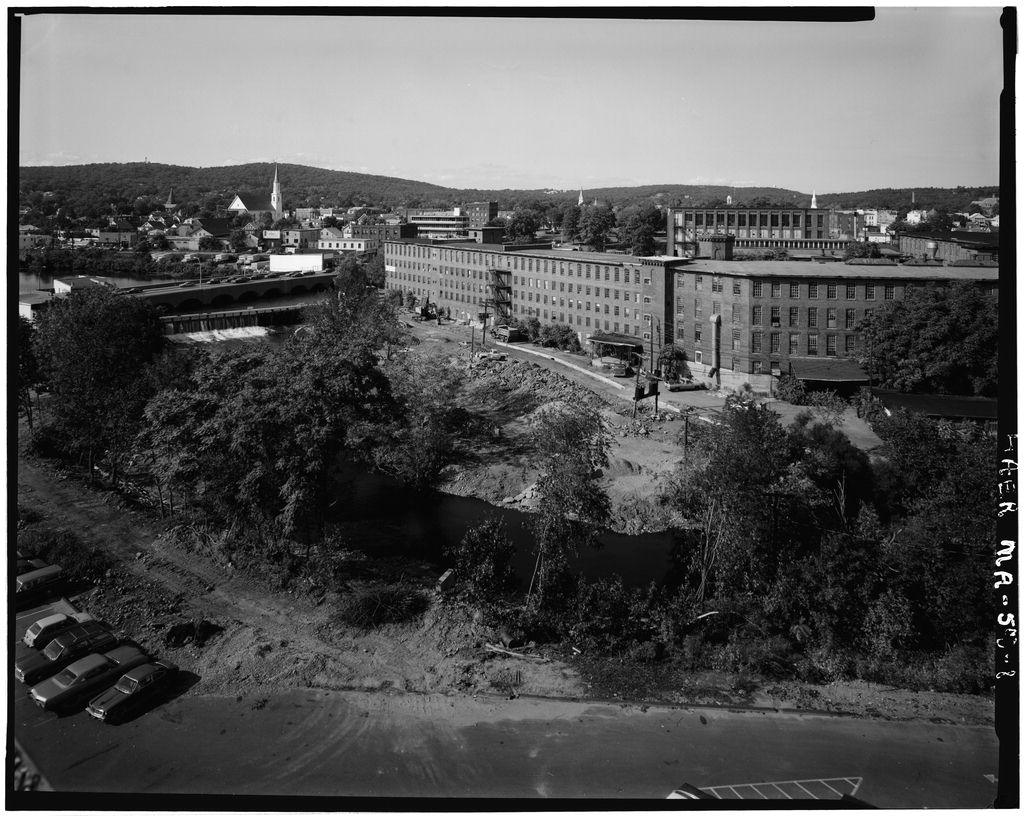
Boston Manufacturing Company HAER No. (Page 7) The Boston Manufacturing Company lies south of the Boston and Maine Railroad and the town common and north of the Charles River. It comprises several buildings constructed between and the early century. The following is a brief description of the complex by construction date. Building numbers refer to the sketch map that follows these descriptions. #1 A granite block set in brick at the northwest end of the original wing of the first mill is dated However, the structure was not completed until The later date is most often given to the first mill in historical literature. Actual textile production did not begin until early #2 The immediate success of textile production encouraged the BMC to erect a second larger mill within two years.
It was longer than its predecessor, but exactly the same width, and perfectly in line. It was this mill which was the model for the first mills in Lowell. #3 The lining up of the two original mills would look to have been intentional in anticipation of further building. It was almost thirty years, however, before the space between the two was filled. The southern elevation of the original wing can be "read" to distinguish this connector between the earlier freestanding mills. Where the earlier mills have a header course of brick every six courses, the addition has a header course every seven. The earlier mills were independently powered. To the water-powered breast wheels was added, in a steam engine in the first mill, a supplemental power in times of low water.
With the connector, the BMC got not only more space but also the capacity to integrate power generation throughout its complex. #4 The relative similarity of the first three portions of the surviving mill corrplex is revealed by comparison with the next Il'ajor addition, which is dramatically wider than any earlier unit of industrial architecture on the site meters, as opposed to meters). The first gas plant in Waltham was built the same year as this new wing, directly across the Charles. Illuminating gas for the first time made proximity to exterior windows less relevant in industrial design. But the exterior design of the wing continued the dominant features of the earlier wing. The wing was the last segment of the Waltham complex intended to be powered even partially by water.
At the time of its construction, the headrace was extended, and a penstock built to supply the new wing. #5 and # 6 The last major contiguous accretion to the original mills, begun in and completed in a second phase in is as dramatically larger than the wing as the latter was to its predecessor meters x meters vs. meters x 29 meters). This wing was powered entirely by coal fired steam. Boston Manufacturing Corrpany HAER No. (Page 8) #7 This was originally a two story structure with a third story added sometime before It was apparently conceived simultaneously with the addition to serve as a new picker house.
(Because of the special fire hazard, picking open of the tightly compressed bales of cotton was done in a separate building.) It is now a sirrple utilitarian structure characterized by a flat roof and regularly spaced segmentally arched window openings containing double hung sash (see figure #8 This building was constructed to the east of #5 as a boiler house. It is a utilitarian two story brick structure with irregularly spaced and sized segmentally arched window openings. Several of its windows and doors have been either boarded or bricked in. A concrete date plaque is set in the north elevation above the entrance. #9A, 9B, 9C.
Between the mill and the boiler house are three small contiguous structures designated on the insurance map as "engine house" (#9A-1901), "generator house" (demolished), and "turbine house" Boston Manufacturing Cor:pany HAER No. wi.-54 (Page 9) (Xl ' co 0 I I ~ ~- ' ("I ~ ~ ..0 ):) - ' 0 ~ _!) ~ ' NI 01 ' - - - _J ~ 00 - Boston Manufacturing Corrpany HAER No. (Page 10) Analysis of Physical Remains As one can see from examining the facade of the early wing of the complex (photos MA-54-3 and MA-54-5), the and mill buildings were joined (in and subsequently had their common double-gable clerestory roof removed and replaced by a full top story of substantially greater height than those below.
Much, but not all, of the original non-slow-burn interior framing in the two original mills was replaced by slow-burn construction, perhaps when the mills were joined in (See photo MA-54-21 for a survival of the original floor construction. Photo MA-54-22 shows a detail of splined slow-burn flooring.) Original exterior wooden towers (stair towers and toilet towers) which can be seen in historical graphics, were removed when the mills expanded in and vve have no evidence that there was originally an exterior stair tower on the mill. An engraving suggests that an exterior tower was subsequently built on the east gable end of the mill.
When a major new wing was constructed in new brick stair and toiler towers were added at the juncture of the two wings to replace the wooden ones (stair tower, see photos Mli-54-5, Mli-54-9, Mli-54-44; toilet tower, see Mli-54-3). The stair/elevator on the north side of the early wing (photos MA-54-5 and Mli-54-9) was apparently added when the new top floor was introduced circa for its brick is identical with that of the new floor, contrasting sharply with earlier brick in color and regularity. Photograph MA-54-10 shows the junction of the wing and the new and wing and indicates dramatic differences in architectural design.
An insurance drawing indicates with a dotted outline the intention of the company to expand upon the portion of this wing completed in The two portions of this wing are identical in architectural detail and engineering practice. Unlike the earlier wings, this one has a rough basement devoted to power transmission systems (The wing has a full basement amounting to a full ground floor story, including space for production facilities as well as power generating and transmission equipment. The wing has no basement except for a small room providing access to the penstocks.) Power Generation at the BMC Site The corporate charter granted the BMC in authorized construction of a mill or mills within fifteen miles of Boston.
Developed first in for a paper mill, the fall of the Charles River at what became the Moody Street crossing is the greatest waterpower privilege within the circumference alloted to the BMC and the greatest on the Charles. (The BMC privilege offers a maximum dependable flow to produce roughly 500 HP. In contrast the Merrimack at Lowell, as developed, provides roughly An advantage of the BMC Boston Manufacturing Conpany HAER No. MA-54 (Page 11) site was the fact that the Charles runs almost flat for five miles above the dam, so that significant ponding of water was possible. One of the distinctive characteristics of the mills of the nwaltham-Lowell Systemn is their placement parallel to the course of a river, rather than perpendicular to it, as was the rule for nRhode Islandn style mills.
No documentary evidence has come to light to explain the decision of the builders to adopt this orientation, although the slope of the site may have influenced it. Much more excavation would have been needed to orient the mill perpendicular to the river, and less of the ground floor would have had full sunlight from one side. The and mills were designed with basements which represented full ground-floor stories on the river side, with half windows at grade on the upper side away from the river (north). In the first mill, a single wheel was located at the extreme upstream end of the building, but evidence for this location was not conclusive at first.
The most obvious evidence for placement of the wheel in the mill is the set of extra heavy columns and beams in the portion of the basement (photos MA-54-18 and MA-544-19). Here the transverse beams span the forty-foot width of the mill, originally without interior supports, but with extra longitudinal beams supporting them across two bays' width. (Supports visible in the photographs are recent additions.) A concrete slab of uncertain, but fairly recent date, covers the entire wheel pit area thus obscuring all evidence of the pit. More problematical was the fact that there was no evidence of a headrace arch in the north foundation wall, which was obscured by a concrete retaining wall. There was likewise no evidence of a tailrace opening in the south wall.
However, it could be located below the level of the concrete floor slab. The design of the water power system in the mill is also problematical. Evidence of any foundation arches is totally obscured by concrete retaining walls. Graphic evidence for the placement of (now demolished) picker houses for this mill, which appear to span the headrace, suggest that there were two breast wheels in line (in a basement long, versus 90' for the mill with one wheel). vfhenthe mills were joined in still other wheels appear to have been installed in the basement of the new linking portion. The headrace arches in the foundation of this portion remain visible, both inside the rehabilitated buildings and above grade on the outside (photos MA-54-25, right, and MA-54-26, left).
It is assumed that these new wheels replaced the others, creating a single integrated power system for the enlarged and unified mill. The wing included innovations not found in the earlier buildings. Built at an approximately 400 angle to the first wing (following the curve of the river), this wing is much wider and its rooms are much higher. It was designed for new broadlooms and made use of gas for interior illumination. Boston Manufacturing Corrpany HAER No. (Page 12) This wing also introduced turbines for water power generation, taking water from an extended headrace under the building entirely through three separate penstocks and delivering the water to turbines in a separate turbine house abutting the exterior of the mill on the river side.
The penstocks remain in place behind steel plates bolted to the foundation (photo barely visible at grade on both sides of the angle of the facade). The turbines, adapted for electrical generation, are reported by Boston Edison personnel to have remained in operation until around when foundation settling rendered them useless. The turbines do not appear to have supplanted the earlier breast wheels. A large tailrace arch serving the first wing and constructed after can be seen in several historical graphics. But, as early as steam was introduced to supplement the available water power. There had been a drought in and that apparently was the immediate impetus for adding steam--to supplement, not replace, water power.
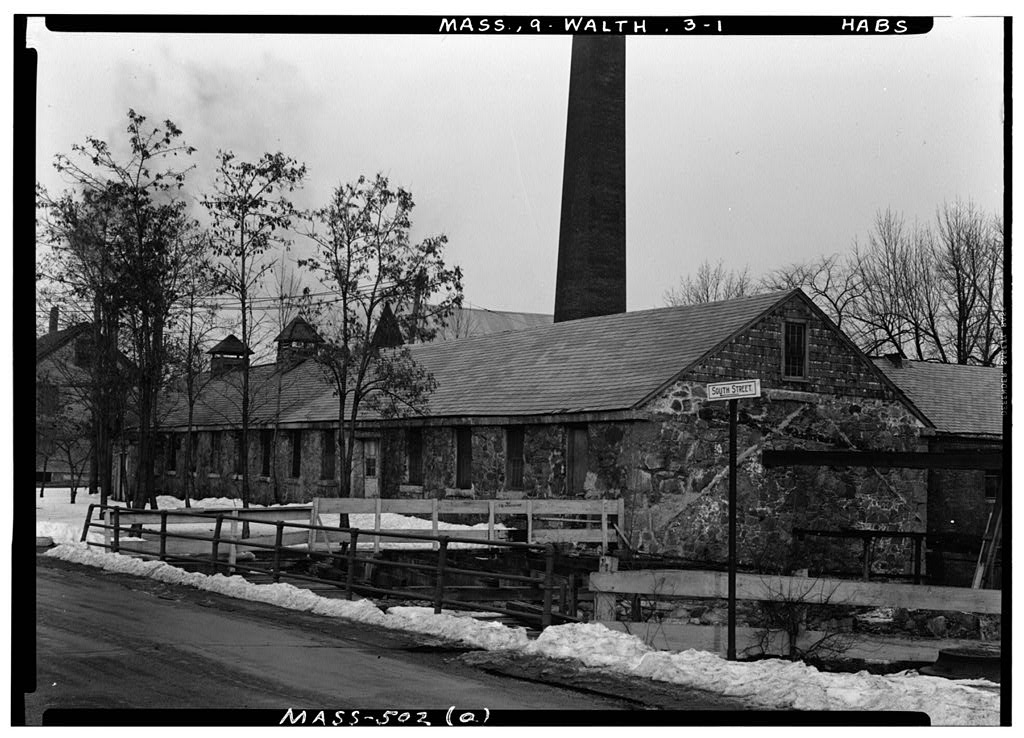
An graphic shows two smokestacks in use in buildings constructed on fill near the river. In when the next major expansion was started, steam power was consolidated in a new plant, a portion of which remains. Originally three stories high, the attached boiler and steam engine houses were reduced to make-shift one-story buildings, one of brick and one of stone, probably early in the century. The brick was demolished during rehabilitation (photo MA-54-4, center), and the stone retained. In yet another steam engine house of massive proportions was built (photos MA-54-14, below and right of stack; MA-54-60, MA-54-61, MA-54-62, interiors).
This plant apparently made use of the boiler house until a new boiler house was constructed adjacent to the engine house in (photos to Electrical generating capacity was introduced in with additional rooms for both a generator powered by a steam turbine and generators driven off line shaft from the reciprocating engines. Foundations for the primary lineshaft off which these generators were powered survive as found in the basement of the mill. Boston Manufacturing Corrpany HAER No. IVA-54 (Page 13) References "The Boston Co., Cotton Mill, Waltham, Mass.," Insurance Map, Assoc. Mutual Insurance Co., Serial Index (in possession of Charles River Museum of Industry).
Copeland, Melvin Thomas, The Cotton Manufacturing Industry of the United States (Cambridge: Harvard University Press, Faulkner, Harold U., "Francis Cabot Lowell," Dictionary of American Biography, Vol.
VI, Part 1 (New York: Charles Scribner's Sons, Gibb, George Sweet, The Saco-Lowell Shops: Textile Machinery Building in New England, (Cambridge: Harvard University Press, Gregory, Francis W., Nathan Appleton, Merchant and Entrepreneur, (Charlottesville: University of Virginia Press, Hayes, John L., American Textile Machinery: Its Early History, Characteristics, Contributions to the Industry of the World, Relations to Other Industries, and Claims for National Recognition (Cambridge: University Press, John Wilson and Son, Mailloux' Kenneth F.' n The Boston Manufacturing Company' II Textile History Review, V (July , "The Boston Manufacturing Company: Its Origins," Textile History Review, IV (October , "The Boston Manufacturing Company: The End of an Era," Textile History Review, V (October , "The Boston Manufacturing Company: The Factory and the Town," Textile History Review, V (July , "Labor Problems and Conditions at the Boston Manufacturing Comp any, Cotton History Review, II (July Porter, Glenn, and Harold c.
Livesay, Merchants and Manufacturers: Studies in the Changing Structure of Nineteenth-Century Marketing (Baltimore: The Johns Hopkins Press, Sanderson, Edmund L., Waltham Industries: A Collection of Sketches of Early Firms and Founders (Waltham: Waltham Historical Society, Inc., Sobel, Robert, The Entrepreneurs: Explorations Within the American Business Tradition (New York: Weybright and Talley,
 Block
Block