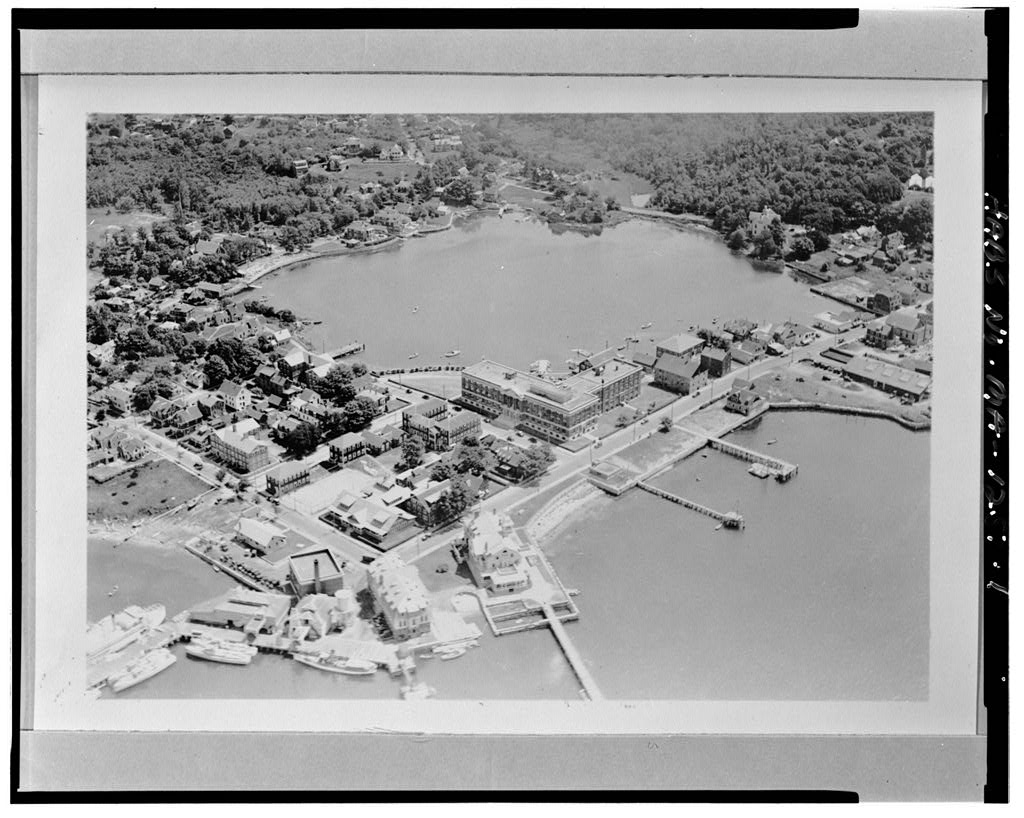
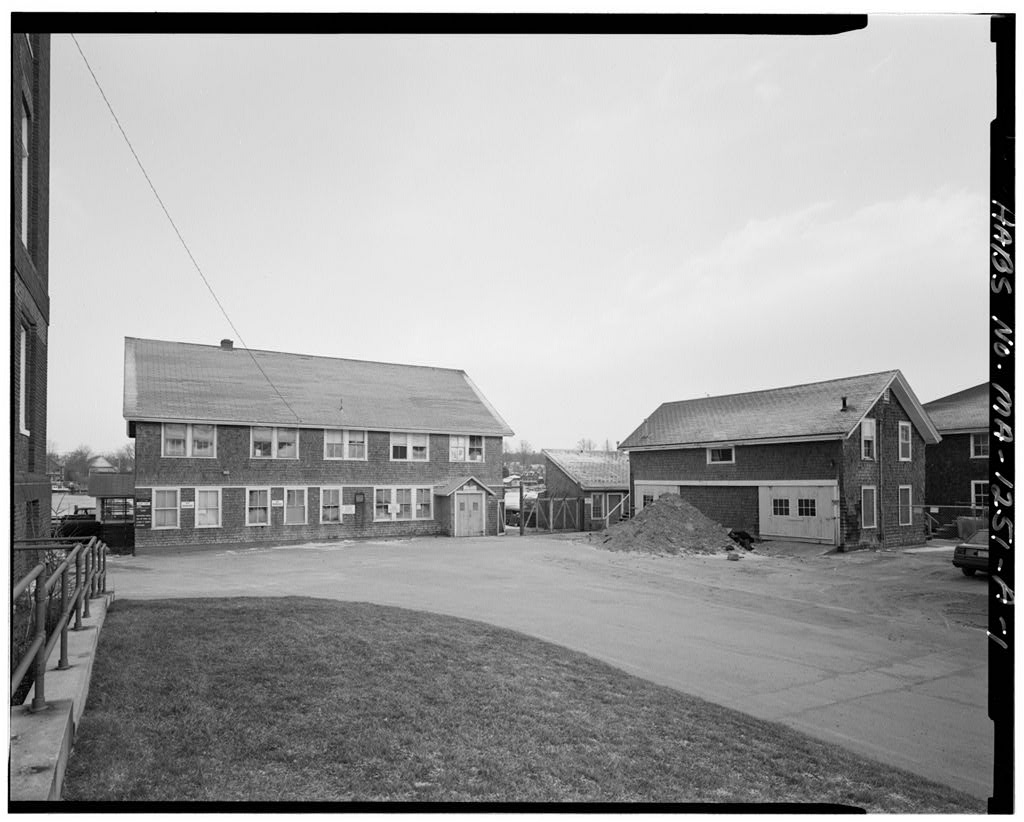
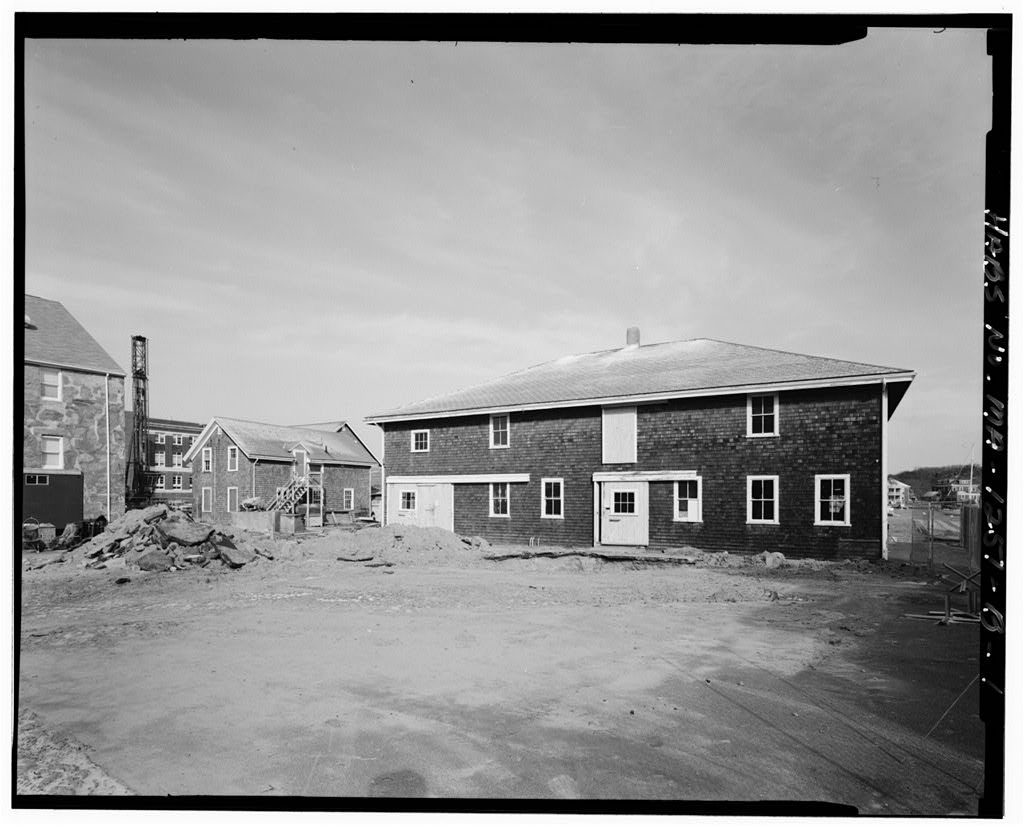
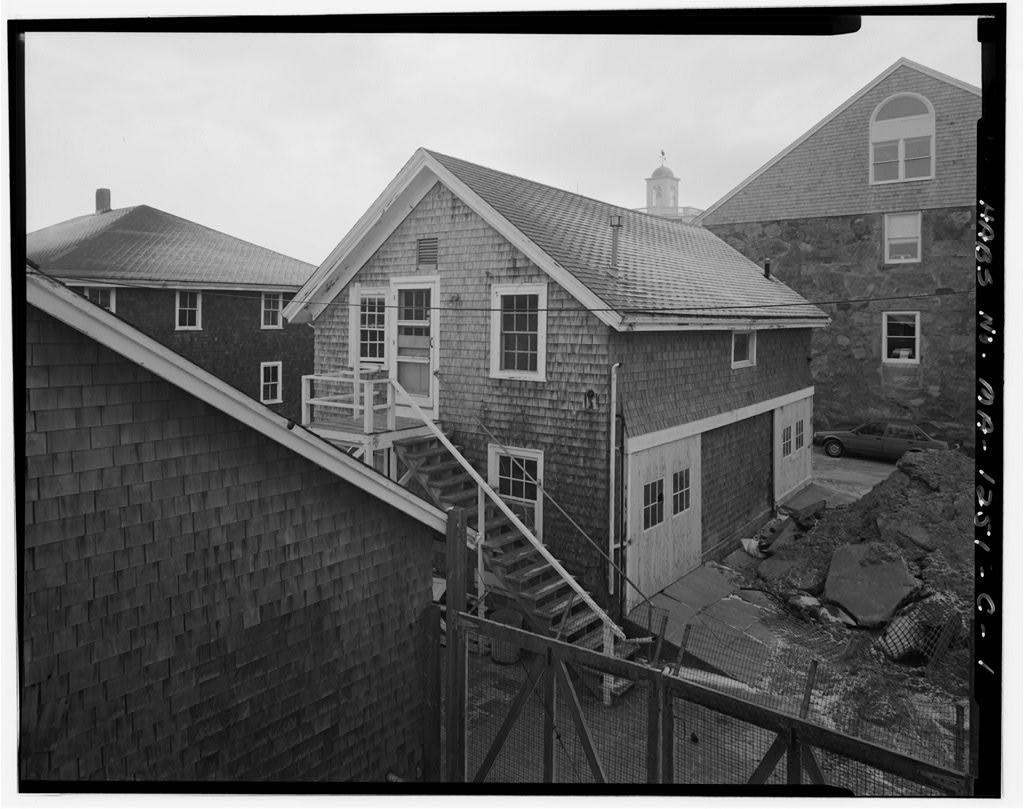
Marine Biological Laboratory, North side of Water Street & also on MBL, Albatross & North Streets between Water Street & Eel Pond, Village of Woods Hole, Falmouth
Marine Biological Laboratory, North side of Water Street & also on MBL, Albatross & North Streets between Water Street & Eel Pond, Village of Woods Hole, Falmouth, Barnstable County, MA. Surveyed as HABS MASS,1-FAL,2-, with 1 photograph and a 5,536-word written history.
From the record
“MBL is significant as the nation's first and most enduring permanent marine biological research and educational institution.”
Written record, HABS MASS,1-FAL,2- survey. Machine-read text.
surveyed by the federal HABS program as HABS MASS,1-FAL,2- · the record runs 5536 words · one of 148 surveyed structures published for this county.
1 photograph from the federal survey record, Library of Congress.
Location
56 words
Source document
Quoted word for word from HABS MASS,1-FAL,2-.
Not written, edited or summarised by this site.
Mostly on the north side of Water Street, and also on Albatross, and North Streets, between Water Street and Eel Pond, village of Woods Hole, town of Falmouth, Barnstable County, Massachusetts USGS Woods Hole, Mass. Quadrangle Universal Transverse Mercator Coordinates: (northeast) (southeast) (southwest) (northwest) Present Owner and Occupant: Marine Biological Laboratory/Marine Resources Center Woods Hole/Falmouth Massachusetts
Significance
5399 words
The headings the report itself prints. Each one jumps to where it begins.
Source document
Quoted word for word from HABS MASS,1-FAL,2-.
Not written, edited or summarised by this site.
MBL is significant as the nation's first and most enduring permanent marine biological research and educational institution. Its commitment to both investigation and instruction in a consciously co-operative atmosphere has furthered the fellowship and hard science of biological research for over 100 years. Its success is reflected in the accomplishments of its associates, including 35 Nobel Laureates. Instruction for both adults and children has incubated fledgling scientists and broadened understanding of science and of marine biology. MBL has also made important contributions to the local economy, community life, and architectural and visual character of Woods Hole. MARINE BIOLOGICAL LABORATORY HABS No. MA-1251 (Page 2) PART I. MARINE BIOLOGICAL LABORATORY -
Description
The Marine Biological Laboratory established in consists of approximately 20 buildings clustered along a narrow strip of land which separates Eel Pond (north) from Great Harbor (south). It is located near the center of the village of Woods Hole, Falmouth, Massachusetts, at the southern tip of the inner, western portion of the Cape Cod peninsula. Its immediate neighbors include town residential, institutional, and commercial buildings along with two major marine research institutions, the National Marine Fisheries Service (Fisheries) and the Woods Hole Oceanographic Institution (WHOI). The topography of the area is characterized by low, near sea level elevations and sandy soils.
Eel Pond drains into Great Harbor, which faces onto Vineyard Sound, a short distance east of flowing under a drawbridge on Water Street. This prime coastal location has been a focus of historic settlement and maritime activity since the late seventeenth century, and of scientific marine research facilities since the Woods Hole is linked to Falmouth Center, other sections of Cape Cod, and the mainland via Woods Hole Road (State Route which terminates in the village. The docks of the Woods Hole, Nantucket, and Martha's Vineyard Ferry are sited approximately one-eighth mile southeast of The early settlement of Woods Hole beginning in the late concentrated on the area east of MBL overlooking Little Harbor. Historic maps (Desbarres Anon.
indicate that the MBL lands consisted of an undeveloped barrier beach. The earliest documented development of the MBL area and immediate vicinity occurred in conjunction with the establishment of the whaling industry at Bar Neck Wharf in by Elijah Swift. The wharf was sited across Water Street from present-day The MBL lands became the site of several whaling-related businesses that provided goods to outfit the town's whaling vessels. The stone Candle House, now MBL administrative offices, was erected about to process sperm whale oil.
This structure is the only remaining building from this period (Jenkins and Abele The most detailed discussion of the overall physical development of MBL during its first approximately 50 years appears in a history of written by a long-time director and published in (Lillie The map accompanying his discussion is reproduced as part of this documentation. At its inception, MBL occupied a single lot, 70 X 120 feet, at the corner of East and Center Streets on which was constructed a two-story, wood-frame building known as Old Main. An additional half-acre along the west edge of the same block was acquired in In the need for independent access to salt water harbor frontage resulted in the gift of a strip, 200 feet long, immediately east of the Fisheries, facing Great Harbor.
The remainder of the harbor front lands, including the historic Bar Neck Wharf (28 and 29 on the map) were acquired by donation in and (Lillie Much of this land has since been transferred to WHOI. North of Water Street, the Candle House and a smaller stone stable both standing on a lot extending to Eel Pond were acquired in one and one-half acres to the west in and an square foot lot to the east in Between about and additional lots in the original block and the adjacent block to the north were purchased as they became available (Lillie The property north of North Street was acquired in the (Maienschein Between and the MBL scientific laboratories were housed in Old Main and other similar wood- frame buildings, constructed principally between and and portions of the Candle House.
The latter also held the Supply Department, where specimens were stored and prepared for research use. Several small houses, wood-frame dormitories, and the MBL clubhouse and dining hall were among the buildings also in existence. With the exception of some of the houses and the Candle House, none of these buildings survive, although they are recorded in numerous photographs at the MBL archives. The two oldest wood-frame buildings that have been identified are the Dormitory, 145 Water Street, and the Garage and Store House, 103 Water Street.
Marine Biological Laboratory Hass
No. MA-1251 (Page 3) The first major masonry building to be erected was the Crane Laboratory, built in on land west of the Candle House. It was a three-story, red-brick building designed in a spare, classically-inspired style by Charles A. Coolidge, an MBL trustee and a partner in a series of prominent Boston architectural firms. ft incorporated a large library and the best in laboratory facilities and equipment, including a salt water storage and pumping system to supply aquaria. The small wood-frame storage/garage structure, 103 Water Street, directly behind the Candle House appears in circa photographs and may have been built in conjunction with the Crane Laboratory.
In a much larger and imposing L-plan brick main laboratory, also designed by Coolidge, was built along Water Street and MBL Street, incorporating the Crane Laboratory as its east wing. Now known as the Lillie Building, its tripartite west entrance has paired columns supporting a pediment decorated with marine animal motifs and resting on an arcade level formed by three round-arch entrances. The name Marine Biological Laboratory appears in the frieze below the pediment. Applied bronze ornaments and limestone trim, including a wide stringcourse between the first and second levels, as well as monumental brick, flat pilasters dividing the window bays create a restrained and impressive design.
The southern sections of the building contained large laboratory spaces and individual research rooms, while the north held administrative offices and the library. An addition made to the library in was again designed by Charles A. Coolidge (Lillie This building is currently essentially unaltered, although the administrative offices have been removed to the Candle House since In response to these expanded laboratory facilities and a rise in attendance at other buildings were constructed during the extensive building campaign in the early twentieth century. A new wood-frame Supply Building, still standing largely as built, was erected about on Eel Pond east of the new building and northwest of the Candle House.
It housed holding tanks on the first floor and administrative offices on the second floor. The Supply Building is still in its original use and is connected to the salt water distribution system centered in the Lillie Building/Crane Laboratory. At this time, improvements were also made to the Eel Pond shore fine by construction of a retaining wall and filling staff, personal communication and MBL Archives photographs). A brick dormitory facing east on MBL Street and a brick apartment house, facing west onto Albatross Street, both designed by Charles A. Coolidge and extant, were completed in (Lillie Also in a wood-frame Carpenter Shop and Boat House was erected on the Eel Pond shore southeast of the Candle House and south of a small early-twentieth-century marine railway.
Additions to the Woods Hole landscape were also made beyond the immediate confines of the center complex at They included a Bell Tower donated in by Frances Crane Lillie, wife of then MBL director Frank R. Lillie. Designed by Charles A. Coolidge, the tower was erected on the nearby St. Joseph's Church property.
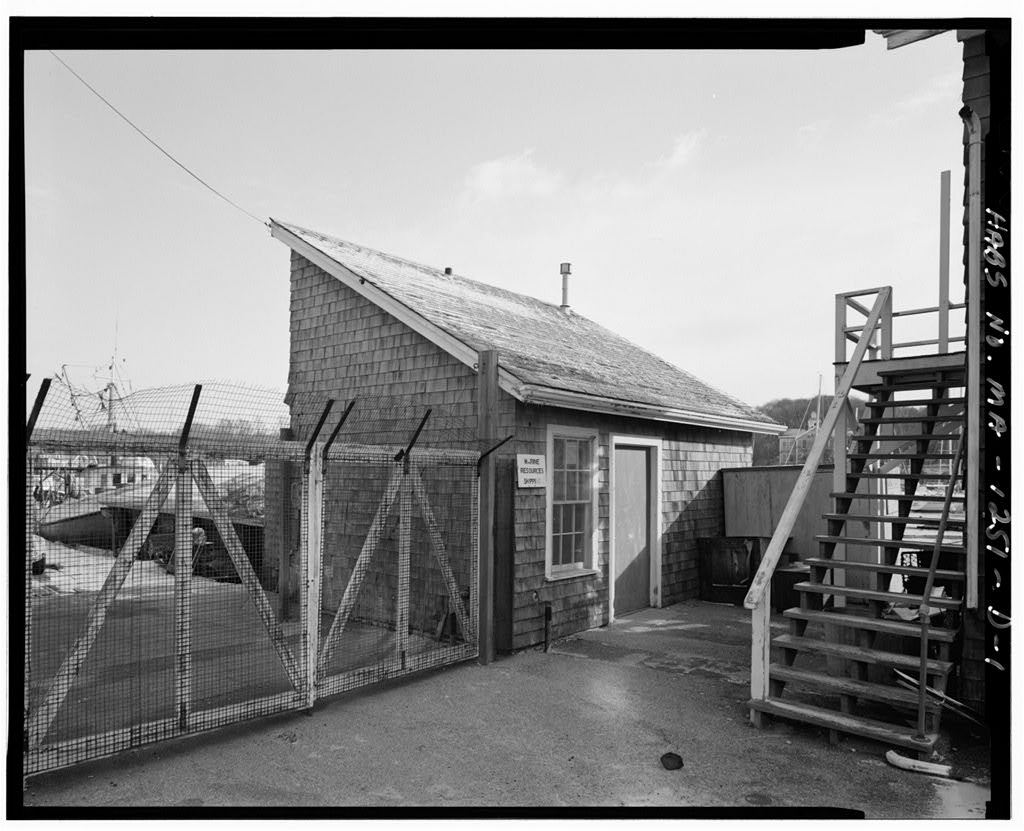
Pressures for residential accommodations were partially addressed by the acquisition of two tracts of land, the Gansett property in and the Devils Lane property in Houses were constructed here by MBL and MBL investigators up to mid-1980s (Maienschein New construction at MBL since the mid-twentieth century has included a small wood-frame shed (circa south of the Supply Building used as a marine animal Shipping House with a later addition (circa used as a base for scuba diving, construction of the Loeb and Whitman laboratories on MBL Street with associated demolition of Old Main and other older wood-frame structures, and the large, concrete Swope Center dormitory and dining hall (Maienschein In a major renovation of the Candle House for use as modern administrative space, retaining the historic appearance of the exterior, was completed.
The development of MBL in the late nineteenth and first half of the twentieth centuries has reflected the success and expansion of the institution and was made possible in the early decades largely by donations and nominal purchase prices. No grand scheme apparently ever existed for although plans were created at different points for facilities improvements. The pattern of development has involved incorporation MARINE BIOLOGICAL LABORATORY HABS No. MA-1251 (Page 4) of pre-existing buildings, demolition, and new construction, as need and resources have allowed. As a result, MBL today is a rather eclectic and lively mixture of wood, stone, brick, and concrete buildings dating from the early/mid-nineteenth century to the late twentieth century.
Buildings are arranged in fairly close proximity to one another, oriented to existing streets, rather than to a campus-like plan. Consequently, despite their larger scale, they fit well into the village ambience of Woods Hole. Although landscaping is not elaborate, grassy areas around many buildings balance the paved parking areas, located particularly behind the Lillie Building/Crane Laboratory and Candle House. Vistas across the docks and piers lining the edge of Eel Pond to the north and out Great Harbor towards Vineyard Sound to the south reinforce the fundamental linkage of the buildings' function to the surrounding marine ecology.
The present submission on the Marine Biological Laboratory includes Outline Format reports for the Supply Building and Carpenter Shop and Boat House, and Short Form reports for the Garage and Storage Building and the Shipping/Scuba Building. MARINE BIOLOGICAL LABORATORY HABS No. MA-1251 (Page 5) PART 11. MARINE BIOLOGICAL LABORATORY -
Historical Information
Overview The Falmouth area in the southwestern portion of the Cape Cod peninsula was originally settled in by a group comprised largely of Quakers from Barnstable. The early settlement was known as the plantation of Succanesset (Allen By the lands at Woods Hole and Little Harbor were divided and settled, and in the plantation was officially incorporated as the town of Falmouth. Its settlers' occupations consisted primarily of fishing, sheep raising, and salt making by solar evaporation. The first houses constructed in Woods Hole generally faced Little Harbor. In the eighteenth century, maritime-related industries such as fishing, shellfishing, shipbuilding, and ferry service to the islands took on increasing economic importance.
The town's population nearly doubled between and due in large part to maritime businesses, which by included the whaling industry. Falmouth was, with Provincetown, the earliest of the Cape Cod townships to engage in off-shore whaling. The area later to become the Marine Biological Laboratory was the site of whaling activities when Elijah Swift, a major figure in Falmouth whaling, established a wharf at Bar Neck Wharf on the south side of Water Street. The Candle House, constructed circa for sperm whale oil processing, and surrounding land were also occupied by whaling-related businesses, including a try house, bake shop, cooper shop, and blacksmith shop (Smith Only the Candle House remains today.
The whaling industry declined in Falmouth following the discovery of petroleum in Pennsylvania in and the last ship returned to port at Woods Hole in At mid-century, however, the beginnings of summer vacation resort expansion occurred, initiated by Joseph Story Fay, a Boston merchant, who purchased and developed large tracts around Little Harbor. The arrival of the Old Colony Railroad line in and the establishment of summer hotels further encouraged the growth of the village as a popular summer resort community (Allen Late-nineteenth-century development at Woods Hole was also stimulated by the location of the Pacific Guano Company on Long Neck (present-day Penzance Point, which was formerly an island linked to the mainland by a company-built road).
The company manufactured commercial fertilizers from Pacific guano and local fish meal at this location from to The most successful industrial undertaking in the town's history the business was discontinued and the buildings demolished when other fertilizers appeared on the regional market {Allen Other marine-based developments in Woods Hole, however, were to prove more enduring enterprises that have contributed, along with summer resort and tourism, to the twentieth-century importance and success of the area. These were the establishment between and of three major scientific marine research institutions. The first was the U. S.
Fish Commission, now the National Marine Fisheries Service, established on Water Street overlooking Great Harbor in Woods Hole was selected by Spencer Taylor Baird, assistant secretary of the Smithsonian, a well-known zoologist, and the first director of the Fisheries, as it was known, due to its exceptionally pure and sediment-free coastal waters. He had occasionally conducted research in Woods Hole beginning in (Lillie Mclaughlin The second was the Marine Biological Laboratory, established in which is discussed in greater detail below. The third was the Woods Hole Oceanographic Institution, established in MARINE BIOLOGICAL LABORATORY HASS No.
MA-1251 (Page 6) Marine Biological Laboratory International interest in marine biology developed significantly throughout the course of the nineteenth century, spurred in part by the laying and repair of transatlantic cables, which allowed examination of deep sea marine life for the first time, and by the writings of Charles S. Darwin. The first known marine biological station was established in France in and the earliest large and internationally influential laboratory was the Zoological Station of Naples, Italy, created in While the Europeans focussed on research, the developments in the United States combined commitments to both research and teaching.
Founded in by the illustrious natural scientist Louis Agassiz on the island of Penikese in Buzzards Bay, the short-lived Anderson School of Natural History was the first in this tradition. At about the same time, the Woman's Education Association of Boston, organized in to promote the education of women, along with the Boston Society of Natural History, established a summer laboratory in Annisquam which operated from Their decision to form a permanent institution for "instruction and investigation in Biology" (quoted in Lillie led to the organization of the Marine Biological Laboratory at Woods Hole in Following its incorporation on March 20, MBL opened for its first season July 17, with a new building and the Annisquam equipment.
Professor Charles Otis Whitman, a student of Agassiz' and professor at Clark University who had studied at Naples and elsewhere, was appointed director, and Van Vleck, instructor. The president of the Corporation was Alpheus Hyatt of the Massachusetts Institute of Technology, Curator of the Boston Society of Natural History, and a friend and colleague of Spencer Baird. The vision behind MBL was to create an permanent biological research and teaching institution of national stature, based on a national scope of use and support.
The fundamental policies set forth by the original Board of Trustees, which have guided MBL throughout its history, were articulated in by Whitman, who served as director until as follows: The aim was a permanent biological station; the function was to be instruction and investigation; the formative principle relied upon was co-operation (quoted in Lillie In the early decades, the growth of MBL at the west end of Water Street was rapid although small in scale, with the construction of numerous new wooden laboratory, residential, and support buildings, additions to Old Main, and the purchase of small steam yacht, later known as "Sagitta", to aid in collecting.
Attendance rose from seven investigators and eight students the first season, to a total of 199 in The last wooden building intended for laboratory research use and authorized for construction was the Botany Laboratory, completed in Later wood construction was restricted to buildings with support functions. Funding of addressing expansion and facility concerns, and strategic and long range planning emerged as issues between the trustees and the management in the mid-1890s. One of the results of the disagreements was a revision to the by-laws calling for the annual meeting, which had been held in Boston and Chicago, to be held in Woods Hole during the summer months to permit all interested persons to attend.
Further discussions of funding occurred in and in negotiations with the Carnegie Institution of Chicago (incorporated January 4, regarding the possibility of MBL being incorporated into the Institution. While this did not transpire, MBL received the first scientific grant issued by the Carnegie Institution in (Lillie ). Prior to gifts were required to supplement earned income. A number of entities at MBL were self- supporting, including the Supply Department, rents, instruction, and the "Mess", however additional funds were needed for the plant and administrative costs. Initially, fiscal deficit needs were met by many small gifts, then by the Carnegie Institution. Gradually, the burden was assumed by Charles R.
Crane of Chicago, the principle individual benefactor to Between and he gave per year to the operating budget, and later an endowment. Crane's contributions to MBL also included funds to construct MARINE BIOLOGICAL LABORATORY HABS No. MA-1251 (Page 7) the first permanent (brick), fireproof building, Crane Laboratory, erected in and its later expansion in The were an era of tremendous growth at MBL under the leadership of Charles R. Crane, president, and Frank R. Lillie, director, and later president. Support from the National Research Council and financial investments by the Rockefeller Foundation, John D.
Rockefeller, and the Carnegie Institution left MBL with a physical plant, including major permanent laboratory and residential buildings, valued at million and an endowment of over $1 million by the beginning of the Depression. Funding declined in the ensuing decades, but rose again after World War II through organizations like the National Science Foundation and the National Institutes of Health (Maienschein The predominantly fireproof masonry construction campaign of this period is discussed in the preceding descriptive section. The buildings designed by Boston architect Charles A. Coolidge, a trustee of all in restrained Classical Revival style and executed in red brick, are an important addition to the visual quality of MBL and lend a unifying sense to the institution's physical plant.
They are among the finest institutional buildings in Woods Hole, and contribute to the streetscape of the town as well as to The Crane/Lillie Building is also noteworthy, possibly in a national context, for the engineering of its salt water circulation system. Developed following detailed analysis by MBL instructor and assistant director, Gilman A. Drew, prior to construction of the Crane Laboratory in the system involved the use of rubber and lead piping to avoid metallic contamination. Its success allowed it to be extended to the later Lillie Building with little modification (Lillie The distinguished MBL library, which also serves as the official WHOI and Fisheries libraries, is housed in the Crane/Lillie Building.
From its beginnings in with 343 bound volumes, 525 unpublished pamphlets, and 22 journals, the library is one of the world's largest and leading collections of biological and marine sciences, including extensive reprints and rare book collections. It also maintains the MBL Archives (Lillie The two principle activities at research and instruction, have always taken place primarily during three or four months in the summer, although research continues on a restricted basis year-round. Much of the appeal of MBL has been not only in its excellent location and facilities, but in its inclusive approach to its mission. Initially, students were admitted by recommendation and promise rather than age or status, and instructors were provided with research space as part of their compensation.
The emphasis on individual independent research coupled with an open, co-operative atmosphere encouraged the pursuit of personal projects and the collaboration of ideas. While over time, student selection evolved to have more emphasis on highly skilled and advanced students, and access to lab space was determined by ability to pay, the general underlying concepts of sharing information and enthusiasm have remained vital to the MBL experience. In response to the initial growth spurt of interest in seasonal instruction during the late nineteenth century, enrollment was limited in and remained unchanged between and The courses of instruction emphasized the use of marine material and a combination of field trips, lab work, and lectures taught by instructors from many colleges and universities.
They focused on topics and techniques that drew on advantages over university settings. The basic curriculum consisted of four areas, introduced in the early years: invertebrate zoology marine botany general physiology, the first of its kind in world and embryology In 999 institutions American and 156 foreign) were represented by students and investigators. (Lillie In a group of wives of MBL researchers founded a Children's School of Science which met in a local public school and continues to operate today (Maienschein MARINE BIOLOGICAL LABORATORY HABS No. MA-1251 (Page 8) The importance of research at Woods Hole and the caliber of people it has attracted is reflected in the long list of Nobel Laureates with MBL affiliations.
The thousands of scientists who have occupied lab spaces at MBL include both beginners and seasoned researchers engaged in a wide diversity of investigations in biology. Because MBL has not had its own institutional set of research problems and because work at MBL often represents only a portion of research projects completed elsewhere, a compendium of accomplishments is more fragmented than at some other type of institution.
Throughout MBL history, however, beginning with Whitman's Methods of Research in Microscopical Anatomy and Embryology of important contributions have been made by MBL associates in the areas of embryology, regeneration, fertilization and parthenogenesis, cytology, genetics and evolution, general physiology, animal tropism and behavior, and the medical sciences (Lillie Maienschein The first 20 years at MBL were overall characterized by a shift from morphological studies of selected organisms to more analytical experimental methods of investigation using organisms best suited to a particular problem. This trend has continued, in general reducing the range of organisms under study, but increasing the number and detailed nature of questions asked.
Research techniques and equipment at MBL have also changed over time from early microscopes, glasses dishes and dissecting kit, requisite chemicals, and record drawings to more complex electron microscopes, ultracentrifuge, photography and videotaping equipment, and radioactive isotopes. The present-day lab at MBL is typically supplied with a mix of traditional and modern equipment. Important support facilities to the main research laboratories have included the Supply Department, Technical Services, and General Maintenance. The Supply Department provides specimens for instruction and for investigators when requested, as well as selling and shipping specimens to other institutions. Technical Services provides chemicals, apparatus, and other services such as photography.
Buildings and grounds maintenance has been supported through much of the twentieth century by a carpenter shop and machine shop. The staff are called upon for routine maintenance and conducted major repairs following the hurricane of September 21, (Lillie The quality and character of life at MBL over the last 100 years has been created by the coastal setting, summer season, and sense of community. MBL fosters "research, conference, and recreation", or, "vocation and vacation", in the words of Frank R. Lillie (Lillie Housing accommodations at MBL have consisted of a combination of dormitories, apartments, summer rental cottages, and the purchase of Woods Hole properties by MBL associates.
The communal dining hall, known as the "Mess", served as a central gathering place at mealtimes, a function absorbed since by the new Swope Center. The MBL Yacht Club, tennis courts, MBL Beach, and a variety of social activities have been an important part of the MBL community. Friday evening lectures, originally focussing on general research approach problems, and later on reporting research results, have always been well attended. The relationship between the host village of Woods Hole and MBL is also part of the history of The Fisheries, and WHOI have had a profound impact on the local economy and village life, and the associations are now of long standing.
Historians report that while local residents have not always fully understood the idiosyncracies of scientists, overall, these institutions have been supported and appreciated for the vitality and intellectual environment they offer (Maienschein Like many institutions, the history of MBL and its importance is partially embodied in the lives of individuals who contributed to its growth and development, or whose personal achievements reflect their association with the institution. Between and 35 men associated with MBL have received Nobel Prizes, predominantly in the areas of medicine or physiology. Among this group is James Watson, an instructor at who was awarded a prize in for discoveries concerning the molecular structure of DNA (Maienschein 1988:endlea~.
The MBL staff has included other numerous important scientists with contributions as leaders at MBL in addition to their scientific accomplishments. Among the most prominent of the early leader/scientists were Charles Otis Whitman, Gilman A. Drew, and Edward Gardiner Gardiner MARINE BIOLOGICAL LABORATORY HASS No. MA-1251 (Page 9) (sic) (Lillie as well as Thomas Henry Morgan (recipient of the first Nobel Prize awarded to an MBL associate), Frank R. Lillie, Edwin Grant Conklin, Edmund Beecher Wilson, and Jacques Loeb (Maienschein The significance of the Marine Biological Laboratory is unquestionable and lies primarily in cultural and intellectual history and the development of scientific research and education in the United States and the world.
Essayist Lewis Thomas has articulated this by describing MBL as a "National Biological Laboratory" (Maienschein 1988:vii). MBL is significant as the nation's first and most enduring permanent marine biological research and educational institution. Its commitment to both investigation and instruction in a consciously co-operative atmosphere has furthered the fellowship and hard science of biological research for over 1oo years. Its success is reflected in the accomplishments of its associates, including 35 Nobel Laureates. Instruction for both adults and children has incubated fledgling scientists and broadened understanding of science and of marine biology. MBL has also made important contributions to the local economy, community life, and architectural and visual character of Woods Hole.
MARINE BIOLOGICAL LABORATORY HASS No. MA-1251 (Page 10) Location Map USGS Woods Hole, Mass. Quadrangle Map 0 sooo H H H I I I I I I o.s 0 H Fl Fl Fl Fl I 0 0 / MARINE BIOLOGICAL LABORATORY HABS No. MA-1251 (Page 11) Plan to accompany petition of the Marine Biological Laboratory to build a marine railway, a boat shed, and two floats at Woods Hole, Massachusetts, September 13, Scale: 40 feet to one inch. , ' ' I I , ,, '\. ' ' '\ '' '\. '\ ~.i \ '\. \ I - ~ \ - - - - ' --' \ I I I I I ~ \ \ I \ \ l ', ' 4 '\ I I ' I '' '' " I\ I I I I ' I I . I ' I I ' EEL POND I I I I I I I I / I I ,; I I , , I I / . I ,, "" '\. '- future site ' , of Supply Building 'v' \ --- ... ... ~ I I ' ,' I \ ', I I future site I Shipping/Scuba , I cal La6oralory Building \ \ - , I \.. - .._ - .
future site of F _ Carpenter Shop/ l1J Boat House .~ ~ I \~ l Garage/ . . ___ _ , Store House ~ I IA/ O L BUii OtN<i e> I rra 1er . uscc Crane Laboratory ~ I llenry H. Fay ~ Geor9e P. w, ,l 1 I I I I o I Candle House c. ~ I ~ I a:: - - - - - - - - - - - - - - - - J k t . " " " 2 - - - - ' - - - - - ' ST. WATER STREET llJ Demolished MARINE BIOLOGICAL LABORATORY HABS No. MA-1251 (Page 12) Plan to accompany petition of the Marine Biological Laboratory to build a seawall and fill solid and dredge at Woods Hole, Massachusetts, November 15, Scale: 40 feet to one inch. ' ' ., ) I I - -11 -~ EEL POND ,. - l_. - future site of Crane Laboratory I Garage/ Store House Carpenter Shop/ c Boat House j l /'n . .1. J Candle House c. -- ST
Water Street
Demolished MARINE BIOLOG~~AL LABORATORY (Page 13) HABS No. MA-12 ical Laboratory, Fa lmouth, Woods Hole, Massachusetts. to one ~y . Plan of Land f tOwned mch.the Marine B1olog .. Scale: 40 ee . . . ~ .. .. -~ ~ ~-- ~ ~-. . .. lJ. .. : ... ~ ::. :1. : ~ \~ .. ;.' ... . ) "< ' EEL POND j . . ! '.;.Cii; _.. I < ' ..J NORTH .,r NUMERICAL DESIGNATIONS OF BUILDINGS 1. Old Main, 0 2. Old Main, t; < 3. Old Main, 4. Botany, 5. Old Lecture Hall, ' o_,,a 6. Loeb laboratory 7. "Mess" and Homestead co 8. Residence t 9. Residence 10. Dormitory !an; 11. Residence 12. Apartment house en ... 13. Residence ., t:, 14. Residence ;: (') 15. Residence :J" 16. Residence 17. Residence s: Cl) 18. Library addition, 1' 19. Main laboratory, 20. Crane laboratory, z 0 21. Pumphouse, th %3 22. Clubhouse 23.
Location of the United States ~ d Bureau of Fisheries ii"' )> )> I 24. Sun dial CD :C 25. Supply department cn- z !I 26. Candle house, Zm I 27. Carpenter shop i11 . !,' !=> CD 28. Oceanographic Institution, 29. Garage s:o l>r 30. Spindle land 'O GREAI HAReoR 31. Drawbridge I\) - " ~o )> PLAN OF CENTRAL LAND AND BUILDINGS OF THE MARINE BIOLOGICAL LABORATORY r ,,~ Ql Cl (Q 0 (1) :c )> HABS No. MA-1251 -A,B,C,D ~-f 0 0 ~ MARINE BIOLOGICAL LABORATORY HABS No. MA-1251 (Page 15) Map of a portion of the MBL complex, showing HABS No. MA-1251-A,-B,-C,-D. Scale: approximately 50 feet to one inch. EXIST.
UNLICENSED PILE SUPPORTED FLOATS AND =>IER TO BE LICENSED JNOER APPUCA TION JER PIER AUTHORIZED Y DP~l:!B0Jo2H~~10J UNLICENSED PILE l DOLPHINS (2) TO Pit!: PLA lFORM BE LICENSED UNDER AUTHORIZED BY THIS APPUCA TION DEOE UC. I NALL & F"ILL AUTHORIZED DOLPHINS . . r. OF PUBLIC WORKS & Ft.OAT, RAMP, BOAT HOUSE, UC LANDS UC. I 421 & RAILWAY AUll-fORIZED BY COMMISSION ON WATERWAYS & PUBLIC LANDS UC. I 46 Carpenter Shop and Boat House EXISTING :( \ PARKING C: \ AREA z l"'I I MARINE BIOLOGICAL LABORATORY HABS No. MA-1251 (Page 16) Bibliography Allen, Norman T., A History of Woods Hole., Ms. on file, Woods Hole Public Library, Falmouth, MA, Anon., Map of Falmouth, On file, Massachusetts Historical Commission, Boston, MA, Desbarres, Charts of the Coast and Harbors of New England, Glover, Suzanne.
Phase I Archaeological Investigations at the Marine Biological Laboratorv. Woods Hole.Massachusetts. The Public Archaeology Laboratory, Inc. To be submitted to Marine Biological Laboratory, Woods Hole, MA, in prep. Jenkins, Candace and Susan Abele, Unpublished Architectural Survey Forms. Inventory of the Historic and Archaeological Assets of the Commonwealth. On file, Massachusetts Historical Commission, Boston, MA, Lillie, Frank R., The Woods Hole Marine Biological Laboratory. Supplement to The Biological Bulletin Volume Number 1. Chicago: The University of Chicago Press, Reprinted in Mclaughlin, Jane A, Woods Hole. In The Book of Falmouth; a Tricentennial Celebration Edited by Marylou Smith.
Falmouth, Maienschein, Jane, 100 Years Exploring Life, The Marine Biological Laboratory at Woods Hole. Boston: Jones and Bartlett, Marine Biological Laboratory Archives and Library Collections. Marine Biological Laboratory, Plan to accompany petition of the Marine Biological Laboratory to build a seawall and fill solid and dredge at Woods Hole. Massachusetts, September 13. On file, Facilities and Services Department, Woods Hole, MA, Marine Biological Laboratory, Plan to accompany petition of the Marine Biological Laboratory to build a marine railway. a boat shed, and two floats at Woods Hole. Massachusetts, November 15, On file, Facilities and Services Department, Woods Hole, MA, Marine Biological Laboratory, Plan of Land Owned by the Marine Biological Laboratory, Falmouth, Woods Hole.
The original filed report, and the sheets the survey produced. Those published here appear above.
Also surveyed in Falmouth
5 records
The federal surveyors worked through Falmouth building by building. These are the other structures
they measured and filed a report on, longest report first.
 Block
Block