This documentation was undertaken in June as mitigation for the removal of the Brecksville Diversion Dam (HAER No. OH-59-G), part of a larger project to restore the free flow of the Cuyahoga River. The head gates will remain in place but will no longer be functional. The Cuyahoga River Ecosystem Restoration Canal Diversion Dam Project is a partnership among Cuyahoga Valley National Park; Friends of the Crooked River; Ohio Environmental Protection Agency; Ohio Department of Natural Resources; U.S. Army Corps of Engineers; and Northeast Ohio Regional Sewer District. The field team consisted of Scott D. Heberling, Project Historian, Heberling Associates, Inc.; and Andrew Baugnet, Photographer. For additional information, see: Ohio and Erie Canal HAER No.
OH-59 Ohio and Erie Canal, Brecksville Diversion Dam HAER No. OH-59-G Ohio and Erie Canal, Pinery Feeder Dam HAER No. OH-59-H Ohio and Erie Canal, Feeder Channel HAER No. OH-59-J OHIO AND ERIE CANAL, HEAD GATES HAER No. OH-59-I (page 2) Part I. Historical Information A. Physical History: 1. Date(s) of construction: 2. Engineer: American Steel and Wire Company 3. Builder/Contractor: Not known 4. Original Plans and construction: The original plans for the head gates are dated January 19, February 7, June 3, and June 4, and were developed by the American Steel and Wire Company which provided them to the contractor prior to construction. Copies of the plans are currently in the possession of Cuyahoga Valley National Park.
They include two site plans showing the existing timber-crib dam and proposed new head gate structure as well as two sheets containing section and plan views of the head gates, gate frames, stems, floor stands, and concrete work.1 The plans may be subject to copyright so were not reproduced here. 5. Alterations and Additions: There is no documentary or physical evidence to suggest that any substantial alterations were made to the original design of the head gates subsequent to their construction. However photographs recorded in reveal recent repairs to the concrete head wall and a new metal ladder, catwalk and railings constructed on the river side of the head wall.2 B.
Historical Context: The Ohio and Erie Canal, a 308-mile inland waterway, was constructed to link Lake Erie at Cleveland with the Ohio River at Portsmouth. It was one of the most important of America s nineteenth century canals, operating as a navigation system from to It was a key link in the transportation network of northeastern Ohio and served as the major route of travel and communication through the Cuyahoga Valley for several decades.3 The canal system experienced a long period of decline prior to the devastating flood event of March that ended Ohio s canal era once and for all. The Ohio and Erie Canal from Akron north to Brecksville was totally destroyed by the flood.
However the segment from Brecksville 1 American Steel and Wire Company, Survey of Ohio Canal Intake, Cuyahoga Works, Sheet January 19, Map Showing Replacement of Ohio Canal Inlet Gates, Sheet February 7, Details of Frame, Gate, and Shaft Extension for Brecksville Inlet, Ohio Canal, Sheet June 4, Concrete Details, Inlet Gates at Brecksville, Ohio Canal, Sheet June 3, (Cleveland, OH: American Steel and Wire Company). 2 Roy Hampton and Heather Kenney, National Register Assessment of the Brecksville Diversion Dam (SUM-3253- 1), Cuyahoga Valley National Park, Summit and Cuyahoga Counties, Ohio (Columbus, OH: Hardlines Design Company, 15. 3 Harry N.
Scheiber, Ohio Canal Era: A Case Study of Government and the Economy: (Athens: Ohio University Press, Sam Tamburro, The History of the Ohio and Erie Canal, in Canal Fever: The Ohio & Erie Canal from Waterway to Canalway, ed. Metzger and Peg Bobel (Kent, OH: Kent State University Press, OHIO AND ERIE CANAL, HEAD GATES HAER No. OH-59-I (page 3) north to Cleveland was considered salvageable and, although abandoned as a transportation route, was retained as an industrial water supply.4 Dams and feeders were built to ensure an adequate supply of water, particularly along higher sections of the line. By the early there were twelve feeders along the length of the canal, including one built in at the head of the Pinery Narrows near Brecksville.
On July 26 the Canal Commissioners awarded a contract to Henry R. Burnam of Boston, Ohio, to build a permanent dam and feeder at that location. The contract states that Burnam would construct a dam across the Cuyahoga River near the head of the first rapids below the mouth of Chippewa Creek, & a feeder from thence below the Lock [No. 36]...The walls at the head or guardgates to be built of stone masonry in the same manner as to the kind of work as Lock walls are required to be built on the Canal, the dam to be formed by timber bolted to the rock at the bottom of the river.
The whole to be done in a good substantial & workmanlike manner agreeably to a plan to be furnished for that purpose under the inspection of the acting commissioner or any engineer appointed for that purpose...and to be finished by the first day of November next. That plan has not survived. The feeder was sufficiently complete to be put into use during the fall of but Burnam apparently was unable to finish the work since on December 6 a new contract was awarded to William Brown and Merrick Sawyer to finish the job.
The feeder was completed in The Pinery Feeder, like most canal feeders, consisted of a V-shaped rock filled timber-crib weir across the river which created an impoundment; a set of head gates that diverted water from the river into the feeder and regulated the flow; the feeder channel, a wide ditch that carried water from the impoundment to the canal; and the waste gates, which returned excess water to the river.
By the time that the earliest detailed maps of the canal were created by Kennon for the Board of Public Works in the Pinery Feeder Dam and head gates already had been repaired and rebuilt several times.6 New head gates and frames were installed in and However there is no evidence that the configuration of the feeder complex and the relationships among its structures changed from to In the height of the dam was raised by 12" to augment the water supply for the canal.8 In the head gates were rebuilt in concrete and in the dam was completely reconstructed in connection with the state s comprehensive improvements to the northern division of the canal. Paul was the engineer-in-charge.
The Board of Public Works annual report for stated: The head-gates, sluice-gates, and weir at the canal were rebuilt at the Pinery Feeder, with 4 Tamburro, History of the Ohio and Erie Canal, Terry K. Woods, Ohio s Grand Canal: A Brief History of the Ohio and Erie Canal (Kent, OH: Kent State University Press, 5 Articles of Agreement between Henry R.
Burnam and Alfred Kelley, July 26, Contracts, Records of the Department of Public Works of Ohio, Series Ohio History Center, Columbus); Harlan Unrau and Nick Scrattish, Historic Structure Report, Ohio and Erie Canal, Cuyahoga Valley National Recreation Area, Ohio (Denver, CO: National Park Service, Denver Service Center, 6 Ohio Board of Public Works, Records of the Board of Public Works, Map of the Ohio Canal, Summit County, Ohio, surveyed by Kennon State Archives Series Ohio History Center, Columbus. 7 Ohio Board of Public Works, Annual Report Ohio Board of Public Works, Annual Report 8 Ohio Board of Public Works, Annual Report OHIO AND ERIE CANAL, HEAD GATES HAER No.
OH-59-I (page 4) neat but massive concrete structures, resting on rock foundations, at the cost of about They are about five feet higher than formerly, so as to avoid the high floods. 9 The dam was rebuilt the following year. All work was performed by state crews.10 After the catastrophic flood the Pinery Feeder and the canal section between Brecksville and Cleveland were repaired and continued to operate since they supplied cooling water to the American Steel and Wire Company s Cuyahoga Works. Since at least that company had utilized water from the canal for its industrial operations, first at the Newburgh Steel Works, then at the Cuyahoga Works in Cuyahoga Heights.
The first known lease to AS&W was executed in and was renewed in October and periodically thereafter through even after the state transferred its canal lands within Cuyahoga Valley National Park to the federal government in The company, owned by the U.S. Steel Corporation in the twentieth century, performed routine maintenance on canal structures along the leased section of canal.
In a new steel fabricating company acquired the Cuyahoga Works together with the rights to the American Steel and Wire Company name and assumed responsibility for maintaining the canal north of Brecksville including the feeder complex.11 A circa photograph shows the concrete dam abutment and head wall with its three metal gates which were opened vertically by means of a geared hand crank, similar to the present system.12 The gates appear to be similar to waste gates constructed at various locations as part of the improvements to the northern division. An undated view believed to date to ca.
taken from the Route 82 Brecksville-Northfield High Level Bridge, provides an excellent overview of the dam and head gates as they existed during the first half of the twentieth century.13 In AS&W replaced the head gates with a new concrete head gate structure. Two years later it replaced the old timber-crib dam with a new fixed-crest concrete weir located about downstream. The work was funded by AS&W but was designed and supervised by the Ohio Department of Public Works. In the lease was amended to include construction of a new concrete dam and abutments at a cost of The old dam was left in place but was breached in the center to allow the water to flow through.
The crest of the new dam was about 1' higher than the top of the crib dam which was now submerged beneath the surface of the pool. The structure is known as the Brecksville Diversion Dam.14 9 Ohio Board of Public Works, Annual Report Ohio Board of Public Works, Annual Report 58, 67. 10 Ohio Board of Public Works, Annual Report 71. 11 Carol Poh Miller, Ohio and Erie Canal, HAER No. OH-59, Historic American Engineering Record (HAER), National Park Service, U.S.
Department of the Interior, 8; Board of Public Works, Records of the Board of Public Works, Record of Leases, State Archives Series BV4667and lease between the State of Ohio and American Steel & Wire dated December 22, This lease covers the period and refers to the original lease beginning January 17, Also of interest are lease extensions the State of Ohio and U.S. Steel Corporation dated November December 8, July 24, and October 26, 12 Photograph, Brecksville Cuyahoga River, collection of Cuyahoga Valley National Park. 13 Dam and Feeder at Brecksville Station, ca. Photograph OEC_109, Louis Baus Canal Photograph Collection, University of Akron, Archival Services, Akron, OH. 14 Sam Tamburro, History of the Brecksville Dam, (Brecksville, OH: National Park Service, 7.
OHIO AND ERIE CANAL, HEAD GATES HAER No. OH-59-I (page 5) AS&W continued to maintain the Brecksville Diversion Dam and the associated feeder channel and head gates until the late In the National Park Service acquired the Ohio and Erie Canal Lands within Cuyahoga Valley National Park and assumed responsibility for maintenance of the feeder complex although the hydraulic lease continued for a few more years. The State of Ohio continued to own individual structures including the Brecksville Diversion Dam, head gates, feeder channel, and Pinery Feeder Dam remnant.15 Part II. Structural/Design Information A. General Statement: 1. Character: The Pinery Feeder continues to serve its historic function of supplying water to the section of the Ohio and Erie Canal north of Lock No. 36.
It is the only watered section of canal in Cuyahoga Valley National Park and is a designated National Historic Landmark. The head gates represent standard engineering and construction practices of their era. The design, materials, and construction are typical of small water supply structures constructed throughout Ohio and the United States in the middle of the twentieth century. 2. Condition of fabric: Due to the importance of the head gates for supplying water to the Ohio and Erie Canal, they receive periodic maintenance and repairs. The condition of the gates, mechanical equipment, and concrete head wall and abutments is good. However the accumulation of silt in the feeder channel and in the river adjacent to the gates interferes with their proper functioning. B.
Description: The head gate structure consists of a hollow poured concrete box measuring wide x deep x high with three " wide x high openings at the base of the river head wall. The clear space inside the box is deep x " high and expands in width from (front) to (back). Under normal conditions the openings in the river head wall are completely submerged in the pool behind the Pinery Feeder Dam and the Brecksville Diversion Dam. The openings in the head wall are fitted with wide by high sliding metal plates which serve as sluice gates that can be raised and lowered to control the flow of water from the river into the canal. The gates slide inside metal frames and guide bars attached to the exterior of the head wall.
A 2" diameter bronze rod (or stem ) is attached to the top of each gate and extends through the top of the concrete structure into a high cast-iron floor stand mounted on a wide concrete platform which protrudes from the front of the head wall and is supported by four 15 Tamburo, History of the Brecksville Dam, 7; Hampton and Kenney, National Register Assessment of the Brecksville Diversion Dam, Ohio Environmental Protection Agency, National Park Service-Cuyahoga Valley National Park, Ohio Department of Natural Resources, and U.S. Army Corps of Engineers, Cuyahoga River Ecosystem Restoration Canal Diversion Dam Project Environmental Assessment (Brecksville, OH: Cuyahoga Valley National Park, 38. OHIO AND ERIE CANAL, HEAD GATES HAER No. OH-59-I (page 6) cast-in-place concrete buttresses.
A mechanically-operated crank can be attached to an internal mechanism in the floor stand which engages the threaded stem to raise or lower the gate a maximum of 5'. A vertical metal tube extends from the top of each floor stand and houses the stem when the gate is in the open position. The three Type L-4 floor stands are part of the original construction and were manufactured by the Chapman Valve Company, a major twentieth century producer of valves and gates for water and gas systems. According to the plans, the American Steel and Wire Company supplied the floor stands and gates to the contractor. It is not known whether the sluice gates are original but they are similar to the gates depicted in the plans.
A pair of high plain concrete parapet walls are located on each side of the structure s top, flanking a wide paved roadway that passes over the structure, part of a vehicular access road that intersects with the Ohio and Erie Towpath Trail a few hundred feet east of the head gates and dams. The east side of the structure opens directly into the feeder channel and has a 6' wide concrete apron at its base for erosion protection. When the head gate structure was constructed in it incorporated the existing poured concrete abutments for the previous head gates. The abutments were repaired at some point after the National Park Service assumed maintenance responsibilities in The north abutment ties into the concrete abutment for the Pinery Feeder Dam.
A metal ladder and catwalk attached to the river head wall provide access to the exterior face of the head wall and gates. Metal pipe railings are attached to both the catwalk and a platform at the top of the access ladder. C. Mechanicals/Operation: The mechanical operation of the head gates is very simple. There are three openings in the concrete head wall, each fitted with a rectangular metal plate which serves as a sluice gate. When the gates are in their lowered position they block the openings and no water can pass through the structure into the feeder channel and canal. A vertical rod (or stem ) is attached to the top of each gate and extends through the top of the concrete structure and into a cast-iron floor stand.
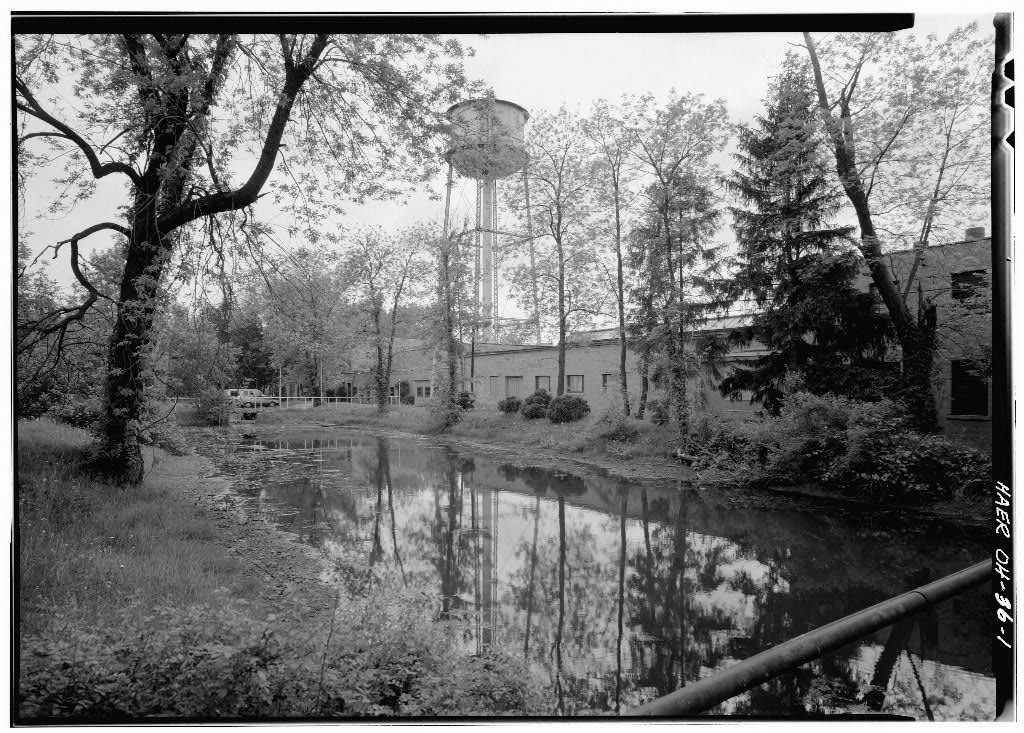
A mechanically-operated crank is attached to an internal mechanism in the floor stand which engages the threaded stem, raising the gate and allowing water to pass from the river into the channel. Each gate can be raised or lowered independently of the others. The gates are normally left in the open position so water can flow freely, but are closed when the feeder channel is dredged or when other maintenance is necessary. D. Site Information: The head gates are located adjacent to the abandoned timber-crib Pinery Feeder Dam which spans the Cuyahoga River at the head of the gorge known as the Pinery Narrows. The Brecksville Diversion Dam, which replaced the Pinery Feeder Dam in is located downstream from the older timber-crib dam and the head gates.
The terrain on the east side of the river is level and about 12' above the river channel. The massive Route 82 Brecksville- Northfield High Level Bridge, built in spans the river, canal, and feeder with its piers located feet downstream from the dam and head gates. The Ohio and Erie Canal Towpath Trail passes feet east of the head gates. OHIO AND ERIE CANAL, HEAD GATES HAER No. OH-59-I (page 7) Part III. Sources of Information A. Primary
 Block
Block