 Block
Block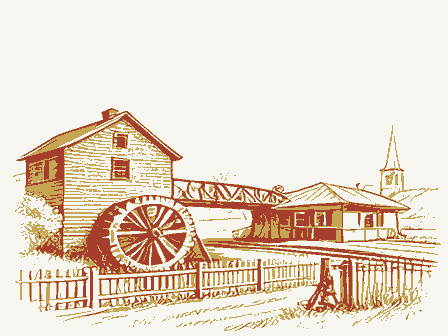
Hanover Township (part 28 of 29)
Part 28 of 29 of the account of this township in A History and Biographical Cyclopædia of Butler County, Ohio : with Illustrations and Sketches of Its Representative Men and Pioneers, published 1882; Centennial History of Butler County, Ohio, published 1905. 15,960 words, covering 4 settlements. Source changes inside the text are labelled at the exact paragraph where the next book begins.
Contents
8 sectionsThe section headings the book prints inside this chapter, on this part. Each one jumps to where it begins.
Parts
29 pagesThe source prints this as one continuous account. It is split here so no single page grows too heavy to load; the text runs straight on across the parts and nothing is omitted.
The chapter
15,960 wordsReproduced complete and unedited from A History and Biographical Cyclopædia of Butler County, Ohio : with Illustrations and Sketches of Its Representative Men and Pioneers, published 1882; Centennial History of Butler County, Ohio, published 1905. The text is machine-read from scans, so expect recognition errors: misspelled names, dropped words, and stray characters. Nothing has been corrected, because correcting a proper name invents one. The headings below are the books' own; source changes are labelled in place.
The Oxford sections are of interest from the fact that they yielded thirty-five years ago many of the type fossils of the formation. The early geological work of David Christy, Esq., was done in this field, and through him collections of the fossils found here were distributed among eastern and foreign geologists. The name of Oxford is, accordingly, very widely known as one of the typical localities of the blue limestone or Cincinnati group of Southern Ohio. The original cabinet of Mr. Christy is now in possession of the Miami University. It contains a number of interesting fossils.
Wayne and Madison Townships, and especially the latter, furnish unsurpassed exposures of the Lebanon beds on the banks of the smaller streams that drain their highlands. Kemp's Run, near Middletown Station, furnishes excellent ground for the collector, as do several branches that flow from Loy's Hill to Twin Creek, on the north line of the county.
The lowest ground in the county is to be found on its southern boundary in the Miami Valley. Its approximate elevation above the level of low water in Cincinnati is fifty feet. The alluvial division represents the valleys both ancient and modern - the eroded regions from which the rocks have been carried away to a depth at least below existing drainage courses. These areas could be appropriately described as the portions of the county that have an elevation of not more than two hundred and fifty feet above the Ohio River. The up- _ lands embrace the lands above this level. A large proportion of them, however, lie at an elevation between four and six hundred feet above the Ohio. This division of the surface of the county is much less definite on the east side of the river than it is on the west, for the reason that the drift deposits are heavier in the first named district. In other words, the lines of the valleys are here harder to be traced. There are areas of unmistakable uplands, but they are connected with the valleys by slopes of considerable extent, which completely obscure the true outlines of the rocky floor.
The uplands proper are remnants of the blue limestone plateau which once occupied all of southwestern Ohio, but so much of which has already been removed by aqueous and glacial denudation. They. are almost universally covered with shallow deposits of drift, but over very large areas the character of the underlying rock shows through, giving its peculiar features to the topography, to the agricultural capacity, and to the water supply of the districts occupied. These upland drift deposits are in considerable part derived from the waste of blue limestone land to the northward, so that a closer bond of connection exists between the soil and the underlying rock than is usually found in drift-covered regions.
The lowest of the drift deposits, or that which rests directly upon the bedded rocks, is the bowlder clay. This formation is shown with great distinctness and in very numerous exposures in Butler County. Almost every stream in some portion of its course discloses it. A particular feature of the bowlder clay in Butler County is that of ancient vegetable growths, branches, trunks, and roots of trees in large quantities. Examples can be seen in following almost any stream to its source, but one or two points may be named which are specially noteworthy in this respect. Collins's Run, near Oxford, a small tributary of Four-Mile Creek, shows in its banks very numerous exposures of these pre-glacial and interglacial forest growths. The vegetation is imbedded in the clay very often, and part of it shows that it has been subjected to rough mechanical agencies. The frequent presence of leaves and roots in or upon the deposit serves to show, however, that the source of the vegetation was not very far removed. The north bank of Elk Creek, opposite the mill at Miltonville, also gives a fine exposure of the clay. At this point a peculiar modification of the bowlder clay is found that deserves particular mention. It is a clay distinctly green in color, and as shown by a single analysis or a specimen obtained at this point, is very rich in potash and soda. The analysis made by Professor Wormley is here subjoined:
It will be seen that the elements above named, potash and soda, are abundant enough here to make the clay a fertilizer of considerable value. Vivianite, or phosphate of iron, is of frequent, perhaps constant occurrence in it. Vegetable matter is also always present. This green clay has been more frequently met with in Warren and Butler Counties than elsewhere.
The vegetable matter that is intermingled with the bowlder clay is to be distinguished from that which is borne upon its surface. The presence of a buried soil of inter-glacial age has been noticed frequently in other counties. An interesting example is recorded by David Christy in his Letters on Geology, published in 1848. In the last letter of the series, page 5, he says:
'Beneath our diluvium are occasional beds of ' hard pan or very tough blue clay, with imbedded pebbles.' I had my attention called to this new and interesting feature of our geology last Summer by Robert Beckett, Esq., eight miles east of Oxford. He called upon me to examine the stump of a tree standing erect in this deposit at a point where a small stream is encroaching upon a bluff. The roots penetrated the hard pan in all directions. Twenty feet of diluvium overlies it, We dug out the stump and a part of the roots. Some years since Mr. Beckett, in digging a well twenty or thirty rods distant from this point, at a depth of ten feet in the diluvium, struck upon another small tree, standing erect, with the trunk and some of the branches almost entire. This tree continued down to a depth of thirty feet, where he found its roots, in the natural position of growth, penetrating the hard pan."
Mr. J. P. MacLean has found, in the neighborhood of McGonigle's and from there northward to Darrtown, trees buried at a depth of from thirty to fifty feet, and is of opinion that a forest is there covered by later deposits.
The yellow gravelly clay that makes the main element of the drift in all of this region is very abundant in this county. It is not formed from the weathering of the upper portions of the bowlder clay in place. The action of the atmosphere upon an exposed bed of blue clay changes its color and also its texture, it is true, but much more than this is required to account for the surface clays of Southern Ohio. They have been worn away from their old places of deposit by water, and have been redeposited. The bowlder clay is always unstratified ; the yellow clays are generally distinctly stratified. The uplands of the county, especially of its northern and central portions, are almost universally covered with deposits of this kind. There are no elevations in the county that escape the deposits of the modified drift.
The sand and gravel that make a third element in the drift of this region do not deserve a place by themselves. They form a phase only of the second order of deposits, and must be referred not only to the same general line of agencies, but also approximately to the same time. As has just been stated, the highest elevations in the county give \clear proof of having been involved in the submergence, by which alone these facts can be explained. Bowlders are found at all elevations, and some of the largest size are found at the greatest altitude. One lying on the highest land of the west side of Ross Township measured one hundred and thirty feet above ground.
It is to be noticed that the bedded rock has been cut out to a greater depth than existing agencies can account for throughout most of the area of the Miami Valley. The rocky floor is very seldom laid bare by the river, and is as seldom struck in any excavations or borings that are made in the valley.
The valley is filled with immense accumulations of gravel and bowlders. These gravel beds undoubtedly overlie deposits of bowlder clay in many parts of the
Indeed, these deposits are occasionally, though rarely, struck in wells and similar excavations, and go times they even approach very near the surface. he eravel is of various sorts and sizes, and indicates various degrees of strength in the currents that have transported it. Large quantities of sand are scattered through it. In composition it is principally limestone, thus agreeing with the pebbles and bowlders that fill the drift clays of the country; but unlike the true drift pebbles, it has lost the marks of the previous stage in its history, the shaping which it received under the glacial sheet. Its pebvalley.
The gravel beds are in all cases covered with considerable deposits of loam and sand, which form the present sources of the valley. These depésits are arranged in three natural and well marked divisions, the first bottoms, the second bottoms, and the gravel terraces, sometimes called the third bottoms. Of this series, contrary to the general order in geology, the lowest member, the first bottoms, is the newest, and the highest member, - the gravel terraces, is the oldest. In other words, the first and second bottoms do not extend beneath the gravel terraces, and consequently do not result from the denudation of portions of the valley. The gravel terraces are at least one hundred feet above low water of the river now. 'They are generally left in small and isolated fragments on the margins of the valleys, but sometimes they are found to hold considerable areas. In the vicinity of the village of Trenton they can be seen and studied to considerable advantage, as also in the vicinity of Poast-town, on the Banker and Lucas farms.
To follow their history we must go back to the Champlain epoch of geology - to the period of submergence that followed the glacial period. The level of this portion of the country was at that time four hundred feet lower than at present. Stratified deposits, on a large scale, of sand, gravel, and clay are found four hundred feet above the present drainage of the country. At the period of greatest submergence there could have been little or no current throughout the valley, but during the slow advancing movement of depression the valley was filled with immense accumulations of rearranged drift. We may suppose, then, that the gravel terraces are a part of the old floor of the valley and that they once extended with a degree of uniformity throughout the wide basins in which we find the remnants of them to-day. As the continent emerged once more and slowly regained its present elevation, the river channels would be cut deeper and deeper into these deposits, the former surfaces of which would be left one hundred feet or more above the present river beds.
Little needs to be said in regard to their composition, as the name by which these deposits are known, the gravel terraces, indicates the main element in their mak- ing up. Grayel, sand, and loam, variously intermingled, constitute the whole series. The sorting and arranging of materials could only have been accomplished in long extended portions of time. There are no indications of tumultuous deposition in any portion of the series. The soils formed from the weathering and decomposition of the surfaces of these beds are kind and productive.
The second bottoms, like the terraces, must be referred to causes and conditions not now existing in the valley. They lie above the reach of the highest floods, being thirty feet or more above low water in the main valley. They occupy broad areas, and constitute, by way of excellence, the farming lands of the main valley. They consist of loams from two to six feet in thickness, overlying gravel. They seem to owe their origin to an arrest of the upward movement of the continent, which con- ' tinued for a considerable period.
The first bottoms are the most recent of the series. They are, indeed, very closely connected with the present state of things. They occupy the deeper part of the valley, and are covered by all of the higher floods. To these floods they owe their origin in part, being made up of the sediments deposited from high water. An arenaceous deposit filled with land shells is a common and characteristic member of the formation. The shells must have mainly grown upon the regions where we now find them, and were buried by the deposits of annual floods. The clearing of the valleys and their drainage basin has introduced many elements of change, and the formation of these bottom lands may almost be said to have been interrupted. This sandy bed, to which reference: has been made, is akin in composition and character to the loess of European geologists. An excellent example of the formation may be seen on the river banks within the limits of the village of Middletown. It is burned here into a cream-colored brick that answers well for a paving brick, and which is extensively used for this service.
As can readily be judged from such a composition, soils of great fertility can not be formed from this deposit, but there can be no doubt that it would serve an excellent purpose as a top dressing for uplands. It is, in reality, a shell marl, and would reward intelligent use very liberally. The thickness of this bed has not been found to exceed four feet in any exposures noted.
There is often associated with the above named formation a sort of clay from two to four feet in thickness that agrees in physical characters very closely with the
Butler County, says Professor Orton, stands scarcely second in productive power to any equal area in the State. No qualification certainly would be required if the valley of the Great Miami and that portion of the county lying east of the river were alone to be taken into account. This region might put in an unquestioned claim to be styled the garden of Ohio. It is made up of the broad and fertile intervales of the streams that now traverse the valleys or of the still more desirable areas that were the valleys of an earlier epoch, but which are now deserted by streams, and which are evenly filled with the beds of the later drift, together with uplands rising by gentle slopes to an altitude of four to five hundred feet above the river, and whose surfaces are hardly less productive than the areas first named.
The-soil of all this district consists, in great measure, of decomposed limestone gravel, and exhibits every excellence of limestone land. <A single area may be noted here as furnishing a unique line of facts in the native vegetation of the county. A chestnut grove is to be found in the southeast corner of Union Township, in section fourteen. It is well known that the chestnut confines itself generally to, the slate and sandstone soils of the county. Indeed, the boundary between the slates and the limestones in southwestern Ohio could be defined with satisfactory precision by noting the line where the chestnuts begin as one passes eastward. Isolated trees are known in the gravels and sands of limestone districts, it is true, but they are very rare. Dr. John A. Warder has called attention to one growing near Milford, in the Little Miami Valley, and another is known in Greene County, but in the area to which attention is now invited a forest growth in which the chestnut is a large element is found. The trees have attained a diameter of four feet in some instances, and in others stumps, long dead, are seen with large trees growing from them. The trees fruit well here and reproduce themselves abundantly. Chestnuts (the fruit) were sold to the amount of forty dollars from a single farm a few years ago.
The soil does not betray any peculiarities upon a superficial view, but the wells in the vicinity all show a great deposit of yellow sand beneath the surface. Many fruitless attempts to secure wells in this neighborhood are on record, the sand proving to be a quicksand, and caving in so rapidly as to prevent the sinking of the shaft to water. It has been thought that the sand would prove to be a molding sand, but no trials of it have been made. The bed of sand is anomalous, and it is interesting to note that the native forest growth which covers it is also exceptional. There are no peculiarities in the remaining drift soils of the county that require mention.
The poorest of them, like those covering the uplands of the northern and western townships, if handled with skill and subjected to a rational system of agriculture, would take high rank when compared with even the strongest lands of the Atlantic border. Measured against the fruitful valleys and slopes just mentioned, and tilled under a system which even these noble tracts can not much longer endure, they seem somewhat stubborn and sterile.
There are no native soils on the uplands of the county, but the beds of drift grow thinner as we pass to the southward, and occasionally they disappear for limited areas from the slopes of: the hills. The soil that is there formed from the waste of the shales and limestones of the Cincinnati series is of unusual excellence. The famous blue grass land of Kentucky, it will be remembered, is derived from this same system.
The fact that the boundary of the drift is being rapidly neared as we approach the southern line of the county explains certain points in the topography of the four southwestern townships. They are much rougher and more broken than the remaining areas. This arises from the failure of the drift to cover the irregularities here as it has done elsewhere. There is certainly no reason to suppose that the contour of the rocky floor is more irregular in one district than in another. What Butler County owes to the drift can be seen by comparing Liberty and Union Townships of the southeastern corner with Reily and Morgan Townships of the south-west.
The views furnished by the uplands, especially as we approach the Great Miami Valley from either side, are many of them very wide and attractive. Several can be named that are not to be surpassed in quiet pastoral beauty by any thing within the limits of the State.
From Snively's Hill, near Jacksonburg, a wide and beautiful expanse of country is shown of the main valley on the east and south, and of the valley of Seven- Mile Creek on the west.
to be good. The geological formation from which the county is built is universally and necessarily poor in this respect. The rain-fall can not penetrate the fine grained clays of the Cincinnati series, and is consequently turned outwards in surface drainage. Wherever the rock is heavily covered with drift beds the supply is improved, both in quality and quantity ; but in the thinly covered uplands reliance can not be safely placed on wells. There is no excuse, however, for a defective supply for either man or beast in a district which has so generous a rainfall as Southern Ohio enjoys. It is only necessary to save the roof water in properly constructed and properly guarded cisterns.
The highest land in the county is not more than six hundred and fifty or six hundred and seventy feet above the Ohio River at Cincinnati. The highest land measured is in the western portion of Madison Township, the ground now owned by Hampton H. Long. Another very high spot is two miles west of Jacksonburg, Wayne Township, on the farm of Colonel Phares. Its elevation by barometer is six hundred and forty-two feet above the base above named. Locke gives the elevation of a point of cliff limestone that barely enters the county on the 'north line of Milford Township as six hundred and one feet. Two miles due west of Oxford, on the Fairfield Turnpike, an elevation, determined by the level, occurs of six hundred and ten feet above the Ohio River at Cincinnati. The elevations of a few of the prominent points in the county are appended:
Somerville. (9s 30:0: 6 a oe ae 334 Jacksonburg, <>. <i "h 4. ee 543, Phares's farm, two miles west of Jacksonburg, 642 Snively's Hill, one mile south of Jacksonburg, 563 Turnpike, two miles west of Ostords9 estes ~ 610 North-east corner of Oxford Township, on Darrtown Pike (formerly Riley's tavern), . . . 601 Miami' River'at' Veniee, : 2. 2) Senne 50
HANoveR is a township six miles from the south and west lines of the county, bounded on the north by Milford, on the east by St. Clair, on the south by Ross, and on the west by Reily. It is made up of thirty-six sections.
The justices of the peace have been: 1812, James Johnson, John Rainey; 1815 to 1818, Matthew Hueston, John Rainey; 1821, Matthew Hueston, James Beaty ; 1824, John Rainey, Matthew Hueston, Reuben Blackford ; 1829, Andrew Lester, John Rainey, Reuben Blackford; 1832, John Morse, John Rainey; 1833, Reuben Blackford ; 1834, John Morse; 1835, Reuben Blackford, Daniel Rumple, M. Bowerman; 1841, Reuben Blackford, Abraham Bercaw, John Morse; 1842, Henry Dillon ; 1844, R. Blackford, John Morse; and since that date Henry Dillon, Reuben Blackford, John Morse, William Hueston, Samuel Snell, Jacob Bottenburg, Joseph Hileman, Robert Moore, Frederick Shaffer, Michael Kumler, Henry A. Strawhaver, Wm. R. Cochran, George B. Tobias, I. M. Warwick, J. M. Johnston, W. B. Davis, Henry Keller, and J. W. Boatman.
The early settlers in the township were named Ayres, Anderson, Alexander, Beaty, Beaver, Bell, Blackford, Beckett, Brozier, Carr, Coomb, Caldwell, Donor, Delaplane, Dodd, Earhart, Gray, Hazlet, Hueston, Hall, Irwin, James, Lewis, Lister, Lintner, Moore, McVicker, Marshall, McKinstry, McCullough, McGonigle, Nixon, Nichols, Roll, Rinehart, Reese, Rainey, Rumple, Sample, Salmon, Smiley, Stephens, St. Clair, Thorn, Tracy, Wickard, Wason, Willis, Yeakle, Zeigler, and others. In 1844 there was but one postoffice in the township - at Jacob Stillwell's corner.
The climate, soil, and surface is pretty much like that of the other adjoining townships. There are no villages within the borders of Hanover. The first settlements were generally made in locations favorable to farming. A dividing ridge extends across the township from the south-east to the north-west, causing the water to flow either towards Four-Mile, which passes diagonally through the north-east corner, or into Indian Creek, which also cuts the south-west corner in a very similar manner. Both these streams are of considerable size, " and have numerous small tributaries. The most important branch of Indian Creek is Salmon's Run, which derived its name from William Salmon, an early settler, who lived on its bank and carried on distilling. Another ' stream of considerable size, a tributary of Indian Creek aso, is Zeigler's Run, taking its name from Samuel Zeigler, who settled on its head-waters three-quarters of a century ago. JT our-Mile has for its main inlets Stony
Run and Beckett's Run, the latter from Robert Beckett, a man who settled here in the woods far back in the beginning of the century. The dividing ridge from which these and other lesser streams flow is a table-land of deep, rich loam, where all the staples are grown in abundance. The south side of the township is a fine lands, except the south-east corner, where the surface is hilly. In the north the surface is more broken, and, if any thing, the soil is less fertile than anywhere else in the township.
One of the old landmarks in the township is an elm, four feet in- diameter, with tall head and spreading limbs, at the original voting precinct at Hanover Station. It is at least one hundred and forty years of age, for when the first settlers knew it, its size was the same as to-day. t
In 1809 Andrew Lewis killed one of the largest deer ever seen in this section. Its horns were enormous, and old hunters pronounced them the largest they had ever seen. Game abounded here between 1800 and 1820. Mr. Lewis says he could have killed fourteen deer one morning going from his home to Millville - all broadside shots. 'I have caught hundreds of wild turkeys in turkey-pens, and have seen this country fairly alive with squirrels, ground-hogs, opossums, raccoons, foxes, wolves, and deer." He also says, ''I have often caught as many as a dozen turkeys in a single day, and I remember once that I took out of my pen twenty-seven large gobblers at one time; the smallest would not weigh less than fifteen pounds."
Millville was laid out May 23, 1815, by Joseph Van Horne, who previously had taken up his residence in this community. There soon gathered around him and his grist-mill, erected in 1805, by Joel Williams, a large and busy class of people, all intent upon making money and buying land. The first roads, therefore, naturally led in the direction of Van Horne's mill. From Hamilton to Reily and on to the State line, the first road, part of the time, followed the dividing line of the townships to Millville, but zigzagged through the woods in a very irregular course. From Millville it took the same direction pretty much as the Reily pike now does, and ended, as far as Butler County is concerned, near where Walker Chapel stands. This highway was one of the roads which tapped the bordering counties, and, forming a junction with the Oxford road near Millville, poured a constant stream of produce into Cincinnati, by the way of Venice. In 1810
Obadiah Welliver kept a tavern-stand on this road above Bunker Hill, on the bank of Indian Creek, east side, where, until his death, he fed many a hungry hog-driver and teamster. Another road, but of less importance, ran from Darrtown to Hamilton. The Oxford road, perhaps the most important highway in the township, was located about where the present pike runs. It was here as early as 1820, and at that time was used by a large traveling public. These roads named are now the most important, as they were then, in the county.
David Doner, on Section 27, on a little branch of Indian Creek, known as Kumler's Run, had a still-house at an early day. William Salmon had another here on Section 19, on Salmon's Run, early in 1808. This still-house was in operation for twenty-five years. Alexander Moore, on Section 22, was here in early times. Philip McGonigle and Richard Martindale had distilleries in 1830, on Section 7. Robert Beckett had a very large whisky manufactory in Section 14. Michael Yeakle had another on the north-west corner of Section 8. John Morse had one on Section 22, and James Willis another on Section 23. J. Heitzman was also in the same branch of business on Section 26. Philip Shafer was also a distiller where Alexander Emrick now lives. Near the tollgate, on the Riley and Oxford pike, Michael Hawk had a large steam distillery in 1827. George Shafer had a still-house as early as 1820, on Section 33. From 1820- 1850, Andrew Lewis, Sen., had a large still-house on Indian Creek, on Section 30. Most of these establishments were in operation from 1810 to 1830. Many had grist-mills connected with them, or at least the necessary machinery to grind corn for meal.
Matthew Hueston, who owned all of Sections 1 and 2, and a quarter each out of 11 and 12, had a grist-mill, built by Joel Williams in 1809, on Four-Mile, in the south-west corner of Section 1. Williams was a millwright by trade, who came from the East about 1803, and built six mills in the Miami Valley, near Hamilton. Mr. Hueston afterwards added a very extensive stillhouse to the grinding department. These he continued to run, adding a saw-mill in the mean time, for many years, though the property passed through several members of his family as to ownership. The grist department was propelled by a large undershot water-wheel. It is yet standing, but used for a stable, and is scarcely recognizable.
Andrew Lewis, Jr., and brother built an undershot saw-mill on Indian Creek, Section 30, in the south-west corner, in 1827. One of the shares was soon sold to James Lewis. In 1830, or thereabouts, the still-house was added. These establishments went down in eight or ten years. There are a few remnants still to be seen. Andrew Lewis's, Jr., still-house was on the same site as his son's. One of the remarkable features connected with these establishments was a stream of water from a one and a quarter inch iron pipe driven into the ground to the depth of twenty feet, from which water still runs with undiminished regularity. When the pipe was first put down the water rose to the height of ten feet. It is strongly tinctured with iron.
Ezekiel and Maxwell Ross built a tub-wheel grist and saw mill on Indian Creek about twenty rods below the Bethel Church, in 1815. The Ross mill passed into possession of Jacob Zinn, and from him to Robert Moore and P. B. Shafer in 1847; in one year the former became owner, and in 1861 the mill ceased to run. altogether. Nothing remains to mark the site but a race overgrown with willows and weeds.
Jacob Stillwell's corner was known far and wide in Butler County fifty years ago. In the forks of the road, one of which takes the direction of the State line and the other toward Oxford, in Section 7, was a frame steam grist and saw mill and still-house. The still-house was built about 1830, and the mills in 1835 or 1836. The flouring department was three stories high. For many years this mill ground the grain for a large section of country. Mr. Stillwell was also engaged as a tavern and storekeeper, the former about 1854. Richard Martindale afterwards rented the property of Mrs. Thomas McCulloch, and carried on the tavern-keeping business for twenty-five or thirty years. The old tavern stand is now occupied by Thomas Roll.
Near the Zeigler grave-yard, in 1805, James Ray carried on blacksmithing. He is supposed to have been the first resident blacksmith in the township. By birth Ray was a Pennsylvanian.
About 1825, when Bethel Church was in her prime, William Calloway carried on blacksmithing near the mouth of Salmon's Run. Daniel Sortman and Michael Emrick were early blacksmiths on Section 29, in the north-west quarter. John Reese, in 1815, was a blacksmith on Section 21, in the south-west corner, where he owned twenty-eight acres of land. In the east end of the township, a Mr. Murphy carried on the same trade along in the twenties.
Hanover Township is made up pre-eminently . of farmers. 'These men, with their wives, were not long in establishing a system of education. The first school in the neighborhood of Bethel was a log-house which stood between the church and the mouth of Salmon's Run. Andrew Lewis, Jr. (the present old gentleman), was the teacher here in 1809 or 1810. After him came Alexander Martin, when the house burned down. The house was rebuilt half a mile below on the same road, near where the Oxford and Reily Pikes unite. This house was here in 1817. Some of the teachers were Griffith and Evan Morris, residents of Paddy's Run. Previous to 1817 a school was conducted in a little log-house where Mr. Lewis now lives, on the Oxford Pike. It was a hewed log-house in which the school was kept, standing here until 1830.
The first school-house in the central part of Hanover stood near the old voting precinct on the State road from Hamilton to Oxford, on the north-west quarter of Section 22, then owned by John Morse. The house was a hewed log, put up about 1825, before the township was districted; and at the time districts were created was made one of those subdivisions. This house lasted for twenty years, but is now gone. .Among the teachers here were Andrew Lester, Joseph Douty, and Jasper Branden, a Yankee, all men who left a deep impression on the boys and girls who made up their schools.
On the north-east corner of Section 26 a school was taught in a log house, without a floor, in 1820. This house stood on the bank of Two-Mile Creek; the teacher was John Ducat. After one year the house was used for other purposes. Some of the scholars were Robert Moore, born in Hanover Township in 1815, and residing there all his life; the Wickards, who were from Pennsylvania; the Doners, of Pennsylvania; the children of Henry Wanson and J. Heitzman. On the section lying north, No. 23, a school was kept by John W. Caldwell in 1825, on the farm now owned by J. H. Bell, on the old State road. This house burned down. The scholars here were those taught by Ducat, except some members of the Morrison, Pellam, and Vestry families.
'Thomas Nichol, or '' Uncle Tommy Nichol," as he is generally called, says he '' attended five schools in the north-eastern part of the township that had no floors, no loft, no window-glass, and none of your modern seats, desks, globes, and maps." These houses have all disappeared.
Bethel Chapel, or as it was called from 1815 to 1818, Indian Creek Church, is one of the most important religious institutions in the western half of Butler County.
'"On Sabbath Day," the Church record says, '' June 24, 1815, Rev. Mr. Hayden preached and appointed a meeting of the congregation on the succeeding day for the purpose of organizing a Church. June 25th the congregation met agreeable to appointment. After the sermon was preached, the congregation proceeded to the election of members of the session. Rey. Mr. Hayden was chosen moderator; when Ezekiel Ross, Joseph Van Horne, Smith Williams, Daniel Baker, and William Mitchell were elected, after which Joseph Van Horne was appointed clerk of the Church for the purpose of recording the proceedings." The record goes on and says, '"' Mrs. Juliet G. Tumor had a child baptized. Sabbath, J uly 30th, was a day appointed for the administration of the Lord'ssupper. On Saturday preceding, the widow Margaret
Craven had two children baptized, as also did Mrs. Catharine Ross, wife of Aaron Ross. Two of the elders elected, Joseph Van Horne and Ezekiel Ross, formally ordained, proceeded to form or constitute a session. Among the members were David Baker, his wife Fanny, and family, from Duck Creek Church, Ohio; Juliet G. Tumor, David Ross, Alexander Cragmile, John and Margaret Harper, Joseph and Martha Van Horne, Miss and Mrs. Rebecca Van Horne, Garrett Van Ausdall, Sen., William Mitchell, Matthias Roll and Mary, his wife, and Martha Dick, from the Hamilton Church; Margaret Craven, from Harmony Church, Pennsylvania; Ann Hawkins, from Rahway Church, New Jersey; Ezekiel and Ruth Ross, Amos, Lydia, Mrs. Catharine, and Mrs. Maria Ross, from Westfield, New Jersey; Smith and Mary Williams, from Cincinnati Church; Mrs. Charity Stineman, from a church in the forks of the Susquehanna River, Pennsylvania, and Hannah Martin, from Millintown Church, Pennsylvania. The elders first elected were Smith Williams, David Baker, and William Mitchell, but the latter declined to serve. The first ordinance was administered by the Rev. William Gray and the Rev. John Thompson. There were thirty-one communicants of the congregation, besides several from neighboring Churches. In May, 1816, at the invitation and request of the congregation of the Indian Creek Church, the Rev. John Boyd came and settled as stated pastor. Joseph Van Herne was appointed to attend the next meeting of the Presbytery, May 28th." In April, 1817, there were forty-three members.
David Monfort, one of the most successful pastors which the Church ever had, preached his first sermon to this people the 14th of September, 1817. He was chosen in the preceding August at a salary of three hundred and fifty dollars, which was made up by subscription. The first death in the Church occurred on the 13th of September, 1817. On the 51st of January, 1818, the Rev. Mr. Monfort preached at the residence of Nehemiah Wade, and baptized his daughter, Letitia Chambers, who was born the 25th of November preceding. In 1818 there were reported to the Presbytery eightythree members; and in October, 1819, ninety-one members. It is here we find the first mention of the name Bethel, which must have been changed from Indian Creek Church early in the year. Mr. Monfort was continually preaching throughout the county and baptizing many. In 1820 there were one hundred and twentyseven members; 1821, one hundred and _ fifty-four; 1822, one hundred and seventy-seven; 1825, one hundred and eighty-four. Mr. Van Horne was an excellent penman and kept the proceedings of the Church in a full and handsome manner. The pastorship of Mr. Monfort was very successful. Under his preaching the Church prospered wonderfully, as evinced by the membership in 1825.
Bethel Church stands on the Reily pike, about two miles and a half above Millville, very nearly on the line which separates sections Nos. 31 and 32, equally distant from the east and west side. An old toll-gate formerly stood opposite the church. From 1815 to 18438 the importance of this point as a place of holding preaching was very great. When people first began to assemble here, along in the '20's and '30's, they brought their dinners with them, and put in the day attending divine worship. The site of Bethel was selected because, at that time, there were no Presbyterian Churches for miles in all directions. From Venice came the Wades, Butterfields, Hungerfords, Willeys, Clarks, Dicks, Andersons, and others; from the direction of Hamilton came the Kumlers, Wickards, Moores, Emricks, Timbermans; from the north, the Grays, Wards, Stephenses, Bradys, and dozens more, many of whom have long since passed _beyond; from Paddy's Run came the people of that enterprising community in great numbers. These persons made a congregation of great respectability; and henceforward the Church continued to prosper. Services were often held in distant farm-houses, at the bidding of a score of the members.
In 1828 the Rev. A. B. Gilliland, father of Carey Gilliland, now of Venice, took charge of Bethel. In the mean time a parsonage had been erected, now occupied by Mr. Robert Moore, where the ministers took up their abode. Here they were always found, ready to lend a helping hand and administer to the wants of the unfortunate. Gilliland was a man of large intellect and an excellent singer.
As the membership continued to grow under Messrs. Gilliland and John S. Weaver, and a number of less prominent pastors, there naturally sprang up a desire in the hearts of many of the members to have a Church nearer at home. This feeling resulted in the Venice Presbyterian Church, in 1828, and some time afterwards a Church at Reily. These Churches reduced the attendance and membership somewhat, but still the old Church was full of life. Not until 1873 was Bethel abandoned, when the Millville Presbyterian Church was erected. The old church had grown out of date, with its old-fashioned furniture.
The Bethel Church at Millville is a handsome brick building, capable of holding six hundred people. It is nicely furnished. The building is principally an addition to the old school-house, with the walls raised and a vestibule and steeple added. The line dividing the townships of Ross and Hanover passes through the north-west corner of the house.
The following are inscriptions from the Bethel burying-ground, which was given by Andrew Lewis's father. The ground on which the old church stands was from Ezekiel Ross. Mr. Lewis is the only member of the building committee - composed of three members - who is yet living.
A large monument reads: Samuel Dick, departed this life August 4, 1846; aged 82. Martha Allen, consort of Samuel Dick. Ezekiel Ross, the father of a large and respectable posterity in this and other townships, departed this life February 13, 1845; aged 88. Ruth Ross, his wife, died November 10, 1819, in the 62d year of her age. Among the first burials here was Smith Williams, one of the original members of the Church, who departed this life April 22, 1819, in the 57th year of his age; also his wife, Polly Williams, who died April 11, 1828, in the 61st year of her age. Nenian Beaty, a large land-owner among the pioneers who lived on Section 33, immediately north of Millville, was born March 26, 1787, and died February 21, 1857. Jane, wife of Nenian Beaty, was born November 12, 1785, and died March 8, 1838. A very peculiar block of marble, in the shape of a full-size coffin, reads: James Beaty, died February 26, 1863; aged 78 years. Jane, wife of James Beaty, died November 26, 1864; aged 68. In memory of Jacob Denman, who was born January 5, 1782; died November 13, 1834. Also his wife, who was born December 12, 1783, and who died April 13, 1848. Both natives of Essex County, New Jersey. Here lies another pioneer: Nathaniel Briant was born in Westfield, New Jersey, October 18, 1776; died September 18, 1859. Elizabeth, wife of Nathaniel Briant, a native of Westfield, New Jersey, died October 27, 1856; aged 77 years, 2 months. Ellis Hand, a native of New Jersey, died March 20, 1837; aged 82 years, 1 month, and five days. Hannah, his wife, died February 19, 1858; aged 87 years and 4 months. In memory of John Dungan, who departed this life January 29, 1843, in the 71st year of his age. The Rosses were old men in this part of the county in 1800, as witness these: William Ross departed this life January 12, 1831, in the 91st year of his age. Jacob Ross, born August 13, 1781; died March 13, 1859.
In the north-west corner of the yard we find: Mary, wife of Dr. R. D. Herron, who died January 26, 1847; aged 29. Margaret, wife of Charles Chambers, departed this life May 21, 1847; aged 77. In memory of Margaret Hindman, who died August 22, 1836; aged 76 years. Robert Crawford, born December 4, 1788; died August 21, 1864. Elizabeth, wife of Robert Crawford, born April 5, 1798; died April 29, 1853. Andrew Lewis, Sen., a native of Ireland, and an early pioneer in the West, died March 26, 1847; aged 84. Martha, wife of Andrew Lewis, Sen., died February 22, 1852; aged 77. All the above, from Mrs. Dr. Herron, are in the north-west corner of the yard. .
Thomas Tracy died July 5, 1849; aged 80. Rebecea, his wife, died October 29, 1851, in the 66th year of her age. Adam Bowman, died September 11, 1853; aged 92. Mary, wife of Adam Bowman, born November 23, 1789, died July 27, 1835. Joseph Van Ausdall, died August 7, 1834; aged 49. Elizabeth, wife of Joseph Van Ausdall, died October 15, 1825; aged 43. In memory of Lewis Williams, who died August 29, 1840; aged 69. Chloe, wife of Lewis Williams, departed this life March 11, 1838, in the 64th year of her age. In memory of James Haslet, who died November 28, 1834; aged 65. Sacred to the memory of Mary, wife of James Haslet, who departed this life March 2, 1826; aged 44. John Scudder, died April 7, 1839; aged 37. Susanna Scudder, died October 28, 1862; aged 92. David Baker, Sen., died April 11, 1855; aged 83. Fanny, wife of David Baker, Sen., died June 8, 1831; aged 59. Benjamin James departed this life November 11, 1848; aged 74. In memory of Jane, wife of Benjamin James, who died March 1, 1853; aged 76. Here lies another of the Ross family: Sacred to the memory of Carmon Ross, who departed this life July 25, 1834, in the 54th year of his age. Elizabeth, wife of Carmon Ross, died July 11, 1865; aged 83. Sacred to the memory of Randolph Ross, who departed this life January 30, 1834, in the 32d year of his age. Ellis John, died September 3, 1859; aged 94. Margaret, wife of Ellis John, died October 10, 1833; aged 33.
The Ebenezer Methodist Episcopal Church stands in the extreme south-west corner of Section 7, almost on the township line. It is supposed to be one of the oldest societies on the circuit, but the exact date of its organization is not known. It is not improbable that this Church was organized as early as 1817. The first meetings in this neighborhood were held in private houses. In 1822 a log church was built, a few feet north of where the present church stands. It was dedicated by the Rev. John P. Durbin. The brick house was built in 1833. Thomas A. Morris, presiding elder, afterwards bishop, preached the dedication sermon. This house, in 1869, was the strongest point on the Venice circuit. In 1867, during the pastorate of Rev. W. N. Williams, an effort was made to build a new church and locate it at Woods' Station. A considerable amount of money was subscribed, but the enterprise failed. In 1868 the Rey. N. C. Parish introduced the first catechisms into the Sunday-school. The pastor in charge catechised the school once in four weeks.
One of the most prominent of all the early members of this Church was Ebenezer Woods, an exhorter, who settled about one mile south, on one of the tributaries of Salmon's Run. It was after Mr. Woods the Church was named. The ground on which the church stands, containing one acre, both for the house and burying-ground, was a part of a body of land comprising eighty-eight acres, owned by Mrs. Elizabeth Moore, whose husband made the presentation. Some of the other members were Corey Conkling, Hiram Griffis, John Malone, the latter of whom is living, and their wives, with portions of their families. Among their ministers were John Baughman, Arthur W. Elliott, John Waterman, all of whom were able men. The Rev. Messrs. Flint, Steel, and Tibbitts were here in early times. A full list of the preachers of this circuit will be found in the history of the Venice Methodist Episcopal Church.
During the last decade Ebenezer has undergone many important changes. About 1854 the Old and New School and the Associate Reformed Churches united and built a church at McGonigle's. The members of the different societies were from Bethel, Oxford, and Darrtown Churches. For several years this congregation was prosperous, but in time there came dissensions which resulted finally in the abandonment of the church. There were also remoyals and deaths. Some of the members were Samuel Lintner, William Elliott, Michael Yeakle,
James Simley, James Beckett, Thomas Nichol, David P. Nelson, a man of ripe culture, who graduated at Oxford, and afterward filled the position of principal of the Millville High School. Rev. Daniel Tenney, of the Oxford Female Seminary, represented the New School Presbyterians; Rey. Dr. Patterson, the Old School Presbyterians, and Rey. Mr. Claybaugh, the Associate Reformed.
After the abandonment of the Union Chureh by these three denominations, the Methodists, who formerly worshiped at Ebenezer, took charge of it, with such reservations as the Presbyterians thought proper to make. This was in 1878, since which time there has been preaching every fortnight, and Sunday-school weekly. ''Old Ebenezer" is seldom used, mainly on account of its unfavorable location and failure to meet the wants of more modern worshipers. The Church at McGonigle's is prosperous. We give inscriptions from the grave-yard connected with the old church:
In memory of Rachel, consort of William S. Stewart, who died September 3, 1835; aged 42.. William Hamer, a native of Pennsylvania, who married Isabel Vanderhook, September 11, 1796, and who died May 4, 1811. Archibald Addison, a native of England, died March 12, 1846; aged 63. Mary, wife of Archibald Addison, died February 18, 1868; aged 82. Timothy Meder died December 8, 1853; aged 62. Nathaniel Meder died September 5, 1841, in the 56th year of his age. Samuel Weaver died September 13, 1868; aged 61. Lydia, wife of Samuel Weaver, died February 12, 1875; aged 57. Peter Wilson died March 20, 1863; aged 72. Abigail, wife of Peter Wilson, died October 8. 1855; aged 58. Jonas Jones died December 26, 1853; in the 67th year of his age. Henry Hall, Sen., died February 1, 1858; aged 84. William Chaney died August 15, 1834; aged 60. In memory of Samuel Marsh, who died February 12, 1838; aged 68. Hannah, wife of Samuel Marsh, died July 29, 1847; aged 75. Gabriel Stead died June 27, 1849; aged 41. Rebecca, wife of Gabriel Stead, died April 29, 1855; aged 46. - There are, perhaps, onc hundred burials here. The yard is overgrown with bushes.
McGonigle's Station, on the Junction Railroad, took its name from Philip MeGonigle, an old settler who contracted for and built one mile of the railroad at. this point. He added the house used as a station, but it is yet owned by private parties. McGonigle had a horsemill here in 1830, as also a still-house. Among the distinguished residents at this station have been Dr. Silas Roll, who was here forty years ago. Dr. Hancock, who studied with him, was also a practitioner in this vicinity. Dr. James Roll, a nephew of Dr. Silas Roll, is the present practicing physician. Daniel Larey was a blacksmith here in 1806; some of the others have been Michael Shank and Joseph Hileman. There is a handsome Grange hall in the village; also a Grange storehouse.
school-house, one mile north of McGonigle's, was erected in 1852 by J. S. Smiley, contractor. There are about fifty people at the station, though it was never laid out.
HANOovER is another station on the railroad, but of less importance than the above-named. This place is a voting precinct for the township. There are no stores here, nor any thing else which deserves notice.
Henry Wauson, who fifty years ago lived on fifty acres in the north-west corner of Section 26, was one of the most remarkable men who ever became a resident of the township. He claimed to be a waterwitch, and often boasted of his power to find water when all other experiments failed. Wauson was well known throughout the country on account of his wild, roving, careless disposition. There were in the family three sons and one daughter. He was a cripple, caused by his horse taking fright at a flock of wild geese.
In 1829 corn sold to the distillers at six and a quarter cents per bushel, and few sales at that figure. The growth of corn at that date formed a leading business in Hanover Township.
Matthew Hueston
Matthew Hueston was a native of Pennsylvania, coming from what is now Franklin County, where he was born on the Ist of May, 1771. His father's next neighbor was a Scotchman, named Buchanan, who afterwards became better off in the world, and moved to Mercersburg, where he became a justice of the peace. His son James was sent to Dickinson College, afterwards entering upon the practice of law. He was successively a member of the United States Senate, minister to England, and President of the United States. When Matthew Hueston was two years of age his father, William Hueston, removed to the backwoods, and settled on the Monongahela, in Ohio County, Virginia. The Indians becoming troublesome, Mr. Hueston removed his family to Taylor's Fort, twenty-four miles from the town of Wheeling. The family remained most of the time at the fort, but occasionally went to the farm when it was deemed safe. Mr. Hueston went back and forth to cultivate his place, but on one of these trips he was shot, killed, and sealped by the Indians, at the door of. his own cabin. Mrs. Hueston was left a widow with six small children.
As soon as Matthew Hueston was able he began working around the farm, and at fifteen went as an apprentice to learn the trade of a tanner and currier, continuing at that employment for several years. When he became a journeyman he saved up his money, and, in 1793, made a small venture of stock, with which he went down the Ohio River. On the 17th of April he landed at Cincinnati, but after a few days went down to the falls of the Ohio. He returned by the way of Maysville, again float- ing down to Cincinnati, where General Wayne's army had arrived in the mean time.. -Soon after arriving he sold out his goods to a man named McCrea, who, however, decamped without paying him. He then went to work in a tannery, being the one afterwards owned by Jesse Hunt, and afterwards went with Robert and William McClellan, who were engaged in driving a brigade of pack-horses from Cincinnati to Fort Jefferson. Completing his first trip, he drove a number of beeves from Fort Washington to Fort Jefferson, and then superintended the killing of the cattle and putting up the beef, which was designed to subsist the men the next Winter. There being no salt at the garrison, the meat had to be hung up in the open air around the fort to prevent it from spoiling, until salt could be procured. This caused a delay in the business for some time. Soon after Mr. Hueston was appointed commissary at this post, at the pay of thirty dollars a month. The next Summer he returned to Fort Washington, and went out with Wayne on his expedition, being issuing commissary until the Summer of 1795, when he resigned.
He then furnished himself with a stock of groceries and other articles, and began as a sutler, following this up until the year 1796. He had one store at Greenville and another at Cincinnati, in the latter haying a partner. The business was very profitable, and he soon accumulated twelve to fifteen thousand dollars. In the latter part of 1796 Mr. Hueston was taken sick, remaining in his bed for three or four weeks. When he had sufficiently recovered, he set out for Cincinnati, but found his affairs were in a wretched condition. His partner had become dissipated, had squandered most of the property by gambling, and had finally sold out the stock, going down the river, and leaving Mr. Hueston to pay the debts of the firm. This he did, and found that, after exhausting all his means, he still owed four hundred dollars. _Undiscouraged, he persevered in his industrious way, and again embarked as a drover. He drove a large number of cattle from Cincinnati to Detroit for two dollars and fifty cents a head, and was successful in delivering them all, although the route was a complete wilderness. He returned in forty days. This business he followed till the year 1800, when he had paid off all his old debts and had accumulated fourteen or fifteen hundred dollars in hard cash. This he laid out in land.
He bought a tract of two hundred acres, four miles south of Hamilton. It was then altogether in the woods, but now the railroad, the canal, and the Cincinnati turnpike pass through it. In a few years he had a large farm under cultivation. He built a bewed log-house, in which he lived and kept entertainment for travelers a number of years. At the United States land sales in 1801 he purchased, or entered, three sections of land and two fractional sections, on the west side of the river, comprehending in all about two thousand six hundred acres. 'To these purchases he added from time to time,
On his farm south of Hamilton he began to reside in the year 1802, and on the 15th of April married Miss Catherine Davis. He remained here till 1813, when he removed to his farm on Four-Mile Creek, in Hanover Township. Here he built a large stone mansion, and attended to his agricultural interests for many years. He then removed to Rossville, taking up his abode there in October, 1834. This is in the house now occupied by his son-in-law, Robert Harper.
At the beginning of the century the militia was better organized than it is now. Mr. Hueston became captain of a company of light-horse, from which he was afterwards advanced to the office of colonel of the Second Regiment. When Hull surrendered Colonel Hueston volunteered his services, and went with a number of others to Fort Wayne, which was then besieged by the enemy. After serving two or three months, he was made purchasing agent for the contractor of the Northwestern army, acting in that capacity until the conclusion of the war.
In 1808 he became a justice of the peace in Fairfield Township, remaining so till he removed to Hanover, where, after a few months, he was again elected. In this position he served until his removal to Rossville, holding this office for twenty-three years. In no case was his judgment reversed on appeal. He was a commissioner of Butler County from 1826 to 1835. He died on the 16th of April, 1847, in the seventy-sixth year of his age, and was buried near the Presbyterian church in Collinsville. The services were conducted by the Masons.
Andrew Lewis
Andrew Lewis, son of Andrew Lewis and Martha Montgomery, was born in Campbell County, Kentucky, April 4, 1797. His parents came to this county March 4, 1804. His father was a Revolutionary soldier, and afterwards was employed in Indian warfare under Generals Harmar and St. Clair. He was not in St. Clair's defeat, but helped to bury his dead. He was in the whole campaign of General Wayne, and such confidence was reposed in him that when night came, or they were in camp, the pass-word was given him so that he could go out to shoot game. On one occasion he went out a short distance from camp and brought in a deer, although the Indians filled the woods in every direction. Another time he went out hunting, but accidentally got further than he designed, and finally lost his way; night on, and he gave up the attempt for that time. But in the morning he began again, uselessly, as he knew not the direction, and it was nine days before he extricame cated himself. He subsisted on game the whole time. At last he struck the Miami and followed its course down stream until it reached the Ohio. The camp had been at Fort Hamilton, but while Lewis was lost in the woods they had proceeded on their way. By this lucky mishap he failed of being present in the defeat of St. Clair. He remained in Fort Washington until after the battle, and saw the remnant of the army as it marched back.
After this he and nine others returned to Pennsylvania, where General Wayne was then recruiting an army, and enlisted under him. With him they came to Cincinnati, and after a period of service were discharged. He went back to Pennsylvania for a brief season, but soon was on his way west again, locating in Campbell County, Kentucky, about seven miles from Newport, on the Licking River. In March, 1804, he came to this county, cutting his own road to Ross Township. There were only three cabins the whole distancé, one-at Cumminsville, another near Bevis's tavern, and one and a block-house near Millville. There were no houses between his place and Hamilton. He entered half of a section, or 320 acres. After three years he bought a quarter of a section more. He followed farming until his death, which happened in 1847. His wife died February 12, 1852. He had eight children: Jane, Andrew, Robert M., Sarah, Mary, Elizabeth, Martha, and Clarissa.
Andrew Lewis, the second child, remembers the time when the county was a vast wilderness. Indians used frequently to go by, occasionally stopping. At one time Captain Pipe, a renowned warrior, came along from Hamilton, where he had been drinking whisky pretty freely. Stopping at Mr. Lewis's house, he asked for some more, but was told they had none. This infuriated the Indian, who replied that they had. Mr. Lewis again asserted that they had none, when Captain Pipe drew his long, glittering knife, and began flourishing it around his head. He was very angry, and told Mr. Lewis that he had seen him before, and knew that he was a bad man. On being asked where, he replied that it was in Wayne's army. He continued flourishing his knife until forbearance ceased to be a virtue. Mr. Lewis determined to put a stop to it, and took down his rifle. No sooner did the Indian see this than he began to run, and Mr. Lewis after him. How far they went the boy did not know, but they were never troubled with the presence of Captain Pipe again.
Mr. Andrew Lewis remembers when the first church was built in the township. This was in the year 1815. It was completely surrounded by the wilderness. Indians were very numerous for several years after they came here, and he has often played with them. regarded as very treacherous.
He was married on February 23, 1828, to Mary McCleary, daughter of Samuel McCleary and Mary Young. They came to the county in 1804, was born January 9, 1796, in Pennsylvania.
seven children, all now living. Robert was born December 10, 1823; Mary, October 13, 1825; Martha, December 13, 1827; Nancy, February 14, 1830; Dorcas, July 25, 1832; Sarah Jane, January 27, 1835, and Hannah E., June 16,1837. Robert was in the hundred days' service in the last war. A grandson, James Jackson, was killed in the struggle. Joseph A. Beatty, a grandson, served three years, and a son-in-law, A. H. Miller, was in the hundred days' service. All Mr. Lewis's children are now living; all have been married, and all are living in Western homes but one, who is now a widow, Mrs. Doreas L. Burke. She lives with her father. Her husband, Addison M. Burke, died March 17, 1860, leaving her with two children, John L. and A. M. Burke, the latter being only nine weeks old. The oldest one is now Auditor on the Dayton, Delphos, and Toledo Railroad, and the younger one is a teacher in the publie schools. Mr. Lewis has had forty-nine grandchildren and twenty-five great-grandchildren, and only six of the number have been lost. Mr. Lewis has through life been a farmer, although for many years teaching school in the Winter season. He was a supervisor for a number of years, never receiving any money for it. His uncle, Richard Montgomery, was in the War of 1812, and Robert Lewis, another uncle, was a captain of light horse in the Revolutionary War. Mr. Andrew Lewis was always very fond of his dog and his gun, and spent much of his time in hunting, being very successful. Future dwellers in Ross will never know the hardships and privations that the first settlers endured.
MeGonigle's Station. - James McGonigle, September 14, 1859 ; changed to Woods' Station, November 24, 1863; revived with James McGonigle as postmaster March 13, 1866.
Biographical Notes
Reason R. Baxter, the son of Sill and Mary Baxter, was born in Clark County, Kentucky, November 15, 1829. He settled in this county in 1877. He was married on the 22d of December, 1860, at Winchester, Kentucky, to Clara French, daughter of Charles and Alice French, who was born in Montgomery County, Kentucky, in 1840. They have had three children: Anna was born March 17, 1863; Carrie, April 26, 1868, and Lewis H., March 15, 1871. Mr. Baxter was a member of the Fifth United States Cavalry, serving two years. He is a farmer.
James H. Bell was born in Hanover Township, October 17, 1826. He is a retired farmer, and is the son of James Bell and Nancy Hall. His father was in the War of 1812, coming to the county in 1811. He was born in Philadelphia, December 2, 1779, and died May 29, 1828. Mrs. Bell was born in South Carolina, May 5, 1792, and died August 24, 1871. They raised a family of seven children, five daughters and two sons, of whom two sons and two daughters are still living. All but James H. Bell are married. He now controls and resides upon the farm where he was born. For the past five years he has been unable to get around much, owing to a stroke of paralysis. Mrs. Rhoda Bugg, who is and has been his housekeeper the thirteen years last past, was born in Clayton, England, November 17, 1824. She was married March 4, 1848, to John Henry Bugg, who died in 1855. In the year 1869 she embarked for this country and located in this county.
The Boatmans were one of the earliest families in the county. Jeremiah W. Boatman, now living in this township, is a descendant of this family. He was born in Hamilton, September 7, 1840, and is the son of Mark M. Boatman and Cynthia Warwick. The great-greatgrandfather Boatman was of French descent, enlisting as a actions of the Revolutionary War. He remained in America at the close of the war where he had married, and raised a small family, of which the members were nearly all massacred by the Indians, in Pennsylvania. James Boatman was born in Northumberland County, in that State, about 1771, as nearly as can be told. On the 22d of August, 1799, he was married to Anna Mills, daughter of Colonel James Mills, and emigrated to Ohio two years after. Colonel Mills was of Irish descent. He emigrated from Berks County, Pennsylvania, and settled at Hamilton. He had seven children: Reed, Mark, James, Anna, Abbie, Julia, and Eliza. When the colonel started from the East he had three fine-blooded horses. These he sent on in advance, in charge of a man who was going that way, but when he arrived, either owing to the Indians or to the duplicity of his agent, he found neither horses nor man, and was obliged to content himself with his loss. Colonel Mills came down by boat, as did Mr. Boatman, who carried his family in a canoe, landing at Cincinnati, where there were then only a few cabins. From there he went to Hamilton. It was at that time a common thing to mark a road by little sticks and stones, to indicate the route; they followed these for a long time, and then discovered that some person had maliciously changed the little end, which indicated the right way, so as to point out another and entirely wrong direction. This cost them several days' lost labor.
As soon as the land was surveyed on the west side of the river, he located one hundred and sixty acres four miles north of Hamilton, on Four-Mile Creek. Here he built a small cabin, in which he lived until he became easy in money matters, when he erected a commodious frame house, which is still standing. At the time he took up his settlement here there were only three fami- lies in his neighborhood - one opposite the Flenner Mills, one on the farm now owned by Andrew Flenner, and one on William Brooks's present farm. The two former lived in block-houses.
James Boatman resided on his farm till his death, at which time he was eighty years old. He reared a family of thirteen children: Claudius, James M., Mark M., Sarah M., Mary A., Ann, Jane, Reed M., William, John M., Nathan C., and Jeremiah N., eight boys and five girls. Himself, wife, brothers, and sisters were great hunters. In Pennsylvania they would go out hunting many miles from home and remain for weeks. The game was bears, raccoons, deer, and turkeys, besides. small fry. They were often chased by the Indians, having many narrow escapes. On one occasion, while he and his sister were hunting, they were pursued by Indians, and the sister was caught, scalped, and left for dead. She escaped, recovered, and afterwards married and lived to a good old age, although without a forelock, which was artificially supplied.
Being penniless at the time of his marriage, he and his wife apprenticed themselves to a farmer for one year to get the means necessary for housekeeping. His wife, besides faithfully attending to her household duties and enduring the hardships of frontier life, acted as an herb physician, in which she was very successful. She was a fine horsewoman and a good marksman. One night they had a visitor. The meat was out, and there was no way of getting any more except by shooting it. So she rose early in the morning, built a fire, put on the pot, and went out. Guided by her knowledge of the habits of deer, she soon found one, brought her rifle to her shoulder, and fired. The animal fell, and she soon had a large piece of it in the pot. Her breakfast was soon got ready, and by the time the family was awake and dressed it was upon the table.
John Doyle was born in Morgan Township, August 31, 1823. His parents were Thomas Doyle and Catherine Weaver. 'The former was a soldier in the War of 1812, and came here about 1819. He died in 1834 with cholera. Mrs. Doyle, the mother, died January 9, 1879, aged one hundred and five years. John Doyle was married October 22, 1851, in Rush County, Indiana, to Euphemia Warner, born in Ohio, April 16, 1833. They have had eight children. Eliza Jane was born October 4, 1854; Angelette, November 10, 1856; Thomas Jefferson, July 22, 1860; Wilfred W., known as John, September 7, 1862; Elisha H., October 9, 1864; Sarah M.., November 25, 1868; Lella I., June 28, 1872; Edna Anna, March 9, 1877. Mr. Doyle served in the late war as a member of Company E, Sixty-ninth Ohio Volunteer Infantry.
John Egby was born in Centerville, Indiana, February 3, 1855, being the son of Armistead Egby and Emily Craig. Mr. Egby served four years in the late war, and died while in the army. John Egby was married at
Hamilton, October 4, 1879, to Ida Hyers, daughter of Moses Hyers and Rachel Pembrew, who was born in Centerville, Indiana, August 14, 1861. Mr. Egby is a farmer.
John M. Hall was born in Hanover Township, in 1809. He is the son of John Hall and Elizabeth Morris, who came here in March, 1806, from Kentucky. He is a farmer, and has been supervisor and school director. His father was in the Revolutionary War as a private in a South Carolina regiment, and received a pension a few years before he died. This was in the year 1836, his wife dying May, 1838. They were both buried on their farm.
John Theodore Lagetrost was born in December, 1832, in Germany. He was married to Mary Hafertepen in 1852, and had ten children. John was born May 2, 1853; Minnie, December 6, 1855; Henry, January 27, 1858; Lizzie, January 11, 1860; Caroline, June 24, 1862; Anthony, September 25, 1864; Benjamin, October 20, 1866; Annie, December 21, 1868; Rosa, December 30, 1870; Joseph, January 14, 1873. The oldest lives in Minster, Auglaize County, and the rest in this county. Mr. Lagetrost was a farmer. He died January 15, 1873, and since that time the widow and her children have carried on the farm.
Adam Hummell, farmer and stock-raiser, was born in Bavaria, October 18, 1842, and is the son of David and Elizabeth Hummell. The father died June 20, 1854, but the mother is still living in Germany. Mr. Hummell came to this country in 1865, and was married February 19th, of that year, to Elizabeth Ritter, daughter of Christian Ritter, who died January 24, 1864, in Germany, and of Pheby Ritter, who died December 4, 1874, at Hamilton. Mrs. Elizabeth Hummell was born January 11, 1844. Their children have been Katharine, born January 28, 1868; Adam, February 2, 1870; Michael, January 9, 1870; Francis 8., March 8, 1874; Frita, September 1, 1876; Anna, September 24, 1878; and Hilda, September 23, 1880. Mr. Hummell has always been a farmer, and now owns a place of one hundred and forty-two acres. He was a school director of District No. 2 from 1876 to 1881.
Azariah T. Irwin was born in Butler County, June 9, 1821, being the son of John Irwin and Mary Thorn. | The land on which he was born was entered by his grandfather, Azariah Thorn, December 13, 1811, and his deed bears the names of James Madison, President, and James Monroe, Secretary of State. Mr. Thorn served in the War of 1812. Azariah T. Irwin was married April 28, 1853, in Fairfield County, Indiana, to Elizabeth Cheney, daughter of Jacob Cheney and Mahala Hill, who was born in that place March 29, 1834. They had five children: Charles E. was born February 7, 1854; John, January 4, 1856; Washington, September 5, 1859; Edwin C., September 4, 1860; and Mary Virginia, November 12, 1864. John died October 5, 1856.
Mrs. Irwin had a brother, Edwin J. Cheney, who participated in the late war. He was first sergeant of Company G, 68th Indiana Volunteer Infantry, serving throughout the entire struggle. Mr. Irwin died in Indiana on the 2d of August, 1873.
Gilea L. Kumler was born in Hanover Township, January 27, 1853. He is the son of Michael Kumler and Nancy Beam. He was married September 27, 1879, to Hannah Gillespie, daughter of Robert Gillespie and Margaret Bigham, who came to this county about 1833. She was born on the 25th of December, 1855. They have one child, Leola, born April 2, 1880. Mr. Kumler is a farmer and stock-raiser, and lives on the farm on which he was born.
John Kelly, son of Jacob Kelly and Morris Brooks, was born in Butler County, Ohio, May 6, 1855. His parents had come here two years prior to this 'event. He was married April 7, 1880, to Elizabeth Gardner, daughter of Peter Gardner and Elizabeth Gardner. Her parents came here in 1851, and she was born in 1861. Mr. Kelly is a farmer, and has served one term as supervisor.
Frederick Krucker was born in Germany, coming to this county in 1865 from Hamilton County. He was twice married. His second wife, whose maiden name was Louisa Frankhouser, was born in Belmont County, Ohio, March 29, 1838, and was married in Hamilton County, November 24, 1855. Her parents were Daniel and Mary Frankhouser, and they live in Belmont County. She has had five children: William was born March 17, 1859; Mary, March 22, 1861; Frederick, February 138, 1863; Edward, April 23, 1866; John Frank, June 5, 1868; and Louisa, October 28, 1864. William died June 23, 1864; Frederick, January 15, 1864; and Louisa, January 13, 1866. Mr. Krucker was a wagonmaker by trade, but carried on a farm the last three years of his life. He died April 2, 1869.
Oliver P. Morris is the son of Isaac K. Morris and Sarah J. Hinkle. They came to this county about 1838. The father is now dead. Oliver P. Morris was born in Fairfield Township, April 22, 1848, and was married
October 20, 1870, at Cincinnati, to Orlette J. Clark, - daughter of William V. Clark, born December 4, 1827, ~ and Elizabeth Holmes, born December 30, 1832. Their daughter was born in Fairfield Township, October 22, 1851. She and her husband have four living children. Albertine was born January 4, 1872; William Isaac, September 4, 1874; Ann Elizabeth, November 6, 1877, and Charles L., November 18, 1880. Two other children were born who were not named; one on the 17th of June 1876, and one October 30, 1879. Mr. Morris is a school-teacher by profession, following that occupation for several years prior to his marriage, and one term since then. Since 1871 he has paid all his attention to his farm and raising stock. He now has control of' five hundred acres, three hundred of which is under a good
Jacob Mehl was born in Strasbourg, now in Germany, on the 22d of September, 1828, and came to this county in 1841 with his parents, Michael Mehl and Catherine Reop. The father died in the year 1876, and the mother in 1861. Mr. Jacob Mehl was married on the 30th of November, 1854, to Lena Wehr, daughter of George Wehr and Barbara Hitelinger, who came here in 1844, and are both living. Mrs. Mehl was also born in Strasbourg, February 2, 1840. Their union has been blessed with eleven children: Elizabeth Barbara was born September 17, 1855; Anna Caroline, October 20, 1857; Simeon Charles, August 19, 1860; Louisa Matilda, May 28, 1862; Mary Ann, September 25, 1863; Jacob Benjamin, March 7, 1865; Lena Barbara, February 12, 1867; Clara Ellen, February 11, 1869; Sarah Lovina, June 8, 1870; William Andrew, July 22, 1870, and Frank Elmer, January 17, 1875. Mr. Mehl is a farmer.
Frederick Mistler was born in Germany, January 14, 1834, being the son of John Mistler and Elizabeth Har- © ris. He came to this county in 1859, and was married to Mary Lustyck, February 26, 1861, in this county. She is the daughter of John Lustyck and Elizabeth Macon, and was born in July, 1836. Their children have been nine. Mary Elizabeth was born August 29, 1861; Catherine, April 20, 1863; Lena, October 25, 1864; Frederick, September 24, 1866; Pitt, March 5, 1868; Andrew, August 30, 1870; George, June 9, 1873; Jacob, January 27, 1876; and Mary Catherine Josephine, July 16, 1879. Lena died March 19, 1868, and Frederick, April 17, 1868. Mr. Mistler is a farmer.
John Nixon was born in this county, May 8, 1837. His parents were William and Margaret Nixon. He was married on the 31st of December, 1861, to Margaret Lonner, daughter of David and Jane Lonner, who was born in this county, January 1, 1838. They have four children. Linda Nixon was born November 19, 1862, and is dead. William H. was born April 25, 1864; Charles D., October 29, 1868; and Mary Jane, December 9, 1870. He is a farmer. His father was in the War of 1812.
William Nixon was born in August, 1787, in Ireland, coming to America at nine years of age with his parents, James and Jane Nixon. They remained in Pennsylvania for some time, and then emigrated to where Cincinnati now stands. In: 1809 they removed to Butler County. James Nixon died on the 2d of August, 1825, and his wife October 17, 1840. William Nixon was married on the 11th of January, 1821, to Margaret Dodds, daughter of Andrew and Margaret Dodds, who moved to this county in 1808. Mrs. Nixon was born in Pennsylvania, March 18, 1800. They had nine children: Matilda, the eldest, is dead. She was born January 27, 1822; Jane Hueston was born May 8, 1824; Margaret Taylor, July 29, 1826; James, March 4, 1829; William, March 21,
1831; Anna, June 9, 1833; John, May 8, 1837; Elizabeth Pocock, July 25, 1839; Martha Louise Weaver, February 8, 1845. Mrs. Hueston lives in Blooming Grove, Franklin County, Indiana. Mr. was always a farmer, but served one term in the War of 1812. He died August 2, 1861, his wife still surviving.
John F. Rader was born June 25, 1842, in Franklin County, Ohio. He was the son of Frederick Rader, born in 1803 in Germany, and Mary Welch, born in 1817 in Ohio. They are now living in this county, having come here from Van Wert County in 1879. John F. Rader was married in Delaware County, December 13, 1866, to Josephine Lewis, daughter of Morgan S. Lewis and Mary Shoemaker, the former born in 1826 in New York State, and the latter in Ohio in 1828. Their daughter was born in Warren County, October 12, 1848. Mr. and Mrs. Rader have had six children. Thomas J. was born October 4, 1867; Jenny L., July 7, 1869; Mary L., September 7, 1871; Frederick M., September 20, 1873 ; John William, February 5, 1876; and Jane Louisa, June 17, 1879. The first child was born in Delaware County, and the last in Butler County, the others in Van Wert County. Mrs. Rader's parents have also moved to this county, coming here October, 1878. John F. Rader was a private in Captain Kimball's company, G, Ninety-sixth Ohio Volunteer Infantry. He enlisted June 12, 1862, and was engaged in the battles of Yazoo Swamp, Arkansas Post, Port Hudson, Island No. 10, siege of Vicksburg, Jackson, Mississippi, Banks's expedition to the Red River, and a great many others. He served until the end of the war, and was honorably discharged at Columbus, Ohio, August 20, 1865, then returning to his farm, where he still is.
9, 1846. He was married on the 8th of June, 1869, at Hamilton, to Hannah 8S. Beckett, who was born June 1, 1850. Her parents, James Beckett and Elizabeth Hill, came to this county at an early period, and are now both dead. Mr. and Mrs. Riley have had five children." John Sheldon was born April 26, 1872; Minnie, October 30, - 1873; Myrtle Gertrude, January 11, 1876; James Elmer, September 1, 1878; and William Henry, March 22, 1880. Minnie died on the 30th of November, 1875. Mr. Riley's uncle Joshua was in the War of 1812, and he had a brother in the war of the Rebellion. He was a member of the Third Ohio Volunteer Infantry, and served about two years, then being killed in the battle of Perryville. Mr. Riley is a farmer and stock-raiser, and has made a specialty of the latter.
Henry C. Settle, farmer and stock-raiser, was born in North Carolina, May 5, 1838. His parents, Josiah Settle and Nancy A. Settle, were natives of that State, where they were born, the former in November, 1799, and the latter in July, 1819. They came to Ohio from Mississippi in 1856, arriving here on the 20th of March.
Henry C. Settle was married in Hamilton on the 26th of March, 1868, to Molly O. Berry, who was born in Mississippi, November 15, 1850. They have four children. Arta A. was born May 26, 1869; Charles H., August 1, 1872; James T., August 9, 1874; and John C., November 22, 1877. Mr. Settle was a carpenter's mate on board the General Bragg, of the gulf squadron, for two years, and was engaged in a good many battles of the war. Thomas Berry was the colonel of a Mexican regiment in the Mexican War. Mr. Set
Source changes here: from Centennial History of Butler County, Ohio, by Bert S. Bartlow, W. H. Todhunter, Stephen D. Cone, Joseph J. Pater, Frederick Schneider, and Others, published 1905; 2,163 words in this source stream.
Hanover Township
At the meeting of the board of commissioners December 2, 1811, William Robison, John Wingate and James Blackburn being present, on petition of the inhabitants of Reily and St. Clair tovynships, it was "ordered, that so much of the said townships as lies within the following boundaries, to wit: Beginning at the southeast corner of the surveyed township No. 4 in the second range east of the meridian line drawn from the mouth of the Great Miami river; thence north to the northeast comer of the same township; thence west to the northwest corner thereof: thence south to the southwest corner thereof ; thence east to the place of beginning, - shall compose a township which shall be known and designated by the name of Hanover township." Election to be held at the house of Aaron Sacket on the 2 1 st day of December, 1811, for the election of officers.
the division of Liberty township, ordered that the prayer of said petition be granted, and that the new township be called by the name of Union township, and that an election l>e held," etc. No boundaries given.
This seems to be the only record of the matter preserved in the books of the county commissioners. Union was the last township erected, except Hamilton. That was so made after its erection as a city and union with Ross vi lie.
with appropriate ceremonies, the seniors say farewell to theirs, and a play is usually given in the open air. College Day is celebrated with appropriate addresses and music with out-of-door sports, and a picnic in the beech woods. On Senior Day the seniors appear for the first time in their caps and gowns, and this epoch in their college life is marked by special chapel exercises, a reception by the faculty and festivities in the dining room or some other observance which shall make it a memorable day for them.
Various clubs form centers for social life and for special study of literary, musical and art topics. There is a choral organization open to all students; also a glee club.
Although unsectarian, the college is distinctly Christian in its character and strives to provide for the spiritual as well as the mental, physical and social needs of the students. Systematic Bible study is one of the required courses.
The Young Woman's Christian Association is one of the active organizations of the college, and a missionary society has been maintained since the first year of the institution's history. A large number of graduates have gone into both home and foreign missionary work and are doing efficient service.
Thus the aim of The Western is to give through its course of study the broadest and highest intellectual training and to develop through the life of the students the finest type of womanly character.
Centennial History Of
The climate, soil and surface are similar to that of the adjoining townships. There are no villages within the borders of Hanover. The first settlements were generally made in locations favorable t6 agricultural pursuits.
The principal water-courses are, Indian creek, which passes diagonally through the southwest corner, and Four Mile, which cuts the northeast corner in a very similar manner. Both of these streams are of considerable size and have numerous tributaries. The most important branches of Indian creek are Salmon's run and Ziegler's run, named after early settlers. Four Mile has for its inlets Stony run and Beckett's run. In the early days wild game abounded in this region and as late as 1820 deer and wild turkeys were very common and the county was fairly alive with squirrels, ground-hogs, opossums, raccoons, foxes, wolves and deer.
Millville, in the edge of Ross township, where Williams' mill was located, was the principal trading point of a large community of settlers in the southern and western part of Hanover township. The first roads, therefore, naturally led in the direction of this point. From Hamilton to Millville the first road part of the way followed the dividing line of Hanover and Ross townships. From Millville to Reily it followed the windings of Indian creek. This highway was one of the roads which tapped the border counties of Indiana. Another road, but of less importance, led from Darrtown to Hamilton. In the early days an important highway was the State road that followed the dividing ridge between the Indian creek and Four Mile valleys, passing through Stillwell's and leading from Oxford to Hamilton.
Distilling was extensively engaged in from 1810 to 1830. David Doner, on Kumler's run, had a still house at an early day. In 1808 William Salmon established a distillery on a creek bearing his name. Others who conducted distilleries were Alexander Moore, Philip McGonigle, Richard Martindale, Robert Beckett, Michael Yeakle, John Morse, James Willis, J. Heitzman, Philip Shafer, Michael Hawk and Andrew Lewis, Sr. Many of the distilleries had grist mills connected with them. One of the earliest mills was that of Matthew Hueston, which stood on Four Mile in the southwest corner of section 1. The mill was built in 1809 by Joel Williams, who was a millwright by trade and who built at least a half-dozen mills in the Miami valley near Hamilton. Andrew Lewis, Jr., built an undershot saw mill on Indian creek, section 30, in 1827. Ezekiel and Michael Ross built a tub-wheel grist mill and saw mill on Indian creek about twenty rods below the Bethel church in 1815. Later this mill passed into the possession of Jacob Zinn, and from him to Robert Moore and P. H. Shafer, in 1847. In about a year Robert Moore became sole proprietor and conducted the mill until 1861.
The population of Hanover consists preeminently of farmers, and they were not long in establishing schools and churches. The first school in the neighborhood of Bethel was a log house, which stood between the church and the mouth of Salmon's run. Andrew Lewis taught here about 1809. Later Alexander Martin was teacher. Later a second house was built near the junction of the Reily and Oxford pikes. Griffith and Evan Morris, of Paddy's Run, were early teachers. The first school house in the central part of Hanover stood near the present voting precinct on the State road. It was a hewed-log structure, built about 1825. Andrew Lester, Joseph Douty and Jasper Branden were among those who taught here. A school house stood on the bank of Two Mile creek in 1820. It was built of logs and had no floor. John Ducat was the teacher. Some of the scholars were Robert Moore, who is still living, the Wickards, Doners, Wansons and Heitzmans.
Bethel chapel, or as it was called from 1815 to 1818, Indian Creek church, for many years was one of the most important religious institutions in Butler county. The church was organized June 25, 1815, with about thirty communicants. Shortly afterward a brick church for the use of the congregation was built on the Reily road about two and one-half miles above Millville. For years it was the only Presbyterian church in western Butler county, and it drew its congregations from not only the surrounding neighborhood, but from the distant villages of Paddy's Run, Venice, Reilv, Bunk- 221: erhill, St. Charles, Oxford, Darrtown and from the direction of Hamilton. Its pastors in its most prosperous days were Rev. John Boyd, Rev. David Monfort, Rev. A. B. Gilliland and Rev. John S. Weaver. The natural desire of many of the members to have a church nearer home in due time led to the establishment of churches at Venice and Reily. These churches reduced the attendance and membership somewhat, but still the old church was full of life. Not until 1873 was Bethel abandoned, when the Millville Presbyterian church was erected. The old church had grown out of date, with its old-fashioned furniture. It was allowed to fall into decay and a few years ago was tom away. The Bethel burying ground near by, and in which about three hundred persons have been buried, many of whom were pioneer settlers of the township and who were among the most prominent and influential citizens of their time, has been neglected and is overgrown with briers and bushes. The Millville church, which has taken the name of the old church - Bethel, is a handsome brick structure capable of accommodating a congregation of about five hundred. The society is in a flourishing condition.
The Ebenezer Methodist Episcopal church, located in the extreme southwest comer of section 7, is another of the famous old churches that have been abandoned. This church was probably organized about eightyfive years ago. In 1822 a log church was built, and in 1833 a brick structure was erected. Thomas A. Morris, presiding elder, afterwards bishop, preached the dedication sermon. Here, in the old burying ground, lies the remains of many of the old citizens of Hanover township. Since the abandon-
Centennial
McGonigle's is a station on the Cincinnati. Dayton & Indianapolis branch of the Cincinnati, Hamilton & Dayton Railroad. The village numbers about seventy-five inhabitants and has a store, postoffice, blacksmith shop, saw7 mill, telegraph office and a church. The name originates from Philip McGonigle, an early settler who contracted for and built one mile of the railroad at this point. Among the early settlers hereabouts were the Rolls, Shanks, Hilemans, Mc- Gonigles, Lintners, Yeakles, Nelsons and Larneys.
History Of
at this point. Later blacksmiths have been Michael Shank afid Joseph Hileman. Dr. Silas Roll was a famous physician here more than half a century ago. Dr. J. H. Roll, now of Hamilton, formerly practiced medicine here.
The Union church was erected in 1854 by the Old and New School Presbyterians and the Associate Reformed churches. For several years this congregation flourished, but was finally broken up by dissension. In 1878 the Methodists abandoned their church at Ebenezer and took charge of Union with such reservations as the Presbyterians thought proper to make. This charge, together with Walker chapel in Reily township, now constitute a circuit, and the church has prospered. Services are held every Sunday morning.
Union township was organized June 2, 1823. Originally it was a part of Liberty township, but on petition of a number of inhabitants of Liberty that township was divided in 1823 and the portion set off on the south was called Union. The boundaries of the township are as follow's : On the north by Liberty township; east, by Warren county; south, by Hamilton county, and west, by Fairfield township. In the early days this section of Butler county was called "the woods," because of the dense forest with which the country was covered.
Union township was settled principally by Marylanders, Pennsylvanians and Virginians. The earliest settlers in the township were Capt. Joseph Cox, on section 22 ; Joseph McMaken, on section 4; George
Port Union
Port Union was laid off in 1827 by William Elliott. It was first called Mc- Maken's Bridge in honor of William Mc- Maken, who started the first grocery and built the first frame building in the village. The town had its origin during the construction of the canal. The town has not increased much in population during the last quarter of a century. It now has a grocery and dry goods store, two or three , shops, a saloon and a church. The I. O. O. F. hall was built in 1878 and in it the Odd Fellows and Knights of Pythias meet. At this point is a station of the Pennsylvania Railroad.
The Methodist church of Port Union was organized December 17, 1853. At that time it belonged to the Cumminsville district. Samuel D. Spellman was the founder of the society. Bishop J. M. Walden was first licensed to preach at Port Union June 3, 1854. A church was erected in 1856. Among the early members of the church were the following: Samuel Goslin, Nathan Whittlesy. Brumfield Boon, William Marsh, Thomas Jeffras, William Moore, Samuel D. Spellman, Manning F. West, Samuel Winnings and Samuel Hard. The society now numbers about one hundred members and is in the circuit with the church near Jones Station.
This village, locally known as Pug Muncy, was laid off in 1842 by Daniel Pocock and was named by John Sullivan after President John Tyler. The first building was erected by Michael Dalton, who also erected the first cooper shop. Cooperage was the principal industry here in the early days, due to the dense forest surrounding the place. Andrew Hough conducted the first store in Tylersville. He was succeeded by John Sullivan. Mr. Abram Sharpe afterward conducted a store here for about twenty years. During the same time George Shepherd carried on an opposition store.
Provenance
Text from A History and Biographical Cyclopædia of Butler County, Ohio : with Illustrations and Sketches of Its Representative Men and Pioneers, published 1882; Centennial History of Butler County, Ohio, published 1905, in the public domain in the United States and digitised by the Internet Archive. The settlements listed against this township are matched by point-in-polygon test of each Geographic Names Information System coordinate against the Census Bureau's county subdivision boundary, not by name.