 Block
Block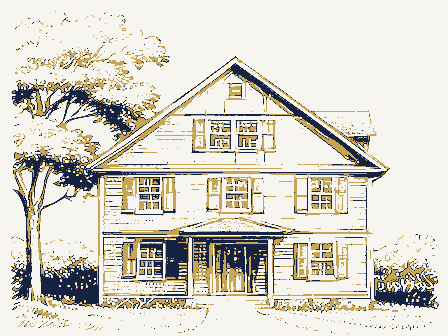
Mantua Township
The complete chapter on this township from History of Portage County, Ohio, published 1885; History of Portage County, Ohio. Containing a History of the County, Its Townships, Towns, Villages, Schools, Churches, Industries, Etc; Portraits of Early Settlers and Prominent Men; Biographies; History of the Northwest Territory; History of Ohio; Statistical and Miscellaneous Matter, Etc., Etc. .., published 1885; 1922 Portage County High School Yearbook, published 1922. 10,315 words, covering 4 settlements. The chapter predates the incorporation of Mantua Township and Mantua Village, so it covers both. Source changes inside the text are labelled at the exact paragraph where the next book begins.
What happened here
One passage from this chapter. Its source year is printed on the inset and the full text labels every source change.
Mantua T0Wk8Hip
Judson's first wife in 1804; Wareham Loomis' child, two years old, in 1805; Jacob Blnir, killed at a " raising" in 1807; Mark Moore died in 1812; Sanjuel Jodsoa's wife in 1813; Ichabod Payne in 1S13; Melissa Keed in 181G; Enoch Jndson's aeoond wife died in 1810; Amzi Atwater, son of ilmzi, Sr., in 1810; Caleb, son of Rnfus Edwarda, aboat 1817; Leona^N], son of L orouz ) Chapin, in 1818; wife of Basil Windsor, Sr., in 1818; Martha, ciau^'ht.
Contents
5 sectionsThe section headings the book prints inside this chapter. Each one jumps to where it begins.
The modern record here
4 settlementsWhat the federal record holds for each settlement inside this township: wildfires and storm reports since the 1950s, mineral workings, and museum specimens collected nearby. These are counted within a few miles of each settlement, so neighbours share them and the columns are deliberately not added up. Every row links to the settlement's own page, where each figure is broken out.
| Settlement | Fires | Storm reports | Mines and quarries | Specimens |
|---|---|---|---|---|
| Mantua | - | 31 | 25 | 776 |
| Mantua Center | - | 1 | 24 | 540 |
| Mantua Corners | - | 2 | 19 | 625 |
| Silo | - | - | 27 | 511 |
Settlements in this township
4 placesEvery populated place the Geographic Names Information System records inside this township's Census boundary. 3 of the 4 are named in the chapter; the rest were founded later or were never more than a post office.
The chapter
10,315 wordsReproduced complete and unedited from History of Portage County, Ohio, published 1885; History of Portage County, Ohio. Containing a History of the County, Its Townships, Towns, Villages, Schools, Churches, Industries, Etc; Portraits of Early Settlers and Prominent Men; Biographies; History of the Northwest Territory; History of Ohio; Statistical and Miscellaneous Matter, Etc., Etc. .., published 1885; 1922 Portage County High School Yearbook, published 1922. The text is machine-read from scans, so expect recognition errors: misspelled names, dropped words, and stray characters. Nothing has been corrected, because correcting a proper name invents one. The headings below are the books' own; source changes are labelled in place.
Mantua Township
MANTUA received the first settler that entered Portage County, anticipating four other townships by about six months. It was originally the property of the "SufiQeld, Cuyahoga & Big Beaver Laud Company," all the members of which, some sixteen in number, lived in Suffield, Conn. This company owned three other townships, but at the drawing the land now comprising Mantua fell to the lot of David, Fidelio and Ebenezer King, Jr., and Martin Sheldon, Gideon Granger, Thomas Sheldon and Oliver Phelps, also owned small parcels of the land, and Ebenezer Sheldon afterward purchased a part of Martin Sheldon's interest. It was then known as Town 5, Range 8. The township was surveyed by David Abbott into tracts of 420 acres each, there being fortytwo lots. Abbott took two quarter lots, northwest quarter of Lot 29 and southeast quarter of Lot 23. He was a member of the convention that formed the first constitution of Ohio.
The first man to drive a stake, put up a cabin, make a clearing and settle down to business was Abraham L. Honey, which he did in the fall of 1798, and although it has been asserted that a man by the name of Peter French came in the fall of 1798, cleared off some land on the northwest quarter of Lot 24 and put out a small patch of wheat, he also cleared some land on the southwest quarter of Lot 29. After making those improvements he moved to Mentor. That a small crop of wheat was harvested the next season by Rufus Edwards, who came in and took possession of Lot 24, the lot settled upon by Honey, is beyond dispute. How he got possession of Lot 24 does not now appear. Honey remained only two or three years in Mantua, when he moved to Hiram and from there to Cuyahoga County. The wife of Honey was a sister of Rufus Edwards, and it is possible that Honey made the improvements for his brother-in-law, himself settling on a portion of the land, there being plenty of room on 420 acres for three or four families in those times. At any rate Rufus Edwai-ds was the second settler, for in the notes keptby Elias Harmon of those early days he says that just after he came in he chopped for Edwards and hewed for Crooks. Crooks by this appears to have been the third settler, though not a permanent one, as he only arrived at Mr. Honey's on the 12th of June, 1799. David Crooks, the person referred to, settled on the southwest part of Lot 29. He remained there until November, 1799, when he went for his family, who refused to return to Ohio with him. William Crooks died in Aurora, some time in the fifties at the age of eighty-five years. He located in Warren, then at Nelson, next at Parkman, and ultimately in Aurora.
Elias Harmon, who can be set down as the fourth settler, was born in Suflield. Conn., in 1773, and started for the Reserve in February, 1799, in a twohorse sleigh, going as far as Pittston, N. Y., where he remained till May, when, in company with Benjamin Tappan, David Hudson and Jotham Atwater, started for their future home - Ta,ppan for Ravenna, then Town 3, Range 8; Hudson for what is now Summit County; Atwater for Euclid, and Harmon for Mantua. After a long, tiresome and perilous trip, partly by lake, partly by land and partly by river, Harmon landed at the clearing of Honey, as stated, on the 12th of June, where he stopped awhile, and then went to the place of Ebenezer Sheldon, who had engaged him before leaving home to help him in boarding and aiding the surveyors in their allotment of Aurora, afterward returning to Mantua with his wife in September, 1799, and settling on Lot 18. One of two or three entries in his diary, shows that the erection of a habitation in those days was a matter to be accomplished in short order; he savs: "July 1, began to cut timber for our house. July 2, put up and moved into house. July 3, got timber for floor. July 4, laid thefloor."
In fall of 1799 Paschal P. Mcintosh came in and settled on Lot 23. He was a half-brother to Gen. David Mcintosh, and came from Haverhill, N. H. The fact of his being here at that early date is shown by the notes kept by Elias Harmon, where he says: "October 21, 1799, helped Mcintosh to raise his house. " In this year also came Elisha Edwards and Samuel Burroughs. The next year, 1800, brought in a number of settlers, among whom were Moses Pond, who settled on Lot 35, and afterward moved to Mesopotamia; Jonathan Brooks also came, but soon went to Burton and settled. The Windsor family came in this year, Basil Windsor, Sr. , being the head. Samuel Pond, who also came at this time, shortly before they moved away, got lost on a trip to Burton and was almost without food for nine days. It was in the winter, and all his toes were frozen off, crippling him for life. Seth Harmon, John Blair and Jotham Atwater were among the settlers, but the man who more than any other left his impress on the township and county was Amzi Atwater. Jotham and Amzi Atwater came from Hamden, Conn. , in the spring of 1800, and settled on 200 acres of the west part of Lot 41, where now is Mantua Station. On the 21st of November, 1801, Amzi married, in Aurora, Huldah Sheldon, daughter of Ebenezer Sheldon, the couple being married by ihe father of the bride, which was the only official act performed by the old Squire during the first three years of his holding that position. At the first election, on the organization of the county, Atwater was one of the Judges, and the Legislatui'e appointed him one of the Judges of the Court of Common Pleas, which positicm he held for a long time, tilling it with marked ability, impartiality and dignity. He had received a liberal education in his native State, had selected civil engineering and surveying as his profession, and, joining the party under Cleveland, came to the Western Reserve first in 1796. Being of a hardy constitution and determined will, combined with a buoyancy of disposition, he was specially adapted to the life of pioneer and surveyor. He was possessed of great versatility of talent, vigor of intellect, having withal a genial temperament and a fund of quiet humor that made him popular. He was courageous rather than daring, persevering, resolute and of sound judgment, qualities which rendered him useful in those early times. He was very ready with his pen, and wrote many letters to his relatives in the East, entirely in rhyme, covering ten or a dozen pages of foolscap, several of which were published some years ago, but which are too long for reproduction here.
Joseph Skinner and W'illiam Skinner came at an early day: also Samuel Moore and his son, who killed the last wild deer in the township in 1845; Moore came with an ox-team from Southwick, Mass., in 1806, bringing his wife and six children; a family of Rays came in at the same time. Quite a noted character in his way came in December, 1812, from Windham, whence he had moved from Nelson, coming originally from Massachusetts. This was Wareham Loomis. He brought his wife and family, and worked afterward for Judge Atwater. During a couple of years, covering the period of the war of 1812-14, there was a comparative stoppage of immigration, but in 1815 and 1816 a large number came in. Chester Reed, with his wife and four children, and three other families came in 1815, and in 1816 Sylvester Reed, in company with twelve other young men, came and settled in different localities; also the Frosts, Marvin and James, the latter walking the entire distance from the East, with an ax on his shoulder, Capt. William Messenger, with his wife and six children, Jonathan Foster, the Roots, the Sanfords, the Ladds, the Judsons and others. Peter Carlton came in 1811.
township, and shortly afterward an election was held, but the records of the township were destroyed in a lire which occurred in 1815, and the names of the officers elected cannot now be ascertained. At this time Shalersville was included in Mantua, but in 1812 Shalersville was erected into a separate township, and cut oflf. The name Mantua was given by John Leavitt, in honor of Napoleon, who had in 1796 captured the city by that name in Italy. In 1806 there were but twenty-seven men in the township, but in 1810, at the organization, there was a population of 234. Elias Harmon was appointed United States Marshal in 1810, and took the census of that year. In his enumeration of Mantua he gives the following names of heads of families and the number of each family: Rufus Edwards, 6; Samuel Moore, 8; Silas Penney, 8; Moses Pond, 5; Thomas Bright, 6; Franklin Snow, 5; Virgil Moore, 3; Silas Tinker, 5; Elias Harmon, 6; Gersham Judson, 5; James Ray, 10; David Pond, 5; Jotham Atwater, 5; Amzi Atwater, 6; Oliver Snow, 6; Paschal P. Mcintosh, 7; Enoch Judson, 5; Samuel Judson, 5; William Russel, 7; John Blair, 9; William Johnson, 9; Ella Wilmot, 2; Basil Windsor, 7; William Skinner, 6, and Seth Harmon 6. The total population was 152 in the fall of 1810; a great decrease within that year. Dr. Jason Moore and Mrs. (Blair) Patterson are the only persons now living in the township who were enumerated in this township. Orrin Harmon resides at Ravenna.
Simeon Sheldon, Lister, in 1825, stated in the Western Courier that up to June 11, 1825, there had been 38 mai'riages, 369 births, and 22 deaths of three years old and upward, and 45 deaths under three years. They took 41 newspapers from 11 different^presses, and 10 religious periodicals from 5 different presses. In the earliest days, when there was no mill nearer than Burton, the little crop of wheat raised had to be husbanded with great care, and there was so little of it that it could all be sent off to mill at once. Rufus Edwards on one occasion collected all the grain and took it in a canoe to Burton, and had it ground, bat arriving late at night he left it in the boat, intending to get it as soon as daylight appeared, but when he went for it the next morning he found that some prowling Indians had carried it all off. It was all the flour there was in the township.
In 1803 the men of Mantua, Hiram, Aurora and Nelson Townships were organized into a militia company, with Ezra Wyatt, Captain, and Rufus Edwards, First Lieutenant. On his removal to Hudson, Edwards was elected Captain. He began the erection of a distillery on the Honey farm, but never opened one there.
The enlisted and drafted men from Mantua in the war of 1812 were Enos, Zacheas and John Harmon; James Ray, Mark Moore, John A. Smyth and Zenas Judson's substitute were in Campbell's company. The drafted men were Eleazer Ladd, David Pond, Horace Ladd, John Gardner and Virgil Moore. During this troublous time the "Fourth" was celebrated with eclat at Rufus Edwards' house. This was the first regular celebration here. The first child born in the township was Eunice, a daughter of Elias Harmon, who made her first appearance in this world of trouble July 16, 1800, being the second child born in the county. She married Simeon Sheldon, and raised a family. The first male child was Horace, born to Moses Pond in 1803. The first wedding took place also in 1803, when Rufus Edwards married Letitia Windsor, Amzi Atwater, at that time Justice of the Peace of Hudson, performing the ceremony. The first death was that of Mrs. Anna Judson, who had but recently been married, and just moved in with her husband. She had arsenic given to her through mistake, which caused death in a short time. This occun-ed July 2, 1804, and the next was during the winter of 1806, when Jacob Blair was killed while assisting in the raising of a house.
The deaths in Mantua from 1799 to January 1, 1825, were as follows: Enoch Judson's first wife in 1804; Wareham Loomis' child, two years old, in 1805; Jacob Blair, killed at a "raising" in 1807; Mark Moore died in 1812; Samuel Judson's wife in 1813; IchaHod Payne in 1813; Melissa Reed in 181G; Enoch Judson's second wife died in 1816; Amzi Atwater, son of Amzi, Sr. , in 1810; Caleb, son of Rufus Edwards, about 1817; Leonard, son of Lorenzo Chapin, in 1818; wife of Basil "Windsor, Sr., in 1818; Martha, daughter of Seth Harmon, in 1820; Franklin Snow's first wife in 1820; Lorenzo Chapin's second son, Leonard M., in 1820; Persis, daughter of Dan Ladd, Jr., in 1822; Ezekiel Ladd in 1822; Ezekiel Squires in 1822; Zenas Kent, Sr., in 1822; Caleb Carlton, Sr., in 1823; Thomas Mayfield, Sr., in 1823; Basil Windsor, Sr., in 1823; Polly, daughter of Sila« Penney, in 1823; Mr. Bacon in 1821; and Harvey, son of Jotham Atwater, in 1824.
In 1799 Rufus Edwards constructed a hand grist-mill, which he opened in October of that year. A small building called the tannery was established by Moses Pond in 1802, and continued until 1812, when Dan Ladd, Jr., built a house and established a regular tannery. Pond, having no tools, had the hides finished at Burton. It was he who brought the first sheep into the township, and also apple seeds.
In 1810 William Russell purchased the distillery apparatus of Gersham and Samuel Judson, and erected a building in which he made whisky until the spring of 1817, when he sold the farm, cabin and distillery to George and William P. Young. Orrin Harmon remembers Russell's whisky in connection with sheep-washing days, before the manufacturer moved to Pennsylvania. In 1818 Young failed, and Russell then re-purchased his property, which he sold to Ezekiel Ladd in 1821. In 1822 Ladd died, when Russell resumed possession, and ultimately sold it to Patrick Ray. This Ray was one of the seven sons of James Ray. In 1819 Hezekiah Mooney and Dr. Ezekiel Squires a distillery. In 1819 Joseph Skinner built a distillery for which he made the machinery himself. This was biarned in 1824, and the same year he erected a new distillery near his grist-mill, on the northwest corner of east half of Lot 30. This grist-mill was built in 1820.
The first saw-mill was erected by the Dresser family in 1818, on the north line of the county, and the next mill, a grist, was erected by Joseph and W^illiam Skinner, shortly after 1820. It was on the Cuyahoga, where the diagonal road to Garrettsville crosses that stream.
In 1821 David Ladd built a brick kiln; but in the fall he secured a glassblower named Jonathan Tinker, rented his brother Daniel's tannery (erected in 1812), and began the manufacture of bottle glass December 1, 1821, under the title of the Mantua Glass Company, C9ntinuing here until 1823, when he moved the plant to Kent, where he built a factory. Noah and Noble Rogers settled south of Mantua Center in 1825, and erected a tannery on a lot bought of Oliver Snow. In 1829 they sold to Elias Converse, whose sons now operate it.
The first tavern was built and kept by Jotham Atwater, about one mile north of Mantua Station. It was a log building, and was for years a noted tavern stand. A brick building was afterward erected at the same spot, but has since bfeen modeled into a dwelling, and is now occupied by Lewis Turner. There were two pail factories, one owned by Charles Bates, and the other by Joseph Skinner, and the ware made by Skinner was first class. It is claimed that he invented the process of turning pails and other hollow ware. The manufacture of cheese from the earliest times has been a source of great revenue to the township, and the i-aising of fine potatoes has also been an industry that has grown to large proportions.
Dr. Ezekiel Squires was the first physician in*the township, having, with his ^ family, settled there in 1815. Subsequently Drs. Whipple and Pierce came in, the latter leaving the medical field open to Whipple until 1828, when Dr. Edwin Cowles came. In 1825 Dr. Whipple lost all his children during the epidemic of that year.
Alonzo Delano opened out at Mantua Corners in 1829, as successor to Joseph Skinner. In 1826-27 Childs had a store at the Corners, while Orrin Harmon taught school there.
Calvin White opened the first store at the Center in June, 1835. His wife was Sabrina Harmon. Mr. White died in January, 1848, and his wife died in October, 1849.
In 1814 the first bridge over the Cuyahoga on the Center road from Mantua to Hiram, was built by Rufus Edwards, the county contributing $100. That bridge is standing still. Orrin Harmon states " it's the same old jackknife, with a number of new handles and new blades."
In the spring of 1816 the first colored people came to Mantua. They were Benjamin Sharpe and wife, Lucy and Thomas Hughes. Flora, a colored woman in the employ of the Garretts, formerly a slave of Mrs. Garrett, married Hughes, also colored, in 1818.
Samuel Sanford, who settled in Mantua in 1817, and died September 27, 1858, was the last survivor of the Revolutionary war veterans who settled in this county.
Mark Moore suffered so much while in the hands of the British in 1812, that on his return to Mantua he died, and was the fourth person buried in the cemetery one mile and a half south of Mantua Center.
W. A. Smith established the manufacture of pails, butter-tubs and cheeseboxes, besides operating a saw-mill and planing-mill at Shalersville. On removing this industry to Mantua he erected the buildings now devoted to the several branches of his manufactory. The capacity of the saw-mill is 10,000 feet; the machinery is valued at about $8,000. The works stand on six acres of land just east of the railroad station at Mantua. This industry gives employment the year round. A portable steam saw-mill is also operated. H. A. Tar-- ner is in charge of the saw-mill, and F. H. Hains in charge of the pail factory.
The building known as the Goddard Foundry is one of the old industrial structures of this portion of the township. It is now operated by Ed. Goddard as a foundry and cider-mill.
The Centennial Mills were founded by John Frost and Peter Kines in 1876, in buildings where the Hancock Basket Factory was carried on pi-oviously. There were three run of buhrs in use until 1881, when ten sets of rollers were introduced. The capacity is seventy-five barrels per day, employing four men annually. The value of buildings and machinery is $10,000. John Frost & Co. are the present owners. The mill does custom and merchant w^Yk. H. O. Kitselman has been the miller in charge since 1880.
National Transit Company of Bradford, Penn. , established pumping works at Mantua, with Fred. Tinker in charge. C. H. Rider is the present Super- iBtendent. There are two powerful engines; the line of five-inch pipe from Hilliard, Butler County, Penn., to Cleveland is about 104 miles. At the Mantua works the oil is contained in a large reservoir, of 12,000 gallons capacity, from which it is pumped into the reservoir at Cleveland, thirty-one miles distant. A. P. Carlton's carriage and wagon shop was established in 1880; the present shop was erected in 1884. The work of the shop is mainly I'epairs, giving employment to two men.
George Allen was engaged in wagon and carriage work for a number of years prior to 1880. His shops have been rented since that time, and are now occupied by Emery Simpson as a horse- shoeing establishment.
The first hotel was built by Amzi Atwater, and first estabJished as a hotel by Lewis Turner about the time the Cleveland & Mahoning Valley Kailroad was completed to this point. Shortly after this Homer Frost purchased the house, then sold to Austin S. Beecher, who built the present Cuyahoga House in front of the old Atwater House, now conducted by H. T. Barnum. The house is the property of J. T. Spink.
L. S. Turner established a livery at Mantua Station in January, 1885. The buildings cost about $2,000. In this building is Russell's photograph gallery and G. W. Franklin's harness shop.
Theo. Burnett, who was the pioneer of livery business here, died about two years ago, since which time the business has been carried on by J. H. Ditto & Sons.
Mantua Station. - This flourishing little town has about 700 population, and is on the site of an old settlement, but was laid out more extensively about the time the Cleveland & Mahoning Valley Railroad, now a branch of the New York, Pennsylvania & Ohio Railroad, was built by Darwin Atwater. It grew rapidly, and is^now an exceedingly live village, having a good class of buildings and progressive citizens. It is a large shipping point for potatoes, cheese, onions, some cattle and sheep, and considerable garden truck. There are large shipments of potatoes, one dealer alone handling about 50,000 bushels during the season. Another provision shipper placed upon the cars during last spring an average of 300 calves per week. Great quantities of pails and other wooden-ware are also shipped, and in the matter of cheese Mantua stands as one of the leading points on the Reserve, there being three large factories for that product in the township, besides being the shipping point for the greater part of three other townships.
The business at the Station is as follows: Smith's pail and wood work factory, which employs about twelve hands; Smith's lumber yard; Centennial Flouring-Mills, Frost & Knowles; general stores, Bowen & Sons, A. A. Gilbreath; drugs, O. P. Hays, C. W. Brainerd; groceries, S. Beecher, Kyle & Davis, Ditto & Sons; livery stable. Ditto & Sons; hardware, A. Barber; tinware, W. Westpeaker; millinery, Mrs. Mattie Smith; furniture. F. Bard; clothing, Choeker & Muncy; dealer in hides, pelts, etc.. Will Croft; dealer in produce, W. H. Bradley; shoes, Philip Baldinger; foundry, Ed. Goddard; cider-mill, Ed. Goddard; Mantua House, C. H. Sage; Cuyahoga Hotel, H. T. Barnum; Taylor House, A. H. Taylor; carpenters; blacksmiths; restaurant; barber shop; physicians, Dr. George C. Way, Dr. Erwin; dentist, Dr. A. A. Carlton; lawyer, Cheny Ingle; Postmaster, Cheny Ingle; there is a fine Opera Hoiise.
The township is high and rolling, especially in the southern portion, and unsurpassed for fruit-raising and dairying, it standing next to Aurora in the manufacture of cheese. It is well watered, and the soil is a sandy loam, making it splendidly adapted to the production of potatoes, where the finest in the world are raised.
Methodist Episcopal Church of Mantua was organized in September, 1807, by Rev. R. R. Roberts, with Paschal P. Mcintosh and wife, Basil Windsor, Rufus Edwards and Asahel Mills. The first building was erected in 1820-21 at the Center, 24x32 feet. This log- house was used for eighteen years, when a new meeting-house was erected. This house was burned, and the same year a third Methodist Church building was erected. The old pastors were Joshua "Windsor, 1810, Henry Ferris, John L. Ferris and Joseph Ferris, William Bump, Milton M. Moore, H. H. Moore and Albert Reed. In 1825 Paschal Mcintosh, one of the founders, was dismissed, owing partly to his hostility to the United States. In 1815 he returned to Mantua, and his children were the first who had the whooping-cough in the county.
The Congregational Church of Mantua was organized by Revs. Seward and Darragh, May 31, 1812. The first members were Daniel Ladd and wife, Joel Walter and wife, of Shalersville, William Russell and wife, Daniel Ladd, Jr., and wife, Eleazer Ladd and wife. Eunice Harmon, the grandmother of Orrin Harmon, Lois Atwater, mother of Judge Amzi Atwater, Mrs. Eunice Moore and Mrs. Sally Pond.
In 1816 a brick church was erected at Aurora Center for this society. Justus Parrish and others supplied the brick. Previous to 1816 this society held meetings in the first schoolhouse.
The Baptist Church was founded at Mantua in 1809 by Elder Jones, the meeting being held near the Judson cabin. The first persons baptized were Oliver Snow and wife, Jotham Atwater and wife, and Rufus Edwards and wife, Mr. Edwards leaving the Methodist Church. Those persons were baptized in the Cuyahoga near Judson's. John Rudolph and William West were also members. In 1826 Sidney Rigdon, subsequently Joe Smith's Lieutenant, was preacher to this society. In 1827 Sidney Rigdon left the Baptist Church and organized a Campbellite or Disciples Church, and succeeded in taking almost all the members of the old Baptist Church with him.
Disciples Church of Mantua was reorganized July 6, 1850, P. N. Jennings, D. Atwater and Edwin Sandford were elected Trustees, and C, D. Wilber. Secretary.
Mantua Association of Spiritualists was incorporated July 9, 1881; Samuel S. Russell, Joel B. Gilbert, Reuben O. Halsted, David M. King and Henry Cobb, members.
Camp-meeting Association of Spiritualists of northern Ohio was organized October 2, 1881, with Ira. Lake, President; A. Underbill and Mrs. Amon, Vice-Presidents; Mrs. Sarah Rockhill, Alliance, Mrs. M. A. Merrill. Recording Sec; Silas Crocker, Treasurer; Samuel Fish, Melon; Reuben Halstead, Mantua; Mrs. Mercy Lane, Braceville; Frank Maloy, Hudson; Jesse Erwin, Alliance; Frank Rily, W^arren; M. V. Meller, New Lynn, and Lewis King, Cleveland.
The Catholic Church was built at Mantua Station in 1872-73, under contract with the congregation, by Squire Fair. The building cost about $1,000, and the altar, pews and furnishing, about $1, 500. The congregation numbers about 150 members.
Union Church. - The first Protestant Church building at Mantua Station is that now known as the Union Church, which is open to all Christian denominations for religious service.
The first school was taught in the winter of 1806-07, at the house of Amzi Atwater, by John Harmon, and the next one was in the summer of 1807 the teacher being Patty Cochran, from Aurora, who afterward became the wife of Ebenezer Sheldon. The school was near where Rufus Edwards had form erly lived. In 1808 John Harmon opened a school in Amzi Atwater's house There is at present a fine graded school at the Station, in charge of Prof. Will iam Thomas, in addition to the district schools in various parts of the township
Mantua Township Schools. - Revenue in 1884, 13,225.83; expenditures $1,916.37; eight school buildings valued at $3,600; average pay of teachers $34 and $26; enrollment, 96 boys and 73 girls.
Mantua Special District. - Revenue, $4,650.33; expenditures, $1,281.39, one schoolhouse valued at $2,500; average pay of teachers, $60 and $37; enrollment, 43 boys and 57 girls.
Mantua Lodge, No. 533, A. F. & A. M. - There is a very flourishing lodge of the brothers of the "mystic tie," and although of but recent organization has a membership of over fifty. The lodge was chartered and organized in the fall of 1883, and the following were the charter olficers and members: G. D. Smith, W. M. ; E. M. Frost, S. W. ; G. W. Franklin, J. W. ; A. A. Barber, C. H. Thompson, C. E. Ryder, Edgar Chapman, C. H. Bowen, A. H. Kyle, G. T. Mattison, S. P. Vaughn, L. L. Reed, S. E. Coit, C. H Ray, R. O. Halstead, G. F. Hinckley, A. S. Beecher, E. L. Hine, Myron Richards, M. B. Sanford, C. W. Brainerd, D. Washburn, J. Byron, James and William Bowen. A. A. Barber is the present Master.
Bentley Post, 294, G. A. R., named in honor of one of the soldiers of Mantua, was organized February 21, 1883, with the following members: C. H. Ray, Myron Richards, N. A. Curtiss, A. M. Bishop, M. E. Haskin, G. W. Flemming, M. W\ Chapman, H. M. Murry, A. C. Fish, J. B. Hinman, Warren Bowers, C. M. Stroud, George Yeagley, T. M. Esty, A. M. Erwin, M. D., G. G. Striker, M. C. Sweet, C. A. White, F. H. Adams, Edward Stiverson, James Flemming, C. A. Bartholomew, S. C. Rice, F. P. Bard, George Hurlbut, Charles Crawford, Henry Briggs, H. F. Smith, S. C, Crane, C. S. Steward and O. W. Folsom. The members who have joined since that time are S. A. Udall, Robert Crawford, Edgar Chapman, W. H. H. Wheeler, Nelson S. Bartholomew, J. F. Schoville, L. Winchell, W. C. Ensign, C. H. Maggs, A. B. Crane, A. H. Button, T. W, Anderson, William Ferrall, Edwin Smith, Henry Langston, Henry Barthold, H. S. Sheldon, John Hass, F. A. Derthick, Merrit Dutton, J. T. Spink, A. R. Houghton, H. O. Snedeker, Henry Green, A. W. Mills, O. W. Truman, Charles Duncan, Sylvester Force and J. B. Shaffer. The first Commander was A. M. Erwin, who served until succeeded by F. A. Derthick in 1885. G. G. Striker is Adjutant, and Edgar Chapman, Quartermaster.
Source changes here: from History of Portage County, Ohio. Containing a History of the County, Its Townships, Towns, Villages, Schools, Churches, Industries, Etc; Portraits of Early Settlers and Prominent Men; Biographies; History of the Northwest Territory; History of Ohio; Statistical and Miscellaneous Matter, Etc., Etc. .., by Brown, R. C. (Robert C.), published 1885; 4,801 words in this source stream.
Mantua Township
MANTUA received the lirstHettler that entered Portage County, auticipating four other townahips by about aixmontbi. It waa originally the property of the "SufBeldf Cuyahoga & Big Beaver Laud Company," all the members of which, some sixteen in number, lived in Suffield, Conn. This company owned three other townships, but at the drawing the land now comprising Mantua fell to the ]ot ol David, Fidalio and Ebenezer King, Jr., and Martin Shaldon, Gideon Granger, Thomas Sheldon and Oliver Pbeipe, also owned small parcel h of tho land, and Ebonez«r Sheldon afterward purchased a part of Martin Sheldon's interest It was then known as Town 5, Bangs 8. The township waa anrveyad by David Abbott into traeta of 420 aerea aaeb, there being forty, two lots. Abbott took two quarter lota, northwest quarter of Lot 29 and southeast quarter of Lot 23. He waa a member of the oonvantion that formed the first constitution of Ohio.
The first man to drive a Btal», put np a cabin, make a elearing and aettle down to business was Abraham L. Honey, which he did in the fall of 1708, and althonp^h it has been ns'^t^rt^d that a man by tho name of Peter French came in the fail of 171)8, cleared otf some land on tho northwest uuarter of Lot 21 and pat oat a email patch of wheat, he alao cleared aome land on tbeaonthwaat quarter of Lot 29. After making thoee improvements he moved to Mentor. That a small crop of wlieat was harvested tho next season by Rufus Edwards, who came in and took possession of Lot 24, the lot settled upon by Boney, ia bcjyond diapnte. Bow he got posaeaaion of Lot 24 doee not now appear. Honey remained onty two or ttiree jears in Mantaa, when he moved to Hiram atul from there to Cuyahoga Couaty. The wife of Honey WM a deter of RufiLs Edwards, and it is possible that Honey made the improvements for his brother-ia-iaw, himseLf settling on a portion of the land, Uiere being plenty of room on 420 acrea for three or fonr families in those times. At anj rate Rnfas Edwards' was the second settler, for in the notes keptby Elias Har* mon of tho?io early days he says that just after he came in he chopped for Edwards and hewed for Croolos. Crooks by this appears to have been the third settler, though not a permanent one, as he only arrived at Mr. Honey's on the 12th of Jnne, 1700. David Crooks, the person referred to^ settled on the sont.hwpfit part of Lot 21). He remained there until November. 1799, when he went for his family, who refused to return to Ohio with him. William Crooks died in Aurora, some time ia the dfties at the age of eighty -live jears. He located in Warren, then at Nelson, neact at Parkman, and nltimatelj in Aurora.
Elias Harmon, who can be set down as the fourth settler, was born in Suftield, Conn., in 1773, and started for the Reserve in February, 1799, in a twohorse aleigh, going as far as Pittston, N. Y., where he remained till May, when, in company with Benjamin Tappan, David Hudson and Jotham .\twa ter. started for their future home - Tappan for Ravenna, then Town 3, Range 8; Uudsou for what is now Summit County; Atwater for Euclid, and Harmon for Hantna. After a lonct, tiresome and plariloos trip, partly by lake, partly by land and partly by river, Harmon landed at the clearing of Honey, as stated, on tho I'ith of June, where he stopped awhile, and then went to the place of Ebenezer iSheldou, who had engaged him before leaving home to help him in boarding and aiding the sarveyora in their allotment of Anrora, after* ward returning t-o Mantua with his wife in September, 1799, and settling on Lot IS. One of two or three entries in his diary, shows that the erection of a habitation in those days was a matter to be accomplished in short order; he says: "Jnly 1, bemn to ent timber for our honee. July 2, put up and moTed into house. July ^, got timber for floor. July 4, laid thelloor.** la the fall of 1790 Paschal P. ^Mcintosh came in and settled on Lot 23. He was a half-brother to Gen. David Mcintosh, and came from Haverhill, N. H. The faoi of his being here st that early date is shown hy the notes kept by Elias Harmon, where he says: '^October 21, 1700, helped Mcintosh to raise his house." In this year also came Elisha Edwards and Samuel Burroughs. The next year, 1800, brought in a number of settlers, among whom w«re Mioses Pond, who settled on Lot 85, and afterward moved to Mesopoo tarnia; Jonathan Brooks also came, but soon went to Burton and settled. The Windsor family came in this year, Basil Windsor, Sr., being the head. Samuel Pond, who also came at this time, shortly before they moved away, got lost on A trip to Borton and was almost withont food for nine days. It was in the winter, and all his toes were frozen off, crippling him for life. SeUi Harmon, John Blair and Jotham Atwater were among the settlers, but the man who more than any other left his impress on the township and county was Amsl Atwater. Jotham and Amsi Atwater same from Hamden, Oonn., in the spring of 1800, and settled on 200 acres of the west part of Lot 41, where now is Mantua Station. On the 21st of November, ISOl, Arazi married, in Aurora, Huldah Sheldon, daughter of Ebenezer Sheldon, the couple being married by the tettier of the uide^ whioh was the only olBoial aot performed by the old Squire during the first three years of his holding that pontion. At the first election, on the or(]^nization of the county, Atwater was one of the Jndgee, and the Legislature appointed him one of the Judges of the Oourt of Common Pleas, which position he held for a long time, filling it wiib marked ability, impartiality and dignity. He had revived a liberal edoci^on in his native State, had selected civil engineering and surveying as his profession, and, joining the party under Cleveland, came to the Western Keserve first in 1796. Beinff of a hardy oonsiutation and determined will, ocftnbined with a buoyancy of ^spoeition, he was specially adapted to the life of pioneer and surveyor. He was possesBed of great versatility of talent, vigor of intelleet, having withal a genial temperament and a fund of quiet humor that made him popular. He was oonrageoos rather than daring, persevering, resointo and ol sound |iidgnMmt, qnalities which rendered him oaefnl in tiiose early timea He was very ready with his pen, and wrote many letters to his relatives in the East, entirely in rhyme, covering ten or a dozen pages of foolscap, semral of which were pnblishsd some years ago, bat whidi are too long for reproduction hsra»
Joseph Skinner and William Skinner came at an early day: also Saranel Moore and his son, who killed the last wild deer in the township in 1845; Moore came with an oz-taam from Soathwiet, Mass., in 1806, bringing his wife and six children; a lamilj of Bays came in at the same time. Quite a noted character in his way came in Deceml>er, 1812, from Windham, whence he had moved from Nelson, coming originally from Massachusetts. This was Warsham Loomi& He brought his wife and family, toad worked alterwaid for Judge Atwater. Daring a conple of years, oovering the period of the war of 1812-14, there was a comparative stoppage of immigration, bnt in 1815 and 1810 a large number came in. Chaster Beed, with his wife and four ohildren, and three other families eame in 1815, and in 1816 Sylvester Beed, in company with twelve other young men, came and settled in different looalifies; alsio the Frosts. Marvin and James, the latter walking the entire distance from the East, with an ax on his shoulder, CapL William Messenger, with his wife and six ebildreo, Jonathan Foster, the Boots, the Sanfords^ the Ladds, the Judsons and others. Peter Carlton came in 1811.
township, and iduntly aftermufcl an eleotion was held, bnt ih« reoords of the tovmship were destroyed in a fire which occurred in 1815, and the names of the officers elected cannot now be ascertained. At this time Shalersville was included in Mantua, but in 1812 Shalersville was erected into a separate town- \ ship, and cut oft The name Hantoa was given by John Leavitt, in honcMr of Napoleon, who had iu 1796 flsptored the city by that namo in Italy. In 1806 there were but twenty-seven men in the township, but iu is 10, at the organization, there was a population of 234 Eiias Uarmoa was appointed tJnited Statea Ifazahal in 1810, and took the oensos of that year. In his enuBMratioa of Mantua lie i^lym the following names of heads of families and the number of each family: Rufus Edwards, 0; Samuel ^^o()re, 8; Silas Penney, 8; Moeee Pond, 5; Thomas Bright, 6; Franklin Suow, 5; Virgil Moore, 8; Silas Tinker, 5; Eiias Harnum, 6; Getaham Jadson, 5; Jamee Raj, 10; David Pond, 5; Jotham Atwator, 5; Amzi Atwater, 6; Oliver Snow, 6; Paschal P. Mcintosh, 7; Enoch Judson, 5; Samuel Judson, 5; William Russel, 7; John Blair, 9; William Johnson, 0; £Ua Wilmot, 2; Basil Windsor, 7; William Skinner, 6, and 8eth Hannon 0. The total population was 152 in the fall of 1810; a great decrease within that year. Dr. Jason Moore and Mtb. (Blair) Patterson are the only persons now living in the township who were enumerated in this township. Orrin Harmon resides at Havenna.
Simeon Sheldon, Lister, in 1825, stated in the Western Cfomier that up to Jnne 11, 1825, there had been 38 marriages, 309 births, and 22 deaths of three yearH old and upward, and 45 deaths under three years. They took 41 newspapers from II difterent^presses, and 10 religions periodicals from 5 different ptesses. In the earliest days, when there was no mil! nearer than Bnrton, the little crop of wheat raised had to bo husbanded with great oare, and there waa I so little- of it that it could all bo sent oflf to mill at once, Rufus Edwards on \ one occasion collected all the grain and took it in a canoe to Barton, and had I it ground, bat arriving late at night he left it in the boat, intending to get it I as soon as daylight appeared, but when he went for it the nagjt morning he ' found that some prowling Indiana had oarried it all oC It was all the floor ' there was in the township.
In 1803 the men of Mantua, Hiram, Aurora and Nelson Townships were organized into a militia company, with Ezra Wyatt, Captain, and Rufus Edwards, First Lieutenant. On his removal to Hudson, Edwards was elected Captain. He began the erection of a distillery on the Honey farm, but never opened one there. ^
The enlisted and drafted men from Mantua in the war of 1812 were Enos, Zacheas and John Harmon; James Ray, Mark ^Sfoore, John A. Smyth and 2^na8 Judson's Hub^titute were in Campbell's company. The drafted men were Eleazer Ladd, David Pond, Horace Ladd, John Gardner and Virgil Moore. Daring thia troublous time the *' Fourth" was celebrated with eclat at Bufus Edwards' htnise. This was the first regular celebrati on here. The tir-t child born in the township was Ennine, a daughter of Eliaa Harmon, who made her first appearance in this world of ti-ouble July 16, 1800, being the second child born in the county. She married Simeon Sheldon, and raised a family. The first male child was Horace, bom to Moses Pond in 1803. The first wedding took j)!aco alsu iu 1 ^o;}. when Rufus Edwards married Letitia Windsor, Amzi Atwuter, at that time Justice of the Peace of Hudson, performing the osremony. The first death was that of lire. Anna Judson, who had bnt reoently boon married, and ju.'st moved in with her husband. She had arsenic given to her through mistake, which caused death in a short time. This occurred July 2, 1804, and the ne&t wnn during the winter of 1800, when Jacob Blair was killed while assisting in the raising of a hoose. .
Mantua T0Wk8Hip
Judson's first wife in 1804; Wareham Loomis' child, two years old, in 1805; Jacob Blnir, killed at a " raising" in 1807; Mark Moore died in 1812; Sanjuel Jodsoa's wife in 1813; Ichabod Payne in 1S13; Melissa Keed in 181G; Enoch Jndson's aeoond wife died in 1810; Amzi Atwater, son of ilmzi, Sr., in 1810; Caleb, son of Rnfus Edwarda, aboat 1817; Leona^N], son of L orouz ) Chapin, in 1818; wife of Basil Windsor, Sr., in 1818; Martha, ciau^'ht. r of St-thHarmon, in 1820; Franklin Snow's first wife in 1820; Loren^ Chapin's second eon, Leonard Iff., in 1820; Penis, daughter of Dan Ladd, Jr., in 1822; Esekiel Ladd in 1822; Ezekiel Squires in 1822; Zenaa Kent, Sr., in 1822; Caleb Carlton, Sr., in 1823; Thomas Mayfield, Sr., in 1823; Basil Windsor, Sr., in 1823; Polly, daughter of Silaa Penney, in 1823 j Mr. Bacon in ^824; and Harvey, son of Jotium Atwater, in 1824.
In 1709 Rufoa Edwards oonstraoied a band grist-mill, which he opened in October of that year. A small building called the tannery was established by Moses Pond in 1802, and continued until 1812, when Dan Ladd, Jr., built'a luKiBe and establidied a regular tannery. Pcmd, having no tools, had the Licks finished at Burton. It was he who bnmght the first sheep into the township, and also apple seeds.
In lolO William Bnssell porohased the diatiilery apparatus of Gersham and Sanrael Jndson, and erei^ed ft boilding in whieh he made whisky until the spring of 1817, when he sold the lann, cabin and distillery to Oeorge and W'illiam P. Young. Orrin Harmon remembers Russell's whisky in connection with sheep- washing days, before the manufacturer moved to Pennsylvania. In 1818 Tonng failed, and Rnaeell then re-purchased his property, whidi he sold toEaekiel Ladd in 1821. In 1822 Ladd died, when Rnsull nsumed posaeasioD. nnd nltiraately sold it to Patrick Kay. This Ray was ono of tlie seven eons of James Bay. In 1819 Hezekiah Mooney and Dr. Ezekiel Souires erected a distillery. In 1819 Joseph Skinner hoiit a distillerr lor which he made the machinery himself. This was bnrned in 1824, and the same year he erected a new distillery near bis grist-mill, on the northwest OORMT oi east half of Lot 30. This grist-mill was built in 1820.
The first saw mill was erected by the Dresser family in 1818, oil the north line of the county, and the next mill, a grist, was erected by Joseph and William Skinner, shortly after 1820. It was on the Cuyahoga, where ^ the diagonal road to Garrettsville crosses that stream.
In 1821 David Ladd built a brick kiln; but in the fall he secured a glassblower named Jonathan Tinker, rented his brother Daniel's tannery (erected in 1812), and began the manufacture of bottle glass December 1, 1821, under the title of the Mantua Glass Company, oontinning hero until 1823, when he moved the plant to Kent, where he built a factory. Noah and Noble Rogers settled south of Mantua Center in 1825, and erected a tannery on a lot bought of Oliver Snow. In 1829 tliey sold to Elias Converse, whose sons now oper- Stoit.
The first tavern was built and kept by Jothain Atwator, about one mile north of Mantua Station. It was a log building, and was for years a noted tavern stand. A brick building was afterward erected at the Hume spot, but haa ainoe been modeled iiito a dwelling, and is now oeonpied by Lewis Toimer.
There were two pail factories, one owned by Charles Bates, and the other by Joseph Skinner, and the ware mail«' l>y Skinner was lirst class, li is claimed that he invented the process of turxiiug pails and other hollow ware. The maaafaotare of cheeae from the earliest times has been a source of great rev- -nae to the towoahip, and the ratstii^ of fine potatoes hu also heen an indue, try that has grown to large proportiona.
Dr. Ezekiol Squires was the first physician in the township, having, with his 1 family, settled there in 1815. Subsequently Drs. Whipple and Pierce oame in, the latter leaving the medioal field open to Whipple antil 1828, when Dr. Edwin Cowlos came. In 1825 Dr. Whipple loet all iub ohildren daring the epidemic of that year.
Alonzo Delano opened out at Mantua Oorners in 1820. as successor to JoHf'ph Skinner. In 182<5-27 Childs had a store at the Oorners, while Orrin Harmon taogbt school there.
Oalvin White opened the first store at the Genter in Jnne^ 1885. His wife Sabrina Harmon. Mr. White died in Janoaiy, 1848, and his wife died in October, 1849.
In 1814 the first bridge over the Cuyahoga on the Center road trom Mantua to Hiram, was bnilt by Rafns Edwards, the oonnty oontribnting $100. That bridge isstonding Htill. Orrin Harmon states " it*s the sama old jask* knife, with a nnraV)or of new handles and new blades."
Samuel Sanford, who settled in Mantua in 1817, and died September 27, 1858, was the last snrriTor of the Revolntionary war vetorans who settled in
Mark Moore snfffred ho ranch whilp* in the hands of the British in 1812. that on his return to Mantua he died, and was the fourth person buried in the oemetory one mile and a half soath of Mantoa Oenter.
W. A. Smith established the manufacture of pails, butter-tubs and cheeseboxes, besides operating asaw<mill and planing-mill atShaleisTilleL On removing this industry to Mantna he erected the bnildings now devoted to the geveral branches of his mannfactorv. The capacity of the saw-mill is 10, (AH) feet; the machinery is valued at about $8,000. The works stand on six acres of land just east of the railroad station at Mantna. This industry gives employ* ment the yearroand. A portable steam saw-mill is also operated. H. A. Tar* ner is in ohaige of the aaw*miU, and F. H. Hains in diaxge of the pail fac> tory.
The Centennial Mills were founded by John Frost and Peter Kines in 1876, in buildings where the Hanoook Basket Faotory was carried on previonsly. There wore tliroo run of buhrs in use until ISSl, when tm sets of roUws were introduced. Tho capacity ih Beventy-tive barrels per day, employing four men annually. The value of buildings and machinery is $10,000. John Frost & Ca are the present owners. The mill does oustom and merchant work. H. O. Kitselman has been the miller in charge since 1880.
National Transit Company of Bradford, Penn., pstablished pumping works at Mantua, with Pred. Tinker in charge. C. H. Bider is the present Super-
Hilliard, Butler Cotinty, Ppnn., to Cleveland is about 104 miles. Attfio Mantua works the oil is contained in a large reservoir, of 12,0CMJ gallons capacity, from which it is pumped into the reservoir at Cleveland, thirty-one miles distent A. P. Carlton's carriage and wagon shop waa eatabliahed in 1880; the present shop was erected in 1884. The wotk fli tile ahop 18 mainly repairs, giving employment to two men.
Geoi^e Allen was engaged in wagon and carriage work for a nximber of jears pnor to 1880. ffis cbopa have been rented ainee tliat iime^ and are now occupied by Emery Simpson as a horse-shoeing establishment.
The first hotel was built by Amzi Atwater, and first established as a hotel by Lewis Turner about the time the Cleveland & Mahoning Valley Bailroad was oompleted to this point. Shortly after ihia Sk»mer IVoat pnrehaaed the houe^ then sold to Austin S. Beecher, who built the present Cuyahoga House in front of the old Atwater House, now conducted by H. T. Bamum. Thehooae is the property of J. T. Spink.
L. S. Turner oetablished a livery at Mantua Station in January, 1885. The buildings coat about $2,000. In this building is Russell's photograph gallery and G. W. Franklin's harness shop.
Thea Bnxnett, who was the pioneer of livery bnsiness here, died about two years ago, since which time the. bnsiness has been carried on by J. H. Ditto & Sons.
Maniua StaHon.' - ThiB floorishing little town has about 700 population, and is on the wite of an old settlement, but was laid out more extensively about the time the Cleveland <fc Mahoning Valley Railroad, now a branch of the New York, Pennsylvania 6i Ohio Kailroad, was built by Darwin Atwater. It grew rapidly, and is.now an exceedingly Hto Tillage, having a good dasa of bnildinga and pvogressiYe citizens. It is a large shipping point for potatoes, cheese, onions, some cattle and sheep, and considerable garden tnick. There are large shipments of potatoes, one dealer alone handling about 50,000. bushels during the season. iUiother proyision shipper placed upon the carsdnring last spring an avenge of 800 calvee per week. Great quantities of pails and other wooden-ware are also shipped, and in the matter of cheese Mantna stands as one of the leading points on the Reserve, there being three large factories for that prodnet in we township, beeides being the shipping point fdr the greater part of three other townships.
The business at the Station is as follows: Smith's pail and w()o<l work factory, which employs about twelve hands; Smith's lumber yard; Centennial Flouring-Mills, Frost ft Enowles; general stores, Bowen ft Sons, A. A. Qilbreath; drugs, O. P. Hays, C. W. Brainerd; groceries, S. Beecher, Kyle ft Davis» Ditto it Sons; livery stable. Ditto »& Sons; hardware, A. Barber; tinware, W. Westpeaker; millinery, Mrs. Mattie Smith; furniture, F. Bard; clothing, Choeker ft Mnnoy; dealer in hides, pelts, etc., Will Croft; dealer in prodnee, W. H. Bradley; shoes, Philip Baldinger; foundry, Ed. Goddard; cider- mi 11, Ed. Goddard; Mantua House, C. H. Sarro; Cuyahoga Hotel, H. T. Barnura; Taylor House, A. H. Taylor; caipenters; blacksmiths; restaurant; barber shop; physicians, Dr. George 0. Way, Tht. Erwtn; dentist, Dr. A. A. Carlton; lawyer, Cheny Ingle; Postmaster, Cheny Ingle; there is a fine Opera Honse.
The township is high and rolliug, especially in the sonthern porttoni and nnaoxpaased for fmit-raiaing and dairying, it standing next to Anrora in the manufacturo of cheese. It is well watered, and the soil is a sandy loam, mnking it splendidly adapted to the production of potatoes, where the tiueat in the world are raised.
Methodist Episcoj)al Chnrcli of Mantua was organized in September, 1807, by 7^ev. R. R Roberts, with Paachal P. Mcintosh and wife, Basil Windsor, liufui) Edwards aud Asahel Mills. The first building was erected in 1820-21 at the Center, 24x82 feet This log-house was need for eighteen yean, when a new meeting-houso was erected. This house was burned, and the same year a third Methodint Church buildinn^ was ercftod. The old pastors wert» .foslma "Windsor, 1810, Henry Ferris, John L, Ferris and Joseph Ferris, \\ Uliam Bump, Milton M. Moore, H. EL Moore and Albert Beed. In 1825 Faeohal Mcintosh, one of the founders, was dismissed, owing partly to his hostility to the United .Stntos. In 181") ho roturnod to Mantua, and bis children were the first who had the whooping-cough in the county.
The Congregational Charon of Mantnawau organised l^Bevs. Seward and Darragh, May 31, 1^12. The first mpml)er8 were Daniel Ladd and wife, Joel Walter and wife, of Shalersville, William RuRsell and wife, Daniel Ladd, Jr., and wife, Eleazer Ladd and wife, Eunice Harmon, the grandmother of Orria Harmon, Lois Atwater, mother of Jndge Amzi Atwater, Mrs. Ennioe Moore and Mrs. Sally Pond.
In 1816 a briok church was erected at Aurora Center for this society. Justus Parrish and others supplied the brick Previous to 1816 this society held meetings in the first sohoolhonse.
The Baptist Church was founded at Mantua in 1809 by Elder Jones, the nieotinp^ being held near the Judson cabin. The first persons baptized wore Oliver Snow and wife, Jotham Atwater and wife, and Bufus Edwards and wife, Mr. Edwards leading the Methodist Ghoreh. Those persons were bap. tized in the Cayahoga near Jndson's. John Budolph and William West were also members. In 1826 Sidney Rigdon, subsequently Joe Smith's Lieutenant, was preacher to this society. In 1827 Sidney Bigdon left the Baptist Cbnroh and orc^aniiwd a Campbellite or Disciples Chnroh, and soooeeded in taking almost all tlio members of the old Baptist Church with him.
Disciples Church of Mantua was reorganized July 6, 1850, P. N. Jennings, D. Atwater and Edwin Sandford were elected Trustees, and C. D. Wilber. Secretary.
Mantua Association of Spiritualists was incorporated July 0, 1881; Samnel S. Bnssell, Joel B. Gilbert, Benben O. Halsted, David M. Khng aAd Heniy Oobb^ members.
Camp meeting Association of Spiritualists of northern Ohio was organ ized October 2, 1881, with Ira Lake, President; A. Underbill and Mrs. Amon, Tioe-Presidents; Mra. Sarah Bockhill, Alliance, Mrs. M. A. Merrill, Becord* ing Sec ; Silas Crocker, Treasorer; Samnel Fish, Melon; Reuben Halstead, Mantua; Mi"fi. Mercy Lane, Braceville; Frank Maloy, Hudson; Jesse Erwin, Alliance; Frank Bily, Warren; M. Y. Meller, New Lynn, and Lewis King. Cleveland.
The Catholic Church was built at ^[antua Station in 1872 73, under contract with the congregation, by Squire Fair. Tho building cost aiiout $1,(XX), and the altar, pews and furnishing, about $1,500. The congregation numbers about 150 members.
Union Chnrch. - The first Proto-taut Church boilding at Mantua Station is that now known as the Union Church, which is open to all Christian denominations for religious service.
The first school was taught ia the winter of 180G-O7, at the house of Axon Atwater, by John Kurmon, and the next one was in the snmmer of 1807, the tmacher being Patty Cochran, from Aurora, who afterward became the wife of Ebenezer Shf»l{loa. The school was near where Rnfus Edwards had formerly lived. In 180^ John Harmon opened a school in Amzi Atwaters hoase. There ia at pireeent a fine graded aehool at the Station, in charge of Prof. William Thomas, in addition to the district schools in various parts of the township.
Mantua Townphip Schof)ls. - Revenue in 1884, 13,225.83; expenditures, $1,910.37; eight school buildings valued at S3,000; average pay of teachers, $84 and $26; enrollment 96 boya and 78 girls.
Mantua Special District Revnue. §1.050.33; oxp(-nditures, $1,281.39; one scboolhouse vhIufkI at $2,500} average pay of teacheis, $60 and $37} enrollment, 43 boys and 07 girls.
Mantoa Lodge, No. 588, A. F. ft A. M. - There ia a very flooriahing lodge of the brothers of the "mystic tie," and although of but recent organization has a membership of over fifty. The lodge was chartered and organized in the fall of 1883, and the following were the charter officers and members: G. D. Smith. W. M.; B. H. Frost, a W.; O. W. Franklin, J. W.; A. A. Barber, C. H. nionipson, C. E. Rvdor, Edgar Chapman, C. H. Bowen, A. H. Kyle, G. T. Mattison, S. P. Vaughn, L. L. Keod, S. E. Coit, C H. Ray, R. O. Halstetid, G. F. Hinckley, A. S. Beecher, E. L. Hiue, Myron Richards, M. B. Sanford, C. W. Braineid, D. Washbom, J. Byron, Jameo and William Bowen. A. A Barber is the present Master.
Bentley Post, 294, G. A. R., named in honor of one of the soldiers of Mantua, was organized February 21, 1883, with the following members: O. H. Bay. Myron Bicharda, N. A. Onrtiaa, A. 11 Bishop, M. E. Haakin, O. W. Flemming, M. W. Chapman, H. M. Murry, A. C. Fish, J. B. Hinman, Warren Bowers, C. M. Stroud, George Yeagley, T. M. Esty, A. M. Erwin. M. D., G. G. Striker, M. C. Sweet, C. A. White, F. H. Adams, Edward Stiverson, Jamea Flemming, CI A. Bartholomew, S. O. Bioe, F. P. Bard, George Hmrlbnt, Charles Crawford, Henry Briggs, H. F. Smith, S. C. Crane, O. S. Steward and O. W. Folsom. The members who have joined since that time are S. A. Udall, Robert Crawford, Edgar Chapman, W. H. H. Wheeler, Nelson S. Bartholomew, J. F. Sehoville, Ii. Winchell, W. a Ensign, O. H. Magg^ A. B. Orane, A. H. Batton, T. W. Anderson, William Ferrall, Edwin Smith, Henry Langston, Henry Barthold, H. S. Sheldon, John Hass, F. A. Derthick, Merrit Dutton, J. T. Spink, A. B. Houghton, H. O. Suedeker, Henry Green, A. W. Mills, O. W. Tmman, Oharlea Dmcan, Sylvester Foroe and J. B. Shaffer. The first Commander was A. M. Erwin, who served until snooeeded by F. A. Derthiok in 1885. G. G. Striker is Adjutant, and Edgar Chapman, Quartermaster.
Source changes here: from 1922 Portage County High School Yearbook, by Portage County High School, published 1922; 624 words in this source stream.
And Track Meet
Saturday, May 13th, was a gala day for the Portage County Schools. Bright and early, auto loads of brawny athletes and enthusiastic rooters wended their way to the Ravenna Fair Grounds to participate in the joys - and sometimes, sorrows, - of the annual out-of-door athletic festival, Occasional rain clouds did not dampen their ardor, but served only to make the day more comfortable.
The meet was ably conducted, the committee having all preliminary arrangements well cared for, thus no lengthy delays interfered with the the spectators' pleasure. Harry Towne, of Glenville High, Cleveland, again was ihe elficient starter and referee,
The boys' events followed in the usual order, the discus appearing for the second season, A basket ball throw for the girls replaced the overball contest.
The girls' events were a little more one-sided, Hiram maidens pulling down 30 points to Garrettsvilles 14, Windham scored 4, Ravenna Township 5, and Mantua Center 1 point.
Generally speaking, Ravenna and Hiram boys shone in the races and jumps, while Garrettsville put her best foot forward in the weights and pole vault. The most spectacular events of the day were the 100 and the 220 dashes. Holcomb, Hiram, was high point man, with a lucky 13 to his credit. MeCue, Ravenna, with 12 points, rushed him hard.
Albertus Gombert, Ravenna Twp, teacher, generously offered a fine silver cup to the winner of the 100 yard dash. McCue, of Ravenna, appropriately took possession of same for the first year.
The little Harpers, as per usual, stole away with the dashes for Hiram; Garrettsville, also as per usual, tossed the baseball to the limit. Who will take these events next year?
But, let the figures tell the rest of the story. Suffice it to say in conclusion that the day was one of real joy and satisfaction to not only the winners, but to every lover of clean sport and healthy school spirit. May more schools be on hand for next year's meet.
Boys' Running High Jump: Holeomb (Hiram), and Flinn (Ravenna), tied for first, taking four points each; Hartley (Ravenna) and Bucksley (Windham), tied for third, taking !& point each. Height 5 and 1%-tenths feet.
Pole Vault: Kelchner (Garrettsville), won; Holeomb (Hiram), second; E. Rodhe (Mantua Center) and Cylde Vair (Ravenna) tied for third. Height 9 feet,
The Speedometer
During this school year five plays have been given by the different classes. In November, the Senior Class presented "The Bride and Groom" at Mantua Center, Mantua Station, and Streetsboro, The proceeds were given toward the last payment of the piano, and the remainder to the Senior class treasury.
At a literary society in March, the Sophomore girls gave "Two Aunts and a Photo." The cast consisted of four girls, and the play was well given,
Our school has not been lacking in pleasing and varied social events this year, On Saturday night before Hallowe'en, the First Year Food Club girls gave a social for the townspeople at the Auditorium, Many of the boys and girls came in fantastic costumes ranging from little colored girls and hob goblins, to witches and ghosts. The next Monday evening the High School giris held their party in the prettily decorated rooms at the school house. Every one was in costume and all enjoyed the Ghost Walk, the fortune telling and the other features of the evening.
On the evening of April 8, a Basketball Banquet was held which also included the contestants in the Literary-Musieal Contest. A very nice banquet was given by the second teams and dancing and games were enjoyed afterwards.
The May Pole was the last week of school. The grades assisted by some the High School girls gave a lovely musical program which ended with the winding of the historie pole.
Provenance
Text from History of Portage County, Ohio, published 1885; History of Portage County, Ohio. Containing a History of the County, Its Townships, Towns, Villages, Schools, Churches, Industries, Etc; Portraits of Early Settlers and Prominent Men; Biographies; History of the Northwest Territory; History of Ohio; Statistical and Miscellaneous Matter, Etc., Etc. .., published 1885; 1922 Portage County High School Yearbook, published 1922, in the public domain in the United States and digitised by the Internet Archive. The settlements listed against this township are matched by point-in-polygon test of each Geographic Names Information System coordinate against the Census Bureau's county subdivision boundary, not by name.