 Block
Block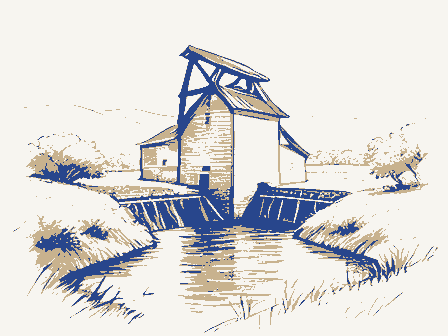
Perry Township
The complete chapter on this township from History of Putnam County, Ohio : Its Peoples, Industries, and Institutions, published in 1915. 1,613 words, covering 4 settlements.
Contents
2 sectionsThe section headings the book prints inside this chapter. Each one jumps to where it begins.
The modern record here
4 settlementsWhat the federal record holds for each settlement inside this township: wildfires and storm reports since the 1950s, mineral workings, and museum specimens collected nearby. These are counted within a few miles of each settlement, so neighbours share them and the columns are deliberately not added up. Every row links to the settlement's own page, where each figure is broken out.
| Settlement | Fires | Storm reports | Mines and quarries | Specimens |
|---|---|---|---|---|
| Cascade | - | - | - | 115 |
| Cloverdale | - | 8 | - | 114 |
| Dupont | - | 5 | 1 | 86 |
| Franconia (historical) | - | - | 1 | 115 |
Settlements in this township
4 placesEvery populated place the Geographic Names Information System records inside this township's Census boundary. All 4 are named in the chapter.
The chapter
1,613 wordsReproduced complete and unedited. The text is machine-read from a scan of the 1915 printing, so expect the errors a machine makes reading a century-old page: misspelled names, dropped words, stray characters. Nothing has been corrected, because correcting a proper name invents one. The headings below are the book's own.
Perry Township
Perry was the first township organized in what is now Putnam county and dates from 1828. It was named in honor of Commodore Perry and at first included all of the territory now in Putnam county. It has been decreased from time to time, as new townships were organized, until it now has thirty-six square miles. It was given its present limits in 1848, when the south tier of sections was attached to Jackson township. The early history of the township is shrouded in more or less obscurity, due to the fact that the first records have been lost. The first settlers appear to have located near the junction of the Auglaize and Blanchard rivers. The best evidence points to Robert Wallen, who settled there in 181 9, as the first actual settler in the township. He was followed in 1821 by David Murphy, Thomas McClish, Silas McCIish and Sebastian Shroufe, with their respective families. The last-named pioneer is credited with planting the first nursery in the county and it was from this that a large number of the orchards of the county received their start. Other settlers came in during each succeeding year until, by 1828, there were enough to justify the organization of a separate township. In 1823 came Andrew Craig, Daniel Sullivan, William Bowen and a man by the name of Cavanaw. William Harrell located in the township in 1825, and in the following year John Ridenour and Dimmit Mackrill cast their fortunes with the new settlement in the township. The year 1827 saw William Bishop, Joseph Frazee, Joel Wilcox, Abel Crossley and a few others locating in the new settlement.
Following the formal organization of the township in 1828, an election was ordered held at the house of Sebastian Shroufe. At that time the following officers were elected : William Harrell, Abel Crossley and John Ridenour, trustees; Silas McClish, clerk; Joel Wilcox, treasurer; William Bishop, supervisor; Sebastian Shroufe, justice of the peace; Dimmit Mackrill, constable.
This Dimmit Mackrill was a man of energy and was deeply interested in the welfare of his township and county. A story is told of him which goes to show how zealous he was in the discharge of his duties. In 1832 he was road supervisor for his own township, but for some reason he thought his district took in the whole county. Accordingly, he notified all the men living along the Blanchard river, from the mouth of the river to the Hancock county line, to appear on a certain day for work on the south side of the Auglaize river. As might be expected, some of the settlers appeared for work on the appointed day, while others did not. Whether Mackrill was really in ignorance of the size of his district, history does not record, but it is safe to say that the stout old pioneers who worked on that day did valiant service in improving the road in cjuestion.
The first election in Perry township was held at the house of Sebastian Shroufe in 1828, and at that time the following officers were elected: William Harrell, Abel Crossley and John Ridenour, trustees; Silas McCHsh, clerk; Joel Wilcox, treasurer; William Bishop, supervisor; Sebastian Shroufe, justice of the peace; Dimmit Mackrill, constable. The present officers of the township are as follows : Justices of the peace, W. H. Fensler and Steven Wannamacher; trustees, John Carder, W. T. Etter and Gilbert McClish; treasurer, P. A. Scharf ; constables, C. C. Etter and Ed Lehmkule ; ditch supervisor, D. H. Nutt.
Although Perry is the oldest township in the county, it has been improved slower than any other, due to the fact that so much of the land was swampy in character. Within the past quarter of a century the township has made rapid strides and now ranks favorably with other townships
Franconia was the first town laid out in the township. It was laid out by Amos Kendall in 1837 and the first store was kept by Parlee Carlin. A double log cabin, which was featured by Howe as a "Home in the Wilderness," was erected by Sebastian Shroufe, and P. B. Holden later kept a tavern in the same building. While Franconia was a flourishing little center of trade for a number of years, it has long since disappeared and nothing now remains of what was once hoped would be a substantial town. Other towns in this township include Cloverdale (Drucilla), Dupont, Cascade and Huntstown.
Dupont was for many years the largest town in the township. It was platted in 1877 and named in honor of Rear Admiral S. F. Dupont, of the United States navy, a postoffice of that name having been established in the year 1864. The mail route at that time rail from Ottawa to Charloe, twenty-six miles, and was traveled once a week.
In 1877 the Toledo, Delphos & Indianapolis narrow gauge railroad was built through the village; in 1888 the entire route was changed to a standard gauge and known as the Toledo, St. Louis & Kansas City railroad.
Dupont was incorporated in 1888 and E. W. Dimock was chosen. to serve as the first mayor. This village began to grow and its prosperity seemed assured, but occasionally the healthiest child fails to become the strongest man. In the height of the town's prosperity there were two stave-mills which did an extensive business, two hotels, tile-mill, saw-mills, an axehandle factory, and five general merchandise stores. The population of the town was about seven hundred. Then came the decline.
The first blow which Dupont had to endure was the failure of the timber and, in consequence, the removal of the stave factories, her chief industry. The second blow came with the building of the Nickel Plate railroad across the Clover Leaf at Continental, and the final step was the construction of the Findlay, Ft. Wayne & Western through Cloverdale, just two and onehalf miles south of the village.
The present population is about three hundred. A tile factory, a general store, grocery and hardware store represent her business interests. The school facilities are very good. The present officials are: Clerk, T. R. Hart; treasurer, W. T. Etter; marshal, Allen Williams; councilmen, C. C. Etter, George Etter, Thomas McClish, Sol. Wollam, R. C. Brandt and William Spencer.
Cascade
Cascade lies on the west bank of the Auglaize river and on the Findlay, Ft. Wayne & Western railroad, a branch of the Cincinnati, Hamilton & Dayton railroad. It vv^as platted in 1892 by E. W. Dimmick, for Charles Andrews. Myers' mill, the first in the county, was located here, and its owner, Samuel Myers, was one of the most prominent citizens of the village for many years. In fact, the place was locally known as Myers' Mill for many years and even to this day it is probably as well known by this name as that of Cascade. At the present time nothing is left but the remains of the old mill, and it ground its last grist many years ago. The site of the former village is picturesque and thousands of people make it a picnic ground every year.
Cloverdale is situated at the junction of the two railroads crossing the township and dates its existence from 1891. It was surveyed and platted by E. W. Dimmick for W. H. and E. M. Mozier, Tunis and Nora Truax and Austin and Mary Combs, the proprietors. The first postoffice was called Drucilla. Although there had been a town here since the construction of the Cloverleaf railroad in 1877, which was known as Evansville, it was never platted, and when the new town was platted the name Cloverdale was given and the former name gradually disappeared. It was incorporated on April II, 1902.
The first officers were T. J. Ludwig, clerk ; Anthony Holguve, treasurer ; Peter Harris, marshal ; William Struker, J. A. L. Harris, John Heitzman and Austin Combs, trustees ; Austin Combs was the first squire and William Corkwell the first constable.
Settlers who located here as early as 1877 were. Pope Burbage, who ran the first saloon ; George Price, who kept the first store ; Hollis Hanson, who ran the first saw-mjll; Nathan Dalton, who had the first wagon and paint shop, and Austin Combs, the first postmaster. The first house was built by Irvin Follis and the hotel by Joseph Gingrich. In 1891 the Findlay, Ft. Wayne & Western railroad was built through the town and it began a steady growth. The tile factory, saw and hub-mill, lumber yards, ele- vator and other smaller industries located here in close succession. A town hall was erected in 191 3, at a cost of three thousand dollars, and the place at present has a population of three hundred.
Two churches, grade and parochial schools, and the present general prosperous air of the town give evidence of the thrift and business ability of its settlers. It bids fair to become a thriving" little village. The town officers are as follows : Mayor, P. A. Scharf ; clerk, O. B. Andrews ; treasurer, L. B. Mason; marshal, Edward Lehmkuhle; councilmen, John Blosser, John Berhude, Theo. Horstman, R. E. Baxter, Ben Andrews, and Fred Kohl.
Perry township furnished twenty-three volunteers between July 2 and August 22, 1862, according to the report of the assessor, N. Whitney The list follows: Payton Clme, Elias W. Dimmock, Samuel P. Wollam, Thomas Wagoner, Dibbel Ridenour, John Wheeler, Isaac Wheeler, Leven Corkwell Moses D.ckey, Eli May, Samuel King, William Robart, John T. Guy, William Brown, Cyrd B. Bacon, John E. Weiser, Jacob Spitnale, John Rariden, Abraham Myers, John Bell, John T. Thatcher. Morris Burnett and John Smith. -^
Provenance
Text from History of Putnam County, Ohio : Its Peoples, Industries, and Institutions, by Kinder, George D., published 1915 and in the public domain in the United States. Digitised by the Internet Archive. The settlements listed against this township are matched by point-in-polygon test of each Geographic Names Information System coordinate against the Census Bureau's county subdivision boundary, not by name.