 Block
Block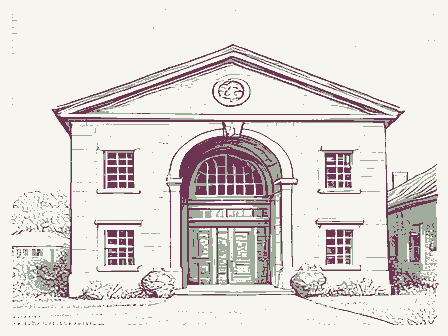
Pleasant Township
The complete chapter on this township from History of Hancock County [Ohio] from Its Earliest Settlement to the Present Time, Together with Remeiniscenses of Pioneer Life, Incidents, Statistical Tables, and Biographical Sketches, published 1881; History of Hancock County, Ohio : Containing a History of the County, Its Townships, Towns ... Portraits of Early Settlers and Prominent Men, Biographies, History of the Northwest Territory, History of Ohio, Statistical and Miscellaneous Matter, Etc, published 1886; History of Hancock County Ohio, published 1886; History of Hancock County, Ohio, published 1903. 11,412 words, covering 6 settlements. Source changes inside the text are labelled at the exact paragraph where the next book begins.
Contents
4 sectionsThe section headings the book prints inside this chapter. Each one jumps to where it begins.
The modern record here
6 settlementsWhat the federal record holds for each settlement inside this township: wildfires and storm reports since the 1950s, mineral workings, and museum specimens collected nearby. These are counted within a few miles of each settlement, so neighbours share them and the columns are deliberately not added up. Every row links to the settlement's own page, where each figure is broken out.
| Settlement | Fires | Storm reports | Mines and quarries | Specimens |
|---|---|---|---|---|
| Butlers Mill | - | - | - | 18 |
| Deweyville | - | 1 | - | 114 |
| Hancock | - | - | - | 18 |
| McComb | - | - | - | 179 |
| North Ridgeville (historical) | - | - | - | 53 |
| Shawtown | - | 4 | - | 53 |
Settlements in this township
6 placesEvery populated place the Geographic Names Information System records inside this township's Census boundary. 5 of the 6 are named in the chapter; the rest were founded later or were never more than a post office.
The chapter
11,412 wordsReproduced complete and unedited from History of Hancock County [Ohio] from Its Earliest Settlement to the Present Time, Together with Remeiniscenses of Pioneer Life, Incidents, Statistical Tables, and Biographical Sketches, published 1881; History of Hancock County, Ohio : Containing a History of the County, Its Townships, Towns ... Portraits of Early Settlers and Prominent Men, Biographies, History of the Northwest Territory, History of Ohio, Statistical and Miscellaneous Matter, Etc, published 1886; History of Hancock County Ohio, published 1886; History of Hancock County, Ohio, published 1903. The text is machine-read from scans, so expect recognition errors: misspelled names, dropped words, and stray characters. Nothing has been corrected, because correcting a proper name invents one. The headings below are the books' own; source changes are labelled in place.
Pleasant Township
John Byal, Jobii L. Carson, and John Rose, commissioners, at their session March 2, 1835, '' Ordered that the original surveyed township number tioo noi'th, in range nine east, be laid off and formed in a body politic and corporate, and designated Pleasant township." Previous to this date it had been a part of Blan- township.
This township lies in the northwest corner of the county, and is bounded on the north by Wood County, on the east by Portage township, on the south by Blanchard township and on the west by Putnam County. It derives its name no doubt from its pleasant location and scenery, and is an original township oi thirty-six section^,.
John Algire, of Fairfield County, made the first entry of land in this township. The northeast quarter of section thirty-one being bought by him March 15, 1833. On the 20th day of April, same year, Alexander Kilpatrick, of Hardin County, entered the northwest quarter of the southeast quarter of section thirty-one. Edward -Steveson, of Franklin County, entered the west half of the northeast quarter of section twenty-seven, and on the same day John J. Needles of the same county entered the east half of the northeast quarter of the same section. On the 19th day of October 1833, John McCulloch, of Jefferson county and William Woods, of Washington
County, Pa., entered lands in section twenty-eight, and on the same day Eliakim Crosby entered the west half of section twenty-nine. Jacob Lamb, of Fairfield County,, entered the southeast quarter of section thirty, and George Kalb entered the west half of the northeast quarter of section twenty-six, on the 2d day of November, 1835.
In 1834 entries of lands were made by Henry Hemry Nathan Fidler, John Kalb, Beniamin Cummins, Anthony Wilcoxson, Robert Fletcher, Robert Sherrard, Alexander Amspoker, Benjamin Todd, Bennet Kiger, Michael Prire and others.
The first settlement in this township was made in 1833 by Edward Steveson, Benjamin Todd and John J. Needles, at and near where the village of McComb now stands. In the following year William and Alexander Kilpatrick, George Algire, John Kalb, Alexander Amspoker, came to the same neighborhood. In 1835 Robert Morrison, John Bartholomew, Charles Blakeman, Michael Price, David Wright, Jacob Thomas and others reinforced the new settlement.
Benjamin Todd came from Franklin County, O., and settled on the present site of the village of McComb. He was the first Justice of the Peace in the township, having helped to organize the township, and has held various offices since, discharging the duties of all with honesty ana fidelity. He w^as also a member of the first church organization in the township., and has ever since led a consistent Christian life, and now, at the age of ninety years, and having raised a large and respectable family of children, he resides in the village of McComb, surrounded by the triumph of himself and compeers,
John J. Needles emigrated from Franklyn County also, and redeemed from the wilderness a beautiful farm. He was a rather impulsive, eccentric kind of a man, but withal a kind neighbor and a good citizen. He removed to Iowa in 1856 and there died about six years ago.
William Kilpatrick, after a residence of a number of years, moved to Defiance County in 1859, and his brother Alexander, followed him after having made this township his home for nearly half a century. Both were honest men and good citizens.
George Algire still resides here, on the same lands he cleared up and beautified, one of the oldest residents of the township. A small wiry man of good constitution untiring energy and industry, he has accumulated a competency, and enjoys it in the society of his fiiends. He has been a minister of the Methodist Episcopal cliurch for more than forty years. As a minister he is fei-vent and zealous, of considerable ability, he plainly points out the way as he understands it. As a christian he has led a consistent life. As a man and neighbor he commands the greatest respect.
John Kalb, another of that noble band, after a long and useful life closed up his earthly career on the first of March, 1872. In his death the community lost a valuable member. Mr. Kalb was a member of the Methodist church for many years, and two of his sons, John S. and and Isaac N., were ministers of that church. Father Kalb was a fine specimen of the frontiersman, and contributed his full share in clearing up the county.
Charles Blakeman is still living, and a resident of Mc- Conib. He, too, was a farmei-, and a man of probity and industry, and has always enjoyed the esteem of his neighbors. He is now in his old age, quietly enjoying the fruits of his labor.
David Wright, Sr., still resides on the old home farm, made pleasant and valualde by his own industry and economy. He is passing the declining years of his life surrounded by bis family and friends, beloved by all.
The soil of this locality is a rich black loam, on a clay subsoil. On the ridges, or higher lauds, the soil is much mixed and made up of sand and gravel. The entire body of land in this township is rich and very productive.
The head waters of Portage River, with some small tributaries, are sufficeut, with wells, which are from ten feet to twenty feet deep, to supply all the water necessary.
The first election was held in 1835 and Benjamin Todd, George Algire, Charles Blakeman, Michael Price, John Kalb, John J. Needles, Alexander Anispoker, Kobert Morrison, Robert Fletcher, Benjamin Cummins, David Wright and Jacob Thomas were the voters. The officers elected were Benjamin Todd, J. J. Needles and Alexander Amspoker, Trustees: Benj. Todd, Clerk; George Algire, Treasurer; Benj. Todd, Justice of the Peace.
The first church organization was in the year 1835. The Rev. Thrap, of the Methodist church, at that time organized a class, of whom Benj. Todd and wife, and John
Kalband wife were tbe members. Services were held iu ])rivate houses, and in tbe school house until 1850, when the Methodists erected a church building, which was the first in the township.
The first school house was built in 1838 at the present site of McComb. It was of the then approved style, roimd log, clap boai'd roof, mud chimney order of architecture. There are now eight good school buildings in the township, and an enrollment o^ four Immdred and forty-four children of school age.
The first flouring mill was built by Thomas Pickens in 1845 on Pickens' Kun. Previous to that time a hand mill owned by William Todd, was the only means of making bread-stuff in the township. In 1841 George Algire built a saw mill on Algire's Run. Its capacity for manufacturing lumber was three hundred feet per day. The first steam saw mill was built in 1850 by Tipton & Porter, and the first steam flouring mill was l)uilt by Capt. Isaac Cusac in 1857.
Thus has this part of the county been developing little by little, with the hardest of labor, the greatest of patience, and most persevering industry, until to day Pleasant township is one of the most populous, wealthy and beautiful in the county. Her farms, and farm buildings, will compare favorably with those of any other part of the county, whilst in honest thrift, intelligence and true hospitality her people are surpassed by none.
In April 1857, Isaac Fairchild laid out the town of Olney on the southwest cpiarter of the northwest"" ([uarter, and the west half of the southwest quarter of section fifteen, which comprised forty lots. The platting of the town was as far as it ever progressed, and it was only a town on pa})er. The lands on which this town was to have been built are now owned by J. B. Williams.
Benjamin Todd laid out a town on the northeast part of the west half of the northeast quarter of section twenty-six, in 1847, and called it Pleasantville. The town originally comprised only eighteen lots. Afterwards successive additions were made- by Mr. Todd, Ewing, Rawson and otheis. The town is pleasently situated on the ridge running from Tiffin to Ft. Wayne, and aV)out ten miles from Findly. The village is the largest in the county, outside of Findley, and being situate in a fine farming country, and having good railroad facilities, bids fair to become a place of some importance.
The first Mayor was William Chapman. For some years the town waited and watched for the completion of the Continental Railway, w^hicli had been graded for miles, both east and west of the village, alternately between hope and fear, the energies of the place became j)aralyzed, business gradually tell ofi:', and everything came to a stand still, and a state of retrogression was setting in. The people, however, appreciating the situation, roused up and procured the building of the McComb and Deshler Branch of the Dayton and Michigan Railroad, and thus obtained communication with the outside w^orld, and, as if fortune w^as now determined to smile upon them, the Continental changed hands and under the name of N. Y. C, and St. L. Railroad, has already more than fifty miles of road completed, beginning at Arcadia and running west through McComb. To say that the long expectant people of this village are jubilant. but tamely expresess the situation.
A post office was established here in 1847 with William Mitchell Postmastei-. He has been succeeded by Zelotus Barney, James Porter, Eliza Fisher and Mrs. Margaret Barney, present incumbent.
The business of this place is rapidly on the increase. A number of good business houses have recently been erected, as well as many residences. There are already two well stocked dry goods stores, two hardware stores, tivo neat well filled drug stores, one clothing store, two grocery and provision stores, two meat markets, oihe furniture store, tioo harness sJiops, four blacksmith «hops, one jewelry store, one gunsmith shop, two wagon and carriage shops, two saw mills, 07ie steam flouring mill, tivo shoe shops, 07ie undei'taker, one livery stable, 07ie pump factory, two hotels,_^t*e physiciasn, one attorney, and one news paper, the "McComb Herald," by a Mr. Darke, and thi^ee churches, one Methodist Episcopal, one Presbyterian and one Disciples.
There are a number of very tasty dwellings, many of them surrounded by beautiful grounds. Altogether the village has an air of thrift and I'apid growth, which is very encouraging to its people, and the beauty of its location, its healthfulness, and intelligent society, are sources of just pride to the inhabitants. Four hundred and twenty-three was the population in 1880.
There is here a fine brick school building, and three teachers are employed to conduct the schools. There is an enumeration of one hundred and eighty-one youth in the district.
Source changes here: from History of Hancock County, Ohio : Containing a History of the County, Its Townships, Towns ... Portraits of Early Settlers and Prominent Men, Biographies, History of the Northwest Territory, History of Ohio, Statistical and Miscellaneous Matter, Etc, by Brown, Robert C, published 1886; 4,781 words in this source stream.
Pleasant Township
THE territory now embraced in this township formed a part of Liberty fi-om December 6, 1830, up to March 4, 1834, when it was attached to Blanchard, and so remained until its erection as Pleasant, on the 2d of March, 1835, including the full Congressional Township 2 north, Kange 9, or an area of 23,040 acres. The first election for justice of the peace was held May 6, 1835, with Benjamin Cummins, John Kalb and John J. Needles, judges; and Alexander Amspoker and George F. Algire, clerks. The voters at this election were as follows: Charles Blakeman, Thomas J. Butler, Robert Fletcher, Benjamin Cummins, John Kalb, John J. Needles, George F. Algire, Alexander Amspoker, Benjamin Todd and Peter Hockenberry. Benjamin Todd received every vote, and was declared elected.
Pleasant is the northwest subdivision of Hancock County, cornering on the counties of Wood, Henry and Putnam, with Portage Township on the east and Blanchard on the south. In 1840, it contained a population of 252; 1850, 522; 1860, 1,151; 1870, 1,336, and 1880, 1,866; showing that from 1840 to 1850, and from 1850 to 1860, its population more than doubled, while the increase for the past twenty-five years has sui-passed any other portion of the county excepting Findlay.
A heavy forest unbroken by a single clearing, originally covered the surface of this township. Here the stately oak, walnut, elm, maple and sycamore reared their tops heavenward, while the many other species of timber found in this portion of the State grew in abundance. The surface of Pleasant, though quite level in many places, is, as a whole, considerably rolling, with a general northward dip. Two parallel ridges cross the township in a southwest direction, locally called Sand and Sugar Kidges. The former, the more northerly of the two, is composed of fine yellow sand, while Sugar Ridge is principally a gravel formation. The latter received its name because of the large number of sugar trees found growing upon it by the first settlers. Between these ridges, and on the more level and lower sections of the township, the soil is principally a vegetable loam, with a clay subsoil. Bordering on Blanchard Township, the soil on the higher lands changes to a clay. The eastern and central portions of Pleasant are drained by the upper branches of Portage River, all flowing north. Pickens Run, a tributary of Beaver Creek, rises in Blanchard Township, and meandering northward drains the whole western side of Pleasant Township. The wells of this locality range from twelve to sixty feet in depth, and good water is found in abundance.
First Land Entries and Early Settlers. - The first entries of land in Pleasant Township were made by George F. Algire, Jeremiah Kalb, Elisha B. Kalb and George Kalb, all of whom took up land November 2, 1832. Mr. Algire entered the northwest quarter of Section 26; Jeremiah Kalb the southwest quarter of Section 24; Elisha B. Kalb the southeast quarter of Section 24, and the east half of the northeast quarter of Section 25; and George Kalb the west half of the northeast quarter of Section 26. The Kalbs were residents of Franklin County, Ohio, and Mr. Algire, who yet lives in the township, was then a citizen of Fairfield County. A large number of entries were made in 1833, 1834 and 1835, but as most of this land was taken up for si:)eculation, the names of the owners, who never became settlers, would be of little or no importance in this article.
On the 7th of September, 1833, Edward Stevenson, of Franklin County, Ohio, entered the west half of the noi'theast quarter of Section 27, and at once settled upon his land. He was the first settler of Pleasant Township, but he soon got tired of pioneer life, and in October, 1834, sold out and returned to his early home in Franklin County.
Benjamin Todd and John J. Needles were the next settlers, both of whom came here from Franklin County, Ohio, in November, 1833. Mr. Todd was born in Maryland, in 1792, whence he removed to Franklin County, Ohio, where he married Miss Catherine Kalb, also a native of Maryland. On the 12th of November, 1833, while yet a resident of Franklin County, he purchased of George Kalb the west half of the northeast quarter of Section 26, Township 2 north, Range 9, entered by Kalb the previous year, and the same month located on his purchase, now partly the site of McComb. At an election held in May, 1835, Mr. Todd was chosen justice of the peace, of the new subdivision. He was the first justice of the township, and served five terms in that ofiice, and was also the first township clerk, and one of the first trustees. The first religious society in the township was organized at his cabin. His first wife, Catherine, reared a family of five sons and five daughters, seven of whom are living. Three reside in McComb, and one in Portage Township. Mrs. Todd died in 1854, and Mr. Todd was again married, but no children were born to this union. In 1847 he laid out the town of Pleasantville (now McComb), on the northeast corner of his farm, and resided in that village until his death; he died March 3, 1882, at the ripe old age of ninety years.
County, and erected a cabin in the east half of the northeast quarter of Section 27, entered by Mr. Needles September 7, 1833. He cleared up a good farm, enduring all the trials of pioneering, and after the brunt of the struggle was past concluded to go West. In January, 1856, he sold out and removed with his family to Iowa, where he died several years ago. Mr. Needles was one of the first trustees of the township, and is remembered as a very eccentric man, but a kind neighbor and a very good citizen.
In the spring of 1834 Alexander and William Kilpatrick, Claries Blakeman, Robert Fletcher and John Bartholomew settled in the township. The Kilpatrick brothers came fi'om Hardin County, Alexander entering the northeast quarter of the southwest quarter, and the northwest quarter of the southeast quarter of Section 31, April 20, 1833. Both settled on this section, and are spoken of as upright men and good neighbors. About 1859 William sold his farm and left the county. Alexander finally removed to McComb, where he lived till the summer of 1885, when he went to Paulding County, and died in September of that year.
Charles Blakeman was born in Massachusetts, whence he removed to Ohio. He entered the east half of the northeast quarter of Section 35, April 3, 1834, and the west half of the southeast quarter of Section 26, June 7, 1835, but settled in the township early in 1834. His cabin stood on the latter tract, immediately south of Benjamin Todd's. His wife, Polly, bore him ten childi-en, eight of whom grew to manhood and womanhood, and two are residents of McComb. Mr. Blakeman was one of the organizers of Pleasant township, and resided here till 1870, when he moved to Ottawa, Putnam County, where he is at present living.
Robert Fletcher was from Harrison County, Ohio, and March 26, 1834, entered the west half of the northwest quarter of Section 36, upon which he built his cabin the same spring. He resided here till the fall of 1851, then sold out and went to Iowa. John Bartholomew was a single man, and did not stay long in this portion of the State.
George F. Algire, of Fairfield County, Ohio, entered the northwest quarter of Section 26, November 2, 1832, one of the first four entries made in Pleasant Township. In the summer of 1834 he settled permanently on his land, and has ever since lived upon the same farm. He married Susan Stevenson, of Franklin County, who bore him a family of thirteen children, six of whom grew to maturity. She died in 1870. Mr. Algire has been a local preacher of the Methodist Episcopal Church during the greater portion of his life in this county, and though devoting much of his time to that cause, has nevertheless cleared up and improved the farm upon which he resides. He is a small, slightly framed man, possessing a vigorous constitution, and with that characteristic energy and untiring industry for which he has always been noted, succeeded in amassing a handsome competency for old age. Mr. Algire is very well preserved, and is one of the few remaining pioneers whose memory has outlasted the ravages of time.
Michael Price was an Irish Catholic, who first settled in Philadelphia, Penn. , thence removed to Crawford County, Ohio. On the 1 2th of July, 1834, he entered the west half of the northeast quarter of Section 35, Pleasant Township, upon which he located the following autumn. His wife, Catherine, bore him seven children - one son and six daughters - all but one of whom are dead, their only living child (a daughter), being a resident of Putnam County. In 1849 Mr. Price was appointed associate judge of Hancock
CJounty, but served only two years. He died on his farm in this township. It has been told by several pioneers that Judge Price was a well-informed man, and stood high in the estimation of the best citizens.
John Kalb came here fi-om Franklin County, Ohio, in the fall of 1834, and settled on the east half of the northeast quarter of Section 22, which he entered June 4 of that year. Mr. Kalb contributed his full share toward the development of his adopted county, and has left a record bright with good deeds. His wife, Anna, died in 1852. Two of his sons, Isaac N. and John S. , were ministers of the Methodist Church, to which faith he also adhered for many years prior to his death, which occurred February 28, 1872. Three of his daughters are residents of the township.
Alexander Amspoker entered the east half of the northwest quarter and the west half of the northeast quarter of Section 36, April 18, 1834, settling upon it soon afterward. He was one of the first three trustees of the township, elected in 1835. In September, 1845, he sold his farm and left the county.
Benjamin and Mary Cummins were natives of Kentucky, who, about 1831, settled on Section 9, Liberty Township. He was the first justice of that township, elected in 1831 and re-elected in 1834. On the 18th of September, 1834, he entered the east half of the northeast quarter of Section 32, Pleasant Township, to which subdivision he removed late in 1834, or early the following year. In 1835 he took part in the organization of Pleasant Township. In January, 1836, he entered th e north half of the northwest quarter of Section 31, whereon his son, E. T. Cummins, now lives. Mr. Cummins served four consecutive terms as justice of this township. He reared a family of ten children, only one of whom, Rev. E. T. Cummins, survives, and died upon the old homestead in 1875, having been a leading citizen of Liberty and Pleasant Townships for nearly half a century.
David and Diana Wright wer'^ native Ohioans, and came here fi'ora Franklin County early in 1835. The tract on which he built his cabin was entered by Elisha B. Kalb, November 2, 1832, and purchased by Mr. A\ right, November 3, 1834. He paid 1600 for the southeast quarter of Section 24, and the east half of the northeast quarter of Section 25, and early in 1835 entered 160 acres more in the latter section. He was the father of five children, three of whom grew to maturity, and two are now residing in the township. This old pioneer was compelled to cut a road through the forest for about seven miles ere reaching the spot where he built his cabin. Here he reared his family, and spent a period of almost fifty years, dying in 1884, full of years, and honored by the whole community.
David Wilfong, of Franklin County, Ohio, entered the noi-thwest quarter of the southeast quarter of Section 35, April 4, 1834, and settled on his entry in the spring of 1835. He died on this farm many years ago.
Robert Morrison, a native of Ireland, born in 1792, removed from Pennsylvania to Liberty Township in May, 1835, and the following November took up his abode on Section 36, Pleasant Township. His family consisted of his wife, Elizabeth, and four sons and two daughters, all of whom grew to maturity. The mother died July 21, 1864, in her seventieth year, and her husband February 7, 1873, in the eighty-first year of his age. All of their children are living, five being residents of Hancock County.
Thomas Butler was also a pioneer of 1835. His cabin stood on Section 23, but in November, 1841, he disposed of his property and removed to the West.
Caleb Kelley aad George Hemry are two of the few living pioneers of Pleasant Township. The former settled about two miles west of Findlay in February, 1S35, and the following summer removed to Section 23, Pleasant Township. Here he lived about nine years, then settled on Section 20, where he has ever since resided. Mr. Hemry settled with his parents in Jackson Township in 1834, where he was elected justice of the peace in 1835. In 1884 his father, Henry, entered the northeast quarter of Section 14, Pleasant Township, upon which George afterward settled and yet lives. He was elected justice of Pleasant Township in 1838, and both he and Mr. Kelley are among the substantial pioneer farmers of the county.
Jacob Thomas was born in Tyler County, Va., in 1810, and settled in Marion Township in 1831. According to the records he entered 120 acres of land in the southeast quarter of Section 12, in March, 1830, and that year is believed to be the correct date of his settlement in this township, though he may have been living here prior to that time. He died on the old homestead April 2, 1878, and some of his childi'en are yet residing on the farm.
Thomas, James and John Pickens settled in the west part of the township on Pickens Run, in 1837. Early in that year Thomas entered land in Sections 7, 8 and 18, and located on the last mentioned section. James took up forty acres in Section 18, and forty acres in Section 19 in 1838; but the whole family came from Belmont County, Ohio, in 1837. Thomas was a millwright and carpenter, and in 1845 erected a grist-mill on Pickens Run, which was in operation for many years. He died upon his farm in this township, and Mrs. T. B. Kelley is the only one of his children in the county, the sons having removed to Michigan. The names of a few others who came in between 1835 and 1840 could be given, but those given will illustrate the class of settlers who first built their cabins in the forest of Pleasant Township, and to extend the list into the period when the county was no longer a wilderness is not the intention in this chapter.
Justices. - The justices of this township since its organization have been as follows: Benjamin Todd, George Hemry, Benjamin Cummins, Thomas B. Kelley, Charles Pursey, Samuel McBride, Isaac H. Myers, Daniel High, J. E. Creighton, Jackson Crites, S. H. Fairchild, A. R. Bachtel, Elisha Todd, Joseph C. Brown, William H. Todd, Jacob Priest, Isaac Cusac. W. S. Kelley, F. F. Parker, Elisha Todd and E. T. Cummins.
Religious Societies. - Late in December, 1835, an itinerant preacher of the IMethodist Episcopal Church organized a class at the cabin of Benjamin Todd, of which Mr. Todd and wife, and John Kalb and wife were the only members then living in Pleasant Township. George F. Algire and wife, and a few other pioneers, though not present at the organization, soon afterward joined the class, and these families were the nucleus of the present flourishing congregation of McComb. For about three years irregialar services were held at the cabins of the settlers, but on the erection of the pioneer log schoolhouse, in 1838, that building was utilized for church purposes. It was not till 1850 that a church edifice was built by the Methodists at Pleasantville (now McComb), but it was the first erected in the township. This old structure is now used as a business house, having been superseded in 1870 by the present brick church. The Methodists have another society, in the west part of the township, and own a building on Section 18.
under the ministry of Kev. T. P. Emmerson. It is yet standing in McComb, and "witli some repairing in 1870 and 1881, has ever since served the congregation. This church was organized in 1849-50 by Rev. George Van Eman; and Aaron Allen and Dr. Samuel M. Turner were the first ruhng elders of the society. The Disciples society erected a church in the village soon afterward, and it, too, is still in use as their house of worship. The German Baptists have a church near the southwest corner of Section 32 ; the United Brethren Church stands on Section 20, and the "Church of God" on Section 15; all having good sized congregations and regiilar services.
Schools. - There was no schoolhouse in this part of the county until 1838, when a small log building was erected on the site of McComb, and a school taught by Samuel Bowman, who now lives in Portage Township. The Todds, Needleses, Kalbs, Blakemans and Prices -yvere the first scholars. John Bowman and George Hemry also taught here at quite an early day. Another schoolhouse was put up soon afterward, in the northwest corner of Section 36, and opened by Cooper Van Eman. The Morrisons, Prices, Blakemans. Amspokers and Fletchers attended this school. In a few years other schools made their appearance, and with the increasing population educational facilities became better until every neighborhood had a good schoolhouse within easy access. The township now contains nine schoolbuildings outside of McComb, that in Dewey ville being a two teacher house; while five teachers are employed in the McComb schools, which rank second to none in the county.
Mills. - Manufacturing attracted attention here at quite an early date, and in 1 841 a saw-mill was built on his farm by George F. Algire. It stood on the creek west of McComb, and was run by water-power. Though a small affair it nevertheless furnished most of the lumber used in this vicinity, and ran iintil the erection of a steam saw-mill in the village. Along about this time William Todd built a horse-mill, then the only contrivance in the township for grinding corn or wheat, and it, too, served a good piarpose. In 1845 Thomas Pickens erected a grist-mill on Pickens Run, which was in operation, and did good service for many years. In 1850 a steam saw-mill was put up in Pleasantville by Tipton & Porter, and in same year a small gristmill by S. H. Fairchild, which ran about eight years. In 1857 or 1858 Isaac Cusac erected and put in operation a steam flouring-mill in the same village. In 1884 this mill was remodeled, and the roller process put in, which renders it one of the finest mills in Hancock County. A saw-mill has been in operation on Pickens Run in Section 30 for a long period. It has been worked by T. W. Kelley since 1873, and is now within the limits of Shawtown. Three saw-mills and several other manufactm-ing establishments, besides those mentioned, are now carried on in McComb, while a large stave factory is located at Deweyville.
Towns and Villages. - On the 21st of April, 1837, a town named Olney was laid out by Isaac Fairchild in the southwest quarter of the northwest quarter and the west half of the southwest quarter of Section 15, on Sand Ridge, near the center of the township. It consisted of forty lots, none of which, however, were sold, or ever built upon.
McComb. the largest town in the county, excepting Findlay, was laid out as Pleasantville, in August. 1847, by Benjamin Todd, on the northeast part of the west half of the northeast quarter of Section 26. The original plat contains only eighteen lots, but additions were made to the village by Ben- jamin Todd in 1852, and in 1855, by James Ewing and Abel Rawson. Several others have been made since the town was incorporated. Benjamin Todd kept the first tavern at this point; and in the fall of 1847 John and Reed Porter opened a general store, the former soon afterward starting a hotel, and Samuel Heller buying oiit the store. William Mitchell was the first shoemaker, and Hugh Boyles the pioneer blacksmith of the village, who yet carries on a shop in McComb. John W. and Elisha Todd had the first cabinet shop, and Barney & Snyder the second general store. Joseph Ewing opened a hardware store, and a Mr. Hammond a cooper shop. In 1850 S. H. Fairchild erected a grist-mill, which continued to do business until after the completion of Isaac Cusac's mill in 1858. A steam saw-mill was also put up in the village in 1850, by Tipton & Porter. Dr. Samuel Turner was the first resident physician. Dr. George A. Dean the second, and Dr. George L. Turner the third, the two last mentioned dying in the village. The foregoing comprise about all the earliest business men of McComb.
A postoffice was established here in 1848, and William Mitchell appointed postmaster. Since his incumbency the office has been filled by Zelotus Barney, James Porter, Eliza Fisher, Mrs. Margaret Barney and Andrew J. Ewing.
On the 19th of May, 1858, the village was incorporated under the name of McComb, and at the first election held that year William Chapman was chosen mayor. His successors have been Benjamin Cummins, S. H. Fairchild, W. J. Sholty, Charles Blakeman, J. R. Turnpaugh, A. R. Bachtel, Elisha Todd, Isaac H. Myers, Alonzo Bennett, J. T. Smith, Isaac Cusac, W. H. Conine, S. A. Cooper, H. W\ Hughes and C. F. Speice.
Though the bed of the old Continental Railroad was graded through this township in 1872-73, that is as far as the enterprise advanced; and the people of McComb waited in vain for years to obtain an outlet by this route. At last the more enterprising citizens of the town felt that something must be done if McComb was ever to be anything more than a cross-roads village, and in 1879, the project was conceived of building a railroad from McComb to Deshler, at the crossing of the Baltimore & Ohio, and the Dayton & Michigan Railroads. Satisfactory arrangements having been made with the latter corporation, a company was organized under the title of the McComb, Deshler & Toledo Railroad Company, who at once began the preliminary work. The line was surveyed and the work pushed vigorously, and by the close of Novembet, 1880, the road was completed and in full operation. It is eight miles and three-quarters in length, and passes northwestward from McComb to Deshler. Soon after its completion the Continental line passed into the possession of the New York, Chicago & St. Louis Railway Company, and in the summer of 1881, it too was completed through this county, thus furnishing McComb with first-class railroad communications, and giving it a fine business boom. From that time forward the town grew rapidly. Better buildings were erected, and prosperity is now seen on every hand.
The present business interests of McComb are in a flourishing condition, and consist of three general dry goods stores, four general grocery stores, two druggists, two hardware stores, one clothing store, two jewelers, two meat shops, one harness shop, one furniture store, two shoe shops, one gunsmith, one photographer, two bakeries, three millinery stores, two wagon and carriage factories, five blacksmith shops, a first-class steam flouring-mill, a grain elevator, a sash, door and blind factory and planing-mill, two saw-mills, one saw and planing mill, a pump factory, a handle factory, an undertaker's establishment, a tile factory, two livery stables, a good hotel and six saloons. There is also an attorney, Ira B. Conine, and five physicians, viz., Drs. J. H. Watson, Charles Switzer, J. M. Abbott, John Thompson and C. S. St. John. The Methodist Episcopal, Presbyterian and Disciples congregations have each a chui'ch in the village; while an elegant brick schoolhouse, erected in 1883, at a cost of about $20,000, is one of the public institutions of which McComb feels justly proud. In beauty of architecture and general finish this building will compare favorably with the best modern schoolhouses of Ohio, and five teachers are annually employed in imparting instruction to the school youth of McComb and immediate vicinity. The curriculum is similar to graded public schools all over the State.
McComb Lodge. No. 354, I. O. O. F., was instituted July 29, 1859, with the following charter members: S. B. Webber, S. H. Fairchild, J. T. Smith, James Fisher, Abraham Miller and Joseph Updyke. The lodge now contains about sixty members.
John Howard Post, No. 154, G. A. R., was organized November 7, 1881, with fifteen charter members, and has now about fifty; and the John Howard Relief Corps, No. 53, of the same organization, was chartered July 9, 1884, with twenty-three members. The latter is a society composed of ladies, working in harmony with the Post, or as an auxiliary thereof, and has accomplished much good for the families of ex-soldiers during its brief existence.
The McComb Fire Department, organized in the fall of 1884, is furnished with a Remington Hand Fire-engine, and embraces a volunteer company of forty members. In January, 1885, the town authorities erected a two-storied frame engine house, the second story being the council room.
The McComb Herald is one of the prominent institutions of the town, and has done its full share toward building up the interests thereof. It was established by G. A. Darke, and first issued February 10, 1881, as a six-column folio, but in August was enlarged to a seven-column folio. Late in December, 1881, or early in January, 1882, Mr. Darke sold out to Hickerson & Ayers, but the latter soon disposed of his interest to Hickerson. On the 10th of February, 1883, Samuel B. Davis, an old, experienced newspaper man, bought the oSice, and has ever since published the Herald. It is issued every Thursday, and has a circulation of between 800 and 900 copies. The Herald is a live, newsy paper, politically independent, and is one of the leading factors in furthering the best interests of McComb.
The population of the village in 1870 was 319, and in 1880 it contained 417. It is safe to say that the population has more than doubled since the last ofiicial census, while its best informed citizens claim fi'om 1,000 to 1,200 inhabitants. McComb is one of the go-ahead, bustling little towns of Ohio, and bids fair to hold its own. Immediately west of the town is a handsome cemetery, decorated with evergreens, and possessing many nice monuments. Here many of the pioneers of this portion of the county are buried.
& Toledo Railroad, in June, 1880. It lies in the west part of Section 15, where the railroad crosses the Sand Ridge road, and originally embraced forty lots. A large stave factory, two general stores, one hotel, one tile and brick yard, and one blacksmith shop constitute the business interests of the village. A postoffice was established here in December, 1880, with Albert Lymangrover as postmaster, and he has ever since held the position.
Shawtown was laid out by E. T. Cummins in June, 1882, in the north part of Section 30, on the New York, Chicago & St. Louis Railroad. A postoffice had been established at that point in October, 1881, and Isaac C. Kelley appointed postmaster. He was succeeded in October, 1885, by Thomas H. Bushong, the present incumbent. A saw-mill and hoop factory, two general stores, and one blacksmith and wagon shop comprise the business interests of Shawtown.
Early in 1861 North Ridgeville postoffice was established at Pickens Corners, on Section 18. Benjamin Pickens was the first postmaster, and was succeeded by Lemuel Mow. In 1869 or 1870 North Ridgeville was abolished, and no office has since existed at that point, though Deweyville and Shawtown are both easy of access to the farmers living in the western part of the township.
Source changes here: from History of Hancock County Ohio, by Various, published 1886; 4,741 words in this source stream.
Pleasant Township
1 pa territory now embraced in this township formed a part of Liberty from December 6, 1830, up to March 4, 1834, when it was attached to Blanchard, and so remained until its erection as Pleasant, on the 2d of March, 1835, including the full Congressional Township 2 north, Range 9, or an area of 23,040 acres. The first election for justice of the peace was held May 6, 1835, with Benjamin Cummins, John Kalb and John J. Needles, judges; and Alexander Amspoker and George F. Algire, clerks. The voters at this election were as follows: Charles Blakeman, Thomas J. Butler, Robert Fletcher, Benjamin Cummins, John Kalb, John J. Needles, George F. Algire, Alexander Amspoker, Benjamin Todd and Peter Hockenberry. Benjamin Todd received every vote; and was declared elected.
Pleasant is the northwest subdivision of Hancock County, cornering on the counties of Wood, Henry and Putnam, with Portage Township on the east and Blanchard on the south. In 1840, it contained a population of 252; 1850, 522; 1860, 1,151; 1870, 1,336, and 1880, 1,866; showing that from 1840 to 1850, and from 1850 to 1860, its population more than doubled, while the increase for the past twenty-five years has surpassed any other portion of the county excepting Findlay.
A heavy forest unbroken by a single clearing, originally covered the surface of this township. Here the stately oak, walnut, elm, maple and sycamore reared their tops heavenward, while the many other species of timber found in this portion of the State grew in abundance. The surface of Pleasant, though quite level in many places, is, as a whole, considerably rolling, with a general northward dip. Two parallel ridges cross the township in a southwest direction, locally called Sand and Sugar Ridges. The former, the more northerly of the two, is composed of fine yellow sand, while Sugar Ridge is principally a gravel formation. The latter received its name because of the large number of sugar trees found growing upon it by the first settlers. Between these ridges, and on the more level and lower sections of the township, the soil is principally a vegetable loam; with a clay subsoil. Bordering on Blanchard Township, the soil on the higher lands changes to a clay. The eastern and central portions of Pleasant are drained by the upper branches of Portage River, all flowing north. Pickens Run, a tributary of Beaver Creek, rises in Blanchard Township, and meandering northward drains the whole western side of Pleasant Township. The wells of this locality range from twelve to sixty feet in depth, and good water is found in abundance.
First Land Entries and Early Settlers. - The first entries of land in Pleasant Township were made by George F. Algire, Jeremiah Kalb, Elisha B. Kalb and George Kalb, all of whom took up land November 2, 1832. Mr. Algire entered the northwest quarter of Section 26; Jeremiah Kalb the southwest quarter of Section 24; Elisha B. Kalb the southeast quarter of Section 24, and the east half of the northeast quarter of Section 25; and George Kalb the west half of the northeast quarter of Section 26. The Kalbs were residents of Franklin County, Ohio, and Mr. Algire, who yet lives in the township, was then a citizen of Fairfield County. A large number of entries were made in 1833, 1834 and 1835, but as most of this land was taken up for speculation, the names of the owners, who never became settlers, would be of little or no importance in this article.
On the 7th of September, 1833, Edward Stevenson, of Franklin County, Ohio, entered the west half of the northeast quarter of Section 27, and at once settled upon his land. He was the first settler of Pleasant Township, but he soon got tired of pioneer life, and in October, 1834, sold out and returned to his early home in Franklin County.
Benjamin Todd and John J. Needles were the next settlers, both of © whom came here from Franklin County, Ohio, in November, 1833. Mr. Todd was born in Maryland, in 1792, whence he removed to Franklin County, Ohio, where he married Miss Catherine Kalb, also a native of Maryland. On the 12th of November, 1833, while yet a resident of Franklin County, he purchased of George Kalb the west half of the northeast quarter of Section 26, Township 2 north, Range 9, entered by Kalb the previous year, and the same month located on his purchase, now partly the site of McComb. At an election held in May, 1835, Mr. Todd was chosen justice of the peace, of the new subdivision. He was the first justice of the township, and served five terms in that office, and was also the first township clerk, and one of the first trustees. The first religious society in the township was organized at hiscabin. His first wife, Catherine, reared a family of five sons and five daughters, seven of whom are living. Three reside in McComb, and one in Portage Township. Mrs. Todd died in 1854, and Mr. Todd was again married, but no children were born to this union. In 1847 he laid out the town of Pleasantville (now McComb), on the northeast corner of his farm, and resided in that village until his death; he died March 3, 1882, at the ripe old age of ninety years. ; unty, and erected a cabin in the east half of the northeast quarter of se 27, entered by Mr. Needles September 7, 1833. He cleared up 8 good farm, enduring all the trials of pioneering, and after the brunt of the struggle was past concluded to go West. In January, 1856, he sold out and removed with his family to Iowa, where he died several years ago. Mr. Needles was one of the first trustees of the township, and is remembered as avery eccentric man, but a kind neighbor and a very good citizen.
In the spring of 1834 Alexander and William Kilpatrick, Clarles Blakeman, Robert Fletcher and John Bartholomew settled in the township. The Kilpatrick brothers came from Hardin County, Alexander entering the northeast quarter of the southwest quarter, and the northwest quarter of the southeast quarter of Section 31, April 20, 1833. Both settled on this section, and are spoken of as upright men and good neighbors. About 1859 William sold his farm and left the county. Alexander finally removed to McComb, where he lived till the summer of 1885, when he went to Paulding County, and died in September of that year.
Charles Blakeman was born in Massachusetts, whence he removed to Ohio. He entered the east half of the northeast quarter of Section 35, April 3, 1834, and the west half of the southeast quarter of Section 26, June 7, 1835, but settled in the township early in 1834. His cabin stood on the latter tract, immediately south of Benjamin Todd's. His wife, Polly, bore him ten children, eight of whom grew to manhood and womanhood, and two are residents of McComb. Mr. Blakeman was one of the organizers of Pleasant township, and resided here till 1870, when he moved to Ottawa, Putnam County, where he is at present living.
Robert Fletcher was from Harrison County, Ohio, and March 26, 1834, entered the west half of the northwest quarter of Section 36, upon which he built his cabin the same spring. He resided here till the fall of 1851, then sold out and went to Iowa. John Bartholomew was a single man, and did not stay long in this portion of the State.
George F. Algire, of Fairfield County, Obio, entered the northwest quarter of Section 26, November 2, 1832, one of the first four entries made in Pleasant Township. In the summer of 1834 he settled permanently on his land, and has ever since lived upon the same farm. He married Susan Stevenson, of Franklin County, who bore him a family of thirteen children, six of whom grew to maturity. She died in 1870. Mr. Algire has been a local preacher of the Methodist Episcopal Church during the greater portion of his life in this county, and though devoting much of his time to that cause, has nevertheless cleared up and improved the farm upon which he resides. He is a small, slightly framed man, possessing a vigorous constitution, and with that characteristic energy and untiring industry for which he has always been noted, succeeded in amassing a handsome competency for old age. Mr. Algire is very well preserved, and is one of the few remaining pioneers whose memory has outlasted the ravages of time.
Michael Price was an Irish Catholic, who first settled in Philadelphia, Penn., thence removed to Crawford County, Ohio. On the 12th of July, 1884, he entered the west half of the northeast quarter of Section 35, Pleasant Township, upon which he located the following autumn. His wife, Catherine, bore him seven children - one son and six daughters - all but one of whom are dead, their only living child (a daughter), being a resident of Putnam County. In 1849 Mr. Price was appointed associate judge of Hancock
County, but served only two years. He died on his farm in this township. It has been told by several pioneers that Judge Price was a well-informed man, and stood high in the estimation of the best citizens.
John Kalb came here from Franklin County, Ohio, in the fall of 1834, and settled on the east half of the northeast quarter of Section 22, which he entered June 4 of that year. Mr. Kalb contributed his full share toward the development of his adopted county, and has left a record bright with good deeds. His wife, Anna, died in 1852. Two of his sons, Isaac N. and John S., were ministers of the Methodist Church, to which faith he also adhered for many years prior to his death, which occurred February 28, 1872. Three of his daughters are residents of the township.
Alexander Amspoker entered the east half of the northwest quarter and the west half of the northeast quarter of Section 36, April 18, 1834, settling upon it soon afterward. He was one of the first three trustees of the township, elected in 1835, In September, 1845, he sold his farm and left the county.
Benjamin and Mary Cummins were natives of Kentucky, who, about 1831, settled on Section 9, Liberty Township. He was the first justice of that township, elected in 1831 and re-elected in 1834. On the 18th of September, 1834, he entered the east half of the northeast quarter of Section 32, Pleasant Township, to which subdivision he removed late in 1834, or early the following year. In 1885 he took part in the organization of Pleasant Township. In January, 1836, he entered the north half of the northwest quarter of Section 31, whereon his son, E. T. Cummins, now lives. Mr. Cummins served four consecutive terms as justice of this township. He reared a family of ten children, only one of whom, Rev. E. T. Cummins, survives, and died upon the old homestead in 1875, having been a leading citizen of Liberty and Pleasant Townships for nearly half a century.
David and Diana Wright were native Ohioans, and came here from Franklin County early in 1835. The tract on which he built his cabin was entered by Elisha B. Kalb, November 2, 1832, and purchased by Mr. Wright, November 3, 1834. He paid $600 for the southeast quarter of Section 24, and the east half of the northeast quarter of Section 25, and early in 1835 entered 160 acres more in the latter section. He was the father of five children, three of whom grew to maturity, and two are now residing in the township. This old pioneer was compelled to cut a road through the forest for about seven miles ere reaching the spot where he built his cabin. Here he reared his family, and spent a period of almost fifty years, dying in 1884, full of years, and honored by the whole community.
David Wilfong, of Franklin County, Ohio, entered the northwest quarter of the southeast quarter of Section 35, April 4, 1834, and settled on his entry in the spring of 1835. He died on this farm many years ago.
Robert Morrison, a native of Ireland, born in 1792, removed from Pennsylvania to Liberty Township in May, 1835, and the following November took up his abode on Section 36, Pleasant Township. His family consisted of his wife, Elizabeth, and four sons and two daughters, all of whom grew to maturity. The mother died July 21, 1864, in her seventieth year, and her husband February 7, 1873, in the eighty-first year of his age. All of their children are living, five being residents of Hancock County.
Thomas Butler was also a pioneer of 1835. His cabin stood on Section 23, but in November, 1841, he disposed of his property and removed to the
Caleb Kelley and George Hemry are two of the few living pioneers of Pleasant Township. The former settled about two miles west of Findlay in February, 1835, and the following summer removed to Section 23, Pleasant Township. Here he lived about nine years, then settled on Section 20, where he has ever since resided. Mr. Hemry settled with his parents in Jackson Township in 1834, where he was elected justice of the peace in 1835. In 1834 his father, Henry, entered the northeast quarter of Section 14, Pleasant Township, upon which George afterward settled and yet lives. He was elected justice of Pleasant Township in 1888, and both he and Mr. Kelley are among the substantial pioneer farmers of the county. :
Jacob Thomas was born in Tyler County, Va., in 1810, and settled in Marion Township in 1831. According to the records he entered 120 acres of land in the southeast quarter of Section 12, in March, 1836, and that year is believed to be the correct date of his settlement in this township, though he may have been living here prior to that time. He died on the old homestead April 2, 1878, and some of his children are yet residing on the farm.
Thomas, James and John Pickens settled in the west part of the township on Pickens Run, in 1837. Early in that year Thomas entered land in Sections 7, 8 and 18, and located on the last mentioned section. James took up forty acres in Section 18, and forty acres in Section, 19 in 1838; but the whole family came from Belmont County, Ohio, in 1837. Thomas was a millwright and carpenter, and in 1845 erected a grist-mill on Pickens Run, which was in operation for many years. He died upon his farm in this township, and Mrs. T. B. Kelley is the only one of his children in the county, the sons having removed to Michigan. The names of a few others who came in between 1835 and 1840 could be given, but those given will illustrate the class of settlers who first built their cabins in the forest of Pleasant Township, and to extend the list into the period when the county was no longer a wilderness is not the intention in this chapter.
Justices. - The justices of this township since its organization have been as follows: Benjamin Todd, George Hemry, Benjamin Cummins, Thomas B. Kelley, Charles Pursey, Samuel McBride, Isaac H. Myers, Daniel High, J. KE. Creighton, Jackson Crites, S. H. Fairchild, A. R. Bachtel, Elisha Todd, Joseph C. Brown, William H. Todd, Jacob Priest, Isaac Cusac, W. 8. Kelley, F. F. Parker, Elisha Todd and E. T. Cummins.
Religious Societies. - Late in December, 1835, an itinerant preacher of the Methodist Episcopal Church organized a class at the cabin of Benjamin Todd, of which Mr. Todd and wife, and John Kalb and wife were the only members then living in Pleasant Township. George F. Algire and wife, and afew other pioneers, though not present at the organization, soon afterward joined the class, and these families were the nucleus of the present flourishing congregation of McComb. For about three years irregular services were held at the cabins of the settlers, but on the erection of the pioneer log schoolhouse, in 1838, that building was utilized for church purposes. It was not till 1850 that a church edifice was built by the Methodists at Pleasantville (now McComb), but it was the first erected in the township. This old structure is now used as a business house, having been superseded in 1870 by the present brick church. The Methodists have another society, in the west part of the township, and own a building on Section 18.
under the ministry of Rev. T. P. Emmerson. It is yet standing in McComb, and with some repairing in 1870 and 1881, has ever since served the congregation. This church was organized in 1849-50 by Rev. George Van Eman; and Aaron Allen and Dr. Samuel M. Turner were the first ruling elders of the society. The Disciples society erected a church in the village soon afterward, and it, too, is-still in use as their house of worship. The German Baptists have a church near the southwest corner of Section 32; the United Brethren Church stands on Section 20, and the ''Church of God'' on Section 10; all having good sized congregations and regular services.
Schools._-There was no schoolhouse in this part of the county until 1838, when a small log building was erected on the site of McComb, and a school taught by Samuel Bowman, who now lives in Portage Township. The Todds, Needleses, Kalbs, Blakemans and Prices were the first scholars. John Bowman and George Hemry also taught here at quite an early day. Another schoolhouse was put up soon afterward, in the northwest corner of Section 36, and opened by Cooper Van Eman. The Morrisons, Prices, Blakemans, Amspokers'and Fletchers attended this school. In a few years other schools made their appearance, and with the increasing population educational facilities became better until every neighborhood had a good schoolhouse within easy access. The township now contains nine schoolbuildings outside of McComb, that in Deweyville being a two teacher house; while five teachers are employed in the McComb schools, which rank second to none in the county.
Mills. - Manufacturing attracted attention here at quite an early date, and in 1841 a saw-mill was built on his farm by George F. Algire. Itstood on the creek west of McComb, and was run by water-power. Though a small affair it nevertheless furnished most of the lumber used in this vicinity, and ran until the erection of a steam saw-mill in the village. Along about this time William Todd built a horse-mill, then the only contrivance in the township for grinding corn or wheat, and it, too, served a good purpose. In 1845 Thomas Pickens erected a grist-mill on Pickens Run, which was in operation, and did good service for many years. In 1850 a steam saw-mill was put up in Pleasantville by Tipton & Porter, and in same year a small gristmill by-S. H. Fairchild, which ran about eight-years. In 1857 or 1858 Isaac Cusac erected and put in operation a steam flouring-mill in the same village. In 1884 this mill was remodeled, and the roller process put in, which renders it one of the finest mills in Hancock County. A saw-mill has been in operation on Pickens Run in Section 30 for along period. It has been worked by T. W. Kelley since 1873, and is now within ihe limits of Shawtown. Three saw-mills and several other manufacturing establishments, besides those mentioned, are now carried on in McComb, while a large stave factory is located at Deweyville.
Towns and Villages. - On the 21st of April, 1837, a town named Olney was laid out by Isaac Fairchild in the southwest quarter of the northwest quarter and the west half of the southwest quarter of Section 15, on Sand Ridge, near the center of the township. It consisted of forty lots, none of which, however, were sold, or ever built upon.
McComb, the largest town in the county, excepting Findlay, was laid out as Pleasantville, in August. 1847, by Benjamin Todd, on the northeast part of the west half of the northeast quarter of Section 26. The original plat contains only eighteen lots, but additions were made to the village by Ben- jamin Todd in 1852, and in 1855, by James Ewing and Abel Rawson. | Several others have been made since the town was incorporated. Benjamin Todd kept the first tavern at this point; and in the fall of 1847 John and Reed Porter opened a general store, the former soon afterward starting a hotel, and Samuel Heller buying out the store. William Mitchell was the first shoemaker, and Hugh Boyles the pioneer blacksmith of the village, who yet carries on a shop in McComb. John W. and Elisha Todd had the first cabinet shop, and Barney & Snyder the second general store. Joseph Ewing opened a hardware store, and a Mr. Hammond a cooper shop. In 1850 S. H. Fairchild erected a grist-mill, which continued to do business until after the completion of Isaac Cusac's mill in 1858. A steam saw-mill was also put up in the village in 1850, by Tipton & Porter. Dr. Samuel Turner was the first resident physician, Dr. George A. Dean the second, and Dr. George L. Turner the third, the two last mentioned dying in the village. The foregoing comprise about all the earliest business men of McComb.
A postoffice was established here in 1848, and William Mitchell appointed postmaster. Since his incumbency the office has been filled by Zelotus Barney, James Porter, Eliza Fisher, Mrs. Margaret Barney and Andrew J. Ewing.
On the 19th of May, 1858, the village was incorporated under the name of McComb, and at the first election held that year William Chapman was chosen mayor. His successors have been Benjamin Cummins, S. H. Fairchild, W. J. Sholty, Charles Blakeman, J. R. Turnpaugh, A. R. Bachtel, Elisha Todd, Isaac H. Myers, Alonzo Bennett, J. T. Smith, Isaac Cusac, W. H. Conine, S. A. Cooper, H. W. Hughes and C. F. Speice.
Though the bed of the old Continental Railroad was graded through this township in 1872-73, that is as far as the enterprise advanced, and the people of McComb waited in vain for years to obtain an outlet by this route. At last the more enterprising citizens of the town felt that something must be done if McComb was ever to be anything more than a cross-roads village, and in 1879, the project was conceived of building a railroad from McComb to Deshler, at the crossing of the Baltimore & Ohio, and the Dayton & Michigan Railroads. Satisfactory arrangements having been made with the latter corporation, a company was organized under the title of the McComb, Deshler & Toledo Railroad Company, who at once began the preliminary work. The line was surveyed and the work pushed vigorously, and by the close of November, 1880, the road was completed and in full operation. It is eight miles and three-quarters in length, and passes northwestward from McComb to Deshler. Soon after its completion the Continental line passed into the possession of the New York, Chicago & St. Louis Railway Company, and in the summer of 1881, it too was completed through this county, thus furnishing McComb with first-class railroad communications, and giving it a fine business boom. From that time forward the town grew rapidly. Better buildings were erected, and prosperity is now seen on every hand.
The present business interests of McComb are in a flourishing condition, and consist of three general dry goods stores, four general grocery stores, two druggists, two hardware stores, one clothing store, two jewelers, two meat shops, one harnéss shop, one furniture store, two shoe shops, one gunsmith, one. photographer, two bakeries, three millinery stores, two wagon and carriage factories, five blacksmith shops, a first-class steam flouring-mill, a grain elevator, a sash, door and blind factory and planing-mill, two saw-mills, one saw and planing mill, a pump factory, a handle factory, an undertaker's establishment, a tile factory, two livery stables, a good hotel and six saloons. There is also an attorney, Ira B. Conine, and five physicians, viz., Drs. J. H. Watson, Charles Switzer, J. M..Abbott, John Thompson and ©. S. St. John. The Methodist Episcopal, Presbyterian and Disciples congregations have each a church in the village; while an elegant brick schoolhouse, erected in 1883, at a cost of about $20,000, is one of the public institutions of which McComb feels justly proud. In beauty of architecture and general finish this building will compare favorably with the best modern schoolhouses of Ohio, and five teachers are annually employed in imparting instraction to the school youth of McComb and immediate vicinity. The curriculum is similar to graded public schools all over the State.
McComb Lodge, No. 354, I. O. O. F., was instituted July 29, 1859, with the following charter members: 8S. B. Webber, S. H. Fairchild, J. T. Smith, James Fisher, Abraham Miller and Joseph Updyke. The lodge now contains about sixty members.
John Howard Post, No. 154, G. A. R., was organized November 7, 1881, with fifteen charter members, and has now about fifty; and the John Howard Relief Corps, No. 53, of the same organization, was chartered July 9, 1884, with twenty-three members. The latter is a society composed of ladies, working in harmony with the Post, or as an auxiliary thereof, and has accomplished much good for the families of ex-soldiers during its brief existence.
The McComb Fire Department, organized in the fall of 1884, is furnished with a Remington Hand Fire-engine, and embraces a volunteer company of forty members. In January, 1885, the town authorities erected a two-storied frame engine house, the second story being the council room.
The McComb Herald is one of the prominent institutions of the town, and has done its full share toward building up the interests thereof. It was established by G. A. Darke, and first issued February 10, 1881, as a six-column folio, but in August was enlarged to a seven-column folio. late in December, 1881, or early in January, 1882, Mr. Darke sold out to Hickerson & Ayers, but the latter soon disposed of his interest to Hickerson. On the 10th of February, 1883, Samuel B. Davis, an old, experienced newspaper man, bought the office, and has ever since published the Herald. It is issued every Thursday, and has a circulation of between 800 and 900 copies. The Herald is a live, newsy paper, politically independent, and is one of the leading factors in furthering the best interests of McComb. _
The population of the village in 1870 was 319, and in 1880 it contained - 417. It is safe to say that the population has more than doubled since the last official census, while its best informed citizens claim from 1,000 to 1,200 inhabitants. McComb is one of the go-ahead, bustling little towns of Ohio, and bids fair to hold its own. Immediately west of the town is a handsome cemetery, decorated with evergreens, and possessing many nice
& Toledo Railroad, in June, 1880., It lies in the west part of Section 15, where the railroad crosses the Sand Ridge road, and originally embraced forty lots. A large stave factory, two general stores, one hotel, one tile and brick yard, and one blacksmith shop constitute the business interests of the village. A postoffice was established here in December, 1880, with Albert Lymangrover as postmaster, and he has ever since held the position.
Shawtown was laid out by E. T. Cummins in June, 1882, in the north part of Section 30, on the New York, Chicago & St. Louis Railroad. A postoffice had been established at that point in October, 1881, and Isaac C. Kelley appointed postmaster. He was succeeded in October, 1880, by Thomas H. Bushong, the present incumbent. A saw-mill and hoop factory, two general stores, and one blacksmith and wagon shop comprise the business. interests of Shawtown.
Early in 1861 North Ridgeville postoffice was established at Pickens Corners, on Section 18. Benjamin Pickens was the first postmaster, and was succeeded by Lemuel Mow. In 1869 or 1870 North Ridgeville was abolished, and no office has since existed at that point, though Deweyville and Shawtown are both easy of access to the farmers living in the western part of the township.
Source changes here: from History of Hancock County, Ohio, by Spaythe, Jacob A, published 1903; 77 words in this source stream.
Pleasant Township
November 2, 1832, Elisha B. Kail entered the southeast quarter of section twenty-four (24), containing 160 acres; Jeremiah Kail the southwest quarter of section twenty-four (24), containing 160 acres; Elisha B. Kail the east half of the northeast quarter of section twenty-five (25), containing 80 acres; George Kail the west half of the northeast quarter of section twenty-six (26), containing 80 acres ; and George T. Allgire the northwest quarter of section twentysix (26), containing 160 acres.
Provenance
Text from History of Hancock County [Ohio] from Its Earliest Settlement to the Present Time, Together with Remeiniscenses of Pioneer Life, Incidents, Statistical Tables, and Biographical Sketches, published 1881; History of Hancock County, Ohio : Containing a History of the County, Its Townships, Towns ... Portraits of Early Settlers and Prominent Men, Biographies, History of the Northwest Territory, History of Ohio, Statistical and Miscellaneous Matter, Etc, published 1886; History of Hancock County Ohio, published 1886; History of Hancock County, Ohio, published 1903, in the public domain in the United States and digitised by the Internet Archive. The settlements listed against this township are matched by point-in-polygon test of each Geographic Names Information System coordinate against the Census Bureau's county subdivision boundary, not by name.