 Block
Block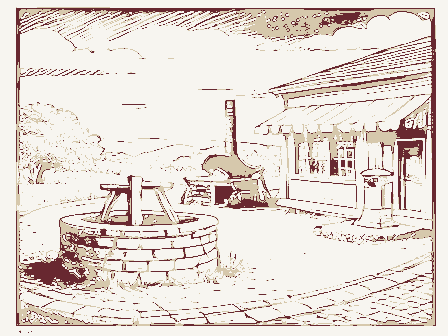
Shalersville Township
The complete chapter on this township from History of Portage County, Ohio, published 1885; 1927 Portage County High School Yearbook, published 1927. 4,075 words, covering 4 settlements. Source changes inside the text are labelled at the exact paragraph where the next book begins.
Contents
4 sectionsThe section headings the book prints inside this chapter. Each one jumps to where it begins.
The people it describes
1 namedEveryone the 1885 history stops to write about in this chapter. Each name opens the passage itself.
The modern record here
4 settlementsWhat the federal record holds for each settlement inside this township: wildfires and storm reports since the 1950s, mineral workings, and museum specimens collected nearby. These are counted within a few miles of each settlement, so neighbours share them and the columns are deliberately not added up. Every row links to the settlement's own page, where each figure is broken out.
| Settlement | Fires | Storm reports | Mines and quarries | Specimens |
|---|---|---|---|---|
| Evergreen Village | - | - | 23 | 1,162 |
| Freedom Dam | - | - | 27 | 1,087 |
| Pine Manor | - | - | 25 | 1,120 |
| Shalersville | - | 6 | 23 | 1,168 |
Settlements in this township
4 placesEvery populated place the Geographic Names Information System records inside this township's Census boundary. 1 of the 4 are named in the chapter; the rest were founded later or were never more than a post office.
The chapter
4,075 wordsReproduced complete and unedited from History of Portage County, Ohio, published 1885; 1927 Portage County High School Yearbook, published 1927. The text is machine-read from scans, so expect recognition errors: misspelled names, dropped words, and stray characters. Nothing has been corrected, because correcting a proper name invents one. The headings below are the books' own; source changes are labelled in place.
Shalersville Township
SHALERSVILLE at the drawing of the Connecticut Land Company fell to the lot of Gen. Nathaniel Shaler, of Middietown, Conn. , and from this fact the township at one time was called Middietown. He was the father of Charles Shaler, of Pittsburgh, and William D. Shaler, at one time a merchant of Ravenna. One of his daughters was the wife of Commodore McDonough, and it is said that after the victory of that naval hero on Lake Champlain, when the people of Middietown illuminated, Shaler refused to do so, he being a violent Federalist, until the enraged populace threatened to tear his house down, when the old Tory came to terms. The township is Town 4, Range 8.
In the spring of 1806 Joel Baker with his wife and one child started from Tolland County, Conn., in a wagon, and after a long and tiresome journey arrived on the spot where now is the center of Shalersville. The country at that time was an unbroken wilderness, and not the least sign of a clearing appeared, so when Baker got out of his wagon and looked around, it mast have been upon a scene calculated to daunt any but the most determined nature. He, however, went to work with a will and, fortunately, had a wife who was, indeed, a helpmeet to him, for when he dug a well, which was almost the first thing he did, his wife handled the windlass while he delved down in the depths. For the first few nights after his arrival the whole family slept in a large hollow log, but soon he reared a small cabin and made a clearing around it on Lot 46, 160 acres having been given him by Shaler to settle upon it. This cabin was located nearly opposite where the hotel now stands, and the well, we learn, is in good condition yet. Baker, some time previous to coming to the Reserve, had purchased Lot 33, and after spending two years at his first settlement, moved to this lot, where he opened up a farm, erected good buildings, and died in 1849. Those two first years were terribly lonesome ones to the sturdy pioneer and his wife, as no settler came in during that time. He had to go long distances for provisions, and the townships of Free- dom and Streetsboro were still as nature had formed them, they not being settled up for several years afterward. Mantua was beginning to till up, however, and he had some neighbors there, within two or three miles. Mrs. Baker is said to have been an extraordinary woman in points of endurance and resources, and with a patience that never wearied; just the brave wife for one of those grand old " builders without wage," who laid their foundations deep and strong, and made possible this marvellous occidental civilization.
In the year 1801 Simeon Crane, with his family, came to Canfield, Trumbull County, with an ox-team, a horse and a cow, making the journey in forty days. There he resided till 1808, when he, in company with two brothers, Belden and Calvin, came to Shalersville. Simeon was born in Saybrook, Conn., but the family were of "Welsh extraction, an ancestor having immigrated to America at an early day, whence sprung the entire Crane family, so numerous throughout the country. The three brothers built two log- houses during this year, then returned to Canfield, and in the spring of 1809 moved in for permanent settlement, and where their descendants live to this day, E. M. Crane being the leading representative of the family, and having the honor or good fortune to have been the first white male child born in the township. Simeon died September 14, 1846, and their first son. Squire Manly Crane, as he is better known, is a worthy scion of the original stbck.
In 1808 came Hezekiah Hine, a young man, from old Milford, Conn., who afterward married and became a leading citizen. He settled at the Center. In 1809 Daniel Keyes, from Connecticut, came and settled also at the Center. The family did not remain long, however. Daniel was the father of Asa D. Keyes, a lawyer, and agent for Gen. Shaler, and at the organization of the county was elected the first Prosecuting Attorney. Asa was a man of considerable natural talent and culture, but let the demon of intemperance get the better of him at times. Elisha Burroughs, who came in 1808, was in Stark's command and heard Stark's celebrated order.
In ISIO William Coolman and family came from Middletown, Conn. He became one of the Trustees at the organization of the township in 1812, and his son, William, Jr., was Sheriff in 1820-23, Eepresentative in the Legislature, Justice of the Peace, and for many years an editor. In this year there came Daniel Burroughs, with his family, and sons Asa K. and Greenhood, with their families, from Vermont, Joel Walter from Connecticut, and Benjamin Bradley. Moses Carpenter also came from Connecticut.
In 1811 Horace Burroughs with wife and family came from Vermont; Ephraim Brown, a son-in-law of Daniel Burroughs, and Daniel Hine and family from old Milford, Conn. Vine Welch also came in this year, and settled south of the Center.
In 1814 Silas Crocker, then a lad of fifteen years, having been born at Chelsea, Vt. , in 1799, came in with the Thompsons - Job Thompson, Sr. , and Benoni Thompson, and their families - with whom he had lived from his ninth year. The mother of young Crocker died when he was nine years old, and he being of poor parents was put out at that tender age to carve his fortune for himself, and well he has done it. He has held the office of Justice of the Peace for many years, and is now comparatively hale and hearty at the age of eighty-five.
Gen. David Mcintosh, a half brother of Paschal P. Mcintosh, of Mantua, started in life a poor boy, but fell into good hands on obtaining work with Judge Atwater, who sent him to school. His death occurred April 17, 1883; no man was more honored in his county than Gen. Mcintosh. He left a sum of money to be applied to furnishing flags forever to the county, as his patriotism was such that it amounted almost to devotion to the " starry banner. " He was a Major-General of Militia and represented his county in the Legislature.
Sylvester Beecher, also a poor boy, came from Connecticut at an early day, and worked for many years as a hired hand, chopping and clearing land. He became very enterprising, running a large ashery, and merchandising. Also owned considerable land, and was a stockholder in the bank at Eavenna. He was in the war of 1812, and was at the battle of the River Raisin. He died in 1855.
Th,e township was organized and an election held April 6, 1812, when the following officers were chosen: Trustees, William Coolman, Joel Walter, Simeon Crane; Clerk, Horace Burroughs; Overseers of the Poor, Daniel Burroughs, Daniel Keys; Fence Viewers, Samuel Munson, Benjamin Bradley; Supervisors, Daniel Burroughs, Abel Hine; Lister, Asa K. Burroughs; Treasurer, Belden Crane; Constable, Richard E. Gay. At an election held the following September Daniel Burroughs and Belden Crane were elected Justices of the Peace, but for the first two years there was scarcely any business, only one suit being entered, Greenhood Burroughs vs. Richard Gay, the Constable, and that official had to serve the notice upon himself. It is said that he took himself aside and gravely read the summons to appear before the magistrate. The suit was to recover the value of a cow bell that had been loaned and lost. The plaintiff did not recover. At the second Justices' election in 1815, Job Thompson and George Barnes were chosen. Barnes was not thought of in connection with the office when the candidates were nominated, he being an erratic sort of a fellow, living down in the southwest corner of the township, without a I'oad leading to his place. But the voters, not liking one of the regular candidates, threw their votes away, as they supposed, voting for Barnes, when lo! at the counting of the ballots, Barnes was found to be elected. Everybody was surprised, but Barnes, pocketing the joke, qualified and made a good Justice. Three cases were appealed from his decisions, but in every instance he was sustained by the higher court.
After the organization in 1814-15, some settlers came into the township, among whom were many prominent families: James Goodell and family, from Warwick, Mass. ; Isaac Kneeland from Colebrook, Conn., and John Hoskins, with a large family, from Colchester, Conn.
The first child born in the township was a daughter, Lucinda, in 1808, to Joel Baker, the first settler. She died in her seventeenth year. The first male child and the second birth was that of a son, E. M. Crane, to Simeon Crane, Jvine 14, 1810. Squire Crane, as stated elsewhere, is not only yet in the land of the living but good for many a year hence. He is a hale and hearty, active and vigorous gentleman of apparently sixty years, but he has the weight of seventy- four winters upon his broad shoulders. The first death was that of Edward Crane, aged seven, a son of Simeon Crane, September 23, 1809. The next death, and the first of an adult, was in 1812, a Mr. Deming, from Vermont, father-in-law of Asa K. Burroughs.
In 1810 an event occurred, and in the higher circles, so to speak, if there was any difference where all were upon the same footing. It was a wedding, and the high contracting parties were Mr. Hezekiah Hine and Miss Mary Atwater, of Mantua, a sister of the noted surveyor, large land owner, and afterward Judge of the Court of Common Pleas, Amzi Atwater. The occasion drew out all the beauty and fashion of those primitive times, and the knot was tied by Squire Elias Harmon, ministers in those days seeming not to have been employed for the interesting ceremony.
ship, having been employed by Stephen Mason to look iip a site for a sawmill, which he found on the Cuyahoga near the western line of the township. Muzzy was a man who had been highly educated, graduating at Yale College, and afterward studied for the ministry, but was either a little " oflf " of his mental balance, or bad a queer streak of drollery running through him accompanied by a penchant for machine poetry, which he would get off on all occasions. After he had framed his mill and got ready for operations in the fall, a freshet came and destroyed the dam, and his neighbors went over to see how the dam stood the rushing waters. They found Muzzy silently contemplating the devastation, and as they approached him he exclaimed, " God be praised, the Devil's raised, the world rolls round in water."
The damage being repaired, the mill was largely patronized, for timber could be had for the asking, and Mr. Mason, who was elected Sheriff in 1814, added a grist-mill to the property. After studying for the ministry Muzzy became pastor of a church in Worcester, Mass., but, true to his impulsive nature, fell in love with a girl he could not get, and fled for consolation to the wilds of the West, totally disappearing from his former connections for twenty-five years, when he turned up as a carpenter in Edinburg Township. Noah and Noble Rogers moved into Shalersville from Mantua in 1829, and established a tannery near the north line of the township. This ceased existence over forty years ago.
In 1810 Moses Carpenter came in from Connecticut and started a tannery half a mile west of the Center, where he had more business than he could do. It is said that he made an excellent quality of leather, having learned the trade thoroughly before he left the East. He was a singular, reticent man, and thoroughly honest in all his dealings. He lived entirely alone, and never talked of his former home. It was said that some infelicity, or wrong, in his household, had soured a naturally good and confiding husband; at any rate, he never returned to his family, which he had left in Connecticut, and died under the care of Trustees in 1826.
Vine Welch was the first blacksmith. He came in 1811 and settled south of the Center. He lived to an exceedingly advanced age, dying some time during the late war at the house of his son in Euclid, nearly touching his one hundredth year.
The first stock of goods was brought in and the first store was opened by Sylvester Beecher in 1816. Mr. Beecher also had a factory for the manufacture of pot and pearl ashes. In 1817 David Mcintosh cut a road through from Shalersville to Freedom, the country at that time being an unbroken forest.
In 1810 the population having grown to proportions sufficient to demand a school. Miss AVitter, of Aurora, opened one at the Center, about where the barn of Dr. Proctor now stands. It was a log building of small dimensions, but scholars were not numerous. It was built of unhewn logs, " with puncheon floor, slab seats, greased paper windows, etc.," in short, having all the conveniences usually to be found in schoolhouses of that period, yet, primitive as it was, the sons and daughters of such families as the Bakers, Cranes, Burroughs and Coolmaus received the foundations of their education. Another teacher that came afterward was Miss Sophia Coe. The condition of the schools at present is told in the following statistics: Revenue in 1884, $4,596; expenditures, $2,144; 8 schoolhouses valued at 85,110; average pay of teachers, S21; enrollment, 63 boys and 61 girls.
Shalersville Library Association was organized February 15, 1847, with Silas Cracker, President; E. M. Crane, Secretary; Samuel Ledyard, P. C. Bennett and A. V. Horr, Trustees, and John D. Ramsey, Treasurer.
During the early settlement there came occasionally one of those ever restless, never-tiring cii'cuit riders of the Methodist Church, and among the number were R. R. Roberts, afterward Bishop, John Waterman, Martin Retter and James McMahon. The Presbyterians, or Congregationalists, also had some early missionaries in this field, and Rev. John Seward, Rev. Timothy Hopkins and Rev. Mr. Hanford preached here. The First Congregational Church was organized in iSlS, with eight members, the male portion being Enoch Searle, Roswell Waldo and Isaac Kneeland, but they never had a set. tied pastor.
Disciples Church was organized under State law, September 20, 1850, with Silas H. Eldridge, Cyrus Haskins, Trustees, and Justin Hayes, Clerk.
In the war of 1812 the township filled its quota promptly. The ablebodied men had been so reduced by voluntary enlistments that when the draft was made in that portion of the town where a company had been raised, there was only one man liable to duty. Joel Baker was drawn and he hired a substitute; Asa K. Burroughs was a Captain. Amongst those who went into the service were William Coolman, Jr., Job Thompson, Jr., George Barnes, Hezekiah Hine, Lyman Hine, Daniel Burroughs, Jr., and Joel Baker, the last by proxy. Capt. Campbell's company, to which they belonged, was included in the surrender of Hull, and they were sent to Maiden and paroled.
At the breaking-out of the Rebelliou Shalersville rushed to the rescue of the Nation with a promptitude and zeal that placed her among the front ranks. During the war she sent 108 soldiers to the field, and thirteen of them laid down their lives in the contest for the right, while six others were disabled.
About 1815 Asa Burroughs went in search of his cows which, according to the custom, or necessities, of the times, had been turned loose in the woods. He went in the direction of Freedom, but somehow got turned around in his mind so effectually, that, although he had a pocket compass with him, he believed the instrument pointed just the opposite of what it ought to, and following this guide, mistaking the east for the west wandered along far into the night and the next morning he found himself at Garrettsville.
In 1812 Horace Burroughs was going homethrough the woods at about sunset, half a mile east of the Center, when out walked, in front of him, an immense bear, which seemed bent on disputing the path with Burroughs. The latter, however, swung a shovel he had in hand, but the bear still advanced, when Horace, thinking it a good "time for disappearing," backed out, keeping his eyes on Bruin, who did not follow. Getting arms and assistance Burroughs returned, but the bear, evidently suspecting foul play, scampered off into the forest.
Rattlesnakes were common, and numerous adventures and narrow escapes were related. Mrs. Goodell, the mother of the wife of Squire Crocker, was one day spinning at her wheel, when she heard an accompaniment to the buzzing noise of the machine, and listening close to the floor heard that peculiar z - ing, which, when once heard close to one's person in field or woods is never forgotten. His snakeship was routed out and killed; he measured six feet, two inches.
About 1825 Squire Crocker, while surveying in the southwest portion of the township, came across a pile of stones five or six feet high and about eight feet in diametei'. They were placed in order, and evidently brought some distance from where they were. What the purpose of them was and when they were placed there, is only a matter of conjecture. They may have been the work of Mound-Builders, but there are no other indications of that mysterious race having located in this county; yet, it is possible that in passing along - having lived both east and west of this point - they may have erected this pile as a temporary altar. The Indians never were guilty of doing as much work as the placing of those stones required, so we cannot blame them for this piece of mystery.
On the return of Jonas Goodell, who came to Shalersville from Vermont to locate lands, he reported "that he was homesick on account of it being so wet and muddy; but he found a small piece a leetel rollin. " This piece is now known as Goodell Hill, certainly one of the largest hills in the county.
There is a huge boulder lying in a field nearly opposite Squire Crane's place, that was originally about 20x30 feet and eight or ten feet in height. It lies perfectly isolated from any rock of its kind, and is one of those masses, or a portion of one, that were transported to this section in the glacial period, when this whole country, from the Atlantic Ocean far westward, was covered with slowly moving ice. This rock was first broken from its original bed in an upheaval by volcanic force, and then when the ice which had formed around it began to move southward it was carried onward, rolling slowly over and over until it became rounded and smooth; then when the thaw began, it slowly sank through the ice and remained where we now find it.
The township is well watered, the Cuyahoga River and its tributaries affording a plentiful supply in the northern and northwestern sections, while smaller streams traverse the township in various directions. The land is highly productive, the soil being peculiarly adapted to the potato, and many thousands of bushels of the finest in the world are produced annually. In the season of 1884 one field north of Shalei'sville Center contained forty acres of the best varietie of this essential article of food. Cheese, also, forms one of the staple products, and the township stands No. 3 in the quantity manufactured. Considerable grazing and raising of stock is done, while the usual farm crops are produced, some of the finest farms in the county being here. The County Infirmary is located in the southwest part of the town.
In the Center there are one general store, the postoflice, and two hotels, two physicians, a saw-mill, and one church building, used by both the Christian and Methodist denominations, neither of whom have any settled pastor. There are a number of good schools scattered throughout the township.
Source changes here: from 1927 Portage County High School Yearbook, by Portage County High School, published 1927; 668 words in this source stream.
Shalersville Township
School opened with a large enroilment. Mr. George Converse headed the teaching staff as Principal with Mrs. Edythe Gandee as Assistant Principal, Mrs. James Cola, Evelyn Peters, Mrs. Tom Gick and Miss Kennedy.
"he first event of the season was the annual Homecoming. This did not prove very successful as it rained ail day, but the sports were held about of twelve pupi.s. Because of the size and ability of the class, most anything they attempt to do a evecess, was the Senior Play, "An Oid Fashioned " n three set play which brought tears and laughter to a large audience. The cast was as toliow
Isabel Simpscott, the village bell adys Heritage Glorluna Perkins, us good as gold. Dorothy Hoskins Sukie Pindie, the Widder's mite....Elizabeth Varga John Underhill, the prodigal son. Elmer Ahrens Charley Underhill, the elder brother...... Marland Halstead Brother Jonah Quackenbush, a whited sepulehro Chester Muster Jeremiah Gosling ("Jerry"), a merry heart 2 Forrest Corbett Enoch Rone, an outcast and wanderer Kenneth Musgrove Quintus Todd, the county sheriff Arthur Stowe The first Lecture Course, "The Griswold Duo," was given November eighteenth to a large audience. 'The second number, we were entertained by "The Ciifford Foote Trio," which brought a large attendance and much enjoyment. The Third Number consisting of a school program, under the direction of our Music Supervisor, Miss Ruth Strahl, will be given in the early part of April.
G. N. Converse
We were sorry to loce two of our teachers this year. Mass Gladys Thompson, our Music Supervisor, resigned about the first of February. Her pace was tiled by Miss Ruth Strahl. Mrs. James Cola, the seventh and eighth grade teacher, left us about the same time. Mrs. Reidinger of Kent, Ohio, is now teaching in her place.
"he Literary Musical Contest was quite a success to our school, We entered an "Orator" and a Reader" at the County Literary Contest Although we were defeated there, we are ready to work hard and are bound to do better next year.
hel the medal awarded for that "The basketball reason opened, but not with the usual bound, as wo lost our first game, which was with Mantua Center. This only gave us more courage and we succeeded in winning most of our gamens, it was a happy time for the basketballers, wher Tournament time drew near and we found that both our girls and boys had oniy lost one scheduled game apiece, therefore letting both teams into the Tournament,
The girls preliminary game was at 8:30 with the Brimfield team, We were scared to death to play this team because they had defeated us in our schedule game. After much excitement and hard fighting to win, when at last the gun shot for the end of the game, Shaleraville cried for joy, for the reore was Brimfield 15; Shalersville 16. The final game for the girls was played against Charlestown, This game also ended a success to us, the score being Carlestown 10; Shalersville 29.
The cup which was given to the girls this year will never leave its resting place on the tecaher's desk, as our name js on the cup three times,
Our boys had an easy game in the preliminaries against Charlestown, but in the final game were defeated by Brimfleld 17 to 12, Although we did
So ends the school year of 1926-27 at Sbalers- The teachers and pupils have worked hard, and we feel that we have had a successful year In every phase of work.
We are going to the school of the world so wide, To learn, to work, and be brave, We are going away on the beautiful tide, Of life and worry and love. Written by Florence Halstead, Shalerev!lle School.
A Study In Alliteration
And I learn the little lesson of these lovely tinted blooms How their beauty brings a blessing and a charm; And I fain would be a flower in the dewy field at dawn Where harshness never lifts a hand to harm. R. T. H. S.
Provenance
Text from History of Portage County, Ohio, published 1885; 1927 Portage County High School Yearbook, published 1927, in the public domain in the United States and digitised by the Internet Archive. The settlements listed against this township are matched by point-in-polygon test of each Geographic Names Information System coordinate against the Census Bureau's county subdivision boundary, not by name.