 Block
Block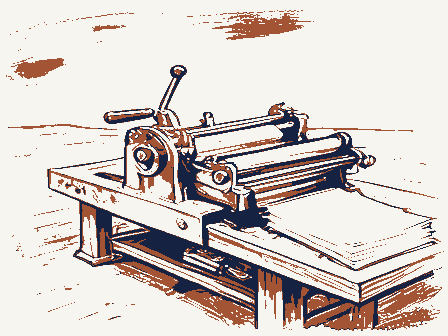
West Township (part 1 of 3)
Part 1 of 3 of the account of this township in History of Columbiana County, Ohio, published in 1879. 15,914 words, covering 7 settlements.
Contents
41 sectionsThe section headings the book prints inside this chapter, on this part. Each one jumps to where it begins.
- By Horace Mack
- Early Settlement
- Organization
- Villages And Hamlets New Alexander
- Bayard
- Mennonite Church
- Bible-Christians Church
- Methodist Church
- The Bible-Christians Church Society
- Disciples Church
- Society Of Friends
- Biographical Sketches John L. Hime
- John Walter
- Yellow Greek
- Wells Ville
- First Presbyterian Church
- The Methodist Episcopal Church Of Wellsville
- Methodist Protestant Church
- The Disciples Church Of Wellsville
- The Oak Ridge Presbyterian Church
- First United Presbyterian Church
- The Wells Yille Catholic Church
- Post-Office
- Manufacturing Industries
- The Wellsville Terra-Cotta Works Of George Jones
- The Wellsville Car-Siiops
- The Wellsville Rolling-Mills
- Early Industries
- Coal And Salt
- Railway Reading-Room
- The Valley Gas Company
- Water-Works
- Wellsville Chapter, No. 55
- Wellsville Council, No. 37 Iris Lodge, No. 125, I. 0. 0. F.
- Eire Company
- Henry Aten
- Formerly Belonging To Columbiana
- Beaver
- Civil List
- Mining And Manufacturing Interests
- North Lima
Parts
3 pagesThe source prints this as one continuous account. It is split here so no single page grows too heavy to load; the text runs straight on across the parts and nothing is omitted.
The people it describes
13 namedEveryone the 1879 history stops to write about in this chapter. Each name opens the passage itself.
The modern record here
7 settlementsWhat the federal record holds for each settlement inside this township: wildfires and storm reports since the 1950s, mineral workings, and museum specimens collected nearby. These are counted within a few miles of each settlement, so neighbours share them and the columns are deliberately not added up. Every row links to the settlement's own page, where each figure is broken out.
| Settlement | Fires | Storm reports | Mines and quarries | Specimens |
|---|---|---|---|---|
| Bayard | 7 | 5 | - | 228 |
| Chambersburg | 10 | 1 | - | 318 |
| East Rochester | 10 | 2 | - | 232 |
| Lynchburg | 10 | - | - | 264 |
| Moultrie | 8 | - | - | 258 |
| New Alexander | 11 | - | - | 307 |
| Town And Country Park Estates | 6 | - | - | 227 |
Settlements in this township
7 placesEvery populated place the Geographic Names Information System records inside this township's Census boundary. 6 of the 7 are named in the chapter; the rest were founded later or were never more than a post office.
The chapter
15,914 wordsReproduced complete and unedited. The text is machine-read from a scan of the 1879 printing, so expect the errors a machine makes reading a century-old page: misspelled names, dropped words, stray characters. Nothing has been corrected, because correcting a proper name invents one. The headings below are the book's own.
By Horace Mack
The township of West, No. 16 north, range 5 east, is hounded as follows: north, by Knox township; east, by Hanover township ; south, by Carroll County ; and west, by Stark County. Among the natural curiosities of the township is the watershed which separates the waters of the Tuscarawas and Mahoning Rivers. On the farm of James Reed are several springs, from the principal of which the family obtain their supply of water. It is located in the cellar of his dwelling. Thence the water takes an easterly course for nearly half a mile to what is known as " Gimlet Hill," near Chambersburg. At the foot of the hill the water separates, about one-half of its volume coursing southward, joining the Big Sandy, thence the Tuscarawas, and eventually reaching the Ohio River through Muskingum at Marietta. The other branch flows northeasterly through North Georgetown, Alliance, Warren, Trumbull County; thence via Youngstown to the Ohio, near Beaver, Pa.
The whole township is well drained by the Mahoning River and its numerous branches on the north, the Big Sandy and tributaries of the Tuscarawas on the west and south. The surface of the land is undulating, and in some localities quite hilly, but not sufficiently so to be termed mountainous. The greatest elevation is attained in the vicinity of Chambersburg, on sections 9, 10, 15, and 16.
Early Settlement
Of tbe pioneer families of West township, that of Michael Sanor was the first in the northern part. He was a native of Westmoreland Co., Pa., and came to West early in the spring of 1801. In his family were eleven children, - Julia, who married Daniel Mathias; Catharine, who married Jacob Lower; Jacob; Mary, who married John Sentz ; Michael; Susan, who married Christian Whiteleather; Elizabeth, who became the wife of John Wolff; George; William; Sarah, who married Adam Hahn; and John. Michael Sanor the elder was a Revolutionary soldier, and served under Gen. Washington.
John Ruff, also a native of Westmoreland Co., Pa., purchased lands in section 3, and settled there in the spring of 1864, soon after the arrival of the Sanor family. The children were thirteen in number, nine of whom came with the family. They were Anthony, Christopher, Sarah, Jacob, Isabella, John, Polly, Jonas, and Daniel. Those born since the settlement in West were Samuel, Matilda, Nancy, and David.
Another Westmoreland County family was that of Henry King, who settled on section 4 in 1804. II is children were David; William; Christina, who married Abner Shoetz; Henry; Elizabeth, who married John Sanor; and Samuel.
David Smith entered and settled on section 11 in 1804. In his family were ten children, viz. : Susan, who married Frederick Zepernick; Barbara, who married George Frederick ; Nancy ; Catharine, who married George Reamer ; John ; David ; Jacob ; Mary, who married George Catt ; Hettie, who married John Snyder ; and Betsey, who married Henry Thomas.
On the 5th day of May, 1805, John Hahn, Jr., a native of Maryland, with two hired men, John Roger and Ludwick Bates, settled on section 8. Mr. Hahn brought a wife, but no children, to the township. They have had born to them since that time fourteen sons and daughters, most of whom died in infancy. John, the only surviving child of the family, lives at Moultrie, in West township.
In 1806, Isaac Davis, a Virginian, came to West with a wife and four children, - Isaac, Jr., Mary, Eleanor, and David. Isaac, Jr., married Edith Richards; Mary married Thos. Emmons ; Eleanor married Gilbert Blanchon ; David married Rachel John. Eleanor (Davis) Blanchon lives in Iowa, aged ninety-two years, and is the only child of Isaac Davis, the pioneer, now living. Rachel, the widow of David, still lives in West, aged eighty-eight years.
In 1808 three families settled in West. These pioneers were William Harrison, John Freed, and John Hahn, Sr., father of John Hahn, Jr., above mentioned.
William Harrison came from Monmouth Co., N. J., and located in Centre township in 1804, where he remained until 1808, when he removed to West, and settled on section 13. In his family were nine children, - Elizabeth, Rachel, Richard, Matilda and Edilda (twins), Achsa, and Mariam, all of whom came to West with their parents, and Susanna and William Henry, who were born in the township.
Richard and William Henry Harrison both live in West. The children of Richard are Isaac, Edilda, Thomas, Ann, William, Edward, Rachel, John, and Joseph. The children of William Henry are Samantha, who married Milton Bahner; John, Benjamin F., Mary Ann, who married John Nagle; William 1)., Janet, who married William Elton; Frances E., who became the wife of David Fultze ; Susanna, who became Mrs. George Reamer; Sarah E., Jeremiah, Samuel Grant, and one who died in infancy.
John Freed was a native of Fayette Co., l*a., and came to West township in 1808, with a family of children, as follows: Abram, Henry, John, Barbara, who married Joseph Messimore, Peter, Nancy, who married Jacob Freed, Betsey, who married Jacob Smith, and Jacob.
John Hahn, Sr., a native of Maryland, settled in West township in 1808, bringing three children, - Caleb, Eve, who became the wife of Samuel lliner, and Elizabeth.
from that State to Fayette Co., Pa., at an early day. In 1811, Mr. Coulson, with a family of eight children, emigrated from Fayette County to Columbiana Co., Ohio, and settled in West township. The children were Uriah, Jehu, Jr., David, Jabez, Rachel, who married Benjamin Young, Jesse, Amos, Harvey, and Catharine, who married Samuel Smith. The last named three were step-children. Jabez Coulson is the only child of Jehu Coulson now living in the township. His age is eighty-two years. Jabez Coulson's children were Rachel, who became the wife of Jesse Bowersock, Joseph, Benjamin, Pine, who died in 1839, and John.
Nathan Pine, John Messimore, and Philip Wolff settled in West township in 1812. Nathan Pine was a native of Chester Co., Pa., and settled on lands in section 12. Four children came with the family, - Garrett, Isaac, who died in 1861, Lydia, who died in 1843, and Enos. There have been born, since the settlement in West, Lewis and Nathan. Of this family of children, Nathan alone now lives in the township. He married Hannah, daughter of David Davis.
John Messimore came to West from York Co., Pa., bringing a wife and six children, viz. : John, Joseph, Jacob, Henry, George, and Catharine. Henry, the fourth and only son living, still resides in the township, and is the father of four children, - Elizabeth, who married Simon Bernard; Julia, who married Abram Wyman and died in 1868; Lavinia, who married Ephraim Crowl ; and Jesse, who married Annie Gamble.
Philip Wolff entered lands purchased from the government on section 13. He raised a family of several sons and daughters, all of whom were natives of the township.
Philip Brenner, a former resident of Virginia, near Harper's Ferry, settled in West in 1813, bringing with him a family of children, viz. : Michael, Philip, Jr., Jacob, Polly, Peggy, John, and Samuel. Of these Michael and John live with their families in the township.
Isaac Willis, the second sou of Joseph Willis, came to West township in 1819. In the latter part of the same year he went to Carroll Co., Ohio., where he died soon after his arrival. By his first wife he had five and by his second ten children. John Willis, his son, is the oldest living representative of the family in Columbiana County. John Willis married, first, Cynthia Shepherd, by whom he had one child. His second wife was Mary Crago, by whom he had six children. His third wile was Elizabeth Keliey, who bore him ten children, all of whom are now living.
Among the pioneers of the township, whose settlement dates prior to 1820, there should be mentioned the following names: Andrew Barnes, Jacob Lower,. Henry Betts, John Zepernick, Henry Barnes, Jacob Redmond, John Foulks, whose father built the first cabin on the present site of New Lisbon, and possibly others whose names have been forgotten, or who have long since removed from the township, concerning whom no reliable information or accurate date of settlement or removal can be obtained.
Jacob Koffel, a native of Maryland, settled in West in 1823. In the family were several children, - George, John, Jonathan, Samuel, Sally, who married Henry Messimore; Barbara, who married Abram Roose ; and Betsey, who married Jacob Lozier.
Joseph Summers settled in West in 1825. His children were Solomon, Daniel, Hannah, who became the wife of Eli S. Hoover; John, and Annie, who married Simon Sturkey. Of these Solomon, Daniel, and John Summers still live in the township.
Joseph Willis, and Joseph, Jr., his son, settled in West in 1822. John Clark, with a family, settled on section 9 in 1831. Nicholas Kurtz settled in Centre township in 1808, where he lived until 1832. He then removed to West. He married Margaret Wiley, and brought to Columbiana County one child, David, who died in 1874. The children born since the settlement were Michael, who died in 1832 ; Nancy, who married David Crowl, and died in 1 865 ; Jacob, now living in Illinois; Thomas; Susanna, who died in 1842; Daniel, who died in 1875; John, who died in 1849; Charles and William, both of whom are in the Western States.
Taylor Wooley, of Chester Co., Pa., came to West in the spring of 1833 with his wife and two children, Rachel, who married Oliver Taylor, and George.
In the latter part of 1833, Thomas Hawkins, of Washington Co., Pa., located in West. He raised a family of ten children, four of whom are now living. Two of these children, George, and Mary Ann Smith, wife of David Smith, still live in the township. Joseph II. Taylor, with his wife and one child, came to West in 1834. Mr. Taylor still lives at Rochester, and is seventy-five years of age.
The only representative of New York State among the early settlers of West township wms Lewis McCoy, a former resident of Dutchess County. He came to the township in 1836. Mr. McCoy married Elizabeth Essick, daughter of Jacob Essick, of West township, by whom he had five children, - Hannah, who married Henry Smith, and died in 1877 ; Jacob E., Mordecai 0., William L., and Samuel B.
Organization
West was added to the list of townships of Columbiana County in 1816. The clerk's minute-book of proceedings shows the record of elections only since 1823. The records prior to this time were made and kept on loose pieces of paper, which have been lost or destroyed. At an election held April 7, 1823, Jacob Ruff, John Sanor, and Jacob Smith were judges; David and William King, clerks. The trustees elected were Jacob Smith, Jacob Sanor, and Daniel Evans; lister of property, William King. Since 1823 the clerks and treasurers have been as follows:
Villages And Hamlets New Alexander
Probably the oldest hamlet in West township is the little village of New Alexander. No positive record of its platting exists, but it must have been laid out about the year 1812. Originally, it comprised twenty acres of land, owned by David Smith, a pioneer of the township. A hotel was built there in 1818 and run by John Ritz. The sign of the Black Bear is still in the memory of some of the older inhabitants. John Ritz died about the year 1840. New Alexander was on the old stage-line road, and a haltingplace of considerable note in its early days. The place has about fifty houses and a population of about 200.
Chambersburg was originally platted and laid out on the 20th day of December, 1828, under the proprietorship of Michael Coxsen, David Myers, George Ball, and William McMillon. As laid out it comprised the southeast quarter of section 9 and the southwest quarter of section 10. The map or plat was recorded Dec. 22, 1828. In June, 1842, the village plat was enlarged by including lands of Jonathan D. Koffel.
Chambersburg is situated about three miles west from New Alexander, and is on the old stage-road of fifty years ago. An old hotel stood on the site of the village before it was laid out. It was kept by Samuel Miller until burned, about 1830. Mr. Koffel then built and ran a hotel at the village. At present Chambersburg has a tavern, store, and blacksmith-shop. Its population is about 100.
The village of Rochester, before it was formally laid out, was a post-office station known as " Emmons Cross-Roads." Jacob St. Clair was postmaster there as early as 1828 or 1829. On the 25th of December, 1834, J. G. Williard, surveyor of Columbiana County, platted the original village of Rochester, under the proprietorship of Thomas Emmons and Isaac Davis. An addition was made April 20, 1854, under the direction of George Sloan, who made a further addition April 19, 1862. The post-office and station at this place, since its laying out, has been known as " East Rochester," to distinguish it from another place of the same name. The village is known as " Rochester," although it is also frequently designated East Rochester. The first store was kept by Jacob St. Clair, when the village was known as " Emmons Cross-Roads." It has but one general store at present. Joseph Coulson is postmaster and stationagent.
Lynchburg owes its existence to the construction of the Sandy and Beaver Canal. It is a namesake of the city of Lynchburg, Va. Eli Wickersham and Amos Preston were the original landholders, under whose direction the village was laid out. The first plat was made Dec. 4, 1834. An addition was made Dec. 26th of the same year by Amos Preston, William Hall, and Philip Wickersham. From the time of the abandonment of the canal Lynchburg dates its decline. On the 6th day of May, 1845, upon the petition of Owen Stackhouse, the Court of Common Pleas of Columbiana County ordered that forty-six lots, then within the village limits, be vacated. At present it has but little more to boast than a name. The village has a population of about 50.
The hamlet of Moultrie was laid out in sections 7 and 8, Feb. 7, 1853. The survey was made in September, 1851. It comprised twenty-four lots, each 60 by 120 feet in size. John Foulks was proprietor of the lands; the survey was made by J. G. Williard. The village is located on the line of the Cleveland and Pittsburgh Railroad, to the erection of which it is indebted for its being. A store, mill, blacksmith- and wagon-shop comprise the business industries of the place. Its population is about 75.
Bayard
The village of Bayard is situate at the junction of the Cleveland and Pittsburgh with the Tuscarawas Branch Railroad. It was laid out and surveyed in April, 1852, under the direction of Cyrus Prentiss and James Farmer, who purchased the lands for the purpose. The village has two hotels, - the " Valley House," built about 1861, by John B. Milner, and now kept by John H. Huth, and the "St. Charles Hotel," built about 1867, by James M. Leith, and now conducted by Charles Blythe. Although Bayard has no manufacturing interests within its platted limits, it is a place of considerable importance as a post-office and a railroad transfer station. Alfred Jones is postmaster and station- agent. The village has a population of about 125.
West township has nine church societies, some of which held informal meetings prior to 1820, yet there is found but one church-building erected before that time. This was the old log church and school-house built for all public purposes in the year 1810 at New Alexander. This old pioneer building was torn down in 1840. The
The Plains Disciples church, so called, about a mile southwest from Bayard, was built about 1830. Its location in that part of the township known as "the Plains" gave it this distinguishing title. The building was removed about 1845.
Meetings of the Methodist, Presbyterian, Disciples, Lutheran, and other societies were held at dilferent places and at irregular intervals, since which church societies have been formed, but no written or accurate record exists from which any reliable account of their organization can be obtained.
Mennonite Church
This society dates its organization from about the year 1840, but had no place of worship until 1858. The church building is a small wooden structure on section 9. The society is small, having but about 15 members.
Bible-Christians Church
The society of the Bible-Christians Church at New Alexander was organized about 1840 by a few persons then living in the vicinity of that village. The churchedifice was erected near the site of the old church and school-house built in 1810. Among the early pastors of the society were Revs. Robert Hawkins and John Secbrist.
This church was built and named in honor of John Hime, the donor of the land upon which it was erected. The premises were deeded to three trustees as representatives of the Presbyterian, Lutheran, and German Reformed societies, to be used by them in common. The first church was erected in 1842, but not sufficiently large to accommodate the growing societies. In 1873 the edifice was rebuilt. In connection with the church is a cemetery, which was laid out about the time the building was erected.
Methodist Church
The Methodist Episcopal society at Rochester was organized in 1851. The early meetings were held in the old school-house in district No. 8. Among the early members of the society were John De Ford, John Hunter, David Bashaw, and Benjamin Haldeman. John De Ford was class-leader. This society continued about ten years, and then became extinct. In 1875 the new church-edifice, and the only one ever erected at Rochester, was built, and the society reorganized with Rev. Charles B. Henthorn as pastor.
The Bible-Christians Church Society
This society is practically a branch of the Bible-Christians Church, with a slight modification in the name to distinguish it from the mother-church.. This church society, numbering about forty persons, was organized in 1876, and holds its meetings in the old school-house near Rochester, that building having been fitted up for this purpose.
Disciples Church
prior to that time. Their early meetings were held informally, and no record of them was kept. The society at present numbers about 60 persons.
Society Of Friends
This society still exists in West, although it has no church-edifice in the township. A greater part of its members worship in the adjoining townships. The number of members of the Society of Friends in West is about 60.
The oldest cemetery in West is the Friends' buryingground, in the south part of the township. It derives its name from the Society of Friends, by whom it was platted and laid out about 1815, although it has never been held for the exclusive use of that society. Nathan Pine, Sr., was buried there in the autumn of 1816.
The New Alexander Cemetery was laid out in 1816, at about the same time that West was made a township. David Smith, a pioneer, donated the land for this purpose. The cemetery is about two acres in extent.
The Plains Cemetery or burying-ground derives its name from its location on what is known as " the Plains," southwest of Bayard. It was laid out about the same time that the Plains church was erected, 1830.
The Hime's Church Cemetery was platted at the time of the erection of the church-edifice. The land was donated by John Hime for the purpose. John Hahn was buried there in 1842. This was the first interment.
Taylor Wooley reserved a quarter of an acre of land on his farm near Rochester for the purpose of a buryingground. It was called the Wooley Burying-ground, and intended to be used for the family interments. It was laid out in 1854. Mr. Wooley was the first person buried there. This cemetery has not been kept private, and many persons not members of the family have been interred there.
One of the first schools in West township was located on section 35, in 1811, or before. In 1812, Nathan Pine, the pioneer, taught the school. It was at the same time used for church purposes. In the Sanor neighborhood, so called, was a log school-house in 1816. The township school districts have been frequently changed since their original division. The greatest number at any one time was fourteen. The present number is nine. Each district comprises four square miles of land, so joined as to form a square. The school-house is located as nearly as may be in the geographical centre of each square. The buildings themselves are, with but one or two exceptions, substantial structures, and especially adapted to the use intended. The fund derived from section 16 has been devoted to the improvement and enlargement of the buildings and property. The annual expense of maintenance is about $3000. Nearly $1000 of this amount is received from the State and the revenue derived from section 16.
drainage offer inducements to stock-growing that but few of the other townships of the county can approach. The water-privileges have also led to the erection of several saw- and grist-mills. The Davis mill, so called, north of Rochester, was built about 1820, by David Davis, son of Isaac Davis, the pioneer. This is one of the best-appointed saw- and grist-mills in Columbiana County. Mr. Davis for many years supplied the people of West and adjoining townships with flour and plaster made at the mill. The surplus over the amount needed for home consumption was sent to Cleveland, and there found a market. The property after many years passed into the hands of Baxter & Marshall. In 1878, Henry Wilhelm and Owen Stackhouse became proprietors of the mill.
Milbouru's saw-mill, on section 9, was built in 1831, by Joseph Milbourn and Jacob Thomas. In 1878 the mill was rebuilt, but still retains its original name of " Milbourn's Mill." The present owners are Kelly & Albright.
The tannery at Chambersburg was built about 1843, by J. D. Kofl'el. The changes in its ownership have been frequent. At present it is owned by Peter Cline. Snyder's mill, so called, was built on section 17 in 1845, by Jacob Snyder. It is now owned and operated by Messrs. Coldsnow & Miller, of West township.
Biographical Sketches John L. Hime
was born Oct. 4, 1823, in Guilford township, Franklin Co., Pa. ; assisted his father (who was a blacksmith) at intervals in and about the shop from a very early age until in his seventeenth year. In the year 1840, the family, in company with those of three of his uncles, emigrated to Ohio. John Hime (the father) purchased 72 acres of what was then commonly called Hahn's section (section 8), in West township, Columbiana Co., where the subject of this sketch assisted in clearing up the farm, going to the district school during the winter term. When in his twentieth year, at the urgent request and solicitation of his father, but against his own inclination and desire, he went to Andrew Deppen, of New Franklin, Stark Co., to learn the trade of saddle- and harness-making ; he served two years and nine months for the sum of sixty dollars, washing, mending, and two weeks free each harvest. After learning his trade he taught school two terms of three months each in Paris township, Stark Co., and one term of four and onehalf months in West township, Columbiana Co.
Married Judith Crisinger, Oct. 20, 1849. Of this union were born two children, viz. : Mary E. and Anna S. Mary E. is married to a Mr. Burger. In 1849, John L. Hime located in New Chambersburg, and engaged in the saddle and harness business until the spring of 1864, when he moved on the northwest quarter of section 15, having purchased it two years previous of George Messimore. lias been postmaster at New Chambersburg from September,
1853, to April, 1864 ; has held the office of township treasurer five years, and clerk of the township two years. In politics is a Republican. The father of Mrs. Hime (John Crisinger) was born Jan. 8, 1806, in Somerset Co., Pa. Within a year after his birth his father moved to Columbiana Co., Ohiu, and settled near Dungannon, on section 35, in Hanover township. John Crisinger resided here with his father until 1840, when he purchased one hundred acres of land in the northwest part of section 33, in Knox township, Columbiana Co., and resided there until 1873 ; he then sold his farm and purchased a house and lot in Moultrie, where he died of paralysis, August, 1874, in the sixtyninth year of his age. During his residence in Knox township he held the offices of township trustee and township treasurer. In the early part of his life he united with the Lutheran church ; in later life he joined the Presbyterian. Politically a Democrat. In 1826 he married Salome Lindesmith, who is yet living. Had seven children, - four sons and three daughters, - two sons and three daughters yet living.
The father of Mr. Hime (John Hime) was born in Northumberland Co., Pa., Oct. 24, 1794, and although his father was a school-teacher, the son was in school only four weeks, and that in a German school, - the German language being used exclusively in that neighborhood until within the last fifty years. John Hime worked on his father's farm, which was poor and rocky, until he was apprenticed to a blacksmith. After working at his trade four or five years he took to tramping, with a view of seeing more of the world, and settled in Franklin Co., Pa., where he subsequently married, and bought five acres of land and a house for nine hundred dollars. At the time of purchasing he had not one dollar to pay for his property, yet he managed to pay for it and save some money besides. Worked at blacksmithing for twenty-six years. Married three times, - first wife a Miss Burkholder, who died shortly after marriage ; second wife Catharine Lehman, who died in 1834, the mother of six children, two of whom survive, viz.: J. L. Hime and Mary Hahn ; third wife, Martha Burkholder, who died in 1854, the mother of five children, one only living at this time, viz. : Elizabeth Knight. John Himes died of paralysis in November, 1870, in the seventy-seventh year of his age. He was in politics a Democrat ; iu religion a Lutheran.
John Walter
Jacob Walter was married to Susannah, daughter of Jacob Rumble, in 1810 ; came from Pennsylvania about 1826, and settled in New Lisbon, Columbiana Co. ; he afterwards removed to Jay Co., Ind. Jacob Walter's family consisted of John (who inserts this sketch), Henry, Elizabeth, Peter, David, William, Catharine, Mary, Daniel, Washington, and Sarah. Of this large family all are living.
are iu Jay Co., Ind. Jacob Walter is of German descent. John Walter married Rebecca Willet, Feb. 1, 1835. By this union were born four children, viz. : Mary Ann, Benezette, Harriet, and Elizabeth. All living except Elizabeth, who died in 1871.
Mrs. Rebecca Walter died April 23, 1844. John Walter married for his second wife Margaret, daughter of Jacob and Elizabeth Essick, Nov. 14, 1844. Their children were Sarah, Susan, John, William, Maria, Margaret, and Ella, all living. All married except two.
John Walter has held the office of assessor and township trustee in the township in which he resides. He is a member of the Disciples church, and for many years has maintained his Christian profession with uniform consistency.
In politics he is a steadfast and earnest Republican. John Walter remained at home with his father until he was twenty-two, working on the farm, and received during that time a common-school education. His first purchase was a lot in New Lisbon, Columbiana Co., where he built a house and lived until 1841. He then removed to West township, where he purchased a farm of eighty acres of land ; to this he has added from time to time, until he now has a beautiful farm of one hundred and eighty-eight acres.
John Walter has spent the greater part of his life as a farmer ; for four or five years he worked at the weaving business. He is an industrious and economical farmer, fair and honest in his dealings with others, and one of whom it can be said he is a good citizen and neighbor.
Yellow Greek
The township of Yellow Creek, lying partly upon the Ohio River, where that stream describes its great northerly bend, occupies range 2, is known as township 9, and contains nineteen full sections and four fractional sections, the latter lying upon the river.
The boundaries are, Madison township on the north, Jefferson County on the south, Liverpool township and the Ohio River on the east, and Washington township and Jefferson County on the west.
Except upon the river, the surface of the township is hilly and uneven, but the soil upon the highlands is fruitful, and richly-yielding farms are numerous. The interior streams are Big Yellow Creek and Little Yellow Creek, the former of which flows across the southwest corner, while the latter, a good mill-stream, crosses from northwest southeasterly and empties into the Ohio at Wellsville.
The Cleveland and Pittsburgh Railroad, following the river's course, touches at Wellsville, and emerges at the south, to re-enter the township in the southwest, where it passes diagonally across.
Coal, iron-ore, fire-clay, water-lime, white sandstone, and flag- or building-stone are found in the township, and in many instances profitably utilized.
In this region Nature has been profusely lavish in scattering the fruits of her most skillful handiwork, and on the hills and valleys which adorn the prospect the eye of the traveler may, in the pleasant seasons of the year, rest without wearying.
The land now occupied by tbe township of Yellow Creek was surveyed under government authority, together with adjoining tracts, by one Robert Johnston shortly previous to 1788. Johnston was to have $6 per day for his services, and at a government sale of Ohio lands, held in New York in 1788, he took some of the lands in payment of his account, which amounted to $600. He received about thirty
In 1795, James Clarke, of Washington Co., Pa., purchased of Johnston, at $6 per acre, 304 acres, upon which the village of Wellsville is now located.
About this time Richard Vaughn and his son-in-law, George Clarke, "squatted" upon that part of James Clarke's purchase known as " the bottom," and put up the first log cabin built in the township (on what is now Sugar Street). James Clarke, finding himself unable to meet the payments on his land-purchase, transferred it to his son-in-law, William Wells, in 1796. Mr. Wells lived in Washington Co., Pa., and in 1797 moved with his family to his new lands in Ohio.
James Clarke retained about one-half of his original purchase until 1798, when he exchanged it with Mr. Wells for adjacent land which the latter had previously purchased. Before that event Clarke built a shingle-roof log house on what is the middle of Third Street, near its junction with Water, that house being the first of its kind built in the township. His first log cabin was the one built by Richard Vaughn on "the bottom" in 1795, and which Vaughn vacated when Clarke bought the land. Mr. Clarke was chosen to the Legislature in 1809, and continued to reside in the township until his death, which took place while he was visiting friends in Eldersville, W. Va., at which time he had reached his one hundred and fourth year.
Before Mr. Wells took possession several persons besides Vaughn and George Clarke " squatted" upon James Clarke's land, among them being one James Watson, who raised a crop of corn, and one George Hill, who was the father of eighteen children. Hill located upon a small tract near where the car-shops of the Cincinnati and Pittsburgh Railroad Company are, but neither he nor Watson settled, since they - as well as some others, whose names are not attainable - simply passed the days upon the land in tilling it, and at night
This block-house stood upon the site now occupied by the Arbuckle mansion, opposite Wellsville, and was one of the necessities, during and even after the Indian campaign which closed in 1795, to the protection of settlers against the approach of savages.
Mr. Wells entered with a will upon the improvement of his lands, and July 15, 1797, received a commission as justice of the peace, signed by " Arthur St. Clair, governor and commander-in-chief of the territory northwest of the Ohio," his jurisdiction extending from the Muskingum on the west to Lake Erie on the north. He lived for years in a log house that stood in Wellsville, near the residence now occupied by John Burnet, corner of Sugar and Seventh Streets. Shortly after Mr. Wells' occupation, settlements were made by Adam Hickman, on the farm now occupied by the widow of J. A. McBane, Robert Doyce, adjoining Hickman, Alex. McDonald, on the farm now occupied by John McDonald, Thomas Swearingen, near the present carshops, Dawson Swearingen, where Spring Hiil Cemetery at Wellsville now is, and Robert Dobbins, upon the place now known as the Beane farm, and occupied by Richard Beane.
Dobbins, who came from Beaver Co., Pa., was a machinist by trade, and directly after settling in Yellow Creek became a Methodist class-leader and exhorter, and shortly afterwards, as a Methodist preacher, rode the " circuit," upon which he remained until he reached his ninety-second year.
The next settlements were made on the hills west of the river by Samuel Flowers, Daniel Maylone, Robert Strain, - - HoOten, and his son James. Near Yellow Creek the settlers were John Scott, " Fighting Bill Wells," John Parsons, Bassett, and Knapp, the most of whom were salt-boilers. Knapp was a powerfully-built fellow, and when he first located, being forced into a fight with a person high in repute as a bruiser, he acquired a high standard of citizenship by completely crushing his opponent, and became thereafter much noted as a great fighter. In those days muscle commanded respect, and occasionally frolics, followed by a general knock-down fight, while they only briefly disturbed the harmony of the community of saltboilers, called for the display of pugilistic abilities of no mean order, and a consequent high regard for men who could hit hardest. Salt-boiling on Yellow Creek was, in 1812, quite an industry, and in that year as many as twenty wells were sunk there, but more profitable discoveries elsewhere ended the business after a brief existence.
Jacob Neisley, of Virginia, was among the early purchasers of land on Yellow Creek. He bought a tract in 1798 and gave it to his son, Jacob, who became a settler, although the elder Neisley always remained a citizen of Virginia. Nathaniel Meyers settled on Yellow Creek in subsequently owned by his son Isaac. About that time Robert Martin became a settler upon a farm bought by Richard Vaughn, after the latter's retirement from the land owned by James Clarke.
About 1800 a few people came over to America from the Highlands of Scotland, and made settlements upon the tract now known as the Scotch settlement, covering a tract about ten miles in length and from three to five miles in width. The major portion of this tract is in Madison township, and a small part in Yellow Creek. Upon the portion in Yellow Creek the early settlers were Andrew McPherson (who lived to be ninety-nine), Alexander McBane, and one McLean, known as " the Prophet." McLean considered himself called to preach to all mankind the doctrine of the Covenanters, and by the exercise of his energies in that direction he managed to divide the members of the Scotch settlement upon religious questions, and for a time the Covenanters and Presbyterians were stirred by dissensions through the efforts of Prophet McLean, the Presbyterians having the benefit of the religious teachings of the Rev. Mr. Hughes.
Andrew Smith, who was a justice of the peace, lived on the line between Yellow Creek and Madison, and was a man of much prominence. He was also a school-teacher, and taught school in a log school-house on Little Yellow Creek.
" Big Billy McIntosh," who was an early settler, was famous as a fighter, and of him it is told that, in a fit of resentful fury for some fancied injury, he armed himself with a fence rail, went into West Beaver, and routed the entire community, whose members fled before the approaching vengeance of Billy's fence rail like chaff before the wind.
Daniel Swearingen purchased considerable land in the township, but never settled. He gave a tract to each of his sons, and of their descendants the only one now living in Yellow Creek is George, his grandson.
Abel Geer, an early settler, was known as " the crop-eared Yankee." He lost one of his ears in Connecticut under the law of that State requiring a man's ear as the penalty for certain misdeeds, and it is related of him that, being in a store in Ohio one day, he asked the storekeeper how much he would take for tobacco enough to reach " from ear to ear." The merchant thought ten cents would be about fair, whereupon Geer exclaimed, " Here's my right ear" (pointing to it), " and my left is nailed to a post in Connecticut ; now measure your tobacco." How the merchant got out of the bargain, tradition fails to explain.
Yellow Creek township was organized in 1805, in which year the tax levy was $57.60. The territory originally set apart to the township embraced, besides the tract now within the township limits, a row of sections on the south, which, in 1832, upon the erection of Carroll County, were apportioned to Jefferson County, to compensate the latter for the loss of territory set off from it to Carroll County.
The early and subsequent township records are lost, and the list of persons who have served the township as trustees, treasurers, and clerks includes, therefore, only those who have acted from 1815 to 1835, and from 1856 to 1879, as follows :
Wells Ville
It was here that the jirst settlers in the township located, and here William Wells bought the tract upon which the village now rests. Mr. Wells owned 304 acres, which reached from where the Cleveland and Pittsburgh Railroad car-shops now are to the mouth of Little Yellow Creek, but did not lay out the town until 1820, when he named it Wellsville ; and, making sale of a number of building-lots, upon which several substantial dwellings were erected soon afterwards, the outlook for future prosperity was promising.
Mr. Wells, besides serving as justice of the peace, was also a judge of the county court at Steubenville until 1803. He was devoted chiefly to his farming interests, and in the early days of his settlement practiced the art of " bleeding" upon such of the pioneers as required the exercise of that feature of medical skill, although his ventures as a physician never went beyond that simple performance.
In 1815, with his son James, - who still resides in Wellsville, aged ninety,- - he built on Little Yellow Creek the first saw-mill in the township, near where James Wells now lives.
Previous to that date, - in 1806, - Daniel Swearingen built a grist-mill on Little Yellow Creek, upon the farm of his son Elimalech ; and in 1810, higher up on the same stream, Joseph Ritter built a grist-mill, upon the present site of John C. Smith's mill. A grist-mill was built in 1827 by Gwinn & Neff, near where Benjamin Way now lives, on Water Street. Gwinn had failed in a cotton-mill venture at Steubenville, and succeeded no better with his Wellsville grist-mill. Afterwards he achieved considerable distinction as a civil engineer in constructing the first railway built in Russia.
In 1815, Robert Skillinger opened a ship-yard and began to build flat-boats. In 1817 the hull of the steamboat " Robert Thompson" was laid there, and boat-building became an important element in the industry of the place, flat-boats being the principal production.
James, the sou of Wm. Wells, followed the river and farmed occasionally, and was a hardy, industrious pioneer. Now, at the age of ninety, he is hearty, hale, and active, looking like a man of seventy instead of ninety, and it is his boast that he has never drank ardent spirits, never used tobacco in any form, and that for seventy years sunrise has never found him abed. With his father, he established the first ferry at Wellsville, and operated it many years.
In 1814 a "mud turnpike" was constructed from Wellsville to New Lisbon, and that event led directly thereafter to a material increase of business at the former point. There the river was nearer the lake than at any other place, and, the opening of the turnpike affording means of convenient transportation from the interior to the Ohio of produce intended for shipment to market-towns, it was not long before Wellsville grew to be a busy, bustling depot, where large quantities of supplies were received from the country for shipment to river-points above or below. Flour was an important article of manufacture in the neighboring country, where grist-mills were plentiful, and in some years as high as 50,000 barrels annually were received at
Wellsville for transshipment. Mr. Joseph Wells says he remembers having seen as many as 150 loaded wagons at Wellsville in a day, waiting turn to discharge freight for the river and to reload with merchandise for the interior. The height of business prosperity was enjoyed between the years 1832 and 1842, during which period the town controlled a large share of the river business of fifteen Ohio counties, including the Western Reserve, with its important cheese trade.
To go back to early days, it may be noted that the first store in Wellsville was kept by Sanford C. Hill - afterwards a prominent citizen of East Liverpool - from 1814 to 1819. This store was at first an exceedingly small affair, and contained - to use an expression of an aged pioneer - " about as many goods as a man could carry in a basket." The next store, and the first one of any magnitude, was opened by Feeban & Shearman, who came down from Pittsburgh, both of whom were subsequently postmasters at Wellsville. George Wells bad a large warehouse, measuring 200 feet in length, where William R. Wells' store now stands on Third Street, and for years transacted a heavy business in receiving and shipping freight.
Robert Ralston was a steamboat-builder at Wellsville, and had three sons, one of whom became famous in after-life as William Chapman Ralston, the great California banker, whose tragic end was one of the sensations of the day. He and his two brothers attended school in the basement of the Methodist Protestant church, and were conspicuous as exceptionally bright lads.
The first lumber-yard in Wellsville was opened by Allen McDonald-, and the first tavern by Jonathan Whittaker, in 1800, on the line of the old State road (now Third Street), under the hill. The same tavern was afterwards kept by
Upon the termination of the war of 1812, one McLean, who had been a surgeon in the service, settled in Wellsville as a medical practitioner, and was the first settled physician the town had. Earlier in life he was a Presbyterian preacher, and was accounted a fine orator. Before his time Drs. Curry, Long, and others practiced occasionally in Wellsville.
The first blacksmith-shop in the township, and the second one in the county, was kept by John Robbins, and stood on Robert Dobbins' farm. The first blacksmith in Wellsville was one Jared Long, whose shop was at the east end of the town.
William Wells, the founder of Wellsville, and from whom the town took its name, remained one of its prominent and most honored citizens until his death, in April, 1852, at the age of eighty-eight. He lived long enough to see Wellsville, the wilderness of 1798, a thriving and populous town, and in his later years enjoyed the comfortable ease to which the labors of his early manhood had entitled him.
Wellsville had, for some years, between 1832 and 1842, a daily line of steamboat packets plying to Pittsburgh, and, in 1834, a daily stage connection with Fail-port, on Lake Erie. The Ohio has at Wellsville, at all times, a fine stage of water of an average depth of 20 feet. The excellent landing-place afforded by the town contributed in no little degree towards making it a favored shipping-point.
The population of the village in 1878 was about 2500, and, although the place has probably reached its greatest growth, it possesses elements that make that growth a substantial one. As a place of residence it is an exceedingly inviting spot. It has, upon the Ohio, a water-front of upwards of a mile, and, viewed from the stream or from the Virginia side, the village is most attractive. Water Street, upon the river's bank, is a prettily-shaded avenue, and is adorned with many handsome residences. From any portion of this thoroughfare the natural prospect is one of singular beauty. The green hills of Virginia frame in graceful form and color the picture of the silvery river, while above and below the town the course of the stream may be traced as it flows at the feet of the foliagecrowned elevations that shut it in upon either side.
Wellsville is an important station on the Cleveland and Pittsburgh Railroad, which at this point has a branch line reaching from Wellsville to Wheeling, W. Va. The village contains seven churches, three hotels, a large pottery, the Cleveland and Pittsburgh Railroad car-shops, ironfoundries, a terra-cotta works and minor manufactories, a weekly newspaper, and a large number of stores of various kinds, of which some are large and well-appointed business houses. Main Street, which is the chief business thoroughfare, is also, below the business centre, embellished with numerous attractive residences. Wellsville was incorporated as a village Feb. 6, 1833. The early village records being lost, the obtainable list of mayors, recorders, and trustees who have served the village dates from 1855, and is as follows :
First Presbyterian Church
At a very early date the Presbyterians of what is now Wellsville - as early as 1800 - enjoyed occasional preaching, and among the first preachers they heard was Rev. George Scott, one of the first Presbyterian ministers known to the region west of the Alleghenies. Mr. Scott, and perhaps others, preached in the house of Mr. George Wilhelm, on the Virginia side of the river, opposite Wellsville, and at a later date Thomas E. Hughes, Mr. Hale, and other occasional supplies preached at Wellsville, in the woods and in teuts during the summer seasons, and in winter in the school-houses.
The brick school-house erected on Main Street in 1829 was used in common by all religious denominations, and in 1833 the First Presbyterian society built a brick house of worship, on the river bank where McGregor's saw-mill now stands, which house they occupied until they built a new brick church, in 1852, on the site of the present one.
The old house was afterwards used by John Urie for a machine-shop and threshing-machine factory, and was destroyed by fire. The second church-building was burned Aug. 27, 1869, and on the following day the erection of the present fine temple of worship was commenced.
Hughes, John McLain, Sarah A. Jackson, Nancy Murdock, Elizabeth Creaton, Sarah Noble, Jane Anderson, H. J. and Elizabeth Hamilton, William and Maria Workman, William McCullough, William Travis, Elsie Travis, Polly Webber, Thomas B. Jones, William and Margaret Hibbits, Pleasant Rough, Jacob McDevitt, John and Mary Allison, Mary Aten, Robert Martin, Mary Hibbits, Mr. and Mrs. Thomas Hamilton, Margaret Hibbits, Ann Putnam, Penelope Ray, Isaac Putnam, Matilda Wilhelm, James Martin, and the first elders, Alexander McBeth, John Mitchell, and George Johnson.
The stated pastors of the church have been Revs. Thomas E. Hughes, William Orr, Thomas Magill, John M. Lowry, Thomas B. Gordon, William W. Lafferty, Thomas McCurdy, J. Wickoff, John Meloy, and S. M. Davis, the latter being now the pastor. - May, 1879. The church has a membership of 300, and owns, besides the church-building, which cost $18,000, a fine parsonage, erected at an expense of $4500. The society was incorporated Jan. 11, 1833. The first trustees were William McCullough, H. J. Hamilton, Wm. G. Murdock, Henry Aten, and Wm. Hibbitts.
The Methodist Episcopal Church Of Wellsville
THE METHODIST EPISCOPAL CHURCH OF WELLSVILLE was founded upon a class that was organized about the year 1800 by Rev. John Callahan, who, sent out by the Baltimore Conference, had preached to the Methodists shortly before the date of organization. The organization took place in the house of William Wells, and among the original members were William and Ann Wells, Robert and Jane Dobbins, Samuel and Eliza Flowers, and William and Margaret Richardson. This class is supposed to have been the first one organized in Ohio. Among the early preachers were Revs. Benjamin Essex, Jesse Stoneman, Geo. Askins (a lame man), James Reid (a very popular young preacher), James Charles, Thomas Church, James Watts, Henry Baker, and John Seisel. The earliest class-leaders were William Wells and Robert Dobbins. Preaching was for some years held in Mr. Wells' residence, and in a shingleroof log house built by James Clark. Later on, the circuit preachers who tarried at Wellsville were Revs. William Knox, Joseph Hall, and John Desellems.
The active progress of church matters was irregular and feeble until 1826, when Rev. B. O. Plympton responded to a call, and early in that year held services in the potter's shop of Joseph Wells, where a class of ten persons was organized, among them being George and Sarah Gibbons and George Kearns and his wife. Mr. Wells' shop was used as a place of public worship until 1827, when, in common with other denominations, the Methodists occupied a brick school-house erected by the town that year.
In 1833, William Wells donated to the society a lot, and upon it in that year a plain but substantial edifice was erected. The second church, a structure of considerable architectural pretensions, and said to have been the largest church-building in Wellsville, was dedicated Oct. 25, 1877, the dedication sermon being preached by Rev. Dr. Barrows, president of the Pittsburgh Female College. In 1874 the church was enlarged and remodeled, at a cost of $3000, into its present form.
Methodist Protestant Church
This church was organized, in 1829, in the house of Mr. Joseph Wells, by Rev. Geo. Brown. Of the ten original members, the names of eight are as follow : Joseph and Ilezekiah Wells, Christopher and Sarah Murray, Nicholas Murray, Wm. Senter, George and Sarah Gibbons.
In 1883, the congregation having previously worshiped in the town school-house, a house of worship was built which, as enlarged and improved in 1878, is the one now used. Mr. Joseph Wells, in whose house the church was organized, and who is one of the original members, rang the churchbell and swept the church every day for a space of forty years, and is still living in Wellsville at the age of eighty-one. He is an active and zealous member of the congregation.
The pastors who served the church while it was in the circuit were Rev. Wm. Reeves, Mrs. Wm. Reeves, his wife (who occupied the pulpit once each month during her husband's ministry), Rufus Richardson, Edward Poulton, and Jeremiah Browning. Then the church became a mission point, and the subsequent pastors were Revs. W. W. Arnot, Washington Maynard, Thomas Cullen, Joseph Ray, Wm. Hastings, Charles Callahan, Wm. Case, - - - Sears, John Hodgkinson, J. B. Wilkin, Wm. Baldwin, and David Truman, the latter being the present pastor. The church membership is now 1 20.
The Disciples Church Of Wellsville
THE DISCIPLES CHURCH OF WELLSVILLE was organized probably as early as 1838. The loss of early records leaves the matter of fixing the date of organization to partial conjecture, but it seems agreed that 1838 was about the time. Certain it is that there was preaching at that time and before, by Elder Mahlon Martin, about two miles north of AVellsville, in the dwellings of a few inhabitants.
Among the original members at the organization in 1838 were George and Naomi Martin, Mahlon Martin and wife, John McDonald, Alexander Campbell and wife, Thomas Grin and wife, and Samuel Allaback and wife. In 1811 a hewn-log church was built upon the farm now occupied by Hiram Cuppy, and then owned by his mother. About that time preaching was provided by William Beaumont, Roudebush, Eli llagal, and Mahlon Martin,
In 1845 the society transferred its location to Wellsville, and there in that year built a brick church, which in 1874 was replaced upon the same site by the present church. In addition to the preachers already named, the church has been served by Elders Israel Belton, George Lucy, Thomas Dyer, Thomas Hillock, D. J. White, Henry White, William Baxter, C. P. Cone, J. M. Van Horn, and N. P. Hayden. The church membership numbers 130.
The Oak Ridge Presbyterian Church
having a domicile about four miles west of Wellsville, was organized in 1852, by members of the Yellow Creek church and the Presbyterian church at Wellsville, the reason for the organization of the new church being a desire for a house of worship nearer the homes of the members than were the two churches named. A church-building was erected in 1850, or two years before the church was organized, the original idea being to have a convenient house of worship, without any immediate reference to organization.
The organization was effected by a session composed of Rev. John Price, as moderator, and Elders John McKenzie and John Huston. There were about 25 original members, of whom James Martin, Wm. C. Smith, and Wm. Workman were chosen elders. Previous to 1852 preaching was supplied from Wellsville and other points. The first settled pastor, in 1852, was Rev. John Price, who was succeeded by Revs. John Arthur, Dr. Brown, and David Hargest, who has been the pastor since 1872. The church has now a membership of 75.
First United Presbyterian Church
The first religious services held in Yellow Creek by members of the Associate Reformed church, in connection with which the members of the United Presbyterian congregation worshiped, took place probably in January, 1847, although the absence of records bearing upon the matter leaves the fixing of the date to the uncertain authority of tradition. Before the organization of the church there were two communions, the first being held Aug. 17, 1847, and the second April 1, 1848.
The former was conducted by a session appointed by the Associate Reformed Presbytery of Steubenville, and composed of Rev. Joseph Clokey (now D.L).) as moderator, and Elders D. D. McIntosh, Thomas Warren, and John Crawford. The members admitted to communion were sixteen in number, as follows: James and Hannah J. Stevenson, Alexander and Mary Denham, Robert and Harriet Ralston, David and Eliza Ralston, John and Sarah Crane, Alexander Rose and wife, John Robinson and wTife, Thomas Robinson and wife. At the second communion, Thomas Arbuckle and wife, Isabella Smith, and Wallace Fogo were received as members ; and these, with the sixteen above named, - except John and Thomas Robinson and their wives, - were the members of the congregation upon the organization of the church, May 12, 1848. The organization was effected in the Methodist Protestant churchedifice by the election of Alex. Rose, Wallace Fogo, and Robert Ralston as elders, and on the 29th of the same month the organization was completed by the ordination and installation of the elders named. The Session which officiated at the organization was composed of Rev. John M. Galloway as moderator, and Elders Thomas Warren, John Crawford, and D. D. McIntosh.
The congregation bore the name of the Fhrst Associate Reformed congregation of Wellsville, until the union of the Associate Reformed and Associate Presbyterian churches in 1858, since which time it has been known as the First United Presbyterian church of Wellsville.
his labors in 1849, and since his time Revs. Joseph Andrews, J. D. Brown, and J. A. Bailey have been the settled pastors. Mr. Bailey, now in charge, entered upon his term of service in 1877.
After the organization, in 1848, worship was held in the Methodist Protestant church until 1850, when a church edifice, begun in 1849, wras completed, the site being the one now occupied by the United Presbyterian church. The first church was a plain brick structure, which cost about $1500. The one now used replaced it in 1872, and cost $16,000. The church membership on April 1, 1879, was 206. In addition to the elders already noted, those subsequently elected were George Imbrie and David Ralston in 1851, Wallace Fogo, James McKenzie, Sr., and James Stewart in 1858 (when the church was reorganized), William Urquhart in 1859, James McKenzie, Jr., in 1866, John McCarrell, and Noah Ellis in 1867, and Thomas B. Kerr, D. H. Harper, James L. McDonald, and J. R. Stoakes in 1874. The present elders are James L. McDonald, J. R. Stoakes, Wallace Fogo, James McKenzie, Jr., John Mc- Carrell, Noah Ellis, T. B. Kerr, and D. H. Harper.
was organized in 1863 in the Methodist Protestant church, and after that worshiped in a public hall on Main Street, over Bright's drug-store. Previous to that date Mr. and Mrs. E. H. Ayer had organized an Episcopal Sunday-school at their residence, and afterwards transferred it to the hall. The school flourished, and in its early history numbered 120 scholars.
O. T. McMurphy, Thomas K. Coleman, John Long, and Philip McKim, the present rector. The public hall was used until 1870, when the present church-edifice was built, at a cost, for house and lot, of $6200. The parsonage, built in 1871, cost $1700. The church owns its house of worship and parsonage, and is clear of debt. An excursion to Cleveland, given for the benefit of the church in June, 1870, carried sixteen hundred people, and netted $2500.
The Wells Yille Catholic Church
is now enjoying an era of prosperity, and owns, on Main Street, a fine and commodious brick church-structure, which was erected by Rev. P. J. McGuire in 1867.
For many years, dating back to 1840, or earlier, the Catholics of Wellsville were able to enjoy only occasional and irregular worship in private dwellings. About 18.50 services began to be held monthly by priests sent from Summitville, until 1876, when Rev. P. J. McGuire, who for ten years had been preaching at Wellsville and East Liverpool, was permanently stationed at East Liverpool, and has since that date been holding services each Sabbath, and at other times as occasiou has demanded, in the church at Wellsville.
The first mass held in Wellsville was conducted in the house of Mr. Patrick Butler, about 1838, by Rev. James Conlon, who was sent from Summitville. Mr. Butler's house served as a place of worship until about 1853, after which, until 1866, the house of Mrs. Oliver Thearman was the place where services were held, about once a month. Besides Rev. Mr. Conlon, above mentioned, preaching was provided in the early days by Revs. Stoker, Kennedy, Tighe, and others.
The first school in the township was taught in 1800 by Richard Boyce in a log school-house built by William Wells, Robert Dobbins, and Edward Devore, the latter a colored man and one of the early settlers of Liverpool township. Mr. Wells agreed to contribute the pay for five pupils, and Devore agreed to send four pupils and pay for them. This was the start given to the school, which, be it noted, was located upon Robert Dobbins' farm, and for some years Richard Boyce and his brother Timothy taught it with considerable success.
William Mash, a Welshman, was the next to teach in that school-house, and during his time he achieved a famous reputation as a learned pedagogue and a strict disciplinarian.
After Mash's reign a log school-house was built near the river, and one on the farm owned by Henry Aten, where Alexander Brown was an early teacher. Richard Boyce taught in a school-house on William Foulke's farm, and in 1815 taught a school on the place now owned by John McDonald.
Mention has already been made of one Andrew Smith, a justice of the peace in the Scotch settlement, who taught school on Little Yellow Creek. The school-house stood on Smith's farm, now owned by Kerr.
The union school now located in Wellsville was built in 1850, and was one of the first erected in the State after the passage of the union school law. It is a brick structure containing seven rooms, with a capacity to accommodate 550 scholars, and cost $7000. At a popular election in May, 1S79, it was decided that the town should have a new union school building, to cost $40,000, and to be completed early in 1880.
According to the report of the township board of education for the year 1878, the township raised in that year $2617.60 for school purposes, owned $4000 worth of school property, and provided instruction for a daily average attendance of 125 scholars.
In the autumn of 1835, Lewis Caton, who had been publishing the Snow Ilill Messenger , in Worcester County, Md., was persuaded by James L. Vallandigham, through Dr. John F. Patterson, to transfer his office to Wellsville, where, in the year named, he began to publish the Wellsville Commercial Advertiser , the pioneer newspaper of the town. Mr. Caton's office of publication was in a little brick building, still standing on Broadway, and known as the " Gibbons brick." He was accompanied from Maryland by Wm. L. Clarke, who had served him there, and Mr. Clarke enjoyed the distinction of setting the first stick of type for the Advertiser , and of pulling, from an old Ramage press, the first sheet of the first issue of the Advertiser, printed in October, 1835.
point for the interior and occupied a place of considerable commercial prominence. After conducting the Advertiser until 1838, Caton disposed of the paper to Joshua Hart, and removed to Wheeling. Hart sold out in 1840 to McCartney & McBane, and, in 1841, McBane, purchasing McCartney's interest, changed the name of the paper to the American Patriot.
In 1842, Wm. L. Clarke, who had been briefly engaged elsewhere, returned to Wellsville and bought out McBane. He called the paper the Wellsville Patriot, and published it successfully for a period of twenty-four years, or until 1866, when he discontinued it and removed to Maryland, where he published a paper until 1873, and then returned to Wellsville, where he now resides in retirement.
Early in 1866, Geo. W. Foster came up from Steubenville and started the Wellsville Union , which in 1872 he sold to W. B. McCord, who in turn disposed of it in September, 1878, to Wiggins & McKillip, then largely engaged in the publication of Ohio directories.
Meanwhile, in 1870, D. B. Martin began the publication of the Wellsville Local , which he continued until 1871, when he started the East Liverpool Gazette.
The Wellsville Union , a thirty-six-column paper with a circulation of about 800, is still published by J. B. Wiggins, whose partner, McKillip, died in 1878. In connection with the paper, Mr. Wiggins also continues the directory business of Wiggins & McKillip, and issues annually a half-score or more of directories.
Post-Office
The Wellsville post-office was established about 1816, and its first incumbent was John J. Feehan, after whom the office was occupied by Wm. D. Peters, Robert Moore, John M. Jenkins, Wm. S. McIntosh, James McQueen, Oliver P. Shearman, Mahalah Crane (who served as postmistress for sixteen years), and N. Iv. McKenzie, the present incumbent.
The money-order business at this office for 1879 was nearly double that of 1878, the average receipts for moneyorders per month being $2200.
The receipts for money-orders largely exceed the amount paid out on orders, the actual excess of receipts over payments for nine months ending April 1, 1879, being $2031.76.
The post-office building is not at all commensurate with the requirements of the business, while it is far from what Wellsville ought to have, as an architectural effect. It has served for a decade the purpose which it serves now, and long enough to have earned retirement in favor of something better.
For some time previous to 1844, - perhaps three years, - Wellsville agitated and discussed the necessity of a convenient highway for travel and transportation between the town and Cleveland. A turnpike was originally canvassed for; but, as the project developed, a desire for the better facilities of a railway began to show itself, and in the year named - 1844 - it was determined that efforts would be made to build the railway. The public meetings at which the matter had been actively and frequently discussed were held in the basement of the Methodist Protestant church, and for everyone of the meetings Mr. Joseph Wells (now residing in Wellsville), who took a deep interest in promoting the enterprise, rang the church-bell.
When, in 1844, it was resolved to have a railway, a committee, composed of A. G. Cattell, D. T. Lawson, Jas. Stewart, and Henry Cope, was appointed to visit Cleveland and work for the co-operation of capitalists there. They left Wellsville, Dec. 26, 1844, and on December 30tb a public meeting was held in Cleveland, and as a quick result was followed by the construction of the Cleveland and Pittsburgh Railroad from Cleveland to Wellsville.
Wellsville did yeoman service on behalf of the road, and, as has been seen, was the originator of the project. Upwards of $50,000 were raised by the town in carrying the matter as far as the organization of the company, and the whole of the amount was expended in the mere preliminaries. The first through train between Cleveland and Wellsville was put on in 1852, and shortly after that the river-road from Wellsville to Wheeling was finished.
Mr. James Stewart, the first president of the Cleveland and Pittsburgh Railroad Company, was a resident of Wellsville, and the official now at the head of the company, J. N. McCullough, was a native and long a citizen of the town. It was not until 1856 that the line was completed between Wellsville and Pittsburgh, and meanwhile Wellsville was a point of transhipment to points above on the river.
Although eagerly desired and welcomed, the completion of the railway deprived Wellsville of a vast amount of business which it had for years transacted, it being a place where large quantities of goods were received from the interior for shipment by river, and where river freight for interior points was handled.
Manufacturing Industries
An important manufacturing industry at Wellsville is the foundry of Stephenson & Co., where a force of about twenty men is employed in the production of stationary engines, sewer pipe, machinists' supplies, iron castings, etc.
This foundry was originated in 1836 by Bottenburg & Geisse, when it was a small concern, employing six men. Shortly thereafter P. F. Geisse purchased his partner's interest, materially enlarged the works, and carried them on very successfully until 1870, when he sold out to S. & T. B. Stephenson, who, in 1872, were joined by Alexander Denham.
Morley & Co. began, in November, 1878, the erection of a fine brick pottery, upou grounds covering nearly an acre, and in May, 1879, were so advanced with the work that July 1st was the date fixed upon as the time when active manufacture would be commenced. The buildings are two stories in height, measure in length four hundred feet, and are supplied with new and improved machinery, including a steam-engine of twenty-four-horse power. The pottery has two kilns of the capacity of three ordinary kilns, will manufacture what is known as ironstone china, and will employ sixty people. Mr. George II. Morley, the senior partner, was engaged in potting at East Liverpool, as a member of the firm of Morley, Godwin A Flentkc, from 1857 to 1878.
Hugh Alexander is engaged at Wellsville in the manufacture of plows, coal-car wheels and axles, iron amalgam (bronzed) bells, etc. He commenced the business at this point in 1865, and for some years thereafter pursued it extensively ; but latterly tbe importance of his works has somewhat declined, owing simply to the increase of similar manufactories.
George W. Menough has a well-appointed foundry near the Wellsville car-shops, and drives a brisk business in the manufacture of castings and general railway supplies, the majority of which are furnished for the Cleveland and Pittsburgh Railroad Company. Twelve men are employed, and the industry may be noted as one whose operations add not a little to the prosperous growth of the thriving hamlet which surrounds the car-shops.
The Wellsville Terra-Cotta Works Of George Jones
were established in 1867, and have since pursued a profitable business in the manufacture of sewer-pipe, hot-air flues, stove-pipe, parlor vases, lawn vases, smoke-flue linings, chimney-tops, drain-tile, window-caps, and every description of terra-cotta work. From six to twelve hands are employed.
The Wellsville Car-Siiops
The Cleveland and Pittsburgh Railroad car-shops, located in the village about a mile below the railroad-station, represent an important element in Wellsville's industries, and furnish employment for upwards of 100 men, all of whom live near the shops, and a number of whom occupy tenements owned by the railroad company at that point.
In the years 1865 and 1870 important additions and enlargements of buildings were made, and now upon the extensive grounds there owned by the company are two car-shops for the building and repair of cars, water-tank, the old round-house (used as a storehouse), the new roundhouse (circular in form, and capable of accommodating thirty-one locomotives), machine-shops, blacksmith-shops, paint-shops, etc.
A vast deal of repairing upon locomotives and cars is done at the works, while iron bridges and many new cars are annually built, and, occasionally, a new locomotive. The appointments are convenient and complete, and the system of management excellent.
Mr. Philip White, the assistant master-mechanic of the road, is in charge, assisted by John Menough, assistant general foreman, and J. B. Gough, in charge of car-shops.
The Wellsville Rolling-Mills
traveler as what was known by the name of the Wellsville Rolling-Mills, which were set in motion with considerable eclat that promised great things in the way of increased business for tbe town, and which, passing through a brief and chequered existence to eventual abandonment, have stood idle for about two years, - a grim monument to an unfortunate enterprise.
In 1874 a company of Pittsburgh mechanics, of whom a Mr. Morgan was the representative, proposed to the town of Wellsville to set up within her limits a tin-plate manufactory, conditioned upon the town offering certain aid. The town entered eagerly into the compact, and donated in land and money the sum of $16,000 to a co-operative association, styled the American Tin Plate Company, of which Mr. Morgan, and afterwards A. Marehand, of Alliance, were the presidents.
The company erected the necessary buildings, stocked them with valuable machinery, and, with a represented capital of $80,000, invested in buildings, machinery, and stock, began, with a force of about fifty men, to manufacture tin plate, - the inaugural enterprise, it is claimed, of the kind in the United States.
The introduction of this important industry at this point was hailed as a cheering and hopeful incident, and general expectation pointed to valuable local results as likely to flow therefrom in the future. Unfortunately, however, for these bright anticipations, the company failed within a year, and the works were closed.
They remained idle until 1877, when Black, Daker & Co., of Pittsburgh, bought them at sheriff's sale for $10,000, improved them to the extent of $5000 more, and revived them for the manufacture of steel, the works then being known as the Eureka Steel- and Iron-Works. Unhappily, this venture failed after an existence of less than a twelvemonth, and, as before noted, the works have since then lain idle. There was, in the summer of 1879, some talk of their renewal, with a moderate show of success.
Early Industries
Potting was, in a small way, introduced among the manufacturing interests of Wellsville as early as 1826, when Mr. Joseph Wells made red and stone ware in a little shop attached to his residence, and continued the business for thirty years, or until 1856.
The manufacture of Rockingham- and yellow-ware was attempted before 1850 and later, but, after several efforts without satisfactory results, the various ventures in that direction were abandoned for the alleged reason that the clay obtainable in the vicinity was not well adapted for the purpose. That opinion is, however, not held by potters of to-day, who think that the clay found near Wellsville will make excellent yellow-ware.
In 1850 the firm of Finch & Harvey organized the Wellsville Manufacturing Company, for the manufacture of stove-castings, etc., but the enterprise was discontinued after a somewhat unprofitable existence of eight years. Usher & Dascom then purchased the machinery of the above company, and started a barrel-factory, which, however, was soon closed.
Coal And Salt
In common with adjacent townships, Yellow Creek possesses a soil which yields a considerable supply of bituminous coal, and coal-mines more than sufficient for the supply of home wants thickly abound. Veins have been found eight feet in thickness, but such instances are exceptions, the average thickness being from two to three feet.
Salt has likewise been found, but the yield was never great, and for some time past little or no effort has been made to pursue the business of salt-making, chiefly because other points near at hand offer too strong a competition.
Oil-wells have been sunk, but not to much profit, although oil has been obtained in small quantities, and still flows from one or two wells.
Natural gas has been found in some of the salt-wells, but no encouragement has yet been presented to show that it exists in the township to much extent.
The first bank organized in Wellsville was the private bank of D. & D. McDonald, who, in connection therewith, kept also a store in 1848 and 1849.
Hoffstart & Co. opened a private banking-house in 1850, which they continued until 1852, soon after which McIntosh & Co. began to do a banking business, and still later McIntosh & McCullough, and McCullough & Co., operated successfully for four years.
In 18G3, the Wellsville Savings-Bank was organized, with directors as follows: E. S. Taylor, Alex. Smith, Alex. Denham, J. A. Riddle, Alex. Wells, Geo. Wells, Wm. Blakely, Donald Davidson, Laughlin McLean. The bank carried a deposited account of about $80,000, and closing its business in 1805, its stockholders organized the First National Bank of Wellsville, May 1st of that year, with a capital of $100, 000, which, in 1877, was reduced to $50,000.
Mr. James Henderson is the cashier of this bank, which position he has filled since 1805; he has also been cashier of Wellsville Savings-Bank.
The directors of the First National Bank now are J. W. Riley, President; John McCarrell, Vice-President; Wm. M. Hamilton, A. P. Howard, D. McBane, Henry Aten, D. K. Frazer, J. V . Hammond, J. C. Smith, J. M. Stewart, Robeit George, S. S. Cope. 4 he bank's loans and discounts aggregate $1 14,000, and its deposit account $128,000.
Railway Reading-Room
J he Cleveland and Pittsburgh Railroad Reading-Room Association was organized Jan. 22, 1807, by the employees of the Cleveland and Pittsburgh Railroad, for the purpose of providing a library and reading-room for the benefit of the railway attaches. The first president was J. II. Devereaux , Secretary, S. B. Swaine; and the first board of directors, John Thomas, 1 homas Dickson, and B. Rand. Funds were raised by subscription, a library purchased, and a wellappointed reading-room opened in the second story of the railroad-station building at Wellsville. The charge for membership is the nominal one of one dollar yearly, for which members have the privileges of the reading-room and of drawing books. The membership numbers at present about 200, and is restricted to railway employees. The library has been increased from time to time by donations and purchases, and embraces now 1175 volumes. John Thomas (superintendent of the road) is President ; P. Bruner is Secretary and Treasurer ; and R. T. Smith, Librarian.
The Valley Gas Company
In 1872, Conley, Naylor & Co., of Pittsburgh, constructed gas-works at Wellsville, and in that year they were sold to the newly-organized corporation of the Valley Gas Company, to which end, indeed, the enterprise of Conley, Naylor & Co. was originally directed.
The company was chartered with a capital of $50,000, and had as its first board of directors J. H. Conley, Wm. Bleakley, Samuel Pollock, W. G. Wells, J. II. Martin, and M. Naylor, - J. H. Conley being the first president. In 1873, James II. Riggs was chosen president, and as such has since remained.
Gas was first supplied to the town in the summer of 1873, and since that date public thoroughfares and private dwellings have enjoyed the privilege of a cheap and bright illumination. The coal used by the company in the manufacture of gas is obtained entirely from the hills adjacent to Wellsville.
Water-Works
Wellsville is likely to be supplied within a short time with a much-needed water works. The people have already indorsed the project, and the completion of the works awaits but the arrangement of preliminary details. About $40,000 will be expended in conducting water from the river to an elevation back of the town, to a reservoir, and thence to the town for general distribution.
Wellsville Chapter, No. 55
was organized Aug. 18, 1852, with 8 members and the following officers: J. A. Riddle, II. P. ; R. Leslie, 1st K. and C. ; Thomas Campbell, 1st S. The present membership is 50, and the officers are J. F. Riddle, II. P. ; D. Mannist, 1st K. and Comp. ; I. Denslow, 1st S.
Wellsville Council, No. 37 Iris Lodge, No. 125, I. 0. 0. F.
This lodge was organized July 22, 1848, with the following charter-members : W. P. Carpenter, Jas. Aten, Thos. D. Hamilton, D. F. Davis, Geo. W. Jones, Chas. W. Atwell, Horace T. Jones, Sam'l W. Warrington.
Wellsville Division, No. 170, of the Brotherhood of Locomotive Engineers, was organized in 1873, when Robert Galvin was Chief Engineer and Abraham McDonald Secretary.
The first musical band in Wellsville was organized, in 1848, by J. W. Reilly (now Gen. Reilly), who was the leader. It was called the Wellsville Band, and was quite a famous organization.
The present band - Wellsville Excelsior Cornet Band, M. Elliott leader - is the one organized by C. C. Yan Nostrand, in 1875, with 28 pieces, as the Wellsville Cornet Band, after a division in the ranks of the Wellsville Silver Cornet Band, organized by Billy Davidson.
The first grave-yard laid out in Wellsville was the Wells burying-ground on Main street, which was donated by William Wells. In it lie buried William Wells and many of the early settlers of Wellsville, - the graves within its inclosure numbering now nearly three hundred. The first burial there took place in 1800, when a little child was laid to rest within the consecrated ground. No headstone ever marked that grave ; indeed, headstones for graves were not common in those days, nor can the name of the child now be called to mind. In 1842, Mr. Wells caused the ground to be surrounded with a high stone wall, and upon a tablet let into the wall may now be seen the inscription, " Erected by William Wells in 1842, at a cost of $750." In his will Mr. Wells provided that the ground should be used only as a burial-place for his blood-relations or descendants, and that it should be a burial-ground forever.
In 1825, Mr. Wells donated to the town an acre of ground, near where the car-shops are, to be used as a burying-ground forever, and that spot was, until 1865, the village cemetery. In the last-named year, the town havingpurchased a tract of land overlooking Wellsville, dedicated it with appropriate ceremonies as Spring Hill Cemetery, and it has since then been the resting-place for Wellsville's dead.
It is a picturesque spot, and from the eminence upon which it rests the eye may view a lovely natural prospect, in which the far-reaching and verdure-clad hills of Virginia and the silently-flowing Ohio, together with the distant and expansive landscape, combine to present a picture of rare attraction. Nature and art have made this "city of the dead" a place to be admired, and it is properly esteemed by the inhabitants as one of the handsomest cemeteries in the county.
Eire Company
Wellsville has never had a fire department, nor has it even a fire company now. Some years ago the town bought a fire-engine, and there was some talk of organizing a company, but the engine turning out to be worthless, it was sold, and since then, as before, the citizens' " bucket brigade" has done valiant duty at times of conflagrations, which luckily have never been frequent. When the town completes the proposed water-works, a fire company will probably follow as a consequence.
Henry Aten
This gentleman was a descendant of an old German family who emigrated to this country prior to the Revolution, and settled in what is now the State of Maryland, where our subject was born, Sept. 23, 1773. On account of the unsettled state of affairs at that time, he had no opportunity of receiving a good education ; in fact, spending only three days in actual study.
He was married in 1804 to Mary Morgan, a native of Pennsylvania. With his young wife, in the same year, he came to the town of Wellsville, Columbiana Co., Ohio, and located on the farm now owned and occupied by his son.
In 1811 he erected a fine stone residence on his property, it being the first one built in the county. The building is still standing in a good state of preservation, but was remodeled and repaired by his son in 1874. He had a family of six children, five of whom are now living, viz. : Charles M., born Aug. 14, 1805, who is a resident lawyer at New Lisbon; Richard, born Jan. 30, 1810, a retired farmer, living at Wellsville; Henry, born Oct. 3, 1814; Catharine A., born Aug. 11, 1817, the widow of Albert G. Cattell, formerly of Wellsville.
Henry Aten was an old-line Whig in politics, but on the formation of the Republican party lie joined its ranks, and has never deviated from its principles. In religious belief lie was
He died April 28, 1876. For over a century was he permitted to live. Born a subject of Great Britain under the reign of George III., he witnessed the unsuccessful attempt of that king to subjugate the American colonies, and lived to see established a substantial republic, which has withstood the treason of traitors, and stands paramount to-day among the leading nations of the world.
Henry, the youngest son of this worthy old patriarch, is a native of the county and land of his father's adoption, being born Oct. 3, 1814. His father having been always employed in farming, Henry's attention was early turned to agricultural pursuits, which have been his occupation throughout life, and he is now the possessor of a farm of one hundred and seventy acres, well situated, and one of the best producing in the county. He was married, Jan. 8, 1867, to Eliza A., daughter of John and Ann (Russell) Dcver, who emigrated in 1855 to Yellow Creek township, Columbiana Co., from Beaver Co., Pa., she being born at the latter place April 14, 1843. Their family at present consists of three children, viz. : George McConnell, born Nov. 24, 1867 ; Carrie P., Feb. 2, 1869 ; Lydia J. F., Feb. 24, 1877. Republican in politics. Himself and wife are both active and useful members of the First Presbyterian church of Wellsville.
Formerly Belonging To Columbiana
The five towns - Beaver, Goshen, Green, Smith, and Springfield - whose histories are embraced in the following pages formed a part of the county of Columbiana from its organization, in 1803, until the erection of Mahoning County, Feb. 16, 1846, when they became a part of the latter.
Further particulars respecting the organization of the several towns named will be found in the general history of Columbiana County, set forth iu the earlier chapters of this volume.
Beaver
This was the second township from the east in the northern tier of the original county, and was organized in 1811, with its present name. Before that date it was only designated as township 13, in range 2. Since 1845 it has formed a part of Mahoning County. The boundary townships on the east, south, and west, respectively, are Springfield, Fairfield, and Green.
The surface is moderately level, with a general drainage to the north and the east. In parts it is slightly broken by low hills, and along the streams are some lands too low and level for cultivation, being subject to overflow. There are, also, a few small swamps. The face of the township was originally a heavy forest of oak, ash, maple, beech, elm, and a limited quantity of pine. A considerable quantity of timber yet remains.
Mill Creek, the principal stream, flows through the township northward, west of the centre, receiving the water of half a dozen small brooks. On account of its low banks but little water-power is offered. The head of Big Bull Creek is in the southeastern part of the township, but its volume here is no greater than a brook. Nearly every section has enough springs to furnish water for domestic use, or it may be easily obtained by digging wells.
Building-stone and coal abound, and in a few localities sand may be procured. The soil is variable, being clay, a light loam, or sandy. It is generally free from stones and easily cultivated. The ordinary farm pursuits give occupation to the inhabitants, but lately attention has been directed to the live-stock and dairy interests.
As no effort was made to gather up the fragments of the early history of the township before death removed the original settlers, but a meagre account of those who changed the country from its primeval state to its present fruitful condition can be given.
One of the first settlers was Maj. Jacob Gilbert, a native of Maryland, who settled on the farm now occupied by Michael Wieland, about 1802. One of his seven children, a daughter, married Adam Wieland, from whom have descended the Wielands of the township. Maj. Gilbert took an active part in the war of 1812, and was, in his day, one of the most prominent men of Beaver.
Near him settled, about the same time, John Shanefelt, who also took part in the struggle in 1812. 1 1 is homestead is now occupied by his son, John, the oldest resident of the township.
Not far from the centre of Beaver, Adam Little was an early and prominent settler. One of his sons, Andrew, yet resides on the Boardman line, and is one of the old men of the township.
In this locality the first settler was an old bachelor, named Billy Stewart, who lived alone many years in a small log cabin; still farther west, Abraham Miller was the pioneer.
On section 1, the fiist settler was Peter Stevens, who had a lease on a small tract of land. He is credited with being the discoverer of the coal in this locality, which he mined, in a small way, for two cents per bushel.
Farther south, on section 13, settlement was made in 1803 by Christopher Mentzer, and soon after Christian Clinker settled in the neighborhood of North Lima, with his sons, Abner, Josiah, Samuel, and Isaac. Not far from here were, also, as early as 1804, Frederick and Michael Dutterer, and in the southern part of the township, among the pioneers of that period, were John Harman, Henry Neidigh, and Frederick Sponseller.
John Coblentz, from Frederick, Md., settled on the south side of section 25 in 1804. His family consisted of four sons and a daughter, who married John Elser, who has resided on the northern part of this section since 1827.
The freeholders living in the township in 1830 were as follows: On sections 1, 12, and the east half of 11, and 2, - school district No. 1, - Christian Ackerman, John Frankfelter, Andrew Hahn, George Lonefelter, Ebenezer Stabl, William Sullivan, David Sprinkel, Jacob Witter, John Bennett, Jacob Gilbert, John Gilbert, Jacob Paulin, W. Sheckel, John Shanefolt, Jr., Frederick Shanefelt, Adam Wieland.
In District No. 5, composed of sections 3, 10, and the west half of 2 and 11, lived George Bush, Frederick Frankfetter, Adam Fisher, Mathias Gilbert, Andrew Little, John Shanefelt, David Shanefelt, Gabriel Erb, George Fox, John B. Fox, Jacob Lenhart, John Simons, Henry Wohford.
Civil List
The township was organized for civil purposes in the year 1811, and in the following year Beaver was added to the tax list of the county, the assessment for 1812 beiug $35.25.
The first election was held April 1, 1811, the judges being Christian Clinker, Fred. Sponseller, and Peter Eib. The following were elected :
Peter Eib and Adam Little were justices of the peace. The principal officers of the township, from its organization to the present time, have been the following :
The township has no railway, but has excellent highways, leading to stations on the north and the south, making communication easy. The highways of Beaver are under the supervision of six overseers. In 1879 these were Lewis Hulette, George Ackerman, John Fisher, Jefferson Dutterer, Aaron Flickinger, and Jesse Shaefer.
Mining And Manufacturing Interests
Coal may be procured in almost every section of the township, and is profitably mined in the central and northeastern parts. One of the most extensive mines is that of Azariah Paulin, on section 1. Here he has sunk a shaft to reach a thick vein of excellent quality, and by means of steam-power is enabled to produce from 1500 to 2000 tons per year. South from him, along the east line of the township, David Spriukel has a mine in which is a vein of cannel coal five feet in thickness; and a little southwest are mines operated by Catterhead & McGill, Inser & Shaefer, and others. On section 6, coal was mined about twenty years ago to supply a furnace for the manufacture of coal oil ; and within the past few years a company of Youngstown operators sank a shaft to the depth of 87 feet, striking a vein of good coal nearly five feet in thickness. The lack of insufficient machinery, and the low price of coal, caused a suspension of work, and the mine is now idle. Near the centre of the township there are coal-banks on the farms of Daniel Crouse and Abraham Yoder, and farther west, south of East Lewistowu, are a number of mines yielding good coal.
On Mill Creek, on section 15, the first mill was got in operation about 1805, by Mathias Glass. It was a small affair, and was displaced by one of greater capacity by Jacob Crouse. The present mill was put up by Anthony Smith in 1849, and steam-power was added. Subsequent owuers have been Solomon Elser, John Faulk, Henry Nerr, and since 1877 by Ilasness, Thoman & Co. It is a three-story frame, and has three runs of stones.
On this stream, south, Abraham Stauffer had grist- and saw-mills, which were abandoned about 1S40 ; and north of the old Glass mill Peter Glass put up a saw-mill, which was operated many years by Solomon Crouse.
On Turkey Creek, on section 9, Jacob Detwiler put up a water-power saw-mill, which was changed to steam by John Fellnagle, and is now operated by Samuel Moyer.
Steam saw-mills are operated on sections 5 and 6 by Samuel Bair, Peter Rubrigh, and Elias Granal; on section 18, by Christian Boyer; on section 29, by Zeigler & Co. ; on section 36, William Sliiely ; and at Woodworth there are several steam mills.
In the early history of the place, Jacob Esterley had a tannery near the site of the present hotel. Another tannery was established, in 1852, by Solomon Clinker, which is now carried on by Fred. Teichler.
Here were formerly distilleries carried on by Lewis Ruhlman, John Fasnacht, Anthony Smith, Samuel Summers, and John Fisher. The village has a well-appointed carriage-shop, owned by Albert Unger, and a number of mechanic-shops.
North Lima
is a pleasant village, located chiefly on the south half of section 14, and was founded, about 1826, by James Simpson. The original plat contained only a few lots along the county road. Additions have been made by John Northrup, Martin Hasness, Samuel Crouse, and J. S. Buzard. The village did not grow fast, and owes its existence wholly to the demand for a local trading-point. The population is about 300. There are three fine churches and two handsome school-houses. The one in the west district is of brick, 3*2 by 40, and was built, in 1868, at a cost of 82500. The east house is of the same material, 36 by 48, and cost to build, in 1871, $2700. There is, also, a village-hall, the old Evangelical church having been altered for this purpose in 1876.
As early as 1828 a man named Hartzell sold goods in a small way in the village; other small traders were John Glass and John Northrup. The first regular store was opened by the Niell Bros., in a building where is now Raus' tin-shop. John G. Leslie was their clerk, becoming their partner when the store was moved down street. In this building is now a good store carried on by J. Ernst. Others here in trade were Crouse & Northrup, Buzard & Co., J. H. Donald, Mentz, Hahn, Fell & Co., Miller, Ruhlman, and George Buzard.
In the buildings on the opposite corners have been stores by Truesdell, Baldwin, Kirtland, Felger, Haller, Buzard, Henkle, Shaefer, Heindle, and Witter. The village has also had a few small grocery-stores.
About 1830, John Glass opened the first public-house in a building since used for that purpose. Among the landlords which followed were John B. Fox, John H. Rowell, William McKeown, E. Ruhlman, M. E. Dutterer, John Weaver, and the present Amos Clinker.
The post-office was established about 1828, with Jacob Gilbert as postmaster. A man named Stillson carried the mail, going afoot to Liverpool. Owing to the difficulty in getting the mail the office was discontinued about 1831. It was re-established in 1834, and the postmasters since that period have been J. G. Leslie, Samuel Rohrbaugh, J. G. Buzard, John H. Donald, Samuel Rau, George Buzard, and Henry Buzard. It has three mails per day.
to establish a practice in medicine, but did not remain long. They were followed, for a short space of time, by Drs. Correll, Blocksom, Eddy, Campbell, Truesdell, etc. In 1846, Nathan Hahn became the first permanent physician, remaining until his death, in 1874. Contemporary practitioners were Drs. Stewart, Dawson, Davis, Bowman, etc. The present physicians are Dr. S. S. Schiller, since 1870, and Dr. H. H. Hahn, since 1876.
Provenance
Text from History of Columbiana County, Ohio, published 1879 and in the public domain in the United States. Digitised by the Internet Archive. The settlements listed against this township are matched by point-in-polygon test of each Geographic Names Information System coordinate against the Census Bureau's county subdivision boundary, not by name.