 Block
Higginsville, Illinois
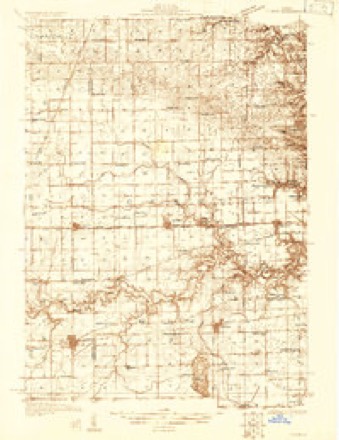
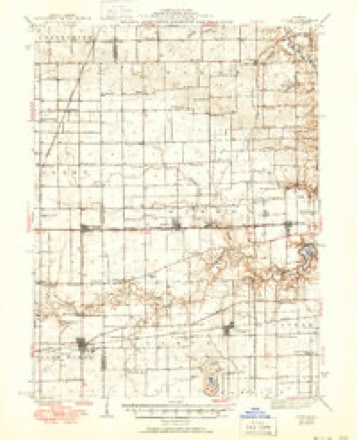
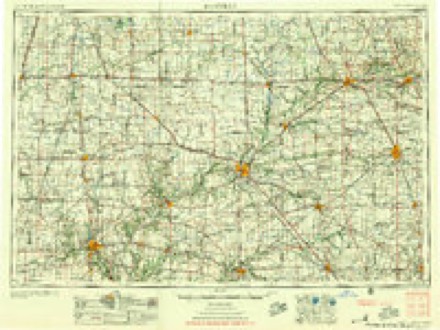
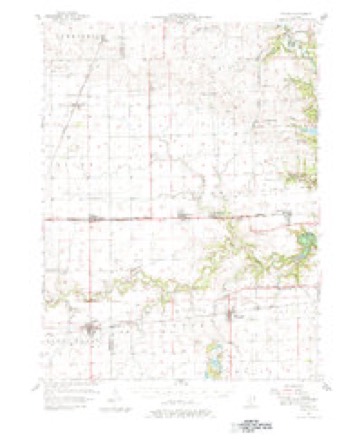
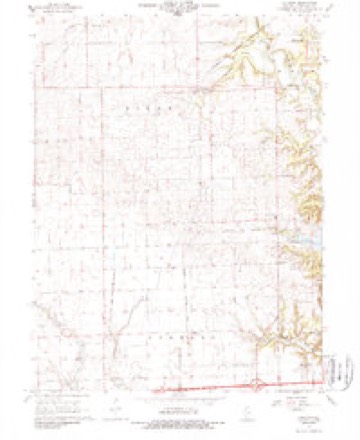
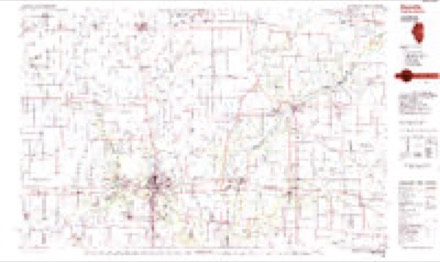
15 topographic sheets cover this place, the earliest surveyed in 1931 and the latest in 1987. It stands in Blount Township. It lies in ZIP code area 61865. It stands on Collison Branch. The Survey maps it on the Collison quadrangle.
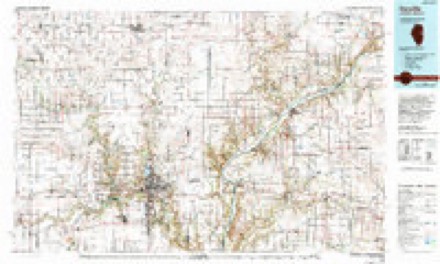
Topographic sheets covering this place
9 surveys from 15 printed sheetsMatched by testing this settlement's coordinate against the published boundary of every sheet in the United States Geological Survey's historical collection. Each opens the scanned sheet at the Survey.
- 1931 USGS Fithian quadrangle1:48000
- 1943 USGS Fithian quadrangle1:62500, 2 printings
- 1953 USGS Danville quadrangle1:250000, 3 printings
- 1955 USGS Danville quadrangle1:250000
- 1956 USGS Danville quadrangle1:250000
- 1957 USGS Fithian quadrangle1:62500, 3 printings
- 1968 USGS Collison quadrangle1:24000, 2 printings
- 1984 USGS Danville quadrangle1:100000
- 1987 USGS Danville quadrangle1:100000
In the county-history sources
14,070 words on this townshipHistory of Vermilion County, Together with Historic Notes on the Northwest, Gleaned from Early Authors, Old Maps and Manuscripts, Private and Official Correspondence, and Other Authentic, Though, for the Most Part, Out-of-the-way Sources, published 1879 names this settlement in its chapter on Blount Township. These are the passages that mention it, exactly as the scans read.
Wallace Sperry (who committed suicide near his liou.se), William and Freeman Smalley, Enoch Oxley, were all living within two miles ot Higginsville. Two miles farther on was the Fairchild neighborhood, and some ways still east of that the Copeland neighborhood, when Samuel Copeland, Mr. Johns, Truax, Humphrey, Oosat and others lived. Jn the southern part of the town were the Howard and Luman neighborhoods.
Passage source: History of Vermilion County, Together with Historic Notes on the Northwest, Gleaned from Early Authors, Old Maps and Manuscripts, Private and Official Correspondence, and Other Authentic, Though, for the Most Part, Out-of-the-way Sources, published 1879.
About onedialf of this township was then timber; some of it. has been made into farms, and timber ha6 grown up where before it was comparatively open. Hunting was the principal business followed. There was not in these parts much of such enterprise as we have since seen. Sickness was terrible. Whole families would be down with sickness at the same time. The ague, the milk sickness, and other diseases that were consequent upon early settlement, were so common that people were broken in spirit, and their energy was sapped. Kees rode as constable in this county twenty-one years. He has had all the experiences of an early officer who had the tracks of horse-thieves to follow in times when the name "horse-thief" carried with it as much opprobrium as "abolitionist." lie taught the first school in this part of the town. It was in a little cabin just southeast of Higginsville that had been abandoned by its builder, and as no certificate was required and no rent to pay, he conceived the idea of putting the vacant cabin to use for a seat of learning. He carried around a subscriptionpaper and got enough subscribed, so that he thought he could live by it, and opened a school. There were few who coul/1 teach it any better than he, and those few would not teach so cheap. There were no other schools in the neighborhood to compare it to, and no big scholars who could "stump the teacher" in " rule of three " or grammar. So he made it go pretty well, and taught two quarters. As a wielder of the gad and rule he had few equals, and no superiors, in the Higginsville of that day. The quarter's schooling was placed at two dollars and a half per scholar. He had eighteen one quarter and twenty-two the other. He received about ten dollars per month and boarded himself. The furniture was primitive. The benches were made out of slabs and rails, and he could hardly afford a blackboard. He used the old United States Spelling-book, English Reader and Testament, and Pike's Arithmetic. Each scholar had a different book, and no one had a full supply. The scholars studied aloud, and the one who made the most noise was understood to be making the best progress. He never heard of a schedule, thinks it would have been a decided improvement. The roll of scholars, as far as he now remembers it, embraced John, Almeda and Rachel Storms, Jennie and William Smalley, three children of Mr. Truax, James, Freeman, Frank and Sabie Smalley, John Smalley's children, Malinda Freeman, and John, David, Moses, Christopher and Thomas Loving. William Loving lived one mile and three-fourths east of Higginsville, where his sons still reside. James Smalley became a minister, drawing his theological as well as his literary learning no doubt from Rees.
Passage source: History of Vermilion County, Together with Historic Notes on the Northwest, Gleaned from Early Authors, Old Maps and Manuscripts, Private and Official Correspondence, and Other Authentic, Though, for the Most Part, Out-of-the-way Sources, published 1879.
Mr. Oxley, about the year 1832, made a tannery east of Higginsville. He had about eighteen vats, using the oak bark, which was very plenty on the trees, but difficult to obtain. This may seem strange, but the reasons for it are plain. Bark will peel only during the summer months, commencing about the time of corn-planting, and sticking fast by about the middle of September. A sudden change in the temperature, such as occurs in September, will stop bark peeling in an hour. The months of the year in which nature allows bark-peeling was an industrious man who could find time between corn-plowing and harvest, or between harvest and threshing, to peel a few cords of bark. Tanners had in those times not sufficient capital to buy sections of timber land, cut off the oak for the bark, and let the land go back. The vast aggregations of capital which are now employed in tanning and leather were then unknown; so Mr. Oxley's speculation, while it did not cost him very much to inaugurate it, never was a great success, because he never was able to drive it very hard. He tanned all kinds of hides, and found a market for his leather in every little shoe-shop in the country around. Rees carried it on for him a while. After him John Hilliard had it three years, after which Mr. Oxle}' took charge of it himself for a while, until 1845, when he sold out the whole concern, with other lands, to J. W. Goodwine, who came in here from Indiana, looking for good land where he could put in his time to good advantage, and fatten his steers, as well as the next man who came.
Passage source: History of Vermilion County, Together with Historic Notes on the Northwest, Gleaned from Early Authors, Old Maps and Manuscripts, Private and Official Correspondence, and Other Authentic, Though, for the Most Part, Out-of-the-way Sources, published 1879.
Machine-read from a century-old scan, so expect the errors a machine makes: misspelled names, dropped words, stray characters.
Read the whole chapter on Blount Township - it names this place 6 more 6 times.
Fires near this place
5 since 2004Regional context, not property-specific evidence. The federal wildfire occurrence database lists 5 fires within 5 miles of Higginsville between 2004 and 2014, burning about 21 acres in total. None started naturally. None was recorded as arson. Distance is straight-line from the map coordinates, so a fire counted here may appear on a neighbouring settlement's page as well.
| Reported cause | Fires |
|---|---|
| Debris and open burning | 2 |
| Missing data/not specified/undetermined | 2 |
| Smoking | 1 |
The most recent of them, most recent first, with the day each was reported and the service that recorded it.
| Date | Cause | Size | Reported by | Name on the report |
|---|---|---|---|---|
| 11 September 2010 | Missing data/not specified/undetermined | 2.0 acres | Illinois Division of Forestry Resources | MORRIS |
| 28 August 2010 | Missing data/not specified/undetermined | 2.0 acres | Illinois Division of Forestry Resources | 2750 |
| 24 March 2014 | Smoking | under an acre | Illinois Division of Forestry Resources | JORDAN3 |
| 15 October 2011 | Debris and open burning | 15 acres | Illinois Division of Forestry Resources | HENNIN |
| 15 January 2004 | Debris and open burning | 1.0 acres | Illinois State Fire Marshal's Office | not named |
Settlements close enough to share some of these fires:
Mines and quarries near this place
2 within 5 milesRegional context, not property-specific evidence. The federal mineral resources record lists 2 workings within 5 miles of Higginsville: 1 past producer, 1 producer. 1 still produces. What was taken out: Sand and Gravel, Construction. Distance is straight-line from the map coordinates, so a quarry counted here may appear on a neighbouring settlement's page as well.
| Where | Site | Commodity | Status | Recorded |
|---|---|---|---|---|
| Allison Sand & Gravel Pit | Sand and Gravel, Construction | Producer | ||
| Potomac Gravel Pit | Sand and Gravel, Construction | Past Producer |
Nearest settlements
The eight closest, with where each one stands in the county. Distances are straight-line, computed from the Geographic Names Information System coordinates.
| Map | Place | Distance | Sheets |
|---|---|---|---|
| Jamesburg | 1.5 miles | 12 | |
| Collison | 2.7 miles | 15 | |
| Vernal | 3.4 miles | 12 | |
| Snider | 4.1 miles | 19 | |
| Grumle Corner | 4.6 miles | 19 | |
| Potomac | 4.9 miles | 13 | |
| Johnsonville | 5.1 miles | 19 | |
| Newtown | 5.2 miles | 15 |
Provenance
This settlement is recorded in the Geographic Names Information System as feature 422805. The sheet list is computed by point-in-boundary test against the United States Geological Survey's historical topographic inventory. Both are works of the United States government and carry no copyright under 17 U.S.C. 105.
Wildfire. Short, Karen C. 2022. Spatial wildfire occurrence data for the United States, 1992-2020 [FPA_FOD_20221014]. 6th Edition. Fort Collins, CO: Forest Service Research Data Archive. https://doi.org/10.2737/RDS-2013-0009.6 Collected with United States Government funding and usable without additional permissions or fees.
Mines and quarries. USGS Mineral Resources Data System (MRDS) https://mrdata.usgs.gov/mrds/ A work of the United States government, no copyright under 17 U.S.C. 105.