 Block
Olentangy, Ohio
13 topographic sheets cover this place, the earliest surveyed in 1915 and the latest in 1994. It stands in Whetstone Township. It lies in ZIP code area 44820. The Survey maps it on the North Robinson quadrangle. It stands 1,056 feet above sea level.
Then and now
1915 to 1994The same ground, surveyed 79 years apart. Drag the handle to wipe between them. Both sheets are United States Geological Survey originals; neither has been altered.
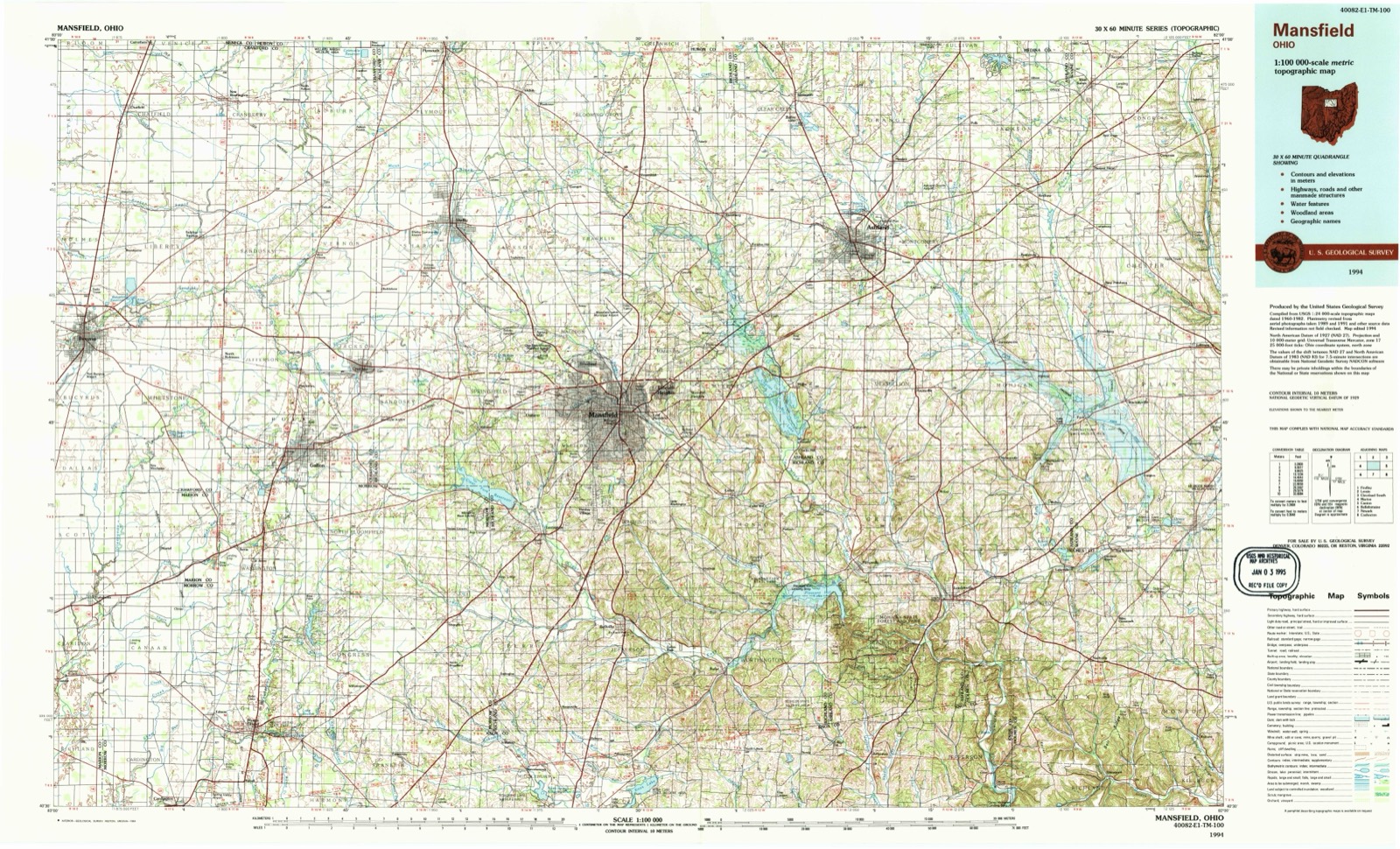
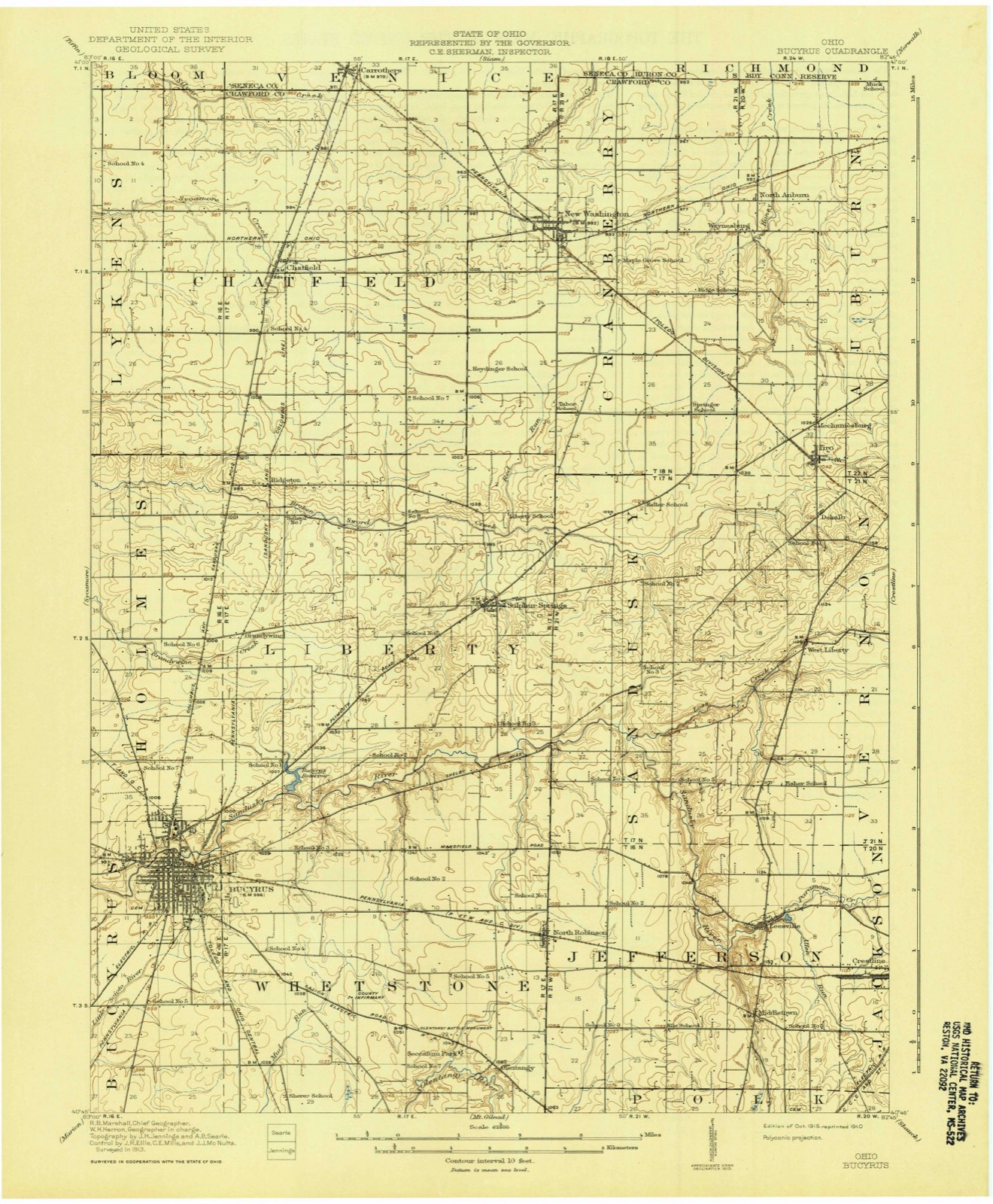
Topographic sheets covering this place
8 surveys from 13 printed sheetsMatched by testing this settlement's coordinate against the published boundary of every sheet in the United States Geological Survey's historical collection. Each opens the scanned sheet at the Survey.
- 1915 USGS Bucyrus quadrangle1:62500
- 1943 USGS Bucyrus quadrangle1:62500
- 1950 USGS Marion quadrangle1:250000
- 1960 USGS North Robinson quadrangle1:24000, 4 printings
- 1962 USGS Marion quadrangle1:250000
- 1966 USGS Marion quadrangle1:250000, 3 printings
- 1986 USGS Mansfield quadrangle1:100000
- 1994 USGS Mansfield quadrangle1:100000
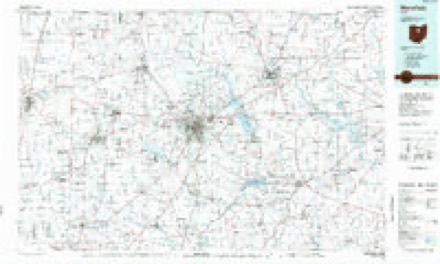
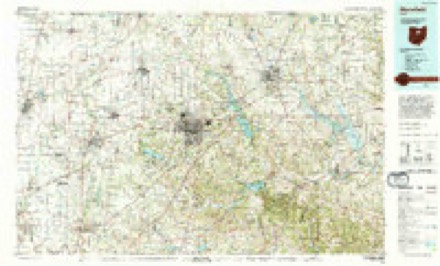
In the county-history sources
50,852 words on this townshipHistory of Crawford County, Ohio, and Representative Citizens, published 1912 names this settlement in its chapter on Whetstone Township. These are the passages that mention it, exactly as the scans read.
The first mention of Crawford county in regard to political matters was in the Columbus Gazette of July, 1824, when a meeting was held at Columbus in the interest of Henry Clay. At that meeting Henry Brown of Franklin county was appointed the Clay elector for this district, and Joseph Chaffee of Crawford county was present and was placed in charge of the Clay interests in this county. Chaffee lived in Tymochtee township. That year practically all were Clay or Adams men in this county, as at the election in 1824, Marion county, of which Crawford was a part, gave the following vote : Adams 87 ; Clay 54; Jackson 13. The formation of parties can be seen by the presidential vote of 1832, when it resulted in this county : Andrew Jackson, dem., 557; Henry Clay, whig, 259.
Passage source: History of Crawford County, Ohio, and Representative Citizens, published 1912.
The exciting campaign in Ohio and in this county was the presidential election in 1840, when William Henry Harrison ran against Martin Van Buren, the latter being the democratic candidate for re-election. Pages of history have been written about the campaign of 1840. It was the first political "tidal wave" that ever swept the country. From 1829 to 1840 Andrew Jackson had been president, followed by Martin Van Buren, and the democratic party was strongly intrenched in power ; the whigs were demoralized, their principal issue being anti-Jackson. On December 4, 1839, they met at Harrisburg, Pa., and nominated Gen. Harrison for the presidency, with John Tyler of Virginia for vice president. Van Buren's colleague was Richard M. Johnson, of Kentucky, who in the war of 1812, had won the final battle of the Thames in Canada, when the British were defeated and Tecumseh was killed. Harrison, as the hero of the war of 1812, was the idol of the then great rising northwestern territory, but in the east the business interests and the newspapers made light of his candidacy; soon after the Harrison nomination, the editor of a Van Buren paper at Baltimore, Md., visited General Harrison at his country home at South Bend, Ind., and was cordially received and hospitably entertained by him. He published an account of his trip, spoke slightingly of Harrison's abilities, and stated that he lived in a log cabin and drank hard cider, and had no desire to be president, and neither had he the ability to fill the position, and concluded by stating that if the people of the country would only furnish him with a liberal supply of crackers and sufficient hard cider he would be contented to live in his little log cabin for the remainder of his days. Every Van Buren paper in the east published the story with great relish, and it was copied in the western organs. Then the storm broke. In all of the great northwest that Harrison had rescued from the Indians the people remembered the log cabins that had been their first homes ; they still kept the hard cider for the hospitable entertainment of their guests, and many still lived in the little log cabins. The northwest rallied to their idol, the log cabin and the buckeye became their rallying cry, and the hard cider was free everywhere. A meeting was called at Columbus for February 22, 1840, and although it was the dead of winter, when the day arrived over 15,000 people assembled in that city of 6,000 population, and every house was thrown open to entertain free every guest. Every county within a radius of a hundred miles sent monster delegations, some hauling log cabins for fifty miles over the miserable roads. Nearly a hundred went down from Crawford county. Heavy rains had swollen the streams, and the roads were almost impassable, but there were miles of paraders, with their innumerable log cabins, and heading the procession was a reproduction of Fort Meigs erected by Harrison, and defended by him in 1813, and on the front flag staff Harrison's reply to General Proctor's demand for its surrender: "Tell General Proctor when he gets possession of the Fort, he will gain more honor, in the estimation of his King and country, than he would acquire by a thousand capitulations." There were speeches ; and the hard cider distributed free at every house, with barrels of it at every street corner, kept up the enthusiasm, and also prevented any ill effect from the intemperate weather.
Passage source: History of Crawford County, Ohio, and Representative Citizens, published 1912.
As early as May they started for the rendezvous; men left their farms and their factories, their stores and their shops, and through the forests and across the swamps they journeyed hundreds of miles on foot and on horseback in wagons and in log cabins, these latter being hung with coon-skins and covered with strings of buckeyes, and used as sleeping places during the night. And -when the day arrived fully fifty thousand people were there from every state in the union, and the wagons were camped for miles around. Harrison spent the night at Toledo, a little town of 1,300 people, and on the morning of the day went on a little steamer to the fort he had so bravely defended a generation previous. People were weeks getting back to their homes, but from the west the excitement spread to the east, and the chief export of Ohio that year were the buckeyes, and the national drink was hard cider. It was, too, a cure for all ills ; with a pepper-pod sliced into it it was a sure cure for rheumatism; mixed with willow-bark and iron-wood it cured fever and ague; with wild cherry added it became a tonic. It was the juice of the apple, and many a temperate man in his enthusiasm for the cause partook so liberally that when night came there was little difference between a moderate and a heavy drinker.
Passage source: History of Crawford County, Ohio, and Representative Citizens, published 1912.
Machine-read from a century-old scan, so expect the errors a machine makes: misspelled names, dropped words, stray characters.
Read the whole chapter on Whetstone Township - it names this place 1 more 1 time.
Specimens collected near this place
12 of 147 shownRegional context, not property-specific evidence. Museums hold 147 specimens collected within 10 miles of Olentangy between 1842 and 1973: 125 Animalia, 13 Plantae, 7 Fungi, 2 Chromista. 12 distinct Species records are shown. Collected by Beal, L. E., Benjamin, J. R., Chase, H. (Hazel) and others. Each is a physical object with a catalogue number, and each entry opens the museum's record. This is what was collected and kept, not a survey of what lives here - nothing can be concluded from a species being absent.
| Image | Species | Year | Collected by | Where, as recorded |
|---|---|---|---|---|
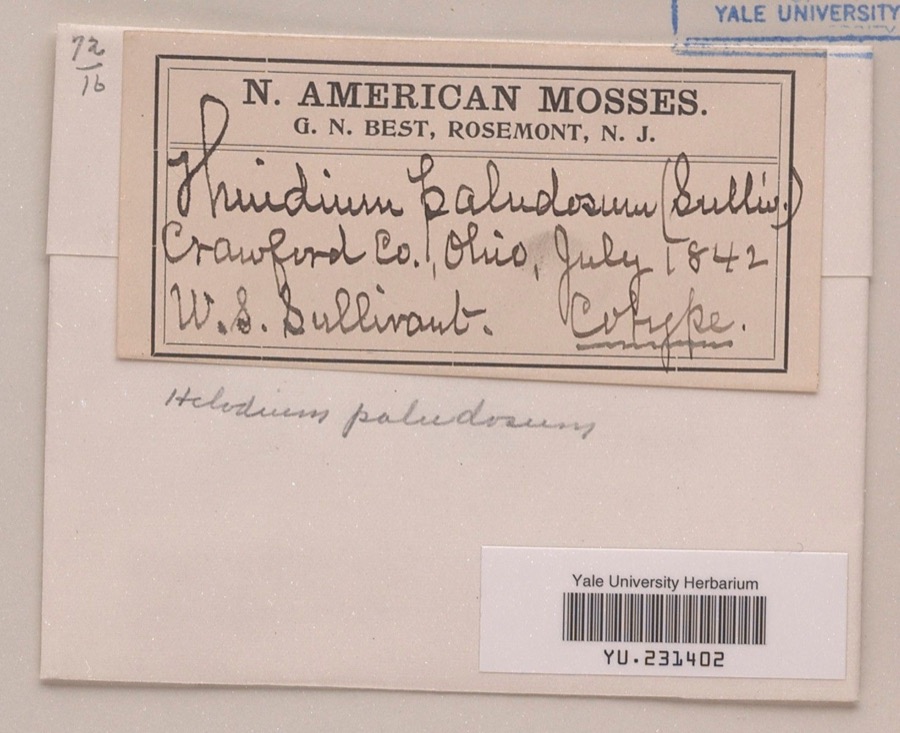 | Helodium paludosum (Austin) Austin ex Broth. | 1842 | William S. Sullivant | |
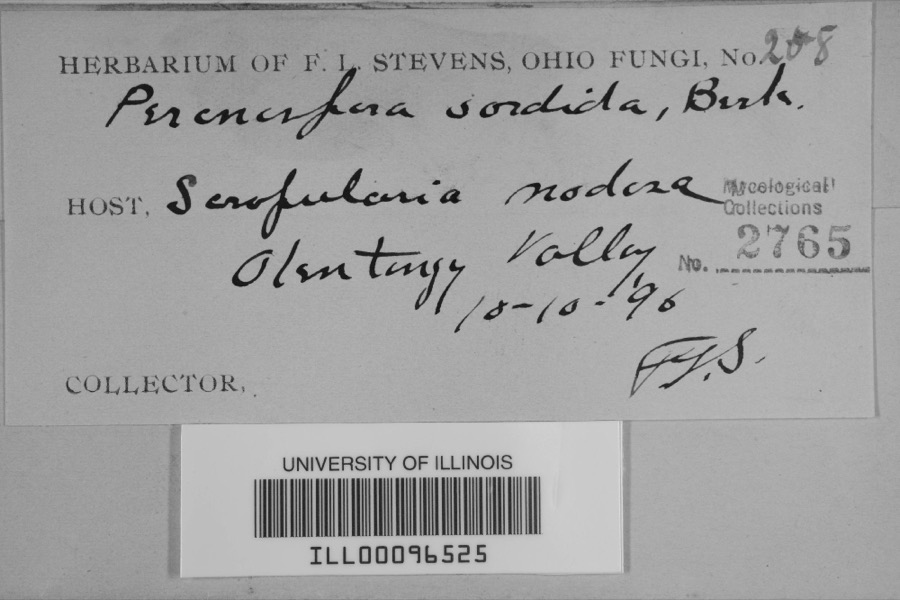 | Peronospora sordida Berk. & Broome | 1896 | F.L. Stevens | Olentangy Valley |
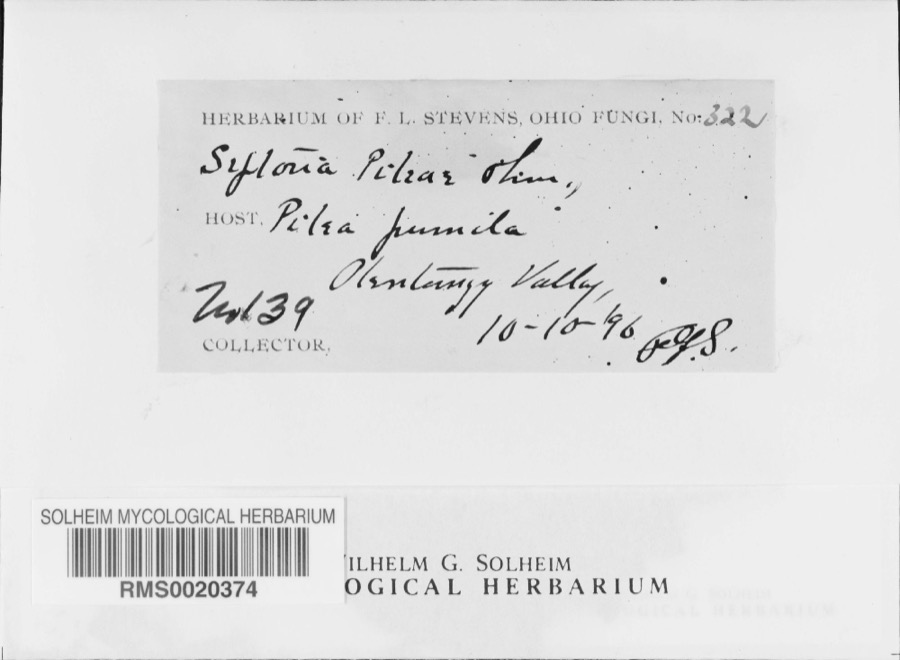 | Septoria E.M.Fries, 1819 | 1896 | F. L. Stevens | Olentangy Valley; 40.761724 -82.873517 |
 | Cirriphyllum piliferum (Hedw.) Grout | 1842 | W. S. Sullivant | |
 | Drepanocladus polycarpos (Blandow ex Voit) Warnst. | 1842 | W. S. Sullivant | |
 | Lophocolea heterophylla (Schrad.) Dumort. | 1844 | not recorded | |
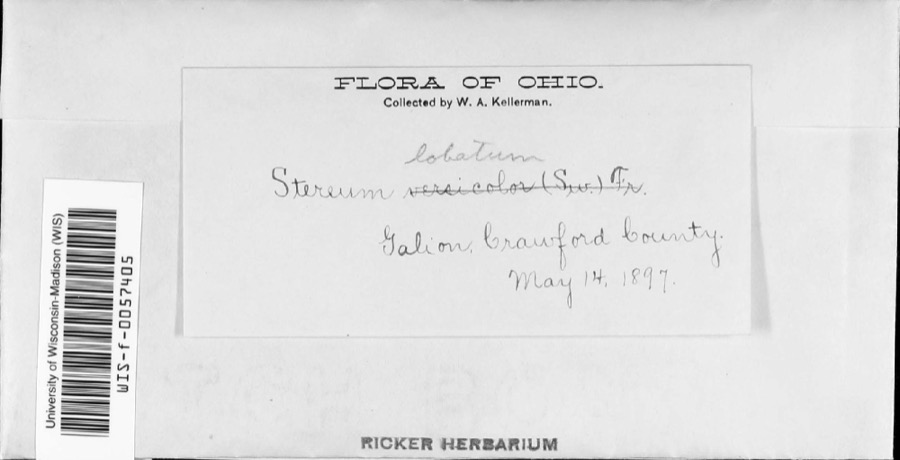 | Stereum lobatum (Kunze ex Fr.) Fr. | 1897 | W.A. Kellerman | |
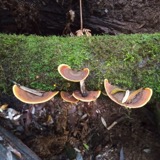 | Stereum versicolor (Sw.) Fr., 1838 | 1897 | W. A. Kellerman | Galion. |
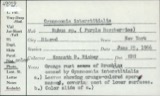 | Gymnoconia interstitialis (Schltdl.) Lagerh. | 1906 | Hieber Christina | Bucyrus |
 | Lythrurus fasciolaris (Gilbert, 1891) | 1927 | Wickliff, E. L. (Edward L.) | Olentangy River, within Whetstone township, near Martel, Whetstone township |
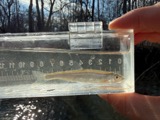 | Notropis photogenis (Cope, 1865) | 1927 | Wickliff, E. L. (Edward L.) | Olentangy River, within Whetstone township, near Martel, Whetstone township |
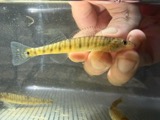 | Percina caprodes (Rafinesque, 1818) | 1927 | Wickliff, E. L. (Edward L.) | Olentangy River, within Whetstone township, near Martel, Whetstone township |
All 147 specimens within 10 miles, at the Global Biodiversity Information Facility.
Nearest settlements
The eight closest, with where each one stands in the county. Distances are straight-line, computed from the Geographic Names Information System coordinates.
| Map | Place | Distance | Sheets |
|---|---|---|---|
| North Robinson | 2.3 miles | 13 | |
| Spring Valley Court | 2.8 miles | 13 | |
| New Winchester | 3.8 miles | 12 | |
| Middletown | 4.4 miles | 13 | |
| Olentangy Estates | 4.6 miles | 13 | |
| Galion | 4.8 miles | 13 | |
| Leesville | 5.1 miles | 13 | |
| Maple Grove Park | 5.3 miles | 13 |
Elsewhere
Matched on this settlement's Geographic Names Information System number rather than its name, so it cannot be a different place of the same name in another state.
| Wikipedia article on Olentangy | An encyclopaedic summary. Its text is share-alike, so it is linked here rather than copied. |
| Wikidata item Q18356882 | The structured record the population and elevation above come from. Public domain (CC0). |
Provenance
This settlement is recorded in the Geographic Names Information System as feature 1066275. The sheet list is computed by point-in-boundary test against the United States Geological Survey's historical topographic inventory. Both are works of the United States government and carry no copyright under 17 U.S.C. 105.
Specimens. Global Biodiversity Information Facility (GBIF), https://www.gbif.org/. Only records licensed CC0 or CC BY are used. Records licensed CC BY-NC are excluded because this site carries advertising. Images are checked individually and any whose licence is non-commercial, no-derivatives or unreadable is refused.