 Block
Block
Planktown, Ohio
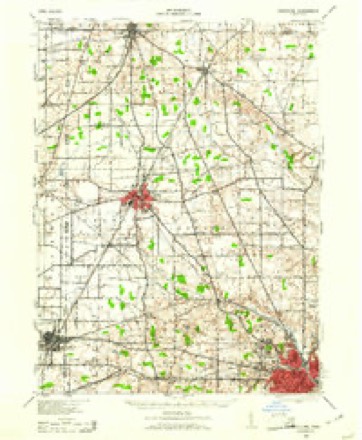
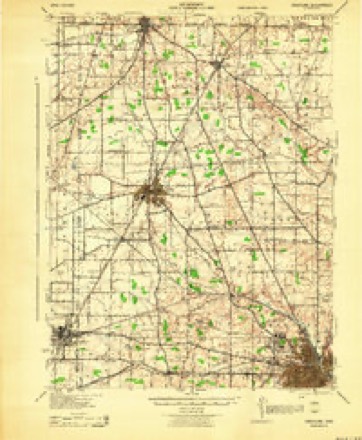
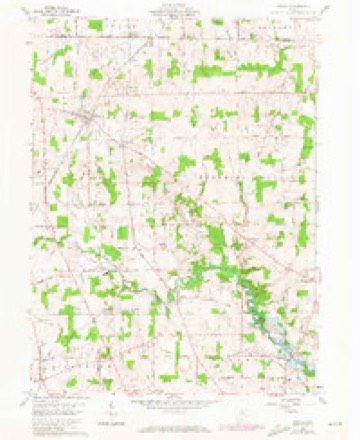
14 topographic sheets cover this place, the earliest surveyed in 1915 and the latest in 1994. It stands in Cass Township. It lies in ZIP code area 44878. The Survey maps it on the Shiloh quadrangle.
Then and now
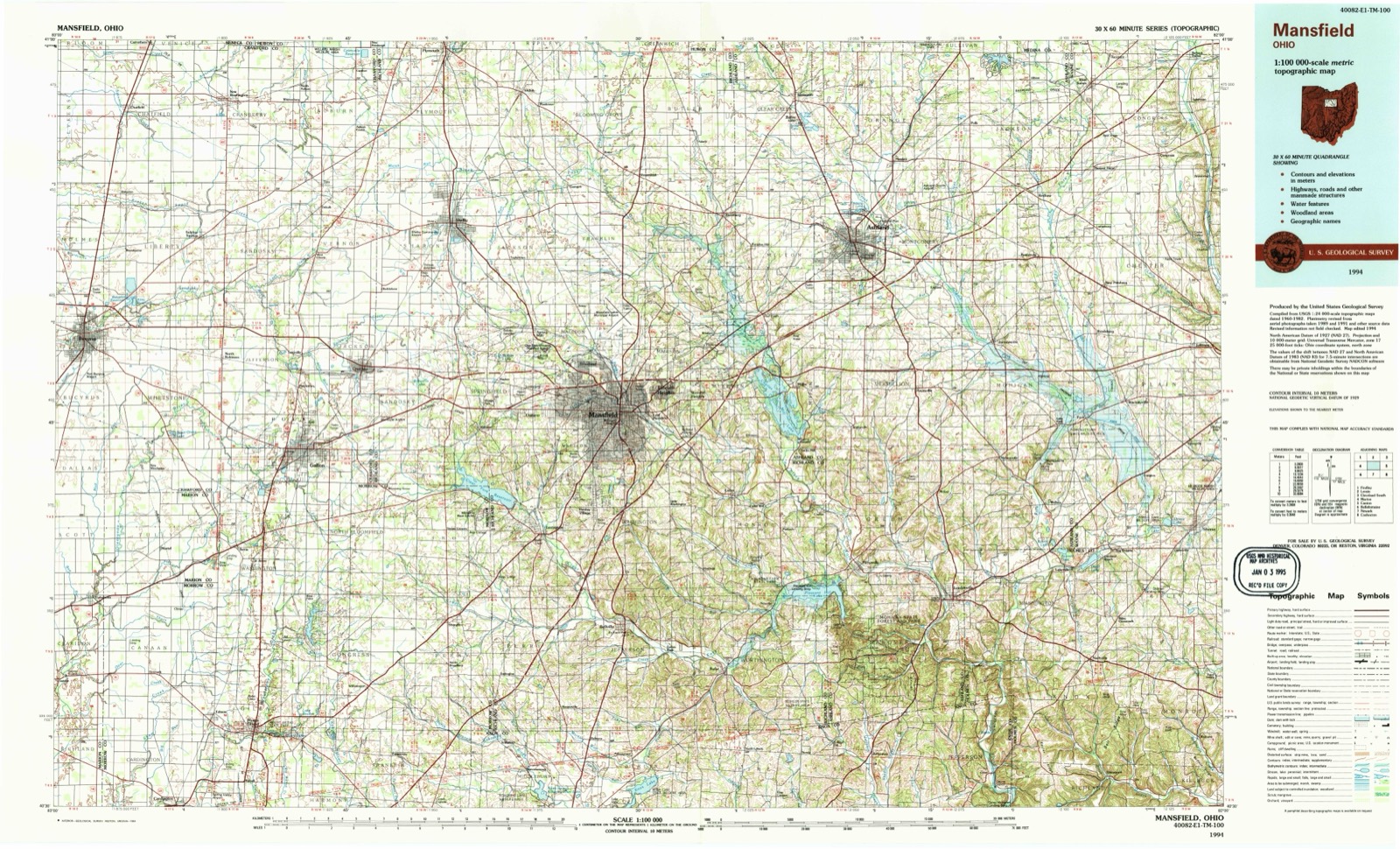
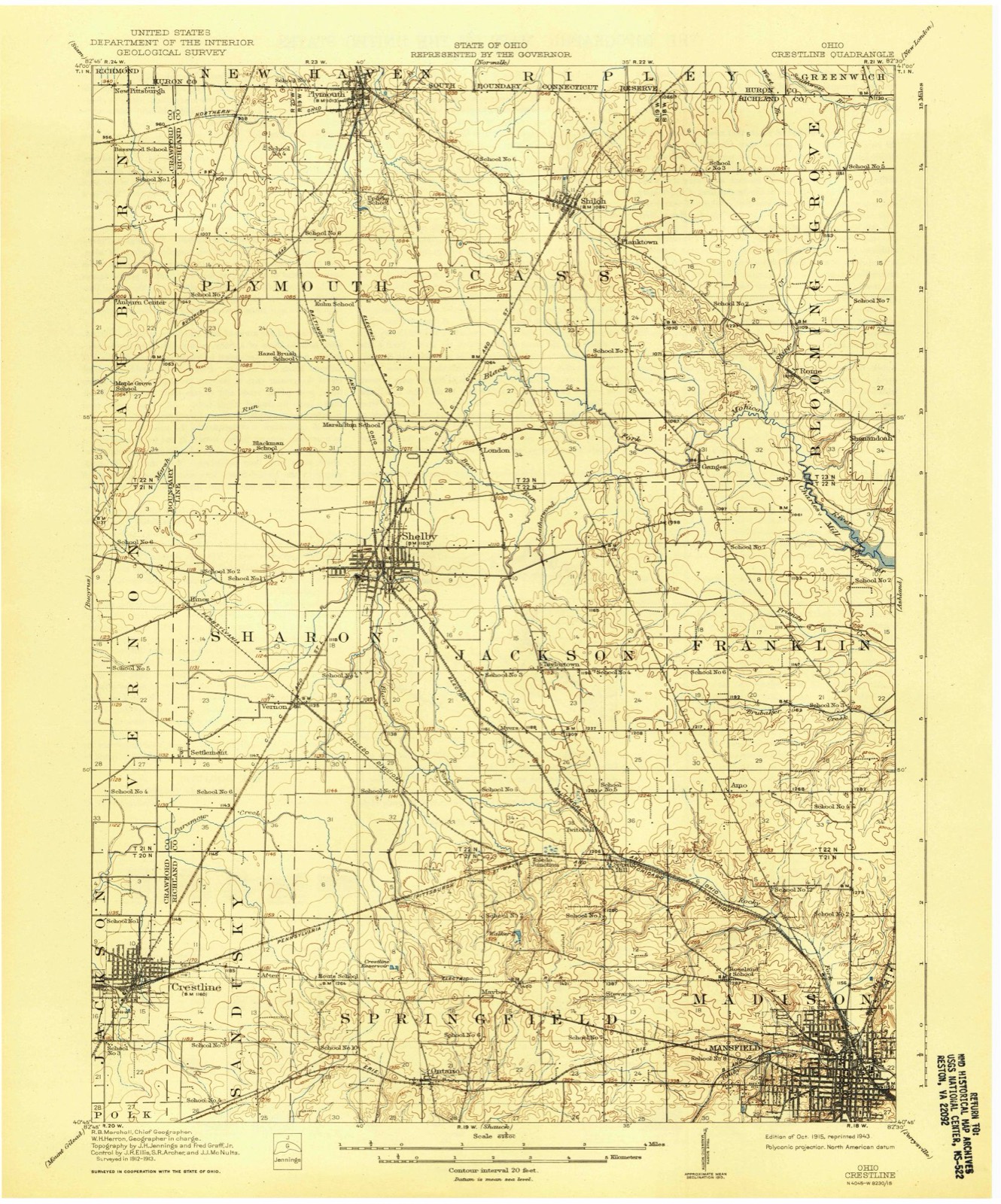
1915 to 1994The same ground, surveyed 79 years apart. Drag the handle to wipe between them. Both sheets are United States Geological Survey originals; neither has been altered.
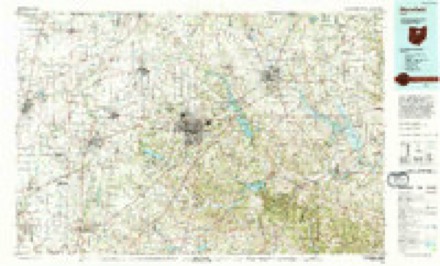
Topographic sheets covering this place
14 sheetsMatched by testing this settlement's coordinate against the published boundary of every sheet in the United States Geological Survey's historical collection. Each opens the scanned sheet at the Survey.
- 1915 USGS Crestline quadrangle1:62500
- 1943 USGS Crestline quadrangle1:62500
- 1943 USGS Crestline quadrangle1:62500
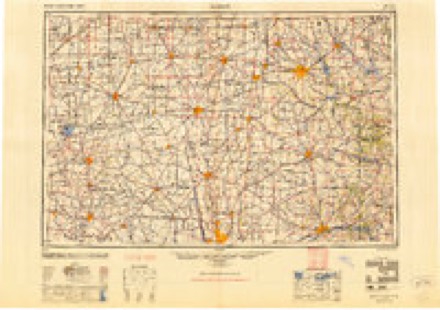
- 1950 USGS Marion quadrangle1:250000
- 1960 USGS Shiloh quadrangle1:24000
- 1960 USGS Shiloh quadrangle1:24000
- 1960 USGS Shiloh quadrangle1:24000
- 1960 USGS Shiloh quadrangle1:24000
- 1962 USGS Marion quadrangle1:250000
- 1966 USGS Marion quadrangle1:250000
- 1966 USGS Marion quadrangle1:250000
- 1966 USGS Marion quadrangle1:250000
- 1986 USGS Mansfield quadrangle1:100000
- 1994 USGS Mansfield quadrangle1:100000
In the county-history sources
7,682 words on this townshipHistory of Richland County, Ohio : (including the Original Boundaries) ; Its Past and Present, Containing a Condensed Comprehensive History of Ohio, Including an Outline History of the Northwest, a Complete History of Richland County ... Miscellaneous Matter, Map of the County, Biographies and Histories of ... the Most Prominent Families, &c., &c., published 1880 names this settlement in its chapter on Cass Township. These are the passages that mention it, exactly as the scans read.
The Methodists seem to have been the pioneer religious bod}- in this township. About 1816 or 1817, Bennajah Boardman held the first religious services, in the cabin house of John Long, on the site of the village of Planktown, or Richland. He was a missionar}. and continued preaching among the settlers several years before any church was erected. Money to build churches, or for any other purpose, was scarce, and the meetings were held in private houses, barns, and in the open air. In 1828, through the Rev. Boardman's influence, a log church - the first one in the township - was erected on the southeast quarter of Section 1. where a town was laid out which they called Salem, and the church received the name of Salem Church. The settlers came together and built this church b}" their united labors. Its first members were John, Cathai*- ine, Nancy, Betsy and Sarah Long ; Asa Murphy, who was considered a leader in the congregation ; Peter and Annie Maring, John and Hannah Bell. This church was of hewed logs, and about fifty feet long by forty wide, with rude puncheon benches for seats. Following Bennajah Boardman, the ministers were Erastus Felton, the Revs. Chase and Groddard. Adam Poe, a nephew of the famous Indianfighter, also preached here occasionall}-. Boardman was, finall}', the local preacher ; settled here, and died in 1858. The log church was used until 1852, when it was torn down and a frame erected which cost $1,625. When the railroad (Cleveland, Columbus, Cincinnati & Indianapolis) came through the township in 1850, and the town of Shiloh began to gi'ow, the Methodists proposed building a church in that place, and the old one was neglected. It was finally sold, in 1874, to Wesley McLaughlin, for $300, who, in turn, sold it to the Dunkards, by whom it is now occupied. This is the only church in the township outside the towns.
The road was much traveled by teams transporting grain from Knox County and other portions of the interior, to the lake, then the great and only outlet for the rapidly increasing products of Ohio. Taverns along this road were frequent, and a necessit}', and Mr. Long's cabin liecame, without any effort on his part, a stopping-place for the early teams. Mr. Long did not wish to keep a hotel ; he had started a tannery, and this in addition to his farm was all he could attend to. He sold out his hotel to a man by the name of Rumer, and built another house for himself near his tan-yard. After a time, Rumer sold out to Mr. John Plank, who secured sufficient ground, and, in 1837, laid out a town which he first called Pl^^mouth, but which he afterward changed to Richland ; however, the town was always better known as Planktown. In time, the old cabin was pulled down, a larger house built, and Planktown became a noted stopping-place for the great number of teams that dailj' traveled over the road. Mr. David Long says, as many as two hundred teams loaded with wheat from the rich valleys of the tributaries of the Muskingum were known to pass Planktown in one day, during the season immediately following harvest. Rumer had also kept a grocery- in connection with his hotel, which was the first store in the place. After Planktown was laid out, it grew quite rapidly for a town in those daj's, and became in time a place of perhaps two hundred people, with two stores carrying assorted stocks, and two hotels. J. Saviers kept one of the stores at an early day.
The United Brethren in Christ was first organized in Planktown in 1843. A church called the Union Church had been erected by the people of Planktown in 1840, which was used by all denominations. In this, the Brethren first organized. Afterward, in 1849, the}' built a church at Old Salem, across the road east of the Methodist Church. It was a frame church and cost about $1,100. In 1800, it was moved to Shiloh, with additional cost of moving and repairs, of $700. Michael Long, a missionar}' sent out by the Sandusky Conference, was infiuential in organizing this church. The names of some of the first members are N. S. Guthrie and wife, Robert Guthrie and wife, Peter Broche and wife, Mr. Shupe, wife and two daughters, and Artemisse Wolf The Pastors have been, Michael Long, Jacob Berger, William Mathers, Solomon Lindsej', John Goodwin, Enoch Bell, Alexander Biddle, C. L. Barlow, A. H. Leonard, V. Pond (Mr. Pond's wife also preached occasionally), William Newell and George Bender. The present minister is Rev. Mr. Spangler, and the membership about sixt}'.
Machine-read from a century-old scan, so expect the errors a machine makes: misspelled names, dropped words, stray characters.
Read the whole chapter on Cass Township - it names this place 2 more 2 times.
Specimens collected near this place
12 of 61 shownRegional context, not property-specific evidence. Museums hold 61 specimens collected within 10 miles of Planktown between 1869 and 1951: 25 Animalia, 20 Fungi, 16 Plantae. 12 distinct Species records are shown. Collected by Chase, H. (Hazel), Eric G. Chapman, Jennings, O.E. and others. Each is a physical object with a catalogue number, and each entry opens the museum's record. This is what was collected and kept, not a survey of what lives here - nothing can be concluded from a species being absent.
| Image | Species | Year | Collected by | Where, as recorded |
|---|---|---|---|---|
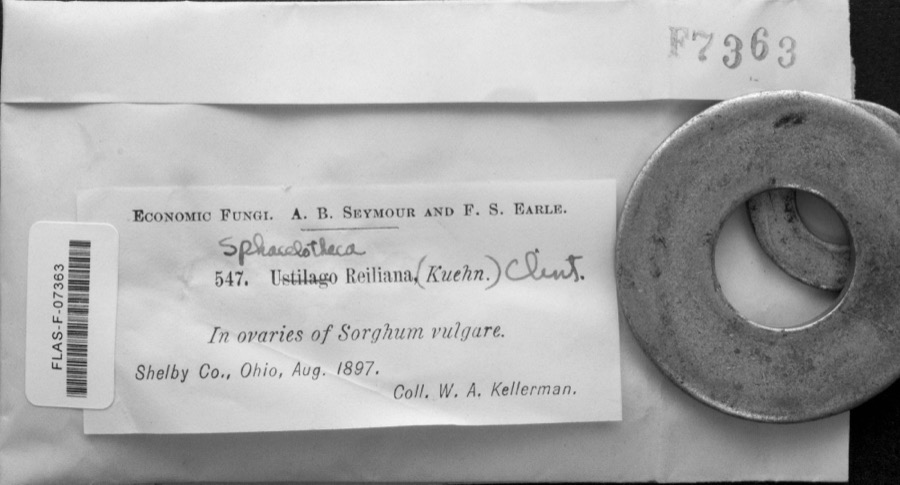 | Sphacelotheca reiliana (J.G.Kühn) G.P.Clinton | 1897 | W. A. Kellerman | |
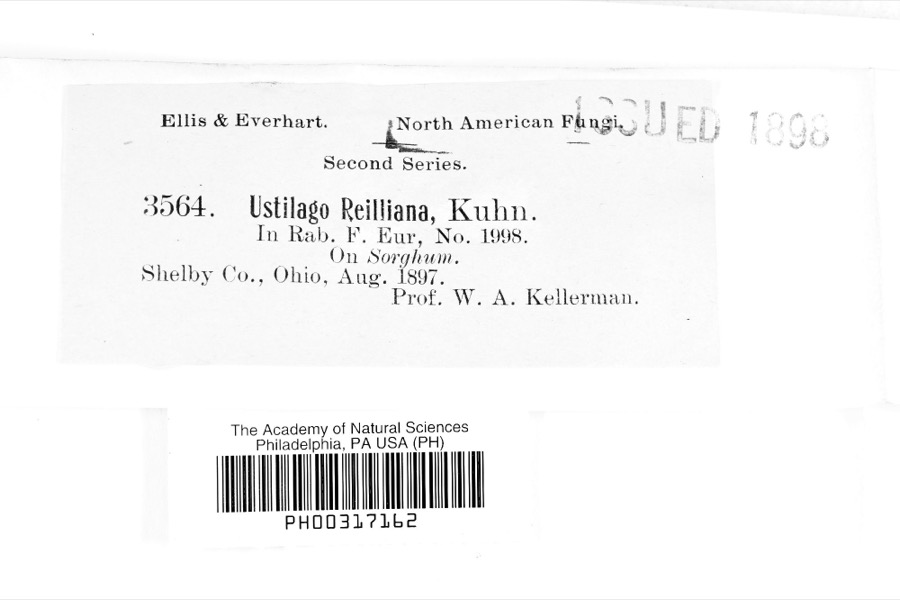 | Ustilago reiliana J.G.Kühn | 1897 | Prof. W. A. Kellerman | |
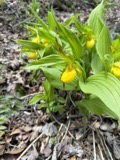 | Cypripedium parviflorum Salisb. | 1869 | N. L. Britton | northern Ohio |
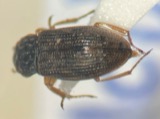 | Helophorus lineatus (Say, 1823) | 1898 | Eric G. Chapman | |
 | Hydrobius fuscipes (Linnaeus, 1758) | 1898 | Eric G. Chapman | |
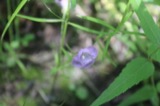 | Agalinis tenuifolia (Vahl) Raf. | 1909 | Jennings, O.E. | 2-3 mi W of Plymouth |
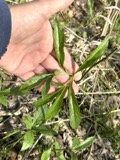 | Arisaema dracontium (L.) Schott | 1909 | Jennings, O.E. | 2-3 mi W of Plymouth |
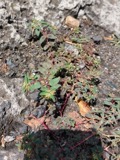 | Euphorbia vermiculata Raf. | 1909 | Jennings, O.E. | 2-3 mi W of Plymouth |
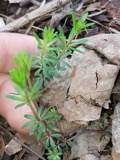 | Galium concinnum Torr. & A.Gray | 1909 | Jennings, O.E. | 2-3 mi W of Plymouth |
 | Lactuca serriola L. | 1909 | Jennings, O.E. | 2-3 mi W of Plymouth |
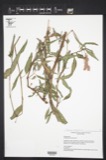 | Polygonum pensylvanicum var. laevigatum Fernald | 1909 | Jennings, O.E. | 2-3 mi W of Plymouth |
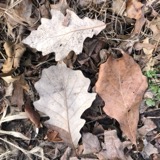 | Quercus bicolor Willd. | 1909 | Jennings, O.E. | 2-3 mi W of Plymouth |
All 61 specimens within 10 miles, at the Global Biodiversity Information Facility.
Nearest settlements
The eight closest, with where each one stands in the county. Distances are straight-line, computed from the Geographic Names Information System coordinates.
| Map | Place | Distance | Sheets |
|---|---|---|---|
| Shiloh | 1.0 miles | 14 | |
| Rome | 3.6 miles | 14 | |
| Ganges | 3.8 miles | 14 | |
| London | 4.0 miles | 13 | |
| Forest (historical) | 5.3 miles | 13 | |
| Shenandoah | 5.6 miles | 15 | |
| Carefree Estates | 5.6 miles | 13 | |
| Shelby | 6.6 miles | 13 |
Elsewhere
Matched on this settlement's Geographic Names Information System number rather than its name, so it cannot be a different place of the same name in another state.
| Wikidata item Q122540984 | The structured record the population and elevation above come from. Public domain (CC0). |
Provenance
This settlement is recorded in the Geographic Names Information System as feature 1061550. The sheet list is computed by point-in-boundary test against the United States Geological Survey's historical topographic inventory. Both are works of the United States government and carry no copyright under 17 U.S.C. 105.
Specimens. Global Biodiversity Information Facility (GBIF), https://www.gbif.org/. Only records licensed CC0 or CC BY are used. Records licensed CC BY-NC are excluded because this site carries advertising. Images are checked individually and any whose licence is non-commercial, no-derivatives or unreadable is refused.