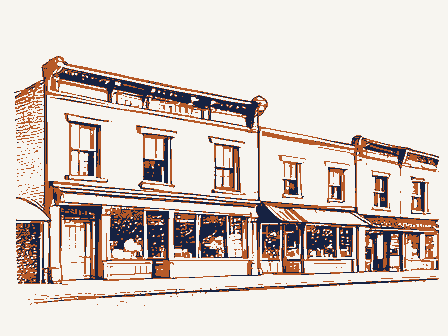
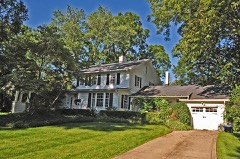
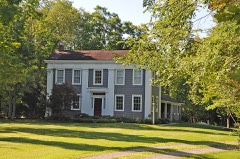
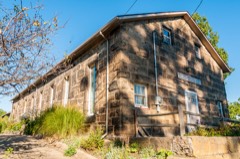
Listed on the National Register of Historic Places in
1971. A historic map-sheet match is not published yet. The record needs a coordinate-quality review before it can be joined to a sheet boundary.
From the record
“1878, he came to Akron, and was employed by S. Matherson, in chain works at Cuyahoga Falls for one 3'ear, when he returned to New York.”
History of Summit County, with an Outline Sketch of Ohio (1881). Machine-read text.
one of 137 National Register listings in Summit County · listed in 1971 · category: District · one of 1 National Historic Landmarks in Summit County.
National Register reference number.71000652- the number the National Park Service assigned this property when it was listed, and the key its nomination file is catalogued under at the National Archives.
What happened here
An account from the chapter on Twinsburg township, The inset identifies its exact
source book and publication year.
ALLEN FAMILY, Akron. Jesse Allen, Sr., the progenitor of the Allen family, was born in 1770, in Cornwall, Conn. His father Nathaniel Allen was killed in the Revolutionary war, when Jesse was rather young. He (Jesse) lived with a family in Connecticut, until he grew up, and there learned shoemaking. When a young man he went to Tompkins Co., N.
HON. SIDNEY EDGf]RTON, lawyer, Akron, Ohio, is a son of Amos and Zervia (Cxraham) Edgerton, and was born Aug. 17, 1819, in Cazenovia, Madison Co., N. Y. His father died when he was but two years oltl, and, having been blind for some tiraci, left his ftxmih' in actual proverty. His widow moved with her family to Ontario Co., N. Y., where he (subject) lived until he was 8 A^ears old, when he started iu life for himself, and by his own indomitable energy managed to educate himself out of his wages, and at the age of 16 set in to learn the trade of carpenter and joiner with his brother. At 17 he began teaching, and, at 18, entered Wesleyan Seminary at Lima, N. Y.; after remaining two terms, he was emplo3'ed as teacher. In April, 18-14, he came to Akron a stranger, and with but $3 in money ; after being here a few days, he began the study of law with Judge Rufus P. Spaulding, and, in 1846, graduated from the Cincinnati Law School, and was admitted to the bar in that cit}'. He opened an office here in 1846, and was elected Prosecuting Attorney in 1852, serving four years; in 1858, he was elected to Congress, and re-elected in 1860, the second Republican elected from this district ; assisted in organizing the Republican party at Pittsburgh, in 1856. His term expired in Congress in 1863, when he was appointed Chief Justice of Idaho by President Lincoln, and took his family from Omaha to Bannock Cit}^ in wagons ; in January, 1864, he came on horseback from there to Salt Lake City, sleeping on the ground during the trip, and via coach to IMississippi River ; proceeding to Washington, he succeeded in having Montana organized, the bill for which he prepared himself After its passage, he set out to return home, and upon his arrival at Salt Lake City, he found that he had been appointed Governor of Montana by President Lincoln ; this position he held until Feb. 23, 1865, when he resigned, his resignation being accepted in July, 1865. He returned to Akron in Januar}', 1866, overland, and has been in active practice here since. In April, 1849, he married Miss Mar}' Wright, of Tallmadge.
Norton was subsequently adopted." Peter Norton, the father of our subject, was a farmer, and, in 1806, moved to Smithfield, Trumbull Co., Ohio, where he worked for his uncle, Luther Thompson, who settled there four years previous. In 1809, Mr. Norton moved to Tallmadge. Summit Co., and purchased fifty acres of timber land, on which he settled and lived for several years. In 1812, he was drafted, but, owing to family affairs, his son Almeron went in his place, serving a short term. In 1813, the family settled on the place where Thomas (subject) now lives, Mr. N. having bought 200 acres of wild land, upon which he lived until his death, Aug. 23, 1822. He was Treasurer of Tallmadge Township for many years. Mrs. Norton afterward married Elisha Farnam, and died Nov. 24, 1844. The subject lived with his mother until her death, and remained on the place, which now belonged to his brother Almeron. In 1851, his brother died, and subject bought out his brother's heirs, thus becoming the owner of the old homestead. He has always followed farming. He was married, Jan. 10, 1847, to Miss Hannah M. Coney, a native of Stark Co., Ohio, who was born April 13, 1812, and is a daughter of James and Nancy (Hamlin) Coney, he a native of Pennsylvania, who came to Stark Co. a young man, and she a native of Virginia, who came to the same county with her parents. Subject has one child - Martha M. (now Mrs. Theodore Johns, boot and shoe dealer, Des Moines, Iowa). Theodore Johns was born in Middlebury, Summit Co., Ohio, March 23, 1845, and is a son of John and Nancy (Grant) Johns, he having been born on the line between Delaware and Maryland, and she in New Jersey. They were married in Philadelphia, and lived in New Jersey until about the 3'ear 1832, when they came to Middleburj', where he carried on shoemaking. About the year 1852 he moved to Akron, and, in 1855, to Des Moines, Iowa. He there opened the shoe business, which he conducted until 1874, when he retired, and his son Theodore took his place, continuing with the old firm name. He (Theodore) was married to Martha M. Norton (daughter of Thomas Norton) June 2, 1873. They have had two children, one of whom is living, viz., Nettie.
Regional context, not property-specific
evidence. The
federal wildfire occurrence database
lists 1 fire within 5 miles of Tallmadge Town Square Historic District between
1993 and 1993, burning about 0 acres in total. None started naturally. None was recorded as arson.
Distance is straight-line from the map coordinates, so a fire counted
here may appear on a neighbouring settlement's page as well.
Reported cause
Fires
Debris and open burning
1
The most recent of
them, most recent first, with the day each was reported and the service
that recorded it.
Regional context, not property-specific
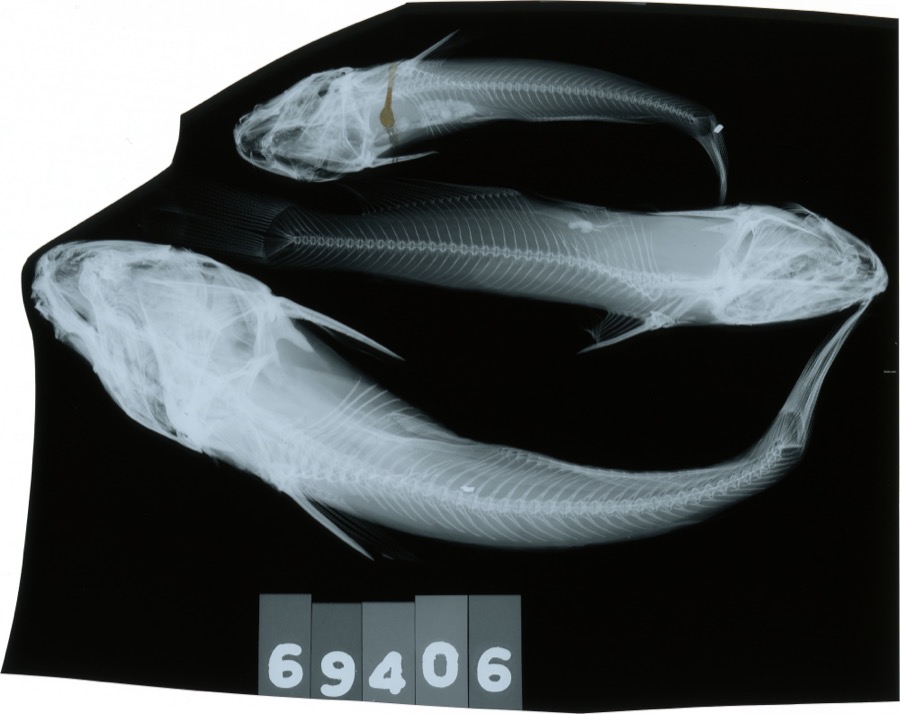
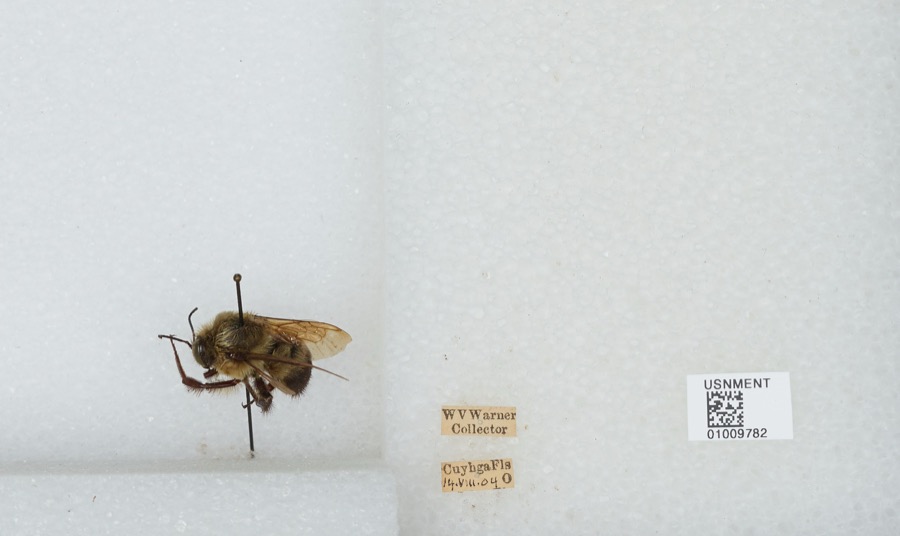
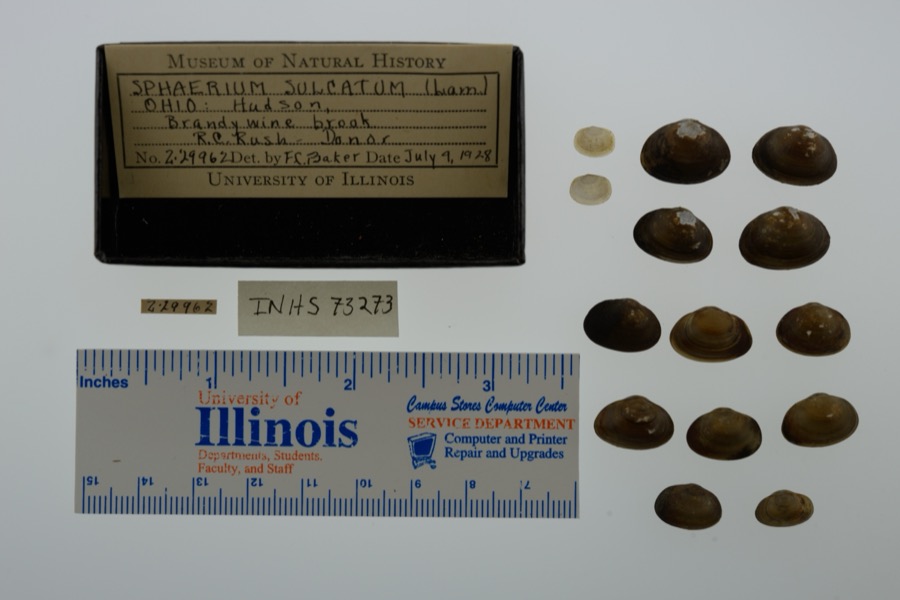
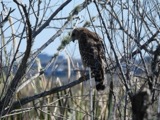
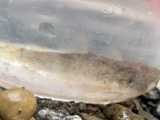
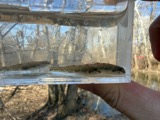
evidence. Museums hold 628 specimens
collected within 10 miles of Tallmadge Town Square Historic District between 1877 and
1973: 597 Animalia, 20 Plantae, 11 Fungi. 12 distinct Species records are shown.
Collected by A. Hall, Adams J. M. R., Armbruster, D. C. (Daniel C.) and others. Each is a
physical object with a catalogue
number, and each entry opens the museum's record. This is what was
collected and kept, not a survey of what lives here - nothing can be
concluded from a species being absent.
Regional context, not property-specific
evidence. The federal mineral resources record lists
6 workings within 5 miles of Tallmadge Town Square Historic District: 4 past producers, 2 producers.
2 still produce. What was taken out: Stone, Crushed/Broken, Sand and Gravel, Construction. Distance is straight-line from the
map coordinates, so a quarry counted here may appear on a neighbouring
settlement's page as well.
Regional context, not property-specific
evidence. The National Weather Service names
Tallmadge, the town this property stands in, in 28 storm reports between 1996 and 2026: 16 thunderstorm wind, 10 hail, 2 flash flood.
No death or injury is recorded in these reports. Each account below is quoted exactly as the forecast office
filed it, from the NOAA Storm Events Database, and each date
opens the federal record of that event.
Quarter to tennis ball sized hail was reported. Hundreds of homes and vehicles were damaged by the hail. There were reports of hail found inside of homes after the exterior windows had broken.
Flash flooding was reported along Route 91 near Summit County fairgrounds. At least 2 cars swept off road into ditches. Water was up to roof of cars. The city received about 10 reports of basement floodings.
Social media report and pictures of large hailstones that were approximately the size of billiard balls. Location about one mile northwest of downtown Tallmadge.
No historic map-sheet match is published
for this property yet. That does not mean no map exists. This record needs
a coordinate-quality review before it can be joined to a sheet boundary.
Browse the county's mapped places while that work is
pending.
Named in the fire insurance atlases
Sanborn surveyors printed an index of the
town's establishments at the front of each atlas. This property is named in
one, read straight off the scanned sheet.
When this property was proposed for the
National Register, someone wrote the case for it: what the building is,
and why it matters. That document is a federal record in the public domain.
It is quoted below word for word, never summarised. The text was read off the scanned case file by machine, so the
occasional stray character is the recogniser's and the 1970s
typewriter's.
Description of the property
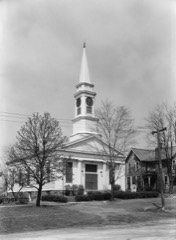
The church building is Connecticut-type Federal, with its typically frame, structure is the 100 ft. high steeple, topped by a weathervane. The steeple 1910: new hardwood floor laid; stained glass windows added 1925: stained glass windows replaced for type similar to original of clear The town hall and academy, now abandoned for these purposes, is a 1859 Greek two-story high pilasters, the distinctive architectural features of the CONDITION Excellent Deteriorated glass; green blinds reinstalled. by four large columns adorns the facade.The dominant feature of the The Tallmadge Historical Area is composed of an oval green originally Memorial; the latter a local history museum. have reduced the size to about 3 acres. the steeple is in poor condition.
1860's: heating system installed replacing individual stoves; Inside, many changes have occurred from the original which featured box Connecticut.The building measures forty feet wide by fifty-six feet long linking the farthest points of the township to the centrally located village the basic structure is essentially sound.
is believed to have been inspired by the old Central Church of New Haven, over the years included: 1888:addition placed on north end to accommodate organ; The Public Square and plan of the entire township (Town 2,Range 1o) was Both the church and town hall have been abandoned for their original pur (Check One) 1849: pulpit moved from south to north end, box pews replaced; the years, and has been re-partitioned extensively for use as offices, pews, and a winding staircase to a wine glass pulpit. Interior alterations academy, and high school. While basic elements of interior, simple trim ing is in poor repair. Dry rot has taken its toll of exterior trim, but Eight roads excluding the more recent addition.Three large doors welcome worshippers.
buildings: The First Congregational Church and the Town Hall.
political-commercial idea of the Reverend David Bacon, a self-ordained minister, who in 1809 came to the wilderness area and devised the ship, although he had left the fledgling community in 1812 because in Ohio, are among the best of the Federal style in the state. The 1955 issue of LIFE magazine. Congressman, Chief Justice of the Idaho Supreme Court, and territorial classic lines, completes the historical representation of the proximity and intertwining of church, state, and education in the old Connecticut 1809-1859 Conservation Commerce Engineering Communications Theater Transportation losophy itarian Science SIGNIFICANCE Literature Architecture Landscape Western Reserve. Education Music The town hall is less distinguished architecturally and historically.
Agriculture period; and the close relationship of church and state among Congregation Aboriginal Industry commercial district of crass, modern buildings. the first settlers arrived.
Invention unusual township road and Square plan to conform to his radical religious Social/Human- on the Square in proximity to the church, its simple but distinguished plantation of New England architectural styles in governmental and Sculpture The Public Square of Tallmadge and its two original structures are the alists who were the first and principal settlers of the Connecticut best examples in the Western Reserve of Ohio to illustrate the trans- religious structures to that area of Ohio during the early settlement beliefs for a self-contained"Commonwealth"which would be governed only imposing edifice towering over all forms of human activity in the town- Ohio architect-builder from Waterbury, Conn.
Quoted from the National Register nomination
for reference 71000652, 16 pages, held by the National Archives in Record
Group 79. See the
catalogue record.
Listed places nearby
6 within 8 miles
Other National Register properties close
enough to walk or drive between, ordered by distance from this one. Both
positions come from the same geocoding pass that matched these properties
to their map sheets.
Listing record. National Park Service National Register of Historic Places, listed-properties dataset, current to 2026-05-22.
Map join. Address geocoded through the United States Census geocoder, then tested against the published boundary of every sheet in the USGS Historical Topographic Map Collection.
How this page is made. Listing fields come from federal records; map-sheet coverage is a labelled coordinate-to-boundary calculation, not a source-field claim.
Wildfire. Short, Karen C. 2022. Spatial wildfire occurrence data for the United States, 1992-2020 [FPA_FOD_20221014]. 6th Edition. Fort Collins, CO: Forest Service Research Data Archive. https://doi.org/10.2737/RDS-2013-0009.6 Collected with United States Government funding and usable without additional permissions or fees.
Specimens. Global Biodiversity Information Facility (GBIF), https://www.gbif.org/. Only records licensed CC0 or CC BY are used. Records licensed CC BY-NC are excluded because this site carries advertising. Images are checked individually and any whose licence is non-commercial, no-derivatives or unreadable is refused.
Mines and quarries. USGS Mineral Resources Data System (MRDS) https://mrdata.usgs.gov/mrds/ A work of the United States government, no copyright under 17 U.S.C. 105.
Storms. NOAA National Centers for Environmental Information, Storm Events Database https://www.ncei.noaa.gov/stormevents/ A work of the United States government, no copyright under 17 U.S.C. 105. Narratives are quoted verbatim from the National Weather Service report and are not edited or summarised.
 Block
Block