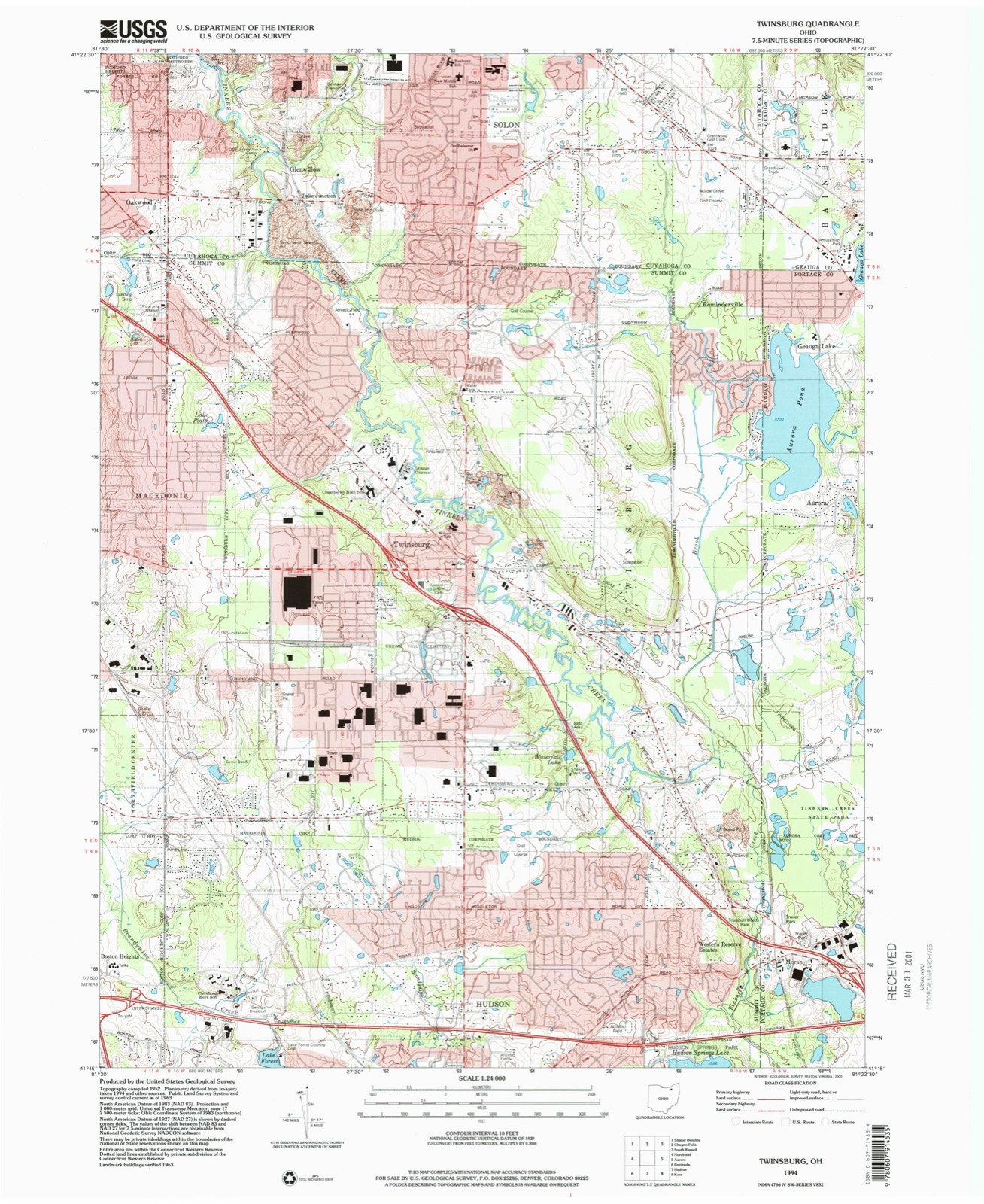
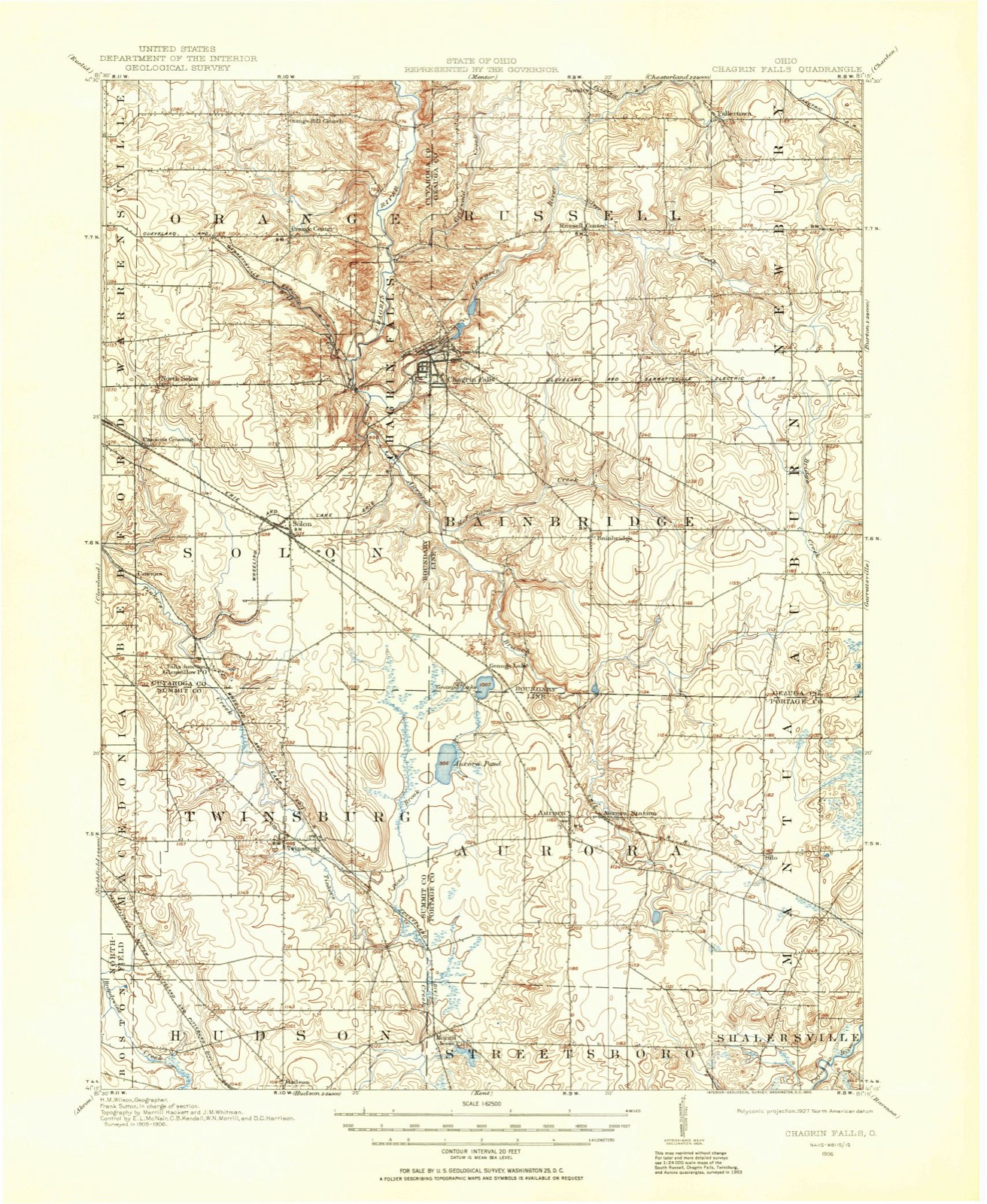
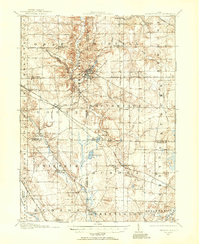
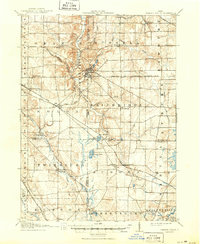
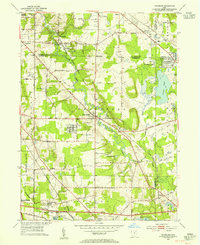
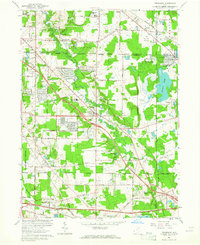
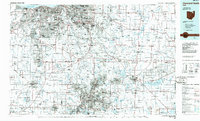
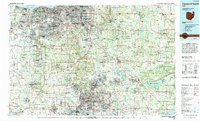
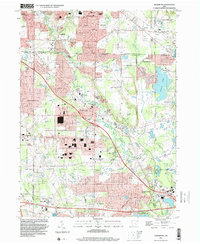
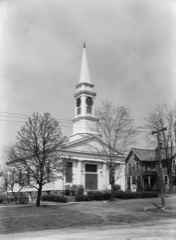
Listed on the National Register of Historic Places in 1976. 9 historic topographic surveys show this location, the earliest from 1906.
From the record
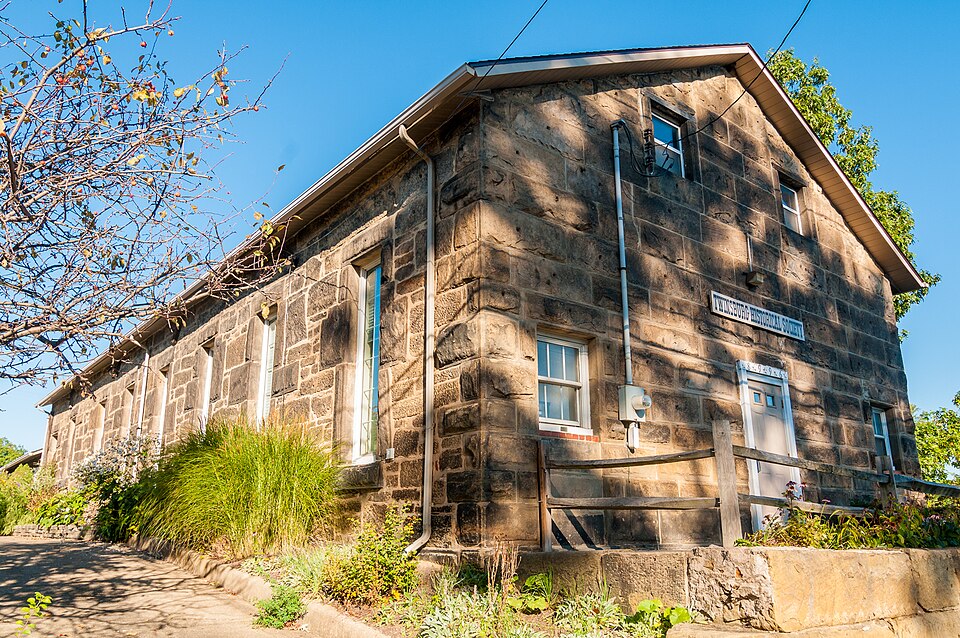
“Twinsburg Institute was a historic private academy located in Twinsburg, Ohio, United States. Established and constructed primarily by the noted local educator Reverend Samuel Bissell in 1865, the Institute served as a vital educational institution during the latter half of the 19th century, drawing students from across Summit County and the wider Northeast Ohio region.”
Wikipedia article Twinsburg Institute, CC BY-SA 4.0.
One of 180 National Register listings published here for Summit County · listed in 1976 · category: Building.
National Register reference number.76001535- the number the National Park Service assigned this property when it was listed, and the key its nomination file is catalogued under at the National Archives.
Then and now
1906 to 1994
The ground this property stands on, surveyed
88 years apart. Drag the handle to wipe between them. Both sheets are
United States Geological Survey originals; neither has been altered.
The first settlement of Twinshurg Township was made in April, 1817, and the honor of being the first settler belongs to Ethan Ailing, who was then a mere boy of 17 years, sent on by his father to prepare for the later coming of the Ailing family. Moses Wilcox and Aaron Wilcox, twin brothers, were ako among the very earliest settlers. They were also among the original proprietors, as was Isaac Mills, who gave the township its first name "Millsville." The Wilcox twins afterwards persuaded the settlers to let them name the township, which they did, calling it Twinshurg in honor of their relationship. The township was organized in April, 1819. The first officials were Frederick Stanley, Lewis Ailing, Luman Lane, Samuel Vail, Elisha Loomis and Elijah Bronson. Ethan Ailing died in 1867, and by his will left eight shares of the stock of the Big Four Railroad Company to the mayor of the city of Akron for the purpose of having the dividends, declared thereon, being used to buy clothing, so that destitute children might be enabled to attend Sunday-school. These dividends are being used for this purpose at the present day, being turned over to the city poor director by the mayor upon their receipt. As early as 1822 both the Methodists and Congregationalists organized churches in Twinsburg. The latter built a church in 1823 and the present one in 1848. The Methodists built churches in 1832 and 1848. The Baptists organized in 1832 and built a church in 1841. In 1843 "The Twinsburg Institute" was opened by Samuel Bissell, which was one of the most successful educational institutions in the county. The beautiful soldiers' monument on the Public Square was dedicated July 4, 1867. One hundred and twentyeight men of Twinsburg went to the front during the Civil AVar. From 1856 to 1870 "The Twinsburg Fair" was one of the great features of agricultural life in this vicinity. At the present time, E. J. McCreery is town- .ship clerk, and A. J. Brown and Isaac Jayne are justices of the peace.
Regional context, not property-specific
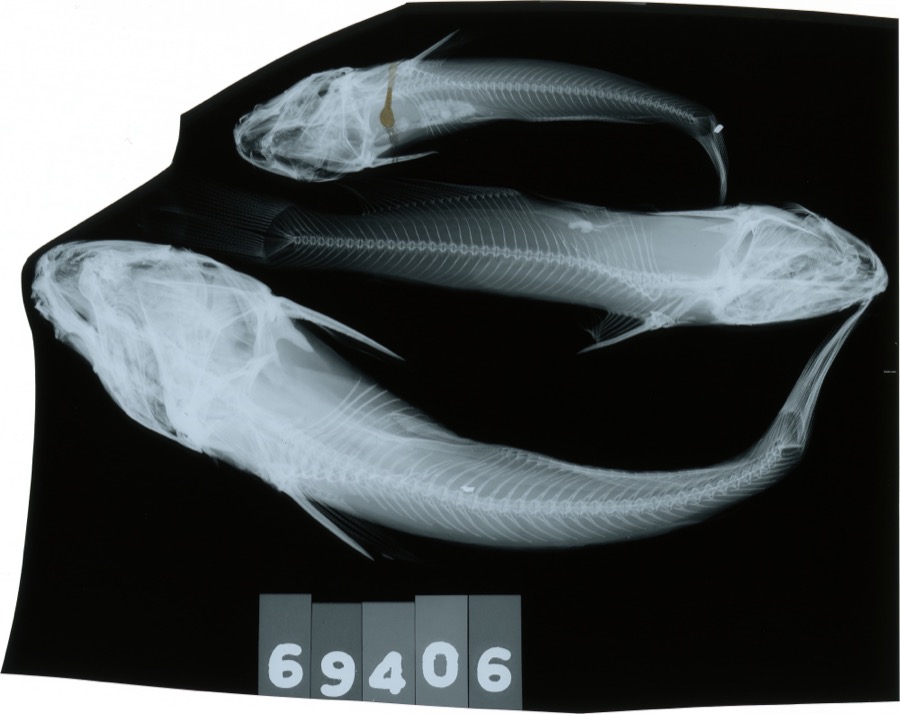
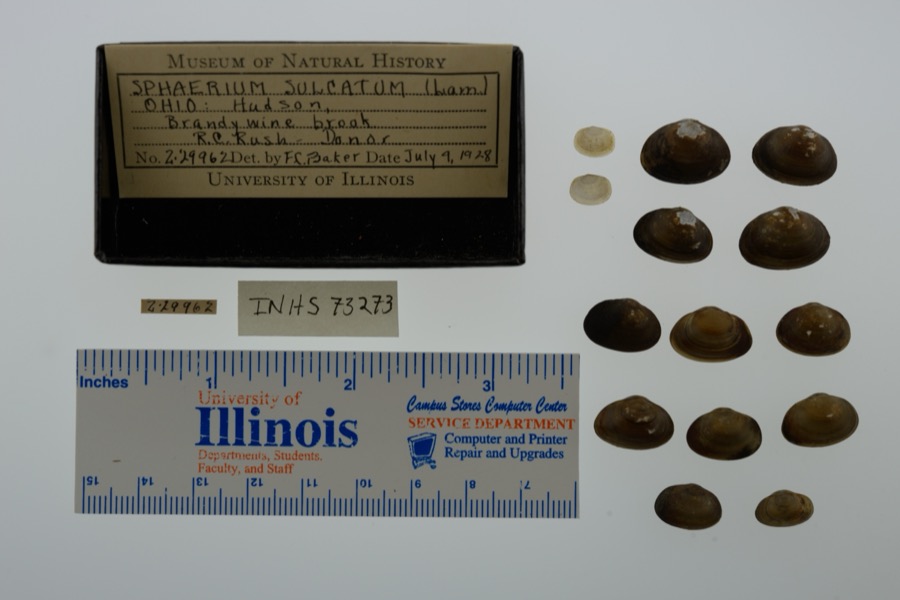
evidence. Museums hold 606 specimens
collected within 10 miles of Twinsburg Institute between 1877 and 1972: 584 Animalia, 11 Fungi, 11 Plantae.
12 distinct Species records are shown.
Collected by A. Hall, Adams J. M. R., Armbruster, D. C. (Daniel C.) and others. Each is a
physical object with a catalogue
number, and each entry opens the museum's record. This is what was
collected and kept, not a survey of what lives here - nothing can be
concluded from a species being absent.
Regional context, not property-specific
evidence. The federal mineral resources record lists
7 workings within 5 miles of Twinsburg Institute: 5 past producers, 1 producer, 1 unknown.
1 still produces. What was taken out: Stone, Crushed/Broken, Sand and Gravel, Construction, Zirconium. Distance is straight-line from the
map coordinates, so a quarry counted here may appear on a neighbouring
settlement's page as well.
Regional context, not property-specific
evidence. The National Weather Service names
Twinsburg, the town this property stands in, in 33 storm reports between 1993 and 2024: 15 hail, 13 thunderstorm wind, 4 flash flood, 1 flood.
No death or injury is recorded in these reports. Each account below is quoted exactly as the forecast office
filed it, from the NOAA Storm Events Database, and each date
opens the federal record of that event.
Heavy rain and rapid snow melt led to a rapid rise in the Cuyahoga River in Summit County which reached moderate flood stage at Old Portage. One to two inches of rainfall fell during the overnight hours of the 27th into the 28th, and combined with six to ten inches of heavy snow was on the ground resulted in rapid runoff. Several people had be rescued from homes and vehicles as the water came up. One rescue worker suffered hypothermia rescuing a motorists floating away in flood waters in Northfield Center.
United States Geological Survey topographic
sheets whose coverage includes this point. Matched by taking the coordinate the National Park Service records for this property, then
testing that coordinate against the published boundary of every sheet.
When this property was proposed for the
National Register, someone wrote the case for it: what the building is,
and why it matters. That document is a federal record in the public domain.
It is quoted below word for word, never summarised. The text was read off the scanned case file by machine, so the
occasional stray character is the recogniser's and the 1970s
typewriter's.
Description of the property
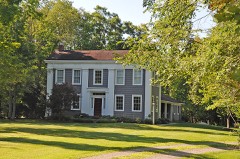
removed around 1920 and a new roof added. The present roof has on the east end were formerly full height, as can be seen from the CONDITION DESCRIPTION UNEXPOSED DETERIORATED UNALTERED RUINS FAIR windows which were formerly doors.The two second-story windows half with masonry.The interior is one large room, used for exhibit space and meetings. The stonework is of squared rubble, some vermiculated and some wooden lintels and the different stonework above the openings. erected around 1920 to provide a kitchen.At the same time most On the narrow end facing east there are three openings on square blocks. The building is unusually long for its height, having a plain eaves line with no cornice or frieze. This is a large one-story building of sandstone construction.
seven bays on the side elevations.This is due to the fact that it CHECK ONE the ground floor.The center one isa door and the other two are On the west end a one-story addition of cement block was XEXCELLENT - GOOD XALTERED rock-faced. The jambs of the openings are large vertical slabs and was originally a two-story building. The second story was remove of the window openings were made smaller by filling in the lower AREAS OF
Statement of significance
Bissell. Born in 1797 in Middlefield, Massachusetts, he was brought Massachusetts, determined to enter college. After making up the log house. In 1837 he built his own school house, in which he taught could attend. Many Indians of the Seneca, Ottawa and Potawatomi At the onset of the Civil War, there were financial difficulties, stone building in 1866-1867. Although he was 70 years old, the 1867-1895 construction. 1600-1699 ARCHEOLOGY-HISTORIC RELIGION AGRICULTURE TRANSPORTATION THEATER SIGNIFICANCE MILITARY SCULPTURE PERIOD INDUSTRY BUILDER/ARCHITECT PHILOSOPHY LITERATURE _ECONOMICS INVENTION Samuel Bissell attended the Institute.
XEDUCATION _COMMUNICATIONS _COMMERCE and seven teachers and assistants.The Institute never received a The founder and mainstay of the Twinsburg Institute was Samuel classical curriculum of mid-nineteenth century education. Then Samuel Bissell began all over again, erecting the present Historical Society. X1800-1899 Reserve College in Hudson. In 1828 he became pastor at the Congreg- He then studied theology and became a minister. _CONSERVATION ART of existence.The stone building was acquired by the Twinsburg half a century.It is also an unusual example of vernacular stone XARCHITECTURE for 29 years. _SOCIAL/HUMANITARIAN ational Church in Twinsburg. He soon began a school ina nearby charter or any public funds.
The tuition was very low, so that all _PREHISTORIC -1500-1599 In l826 he returned to Aurora and taught at nearby Western Bissell was still teaching at the age of 84,and 6,000 students had By 1848 four buildings were in use, and there were 300 students With Bissell's death at the age of 98 the Institute passed out Grange in 1920,and in 1964 it was transferred to the Twinsburg _1700-1799 -1400-1499 an education and was tutored in.Aurora.In 18l6 he went back to and some of the buildings were sold to pay debts of around $6,000.
Quoted from the National Register nomination
for reference 76001535, 12 pages, held by the National Archives in Record
Group 79. See the
catalogue record.
Listed places nearby
6 within 8 miles
Other National Register properties close
enough to walk or drive between, ordered by distance from this one. Both
positions come from the same geocoding pass that matched these properties
to their map sheets.
Listing record. National Park Service National Register of Historic Places, listed-properties dataset, current to 2026-05-22.
Map join. Address geocoded through the United States Census geocoder, then tested against the published boundary of every sheet in the USGS Historical Topographic Map Collection.
How this page is made. Listing fields come from federal records; map-sheet coverage is a labelled coordinate-to-boundary calculation, not a source-field claim.
Specimens. Global Biodiversity Information Facility (GBIF), https://www.gbif.org/. Only records licensed CC0 or CC BY are used. Records licensed CC BY-NC are excluded because this site carries advertising. Images are checked individually and any whose licence is non-commercial, no-derivatives or unreadable is refused.
Mines and quarries. USGS Mineral Resources Data System (MRDS) https://mrdata.usgs.gov/mrds/ A work of the United States government, no copyright under 17 U.S.C. 105.
Storms. NOAA National Centers for Environmental Information, Storm Events Database https://www.ncei.noaa.gov/stormevents/ A work of the United States government, no copyright under 17 U.S.C. 105. Narratives are quoted verbatim from the National Weather Service report and are not edited or summarised.
 Block