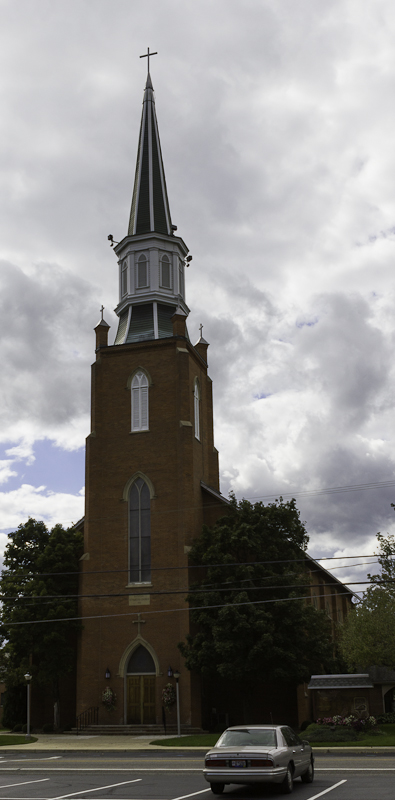
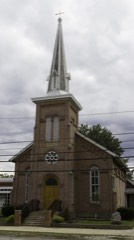
Built in 1861 in the Gothic Revival. Listed on the National Register of Historic Places in
1975. A historic map-sheet match is not published yet. The record needs a coordinate-quality review before it can be joined to a sheet boundary.
From the record
“Martin of Tours Catholic Church is a parish of the Catholic Church in Valley City, Ohio, in the Diocese of Cleveland. It is noted for its historic church, which was built in 1861 and added to the National Register of Historic Places in 1975.”
Wikipedia article St. Martin's Catholic Church, CC BY-SA 4.0.
one of 27 National Register listings in Medina County · listed in 1975 · category: Building · built in 1861, Gothic Revival, by Patrick Charles Keely.
National Register reference number.75001486- the number the National Park Service assigned this property when it was listed, and the key its nomination file is catalogued under at the National Archives.
Regional context, not property-specific
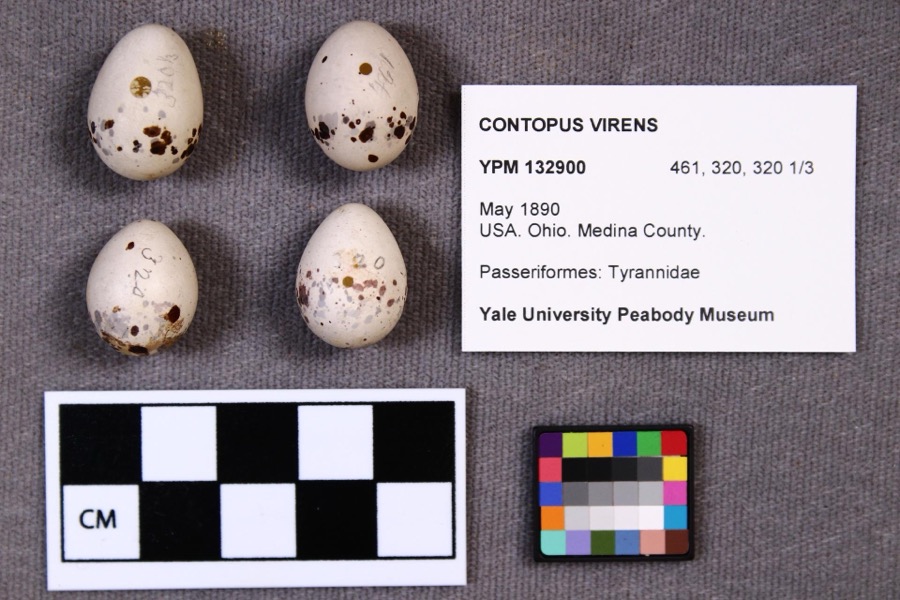
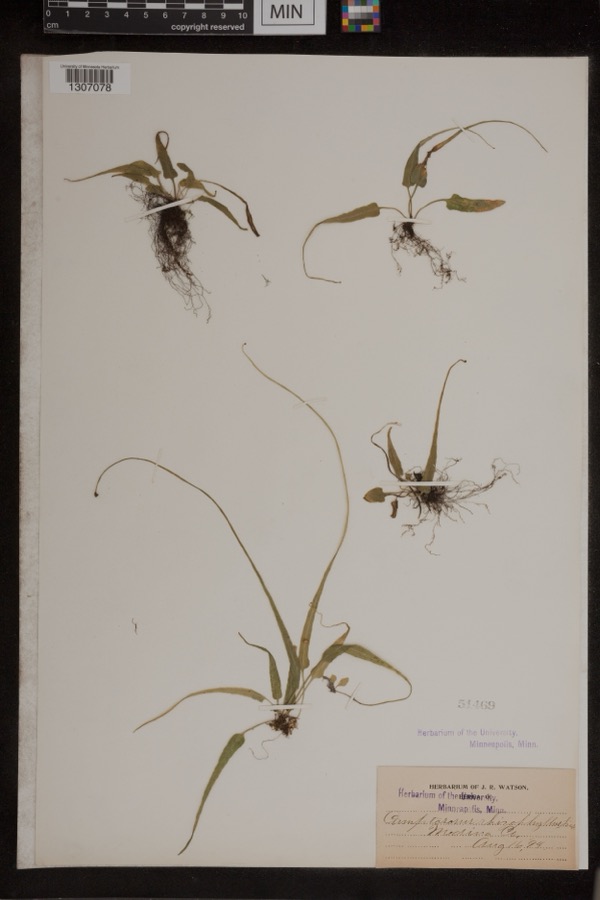
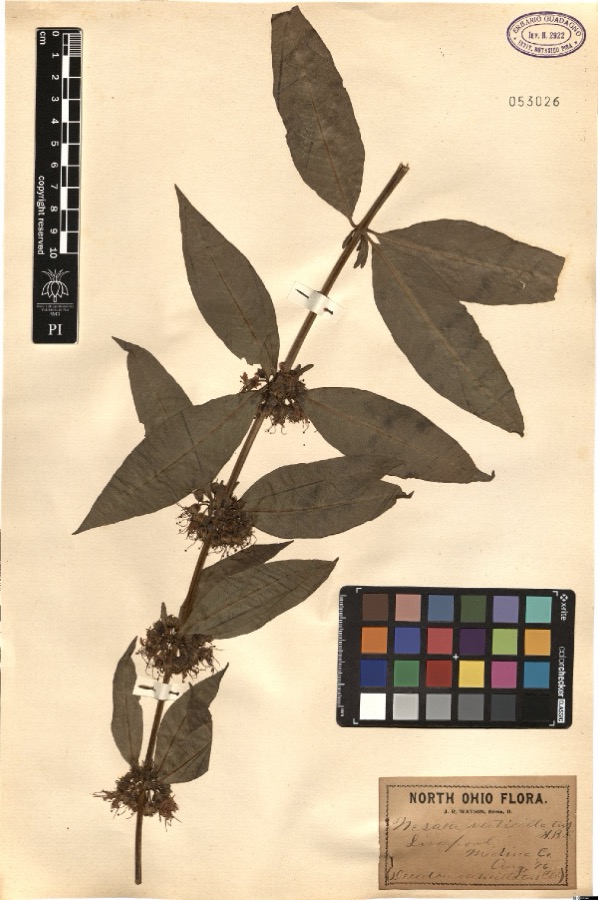
evidence. Museums hold 266 specimens
collected within 10 miles of St. Martin's Catholic Church between 1884 and
1975: 227 Animalia, 22 Plantae, 15 Fungi, 2 Protozoa. 12 distinct Species records are shown.
Collected by A. Roberts, Ashcroft, G.B.; O. Berea, B Zahuranec & party and others. Each is a
physical object with a catalogue
number, and each entry opens the museum's record. This is what was
collected and kept, not a survey of what lives here - nothing can be
concluded from a species being absent.
Regional context, not property-specific
evidence. The National Weather Service names
Valley City, the town this property stands in, in 15 storm reports between 1999 and 2020: 11 thunderstorm wind, 3 hail, 1 tornado.
No death or injury is recorded in these reports. Each account below is quoted exactly as the forecast office
filed it, from the NOAA Storm Events Database, and each date
opens the federal record of that event.
A thunderstorm downbust with winds estimated to be as much as 85 mph caused extensive damage across the northern end of Medina County. The damage began west of Valley City along the county line and continued east across the Brunswick and Hinckley areas. The damage was most concentrated in Liverpool township where there was significant tree and power pole damage. Hundreds of trees were also downed in Brunswick and Hinckley. Many homes lost roofing or siding and a few were damaged by fallen trees. In Brunswick alone, there were 300 reports of damage with four homes sustaining structural damage and a fifth destroyed from a complete roof collapse caused by a fallen tree. There was also damage across Medina and Granger Townships but it wasn't as widespread. Many roads, including county and state routes were blocked by fallen trees and power lines. Several school districts in the county were closed on November 6th because of power outages. At the peak of the storm over 10,000 people were without power in Median County. It took a couple of days for power to be fully restored.
The tornado started as an EF0 in extreme eastern central Lorain County near the intersection of Island Road and Route 303. The tornado quickly became an EF1 in Medina County and tracked around 7 miles before lifting up near the intersection of Grafton and Marks Roads. Along the 7.3 mile path of the tornado, much of the damage was to trees that were knocked down or uprooted. Some shingle and mainly minor structure damage also occurred. A barn on Station Road was moderately damaged. The max path width was 200 yards and the maximum estimated speed was 94 mph. The tornado was on the ground approximately 7 minutes. Scattered downed trees and limbs observed east of this location was determined to be a result of straight line winds.
Thunderstorm downburst wind gusts of at least 60 mph downed at least trees in the Liverpool Township and Valley City areas. Trees were reported downed at residences on Columbia, Neff and Law Roads.
No historic map-sheet match is published
for this property yet. That does not mean no map exists. This record needs
a coordinate-quality review before it can be joined to a sheet boundary.
Browse the county's mapped places while that work is
pending.
From the nomination file
1,864 words on record
When this property was proposed for the
National Register, someone wrote the case for it: what the building is,
and why it matters. That document is a federal record in the public domain.
It is quoted below word for word, never summarised. The text was read off the scanned case file by machine, so the
occasional stray character is the recogniser's and the 1970s
typewriter's.
Description of the property
marked by a single Gothic entrance, a tall pointed window and a three aisles by columns, although the exterior profile does not colonnettes, the ribs being applied to a center wooden post. They wooden reredos. The windows contain excellent mid-Victorian stained glass, most of them being memorials. At the east end there is a replacing the former three steps. New heating and electrical system s were installed, as well as a new tile floor, The ceiling was replastered vestry. CONDITION Moved Ruins collapse. In 196l the chancel was remodeled, with a one-step approach belfry with corner pilasters and Gothic louvered openings, and a tall a large pipe organ installed in 188l. The balcony is reached by square tower with corner buttresses on the axis of the east front. ed.
The steeple consists of a concave octagonal stage, an octagonal the apse and vestry, and a wooden frame entry to the rear of the support a continuous architrave running parallel to the aisles.Above The main body of the church is rectangular, with five bays on the actually constitute a basilican elevation.The columns are clustered the aisles the ceiling is formed by three pointed tunnel vaults. The slender spire with a large cross.The main tower has three stories and the whole interior repainted.
Low ground-story utility wings have been added on either side of inally there were pinnacles on the corners, but they have been remov- The main east entrance leads to a passage through the tower side elevations articulated by wall buttresses.There is a large This is a large brick church in the Victorian Gothic style. smaller shuttered lancet. At the west end a small gabled bay contains the apse.Behind this there is a still smaller bay for the vestry.
imposing structure for its location, a completely rural one. In By the 1830s a large number of German families, largely from Alsace and Baden, had settled in Liverpool Township, Medina 1840s to serve the German farm community. Another mission, St. Mary's of Abbeyville, was established two miles away at about the same time, but it was absorbed by St. Martin's in 1859. This chapel erected in 1842. A larger brick structure was built on the under the direction of Father John Van den Broek at a cost of $30,000, which represents a far more substantial cost than the Although there is no documentation, there is a basis for Catholic architect of the mid-nineteenth century, Patrick C.
Keely: the stylistic description of the typical Keely church, as set forth architect who came to America in 184l, settled in Brooklyn and 1861-1862 Commerce SIGNIFICANCE Engineering Conservation losophy Military Architecture Communications churches. Religion/Phi Transportation Science Aboriginal Theater Literature Agriculture Education Pre-Columbian Invention Music Political Sculpture itarian Social/Human- large church erected by a non-English immigrant community. conjecture that the architectural plan was provided by a pre-eminent Almost more suitable for a city, it is an unusually expensive and church is the third building of St.Martin's.The first was a log Cleveland, and the nucleus of St.Martin's was formed in the early addition it is an excellent example of the Victorian Gothic style.
average rural church of that date. This is a relatively early example in northern Ohio ofa Keely for a church in Toledo in 1862;3) the church exactly fulfills present site in 1849. The present building was built in186l-1862 is credited with the design of sixteen cathedrals and over 400 practice of the Church;2)Itis known that the Diocese employed 1)It is known that the Cleveland Diocese employed important in the New Catholic Encyclopedia.
Quoted from the National Register nomination
for reference 75001486, 12 pages, held by the National Archives in Record
Group 79. See the
catalogue record.
Listed places nearby
6 within 8 miles
Other National Register properties close
enough to walk or drive between, ordered by distance from this one. Both
positions come from the same geocoding pass that matched these properties
to their map sheets.
Listing record. National Park Service National Register of Historic Places, listed-properties dataset, current to 2026-05-22.
Map join. Address geocoded through the United States Census geocoder, then tested against the published boundary of every sheet in the USGS Historical Topographic Map Collection.
How this page is made. Listing fields come from federal records; map-sheet coverage is a labelled coordinate-to-boundary calculation, not a source-field claim.
Specimens. Global Biodiversity Information Facility (GBIF), https://www.gbif.org/. Only records licensed CC0 or CC BY are used. Records licensed CC BY-NC are excluded because this site carries advertising. Images are checked individually and any whose licence is non-commercial, no-derivatives or unreadable is refused.
Storms. NOAA National Centers for Environmental Information, Storm Events Database https://www.ncei.noaa.gov/stormevents/ A work of the United States government, no copyright under 17 U.S.C. 105. Narratives are quoted verbatim from the National Weather Service report and are not edited or summarised.
 Block
Block