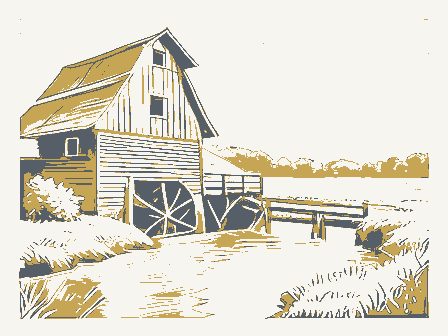
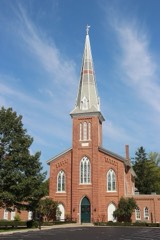
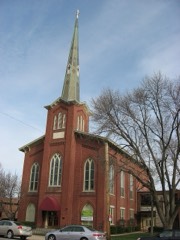
Listed on the National Register of Historic Places in
1975. A historic map-sheet match is not published yet. The record needs a coordinate-quality review before it can be joined to a sheet boundary.
From the record
“It was laid out by Philip Gunckel, who, on the 4th day of October. G certified that the plat as recorded was correct.”
The History of Montgomery County, Ohio, Containing a History of the County; (1882). Machine-read text.
one of 117 National Register listings in Montgomery County · listed in 1975 · category: Building · one of 4 National Historic Landmarks in Montgomery County.
National Register reference number.75001509- the number the National Park Service assigned this property when it was listed, and the key its nomination file is catalogued under at the National Archives.
Germantown is situated in the Twin Yalley, with Little Twin Creek on its ide, and Big Twin on its west and south sides, being in the forks of these r| ns. It was laid out by Philip Gunckel, who, on the 4th day of October. G certified that the plat as recorded was correct. The first sale of lots oc- October 21, 1814, and the second sale November 15, 1815. It was -1 Germantown because the people who built up the town and lived around f e Germans. Howe, in his " Historical Collections of Ohio," says " Gern iwn was named from Germantown, Penn.," but in this he is mistaken; the n was given for the reason just stated. Its site, as well as its surfings, are in a high degree beautiful. The valley immediately around H Yn is on almost all sides inclosed by hills, which are in large part cov- "iet|)y trees, forming a forest- crowned wall, presenting a very pleasing pict- are.* The town is regularly laid out; its streets are wide, well graded and m adamized. The climate is most salubrious, the drainage admirable, malark diseases unknown, and the health of the people excellent. The post office v established in October. 1818, Peter Shaeffer being the first Postmaster. G mantown has no railroad, but has, nevertheless, good railroad facilities means of omnibus lines to the C., H. & D. and C., C. , C. & I., at Carlisle g Miamisburg, which points are each but four miles distant. The town posses good public buildings ; the schoolhouse is a very substantial, three-stor structure, overlooking the valley, containing twelve rooms, four on each He the Town Hall is an edifice that would do credit to a much larger town; g the armory, originally built for an academy, engine house and prison, are quite new, capacious and attractive. There are four churches of good arc tectural style, some of them finished and furnished with taste and elegan The town also has what many large places lack - a public park, contain; about five acres of ground, which has been but recently laid out. Germanfco has at present three dry goods stores, four grocery stores, two hardware, t furniture, two tin and stove stores, a number of other mercantile establishme possessed by such towns, three hotels and one banking house. The Exck;u!i Bank was established by Col. John Stump, and did business a few years, wl it was merged into the First National Bank of Germantown, which was org ized July .18, 1868, by Christian Rohrer, William Gunckel, John Stump, J< F. Kern and others, beginning business September 1 of that year, with a ca tal of $50,000, which has since been increased to $75,000. John F. Kern i; elected President, and John Stump, Cashier; the former serving as Presid! of the bank until January 10, 1882, when he resigned, and was succeeded ,j Joseph W. Shank. Col., Stump was succeeded as Cashier by J. H. Cross, vl was elected January 16, 1869; began his duties February 1 of that year, wlf position of trust and confidence he has filled up to the present. During m;| years, the German was the only language spoken among the people of it town, but the English language has almost entirely supplanted it as a inedi of social and business intercourse. - (
Sunsbury is but a small village of about forty dwellings; is separaj from Germantown by a space of .about a quarter of a mile, and is located rectly south of the latter town, on the Carlisle & Germantown piko. It very old place, being the first point settled in German Township, and f<| number of years was the only village or place of business in the Twin Val It was not, however, platted until March 18, 1825, according to the cod records. Its people form, to some extent, a community by themselves, yet t. interests are largely identified with those of the people of Germantown. £ though small in size and population, some of the most prominent men in township have lived here, such as the Emericks, Catrows and Liggets. It never given much prospect of growth, and to-day has no more houses tka had forty years ago. and is beginning to show its age by its external appj a nee.
Regional context, not property-specific
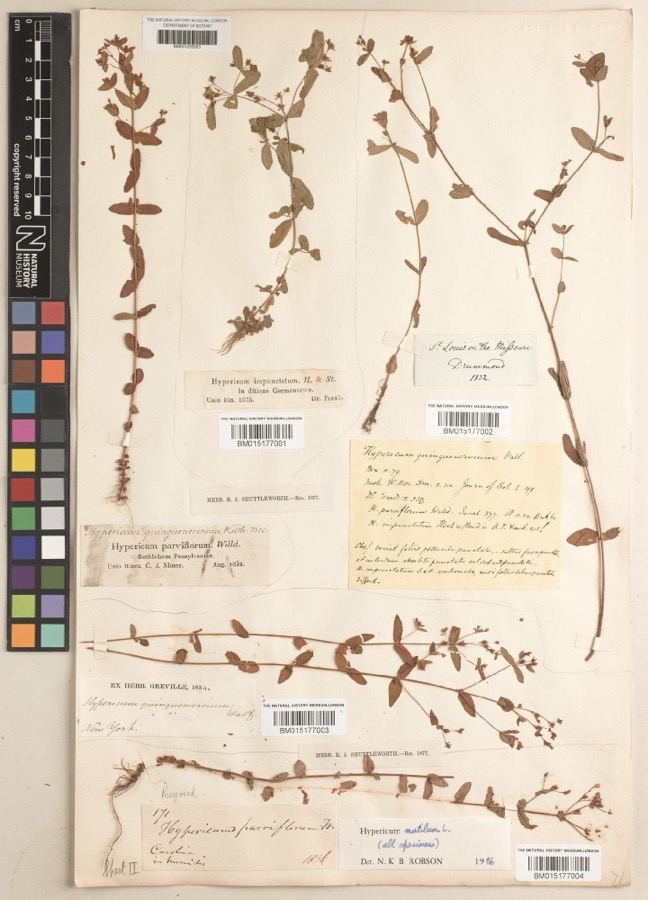
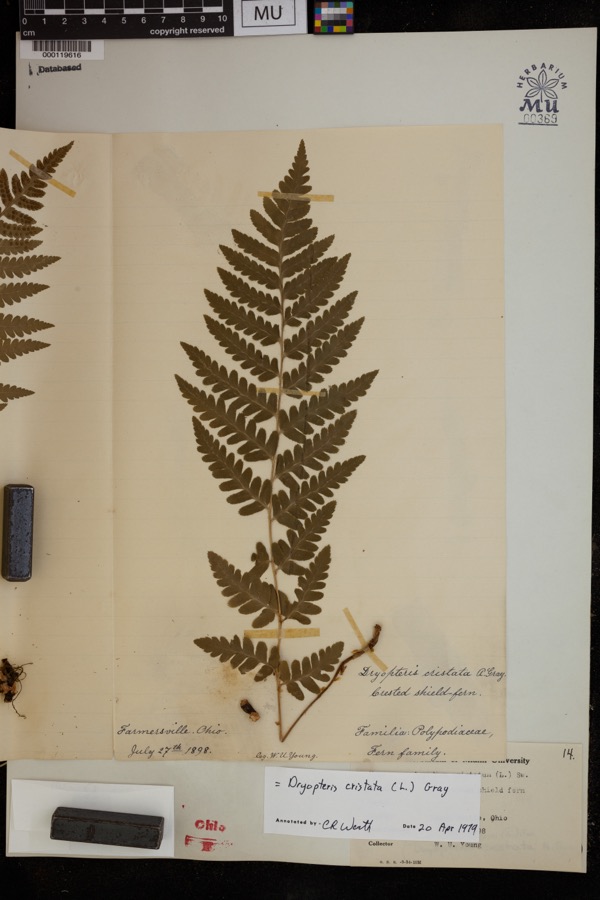
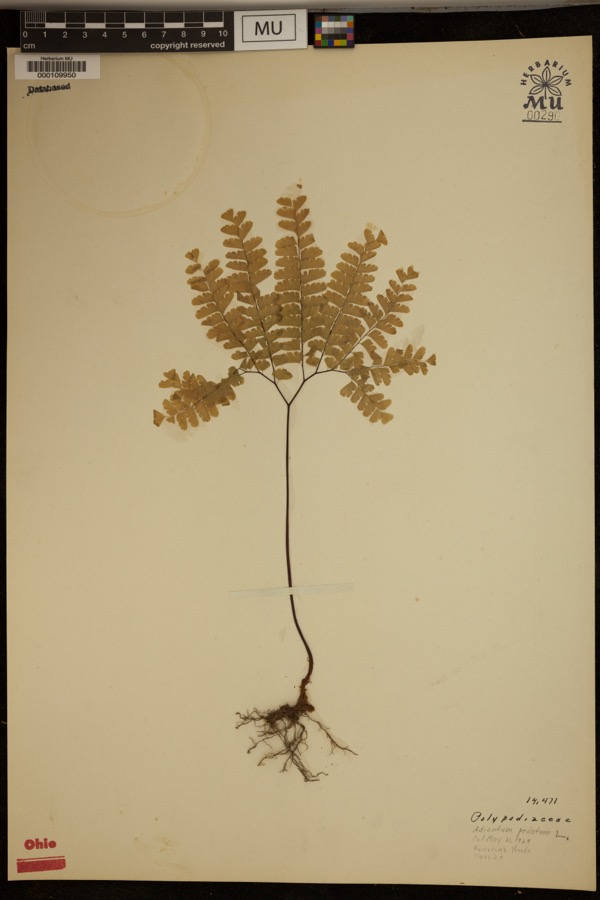
evidence. Museums hold 110 specimens
collected within 10 miles of Stump, John, House And Mill between 1835 and
1969: 83 Animalia, 10 Fungi, 10 Plantae, 3 Protozoa, 3 Chromista, 1 Unrecorded. 12 distinct Species records are shown.
Collected by ?, ATW, Arden R. Gaufin and others. Each is a
physical object with a catalogue
number, and each entry opens the museum's record. This is what was
collected and kept, not a survey of what lives here - nothing can be
concluded from a species being absent.
Regional context, not property-specific
evidence. The federal mineral resources record lists
3 workings within 5 miles of Stump, John, House And Mill: 2 producers, 1 past producer.
2 still produce. What was taken out: Sand and Gravel, Construction. Distance is straight-line from the
map coordinates, so a quarry counted here may appear on a neighbouring
settlement's page as well.
Regional context, not property-specific
evidence. The National Weather Service names
Germantown, the town this property stands in, in 29 storm reports between 1994 and 2025: 20 thunderstorm wind, 7 hail, 1 flash flood, 1 flood.
No death or injury is recorded in these reports. Each account below is quoted exactly as the forecast office
filed it, from the NOAA Storm Events Database, and each date
opens the federal record of that event.
The roof of a mini mall on West Market Street was partially removed. When this occurred, rain was allowed to enter the building causing water damage, which closed three businesses. When the roof came off it damaged a vehicle.
No historic map-sheet match is published
for this property yet. That does not mean no map exists. This record needs
a coordinate-quality review before it can be joined to a sheet boundary.
Browse the county's mapped places while that work is
pending.
From the nomination file
3,039 words on record
When this property was proposed for the
National Register, someone wrote the case for it: what the building is,
and why it matters. That document is a federal record in the public domain.
It is quoted below word for word, never summarised. The text was read off the scanned case file by machine, so the
occasional stray character is the recogniser's and the 1970s
typewriter's.
Description of the property
facade facing east built on the central hall plan. The The interior retains most of its Federal features. The Most of the deeply grooved moldings and chair rails are walnut, and maple were sawed; seasoned, mortised, and raised atmosphere of the house. CONDITION UNEXPOSED DETERIORATED DESCRIPTION FAIR XALTERED foundation is coursed stone and contains a partial basement X_EXCELLENT over six lights, flat brick arches with radiating voussoirs, Interior modernization of the original kitchen has destroyed room fireplace to serve the enlarged room.A utility shaft and exterior kitchen on the north wall of the dining room was added to the north exterior wall of the new dining room. renovations have done nothing to detract from the Federal miraculously evaded the decorators and "colonial" restorers.
The two story L-shaped Adams style house has a five bay CHECK ONE of the central hall. The Browns have carefully added a brick wing third bay of the four bay south side is an entrance way into main entrance are separated by attenuated half columns.The to the addition is ingeniously camouflaged behind the pre- existing cupboard doors on each sideof the fireplace.The marks off a medium hip roof covered in asphalt shingles.The _UNALTERED -GOOD LRUINS The old and the dining room making it one long sitting room. carved cherry banister. Each room had its own distinctively Bond) in 1961 to the north wall which contains a laundry and Schaeffers removed the partition between the southeast parlor parlor fireplace was bricked over leaving the large dining its historical value.
to early Ohio architecture. on a 120 acre farm bordering on the west edge of town.
1500-1599 1700-1799 SIGNIFICANCE 1817 1600-1699 ART ECONOMICS PERIOD ENGINEERING ARCHEOLOGY-HISTORIC CONSERVATION AGRICULTURE RELIGION SCULPTURE BUILDER/ARCHITECT EXPLORATION/SETTLEMENT TRANSPORTATION SCIENCE LAW MILITARY LITERATURE XINDUSTRY XARCHITECTURE The next notable owner was Christian Rohrer, an immigrant _PREHISTORIC _POLITICS/GOVERNMENT _1400-1499 INVENTION discharge from service he farmed his father's place and of "High Wines and Liquors, making the first burbon whiskey _SOCIAL/HUMANITARIAN sioned officer in Captain Michael Gunckel's company Serving received a good education and inherited his father's farm and career as ariverboat gambler on the Mississippi.The Stumps and others in founding the township's First National Bank.
raised five daughters and a son in their handsome house which _COMMUNICATIONS - EDUCATION rebuilt a distillery which was on the farm and began the manufacture During the War of 1812,young John enlisted as a noncommis- The handsomely proportioned and sited house on Mudlick Creek _THEATER Christian Rohrer lived in the house until his death. - PHILOSOPHY mill which he built on Mudlick Creek in l817 lends credence _1900- -MUSIC at the Greenville Blockhouse and Fort Harrison. to a local legend that John Stump had a short and very profitable doubled as an ordinary inn on the old Lebanon-Eaton Trace.
men - "Colonel" Stump sold the house, mill and farm to John Underwood Pennsylvania, with his parents to the brand new community Twelve year old John Stump migrated from Berk's County sawmill before he sold out in 183l to seek new opportunities in Christian, born in l80l, as a merchant and banker that lasted nearly to his death in 1875. is one of the finest local examples of the Adams style as adapted
Quoted from the National Register nomination
for reference 75001509, 21 pages, held by the National Archives in Record
Group 79. See the
catalogue record.
Listed places nearby
6 within 8 miles
Other National Register properties close
enough to walk or drive between, ordered by distance from this one. Both
positions come from the same geocoding pass that matched these properties
to their map sheets.
Listing record. National Park Service National Register of Historic Places, listed-properties dataset, current to 2026-05-22.
Map join. Address geocoded through the United States Census geocoder, then tested against the published boundary of every sheet in the USGS Historical Topographic Map Collection.
How this page is made. Listing fields come from federal records; map-sheet coverage is a labelled coordinate-to-boundary calculation, not a source-field claim.
Specimens. Global Biodiversity Information Facility (GBIF), https://www.gbif.org/. Only records licensed CC0 or CC BY are used. Records licensed CC BY-NC are excluded because this site carries advertising. Images are checked individually and any whose licence is non-commercial, no-derivatives or unreadable is refused.
Mines and quarries. USGS Mineral Resources Data System (MRDS) https://mrdata.usgs.gov/mrds/ A work of the United States government, no copyright under 17 U.S.C. 105.
Storms. NOAA National Centers for Environmental Information, Storm Events Database https://www.ncei.noaa.gov/stormevents/ A work of the United States government, no copyright under 17 U.S.C. 105. Narratives are quoted verbatim from the National Weather Service report and are not edited or summarised.
 Block
Block