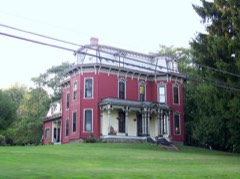
Listed on the National Register of Historic Places in
1975. A historic map-sheet match is not published yet. The record needs a coordinate-quality review before it can be joined to a sheet boundary.
From the record
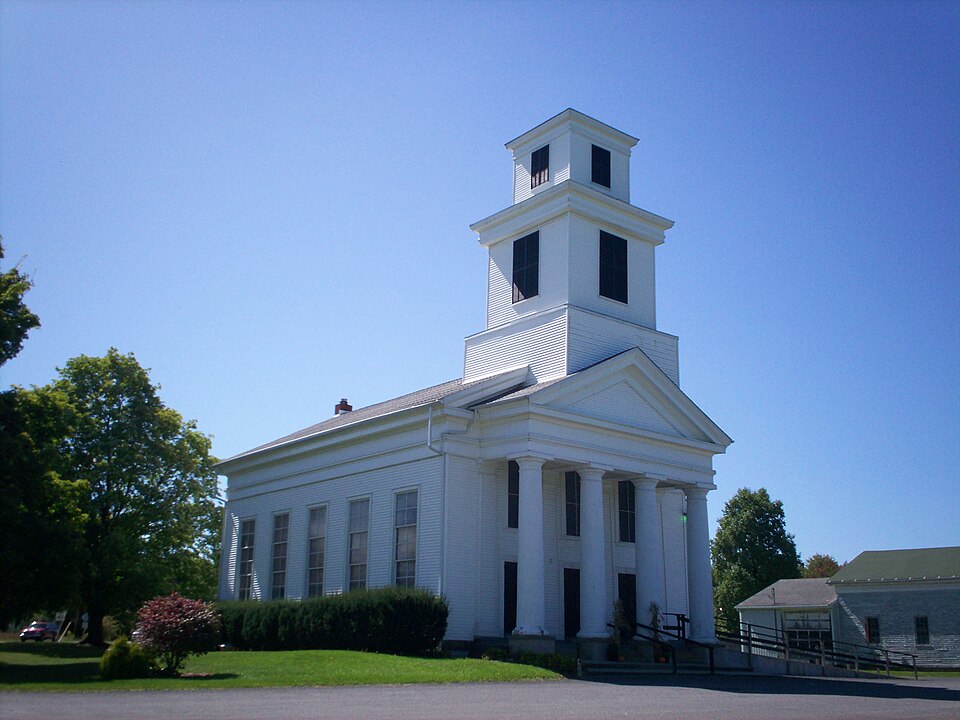
“The Freedom Congregational Church is a registered historical building in Freedom Township, Portage County, Ohio. It was listed on the United States National Register of Historic Places on July 7, 1975.”
Wikipedia article Freedom Congregational Church, CC BY-SA 4.0.
one of 42 National Register listings in Portage County · listed in 1975 · category: Building.
Architectural style. Greek Revival architecture, Federal architecture
National Register reference number.75001521- the number the National Park Service assigned this property when it was listed, and the key its nomination file is catalogued under at the National Archives.
The ground it stands on
3,035 words
The chapter on Freedom Township in History of Portage County, Ohio, published 1885 names Freedom. This is what it says, exactly as the scans read.
In the spring of 1818 Charles H. Paine, commonly called Harry Paine, came into the township and settled on Lots 31 and 41. He came from Hiram, but originally lived at Painesville, his father being Gen. Paine, for whom that town was named. Charles had married the daughter of Elijah Mason, and remained with his father-in-law in Hiram until he could put up a cabin and make a clearing on his land in Freedom. From the time he moved to his place till 1822, himself and family were the only dwellers within what is now this highly cultivated, prosperous and fertile township, and he used to say that during those three or four years, when there was not a white person other than his own family for miles around, that it took considerable nerve to combat the sense of loneliness that would irresistibly steal over him. In 1822, however, he was rejoiced at the arrival of thirteen persons, all in one body, in fact all in one family, for Thomas Johnston and wife had eleven children at that time. Johnston was an Irishman, who in coming to this country had settled in Pennsylvania, afterward removing to the Reserve. He was a genial soul, and could tell a joke with the true Irish flavor. He settled on Lot 32.
During the next year came Paul Larkcom, father of A. C. Larkcom, from Berkshire County, Mass. Paul Larkcom was one of the old Revolutionary soldiers, and had been a member of the Legislature of Massachusetts, Justice of the Peace, etc. His name figures in the history of his native State, being descended from one of the Larkcoms who fled to this country from the persecutions of the seventeenth century. His wife was a cousin of Noah Webster, the great lexicographer. The wife of his son, A. C, was a second cousin of the gallant Commodore Perry. The somewhat famous writer, Lucy Larcom, was a member of this same stock of Larkcoms, but that lady dropped the k from the original spelling of the name. In this year also came Joshua Finch, Jeremiah Colton, Nathaniel Brown, Arvin Brown, John Baldwin, Horace Hopkins, Pardon Sherman, Sylvester Hurlburt, and possibly one or two others, now forgotten. The numbers had now so increased that a petition was presented to the County Commissioners to grant the erection into a "separate township, of Town 4, Range 7, with the name of Freedom." The name "Freedom" is supposed to have been suggested by Mrs. Paine, to whom the matter was referred in honor of that lady having been the first female to enter the township. It is said that she first suggested "Liberty," but as that name was too common, it was changed. The usual version is that she was a great lover of liberty, and the name naturally came up, but an old settler says that she suggested the title in consequence of quite a number of the inhabitants having left sundry little debts when they came out.
Regional context, not property-specific
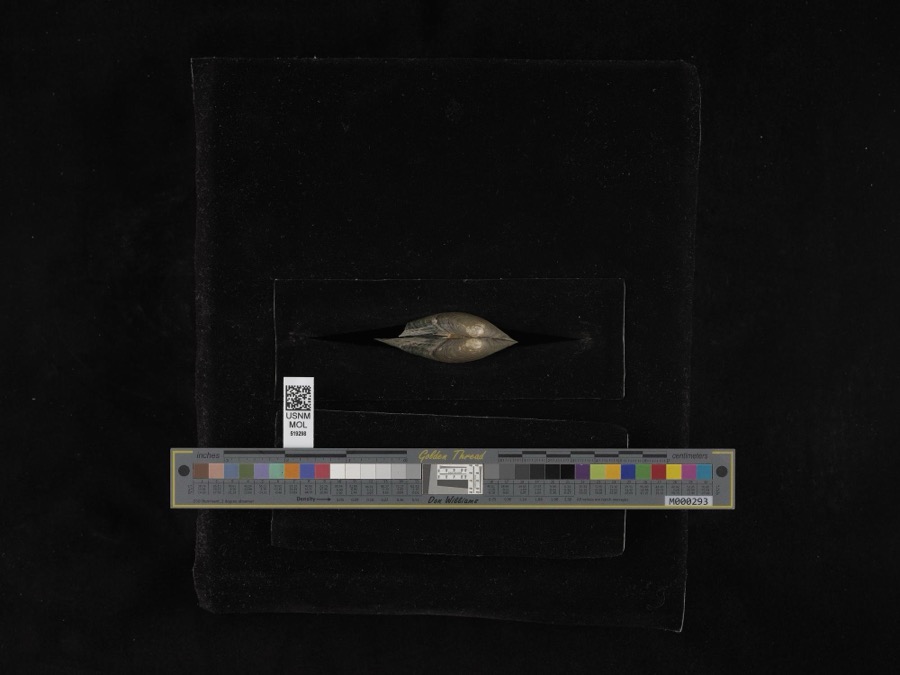
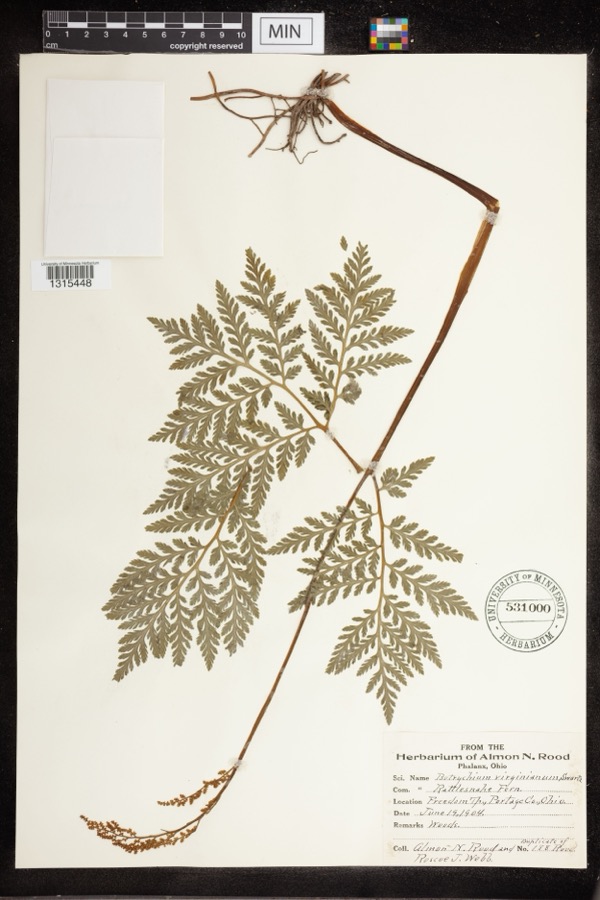
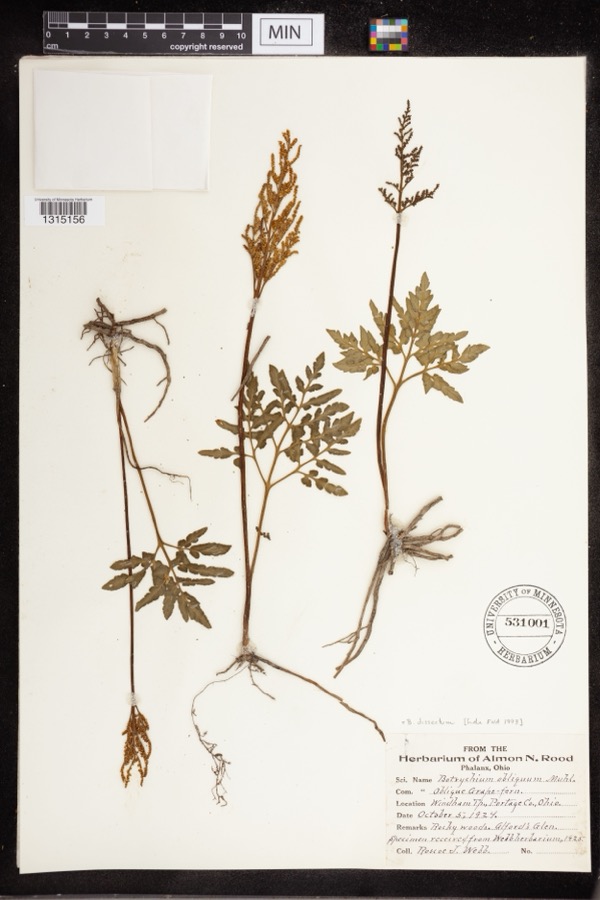
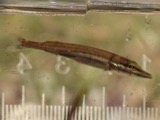
evidence. Museums hold 536 specimens
collected within 10 miles of Freedom Congregational Church between 1883 and
1975: 399 Animalia, 129 Plantae, 4 Fungi, 4 Unrecorded. 12 distinct Species records are shown.
Collected by A. D. Huryn, A. F. Clewell, A. Woolman and others. Each is a
physical object with a catalogue
number, and each entry opens the museum's record. This is what was
collected and kept, not a survey of what lives here - nothing can be
concluded from a species being absent.
Regional context, not property-specific
evidence. The federal mineral resources record lists
4 workings within 5 miles of Freedom Congregational Church: 3 past producers, 1 producer.
1 still produces. What was taken out: Sand and Gravel, Construction. Distance is straight-line from the
map coordinates, so a quarry counted here may appear on a neighbouring
settlement's page as well.
Regional context, not property-specific
evidence. The National Weather Service names
Freedom, the town this property stands in, in 4 storm reports between 1997 and 2010: 2 thunderstorm wind, 2 hail.
No death or injury is recorded in these reports. Each account below is quoted exactly as the forecast office
filed it, from the NOAA Storm Events Database, and each date
opens the federal record of that event.
No historic map-sheet match is published
for this property yet. That does not mean no map exists. This record needs
a coordinate-quality review before it can be joined to a sheet boundary.
Browse the county's mapped places while that work is
pending.
From the nomination file
1,887 words on record
When this property was proposed for the
National Register, someone wrote the case for it: what the building is,
and why it matters. That document is a federal record in the public domain.
It is quoted below word for word, never summarised. The text was read off the scanned case file by machine, so the
occasional stray character is the recogniser's and the 1970s
typewriter's.
Description of the property
is that of a meetinghouse of the late Federal period, but the roof, clapboard siding, five tall windows on the side elevations ing feature, a four-column portico with a prominent entablature and pediment. The columns are massive, cylindrical, unfluted horizontal. So far as is known there was never a spire, which to make the tower somewhat overpowering. ieth century, with a heating plant, an exterior chimney on the CONDITION Ruins stone and concrete. cornices, the second especially being massive and emphatically ance with changing mid-nineteenth century taste. The triple-hung Revival style.The basic disposition of its architectural elements proportions and details are the robust ones of the Greek Revival.
Projecting from the facade is the building's most distinguish- rising directly flush with the facade wall.This placement tends fitted together to form hollow cylinders.The tower consists of This is a medium-sized wooden frame church in the Greek and three doors and second-story windows on the north facade.
sash have apparently been replaced at some time, and most of The interior of the church was remodeled in 1865 in accord- shafts of the Tuscan order: They are made of vertical boards would have been inconsistent with the horizontality of the purest The door frames consist ofa characteristic fluted post-and-lintel three diminishing cubical stages.The upper two have Greek Greek Revival.A very unusual feature is the placement of the The body of the church is a plain rectangular block with a gable foundation and stepsof the portico have also been renewed with (Check One) Excellent Good Moved ( tower so that it straddles the roof and the portico, instead of the glass is colored. There is a gallery over the entrance foyer.
is very typical, but the architectural significance of this particular JUN 2 0 1975 1845 Communications Architecture NATIONAL Engineering Aboriginal losophy Conservation Commerce SIGNIFICANCE Science Transportation REGISTER Agriculture Religion/Phi Invention Music Theater Pre-Columbian rather than doctrine. Education itarian Industry Sculpture of the tower over the portico are the elements which make it especially notable.
Social/Human- the rest was extensive beech forest, and it was considered undesirable The historical, social and cultural significance of such a church The Freedom Congregational Church is one of the half-dozen gregational, but this was not at all an unusual transition in the their first small frame structure in 1835.The present church was Landscape bytery of Portage County.They met first in a log cabin and built ing in northeastern Ohio.Its primary significance is architectural. The church was first organized in 1828 by members of the Pres- not organized until 1825,the last in the county except one. This Although Freedom was first settled in1818,the township was land in the county.
erected in 1845at a cost of $3,000.The church later became Con- Other(Specify) PERIOD (Check One or More as Political SPECIFIC DATE(S) (If Applicable and Known) AREAS OF SIGNIFICANCE (Check One or More as Appropriate) After the land had been drained, it became some of the finest farm- nineteenth century, as the differences are those of church government building is paramount. The fine portico and the unusual placement Art Portage County Historical Society, Portage Heritage (Ravenna, 1957), 351, 354. (Cleveland, 1963), 54. DEFINING A RECTANGLE LOCATING THE PROPERTY DEFINING THE LENTER POINI OF A PROPERTY OF LESS THAN TEN ACRES APPROXIMATE ACREAGE OF NOMINATED PROPERTY:
Quoted from the National Register nomination
for reference 75001521, 12 pages, held by the National Archives in Record
Group 79. See the
catalogue record.
Listed places nearby
6 within 8 miles
Other National Register properties close
enough to walk or drive between, ordered by distance from this one. Both
positions come from the same geocoding pass that matched these properties
to their map sheets.
Listing record. National Park Service National Register of Historic Places, listed-properties dataset, current to 2026-05-22.
Map join. Address geocoded through the United States Census geocoder, then tested against the published boundary of every sheet in the USGS Historical Topographic Map Collection.
How this page is made. Listing fields come from federal records; map-sheet coverage is a labelled coordinate-to-boundary calculation, not a source-field claim.
Specimens. Global Biodiversity Information Facility (GBIF), https://www.gbif.org/. Only records licensed CC0 or CC BY are used. Records licensed CC BY-NC are excluded because this site carries advertising. Images are checked individually and any whose licence is non-commercial, no-derivatives or unreadable is refused.
Mines and quarries. USGS Mineral Resources Data System (MRDS) https://mrdata.usgs.gov/mrds/ A work of the United States government, no copyright under 17 U.S.C. 105.
Storms. NOAA National Centers for Environmental Information, Storm Events Database https://www.ncei.noaa.gov/stormevents/ A work of the United States government, no copyright under 17 U.S.C. 105. Narratives are quoted verbatim from the National Weather Service report and are not edited or summarised.
 Block
Block