National Register reference number.79001826- the number the National Park Service assigned this property when it was listed, and the key its nomination file is catalogued under at the National Archives.
New York, and with his parents came to Ohio, locating in Franklin Co., May 1, 1832. He was married to Helen Bishop ; they had seven children, of whom the subject was the oldest, and was born Feb. 8, 1833 ; the father died when Edwin was 14 years of age. He remained with his mother until he was 22, when, on that birthday, or Feb. 8, 1855, he was married to Corintha Williams, and with his bride located in Central College. In 1863, Mrs. Phillips died, leaving three sons - William, Frank and Charles. Feb. 14, 1874, he was married to his present wife, who was Mrs. Jane E. Knox. She had, before marriage with Mr. Phillips, five Children - Minnie, Kate, William V., Lucinda, Orren A. - and since their marriage, two - Lamata and Lena. Mr. Phillips has made several trips West, but has not been able to suit himself in a home better than in his present one, which is situated one-half mile south of Galena. Besides running his farm, he devotes considerable attention to breeding fine stock, with which he has his farm well stocked.
Genoa Township is bounded on the north by Berkshire Township: on the east by Harlem; on the south by Franklin County and on the west by Orange Township. It is five miles square, and is in the territory known as United States Military Lands. The western half of the township was included in the original township of Berkshire, and the eastern half was in the township of Sunbury. When Harlem Township was cut out of Sunbury, it included all of what is now Genoa Township. The present bounds of Genoa Township were established June 4, 181 6. Its name was suggested by an early settler who wished to do honor to the birth-place of Christopher Columbus. Running through the western half of the township from north to south, on the line traversed by the Cleveland, Akron and Columbus railroad, is a ridge which forms the water-shed between Big Walnut Creek on the east and Alum Creek in Orange Township. On either side of the ridge, the land is comparatively level, although the surface is broken up considerably along the banks of the Big Walnut, and east of 'the creek is more or less rolling. The highest shale cliffs in the county are to be found in the northern part of the township, on what is known as "Yankee Street," about two miles south of Galena. Here as elsewhere along the banks of Big Walnut, are to be found outcroppings of fine Waverlv sandstone. Here and there in the beds of shale a thin layer of an inferior limestone is to be found. Some of the early builders were tempted to use this because of the ease with which it can be quarried, but they soon had their labor for their pains, as this stone disintegrates when exposed to the air. The Big Walnut Creek, to which reference has alreay been made, is the principal stream. It Hows in a sinuous course from north to south through the eastern half of the township. Originally its banks and the lands adjacent were heavily timbered with black walnut trees. The bottom lands along the creek are especially fertile, but these places are frequently overflowed in seasons of freshet, causing the loss of a crop occasionally. All the older men now living here remember the freshet in September. 1866, when cattle, sheep and hogs were drowned, and haystacks and small sheds and buildings were floated and carried down the stream.
Regional context, not property-specific
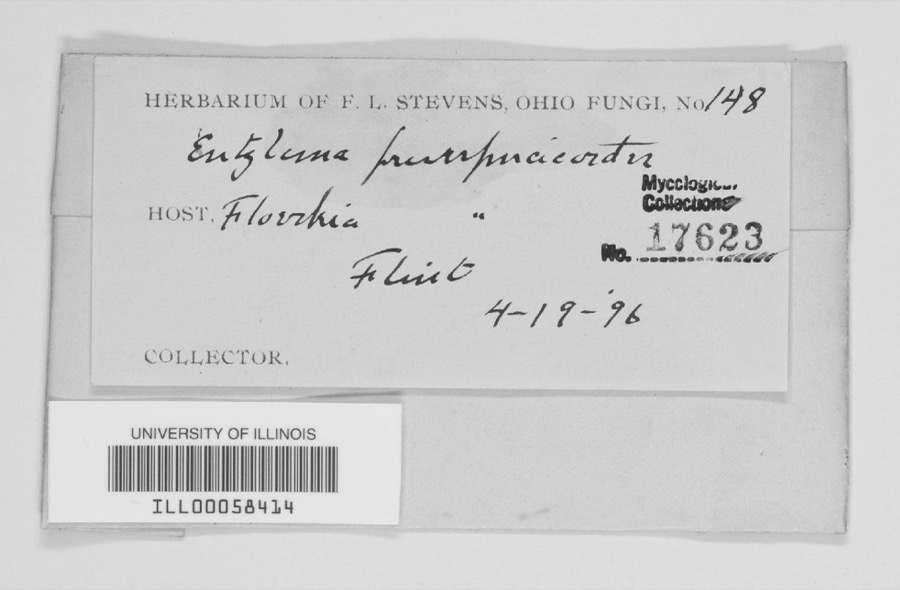
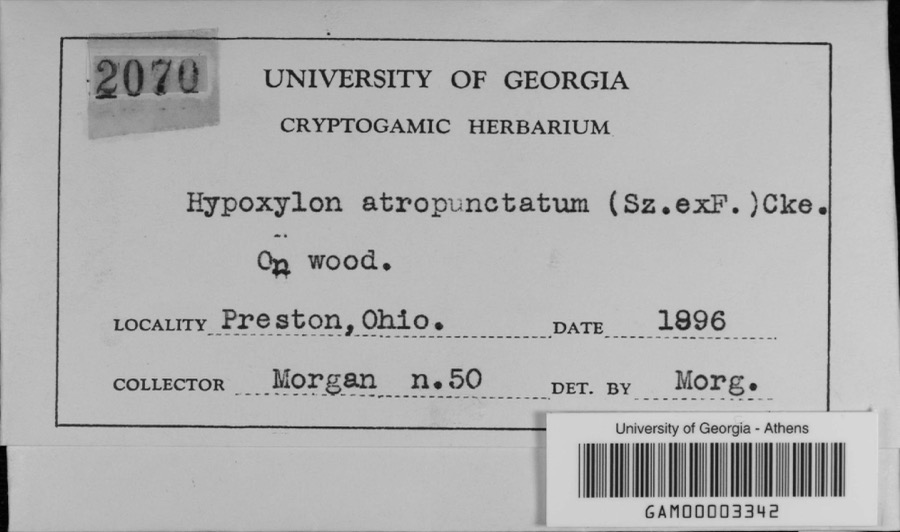
evidence. Museums hold 1,756 specimens
collected within 10 miles of Diadatus Keeler House between 1850 and 1975: 1,686 Animalia, 41 Fungi, 27 Plantae, 1 Unrecorded, 1 Chromista.
12 distinct Species records are shown.
Collected by A C Whitney, A S BRADSHAW, A. P. Morgan and others. Each is a
physical object with a catalogue
number, and each entry opens the museum's record. This is what was
collected and kept, not a survey of what lives here - nothing can be
concluded from a species being absent.
Regional context, not property-specific
evidence. The federal mineral resources record lists
2 workings within 5 miles of Diadatus Keeler House: 1 past producer, 1 producer.
1 still produces. What was taken out: Clay. Distance is straight-line from the
map coordinates, so a quarry counted here may appear on a neighbouring
settlement's page as well.
Regional context, not property-specific
evidence. The National Weather Service names
Galena, the town this property stands in, in 14 storm reports between 1994 and 2020: 7 thunderstorm wind, 5 hail, 1 tornado, 1 flood.
No death or injury is recorded in these reports. Each account below is quoted exactly as the forecast office
filed it, from the NOAA Storm Events Database, and each date
opens the federal record of that event.
The tornado touched down and moved briefly along Big Walnut Road near the Hoover Reservoir. Trees were damaged along the path due to the tornado. In addition, a few shingles were torn off of a house. Based on the damage, wind speeds were estimated around 75 miles per hour.
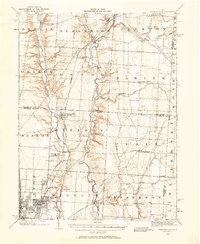
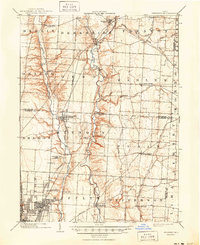
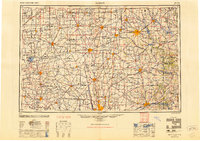
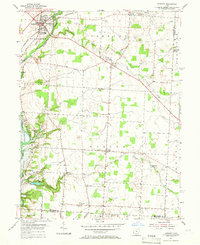
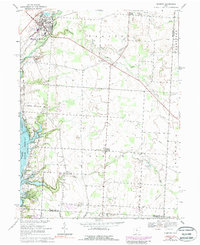
United States Geological Survey topographic
sheets whose coverage includes this point. Matched by taking the coordinate the National Park Service records for this property, then
testing that coordinate against the published boundary of every sheet.
When this property was proposed for the
National Register, someone wrote the case for it: what the building is,
and why it matters. That document is a federal record in the public domain.
It is quoted below word for word, never summarised. The text was read off the scanned case file by machine, so the
occasional stray character is the recogniser's and the 1970s
typewriter's.
Description of the property
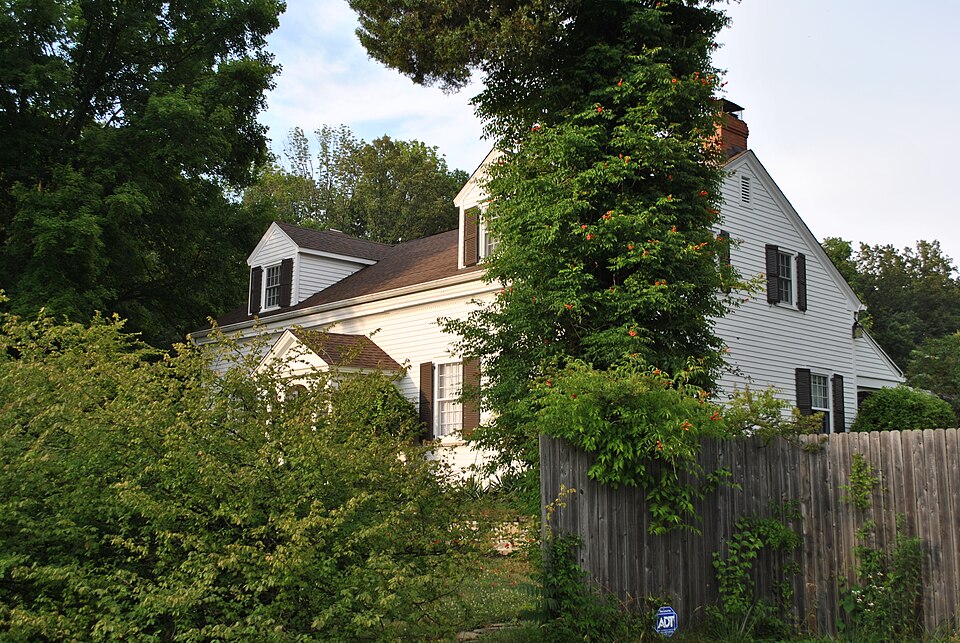
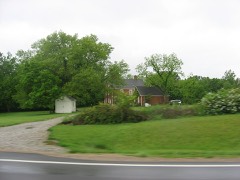
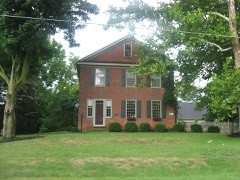
The Diadatus Keeler House is a 1 1/2 story braced frame L-shaped building over a partial The structure has horizontal clapboard siding and a gable roof covered by asphalt turn of the century shows a dentil band in place of the present sawtooth pattern molding. oak columns and the pediment features the same sawtooth designs as on cornice of the main The interior of the main block has a central hallway flanked by single rooms on either paneling is original. The interior woodwork is black walnut and the floors are tongue and groove ash. A small shed is at the rear of the lot of the house but is of no historical interest. CONDITION and pointed arches.
UNALTERED DESCRIPTION DETERIORATED runs the length of the wall of the stairway.Tool markings seem to indicate that this Carpenter style box lock,3-paned fixed sidelights and a fluted framing.It is fronted way at the right of the hallway has a tiger maple banister, railings, steps and risers. CHECK ONE doors.A lean-to type porch is at the rear in the interior of the L formed by the porch.Pilasters of similar design to the porch columns surround and divide the double The wall beneath the stairway features tiger maple paneling and a similar wainscoating .UNEXPOSED nain block and the wing.It is supported by simple square columns.
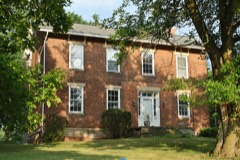
projecting cornice of the facade is finely detailed with parallel rows of a sawtooth block and a large chimney in the center of the rear wing that forns the Lshaped of the _FAIR The facade is symmetrically divided into five bays with the main entrance in the center *.ORIGINAL SITE GOOD bay flanked by 12/12 double hung windows.
The Keeler House stairway is undoubtedly the most magnificent example located to date. The extensive use of tiger maple paneling with the staircase however, is extremely atypical for buildings of this period identified in the area, and increases the signifi- Randall P. Arnold, Jr. was a builder in the eastern portion of the county at this time Diadatus Keeler, born in Vermont settled on the 150 acre farm south of Galena in 1819 siding at a Galena sawmill, apparently in preparation for the construction of the present into the township.
In addition, Keeler was a well known elder and organizer of the The Keeler House stands today as an excellent example of the architecture and heritage CONSERVATION LAW PERIOD AGRICULTURE THEATER X1800-1899 BUILDER/ARCHITECT EDUCATION PHILOSOPHY COMMERCE MILITARY RELIGION .EXPLORATION/SETTLEMENT MUSIC XARCHITECTURE .TRANSPORTATION of eastern Delaware County. and for its association with an important farmer in Genoa Township. SIGNIFICANCE _1700-1799 _1500-1599 The Keeler House is an example of a local building type characterized as a story-and- -.COMMUNICATIONS this area during the 1830s. cance of this particular property.
The Diadatus Keeler House is significant as an example of a unique local building type -ART and unusual features in these buildings is the use of tiger maple for the staircases. and may have constructed this house.A home in near-by Galena that has definitely important farmer in the area noted for introducing several new strains of sheep and hogs .1400-1499 POLITICS/GOVERNMENT .PREHISTORIC -.SOCIAL/HUMANITARIAN been established as built by Arnold exhibits a number of similarities to the Keeler _1900. -_COMMUNITY PLANNING INDUSTRY and erected a log structure. By the fall of 1831 he is recorded as buying some walnut Presbyterian Church in the township. He died in 1854 and the farm was divided among 1833 his heirs. ARCHEOLOGY-PREHISTORIC
Quoted from the National Register nomination
for reference 79001826, 24 pages, held by the National Archives in Record
Group 79. See the
catalogue record.
Listed places nearby
6 within 8 miles
Other National Register properties close
enough to walk or drive between, ordered by distance from this one. Both
positions come from the same geocoding pass that matched these properties
to their map sheets.
Listing record. National Park Service National Register of Historic Places, listed-properties dataset, current to 2026-05-22.
Map join. Address geocoded through the United States Census geocoder, then tested against the published boundary of every sheet in the USGS Historical Topographic Map Collection.
How this page is made. Listing fields come from federal records; map-sheet coverage is a labelled coordinate-to-boundary calculation, not a source-field claim.
Specimens. Global Biodiversity Information Facility (GBIF), https://www.gbif.org/. Only records licensed CC0 or CC BY are used. Records licensed CC BY-NC are excluded because this site carries advertising. Images are checked individually and any whose licence is non-commercial, no-derivatives or unreadable is refused.
Mines and quarries. USGS Mineral Resources Data System (MRDS) https://mrdata.usgs.gov/mrds/ A work of the United States government, no copyright under 17 U.S.C. 105.
Storms. NOAA National Centers for Environmental Information, Storm Events Database https://www.ncei.noaa.gov/stormevents/ A work of the United States government, no copyright under 17 U.S.C. 105. Narratives are quoted verbatim from the National Weather Service report and are not edited or summarised.
 Block