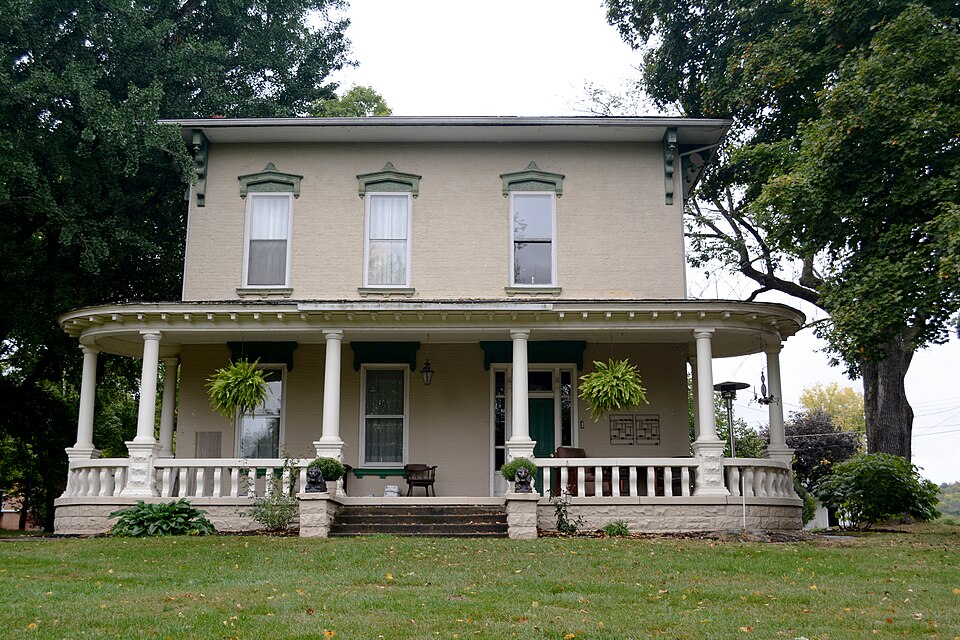
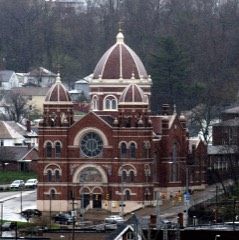
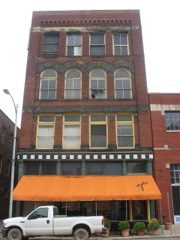
Listed on the National Register of Historic Places in
1986. A historic map-sheet match is not published yet. The record needs a coordinate-quality review before it can be joined to a sheet boundary.
From the record
“Dresden has possessed a newspaper since 1838, although the publication has at times been interrupted; July 30, 1838, A. Deffenbaugh began the issue of the Dresden Chronicle, which was published until 1842, when the name was changed to Journal, which was suspended about 1844.”
Past and Present of the City of Zanesville and Muskingum County, Ohio (1905). Machine-read text.
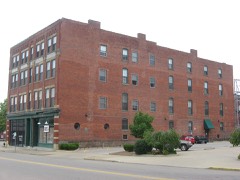
one of 70 National Register listings in Muskingum County · listed in 1986 · category: Building.
National Register reference number.86000034- the number the National Park Service assigned this property when it was listed, and the key its nomination file is catalogued under at the National Archives.
What happened here
An account from the chapter on Zanesville city, The inset identifies its exact
source book and publication year.
was so named in honor of Captain John C. Hazlett, of 2d O. V. I., and his cousin, Harry Hazlett, of the 5th U.S. Artillery, both of whom were killed during the Civil war; the post was organized June 1, 1881, with the following officers: C. C. Goddard, post commander; M. V. B. Kennedy, senior vice commander; Wilson C.
Dresden has possessed a newspaper since 1838, although the publication has at times been interrupted; July 30, 1838, A. Deffenbaugh began the issue of the Dresden Chronicle, which was published until 1842, when the name was changed to Journal, which was suspended about 1844. John W. Wallace issued one number of the Visitor in 1848, and the field remained uncultivated until 1850, when Wallace and Agnew began the Advocatc, which was continued about two years when the senior partner died, and a Mr. Sygford took an interest, and the name was changed to The Intelligencer, and was issued regularly until 1855, when Bently Gill became owner and in 1877 sold to M. B. Lovett, under whom it suspended. Another interval of inactivity occurred until 1868, when T. W. Peacock and Son established the Dresden Monitor, which was sold a year later to J. A. Jackson, and it passed successively to L. M! Murphy, W.-H. Conklin and J. T. Shryock; the latter gave the paper life and published it two years, and sold to John W. Martin, and was published as the Herald for six months. Meantime the Dresden Doings, a fortnightly quarto, was established in 1874, by James W. Wheeling, and for a short time Dresden possessed two papers; in September, 1878, the Doings was sold to W. E. Smith, who changed it to a weekly and issued it until 1879. The Dresden Transcript succeeded the Doings, and continues to furnish the news to a paying subscription list.
The Federalist was edited at Frazeysburg, about 1875, by C. E. F. Miller, the printing being done at Dresden; it was a small sheet, and was discontinued after a struggle of about three months. The Midland was started at Frazeysburg, August 29, 1889, as a five column, eight page paper, devoted to literature, news and local matter, with Rev. C. B. Downs, as managing editor: A. B. Clark, Newark, as assistant editor ; D. H. Lewis as general business manager, but its existence was brief. About 1890 The Fraseysburg Advertiser made its debut upon the journal-
Regional context, not property-specific
evidence. The
federal wildfire occurrence database
lists 60 fires within 5 miles of Crescent Hill between
2012 and 2020, burning about 46 acres in total. None started naturally. 2 were recorded as arson.
Distance is straight-line from the map coordinates, so a fire counted
here may appear on a neighbouring settlement's page as well.
Reported cause
Fires
Debris and open burning
35
Power generation/transmission/distribution
7
Missing data/not specified/undetermined
5
Equipment and vehicle use
5
Smoking
3
Arson/incendiarism
2
Recreation and ceremony
2
Other causes
1
The most recent of
them, most recent first, with the day each was reported and the service
that recorded it.
Regional context, not property-specific
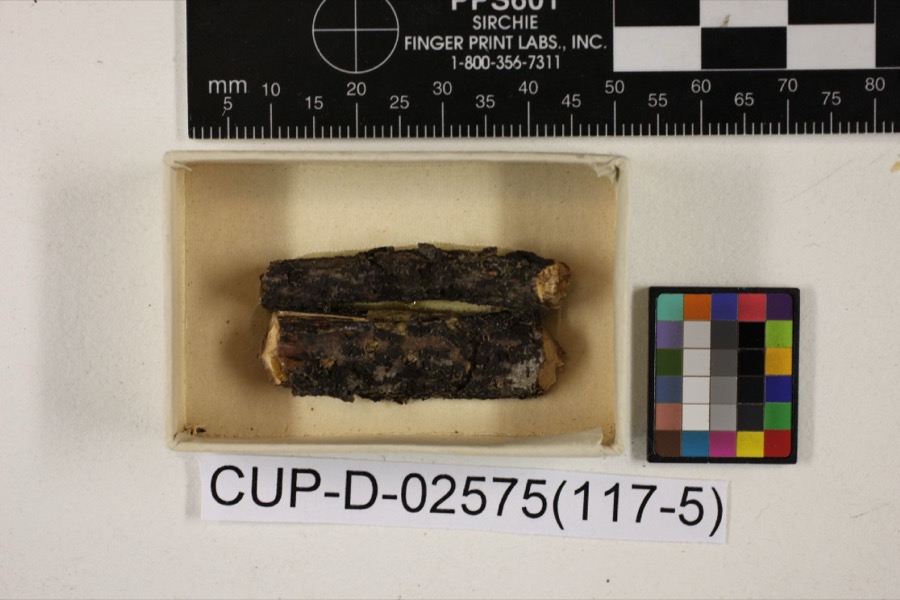
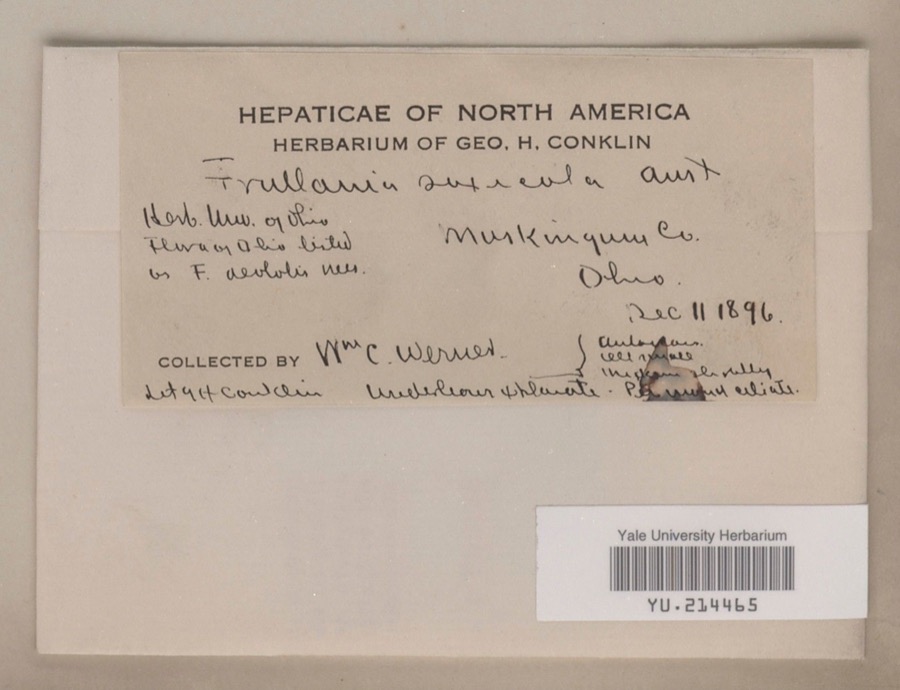
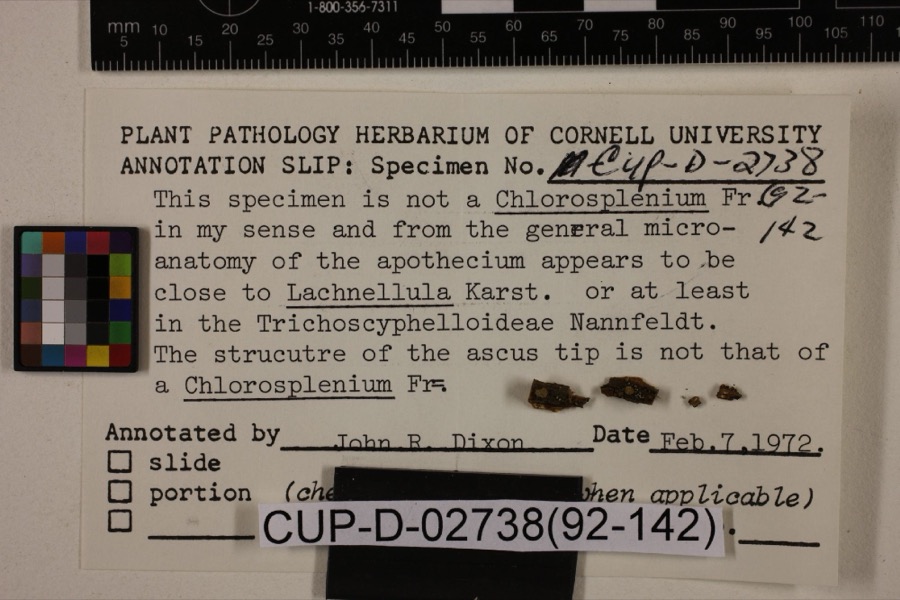
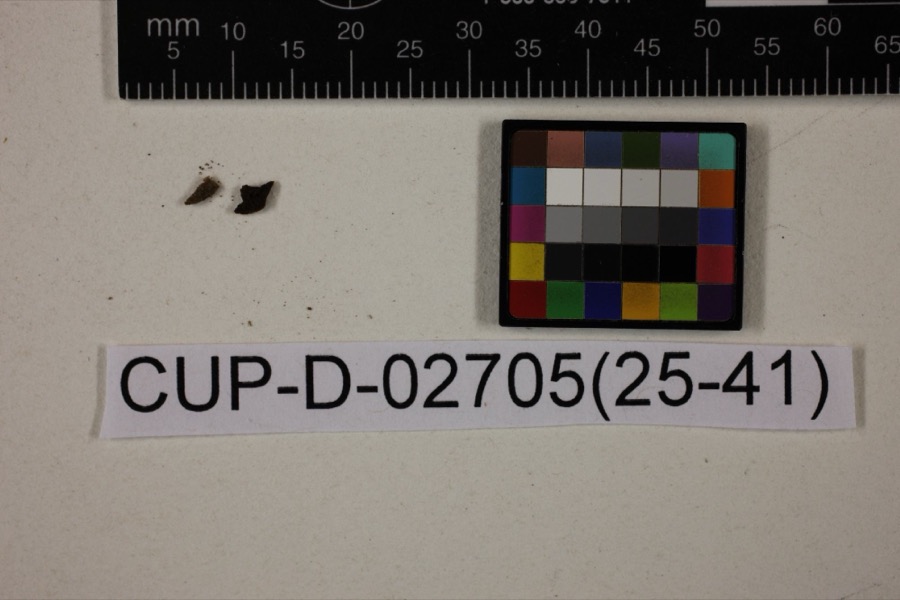
evidence. Museums hold 850 specimens
collected within 10 miles of Crescent Hill between 1873 and
1975: 737 Animalia, 88 Plantae, 15 Fungi, 5 Protozoa, 4 Unrecorded, 1 Chromista. 12 distinct Species records are shown.
Collected by A.E. Miller, Adams, W. (William), Trautman, M. B. (Milton Bernard) et al., Adams, W. M. and others. Each is a
physical object with a catalogue
number, and each entry opens the museum's record. This is what was
collected and kept, not a survey of what lives here - nothing can be
concluded from a species being absent.
Regional context, not property-specific
evidence. The federal mineral resources record lists
6 workings within 5 miles of Crescent Hill: 3 past producers, 3 producers.
3 still produce. What was taken out: Sand and Gravel, Construction, Iron. Distance is straight-line from the
map coordinates, so a quarry counted here may appear on a neighbouring
settlement's page as well.
Regional context, not property-specific
evidence. The National Weather Service names
Dresden, the town this property stands in, in 28 storm reports between 1996 and 2025: 20 thunderstorm wind, 5 hail, 3 flash flood.
No death or injury is recorded in these reports. Each account below is quoted exactly as the forecast office
filed it, from the NOAA Storm Events Database, and each date
opens the federal record of that event.
No historic map-sheet match is published
for this property yet. That does not mean no map exists. This record needs
a coordinate-quality review before it can be joined to a sheet boundary.
Browse the county's mapped places while that work is
pending.
From the nomination file
2,003 words on record
When this property was proposed for the
National Register, someone wrote the case for it: what the building is,
and why it matters. That document is a federal record in the public domain.
It is quoted below word for word, never summarised. The text was read off the scanned case file by machine, so the
occasional stray character is the recogniser's and the 1970s
typewriter's.
Description of the property
north part of the facade, featuring a trabeated doorway with a transom and Ilthograph from the 1866 County Atlas). The front porch was replaced prior to addition from the 1870s or '80s (see photo #6). The house is capped with a features a three bay facade, with the windows set somewhat asymmetrically in sidelights glazed with cranberry glass. Originally, elaborate frame porches 1940s (photo #4 shows the bargeboard:intact but belvedere removed). X altered Areas of Significance - Check and justify below - archeology-historic _art - music X 1800-1899 X commerce X industry - politics/government _ transportation Statement of
Statement of significance
(in one paragraph) Criteria B and industrial heritage of the village of Dresden, as the home of two bankers Due to Its. siting, Dresden prospered from the establishment of the Ohio-Erie Canal nearby, as well as from the Central Ohio (later B & O) Railroad, whose soap factory, two woolen mills, and a paper mill sprang up in Dresden because amid a cluster of 1940s tract houses. sons in the banking business in 1873. Lewis Lemert built his large residence John Hornung was also a respected businessman in Dresden for most of his and established a drugstore in 1876. He also worked as a cashier for the Kapner & Duga hosiery mill. As superintendent, Miller completely oversaw the operation of the mill which produced large quantities of men's heavy woolen socks.
Kapner & Duga later acquired the Dresden Woolen Mill and John Miller 1700-1799 1600-1699 1400-1499 1500-1599 invention theater humanitarian -conservation education law prehistoric social/ military Specific dates exploration/settlement .architecture 8. Significance --economics 1900- from which the estate derived its name--Crescent Hill (photo #2).Lemert notoriety comes from his having speculated with the bank's money in 1915. _communications "Crescent Hill"is nominated for its long-time association with the commercial sold by his widow to John Hornung. captured and served a sentence at a federal prison.He returned to Dresden resided at Crescent Hill until his death in 1875.
In 1889,the property was ..engineering In 1917,John Mi1ler the residence and significant -science _literature -- philosophy ---agriculture -- other (specify) .sculptere -. archeology-prehistoric .- community planning landscape architecture of the ease of transportation to and from the village. While a rich Hill" is located to the west of the older neighborhoods and commercial areas, log cabins in what became Dresden.
Quoted from the National Register nomination
for reference 86000034, 15 pages, held by the National Archives in Record
Group 79. See the
catalogue record.
Listed places nearby
6 within 8 miles
Other National Register properties close
enough to walk or drive between, ordered by distance from this one. Both
positions come from the same geocoding pass that matched these properties
to their map sheets.
Listing record. National Park Service National Register of Historic Places, listed-properties dataset, current to 2026-05-22.
Map join. Address geocoded through the United States Census geocoder, then tested against the published boundary of every sheet in the USGS Historical Topographic Map Collection.
How this page is made. Listing fields come from federal records; map-sheet coverage is a labelled coordinate-to-boundary calculation, not a source-field claim.
Wildfire. Short, Karen C. 2022. Spatial wildfire occurrence data for the United States, 1992-2020 [FPA_FOD_20221014]. 6th Edition. Fort Collins, CO: Forest Service Research Data Archive. https://doi.org/10.2737/RDS-2013-0009.6 Collected with United States Government funding and usable without additional permissions or fees.
Specimens. Global Biodiversity Information Facility (GBIF), https://www.gbif.org/. Only records licensed CC0 or CC BY are used. Records licensed CC BY-NC are excluded because this site carries advertising. Images are checked individually and any whose licence is non-commercial, no-derivatives or unreadable is refused.
Mines and quarries. USGS Mineral Resources Data System (MRDS) https://mrdata.usgs.gov/mrds/ A work of the United States government, no copyright under 17 U.S.C. 105.
Storms. NOAA National Centers for Environmental Information, Storm Events Database https://www.ncei.noaa.gov/stormevents/ A work of the United States government, no copyright under 17 U.S.C. 105. Narratives are quoted verbatim from the National Weather Service report and are not edited or summarised.
 Block
Block