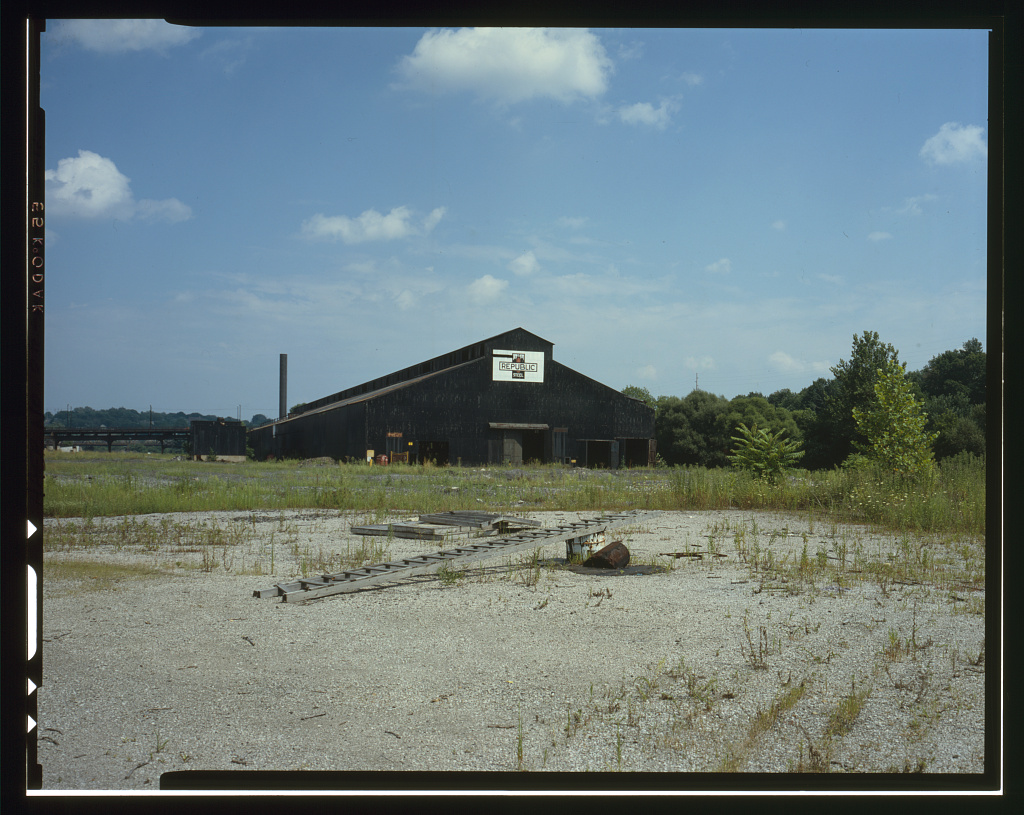
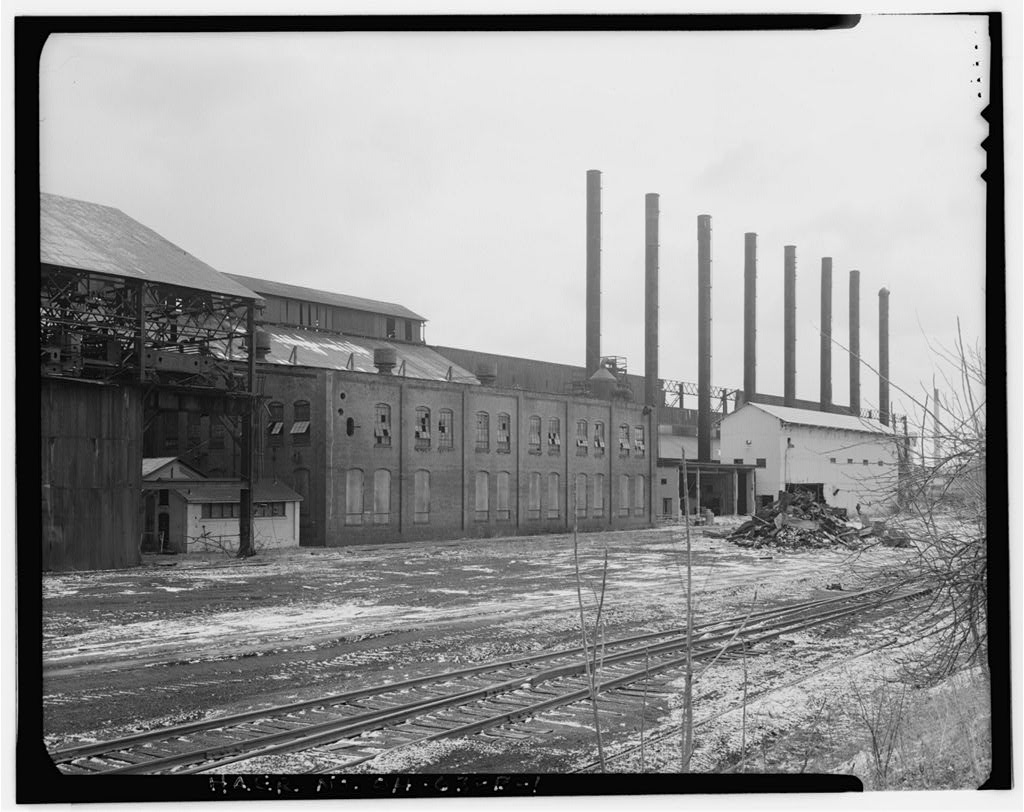
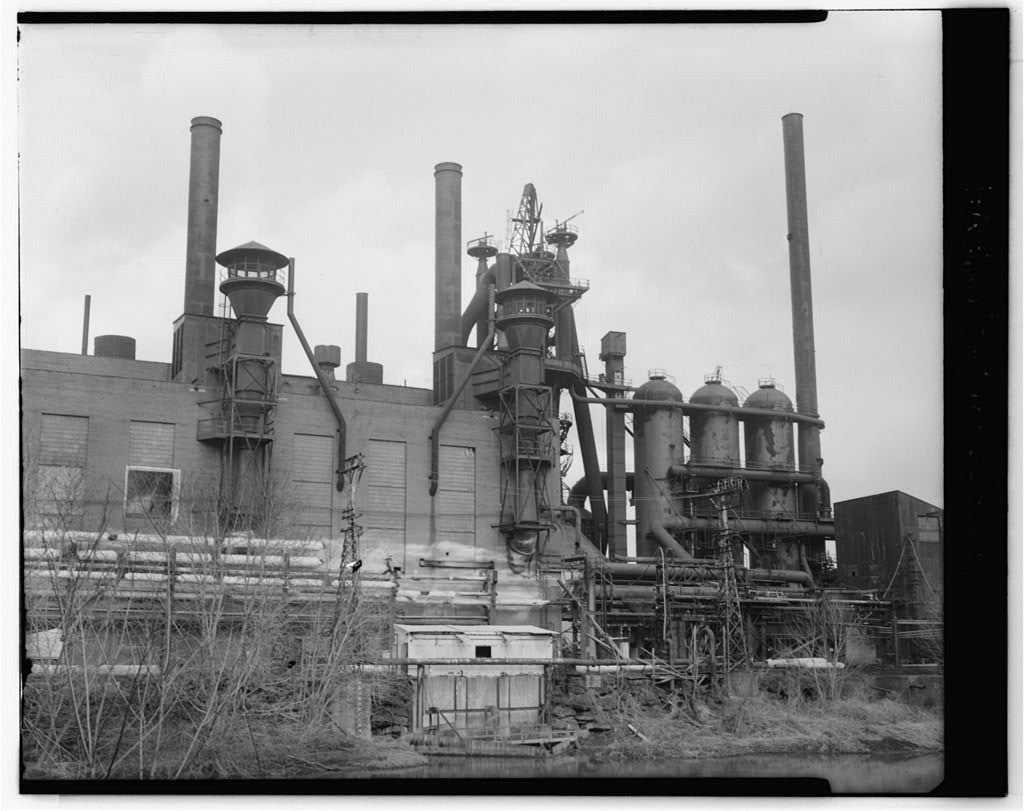
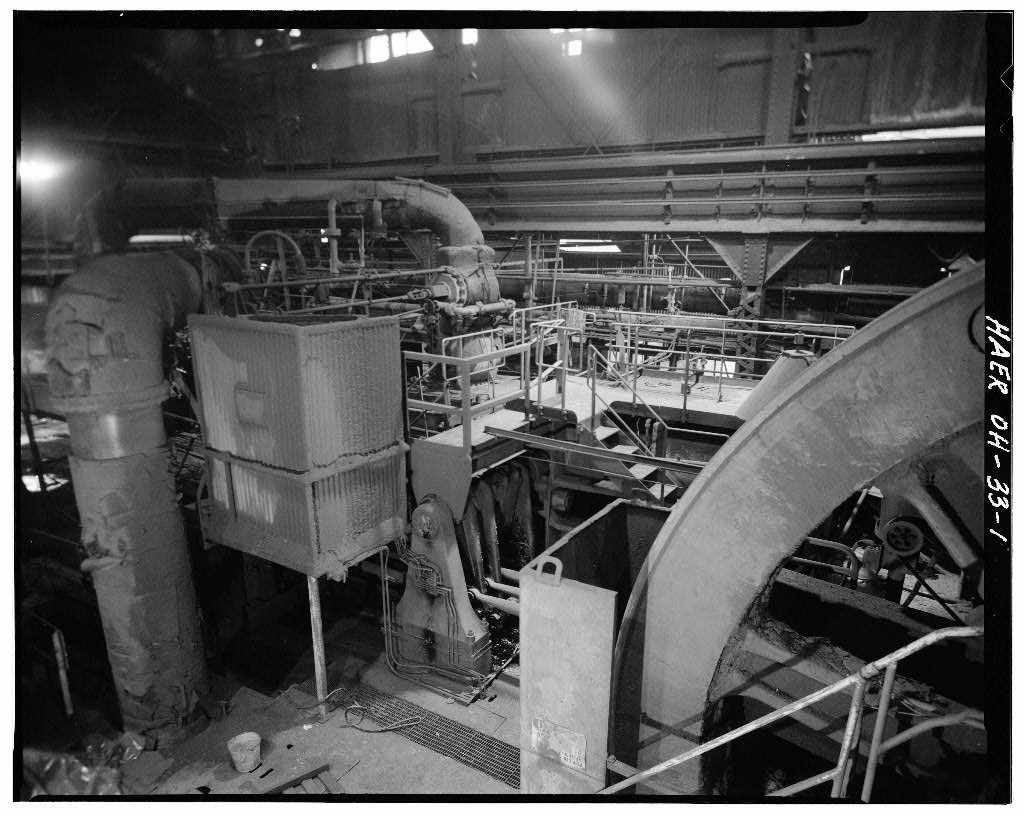
Poland Avenue Youngstown, Mahoning County, Ohio established in LTV Steel Steel mill and various light industries One of the largest steel companies to emerge at the end of the century, Republic Iron and Steel grew to be the third largest producer of steel in the country. Its Youngstown Works, established in was the center of its production base in the Mahoning Valley. Michael G. Bennett, This brief historical report was written by Michael G. Bennett, contract historian to HAER, to supplement the photographic documentation of the former Republic Steel's Youngstown Works. This photographic documentation focused primarily on the stationary steam engines at the Youngstown Works' blooming mill. * REPUBLIC IRON AND STEEL COMPANY, YOUNGSTOWN WORKS HAER NO.
OH-63 (Page 2) Development of the Valleys District In the geographic terminology of the American steel industry, the Valleys District is comprised of the Mahoning, Shenango, and Neshannock river valleys of eastern Ohio and western Pennsylvania. These rivers converge to form the Beaver river that flows to the Ohio. The industrial towns of Warren, Niles, Girard, Youngstown, Struthers, Campbell and Lowellville in the Mahoning Valley; Sharon, Sharpsville and, Farrell in the Shenango Valley; and Newcastle along the Neshannock, comprised a distinct production district integral to the American iron and steel industry in the and centuries. 1 The development of the Valleys District, moreover, is part of the general westward shift of the industry toward the Great Lakes region.
Charcoal fired iron furnaces were first constructed in the Mahoning Valley near Youngstown, Ohio in and Other forges and mills were established in both Newcastle and Niles at the same time. The district as a whole somewhat isolated from national markets and produced relatively low quality iron for local consumption. The Valleys District had many disadvantages, including the lack of important local markets, site problems, and a reliance on local raw materials. Investment in new technology to increased productivity was minimal due to the lack of available markets. By the locally mined "block coal" and carbonaceous iron ore was being used in furnaces, replacing charcoal and bog ores.
At this time, two important regional transportation networks greatly influenced the industrial viability of the Valleys. In the Pennsylvania and Ohio Canal was cut through the Mahoning Valley, and in the Cleveland and Mahoning Railroad was established. These developments opened the Valleys District to new markets and provided access to richer mineral deposits. Local manufacturers began to increase production through plant expansion and modernization. In the Youngstown Telegraph noted that Youngstown would soon have seven blast furnaces, three rolling mills, a steelworks, two machine shops, and some foundries.
2 Other areas, such as the Pittsburgh District, became increasingly reliant on Valley iron for its own *For a map of this district see Kenneth Warren, The American Iron and Steel Industry, A Geographical Interpretation (Oxford: University of Oxford Press, 2 Kenneth Warren, The American Steel Industry, A Geographical Interpretation , (Oxford: University of Oxford Press, # REPUBLIC IRON AND STEEL COMPANY, YOUNGSTOWN WORKS HAER NO. OH-63 (Page 3 ) rolling mills. Since many mills in the Mahoning and Shenango valleys produced iron for export, the region was highly susceptible to cycles in the iron and steel industry. During the late century, there was a developing pattern of western mineral supply which had a tremendous impact on operations in the Mahoning and Shenango valleys.
The market demanded the high-quality iron being produced through the use of iron ores from the Great Lakes region, and coke primarily from the Connellsville region of southwestern Pennsylvania. By over eighty percent of the furnaces in the region utilized Lake Superior ores. As early as furnaces in the area were using Connellsville coke (which became the standard fuel in the industry), and a mixture of coke and coal. Once reliant on local materials, Valley manufactures became dependent on long distant material transport for resource allocation and market access. This development put regional producers at a definite cost disadvantage compared to other production districts.
Because of their location, Valley manufactures received iron ore at a lower cost, but Connellsville coke at a substantially higher cost than other districts like Pittsburgh. Added costs, aging facilities (the majority of furnaces were relatively small, and built to use coal), and intense competition between local manufacturers that kept prices low, hampered the production of pig iron in the Valleys District at the end of the century. In efforts by the Mahoning and Shenango Valley Iron Manufacturing Association to get reduced shipping rates from railroads failed. Sensitive to the prevailing industrial evolution, many local manufacturers moved the district toward integrated steel production.
3 In there were only three specialty steel plants in the entire district, and one idle open hearth plant in Youngstown. Together, these facilities had a combined annual capacity of tons. In an association of rolling mill companies in the Mahoning valley formed the Ohio Steel Company and built the region's first Bessemer steel plant in Youngstown. Beginning operations in February of the company focused on semi- finished products such as billets, slabs, and sheet. The establishment of the Ohio Steel Company marked the movement toward industrial integration and steel production in the Valleys District.
4 The Republic Iron and Steel Company was one of the primary companies in the development of the region, eventually 3 See Warren, 4 Warren, &f REPUBLIC IRON AND STEEL COMPANY, YOUNGSTOWN WORKS HAER NO. OH-63 (Page 4) becoming the third largest producer of steel in the United States. The Republic Iron and Steel Company The Republic Iron and Steel Company was established in through a consolidation of various rolling mills and blast furnace plants primarily in the central and southern states. Capitalized at over $55 million, the company was one of the largest organizations to emerge at the end of the century. It included thirty-six bar-forged iron plants, five blast furnaces, and numerous mining concerns (Lake Superior ores, Connellsville coke, and Alabama coal).
Many of the facilities, however, were outmoded, and Republic moved to acquire new facilities while consolidating existing facilities to maximize production efficiency (this often involved shifting machinery between plants). Of particular concern to Republic was the enhancement of its steelmaking capabilities to supply their finishing mills. In its first year, Republic actively sought additional mining properties and purchased open-hearth plants in Birmingham, Alabama, Minneapolis, Minnesota, and Youngstown, Ohio (see Table 1) . 5 New Property Property Construction Bought Sold Balance June 30, June 30, June 30, June 30, June 30, June 30, June 30, Amounts shown are in millions of dollars; includes amount written off for depreciation. Table 1; adopted from William T.
Hogan, Economic History of the Iron and Steel Industry in the United States (Lexington, MA: Heath & Company, 5 For a detailed description of Republic's development, including a list of companies and facilities which made up the company, see William T. Hogan, Economic History of the Iron and Steel Industry in the United States (Lexington, MA: Heath & Co., And Gertrude Schroeder, The Growth of Major Steel Companies, (Baltimore: Johns Hopkins University Press, REPUBLIC IRON ,AND STEEL COMPANY, YOUNGSTOWN WORKS HAER NO.
OH-63 (Page 5) In the eight months between May, and the end of the year, Republic produced tons of goods, including merchant bar iron and steel, foundry and mill pig iron, a large percentage of finished products such as nuts, bolts, washers, rivets, nails, railroad spikes, shafting, axles, and a variety of specialty items. By Republic was recording gross assets of over $17 million. Between and the general offices of Republic Iron and Steel were located in Chicago, after which they moved to Pittsburgh until when operations were centered in Youngstown, Ohio. In 193 6, the headquarters would move again to Cleveland, marking a greater orientation toward the Great Lakes, and Republic's largest consumer, the automobile industry.
6 As noted above, the first decade of Republic's existence centered around the modernization of existing facilities, the consolidation of holdings and the removal of antiquated plants and machinery to maximize the production of steel and more highly finished products. By Republic's production of ore increased 117 percent, coke increased 236 percent, pig iron increased 128 percent, steel ingot increased 195 percent and finished products increased 46 percent. Employment at this time fluctuated between a high of and a low of 7 During World War I, Republic acquired the Bessemer Coal and Coke Company of Alabama (with its yearly production of 1.4 25 million tons of coke from beehive ovens), and the DeForest Sheet and Tinplate Company of Niles, Ohio.
At a cost of $4 million, DeForest included twenty-eight sheet mills, two jobbing mills, five cold rolling mills, and a galvanizing plant. Net profits for Republic rose from in to in with a peak in of At the onset of the however, an industry-wide economic slump resulted in a rapid drop in the price of steel before production costs could be adequately reduced. In Republic recorded its worst earnings in the company's history and operated at only twenty-five percent of capacity. Rising freight charges, furthermore, forced Republic to reduce costs by cutting wages for common labor by forty percent.
Despite efforts to reduce costs, Republic also incurred significant expenditures in due to overhaul work on the Haselton blast furnace plant and Bessemer plant, and the construction of a new 100 ton capacity open hearth furnace at the Youngstown plant. Capacity was still only at 6 See Hogan, and Schroeder, 51. 7 Hogan, REPUBLIC IRON AND STEEL COMPANY, YOUNGSTOWN WORKS HAER NO. OH-63 (Page &) sixty percent in Under the direction of Cyrus Eaton, a Cleveland businessman who gained a majority control of Republic stock in the second half of the was a period of reorientation for Republic Steel, as the company moved toward greater diversification of its product base. In Republic acquired Trumbull Steel (Warren, OH), Trumbull-Cliffs Furnace Co., Steel and Tubes, Inc.
(Cleveland and Toledo, OH; Brooklyn, NY; and Detroit, MI), and Union Drawn Steel Co. (Beaver Falls, PA). These companies expanded Republic's capacity to produce cold-drawn steel bars and tubular products. Republic also gained a fifty percent share of Frentz Moon Company of Butler, Pennsylvania, a producer of specialized pipe. 9 In Easton placed Tom M. Girdler, formerly of Jones and Laughlin, in charge of Republic's steel interests. Girdler, along with many associates he brought with him from Republic, began to formulate corporate reorganization plans. In April of Republic Iron and Steel merged with the Central Alloy Steel Corporation, the Bourne-Fuller Company, and the Donner Steel Company to form the Republic Steel Corporation.
The merger marked a significant change in Republic's position in the American iron and steel industry. Central Alloy, with its modern electric furnace plants, was the largest producer of alloy steel in America with the greatest capacity for stainless steel production. Bourne-Fuller was a specialty nuts and bolts manufacturer, and Donner Steel was a modern iron and steel operation with considerable lakefront property in Buffalo, New York. The Republic Steel Corporation had a total steelmaking capacity of five million tons, making it the third largest producer in the country behind United States Steel and Bethlehem Steel. At the time, Republic controlled percent of the national capacity for strip steel, percent of pipe, and 13 percent of bars and allied products.
On the contrary, Republic had almost no capacity for heavy steel products such as structural, plate, or rails, (see Table 2) 1 0 8 Hogan, 9 Hogan, Schroeder, and Comments on the Domestic Steel Industry and Republic Steel Corporation (New York: L. F. Rothschild & Co., np. 10 See Comments on the Domestic Steel Industry ; Hogan, and and Schroeder, REPUBLIC IRON AND STEEL COMPANY, YOUNGSTOWN WORKS HAER NO. OH-63 (Page 7 ) Republic Steel and New Acquisition Compared to U.S. Steel Corporation and Bethlehem Steel in Rank 1. U.S. Steel 2. Bethlehem Steel 3. Republic Steel 4.
Corrigan, McKinney Ingot Capacity Gross Tons Percent of Industry's Total Capacity 7.0 1.6 # Table 2; (Source: Hogan, Despite the economic uncertainties of the Depression, the new corporation continued to add to its holdings by acquiring the Corrigan, McKinney Steel Company and the Truscon Steel Company in Corrigan, McKinney was a well balanced integrated steel company based in Cleveland, Ohio, while Truscon steel was the largest manufacturer of steel building products in the country.
Truscon's capability to produce pressed steel provided Republic with an outlet for its steel products for the automotive and Republic Steel Corporation: Summary of Facilities, Sheet mills 96 Black plate mills 30 Tin plate departments 2 Buttweld pipe furnaces 4 Lapweld pipe furnaces 3 Electric pipe furnaces 4 Tube plants - electric weld 5 Wire & nail plants 1 Axle plants - die rolled 2 Cold drawn steel plants 6 Bolt & nut factories 3 Spike factories 2 Metal stamping plants 2 Pressed steel plants 1 Rebar fabricating plants 21 Warehouses 30 Hogan, appliance industries.
The acquisition of Truscon Steel, however, was challenged by the Department of Justice as a violation of the Sherman Anti-Trust Act Lawyers argued that the purchase By-product coke ovens Blast furnaces 740 16 Open hearth furnaces 82 Bessemer converters 2 Electric furnaces 7 Blooming mills Billet & bar mills 11 9 Merchant mills 24 Skelp mills Rod mills 1 1 Plate mills 1 Hot strip mills Cold strip mills Tie plate plants Culvert plants Steel fabrication plants 4 3 1 1 4 Table 3; (Source: REPUBLIC IRON AND STEEL COMPANY, YOUNGSTOWN WORKS HAER NO. OH-63 (Page 8) of Truscon gave Republic an unfair advantage by reducing competition within the industry.
Republic successfully fought off the charge and finally acquired Truscon in the Fall of In the year between and Republic's assets rose from million to million, (see Table 3) u The marked a major turning point in the history of Republic Steel. Along with its incorporation and movements toward greater diversification, the company's production base shifted from the Valleys District toward the Great Lakes region with greater accessibility to the automotive industry. In $25 million in bonds were issued to construct a continuous strip mill in Cleveland. With an annual capacity of 84 tons, it was the largest facility of its kind in the world, capable of producing roll strip steel 92" wide. Also in the corporate headquarters were moved from Youngstown to Cleveland.
The increased demands on the American steel industry during the War years stretched the production capabilities of all companies. In the first half of the Republic continued to expand its ironmaking and steelmaking capacity, particularly for alloy and stainless steels. In Republic recorded its highest levels of productivity and profit, with ingot production reaching over six million tons. Republic also received a $25 million issuance from the Defence Plant Corporation, a subsidiary of the Reconstruction Finance Corporation, for defence related industrial expansions. The money went to the construction of by- product coke ovens, blast furnaces, electric furnaces, finishing mills, and the development of iron ore and coal mines.
During the war years, Republic continued to achieve record numbers in many departments. Of particular interest. Republic became the largest U.S. producer of electric furnace steel in By the end of World War II, Republic had over million in working capital. n During the immediate post-war years, Republic and other steel producers actively reconverted from war based production to consumer goods. Republic made a major move to double its capacity for stainless steel, and in acquired Stevens Metal Products Company (Niles, Ohio), a manufacturer of steel barrels and drums. In furthermore, Republic purchased the government owned steel plant in south Chicago for $35 million.
While demand had fallen after the war, prospects for strong post- war consumer activity seemed promising for the American iron and 11 Hogan, 12 See Hogan, REPUBLIC IRON AND STEEL COMPANY, YOUNGSTOWN WORKS HAER NO. OH-63 (Page 9) steel industry. Of particular importance to Republic was the move into rural markets (for farm equipment), and specialty items for the television industry. 1 3 A general slowdown in the industry during the late resulted as consumer activity fell and labor disruptions increased. By the however, production increased with demand for goods vital to the Korean War efforts. In this environment, Republic initiated the largest long-range project in its history a complete overhaul of its Cleveland plant at a cost of $75 million.
The focus of the project was the modernization and expansion of basic ironmaking and steelmaking facilities, which increased steel production by tons a year. This movement was accentuated by the acquisition of greater raw material reserves and transportation networks between and In Republic also entered the market for the production of titanium steel and titanium alloys for consumer goods. 1 4 Despite these efforts, Republic experienced a twenty percent decline in profits between and The company blamed the decrease on smaller mini-mills that paid lower wages and could therefore charge lower rates. 1 5 Through the end of the Republic worked to further modernize, integrate and diversify its operations.
The Great Lakes region continued to be its principle market, but the company also stepped up its efforts to capture a larger percentage of the foreign markets. The period also marked personnel changes for Republic, beginning with the retirement of Tom Girdler in Girdler was replaced by Charles M, White, who was later replaced by Patton in with Boyer taking over duties as president in (Patton still serving as CEO). In Republic Steel Corporation continued to be the third largest manufacturer of steel in the United States, producing almost eleven million tons. 1 6 The Younastown Works of the Republic Iron and Steel Company From its formation.
Republic Iron and Steel placed special emphasis on the Mahoning Valley, and Youngstown in particular, as 13 Hogan, 14 Hogan, 15 See Comments on the Domestic Steel Industry and Republic Steel Corporation , 63. 16 Hogan, REPUBLIC IRON AND STEEL COMPANY, YOUNGSTOWN WORKS HAER NO. OH-63 (Page 10) its production center. The consolidation included the Youngstown facilities of Brown-Bonnell (total capacity of tons of finished iron), the Andrew Brothers Company, and the Mahoning Valley Iron Company. With these companies came rolling mills, a Bessemer converter, and both the Haselton and Hannah blast furnace plants.
Brown-Bonnell became the primary site in Republic's Youngstown operation with the decision to consolidate steelmaking there with the construction of a Bessemer plant in Machinery from two other Republic facilities, the Union Steel Company of Alexandria, Indiana, and the Springfield Iron Company of Springfield, Illinois was moved to Brown-Bonnell. Two Bessemer converters from Union would provide the base of the new plant, although over seventy percent of the plant would involve new construction. As William Hogan observed, "This installation made Republic a much more integrated company and enabled it to assume a more independent position in the industry because it was able to supply more steel to its own mills." 17 J.A. Campbell, district manager of Huber & Co.
of Pittsburgh, was put in charge of construction, under the direction of Samuel McDonald, the superintendent of the new facility (and former assistant superintendent of the Ohio Steel Company). The Bessemer plant was laid out in a linear pattern, parallel to the Mahoning river between Crab Creek and South Avenue (see Figure 1). Since neither the Haselton nor Hannah blast furnace plants could supply the converters directly, a cupola house, with four, twenty-four foot cupolas was constructed for the plant. Fitted with a mechanized material loading system designed by the Crain Elevator Company, the cupola house remelted iron for use in the converters. An electric powered hydraulic ladle transferred molten iron from the cupolas to an iron runner which fed the converters directly.
The converter building included two five-ton eccentric converters set back-to-back and blowing in opposite directions. A casting platform ran the length of the building, equipped with a hydraulic pusher that moved ingot molds and transfer cars. 1 8 17 See Hogan, and Warren, The American Steel Industry, . is MThe Youngstown Bessemer Plant of the Republic Iron and Steel Company," Iron Age 66(0ctober 11, For general descriptions of steel mill technology see, Camp, and Francis, The Making, Shaping; and Treating of Steel . (Pittsburgh: Carnegie Steel Company, later editions are edited by various people under the publishing rights of United States Steel Corporation) , and Dan Reebel, ed.
, ABC of Iron and Steel , sixth edition, (Cleveland, OH: The Penton Publishing Company, REPUBLIC IRON AND STEEL COMPANY, YOUNGSTOWN WORKS HAER NO. OH-63 (Page 11) From the casting floor, ingots were transferred to the pit furnace building where they were reheated in furnaces built by Alex Laughlin & Company of Pittsburgh. Cranes, equipped with automatic tongs, manipulated the ingots i n and out of the pits. After reaching workable temperature, the ingots were transferred^ to the 32" blooming mill capable of rolling slabs and 4" billets. A 45' X steel framed boiler house, and 55' X brick power house provided the energy for the facility. Three vertical Southwark Foundry engines, including a 30" steam cylinder, 48" air cylinder, and 48" stroke, furnished the blast for the converters.
Cranes and motors were powered by a horizontal tandem compound Buckeye engine, connected to a 150 kw. General Electric generator. A bottom house (primarily a maintenance facility for the repair and drying of converter bottoms), and machine shop rounded out the Bessemer plant. " " Jj ji - . . -_* y*. __ Figure 1; Iron Age , v. 66 (October 11, 16. In the Bessemer plant was rebuilt with two, ten-ton converters, a 40" blooming mill, a 26" and 18" billet mill, and two additional cupolas. 1 9 Another blowing engine was installed by the Allis-Chambers Company with a 46" and 88" X 60" steam cylinders, a 76" air cylinder, and a 60" stroke.
The billet mill, which received steel directly from the blooming mill, was comprised of three separate mills: a 2 6" semi-continuous mill capable of transforming blooms into 3" or 4" billets; a continuous billet mill capable of transforming 3" billets into 2", or billets; and a tandem mill that could 19 Hogan, 565 REPUBLIC IRON AND STEEL COMPANY, YOUNGSTOWN WORKS HAER NO. OH-63 (Page 12) make flat bars from blooming mill slabs. Both the 26" mill and tandem mill were driven by a tandem compound engine built by the William Tod Company of Youngstown. The continuous billet mill, however, was powered by a cross-compound engine designed by Filer & Stoweli" company of Milwaukee. EaclTmill had "aTT'inline shearing table with cooling bed, billet conveyer, and scrap conveyor.
2 0 The movement to diversify its product base was furthered in October of when stockholders authorized the construction of a rail mill at the Youngstown Works. Interestingly, the first rails were rolled on April 22, This remarkable turnaround was due to considerable construction on the foundation and machinery during the winter. Limited space necessitated a unique layout to the facility that contemporary trade journals considered a marked departure from previous methods. The basis of the new design was the use of three parallel roll tables connected with two transfer tables capable of covering an extended distance with less space.
The total daily capacity was said to be tons of rails, depending on whether or not billets were also being rolled* The new rail mill was designed by Republic's engineering department, under the direction of H.A. Bixler, and the United Engineering & Foundry Company of Pittsburgh (see Figure 2). 2 1 IROtt =* Figure 2; Iron Age , v. 76 (November 9, 20 "New Billet Mill at Youngstown," The Iron Trade Review (October 2 & 9, 21 "The Republic Iron and Steel Company's Rail Mill," The Iron Aae 76(November 9, REPUBLIC IRON AMD STEEL COMPANY, YOUNGSTOWN WORKS HAER NO. OH-63 (Page 13) The Haselton blast furnace plant was first acquired by Republic in It consisted of one furnace that was rebuilt by the company and put on-line to supply the new Bessemer plant.
The facility was approximately .5 miles east of the steel works, on the north side of the Mahoning river. On July 2, ground was broken for a new furnace, but the decision to build a third necessitated a reconfiguration of plans to coordinate operations. Furnace number two and three were to increase monthly capacity for pig iron by tons. A unique design decision was made to construct one hand-filled furnace and another skip hoist filled furnace side by side. The plant was designed under the direction of Youngstown engineer Deetrick, and equipment was supplied by William B. Pollock & Company of Youngstown and the McClintie-Marshall Construction Company of Pittsburgh.
Furnace number two was a hand-filled type, with vertical hoist system and gravity charged bins designed to alleviate much of the labor involved. The bosh diameter of the furnace was 19' 6" and it stood 85' high. Furnace number three, on the other hand, was equipped with a Brown Hoist top. According to The Iron Trade Review , the skip hoist included a "parabolic bin system with a single suspended larry charging car." 22 To operate the system a larryman, a skip operator, and a general laborer were needed. The bosh of the furnace was 2 0' 6", and the height was also Each furnace was supplied by four Kennedy stoves (of the center combustion type) 22' in diameter and 97' 10" high. Each group of four included a self supporting stack for waste gas high and 8' 9" in diameter.
To insure against down time, the plant included duplicate air, water, and steam lines. Piping was also arranged so that blowing engines could feed either furnace. The furnaces and stoves were constructed on a concrete and fire brick foundation with pilings between 35' and 70' into the ground. The blowing house consisted of five Allis-Chambers engines, three high pressure vertical engines 52" and 96" X and two low pressure vertical engines 96" X The stock house and yard was located just north of the furnaces, surrounded by a concrete wall. With a ton capacity, the yard was serviced by an electric double track steel bin system extending over the length of the yard, and a Brown Hoist ore bridge with seven-ton bucket.
The plant has direct access to numerous rail lines, including the Lake Shore & Michigan Southern, the Pittsburgh & Lake Erie, the Erie, the Pennsylvania, and the Baltimore & Ohio. In a 2.5 mile hot metal railway, with twenty-five ton Berg hot metal cars, was 22 From "The Republic Iron & Steel Co.'s New Furnaces," The Iron Trade Review (April 18, REPUBLIC IRON AND STEEL COMPANY, YOUNGSTOWN WORKS HAER NO. OH-63 (Page 14) built from the Haselton furnaces to the converter plant. This railway fed a new 250-ton capacity mixer on the site of the converters.
Remarking on this innovation the annual report notes, "These improvements will greatly facilitate the operation of your blast furnace, and add materially to the output of your steel works, and should reflect lower costs in the operation of both the blast furnaces and steel works." 23 was a major year for the Youngstown facilities of Republic Iron and Steel. In that year, Republic moved its general headquarters from Pittsburgh to Youngstown, and initiated major expansion to its Haselton blast furnace plant. There was also a new union between the community and the company. In return for the city abandoning a section of the city adjacent to the plant for future mill expansion, Republic constructed the Center Street viaduct.
2 4 The expansion of the Haselton plant included eight open hearth furnaces, a 40" blooming mill, a continuous billet mill, a sheet bar mill, and a 500-ton blast furnace (Number five). The construction of the open hearth plant marked a departure for the Haselton facility since it previously produced only iron. The eight furnaces, rated between 60 and 80 tons, were of an "unusually heavy construction," according to The Iron Age . Eighty ton ladles, handled by a 125-ton crain served the plant which had an open working environment. The open hearth building had a wide charging floor, high ceilings, good lighting, and accessible escape platforms to provide a comfortable and secure workspace.
2 5 The furnaces were elevated, and mains from the gas producers were connected overhead because of the treat of flooding (A flood resulted in in damage to the Youngstown Works). The 40" blooming mill included a Wellman-Kennedy slab manipulator on each side of the rolls powered by 44" and 76" X 60" stroke, horizontal tandem reversing engines. The mill was capable of producing 4" billets, blooms of all sizes, and 34" slabs, and was connected to the continuous mill by a chain # 23 Republic Iron and Steel Company, Seventh Annual Report , Youngstown, OH, in Hogan, See also The Iron Trade Review , 24 See Hogan, and "Haselton Plant of the Republic Iron & Steel Company," The Iron Age , 88(August 17, 25 The Iron Age placed special emphasis on this aspect of the design.
REPUBLIC IRON AND STEEL COMPANY, YOUNGSTOWN WORKS HAER NO. OH-63 (Page 15) conveyer. The continuous mill included four stands of 21" rolls capable of making a 3 billet, and six stands of 18" rolls able to make billets between 1 and 3", and sheet bars 8" wide of varying thickness. Republic made every effort to make the plant as self-contained as possible, with the addition" of a laboratory, machine shop, boiler, and blacksmith shop into the design. The plant, moreover, was designed by Republics's engineering department with no outside contractors. 2 6 In a battery of 68 Koppers by-product coke ovens with a ton annual capacity, which was doubled in with an additional 68 ovens. Furthermore, the blast furnaces were overhauled, increasing their capacity from 400 to 600 tons daily.
An additional open hearth furnace with a 100 ton capacity was also added (Figure 3) . 2 7 -Plin of the Hucltan Work*, Includini Fonuat, Op !" Hearth Flint, Tub* VVetfa, Blooming. Billet lad Finish!tie Mills. Figure 3; The Iron Age , v. 88 (August 17, 371 26 The Iron Age 88 (August 17, 27 Hogan,
 Block
Block