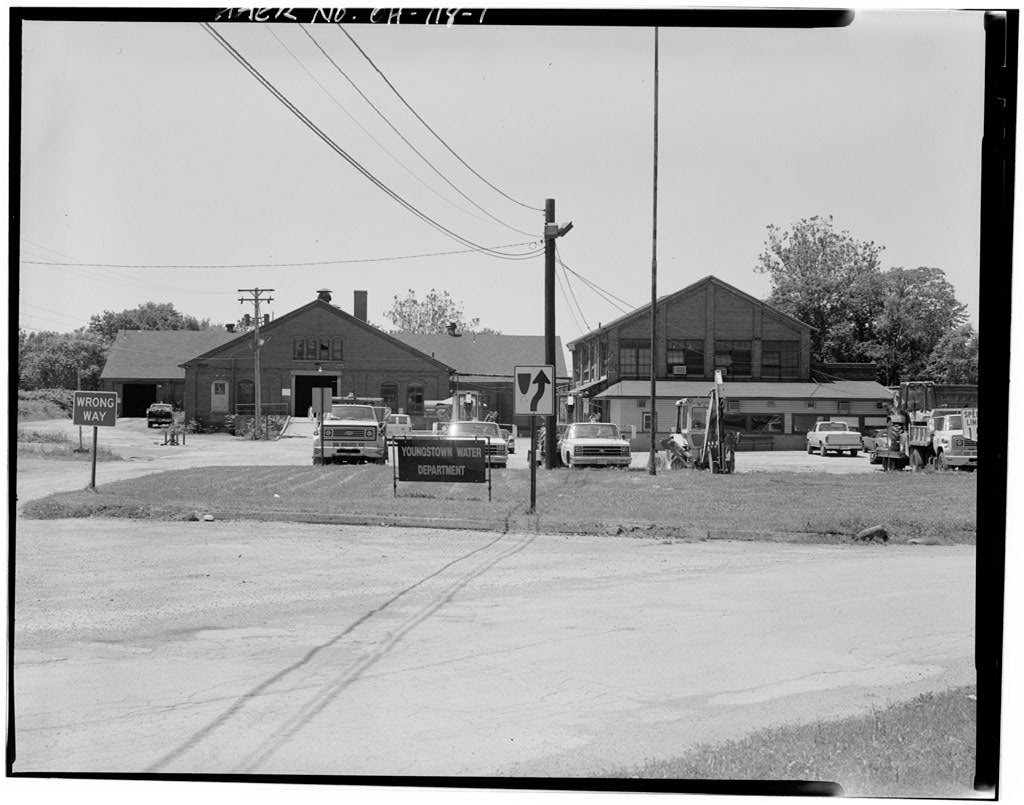
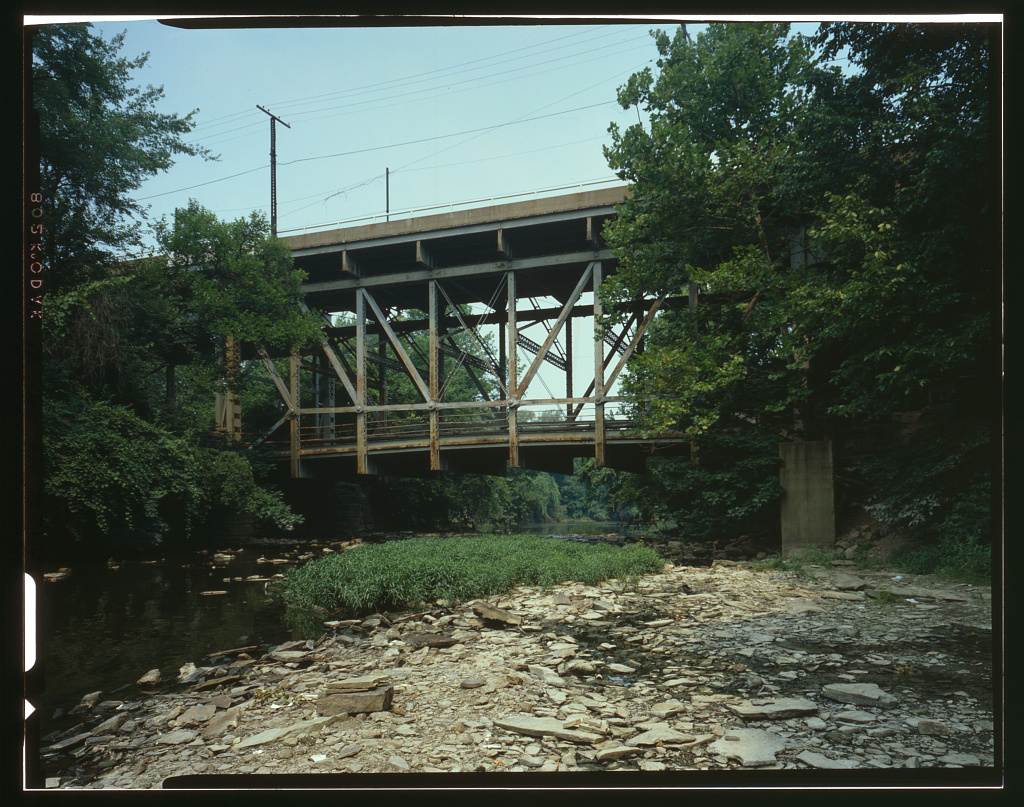
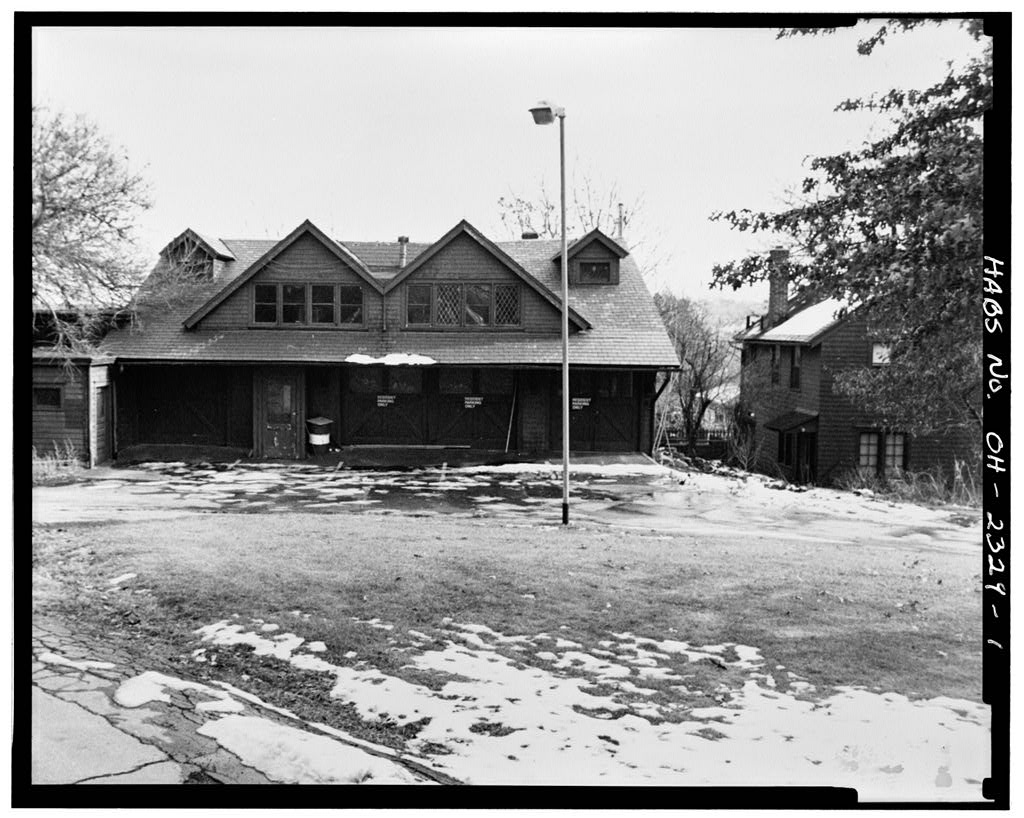
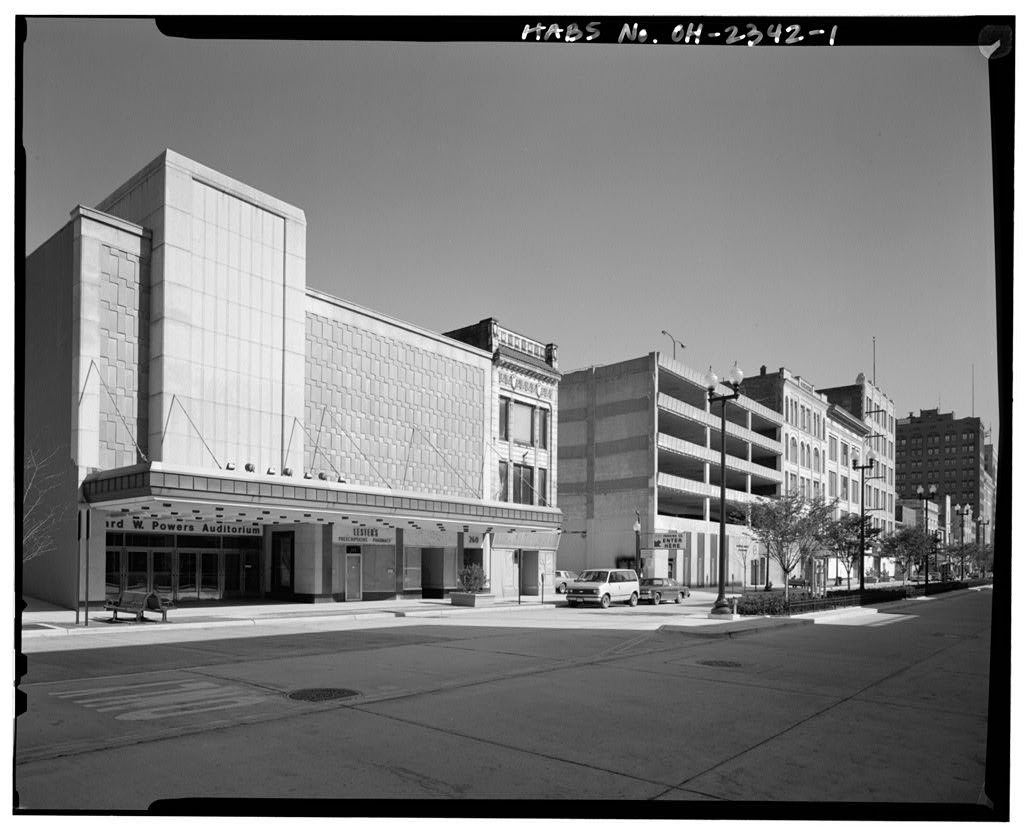
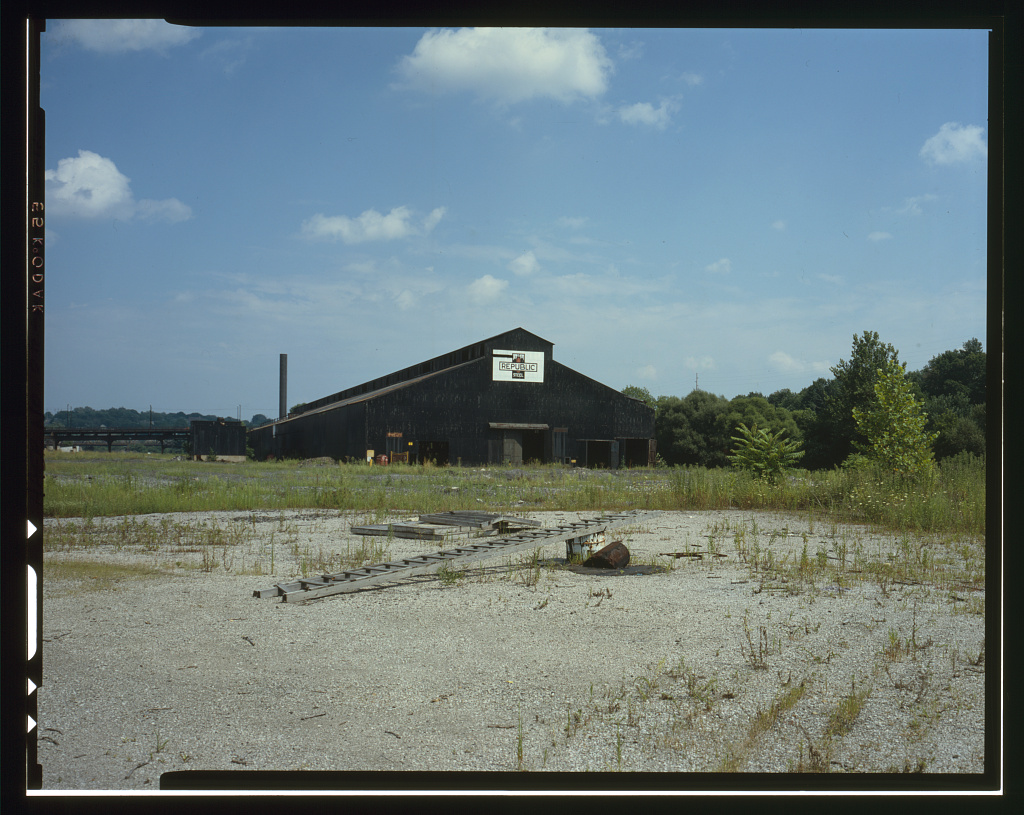
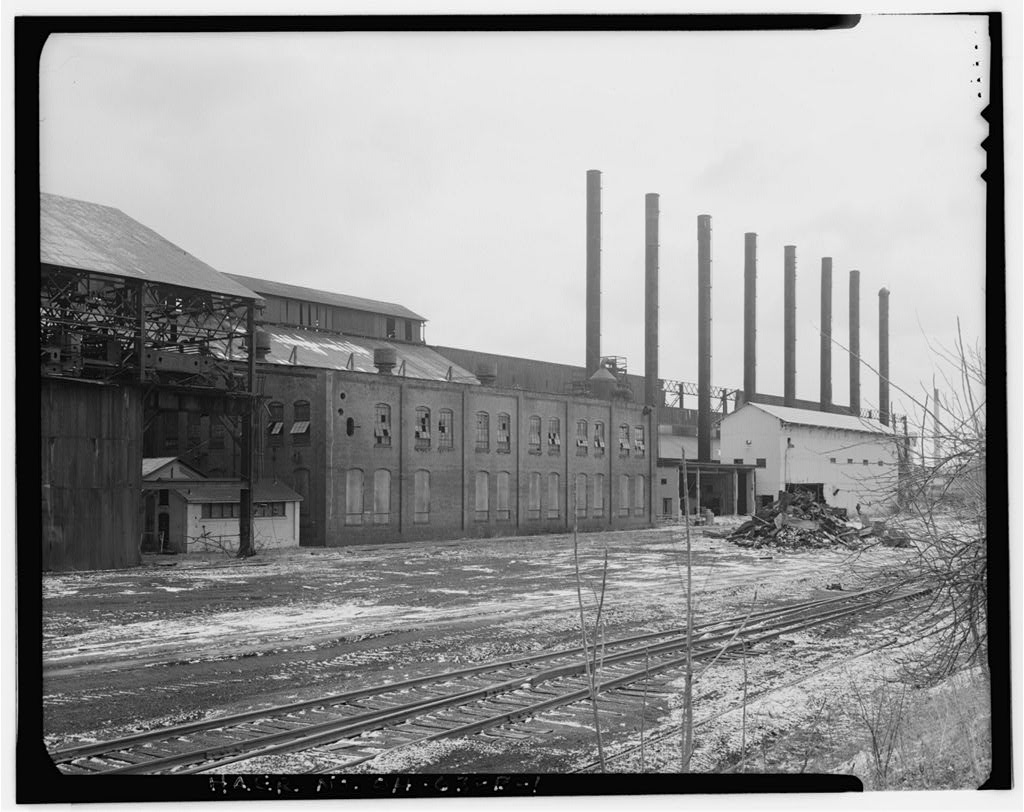
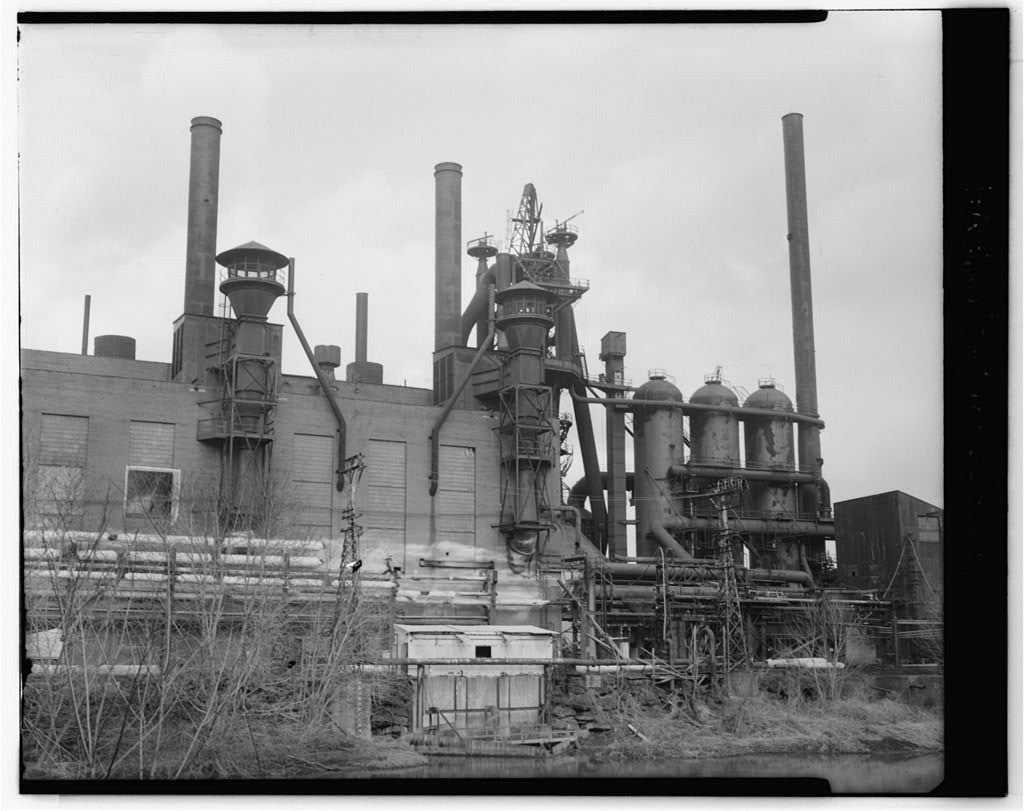
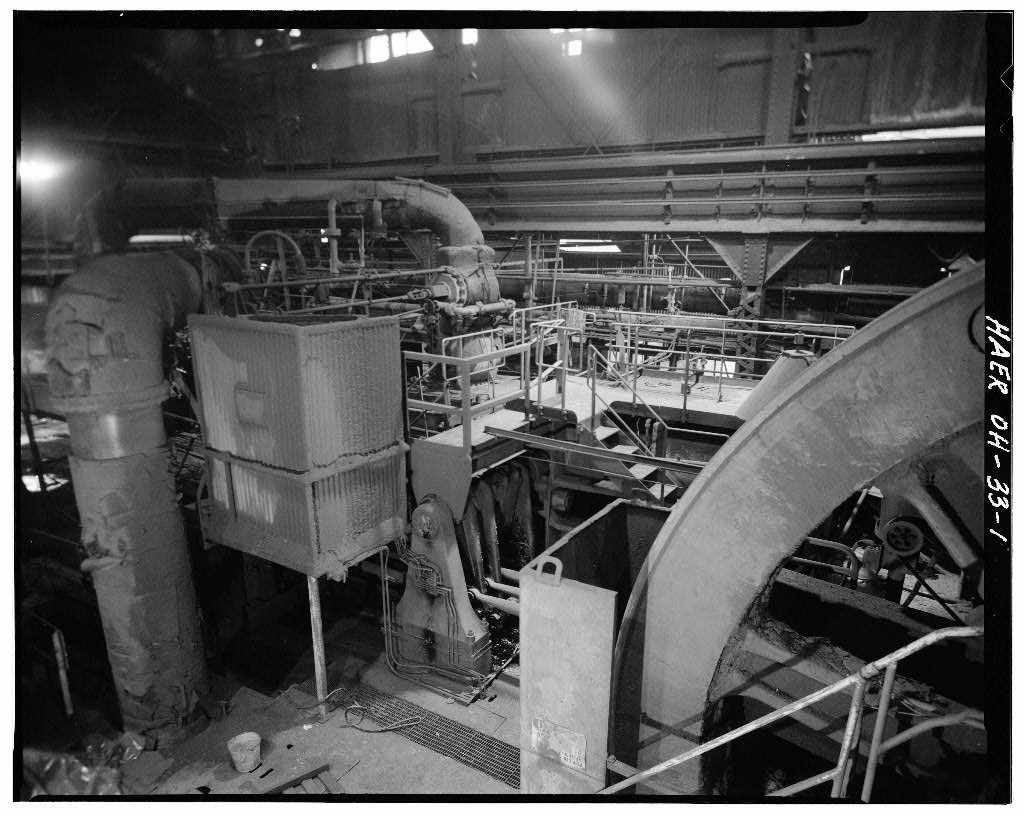
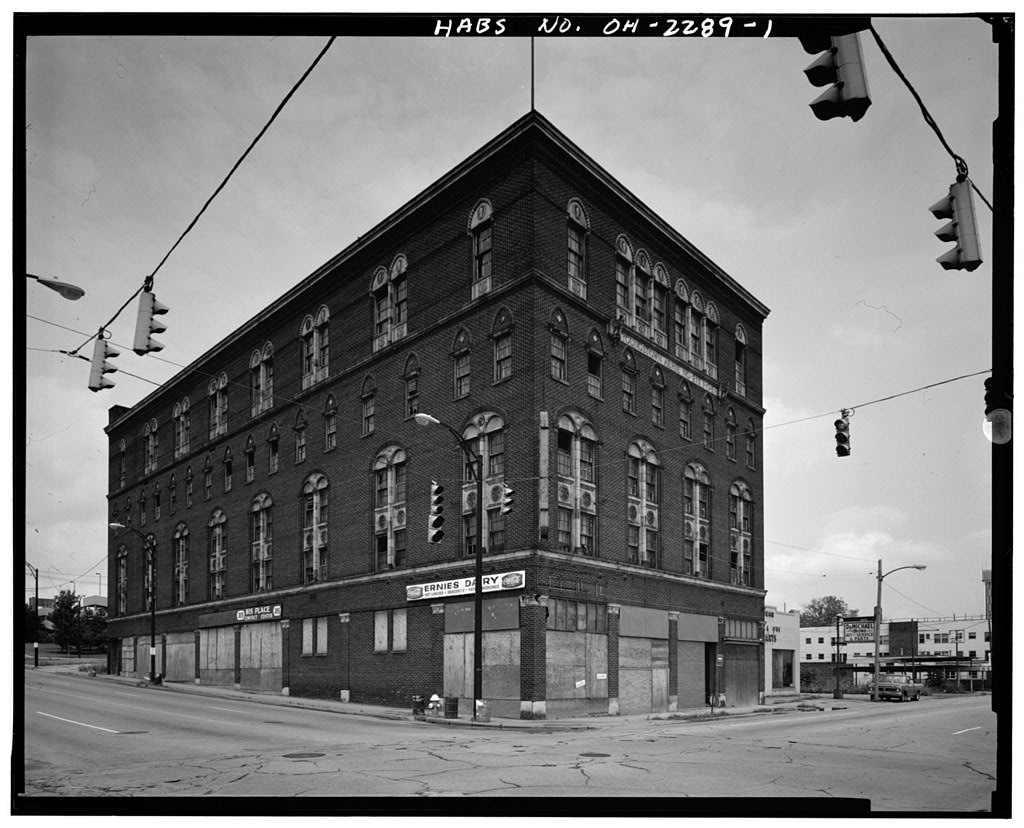
The former Youngstown City Water Works will be redeveloped by the City as an office complex for city use. The three original buildings -- the pumping station, filtration house, and the machine shop will be altered or demolished. Documentation of the water works complex to the standards of the Historic American Engineering Record prior to alteration or demolition was undertaken by the Center for Historic Preservation in April and May in an effort to record the municipal history of the city of Youngstown. The report will be donated to the Library of Congress. Center for Historic Preservation Youngstown State University 518 DeBartolo Hall Youngstown, Ohio YOUNGSTOWN CITY WATER WORKS HAERNo.
OH-118 (Page 2} Introduction The Youngstown City Water Works is a 3-building industrial complex occupying a 5-acre site in the city of Youngstown, Ohio. The site is located along the Mahoning River, west of the city's central business district. Initial construction of the complex began in and was completed in Existing buildings have been modified as needed. The facility remained in operation until The site is composed of three buildings. The pump house forms the nucleus of the complex and is located along the eastern edge of the property. The filtration house and machine shop are located northwest of the pump house along the western edge of the property.
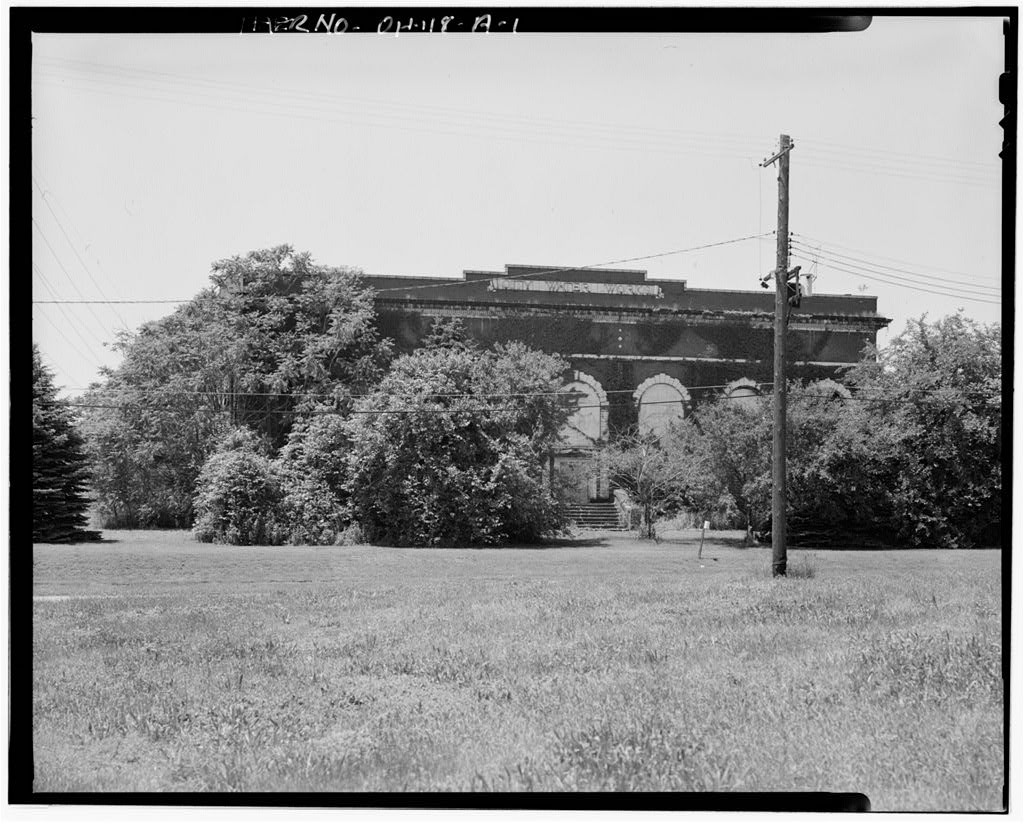
The pump house is an elaborate example of a structure influenced by the Second Renaissance Revival and was the focal point of the Water Works complex. Architectural details include a stepped parapet with simple terra cotta coping along the roof line, a white glazed terra cotta cornice, and symmetrical groups of arched windows. The filtration house and machine shop are more utilitarian in design. Architectural details include parapet walls, regularly spaced recessed brick bays, and expanses of windows. All of the buildings were designed to maximize the use of natural light in the building interiors. Side wall windows were used extensively. The use of center-pivot sash windows provided the buildings with ventilation as well as light.
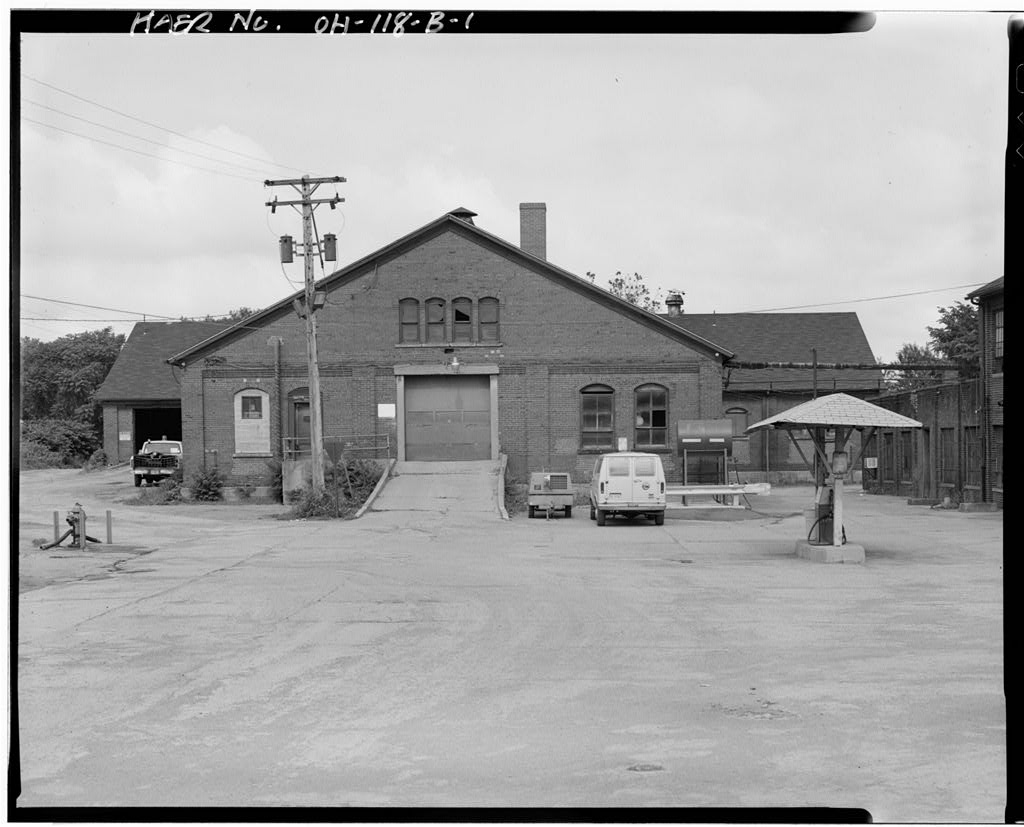
Youngstown's City Water Works remained in operation for approximately 28 years. Two major periods of development are associated with this 28 year occupation. The original period of development spanned from to when the complex served the original water works located on the north side of the Mahoning River. The second period of development lasted from until when the plant operated as Youngstown's only water purification and pumping facility. The original plant, designed by N.E. Hawkins and John S. Lewis, served Youngstown's original pumping station located on the northside of the Mahoning River. The original complex, completed in consisted of a filtration house and machine shop.
The filtration house had an original capacity of filtering ten million gallons of water daily and contained twelve filter beds, two settling basins, and a storage well. The machine shop served as a tool storage area and was the place where various fittings were made for the general maintenance of the machines in both the filtration house and pump house. The buildings in the complex were accessed by a spur of the B & 0 mainline. The spur ran along the northside of the filtration house and machine shop to provide materials necessary for the purification of the water. The only significant change to the configuration of the complex came in the early teens when a garage was constructed north of the machine shop. The garage served as a maintenance facility for water department vehicles.
The most significant wave of modifications to the complex occurred between when the filtration house was upgraded and a new pump house was constructed on the south side of the Mahoning River. Developments in modern industrial design, increased water needs YOUNGSTOWN CITY WATER WORKS HAERNo. OH-118 (Page 3) of the city, and improvements in the purification of water had an impact on the redevelopment of the complex. Upgrades to the filtration house, including the construction of 16 additional filter beds, increased its filtering capacity to 30 million gallons of water daily. The most significant change was the construction of a new pump house, which contained both a boiler room and engine room.
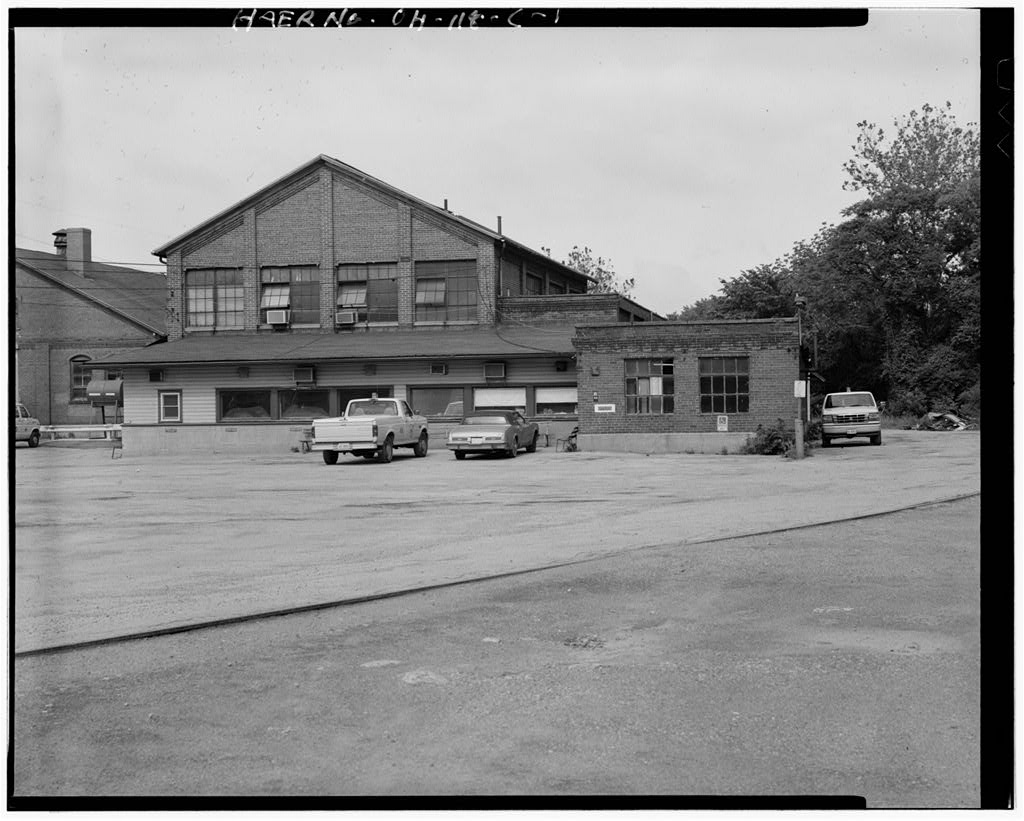
When the facility was opened it had a combined pump capacity of 35 million gallons of water per day. The boiler room on the pump house was accessed by a spur of the B & O Railroad which ran along the southside of the building to deliver coal to the coal bunker. After few significant changes were made to the filtration house and pump house. However, the machine shop underwent extensive changes. In the original machine shop was attached to the existing garage. After two other additions were added. The first is a one story brick addition located on the east end of the addition. The second addition is a one-story cinder block addition located on the north wall of the original machine shop. The growth of the machine shop allowed for the reconfiguration of storage, work, and office space.
Since the Youngstown City Waterworks stopped functioning as a filtration and pumping station in the early the buildings have served as storage, maintenance, and office space. Most of the original machinery within the buildings has been removed. Although the equipment no longer survives, the complex as a whole represents a tangible record of the evolution of both the Youngstown City Water Works and the water purification and pumping process. Current plans call for the redevelopment of the site as an office complex. YOUNGSTOWN CITY WATER WORKS HAERNo.
OH-118 (Page 4) Historic Context Urban and Industrial Growth Following the Civil War, the United States adopted technologies and ideas that forced the country to change the landscape of its forefathers to one that could support large factories and the populations that worked in them. The war transformed the economic and the social status of millions of American citizens, forever altering the lives of all living in America. By the end of the nineteenth century the entire country was submerged in the industries that would propel the United States to the forefront of all the world's industrial nations. The rural-agrarian nation of the past gave way to the urban-industrial nation of the future. Industrialists actively searched for areas that were best suited to their pursuits.
The need for raw materials, an adequate labor force, and a large market made an urban location a necessity for many factories. In addition, factories producing textiles, chemicals, and iron and steel required proximity to water because of its use in the production processes.1 As rapidly as factories were built, Americans raced to the cities to work in them. In addition to Americans moving into the urban areas, immigrants from Europe and other areas overflowed the cities to further supplement the labor demands of the expanding industries. The city of Youngstown, Ohio, located in the northeastern quadrant of the state began as a predominately rural community early in the nineteenth century. As the nation underwent change, so too, did Youngstown.
Located on the Mahoning River, Youngstown offered industry an ideal location on which to thrive. Prior to the Civil War, Youngstown, and the areas surrounding it became more urbanized as the iron industry prospered. The country's mobilization for war furthered Youngstown's progress as production increased to meet the Union's demand for war goods. After the Civil War, Youngstown proceeded to grow and expand as the nation continued its industrial transformation.
The population of the city soared as immigrants from southern and eastern Europe and migrants from other parts of the United States flocked to Youngstown to work in the mills of Youngstown Sheet and Tube Company, Republic Steel Company and W.B.Pollock Company.2 The influx of immigrants from the countryside, small towns and foreign lands flooded American cities in the late nineteenth century. Their arrival strained all available resources that once seemed adequate to the smaller municipalities. Tenement housing emerged as an attempt to remedy housing shortages, trolleys were packed with passengers, children overcrowded schools resulting in poor educational records, medical facilities overflowed with patients, and 1 Martin V.
Melosi, "Environmental Crisis in the City: The Relationship between Industrialization and Urban Pollution," in Pollution and Reform in American Cities, edited by Martin V. Melosi (Austin: University of Texas Press, Frederick J. Blue, et. al., Mahoning Memories: A History of Youngstown and Mahoning County, (Virginia Beach: The Donning Company Publishers, 69. YOUNGSTOWN CITY WATER WORKS HAERNo. OH-118 (Page 5) drinking water and toilets became nonexistent.3 The proximity of factories to bodies of water greatly affected water supplies. Factories used water to produce goods, but also used surrounding lakes, rivers, and streams as dumping grounds for unwanted wastes. Often, these dumping grounds also served as the source of the domestic water supply in many cities.
The municipal facilities designed to provide water and remove waste proved inadequate in the face of the ever-increasing population and industrial growth. The transformation to an industrialized urban nation presented obstacles that plagued Americans from the outset. The concepts of better water, sewage and transportation were not revolutionary to mid-nineteenth century America. As early as the colonial period, Boston contemplated the idea of better water and transportation for its commercial city. Through the early part of the nineteenth century, other metropolitan areas of the Northeast concerned themselves with public works to better serve their already expanding populations.
By the end of the nineteenth century, however, these concepts were no longer luxuries, they were fast becoming necessities. The swell in populations and industries developed into an environmental crisis unrivaled by any in the past. Smoky skies, polluted waterways, inadequate waste disposal, overcrowding and noise contributed to critical health problems that urban dwellers were forced to face. 4 The environmental crisis inherent to industrial growth surfaced across the nation in highly industrialized areas like Pittsburgh, St. Louis, New York, and Chicago. The strain already placed on the public works by overcrowding multiplied as industry placed added strains on the area. The industries polluted both land and waterways. Cities like Chicago and St.
Louis relied on slaughterhouses and meatpacking for industrial growth. With no other means of waste disposal, vacant lots became dumping grounds for unneeded animal parts. The stench permeated the air in and around these cities. Industrial centers for steel production inundated the surrounding areas with smoke and noise unbearable to the human senses. New York City also contended with smoky skies generated from the use of soft coal in their electric plants. Pittsburgh, the leading steel producer in the nation in became known as "the smoky city."5 In addition to the air pollution, steel processes required excessive amounts of water for production as well as a receptacle for waste disposal.
The rivers surrounding Pittsburgh were polluted with the wastes generated from their life sustaining industry. Ironically, workers drank as many as thirty-five glasses of water a shift from the very same rivers to prevent dehydration from the intense heat of the mills. 6 None suffered more than the working classes of the industrial cities. Forced to live near the factories in which they labored, the working class contended with environmental problems at 3 Maury Klein and Harvey A. Kantor, Prisoners of Progress: American Industrial Cities, (New York: Macmillan Publishing Companies, "Klein and Kantor, Prisoners of Progress, 3. 5 Klein and Kantor, Prisoners of Progress, 6 S. J.
Kleinberg, The Shadow of the Mills: Working-Class Families in Pittsburgh, (Pittsburgh: University of Pittsburgh Press, 91. YOUNGSTOWN CITY WATER WORKS HAERNo. OH-118 (Page 6) home and in the work place. The overcrowding of these less desirable sections of the cities was unavoidable. As populations increased, the health and sanitation problems multiplied. Close living quarters intensified unsanitary conditions, and in these areas health problems, diseases, and death rates soared. Typhoid fever and cholera ran rampant in most industrial cities where close quarters and improper sewage disposal could help turn one case into hundreds in just days.
At first considered part of the price to pay for industrial success, citizens and city officials came to realize, as health problems escalated to epidemic proportions, that a concentrated effort could prove to be a critical first step toward making cities clean and safe.7 These larger urban areas were not alone in this environmental crisis spurred by industrialization. Smaller areas, like Youngstown, Ohio, also experienced many of the same pollution problems. As quickly as housing could be erected, immigrants and millworkers filled it to capacity. The housing shortage forced families to live together in close, cramped areas. Often two or three families resided in a single family dwelling.
The close quarters coupled with no sanitation standards or water standards sustained an environment rife with disease and infection. In Youngstown reached epidemic proportions of typhoid fever.8 The numerous steel mills that dominated Youngstown's landscape drew water from the Mahoning River for cooling the metal while at the same time dumping wastes into it to be "carried off." Like Pittsburgh's citizens, Youngstown workers and residents drank the same water infested with this industrial waste. While Youngstown's steel production was considerably lower than Pittsburgh's, it had the same disastrous effects on health of local citizens. Reactions to the Crisis As industrial development pushed westward, the dilemmas of individual cities grew into full-scale regional problems.
Social and environment problems escalated in the core of many cities, and those who could afford to moved to the cities' edges. While the upper and middle classes thought they were escaping urban problems by moving into their suburbs, they still had to work inside the cities. Furthermore, suburban growth itself led to new environmental problems. Since the industry and businesses remained in the cities, transportation proved necessary to join the two areas. Transportation methods elicited separate pollution problems added to already present problems. Expecting to escape inner city ills, suburbanites were soon greeted with the same conditions they had attempted to leave. The inability to expand public works to the outer limits of the cities produced an even deeper crisis.
Few city officials had anticipated the wild growth of their cities, so public service systems were not constructed with the necessary room to grow. The added strains on public services pushed them beyond their limits, often causing the loss of them completely.9 Concerned citizens urged their local governments to rectify the problems, but a concerted effort could not be achieved. During the years between and America's so-called 7 Melosi, "Environmental Crisis in the City," 8 Joseph G. Butler, History of Youngstown and the Mahoning County Ohio Vol.1 (Chicago: American Historical Society, 9 Melosi, "Environmental Crisis in the City," YOUNGSTOWN CiTY WATER WORKS HAERNo.
OH-118 (Page 7) Progressive Era, many members of the growing middle class mobilized in order to correct the problems they saw in city government, city planning, and social welfare. While some of these reformers focused on corrupt politicians and the "moral depravity" of the working class, others turned their attention to city planning issues, including sewage systems, public parks, improved streets, and safe water supplies. Several movements espousing public health and welfare bloomed during the period, and while some may have experienced only very limited success, a number of them produced lasting results. In many cities, including Youngstown, the introduction of some type of health board was the result of reform efforts.
Youngstown's Board of Health was formed in and monitored typhoid and cholera outbreaks, invoked quarantines, and removed sanitary hazards throughout the city.10 Many public health and city planning reformers used local newspapers to rally support among the citizens. In Youngstown, Dr. Henry Manning, Dr. Buechner, and Dr. McKeown gained notoriety by warning both officials and citizens of the dangers lurking in their water supply, their sewers, and their food stuffs. What once was considered the cost of success became a peril to survival. The creation of adequate water supplies, while always at the forefront of urban needs, rendered itself an immediate and foremost necessity at the turn of the century. The presence of a pure water supply often determined the growth of many cities.
Those with a reputation of large amounts of clean water were more apt to be chosen by relocating or new businesses. Physicians and reformers concerned themselves with the polluted waterways that surrounded urban centers. Physicians studied the diseases and infestations spread by such waterways, and reformers used them to further their crusade. Reformers lobbied not only for pure water, but also for more water. Often, because of inadequate water supplies to dowse flames, fires consumed whole sections of cities, especially in the summer months.
Fires, epidemics, and perhaps most importantly to city officials, a threat to prosperity, spurred a series of actions to remedy the urban water crisis.11 Youngstown City Council established an ordinance for public administration of a city owned water works in The water supply was pumped from the Mahoning River and directly into the homes and businesses of Youngstown. As the city emerged as a leading industrial center, it became evident that more than a water works was necessary to sustain a healthy urban environment for its residents. The existence of contaminated wastes in the Mahoning River along with the discovery ofwaterborne diseases, prompted city officials to again look at the needs of its citizens.
Finally, following a city wide outbreak of typhoid and yellow fever in the Youngstown officials led by Dr. Buechner, pushed forth the idea of a 10 The Vindicator, 24 June 11 Stuart Galishoff, "Triumph and Failure, the American Response to the Urban Water Supply, in Pollution and Reform in American Cities, edited by Martin V. Melosi (Austin: University of Texas Press, 36. 12 Youngstown Chamber of Commerce, Youngstown the City of Progress: A Natural Center of Manufacturing and Distribution (Youngstown: Youngstown Chamber of Commerce, 47. YOUNGSTOWN CITY WATER WORKS HAERNo.
OH-118 (Page 8) filtration plant that would purify the water from the river before distribution to the residents.13 Quest for Pure Water Supply Nationwide, cities experienced similar problems in the seemingly never-ending search for adequate water supplies. Most cities, originally located along riverbanks and streams, had long since diminished the water supplied by nearby estuaries. To continue to meet the needs of the residents, these cities searched elsewhere for more water. The supply from new sources also waned, and many cities continued their search. Following the transformation to an industrialized nation, further strains on water supplies were multiplied by dumping from the mills and factories.
Not only the lack of water, but also the contamination of water presented grave problems for city dwellers. Science and technology soon made significant contributions to the quest for pure water. Up until the waterborne diseases were suspect but unproven. It was not until Robert Koch proved the germ theory through laboratory experimentation that any real merit was given to the previous belief that water carried disease-bearing contaminants. In fact, so much credit was awarded to the germ theory that most cities constructed filtration plants soon after.
Youngstown City Water Works: In the Beginning While the Youngstown City Water Works was established by city council on May 23, the complex itself did not begin to function as such until the opening of the filtration house in Before this time, the Water Works consisted of a pumping house erected on the North side of the Mahoning River, across from the present site. From until water from the Mahoning River was pumped directly into the homes of citizens without any filtering or treatment.1'' As the city grew, however, the Mahoning River's water became ever more contaminated with industrial and residential waste, rendering the city's domestic water supply obnoxious at the very least, deadly at worst.
Youngstown's citizens were a!i too aware of their growing water supply problem, and some, including local health and water authorities, urged city council to do something about it. Dr. W.L Buechner was Youngstown's most renown, and possibly most outspoken, public health reformer. Through the local newspaper, The Youngstown Vindicator, Buechner addressed health issues, including water and sewer problems. He, on many occasions, warned city officials of the dangers lurking in the city's water supply and reported to citizens statistics relating to citywide cholera and typhoid fever outbreaks.
In one such study, Buechner found that typhoid fever caused 20 percent of Youngstown's deaths in March of In a related article, a few days before, Buechner stated that, "No one should put a glass to his lips with any suspicion of poison or disease. Yet who drinks Youngstown water without a shudder! Invisible 13 lbid. "Joseph G. Butler, History of Youngstown and the Mahoning Vailey Ohio, Vol. 1 (Chicago: American Historical Society, ^Youngstown Vindicator, 17 April YOUNGSTOWN CITY WATER WORKS HAERNo. OH-118 (Page 9) little wigglers may be there that multiply in the body and bore through every organ."16 Buechner may have chosen his words for the powerful image they conjured in the minds of citizens, but the statistics accompanying them should have been enough.
In the same article, Buechner reported that Youngstown stood an "unenviable" third in the state for typhoid fever cases and that 94 cases alone had been found in February of that year.17 In the five years preceding the opening of the filtration house at the Youngstown City Water Works, Buechner and others flooded The Youngstown Vindicator with articles pertaining to the water problem and the solutions other cities used to combat their own problems. Hull, a prominent, local inventor, suggested that his mechanism should be used to attain clean drinking water. Hull's "condenser" was to be attached to a teapot so it could catch the steam and hold it until it cooled back to its liquid form.
Hull attacked local citizens and officials for their indifference toward the water problem and recommended that all families use his purification method.18 City officials obviously had a difficult time ignoring the growing water problem and the public outcry it spawned, because in the city began work on a filtration house across the Mahoning River from the pumping station. The filtration plant opened in and had an initial capacity for treating gallons of water per day. In addition to the much needed filtration, city officials authorized the sewage improvements throughout Youngstown, and as Buechner predicted, severe typhoid fever and cholera outbreaks ceased almost immediately.
The new Water Works now contained a filtration house and a machine shop along the banks of the Mahoning River just west of downtown Youngstown and the old pump house across the river. The filtration house consisted of twelve filter beds, two settling basins, a storage well, three centrifugal pumps, one condenser pump, and two boilers. The Water Works' machine shop was similar to the size and style of the filtration house. The shop served as a tool storage area and also was the place where various fittings were made for the general maintenance of the machines in both the filtration house and the pump house.
In taken together, the land, building and equipment of the Waterworks had a total monetary value of However, the public health value this new addition meant for Youngstown's residents was immeasurable. In the new Water Works complex, water was pumped out of the Mahoning River and through filter beds filled with sand, removing larger suspended matter from the water. The water then went to the settling basins where smaller matter could sink to the bottom. Lime was used to treat the water beginning in From there, the clean water was sent to the pump house across the river distributed throughout the city. ^Youngstown Vindicator, 5 April "Ibid. 18 lbid.
19 City Water Works Department, "A Souvenir of Opening Days May (Youngstown, OH: The City of Youngstown, YOUNGSTOWN CITY WATER WORKS HAERNo.OH-118 (Page 10) New Pump House Youngstown's population continued to increase, as did its number of industrial establishments. Not oniy did industries demand water, they greatly contributed to the polluting of the Mahoning River. The Youngstown City Water Works underwent various improvements in order to keep pace with the growing demand for clean water. In the superintendent of the City Water Works, John S. Lewis, recommended a large-scale remodeling of the complex which was to include a new pumping station.
In his February report to the Board of Control, Lewis stated: I would not recommend any enlargement of the present pumping station owing to its general condition and location, but would recommend the erection of a new pumping station on the south side of the river where we have enough ground to build a more modern or up-to-date plant.20 Less than two months later, because the board had largely ignored his recommendation, Lewis again implored: In view of the fact that we had about nine feet and three and one-half inches of water on our present pumping station floor during the recent flood, I would respectfully urge you to carry out my former recommendations of building a new pumping station on the south side of the river.21 The Board of Control, the Mayor, F.A.
Hartenstein, the Director of Public Services, Veeder Heasley, and the Director of Public Safety, Harry Parrock together with City Council heeded Lewis's warning and approved the building of the new pump house. The new building was situated inside the complex that contained the filtration house and machine shop on West Avenue. Lewis himself, along with N.E. Hawkins, erecting engineer, designed the building which was completed in While the old pump house was Gothic in style, Hawkins decided on Romanesque for the new one. It is a stately brick structure embellished with Richardson-inspired arches over six long windows on its facade. The arches, as well as the door surround are detailed with terra cotta adornments.
Hawkins divided the building into two main rooms -- an engine room and a boiler house. A program handed out to visitors on opening day features the complex's architectural showpiece and claims that the pumping station was built with future extensions in mind. In it boasted a pumping capacity of gallons of water per day, but plans for a capacity of were already under way.23 During the upgrading, officials made improvements to the filtration plant as well. The augmentation brought the capacity of the filtration plant up to gallons of water per day. The Youngstown City Water Works, situated on a single complex and equipped to fitter 20 lbid. 21 lbid. 22 lbid. 23 lbid. YOUNGSTOWN CITY WATER WORKS HAERNo.
OH-118 (Page 11) and provide gallons of water to residents and businesses everyday was valued at Opening day ceremonies for the new and improved Youngstown City Water Works alleviated the worries of many concerned citizens and business owners, but old problems would later resurface and continued industrial and population growth introduced new difficulties.
According to one resident, "Even with additional improvements made since the filtration plant was built Mahoning River water is far from palatable and not usually partaken of as a beverage when any other water supply is possible, but it is not as unhealthy as its taste and odor might indicate."25 In addition to the water's foul odor and taste, its scarcity during the summer months proved to be an obstacle the new plant atone could not overcome. While the Water Works placated residents in spite of the aesthetic problems it failed to correct, it could not meet the needs of local industry. During the summer months the river's flow was reduced considerably and thus could not supply enough water to meet the immense demands of the local steel mills.
Most factories installed subterfuge systems that enabled them to use and reuse water, but these attempts ultimately failed to supply the amount of water necessary for full production. Because of the water dilemma, factory production decreased during the summer and future industrial growth in the city was threatened.26 Milton Reservoir Water volume had mired Youngstown's industrial success for some time. Annual flooding caused problems in the spring and shortages made for difficult summers.
Factory owners urged city officials to find some way of controlling the volume of the Mahoning's waters as early as A plan to create a storage basin up river from the Water Works was introduced in A survey, most likely funded by area industries, found a site in Berlin Township, and the city spent five years trying to purchase all the necessary land. City engineers, led by Liilie, planned to build a dam and reservoir, in which 10 billion gallons of water could be collected during the rainy months and stored for gradual release in June, July, and August. The city had purchased much of the land by but experienced difficulty obtaining the rest because of the interference of private interests.
In further surveying efforts found another site in MiitonTownship some seventeen miles west of Youngstown. While the city retained ownership of the land already purchased in Berlin, they also bought all the necessary land in Milton Township. It was here that Liilie built the new dam and reservoir which he completed in late After the completion of the Milton project, the minimum daily flow of the Mahoning River at Youngstown increased from less than 15 million gallons to 100 million gallons.28 24lbid. 25 Butler, History of Youngstown, 26 lbid. 27 lbid., 28 Youngstown Vindicator, 26 November YOUNGSTOWN CITY WATER WORKS HAERNo.
OH-118 (Page 12) The Mahoning Vallev Sanitary District While the construction of the Milton Dam and Reservoir dramatically increased the flow of the Mahoning River at Youngstown, it did nothing to raise the quality of the water enough to allow production of a safe and palatable water for the community. Shortly after the opening of both the pump house and Milton Reservoir in the State Department of Health condemned the Mahoning as a domestic water source.29 Because the Mahoning had provided water for not only Youngstown, but also for other surrounding communities, officials realized that a joint effort was in order. Youngstown's water problem had by this time become a regional problem.
In Mahoning Valley officials fostered the passage of the Sanitary District Act by the Ohio General Assembly.The act was designed to allow two or more political subdivisions to form a consortium in order to provide water supply and sanitation facilities.30 This act made possible joint action among Mahoning Valley citizens, officials, and municipalities. The Sanitary District Act allowed the formation, but it took public action in the form of petitions to actually create the Mahoning Valley Sanitary District. Initially, officials hoped that all of the Mahoning Valley's cities would be included in the district, but they soon realized they would be unable to undertake such a comprehensive project.
In it was established that only the City of Youngstown and the City of Niles would be a part of the new Sanitary District. At this time, planners expected only to provide raw water since both Youngstown and Niles already had treatment plants. They also decided that the water would come from the Meander Creek at the Mineral Ridge Dam. The Court of Jurisdiction approved the plan on December but by that time the plan had changed to include the erection of a complete district water works. The District's chief engineer, Dittoe recommended that, "the most economical plan for the future would be the abandonment of the existing Niles and Youngstown treatment plants. . .
[because of] the poor design and condition of the existing plants, the inadequate capacity with little means of expansion, the high cost of renovating and enlarging the plants, and the poor sites subject to flooding."31 The total cost of the Mahoning Valley Sanitary District Plan, including the new water works, was Construction began in and lasted until with the completion of the dam, water treatment facility and the filling of the Meander Reservoir. Mahoning Valley Sanitary District and City Engineers recommended that the old waterworks be completely shut down in the fall of after seven or eight months of successful operation of the new Meander facilities.32 29Dolanld D.
Heffelfinger, "History of Meander," unpublished report of the Secretary and Chief Engineer of The Mahoning Valley Sanitary District, 18. M lbid., 19. 31 lbid., 24. 32 Youngstown Vindicator, 8 February YOUNGSTOWN CITY WATER WORKS HAERNo. OH-118 (Page 13) Abandonment of Younastown Citv Water Works Complex The new sanitary district's facilities proved effective in providing the cities of Youngstown and Niles safe, clean, and abundant water supplies. After complete operation of the facilities for eight months, Youngstown officials began looking for a use or buyer for the old water works complex. Some of their ideas sparked debate among city officials, citizens, and business owners.
In February of Water Commissioner Dan Parish appointed a committee of engineers to determine the fate of the old complex. The committee advised that all electrical and mechanical equipment in the complex's three buildings be dismantled and disposed of. They added that while the pump house was in good structural condition, the complex itself was antiquated and would never be an efficient water facility again. Parish quoted the setup cost of the Water Works as but estimated its value in as In plans of converting the complex into a brewery or a municipal power plant began to surface.33 Mayor Mark Moore suggested that the city retain the complex and construct a municipal power plant on the site.
The plan was backed by Harry Engle, a former traction commissioner, and was to be approved by popular vote by way of petition. Engle commended the mayor for his support and told The Youngstown Vindicator a complete power plant could be built at a cost of Moore and Engle gained the support of numerous progressive-minded officials and city council members. Councilman Myron Williams stated that, "Youngstown politics will not be dominated by the utilities."34 Neither the brewery nor the municipal power plant ideas came to fruition, but the city did retain ownership of complex.
The pump house, machine shop, and the filtration house have all been used in varying capacities by the Youngstown Water Department from to A fire destroyed a portion of the machine shop in but the city continued to use the building. As late as the city was contemplating an appropriate reuse for the complex. City Council suggested that the pump house become the anchor for the Spring Common Riverfront Park then in the planning stages. Today, in the complex sits partially abandoned and partially used as storage, office space, and repair shops. The city's latest intensions include large-scale remodeling for the pump house in particular. After remodeling the building will house numerous offices for the City of Youngstown.
The Industrial Process During its operation from until the Youngstown City Water Works processed water drawn from the Mahoning River in order to prevent the spread of disease and provide clean water to the city's residents. The process of providing ciean water to the city began with a large screen adjacent to the river. Water from the Mahoning River passed through the screen which caught the debris carried by the current of the river. x The screen was cylinder shaped and fitted with holes that served as M lbid. ^Ibid, 15 August 35, Gene Leson, interview by Lori Martz, Youngstown, Oh, 5 May YOUNGSTOWN CITY WATER WORKS HAERNo. OH-118 (Page 14) sifters, sorting out substances as small as sand and as large as rocks. After passing through the screen the water settled in a series of deep wells.
Water was pulled from the deep wells into a receiving well by a conduit which served as a pipe line. The conduit had openings with several joints or inlets that steered water to a series of strainers. Prior to entering a receiving well the water passed through a series of revolving screens which washed any remaining refuse back into the river. Removing elements from the water such as grease from industrial establishments and autumn leaves was vital to maintaining the water works and avoiding ashut down due to a backup of water. After passing through the screens, the water entered a receiving well where lime and alum were added for purification. Youngstown was the first city in Ohio to use this type of chemical treatment.
The Water Works used a traincar load of lime a week in an attempt to keep up with the demand for pure water. x Typically, chlorine was the chemical of choice in water purification facilities, but Youngstown's water supply was so heavily polluted with industrial waste that the use of chlorine as a purifiying agent was not feasable.
By the "raw water pollution load at Youngstown was the greatest of any water treatment plant in the country."37 In June an article in the Youngstown Vindicator stated the "use of chlorine as a means of purification of the water here was put in the discard because of its chemical reaction with the phenol waste emptied into the Mahoning River by the Industrial plant."38 Although chlorine removed health hazards present in the Mahoning River, it increased the phenol taste in the water. Consequently, a search for an equally effective chemical led to the lime treatment. M In addition to solving the phenol taste problem, lime softened alkalines with ferrous sulfate and sulfate of alumina while neutralizing acidic waters.
The receiving well into which these chemicals were diluted was fitted with a filter containing a layer of sand. As water passed through the sand, discarded bacteria and other suspended matter was pulled from it. This filter sand ideally was hard, resisting, and usually comprised of quartz and quartzite. It was expected to be free of large amounts of thin particles and dirt of all types. Filtration House & Coagulation Basin From the receiving well, water was pumped directly into the filtration house. Once inside, water entered the filtering room which contained twenty-eight basins. Each one had a rated capacity of one-hundred thousand gallons per twenty-four hours. The actual filtration system consisted of numerous layers of sand through which the water flowed.
From the filtration house water was sent into one of two large settling coagulation basins. The basins, 150 feet wide by 200 feet long, were divided into four, twenty-three feet deep sections. Certain basic water ^Youngstown Vindicator, 27 November 37 lbid. ^Ibid., 4 June 39 lbid. YOUNGSTOWN CITY WATER WORKS HAERNo. OH-118 (Page 15) sulfates found in the Mahoning River's water often required sulfates of alumina as the coagulant for treating. The chemicals were added to the water separately when a low PH balance was demanded for coagulation. Coagulation was vital for two reasons. First, it gathered particles into groups which in a dispensed condition could not normally be removed by filtering.
Secondly, it also formed sponge like layers or films in the filter sand that allowed water to pass very quickly while withholding bacteria and suspended matter. Consequently, upon reaching the first section of the coagulation basin water was usually mud colored, but the addition of a coagulation agent meant that by the time it had passed through the first three sections, it entered the fourth as a green-colored, clear liquid free of debris. Clear Well After filtering through the coagulation basin the water was pumped into a clear well. In the clear well connecting laterals of the main drains of the slow filters were laid on the well's surface and were usually covered by gravel a foot or more deep.
The gravel was usually in three or more layers so it could support two to five feet of filter sand. Drains were built into the masonry bottom of the clear well. In systems like Youngstown's, clear well masonry bottoms could range anywhere from one hundred square feet to one and a half acres. Pump House Water was pumped directly from the clear well to the main water lines which dispersed it throughout the city. Water from the clear well was distributed throughout the main system through four mains; either two thirty-inch high pressure mains, or two thirty-six inch low pressure mains. Water entered the mains through a class "A" forty-eight inch suction header pipe driven by a Tod Triple Expansion pumping engine. It had an individual capacity of 7.5 million gallons per twenty-four hours.
The water was then forced into a discharge header which pushed the water through one of four main service lines. Two thirty-inch high-pressure mains were used to obtain greater pressure thus allowing the water to be distributed over a greater distance. Two larger low pressure thirty-six inch mains provided distribution to lower lying areas requiring less force to distribute the water. When the pumping station opened in it had a pumping capacity of approximate thirty-five million gallons of water per day. YOUNGSTOWN CITY WATER WORKS HAERNo. OH-118 (Page 16) Sources of Information/Bibliography A. Engineering Drawings Drawings in the collection of the Youngstown City Water Department January. Youngstown Water Works, Details of Existing Purification Plant, Youngstown City Water Works.
One sheet. B. Interviews Eugene Leson, interview by Lori Martz, Youngstown, Ohio, 5 May C. Bibliography Primary and unpublished sources City Water Works Department, ASouvenirof Opening Days May Howard C. Aley Collection, Mahoning Valley Historical Society. Heffelfinger, Donald D. "History of Meander." Report by Secretary and Chief Engineer of The Mahoning Valley Sanitary District, Photocopy. Secondary and published sources Books Babbitt, Harold E., and James J. Doland. Water Supply Engineering. New York: McGraw-Hill Co., Inc., Blue, Frederick J., et. al., Mahoning Memories: A History of Youngstown and Mahoning County, Virginia Beach: The Donning Company Publishers, Butler, Joseph G. History of Youngstown and the Mahoning County Ohio. Vol. 1.
Chicago: American Historical Society, Flinn, Alfred Douglas, Robert Spurr Weston, and Clinton Lathrop Bogert. Water Works Handbook. New York: McGraw-Hill Book Co., Inc., Klein, Maury, and Harvey A. Kantor, Prisoners of Progress: American Industrial Cities, New York: Macmillan Publishing Companies, Kleinberg, S. J. The Shadow of the Mills: Working-Class Families in Pittsburgh, Pittsburgh: University of Pittsburgh Press, Ohio Department of Natural Resources (ODNR, Water Division). Industrial Ground Water Pumpage in Ohio. By Bernhagen. ODNR Bulletin no.1l Columbus, YOUNGSTOWN CITY WATER WORKS HAERNo. OH-118 (Page 17) Ohio Department of Natural Resources (ODNR, Water Division). Municipal Water Problem in Ohio. By S.L Frost. ODNR Bulletin no.1. Columbus, Turneaure, F.E., and Russell.
Public Water Supplies. New York: John Wiley & Son, Inc., Articles Galishoff, Stuart. "Triumph and Failure, the American Response to the Urban Water Supply, In Pollution and Reform in American Cities, edited by Martin V. Melosi. Austin: University of Texas Press, Melosi, Martin V. "Environmental Crisis in the City: The Relationship between Industrialization and Urban Pollution." In Pollution and Reform in American Cities, edited by Martin V. Melosi. Austin: University of Texas Press, Newspapers The Youngstown Vindicator, 24 June August YOUNGSTOWN CITY WATER WORKS HAERNo. OH-118 (Page 18) KEY TO BUILDINGS, YOUNGSTOWN CITY WATER WORKS SITE PLAN, ROOM NUMBER USE A Filtration House A1 Laboratory A2 Engine Room A3 Boiler Room B Machine Shop C Clear Well YOUNGSTOWN CITY WATER WORKS HAERNo.
OH-118 (Page 19) YOUNGSTOWN CITY WATER WORKS SITE PLAN. DATE: PREPARED BY: ROW CENTER FOR HISTORIC PRESERVATICN at LNIVERSITr W.AZA. YOMKTOUN. CM SOJ YOUNGSTOWN CITY WATER WORKS HAERNo. OH-118 (Page 20) KEY TO BUILDINGS, YOUNGSTOWN CITY WATER WORKS SITE PLAN, ROOM NUMBER USE A Pump House A1 Engine Room A2 Boiler House A3 Coal Bunker A4 Fireman's Bathroom A5 Engineer's Bathroom A6 Oil and Storage Room B Filtration House B1 Pump Room B2 Lime Warehouse B3 Boiler House C Machine Shop D Clear Well E Garage YOUNGSTOWN CITY WATER WORKS HAERNo. OH-118 {Page 21) YOUNGSTOWN CITY WATER WORKS SITE PLAN. DATE: 5/I3/9T PREPAREO BY: RGV FCR HISTORIC PRESCRVATION 0 LMIVERSITY PLAZA. YOLMOSTQUM. (H YOUNGSTOWN CITY WATER WORKS HAERNo.
OH-118 (Page 22) KEY TO BUILDINGS, YOUNGSTOWN CITY WATER WORKS SITE PLAN, ROOM NUMBER USE A Pump House A1 Engine Room A2 Boiler House A3 Coal Bunker A4 Firemen's Bathroom A5 Engineer's Bathroom A6 Oil and Storage Room B Filtration House B1 Pump Room B2 Chemical Storage B3 Lime Warehouse C Machine Shop C1 Repair Deparment C2 Meter Department C3 Machine Shop/Stock Room C4 Loading Platform D Clear Well YOUNGSTOWN CITY WATER WORKS HAERNo. OH-118 (Page 23) YOUNGSTOWN CITY WATER WORKS SITE PLAN. DATE; PREPARED BV: ROW CENTER FOft HISTORIC PRE5ERVAT1CH a* iMivSRsm PLAZA. tctNSSTowj. OH < OJ YOUNGSTOWN CITY WATER WORKS HAERNo.
OH-118 (Page 24) KEY TO BUILDINGS, YOUNGSTOWN CITY WATER WORKS SITE PLAN, ROOM NUMBER USE A Former Engine Room A1 Fire Hydrant Storage A2 Garbage Department Storage A3 Coal Bunker A4 Vacant A5 Vacant A6 Vacant B Private Garage and Supply B1 Traffic Sign Storage B2 Shop B3 Parts Room B4 Tool House C Office Building C1 Meter Department Storage C2 Machine Shop C3 Repair Department C4 Repair Department C5 Loading Platform YOUNGSTOWN CITY WATER WORKS HAERNo. OH-118 (Page 25) A> A2 OA5 ifltf A'4 A6 -A A1 YOUNOSTOWN CITY WATER WORKS SITE PLAN. DATE: PREPARED BY:
Ct IMlVStSITT PLAZA. YOMOStOUM. CH YOUNGSTOWN CITY WATER WORKS HAERNo. OH-118 (Page 26) KEY TO BUILDINGS, YOUNGSTOWN CITY WATER WORKS SITE PLAN, ROOM NUMBER USE A Storage Building A1 Storage A2 Storage A3 Coa! Bunker A4 Vacant A5 Vacant A6 Vacant B Garage B1 Office B2 Storage B3 Shop B4 Storage B5 Storage B6 Body Shop B7 Paint Booth C Office Building C1 Repair Department C2 Repair Department C3 Office Space C4 Locker Room C5 Office C6 Loading Dock YOUNGSTOWN CITY WATER WORKS HAERNo. OH-118 (Page 27) A3-*' YOUNGSTOWN CITY WATER WORKS SITE PLAN. DATE: PREPARED BY: ROW CENTER FQR HISTORIC PRESERVATION WE IWIVEBSITY PLAZA. YOM3ST0UN. OH 44 3 YOUNGSTOWN CITY WATER WORKS HAERNo. OH-118 (Page 28) YOUNGSTOWN CITY WATERWORKS SITE LOCATION jQ. J fr0F?a "VJ
 Block
Block