 Block
Block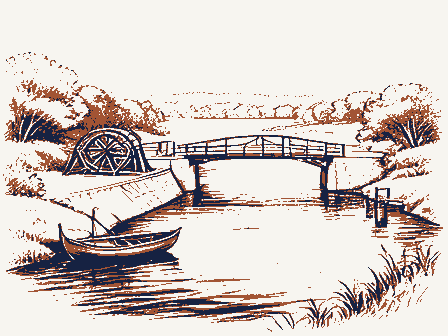
Newton City (part 6 of 8)
Part 6 of 8 of the account of this town in History of Middlesex County, Massachusetts, with Biographical Sketches of Many of Its Pioneers and Prominent Men, published 1890. 15,976 words, covering 17 settlements. Source changes inside the text are labelled at the exact paragraph where the next book begins.
Contents
1 sectionThe section headings the book prints inside this chapter, on this part. Each one jumps to where it begins.
Parts
8 pagesThe source prints this as one continuous account. It is split here so no single page grows too heavy to load; the text runs straight on across the parts and nothing is omitted.
The chapter
15,976 wordsReproduced complete and unedited from History of Middlesex County, Massachusetts, with Biographical Sketches of Many of Its Pioneers and Prominent Men, published 1890. The text is machine-read from scans, so expect recognition errors: misspelled names, dropped words, and stray characters. Nothing has been corrected, because correcting a proper name invents one. The headings below are the books' own; source changes are labelled in place.
"This action of the citizens was provoked by the Navigation Act, so called, of the Britl.sli Parliament, which restricted home industry in the Colouies, and tended to destroy their commerce. In consequence ' of the passage of this act, they were not allowed to trade with any foreign country, nor export to England their own merchandise, except on British vtssels. Iron abounded in the Colonies, but not an article could be manufactured by the people; all must be imported. Wool abounded, but no cloth could be manufactured except for private use ; and not a pound of the raw material could be sold from town to town ; but all must be sent to England, to be ultimately returned as manufactured cloths, burdened with heavy duties. Beavers were plenty all along the streams; but no hatter was permitted to have more than two apprentices, and not a hat could be sold from one Colony to another. These are specimens of that vast network of restrictions upon trade and commerce in which Great Britain encircled the thirteen Colonies.
"This was not alone. The Parliament added humiliation to extortion. Naval officers' acting under the law were insolent towards Colonial vessels. They compelled them to lower their flags in token of homage, fired on them on the slightest provocation, and impressed their seamen whenever they chose.
" The Mutiny Act, as it was called, required the inhabitants of the Colonies to furnish quarters, and, to some extent, supplies, for all the soldiers that might be sent over from England to oppress them."
September 22, 1768, a representative meeting was held in Faneuil Hall, Boston, forming a convention, to consult and advise such measures as the peace and safety of the subjects in the Province may require. Abraham Fuller was chosen unanimously as a member of this convention. The report of their committee was accepted at an adjourned meeting of the convention, and "ordained to be printed in pamphlet form, and distributed agreeably to the original vote."
"Jan. 4, 1772, Edward Durant, Charles Pelham, Esq., Alexander Shepavd, William Phillips and Noah Hyde were chosen a Committee to consider and report what it may be proper for the town to do, relating to the present unhappy situation the country is reduced to by some late attacks made on our constitutional rights and privileges."
In a brave and earnest report the committee presented live resolves, expressing the sense of the citizens, which were unanimously adopted. These resolutions affirmed that no good man can be silent at such an alarming period, when such arbitrary measures are taken as tend to the oppression of a free people ;_ that the Colonists had been and were disposed to be loyal to the mother country, so far as may be consistent with their rights and privileges as Colonists; that no civil officer could safely be dependent on the Crown for support, or on grants made by the Crown ; that all taxation without representation, for the purpose of raising a revenue, is unconstitutional and opiircsaive; that the extension of the power of a Court of Admiralty, and the introduction of a military force into the Colony in a time of profound peace, and other measures of his Majesty's ministers are a grievance of which we justly complain, and must continue to do so, till they are redressed. These resolves were committed to the representative, Abraham Fuller, with instructions enforcing them, and closing thus :
'* We therefore think it proper to instruct you, our representative in General Assembly, that you unite in such measures as sliall place tlie j udges of the Superior Court of Judicature of this Provi:;ce upon a constitutional basis, and make, when that is done, euituble provision for their support, adequate to tlieir merit and station.
" We further instruct you tliat you use your utmost enileavors that all our rights be restored and established as heretofore, and tliat a decent, though manly remonstrance bo sent to the King, assuring his ni.-ijesty tliat universal discontent prevails in America, and notlliug will restore banuony and insure the attachment of the people to the Crown, but a full restoration of all their liberties."
The selectmen of Boston having sent to the selectmen of Newton a circular in reference to the state of public affair.s, soliciting advice and co-operation, a most patriotic answer was returned, applauding the course taken by the town of Boston, and recommending as follows ;
" We do recommend it 'to the Town, that they order the foregoing resolves and instructions to the representative, and letter to tlie town of Boston, to be recorded in the Town Book of Records belonging to the Tiiwn, that posterity may see and know the great concern the people of this day had for their invaluable rights, privileges and liberties."
At a town-meeting held December 20, 1773, a "Committee of Five was appointed to draft such measures as they shall think best for the town to come into at this emergency, and report at the next meeting." Also, " a Committee of Fifteen to confer with the inhabitants of the town as to the expediency of buying, selling or using any of the Indian teas."
" 1. That an Act passed in the last sessions of Parliament, empower, ing the Honorable East India Company to export tea to America, subject to a duty upon its arrival in America, is a fresh attack upon our riiibts, craftily planned by a few of our inveterate enemies In the ministry, in order to establish a tax on us plainly contrary to the constitntiou of England itself, and glaringly repugnant to our charter ; Avhich we deem a grievance greatly aggravated by the cruel partiality therein shown against millions of his Majesty's loyal and good subjects in America, in favor of a few, very few, o|)ulent subjects in Britain. This we cannot brook, and do therefore solemnly bear testimony against it.
In 1821 Mr. Rufus Ellis purchased the entire interest of the Newton Iron Works Company, which he held for two years, and then formed a new company consisting of seven stockholders, under a new corporate title of Newton Factories, with Mr. Ellis as resident manager, the same as heretofore. After ten or twelve years of successful business the co-partnership was dissolved, and Mr. Rufus and David Ellis became sole owners of the property.
In 184-t Mr. Frederick Barden leaded the rolling and slitting-mill property from the Messrs. Ellis and put the same in thorough repair by building new and larger furnaces, new and improved trains of rollers and new water-wheels and gearing; and by the use of an additional heating furnace he was prepared to manufacture at least 5000 tons of iron annually, and gave employment to quite a number of workmen. After a very successful run of twenty-five years or more, Mr. Barden fully realized that close application to business was undermining his health, and retired from active duties in 1870. The mills remained idle for a few years, and finally were broken up, thus ending a thriving iron business of nearly three-quarters of a century.
A short time after the loss of the cotton factory by fire Mr. Ellis erected a new nail factory building upon the same site, and removed the machinery from the old factory into it. At the end of five or six years the nail business was abandoned and the machinery sold out - mainly as old iron - which terminated a thrifty nail-making business that had given steady employment to the nail makers for more than fifty years. The building was subsequently used for a grist-mill and planing-mill, and at last licked up by the flames in 1873.
The old nail factory building was leased in September, 1863, to Mr. Benjamin Newell, of Dover, MasJ., who fitted it up for a paper manufactory, and, after a profitable business for twenty years, making coarse paper, he sold his interest in it to Mr. Hudson Keeney, of the town of Everett, in 1873. The old rollingmill, made vacant by removing the machinery, was leased to Mr. Keeney in 1880, and filled up with paper machinery, thus doubling his facilities for filling his orders. Mr. Keeney availed himself of a good opportunity to sell his property in the mills, in 1882, to Charles P. Clark, .Jr., and William F. Wardwell. In 1886 they sold to the Superior Wax Paper Company. They laid out several thousand dollars in preparing to make the paper, but were financially obliged to discontinue the business and close up the works before really getting ready for operation.
In 1888 Mr. Willard Marcy and Mr. Eugene L. Crandell, of Newton, and Mr. John M. Moore, of BaldwinsVille, Massachusetts, under the title of E. E. Crandell & Company, purchased the paper-mill property belonging to the Superior Wax Paper Company, and the real estate connected with it, which included the entire interest in the water-power of the Charles
River and reservoirs and land adjoining, of the David Ellis heirs, and engaged in making wrapping and sheathing papers of good quality ; and by additional machinery and improvements can make about four tons per day when in full operation.
In 1843 Mr. William E. Clarke built a shop on Boylston Street, at the Upper Falls, and employed about fifty men mainly on cotton-spinning machinery for New England manufacturers. He also furnished the machinery for a small cotton factory in Rio Janeiro, South America. The next year, 1844, Mr. Pliny Bosworth built a shop on High Street, on proportions similar to that of Mr. Clarke, and carried on the machinery busine-s. His specialty was cotton cording machines. The value of the machinery sent out by these two shops while in operation would aggregate about a hundred thousand dolLars. At the end of a term of five years' business they were both closed up by the owners, and the buildings taken down or removed ; and before the year 1850 they had become items of history.
In 1849 Messrs. Jenkins and Inman started a braided shoe-string factory upon a small scale in a leased room in one of the factory buildings at the Upper Falls. The enterprise, on their part, was at the time experimental, but proved to be a success. For the want of more room te accommodate their rapidlygrowing business they removed, in 1852, to Carver, Massachusetts. The outcome from their experiment in Newton has been the establishment of one of the most extensive shoe-string and lacing factories in the country.
In 1859 Mr. Norman C. Munson, of Shirley, Massachusetts, a contractor for filling in a large tract of flat and marshy land in the Back Bay of Boston, partly belonging to the Commonwealth, partly to the Mill-dam Water-Power Company, and partly to the city of Boston, came to Newton Upper Falls as a convenient central station for carrying on the work. He purchased a range of gravel hills along the line of the Woonsocket Division of the New York and New England Railroad, adjacent to the Charles River upon the Needham side. A large building upon the Newton side was leased by him for a machine-shop and engine-house, with a large area outside for storage and repairs to rolling-stock; two powerful steam excavators were placed in position by the hill-sides to load the trains. New and powerful locomotive engines that would handle forty heavily-laden cars, aggregating one hundred and fifty cubic yards ofgravel to each train, were used for transportation; and by day and by night for a period of at least ten years a train was loaded and started off' from the pit at very nearly regular intervalsof forty-five minutes. Switching engines were used in the pit in loading and making up trains, and a similar system was in use at the dump. This arrangement prevented any loss of time or delays to the train msn. Mr. Munson furnished employment to about two hundred workmen, and lev-
In 1872 Mr. Phineaa E. Gay, a contractor from Boston, took several jobs of filling the marshes, and opened a gravel pit at the Upper Falls in a large sand blufl', formerly belonging to the Aniasa Winchester estate, bounding on Needham Street, and ran steam excavators and gravel trains to Boston most of the time for two or three years.
After Mr. Munson had finished his Back Bay contracts, he made others for filling a large area of South Boston flats, and removed his machinery to Readville for gravel. At the end of Mr. Gay's orders for filling flats, he went out of the business.
One of the finest and most perfect pieces of stone masonry in the world is the massive bridge of the Sudbury River Aqueduct, across the Charles River at the Upper Falls. The principal arch spans the river from Needham to Newton, a distance of 132 feet between abutments. It is segmented in shape, and nearly seventy feet high, - twenty feet broad at the base, and eighteen feet at the keystone. Six arches of lesser proportions are required to complete the span across the chasm, a distance of five hundred feet between the headlands. This spot is peculiarly adapted for a structure of this kind, for the bluffs upon either side of the river Tire of solid rock formation. The trestle frame across the river, to support the arch while building, was firmly secured upon solid foundations in the bed of the river, and upon a platform above high water there were placed a large number of jack screws, upon which the trestle rested. These jack-screws had a triple mission to fulfill, - first, to sustain the burden, - second, to raise the superstructure in caseof settling, and third to letdown and loosen the trestle, so that it could be easily removed after the arch was finished. More than a hundred thousand feet of timber were required to form the trestle and supporting platform : the arches are built of Rockport granite, and was all dressed at the quarries. The contractor, Mr. Phelps, of Springfield, Mass., an expert bridge builder, had the work in charge, and proved himself to be thoroughly master of the situation. 2700 tons of stone had to be held up by the trestle before the key-stones were placed. It required nearly two years to complete the job, which was finished in 1870, at a cost of nearly §200,000 ; and, during the whole time, no injury was done to any of the workmen ; neither was there any breakage of hoisting machinery or other appliances for doing the work.
Thousands of people visit this charming spot every year, not only to admire the symmetrical proportions of the bridge, but to hear the repeating echo that is produced under the main arch by reverberating tones from a shout by the visitors. As a piece of mechanical work it is attractive to the eye, an honor to its designers, and of great credit to the builders.
ago, a Newton man, with a good degree of " push" in him, and I think he must have been of that type of man termed " a live Yankee,'' - who had a desire to turn an honest penny, sro started an industry entirely upon his own account and resources, by placing a grindstone in position under a shed, and by means of a rude water-wheel improvised for the purpose, applied power to turn the stone, and no doubt but that he had up his " shingle " with the words plainly chalked out, giving notice to the passer-by that "Grinding was done here."
His neighbors could have the use of the stone to do their own grinding by paying the toll of a fourpence ha'penny, or a ninepence, or a pistareen, according to the time wanted - no dimes, half-dimes, or nickels in those days. Or, if parties preferred, they could leave their edged tools with him to grind, which he was always ready to do for a consideration.
Lower Falls - By following the river banks from below the Upper Falls for a distance of two miles we reach the Lower Falls. Here the river makes a leap of sixteen feet over a ledge of rocks, and an eighth of a mile farther down the stream there is another fall of six feet, making a total fall of twenty-two feet. Dams have long since been placed across the river at each of the Falls, and furnish water-power for many manufacturers' use.
In the colonial days of two centuries ago, the lands in this vicinity upon the Newton side were supposed to be owned in common by the Town of Cambridge in Middlesex County ; and the land upon the Needham (now Wellesley) side belonged to Suffolk County.
A forty acre lot, a little distance easterly from the Falls had already been assigned to the Harvard University ; and in lG94Mr. Samuel Green, of Cambridge conveyed a lot of four acres of land more or less, to John Leverett, bordering upon the river, including the Falls, together with all woods, water rights, commonage liberties and privileges thereto belonging. Whether Mr. Green had previously purchased this land of the Town of Cambridge, or whether he sold it as a representative of the Town, is uncertain.
In 1704 Mr. Leverett sold his land and water rights, and all other interest in the same to Mr. John Hubbard, of Roxbury, a blacksmith by trade, this land now being the present site of all the paper mills, and other works on the Newton side of the river.
Jfr. Hubbard formed a co-partnership with Mr. Caleb Church, a bloomer by trade, of Watertown,and improved the water power by building a dam at the -head of the rapids, and a ferge shop with two fire hearths and a hammer wheel for manufacturing iron. Just what kind of machine or piece of apparatus a hammer wheel is, we will leave for the mechanical experts of the present time to determine for themselves, as they peruse these pages.
In 1705 Mr. Hubbard conveyed to his son Nathaniel Hubbard, one-half of the four acre lot bounded north by the highway, and south by the river, to- gether with a half interest in the iron works, with as much of the stream as may be required to drive the machinery, iucluding half of the dam, flume, sluiceways, utensils and appurtenances thereto belonging. The new company continued the business until the death of the senior Mr. Hubbard, in 1717. For the ne.xt four or five years the premises were rented to Mr. Jonathan Willard, a bloomer who had previously been in tlie employ of the company ; and in 1722 Mr. Willard purchased the Hubbard interest in the works. In consequence of the death of Mr. Caleb Church about the same time, liis interest was deeded by John Cooledge of Watertown, administrator of the Church estate, to his son, Caleb Church, Jr., on April 11th, 1723.
A few years after his purchase of the iron works, Mr. Willard builta saw-mill, a short distance below the forge-shop, and did quite a large business in the manufacture of lumber.
October 27th, 1740, Mr. Church, then residing in the town of Westerly, Rhode Island, sold his moiety of the iron works to Mr. Jonathan Willard and Henry Pratt, former partners in the concern. Who Mr. Pratt was, or wlien he first bought an interest there, we find no record.
M.iy 26th, 1739, Mr. Jonathan Trowbridge, of Newton, conveys to Henry Pratt, bloomer, three acres of land adjoining said Pratt's land at the Lower Falls. To show how accurately lines were defined in those days, we copy from the deed. "Bounded westerly by s-aid Pratt's land, northerly and easterly by land of John Parker, easterly and southerly by Trowbridge's land - northwesterly corner being a stake and heap of stones ; thence to a stake and stones between Parker and Trowbridge, thence to a white oak tree, thence to a black oak tree, thence to a white oak stump with atones on it, thence to two black oak trees, thence to stake and stones at southwesterly corner."
By an indenture made on the 10th day of November, 1748, by and between Henry Pratt and Jonathan Willard, who were equal owners in the iron works property and land, it was divided, giving to each a separate and distinct moiety of the same, each giving to the other certain rights and easements for convenience in the transaction of their business. Special mention is made of the great dam belonging to them, which is to be maintained and kept in repair jointly by them and their successors, each to pay half of the cost; and the said dam shall not be made any higher than is indicated by a hole in the face of the rock in the stream. And it is further agreed that when there is a scarcity of water in the river, it shall be equally divided between them and their successors in ownership.
Mr. Jonathan Willard continued to carry on the iron-works, and was closely identified with the manufacturing business for more than fifty years. A prominent citizen and an ingenious man, he lived to
Mr. Joseph Davenport, a clothier by occupation, settled at the Lower Falls about the year 1730 or 1731, and built a dwelling-house a third of a mile distant from the forges on the Boston Road (now Woodward Street) ; and opened a shop near the fulling-mills and gave enaployment to a number of workmen in the manufacture of clothing, until his death, in 1752. As we find no record of other clothiers in Newton at that time, it is fair to presume that he held a monopoly in the business among the inhabitants for several miles around.
Mr. Azariah Ware may have been a successor of Mr. Davenport in the clothing business. His name is mentioned as a clothier in a deed given by him to Moses Grant & Son, in 1809. In his description of the property conveyed to said Grant, he included clothier's-shop and fulling-mill as one building.
Mention is made of other industries at the Lower Falls, including a grist-mill, a snuff-mill with four mortars, and a calico printing-works. But these were discontinued, and passed into history more than sixty years ago, so it is difficult to procure satisfactory information as to ownership or the amount of business done by them. Mr. Simon Elliot may have been the owner of the snuff-mill, and may have run it in connection with his extensive factories at the Upper Falls.
October 20, 1789, Mr. John Ware, of Sherborn, brother of the Rev. Henry Ware, professor in Harvard University, bought of Timothy Ware, of Needham, about fourteen acres of land at the Lower Falls, including dam, stream, water courses, saw-mills and forge, also a dwelling-house and barn. The next spring he built the first paper-mill in the village- The old hand method of paper-making was in vogue at that time, and we presume Mr. Ware had his stone vats for prepared pulp, and rectangular moulds with wire cloth strainers and deckles to form the sheets of pulp to be placed in layers, alternating between sheets of felting cloth for pressing out the water, as well as to give them a uniform thickness. Two or three repetitions of re-packing and pressing are usually sufficient to give the pulpy fibres an affinity to held together while hanging in the drying lofts. This alow process of paper making was superseded in the early part of the present century by power machinery for spreading the pulp upon an endless felt carrier, and passes it along to a series of steam-drying cylinders, and is finally rolled into large coils for the rotating shears to divide into sheets of uniform dimensions, when it is ready to be bundled into reams for market. The latest improved paper-making machine was patented in England or France by Mr. Fourdrinier, and has since been in general use by all fine paper makers. From the records of the late Benjamin Neal, Esq., we learn that one of the first Fourdrinier machines imported into this country was placed in a mill at the Lower Falls.
August 29, 1808, Mr. John Ware sold to Mr. Azariah Ware a small lot of land, with clothiers' shop and fulling-mill thereon, and ou the fourth day of September of the next year Azariah Ware sold the same properly to Moses Grant & Son, of Boston, reserving a perpetual right of way over the land, for teams and workmen from the county road to Curtis and Elliot's paper mills and other mills. The Messrs. Grant built a paper mill upon the land for the manufacture of glazed book-board, and other use, and on August 9, 1811, Moses Grant, Jr., conveyed his interest in the property to his father, who then became the bole owner of the same.
Between the years 1812 and 1832 upwards of thirty sales and transfers of property were made among the several mill owners that depended upon the water from the river to operate their machinery ; and so far as the water-power was concerned, it became a common interest to them all. These divisions and subdivisions of mill property conveyed with them corresponding divisions of the water-rights each enjoyed in the river; questions were continually arising, particularly in the seasons of low water, relative to this or that owner's draught from the stream. The growing complexity of this difference of opinion created a question of paramount importance to the several proprietors, which terminated in the spring of 1816 by a new apportionment of the water.
The old adjustment of water-rights by and between Jonathan Willard and Henry Pratt in 1748 was still in force, but was not considered sufficient to answer the present requirements, and July 26th a new apportionment was made and agreed to by all parlies in interest, to-wit - Simon Elliot and Solomon Curtis owned the two southern pajier mills ; Hurd and Bemis owned one paper-mill and the saw-mill ; Moses Grant owned one paper-mill, and John Ware one fullingmill, all on the Newton side. Simon Elliot and Solomon Curtis owned two-thirds of the paper-mill and two-thirds of the saw-mill, and Hurd and Bemis owned the remaining one-third of the mills on Needham side. By this agretnient all of the paper-mills and fulling-mills were to have the first right of water, the saw-mill on Newton side the second right, the glazing machines in the several paper-mills to have the third right, and the saw-mill in Needham to have the fourth water-right.
This agreement further entailed upon the several parties in interest an apportionment of the cost of keeping the main dam in the best of repair, and to keep the flunias and water-ways to their respective mills in good order, and perfectly tight at all times. This indenturalwas signed and sealed by Simon Elliot, Solomon Curtis, Moses Grant, William Hurd, Charles Bemis and John Ware ; and for a season the vexed question was amicably adjusted.
In the year 1834 imporiant changes in ownership were made upon both sides of the river. These changes may have been brought about by a destructive fire that swept down the river bank on the morning of May 19th of this year, totally destroying Messrs. Amos Lyon & Co.'s papir-mill, and Me.>isrs. Reuben Ware and William Clark's machine-shop, all on the Needham side of the river.
In October Mr. Lemuel Crehore, by purchase, became Ihe sole owner of the Moses Grant and William Hurd mills on the Newton side, which included the old saw and fulling-mills, and the Jolm Ware papermill. And at the same time Mr. William Hurd purchased Mr. Crehore's rights in a paper-mill upon the Needham side. More than two years previnus to this transaction, Messrs. Allen C. and William Curtis, sons of Solomon Curtis, had acquired the entire fee in the Solomon Curtis and Simon Elliott mill. By these sales of property the varied interests upon the Newton side were separated from the Needham property, and grouped into the hands of two ownerships.
Mr. Lemuel Crehore commenced the paper-making business in company with Mr. William Hurd in 1825, and at the time of his purchase of the property in 1834, the partnership heretofore existing was dissolved, and Mr. Benjamin Neal became a partner with Mr. Crehore and remained in the business until 1845. For the next following two years Mr. Crehore was alone. In 1854 his son, George C. Crehore, was admitted as a partner under the title of L. Crehore & Son. The next change made was in 1867 by Mr. Charles F. Crehore taking the place of Mr. George C. Crehore, deceased; and the next year the senior Mr. Crehore retired from the business and soon after died, which left the mills in the hands of Mr. C. F. Crehore until 1883, when Mr. Fred. M. Crehore was admitted to the business, and the company thus formed assumed the name of C. F. Crehore & Son.
Messrs. Allen C. and William Curtis built a new and commodious stone mill, with new machinery and all modern improvements in 1834, and removed the old and worn-out buildings and machinery. They continued the paper manufacturing business until reverses in fortune compelled them to make an assignment about the year 1860. Their property was sold by the as^ignee8 to Hon. J. Wiley Edmands and Gardner Colby, Esq., co-partners in the manufacture of wool.
Instead of improving the mills, as at first intended, they sold it to Messrs.- William S. and Frank Cordingly in 1864. The new firm made thorough repairs and built additions to the buildings, and i)ut in special machinery for the manufacture of wool extracts, and have done a large and properous business since their occupancy of the premises.
A difference in opinion as to the ownership of the fulling-mill water-rights had existed for a long time between William Hurd, Allen C. Curtis and others, which finally resulted in a lawsuit between them in 1845; and in the April term of the Supreme Judicial Court it was agreed between the parties to refer the whole case to three arbitrators - the decision of any two of them to be binding on the parties, not only as to the questions in controversy, but in award of damages to either party, if any may be found; and they shall further arbitrate and determine finally the future respective rights of both parties in the use of the water forever. The result of this arbitration was reported to the Court, and in the October term of 1847 Chief Justice Shaw decided the said fulling-mill water-rights belonged to the Messrs. Curtis and others to be used at their pleasure. New and more accurate water gauges were now placed in position along the water-courses to distribute the water proportionately to its several owners; and all interested parties upon either side of the river acquiesced in this adjustment of the difficulties heretofore existing.
The mills upon the Needhani side were owned successively as follows: The upper mill by Amos Lyon & Co., Wales & Mills, Tnomas Rice, Jr., and the Thomas Rice Paper Company. The second mill, owned by William Hurd, Charles Rice, Jr., and Moses Garfield, Thomas Rice, Jr. and Thomas Rice Paper Company. The third or lower mill, on the upper dam, owned by John Rice and Moses Garfield, Thomas Rice, Jr., and the Dudley Hosiery Company since 18G2.
The machine-shop built by Mr. Reuben Ware and William Cla*"k in 1832 went into the hands of Mr. Joseph Stowe in 184G; and in 1850 Messrs. Henry P. Eaton, Rufus Moulton and Harvey Eaton formed a co-partnership and bought the shop of Mr. Stowe. In the autumn of 1853 the present stone-sliop building was put up to replace the old wooden one, burnt the preceding June.
Mr. Harvey Eaton died in 1852. In 1876 Mr. Adam Beck, who had been a partner in the business since 1858, by purchase became the sole owner of the works, and still continuts in the business.
The second, or lower dam, at the Lower Falls, was probably built by Mr. William Hoogs about the year 1800. He started the leather tanning business about ten years before, near the ford across the river, below Pr'itt's Bridge (now Washington Street Bridge). Mr. Hoogs next built a paper-mill, which he ran in connection with his tannery, until he sold out to Mr. Peter Lyon, June 21, 1809. Mr. Lyon increased his business by building a gristmill. In 1809 he conveyed the paper-mill to Mr. Joseph Foster, with onehalf of the water-right, and reserved the other half for the grist-mill. March 8, 1822, Mr. Allen C. Curtis bought the paper-mill, and in 1823 he re-conveyed the same to Mr. Foster. On the same day Mr. Foster conveyed it to Mr. Peter Lyon and William Parker. Parker and Lyon sold to Amasa Fuller, January 28, 1824; and on September 3, 1830, the paper-mill was sold to Jlr. Joseph H. Foster by the executors of the estate of Araasa Fuller, deceased. Mr. Foster continued the paper-making business until his death, December 7, 1853. His son, Joseph Foster, Jr., then ran the mill for two or three years, when it was sold to Thomas Rice, Jr., who rented it to Mr. Charles Rice for a term of years, and finally sold it to Augustus C. Wiswall & Son, who still continue the paper manufacture.
On the Needham side of the river there are two or three mills that depend upon the water from the lower dam for their power, but the complications in relation to the division of water have been comparatively few and far between.
It would be impossible to enumerate the different varieties or kinds of paper manufactured at the Lower Falls for the past century. Prominent among the varieties are wrapping papers, book-binders' board and cardboard. The Messrs. Crehore have always made the manufacture of Jacquard cards and press papers a principal business, while the Messrs. Curtis gave their attention to a fine quality of book paper. Three or four other mills have been kept busy on newspaper work. Great quantities of this paper have been printed by the daily press and popular journals and magazines of the day, that have been scattered broadcast all over the civilized world.
While the manufacturers have been busily engaged in the daily routine of their duties, many of them have found time to serve the State and the town in public capacities with credit to themselves and with honor to their constituents. Mr. William Hoogs, Joseph Foster and Thomas Rice, Jr., have been placed upon the Board of Selectmen and School Committees. Mr. Allen C. Curtis, Joseph Foster, Lemuel Crehore and Thomas Rice, Jr., have been honored with seats in the popular branch of the General Court of the Commonwealth. Mr. Rice was twice a Senator and twice in the Governor's Council.
The manufacture of sulphuric acid (oil of vitriol) was started in Waltham by Mr. Patrick Jackson, in 1819. About the year 1825 the works were removed across the Charles River, into the town of Newton, very nearly opposite to the Waltham cotton factories and were incorporated as the Newton Chemical Company. The chemistry buildings covered a large area of land upon the rising ground about an eighth of a mile distant from the river. Under the excellent management and excutive ability of Horatio Moore, Esq., resident agent of the company, the works were enlarged to a capacity that made it one of the leading vitriol manufactories of New England.
Mr. Moore was a leading and much respected citizen of the town, and was frequently appointed in town-meetings upon important committees, and occupied a chair in the Board of Selectmen of Newton. The business of the chemical company was so completely identified with the town of Waltham that it was deemed expedient by them to be set off to that town, which, by act of the General Court, was done in April of 1849.
The late Hon. William Jackson, of Newton, when at eighteen years of age, was apprenticed by his father to a Boston firm to learn the soap and candle business. At the age of twenty-one years he started a small factory in his own name in that city. As he depended largely upon the Southern markets for the sale of his goods, he concluded it would be more profitable for him to transfer a branch of his business 10 the South, and in 1813 he built a factory in Savannah, Ga.. and the next year he built another one in Charleston, S. C. The wars of 1812 made these factories profitable ; but when peace was restored, in 1816, the profits dwindled away, and they were given up. In consequence of the death of his parents, Mr. Jackson sold his Boston manufactory in 1820, and returned fo the ola homestead to take care of the farm. The monotony of farm life was insufficient to satisfy his active business habits, and in 182-3 he built a factory near his residence, and continued the candle business until his death in 1855. Mr. Jackson had already erected a factory building in Brighton, for doing a portion of his coarser work, and after his death the whole business was transferred to the Brighton factory. A very large proportion of his goods were consigned to the West Indies and most of the principal Southern ports of this country. Large importations of tallow were made from Rus-iia and England to make up the deficiency in home productions for supplying his works.
Mr. Jackson became a leading and honored citizen of the town ; he was a true philanthropist and benefactor. He occupied a seat in the National House of Representatives at Washington from 1832 to 1836. He was a strong Abolitionist, and a friend to the slave ; a member of the first temperance society organized in Newton in 1826, and ever after kept the pledge. As was the custom fifty years ago, Mr. Jackson kept his grog in the factory for his employees, and regularly at half-past ten he dealt out to each one his ration. This custom of grog-drinking so antagonized his principles that he offered his workmen an advance in wages if they would give it up ; and it was not very long until it was his privilege to remove the accursed thing from his sight.
A few rods to the west from Mr. Jackson's works there was a small calico printing works, and near by a large laundry building and small mill-pond. Very nearly upon the same site Mr. Artemas Murdock had a chocolate factory a hundred years ago. These buildings long since were removed, and the land is now occupied by the Roman Catholic Church of " Our Lady, Help of Christians," corner of Washington and Adams Streets.
Mr. Thomas Smallwood, an Englishman by birth, and a cabinet-maker by trade, came to this country with his family and landed in Boston July 4, 1817. After a few months' residence in Charlestown he removed to Newton, and started the furniture business in a small building a little way north from the
Nonantum House, and about on the dividing line between Newton and Watertown. Before the expiration of two years he w.as obliged to seek more convenient and commodious quarters for his business, and built a new shop on Washington Street, near the Brighton line. He continued in the manufacture of furniture until 1846. Mr. Smallwood was one of the leading builders of hair-cloth and plush parlor furnicure in New England, and probably in the country. He had in his employ about sixty workmen most of the time. His son, Edwin A. Smallwood, wsis his successor. He built another factory in the valley, on Waverly Avenue, and more than doubled the production of goods. Still another factory was built by him on the corner of Waverly Avenue and Wiishington Street in 1848, which he ran for a few years, and then rented to Mr. George F. and William Whall for about two years. This building was destroyed by fire September 29, 1857. Previous to the Rebellion of 1860 Mr. Smallwood had regular trade customers in every State in the Union, as well as from Egypt, Australia and elsewhere. The march of local improvements made inroads upon his premises, and he abandoned the business in that neighborhood in 1875, and the shop buildings were removed to Brighton.
The north village of Newton, bounding upon the Charles River and Watertown - now called Nonantum - is another locality of considerable historic interest in manufactures. Like the Lower Falls, this water-power is available upon both sides of the stream. It was first utilized by Mr. David Bemis, who owned the adjacent land in Watertown, and Dr. Enos Sumner, the proprietor on the Newton side. There seems to be a little uncertainty as to the exact date when these gentlemen first commenced business. Mr. Jackson, in his " History of Newton," informs us that the Bemis dam was built about 1760, and at the same time a paper-mill was built there.
the Wattham Sentinel of April 29, 1864, in an historical article, gives the time of building the dam as 1778. Which of these dates, if either, is correct, we have been unable to ascertain. It appears that Dr. Sumner sold his interest in the enterprise to John McDougall, of Boston, Michael Carney, of Dorchester, Mass., and Nathaniel Patten, of Hartford, Conn., who erected a paper-mill in 1779. A large proportion of the requisite machinery for papermaking was imported from Europe.
About two years later Mr. David Bemis acquired a controlling interest in the business, and, in connection with his son. Captain Luke Bemis, carried it on until his death, in 1790. By this event the property passed into the hands of his sons, Luke and Isaac Bemis.
In the winter of 1792, or the early spring of 1793, the paper-mill was burnt, entailing a total loss upon the owners. The rebuilding of the factory was con- sidered of so great importance by the community at I large tliat a petition was presented to the General Court, on June 19, 1793, representing the great sufferings of Luke and Isaac Beniis in tlie loss of their paper-mill and stock by fire, and praying lor aid to rebuild the same ; and, in consideration of the public advantages to be derived from the encouragement of the manufacture of paper within the Commonwealth, it was, -
*' Resolved, That there be loaned from tlie treasury of this coniinonvealth the sum uf one thoiiSiind pounds to the said Luke Benii-t and Isaac Beniis, upon their bonds, witli good and sufficient collateral security to this couimonwealtb for the repayment of the same sum at the end ofhveyeats; and also to he conditioned that the said Luke and Isaac shall rebuild or cause to be rebuilt, within two years from the making of such loan, guitabJe paper-mills of at least equal size and extent of the mills lately destroyed by fire, and by themselves or their assigns shall prosecute the manufacture of paper therein."
The work of rebuilding the mills was hardly completed before there was another interruption in the business, caused by the death of Mr. Isaac Bemis, in 1794. After this, Mr. Luke Bemis continued the business, either alone, or in partnership with his brotherin-law, Mr. Caleb Eddy, of Boston, until 1821, when the whole property w.as purchased by his brother, Mr. Seth Bemis. Soon after this time the Boston Manufacturing Company, who were using the water-power of the river in the manufacture of cotton cloth in Waltham, were considerably annoyed by the water from the Bemis dam backing up to their water-wheels, and interrupting their works; and for a relief to their wheels, they offered Mr. Seth Bemis a thousand dollars an inch, for each and every inch be would reduce the height of his dam. This very tempting offer induced him to takeoff twelve inches, - for which he received twelve thousand dollars.
Mr. Seth Bemis became interested in the cotton and woolen manufacture, and built a factory on the Watertown side. The paper business was abandoned on the Newton side, and the buildings were used for the manufacture of dye-woods and drugs by Mr. Bemis, until 1847, when he sold out the logwood business to jMessrs. William Freeman & Company, who continued in the dye-stuff business for a number of years. In 1860 the Messrs. Freeman & Company purchased the Watertown mills, and soon after sold the whole plant on both sides of the river to the ^Etna Mills Manufacturing Company, for the manufacture of woolen goods.
Before the days of bells and steam whistles in Newton, Mr. Bemis used to give ashrill blast upon a huge tin horn to call his workmen together at the appointed hours for resuming their labors; hence the name of "Tin Horn " by which this section of Newton was called for several years, but now obsolete.
Ebenezer Bilson, church organ-makers. They built a very good instrument, and filled a number of orders. The first organ placed in the New Baptist meetiughoujc at Newton Centre was made by the Messrs. Bilson in 1836 : and at that time it was considered to be one of their best productions, both in volume and mellowness of tone. This whole business enterprise went into history between thirty and forty years ago.
Nearly a half-century ago, the manufacture of glue in Newton employed considerable capital, and in the season of making it, several workmen were employed at the factories. The Hon. Edward J. Collins was one of the first men to start the business. A few years later, his brother, Frederick A. Collins, built a factory. Mr. Samuel N. Woodward was another of the prominent manufacturers of glue.
The season for glue-making was limited to the summer and early autumn months, when it could be dried in the open air, protected from the rain or night dampness by a shed covering, while drying.
For a period of from thirty to forty years the gluemakers reaped quite a harvest in the business. Of late years, with improved facilities, glue can be made in winter as well as in summer, and the old methods of manufacture have been discontinued.
Since the year 1825 quite a number of small factories and workshops have started business in Newton, some of which are worthy of brief mention.
Dr. Samuel Clark, of Boston, built a small chemistry building on Cold Spring Brook, a half-mile above the John Spring grist-mill ; but beyond a little experimental work, nothing was done. Peihaps the most important result of his effort was to successfully bleach bees-wax to a pure white. The factory was burnt in 1830, and a few weeks later the doctor died.
Mr. Rufus Bracket purchased the property, and built a morocco factory upon the same site ; he made a good- quality of morocco for a number of years. Nothing now remains of the works but the ruins of the old dam, within the Newton Cemetery grounds.
Sixty years ago there was a demand for iron ore to supply blast furnaces in Eastern Massachusetts. Several pockets of bog ore, or limonite, were found in the meadows and swampy lands of Newton ; and considerable quantities were dug in the more southerly districts of the town and sent to Walpole or Foxborough furnaces for smelting.
Mr. Joshua Jennison was a successful manufacturer of bar soap of superior quality for a period of fifty years ; and since his death the business has continued in the hands of his son, Edward F. Jennison, in the northern part of the town, near the Watertown line.
Mr. A. Hayden Knapp, an inventor of a lamp for burning rosin oil, started a small laboratory for generating oils from crude rosin. The project was abandoned within two or three years, however, as the introduction of kerosene oil superseded the rosin oil.
Newton, was occupied by Messrs. James H. Bogle & Co., for making oil-cloth carpeting. At the end of five or six years they removed from Newton, and in 1861 this building was burnt.
Mr. Bradstreet D. Moody, from Bangor, Maine, came to Newton in 1859, and built a large hat factory on Pearl Street, where they employed a large number of workers on gentlemen's hats.
Mr. Joseph White, of English parentage, had a small factory on Brookline Street, and employed a number of weavers and knitters in the manufacture of gentlemen's underwear and hosiery; this business he carried on for a period of thirty years or more, and at the time of his death, about thirty years ago, it was discontinued.
The Silver Lake Company was chartered for manufacturing solid braided cord and steam packing, and commenced operations with a paid-up capital of $80,- 000, in 186G. They built a large four-storied brick factory with buttressed walls and mansard roof, on Nevada Street, near Newtonville. Charles C. Burr, Esq., was its first president, and Mr. Charles Scott, treasurer. The general management of the factory was placed in the hands of Mr. William J. Towne. Financially this company was not a sncces?, and closed up their books in 1869, and the original stock became worthless. The next year a new company was formed, with more capital. They bought the old factory and machinery, and started business upon a firmer basis; and since that time they have been successful, under the management of Henry W. Wellington, Esq., treasurer and selling agent. A large addition was made to their factory in 1880, which about doubled its capacity for business. This company has an extensive trade throughout the United States and Canada, and a share of the patronage from European and Australian consumers.
Window-weight cords, curtain cords and numerous other varieties of lines, and small rope, and steam packing are annually shipped from this establishment, to the value of $300,000 or more.
Mr. Thomas Dalby, an Englishman by birth, came, to this country when a young man, and in 1852 he started a few band-looms for knitting or weaving hosiery in the north village of Newton. He found ready sale for his goods as fast as he could make them, and pressing demands caused him to import more machinery, and build larger work-shops to enable him to fill his orders. In 1858 he built a large factory building at a cost of about 112,000, and put in machinery adapted to making a greater variety of goods. When the Rebellion broke out, in 1860, he had a large lot of woolen yarn and manufactured goods on hand, which he sold at a high rate, and from the profits upon these sales he built a large brick factory with heavy buttressed wails, in 1862, and put in carding and spinning machinery for making woolen yarn. On February 1, 1865, he sold all of his factory property to the Dalby Mills Company, a corporation organized with a capital of $200,000. The new company, unfortunately, was of short duration, from shrinkage in values and other reverses. After the Rebellion they were compelled to make an asbignment to their creditors, and the property waj sold in 1867 to Lewis Ccleman, of Boston. The large wooden building erected in 1858 was destroyed by fire on August 5, 1871.
The most extensive manufactory at the north village of Newton, and one of the most important, is that of the Nonantum Worsted Company, a corporation organized under the State laws, in 1867, with a capital of half a million of dollars, for the manufacture of worsted yarn. Mr. George S. Hall was its first president, and Mr. George F. Hall its first and only treasurer. This company purchased the factory property vacated by the Dalby Mills Company, and at once started business by putting in new machinery and apparatus especially adapted to their class of worsted goods. The whole process of manufacturing wool from the sheep's back, to the spinning, twisting and weaving of the same into the finest and most delicate fabric, is performed under their roof; and the almost endless variety of color, and beautiful tint of soft shades to the yarns are produced by the artisans of the dyeing and coloring departments connected with their works. Hence, the name of " Starlight" Worsteds, by which these goods are known to the trade.
In 1880 another large factory building was added to the "plant." The demand for a superior quality of worsted machinery for their own use, and by the worsted manufacturers generally, incited this corporation to take a controlling interest in the Newton Machine Company, who built a large shop adjacent to the worsted company's factory in 1886. The design and quality of their machinery is unsurpassed bv any in the country. The worsted company give employment to about six hundred operatives, and are consigning their goods to all parts of the country as wel! as to foreign markets.
The Newton Rubber Company has an establishment which for completeness of equipment is fully equal to any other similar concern of its size in New England. Their factory is situated upon the banks of the Charles River at the Upper Falls, a few rods below the wonderful " Echo Bridge." Their buildings and machinery are entirely new, having been built in 1888. The machinery consists of washers, mixing mills, calendars, presses, vulcanizers, etc., all from the latest and mnst approved patterns and workmanship. A " Putnam " steam-engine of one hundred and twentyfive horse-power is required to drive the machinery, and the steam used for power, and for drying and heating purposes in the rubber manufacture is generated in a " Hazelton " boiler. This company make a specialty of manufacturing springs, adapted to all kinds of machinery. Another branch of the manufacture is iusulatiug material in sheet, rod or tube, as
Perhaps one of the most important branches of manufacture at the present time is that of tire and police system of telegraphy, or code of electric signals for Grilling out the various departments. The application of electricity for transmitting signals or alarms was first mentioned in an ariicle in the Boston Daily Adoeriiser, in .Tune, 1845, which article very likely was written by Prof. William Channing, of Boston, a gentleman who gave the subject considerable study in its early conception, and in connection with Mr. Moses G. Farmer, of Salem, a practical electrician of those days, succeeded in making an apparatus of sufficient perfection to test the expeiiment. The Hon. Josiah Quincy, Jr., then mayor of Boston, recommended its adoption in his inaugural address before the City Council in January, 1848. Beyond the recommendation of the mayor, nothing was done until 1851, when the City Council appropriated §10,000 to tesi the practicability of the system ; and under the direction of Mr. Farmer the apparatus was built and placed in position, and the first successful offieiai fire alarm was tolled upon the bells of Boston in 1852.
About the year 1855 a co-partnership was formed by Mr. John N. Gamewell and others of New York, for continuing the fire alarm telegraph business, who purchased all of the patents and interest belonging to Messrs. Channing and Farmer, and they were successful in the work of placing the system in most of the principal cities in the country. Every improvement which inventive genius and mechanical skill could develop was secured by the company. Mr. Moses G. Crane, who had been manufacturing fire-alarm telegraph apparatus, moved his business from Boston to Newton Highlands in 1873, having fitted up a factory for that purpose. His first year of manufacturing in Newton demonstrated that the business would not be a success under old conditions. Boston workmen would not stay here without extra wages. Expert workers being scarce and in great demand, he could see no way out of the difficulty but to get young men and train them. He did so and soon found that graduates of the high and grammar schools made rapid progress, and in a few years he had a corps of over fifty as expert and reliable workmen as could be found in the State.
His manufacturing was done almost exclusively for John M. Gamewell & Co., of New York, until that firm was succeeded by the Gamewell Fire Alarm Telegraph Company, a New York corporation formed in 1877 with a capital of $750,000. Mr. Crane contracted to do all their manufacturing, they to have free use of his patents duringlhecontract time, which arrangement continued until 1886, when Mr. Crane sold to the above company his manufacturing business and everything pertaining to it. The company occupied his factory until 1890, when they moved into their new and commodious quarters at Upper
It may not be out of place here to stale that it is generally conceded that to Mr. Sloses G. Crane is to be credited a very large share of the great success of telegraphic fire alarms as shown in its practical working to-day. His inventions, the mechanical construction and conscientious and perfect manufacture of the instruments and machines used therein, have been greatly admired for their simplicity and for the perfect manner in which they perform their functions.
Their systems of fire and police alarm telegraphy are in use in most of the large cities and towns of this country, as well as in foreign lands.
Including machinists, linemen and operators, this company furnishes employment to more than five hundred men during the working seasons of the year.
The United States Fire Works Company was organized at Portland, Maine, in February, 188(5. with a capital of $10,000, for the manufacture of pyrotechnics. The next winter it. was reorganized with a paid-up capital of $20,000, and the works removed to Newton Upper Falls, with its business offices and salesrooms in Boston. This company manufacture the highest grade of goods in their line of business; and have given some of the finest and most elaborate e.xhibits ever given in this country. Among ihe most notable may be mentioned the displays given at the National Military Drill at Washington, D. C, in May, 1887. and witnessed by the vast assemblage gathered at that festal occasion. These displays gave the company a national reputation, and since that time they have filled orders from all setitions of the country- - particularly from the fashionable watering-places in the vicinity of Boston.
During the busy season the company employ from fifty to sixty workmen in the manufacture of their fireworks, and have an annual sale of at least 4!50,000 worth of goods from their laboratories.
Silk culture and manufacture is an industry that is already well established in this country, and is one that is rapidly increasing year by year ; it already occupies a prominent place in the manufacturing community.
The first attempt at silk culture on this side of the Atlantic of which we find any record was made in Virginia in 1023. Twenty-five years later it was ordertd by the colonial authorities that every planter should raise at least one mulberry tree for each and every ten acres of land they owned, or pay a fine of ten pounds of tobacco. A few years later the government of Virginia oflfered a bounty of 5000 pounds of tobacco to any one who should produce a thousand pounds of wound silk in a single year. This impetus given to silk culture so increased the production that the bounty was withdrawn in IGGG. This withdrawal virtually ended the silk culture, for a time at least, and planters turned their attention to the more profitable crops.
made during the latter years of the colonial period; and one that probably was more siicccssful than many of the others was made by Major William Molineaux, of Boston, in spinning, dyeing and mauulacturingsilk. The authorities, in 1770, gave him the free use of a Buitable building in which to carry on his business.
In 171)0 the silk manufacture was commenced in the town of Ipswich, Massachusetts, but was limited to handkerchiefs, ribbons, laces and edgings.
During the early par*, of the present century quite a number of small silk manufactories were started in Massachusetts. Mr. Jesse Fewkes had a small factory in Newton about the year 1822, where he manufactured a superior quality of fine laces, from linen or silk fabric. A thread as fine aa No. 2.50 or 300 was required for his goods, and even a thread of No. 360 would be used on his finest work.
Perhaps the factory of Mr. Jonathan H. Cobb, of Dedham, in 1830 or thereabouts, was one of the most thriving and successful in Eastern New England. His production of sewing silk in 1837 amounted to more than $10,000, and the entire production of the State aggregated at least $150,000 the same year.
Mr. Cobb early interested himself in silk culture, and gave considerable attention to growing the mulberry tree and the feeding of silk-worms. The Morus MuUicaulis, or Chinese Mulberry, was the most prolific in foliage and furnished a tender leaf which was a favorite of the worm. But our climate proved to be too cold to admit of its economical culture. Still, there was quite an interest manifest in the agricultural community generally in regard to the propagation of the mulberry, and the principal nurserymen of Newton were among the numbers to enter largely into the growing of the MuUicaulis. Several large fields of the Chinese Mulberry were cultivated in the years 1838 to 1840, and thousands of silk-worms were fed. But beyond the reeling of small quantities of silk from the cocoons, nothing was done ; and for the next ten or twelve years the silk culture and manufacture in Newton was an item of history. But in 1852 Mr. Joseph W. Plimpton built a large ribbon factory on Margin Street, West Newton, and employed a number cf skilled workmen in weaving a great variety of fancy ribbons and dress trimmings. In the statistics of industries of the Commonwealth, in 1855, we find that Mr. Plimpton's productions amounted to $38,000, and the silk products of the State aggregated $750,000.
In 1857 Mr. Plimpton sold his factory to his superintendent, Mr. Charles R. Garratt, who continued the business about two years, when the works were destroyed by fire in 1859.
Early in the sixties, Mr. Isaac Farwell, Jr., started a sewing silk factory, at Newton Lower Falls, and was quite successful in his enterprise. About the year 1870 he removed his machinery to Newton Village, near the Watertown line, and continued the business for a few years longer, then removing to Connecticut.
The cotton factory property belonging to the Newton Mills Company at the U|)per Falls, which had been idle for about two years, was purchased by Messrs. Walter T. Phipps and Franklin M. Train, copartners in business - late in the summer of I'iSG. The old cotton machinery was taken out, and silk machinery put in its place, thus establishing one of the largest and most flouriihing silk factories in the State. The company give employment to about 225 operatives, and require 100,000 pounds of raw material annually to supply their mill. The raw material used is commercially known as "waste silk,'' and is imported principally from Japan and China, with occasional invoices from Italy. The manufactured goods are, in the main, spun silk warps, used in plushes, upholstery and dress silk goods - and some hosiery work. The coloring department furnishes any variety of shade required by the purchasers.'
To follow a pound of raw material through all of its various stages of manufacture would occupy more space than this article will allow, but, in brief, an outline of the process may be given. The first operation is to tease up the waste or raw material into a loose and flaky condition, and then plunge it into large vats to steam or boil, to eliminate the gum and other foreign substances adhering to it. Next it is rinsed and placed upon a system of crates for drying. After becoming thoroughly dried it is taken to the filling and dressing machines, where the process of separating and straightening the conglomerate mass of fibre is commenced. And by repeated operations upon these machines, the fibres are laid out perfectly straight. It is next put through a process of gill machinery, and from thence to the spinning-frames.
The drawing and spinning machinery used for silk is in many respects similar to worsted machinery, with the exception of the adjustment of the draught rollers, which must be made to conform to the difference between the lengths of the staple or fibre.
After the thread is spun to the required fineness for the web, it is ready for finishing. By examination with a microscope a soft down or fuzz will be seen along its surface, which must be removed. This is done upon what is termed a "gasing"' machine, where the threads are drawn rapidly through a mild gas flame, so regulated as to remove the fuzz without in any way injuring the thread. Now the silken threads receive their final finish, and are grouped into the required numbers of threads for a warp, or are reeled into hanks, as may be required for weaving.
The demand for this company's goods has at times been so great, that they were obliged to employ a duplicate number of operatives, and run their machinery during the entire night-time, for weeks, and sometimes for months together, to fill their orders.
In the summer of 1867 Mr. George E. and William H. Wales, who lived on Greenwood Street, in the Oak Hill district of Newton, started the fruit preserving
From the want of better accomodations, the lirst season's work was done with an old cooking stove set up under a large elm tree near their house.
The year's production was about fifty dozen turn-' biers of jams and jellies, and the gross amount of sales realized nearly fCOO. The next season a small building with two rooms about ten by twenty feet each was provided for the business. In 1873 Mr. George E. Wales purchased his brother's interest, and since that time he has remained the sole proprietor. The same year he built a new building twentyfour by forty feet, and two stories high, to accommodate his steadily increasing demands for preserves.
In the year 1S84 the works were removed to Cedar Street, Newton Nen'.re, and a commodious new factory erected, with about 8500 square feet of floor space ; and last year (1880) the production of preserves reached 2500 dozens of tumblers, a^, a value of nearly $25,000.
The value of the works in 1867 was about twentyfive dollars, and at the present time about 17500 are invested in building and apparatus for carrying on the business.
At first the sales of the Messrs. Wales' goods was slow, for they adopted the rule to commence with, that nothing but good fruits and the best of sugar should be used in their manufactory, which enhanced the cost beyond that of other manufacturers. This standard they have strictly adhered to.
They also adopted at the beginning the name of " Home-made " preserves, a name well earned by the scrupulous care taken at all times to keep everything clean, pure and free from adulteration by chemicals or coloring materials. These merits have given them the first prizes at several exhibitions in mechanics' fairs and other places. The goods are largely sold in Boston and vicinity, although consignments are frequently made to some of the principal Southern and Western cities. Certain varieties are shipped to England, China, and even to Africa and elses^here.
In the year 1807 Mr. Ziba Bridges removed from the town of Holliston to Newton, and purchased about two acres of land with a forge-shop thereon, of Edward Fisher, at the Lower Falls, where he started what proved to be a thriving and profitable busines.s. A few years later he purchased a few acres of land upon the lop of the hill near the Newton factories at the Upper Falls, and built a brick dwelling-house, and a frame forge shop upon the premises, thereby extending his business, in which he continued for about twenty years.
Mr. Bridges had two sons, twin brothers, who developed in childhood a strong mechanical tijrn of mind. These lads had for playmates the sons of Mr. Joseph Davenport, a near neighbor to them, - and as the Davenport boys were also mechanically inclined, it was very natural for them to spend their leisure hours in rudely constructing mechanical devices wiih jack-knives and hammers. In after-life these lads formed a co-partnership in business for building railway cars.
Mr. Charles Davenport and Albert Bridges located in Cambridgeport, and Mr. Alvin Davenport and Alfred Bridges in Fitchburg, and carried on their works with a firm-name of Davenport & Bridges.
They made valuable improvements in the railway car, first by building the long eight-wheeled car, with end doors and platform such as are now in general use.
" The improvement here claimed by Davenport & Kimball (Mr. KinibaU was father in-law of Mr. Albert Bridges), we understand to be firat, the manner of atlachinp the cars to the engine, as well as to each other, by which the endden shock in starting or stopping will be avoided. And secondly, the cars are to be connected by a platform at the ends. By this means one may pass thruugh the wiiole length of the train on the inside, as the doors are at the ends of the car, and you enter by stepping upon a platform between theui,"
" Most persons who travel by railroad experience a continual repetition of sudden jars or shocks, arising from the sideway movements ot the flanges of the wheels of the car against the rails of ttie track. The improvement made by Messrs. Davenport & Bridges is to obviate the above eflects of the lateial motion by springs, suitably arranged. And in order to accomplish this the body of the car isstipported on springs by means of suspending or jiendulous bars, wliich permit a lateral motion of the running machinery, independent of the body of the carriage, and aidesprings are disposed so as to reduce the shock of the wheels upon the rails. A letter written in a car with these improvements, while running at the rate of t%Yenty-five miles per hour was exhibited, which to all appearances was as well written as if done m a counting-room."
By the foregoing extracts and descriptions it will be seen that the valuable improvements in railway carriages at that time belonged to Newton's sons. And very likely the early conceptions of them were made in their native town, before developing them in their workshops in other places.
In the extreme northeasterly part of Newton, quite near to the Brighton line on South Street and upon the eastern slope of the Norcross, or Waban Hill, was the residence of Mr. Hiram Tucker, who was a painter by trade, and who followed the business for several yeais of his early life. He had a desire to improve the quality of painters' supplies, and gave the subject special study, which reiiulted in his compounding a liquid bronze, for coating metals used iu the manufacture of chandeliers, lamps, bedsteads and other metallic household goods. The Penrhyn marble, or
About the year 1872 he built a large varnish factory at a cost often thousand dollars, near his dwelling, and manufactured a superior quality of coachvarnish, which he was enabled to produce by a peculiar method he had of treating or preparing the oils and other compounds used in its manufacture. From eight to ten thounand gallons of varnish was considered by him to be a fair annustl produelion. He carried on this branch of his business in connection with manufacturing enterprises he had in other localities outside of Newton, until his death, only a few years ago, when the works were discontinued, and his buildings utilized for other purposes.
In my research for historical matter and incidents I have spent considerable time in looking up old records at the Middlesex and Norfolk registries of deeds, and at other places where information could be found. The Boston Public Library has been a prolific source of valuable information - so has the Newton Library; and the town and city records have been of value in preparing this article.
I am also indebted to quite a number of the older inhabitants of our city fur valuable assistance in procuring many facts pertaining to the earlier industries, both from record and memory, or tradition.
I am specially indebted to Dr. Charles F. Crehore, of the Lower Falls, for valuable records and documents connected with the paper manufacture of that village; and from the citizens generally, ,whom I have interviewed, I have received a willing and hearty response to my interrogatories, for which I return thanks for their kindness in assisting me in the work.
By Edwin B. Haskell
Newton is a city of villages, mainly the homes of people whose business is in Boston. Eight flourishing villages have grown up on the lines of the two railroads which run through the city limits. These are thoroughly equipped with post-offices, stores, churches, schools and public halls, making each section essentially a distinct community. There are several others still in embryo about the new stations of the so-called Circuit Railroad, which forms an easy means of communication between the different sections. The number of villages has naturally led to the formation of an unusually large number of clubs and societies in proportion to the population, each village having its full quota, while some of more general intere>t have all parts of the city represented in their membership. Of the latter class the Newton Horticultural Society is a good example, and, as it is one of the oldest and most useful societies in the city, it is proper to give it the place of honor.
The Xewtok Horticultdral Society. - This society was the outgrowth of a series of meetings held at Newton Centre by the active and enterprising young men of that place. The first annual meeting was held in Lyceum Hall, October 16, 1854.
The officers of the permanent organization were : President, Alfred Morse; Vice-Presidents, John Ward, Jr., and B. W. Kingsbury ; Secretary, C. N. Brackett; Treasurer, Henry Paul; Executive Committee, Geo. K. Ward, B. W. Kingsbury and E. J. Collins.
The society started under very favorable circumstances financially, and its affairs were conducted by those who were very much interested in its workings, some of whom are the active members to-day.
The meetings were at first held at the houses of the members, where horticultural and agricultural questions were di.^cussed, but they soon outgrew the limits of private accommodations.
it was the custom in the early years of the society to hold monthly meetings during the winter, at which refreshments were provided, and the social part was quite an important feature.
In 1862 an exhibition and festival was held at Newton Corner, the proceeds of which were placed in the hands of a committee of three to be divided among the soldiers of the town. Winter meetings were held that year and they were addressed by persons well known in horticulture. In April, 1866, a member made a report in the form of an address, urging a more .systematic clfort to destroy the caterpillar. The address was printed and distributed among the residents of Newton. Successful efforts were being made from time to time to increase the memberohip of the society and, by a vote, ladies were invited to join the society.
In the season of 1866-67 committees were appointed to study the habits of birds beneficial to horticulture and to awaken an interest in the citizens to set shade-trees by the side of the streets. A series of prizes were offered for the best and most successfully grown group of shade-trees.
A committee was appointed in April, 1868, to cultivate and propagate various plants, seeds and vegetables to be distributed among the members. Mr. Henry Ross was chosen chairman of that committee, and under his supervision a report was made in the following spring that there were several thousand plants and many bushels of improved potatoes awaiting distribution among the members.
In 1875, in an essay read at one of the meetings on " How to Beautify our City," the removal of fences from the front of residences was advocated. The society passed the following vole: "Eesulved, That the members of the Newton Horticultural Society use their influence toward beautifying the City of Newton by advocating the removal of fences from fronts of residences, thus giving the effect of a series of parks without the outlay of large sums of money."
A committee was appointed to prepare a list of the best varieties of pears, which list was printed and distributed among the members and others.
The society has had a continuous existence for over thirty-five years, and its members claim for it a fair share of the praise given to Newton for its beautiful streets, set with fine trees, the taste displayed in laying out private places, and the absence of fenced'.
The thanks of the residents of the city are due to the members of the society who were present at its birth, who have clung to it through its many years of existence, who have given it energy and the ability to perform its work and shed an influence over the w hole city. Among those who can be mentioned are J. F. C. Hyde, Geo. K. Ward, John Ward, C. N. Brackelt, John Stearns, Geo. F. Stone, Lyman Morse, H. H. White, Wm. Aiken and Henry Ros-s. Among those who joined later we find E. W. Wood, Geo. S. Harwood, Chas. W. Ross and many others.
The Jersey Stock Club of Newton. - On the 17th of May, 1866, a meeting was held at the resi. dence of Hon. Wra. Claflin for the purpose of organizing a club having for its prime object " The breeding and improvement of Alderney or Jersey Cattle." At this meeting a committee was appointed to prepare a constitution and by-laws, and to nominate a list of officers for the club. The first organization was presided over by the following list of officers, elected June 11, 1866 : President, Hon. William Claflin ; vicepresident, Geo. C. Rand; corresponding secretary, Edsvin F. Waters ; recording secretary, James T. Allen ; treasurer, E. Porter Dyer ; board of directors, J. J. Walworth, George Frost, Wm. E. Plummer, J. F. Edmands, Henry Billings, N. P. Coburn, Thos. Rice, Jr. ; herd book committee, Thomas Drew, George E. Allen, Joseph Walker.
A constitution and by-laws were adopted June 20, 1866. The club immediately provided itself with pure blood Jersey bulls for the improvement of the herds owned by members, and yearly exhibitions of stock were held until the year 1870, when the membership becoming so large as to make the club too cumbersomeasa social institution, it was dissolved in January of that year.
Immediately after the first club was dissolved it was though t best to form another one, limiting the membership to twenty persons, and making it eminently a social club, holding meetings at the residences of various members once in two months.
This new organization was formed on March 14, 1870, and the list of officers elected at that time was as follows: President, George H.Jones; secretary and treasurer, J. F. Edmands ; executive committee, George Frost, John C. Chaffin, John C. Potter, Jr.
A constitution and by-laws were adopted at this meeting and the club named "The Jersey Stock Club of Newton." , The object of the club, as declared, was to promote the keeping and improve the breeding of Jersey stock in Newton, and social intercourse among the members.
The membership of twenty is always full, and is composed of the most prominent citizens of the city. The original members were: Isaac T. Burr, John C. Chaffin, Hon. Wm. Claflin, Nathaniel T. Coburn, E. W. Converse, Fred'k Davis, Hon. J. Wiley Edmands, D. R. Emerson, J. F. Edmands, George Frost, Joel H. Hills, David B. Jewett, David H. Mason, George H. Jones, George C. Lord, John C. Potter, Jr., George C. Rand, Hon. Alden Speare, J. C. Stanton, Jos. H. Woodford.
The club has done a good work in this section of the country in the introduction, by selection and importation from the Isle of Jersey, of a superior class of cattle, and it is quite probable that the fine taste for Jersey butter aad rich milk has been cultivated by its influence.
The club occasionally holds exhibitions of stock owned by members; the hast show of this kind was held on the ample grounds of the late Hon. John S. Farlow, when forty-one head of the beautiful pureblood Jerseys were brought together, and eminent breeders and prominent gentlemen from other parts of the country were congregated at that time to pass judgment on the cattle and their products. Actual demonstrations like the above are feit far and wide, and it is pleasant to note the influence as expressed in all the country fairs, and more particularly at the late State Fair of the New England Agricultural Society, where Jersey cattle and their products were more prominent than all the other cattle on exhibition.
28th of that year. Its avowed objects \Tere the study of natural science and the development of interest in such matterB among young people and in the public schools.
The membership and attendance soon outgrew the capacity of a private house, and a small room was rented in Eliot Block, in Newton, and this was afterward exchanged for the lower hall in that building. The interest shown at this time has not always been maintained, as the membership changed through removals and deaths, but at the present time the society has a live membership, and is probably doing more than ever to justify its existence. Its usual j)rogramme includes an essay on some scientific subject by a member of the society or by an invited essayist. Valuable features of the meetings are the i-hort talks given by members upon subjects which they have been investigating. These talks, illustrated by the blackboard, are especially calculated to a^^sist beginners, and to call attention to the many points of interest in things easily accessible. The society has made a collection of objects pertaining to natural history, and by the donation of several valuable private collections it has formed a nucleus of a useful collection. Among its recent gifts may be mentioned a fine collection of plants by the late Gen. A. B. Underwood, a collection of minerals from Mr. Edward Fearing, and another from the late Judge J. C. Park. Until the society shall have a building of its own, it will labor under a .serious disadvantage. To be of use, its specimens ought to be accessible, and available for study and comparison. Since February 20, 1883, the society has been incorporated under the laws of Massachusetts. With the organization it already possesses, it is easy to claim a far higher degree of usefulness when sufficient public interest can be awakened to provide it with proper means for extending its work. Its meetings are held on the first Monday evening of each month at Eliot Lower Hall, Newton. The public is invited to attend.
Eliot Memorial Association. - One of the earliest incidents in the history of Massachusetts is associated with a portion of Middlesex County, and the scene lies in what is now the city of Newton. Nothing but Plymouth Rock antedates, in historic interest, the Hill Nonaatum, where the Apostle Eliot began his work among and for the Indians. The Eliot Memorial Association has secured a plot of ground on the southern slope of Nonantum Hill, off Kendrick Street and Waverly Avenue, and erected a handsome stone terrace with freestone balustrade, ornamented with allegoric design and with appropriate inscriptions. On the completion of the memorial by the introduction of a fountain, or other suitable decoration, the Eliot Memorial will be given over to the city of Newton, and form one of the most effective wayside monuments within its borders. The scene is one of the most attractive possible, overlooking the valley between Nonantum and Waban Hills, and embellished, towards the east, by two pleasant lakes and the spires of Brighton and Boston. Newton has for its seal a reprtsentation of E iot preaching to the Indians, and the Eliot Memorial fixes upon the landscape the scene so thoroughly identified with her history. The principal inscription upon ihe memorial tersely puts, with historic accuracy, the events commemorated. It is as follows :
Carved in the corbels of the balustrade are the names Waban, Heath, Shepard and Gookin ; these are the names of Eliot's companions at that first service in 1646.
Eliot wrote in a little pamphlet, published in England (" Day-breaking of the Gospel ") : " Upon October 28, 1646, four of us (having sought God) went unto the Indians inhabiting within our bounds with desire to make known their peace to them." They met Waban, "one of their principal men," and proceeded to his wigwam, where the first service was held, Eliot preaching in the Indian tongue, he having, with infinite pains, learned their language, and he was already engaged upon his translation of the Bible. The interesting details of this and following services have been often rehearsed. Eliot now brought the Indians together in a village, gave them spades and other tools, encouraged them to plant apple-trees and build walls and dig ditches. To civilize and Christianize at the same time was his aim. " Wee have much cause to be very thankful to God, who has moved the hearts of the General Court to purchase so much land for them to make their towne, in which the Indians are much taken with." " This towne the Indians desired to know what name it should have, and it wai} told them it should be called ' Noonatomen ' (sic), which signifies in English, ' rejoicing,' because they, hearing the Word and seeking to know God, the English did rejoice at it, and God did rejoice at it, which pleased them much." (From " Day-breaking if not the Sun Uprising of the Gospel to the Indians.")
Five years later this community of Indians was removed to Natick. Nonantum was too near the white man's fire-water and attendant vices. The westward march of the Indians then consmences and has never ceased, and now we have come back to the Apostle Eliot's thought that civilization and Christianity must go hand-in-hand to benefit the Indian.
In 1G70, when the praying Indians were brought up from Deer Island, alter King Philip's War, many of the Indians returned to Nonantum and settled " near where Mr. Eliot first preached to them." A school-house was built for them on land of Deacon Trowbridge, and here Mr. Eliot continued to preach
Abraham Hyde, who was horn a quarter of a century later, remembered well the orchard and walls and ditches of Nonantum,and spoke of their location to Jonathan Homer, who wrote of the same in his sketch of Newton, printed in 1793.
Thus history and tradition unite in the site of Nonantum, the Indian village, and it has been the good fortune of the Eliot Memorial Association to fix upon the landscape a memorial, as enduring as history itself, of the scene where John Eliot began his work for the Indians.
The Newton Cottage Hospital. - The need of the city of Newton for an institution for the care of the sick was first publicly suggested in the autumn of 1880. It was seen that the Boston hospitals were usually full, that the danger from severe accidents was increased by transportation to them, and that a better result in all diseases was probable when treated in the purer air of the suburbs. For these and other reasons it seemed to some of the citizens desirable that a hospital should be established in a healthful location in Newton. A number of gentlemen met on November 10, 1880, in response to an invitation signed by the mayor of the city and others, and voted unanimously that it was expedient to establish in Newton a " Cottage Hospital." This name was adopted from England, where for several years small buildings for the care of the sick, frequently a cottage-dwelling converted from its original use, had been established, and with such favorable results in the treatment of disease, as compared with the large city hospitals, that their number increased rapidly.
These were called Cottage Hospitals, and even where moderate-sized buildings were erected, especially designed for the purpose, the same term was applied to them. It is an attractive designation for an institution usually regarded with dread, and therefore was selected by the Newton organization. At the meeting of November 10th a committee of twelve was appointed to take the matter into consideration and report a plan of action at a subsequent meeting. The committee met November 26th and voted to establish the hospital as a private corporation, and articles of association and by-laws were considered and laid over for future action. The committee met again December 18th and adopted a set of provisional by-laws as a basis of action. The association, which was subsequently constituted the Newton Cottage Hospital Corporation, was formed December 18th by the committee of twelve and nine other gentlemen. This association met Jan. 4, 1881, and organized a corporation b.y adopting a code of by-laws and electing a clerk, a treasurer and five trustees. The trustees met January 6, 1881, and elected apresident and vice-president. The certificate of incorporation was granted January 11, 1881. The first annual meeting of the corporation was held January 17, 1881, when 8-iii forty-three ladies and gentlemen who were present were elected members, and twenty-four trustees, twelve ladies and twelve gentlemen, were chosen, and a clerk and treasurer elected. At a meeting of the trustees January 22d, a committee was appointed to investigate the subject of hospital buildings and report upon the character of such as would be required. At a meeting of the trustees, March IGth, the president. Royal M. Pulsifer, announced that he had secured twelve subscriptions of five hundred dollars each, and a committee was appointed to decide upon a location for the hospital and purchase the necessary land. This committee examined several sites and reported to the trustees from time to time; but no definite action in the matter was taken until June 27, 1884, when the trustees voted to purchase a lot on Washington Street, containing about nine acres, at S400 per acre. This lot is beautifully situated, with a southwestern aspect, and has a frontage of 468 feet on Washington Street. January 2, 1885, the trustees examined plans and estimates for buildings, and appointed a building committee with full powers.
In the summer of 188.0 the ladies of the city formed a Ladies' Aid Association, which has always been an invaluable adjunct to the hospital. At the trustees' meeting, March 23, 1886, the Executive Committee submitted a code of rules for the management of the hospital which were approved. May 11, 1886, the Executive Committee reported that they had appointed a Medical Board, and that this Medical Board had prepared rules for the medical government of the hospital. The buildings were erected in the winter of 1885-86, and the hospital was dedicated June 5, 1886. The hospital was furnished by the Ladies' Aid Association. The land and buildings cost about $14,000. A peculiarity of the organization of the hospital is that the two leading schools of medicine are equally represented in the Medical Board. The executive officer of the hospital is the matron. A training-school for nurses has been established, which performs an important use both to the hospital and the community. A much-needed addition was made to the hospital by a new ward, built by one of the citizens of Newton, Mr. J. R. Leeson, as a memorial to his wife, at a cost of 16240. This new ward, which is used for women, was dedicated May 4th, 1890.
The hospital is supported by an annual appropriation from the city of Newton, by subscriptions of $300 each for the support of free beds, by donations, by contributions in the churches on Hospital Sunday, by income from funds which have been given by sundry individuals, and by the amount received for board and care of patients. For the year ending December 31, 1888, over fSOOO was received from these sources ; the expenses for the year being about S6000. The total number of patients in the hospital for three years and five months was 373. There were, Dec. 1, 1889, accommodations for twenty-nine patients,
Newton Hospital Aid Association. - In June, 1885, the trustees of the Newton Cottage Hospital issued a call to the ladies of Newton. In response to this call, thirty-three ladies, representing all the Newton villages, held a meeting at the Eliot Church, Newton, July 3, 1885. Mrs. Alvah Hovey was chosen chairman. She announced that it was the desire of the trustees that the ladies of Newton form themselves into an association to furnish the rooms and provide for the running expenses of the hospital. The following resolution was adopted:
A committee were appointed to arrange hy-laws. September 24, 1885, an organization meeting was held at Grace Church, Newton. A board of officers were elected, and it was voted to adopt the name, " The Newton Hospital Aid Association."
The furnishing of the hospital was accomplished through the association by contributions from individuals, churches, literary societies and Sundayschools.
Two directors are chosen each year to visit the hospital before each meeting, and consult with the matron in regard to the needs of patients.
The directors have been responsible for the collection of membership fees in their various districts and by their earnest efforts have interested the people to care for the sick and give of their abundance to alleviate suffering and pain. There is a membership of over three hundred ladies.
The library was opened in a small room in the Town Hall building February 25, 1850. It numbered G40 volumes, many of them gifts from members and others.
As some fifty to one hundred citizens of both sexes and all ages would be meeting at the library on these Monday evenings " to exchange books and salutations," the suggestion was soon made that they should adjourn to the Town Hall, the use of which they could have by furnishing fuel, lights and care, and with the simplest organization devote a half-hour or more to the discussion of some interesting theme, usually suggested by the last new book. The experiment proved satisfactory, and the meetings were
From that time on (with a few short lapses) meetings of th^ same general character have been held each season, the exercises usually consisting of short lectures, discussions and music, " home talent " being mainly depended upon for their support. These meetings of the "West Newton Lyceum" have become somewhat noted beyond the town limits as being almost the sole survival of a class of institutions once held in high esteem throughout New England.
Until 1867 only the families of shareholders and persons paying a small annual fee used the library. In that year the directors were authorized to allow any resident of Newton to take out books. For several years thereafter this was the only free library in Newton.
Provenance
Text from History of Middlesex County, Massachusetts, with Biographical Sketches of Many of Its Pioneers and Prominent Men, published 1890, in the public domain in the United States and digitised by the Internet Archive. The settlements listed against this township are matched by point-in-polygon test of each Geographic Names Information System coordinate against the Census Bureau's county subdivision boundary, not by name.