 Block
Block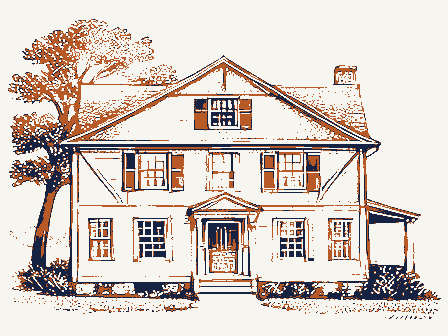
College Township (part 1 of 3)
Part 1 of 3 of the account of this township in A History of Knox County, Ohio, from 1779 to 1862 Inclusive; Comprising Biographical Sketches, Anecdotes .., published 1862; History of Knox County, Ohio, Its Past and Present, Containing a Condensed, Comprehensive History of Ohio, Including an Outline History of the Northwest; a Complete History of Knox County ... a Record of Its Soldiers in the Late War; Portraits of Its Early Settlers and Prominent Men ... Biographies and Histories of Pioneer Families, Etc, published 1881. 15,930 words, covering 1 settlement. Source changes inside the text are labelled at the exact paragraph where the next book begins.
Contents
3 sectionsThe section headings the book prints inside this chapter, on this part. Each one jumps to where it begins.
Parts
3 pagesThe source prints this as one continuous account. It is split here so no single page grows too heavy to load; the text runs straight on across the parts and nothing is omitted.
The modern record here
1 settlementWhat the federal record holds for each settlement inside this township: wildfires and storm reports since the 1950s, mineral workings, and museum specimens collected nearby. These are counted within a few miles of each settlement, so neighbours share them and the columns are deliberately not added up. Every row links to the settlement's own page, where each figure is broken out.
| Settlement | Fires | Storm reports | Mines and quarries | Specimens |
|---|---|---|---|---|
| Gambier | 24 | 16 | 4 | 512 |
Settlements in this township
1 placeEvery populated place the Geographic Names Information System records inside this township's Census boundary. All 1 are named in the chapter.
The chapter
15,930 wordsReproduced complete and unedited from A History of Knox County, Ohio, from 1779 to 1862 Inclusive; Comprising Biographical Sketches, Anecdotes .., published 1862; History of Knox County, Ohio, Its Past and Present, Containing a Condensed, Comprehensive History of Ohio, Including an Outline History of the Northwest; a Complete History of Knox County ... a Record of Its Soldiers in the Late War; Portraits of Its Early Settlers and Prominent Men ... Biographies and Histories of Pioneer Families, Etc, published 1881. The text is machine-read from scans, so expect recognition errors: misspelled names, dropped words, and stray characters. Nothing has been corrected, because correcting a proper name invents one. The headings below are the books' own; source changes are labelled in place.
College Township
College was organized December 21, 1838, and so named in conseqnence of its being the seat of Kenyon College, and all the land belonging to that institution.
At the spring election, 1839, J. McMahon, T. C Odiorne and M. W. Yore were elected Trustees ; A. Gr. Scott, Clerk ; and M. T. C. Wing, Treasurer. Mr. Odiorne, the only Trustee living, is now President of an Insurance Company in Cincinnati, and is an efficient business man. M. T. C. Wing was re-elected again and again, until he declined serving in 1842, when C W. Meyers was chosen Treasurer. Mr. Meyers was one of the earliest settlers of this township ; a good practical printer and bookbinder, the first in these two trades on " the hill ;" he has contributed much to the preservation of works in the libraries of the Institution.
For many years he " ran the machine" of the Acland Press, and now resides at Mt. Yernon. The printing office was the gift of liberal-minded English Protestants to Bishop Chase in 1825, and received its name in lionor of Lady Acland, the fair donor who started the subscription. Upon this has been published various literary and religious articles calculated to advance the cause of learning and religion. The students of the College have at several periods projected publications of a literary character ; the last, the " Kenyon Collegian," a very creditable magazine, was continued for several years. The first store was called the Bishop's store, from having been commenced by Bishop Chase for the purpose of furnishing work hands witli necessary articles, and to supply the boys, so that no excuse could exist for going *' to town." This was carried on until in the fall of 1833 an arrangement was made with Mr. White, of Kew York, by which that business was to be entirely under his control, and M. and G. B. White thereupon located at Gambier. The former remains there, and the latter at this writing is one of the most valued citizens of Mt. Yernon. The Whites are natives of Derby, Ct. The " Bishop's store" was managed for many years by Bobert Burnside, until a short time before its discontinuance ^. W. Putnam had it in charge. The Whites continued in partnership until 1838, when T>. Topping and N. W. Putnam opened a store, and Daniel S. I^orton and A. G. Scott established another. Topping & Co., with A. J. Douglass, kept for a few years, when it was closed, and Mr. T. moved to Illinois ; Mr. P. is yet living on the hill ; Mr. Scott has uninterruptedly resided there, and by his close attention to business, in which for many years has been alone, has acquired a compe- tency. A. B. Norton for several years was engaged in tlie merchandizing and milling business at Gambler. At this time there are the two stores of A. G. Scott & Co., M. White & Co., and a drug in the boot and slioe line ; Russel Clark, Mr. Clements, A. K. Eobes and J. Waugli have carried on the tailoring. Mr. Sharp in early times was the brewer and baker, in a large stone house in the rear of the main College building, now obliterated by time's effacing finger. J. S. Sawer since 1837 lias supplied the students and liberal disposed with ice cream and yarieties, and many of the boys fed under the Dotheby regime gratefully remember the good cookery and pies of Mrs. Sawer. The hotel and boarding-houses have been kept by Douglass, Yore, Johnson, Bell, Witt, Sims, Riley, and Wright, the latter now holding forth in fine style. The old College mill erected by Bp. Chase many years ago went into decay, and at that seat Daniel S. Norton put up one of the finest mills on the river. The " Kenyon Mills" flour acquired a good reputation. The post-office, ui)on Bp. Chase's application, established in 1826, has been the greater part of its existence managed by that excellent public officer, M. T. C. Wing. About 1846, partisan violence, through the machinery of a county convention and central committee, brought about the appointment of Benoni Elliott, a student from the District of Columbia. In 1849, M. T. C. Wing was again appointed ; in 1853, James Young ; in 1857, E. Gr. Biley ; and in 1861, Joseph Leonard. The principal church is Bosse Chapel, bearing the name of its founder, Lady Bosse, eminent for piety and good works. It is a very neat and chaste stone edifice, situated in Harcourt Parish, named for like cause, and in the rear of the church is the beautiful cemetery where rest the dead of Gambler. The
Jil. S. Balcom. Delegates to the Convention, B. L. Lang, A. G. Scott, S. T. Bourne. The M. E. church is a neat frame, erected in 1854 by subscription of liberal citizens. The present minister is
Chilton Craven. The Trustees are T>. L. Fobes, J. T. L. Jacobs, E. Clij)pinger, E. Penhorwood, G. J. W. Pearce. The Cumberland Presbyterians have preaching regularly at their church, one-half mile north of the Public Well. The Kev. Larrimore is the present minister ; J. Bennet and T. Minard, trustees. The various College buildings and matters of interest connected with them will appear under the appropriate head. Gambier is a beautiful little village, where those who desire to withdraw from the noise and bustle, the cares and vexations of the active world, can have a safe retreat. A more quiet and secluded spot cannot be found on this continent ; of the old residents on the hill, it may with truth be said :
Source changes here: from History of Knox County, Ohio, Its Past and Present, Containing a Condensed, Comprehensive History of Ohio, Including an Outline History of the Northwest; a Complete History of Knox County ... a Record of Its Soldiers in the Late War; Portraits of Its Early Settlers and Prominent Men ... Biographies and Histories of Pioneer Families, Etc, by Hill, N. N. (Norman Newell), Comp, published 1881; 21,671 words in this source stream.
College Township
MORE than ten years prior to the organization of this territory into a separate township, it was in possession of the trustees of Kenyon college; and that famous institution, under the direction of Bishop Chase, was in course of erection. The land was owned by a non-resident, Mr. William Hogg, of Brownsville, Pennsylvania. This gentleman owned the northeast quarter of Pleasant (now College) township (four thousand acres), which was purchased by Bishop Chase for the college grounds.
The entire tract was covered with a dense forest. The woods on the hill, where the college now stands, were somewhat open, owing, in part, to a wind-storm having at some period passed over it and prostrated the trees. Much of the history of the first settlement of this township will be found in the chapter following this; also many other matters connected with its early history.
The rich valley lands in this township had been under cultivation since 181 2, the inhabitants being known as squatters. They owned no land, were without property or education, and lived mostly by hunting, but had cleared up a few acres of ground around each cabin. As late as 1829, however, it appeared that only a small portion of the bottom land was cleared. From the top of the hill to the east line of the township was a dense forest of sugar, hickory, black walnut, etc. In those very early days a distillery was located near a large spring one hundred rods or more northeast of the present site of Milner hall. There were no roads, but many paths and blazed trails through the forest, every one of which led as directly to this distillery as the spokes of a wheel to the hub. This necessity of pioneer life was, in 1830, used as a washhouse, where the washing for the college students was done. Every vestige of it has long since disappeared. As a distillery it was closed upon the advent of Bishop Chase, who was a strict temperance man.
The inconvenience of attending the township elections, at a point located some miles away on the Mt. Vernon and Martinsburgh road, induced the citizens living on the college grounds to petition the legislature to have this tract set off and organized into a separate township. The petition was granted, and the first election held December 21, 1838, at the public house in Gambler, kept by Mordecai W. Vore, and the following officers elected :
At the spring election, 1859, J. McMahon, T. G. Odiorne and M. W. Vore were elected trustees; A. G. Scott, clerk; and M. T. C. Wing, treasurer. M. T. C. Wing was re-elected again and again, until he declined serving in 1842, when G. W. Meyers was chosen treasurer. Mr. Meyers was one of the earliest settlers of this township ; a good practical printer and bookbinder, the first in these two trades on "the hill;" he contributed much to the preservation of works in the libraries of the institution. For many years he was connected with the Acland Press. The printing office was the gift of liberalminded English Protestants to Bishop Chase in 1825, and received its name in honor of Lady Acland, the fair donor who started the subscription. Upon this has been published various literary and religious articles calculated to advance the cause of learning and religion.
Prior to 1829 there were no roads over Gambier hill. The road from Mt. Vernon east passed around the foot of the hill and separating near the present residence of William Wright, one road led south, crossed the river below the present mill-dam and connected with the old Cambridge road, a mile south of Hopewell church. The road east wound thiough the brush and timber, crossingthe river at Troutman's ford. In November, 1829, as Bishop Chase was about departing on a tour east for the purpose of raising money for the college, he instructed Mr. N. W. Putnam (yet living, an old and much respected resident of Gambier) to get up petitions in proper form, to the county commissioners, for four roads, making the public well in Gambier the starting point. One road was to lead north toward Amity; one east toward New Castle; one south toward East Union and Bladensburgh, and one due west to the old Cambridge road in Pleasant township, crossing the river near the present railroad bridge. The petitions were duly written out by Mr. Putnam; the requisite number of signatures obtained; the petitions granted, and the four roads duly surveyed and established by the commissioners of Knox county.
Upon the return of Bishop Chase in May following, he went immediately to Mr. Putnam with an angry lowering countenance, such as only Bishop Chase could wear, and asked in a stern manner who had been meddling with the road matter. When Mr. Putnam informed him that he was the author of the mischief and that it was by his (the bishop's) directions that the work was done, he was sternly rebuked, and informed that no such orders had ever been issued. It seems that, with the press of greater matters, the bishop had entirely forgotten about ordering the laying out of roads. He informed Mr. Putnam that he never intended to have public roads through Gambier; that he designed enclosing the "hill" in a high board fence, and place a keeper's lodge at the foot of the hill, near the road to Mt. Vernon. The road west was to start from the west end of Wiggin street (the main street east and west across the hill). The upsetting of the bishop's arrangements about the road ruffled his temper for some time, and to multiply the bad effects of a public road westward, he caused to be prepared a sign-board, on which was painted in large letters the following: "West end of Wiggin street." This board was nailed to a post set on the bank of the creek, on the west side near the Mt. Vernon road. In the course of a few days some waggish fellow took up the post and pitched it, sign and all, into the river. Shortly after, it was discovered standing erect at the mill dam.
The following from the pen of Mr. Putnam, above mentioned, is interesting as giving a picture ot the condition of things west of and in the village of Gambler in 1829:
The most prominent building east of Main street, Mount Vernon, at that time (1829) was the somewhat aristocratic residence of the late Judge J. B. Thomas. Judge Thomas was the real author of the Missouri compromise - a measure, it was hoped, would for all time to come, settle the vexed question of slavery. In front of the residence of Judge Thomas now owned by P. H. Updegraff, esq., was a long row of Lombardy poplars - standing as erect as a platoon of French grenadiers at a review. In those days the Lombardy poplar was a sure indication of civilization and culture - since then it has been voted a nuisance, and is now scarcely to be seen in any part of our country. Judge Thomas' place was the extreme eastern improvement on Gambler street. From thence to the top of the Brew house hill was an unbroken forest. Near the top of the hill on the northeast side near the spring, was a small clearing and a cabin occupied by a Mr. Thrailkill. A few straggling peach trees were standing there for some years afterwards. From this point to the place now owned by Walter McClelland there was no improvement. This last named place, known as the half-way house, was owned by a very worthy Frenchman from the island of Guernsey, by the name of Torode. Mr. Torode came to this neighborhood in 1828, for the purpose of locating on the college land - he and his large family being zealous Episcopalians. Bishop Chase adopted, at this early period, the plan of holding all occupants of college lands as tenants at will, whether farmers, mechanics, or others, liable to be discharged at any moment when the bishop should feel so disposed. Mr. Torode, having some money, preferred to be his own master, and the best thing he could do under the circumstances, was to purchase land of Daniel S. Norton, and open and improve a farm of his own. These lands of Mr. Norton'Tjeing the nearest to the colfege tliat he could procure. Mr. Torode, having a large family of strong able bodied boys, soon made an opening in the woods, built a large double-log cabin, put out fruit trees, etc. The large cherry trees now standing in front of the house were of liis planting. Some years afterwards he sold the property back to Mr. Norton for the purpose of going west to obtain a larger quantity of land for his growing family. He settled in Cook county, near Chicago.
From the half-way house to the foot of the hill known as the Bishop's back-bone, was an unbroken forest of oak timber. Near the present residence of 'W. S. 'Wing was a cabin, with a few acres of cleared land and a small orchard. This place was occupied by Mr, Owen Lane, the father of James and P. C. Lane, of Mt. Vernon. Mr. Lane died at this place some forty years ago. The next improvement was what was afterward nick-named Frog hall, a comfortable log house near the foot of the hill, a few hundred yards northwest of Bishop Bedell's present residence. At the time the writer came to Gambler this house was occupied by Mr. W. K. Lamson from Columbus, head clerk in the college store. Not long after a daughter of Mr. Lane married the Rev. Mr. Preston, of Columbus,- and som" years later another daughter of Mr. Lane married the. great war secretary, Hon. E. M. Stanton, of Pittsburgh. A short distance south of Frog hall was a cabin, previously occupied by Solomon Shaffer, one of the well-known pioneers of Knox county, the father of Mrs. Andrew Miller, now living at an advanced age at Monroe Mills. The Shaffer cabin was afterwards, for many years, occupied by Morris Grimna, a very good man, well known in the early history of Gambler. Our next step forward brings us to the top of the hill in what is now the classic village of Gambler. The road east at that time did not pass over the hill as now, but wound around the hill, near where stands the pleasant residence of William Wright, thence easterly near where now stands the depot, thence on to the Troutman ferry. There were two or three cabins along this road west and south of the college, one occupied as a schoolhouse, where Mr. Owen Lane taught for one or two winters after the writer came to Gambler. This same school-house had been used previously by Philander Chase Freeman, a nephew of Bishop Chase, from New Hampshire, now deceased, who gives a vivid idea of what Gambler was at the time referred to in a communication, from which the following is taken :
"When I first entered Kenyon, then located at Worthington, Ohio, was in its infancy, and its inhabitants not much advanced in knowledge or civilization. My first years at Kenyon were spent in a long cabin for my study. I went to Gambler before the college was erected, and before any improvements were made on the college hill. The first night I spent on the hill was in a cabin of boughs covered with English blankets, the donation of English liberality, while the foundations of Kenyon were being laid. In the winter of 1827 I was engaged in teaching the first rudiments of the English language to the original settlers, in a log cabin situated about forty rods west of the college building, on the banks of Owl creek, alias Vernon river, alias Kokosing. I spent three months of the winter of 1827 in Perry township, Coshocton county, teaching the good peoples' children. My terms of tuition were two dollars per scholar for the three months, payable in corn at ten cents per bushel, and wheat at twenty-five cents per bushel. I had a school of eighty scholars or upward. My recompense in corn and wheat all went to Kenyon to pay for my board and tuition. The college building was not completed to receive occupants till about three months before I received my degree, consequently during all my college course I lived in temporary buildings, except three months."
The charge in college for board, tuition, room rent, lights, fuel and washing, in those days, was only sixty dollars for the year of forty weeks.
The village of Gambler, at that time, consisted of five twostory houses with four rooms on each floor, built of green oak lumber from the college saw-mill, for the use of the students until the college building should be ready for use. Four of these buildings are yet standing where originally built. One of them is a part of Mr. Scott's store ; another a part of the hotel (Kenyon house). The two others, Mr. Waugh's house, and the Lurkin house, now partly occupied by the shoe shop of Mr. Joseph R. Brown. Besides these houses there was a log build- ing used for a store till 1834, near where Mr. French's store now stands. This store house was built in 1828 by the late Warner Terry, and was intended for a blacksmith shop. The Bishop and Mr. Terry fell out in regard to a title to the lot, and Mr. T. removed to Mt. Vernon. There was also near where the Church of the Holy Spirit now' stands, a double log cabin, one part used as the Bishop's "palace," the other end for a kitchen, where provisions were cooked for the students. A frame building nearly forty feet long, attached to the kitchen, was used for a dining-room and chapel. The cooking department was under the charge of Mrs. Russel, a niece of the Bishop, so well known to the students in those days. The allowance for each student " at that time for his Sunday dinner, during the winter and spring, "was a large buiscuit and a piece of dried apple pie." Near the college building was a one-story stone house, occupied bv Dr. Sparrow as a family residence. Soon after Bishop Mcllvaine came, a brick front was added to it, and was for many years occupied by the late Professor Trimble. Near it was a frame building used as a printing office, where was issued in 1830 the first Episcopal paper west of the Alleghany mountains, and which has been continued uninterruptedly to the present time under different names and different publishers and editors. For some two or three years it was published and edited in Mt. Vernon by Mr. Muenscher, after%vards removed to Cincinnati, and is now published under the name of the Standard of the Cross at Cleveland.
There were no improvements at the time we speak of east of Gambler hill, until you reach the ferry at Troutman's. The intervening space was heavily timbered with walnut, hickory, sugar and oak. This track was cleared mostly during the agency of Mr. Odiorne, between 1835 and 1840. President Bodine has stated in some of his publications, that nearly all the bottom lands were cleared by squatters as early as t8i2. This is a mistake. At the time Bishop Chase purchased the lands, there were but few openings ; those usuaully where there was a spring, generally at the foot of the hills. The bottoms were considered unhealthy and avoided on that account. A short distance across the river was the stone house now owned by T. R. Head. It was built and owned by Solomon Welker, a well-to-do farmer, and who was engaged also in running a big Pennsylvania wagon, hauling goods, etc., for Bishop Chase and others. Not being satisfied with doing well, he was ambitious to do better - sold his farm and purchased the Hawnmill property at Millwood. He also engaged in merchandizing, and in a few years failed utterly, and found himself a poor man. He supported himself and family during the last years of his life by jobbing about Millwood with a team, whenever he could find employment. The contrast between the career of Mr. Welker and the present owner of the stone house farm is singularly striking.
Near the residence of Mr. Walker were three or four families, old pioneers, who have long since passed away, among them John Troutman, Alexander Ream, George Lybarger, and Mr. Hull. The homesteads of Mr. Troutman, Mr. Ream and George I.ybarger, are owned and occupied by their descendants. Mr. Hull sold his farm to the present owner, Jonathan McArtor, and moved many years ago to northern Indiana.
whip saws, but this was slow work, and a saw-mill became indispensable. The first business was to select a site for the mill. The Bishop selected the spot where the present mill now stands. In his reminiscences he says, "The whole stream of Vernon river (Owl creek,) makes a bend almost equal to a circle, or rather resembles an ox bow - the canal to be cut across the neck of this bow is called the race. The force of all the teams, with many earth scrapers, had been employed for several weeks, but the wQrk was more tedious than anticipated and went on ' but Slowly, when a storm of rain, usual at this season (September), but seldom so copious, commenced. It poured down for several days almost incessantly. The river rose to an uncom-_ mon height, and being stopped by the mill-dam (alread}' built), inundated the whole surface of the lowlands." The Bishop gave up all as lost. The dam could not be seen, and the water rising and carrying everything before it. The assuaging of the waters brought to view the fact that the dam was safe, and had stood firm - and as the flood drew off its force a channel was found in the commenced race, and the whole race was nearly all e.xcavated, thereby saving an expenditure of several hundred dollars. This mark of providential goodness was of signal service in building Kenyon college.
As before stated, Bishop Chaseinsistedupon controlling absolutely the college grounds, and during his control of them would allow no business to be transacted, either in the way of farming or merchandizing, without his especial supervision, and without securing a large share of the profits of such business for the use of the college; and in addition he insisted on considering all who settled on the grounds as tenants-at-will, liable to be ejected at any hour whenever his "Royal Highness" pleased. Of course such arbitrary rules were a detriment to the settlement and development of the college lands. He would have no town laid out, nor would he have the land divided into farms, but allotted his tenants such portions as he desired. Quite a number of people undertook to do business, under these circumstances, on the Bishop's premises, but nearly all failed.
The village of Gambier was not laid out until about 1845, lo"g ^f'^^'' the bishop departed; but prior to that several parties attempted to carry on mercantile business near the college under such arbitrary restrictions as the bishop chose to allow. The first store, as has been before stated, was the supply store started by the bishop himself, in a log building that stood about where Mr. French's store now stands. The first clerk in this store was Robert Burnside, who was followed by A. W. Putnam, above mentioned. These gentlemen managed the business for the bishop until 1833, when the bishop, having more on his hands than he could attend to, sold the privilege of merchandizing to Messrs. M. & G. B. White, of New York. By the terms of the contract, the bishop was to receive one hundred dollars per year rent, and onehalf of the profits of the business. This arrangement succeeded very well the first year, and the bishop cleared about fifteen hundred dollars. It was a time when a great number of workmen were engaged on the college, and the entire community patronized the store. After the first year, however, the business did not pay, and Messrs. White & Co. soon threw up the contract. Other parties tried it, among whom was Mr. Putnam, but all failed to make anything. The bishop being inexorable in his determination to adhere to his terms, Mr. Putnam moved his store to Martinsburgh, and for a time Gambler was without a merchant. This did away with the "monopoly," and thereafter stores were admitted to the college grounds free. The new store room, that had been erected by Mardenbro White was the finest building m town. It was frame, two stories in height, about fifty feet in length and painted white. It was erected in 1833, and the store opened in 1834. In 1836 Putnam & Topping erected their storeroom, similar to the above. Both these buildings are now used as dwellings. The third store was started by Baldwin Norton about 1840. It was first kept in a small building where the hotel now stands, but he afterwards erected the building on the corner now occupied by Mr. Harnwell, as a storeroom. The town was laid out about 1845, but no building of consequence was done until 1 85 1, as there seemed to be a difficulty about getting titles. About 185 1, the college grounds were laid off into farms, and the town into lots, and the sale of the property was determined upon. The first sold was the "south" section, or that part belonging to Pleasant township, and the sale continued from, time to time until the college grounds, proper, were reduced to their present proportions - probably five hundred acres or less. A. G. Scott opened a store in Gambler about 1838, which has been continued until the present time, and is now conducted by C. G. Scott & Co. A. B. Norton was for several years engaged in the merchandizing and milling business here. H. H. French is one af the oldest merchants in the place at present, having carried on the book and drug business many years. Many business men have appeared here from time to time, among whom were E. Pearce, Witt & Mulford, G. J. W. Pearce, Russel Clark, Mr. Clements, A. K. Fobes, and J. Waugh. Mr. Sharp, in early tim.es, was the brewer and baker, in a large stone house in the rear of the main college building, which has long since disappeared. The present stores,, beside those named, are kept by B. Harnwell, S. R. Doolittle, and William Oliver. There are two blacksmith and carriage shops, two shoe shops, a hotel and other minor business establishments. The first hotel was erected by Archibald Douglas, on the spot where the present hotel building stands. It was a small, rough frame building. The present hotel was erected about 1855-6, by Robert Wright, father of the present landlord.
'The old college mill, elsewhere mentioned, erected by Bishop Chase, long since went into decay, and on its site, many years ago, Daniel S. Norton put up one of the finest mills on the Kokosing. The "Kenyon Mills'" flour acquired a good reputation.
The postoffice, upon Bishop Chase's application, was established in 1826, and was for a number of years kept by M. T. C. Wing. About 1846 Benoni EUio'tt, a student from the District of Columbia, was appointed. In 1849 J^^. Wing was again appointed postmaster; he was followed in 1853 by James Young; in 1857, by E. J. Riley, and in 1861 by Joseph Leonard. Mr. Leonard was followed by the present incumbent, Mrs. Fearns, who is very acceptable to the people, and has held the office many years.
The first paper started in Gambier was in 1838, when the Gambier Observer made its appearance from the Acland press. In after years the paper was known as the Western Episcopalian. The paper was devoted to the interest of the church, and to the interest of Kenyon college more par ticularly. It was conducted under different editorial and financial managers, its publishers being George W. Myers and R. M. Edmonds. It was ably edited by Dr. Sparrow, Dr. Wing, Dr. Muenscher. Dr. Cotton, the Rev. Norman Badger, and George Denison, and was favored with many very able articles from the pens of professors of the college and other friends. The paper was first removed to Cincinnati, then to Cleveland, where, under a different name. Standard of the Cross, it is doing efficient work both for the church and for the college, under the able management of the Rev. Dr. French. The Collegian., a monthly magazine was published at Gambier for two years by R. M. Edmonds, and was ably edited by the college professors and students. The Gambier Argus followed the Collegian., and was published by R. M. Edmonds & Daniel Hunt for some four years, and after the death of Mr. Edmonds, Mr. Hunt conducted the paper about a year, when the type and press were sold to a young man named Fant, who, for four months published the Gambier Herald. For the past three years the students have published a monthly paper styled the Kenyon Advance., strictly a college paper. The first year it was published at the Argus office, Gambier, but for the last two years the Advance has been printed at Columbus.
Two very strange dwarfs appear to have had for a short time a residence in this township. Thirty years ago a Mr. Porter, a man of family and in straightened circumstances, came from Tiverton township, Coshocton county, and settled on the Owl creek bottoms, in a little log hut near the residence of Lewis White. His wife had been previously married to a Mr. Davis, and besides other children was the mother of two dwarfs - twins. They appeared to belong more to the monkey species than the human, having paws instead of hands and feet, and faces and heads shaped like monkeys. They could not speajc but possessed some intelligence. Mr. Lyman Warner, an enterprising Yankee from the Western Reserve, hearing of them, conceived the idea of making a fortune out of them by exhibiting them to the public, and gave them the high sounding names of "Plutano and Vespasinus, or the wild men of the Island of Borneo." An arrangement was made with the Porters, and Mr. Warner travelled several years with the dwarfs making the business a success. After some years Mr. Porter, concluding that Warner was making too much money out of his children, concluded to conduct the business himself, and when the twins were brought home on a visit refused to let Warner have them again. Out of this refusal grew a law suit well remembered by some of the attorneys of Mount Vernon. The court decided in favor of Warner, who had taken the precaution to secure a time contract of the Porters, and that gentleman continued his exhibitions and accompanied the same with an entertaining lecture. He sent the children's share of the money regularly to Mr. A. G. Scott, of Gambier, who held it in trust for the payment on a small tract of land, some thirty acres, which had been purchased for them of Daniel S. Norton, and which was located in Pleasant township on the high ground nearly opposite of what is known as the Half Way house. It is yet occupied by some of the Porter family.
Mr. Warner moved to Farmington, Illinois, and died in 187 1, the dwarfs passing into other hands some time before this, since which nothing has been heard of them. They are supposed to be dead. The mother still lives in Pleasant township. Property belonging to the boys in Tiverton, Coshocton county, having been sold, and the fact of the death of the children not being substantiated, a suit in the court of common pleas of that county regarding the settlement of this problem is now pending.
The first religious services in Gambier were held by Bishop Chase under the wide-spreading branches of the native forest trees, and his audience was composed mostly of those who were in his employ. Religious services were also held in his cabin. The first religious organization was known as the Harcourt parish, so named in honor of an English nobleman, who gave pecuniary assistance to the young institution and who was also a minister. Harcourt parish was organized in June, 1 82 7. The minutes of the first meetings have not been preserved. The records of 1828 show that Nicholas Trode, senior warden, was chairman, and Charles W. Adams, secretary. The wardens and vestrymen elected on Easter Monday, 1828, were Tames Glass, Richard Young, N. Trode, David Ash, and Milo Everts. At the Easter meeting 1829, W. K. Lamson and Charles Elliott were elected senior wardens, and John Robinson, Milo Everts, N. Trode, David Ash, and C. W. Adams, vestrymen; George P. Williams and Alva Guion were made delegates to the diocesan convention. Mr. Williams is the only one of the above list now living, and is the -Rev. George P. WiUiams, D. D., Emeritus professor of mathematics of the University of Michigan, aged about eighty years.
At the parish meetings in April, 1S31, Bishop Chase made a brief address stating that the peculiar situation of the parish as connected with Kenyon college; the danger of collision between the college faculty and the parish officers, rendered it necessary that the parish organization be dissolved; but as the parish was entitled to representation in the diocesan convention, the meeting would proceed to the election of two delegates for that purpose, and Charles Elliott and George Denison were duly elected.
This arrangement did not last but a few months. In September of that year Bishop Chase resigned h's office of bishop of Ohio and president of the seminary and college, and in the following year removed to Michigan. In March, 1835, he was elected bishop of Illinois, removed to Peoria county and established an institution called "Jubilee college."
In the spring of 1832 the parish held its regular Easter meeting, and the following officers were elected: Archibald Douglass and Milo Evarts, wardens; George W. Meyers, John Clements, N. W. Putnam, Owen Lane, N. Trode, John Kendrick, and Charles Elliott vestrymem; C. W. Adams, secretary; John Clements and Herman Dyer delegates to diocesan convention. Of these persons three only are now living, viz.: N. W. Putnam, of Gambler; Professor John Kendrick, of Marietta, Ohio, and Rev. Herman Dyer, D.D., of New York. This parish has held its annual meeting every year up to the present time. Most of the professors of the college and seminary, and many of the leading citizens of Gambler, have been members of the vestry at different times during the past fifty years. The wardens and vestry for 1880 were as follows: M. White and E. T. Tappan, Theodore Sterling, John Cunningham, T. R. Head, S. R. Doolittle, I and J. D. H. McKinley; M. White, J. Cunning- I ham, and S. R. Doolittle delegates to diosesan j convention; T. R. Head, J. D. H. McKinley and j E. T. Tappan delegates from Christ church at the quarry. I Some twenty years ago, a neat, small stone chapel ] was built at the northeast corner of College townj ship, near the stone quarry of Mr. A. K. Fobes. This chapel was built with money raised by subscription and has been under the charge of the vestry of Harcourt parish - being the only property really owned by this parish. Regular services and a flourishing Sunday-school have been kept up chiefly by the students of the seminary and a few ladies of the neighborhood, who are deserving of much credit for their devoted labors in the good cause. A small cemetery is attached to the church where a few persons of the neighborhood have been buried.
In the summer of 1829 the college dining-room, situated near the bishop's house (a log cabin, near where now stands the Church of the Holy Spirit), was used for a chapel. In September of that year, the college edifice now known as Kenyon hall was nearly finished, excepting the two wings, and the basement was used for kitchen, dining-room, chapel, etc.
In the spring of 1830 the bishop built a large, unsightly frame building a few rods east of Rose chapel, and called it the " Seventy-four;" it being seventy-four feet in length. It was two stories high, with a kitchen in the rear. The large room on the ground floor was used for chapel and schoolroom; the upper story was a dormitory for the boys, who were under the care of Rev. H. Dyer.
Three or four years afterwards the fine edifice known as Milnor hall was built, and the school, under the charge of G. P. Williams and Mr. Dyer, was removed to the new building. During this period Ross chapel was built, and the parish had then a commodious place of worship. The building was not completed for several years, and the congregation was under the necessity of using the basement during the winter seasons.
This parish has always labored under a great disadvantage in having no place of worship separate and apart from the college chapel - the vestry having no control of the building. On account of this state of things the majority of the citizens have never taken a very great interest in the affairs of the parish, the election of wardens, vestry and delegates to the convention being a mere matter of form.
The Congregational church at Gambler was first located a little north of the village by the Cumberland Presbyterians. Among the original members were Thomas Minard, Thomas Bennett, John Bennett, and others.
In 1867 this church was organized into a Congregational chuTch. The present, or new church, edifice was erected in 187 1, near the old site, and cost two thousand two hundred dollars. In 1876 the building was removed to the site it now occupies.
As far as can be ascertained Methodists were in Gambier as early as 1832. At what 4;ime a class was formed in this place there is no written account, yet members of the church resided here and held prayer meetings in their cabins about that time. They generally attended at what was called "Brown's" on Schenck's creek, and were attached toDanville circuit, Michigan conference, which was supplied with one preacher, Rev. James Wilson, under whose ministry Rev. William Nast united with the church at Danville.
In the year 1838 the name of the circuit was changed to "Amity," Gambier being then an appointment for preaching in private houses, supplied by two preachers. Revs. Charles Thomas and John Scoles. During that year the Lord's Supper was first administered by Methodists in Gambier. About the year 1841 the Methodists obtained the use of the district school-house for divine worship, which they held until 1854. In 1841 Rev. William L. Harris, now Bishop, was appointed on this circuit. In 1849 and 1850 the lands around Gambier were surveyed and began to be sold by the Theological seminary of the Protestant Episcopal church of the diocese of Ohio. The Methodists at once began to arrange for the purchase of a site on which to build a house of worship, and after several exchanges they secured the lot on which the present church building stands, and in 1855, after many struggles, it was solemnly dedicated, free from debt, to the service of Almighty God by Rev. Thomas H. Wilson, presiding elder. In i860 the North Ohio conference formed the Gambier circuit with four appointments or stations. Gambier circuit passed through many changes in its number of stations, and its succession of ministers, and from the first Methodism centred at the Gambier station.
In 1879, the Rev. ^- ^- Laurence being preacher in charge, Gambier became a half station with Pleasant Valley and Hopewell charges attached to the Gambier circuit. In 1880 Gambier became a whole station with only Hopewell attached, on what is known as the Gambier circuit. Hopewell is -where President R. B. Hayes taught Sunday- school. In 1880 the church lot was enlarged by the purchase of some adjoining property and the lot was divided, setting off a part of it for parsonage use and a neat and substantial parsonage was erected thereon.
Gambler station of the Methodist Episcopal church belongs to the Northern Ohio conference. Its membership is eighty. Its Sunday-school is flourishing; its average attendance being eighty-five.
The value of the church lot is about two thousand dollars. The value of its parsonage and lot is about two thousand two hundred d'jllars. The church is free from debt.
There are many beautiful and substantial residences in and around Gambier. Among the number is that of Mr. Peter Neff, a cut of which is here given, and though a faithful representation, the residence and grounds must be seen to be appreciated. Mr. Neff is engaged in developing the oil-producing lands in the Kokosing valley, an account of which appears in the geological chapter.
Fifty-six years ago Bishop Chase, in the forenoon of a bright summer day (July 22, 1825,) stood upon the trunk of a fallen tree and spoke the words, "Well, this will do," and at that instant fixed for all time the location of the world-renowned institution known as Kenyon college. What great interests to the people of the county, the State and the Nation were wrapped up in those few words and those few moments; but the history of this college is reserved for the next chapter. The village makes no especial claim as a business place, but as a place of residence it can hardly have a superior, especially for those who have a family to educate and prepare for the duties of life. The society is excellent; saloons and other low places of resort are not allowed on the grounds, and the purity of the moral atmosphere is unexceptionable.
Probably a more quiet, or a more lovely spot does not exist in the State, or indeed anywhere, than the grounds contiguous to the college buildings at Gambier. The grass-carpeted lawns, the native forest trees, the thick woods, the gravel walks, the solidity and architectural beauty of the buildings, the_ purity^of the air, the elevation, and the thousand and one beautiful surroundings, visible but indescribable, all combine to elevate the mind, lift up the soul, and make an impression on the mind not easily erased.
Chapter Kenyon College
Its Location - Touk of Inspection - The North Section - The South Section - College Hill - First View From the Top - "Well, this will do!" - The Purchase of Eight Thousand Acres - The Site of Old Kenyon-Obtaining Subscriptions-Report of the Bishop - The Ladies' Society - Milnor Professorship - Description of the Ground - Laying the Cornerstone - An Incident in the Building of the College - History of the College by President Bodine - The Blake School.
IN connection with the location of Kenyon college, the following article, written in 1859, by the Hon. Henry B. Curtis, of Mt. Vernon, will be of interest. Mr. Curtis was one of the persons who accompanied Bishop Chase in his tour of inspection through the county in 1825, seeking a proper site for the contemplated college :
It was a bright summer morning (July 22, 1825), that a party of gentlemen started from Mt. Vernon, with Bishop Chase, for the purpose of exploring the country eastward of, and adjacent to, this city - then a village of about fifteen hundred inhabitants - with a view to the selection of a suitable site for the Theological seminary and Kenyon college. The party, besides Bishop Chase, consisted of Daniel S. Norton, esq., and myself of Mt. Vernon; John Trimble and James Rawden, of Peny township, Coshocton county; and George Melick, of Jackson township, Kno.x county. We were all on horseback. I was the youngest of the party, and had no previous acquaintance with the bishop, except having met him a few weeks previously at "Cully's," in Newark, and having attended the preceding evening, on occasion of his preaching at the old Presbyterian church in this place - the first time, I believe, the Episcopal service had ever been performed here.
It was known that Mr. William Hogg, of Brov.nsville, Pennsylvania, owned a tract of eight thousand acres of land - two military sections of four thousand acres each - lying a few miles east of here, which, from the varied character of its surface, and beauty of its streams and valleys, it was suggested might offer a suitable location for the proposed seminary and college. And the attractive rolling character, and beautiful scenery of other tracts of land lying in that part of our county, also encouraged us to believe that we should be able to present to the bishop a site more desirable and pleasing than any that had been before proposed.
We went out on what is here called the Coshocton road, and struck the land of Mr. Hogg, on the west boundary of what has since been called the " North Section," at tlie distance of about four miles. We proceeded through the section, noticing many pleasant features. The first place that attracted marked attention, as probably suited for the object of our exploration, was the high elevation a little to the south of the road and immediately west of what is now the farm and residence of Henry Errett, esq. We examined this point with a good deal of interest and satisfaction. A small stream (Schenck's creek) was winding its way through a lovely valley which lay immediately east of the hill, widening as it extended southward, and presenting some beautiful views, but rather limited in extent and distance. The bishop, and indeed all the party, were pleased with the spot, but reserving our judgments for further observation and discoveries, we proceeded into the valley, and through the entire section. Thence through lands of the "Rathbone" and "Campbell" sections, down the valley of the Schenck's creek, to the junction of that stream with Owl creek - to which Bishop Chase, in his subsequent maps of the college lands, gave the more euphonious name of the Vernon river - and thence turning agam westward, and proceeding up that river, and generally near its margin, we again entered the lands of William Hogg, at the eastern boundary of the South section.
On this section there were several cabins, and a number of small farms opened. The road lay across the beautiful valley (that now spreads out like a great garden, immediately east of Gambler), and again striking the river, followed its margin in a pretty straight line, until interrupted by the abrupt descent of what is now the College hill, whence winding round the base, it followed the course of the stream, pretty near the present railroad line, into and across the large bottoms and beautiful valley, that lies on the west side of the hill.
I had once, on a previous occasion, crossed on this hill, a promontory, and was the only one of the party who professed any knowledge of the character of the plain that lay on top of its elevation ; and it was with reference to this spot that I had desired the party to return by this route. Arriving, therefore, at the base of the hill, on its south side, I called the attention of the bishop and the others of the party, to the elevation on our right, and its beautiful surroundings. The curve of the base, the acclivity of the hill, and the graceful bend of the river, with the wide opening of the valley east and west, were attractions too striking to need explanation. But it was suggested by Mr. Norton that there was not room enough on the crown of the hill for the accommodation of the necessary buildings and grounds of the contemplated institution. To this I replied that I had once crossed the hill, and that there was a level plain on top, wider than was supposed.
Bishop Chase answered by saying, "Come, Mr. Curtis, I will go up with you to the top of this hill, and we will see how it looks. ' The other gentlemen of the party, not having much apparent faith in the fruits of our difficult ascent, dismounted from their horses, and disposed themselves for rest in the shade at the road side, and the bishop and myself proceeded alone to mount the hill. The side was thickly set with an undergrowth of oak bushes, frequently interlaced with rambling grape vines. We struggled through these tangles, on our horses, until about halfway up the hill, when the bishop becoming discouraged with that mode of proceeding, proposed that we should take it afoot. We dismounted, hitched our horses, and then proceeded as well as we could until we emerged on the top
The heavy timber that had once covered the crown of the hill, had, principally, many years before, been prostrated by a storm or otherwise destroyed, so that, excepting a more stunted growth of bnish than that we had just come through, the plain on the top was comparatively open and free from obstruction to the \iew. Passing a little northward, the \vhole panorama of the beautiful valleys that lay at our feet, the undulating line and varying surface of the distant hills, eastward, southward, and westward, with the windings of the river, all were brought into view, and presented a scene and landscape of unsurpassed loveliness and beauty. It certainly appeared so to me then,- and se it seemed to strike our good bishop. Standing upon the trunk of an old fallen oak, and permitting his eye to pass round the horizon, and take in the whole prospect, he expressed his delight and satisfaction in the brief but significant exclamation, "Well, this will do!" He then pointed out the varied beauties of the spot, its extensive views, and the advantages that Would be obtained by opening some parts of the contiguous forest - improving the prospect in certain directions. We then returned to the foot of the hill, and found our companions amusing and resting themselves, where we had left them. The bishop expressed himself to them in strong terms of satisfaction and delight, in respect to the spot he had just examined.
We all retumed to Mt. Vernon together. The bishop came with me to my house to tea; and from the circumstance of my wife being a relative of Mr. Hogg - the owner of the land where the site had been selected - the conversation turned very much upon the hope of making that permanent location, and the probability of obtaining the land at a price within the means of the young institution and its then limited endowment. When he left my house. Bishop Chase expressed to me his intention to visit Mr. Hogg at an early day, with a view of securing a contract for the purchase of the land, 'and he took with him a letter from me to that gentleman (with whom I was on the most kind and friendly relation), strongly recommending the objects of the bishop's proposed visit.
When I next saw Bishop Chase, which I think was sometime during the following winter, he had made a provisional contract for the purchase of the whole eight thousand acres at three dollars per acre - a price considered very low, as the land could readily have been sold at a higher rate. Mr. Hogg, subsequently, on the solicitation of Bishop Chase, and in view of the noble objects of the purchase, munificently rebated six thousand dollars from the original contract price.
At the annual convention of 1826 steps were adopted by which the purchase from Mr. Hogg was confirmed, and the permanent site of Kenyon college and its other institutions was established in their present location, and upon the identical spot to which I conducted the bishop on the occasion above referred to, and from which his mind had never wavered from the time he first stood upon the ground.
Now, after the lapse of a quarter of a century, every year of which has but added new evidence of the sagacity, sound judgment, and good taste of Bishop Chase in the location which he made, and the wisdom of the convention and its committee that confirmed that decision, it is pleashnt to recur to these reminiscences of the infancy of the institution, when, indeed, it had neither a local habitation nor a name, and to contrast its condition in the days of its obscurity and feebleness, with its present proud position. Old Kenyon, as the boys love to call her, has indeed won her way upward, gloriously and successfully. The clouds that have sometimes hung upon her horizon, have passed away; and she stands this day a peeress among the noblest institutions of learning in our country - an honor to the diocese - and a monument of tiie wisdom, and to the fame of the noble founder.
Concerning the collections from our friends in the Atlantic States to aid in the erection of our college buildings, I cannot speak in terms of sufficient respect and thankfulness. The hearts of thousands were open to us; and of all classes manv were found willing to assist us. From relations in Vermont and New Hampshire, I received between three and four hundred dollars. From friends in Philadelphia, rising of three thousand; from those in New York, about that sum; from Providence, Rhode Island, nearly five hundred; and from Boston, Salem, Newburyport, Portsmouth and Portland, in all sufficient to cause the sum received to amount, if I have counted right, to nine thousand two hundred and twenty-eight dollars.
Besides this, I hear that there are moneys in Philadelphia uncollected, and lying in the hands of friends, to the amount of several hundred dollars. j
Mr. Bacon is still soliciting subscriptions for us at the south, ! where, considering their wonted liberality, and our great need, I have good hope of his success.
Here I cannot but mention, though the result is not yet , known, the very great hopes of a liberal collection from the | exhibition in New York, of that celebrated picture, the Capuchin i chapel, for the benefit of Kenyon college, Ohio, which Benjamin Wiggins, esc|., so liberally granted, just before his leaving this I country for London. The exhibition is to commence on the ' tenth of September next (1827), and continue so long as pro- | ductive of profit. As this picture is considered the most perfect I exhibition of the art of optical deception by painting, so as to i make us doubt of its being a fiction even while beholding it; 1 there is little reason to doubt the combined result of good taste, | of a laudable curiosity, and of a benevolent desire to aid a use- \ ful institution. The public will take this method of benefitting ' Kenyon college, which so many thousands are uniting, both in England and America, to benefit. \
What has excited my most grateful sentiments, and which, no I doubt, will call forth similar feelings from you and all that shall hear of it is, that, influenced by the example of the industrious and benevolent exertions of some ladies in England, put forth in aid of the plan to promote religion and learning in the west, ' many of our American ladies, with an emulation truly praise- ] worthy, have formed themselves into circles of industry to unite i their efforts for the benefit of Kenyon college. Tliis has taken place in Gardiner and Portland, in the State of Maine; in Newburyport and Salem, Massachusetts; and the same is expected 1 in other places. Already have som.e of them made their offerings of considerable value, and they still continue their pious and useful exertions. .Ml this is done and doing in these places, ' besides what some pious and devoted ladies in Philadelphia and j New York are doing to maintain beneficiaries at our college 1 and seminary. What bond ol affection this will constitute ', between them and our benefactors in England, and ourselves in ! the west, 1 will leave to you to judge. The pure streams of piety and benevolence will mingle, though their fountains respectively be in different and far distant lands.
One thing more, and I shall close my report of the success with which God has been pleased to crown my endeavors, during the past year, to increase the funds of Kenyon college.
Arthur Tappan, esq., of New York, actuated by a spirit of uncommon liberality, has subscribed one thousand dollars to found a professorship, to be called the Milnor professorship, out of respect to the Rev. Dr. Milnor, rector of St. George's church, New York, who is to have the naming of the professor. The subscription is based on the condition, that, within one year from the date of his signature, in January last, there be raised for the founding of this professorship, ten thousand dollars, considering his own donation a part thereof y[y own brother, the Hon. Dudley Chase, of Vermont, who loves me, and takes a lively interest in Kenyon college, but whose fortune, compared with many others, is small, was so deeply affected at the liberality of Mr. Tappan, of the Presbyterian persuasion, that he generously assured me of another thousand, provided I previously obtained the other seven thousand and nine hundred dollars before the end of the year.
On page two hundred and thirty-nine of the "Church Register,'' published at Philadelphia, July 28, 1827, may be found an account of the laying of the corner-stone of Kenyon college ; from which the following extract is taken :
The ceremonies and solemnities of laying the corner-stone took place on the 9th of June (1827). I think proper, for the satisfaction of those who have not been on the ground, to state that the college grounds, amounting to eight thousand acres, lie in an oblong square form, length from north to south five miles, and width from east to west two miles and a half. The north half through which the main road to Coshocton passes, is watered by Schenck's creek ; through the south half on which the college is located, runs, in a very circuitous manner, Vernon river, whose waters are more pure and perennial than any other in the State, or, perhaps, in the western country ; this river enters the tract belonging to the college on the western side, about midway from north to south, of the south four thousand acres, and runs nearly half the distance through it, in an easterly direction, till it meets with the base of those commanding grounds, from one hundred and fifty to two hundred feet above the level of the water, on the top of which are located, in an area of about fifty acres, the town of Gambler and Kenyon college. The river then turns to the south and southeast, and opens to the view a most fertile and beautiful region. A park of lofty trees completely surrounds tlie college (except at the north), and covers all the descending grounds, consisting of some twelve or fourteen acres. Here, in this smooth and wall adapted area, seemingly by the hand of God prepared for the purpose ; on tliis site, raised above, and forever must be secluded from the noise and busy scenes of life, we saw the preparations for the commencement of this great, good, and benevolent work. As I approached it, after having attended divine service, and heard an excellent sermon under the spreading trees, by the Rev. Mr. Morse, I could not but feel as seldom I ever have before felt. 1 blessed God for having permitted me to see the commencement of a Christian institution, the fountain of so many blessings to the present and to future generations. Filled with these thoughts, which the scene, of itself, was calculated to inspire, I was called to witness a most appropriate service, the solemnity of which will be, I trust, imprinted on my memory as long as life shall last.
The following incident in the building of the college is worthy of preservation, in connection with its location. It is an extract from Bishop Chase's Reminiscences, of June, 1826. He was the first Protestant Episcopal bishop of Ohio, and the work to which he refers was the building of Kenyon college, the Theological seminary and Bexley hall. An immediate resolution was formed for a total prohibition of ardent spirits on College hill. This measure, at the time, was thought rash and unadvised - it was an unheard of thing, for few buildings in America had been erected without the use of liquors. The Bishop writes:
J. H. was the head carpenter on Gambler hill, and often was he with the writer m consultation on the ways and means of proceeding with the buildings. On entering the college service, he had agreed, as all the rest had agreed, to refrain from the use of spiritous liquors. The writer thought him friendly to this measure, and as he was a Baptist missionary, that he would second the views of the bishop in promoting temperance. But in this there was sad disappointment. What with the love of liquor, the fondness for being the head of a party to maintain the "unalienable rights of an oppressed people," and the desire of humbling the bishop, the promise made when he came on the hill was laid aside, and a combination with the hands was formed, and their grievances were made known by petition. Mr. H. was the "scribe," and the first to subscribe; and a majority of the rest, to the number of nineteen, chief men of the company, "men of renown," followed his example. This famous petition was in the following words : "To the Rt. Rev. Philander Chaic:
-Sir: We, the undersigned, being mechanics and laborers under your employ, have agreed, after mature reflection, and a consultation held upon the subject, to address you a line by way of petition, thereby to make known to you our united request, which request, wo presume to think, and humbly trust, will not, by you, be considered unreasonable; and from many considerations we are inclined to believe it not only necessary, but beneficial, both for the preservation of our health and the forwarding of the business in which we are engaged. Recjuest as follows: That you will grant us the use of spiritous liquors three times a day, while we may be occupied in your service, in quantity, one small glass at each time; inasmuch as it has become a custom, not only in this State, but throughout the United Stales, to have it more or less at places where public works are going forward, a moderate use of which, in our opinion, would greatly forward the business in which we are engaged. The principal reasons which we urge for asking the foregoing, are the following, to wit: Having to work the principal part of the time under the influence of the sun's ravs, and our provisions, though good, are principally of the salt kind, and not having constantly a supply of good fresh- water at hand; and in consequence of the reasons here assigned, we have many times drank more than was really good for us, and to remedy this we have made the preceding request. If it meet your approbation, we think the expense wimbe repaid the institution ten fold; if not, we shall await your command, and abide the consequences with due respect. We have the honor to be yours very respectfully, [Names signed.]"
This petition was sent to the writer when in his log cabin all alone. He read it, and was considering its unhappy consequences, when a voice struck his ear from behind him. "Mr. H. wants an answer," said the little boy, who had waited on the hands. "Tell Mr. H. to please get the hands together under the shady trees near the timber, and I will come and talk with them about the matter.
As he approached the place where the hands were seated, there were signs of great unanimity - significant nods and bold looks; none spoke, and the suppressed, yet half-uttered laugh, indicated their expected speedy triumph.
The writer now took his seat on an elevated piece of timber, with a view to say something, yet found himself unable to utter I a word, and for a considerable period there was nothing said; j and when he did begin to say a word or two, it was not in lani guage of reproach of their conduct, nor in any way an attempt to display his own oratory. Something different was now re- : ciuired. Their affections were to be won, their minds enlightj ened, and their will persuaded. In short, he saw it was necessary to speak to them as members of the human family, and 1 make them friends to himself, to their own selves, and to the true interests of the institution. To this end he told them his own history, and in so doing gained their sympathy, and enlisted their affections in his hehalf. Many of them were in tears, and all arose and went to work without a drop of whiskey.
The following history of the college is from the versatile pen of President Bodine, who has guided the college so successfully several years past. It is well worth a place in these pages and is given entire:
The traveller in central Ohio, journeying by the new railroad from Columbus to Cleveland, by way of Mt. Vernon, finds himself, for several miles of his course, skirting the banks of a sparkling stream, to which the old Indians gave the euphonious name "Kokosing." The valley through which the river flows is a charming one, and the ride delightful, for new beauties greet the eye at almost every turn, and rocks and hills and \enerable woods utter together their voice of praise. .\t one of the sudden turns of this winding stream, a few miles beyond Mt. Vernon, upon a hill beautiful for situation, rises the village of Gambier, the seat of Kenyon College.
Half a century a£^o tlieri: was probably no institution of learning in our land more talked about than Kenyon college, for it was one of the first literary ventures of the west, and its needs and expectations were heralded far and near. There is a certain charm about infancy which we do not recognize in manhood. This, doubtless, is one of the re.isons why Kenyon has recently occupied a less prominent place before the public than in her early days. Besides, her development has not altogether been in the line anticipated. She has failed where success w as dreamed of; she has won honor in ways that were not contemplated.
The corner-stone of Kenyon college was laid in the month of June, 1827, so that Gambler has just begun her second half century of earnest life. By a happy coincidence, the fiftieth year marked the elevation of one of Kenyon's sons to the Presidency of the United States. One of the trustees of Kenyon college, Hon. Morrison R. Waite, is now the highest judicial officer of the country. Kenyon's sons, also, are found in the halls of Congress, so that she has links binding her to every department of the Government - legislative, judicial, executive.
The list of the alumni at Kenyon has already grown to fair . proportions. From the beginning her standard has been high, and many of those who have studied in Gambler have left before completing the course; but five hundred have been graduated. .\ large number of Kenyon's sons have become men of mark in church and state, and five of them had attained to a wide national reputation. Henry Winter Davis, that "prince of parliamentary orators," in his early days practiced economy, and wrought with brain and muscle at Kenyon. Edwin M. Stanton, the great War Secretary, came in the spring-time of his life to Gambier. His college experience proved to be a turningpoint, so that afterward he was accustomed to say: "If I am anything, I owe it to Kenyon college." David Davis, late Justice of the United States, now senator from Illinois, was an associate of Stanton in college days. Star. ley Matthews, also, an eminent lawyer of Cincinnati, who won great distinction by his arguments before the Electoral commission, and who has lately retired from the Senate of the United States, was at Kenyon a friend and companion of President Hayes. Xot unnaturally Kenyon is proud of her alumni roll.
The founder of Kenyon college was Philander Chase, the first bishop of the Protestant Episcopal church in Ohio. A friend writes thus concerning him:
"In height he was six feet and over; the span of his chest was nearly, if not quite, equal to his height,. and with that noble trunk his limbs were in full and admirable proportion. In a crowd his giant figure, in front or back, excited, wlierever he moved, universal attention. Large and heavy in stature as he was, he was remarkably light and graceful in his movements, and when not ruffled with opposition or displeasure, exceedingly agreeable, polished and finished in hii manner. Toward those who betrayed hauteur in their deportment with him, or whom he suspected as actuated by .such a spirit, or who positively differed with him as to his policy, and especially toward those whom he looked upon as his enemies, he was generally distant and overbearing, and sometimes, when offended, herhaps morose. In his bearing toward them his noble countenance was j alivays heavy and lowering, and his deportment frigid and unmistakably repulsive; but in his general intercourse, and always with his particular and intimate friends, his address and social qualities were polished, delightful and captivating; his countenance was sunlijlu, liis m inner warm and genial as
Bishop Chase came of a sturdy New England stock. He was born in Cornish, New Hampshire, where he spent the days of his youth. When manhood came, however, he could not content himself with such quiet and settled surroundings, for, of him, as afterward of his nephew, the Secretary, ambition was a most marked characteristic. He was first a missionary in western New York, and then he was stationed in Poughkeepsie, but soon afterward removed to New Orleans. He was the first Protestant minister in the State of Louisiana. After five years of hard and successful labor, he removed again to the north, and for six years was a minister in Hartford, Connecticut. But Philander Chase was a man too restless, too ambitious, too great, to remai 1 long contented in any quiet and peaceful nook. He craved the contests and the storms of life. So, early in the spring of the year 1817, resolved "not to build upon another man's foundations," he started for what was then the far west - the newly admitted State of Ohio. He was consecrated bishop in February, 1819.
He began his work with rare earnestness. No pecuniary support had been provided. Indeed, for several years all that he received for his public ministrations was not enough to pay his postage; so, to gain his daily bread, he had to become a tiller of the soil.
He soon became convinced that he must have assistance in his work. In four years his list of three clergymen had grown to six, but what could six men do m so vast a field? Moreover, he became convinced that for western work the best laborers were western men, more accustomed than others to the hardships of the new civilization, and more likely to be contented with the labor and its returns. So his mind began to be filled with a dream of a "school of the prophets," which, before long, took definite shape in his mind. Happily, the bishop's son suggested that favorable mention had been made in a prominent English journal of the new missionary work in far-off Ohio. The bishop immediately determined that the ocean must be crossed, and the mother church asked to help. He first appointed his son for this service; but his son's failing health required a journey to a southern clime, so the resolute bishop determined to go himself
At once he made his plans known to his brethren. Some of them approved, while others disapproved, and one went so far as to violently oppose him.
Bishop White, the father of the American church, made objection firmly, but gently, as was consistent with his saintly character. He thought it undesirable that application should be made to a foreign source for aid, because of the probable effect upon the church at home. What countenance, it was said, will be given to the odium, which some would fain cast upon our church, as in a state of dependence on another church, incorporated with a foreign State. The lessening of the respectability of the church was also insisted upon ; the American church should not stoop to be a suppliant for the bounty of another.
Bishop Chase, however, was resolute. He thought he knew the needs of his own field of labor, and determined to provide for them as best he could. ' He bade his son good-bye in New York, the last good-bye he i was ever to say to him. His son, he knew, was appointed to 1 die, and it would have been a privilege to minister to him in his I last moments. The claims of nature, however, must yield to
A month upon the ocean followed, for those were days when steamships were unknown. From Liverpool, Bishop Chase went to Manchester, and so on to London.
He met at once with a most formidable obstacle in the opposition of the bishop of New York. He was publicly attacked in the British Critic, and for months his hands were tied; he could do nothing.
But after a while the tide turned. It so happened that the British parliament was then divided on the question of the emancipation of West India slaves. The subject was being everywhere discussed with intense feeling. As a consequence, any one who was known to have made sacrifices for the negro was sure to find friends.
Wilberforce's particular friend, Butterworth, who was also a member of parliament, lived near to the house where Bishop Chase had taken lodgings. One day a Dr. Dow, from New Orleans, called on Mr. Butterworth, when, in the course of conversation, something hke this was said :
"Singular! I never knew anything singular in him but his emancipating his yellow slave, and that, I should suppose, would not injure him herein England."
The story was then told of his emancipation. A negro named Jack had belonged to Philander Chase while was living in New Orleans. Jack absconded. Years afterwards, when Philander Chase had become bishop of Ohio, Jack was caught and put in prison, where he was kept, awaiting an order from his master for his sale. Bishop Chase thought the matter over, and wrote his southern friends to let Jack go free.
The story made Butterworth Bishop Chase's friend. He invited him to his house, introduced him to great and good men, and soon the Ohio cause grew and waxed strong. Subscriptions were received from hundreds of sources. There was a genuine, almost an enthusiastic, outflow of British beneficence. Wealthy friends were gathered, and the pioneer bishop was the hero of the hour, delighting all with his thrilling sketches of frontier hardships, and with his glowing prophecies of magnificent triumphs sure to be achieved. Lord Gambier helped him greatly, Lord Kenyon, also, and Sir Thomas Ackland, and Lady Rosse, and Hannah Moore. The total result of this first appeal was more than five thousand pounds.
The largest single donor was Lady Rosse. We give the story of the way in which Bishop Chase became acquainted with her, inasmuch as it shows very clearly how mysteriously the links of the chain of life are bound together by the good providence of God.
In the winter of 1819-20 Bishop Chase had a letter from, his friend. Dr. Jarvis, of Boston, making inquiry as to the manner of his support. The letter came at a time when the good bishop's burthens were more than ordinarily heavy. He was caring as well as he could for the scattered sheep of Christ ; besides, he was providing for his family by his own manual labor. He had no money to hire others ; he was, therefore, obliged to haul and cut his own wood, to make his own fires, and to feed his own domestic animals.
Bishop Chase replied to Dr. Jarvis's letter frankly, drawing an accurate picture of a frontier bishop's life. The letter thus written, upon bad paper, with bad ink, and with fingers stiffened by labor, was sent by Dr. Jarvis to a Scottish bishop, who was desirous to know something about western life and work. The thought of this letter had entirely faded from Bishop Chase's mind. Judge therefore, of his surprise, when it was shown to him one day in Lxindon, and he learned that, in consequence of it, a bequest of nroney had been made to him by an English citizen. Nor was this all. The Scotch bishop's daughter became his friend, told his story to Lady Rosse, secured his interest, and gained thereby for his cause some thousands of dollars.
Bishop Chase returned to his home a poor rich man. For those days, in Ohio, thirty thousand dollars was a very large sum of money, and so, doubtless. Bishop Chase would have considered it when he started to go abroad. Meanwhile, however, his ideas had grown. At one- time a theological school would have contented him ; but now larger and more dazzling ideas took possession of his brain.
His school was first established upon his farm near Worthington, where before, he had taught, amongst others, his nephew, afterwards Chief Justice Salmon P. Chase. This, however, was but a temporary arrangement. A permanent location had to be selected.
Aout this time Bishop Chase's attention was called to a tract of land, consisting of eight thousand acres, in Knox county. He at once came to Mount Vernon, the county seat, upon a tour of observation, rode with friends across the country, and followed for a while the valley of the Kokosing, until he came to the hill where the college at present stands. It was suggested that, possibly, at the top of this hill there might be found a good site for building. The general reply was, "No." The bishop said, "Let us see." He scrambled upon the hill-side with a single companion. Once at the top, he climbed upon a fallen log, and as his eye stretched hither and thither, taking in the splendid sweep of the country round about, he exclaimed with satisfaction, " This will do." In that instant the location of the new institution was practically fi.xed.
The assent of the diocesan convention h.\d to be secured. It was not certain that this could easily be done, for there was hardly a town in the State that had not fi.xed its covetous eye upon the infant college. More than seven cities contended for the boon, not one of which carried off the prize, for Bishop Chase was a man of will, and his will was that the school should be located in the country. "Put your seminary," said he, "on your own domain ; be owners of the soil on which you dwell, and let the tenure of every lease and deed depend on the express condition that nothing detrimental to the morals and studies of youth be allowed on the premises."
A still broader cjuestion, also, must needs be settled. What would be the nature of the new institution? Should it be simply a school for the education of clergymen? or should it open its doors to all classes of citizens? Some said, have nothing but a theological seminary. Mr. Charles Hammond, a trustee, and a very influential citizen of Ohio, said this most earnestly, and indeed went so far as to prepare and cany through the legislature a billforthe incorporation of "The Theological Seminary of the Protestant Episcopal Church in the State of Ohio," and so fixed the legal title of the new institution.
of the church - his second and greater thought now was "to be of service to his country, without regard to denomination or religion." "But two courses, " said he, in his address before the convention, "are before us - either to confine our seminary to theological candidates only ; or, if we receive students in general science, to lay a foundation sufficiently strong and large to sustain the magnitude of the college, which must be reared to do those students justice. In the former case, nothing more is necessar>' than to turn your attention to the deed of gift of my own estate in Worthington. In the latter case, the only thing presented worthy of your attention is the proposed lands in Kno.x county. Here is a foundation on which to erect an edifice worthy of the kind expectations of our esteemed benefactors. On this we can build, and justly e.xpect the patronage of our civil Government. Anything less than this would be to degrade, not to improve, our present blessings. There will be no college for all professions if the Knox county plan fail. No other can give any adequate encouragement."
A most favorable report was received from the committee of the convention to whom this matter was referred, declaring that "the lands in Knox county afforded an eligible site for the seminary and college, and combined advantages of greater magnitude than any offer that had been made." So it was decided that the Theological seminary of the diocese of Ohio, and Kenyon college, should be forever established upon these lands, and the broad plan was adopted of laboring to build up, not bnly a school of theology, but a college as well. The English funds were to be appropriated sacredly to the purpose for which they were given. The college endowment, it was hoped, might, in some other way, be secured.
This choice of a location amid well-nigh untrodden forests involved, as a matter of course, heavy sacrifices and large outlays of labor. It was necessary to begin with the very elements of civilization. Workmen must be gathered, land made ready for tilhng, crops raised and harvested, and cabins built for shelter. In fact, for some years, farming, milling and merchandising were carried on in the name of the college, and the j institution came to be possessed of a store, a hotel, a printing- | office, a saw-mill, a grist-mill, a carpenter and a shoemakers shop, with houses for the miller, ihe dairymen and the workmen to dwell in. So ere long the funds contributed by English friends were spent, and the resources of the pioneer bishop were quite exhausted.
It was needful, therefore, to make additional appeals for aid, and very naturally the " public crib" was thought of as a ready source of succor. So in December, A. D. 1827, Bishop Chase went to Columbus, addressed the legislature, and recei\ed from that body an endorsement of an appeal to Congress for a donation from the public lands. Soon after, a bill was introduced into the U. S. Senate making a grant of a township of land. The bill was advocated by prominent Senators (among others by Thomas H. Benton and William Henry Harrison), but in the House of Representatives party spirit was roaring like a I Hood, and drowned the voice of the infant college. The bill failed in committee, and, amid the rush of other business, was 1 pushed aside. .
The good bishop was keenly disappointed, but not in despair. Renewed effort was his refuge. So at once he scattered broadcast a public appeal entitled "The Star in the West, or Kenyon College in the year of our Lord 1828."
of seventy dollars a year; never before has the light of science beamed thus on the cottages of the poor. Who, then, would not give his mite to expedite the completion of a college erected in the woods at great personal sacrifice, and for such benevolent purposes? A small sum only is asked of every friend, of every name and class. In this way numbers will make amends for deficiency in quantity, and in this way the wound occasioned by the late disappointment in Congress will be healed by the hand of individual beneficence. In this way the commenced buildings may be finished, and the great work accomplished. Whoever reads this is, therefore, most respectfully and earnestly entreated immediately to enclose one dollar, in aid of the present struggles of Kenyon college, in a letter addressed to P. Chase, P. M., Gambler, Ohio."
This method of begging has since had ample following, but then it h.'.d the charm of novely, and so succeeded. The dollars, it is said, came to Gambler as the leaves fall in autumn. Larger subscriptions were not neglected. John Quincy Adams, then President of the United States, gave a hundred dollars. " Kenyon Circles" were formed in towns near and distant, and thousands of ladies were busy sewing for Kenyon college. In all, some twenty -five thousand dollars were received through this appeal.
Meanwhile a goodly number of students had assembled at Gambler, and the work of the college went bravely on. Bishop Chase nominally occupied the office of president. He really filled most efficiently the post of general manager and superintendent. Every morning the "head men" had to be directed by him as to their daily work; every evening they were gathered to give accounts of labor. There was the tilling of the thou" sands of broad acres to be looked after, the quarrying of stone, the erection of buildings, the industries of the village, and all this in addition to the wants, bodily, mental and spiritual, of the student community. Besides, there was the keeping of detailed accounts, and the maintenance of a most extensive correspondence. The burden was altogether a very heavy one; but Bishop Chases' broad shoulders were well fitted to bear it, particularly as he had a most efficient helpmate in his noble wife. "Mrs. Chase entered with her whole soul into her husband's plans. She was a lady perfectly at home in all the arts and minutiae of housewifery; as happy in darning stockings for the boys as in entertaining her visitors in the parlor; in making a bargain with a farmer in his rough boots and hunting blouse, as in completing a purchase from an intelligent and accomplished merchant, and as perfectly at home in doing business with the world about her, and in keeping the multifarious accounts of her increasing household, as in presiding at her dinner table, or dispensing courtesy in her drawing-room."
Through her efficiency and wisdom, and her husband's untiring and mar\elous activity, Kenyon's affairs were for a time prosperous. A corps of able professors was gathered; there were more students than could be well accommodated, while the Vjuilding known as Old Kenyon, with walls four feet in thickness^ rose solidly as though it were intended to stand forever.
The president received eight hundred dollars per annum, and each professor five hundred dollars; and in addition, the professors were supplied from the farms with everything they needed I to sustain life, groceries only being excepted. The larger the family, therefore, the larger was the pay in butter, eggs and meat, in flour, milk and corn, in lights and firewood. One can not help wondering, nowadays, how they managed all this - whether, once in awhile some one did not get the cream, and some one else the skim milk, and whether eveything was lovely in consequence.
The college not only formed a large landed estate, and kept a hotel and shops, mills and stores; it boarded, also, its entire family of professors and students. One looks curiously to-day at its inventory of goods - pots, pans, pails, tubs, saucers, spoons, white dimity bed-curtains, mixed all up with oxen, cows, and vinegar. Then what could have been the need of "trundle-beds?" Possibly to put to bed some homesick freshman.
The charge for board, tuition, room-rent, lights and fuel varied from fifty dollars to seventy dollars per annum. Perhaps it is not to be wondered at that the provider afforded should have come in for its share of adverse crfticism. An early college publication advertises, " cash will be given at the seminary store for hats and old shoes suitable for making coft'ee;" it also chronicles an "Awful Catastrophe - Died very suddenly, on Wednesday last, seventeen interesting hogs, of sore throat, endeared to the students by their unassuming manners, gentlemanly deportment, and a life devoted to the pulilic service. The funeral of each of them will be attended every day until the end, in the dining-hall." j
Those were the days when discipline was somewhat stern. We read of a sophomore who was commanded to the room of a professor, and severely beaten with a rod. For the first time in his life a Mississippi freshman received bodily chastisement, and even Doctor Sparrow, the vice-president, took care to see that it was well laid on.
Nor was Bishop Chase's course in Gambler all smooth sailing. Difficulties appeared which grew to great proportions. " Kenyon college," he wrote at the time, "is like other colleges in some respects, and unlike all in many other respects. The fundamental principle in which it differs from all others is, that the whole institution is patriarchal. Like Abraham on the plains of Mamre, it hath pitched its tent under the trees of Gambler hill, it hath its flocks and its herds, and its different families of teachers, scholars, mechanics, and laborers, all united under one head, pursuing one common interest, and receiving their maintenance and food from one common source, the funds and farms of the college." The picture, it must be confessed, is not without its beauties, though the coloring is certainly more occidental than oriental. Accurately drawn, it would have shown western workmen ready to cry ' ' independence," a western faculty to question the limits of authority, and western Young America to cheer them on. Pecuniary troubles added to the embarrassments of the situation. So on the nmth of September, 1831, Bishop Chase resigned the presidency of the college and the episcopate of Ohio. Tlie next day he mounted " Cincinnatus," and rode sorrowfully away, ancl Gambler saw his face no more. He v.as afterwards elected Bishop of Illinois, and died at " Robin's Nest," where he had founded Jubilee college.
In the language of one well qualified to judge with accuracy, "thus closes the record of Bishop Chase's labors in founding a theological seminary and college. He probably had no superior in all the qualities necessary to originate such an institution. The versatility of his manners was such that he could | adapt himself readily to any condition of society. Whether he were in the log-cabin of Ohio, where the whole family slept, 1 ate, cooked, received guests, and lodged them -in the same apartment, or in the magnificent halls of Lord Kenyon, surrounded with the refinement of the old world. Bishop Chase was equally at home, and capable of winning golden opinions. Add to this an energy that never flagged, a will that never succumbed, and a physical system that never tired, and weiave'Such a character as is seldom produced, but which was precisely adapted to the great work that he accomplished. Bishop Chase was equally remarkable for industry and endurance. Daylight seldom found him in bed, and he seemed as fond of v/orking or travelling in the rain as though water were his native element. He would preach at Perry (fifteen miles from Gambier), and as soon as daylight peeped in the east on Monday morning, take his bridle himself, go to the field, catch 'Cincinnatus,' mount and be off" to set his head men at work in Gambier. Bishop Chase began a work for the church in Ohio, and in truth for the whole west, such as no other man then hving would have attempted, or probably could have accomplished."
What the subsequent history of Kenyon college might liave been, had Bishop Chase remained at its head, it is idle to speculate and vain to surmise. In laying its foundations his great work was done. A lawyer of Ohio was wont to say concerning him that he was an almighty man. Nor did the countryman come very wide of the mark, who, when meeting him one day, called him "general." "I am not general," was the somewhat curt reply. "I beg pardon; I mean judge." "I am not judge." "Well, then, bishop." "Why do you call me bishop? How do you know that I am a bishop? " "Well, I knowed, " said the man of homespun sense, " th.i' whatever you was, you was at the top." The countryman was right. Philander Chase was not only a lover of men, but a leader of men; now gentle as a child, most sweet and winning: now, again, imperious, invincible. All honor to his memory!
Provenance
Text from A History of Knox County, Ohio, from 1779 to 1862 Inclusive; Comprising Biographical Sketches, Anecdotes .., published 1862; History of Knox County, Ohio, Its Past and Present, Containing a Condensed, Comprehensive History of Ohio, Including an Outline History of the Northwest; a Complete History of Knox County ... a Record of Its Soldiers in the Late War; Portraits of Its Early Settlers and Prominent Men ... Biographies and Histories of Pioneer Families, Etc, published 1881, in the public domain in the United States and digitised by the Internet Archive. The settlements listed against this township are matched by point-in-polygon test of each Geographic Names Information System coordinate against the Census Bureau's county subdivision boundary, not by name.