 Block
Block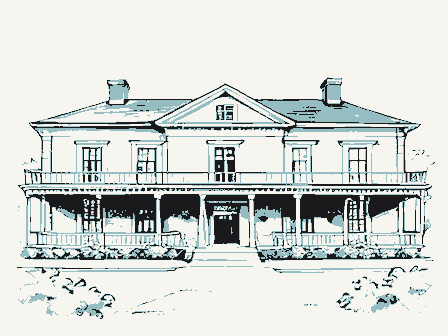
Sprigg Township (part 1 of 2)
Part 1 of 2 of the account of this township in Caldwell's Illustrated Historical Atlas of Adams County, Ohio. 1797-1880, published 1880; A History of Adams County, Ohio, from Its Earliest Settlement to the Present Time, Including Character Sketches of the Prominent Persons Identified with the First Century of the Country's Growth .., published 1900; History of Adams County, Ohio, published 1900. 15,965 words, covering 5 settlements. Source changes inside the text are labelled at the exact paragraph where the next book begins.
What happened here
One passage from this chapter. Its source year is printed on the inset and the full text labels every source change.
Ellis Palmer
Was a Pennsylvanian, and had a brother most cruelly tortured and murdered by the Indians there. He vowed vengeance against all Indians, whether friends or enemies. It is probable that he has been the means of sending many a red man to the happy hunting ground. It is related that on one occasion an Indian in passing through the neighborhood stayed overnight with Will G Ibert, just over the Brown county line.
John Gunsaulus
Was a man of unusual size, and had tremendous muscular j owor. Tradition has it that on one occasion he crosseed the river and anchored his canoe at the mouth of Fishing-gut Creek, and a party of Indians passing that way espied his vessel. A part of them ambushed to watch the canoe, while five others went in pursuit of his trail.
Contents
14 sectionsThe section headings the book prints inside this chapter, on this part. Each one jumps to where it begins.
Parts
2 pagesThe source prints this as one continuous account. It is split here so no single page grows too heavy to load; the text runs straight on across the parts and nothing is omitted.
- Part 1
- Part 2
The people it describes
1 namedEveryone the 1900 history stops to write about in this chapter. Each name opens the passage itself.
The modern record here
5 settlementsWhat the federal record holds for each settlement inside this township: wildfires and storm reports since the 1950s, mineral workings, and museum specimens collected nearby. These are counted within a few miles of each settlement, so neighbours share them and the columns are deliberately not added up. Every row links to the settlement's own page, where each figure is broken out.
| Settlement | Fires | Storm reports | Mines and quarries | Specimens |
|---|---|---|---|---|
| Bentonville | 32 | 15 | 1 | 346 |
| Bradysville | 14 | - | 1 | 58 |
| Clayton | 19 | 2 | 1 | 69 |
| Evertonville | 9 | - | 2 | 56 |
| Paradise Hills | 24 | - | 1 | 68 |
Settlements in this township
5 placesEvery populated place the Geographic Names Information System records inside this township's Census boundary. 3 of the 5 are named in the chapter; the rest were founded later or were never more than a post office.
The chapter
15,965 wordsReproduced complete and unedited from Caldwell's Illustrated Historical Atlas of Adams County, Ohio. 1797-1880, published 1880; A History of Adams County, Ohio, from Its Earliest Settlement to the Present Time, Including Character Sketches of the Prominent Persons Identified with the First Century of the Country's Growth .., published 1900; History of Adams County, Ohio, published 1900. The text is machine-read from scans, so expect recognition errors: misspelled names, dropped words, and stray characters. Nothing has been corrected, because correcting a proper name invents one. The headings below are the books' own; source changes are labelled in place.
Sprigg Township
Its boundaries extend from the Southeast corner of Huntington township (now in Brown county), on the Ohio river; thence up the river to the mouth of Island Creek ; thence north, so far that an cast and west line will strike the line of Thomas Hill's land ; thence west so far that a south line will strike the beginning. This included all of Manchester and Liberty townships.
The Surface First Settlers
It is difficult 1o ascertain with certainty, when the first setlers came. It is probable that the first to settle in the township were three brothers, named George, Joseph and Isaac Edging toil and William Leedom, a son-in-law of George Edgington. These parties located near where Bentonville now stalids, not far from 1795. Not tar from the same time, but perhaps the next year - 1796, a settlement was made on what is known as " Dutch Run, " by a company of Germans who came in a colony and settled some three miles southwest of the present villago of Beutonvillc, on the run that now bears the above name. The names of these colonists were John Bryan, Peter Pence, John Pence and two lads named William and Georgn Pence, Michael Roush, Phil- - Roush and and George Cook.
> mind Starrctt came and bought land in 1790. In 1804 lie ' led on the farm now owned by his son, John Starrett. In ->00. Daniel Henderson, Peter Conner and William Robinson, located about a mile and a half south of the Starrctt farm.
Among the oilier early settlers, were John McColm, in the southeast part of the township. Van S. Brady, Joseph Beam and Peter Conner, who came about 1804, and settled near Brndysville. Robert Simpson, who settled on the farm now owned by his grandsons, Will and John Simpson, on the Manchester pike. Samuel Swearingen came about the same time and settled adjoining Simpson.
Early Schools
It is (liffi'-ult to obtain any definite account of the first schools in this lowuship - one of the first, perhaps the first, was known as (he Buckeye School House, about two miles southeast of Bentonvilh . It stood on the line dividing the farms now owned by Harrison Pence and .Joseph Lytle. It was also used as a place for religious meetings. An Irishman named Conn, was the first teacher.
Another early school house known as the Jennings School House, was on the farm now owned by Cyrus Ellis, and stood where his house is now situated. Schools where taught in it as early as 1804. Allen Gales was one of the first teachers.
Present Schools
This towafthip is divided into fourteen sub-districts, in which schools arc Wrghl six months in the year, as required by law. These districts have comfortable houses in each of them.
This school has one oftlio best houses in tho county. It was built in 1871--is a two story framo building with four rooms. Tho enumeration in 1879, was 1557 In addition to tho common branches, Algebra and United States History arc taught.
Tho first mills were probably " horse mills." It is believed tho first of those mill9 was built as early as 1803, by Michael Roush, in the "Dutch Settlement," and the first water mill was built on Island Creek, near the lino between Sprigg and Monroe townships, known as the Bowman mill.
There are at present three mills in the township, McColm's steam flouring mill on Little Three Mile Creek, known as Grime's mill, and a small corn and saw mill near Bradyville.
It was named in honor of Thomas II. Benton. G. W. Leedom laid off an addition to it on June 9th, 1841, of nine lots, and on June 24th, 1842, he made a second addition of 36 lots.
It contains two dry goods stores, three grocery stores, four millinery stores or shops, one drug store, one steam flouring mill, two wagon shops, one blacksmith shop, one shoe shop, one cooper shop, one chair shop, two harness shops, one gun shop, one hotel, one M. E. Church, one Christian Church, and a population of 400.
Early Houses And Business Of Bentonville
Some time before Joseph Leedom laid out the village, lie sold to Lyman Perry one acre of land that is now within the limits of the town. On this land Mr. Perry built a frame house and fitted up a room in it and opened out a store. This was the first house built, and the first store started in the limits of the town. This building still stands, and is now owned and occupied by Mrs. Hannah McCutchen, as a residence. The carpenters who built it were Thomas Bowman and John C. Beasley.
The first tavern in the village stood on the site now occupied by the present steam mill. It was kept by G. W. Leedom, and started about 1840.
This village was laid out by Van S. Brady, January 25th, 1839, on a plat of thirty-one lots. It was called Centerville, which is still its legal name. In obtaining an order for a post-office at the place, it was found there was already an office of that name in the State. Therefore the name of Bradvsville was given for the post-office, in honor of the proprietor, and for this circumstance the place is everywhere known by the name of " Bradysville. "
The village contains two stores, one cooper and wagon shop, one blacksmith shop and one church, and a small mill near by for grinding corn, and being near the center of the township, the elections arc held here. It contains about fifteen houses and one hundred inhabitants.
Clayton
This village lies in the north-west corner of the township The neighboring country looks poor and uninviting. It contains some eight or ten houses - has two stores and one blacksmith shop,- but no post-office. Their .mail is brought from -Bentonville by private conveyance, as apportunity offers, and left at one of the stores for distribution to the community. There was a store kept here as early as 1838 or 1839, by Vincent Cropper, and about 1840, George Bryan laid off a few lots for a village, but the plat was never recorded. Mr. Bryan being an ardent Whig, called his new town Clayton, in honorof Henry Clay, or .James M. Clayton, the distinguished Senator from Delaware.
This place was somewhat notorious in its early years for the drinking and rowdyism of the community. It is said to be improving of late years in that respect, however.
This place, usually known as "Nauvoo, " was laid out September 10th. 1845, by John Everton, who named it after himself, " Evertonvillc. " Eighteen lots were surveyed and sold.
Mr. Everton was an early soltler, and kept a small store whero the village i9 located, long before he laid off a town. lie appears to have been somewhat eccentric in his notions. Ho at one time concluded to move to Nauvoo. Illinois, prepared his wagon, and loaded his effects in tho evening, to make an early start next 'morning. When morning came his mind was changod, and he unloadod liis goods and remained. From this circumstance tho community called his villogo Nauvoo, by which nnmo it is now everywhere known.
This place is on the West Union and Aberdeen pike, two milc9 south of Brndysville, but has never amounted to much, and there is now neither store, post-oflDo or shop of any kind in it.
Post-Offices
A post-office was established at this place about 1839, with Power Campbell as the postmaster. The second was William M. Greenlee; third, Robert Tucker; fourth James Truitt; fifth, Samuel Greenlee.
At. Bentonville, one M. E. Church, one Christian, called "Union Church," one M. E. Church at Bradysvillc, one Christian Church at Nauvoo, McColm's Chapel, M. P., in the southeast part of the township, and Raven sc raft's Chapel, M. P., in the southwest part of the township, on the farm of the late David Bradford.
The First Church
Organized in this township was Hopewell Chapel. It was situated about three miles west of Bentonville, on the land of James Hook, who gave them an acre of ground for house and grave yard.
The first bouse was built in 1812, of hewed logs. After being used twenty-five years, it was accidently burned. In 1839 a new frame house 40x45 was built about half a mile east of the first one. In 1845 this house was abandoned and finally sold, a part of the members uniting with others in the neighborhood of Clayton, formed a church there, while another portion united with the Bentonville church. The old graveyard is still used.
This church was organized in 1871. In 1873 they built a neat frame house, 32x46. It is situated on Cabin Creek road, in Sprigg township, three miles west of Manchester. It was named in honor of Mathew McColm, an old and esteemed citizen who donated over half an acre of land for the building lot.
They held their meetings for some years in the Kimble school house. In 1851 they btuilt a frame church, situated on the Manchester and Aberdeen road, in the southwest portion of the township, and called it Furgeson's Chapel. In 1870 they changed the administrative forms of the church aim adopted those of the Protestant branch of that denomination.
About 1874, they replaced their old house with a neat frame building 32x40, and named it " Ravenscfaft' Chapel, " in honor of an esteemed minister of that name.
But little can be gathered of the history of this chqrch. It appears to have been Gi^nized about 1830, at what is known as the Buckeye school house, some two miles southwest of Bentonville. In 1832, they built a brick house where the present frame one stands. This house was used until about 1850, when it was replaced by the present frame.- Alexander McLanc organized the church and preached for the congregation foivsome vea rs. Mathew Gardner preached here occasionally after its organization.
Tlioro was living in Beutonvlllo, in 1806, a widow lady named Susan Bunion. Willi hoi* lived a daughter, who was a young woman, and a son in his teens. This lady resided in the northwest part of the v;!lagc, and on the 31st of Dcccpiber, she and her son went sonic two miles in the country, to the house of a friend, where they were /.one nearly all the day, the daughter remaining at home. But about noon, she too, left the house for an hour or more, to call on a neighbor or two. On returning home she raised the alarm tha a man wa6 killed in the house. People soon gathered to the place, and found Sanford Phillips lying in the house, murdered, lie had received two fatal blows with an axe about the head. One had half severed his head from his body, and a blow had been given in the forehead with the blade ot the axe, extending down the face. lie had seemingly been sitting in a chair when he received the fatal strokes, and had apparently been dead some time when found.
Although this murder was committed in a village in mid day and in a few rods of a school house with a school going on, no clue was ever found to the perpetrator of this crime. The young lady was arrested, but nothing was elicited to criminate her.
At a very early day, when Maysville was but a fort, Mr. Palmer, Mr. Mefford and Mr. Gunsaulus, or Kingslauly, as lie is frequently called, were in the habit of crossing the Ohio and hunting in the wilderness back from the river. This was before any settlements were made in Sprigg township. A favorable hunting ground was in the neighborhood where It. S. Dailey and T. J. Shelton now live. Licks were found in the vicinity where the wild deer resorted in large numbers, that 4Tradc these favorable spots at which to kill them. One of these licks was on the farm now owned by G. G. Games, and was known as Ellis' Lick, from Mr. Palmer's given name - Ellis. The run of which this spring is the source, is called Ellis' Run. Another lick, known as Mctford's Lick, was located on the farm of Thomas J. Shelton, and the branch of which it is the source, is known as Mefford's Run.
These hunters were the old backwoods style of men, who lived mainly by hunting, never owned any land of their own, and shifted from place to place, as convenience and circumstances made it desirable. There are doubtless many incidents in the lives of these early pioneers that would be interesting could they be gathered.
Palmer and Gunsaulus came over and settled in the vicinity of their hunting grounds. Palmer settled on the present farm of Wilson Case, while Gunsaulus built his cabin on the farm now owned by Robert S. Dailey.
Ellis Palmer
Was a Pennsylvanian, and had a brother most cruelly tortured and murdered by the Indians there. He vowed vengeance against all Indians, whether friends or enemies. It is probable that he has been the means of sending many a red man to the happy hunting ground. It is related that on one occasion an Indian in passing through the neighborhood stayed overnight with Will G Ibert, just over the Brown county line. Palmer, learning the Indian's presence in the neighborhood, watched his opportunity and when near where Clayton now stands, shot him and threw his dead body into a sink hole and covered it from sight.
John Gunsaulus
Was a man of unusual size, and had tremendous muscular j owor. Tradition has it that on one occasion he crosseed the river and anchored his canoe at the mouth of Fishing-gut Creek, and a party of Indians passing that way espied his vessel. A part of them ambushed to watch the canoe, while five others went in pursuit of his trail. The pursuers overtook him, one of whom he soon shot. He then started on his retreat, loading as he went. Another soon fell and perhaps a third one also. The pursuit was then abandoned, and Gunsaulus made his way to a point opposite Brook's Bar, near Maysville, where he swam the river and escaped.
After the country became settled and game began to grow scarce, Mr. Gunsaulus went further west to find larger hunting ground in which to operate. He died in Brown county, Ohio.
W c arc not advised that MelTord ever settled in Adains.couht v, nor do we know what became of him. (Wo arc indebted lo Robert 8. Daily and lady for the foregoing particulars.)
The only duel ever fought in Adams eounty - and so far as wc know - in the State, was on the soil of Sprigg township. For the honor of the township, wc arc happy to say, the participants in the ntfair were not citizens of Ohio. This event occurred February 12. 1812.
Gen. Thomas Marshall, of Lewis county, Kentucky, and Charles Mitchell, of Mason eounty, of the same Slate, had some difficulty between them that they concluded could only bo settled by the "('ode of Honor. " They also decided lo compliment Ohio by having the conflict of arms on her soil. Accordingly they selected their seconds and surgeons and a few intimate friends to \vitness the affair. With these preparations, they crossed over the Ohio, and landed at a secluded spot on the land now owned by the heirs of Washington Ellis, near the farm of the lion. Jesse Ellis. The distance was measured off and the parties took their places and the word given.
Marshall fell at the first fire, having received a hall in his hip, which remained in his flesh and lamed him for life. The honor of the parties being vindicated the company crossed the river and returned to their Kentucky homes happy and satisfied.
The pistol that Mitchell used on this occasion, afterwards became the property of his brother-in-law, Yacliel Mastcrson, who himself got into a difficulty with another party, and agreed to decide the dispute by the "code." Masterson arranged for his family's support, and then instead of meeting his antagonist went up stairs and shot himself dead with the same pistol. The formidable little weapon after passing through several hands, is now the property of the little sou of Stephen Lawill, of Sprigg township, on the Cabin Creek road.
Biographical Sketches
David M. Bradford - The Bradford family is of Irish origin, but wc can learn little of the history of their ancestry. As far back as wc can gather anything authentic, is that two brothers, David and William, who came from Pennsylvania or Virgillia and settled in Adams county. David came at a very early date and settled at the mouth of Bmish Creek, on the Ohio river. lie became a very prominent man in the county, serving as County Treasurer from 1801 to 1831, a period of thirty years. When the county scat was removed, he was among the first to locate in the new town of West Union, coming here in 1804, as soon as the town was laid out. lie built the first hotel in the place and opened a tavern in 180G. William Bradford, the other brother, was the grandfather of David M. Bradford, the subject of this sketch. It appears that the father of William died when the son was but a child, and the little fellow was placed in a family of strangers, somewhere in Virginia,, with whom he lived until lie grew to the years of manhood. In 1819 he left Virginia, came to Adams county and settled in West Union where he stayed a year, then moved to Sprigg township and settled in Fox's Survey, No. 401, on the Ohio River, where he lived and died. He married Margaret Parkinson. They were : the parents of twelve children, three boys and nine girls. They all grew to years of maturity and married. They were Eveline, who married Alexander Baldridge, Clarinda married Elijah Kimble, Benjamin married Nancy Ann Burbage, David married Mary Ann Terliune, Samuel married Eliza Case, Sophia married Alexander Hutchinson, Eliza married Samuel Beam, Sallic married Thomas Batton, Jane married David Beam, Rebecca married Washington Carpenter, Polly married John McCauley, Margaret married Jacob Holmes. David Bradford, the father of David M. Bradford, was born June 1st, 1806, and married Mary Ann Tcrhunc, April 28th, 1830. They raised a family of niii£ children, five sons and four daughters, as follows : William, born May 17th, 1831, died July 21$t, 1832. Samuel, born October 22d, 1832, died September 30th, 1862. Amanda, born Dec. 23d, 1835, married John Brookover, Feb. 19th, 1832. James, born Jan. 30th, 1838, died Jan. 29th, 1880. Benjamin, born October 18th, 1840, married Margaret Brookover, December 4th, 1870. David M., born August 17th, 1842, married Celesta Robinson, November 5th, 1868. Martha, born January 19th, 1844, married James W. Campbell, March 17th, 1864. Eveline, born January 21st, 1840, married Robert Stewart, March 12th, 1868. Ann Eliza, born June 7th, 1851, married James S. Lewis, July 29th, 1880. Three of these sous, Samuel, Benjamin and David all served in the army. Samuel and Benjamin both enlisted in the 70th O. V. I., Co. G. They were both at the battle of Shiloh. Samuel was, after that battle taken with the mumps and returned to Aberdeen, where he convalesced, started to return to his regiment and got as far as Cincinnati, where he had a relapse, was brought back home and died a few days afterwards. Benjamin continued in service longer, lie served through the scige of Vicksburg and started with Sherman on his march to the sea, but some where in Georgia, was taken sick and sent to the Invalid Hospital at Evansville, Indiana. He was, however, afterwards drafted in and served in the 14 2d Indiana regiment until the close of the war. David M. Bradford enlisted August 54th, 1864, in the 182d lfccgt. O. V. I.. commanded by Col. Butler. This regiment was assigned to duty in the engineor corps in which it did service most of the time. It Was in the battle of Nashville, where Hood's army was so disastrously defeated. He served until the close of the war. was discharged at Nashville, July 7th, 1805. and mustered out at Camp Chase. As stated before, Mr. Bradford married Miss Celesta Robinson, daughter of Wade Robinson. They arc the parents of seven children, five boys ahd two girls. Their names are John Nelson, Elmer Ellsworth, Dora Decn, David Decatur, Samuel Preston, Elsie Ell wood, and Martin Lewis. Mr. Bradford owns and occupies the old homestead. It is a splendid farm of 350 acres, embracing a por- ' lion of the best river bottom, and extending back to the hills. It is provided with good and substantial buildings of every kind, all tastefully arranged. A boautifnl spot, 40x40 feet, has been selected on the farm for a family cemetery. It has been enclosed with a substantial stone wall of solid masonry. There is a marble monument fourteen feet high, in the center of the lot, on widen are to be inscribed the names and ages of the deceased members of the family as they arc deposited there. Five members of the family already repose in this cemetery. There are situated on the road near the eastern side of this farm, a school house and church. The church, which belongs to the Protestant Methodist denomination, i9 a neat frame building 40x30. The congregation was organized in 1870, and the house built in 1874. The society is in a prosperous condition and now numbers sixty members. Mr. Bradford devotes considerable attention to the raising of bees. He lias the most approved style of hives. A few years ago he made what he called his "Centennial hive. " He somewhere in the woods found a hollow poplar tree which he cut down and sawed out a section seven feet long, with an inside diameter of two feet. This he roofed and set on flat stone, and put into it a swarm which he allowed to work two years. He then killed the bees (which was wrong) and took their stores, which required two years hard labor to collect. This yielded two hundred pounds of marketable honey, which be sold for 25 cents a pound. Mr. Bradford i9 stock bolder and director in the First National Bank of Manchester. He is a man of business habits and a good financier.
Roueut C. Brookover - This gentleman's ancestors were of German origin. ILis grandfather lived in Pennsylvania until after bis marriage. He first moved to Kentucky, then came to Brown county, where he lived and died. Me reared a family of nine children, five sons and four daughters. Richard, Nancy, Sallic, John, Matilda. James, Mary, George, and Andrew Jackson Brookover. John, the fourth child, was born September 13th, 1806. He married Eliza Grimes, November 17th, 1831. They were the parents of nine children, four sons and five daughters, all of whom grew to years of maturity, and all married but one. Six still survive. These children were, Martha Ann, borr. Aug. 17th, 1833, married David Pence. They moved to Kentucky, and arc both dead. Samuel born May 9th. 1835, married Tannar Shelton. They live in Greenwood county, Kansas. Mary Ann, born December 23d, 1836, married Johu Meek Lccdom. They live in Sprigg township. Nancy Ann, born Dec. 6th, 1838. is dead. William, born Dec. 9th, 1840, married Lizzie Frame. He died in the army, at Nashville, Tcnn. Jane G., born January 20th, 1843, married James Lang. Mr. Lang died in the service at Nashville. She married for a second husband, Henry Pence. George W., born May 12th, 1845,. married Mary Leedom. They live in Missouri. Isabel, born Jan. 27th, 1850, married Jeremiah Foster. They are living in Missouri. Robert C. Brookover, who is the subject «l' issU sketch, was born April 3d, 1848. lie married Ruth Pence, April *Wi, 1869. His wife was born Oct. 28th, 1848. They arc the parents of five children, four of whom are living. Mr. Brookover owns an excellent farm, which is in a high state of cultivation, furnished with good buildings of all kinds.
The Grimes Family - The Grimes family is of Irish origin. The paternal grandfather, whose name is not remembered, came from Ireland and settled in this country previous to the Revolutionary war. lie served throughout that struggle ; was engaged in many of its Jetties ; was at the battle of the Brandywine, and participated in Yts closing sconces at the surrender of Lord Coruwallaec at Yorktown, that ended the contest. After the war win over, Mr. Grimes moved to Limestone, now Maysville, Kentucky, where lie lived until 1800, when lie crossed over to the Ohio side and settled about two miles above Aberdeen. In 1801, lie located 240 acres of land in Fox's and Stephenson's surveys, Sprigg township. In the spring of that year lie moved to the farm and settled. lie lived here until his decease, in 1828. He reared a family of six children - all sons, one of whom when a young man was killed by the Indians, on the waters of big three mile creek. One of these children, who was named William born in 177S, became the owner of -the farm. lie married Nancy Ellis, after he came to Adams county. They were the parents of seven children, two boys and five girls; Sally, Eliza, Hester, Jane. Margaret, Samuel E. and William. All grew to years of maturity and married, but one. T,1ivc of the children still survive, two of them, Sally and Hester are deceased. E., the oldest of them, was born i:i Sprigg township, Dec. lltli, 1S03. lie married Sally Brookover, January 20th, 1825. She was the daughter of Asahel Brookover, and was born April 19tli, 1801. They are t lie parents of ten children, five boys and live girls, named William 11., Lewis, Elixp, Nancy, Asahel, Matilda, Mary M. and Darius C. Tvyo of these are deceased, the others survive ami are all married. The youngest, Darius C. Grimes, was born April 14th, 1S48. He married prances C. Myers, December 19tli. 1873. They are the parents of two children, Musa Gladys and Bertha May. Ilo resides on the old homestead, and takes care of his nged parents, and runs the farm. Samuel E. Grimes now owns ami occupies the old home of his father and grandfather, the homo o» which ho grow up from his infantile years, with all the memories of the past clustering urbund him. but liowchniiged the scone ! Jfrlie wild leasts which used to prowl through the forests in count Ions immherw. a terror lo his youthful imagination, Imvo oil disappeared, while the darkling woods with their massive trees, havo given pluco to beautiful fields, that almost groan beneath tho heavy crops that cover them. Insteud of t re rudo cabins of his forefathers that nestled among the trees, Ik now sops comforlablo and substantial dwellings, with beautiful adornments surrounding them, while tho beautiful Ohio, with its waters flowing onward as in days of old, no more carries upon its surface the clmnsey log canoo or the rudely constructed raft or flatbont, but instead, the light and neatly made skiff gaily skims over tho waters, and the grand and elegant steamboat plows through the wuvos with onso iu its majcclic strength. But wlple these pleasant changes are presented to his view, tho beautifully adorned family cemetery on this old farm, where, after " life's fitful dreams are over" these forefather's of the hamlet sleep beneath the monuments that speak their memory, admonishes him that all things earthly must pass away. While the thick forests, as they appeared to these early pioneers, in their wild, rugged grandeur, havo passed away and can never be restored again ns they looked then, yet the fields, the flocks, the comfortable houses that havo taken their place, can be preserved as they appear to-day, and be handed down to all future generations. This Mr. Grimes has the enterprise and regard for l l,e rights of posterity to do, as will bo seen by tho view of his old home which beautifies a page in our history. In this engraving the venerable proprietor and his lady, appear in the scene, as they will look, when a thousand years have passed away.
Although the history of this mill runs back into tho past, more than half a century, it is still a prominent and useful institution of Sprigg township. It is located on Little Three Mile creek about a mile above its confluence with the Ohio river. It was built by William Bradford, in the summer of 1820. It is the old fashioned heavy frame, of hewn timber throughout.
It was run by water power three or four years, when steam was applied. Bradford run it until 1832, when he sold to W m. Carpenter. Carpenter sold it to Richard Grimes, who died and his heirs sold it to Daniel Reeder, who bccarao insane and was taken to the Insane Asylum, where lie has since remained, now some twenty-five or thirty years. It was next Bold lo E. B. Hill, for taxes ; he sold it to Peter Csoper, who iu 1858 sold it to Samuel E. Grimes.
In 1859, Grimes put in a new engine and other modern machinery. It finally passed into the hands of Mr. Grimes' son, Francis M. Grimes. There are three pairs of burhs in it, two for wheat and one for corn. The corn burhs are those originally put there iu 1826 and are still propelled by water power. In short, this old mill is sound in every part and joint, from bottom to top, and doing good work, with the prospect of being good for fifty years more.
William Roush - This gentleman's anccsters were of Dutch descent. Uis grandfather, Michael Roush, together with Philip Bowman, Peter Pence and John Pence, removed from Pennsylvania at a very early day and settled about three miles west of Bentonville, in what has from that circumstance been since called "The Dutch Settlement." Grandrather Michael Roush, had a sou named Parmenus, born in Adanis county, who married Catharine Smith. They reared a family of nine children, five sons and four daughters, named, William, Michael, John, Squire, Samuel, Rachael, Cassander, Mary Ann and Elizabeth. William, the oldest of these children, is the subject of our sketch.V He was born April 16th, 1824; was married in 1849, to Margaret Edgington. They have reared a family of nine children, all living, to-wit: ora Ann, Nancy Jane, Mary Catherine, Alexander, Frank, "anghurn, Aaron, Robert and Sherman. Two of the sons are married, the other four remain at home. The daughters are all married. Mr. Roush owns 255 acres of land, well improved aud in a high state of cultivation. He owned , tlsc old homestead of his father, which includes a part of his grandfather's homestead. Mr. Roush in his farming operations acts on the principle, that "what is wortl^ doing at all, is worth doing well," therefore his farm is kept in first class condition, and with it systematic cultivation, pays well. Ilis stock, being of good blood, well kept and cared for, always brings the highest market price and, ready sales. He has made all his fine property by persevering industry.
John Starrett, of Sprigg. - We can only trace bock Hrr Starrett's ancestors to hie grand-father, John Starrett, who left Londonderry, Ireland, at the age of sixteen, cdme'to America aird settled in Chester county, Pa., whero ho engaged in farming and tanning. While living there be married a lady named Mary Webb. After his marriage ho remove^ to Westmoreland county, in the same State, where he also carried on a /arm and a tannery. Hero he lived and died. He reared a family of seven children, four sons and three daughters. Ono of the sons named Samuel, cam&to Adams county at an early day, perhaps as early as 1794 or *93. While prospecting th6 country, he became acquainted 'with and married Miss Mary Shoemaker, daughter of Peter Shoemaker, who then on Ohio Brush creek, some two miles below tho FrUto^ridgo, near Jacksonville, on the farm that now belongs to Roflfft Sproul I . After* liis marriage Mr. 8tarrctt reiumeU to Pennsylvania, with his wife, who soon after died with small-pox. About 179C, ho came back to Adams county and bought the land hi Sprigg township on which he afterwards settled, and where he lived and died. After making his purchase ho returned to Pennsylvania, where lie married Elizabeth Coppol. After his second marriage Mr. Starrett left Pennsylvania, and came to his land in 1804 and settled. With him came his » father-in-law, Daniel Coppcl, who settled near Fairvicw, in Liberty township. Mr. Coppel was a revolutionrry soldier, who had fought undor Washington and Wayne, and had seen much service in that struggle. Samuel Starrett, by his second marriage reared a family of fourteen children, John, Margaret, Catherine, Samuel, Moses. James, Betsey, Mary, William, Elijah, Sallic, Nancy, Daniel and Jacob, all of whom grew to years of maturity, except James, who was killed at the ago of fifteen, by falling from a tree. Of this family seven still survive. Those living are William and Catharine (now Mrs. Wallace, a widow) who livc9 in Pike county, O. Daniel lives in Iowa, Jacob lives in Mcig9 and Elijah in Monroe township. Sallie (now Mrs. Edgington, a widow) is living in Kansas. John, the oldest of these children, and who is the subject of this sketch, now owns and occupies a portion of his father's old homestead in Sprigg township., lie was born in Pennsylvania, Sept. 18, 1802, and was brought by his parents to Ohio when they removed in 1804. lie grew to years of manhood on the old homestead, where lie has lived all his life, lie married Emily Hudson, Sept. 27, 3825. They reared a family of eight children, three sous and five duughters, Angelinc, Elizabeth, Martha, Samuel, Sarah, Mary, John and Elijah. Angelinc, born Aug. 15, 1826, married Albert Pence; she is deceased. Elizabeth, born Oct. 29, 3827 ; is deceased. Martha, born April 19, 1829; lives at li6me with her father, never marrying. Samuel, born May 6, 1831; married Sarah P. Truitt, lives ill Merrick county, Nebraska - engaged in farming. Sarah, born March 12, 1833; deceased. Mary, born Jan. 3, 1835, married Samuel B. Truitt; lives in Sprigg township. John was born Nov. 9, 1836. lie enlisted in Co. F., 7 tli O. V. C. ; was taken prisoner at Duck River, and kept in the South some time, then was paroled and started home on the ill-fated steamer Sultana, which blew up below Memphis, Tonn., by which several hundred men lost their lives. John Starrett was among the lost. The youngest son was born April 19, 1839, and married Sophronia C. Miller, of Ottawa, III. lie lives in Grand Ridge, La Salle county, of that State. lie also, was in the army during the rebellion. He enlisted in the 15th Illinois Cavalry, served over three years, and was honorably discharged at the close of the war. Mr. Starrett, in his earlier years, while game was plenty, was fond of hunting. Many a deer lie has killed, besides turkeys and other smaller game. lie still retains his old gun and powder horn, but as the game he used to hunt is all gone, they arc not used any more, though he occasion - ally delights to put on his pouch and shoulder his gun, as he used to do, to remind him of his early sports in hunting. He is secu in the engraving of his home, which adorns our pages, with his old equipments on, as he used to appear in them in his hunting expeditions. Mr. Starrett, now in his 78th year, is as active and sprightly as most men of 50 or 55, and is able to do as good a day's work in the field as most of them. This, however, he'has no need to do, as he owns a good farm and has an abundance of this world' goods to keep him comfortable the remainder of his dajs, with a portion to leave behind at his departure.
William Harrison Simpson. - The grand-father of William Harrison Simpson was Robert Simpson, a native of New Hampshire. He served in the revolutionary war, and received a yearly pension in liis latter years. At an early day ho came to Washington, Kv., and engaged in the mercantile trade; was the first merchant to engage in business in tho place. He afterwards married Mrs. Mary Daily, then bought 1,000 acres of land in Brooks' Survey, No. 1,688, Sprigg township, to which he removed in 1797 or '98, where he lived and died.. He, liis wife and a son are buried on this old homestead. 'Robert Simpson reared a family of nine children, Martha, who became Mrs. Moore ; Sarah, (Mrs. Chambers); Isabel, (Mrs. Crusan); Aun, (Mrs. Burbage); Lydia, (Mrs. Chambers); Elisabeth, (Mrs. Cunningham) ; Jane, (Mrs. Fowler) ; Ruth, (Mrs. Smith); two sons, Robert and Thomas. Robert died at the age of fourteen. Thomas was born on the old homestead, Feb. 1, 1810; married Miss Mary Degrnan, April 15, 1832, and settled on the old farm, which he afterwards bought. Here he continu<J§U*o live to the time <K his decease. He reared a family of twelve children, two sons and ten daughters, all of whom grfew to years of maturity, and all married but two daughters, though four of them are now deceased. These children were Lavina, (now Mrs. Baldwin) ; Eliza Ann, who is now dead, never married; Minerva R., (Mrs. Robert S. Daily); William Harrison, who married Diana Moore ; Maria Louisa, who married Rev. J. P.Bloomhuff; John Durbin, married Helen Snediker; Nancy Ellis, died single ; Susan Helen,, married William Games, of Brown county, O. ; Martha Armine, married Isaiah Little, she is now dead ; Lucy Adalinc, married Robcitf McChesney, but is now dead; Cynthia McKee, married Isaiah Littlo; Emily Eleanoro, married George W. Harding. Of those children, William Harrison, who is the subject of this sketch, was born Feb. 13. 1838, and married Diana Moore, March 2, 1865. They arc the parents of seven children, Mary C., Sail Ip M., Idclla A., Thomas II., William Loyd, Emily L.. Fannie F. Mrs. Simpson was tho third daughter of Shary Moore, who came from Mnyslick, Ivy., to Wc9t Union, and after living there some time, removed to Huntington township, Brown county, O., where Mrs. Simpson was born. Mr. Moore died in Cincinnati, February 28, 1880. Mr. Simpson now own9 200 ncros of the original 3,000 acres bought by Robert Simpson, which wasdhc old homestead of his grand-father, and also of liis father, where he himself was born, and has always lived. It is a good farm, and lias one of the best groves of sugar trecR on it to be tound in the county, from which he manufactures large quantities of maple sugar and molasses. Mr. Simpson and liis wife have both long been members of the Protestant Methodist church, and arc respected by all who know them.
Thomas J. Shelton. - The ancestors of Thomas J. Shelton were. Irish. The maternal great grand-father, William Cochran, with two brothers, came over to America with the British Army during tho revolutionary war, soon became attached to the country and its people; remained and became citizens. William Cochran married in Pennsylvania and settled, where he remained until 1797 or '98, then moved to Washington, Ky., where he stayed through the winter, during which time he came over to Sprigg township, and built a thrco-faced cabin on the farm now owned by Robert S. Daily. This house stood about forty rods south of Mr. Daily's barn. In the spring he moved into his little cabin in the wilderness. Mr. Cochran was fond of hunting, and the lonely wilderness was his paradise, lie lived the usual backwoodsman's life, and finally died at the house of liis 6on in Brown county, O. What became of his brothers who came over with him we don't know. Mr. Cochran reared a family of four children, two sons and two daughters. Ilis second son, John C. Cochran, became a prominent man in his day ; he served in the war of 1812, and was everywhere known as Gen. Cochran ; lie twice represented Brown county in the State Legislature, once beating the lion. Thomas L. Hamer for that position. He married Miss Tamar Howard, by which marriage lie reared a family of ten children, five sons and five daughters, Joseph, John, Elizabeth, William, Tamar, James, Jefferson, Sarah, Malinda rnd Lydia. They all grew to years of maturity and married, alt of whom, except one, still survive. The oldest daughter, Elizabeth, married William Selton. They are the parents of ten children, Tamar, Thomas J., Jeptha, Sarah, Margaret, Joseph, Ann, Chase, Lillie and Hattie Shelton. The second of these children, Thomas J. Shelton, is the subject of our sketch. He was born in 1810, aud married Miss Susan Dragoo, Feb. 22, 1865. They are the parents of nine children, Samuel, William, Cora, Grace, Earnest, Thomas, Hanson, Richard and Amanda. They are all unmarried. Thomas Shelton, the paternal grand-father of Thomas J. Shelton, was a native of Virginia. He removed from there to Kentucky, where he remained a few years, then came to Brown county, O., and settled at an early day. Here he lived and died. Thomas J. Shelton owns a beautifully located farm of 212 acres of land, in Surveys 1,688 and 1.690, with nice surroundings. He is a prominent, active citizen, well and favorably known throughout the county.
The Truitt Family. - About the year 1760, three brothers of the name of Truitt, emigrated from England to America. One of them settled in Pennsylvania, one in Delaware and the other, the youngest of the three, whose name was Benjamin, went to the eastern shore of Maryland, where married Margaret Kellum, and settled on a farm near Snow Jlill, the county seat of Worcester county. Tlfijy were the parents of four sons, Benjamin, Samuel, John K. and William. The latter, who was the progenitor of the Truitt family of Adams county, was born in 1778. He married Elizabeth Gootcc, of Accomack county, Virginia. They, with five other families, 'left their native State on the 20th of March, 1817, to seek new homes in the West, and arrived at Manchester, Adanis count}', O., on the 24th of April. Mr. Truitt settled near Clayton, where he lived until his decease in 1846. lie reared a family of five children, two sons and three daughters, James. Henry P., Margaret, Mary and Elizabeth. James, the eldest son, was born Dec. 24, 1806, and married Elizabeth Campbell on the 19^1 of January, 1830. They live( near Brndysvillc, and celebrated their golden wedding on the 19th of January, 1880. There were born unto James and Elizabeth. Truitt nine children, two sons and seven daughters. The two sons and throe daughters are dead. Miu^aret married James W. Taylor.0 She i9 dow deceased. Mary^ffcver married and is now deceased. Elizabeth married John P. Leonard. They live near Wrightsvillc. Henry P., the second son, was born Nov. 16, 1809. lie married Carlena, daughter of Abraham Bloomhuff, Jai*. 24, 1832. She was a sister of the Rev. J. P. Bloomhuff, and was born Oct. 26,1808. Mr. Truitt died Oct. 18, 1847, and is buried 'in Ebcuczer cemetery, Brown county, O. Mrs. Truitt died Nov. 9, 1878, and is buried in the Odd Follow's Cemetery, Now Haven, Allen county, Ind. Henry P. and Carlona Truitt were the parents of seven children, four sons and three daughters, Eliza Jane,f Sarah P., John W., Samuel B., James 11.* Maria D. Eliza
Jane married George W. Tayior and lives ut Clark's Hill^ Tippe* canoo county, Ind. Sarah P. married Samuel fltarretf. They removed tq Allen county, Ind., where slic died Feb. 7. 1878. John W. is single, and now lives in Allen county, Ind. James II. never married ; died June 6, 1866, aged 25 years. Thomas 8.
'll vo In Kansas. Samuol B. Truitt, the fourth child in tho family of Henry P. and Carlcna Truitt, was born in Spring township, Adams county, Fe! 21, 1839. Ilo grow up and worked on a farm, receiving sue-, an education as the country schools generally gave at that day. He married Miss Mary Starrott, daughter of John Starrett, Dec. ±6, 1859, Rev. J. P. Bloemhuff being tho officiating minister. O. the 8th day of September, 1862, he enlisted in the 7th Ohio Volunteer Cavalry, Colonel Isaiah Garrard, Co. F., Captain J. R. Copeland. Ilis regiment performed meritorious service throughout the war. Major General Upton in General Order No. 21, issued at Ed ; field, Tepn., highly compliments this regiment for its bravery and eminent services in the last campaigns of the war, reciting the achievements of the division of which the Till O. V. C. was a part, by saying: "In thirty days you have traveled six hundred miles, crossing six rivers, met and defeated the enemy at Montcvallo, Ala., capturing 100 prisoners, routed Forrest. Buford and Rlioddy in their chosen position at Ebcnezcr church, capturing two guns and 300 prisoners, carried the works in your front at Selma, capturing thirteen guns, 1,100 prisoners, five battle flags, and finally crowned your success by a night assault upon the enemy's entrenchments at Columbus, Ga., where you captured 1,500 prisoners, 24 guns, eight battle flags and vast munitions of war. April 21, you arrived at Macon, Ga., having captured on your march 3,000 prisoners, 39 pieces of artillery and thirteen battle flags. Whether mounted with the sabre or dismounted with the carbine, the brave men of the 3d, 4th, 5th Iowa. 1st and 7th Ohio and 10th Missouri Cavalry, triumphed in every conflict. With regiments led by braye Colonels, and brigades commanded with consummate skill and daring, the division in thirty days won a reputation unsurpassed in the service. Though many of you have not received the reward to which your gallantry has entitled you, you have nevertheless received ihe commendation of your superior officers and won the admiration and gratitude of your countrymen. You will return to your homes with the proud consciousness of having defended the flag of your country with honor in the hour of the greatest national peril while, through your instrumentality, liberty aud civilization will have advanced, the greatest stride recorded in history." After his return from the army Mr. Truitt bought a farm of 158 acres which he has improved, put in a high state of cultivation, and adorned with beautiful buildings, as may be seen by the view given in our pages. Mr. Truitt devotes considerable attention to raising good stock. His cattle brought from Kentucky are among the best in the country. Mr. Truitt and his wife are both members of the M. E. church. They have a beautiful home, and arc blessed with an abundance of this world's goods to keep them comfortable the remainder of their days.
The ancestors of George S. Wilson, first lived in the valley of Virginia, but finally moved to Pleasant county, W. Va., where his father, Charles Wilson, was born Dec. 25, 1822, and where he grew up to manhood. lie here married Matilda Haynes. In 1866, he moved to Mason county, Ky., and settled on the banks of the Ohio. lie reared a family of 8 children, 3 boys and 5 girls. George S. Wilson, who is the subject of this sketch, was one of these sons. Ilewas bornin 1850, and in 1877 married Miss Ella Parr. In the fall of 1879, he bought the farm on which he now resides. It is situated in Sprigg township, and known as the McCall farm, widely celebrated as a vegetable and fruit growing place, a business that has lost nothing under Mr. Wilson's iflanagement. On this farm are grown all the most useful varieties of fruits adapted - this latitude, the trees in the orchard having just reached good bearing. age, a^c in hcalthyffe»K(lition. Mr. Wilson devotes special attention to the cultivation of the sweet potato, and tho raising of plants for setting, for which purpose he has the best hotbed in the country. It is a platform 18x60 feet, constructed of stone, in solid masonry work, arranged for; flues beneath to supply warmth, with a thermometer to regulate the heat. By this arrangement, Mr. Wilson says plants can be grown large enough for planting in three weeks. This one bed alone will produce 200,000 plants in n single season. In connection with his business, Mr. W. has a well constructed house for preserving his sweet potatoes, and tender plants through tho winter. This building is 18x36, with a capacity to hold 1,000 bushels of potatoes. It is made of double walls, and the space between filled with charcoal. Bv tills means he can keep sweet potatoes all the year. He can, therefore, fill orders at all seasons. This i9 a very pretty farm, with neat buildings, as can be seen by the engraving in this work.
John Y. Francis. - The subject of this sketch is of Irish do- Rccti I . His grand-father Francis, was born in the county of Cork, grew to years of manhood, married there, and raised a family of children. His wife died, and about a year afterwards lie emigrated to America, bringing with him six children, the oldest of them being sixteen. Ho landed nt New Brunswick, Nova Scotia, thcnco came direct to Adams county, where a sister,, who had come over the previous year, had located. Mr. Francis had bought land in Liberty township, on Briar Ridge, and settled on it. lie lived but a few years. Tho children he brought over with him were John L., Thomas, Abraham, "Isaac, Jane, Mary and Margaret. These children, after their father's death, remained together and carried on tho farm, rocoiving assistance from tho kind counsels of their aunt. Hero they grow up, end all married but Isaac. They finally separated after marrying, and located in different sections. They are now all dead but Thomas. John L. Francis, the oldest of the family, married Margaret, a daughter of Judge Needham Perry. They had born unto them nine children. Two of them died in infancy, the other seven, Needham Perry, John Y., Wellington, James, Margaret aud Jane L., all grew to years of maturity and married ; but three of them, Needham P., William and Jane L., have since deceased. Of these children, John Y. Francis, the subject of our sketch, is now the only one living in the State. lie was born February 4th, 1831, and married Miss Malinda J. Smith, Sept. 7th, 1857. She was the daughter of James Smith, and was born Oct. 8th, 1842. They are the parents of thirteen children: Nelson B., born June 21, 1858; John L., born January 9, 1860; George B., born November 17. 1862; William S., born June 2, 1864; Andrew J., born February 28, 1866; Dyas, born Dee. 6, 1868: Annette A., born March 14, 1870; Laura Bull, born Oct. 12, 1872; Margaret C., born March 16, 1874; Harvey G., born Oct. 10, 1875. They are all living, and remain under the paternal roof. Besides these living children, there were three that died in infancy or early years. Mr. Francis has been the pioneer iu introducing machinery in all branches of farming pursuits. He was the first man in the county to introduce and use on his farm a combined reaper and mower, lie uses in farming the latest improved machinery of all kinds; grain drills, that at one and the same time sow the wheat, the grass seed and the fertilizers; he uses the sulky rake and horse power hay fork. In building his new barn this spring, he employed S. S. Tucker, who has invented a horse power borer, for framing buildings. With this machine, a man with one horse, will do all the boring for a building faster than a mechanic can lay out the work. While thus intently engaged providing for his convenience on the farm, he is not unmindful of women's rights and conveniences in the household labors. He was the first man in Sprigg township that botight a sewing machine for his family, as well as providing other' conveniences to lighten the household work. lie' is a devotee to the raising of good stock, and has spent his whole life in efforts to procure and improve all the best breeds for his farm. Ilis cattle and Cotswold sheep were purchased from the best herds and flocks in Kentucky, and his Poland-Chiua hogs in Butler county, O. IIow he has succeeded is attested by looking at his stock, a9 shown in his farm view, given in our book. Mr. Francis owns and occupies the old homestead of the Rev. William Williamson, who first settled on it, about 1806. Mr. Francis owns some 300 acres, which is kept in a high state of cultivation. lie is a believer in Franklin's maxim, that what is worth doing at all should be done well. With his enterprise it is needless to add that with him - farming pays.
Tiie Pence Family - The ancestors of Alfred Pence were of German descent. They emigrated to to this country at an early day and settled in the Shenandoah Valley, Virginia, but we can gather little of their history, till we come to the great grandfather, Michael Pence. lie married in the Valley and raised a family of children. lie, with all his family, left the Valley and came to Adams county, and settled in Sprigg township about 1796. He bought 1,400 acres of land in Hopkins' Survey, No. 915, on which he immediately settled, and commenced to clear up his farm. One of his sons, Peter, had married, while living in Virginia, Susan Roush, and had two children, but they came with the family to Ohio. With Michael Pence also came two families of Roush's, a family named Bryan and Mr. Cook, who settled in the same neighborhood. All, except Mr. Bryan, were Germans, and used the Dutch language, from which circumstance the neighborhood was called the "Dutch Settlement," a name it retains to the present day. A few years after Mr. Pence settled, perhaps about 1808 or '9, he was drowned in the Ohio river while crossing with his team in a ferry flat at Henry Gilman's ferry, which was situated just below the residence of David Penny witt, at the lower end of Manchester. Ilis body was afterward recovered, brought back and buried on the old homestead, the first interment in what ha9 since become the family cemetery, which now contains many graves. In crossing the river, from some cause not now known, Mr. Pence and his team were precipitated into the waters, and all perished. After Mr. Pence's death his property was divided among his children, and most, if not all, yet remains in the hands of his descendants. Peter Pence, previously mentioned as having been married before ho left Virginia, was the grand-father of Alfred Pence. He raised a family of eleven children, eight sons and three daughters, besides ouo that died in early years. Of these children but four now survive. One, Lucinda (Mrs. Lnny) lives in Brown county; another, Eleanor (Mrs. Thompson) lives in Indiana. The other two, Andrew and Benjamin, li vo somewhere in tho West. One of the sons of Peter Pence, named Aaron, born about 1798, married Elizabeth Moore. These parents raised eight children, seven sons and one daughter. They were named Alfred, Nathan, David, Daniel, Jagob, Francis S., Peter and Harriet. Two of these children are deceased, Nathan and David ; the latter was drownod in the Ohio river, opposite the mouth of Crooked Creek, July 1. 1853, whilo bathing. Daniel and Harriet (now Mrs, Gilbert) live In Huntington township, Brown county, O. Francis S. Uvea In DeWlti county, Illinois. Tho other throe, Alfred, Jaoob and Peter, live In Adams count}'. Alfred, the oldest of those children, U tho subject of this 9kotch. Ho was born May 17, 1823, and married Hannah Evans in 1817. These parents have reared a family of six children, two sons and four daughters, Elizabeth, who married Zevorus Roush; Ruth married Robert Brookover, Rufus, who is unmarried; Dyas married Ada Parr, Mahala married Lafayette Roush, and Ida, who lives with her parents, unmarried. Alfred Pence, by industry and economy, has accumulated a handsome property, lie now owns the old original homestead of his great grand-father, Michael Pence, and has built a neat residence not far from where tho first cabin 6tood. He grew up and has always lived in t he neighborhood where he wa9 born, and has the confidence of his fellow citizens, who have elected him Justice of the Peace two terms, besides filling other township offices. The Pence uud Roush families were among the first, possibly the very first settlers in Sprigg township, though the probability is the Edgington families preceded them a year at Bentonville. When they settled there was not a road or path in the country, but an unbroken wilderness, which swarmed with wild animals of every kind. Bears, wolves and panthers lurked in every covert, while the wild deer, the turkey and small game roamed at will over the land.
Hon. Jesse Ellis. - Nathan Ellis, the grand-father of the Hon. Jesse Ellis, was a native of Pennsylvania. He lived and married at Redstone, now Brownsville, that State, but left there about 1794 or '95, and came Westward, stopping a short time at Limestone, now Maysville, Ky. He then crossed the Ohio river and settled where Aberdeen now stands, beiug one of the proprietors of the town, or making an addition to it. Here he lived and died, and lies buried on the hill north of the village. He reared a family of ten children, five sons and five daughters, all of whom grew to years of maturity, and all married but oue. These children are now all deceased but one daughter, Mrs. Ellen Higgins, who lives in Missouri. One of the 6ons named Jeremiah, was born at Redstone, Pa., Dec. 8, 1780, and married Anna Underwood, who was born in "Old Virginia," April 6, 1782. They both lived and died in Adams county. Mr. Ellis died Nov. 26, 1857. Mrs. Ellis died April 20, 1867. They were the pareuts of ten children, five sons and five daughters, three of whom are now deceased. Jesse, the ninth in the family, and the subject of this sketch, was born Dec. 19, 1823. He married Miss Maria Baker, daughter of Gen. Simon R. Baker, of Mason county, Kentucky. She died March 15th, 1850. By this marriage were born two children, one of them now deceased. Mr. Ellis married for a second wife, Anna Maria, daughter of William Rickards. They are the parents of three children, two sons and one daughter - all remain with their parents. Mr. Ellis is a prominent and influential citizen, - has served as County Surveyor several terms, and repesented the county two terms in the Ohio Legislature. Ho owns a farm of over 200 acres in Sprigg township, some four miles northeast of Maysville, Kentucky. This farm lies on a high plateau, which by its elevation, is fanned by pure, healthful breezes, that makes it a delightful place of residence. From the southern part a full view of the Ohio river is seen for a distance of ten miles, while the city of Maysville lies spread out beneath the spectator. Though his farm is elvated land, the soil is of an excellent quality, and produces well, all kinds of grain fruit of superior quality. The whole is in a high state of cultivation, aod all kinds of stock are of good blood. There are on this elevated surface, several ponds or little lakelets, into which Mr. Ellis has commenced the breeding of fish.
Daily Family - Robert S. Daily, the subject of this sketch, i9 of Irish descent, but Tjvc are unable to trace his ancestors back farther than to his grandfather, James Daily, who was born near the city of Cork. At an early day, while yet a young man, he emigrated to America, landed in Philadelphia, from whence ho at once made his way to Ohio. He first stopped in Gallia county, where he remained several years. While living there he married Marv Fort and settled on the French gram, lie finally loft that sccti#n of country, and went to Limestone, now Maysville, Kentucky. On his arrival at that place, he accidentally fell out of his pirogue into the river and was drowned, at a place then known a9 " Beasley's Whirlpool. " The family settled in Limestone, where they lived some three or lour years, wheu tho widow murned Robert Simpson, of WiV^hington, Kentucky. Mr. Simpson afterwards bought one thousand acres of land in Sprigg township, Adam9 county, Ohio, in Brooks Survoy, N®. 1,688, to which ho removed and settled. Ilo lived on this farm until tho infirmities of old age required him to retire from business, Ilo sold his land to his eon, Thomas Simpson, and rcsidod with a daughter in Brown county, the remainder of his life. lie reared a family of twelve children, whose history will be found elsewhere in this work, in the biography of Wm. II. Simpson. Ho died on his birth day, in 1844, being just eighty-six years old; and with his wife and his son Robert, lies buried upon the old farm where ho first settled. The other Son, Thomas, died May 26, 1863, and tho old homestead became tho property of Thomas' two son*-', William Harrison and John Simpson. Mrs. Simpson, by her first marriage, became the mother of throe children, a Boy and itvo gills. Peter, roily ami Margaret Daily. Peter Dally wan liuni in 1 71)1. llo married Ly.lla Dobbins, daughter of Rov. Robfi'l | hibbins. a well known minister oflbo Protestant Methodist tleiiominaiion. Mr. Daily, sifter bis inurriugo, settled in Spring uwnsbip. wbert* be lived < mil 1812, when bo removed to Jefferson eouiity. Illinois, where dc died soon after, lie reared a family of six children, Mary, Elizabeth, Jane, Robert S., Joel 11. and Margaret Daily. Mary married Win. Hartbolomew and lives in I tad ax county. Wisconsin. Elizabeth married Wesley Richmond, and emigrated to Jefferson county, Illinois, in 1842, whero she died August 22d, 184.1. Jane is unmarried and lives in Wisconsin. Joel ft., never married, lie went to California, in 1854, and from there to Nevada. Margaret .parried James M. Calloway. They live in Wisconsin. Robert S., the subject of our sketch, was born March 25, 1822. When Peter Daily removed to Illinois, in 1812, bis son, Robert S. Daily, accompanied him there, where be remained, some three years after bis father's death, then went to -- Mineral Point," Iowa county, Wisconsin, and from there to Highland, in the same county, and worked in the lead mines live years. While engaged in the lead mines, the California gold excitement broke out and Mr. Daily joined a company that crossed the plains in 1850. reaching the point where Placcvi lie now stands, on the 3d day of August, after a tedious journey of eighty-seven days. After working in the gold mines eighteen months, lie returned to hjs old Adams county home, in Sprigg township, after an absence of ten years, spending two years on his California trip, going there by the overland route and returning by the Isthmus of Panama. After his return, October 31st. 1S54, married Miss Minerva It, third daughter of Thomas and Mary Simpson. They are the parents of six children, Lillie B., Mary W., M. Durbin, Robert S., Gabricllc and Amy L. They arc all unmarried and remain under the paternal roof. Robert S. Daily is a gentleman of the strictest integrity, highly esteemed and respected by all who know him, and although he never desired or sought places of public position, lie lias been called to fill several important public trusts, among which was that of County Commissioner. lie owns a farm of nearly two hundred acres in the western part of Sprigg township, beautifully adorned with substantial and handsome buildings, as is shown by the engraving in this volume. This farm is in a high state of cultivation. Surrounded by his intelligent family and all these worldly comforts about him, lie is prepared to enjoy every earthly blessing that man can desire.
Morris Pollard - The subject of this sketch is of Dutch origin, but at what period his ancestors came to this country we can not learn. The earliest trace we can get of them, is his grandfather, John L. Pollard, who was a native of Maryland. He, while a young man, came to Fleming county, Kentucky, and there married Mahala Strode. In 1825 he came to Adams county, and settle-1, on what is since known as the old ''Pollard homestead '' in Sprigg township. On this farm he lived and died, and lies buried in the family grave yard near by. lie was a good man, a Methodist minister, and died February 19th, 184G, in the 69th } ar of his age. Mr. Pollard was twice or thrice married, but we know nothing in regard to either of his wives. AVc learn, however, that he reared a family of 12 children in all, their names being William S., Elisha. Benjamin, Samuel G., Elizabeth, Mahala, Genettie, May. Malinda, Nancy, John L.. and one that died in infancy. John L.. the eleventh in this family, was born June 6th, P !' and married Drusilla, daughter of Elijah Pence, June 29th, Tlu'y arc the parents of the present Pollard family of They reared a family of eight children, six sons > daughters, named Nancy, John, Kilby, Harriet, Elijah C., L.. Harvey Simmons, Morris and James Hiram. Nancy ii May 22d, 1841. She married W. T. Ilook. They live *ak, l'rown county, Ohio, where Mr. Hook is engaged in -antilc business. They have a family of. five children,
- i Sallie D.. John,. Irene. Ira, and Islea May. J. K. Pollard, "ldc-d of the sons, enlisted in the army in the late rebellion, at a of eighteen, at Camp Harncr, West Union, Ohio, October ISCd. in Co. G., 70th O. V. I., Capt. Watson Foster's compa- ' y. the? regiment commanded by Col. J. R. Cockcrill. lie was di.-i barged at Memphis, Tennessee, December 22d, 1804, on account <>f disability. lie re-enlisted July 24th, 1804, in Co. I., 182d O. Y. L, Capt. W. II. Shrivcr's company, regiment commanded by Col. Butler. lie was commissioned Lieutenant, October 13th, 1804, and c rvod until the close of the war, and was discharged at Naslib< l i'imc-sec, July 7th, 1805. After Ins return from the arjny, In* married 'Miss Annie W. Watson. September 4th, 1807. They are the parents of two children. Lulu E., and William Simmons. In I $75, Mr. Pollard was elected Sheriff of Adams county, and re-elected to the same office in 1877. In 1879, he was chosen to represent the Senatorial District, composed of the counties of Adams, Scioto, Pike and Jackson, in the Ohio Legislature, which jKisition he now holds. Harriet was born May 11th, 1845, and married John F. Games, July 25th, 1800. They are the parents of three children, two of them are living - one is dead. They are Harvey 1»., Elmer - dead, and Omar. Elijah C. was born January 21th. 1847, and married Ella Hill, in February, 1872. They aiy the parents of two children, Eva Myrtle and Ora. He is a mini-tcr in the M. E. church, and lives near Sand II ill, Lewis county, Kentucky, and is engaged in ministerial duties on the
Concord circuit. Samuel G. was born February 20th, 1819, ami married Cora llumrio, September 4th, 1874. Tlioro lias been born unto them four children, Gertrude, who died at the age of three years. Mary Ethel, Hcttic and Jcs6c A. The last three are living. Samuel G. Pollard is a minister in the M. E. church. He is stationed at Somerset, Kentucky, engaged in the discharge of his duties in the ministry, Morris was born May Gth, 1851, and was married April 0th, 1870, to Ella J., daughter of Rev. J. P. Bloom huff. They arc the parents ot a son, named John Earl, born September 13th, 1878. Morris Pollard ( remained with Ins parents until he grew up to manhood. He then carried on the farm for his father, who had for several years become an invalid - receiving a share of the proceeds. lie also dealt considerably in stock, and by his untiring industry, perseverance and economy) saved enough to buy a farm of nearly one hundred acres. This farm is pleasantly located, on the Cabin creek road, in Sprigg township, near the old Pollard homestead. Its high, elevated position, with its cool, healthy air, and the beautiful Ohio in full view at a distance of some two miles, makes it a delightful place for a home. Mr. Pollard has put his land in a high state of cultivation and adorned it with neat and tasty buildings, as will be seen by reference to the engraving of it, that appears in this book. Mr. Pollard and his wife are both members of the M. E. Church.
Mrs. Ella J. Pollard, as already stated, was the daughter of the Rev. J. P. Bloomhuff. She was born March 1, 1854. Her ancestors were of German origin. Her grand-father was born in Germany, emigrated to America at an early day, and came to Mason county, Kv., where he married a lady, who was a native of Virginia. lie afterwards moved to Fort Wayne, Ind., where he died at the age of 97 years. lie was blind the last twenty years of his life. II is wife died there also, aged 05 years. They reared a family of nine children, five sons and four daughters, Abraham, William, Polly, Carlcna, John P., Sally, Sydney, Nancy Jane, Samuel II. These children all grew to years of maturity and married, though three of them arc now doccascd. John P., the fourth in this family of children, was born Oct. 16, 1805. lie has been three times married. II is first wife was Rachel Hutson, who only lived a few years. lie next married Maria Warner, who also died. Ills third wife was Louisa Simpson, who still survives. By his first marriage, Mr. Bloomhuff had born unto him two children, Martha Ann and Marion F. Martha married Henry L. Phillips, who served throughout the war of the rebellion. lie was Colonel of the 70th Regt., O. V. I. He died July 25th, 1800. Mrs. Phillips is Postmistress at Manchester, where she now resided. She has three children named Cora, Dudley and Fannie. Francis Marion imiriicd Tamar Cochran, and lives on a farm one mile from Ripley, Brown county, O. They have eight children, William, Samuel JL, Frank S., John P., Lida J., Mattie, Dudley and Ada. By his second marriage he had five children, Isora I., who is dead ; Samantha Viola, who married Charles Galbraith. They live in Manchester and have two children. Ella J. (Mrs. Pollard) before stated. Minnie Irene married William Cropper. They live in Sprigg township, and have one child, a daughter, named Lola. John F. married Irene Stewart, and lives on the old homestead. By' the third marriage were born three children, Essie Ruth, Dora P. and Edgar C., all at home with their parents. In his early days, Mr. Bloomhuff united with the M. E. church, of which he has remained a consistent member through life, lie has for the last forty years been a minister in that denomination. He was in his day a prominent citizen of Adams county; represented it in the Ohio Legislature in 1840, and has held other minor offices of public trust. lie is now enfeebled by age, and almost blind, but is solaced in bis declining years by the good wishes of kind friends and loving children, and after a long and useful life, awaits the summons that will soon call him hence. But to return to the Pollard family; Harvey S., the next after Morris, was born March 18, 1853, and died Sept. 30, 1800, in his fourteenth year. James Hiram was born May 15, 1855, and married Susan Hutchinson, Oct. 7, 1879. lie lies buried in the Pollard lot in the Odd Fellow's Cemetery at Manchester. The widowed mother still remains on the old homestead, in the enjoyment of good health, surrounded by plenty of this world's goods, «o make the remainder of her days comfortable and happy. They were truly good and pious parents, who brought up their children in the nurture and admonition of the Lord. They were from early years members of the
Methodist church, and set a good Christian example by always being prompt at church when able. Mr. Pollard held the office of steward and trustee of his church for many years. His children loved to obey his wishes. Whatever father said, was, wilh them, always right. He lived to see them all embrace the faith he loved so well.
Source changes here: from A History of Adams County, Ohio, from Its Earliest Settlement to the Present Time, Including Character Sketches of the Prominent Persons Identified with the First Century of the Country's Growth .., by Evans, Nelson Wiley, published 1900; 3,190 words in this source stream.
Whbn Bxpibbd
This township was organized in 1806, and named in honor of Judge William Sprigg, one of the pioneer lawyers of Adams County, and afterwards a Judge of the Supreme Court of the State. Sprigg Township lies in the southwest comer of Adams County, bordering the Ohio River on the south and Huntington Township in Brown County, on the west. It is in the blue limestone belt and its soil is mostly productive of com, wheat, and tobacco. Its surface is undulating, in places hilly, and it is well watered both from natural springs and with flowing rivulets and creeks.
In the northwest portion. Suck Run, a rapid, rough little stream flows to the west and enters Eagle Creek near Neel's Store just over the Brown County line.
Rising in the northern portion and flowing to the southwest across it, is Big Three Mite, the largest stream in the township. Little Three Mile rises near the center of the township and flows to the southwest into the Ohio River. Isaac Creek, named from the first settler on it, Isaac Edgington, takes its beginning near Benton ville and flows south into the Ohio to the west of Manchester. And Island Creek, a small stream, named from The Three Islands at its mouth, forms a portion of the eastern boundary of the township, entering the Ohio a short distance above Manchester.
The first settlers in what is now Sprigg Township were Isaac Edgington, George Edgington, William Leedom, son-in-law of George Edgington, who settled near Bentonville in 1796; Peter Connor, and Willam Robinson who kept a tavern on the old Zane Trace, settled on land purchased from Andrew Ellison, near Bradyville, the same year ; and the "Dutch Settlement" on Dutch Run was made by Michael Roush, Philip Roush, John Bryan, Peter Pence, John Pence, and George Cook, at this date ; the Roush and Pence families lived in Manchester and raised a crop of corn on the Lower Island in 1795. Van S. Brady, a son of Capt. Brady, the noted Indian scout; Joseph Beam, Peter Rankin, John Stivers, Samuel Sterritt, Daniel Henderson, John McColm, Ellis Palmer and Thomas Palmer were among the pioneers of this portion of Adams County.
The first mill constructed outside the Stockade at Manchester was Massie's Mill on Island Creek. Then Michael Roush built a horse-mill on Dutch Run. And later what is known as Grime's Mill on Little Three Mile, a tub-mill, propelled by water, was erected. This latter was rebuilt and made one of the best mills in the township, for many years.
George Edgington, father-in-law of William Leedom, entertained travelers at his residence just south of Bentonville on Zane's Trace, as early as 1797. Further down the Trace below Brad)rville, William Robmson opened a tavern about 1800. Joseph Beam kept a tavern near the Brown County line on the Tomlin farm ; The Little tavern, in later years, was near BradyviHe; Ballard's tavern was on the Thomas farm near Liberty Township line, and the Brittingham tavern was on the C. E. Hook farm.
The first church in what is now Sprigg Township was old Hopewell which stood near the present site of Hopewell Cemetery and Schoolhouse. It was a log structure and was erected about the year 1810. Rev. Abbott Godard, Rev. Robert Dobbins, and Rev. John Meek were the pioneer preachers at Hopewell. Rev. John Meek, in fine weather, would leave the church building, and take his position in the "bull pen," as some irreverent wag termed it, a natural ampitheater in the grove near the church, where he would preach to the multitude assembled about him. This remarkable natural amphitheater is pointed out to the passerby to this day, as the scene of the greatest religious revivals of pioneer days. The old log church was burned about the >'ear 1840. A new building was erected but afterwards moved to the cross-roads about a mile north from its former site. Dissensions arose in the church, and the building was sold and removed for use as a barn. The cemetery at old Hopewell is well kept, and is the resting place of many of the pioneers of Adams County.
Union Church, near Bentonville, was organized in the year 183a by Rev. Alexander McClain, a celebrated "New light" preacher for many years in southern Ohio. * There were but eight or ten members in the first organization, but the membership increased rapidly under Elder Mc- Clain's ministry, and the next year a brick church was Greeted. At the dedication of this church Elijah Leedom and William Leedom were appointed deacons, and James Lang, clerk, which position he retained until his decease, when Barton S. Lang was appointed to fill the vacancy. Henry Hutson was appointed deacon to succeed William Leedom, removed, which position he held for over forty years. In 1854 the old brick building was replaced by the present frame structure, the lot occupied by the church and cemetery being at that time deeded to the organization by Asa and Mary Leedom, the consideration being "love and aflfection for the church."
The pastors since the days of Elder McClainhave been: Elder Mathew Gardner, Elder Garroutte, Melissa Timmons, C. W. Wait, William Pangbum, J. P. Daugherty, B. F. Rapp, Naaman Dawson, G. W. Brittingham,
This is the oldest organization of the Christian Church in Adams County, and a year older than Fellowship Church, on Hickory Ridge, just over the Brown County line.
Elder McClain's influence is yet felt in this community. The older residents love to relate how, on a Sunday morning, he would enter the pulpit, lay aside his hat, then take off his coat and roll up his shirt sleeves, and preach one of those remarkable sermons that left an impression for life. He removed to the State of Illinois and died some years ago.
The officers of the church at present «'ire Dr. John Gaskins, C. H. Thompson, and Thomas Shipley, deacons; William Roush, James Froman, and William Naylor, trustees; Mrs. H. A. Gaskins, treasurer; Isaiah Shipley, clerk, and Rev. James Melvm, pastor.
McColm's Chapei* is situated on Cabin Creek road, three miles west of Manchester, and was named for Mathew McColm, an old and esteemed citizen who deeded to the organization the lot on which the chapel stands. The organization is Methodist Protestant, and was formed in 1871.
Ravencraft's Chapel stands in the southwest portion of the township on the Manchester and Aberdeen road. Methodist Protestant, formerly Furgeson's Chapel, Methodist Episcopal. Present house erected in 1873.
The Brittingham Camp Ground - Rev. T. S. Arthur, of the Cincinnati M. E. Conference, and his wife were the organizers of the Brittingham Camp Meeting near Bentonville. The meeting was held one year (1869) in the Wykoff grove west of Bentonville; and for thirteen years following at the Brittingham Camp Ground on the Maysville pike two miles south of Bentonville.
The first meeting had been long advertised, but when the time for it drew near, the weather was so dry and water so scarce that the directors thought it best to postpone or abandon the meeting; but Rev. Arthur called a meeting at the old M. E. Church in Bentonville the Sunday before the opening day of the camp meeting and announced that he was going to pray for rain ; and while all indications were unfavorable for rain, before the people could get home there came one of the greatest downpours seen for years. This gave Rev. Arthur and the camp meeting great popularity which lasted for years, hundreds of people coming from a distance to see the man who was looked upon as a worker of miracks.
In 1870 the Camp Ground was leased for ten years and afterward bought by a company from Joseph Brittingham. The directors of the company were Joseph Shrivers, John P. Bloomhuff, Henry Gaffin, Samuel
Many other eminent divines took part in the meetings and families from Manchester, Aberdeen, Ripley, Winchester, West Union and other places came and camped for ten days or two weeks in temporary buildings erected by the directors for that purpose.
The expenses of conducting the meetings were paid chiefly by charging an admittance fee at the gate. When Col. Moody was in charge, he ordered the directors not to collect money at the gate on Sunday, that being the decision of Conference. As the company had been to so much expense they moved the treasurer's office down the road a htmdred yards from the entrance and collected there within hearing of Moody's powerful voice and everything was thus made satisfactory. The last meeting was held in 1883 when the grounds were sold to A. V. Hutson.
There have been several attempts to organize other camp meetings tliere since, but it seems that Elder Arthur and Col. Moody did not leave their "mantles" as did Elijah of old, and the result so far has been a failure.
The "Old Dutch Road" led from Ellis' ferry, up Big Three Mile to Nauvoo, thence over the hill to the Cropper farm, then out the ridge to Jeptha Shelton's and Alfred Pence's, and to Hopefell Church.
"Cabin Creek Road" wound up Little Three Mile past Grimes' mill, up the hill to Ginger Ridge, following the ridge for four miles past Mc- Colm's Chapel, crossing Manchester and Bradyville pike at Lafe Lang's; thence out past Brookovet's, crossing the pike at Roush's schoolhouse, thence to old Union Church.
"Zane's Trace" entered Sprigg Township at the Tomlin farm, following the ridge to Little's; thence over the hill to Three Mile Creek at Nathan Ellis'; thence up Three Mile to Bentonville.
In the autumn of 1867, Sanford Phillips, a notorious and dissolute character, about forty-five years of age, was murdered in broad daylight, within a few rods of the old schoolhouse in the north part of Bentonville, while school was in session, and persons were passing up and down the street ; and yet the crime was not discovered until hours after it had been committed.
Phillips had gained control over Lydia Purdin, a young girl of seventeen years, daughter of a widow named Susan Purdin, and paid visits to her home when Mrs. Purdin and her son, a boy in his teens, were absent. But Lydia Purdin at heart despised Phillips, and on occasions bestowed her smiles upon a young man named Burbage, living in the vicinity. This so enraged Phillips, who was insanely jealous, that he at on« time gave young Burbage a severe beating, and threatened vengeance on the entire Burbage family.
One December morning, Phillips rode into the village, hitched his horse at the Purdin residence, and entered the house. It is said that Mrs. Purdin and her son were not at home at the time and that Lydia left the house about noon for an hour or more to call on a neighbor. In the middle of the afternoon she came running from toward her home screaming
**Tbere is a man in the house with his head nearly cut off." People soon gathered about the house and found Phillips lying in a pool of blood murdered. He had been struck two fatal blows with an ax, one with the blade across the forehead, and the other on his neck, half severing the head from the body. He had seemingly been sitting in a chair when assaulted, and when discovered had been dead several hours.
Lydia Purdin was arrested for the crime, and although circumstantial evidence was against her, yet popular feeling in the commimity was so bitter against Phillips, that she was not convicted.
In the days of flatboating on the Ohio, the locality known as Clayton had an unsavory reputation. It was the headquarters of many river characters, and drinking, card playing, and cocWighting was their pastime white awaiting a trip to "Orleans."
A pack-peddler, who made regular trips to this community, very mysteriously disappeared. As he had no fixed place of domicile known to the people, the matter of his sudden disappearance from the ni^hborhood was discussed and then almost forgotten when a rough character named Goddard Pence displayed some laces and other articles such as carried by the peddler, and offered them in exchange for whiskey and tobacco at the little grocery store and saloon at Clayton. Suspicion at once pointed to him as having something to do with the disappearance of the peddler. He was watched and was seen to go to a lioUow tree and take from it other articles such as the peddler had carried. Pence was not arrested but search was made for the body of the peddler, but it was never found. Another character nam^d "Bill" Cook was suspected of having something to do with the affair, and he afterwards said that he "played drunk" and watched Pence bum the body of a man in an old cabin on the Pence farm. After some investigation by the authorities, thd matter was forever dropped, and Goddard Pence, whether guilty or innocent, lived to be a very old man, dying a few years ago in the Brown County Infirmary. The writer knew him in his last days. He was gray and stooped, suffering with rheumatism and the infirmities of old age. He had been a most powerful man, over six feet tall, raw boned and muscular, and with a "fist like a maul." Few men were his match in a fight. It is a tradition that he and old Aaron Bowman cradled, bound, and shocked ten acres of wheat in one day, and drank two gallons of whiskey while doing it.
In 1.839 there was living in Sprigg Township a man named Lemuel Glascock who belonged to the class of rowdies that infested the vicinity of Clayton. He married a daughter of Samuel Swearengen with whom he lived a stormy life. Nathan Bowman, a well-to-do farmer living just over the Brown County line in the Early neighborhood, was a brother-in-law to Glascock, they having married sisters. At a log-rolling some time previous to the killing of Bowman, he and Glascock had fought over some trivial affair as was the custom in those days, and Bowman in the contest put out or "gouged out" one of Glascock's eyes, although Bowman claimed it was accidental, that Glascock had fallen on his, Bow- man's, thumb in the struggle, and Glascock bit away a portion of Bowman's lip. Ever after this affair Glascock when drinking would threaten to take Bowman's life, yet at other times they were apparently on good terms.
In June, 1839, Bowman went to Glascock's to get him to repair a grain cradle for him as wheat harvest was near at hand. While there he and Glascock procured a jug of whiskey from one of the Croppers who kept it for sale, and while under its influence renewed their old grudge. Bowman, instead of returning home, stayed at Glascock's for the night. He was given a bed on the floor, and in the night was attacked by Glascock with a large bowie knife and stabbed in the bowels, his entrails protruding through the wounds.
Bowman's cries aroused Perry Connolly, a little timid shoemaker living near, who feared Glascock would kill him if he interfered. Finally assistance came and Dr. Hubbard after examination pronounced Bowman's wounds fatal. Joseph Darlinton and Thomas McCauslin, of West Union, were sent for to take the dying statement of Bowman before Squire Connor, of Sprigg Township. He lived until the next day.
Glascock fled the country. A reward of $300 was offered by Bowman's widow and relatives for his apprehension and return. Glascock was found and agreed to return for trial without further delay if one hundred dollars of the reward were given to him. This was agreed to. and he took that amount and employed Hon. Thomas Hamer, of Georgetown, to defend him. He was sentenced to the Ohio penitentiary for life, but after the lapse of a few years was pardoned out. He went West and died some years ago.
Elsewhere in this volume there is an account of a duel fought in Sprigg Township in 181 2, between Thomas Marshall and Charles Mitchell. The same story was given the writer by Zilpha Reynolds, wife of Oliver Reynolds, of Brown County, and who was a daughter of Jacob Middleswart, a Revolutionary soldier who settled at Logan's Gap then within the bounds of Adams County, in the year 1808. His daughter, Zilpha, was bom on Yankee Run in Mercer Coimty, Pennsylvania, in 1800, and was twelve years of age when the duel between Marshall and Mitchell was fought. Her father was living on lands at Logan's Gap owned by Ignatius Mitchell, father of Charles Mitchell, at the time, and her statement to the writer fixed the place of the duel on Charleston Bar near Logan's Gap. The writer remembers Mrs. Reynolds' statement that a son of Ignatius Mitchell used to say that ** Brother Dick killed a man in 'Orleans, and brother Charles hipped Tom Marshall on the bar, but for himself he would do his fighting fisticuffs."
Ellis Palmer, a pioneer of Adams County, came from Pennsylvania to Limestone, Kentucky, about 1790. He and John Gunsaulus, or as he was called, and the name so written in many of the old land and road surveys of Adams County, **King Sawley," were noted hunters. They spent most of their time hunting in the region including what is now Adams and Brown Counties, Ohio, before any permanent settlements were made there. Both were active, strong men, and loved the chase as well as any Indian. They never owned any lands but "squatted" on choice spots near the haunts of the bear and deer. Palmer when a lad had seen an elder brother of his cruelly scalped by the savages, and when he grew large enough to handle a rifle, he pushed to the frontier to seek revenge and many a red man has passed to the "happy hunting grounds" through the unerring aim of his rifle. It is related that after peace had been declared, and the whites were beginning to rear their cabins on the north bank of the Ohio, an Indian came to the vicinity of Ellis' Lick, named for Palmer, and he learning of the presence of the Indian, lay in wait for him and killed him with his rifle. Descendants of Palmer and Gunsaulus are scattered throughout Adams and Brown Counties.
Benton viLLE - Laid out by Joseph Leedom in 1839, and named for Senator Thomas Benton, of Missouri, is the largest village in the township, with a population of about 250.
Bradysville - ^This is a sriiall village of perhaps 75 inhabitants and was named for its founder. Van S. Brady, who laid out a few lots there in 1839.
Benton Special District was established in 1871. There is a two story frame building, in poor condition, standing on a bare, neglected lot at the south of the village. There are four rooms, and at one time this school was the pride of the village. The first superintendent was Judge Isaac N. Tolle. Thie present enrollment is 56 males and 41 females.
Source changes here: from History of Adams County, Ohio, by Evans, Nelson W, published 1900; 3,245 words in this source stream.
Sprigg Township
R. N. Edgington N. Kimble James Truitt L. L. Connor James Hamer Isaac Parker James Truitt William H. Bryan Robert Tucker James Hamer Robert Tucker Denton Tolle Alfred Pence M. A. Scott Denton Tolle Alfred Pence S. J. Lawwill Alexander Stewart Denton Tolle Harvey Connor M. A. Scott Alexander Stewart Philip Howell M. A. Scott J. N. Case Denton Tolle M. A. Scott J. N. Case Denton Tolle M. A. Scott J. N. Case A. V. Hutson W. T. Warner W. H. Vane W. H. Vane W. T. Warner Joseph A. Stewart Joseph A. Stewart C. H. Thompson
County Affairs
This township was organized in 1806, and named in honor of Judge William Sprigg, one of the pioneer lawyers of Adams County, and afterwards a Judge of the Supreme Court of the State. Sprigg Township lies in the southwest comer of Adams County, bordering the Ohio River on the south and Huntington Township in Brown County, on the west. It is in the blue limestone belt and its soil is mostly productive of com, wheat, and tobacco. Its surface is undulating, in places hilly, and it is well watered 1x)th from natural springs and with flowing rivulets and creeks.
In the northwest portion, Suck Run, a rapid, rough little stream flows to the west and enters Eagle Creek near Neel's Store just over the Brown County line.
Rising in the northern portion and flowing to the southwest across it, is Big Three Mite, the largest stream in the township. Little Three Mile rises near the center of the township and flows to the southwest into the Ohio River. Isaac Creek, named from the first settler on it, Isaac Edgington, takes its beginning near Bentonville and flows south into the Ohio to the west of Manchester. And Island Creek, a small stream, named from The Three Islands at its mouth, forms a portion of the eastern boundary of the township, entering the Ohio a short distance above Manchester.
The first settlers in what is now Sprigg Township were Isaac Edgington, George Edgington, William Leedom, son-in-law of George Edgington, who settled near Bentonville in 1796; Peter Connor, and Willam Robinson who kept a tavern on the old Zane Trace, settled on land purchased from Andrew Ellison, near Bradyville, the same year ; and the "Dutch Settlement" on Dutch Run was made by Michael Roush, Philip Roush, John Bryan, Peter Pence, John Pence, and George Cook, at this date ; the Roush and Pence families lived in Manchester and raised a crop of corn on the Lower Island in 1795. Van S. Brady, a son of Capt. Brady, the noted Indian scout; Joseph Beam, Peter Rankin, John Stivers, Samuel Sterritt, Daniel Henderson, John McColm, Ellis Palmer and Thomas Palmer were among the pioneers of this portion of Adams County.
The first mill constructed outside the Stockade at Manchester was. Massie's Mill on Island Creek. Then Michael Roush built a horse-mill on Dutch Run. And later what is known as Grime's Mill on Little Three Mile, a tub-mill, propelled by water, was erected. This latter was rebuilt and made one of the best mills in the township, for many years.
Provenance
Text from Caldwell's Illustrated Historical Atlas of Adams County, Ohio. 1797-1880, published 1880; A History of Adams County, Ohio, from Its Earliest Settlement to the Present Time, Including Character Sketches of the Prominent Persons Identified with the First Century of the Country's Growth .., published 1900; History of Adams County, Ohio, published 1900, in the public domain in the United States and digitised by the Internet Archive. The settlements listed against this township are matched by point-in-polygon test of each Geographic Names Information System coordinate against the Census Bureau's county subdivision boundary, not by name.