 Block
Denny, Illinois
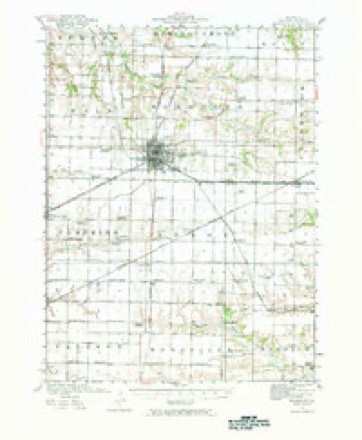
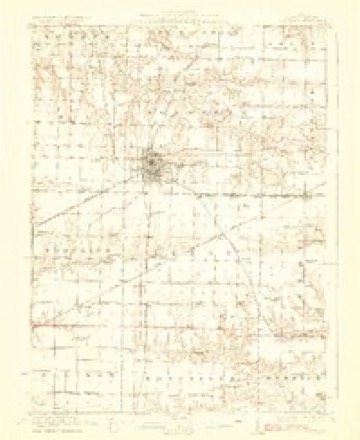
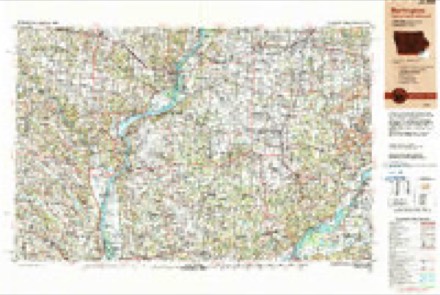
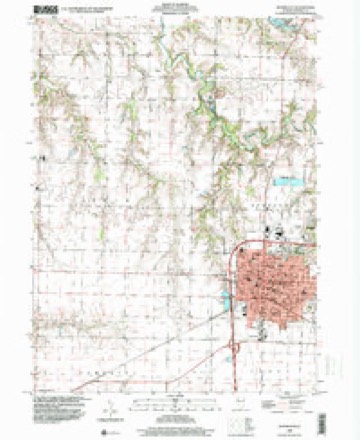
18 topographic sheets cover this place, the earliest surveyed in 1921 and the latest in 1998. It stands in Sumner Township. It lies in ZIP code area 61453. The Survey maps it on the Monmouth quadrangle. The federal gazetteer marks this settlement historical: it is no longer a populated place, though the surveys that recorded it still are.
Topographic sheets covering this place
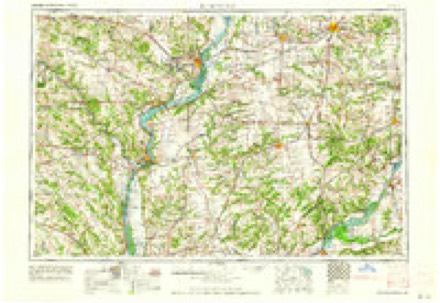
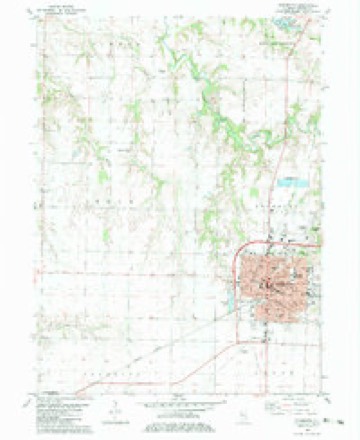
10 surveys from 18 printed sheetsMatched by testing this settlement's coordinate against the published boundary of every sheet in the United States Geological Survey's historical collection. Each opens the scanned sheet at the Survey.
- 1921 USGS Monmouth quadrangle1:62500, 3 printings
- 1923 USGS Monmouth quadrangle1:62500, 2 printings
- 1958 USGS Burlington quadrangle1:250000, 4 printings
- 1961 USGS Burlington quadrangle1:250000
- 1963 USGS Burlington quadrangle1:250000
- 1982 USGS Monmouth quadrangle1:24000
- 1985 USGS Galesburg quadrangle1:100000, 2 printings
- 1989 USGS Galesburg quadrangle1:100000
- 1990 USGS Burlington quadrangle1:250000, 2 printings
- 1998 USGS Monmouth quadrangle1:24000
In the county-history sources
2,868 words on this townshipPortrait and Biographical Album of Warren County, Illinois, published 1886 names this settlement in its chapter on Sumner Township. These are the passages that mention it, exactly as the scans read.
William Martin, as is well known, was killed by the Indians, soon after the close of the Black Hawk War. This occurred Aug. 9, 1832. He was out in the field, mowing some grass for his horses, near the old town of Denny, southeast of Hugh Martin's residence, when some half dozen Indians rushed out to him from the timber, shot him and then fled to the woods. One of the shots was fired so close to him that the powder burned his hair. It is reported that after shooting him the Indians took his scalp, but this is denied by some old settlers who are good authority. The murder was supposed to have been done by Indians who had been detached from the main band, and were prowling about seeking some subject for their vengeance. This sad affair was witnessed by the McCoy girls, who were not very far from the old fort. The killing of Martin threw the entire settlement into great consternation, and it was feared that another Indian war would be inaugurated. The families in this vicinity gatheied into the fort, bringing with them their provisions, where they remained for some weeks, until all apprehensions from any further trouble was removed. Happily there were no further attacks from the Indians. The saddest events of life often have amusing features. It was so in this unhappy affair. This fort, which was located west of Cedar Creek, near the old town of Denny, section 27, had been used at times during this period for the holding of religious meetings. At the time of this tragic event religious services were going on in the fort, attended i)y the settlers living in the vicinity, particularly the women, and presided over by Mr. Miles, a Methodist preacher. While Miles was preaching, a man rode swiftly into the fort, and with bated breath announced the murder of Martin by the Indians. The preacher, it is reported, did not wait to close his sermon, nor even pronounce a benediction ; nor did he " stand on the order of his going," but mounted his horse, which had been hitched near by, and away he flew, trusting more to the speeed of his animal than he did to the protecting hand of God. He did not stop his horse until he reached Yellow Banks, on the Mississippi, and it is stated that the last that was seen of him, he was swimming his horse across the Illinois River.
Passage source: Portrait and Biographical Album of Warren County, Illinois, published 1886.
Peter Terpening taught the first school, in 1837. P. L. Rockwell and Jonathan Buffun put up tiie first saw mill. It was erected at the Cedar Fork of the Henderson, generally called Cedar Creek, a short distance east of the old town of Denny, They worked on the mill during the winter of 1830-1, and had it ready with the opening of spring for operation. This was also the first saw mill in the county. A stockade was put up near this mill, upon the west bank of the creek, for protection against Indian raids. In 1832 Chester Potter took charge of the mill, and, having had some experience in the grist mill business, in Ohio, where he came from, he concluded he would try his hand in the far West. After some geological prospecting, he succeeded m finding a granite boulder (" nigger-head, as Mr. Potter called it "). from which he cut two burrs, 12 inches in diameter, and set them up in the saw mill for grinding corn. With these stones, grists were ground for the neighboring families and others in different i)arts of the county. As this was the first and only mill at that time in the county, it was largely patronized. The proprietors of this enterprise were truly benefactors. While it was not equal to tlie mills of the present day, yet it was undoubtedly appreciated more, for to it the early pioneers looked for the meal with whicii to make their bread. These old burrs can yet be seen in the township; Mr. Potter remained here one year and then moved into Kelly Township. It may be as well to close the history of this mill, at least up to the present time, though we travel ahead of the developments of the townshi|). In 1837 Mr. Rockwell formed a partnership with D. G. Baldwin and erected, on the site of the old pioneer mill, a new and large flouring mill. With the exception of shutting down a few days for repairs, this mill has been running pretty constantly ever since. It has been enlarged and its machinery improved, which includes two French burrs. It is now owned by A. H. Rockwell, son of L. P. Their brand of flour is called the Eagle Mill Brand. Water-power is still used, with a double Laffell turbine wheel.
Passage source: Portrait and Biographical Album of Warren County, Illinois, published 1886.
This township is well watered by the Middle Henderson and its branches and Cedar Creek. At one time it was one of the best timbered townships in the county, and fine bodies of timber are still standing, particularly along the borders of the streams. The nature of the land is undulating ; in the southwestern and southeastern portions quite broken in places, wliile the northeastern part is very little undulated. The soil is rich and easily cultivated. The township is dotted over with grand farms, which are ornamented with fine dwellings and farm buildings. Some of the houses are elegant in construction. There is a station at Denny and Little York, where the people of the township do most of their trading and get their mails. The Iowa Central Railroad was completed through the township in the spring of 1883.
Passage source: Portrait and Biographical Album of Warren County, Illinois, published 1886.
Machine-read from a century-old scan, so expect the errors a machine makes: misspelled names, dropped words, stray characters.
Mines and quarries near this place
5 within 5 milesRegional context, not property-specific evidence. The federal mineral resources record lists 5 workings within 5 miles of Denny (historical): 4 occurrences, 1 plant. 1 still produces. What was taken out: Stone, Crushed/Broken. Distance is straight-line from the map coordinates, so a quarry counted here may appear on a neighbouring settlement's page as well.
| Where | Site | Commodity | Status | Recorded |
|---|---|---|---|---|
| Limestone Prospect | Stone, Crushed/Broken | Occurrence | ||
| Limestone Prospect | Stone, Crushed/Broken | Occurrence | ||
| Limestone Prospect | Stone, Crushed/Broken | Occurrence | ||
| Limestone Prospect | Stone, Crushed/Broken | Occurrence | ||
| Monmouth Quarry and Mill | Stone, Crushed/Broken | Plant |
Nearest settlements
The eight closest, with where each one stands in the county. Distances are straight-line, computed from the Geographic Names Information System coordinates.
| Map | Place | Distance | Sheets |
|---|---|---|---|
| Eleanor | 0.8 miles | 18 | |
| Little York | 2.8 miles | 11 | |
| Woodvale | 3.5 miles | 11 | |
| Spring Grove (historical) | 3.7 miles | 11 | |
| Shaw | 4.8 miles | 11 | |
| Gerlaw | 5.2 miles | 18 | |
| Alexis Junction | 5.9 miles | 11 | |
| Monmouth | 6.4 miles | 18 |
Provenance
This settlement is recorded in the Geographic Names Information System as feature 1823692. The sheet list is computed by point-in-boundary test against the United States Geological Survey's historical topographic inventory. Both are works of the United States government and carry no copyright under 17 U.S.C. 105.
Mines and quarries. USGS Mineral Resources Data System (MRDS) https://mrdata.usgs.gov/mrds/ A work of the United States government, no copyright under 17 U.S.C. 105.