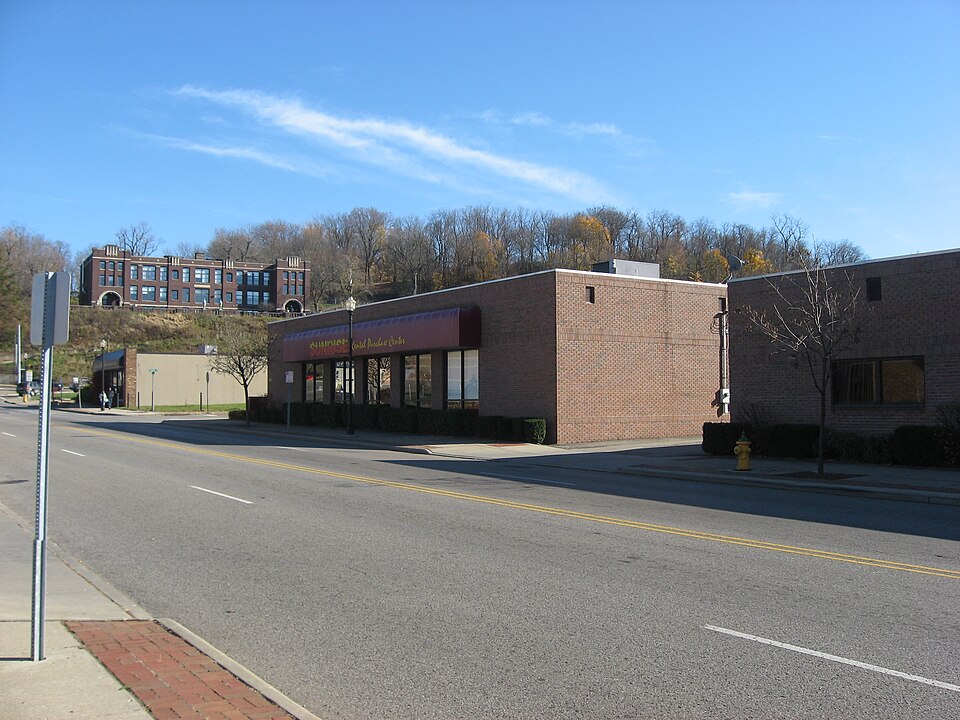
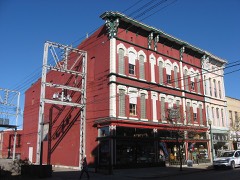
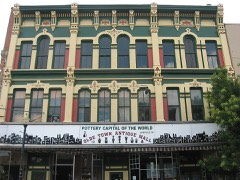
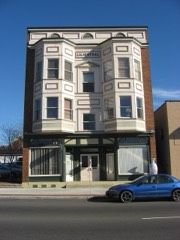
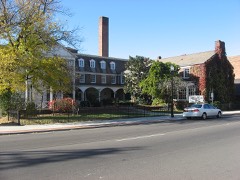
Built in 1883 in the Italianate architecture. Listed on the National Register of Historic Places in
1982. A historic map-sheet match is not published yet. The record needs a coordinate-quality review before it can be joined to a sheet boundary.
From the record
“The Arlington Hotel was a historic hotel along U.S. Route 40 in Zanesville, Ohio, United States.”
Wikipedia article Arlington Hotel (Zanesville, Ohio), CC BY-SA 4.0.
one of 70 National Register listings in Muskingum County · listed in 1982 · category: Building · built in 1883, Italianate architecture.
National Register reference number.82001482- the number the National Park Service assigned this property when it was listed, and the key its nomination file is catalogued under at the National Archives.
What happened here
An account from the chapter on Zanesville city, The inset identifies its exact
source book and publication year.
was so named in honor of Captain John C. Hazlett, of 2d O. V. I., and his cousin, Harry Hazlett, of the 5th U.S. Artillery, both of whom were killed during the Civil war; the post was organized June 1, 1881, with the following officers: C. C. Goddard, post commander; M. V. B. Kennedy, senior vice commander; Wilson C.
The first election for officers for the town of Zanesville was held April 2, 1814, and resulted in, the choice of William Craig, mayor; William Blocksom, recorder; Samuel Frazey, treasurer; Ezekial Bassett, appraiser; Peter Mills, George Reeve, Nathan C. Findlay and James Hampson, councilmen. Findlay refused to serve and John Hamm was chosen to fill the vacancy. The mayor-elect was an Irishman, and carpenter by trade, who came to the town in 1805, and with Thomas Moorehead erected the first Methodist church, in Second street; he was a devout Methodist and had the confidence of his neighbors, but had an insatiable ambition to hold public office; his elevation to the mayoralty caused him to aspire to gubernatorial honors and he became a candidate ; fifty-one votes were cast in his favor in Muskingum county, and none elsewhere, but he was ever after called '""Governor,'' and was pleased with the sobriquet. In 1817 he was appointed collector of county taxes and absconded with the money, located near St. Louis, where his wife joined him and where his investments in real estate made him very wealthy. His bondsmen were James' Mc- Guire, who was bankrupted; James Linder, who was nearly ruined; and James Herron and James Hampson, who were able to sustain the loss without injury.
July 2, 1819, the County Commissioners created Zanesville township, beginning on the Muskingum river on the line dividing the twelfth and thirteenth ranges; thence north to the military line; thence east to the line dividing the sixth and seventh ranges; thence north with said line to the line dividing the second townships of ranges six and seven; thence west to the Muskingum river and down it with the meanderings to the place of beginning. This tract embraces nearly all of what is now Wayne and Washington townships and the present city east of the river; Washington township was cut off June 5. 1822, and Wayne, \larch 6, 1826. Several amendments to the original act were made and March 19, 1850, an act was passed creating the city of Zanesville, which was to comprise so much of the county of Muskingum as was embraced within the limits of and designated in the records of the county as Zanesville township. The act divided the city into four wards, the east and west line of division being the center of the National road from the eastern boundary of the township to the intersection with the center of Fountain alley, and from that point with the center of the allev to the river; the north and south division line was the center of Cypress alley, from both sides of the city. The First ward was the southwest corner of the city as so divided: the Second ward, the northwest corner ; the Third ward, the southeast corner and the Fourth ward, the northeast corner. The mayor was to be
Regional context, not property-specific
evidence. The
federal wildfire occurrence database
lists 61 fires within 5 miles of Arlington Hotel between
2002 and 2020, burning about 49 acres in total. None started naturally. 2 were recorded as arson.
Distance is straight-line from the map coordinates, so a fire counted
here may appear on a neighbouring settlement's page as well.
Reported cause
Fires
Debris and open burning
35
Power generation/transmission/distribution
7
Equipment and vehicle use
6
Missing data/not specified/undetermined
5
Smoking
3
Arson/incendiarism
2
Recreation and ceremony
2
Other causes
1
The most recent of
them, most recent first, with the day each was reported and the service
that recorded it.
Regional context, not property-specific
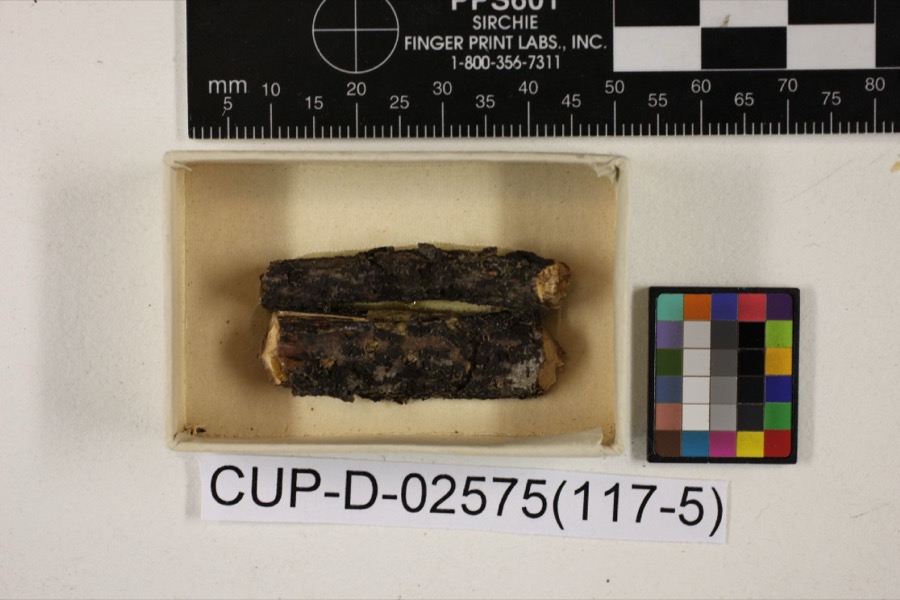
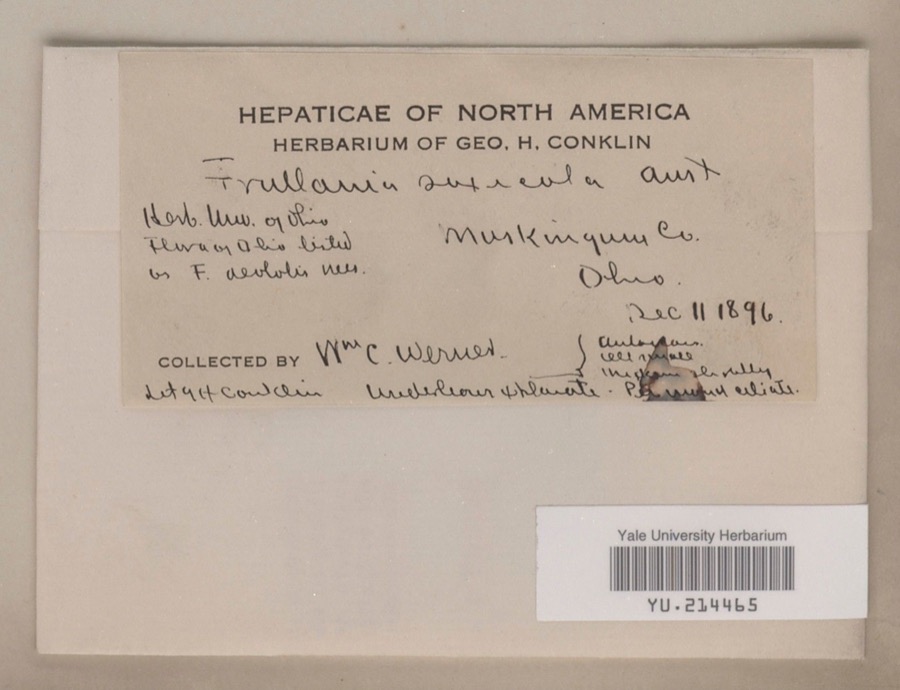
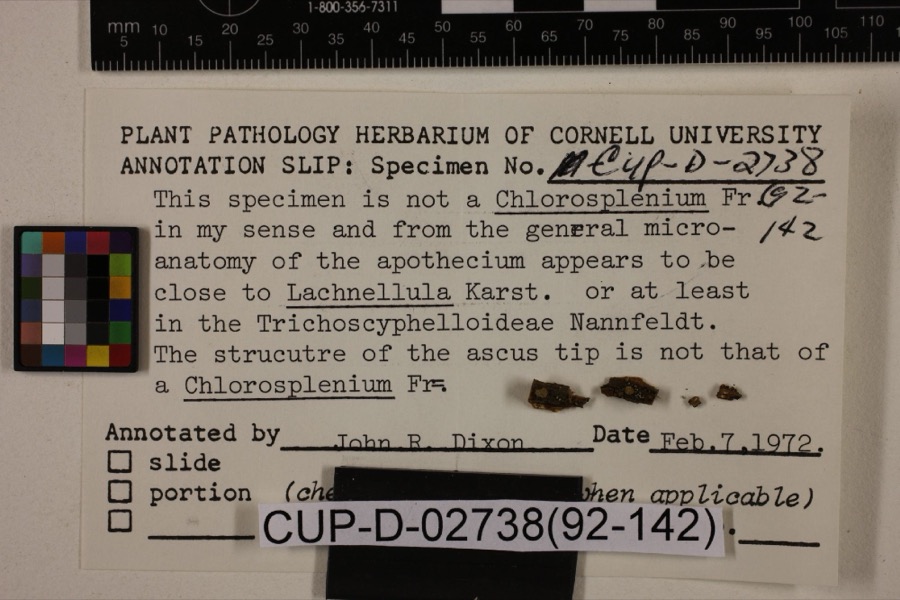
evidence. Museums hold 858 specimens
collected within 10 miles of Arlington Hotel between 1873 and
1975: 737 Animalia, 96 Plantae, 15 Fungi, 5 Protozoa, 4 Unrecorded, 1 Chromista. 12 distinct Species records are shown.
Collected by A.E. Miller, Adams, W. (William), Trautman, M. B. (Milton Bernard) et al., Adams, W. M. and others. Each is a
physical object with a catalogue
number, and each entry opens the museum's record. This is what was
collected and kept, not a survey of what lives here - nothing can be
concluded from a species being absent.
Regional context, not property-specific
evidence. The federal mineral resources record lists
6 workings within 5 miles of Arlington Hotel: 3 past producers, 3 producers.
3 still produce. What was taken out: Sand and Gravel, Construction, Iron. Distance is straight-line from the
map coordinates, so a quarry counted here may appear on a neighbouring
settlement's page as well.
Regional context, not property-specific
evidence. The National Weather Service names
Zanesville, the town this property stands in, in 113 storm reports between 1994 and 2026: 62 thunderstorm wind, 26 hail, 17 flash flood, 5 flood.
The reports record 1 death. Each account below is quoted exactly as the forecast office
filed it, from the NOAA Storm Events Database, and each date
opens the federal record of that event.
Thunderstorm winds blew down four power poles and power lines just north of Zanesville. Several trees were also reported down across the eastern part of the county.
Street flooding was reported in and near Zanesville after 1.30 inches fell in 20 minutes. Large branches were downed east of Zanesville. One branch fell on a passing motorist's car. There was no mention of any injuries.
No historic map-sheet match is published
for this property yet. That does not mean no map exists. This record needs
a coordinate-quality review before it can be joined to a sheet boundary.
Browse the county's mapped places while that work is
pending.
From the nomination file
1,484 words on record
When this property was proposed for the
National Register, someone wrote the case for it: what the building is,
and why it matters. That document is a federal record in the public domain.
It is quoted below word for word, never summarised. The text was read off the scanned case file by machine, so the
occasional stray character is the recogniser's and the 1970s
typewriter's.
Description of the property
The Arlington Hotel is a 3- and 4-story building built of common brick with a veneered on the facade retain their original character, with segmental-arched voids, 1/1 sash, and and sawtooth trim. At the rear of the original structure is a large addition (1898) also of brick, with segmental-arched voids. Condition 7. Description of terra cotta, runs the entire length of the facade; the second story has a similar moulding, many as three different rooms once were housed on the first floor, including a lobby area, X original site pristine condition, the interior space does reflect the building's long use as a hotel.
a cafe, and a barber shop.Typical of the era, cast iron columns were used along with Check one The interior of the hotel contains 46 rooms above the street level.Although in less-than- _excellent is intact, and is distinguished by scalloped bracketry and a frieze ornamented with dentils wood to trim and articulate the storefront level of the hotel (see accompanying historic date unexposed fair lintels of shallow-cut rock-faced stone. On the third story, a rope moulding, probably Areas of Significance - Check and justify below . sculpture - social/ .music - politics/government . transportation _ invention other (specify) Specific dates 1883; 1898 Builder/Architect T. B. Townsend, builder Statement of
Statement of significance
/Architect T. B. Townsend, builder Statement of Significance (in one paragraph) example of a modest, middle-class Italianate hotel dating from the last quarter of the city, and was strategically located on the National Road, a major land route from the of its construction, the Arlington was one of 10 hotels in the city; it is the only original building, which fronts on Main Street, was built by master builder Thomas B. Townsend (1859-1916). Townsend came to Zanesville in 1867, entered the construction brick manufacturing. He was responsible for much of the early brick paving activity in most of which have been destroyed. architectural adornments." In 1898 Fisher and his son, Frank, built an addition to the the 1883 structure, but he was practicing at that time, so it seems likely.
The hotel was operated through much of its life by members of the Fisher family. While some alter- military 1500-1599 economics Period conservation education engineering industry theater humanitarian 8. Significance law literature The hotel was built for Michael Fisher during the summer and fall of 1883.A newspaper 1900- _science 1700-1799 - - art - - communications _ archeology-prehistoric - community planning landscape architecture _ religion - agriculture exploration/settlement - - philosophy historic hotel building in the city of Lanesville, and also for its architecture as an nineteenth century. During the 1800s, Zanesville was emerging as a major industrial East to the growing population centers in the newly-settled West.
The hotel is located on Zanesville's Main Street, which was part of the National Road itself. At the time the city, and built several of the larger hotels and public buildings in Zanesville, account of the day noted that "Michael Fisher's new hotel building near the corner rear of the 1883 building, from plans drawn by H. C. Lindsay (1845-1902), Zanesville's finest architect from the 19th century.
Quoted from the National Register nomination
for reference 82001482, 14 pages, held by the National Archives in Record
Group 79. See the
catalogue record.
Listed places nearby
6 within 8 miles
Other National Register properties close
enough to walk or drive between, ordered by distance from this one. Both
positions come from the same geocoding pass that matched these properties
to their map sheets.
Listing record. National Park Service National Register of Historic Places, listed-properties dataset, current to 2026-05-22.
Map join. Address geocoded through the United States Census geocoder, then tested against the published boundary of every sheet in the USGS Historical Topographic Map Collection.
How this page is made. Listing fields come from federal records; map-sheet coverage is a labelled coordinate-to-boundary calculation, not a source-field claim.
Wildfire. Short, Karen C. 2022. Spatial wildfire occurrence data for the United States, 1992-2020 [FPA_FOD_20221014]. 6th Edition. Fort Collins, CO: Forest Service Research Data Archive. https://doi.org/10.2737/RDS-2013-0009.6 Collected with United States Government funding and usable without additional permissions or fees.
Specimens. Global Biodiversity Information Facility (GBIF), https://www.gbif.org/. Only records licensed CC0 or CC BY are used. Records licensed CC BY-NC are excluded because this site carries advertising. Images are checked individually and any whose licence is non-commercial, no-derivatives or unreadable is refused.
Mines and quarries. USGS Mineral Resources Data System (MRDS) https://mrdata.usgs.gov/mrds/ A work of the United States government, no copyright under 17 U.S.C. 105.
Storms. NOAA National Centers for Environmental Information, Storm Events Database https://www.ncei.noaa.gov/stormevents/ A work of the United States government, no copyright under 17 U.S.C. 105. Narratives are quoted verbatim from the National Weather Service report and are not edited or summarised.
 Block
Block