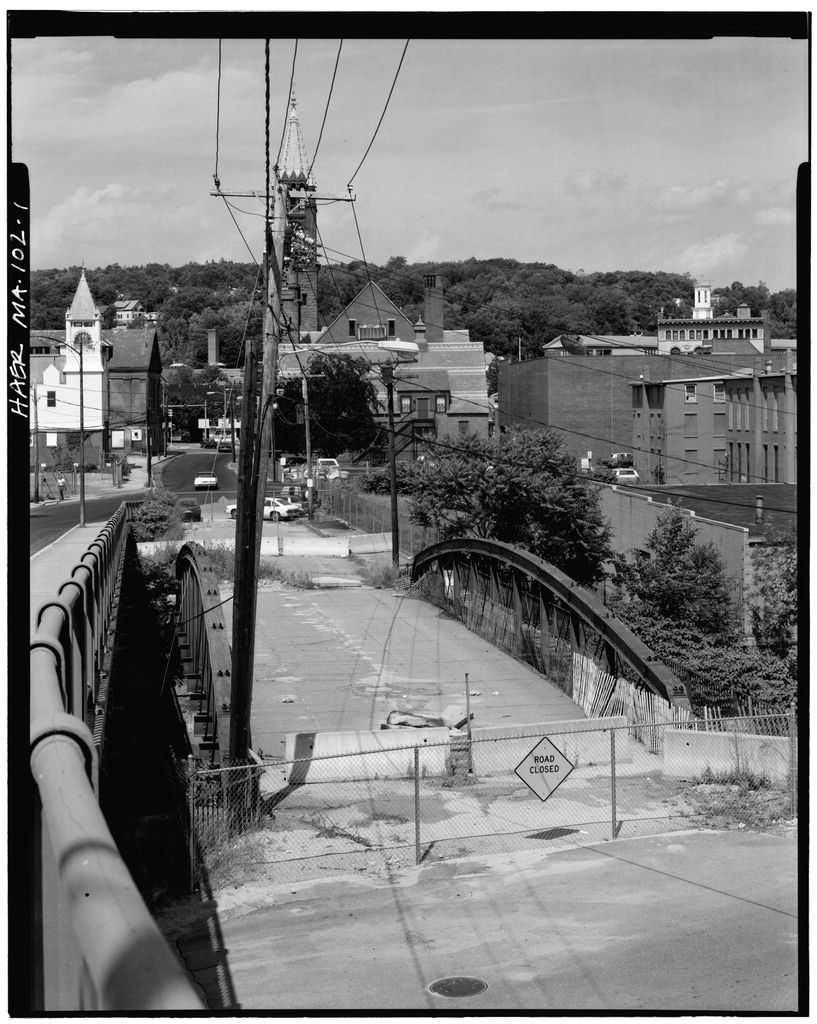
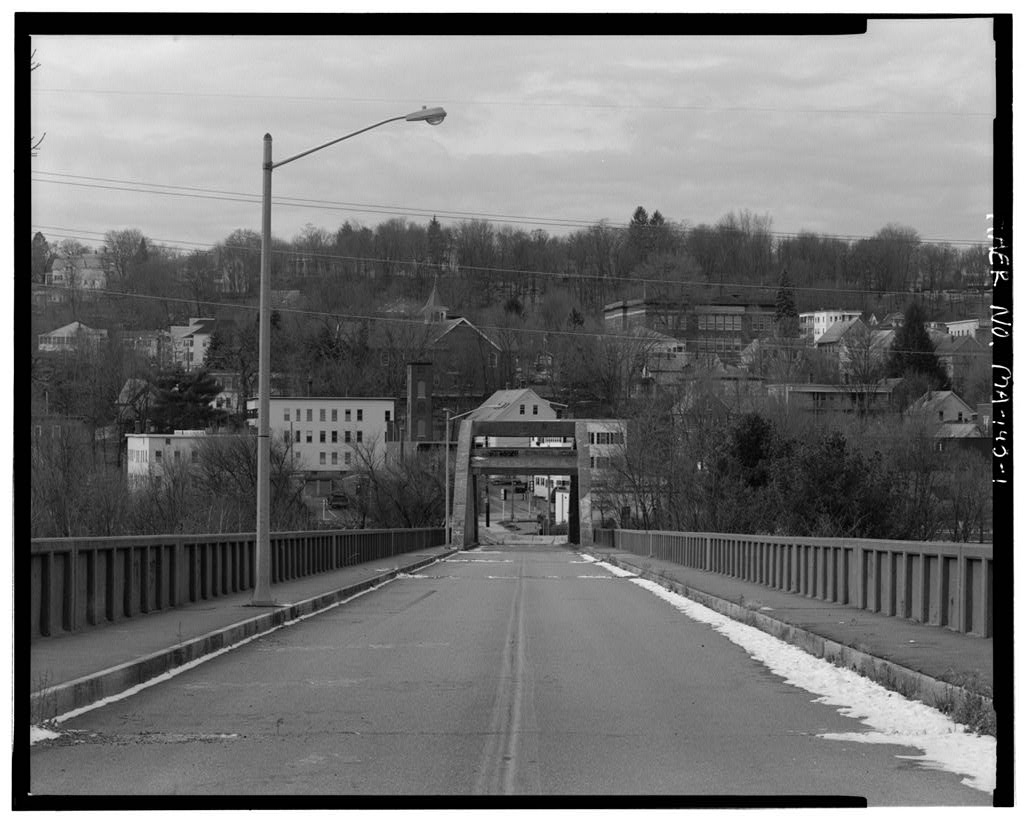
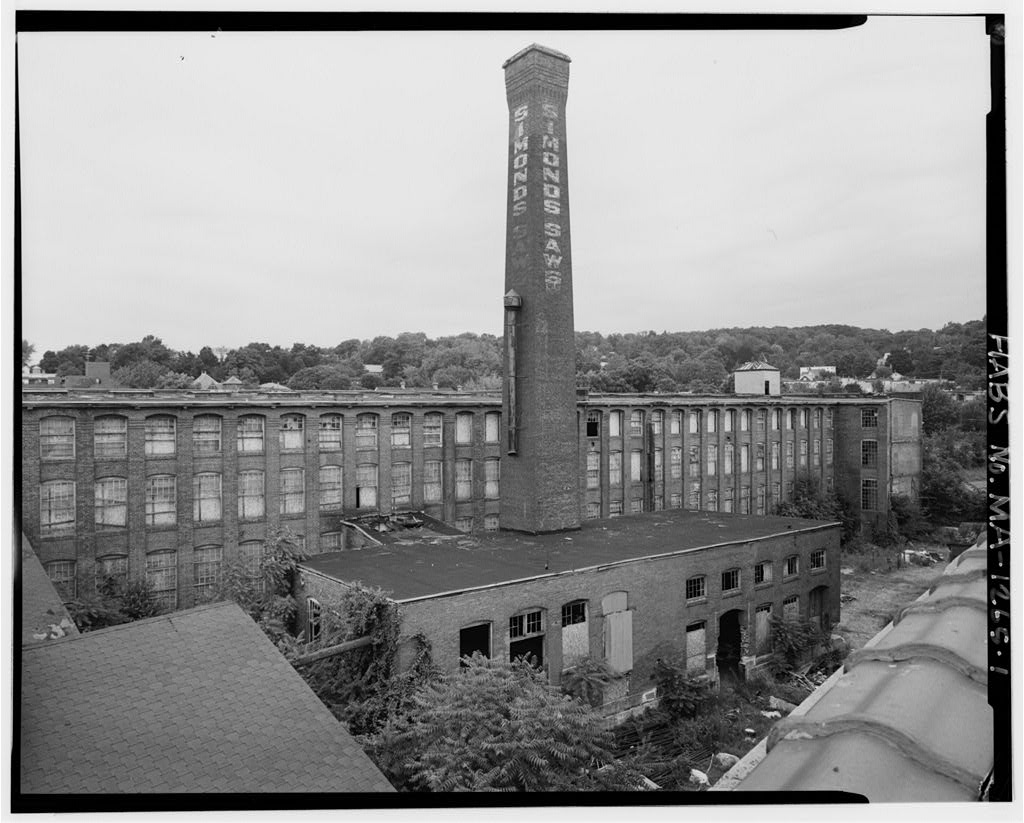
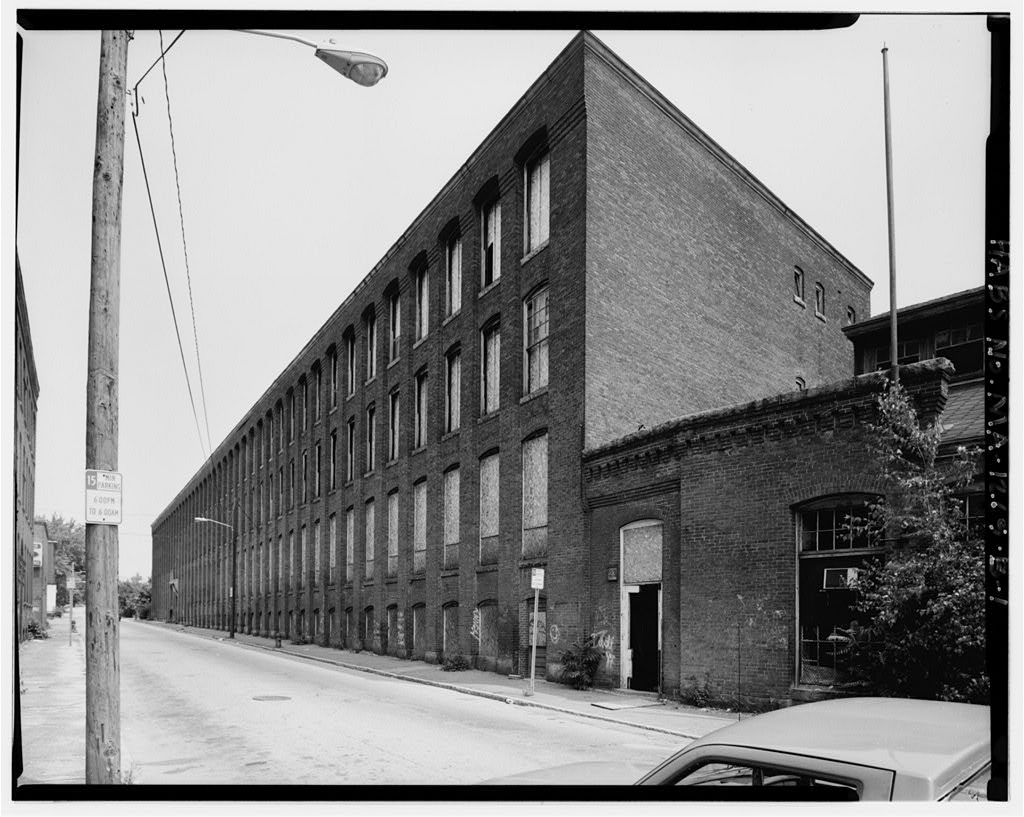
Documentation of the (Lower) Rollstone Street Bridge is part of the Massachusetts Historic Bridge Recording Project, conducted during the summer of under the co- sponsorship of HABS/HAER and the Massachusetts Department of Public Works, in cooperation with the Massachusetts Historical Commission. Lola Bennett, HAER Historian, August (LOWER) ROLLSTONE STREET BRIDGE HAER No. MA-102 (page 2) Description The (Lower) Rollstone Street Bridge is a single-span, 111-foot, pin- connected, wrought- and cast-iron Parker pony truss. The polygonal upper chord, comprised of straight built-up sections, appears as an upward curve in elevation, and rises to a height of above the lower chord, at the center of the truss. This upper chord, with inclined endposts, is built up of three plates and four angles.
The bottom chord is comprised of two pairs of parallel bars (approximately VinxSn), running between the inclined endposts. The upper and lower chords of each truss are connected by a series of ten I- section, wrought-iron verticals decreasing in length from the middle of the truss outward toward the ends. Each of the verticals is connected to the upper and lower chords with pins. Within each panel framed by the verticals, are crossed diagonal tension members. The diagonals angling up toward the ends of the bridge are paired, 2"-diameter rods, while the counters angling down toward the ends are single, l*sn-diameter rods.
At the upper end, the diagonals pass through the upper chord and cast-iron skewbacks, where they are secured with nuts; at the lower end, each diagonal has an eye, and ts secured to the vertical member with a single bolt. The counter-diagonals, however, are threaded at both ends; the lower end passes through the casting which forms the lower panel point, and is secured against the casting with a hex nut. The original floor system has been replaced with steel floor beams and a mixture of steel and timber stringers. This floor system supports a timber deck, 29' wide, that has been paved with asphalt. There is a sidewalk, with a wood plank deck and an iron railing on the east side of the bridge--the one on the west side has been removed, and the railing is now on the inside of the truss.
The inclined end posts terminate at cast-iron thrust blocks resting on granite rubble abutments. At both portals, the inclined endposts support ornate cast-iron bollards, with the inscription: "National Bridge 6c Iron Works, Boston, Parker Patent," on their faces.(See Figure 1 and field photos.) The design of this bridge incorporates the patent's featured segmental top chord with a sloping end panel which allowed the length of the bridge to be changed to fit a given site, while all the other parts could be mass-produced. The adjustable span length was a particular advantage at sites where the bridge would replace an earlier bridge, and would need to fit the existing abutments, as was the case with the Rollstone Street Bridge.
The bridge also demonstrates Parker's attempt to eliminate the use of cast iron in favor of wrought iron for both tension and compression members--although cast iron was used for the skewbacks, the eyes at either end of the verticals, and the ornamental bollards. The bridge deviates from Parker's patent somewhat in the lower chord connections, where pins were used rather than the clamp system described in the patent and found in other Parker trusses, such as the North Village Bridge at Dudley/Webster (HAER No. MA-99). Fitchbur% Situated in the northeastern part of the County of Worcester, Massachusetts, Fitchburg was a flourishing manufacturing community in the mid- to late-nineteenth century.
The most significant geographical feature is the Nashua River, which flows through the city from west to east, taking a (LOWER) ROLLSTONE STREET BRIDGE HAER No. MA-102 (page 3) northerly arc through the downtown area. Although in the early days, the settlement experienced numerous setbacks due to floods, the river was probably the single most important factor which contributed to the city's eventual industrial success. A description of Fitchburg from said it this way: Fitchburg is pre-eminently a busy and thriving city, and probably no other place of its size can boast of a greater diversity of industries. The little stream running through the town was a source of great annoyance to the early settlers.
The spring floods carried away their bridges, and the river was considered a nuisance and probable bar to the growth of the town. But coming years showed the folly of these fears. Dams were constructed, the water controlled, and manufacturers on a small scale began to locate on the banks of the formerly detested stream. Thus was a seeming curse turned into an evident blessing, for from those few mills have sprung the present great manufacturing concerns located here.1 About forty families lived in Fitchburg when it was incoporated in and there was only one mill--a saw and grist mill located there at that time.
By the year the population had increased to and shortly thereafter, a cotton factory and a paper mill were established as the town's first industries.3 Within fifty years, "there were nearly one hundred large manufacturing concerns in town and the population had increased to Bridging the Nashua A map from indicates that at that date, there were at least six bridges along the length of the Nashua River in Fitchburg, four of them in the center of town.(See Figure 2.) One of these bridges, adjacent to the mill pond at the Fitchburg Woolen Mill, was on the main road leading into town from the Albany-Boston Mail Road to the south. By the late this road, originally called the "South Road," had become known as Rollstone Street.
It was named for Rollstone Hill, a rocky hill rising 300 feet, to the immediate southwest of the town center.(See Figure 3.) In the town paid to the firm of Stone & Harris of Springfield, for a new bridge on Rollstone Street.5 This bridge, described as a "wooden truss bridge," in a later annual report6, managed to survive the flood of but was seriously damaged in the flood of The Fitchburg Sentinel reported: One of the most severe rain storms occurred on Monday last, that has taken place since Noah's time. The consequence was a sudden and unprecedented rise of water in the rivers and brooks through all the Eastern States. ...The streets and roads in this town were badly washed, and in many places rendered impassable.
All, or nearly all the bridges on roads leading to the neighboring towns were more or less damaged, and some of them entirely ruined. All the factories, mills and shops on the river were impaired to a greater or less extent.7 (LOWER) ROLLSTONE STREET BRIDGE HAER No. MA-102 (page 4) Rollstone Street Bridge Shortly after the flood, the Rollstone Street Bridge was declared unsafe, and propped up to keep it open. The town selectmen began making arrangements for its reconstruction. At the same time, they decided to widen Rollstone Street, which necessitated building new abutments and retaining walls. This work was done by the local firm of A.
Frost and Company, for the sum of Plans and estimates for the bridge were received from several companies, and the contract was awarded to National Bridge and Iron Works of Boston. The selectmen, being pleased with the plans for the bridge, "and further believing iron to be preferable to any wooden structure," decided to erect another similar bridge on River Road, near the Pulp Mill.9 The newspaper reported: We understand that both of these bridges are to be built of iron. The former will be a single span iron structure of about 100 feet span and 40 feet in width. The cost of the iron work will be about The bridge near the pulp mill is to be of similar character, having a span, however, some ten feet less in length.
This style of bridge seems much better adapted to resist the floods than those built of wood or stone."10 The Rollstone Street Bridge was erected during the fall of at a total cost of Of this amount, Blodgett & Curry, proprietors of National Bridge and Iron Works, received for an "iron bridge."11 In the annual report for that year, the selectmen said: We have no hesitation in saying we consider the work given us is of the first order, combining all the essential requisites of a bridge, and we believe cannot fail eventually to satisfy all our people. (See Figure 4.) A few years later, in the south abutment had to be repaired. The abutments were actually resting on top of the woodwork of the Fitchburg Woolen Mill dam, and when the wood decayed, the abutment settled and cracked.
Repairs were made by digging below the level of the dam, and bracing up the abutment with stone.13 Apparently, that was the biggest problem encountered with the bridge during its expected lifespan. Every few years, the bridge received minor maintenance, in the form of new paint and new planking on the deck.
Between and the city built a steel bridge, next to and slightly above, the old Parker truss bridge on Rollstone Street, as part of a grade crossing elimination project.(See Figures 5 and 6.) The lower bridge is now dwarfed and partially hidden by the upper bridge, which also carries all of the traffic, since the lower bridge was closed to vehicular traffic In The pond and mill buildings are gone now, and in their place is the city's Department of Public Works yard at the east end of the bridge. In recent years, there has been much discussion regarding the importance of a bridge at that point to provide easy access to the yard. The upper deck of the bridge was rebuilt in but the bridge was still determined unstable (LOWER) ROLLSTONE STREET BRIDGE HAER No.
MA-102 (page 5) for the heavy DPW trucks. In the city contracted for a replacement structure, but work was halted in when the state stepped in and announced that the project could not be funded with federal money until the Section 106 review process was completed.14 The project is currently on hold while the city and state study the alternatives and come to some agreement on the matter. Parker and the National Bridge & Iron Works Charles Henry Parker was born in Ashburnham, Massachusetts in As a young man, Parker chose a career in mechanical engineering, and entered the employ of Parker & Company, as a designer of machinery for textile and shoe manufacturers. A few years later, he began working with motive power applications, under the employ of Robinson in Boston.
He also did some experimental work for the Shaw Hot Air Engine Company. In Parker established the "Solid Lever Bridge Company" of Boston, specializing in the construction of "iron-truss cantilevers with web members arranged as in the Warren truss," although it is unclear as to whether any of these bridges were actually built.15 Within a short time, this company was succeeded by the National Bridge & Iron Works, under the proprietorship of William A. Blodgett, formerly of the Blodgett & White Metal and Steel Company, and Cadwalader Curry, of the Metallic Compression Casting Company. Charles Parker was employed as a consulting engineer.
According to its advertisements, National Bridge & Iron Works, contracted for "Building and Erecting Wrought-Iron Railway and Highway Bridges and Roof Trusses."(See Figure 7.) This firm was just one of the many companies which grew out of the iron bridge technology pioneered by the railroads--companies which saw the potential of applying these same technologies to vehicular bridges. In Parker patented a wrought iron truss bridge, "with a curved top member and straight bottom member, and sloping ends that shall be capable of being altered in length within certain limits, without changing the general proportions of the truss in other respects.
"16(See Appendix A.) In other words, the end panels could be lengthened or shortened, while the remaining parts could be mass-produced from the same patterns. This feature had particular relevance at sites where the span length was pre-determined by existing abutments, as in the case of the Rollstone Street Bridge. Another important feature of Parker's patent was the extensive use of wrought iron for both tension and compression members. In early iron bridge designs, cast iron tension members had historically been the weakest elements. Wrought iron, which was known to be a much stronger material in tension, was also much more expensive to produce.
Parker's attempt to eliminate cast iron from the large structural members, while using it for the non-structural members, such as the skew backs, the eyes at either end of the verticals, and the ornamental bollards, demonstrates that this was a transitional period in bridge technology, where the emphasis was placed on achieving a balance between cost- effectiveness, strength, and aesthetics. Parker's patent turned out to be a veritable gold mine for National Bridge & Iron Works. As with most early bridge-building companies, National Bridge & Iron Works chose to work with a standard design which could be easily mass-produced and erected. Pinned connections helped make this possible, and (LOWER) ROLLSTONE STREET BRIDGE HAER No.
MA-102 (page 6) Parker's design for mass-produced members even more so. "A successful company like National Bridge & Iron owed its superiority to the fact that its designs reduced the costs of production and hence the selling price."17 Advertising literature indicates that Parker's truss design was in production for some time prior to his receiving a patent for it. The company used Parker's design quite extensively, although few of these bridges have survived to the present. The (Lower) Rollstone Street Bridge is one of only five known surviving Parker patent truss in the United States.(See HAER Nos. MA-99, and National Bridge & Iron Works was a significant New England bridge- building company in the late nineteenth century.
Among their most important engineering contracts were: the bridges over the Merrimack at Lowell, Haverhill and Tyngsboro, the iron roof of the train house of the Boston & Providence depot, the Boston & Lowell depot, the Museum of Fine Arts, the Boston Post Office and Treasury Building, and the iron work of the Providence City Hall. The company was also engaged in the erection of oil refineries, pipe lines, mill roofs and blast-furnace works.18 National Bridge & Iron Works lasted only seven years, and during that time, underwent numerous changes in its internal structure and management. In Blodgett left the company, and was succeeded by Parker as proprietor. The following year, Curry left the company, and was succeeded by Carey B. Dopp of New York.
In the company was listed in directories as Parker & Co., trading as National Bridge & Iron Works. During Parker's tenure at National Bridge, over 150 bridges are said to have been produced,19 but it is uncertain how many of these were Parker's design, and how many conformed to his patent. National Bridge & Iron Works folded in and was succeeded, in by Boston Bridge Works, under the direction of Andrews.(See HAER Report MA-92.) Parker went on to head the firm of Parker, Field & Mitchell, which was involved in the iron industries. He later worked for the Charles River Iron Works, of Cambridgeport, "designing, constructing, and erecting mining machinery, hoisting engines, and power plants.
Most of his later work seems to have been principally concerned with the production of machinery and manufacturing plants, Charles Henry Parker died August 31, at the age of 55. (LOWER) ROLLSTONE STREET BRIDGE HAER No. MA-102 (page 7) -o -* l-i 03 JJ 0) <U U 4-J in c O U W r-t r-l O a-. *r a; o c o P CC CO > 0) (LOWER) ROLLSTONE STREET BRIDGE HAER No. MA-102 (page 8) .. .1 JJ ./ ; m : m^m ' \ * - -- J. - .'BO- ,-' ' \ \ J '&' ? " IffeiS /iJnJ^f * V- 1 * V I,' IT-'t I- / '" '"' * S t,..u , ll.ii.ir-t .l.'.i <., , ! .U..H.IV llituij - Autiiiiil.r I..,.,..:. I / . Tl i r, -i v.. '" .friMrr . '" *" / M / ' Si I ]"H I'ml ' i I" Figure 2. Map of Fitchburg, showing location of earlier bridge. (LOWER) ROLLSTONE STREET BRIDGE HAER No.
MA-102 (page 9) T-l 1-1 U <U M O c o U CO o o c 1-1 3 o in CO bO u 3 O U O a a) u 0 (LOWER) ROLLSTONE STREET BRIDGE HAER No. MA-102 (page 10) oo 00 CO o !-f Q U 0) <u U to <l> c o 01 < I CO i-t CO O CO a: ~* oo - C w ^ ! ^ x x: W QJ a) en o ^ CO -u f-t o 1 f -^ O cuf e= 5 i-i bO V-i X XI o u iH o a) ;V L4 (LOWER) ROLLSTONE STREET BRIDGE HAER No. MA-102 (page 11) FUure 5. Lower Rollstone Street Bridge, ca. early (Fitchburg Historical Society Collection.) (LOWER) ROLLSTONE STREET BRIDGE HAER No. MA-102 (page 12) Rollstone Bridge Repairs To Be Finished In September JB Figure 6. Upper Rollstone Street Bridge, (Fitchbure Sentinel and Enterprise.) (LOWER) ROLLSTONE STREET BRIDGE HAER No.
MA-102 (page 13) PAR K ifR'sCT-PA TE NT THIS BRIOOC WAS IRECTKD WITHOUT A BINOLK INTERRUPTION TO THI PAtUOC OF TftAIN*. H. U. Mi ISTi*n, PSotogrmpi**, Northt^M, Vt DKPTU or TRUtt AT CE.NTKK. K> UKfLECTIU-l AT U-Mi DC. ~i Figure 7. Advertisement for National Bridge and Iron works. ^tional Bridge and Iroa ^ s. ^o. 15 STATE STREET, BOSTON, MASS Contractors ibr Building and Erecting Wrought'Iron Rail- way and Highway Bridget and Roof Trusses. CHAS. II. 1'AliKER, CuiuuUiif) L'wjinerr. A. W. PAKKEK, Supt. <>f Work*. T^E PARKER TRUSS WROUGHT-IRQN RA11.WAY SRIOGE. ihown on thi oppotita >da of (Kit Card, waa bu.lt and *r ci*d lor in* Vermont Caniral Railway Co,, within lout waaki th burning ot a woodan atruetuia. It ii aituatad on tha main lin , naar Montptl-x, VI. It n IfH ft. 6 in.
long, and n mada to ouf ianaafd (or t aingia traek. ha*lng n ultimata ft'ength of ail ton* to tha linaal loot ol apan, banOti m nmn m own waigM. Tha Bndga aa taitad Dae. 3, at ahown. In tha praianca and undar tha di'action of Hon. J. Giegory Smith, Praaidant, G. Marrill, Eaa., Ganaul Swpaiintandant. tnd othar Railway officials, wilh tlira fialfht anginas, allowing, raivlta staird un<Jarrt (LOWER) ROLLSTONE STREET BRIDGE HAER No. MA-102 (page 14) Snited^taties Jaicni <&f$\a. ':} CHAULES Ji;ivAlU{tB.:OF BOSTON, MA^AUlU&KlTtf. .TUC. -;, -. Lclleri Patent &aUd Tthru^ry 2* IS:J. IMTBOTED BHIDOE. ;:.n.ji_ . n To wJwun if may' co* r :' ~* " ' a-condSr.
The second of my invention rebuts 11 It to .vi tuip<o\euifnt In tin* cuiiitrautiiiu ol"a wio<ij;!it- ti(jiin*r, i f lly^tim/fa jhe of~Suff.illo ami iiTjn iT'ni^rj.^ai'Hi -r, Cnpiiblt; .ilso of :u*Hn^ vttit ; J^ bUle i/f M.uMUdmjcttA," bare Ifuvilfetlitrtaur'tie"? *<l-u*l eiTVieiicv rt* ft Urntiou number.' The botl> >>f aiid iisrfnl Improvements' iri the CoiiKtrut-tuwv of Ibu-iifin'xr is fonnfdof^ui I sei-nnft-bua^ A, uuutr t ^ Undoes; aod I hereby declare the follou-iii;; 10 be a ru.'-l ur l>i:iit up of and anklet.
*" %i foil, dtiir, a>i exact description of the saim-, ivf- *nd uf tins l-beira A art cut'to rcttive tl-e :' -^ eiuiice being hvl U* tbe accuuijuuyiiig drauiug, So n i t_Tca U B, shouldTS e, ^blcii rt:e fit- / - \Tlili h -- In] :O.I:IJSOH torv toii the mils nl liiu fl.in^ts "f pitfuir 1 i* * sul- tlevati'ja cf i bii^e crjboJjing |l.e l-U-.un an.l pmjecttng lip-* D 1), wbidt lit cm i-.x'.i my UKtMitimi. j, "' ^ of tliC web of the Ubeam. - - \ .^ Kiiiun-s "J. 3, 4, and 3 ure P representing In de- To jutn the e>e to and Tirtnal'.y mako ic ^ pr.it "f :'^Oi tail the construction ami arrau^ciueUt of tbe eomprti- 11 it- l-bf.im, I tai|iloy a Sti"p of wrought i-r-.i,. K, llun iitemlier. -A - -" - ,_, .. ,t. . ' ... '^ ! wi:--.!i p-uSfi around the oabsida and \A regj'?*-.
i imu I- i^inv* u, 7, and 8 ore like Tfcwi of tbe skew-tack ; tbr o-.-.ating D at I, txttiuding down over tiic li|' D D -S^ } or llmutrliiuck. '.. \ ' . .-! to the nub yf the 1-btim A, to \i is e^cuulr ^^ : Figure 9 U"ft,Ticw on so enlarged scale of (lie n^led. : ^ - =-. ?- ^ K^. * ' " - l?U> portioc oTuutt uf Oie cud panel* of tbe trait * The atrap recessed Into the casting, In connccli-in .*J i \ : lure. . ' ; ' ni;i the pnijectiny lijw V D, prtveuia iioj iiiu\m;j of *JL .-The improvements In the contraction of/bridecs ; tlie cutii'ff from 4>uS!lli*n. * ' ;>" ' '^1 which 1 Utain) u> Secure by Liltm I'aU-ut ure w lul- ! Itoltj thmugli ilia costings fnr.il.pin or ii\tt K^; ] **: ?: *. C/^iV-.^s^^-*.--.--*-.*^ '!i formi the infini of connection of this mumb i' ^ub : ^t Tint.
Tbe first portion of my Invrntlon jejatcs j lit- top and bottom members of a truss. *#& to tlie cou*trui:tiou uf tbe end' paocl* or Lay* of a ' ' To liinn a ivnuwlton witl^tlie luilUjm uhoixl of a . ';; * .'" ' '" "v . tr-.ixj nud thediiit:ooaUiif tbe the bt t'uniiL-r iinul- ^ il . truw. lu onler to make a truss with A cuned top mem- i^r.tinn, 1mwu In fijp, 3, 5, and 4, is iatrotluced into *j''-t.^i N-r iixl xtr.il^lit bottom tiieutbtr, ntiil tbpiii); tf'iuU thr lower eye. This coinantiT In ta*ttii(; into tlivf\e tb.it iltall U; ui|Hbld of bring!ill*red In length wltliin ! a slut, 8, and cutting into iti tMtvirviinj; strap K a ^ ceHaiii limit*, without tbiMiyiiiK !lie gv-ntfiulprojior.
J tiinil.ix slot, liini tl Ji placing in tllU slot the cyti oF 1iuu uf ttm tniw* in ollier/rwptx'tx, I \in\c ilciiyurd ! the 'IDgottils, io that by the coiiiiutin Iwlt all :ue hehl '& the poiifU, ur la tliu folluwin^ umniK-r: i in jil.u-e. by (bis cuustruefltm I make a mc.iibvT ^; TIIM tiiia* ii cumpow.'d uf k curved 't p,njeml-er. .1 wliith Is effective In ixistlnji both compression ami * ^S ^ Kr.'tjjfit buttwm iueinUrr,. nJ vtriiuii or com- , t u d is abo capable.
ut'naUUngctfettuallyauj"-' ^'A jii^baiuit members A, tin usual l)stun of lun- ' latmU iTiulIo ' (jitudina) JLnjiHial rod ur > ^i^i^j^ -; -|i-- Tlanllj, Tde tlitrd portion1 ot~htj: Invention rul.-vtes^V t - -, Witu 0-^ \*srtltitl p>'irt.>tcW%^*Jortljc"jr.^a h\ tc diii tbe,.^; _ _coiiibine thn friiCtioiuU lengtli of.tbc lo]i itiuubvr ;unl ' e- ! t*iDt!i or lnyi. The yeneiil form of t iii block c** duuing CIKI.'IU L.o*a ih'a^s.b5 Ai-otmil *3^ n ''tatmter Wtay --**--'..rA.-..i r. VI... _ :.. ,. :,* .. ii.ini.. T - . i.:....-:r>S?r-j ^^"Tantl or.bay .; py* l uf lite tlutitu^ end wfcfe^^vtU^^iTtbcr-*! wise scciirw' "' "J" " ' ' - .- APPENDIX A. Charles Parker's Patent, (LOWER) ROLLSTONE STREET BRIDGE HAER No. MA-102 (page 15) \m it top 0. tb* yliu 1', *nd Into \\* V<OLI\ fb erf U* Wm, li u^ ..
w fll Iif "i rt n p of d tlao aiili lioilt X, ur L.J nqv.U KJCU'. bvteuinfc, HIT i c Hit jrn tr\ linn nn' :vug'u Ibo loy \HAit <A ibt fcnrli >x U v ""-itutr Uiio K. lo ;iie itiAiii.rr lutd T'K Hit [. ir;*>v i; -lIW-il. - fluii blueing U/ Uw- - > itifii.i. i. "'in.1 liiM.al<U4> A IX ** * Ita * i' . llv >e K(J*.ml.ip- nf ibw aj-e, U*l I In; llmu U and fulia Mir uiJW.tHr M>L fi r ttic |ii:r;*Mr* *, <. i. "1 ;>c mi tllliiig Imr itr air*; 1., - d I il tinir.t r rrt.ilrtl b) U i biucfc, .i*b 1'ruiu lbr c ti-xi itn tin* itirusi-bi'- i, KI if tu ii-.i o ittemttTt *JHI> unutu ui'ciiinprtvaion ttnutig't Um luir* of llic jiidgr, i>-i *l \be t ..i- * ' ^J ill It I vf tlVcirvliu^ i- r *U^ l'ie H* - rrcuve tin tli. u l uf tl. .
tup aitiiilwr u' lue liuu, 1:^ , ur SD) t^ulwleiit IUQII tu UtW-U B*i*I mnubcrt tu llic tnuiiier Mid f"f pxrpuw* upw-cir - I. u Muc4, m% IKII calloi ujimi to rr*i t (lit- dirvct 0. The fi.tU: 1', UK-J IU tb m*i.i r r iit tn>ui the wid lup uxi but lorn uoe(nl puipo*r* ll)W.i6t*J. - Wlutt 1 CWJII u Dew, kixi de*ire to sct'iir by 7. The u II brut Km of tbe t"0 i'1 i ' -i'. ' ! ? *" K -^ ltor Putent, l of . trun iib UtninuUnci, iu tnurr b^r ut 1. A. HUM bjiltig Its r-rtioJ pn4U or comprewloo tup, nd iJie iliffcnir^-pbU* T, coder tbc &mji^e- ciuU-ri flMH.ni** taii^Uia iA tbt curml tup utc-iuber, uirnt Jiotn de*crit*iJ. iii dlujiiuK vDiL L-UUIIXIMMI lu Um end f i*j* or t yt, In teHiuiooj' wticrtwC I Uft^e uiri-fi M,J tiAme I?
.l taulmlly IK tbe umnocr fcud I'd tb* purpow Bi^tkalioo befur* t n cilj* nblij^ iti* * . U. CliA^. U.'l'AUKtU. J- A oocrtprvwUm member of & tra , oonifnjcled Uitt iiuitiitur tor tile puryMM-4 ^vciOrtl. 3. Tiw uut-mm f)t ut iif Eire tuinp,"etilon TUUHAS Q. BUU, cuilnr vf Uuu, uxutnwled *Ub Up* tu fit tbe CiOWJLLLADUl OUVJV. (LOWER) ROLLSTONE STREET BRIDGE HAER No. MA-102 (page 16) ^.^fe/^/eJtf". r* i WITNESSES. (LOWER) ROLLSTONE STREET BRIDGE HAER No. MA-102 (page 17) ENDNOTES 1. D. Hamilton Hurd, History of Worcester County. Massachusetts, vol 2. (Philadelphia, 2. Ibid, 3. Ibid, 4. Ibid, 5. Town of Fitchburg Annual Reports. (Stone & Harris was the predecessor of Hawkins Iron Works in Springfield.
See HAER reports MA- 96, MA-97, MA-108, MA-117, and MA-118, for more information on this company.) 6. Annual Reports. 7. The Fitchburg Sentinel. Fitchburg, Mass, October 9, 8. Annual Reports. 9. Ibid, 10. The Fitchbure Sentinel. August 6, 11. Annual Reports. 12. Ibid, 13. Ibid, 14. According to Steve Roper, Massachusetts Department of Public Works Historic Bridge Specialist. 15. Carl W. Condit, American Building Art: The Nineteenth Century (New York, 16. Charles H. Parker, "U.S. Patent No. 17. Dennis M. Zembala, Elm Street Bridge (Woodstock, Vermont, 18. "Charles H. Parker," memorial notice, Journal of the American Society of Mechanical Engineers. 19. Condit. 20. Ibid. (LOWER) ROLLSTONE STREET BRIDGE HAER No. MA-102 (page 18)
Annual Reports of the Town of Fltchburg. Annual Reports of the City of Fitchburg. Batchelder, John. "Fitchburg, Mass., Boston: Bufford, Lithographer, Beers, Map of Fitchburg, in Atlas of Worcester County. Massachusetts. New York: Beers and Co., "Bridge No. Massachusetts Department of Public Works Bridge Files, Boston. "Charles H. Parker," memorial notice, Journal of the American Society of Mechanical Engineers. Crane, Ellery Bicknell, editor. History of Worcester County. Massachusetts. 4 vols. New York/Chicago: Lewis Historical Publishing Co., Darnell, Victor C. A Directory of American Bridge-Building Companies, Occasional Publication No. 4.
Washington, DC: Society for Industrial Archeology, Downe, Levi, "A Map of Fitchburg, Mass., October Boston: Pendleton's Lithography, Emerson, William A. Fitchburg. Massachusetts: Past and Present. Fitchburg, Massachusetts: Press of Blanchard & Brown, Fire Insurance Maps of Fitchburg, Massachusetts. New York: Sanborn Map and Publishing Co., Fitchburg of To-Day: A Typical New England Citv Described by Pen and Picture. Fitchburg, Massachusetts: The Sentinel Printing Co., Fitchburg Sentinel. Fitchburg, Massachusetts, Galer, Gregory Jay. "The Boston Bridge Works and the Evolution of Truss Building Technology," unpublished thesis. Providence: Brown University, Greenfield Gazette and Courier. Greenfield, Massachusetts, October 11, Hurd, D. Hamilton. History of Worcester County. Massachusetts.
2 vols. Philadelphia: Lewis and Co., (LOWER) ROLLSTONE STREET BRIDGE HAER No. MA-102 (page 19) Kirkpatrick, Doris. The City and the River. Fitchburg, Massachusetts: Fitchburg Historical Society, Map of Fitchburg, Massachusetts. Troy, New York: Burleigh, Delineator and Publisher, Marvin, A.B., and others. History of Worcester County. Massachusetts, vol. 2. Boston: Jewett and Co., Nason, Elias. A Gazetteer of the State of Massachusetts, revised and enlarged by George J. Varney. Boston: Russell, Parker, Charles H. "U.S. Patent No. February 22, Picturesque Fitchburg. Gardner, Massachusetts: Allen, "The Shocking Story of the Area's Bridges," Fitchburg Sentinel and Enterprise. September 9, Stone, Orra L. History of Massachusetts Industries: Their Inception. Growth and Success.
Boston/Chicago: The Clarke Publishing Co., Torrey, Rufus C. History of the Town of Fitchburg. Massachusetts. Fitchburg, Massachusetts: Fitchburg Centennial Committee, Walling, "Map of the Town of Fitchburg, Massachusetts." Published by A.G. Gillet, Whitefield, E. Bird's-eye-view map, "View of Fitchburg, Mass., From Rollstone Hill, Boston: Bufford, printer. Zembala, Dennis M. Elm Street Bridge. Woodstock, Vermont: Woodstock National Historic District Commission,
 Block
Block