 Block
Block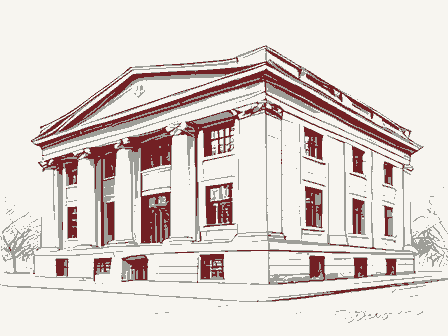
Sandusky Township (part 35 of 57)
Part 35 of 57 of the account of this township in A History of Northwest Ohio: a Narrative Account of Its Historical Progress and Development from the First European Exploration of the Maumee and Sandusky Valleys and the Adjacent Shores of Lake Erie, Down to the Present Time, published 1917. 15,979 words, covering 5 settlements. Source changes inside the text are labelled at the exact paragraph where the next book begins.
Contents
1 sectionThe section headings the book prints inside this chapter, on this part. Each one jumps to where it begins.
Parts
57 pagesThe source prints this as one continuous account. It is split here so no single page grows too heavy to load; the text runs straight on across the parts and nothing is omitted.
- Part 1
- Part 2
- Part 3
- Part 4
- Part 5
- Part 6
- Part 7
- Part 8
- Part 9
- Part 10
- Part 11
- Part 12
- Part 13
- Part 14
- Part 15
- Part 16
- Part 17
- Part 18
- Part 19
- Part 20
- Part 21
- Part 22
- Part 23
- Part 24
- Part 25
- Part 26
- Part 27
- Part 28
- Part 29
- Part 30
- Part 31
- Part 32
- Part 33
- Part 34
- Part 35
- Part 36
- Part 37
- Part 38
- Part 39
- Part 40
- Part 41
- Part 42
- Part 43
- Part 44
- Part 45
- Part 46
- Part 47
- Part 48
- Part 49
- Part 50
- Part 51
- Part 52
- Part 53
- Part 54
- Part 55
- Part 56
- Part 57
The chapter
15,979 wordsReproduced complete and unedited from A History of Northwest Ohio: a Narrative Account of Its Historical Progress and Development from the First European Exploration of the Maumee and Sandusky Valleys and the Adjacent Shores of Lake Erie, Down to the Present Time, published 1917. The text is machine-read from scans, so expect recognition errors: misspelled names, dropped words, and stray characters. Nothing has been corrected, because correcting a proper name invents one. The headings below are the books' own; source changes are labelled in place.
On November 9, 1909, Governor Harmon appointed him assistant adjutant general of Ohio. At that time he was serving as captain of Company F of the Sixth Regiment Ohio National Guard. He was at this time also appointed and served four years as a member of Governor Harmon's staff with the rank of colonel. He held both offices two terms or four years.
In 1913 Colonel Rieger entered upon his duties after election as probate judge of Henry County, and in 1916 was elected common pleas judge, and is now giving all his time to the administration of that difficult and important office. His term is for six years.
Colonel Rieger has long been active in local political affairs. He has served as a member of the County Executive Committee and chairman for several times and is one of the prominent democrats in his section of the state. In 1903 he was elected mayor of Napoleon, and held that office continuously for seven years. In that time Napoleon made great progress in the way of public improvements. A sewerage system was installed and much street pa%ing done. The fire department was also reorganized, and the old hand pulled engines were abandoned in favor of horse drawn machinery.
Colonel Rieger has lived in Henry County all his life. In early boyhood he found employment that would enable him to support himself and for a time he was in a hoop and stave factorv and later learned the trade of blacksmith. He followed that four years and in the meantime applied himself assiduously to the study of law. He began the study of law with Prosecuting Attorney Dittmer but gave up the law at the outbreak of the Spanish-American war to enlist in Company F of the Sixth Ohio National Guard. This service lasted thirteen months, five months of said time having been served in Cuba with his regiment. He resumed the study of law after the return home of his regiment and was admitted to the bar a few years later.
Rieger was born, and he is still a comparatively young man for all his accomplishments, being about forty years of age. When he was eight years old his parents removed to Napoleon and he acquired part of his education in the public schools. His father Erhart Rieger was born in Baden, Germany, and after coming to America married Mi-s. Margaret Galvin, who was a native of Ireland and had come with brothers and sisters to the United States and located in the City of Napoleon when still a young girl. Both her parents had died in Ireland. Erhart Rieger was a stone mason by trade, having learned and followed that vocation in the old country. After his marriage to !Mrs. Galvin he settled in the log cabin home which had been erected by her first husband. By a previous marriage Mr. Rieger had six children, while Mrs. Galvin had five, and their marriage produced four other children. Of these three families fourteen grew to maturity and all but three are still living. Erhart Rieger died at Napoleon in 1890 at the age of sixty-three, and his widow survived until 1912, when she was seventyeight. Both were members of the Catholic Church and the father was a democrat.
Colonel Rieger is the second child of his parents and a bachelor. He is active in Lodge No. 929 of the Benevolent and Protective Order of Elks, and has served as Esquire and Esteemed Loyal Knight. He takes an intelligent and public spirited interest in all matters concerning the general welfare of his locality and state, and among other acts with which he should be credited was his influence in securing a state armory for Napoleon. This handsome institution and building was recently established and completed. In 1900 Colonel Rieger was appointed by Governor Harmon as member of the State Armory Board, and is still filling that office. Colonel Rieger also organized a boy scout troop in Napoleon in 1913 and is still acting as scout master of said organization.
Christ ]Meyer. For half a century a resident of Henry County, Christ Meyer's career has been characterized by that steady industry and quiet efficiency which have enabled him to discharge important responsibilities and bear his part of the burdens of the world 's activities.
He has a very fine farm in section 19 of Liberty Township, owning forty acres in that place and also twenty-seven acres in section 25 of Freedom Township. This land is under cultivation with the exception of seventeen acres of native timber. H* has shown much enterprise in promoting its improvement. Has a fine barn 40 by 60 feet and a number of other buildings. His residence is a substantial structure and he has provided all facilities and conveniences for work both in the house and in the field. The farm is appropriately known as the IMaple Shade Homestead. A fine grove of maple trees surround the house, and most of these trees were set out by Mr. ileyer's own hands. He also has an orchard of a hundred trees, and raises all kinds of fruit and vegetables in addition to the staple crops of the fields. As a farmer he is one of the most progressive and thrifty in his section of the county. Though living out in the country he has at least one important city convenience, and is connected with the pipe lines of the Artificial Gas Company at Napoleon City and his house is lighted with that fuel.
Mr. Meyer has lived on his present farm since 1902 and has largely made the land what it is, having many acres. He has been a resident of Henry County since the close of the war. He was born in Wisselheveden, Hanover, Germany, October 24, 1855, a son of Dietrick and Dorothea Meyer. This branch of the ileyer family is well known in Henry County, and reference to it will be found on other pages. Wlien Christ was four years of age he lost his father, and in 1865 the widowed mother brought him and other children to the United States. They sailed from Bremerhaven, and were seven weeks on the ocean. They came on from New York City to Henry County, where four of the older children had already located, including Sophia, wife of Hei-inan Schwake, Henry, William and Dietrick. With the mother came Fred, Catherine, wife of Henrv ^Mahnke; Anna, wife of Henry Oelfke: Dora, wife of William Gottschalk of Michigan ; Christ : and George, who is married and is connected with the Sun Oil Company in East Toledo and has one son.
Christ Meyer grew up in Henry County, and had to work hard in order to secure ordinary educational advantages. He has always been a student and his well trained mind has been an important factor in his success. Hard work has proved the keynote of his career from boyhood up to the present time. On November 2. 1879, in Liberty Township he married Miss Cecelia Yarnell, who was born in Napoleon Township May 17, 1862. She was reared and educated in Liberty Township, being a daughter of Daniel and Barbara (Funk) Yarnell. Her father was born in Wooster, Wayne County, Ohio, and her mother was born in Waj'Ue County and of Pennsylvania parentage. Her parents were married in Wooster, Ohio, and not long afterwards moved to Napoleon, where her father was a merchant. Mr. Yarnell was a very popular citizen in the early days, was elected sheriff of the county, and in 1863 removed to a farm in Liberty Township. There he set up a sawmill and he manufactured much of the lumber used in the building of early houses and barns in this county, clearing up and converting the forest on two eighty acre tracts and another forty acre tract into lumber. Most of that land is still owned by his family. Mrs. Myer's mother died in 1872 in the prime of life. Her fatiier married for his second wife Catherine Garrt'tt, and they moved to Wauseon, where he died in- 1888, at sixty-eight years of age, and his widow subsequently married again and died in Weston, Ohio. ^Irs. ileyer's father was a very popular man, and the best evidence of this fact is found in his holding county offices for a number of years as a republican in a strongly democratic community.
]Mr. and Mrs. Meyer have four children, and those still living have already given a good account of themselves as world's workers. The oldest, Elmer D., is a carpenter and mechanic at Wauseon, and married Lillian Gorsuch. Walter is a first class farmer in Fulton County; by his marriage to Anna Barnes of Defiance County he has a daughter Leona Lucile now seven years of age. Gertrude Sophia is the wife of Roy Carpenter, and they live on the Yarnell homestead in Liberty Township, and their one son Randall ililton was born December 1, 1914. Carl, the youngest of the boys, died at the age of one year and nine months. Mr. and ilrs. Meyer attend the St. John's Lutheran Church, of which he is an active member. Mr. JMeyer has been popular in his home county, is a democrat, served six years as township trustee, four yeai-s as constable and for one term filled the office of justice of the peace.
Henry [Meyer. Much that is worthy and estimable in human life has been the lot of Henry Meyer of Freedom Township. He is in fact considered the grand old man of the great German community of that county. As a youth he came to America, and spent several of the years of his early manhood in tlie Union army battling for the cause of Freedom. The close of the war marked the beginning of a career of industry and independence and for the past half century he has been closely identified with all the more important interests of Freedom Township. He is an honored old time citizen and has performed his obligations faithfully to his country, home and coiiiniunity.
He rinucs of old Hanover family of Lutherjiii ancestry. His grandparents spent all their lives in Hanover near Otting. His father was Dietrick Meyer, a butcher by trade, and a confirmed Lutheran. Dietrick Meyer married Dorothea Ottens, a native of Hanover. Her parents spent all tlieir lives on a farm in Hanover. Dietrick ileyer died in Germany and most of his children and his widow came to the United States. Henry, William, Sophia, and Dietrick all came to this country before their mother, wlio followed them with their other children, Fred, Christ, George, Catherine, Anna, and Dora. All these children are living except Sophia, who married Herman Schwake.
Henry Meyer came to America in the spring of 1859, taking pa.ssage on a vessel that was thirty days in crossing from Bremerhaven to New York City. He landed on Whitsunday, and thence .iourneyed by railroad and lake to Napoleon. He found employment in Henry County and in 1861 went to Kelleys Island and a little later to Sandusky. There he enlisted in a three months regiment whicli was never called out, and in June of 1861 he enlisted in Company C of the Twenty-fourth Ohio Volunteer Infantry for three years. He was first sent with his command to West Virginia. He became a corporal and was in continuous service until 1864 when at the expiration of his term he veteranized and was assigned to a reorganization of three regiments under the title Eighteenth Ohio Volunteer Infantry. He became second lieutenant of Company F and remained in the army until October, 1865, when he was mustered out at Augusta. Georgia, and discharged at Columbus. Henry Meyer was with his regiment in its ever^y duty and battle. He was faithful as a soldier, brave and daring, and enjoyed the respect and admiration of his comrades. He was with his regiment in fourteen big battles, including Chickamauga, Kenesaw Mountain, Chattanooga, Nashville and Franklin, and in fact throughout the campaign beginning with the reduction of the forts on the Cumberland and Tennessee rivers, through Mississippi,
Eastern Tennessee and Northern Georgia. In spite of this arduous service he went through without a wound and was never in a hospital, in fact answered every roll call.
After the war Mr. Meyer returned to Henry County and began his successful business career as a fanner in Freedom Township. He cleared up a large amount of land, and his fine fann of 160 acres stands as the visible result of his energies and entei-prise. This farm, comprising two eighty-acre tracts, is divided in half by the Detroit, Toledo & Ironton Railroad, and after this road was built Mr. Jleyer platted a part of his land as the townsite of Gerald. ilany years ago he drained the low part of his land, and has converted it all into productive and beautiful fields. JIany substantial farm buildings have been erected, and his home is one that indicates success.
He has borne an equally prominent part in the local affairs of his township. For twenty years he served as township trustee, for twelve years as a member of the school board, also acted as supervisor of roads, and has been willing to put his hand to every movement for local benefit. Although a democrat for many years, he voted for Abraham Lincoln in 1864 while in the army. He has been an active member of the Grand Army Post. Mr. Meyer is a prominent member of St. John 's Lutheran Church, and he had much to do with its building and maintenance. He was one of the five to organize the church, and the organization has much to thank his public spirit for.
In Henry County he married Elizabeth Meyer, who was born in Hanover, Germany, and came to America at the age of twelve years. She died in 1895, leaving the following children : Wilhelmina, Emma, Herman, Charles. Henry I)., Christ, Otto, Anna, Caroline and ilary. All of these children married, and Mary became the wife of Herman Gerken. At her death she left one child ilartha, who was born November 28, 1898, and since the death of her mother when she was four months old has lived with her grandparents, Mr. and Mrs. Henry Meyer.
WiLLi.\M Fr.\nz was one of the pioneers of Henry County, a man who shared the painstaking industry and the many privations of pioneering and in course of time acquired both the substance of prosperity and of commimity esteem. He came to Henry County when about nineteen years of age in 1852, and lived there continuously the rest of his life.
He accumulated a fine property in Flatroek Township, developed his land and put up substantial farm buildings, and after operating it througli a nunilier of seasons he was content to retire and spend his last years in a comfortable home at Holgate. He died at Holgate, and ilrs. Franz is still living there. Mrs. Franz is one of the remarkable women of Henry Comity. She has attained nearly fourscore yeai-s of age but is still keenly alert in the management of her affairs, possesses a wonderful memory, and is an object of great esteem and admiration both among her own family and her many friends.
Both Mr. and Mrs. Franz were born in Germany. William Franz was born in Hesse Nass^au December 22, 1833. He died at his home in Holgate June 24, 1912. When he was six years of age in 1839 his parents John and Christina (Badens) Franz left Germany on a sailing vessel. It was a slow going voyage but they finally arrived in New York City. Proceeding westward they located in Crawford County, Ohio, where William Franz spent his boyhood and youth and there acquired his education in the common schools.
In 1852 the Franz family came to Flatroek Township of Henry County. There were few families living in that township at the time, very limited clearings had been made in the forest, and the Franz family began life there in a log cabin. John Franz first bought forty acres which he improved, subsequently sold and bought eighty acres three miles north of where the City of Holgate now stands. He and his wife spent their last years on that old liomestead and he died when about seventytwo years of age and she when nearly sixtythree. They were members of the Reformed Church. '
William Franz was the oldest in a family of six sons and three daughters. Those now living are : Jacob, Fred, Peter, Christina wife of Fred Wahl of Holgate, and another married daughter that lives in the State of Florida. The only bachelor among those living is Peter.
In Flatroek Township on May 7, 1858, nearly sixty years ago, William Franz married Miss Elizabeth Ricker. Mrs. Franz was born in Prussia, Germany, May 4, 1839, and her ancestry for generations back have lived in Prussia. Her parents were John and Catherine (Shipp) Ricker, both of whom were born in the same village. Besides Mrs. Franz a sou George and a daughter Mary were born while the Ricker family lived in Germany. On May 5, 1848, they all set out from Bremen and after a voyage of ten weeks landed in New York City. ;\Irs. Franz was then nine years of age, and has a perfect recollection of many of the incidents of the voyage and the trip westward into Ohio. The family traveled by canal and railroad to Mansfield, Ohio, and thence a wagon conveyed them into the western part of Crawford County. They lived on a wild forest farm there for three years, but in 1851 moved to Henry- County. In making this journey also they depended upon wagons and teams. Mrs. Franz' father entered eighty acres of government land in Henry Township. The land otBce was at Defiance and he paid $200 as his entry fee. 3Irs. Franz remembers a great deal of log cabin days in the county. There was always plenty to eat and people generally lived in comfort, but there were no luxuries and from the modern point of view the people of that time were denied many of the privileges and opportunities which are now considered essential to happiness. Mrs. Franz' parents spent all the rest of their lives on their Henry Countv homestead. Her father was born August 11, 1810, and died October, 1882, and her mother was born May 18, 1815, and died January 10, 1902. They were reared and were alwa.ys members of the Reformed Church, and her father after coming to America became a democratic voter. Mrs. Franz' sister Mary died in Crawford County when a small child. One daughter Catherine was born in Crawford County and a son John was born in Henry County, but is now deceased.
Mr. and ilrs. Franz became the parents of eleven children. One died in infancy, and 3Iaiw died after her marriage to William Austermiller, leaving five children. Mrs. Franz not only has the solace of her numerous children. Init is also head of a large family circle including more than foi-ty grandchildren and twenty great-grandchildren. Of her living children the oldest is Henry, a farmer in the State of Kansas, and the father of three sons and three daughters. Katie married Milton Fruit, a farmer in Flatroek Township, and they have two sons and one daughter. George lost his wife and with his son William Edward lives in Holgate with his mother. Conrad is a retired farmer at Holgate and has three sons and three daughters. Thomas is a well known citizen of Malinta in Henry County. Amelia married Henry Eberly, a farmer of Napoleon Township, and they have three sons and three daughters. Ernest is a farmer in Napoleon Township and his family consists of four sons and two daughters. Rosa married George ila.y. a farmer of Richfield Township, and is the mother of two daughters and one son. Albert occupies the old homestead in Flatrock Township, and by his marriage to Miss Knipp has four daughtei-s. ilrs. Franz has been a lifelong member of the German Reformed Church and her husband was an otfieial in that church for many years.
James K. Carlin, one of the advisory editors of the History of Northwest Ohio, is still a yoiuig man but a veteran in the newspaper and editorial service. His home is at Celina.
Mr. Carlin was born in Cincinnati, Ohio, September 18, 1884. He was educated in Erlanger, Kentucky, and in the grammar and higli schools of Celina, Ohio, graduating from the high school in 1903. Even as a small boy he entered his father's printing and newsjiaper plant and has had active experience in that line for fully twenty years. His father is ilr. C. C. Carlin. In 1912 James K. Carlin bought a part interest from his father in the Celina Democrat, the leading weekly newspaper of Celina and Mercer County. The Democrat is now conducted under the firm name Carlin & Cai-lin.
]\Ir. Carlin was elected village clerk in 1911, and is now a member of the village council. He is serving as chairman of the Democratic County Executive Committee and since early manhood has taken more or less part in political affairs. He was married in 1909 to iliss Rhoa E. Maehlman. Mr. and "Sirs. Carlin have two sons and two daughters.
Jackson Ratle. The second family to locate in the wilds of Marion Township of Henrj- County were the Rayles, and the venerable Jackson Rayle was a child at the time. He is the oldest resident of that section and knows the pioneer life perhaps as well as any man still living. His has been a straightforward and interesting career, one filled with substantial work and the achievements of the ambitious man, and his name deserves the memory and gratitude of later generations.
Mr. Rayle was born in Richland County July 28, 1835. When he was four years of age he went with his parents William and Nancy (Daringer) Rayle to Wood County, Ohio". His parents originally lived in Ashland County, Ohio. In Ashland County were born three children, Mary, ilargaret and John. In Richland County were born thi-ee other children, Jackson and two daughters, both of whom died young and were named Martha. In 1846 the family removed to Wood County, locating in the wilderness country around Ten ^lile Point. They had a log cabin home and the father developed a good farm of forty acres. A few years later, the family sought another home, this time in Henry County. As already stated they were the second family to locate in Marion Township. The first family was that of Samuel Hashbarger. The Rayles located on section 23, not far from the Ridge Road. Their home was completely surrounded by forests and swamps. Neighbors were few and far between, the nearest settlement on the east being twelve miles away, on the south seventeen miles, while it was two miles from the Hashbargar farm. In those early days and conditions all the marketing was done either at Defiance or Findlay, many miles distant. The first home of the Rayles in ]Marion Township was a log cabin without doors, and with mere openings as windows. Wolves were numerous in the woods, and cau.sed much fright among the children by their howling at night. Game was exceedingly plentiful. There were deer, wild turkeys, liear and many other animals. Such a thing as domestic beef or pork was almost unknown on the table, the meat being almost entirely venison, squirrel, turkey and the like.
When only twelve years of age Jackson Rayle proved his prowess as a hunter. At that age he killed his first large buck. During the winter that followed thirty-six deer fell before his trusty rifle. Because of his skill as a hunter and his remarkable knowledge of all that pertains to woodcraft he became known as the local Daniel Boone. His record as a hunter was when he killed five deer with two sliots. He was hunting one day and drew aim on one fine deer and after the shot was fired he found that he had killed two others which he did not know were in the range. His record as a hunter in the early days would include hundreds of deer and he also killed a couple of bear. He inherited his love of the woods and the wild game sport from his father, who was one of the noted nimrods of his day. This part of Henry County was famous for its coons, ilr. Rayle bagged as many as nine coons in a single day, and he also set traps for these animals. He also killed many of the wild cats which were a dangerous pest.
eighth year. The father passed away at the age of sixty-seven. They wei'e members of the Seventh Day Adventist Church, a faith which still continues in the family. The father was a whig and later a republican.
Jackson Rayle had two brothers, Henry and Samuel, who were born in Heury County, Henry being now deceased. He also has three living brothers, William, Samuel and James, who were born in Wood County.
Jackson Rayle acquired an unsurpassed knowledge of all the great book of nature as it was spread out before him as a boy, was daring and energetic, and was thoughtful and efficient and always equal to the emergencies of life. After reaching manhood he bought land in sections 23 and 26 of Jlarion Township, paying a veiy low price for it, and as a result of many years of continuous residence has develoi^ed it as a splendid farm. He has a large and substantial home which he built and in which he has lived with his family for thirty-seven years, and he also has good bams and everything required for successful farming and comfortable rural living. So far as his strength permits he still takes an active interest and part in the management of the farm.
Mr. Rayle was married in Putnam County, Ohio, to jMiss Rachel Fleming. She was born in that county August 3, 1839, and was reared and educated" there. Her parents John P. and Isabel McClure Fleming were natives of Muskingum County, Ohio, and were early settlers in Putnam County, where they married. They were the first to build a log cabin and begin the clearing up of the land in RilcA' Township. They lived in a hewed log house for many years. Mrs. Rayle was not yet six years of age when her mother died. Her father passed away at the old homestead when about sixty-five years of age. The Flemings were also members of the Adventist Church. Mrs. Rayle 's father served for many years as a justice of the peace and was a man well liked and highly esteemed in his community.
The oldest son of Mr. and Mrs. Rayle is John F. Rayle, who now has the active management of the home farm. He was born in Putnam County April 12, 1863, but was roared in Mai'ion Township on his father's place and is a very capable and intelligent farmer citizen. He mai-ried Mary E. Punches, who was born in Defiance County but was reared in Marion Township, where both her parents died when old people. Her father was at one time postmaster at Ridgeland, Ohio, and for many years justice of the peace. Mr. and Mrs. John F. Rayle have four children : Mabel, who died after her marriage ; George, a farmer at Leipsic, Ohio, who married Florence White; Fred J. and M. Essie, both of whom are still at home.
William, the child next younger to John, is now deceased, and by his marriage to Maggie Porter left children named Maude, Cecil J. and Ida. N. Jane, the oldest daughter, is the wife of Corydon Robbins of Leipsic, Ohio, and has three daughters, Florence, Edna and Mae. Samuel married Orpha Pacey, their home is in Leipsic, and they have a son named Glee. Ellis is a farmer in Benzie County, Michigan, and by his marriage to Mary Edwards has three sons and four daughters, Nora, Guy, Bessie, Bert, Ethel, Erma and Lynn. Thomas J. is an active young farmer in Marion Township of Henry County, and has two sons and two daughters. Hazel, Naomi, Otto, and Donals. Silas, the youngest of the family married Blanche Spangler. He has not followed any settled vocation nor has he been content to remain long in one place and is now in the West. They have three children, Goldie, Edith and Helen. All the family were brought up members of the Adventist Church, and Mr. Rayle was for eighteen years a deacon. Politically he is affiliated with the republican party.
Nicholas Huss is proprietor of the Meyerhof Hotel of Toledo, one of the most popular and best patronized establishments of the city. He is a veteran in hotel work, having gained his first experience in that line when a boy, and the success of his house is due to his long experience and thorough qualifications for the responsibilities of landlord.
Mr. Huss was born in 1867 in Tiffin, Ohio. His father, John Huss, a son of John P. Hiiss, was born in Luxemburg, Germany, and at the age of eight years was brought to America by his parents, who located in Seneca County, Ohio. John Huss grew up in Ohio and followed the business of farmer and blacksmith. He died in 1880. Of his seven children, Nicholas was the oldest.
Nicholas Huss had few opportunities to gain an education since he began work when only eleven years of age. In that time he found employment in such varied capacities as experience and strength qualified him for in a restaurant and hotel at Tiffin. His employer was Mr. Petere. He remained in that one place for five years, and afterwards spent four years in the Jefferson Hotel in Toledo, 0. For years he was connected with the Sloan House in Sandusky and spent six years in the Oliver House in Toledo, Ohio.
Having learned every phase of the business and having shown an ability in management which in this business is more necessary than capital, Mr. Huss then acquired the Meyerhof Hotel at Toledo. During the fourteen years he has managed it he has made it a place of entertainment and comfort for many Toledo people and for thousands of the traveling public. The Meyerhof is only a short distance from the Union depot and it offers a service equal to its situation.
Mr. Huss married Ellen Feehely and they are the parents of four children, John, Mabel, Cora and Estella. All are married and live in Toledo.
E. L. Thornberry is one of Toledo's most successful merchants. He has been in business in that city either for himself or as an employe of several large mercantile firms for forty years. He is widely known as proprietor of "The Young Men's Shop," supplying men's and boy's clothing, located at 418 Adams Street.
I\Ir. Thornberry was born in Monroe County, Ohio, April 9, 1859, a son of Johnson Franldin and Rebecca Jane (Evans) Thornberry. His father came to Toledo in 1874 and with two sons engaged in the grocery business and the manufacture of soajj. He was a business man of the city until his death. While successful in commercial affairs he was Yevy devoted to his family and church, and was long an active worker in the Toledo Christian Church.
The only one of his father's children living today E. L. Thornberiy had the advantages of "the grammar and high schools of Zanesville, Ohio, came to Toledo at the age of fifteen, and at seventeen he was working as a clerk in the clothing store of William Mabley. He spent seven yeare with that well known old merchant at Toledo, and there laid the foundation of the experience which he has lased so effectively both for himself and others. After leaving Mr. Mabley he became general manager for the clothing house of James Melden, and for twenty-six years was connected with that establishment, part of the time as member of the firm of James Melvin Co. After selling his interest there he was for two years general manager of the boys' clothing department in the store of J. N. Moekett Co.
On retiring from that business Mr. Thornberry- established his present .shop at 418 Adams Street. He has developed a very high class trade, and has especially catered to people desiring reliable as well as fashionable clothing.
While his best years have been spent in the clothing business ilr. Thornberry might also be classed as a practical farmer. For a number of years he has operated a large place of 200 acres in Wood Coiuity near Weston, Oliio. He bought the land at $50 an acre and now it is worth not le.ss than .$200 an acre. It is operated as a high class farm and has all the equipment and facilities for successful farming.
Mr. Thornberiy is a thirty-second degree Scottish Rite Mason, and a member of Zenobia Temple, Ancient Arabic Order of the Nobles Mystic Shrine of Toledo, Ohio. Politically he is a republican and is a member of the Toledo Commerce Club and the Toledo Exchange Club. On October 13, 1881, at Weston, Ohio, he married Miss Mary Ellen Starr of that place. They have two children: Samuel Starr, born January 18, 1883; and Sarah Jenetta, born March 30, 1885.
Emery D. Potter. One of the oldest active members of the Toledo Bar is Emery D. Potter, Jr., who fifty-three years ago was working on his first cases and earning his fii*st fees. The profession has known him as one of its diligent and successful members and the public at large recognizes his ability in the profession and his leadei-ship in civic and business affairs.
Mr. Potter studied law in the office of Morrison R. Waite, who was afterwards Chief Justice of the Supreme Com-t of the United States. Mr. Potter is at present the senior member of the law firm of Potter and Carroll, with offices in the Nicholas Building. He was born at Willoughby, Lake Couutj-, Ohio, on November 27, 1844. He was the son of Judge Emerj' D. Potter. Judge Potter, Sr., was a pioneer lawyer in Northwestern Ohio, and through his ser\aces and those of his son the name has been identified with the bench and bar of Northwestern Ohio for upwards of eighty years.
kludge Potter was born in Providence, Rhode Island, October 7, 1804. He studied law at Cooperstown, New York, with John A. Dix, afterwards Governor of New York. Judge Potter came to Toledo in the winter of 1834-5. He was the first lawyer to hang out his shingle in Toledo. He was contemporary with a number of men prominent in the law and in public life, and he himself was honored with appointment to the bench of the then Circuit Court under the old . Constitution, in which he served for a nnmlun- of years. Judge Potter died February. ISIMI.
Emcrv D. Potter, -Jr.. was cdiiratcd in the schools of Toledo. In May, IbU:^, he volunteered as a liigli iiri\ate in Company "A" of the Eigiity-fimrtli Ohio Volunteer Infantry and served tliree months and twenty-two days, being under the second three months' call by President Lincoln. In the fall of 1862 he entered the University of Jlichigan, took the Jaw course at that institution and was graduated in the class of 1864. He immediately entered the law otKce of M. R. and R. Waite, and was admitted to the bar in January, 1866, at Columbus, Ohio. He began practice immediately and for many years remained alone. He afterwards formed a pax'tnei-ship with the late Hon. George R. Haynes which lasted for ten years, subsequently with Thomas Emery of Williams County, Ohio, and at present is associated in the law business with Mr. Charles P. Carroll.
Among other things, Mr. Potter may be remembered as one who took the leading part in building the Toledo & State Line Railroad. For a good many years he was a member of the Park Board of the City of Toledo and for twenty yeara one of the trustees of the public library. His name is associated with a number of other public enterprises. In politics he is a democrat, but has never sought nor held a political office.
Thomas R. Wickenden. In point of diversity of experience Thomas R. Wickenden is one of the best known civil engineers of Northwestern Ohio. He came to Toledo when a boy, had his first experience as a rodman with a surveying party employed by the Pennsylvania Railroad.
He is a native of England and was born in the venerable City of Rochester, County Kent, February 7, 1853. He came to America in 1870. He made the journey alone, and arrived in Toledo practically friendless and with neither money nor influential friends. After two years as clerk in a store, he found the opening with the engineering party for work with the Pennsylvania Railroad in 1872, and this being congenial work he advanced rapidly in ability and was promoted to increasing responsibilities. For several years he was assistant engineer for the Smith Bridge Company and in 1886 he became city engineer of Toledo. He held that position until 1892. After that he was engaged in engineering and contract work for the city until 1900, then served three years as engineer for the Park Board of Toledo, and following that accepted the place of chief engineer of the Toledo, Port Clinton and Lakeside Railroad. In 1907 Mr. Wickenden was employed by the State of Ohio as engineer in charge of the improvements along the ]Miami and Erie Canal. That work kept him for two years and in 1911 he became president of the Auglaize Power Company. He continued as i:)resident of this iudusti'y until 1916, and is now its receiver, having been appointed to settle up the affairs of the company. His offices are in the Spitzer Building at Toledo.
Mr. Wickenden is a republican in politics and has served as a member of the countj^ cejitral committee. He served a.s president of the Toledo Engineering Society and has high rank among the engineers of the country, iluch of his professional service and his public spirited citizenship has gone to the welfare of Toledo and he is one of that city's most accomplished citizens.
While Mr. Wickenden may well take proper satisfaction in his personal career, he has special reason to be proud of the family who have grown up in his home. He was married December 17, 1879, to Ida Consaul of Toledo, daughter of William Consaul. Mrs. Wickenden was born on a farm in Oi-egou Township of this eount.y and was educated in the local schools and "the Toledo High School. The eight children born to them are all living. Lottie L., born October 26, 1880, was educated in the public schools and the Battle Creek School of Home Economics and is now the wife of James Stejiheu Ogden of Ashland, Kentucky; William E., born December 24, 1882, was educated in the Toledo schools, Dennison University at Granville, Ohio, where most of the children received part of their training, and in the University of Wisconsin. He is now associate professor of electrical engineering in the Massachusetts Institute of Technology at Boston. Ida E., born in 1884, was educated at Toledo and in Dennison University, spent six years in the sei'vice of the American Baptist Foreign Missionary Society at Hanchow. China, and is now living at Rochester. New York, where her husband, Justin W. Nixon, is Professor of Hebrew and Biblical Literature in the Rochester Theologi- cal Semiuary. Thomas H., born iu 1886, was educated at Toledo and in Dennison University, graduated Bachelor of Chemical Engineering from the University of Michigan, and is now in eliarge of the engineering department of the great Studebaker Corporation at South Bend. Indiana. Homer E., born in 1889, graduated Bachelor of Philosophy from Dennison University and is engaged in welfare work for the Cleveland Associated Charities. Arthur C, born in 1892, attended school in Toledo, has the degree Bachelor of Philosophy from Dennison University, and is now secretary of the Young Men's Christian Association of Miami University at Oxford, Ohio. Ruth was born in 1895 and is now pursuing her higher education in Dennison University. Dorothy M., the youngest, born in 1898, has completed the public school work at Toledo and is also in Dennison University. Mr. Wickenden is a member of the Commerce Club. The family are membere of the Baptist Church.
WiLBER Owen and Charles W. Owen. In the department of patent law one of the leading firms of Ohio is Owen, Owen & Crampton, patent attorneys and solicitors iu the Nicholas Building. The members of this firm are Wilber Owen, Charles W. Owen, and Faust F. Crampton. The Owen Brothers have been associated in the practice of patent law at Toledo for the past sixteen years, and their exiDerience and influential connections have brought them a large share of this class of legal business.
Wilber Owen was born at Detroit, Michigan, June 30, 1873. His father has long been prominent in IMichigan journalism. He is now proprietor and editor of the Herald at Quincy, Michigan.
The second of four children, Wilber Owen attended the public schools at Lansing, Michigan, and took his law course in the George Washington University at Washington, D. C. He came under the influence of a very able body of law professors and also had the exceptional advantages of residence in the capital city. He was graduated Doctor of Laws in 1896, and for advanced work received the Master of Laws degree from the same institution in 1897. In that year Mr. Owen came to Toledo, and has since been in practice in this city. He has membership in the bars of Ohio, Michigan and the District of Columbia.
Mr. Owen is also a member of the executive committee and a director of The Fiftv Associates Company of Toledo. He is a 2\Iason, a republican, a member of the Toledo Club, the Inverness Golf Club and the Toledo Commerce Club.
Charles. W. Owen, the second of the firm, was born in Lansing, Michigan, June 29, 1877. Part of his early education was acquired in the public schools of Coldwater, iMiehigan. He followed his brother to George Washington University, where he took his degree Bachelor of Laws in 1899. He has two other degrees from the same institution, awarded in 1900 and 1901. In 1901 he joined his brother in practice at Toledo under the fii-m name of Owen & Owen, and from the fii-st they have specialized as patent lawyers. In 1913 Mr. F. P. Crampton was admitted to the partnership.
Charles W. Owen is a member of the Toledo Commerce Club, the Toledo Club, the Inverness Club and the Toledo Yacht Club, and is a republican. On April 28, 1900, he married Miss Anna V. Steinmetz at Quincy, Michigan. They have two children : Virginia and Allen.
Bert Thompson. Until a few years ago the direction of movement for people seeking new homes has been steadily westward. This movement began even before the Revolutionary war, and continued with growing force until every state and territory was occupied westward to the Pacific. Thus the majority of the families in Ohio came originally from some state east of the AUeghauies, and the movement out of Ohio to western states began a great many yeai"s ago and has continued to the present time. However, there has been an important reversal of this current of immigration.
An excellent example of this is the case of Mr. Bert Thompson of Richfield Township, Henry County. His grandparents were substantial Ohio people in the early years of the last century. i\Iembers of the family moved out of Ohio to Eastern Illinois, and there did their part in making a wilderness blossom as the rose. It was in Eastern Illinois that Bert Thompson was born and came to manhood. In the meantime Illinois lands had been developed to a point where their value made them almost out of reach of the average investor, and while many Illinois farmers were selling out and going still further west, a number of others had been attracted by the lower priced lands of Western Ohio.
Township. He was able to buy a first class farm with all the modern improvements. His farm had a nine room, house nearly new, and also a new barn, 40 by 60 feet with 24-foot post. In the fall of 1909 Mr. Thompson bought an adjoining eighty acres but just across the road in section 9. This likewise had some good improvements, including a barn 40 by 60 feet, with an addition 15 by 70 feet. Mr. Thompson at once moved the l3arn bodily to his home farm, and with that change and with other improvements introduced in the past eight years he has developed one of the finest farms in Henry County. His 160 acres ai'c perfectly drained, well fenced, and they have been made to grow as fine crops as can be grown in the county.
With such enterprise has Mr. Thompson directed his business aft'aii-s that he is now well enough off to retire from the heavier responsibilities of farming, and it is his intention to do so and take up his residence at Weston in Wood Country in the spring of 1917. During his years in Henry County he has been constantly a worker for advanced and progressive ideas, and though he is too modest to claim any recognition for it he has really served as an exemplar of modern methods in rural life.
He was born in Champaign County, Illinois, August 3, 1870, and was reared and educated there, gained a knowledge of Illinois farming, and finally brought his capital to invest in Henry County.
His grandfather David Thompson was born in Fayette County, Ohio. He married there a member of the "Clevery family, long prominent in that section of Ohio as cattle and hog growers and prominent citizens. While David Thompson and wife were living in Fayette County their oldest child, James, father of Bert, was born in 1840. He was still an infant when his parents removed to the vicinity of Sidney in Champaign County, Illinois. They became pioneers in that section, and David Thompson lived to clear up and develop a good farm of 100 acres. He finally retired and spent his last years at Sidney, where he died when quite old. He and his M'ife were the parents of three sons and two daughters.
James Thompson grew up on the old farm near Sidnej', Illinois, and was married there to Anna Bucey. She was bom in Champaign County about seventy years ago. Her parents were among the earliest settlers of Champaign Count}-, being there when the Indians werv.» still numerous. The Bucey family has lonw been prominent in Eastern Illinois, and the various members of the family have acquired interests in a number of banks and various other business affairs. One representative of the- family is Colonel Bucey, who became prominent in politics and had the distinction of being the only man who ever succeeded in defeating Joe Cannon in a political campaign. Mr. James Thompson and his wife still reside on their old farm in Champaign County. They were the parents of ten children, nine of whom are living, six married and three single.
Mr. Bert Thomp.son was married in his native county to Miss Florence Cayley. She M-as born in Champaign County November 20, 1876, a daughter of John L. Cayley, who now makes his home with Mrs. Thompson and is seventy-five years of age. He was born in Fayette County, Ohio. He married for his first wife Mary Patters, who was born and reared in Champaign County, Illinois, where she died when Mrs. Thompson, the youngest of her three children, was five years of age. Mr. Cayley married for his second wife Mrs. ilartha J. (Current) Harmon. She was born in Jay County, Indiana, was reared there, and married Mr. Joseph Harmon, who died leaving her three children. By her marriage to Mr. Cayley she had a son that died in infancy. Mrs. Cayley died September 8, 1897. The Cayleys were members of the. Christian Church.
Jacob Cladt, of Flatrock Township, Henry County, has rounded out his period of three score and ten years in the comfortable employment of his energies as a farmer, and has a pleasing and grateful retrospect over many years of well directed effort, influential associations with his community and the material , reward and personal esteem which are the best tokens of a well spent career. He has been a resident of Henry County for over thirty-five years.
Mr. Clady was born in Tuscarawas County, Ohio, September 11, 1842, a son of Jacob and Mary M. (Scheth) Clady. His mother was a native of Pennsylvania, a daughter of Peter Scheth, a native of the same .state. Jacob Clady was born in Alsace, France, aboiit the year 1805. When still a boy be came with an uncle to the United States, and his first regular emplo^nnent was on the canal which was then being built in Tuscarawas County. Ohio. He gave such a good account of himself there that he was appointed a foreman. During his residence in Tuscarawas County he married and three of their children were bom there, Emanuel, William and Jacob. In the fall of 1842, when Jacob Clady was only a few weeks nld his parents removed to Crawford County, Oliio. Jacob, Sr., there bought a tract of eighty acres of wild land. The first home of the family was a log cabin. He lived there employed in clearing up and cultivating his land, being assisted in this by his older sons, and had the sntisfactinn of those comforts and convenieiic(>s whii-h icwai'd a life of constant toil. He (licil 111 till' Milistantial frame house which he had built about 1881. His wife, though somewhat younger in years than himself, died about nine years before her husband. They were members of the Lutheran Church and he was a democrat. In their family were ten sons and two daughters, all but two of whom grew up and married, and five sons are still living and have families of their own.
It was on the old homestead in Crawford County, Ohio, that Jacob Clady spent his youth and early manhood. The public schools afforded him a literary groundwork, and there was no lack of opportunity to learn farming in every practical detail. In Crawford County on February 16, 1871, Mr. Clady married Miss Susan A. Zolar. She was born in Chatfield Township of Crawford County January 1, 1851, and grew up in that district and remained with her parents until her marriage. Her parents were Frederick and Mary (Freed) Zolar. Her father, a native of Germany, came in young manhood with his parents to Chatfield Township of Crawford County, was married there, his wife being a native of Tuscarawas County, Ohio, and also going with her parents to Crawford County. After their marriage Mr. and Mrs. Zolar lived on a farm, clearing it up from the condition of a wilderness, and Mrs. Clady 's father died there at the age of eighty -seven and her mother ' when not yet sixty years of age. They were Lutherans and he was a democrat.
After his marriage Mr. Clady continued to live and farm in Crawford County until 1879. In the meantime six children were born, one of whom died in infancy, and in 1879 bringing his wife and five children he located on forty acres in section 28 of Flatrock Township in Henry County. This forty acres had practically no improvements, and it was with the task of clearing and development that Mr. Clady concerned himself for a number of years. With increasing prosperity he added another forty acres in the same section; this also he improved, and since then has bought fifty acres in section 29. These 130 acres comprise a very fine and valuable farm. It has some wood land, but the rest of it is devoted to the regular rotation of the staple crops best adapted to the soil and climate. Its improvements stand as evidence of Mr. Clady 's management and supervision. He has a good eight-room house on his home place and his farm of fifty acres in section 29 also has a complete set of buildings.
Mi's. Clady is a member of the Lutheran Church and has given much of her time outside of the rearing and training of her children at home to church interests. Mi*. Clady is a democrat, and while hi§ life has been an extremely bixsy one he has found time to serve the interests of his community as township trustee for three years and as towTiship supervisor.
He and his good wife deserve much credit for the bringing up of a large family of children. Fred, the oldest, is a farmer in Flatrock Township and by his marriage to Leora Shoemaker has a daughter named Vera. Ida is the wife of John Ingle, a merchant at Stanley, and they have three sous and three daughters. Henry, who is employed by the Baltimore & Ohio Railway at Deshler, married Ebbie Ise and has a son and daughter. Mary E. died in 1877 when two weeks old. Savilla died at the age of six years in 1884. Tilla is the wife of William Engle and they live in Flatrock Township and have a son and two daughters. Charles is a farmer in Henry County and by his marriage to Susie Renaker is the father of two daughters. Clara E. died in childhood. Susan Z. is the wife of Albert Skiver, a farmer in Flatrock Township. Irena is the wife of Winfield Huffman of Florida Village, and they are the parents of two daughters. Cleveland C. lives on his father's farm and has a son Lawrence by his wife, Maggie Bower. Elsie 0. married Henry Memer of Flatrock Township and has three sons living. Alma, the youngest child, is still at home with her parents.
Adam B. Rettig. The thrift and industry of his early years enabled Adam B. Rettig a few years before his death to retire from the active business of farming, and he afterward had the leisure and the means to allow him to follow such pursuits and interests as he desired. His home was in section 12 of Monroe Township in Henry County, and his
Until he retired he owaied 160 acres there. Tlie land that he cleared up by his hard work when he was a young man was in sectinn 19 of Monroe Township, and he put it in splendid condition as a farai and made his living from it and provided for his family. The farm whicli he bought about 1902 lies not far from Malinta and Greltou. One of the most recent improvements placed ui^on it by Mr. Rettig was a fine barn 40 by 60 feet, with cement floors and with all modern equipment.
When he retired Mr. Rettig sold forty acres of his farm, and turned over the rest of it to the capable management of his son-in-law, ('. L. Detmer. Adam B. Rettig was boi-n in Hesse Darmstadt, Germany, February 15, 1S38, ai^.d was nearly eighty years of age at the time of his death. He had worked until he was past seventy. He was a boy of eight years when he accompanied other members of the family to the United States. The voyage was made on a sailing vessel from Bremen, and it was weeks and weeks at sea. ;\Ir. Rettig himself made the voyage without special incident or illness. But his mother, grandmotlier an<1 two sisters were scT'iously ill, and his gramlniothiT and Diir nf his sisters died at sea ami witc luiricd in tlif ocran. The remainder of the little family finally arrived almost at the point of exhaustion, and from New York came on west by way of the Hudson River and Erie Canal to Buffalo, and from there on a lake boat to Sandusky. They crossed t)verland to Crawford County, Ohio, and after three years there came on to Henry County, making the journey with teams. Adam and his cousin George walked and drove a herd of cattle. Arriving in Henry County Mr. Rettig 's father bought forty acres of state lands and later 160 acres of canal lands. He located in what was still a wilderness, and gradually built up a good home. On the forty-acre farm the parents, Adam and Elizabeth Rettig, spent the rest of their days. This is one of the old and substantial German families of Henry County, and further reference to the older members will be found on other pages. The Rettigs were among the organizers and always were vigorous supporters of the German Reformed Church, and their children were reared in the faith.
In Henry County Adam B. Rettig married Miss Sarah Nyswander. She was born in Fairfield County, Ohio, November 26, 1840, was reared and educated in Wood County, and for several years taught school in Flatrock Township of Henry County. While thus engaged she met Mr. Rettig and they were married not long afterwards. She died at Van Buren in Wood County Januaiy 24, 1900. Mrs. Rettig was an active member of the Reform Church. Her parents were Christian and Elizabeth (Salladay) Nyswander, both natives of Canton Berne, Switzerland, and after coming to the United States were married in Fail-field County, Ohio. Fl-om there the>' removed to Wood County, where Mr. Nyswander improved 160 acres of land. He died at Florida Village in Henry County at the age of eighty-two and his wife at North Baltimore, Ohio, when past sixty years of age.
Mr. Rettig and wife had a large family of children, most of whom have grown up to useful men and women. Charles H., the first, died when four years of nijc. Reulien E. lives on a farm in ^lonroe Towiisliip aihl by Ins niaiTiage to Nettie Shirarla of thai t(iwiislii|) has three childi'en, Ardella, Carolina and Xora E., the last two being twins. Edwin Lee, who- died in 1008, married Eva P.nniiaker. and their children were Mary, now deceased, Edwin C, Marion and Lyle. Jennie Lillian died when four years of age. John L. is now postmaster of Elk River in the State of Idaho; he married Mary E. Detmer, who died in Idaho in 1911, leaving a daughter, Marie, now sixteen vears of age. Elizalieth E.. tlie vnnntrest child of Mr. Rettig, was l.nrn Xovcn'ili.'i- 24, 1880, and was educated in the jiiihlic schools. She married Charles Ludwig Detmer, who was liorn in Monroe Township of Henry County September 10, 1878, was reared and educated here, and for several years has been the active manager of ]\Ir. Rettig 's farm, and also directs the operations of forty acres adjoining the homestead. He is a first class farmer, and he and his wife have had I'^nw diihlrcn : Lloyd E., who was born August I'l, l!lu2, and is now in the seventh grade of the public schools : William B., who was born August 28, 1904, and died when two months old; Esther Leona, born January M, 1906, and now in the sixth srade of the public schools; and Cloyce Herliert, born October 11, 1909. All the family «re members of the German Reform Church.
the limitatious of opportunity imposed upon the poor boy of poor parents. He had a very limited education in the national schools of Ireland, came to Lima with his parents during the 'SOs, worlied hard in those positions which were open to him, and finally studied embalming and is now proprietor of one of the leading undertaking establishments of the city.
He was born in County Limerick, Ireland, September 24, 1865, a son of John C. and Mary (Daly) O'Connell. Both parents were also natives of County Limerick. His father first came to Ohio in November, 1869. He lived in Lima, working there for several years, finally went back to Ireland and then brought his family over. He and his wife were members of the Catholic Church, and he became a democrat in politics. There were thirteen children in the family, E. J. being the oldest, and eight are still living.
On coming to Lima E. J. O'Connell found his first emploj-ment in the paper mills, where he spent four years. He then secured a clerkship in a furniture store, and remained with that institution for twelve years. He gained his first knowledge of the undertaking business while there, and after a couree of study at Cleveland he returned to Lima and engaged in business for himself in 1906. His business has been on the steady increase for the past ten years, and he now has all the facilities for expert and thorough service in his line.
On August 18, 1898, Mr. 0 'Connell married Miss Jennie Hickey. She was born in Columbus Grove, Ohio, daughter of Michael Hickey. Mr. and Mrs. O'Connell are members of St. Rose Catholic Cliurch at Lima, and he is identified with the Holy Name Society, the Catholic Knights of Ohio, the I&ughts of Columbus and the Ancient Order of Hibernians.
Nelson R. "Webster is one of the veterans in the field of journalism and printing, learned his trade when a boy and has pursued it almost uninterruptedl.y since his apprenticeship at Port Clinton, Ohio. He is now proprietor and editor of the Paulding Democrat at Paulding, a property he has owned and successfully conducted since July 11, 1904.
Mr. Webster was bom June 25, 1862, in Portland Township of Chautauqua County, New York. His parents, James Harvey and Mary Webster, were substantial people, of good intellectual attainments and high ideals, both having taught district school during their youth and they were constantly diligent and ambitious both for themselves and their children. They never acquired wealth but their names are spoken with affection by all their descendants. James H. Webster was a bricklayer and plasterer, but he reared his family on a farm in Chautauqua County, New York. He died there and was buried in Chautauqua County. The parents reared a family of seven children, and their lives counted for a great deal although they left limited property.
As a boy in Western New Yoi-k Nelson R. Webster had the advantages of the district schools only. When he was fourteen he began learning the newspaper and printing business at Port Clinton, Ohio, and there has been only one important exception to a complete career in that line of work, lasting for about eighteen months. He was employed as a journeyman printer and subsequently owned and conducted the Ottawa County News at Port Clinton for about six years, the Muskogee Times at Muskogee, Oklahoma, a little over a year, and for about six years owned an interest in and was employed on the Defiance Crescent-News and Democrat at Defiance, Ohio. Another year was spent at Riverside, California, where he edited the Riverside Daily Enterprise.
Mr. Webster has exercLsed his influence upon the community largely through his newspapers and the only public office he ever held was one term as mayor of Paulding. He has always been a consistent democrat and has been very ardent in his support and admiration of President Wilson and his policies. Mr. Webster is a Knight Templar Mason, is a past grand of the Independent Order of Odd Fellows, past chancellor of the Knights of Pythias, belongs to the Benevolent and Protective Order of Elks, and at one time was a member of the Knights of Labor. Mr. Webster is well satisfied to classify as a laboring man, and his interests and sympathies are with that great bulk of men and women who have to live upon the results of honest toil. Mr. Webster is a member of the Methodist Church, and has been actively identified with the church choir for many years and in different communities.
At Port Clinton, Ohio, November 17, 1881, he married Miss Sadie E. Bell, daughter of Richard Bell. Richard Bell was a prominent citizen of Northern Ohio, and for many years was engaged in the wholesale fish catching and selling business. He finally retired and moved out to California in 1895, and has since resided at Pasadena. Mr. and Mrs. Webster have one son, C. R. Webster, who is now employed in the newspaper and printing business with his father.
John Hardy Doyle. It is doubtful if any name has a more dignified distinction in the bar of Northwest Ohio than that of John Hardy Doyle. Many able la\vyers recall as the pleasant distinction of their own careers some association with Judge Doyle, either as a student, a partner, or as a friend and adviser. At this writing Judge Doyle has just rounded out a half century's membership in the bar of Northwest Ohio. It is especially noteworthy that no interests have called him from the strict lines of his profession, though twice he served the public on the bench, once as common pleas judge and again as a justice of the Supreme Court.
He was born in Monday Creek Township, Perry County, Ohio, April 23, 1844, a son of Michael F. and Joanna (Brophy) Doyle, and is of Irish stock, his paternal grandfather having come in the early part of the nineteenth century from Ireland. Michael P. Doyle, a native of Pennsylvania, was a youth when he came to Providence in what is now Lucas County, Ohio, and was a sub-contractor in building a portion of the Miami Canal. He was married in 1834 and from 1843 to 1849 lived with his family in Perry County, still pursuing his business of contractor. Afterward he was a resident of Toledo until his death in 1852 at the early age of thirty-six. Judge Doyle's mother died in 1894 at the age of eighty-four.
Though deprived of a father's guidance at an early age, Judge Doyle's industry and talents enabled him to secure a liberal education. He attended the Toledo public schools and the Dennison University at Granville, Ohio, and in the winter of 1862-63 left school to enter the ranks of the Union army. He was appointed second lieutenant of Company A of the Sixty-seventh Ohio Infantry upon condition that he secure twenty recruits. While still engaged in this task he was stricken with typhoid fever, and that proved a permanent bar to his ambition to serve his country in the capacity of soldier.
On recovering his health he began the study of law under Edward Bissell, then one of the prominent lawyers of Toledo, and on his twenty-first birthday was admitted to practice. He then accepted from Mr. Bissell the offer to become a partner in the law firm of Bissell & Gorrill, and in the abstracting firm of Bissell, Gleason & Company. In a short time he had earned his place among the rising young lawyers of Lucas County.
the republican members of the Lucas County Bar gave him their luianimous endorsement for the office of judge of the Court of Common Pleas for the Sixth Judicial District. With a unanimous nomination at the judicial convention he was elected by a large majority, and brought to the discharge of his duties the able qualifications of thorough knowledge and absolute integrity. Of his work on the Common Pleas Bench Harvey Scribner in a former publication wrote: "Judge Doyle was an ideal Common Pleas judge; he followed and comprehended the bearings and competency of evidence at all stages of the trial. His rulings were prompt and almost always correct."
He was nominated for judge of the Ohio Supreme Court at the Republican State Convention of 1882, but he shared the defeat common to the entire ticket that year. Later in the same year when a vacancy occurred on the supreme bench Governor Poster appointed him for the unexpired term, and he was a member of the Supreme Court until February 9, 1884. In the meantime he had again been nominated for the office but his party was still in the minority in the state. Some years later a rare distinction was accorded him when he was twice offered, by Presidents McKinley and Taft the position of Judge of the United States District Court for the Northern District of Ohio, but he declined both honors. Few men so well fitted for public responsibility have so strictly adhered to the private profession and have so uniformly refused both nominations and appointments to office.
On retiring from the Supreme Court Judge Doyle became senior member of the firm of Doyle & Scott, his partner being Alexander W. Scott. In 1885 Charles T. Lewis was admitted to the firm, which continued as Doyle, Scott & Lewis until the death of Mr. Scott in 1895. The firm of Doyle & Lewis has siibsequently, by the admission of Frank L. Lewis and Howard Lewis, sons of Charles T. Lewis, and Judge Ralph Emery, become known as Doyle, Lewis, Lewis & Emery. Thus at the age of seventytwo Judge Doyle is still active in his profession, is head of one of the largest law firms within the state, and has a reputation as one of the ablest, most accomplished and scholarly lawyers in the Middle West. His standing in the Toledo bar is well indicated by the fact that the lawyers of the city gave almost a unanimous endorsement to the petition that he accept the post of United States District Judge. For fifty years a loyal member of the republican party, and sometimes taking part as a campaign speaker, he has best served that party as a private in the ranks, and could never be induced to accept a nomination except for the office of judge.
Those who have been associated with him and who have followed his career as a lawyer and judge are familiar with his professional characteristics. The reasons for his success have been described as industry, rapidity as as worker, and promptitude in mastering the essentials of a case. It is said that when he was a young law;\' er he accustomed himself by long and careful practice to quick analysis on the collocation and citation of the really pertinent authorities with as little waste of time as possible upon irrelevant or minor aspects and materials. Thus his processes in preparation were immediate and direct, and he either excluded preliminaries altogether or reduced them to a minimum. This prompt functioning of his mind is as characteristic today as ever. As a judge it is said that it was his practice to prepare for his own information very thorough briefs of the law and authorities governing cases as they developed before him, and it was largely this policy and method which enabled him to serve so well the conflicting interests in any litigation brought before him.
His avocations have been more in the field of literature and historical research than in politics or more material activities. In many quarters Judge Doyle is acknowledged as a foremost aiithority on the early history of Toledo and Northwestern Ohio. This is partly due to his residence of sixty-five years in the city, and also to the instinct and scholarship of the true historian. He is the author of some forty monographs and papers on miscellaneous topics, historical, literary, legal, and on other titles, and these he has given to the public as voluntary and entirely unrecompensed lectures on special occasions. Some of his more notable contributions to local history have been under the following titles: "The City of Toledo for Fifty Years since its Organization;" "History of the Maumee Valley:" and "History of the First Congregational Church of Toledo." The most complete and adequate county history of Lucas County ever published was the Wagoner history of 1888. Judge Doyle prepared and wrote the History of the Local Judiciary for that publication, and it is a matter of interest to know that the greatest part of that splendid work was prepared in Judge Doyle's law office which was then located at the corner of Erie and Walnut streets in Toledo. He was also selected by the Toledo Commerce Club to write a monograph of the history of Toledo to be distributed to each scholar in the Toledo schools. A student of history in its broadest aspect. Judge Doyle has brought this breadth of knowledge and interest to his local writing, and is one of the comparatively few men who have a philosophy of life modified and fortified by the best resources of individual experience and broad culture. In recent years Judge Doyle has devoted some of his time to the instruction of students in St. John's Law School on the subject of Constitutional Law.
At various times he has been president of the Toledo and Ohio State Bar associations and of the National Bar Association, before that organization became absorbed by the American Bar Association, and is a member of the Toledo Club, Toledo Commerce Club, Country Club of Toledo, Toledo Yacht Club, Lawyers Club of New York, Ohio Society of New York, Union Club of Cleveland, and Columbus Club of Columbus.
October 6, 1868, Judge Doyle married Alice Fuller Skinner. Mrs. Doyle, who is a member of the Daughters of the American Revolution, the Colonial Dames and the Daughters of Colonial Governors, is descended from Governor Roger Wolcott of Connecticut, and from Oliver Wolcott, signer of the Declaration of Independence. Judge and ]\Irs. Doyle have three children. Mrs. Elizabeth D. Bently is the wife of James Bently, and has a daughter, - Grace Isabel Scott. Mrs. Grace D. Graves is the wife of Charles L. Graves, and their children are John Doyle Graves, Angeline Graves and Charles L. Graves. Helen Genevieve, now deceased, married Judge John S. Pratt, and her one surviving child is Alice Pratt.
Rt. Rev. Joseph Schrembs. D. D. First bishop of the diocese of Toledo. Rt. Rev. Joseph Schrembs has been a resident of the cathedral city for the past five years, and hence his career is properly a part of the history of Northwest Ohio.
He was born in Wuzelhofen. a small village near Ratisbon, Bavaria, ilarch 12. 1866, a son of George and Mary fPetz') Schrembs. His father, a master blacksmith, spent his last years as an invalid, due to an injury received while hunting in a neighboring forest, and died August 19. 1888. The mother of Bishop Schrembs was a woman of great force of character and of deep piety, and experienced a peculiar satisfaction in hav- ing two of her sons become priests. She followed them to America and spent the last seventeen years of her life in the home of her son Joseph in Michigan, where she died August 19, 1905.
One of a large family of sixteen children. Bishop Schrembs attended the excellent Catholic schools of Ratisbon, Bavaria. At the age of el(nTn ho attracted the favorable notice of llislmp Sciilcnbush, the Benedictine bLshop of St. (.'loud, .Minnesota, who was visiting there. Bishop Seidenbush made arrangements for bringing the youth to the United States, where on his arrival he was placed in school at St. Vincent's Arch- Abbey in Pennsylvania. There at the age of sixteen he completed the cla.ssieal course, having shown exceptional ability in mastering languages, and during his later career has been equally at home in the English, German or French. The following two years were spent as a teacher in St. Martin's parochial school at Louisville, and later Bishop Richter of Grand Rapids, ]\Iichigan, sent him to the Fathers of St. Sulpice in Montreal, Canada, where he completed the philosophical course. In 1888 he was ordained sub-deacon at Trinity, was promoted to the deaconage in the same year, and in March, 1889, returned to Grand Rapids, where on June 29, 1889, he was ordained to the priesthood.
He served as an assistant to Father Nevin during the latter 's pastorate at St. Mary's in Saginaw, and then as assistant to Father Sanson at St. Mary's, West Bay City. There he preached in both French and English every Sunday. In 1896 he was made pastor of St. Mary's, West Bay City, and while there distingiiished himself for his elociuence and for his influence both in and out of the parish.
October 5, 1900, he was transferred to St. Mary's. Grand Rapids, where for years the only language he spoke in the pulpit was Gennan. His civic work in that city was especially noteworthy, and he was largely instrumental in bringing about flood protection, pure water, the attainment of the city beautiful idea, and the extension of the park system. His arguments before a committee of the State Senate twice prevented the passage of a free text-book bill through the Legislature. His pastorate resulted in much constructive work in his home parish, and among other accomplishments he brought about the establishment of two Catholic central high schools in Grand Rapids and was influential in forming St. Joseph's Preparatory Seminary. From Grand Rapids he several times represented the diocese in national conventions.
In 1903 Bishop Richter appointed him vicar-general of the diocese and he was created a domestic prelate January 25, 1906. January 5 1911, the appointment of auxiliary bishop was conferred upon him and he was consecrated February 22d. About that time the Toledo Diocese was erected, and on August 11, 1911, he was named as the first bishop and was consecrated October 4, 1911. Thus for the past five j'ears Bishop Schrembs has resided in Toledo and has been hardly less distinguished as a citizen than as a churchman.
Something more than the qualities of a brilliant intellect is required to explain the position and influence exerted by Bishop Schrembs. His is a positive character. He never compromises right or conscience, and has held decided opinions on questions of public policy, and has given them expression with great clearness and force. Without the compromise of a principle or an issue he has nevertheless dealt with such questions with peculiar tact. Flawless logic and clear argument, together with his great eloquence, have been the means by which he has carried his point. He has exhibited profound convictions and sympathies upon such great issues as those relating to labor, public order and decency, and for the general uplifting of humanity, and as much of his work has been done in great manufacturing centers its results have been correspondingly effective.
Hon. Silas S. Richards. For thirty-five years an active member of the Sandusky County bar. Judge Richards is widely known over Northwestern Ohio as a just and fearless judge, having presided with great ability for six years over the Common Pleas Court in what was then the third subdivision of the Fourth Judicial District. His home was at that time and still is at Clyde. In November, 1910. Judge Richards was elected a judge of the Court of Appeals, and began his six year term in that office in February, 1911. He was reelected in November, 1916, for a similar term. He now holds court at Toledo and in seven other counties comprising the district of Northwestern Ohio.
A native of Northwest Ohio, where his people were pioneer settlers. Judge Richards was born August 8. 1857, in Townsend Township of Sandusky County. His parents were
Archibald and Mary (George) Richards, his father beinpf a substantial farmer in Townsend Townsliip. Archibald Richards died at his home in Clyde in 1884, while the mother passed away there in 1901. Archibald Richards was born at New London, Connecticut, in 1812, a son of Silas and Mary (Rogers) Richards. Silas Richards was born April 23, 1779, and died December 5, 1862; while his wife, who was born August 1, 1779, and died September 3, 1866, traced her ancestry back to the time of the Mayflower. Judge Richards' mother was born in Ohio in 1819, a daughter of Joseph Gftorge, who was a soldier in the War of 1812 and at a very early date established his home in Sandusky County. Thus the members of the Richards and George families were closely identified with the early life and affairs of Sandusky County.
Judge Richards takes pleasure in looking back to an early boyhood spent on a farm. At the same time he was granted liberal opportunities in the way of schooling, attended the Clyde High School until graduating with the class of 1875, and then, at the age of eighteen, he started for California. His home was on the Pacific Coast until 1876, when he took up the study of law in the ofHee of Basil Meek, who was then a prominent lawyer at Clyde, but is now located at Fremont, Ohio.
Admitted to the bar at Columbus before the Supreme Court in January, 1879, Judge Richards soon afterwards opened an office at Clyde. In June, 1879, he became associated in practice with D. A. Heffner, and for many years the firm of Richards & Heffner was regarded as representing some of the finest ability in the profession at Clyde and enjoyed a very large and extensive practice.
During the past twelve years Judge Richards has been continuously on the bench. In 1905 he was called by appointment to the Common Pleas Bench to fill a vacancy in his home district. On the expiration of the term he was renominated by acclamation and 'a popular election gave him a tenure of the office for a regular term. He was again elected to the same office, but resigned from the Common Pleas Bench on January 18, 1911, consequent upon his previous election in November, 1910, as judge of the Court of Appeals.
Judge Richards is a member of the Sandusky County and the Ohio State Bar associations. In polities he is a republican. He is a non-resident member of the Toledo Commerce Club, and was president of the Toledo
Shakespeare Association during the club year 1915-16. He is also a member of the Masonic Order, being affiliated with Monticello Lodge 214 of Clyde and with the Royal Arch Chapter at the same place. He and his wife are regular attendants of the Presbyterian Church. Judge Richards finds his chief recreation in travel and fishing and is fond of reading, and when at home is devoted to the law both as a science and profession.
On June 7, 1882, he married Miss Jennie Harding, daughter of John and Mary (Smith) Harding, both of whom died at Clyde, Ohio, where they were old settlers. After nearly twenty-eight years of companionship Judge Richards lost his first wife at Clyde on January 8, 1910. She was the mother of three children. Robert G., the oldest, who now resides at Clyde, is a graduate of the high school there and was a student at Oberlin College. Rena, the only daughter, is a graduate of the Clyde High School, attended the Ohio Wesleyan at Delaware, and finished the course in the Library School of the Western Reserve University at Cleveland. She is now the wife of Dr. Walter M. Bucher of Cleveland. William M., who graduated from the Clyde High School from the Ohio Wesleyan University at Delaware and the Western Reserve University law department, is now engaged in the practice of the law at Toledo, being associated with the firm of Kohn, Northup, Ritter & McMahon. All the children were born in Clyde. On November 18, 1914, Judge Richards married for his present wife IVIiss Elizabeth Strain of Columbus Grove, Putnam County, Ohio. Her father was for many years a minister of the Presbyterian Church in Putnam County, but both he and his wife are now deceased. Mrs. Richards was born in Pennsylvania, but completed her education in the high school at Columbus Grove.
Coleman Keeler. In the pioneer annals of Lucas County one of the first names to be encountered is that of Keeler. One of the family was the late Coleman Keeler, who was prominently known as a business man both in Toledo and at Maumee, who served as mayor of the latter city for two years and whose death occurred in 1895.
He was born in Onondaga County, New York, in February', 1827, the youngest of the eight children of Samuel Isaac and Lucy (Hall) Keeler. Samuel I. Keeler was born, reared and educated in Vermont, studied law.
was admitted to the bar in 1817, moved soon after to New York and served as sheriff of Onondaga County. He was one of the leading attorneys practicing in Onondaga County, but in 1829 gave up his profession there and moved out to the frontier, settling in Liicas County, Ohio. He.bought a farm near Toledo, paying for it twenty shillings an acre. During the next six years he devoted his time to clearing up his land, and then sold out and moved to Amboy in Fulton county, where he acquired 1,000 acres direct from the Government. Any account of pioneer activities in Fulton County shoidd mention this sterling citizen, since he was among the earliest residents, and while doing much to improve the community he endured all the vicissitudes and privations of pioneer life. After improving part of his large landed estate he sold the greater part and moved to Cass County, Michigan, where he lived retired until his death in 1867 at the age of eighty-five. He had served as an officer in the "War of 1812, while his father was a major in the Revolutionary war.
The mother of Coleman Keeler was a native of Georgia and died at Amboy, Ohio, at the age of fifty-six. Two of her brothers, Salmon and George Hall, were soldiers in the War of 1812. The Keeler family is of Jewish and English extraction, but has been identified with America by several generations of residence.
Coleman Keeler was about three years of age when his parents moved to Toledo. The family journeyed by boat from Buffalo to Toledo, which was then only a village surrounded by swamps and with Indians still almost- as numerous as the white inhabitants. With only a meager equipment of education, on account of the scarcity of school facilities at the time, he rapidly matured his powers as a worker in the woods and on the farm, and when only twelve years of age began buying furs for the Northwestern Fur Company, of which his elder brother was a partner or factor with headquarters at Niles, Michigan. For five successive winter seasons Coleman Keeler made journeys alone on horseback, leading two pack horses, and in that time became acquainted with many of the pioneer trappers and Indian hunters of Southern jMichigan and Northern Ohio. The summer months of that period he spent as second mate and wheelman on a lake boat. He then became mate on a boat on Lake Superior, and followed the inland seas for five years. Giving up his life as a sailor, he next became traveling salesman for a wholesale house at Toledo, and this again brought him a full share of pioneer experiences. There were few railroads, and the traveling salesman of that time had a hard life as compared with the modern knight of the grip. He made most of his trips on horseback, and not infrequently had to pass a night by the roadside under the stars. After three years with the first firm he represented Landman & Heiushammer for about a year.
From the lot of a traveling salesman he turned his attention to farming, buying 300 acres near Porter, Michigan, and paying $5.00 an acre. He farmed there for ten years, and left the place in a state of high improvement and cultivation. On selling his land he returned to Toledo and engaged in the wholesale gi'ocery business. Then followed two years of mingled prosperity and adversity, but with the burning of his establishment he lost practically his entire fortune. Though he was then well along in years, he was not discouraged, and he soon faced to the Southwest and engaged in mining in New Mexico. That proved a most profitable enterprise, and in fifteen years he had built up a fortune larger than the one he had lost. Selling out his mining interests, he soon returned to jMaumee and spent the rest of his life practically retired, though he dealt considerably in local real estate. It was after his return to IMaumee that he took an active part in local politics as a democrat, and besides the ofiSce cf mayor which he held two years was honored with nearly all the other municipal offices.
In July, 1849. Coleman Keeler married Adeline Pratt of Michigan. She died in July, 1880. _ There were two children: Elliott P., who is now a prominent business man at Painesville, Ohio; and Edith, the deceased wife of Henry N. Perrin of Maumee. In 1884 Coleman Keeler married Edith Clark of Detroit. She died in 1891, leaving a son, Coleman, Jr.
Isaac N. Keller. Out on the Bay Shore Road from Toledo is located the second oldest greenhouse and floral industry of that city. Its owner and proprietor is Isaac N. Keller, a man of long and varied experiences in the seventy-four years of his lifetime. He is a surviving veteran of the great war between the states, in which he lost a leg, and for more than forty years has been pursuing the business of market gardening and the growing of fine flowers for Toledo people. His
History Of Northavest Ohio
He was born near Findlay, Ohio, July 11, 1842, son of Frederick and Catherine (Court) Keller, both of whom spent their lives in that locality. Mr. Keller had a common school education. He wisely improved such advantages as came to him, and at the age of nineteen was presiding over a schoolroom as teacher.
In 1861, when a little past nineteen, he left the schoolhouse for the purpose of enlisting in the army. At Findlay he joined Company B of the' Twenty-First Ohio Volunteer Infantry. Then followed nearly three years of active military service involving hardships too numerous to mention and all the experiences incident to the lot of a brave and faithful soldier. One point that should be recalled is that the Twenty-first Ohio was equipped with Colt's revolving rifles, a distinct novelty in firearms at that time, and though the gun was very crude as compared with the highly efficient army rifle of today, it marked a great advance over the guns used by the great bulk of the Union forces. Mr. Keller was with his regiment in its many campaigns and marches back and forth through Kentucky, Tennessee and North Georgia, and in the battle of Chickamauga was wounded and captured. Eight days later an exchange of prisoners took place on the battlefield, and he was thus released and rejoined his command. Then followed the campaign through Atlanta. At Jonesboro, Georgia, on September 2, 1864, he was severely wounded, causing the loss of a leg. He remained in hospital recuperating and six months later was given an honorable discharge. Mr. Keller is a man who has always lived a wholesome and temperate life. He inherited a splendid constitution and has never abused it. In all the seventy-four years of his life he has never called a doctor to attend him owing to illness, though of course his wounds in the army necessitated attendance by the surgeons.
Somewhat handicapped in the choice of a career because of the loss of a leg in the army, Mr. Keller after his return from the army engaged in the jewelry business for twelve years at Huntington, Indiana. This work proved too confining, and in 1874 he moved to Toledo, looking for a location for a greenhouse. At that time he located on the Bay Shore about two miles east of the mouth of the Maumee River and has been there ever since, for a period of fully forty years. Except one his was the first greenhouse in Toledo. At the beginning his business was market gardening and the growing of vegetables under glass. About twenty years ago he introduced a department for the culture of flowers, and for the past six years has dropped gardening altogether. There are about thirty acres in his farm. Two of his sons, Cleo and Stanley, are well known among the successful onion growers of Lucas County, and conduct biisiness under the firm name of Keller Brothers.
At Carey, Ohio, in 1870, Mr. Keller married Althea Houck. Their children are: Cleo D., who married Bessie Prickett of Alabama; Gail, who lives at home ; Stanley, who is associated with his brother Cleo in the onion growing bu.siness. Grace, wife of Leonard Seiss, a novelty manufacturer at Toledo; and Paul, who was a student- in the State University at Columbus, and is now at El Paso, Texas, doing military duty.
Mr. Keller has always been a republican. A few weeks after receiving a wound in the leg at Jonesboro, Georgia, and while still recuperating he registered his first presidential vote for Abraham Lincoln in 1864. For many years he gave service to his community as a member of the school board. He is a member of the Grand Army of the Republic and of the National Union.
Henry "W. Bell. One of the prominent farmers of Lucas County, Henry "W. Bell' has for the past thirty-eight years given his time and attention to the development of a fine place two miles west of Silica in Sylvania Township. ]\Ir. Bell has had a long and active career, and having recently passed the age of threescore and ten is able to view the past with complacency and look forward to the future without fear.
He was born March 27, 1845, at Gallipolis, Ohio, a son of Henry and Caroline (Striblin) Bell. He grew up in Southern Ohio, had a common school education, as a boy learned the trade of mason. Coming to Northern Ohio, Mr. Bell followed his trade at Oberlin fifteen years, was in Cleveland five years and in Toledo four years. "While working at Toledo he married Miss Emma Thomas, whose father, William Thomas, was one of the pioneers of . Lucas County and is mentioned on other pages.
Mr. Bell and Miss Thomas were married in 1878. Soon after their marriage they located on one of the farms owned by William Thomas, and have made their home there con- stantly for nearly forty years. For about two years Mr. Bell continued to follow his trade, and employed men to work the farm. Since then he has conducted it under his own supervision, and now follows general farming on 120 acres.
Mr. and Mrs. Bell have one daughter, Cornelia, who lives at home. The family attend the Methodist Church, and Mr. Bell is a republican and was given his first degrees in Masonry at Oberlin, and is now a member of Sylvania Lodge, Free and Accepted Masons.
George W. Bamsey. While Lucas County has its great factories and business houses, industrial centers and cities, its agricultural enterprises also aggregate resources that are highly important and worthy of consideration. Out in the farming districts are a number of men who are prosperous and progressive and who believe that the happiest life as well as the most independent one is to be lived on the farm. An example of success in this field is George W. Bamsey, who is one of the leading farmers in the western part of Sylvania Township.
Provenance
Text from A History of Northwest Ohio: a Narrative Account of Its Historical Progress and Development from the First European Exploration of the Maumee and Sandusky Valleys and the Adjacent Shores of Lake Erie, Down to the Present Time, published 1917, in the public domain in the United States and digitised by the Internet Archive. The settlements listed against this township are matched by point-in-polygon test of each Geographic Names Information System coordinate against the Census Bureau's county subdivision boundary, not by name.