 Block
New Glarus, Wisconsin
13 topographic sheets cover this place, the earliest surveyed in 1923 and the latest in 1981. It stands in New Glarus town. It lies in ZIP code area 53574. It lies near Durest Valley. The Survey maps it on the New Glarus quadrangle. 2,266 people lived here at the 2020 count. It stands 899 feet above sea level.
On record in New Glarus
Buildings and businesses the archive holds for this place. Each opens its own page, with the source record it came from.
On the National Register 8 records
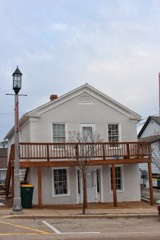 Dr. Samuel Blumer Houselisted 1992
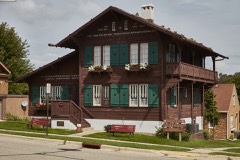 Chalet of the Golden Fleecelisted 2015
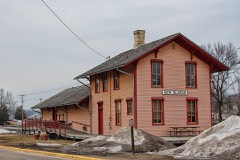 Chicago, Milwaukee and Saint Paul Railroad Depotlisted 2000
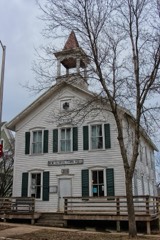 New Glarus Town Halllisted 2008
- 1st and 2nd Street Historic Districtlisted 2021
- 2nd Street Commercial Historic Districtlisted 2021
- New Glarus Hotellisted 2025
- Wilhelm Tell Schuetzen Haus and Parklisted 2022
Population over time
2 figuresNew Glarus grew from 2,172 to 2,266 between 2010 and 2020. These are the recorded population figures Wikidata holds for this place, reached through the Geographic Names Information System number this page is keyed on rather than by name, so they belong to this place and not to another of the same name. Most are census counts, but not all are: an early figure may be a founding or settlement estimate, and an estimate published within five years of a census is left out. The change column is computed, and is left blank where more than 20 years separate a figure from the one before it, because a gap that long is not a change between two counts.
| Year | People | Change |
|---|---|---|
| 2010 | 2,172 | |
| 2020 | 2,266 | +94 (+4%) |
Topographic sheets covering this place
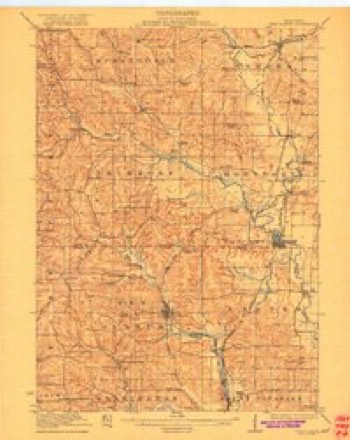
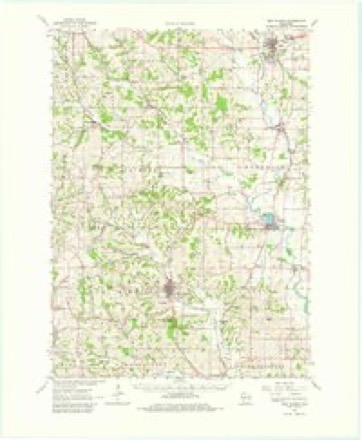
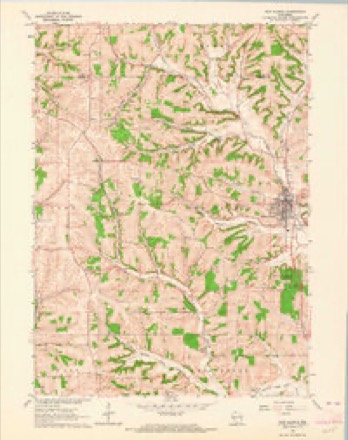
8 surveys from 13 printed sheetsMatched by testing this settlement's coordinate against the published boundary of every sheet in the United States Geological Survey's historical collection. Each opens the scanned sheet at the Survey.
- 1923 USGS New Glarus quadrangle1:62500, 2 printings
- 1954 USGS Rockford quadrangle1:250000
- 1955 USGS Rockford quadrangle1:250000
- 1958 USGS Rockford quadrangle1:250000, 4 printings
- 1962 USGS New Glarus quadrangle1:62500, 2 printings
- 1962 USGS New Glarus quadrangle1:24000
- 1963 USGS Rockford quadrangle1:250000
- 1981 USGS Monroe quadrangle1:100000
In the county-history sources
17,620 words on this townshipHistory of Green County, Wisconsin, published 1877 names this settlement in its chapter on New Glarus Town. These are the passages that mention it, exactly as the scans read.
In July, 1845, f°ur men5 Armstrong, Greenwood, Slater, and Jackson bv name, had claims in what is now called New Glarus. There was not a single inhabitant there who owned the place on which he lived ; but the time had come when the long waiting of the unoccupied township was to be rewarded. Here w7as to be shown, as it was to be shown in no other township in the county, how the superfluous- and poverty-stricken children of the old word are transformed in the United States into prosperous and useful citizens. Early in 1S45 *-ne Emigration Association of Glarus determined to relieve the crowded population of that canton by sending a colony to the United States, and Fridolin StreifF and Nicholas Duerst were delegated to come in advance of the colony and select a place for the settlement. They left Switzerland March 8, 1845. At the conclusion of a long voyage they were met in New York by friends of the society, and on the nth of May they started with Joshua Frey of Pennsylvania, on their search for a home for the colony. They arrived at Chicago the morning of the 19th of May, and here the search began. They traveled over Illinois and a large part of Missouri, Iowa, and Wisconsin. Their aim was to rind a place with a healthful climate, convenient markets, good soil and water, and plenty of timber. They selected the township named by them New Glarus, and on the 25th of July they purchased twelve hundred acres in sections fourteen, fifteen, twenty-two, twenty - three, and twenty-seven of that township. The purchase was made at Mineral Point, where Mr. StreifF took the first step towards becoming a citizen of the United States. Not being sufficiently acquainted with the language to take the usual oath, the ceremony, so far as he understood it, consisted in kissing the bible.
Passage source: History of Green County, Wisconsin, published 1877.
The first work of the commissioners was to lay out a road from Green's Prairie to the prospective village, after which, on the 6th of August, Mr. Frey left them to return home. Meanwhile, Messrs. Duerst and StreifF had hastily erected a few shanties for the colonists who were daily expected. The society had not wished to send the colony so soon, but the emigrants became so impatient that it was impossible to restrain them, and they were permitted to start the 16th of April. Some communities paid the traveling expenses of those of their emigrants who could not pay for themselves, and during the night of the 15th and 16th of April, charitably disposed persons raised the money to pay for the passage of a number of families that wished to come but for whom no provision had been made. The colonists went to St. Louis and thence to New Glarus, where thev arrived August 12. Their progress had been delayed by some misunderstanding, on account of which the commissioners were looking for them in Chicago while they were waiting in St. Louis for instructions from the commissioners. At first they were crowded together in a few shanties. Then, as they were able, they built log houses; and whenever a house was built, a shanty was taken down and the lumber used to make the floor and the door of the new house. Few of the houses had two windows, none had more than two. The doors had wooden hinges that Mr. Streiff made himself. Two months after the land was bought, Mr. Duerst, who had never intended to remain in this country, returned to Switzerland, shaking as he went with the ague. The whole care of the colony now devolved on Mr. Streiff. Some of the colonists had a little money, but most of them were so poor that, as one of them expressed it, "if they had to pay six cents for a cat, they couldn't buv it." A few went to Thompson's settlement to work, and a few others spent the winter in Galena; but as a whole the colony was so helpless that Mr. Streiff was compelled to ask for help. The Association sent him <£ 1,000, with which he bought provisions, oxen, seed, agricultural implements, and whatever else was indispensable before the people could take care of themselves. Provisions were bought by the quantity, and sold to families at the lowest possible price. There was little in the houses, and little room for anything besides the folks and the beds. One stove and a few chairs were bought. Bedding had been brought from Switzerland, and beds were made on the floor so close to each other that a housekeeper who confesses to many tears because the men stuck their dirty boots against them, says that while she made her bed she always stood on some other woman's bed. In the mountainous land of their birth, the people had never known such winds as swept through their cabins that long, first winter; and sometimes when they crept shivering to bed they had to take their few umbrellas with them. Fearful of being deceived by the harmless appearance of the Indians who visited them occasionally, timid men and women told till they trembled with terror the stories they had heard of Indian perfidy and cruelty. No wonder. that whereever Mr. Streiff turned he found a woman in tears; no wonder that his incessant labors excited little gratitude, and that he wrote home, " I shall remember the year 1845." The wonder is that on a thousand dollars he could keep nearly a hundred persons from fall to spring in such a way that they should be grateful to him in after year's. He did this, but, though often urged, he has never consented to take charge of another colonv from Switzerland. Through the winter, the men were busy cutting wood and splitting rails. In the spring, the work of breaking prairie began. The Association sold each man twenty acres at three florins an acre, on ten years' time without interest. Some men bought more land, and some claimed land adjoining them, and paid for it in 1855, when the deeds were given by the Association. The commissioners divided the land so that the shares were as nearly as possible alike in their advantages in wood and water, and then, when all had promised to abide by the result, the shares were drawn by lot. Rules for the government of the colony provided that no one should cut wood from another's land, but all might cut from the road. During the first year, two families at least should live in one house, and colonists should help each other in building houses and barns. Until their land was paid for, they were not to dig for mineral. After it was paid for, they might dig; but if lead was found, the land was to be given up to the society, in which case the owner was to be paid the original cost of the land and the value of his improvements in cultivation and buildings, but nothing for the lead.
Passage source: History of Green County, Wisconsin, published 1877.
The reports that went back from the colony were so encouraging that several times in the summer of 1846 recruits came from the mother country. One of them was J. Jacob Tschudy, who was sent to assist in the care of the colony. A report of the condition of the colony dated November 20, '46, and printed for circulation in Switzerland, contains the following: The owners of lots were Fridolin Hoesli, John' Kundert, Paulus Kundert, Henry Hoesli, Leonard Hammerli, Mathias Smith, George Legler, Mrs. Barbara Hoesli, Abraham Schindler, Balthasar Durst, Niklaus Durst, David Schindler, Markus Hoesli, Mathias Duerst, Fridolin Hefti, Fridolin Legler father, Fridolin Legler son, John Caspar Legler, Oswald Babler, Fridolin Babler, Henry Aebli, Hilarius Wild, Mathias Hoesli, Jost Triimpi, Jost Becker, Fridolin StreifF, Gabriel Baumgartner, Caspar Zwicki, Fridolin Oertli. Six men with their families had gone away, and three men, J. Jacob Tschudi, Peter Hoesli, and Jacob Ernst had not yet drawn their lots. There had been two births and seven deaths, and the colony numbered at that time 125 persons. There were twenty houses, of which thirteen were in the village. One hundred and nine acres had been broken, seven hundred bushels of corn and " more than enough potatoes " had been raised. The live stock owned by individuals consisted of two horses, ninety-seven head of cattle including eighteen oxen, one hundred and ninety-nine pigs, and nine sheep. Fowls were still owned in common. A few orchards had been set out. A few garden vegetables, "as peas, chiccory, cabbages and tobacco, also pumpkins were planted bv way of trial." Fortunately, the experiment succeeded, especially in peas and pumpkins. The ground was thought to be too new for wheat, and there was complaint that the potatoes "were not so good as in Switzerland. There were as yet but few fences, and the crops were much injured by the swine as well as by field mice. The prairie fires destroyed hay stacks and fences, and some of the colonists lost their hair in saving their hay-covered houses. Published extracts from Mr. Streiff's letters show that the people were well, but, on account of the hard work they had done, very ragged, also that there was a general desire for a minister and a school. After Mr. Tschudy's arrival, he was, until the people were able to pay for all services rendered, overseer, minister, physician, and teacher. In the summer of '46, the first Swiss school was taught. The next school was Eng- lish. The first frame house in the colony was a school house, though previous to its erection some of the log houses had been boarded over. The people showed no great anxiety to learn the English language, but the children learned it at school, and it gradually made its way in the colony. More efficacious than the schools in Americanizing the people was the habit of the young men and women of going out to service. For years all the hired girls in Monroe were from the colony, and with the language they also acquired in their various homes many of the ideas and customs of the countrv. Married women sometimes left their families, walked to Monroe, washed three or four days, took their pay in flour, old clothes, or whatever they could £et and carried it home on their backs. The men were naturalized very soon. Usually before an election each party had an agent at the colony who offered to pay the naturalization fees of all who would vote for his candidate. The second or third year after the arrival of the colony, Conrad Ott opened a store in the village. Mr. Frederick Egger, who succeeded Mr. Tschudy as agent of the Emigration Society, was the second merchant. The third store was that of Mr. Tschudy, who soon sold it to Mr. Gus. Alder. About the time of its appearance, Dr. Samuel Blumer, the first physician, and the Rev. Wm. Streisgood, the first clergyman, came from Switzerland. In 1855, a stone church was built. For five or six years there was no blacksmith in the colony, and for ten years the people went to Winnesheek to mill. Mark Luchsinger was the first blacksmith, and David Klassy built the first mill. One of the colonists has had the curiosity to search the county records to see how early and how often the names of New Glarus and her citizens appeared. The result is as follows: April, 1847, New Glarus school district was credited with forty children and school three months. Frederick StreifF was appointed road supervisor. January, '48, said supervisor made his report and was paid. A road was laid out from Exeter by way of New Glarus and Green's Prairie to the Mineral Point road. July, '48, J. Jacob Tschudy was allowed an account for bringing; witnesses to United States Court. February, '49, J. Jacob Tschudy was petit juror. November 16, '49, a petition from township 4 north, range 7 east, asking to be set off from the town of York as the town of New Glarus was granted, and it was ordered that the first town meeting should be held at the school house in the village of New Glarus the first Tuesday in April, 1850. January, 1S50, J. Caspar Legler was paid $2 for a wolf scalp. November, 1850, the result of the first assessment of the town was recorded, to which is added by way of contrast the assessment of '76 :
Passage source: History of Green County, Wisconsin, published 1877.
Machine-read from a century-old scan, so expect the errors a machine makes: misspelled names, dropped words, stray characters.
Read the whole chapter on New Glarus Town - it names this place 44 more 44 times.
Fires near this place
20 since 2018Regional context, not property-specific evidence. The federal wildfire occurrence database lists 20 fires within 5 miles of New Glarus between 2018 and 2020, burning about 47 acres in total. None started naturally. None was recorded as arson. Distance is straight-line from the map coordinates, so a fire counted here may appear on a neighbouring settlement's page as well.
| Reported cause | Fires |
|---|---|
| Debris and open burning | 16 |
| Smoking | 2 |
| Equipment and vehicle use | 1 |
| Missing data/not specified/undetermined | 1 |
The most recent of them, most recent first, with the day each was reported and the service that recorded it.
| Date | Cause | Size | Reported by | Name on the report |
|---|---|---|---|---|
| 12 June 2020 | Debris and open burning | under an acre | Wisconsin Department of Natural Resources | 2006597 |
| 5 May 2019 | Debris and open burning | under an acre | Wisconsin Department of Natural Resources | 19198 |
| 5 May 2018 | Debris and open burning | 2.0 acres | Wisconsin Department of Natural Resources | 3387 |
| 8 April 2019 | Debris and open burning | 2.0 acres | Wisconsin Department of Natural Resources | 1904463 |
| 7 April 2018 | Debris and open burning | 2.0 acres | Wisconsin Department of Natural Resources | 3368 |
| 5 April 2020 | Missing data/not specified/undetermined | under an acre | Wisconsin Department of Natural Resources | 2006575 |
| 29 April 2018 | Smoking | under an acre | Wisconsin Department of Natural Resources | 1806350 |
| 29 April 2018 | Smoking | 3.0 acres | Wisconsin Department of Natural Resources | 1806351 |
Settlements close enough to share some of these fires:
Mines and quarries near this place
5 within 5 milesRegional context, not property-specific evidence. The federal mineral resources record lists 5 workings within 5 miles of New Glarus: 4 past producers, 1 unknown. None of them still produces. What was taken out: Stone, Crushed/Broken, Stone. Distance is straight-line from the map coordinates, so a quarry counted here may appear on a neighbouring settlement's page as well.
| Where | Site | Commodity | Status | Recorded |
|---|---|---|---|---|
| Zweefel Quarry | Stone | Unknown | ||
| Freitag Quarry | Stone, Crushed/Broken | Past Producer | ||
| Hoesley Quarry | Stone, Crushed/Broken | Past Producer | ||
| Hustad Quarry | Stone, Crushed/Broken | Past Producer | ||
| P.W. Ryan Sons, Inc. | Stone, Crushed/Broken | Past Producer |
Storms near this place
38 since 1994Regional context, not property-specific evidence. The National Weather Service names New Glarus in 38 storm reports between 1994 and 2025: 21 thunderstorm wind, 12 hail, 2 flood, 2 flash flood. No death or injury is recorded in these reports. Each account below is quoted exactly as the forecast office filed it, from the NOAA Storm Events Database, and each date opens the federal record of that event.
| When | Event | Place named | Harm | What the report says |
|---|---|---|---|---|
| May 2004 | Flash Flood | New Glarus | $100,000 | A mudslide destroyed freshly planted crops and some basements were flooded. |
| June 2013 | Flash Flood | New Glarus | $60,000 | Law enforcement officials called in with many reports of flooded roads due to the heavy rainfall. Roads on the west side of New Glarus were washed out. |
| July 2013 | Thunderstorm Wind | New Glarus | $40,000 | Law enforcement officials reported trees and power lines blown down by thunderstorm wind gusts estimated up to 70 mph (61 knots) in a 6-mile wide swath between New Glarus and Monticello. New Glarus was completely without power for a time after the storms. |
| May 2012 | Thunderstorm Wind | New Glarus | $30,000 | A trained spotter reported trees and power lines downed by powerful thunderstorm wind gusts estimated at 80 mph (74 knots) in the town of New Glarus. One car was totally damaged when struck by a falling tree, with roof shingles blown off several homes. |
| May 2004 | Thunderstorm Wind | New Glarus | $25,000 | no account filed |
| July 2005 | Thunderstorm Wind | New Glarus | $20,000 | no account filed |
| May 2024 | Thunderstorm Wind | New Glarus | $10,000 | Scattered tree damage in New Glarus and a portion of an apartment roof was blown off. |
| August 2007 | Thunderstorm Wind | New Glarus | $10,000 | Powerful thunderstorm wind gusts up to 65 knots (75 mph) toppled several large trees and damaged seveal power-lines. A large pine tree 100 feet tall was snapped at the 10 foot level. |
| July 2006 | Thunderstorm Wind | New Glarus | $10,000 | A car was crushed and a truck's window was broken by falling trees. Antennas also damaged. |
| September 2012 | Thunderstorm Wind | New Glarus | $5,000 | Law enforcement officials reported trees were blown down by damaging thunderstorm wind gusts estimated to be 56 knots (65 mph) along a path from New Glarus to 7 miles east of Dayton. |
| November 2022 | Thunderstorm Wind | New Glarus | $3,000 | Power pole down in New Glarus with two trees down outside of New Glarus. |
| July 1999 | Thunderstorm Wind | New Glarus | $3,000 | no account filed |
| May 1998 | Thunderstorm Wind | New Glarus | $3,000 | no account filed |
| June 2024 | Flood | New Glarus | $2,000 | A couple public reports of street flooding and standing water in New Glarus. |
| July 1998 | Thunderstorm Wind | New Glarus | $2,000 | no account filed |
| May 1998 | Thunderstorm Wind | New Glarus | $1,000 | no account filed |
| July 2012 | Thunderstorm Wind | New Glarus | - | Emergency management officials reported trees and numerous power lines were blown down throughout the county by severe thunderstorm wind gusts estimated at 56 knots (64 mph). A window at a car dealership in Monroe was blown out by the damaging winds. |
| June 2011 | Thunderstorm Wind | New Glarus | - | Powerful thunderstorm winds, accompanied by heavy rains, uprooted several large trees in and around Monticello, and broken tree branches snapped several power lines. |
| June 2011 | Thunderstorm Wind | New Glarus | - | Powerful thunderstorm winds, accompanied by heavy rains, uprooted several large trees in and around New Glarus, and broken tree branches snapped several power lines. in New Glarus, a home's roof and a backyard wooden deck suffered minor damage when a large tree fell on it. |
| August 2007 | Thunderstorm Wind | New Glarus | - | Powerful thunderstorm wind gusts to around 52 knots (60 mph) toppled saeveral large trees and branches. |
| July 2006 | Thunderstorm Wind | New Glarus | - | Trees down. |
| April 2025 | Hail | New Glarus | - | no account filed |
| April 2024 | Hail | New Glarus | - | no account filed |
| May 2024 | Hail | New Glarus | - | no account filed |
| April 2023 | Hail | New Glarus | - | no account filed |
| June 2016 | Hail | New Glarus | - | no account filed |
| September 2016 | Hail | New Glarus | - | no account filed |
| June 2007 | Funnel Cloud | New Glarus | - | no account filed |
| April 2006 | Hail | New Glarus | - | no account filed |
| June 2005 | Thunderstorm Wind | New Glarus | - | no account filed |
| May 2004 | Hail | New Glarus | - | no account filed |
| July 2003 | Hail | New Glarus | - | no account filed |
| April 2001 | Hail | New Glarus | - | no account filed |
| June 2001 | Thunderstorm Wind | New Glarus | - | no account filed |
| August 1998 | Hail | New Glarus | - | no account filed |
| June 1997 | Flood | New Glarus | - | no account filed |
| July 1995 | Thunderstorm Wind | New Glarus | - | no account filed |
| July 1994 | Hail | New Glarus | - | no account filed |
Nearest settlements
The eight closest, with where each one stands in the county. Distances are straight-line, computed from the Geographic Names Information System coordinates.
| Map | Place | Distance | Sheets |
|---|---|---|---|
| Ross Crossing | 4.5 miles | 14 | |
| Farmers Grove (historical) | 5.1 miles | 13 | |
| Monticello | 5.2 miles | 15 | |
| Postville | 6.3 miles | 12 | |
| Dayton | 6.5 miles | 14 | |
| Exeter | 6.7 miles | 14 | |
| Attica | 8.7 miles | 18 | |
| Schultz | 8.8 miles | 15 |
Elsewhere
Matched on this settlement's Geographic Names Information System number rather than its name, so it cannot be a different place of the same name in another state.
| Wikipedia article on New Glarus | An encyclopaedic summary. Its text is share-alike, so it is linked here rather than copied. |
| Wikidata item Q1757462 | The structured record the population and elevation above come from. Public domain (CC0). |
Provenance
This settlement is recorded in the Geographic Names Information System as feature 1570216. The sheet list is computed by point-in-boundary test against the United States Geological Survey's historical topographic inventory. Both are works of the United States government and carry no copyright under 17 U.S.C. 105.
Wildfire. Short, Karen C. 2022. Spatial wildfire occurrence data for the United States, 1992-2020 [FPA_FOD_20221014]. 6th Edition. Fort Collins, CO: Forest Service Research Data Archive. https://doi.org/10.2737/RDS-2013-0009.6 Collected with United States Government funding and usable without additional permissions or fees.
Mines and quarries. USGS Mineral Resources Data System (MRDS) https://mrdata.usgs.gov/mrds/ A work of the United States government, no copyright under 17 U.S.C. 105.
Storms. NOAA National Centers for Environmental Information, Storm Events Database https://www.ncei.noaa.gov/stormevents/ A work of the United States government, no copyright under 17 U.S.C. 105. Narratives are quoted verbatim from the National Weather Service report and are not edited or summarised.