 Block
Block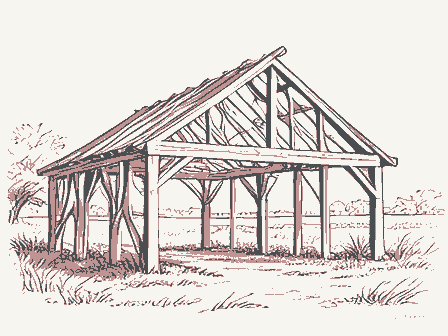
Whitewater Township (part 4 of 17)
Part 4 of 17 of the account of this township in History of Cincinnati and Hamilton County, Ohio, published 1894. 15,910 words, covering 9 settlements. Source changes inside the text are labelled at the exact paragraph where the next book begins.
Contents
19 sectionsThe section headings the book prints inside this chapter, on this part. Each one jumps to where it begins.
- Chapter Iv Story Of The Log Cabin
- The First Habitation
- First Experiences
- The Round Log Cabin
- The Real Log Cabin
- The Improved Log Cabin
- The Modern Scene
- Chapter Cincinnati, Past And Present
- Ohio Under French Rule
- Under English Rule
- The Ordinance Of 1787
- The Old Northwest
- The Ohio Land Company Of Massachusetts
- Settlement Of Marietta
- The Miami Purchase
- Settlement Of Columbia
- Location Of Cincinnati
- Primitive Cincinnati
- Agriculture Creates Cincinnati
Parts
17 pagesThe source prints this as one continuous account. It is split here so no single page grows too heavy to load; the text runs straight on across the parts and nothing is omitted.
The chapter
15,910 wordsReproduced complete and unedited from History of Cincinnati and Hamilton County, Ohio, published 1894. The text is machine-read from scans, so expect recognition errors: misspelled names, dropped words, and stray characters. Nothing has been corrected, because correcting a proper name invents one. The headings below are the books' own; source changes are labelled in place.
The organization of the county was proclaimed on the 2nd of January, and very shortly afterward the governor went on to Fort Vincennes, where he hoped to meet the chiefs of the several Indian tribes and offer them such terms as would bring peace to the harassed and weary settlers. But the hope was vain. About two months after he left, two more settlers were killed at Covalt Station, while at work in the woods near the fort making shingles. One of them was the brave Capt. Covalt himself.
Notwithstanding the steady presence of danger, a large number of the poorer class of settlers, who had been increasing at Cincinnati during the winter, determined to push out farther into the forest, and begin the cultivation of their lands. Some of these people were so deficient in means, according to one of the most quoted of the early chroniclers, that the chances of massacre appeared to them no more desperate than their condition at Cincinnati, which threatened absolute starvation. They accordingly formed themselves into parties, and were led forth, apparently, by the proprietors who had granted them lands, Symmes himself lending some of them assistance.
Three new stations were thus established during the month of April, at widely separated points in the lower portion of the extensive county. The most remote of these isolated settlements was established under the leadership of John Dunlap, one of Symmes' numerous surveyors, upon the eastern bank of the Great Miami, eighteen miles northwest of Cincinnati, in a position almost encircled by a turn in the river. Some thirty persons went with Dunlap to this spot, and constructed a stockade fort similar in plan to Covalt's, but much more carelessly and inefficiently finished. The area of the fort was one acre square. Dunlap, who was an immigrant from Coleraine, Ireland, gave the name of his native town to the place; but the pioneers of the county, as was usual in the frontier districts of the West, knew the station by the name of its chief personage. The township in which the now empty site of the fort lies has inherited the Irish title. The names of some of Dunlap's settlers were Gibson, Larrison, Crum, Hahn and Birket.
The second of the three stations of 1790 arose under the direction of Col. Israel Ludlow, the partner of Denman and Patterson, six miles north of Fort Washington, in the valley of Mill creek, within the present boundaries of Cincinnati.
The third party went eastward, out of the Miami Purchase entirely, and built a strong blockhouse on the east side of the Little Miami, about a mile above Columbia, within the territory which Virginia reserved upon ceding her western claims to the Confederate Government in 1784. The spot occupied by the blockhouse is in Anderson township, at the foot of the hills opposite Flinn's Ford, one of the abandoned pioneer crossings of the Little Miami. This was Gerard's Station. Its principal inhabitants were the families of John Gerard, Joseph Martin, Capt. James Flinn, Stephen Betts, Joseph Williamson, Stephen Davis, Richard Hall and Jacob Bachhofen.
The increase in the number of settlements gave the Indians larger opportunities for theft and murder. Many horses were stolen, some of the families at Columbia were robbed of household property almost before their eyes, and in October, after Gen. Harmar's main forces had left the county on their unfortunate expedition to the Indian towns of the Maumee, Jacob Wetzel, of Cincinnati, was attacked in the thickets of Millcreek Bottom by a savage, whom he managed to slay in a thrilling hand-to-hand combat, just in time to escape a band of his adversary's comrades, who were scouting near by.
The bloody defeat of Harmar encouraged the northern warriors to make a descent upon Hamilton county in full force. At daylight on Monday, Javuary 10, 1791, the inmates of Dunlap's Station, the farthest outpost in the dreary wilderness, were startled from their slumbers by the dreaded Indian alarm, and sprang up to find the woods around their fort swarming with an army of redskins, commanded by the Shawnee chieftain, Blue Jacket, and the detested cutthroat renegade, Simon Girty. The garrison consisted only of a detachment of thirteen soldiers from Fort Washington, under Lieut. Kingsbury, and ten able-bodied settlers, while the savages numbered several hundreds; but as the chiefs would give no satisfactory promise of quarter, the besieged naturally refused to surrender. A continuous fire was poured in upon the stockade; and firebrands shot upon the roofs of the cabins, till midnight of the first day, when the besiegers retired a little distance from the fort, and burned to death a prisoner named Abner Hunt, whom they had captured a day or two before their appearance at the station. The next morning a brave private soldier named Wiseman escaped from the station amid a shower of bullets, and carried the news of the attack to Fort Washington. He returned upon the third day with a party of Harmar's regulars and a company of mounted militia from Columbia; but the Indians had retreated about two hours before the reinforcement arrived, and were already beyond pursuit.
The attack upon Dunlap's Station, though unsuccessful, sent a thrill of alarm even through Kentucky; and the pioneers continued to suffer so heavily from small raiding parties during the year, that the greater part of the immigrants who ventured into the county stopped at Cincinnati, under the protecting guns of Fort Washington; improvement was held in restraint at the old stations, and no one dared open a new settlement at all.
Such settlers as were resolute enough to carry on their labors in wood and field, usually took the frontier precaution of working in bands, part of each band being posted so as to keep a sharp lookout for danger. If the enemy appeared in large force, sentinels and laborers fled pellmell for their fort, cabins, or other places of security. As an example of the activity required for this mode of business, it may be mentioned that in May two citizens of Cincinnati, named Scott and Shepherd, were chased from their cornfield, a mile out, almost into the streets of the village, not having time to bring off their plow-horses, which fell into the hands of the pursuers.
Some necessary household errands were discharged at the risk of life and liberty. One day in September, James Newell. a resident of Columbia, started to take a quantity of corn to the mill at Covalt Station. Ata place about halfway between the two settlements he met Capt. Aaron Mercer and Capt. Ignatius Ross, two hardy veterans of his village, who were returning home from the mill to which he was going. The two Captains had seen Indian signs up the river, and earnestly advised Newell to postpone the trip, and turn back with them to Columbia. Newell determined to proceed. He had scarcely parted from his friends when they heard the report of a rifle in the direction which he had taken. No other sound followed. Wondering whether they had heard Newell's weapon, or an Indian's, Ross and Mercer hurried back. Newell lay dying by the horse-path; his assassin, who had been concealed in a tree near the trail, having made good his escape. The body of Newell was carried back to Columbia by Ross and Mercer. The scene of his death, a dark and woody ravine crossing the Wooster pike, halfway between Plainville and Red Bank, is still known as Newell's Hollow.
Altogether, over a score of persons were killed or borne away into captivity during the months of summer and autumn. Among the captives was Oliver Spencer, a lad of thirteen, son of a prominent Columbian settler. More happily favored by fortune than some of his comrades in distress, he was recovered by his father before he had time to develop into an Indian, and eventually became one of the most esteemed citizens of the county.
There is a vague tradition in the Little Miami valley, surviving as far north as Xenia, of a fierce onslaught made upon Gerard's Station during the fall of this year, but the particulars of the combat have faded utterly from legendary recollection. It is only known that the assailants, whether few or many, were beaten off. The sound of the conflict probably attracted relief from Columbia.
The life of the American frontier was essentially a struggle between two different orders of society, one of which was thousands of years in advance of the other. The bloody incidents of personal encounter between the two races represent the force of barbarism on one side of the picture; the bare forms of civil custom which the colonists strove to maintain, when the great machinery of civilization was utterly wanting to fill them, illustrate the force of progress upon the other. In the midst of the appalling attacks of the natives, the court of general quarter sessions of the peace, inaugurated by the governor the year before, divided the lower part of the great county of Hamilton into three long townships, running back side by side from the three settlements on the Ohio to a terminus beyond the present line of Butler county. The most eastern. of these woodland bailiwicks was called Columbia townsbip, the middle one, Cincinnati. the most western, Miami.
The expedition undertaken by Governor St. Clair, with the object of doing what Harmar had failed to do, for a time deprived the outer settlements of their inhabitants. After their guard of regulars, and some of the fighting men of their families, had gone to join the northward march of St. Clair. the remaining people of Covalt's Station grew fearful, left their fort to the gloomy silence of the forest, and went down the river to Gerard's. Dunlap's settlers remained at their post until they heard the news of the'terrible carnage-and rout of the army, then, knowing by experience what consequences to expect, they hastily retreated to Cincinnati. But the enemy, foiled of his surest prey by this timely flight, kept aloof from the stronger stations, the winter passed quietly, and the soft and balmy spring of 1792, which started the buds of the forest, and filled the valleys with the warble of the birds, much earlier than their usual time, allured the fugitives back to their clearings before the end of February.
Their encouraging example called several new settlements into existence, the most important of which was Mercersburgh. Capt. Aaron Mercer, its founder, was a relative of Gen. Hugh Mercer, the long-lamented hero of the battle of Princeton; like him, of Irish birth, and like him, a Virginian by adoption. Capt. Mercer was of that large class of Revolutionary heroes who sacrificed their worldly fortunes upon the altar of patriotism. He left Winchester, Virginia, with his family, in 1790, reaching Columbia just as the troops belonging to that station returned from the scene of Harmar's defeat. There he resided, a leader in the community, until the rare season of 1792 invited him forth, at the head of a number of his Virginian neighbors, to begin the settlement of Mercersburgh. The tract which he bought for this purpose was on the east side of the Little Miami, three miles above Gerard Station, on the first elevated land of the valley. The position seemed secure from the average backwaters of the vast lower bottoms, and there, where several cold and crystal springs gushed abundantly forth from a nook at the foot of the hills, Mercer laid out a con- siderable subdivision, made a clearing, and erected a '' garrison,'' as a log fortress, or even a single blockhouse, was corruptly called by the Virginian borderers.
__ The garrison was a rendezvous for parties of militia engaging in scouting expeditions till the close of the Indiau war. Mercer was largely aided in his enterprise by his two sons-in-law, one of whom was Ichabod B. Miller, a surveyor, and the other, Thomas Brown, a merchant. Brown was a son of the Thomas Brown who, some years later than this date, expanded Red Stone, Penn., into the borough of Brownsville.
Capt. Jacob White, an immigrant from Red Stone. with several associates named Winans, Flinn, Goble and Pryor, opened the next settlement on Mill creek, at a point about five miles farther up than Ludlow's. This settlement comprised a blockhouse and several cabins, the blockhouse being built upon the southern bank, with two of the cabins, and the others just across the stream. The town of Carthage is the nearest representative of White's Station.
Henry Runyan, one of Virginia's daring natives, scorning the protection of numbers, ventured still farther into the howling wilderness, and erected his solitary cabin beyond the site of Reading. It seems remarkable that his retreat escaped the eyes of the savages, for they were constantly on the watch. Three of Covalt's settlers were captured during the summer, within a few hundred yards of the fort, and in the fall, Maj. Riggs, of the same station, was shot.
The county enjoyed a tolerable repose during the spring and summer of 1798, while Gen. Wayne was drilling his legionaries at Cincinnati, for the third attempt to subdue the exultant foe, but shortly after he removed northward, in the autumn, the danger cloud again cast its shadow on the clearings. One morning in the latter part of October, a courier from Gen. Wayne galloped up to Capt. White's station ou Mill creek, informed the settlers that a small detachment of the army, under Lieut. Lowry, had been destroved near Fort St. Clair,the government post northwest of Hamilton county; cautioned them against surprise, and passed on with his warning to other settlements. - Late that afternoon some of the dogs belonging about the cabins scampered away into the woods for a hunt; soon afterward a vociferous barking was heard from the hill above the station. One of the men, Andrew Goble, went out, in foolhardy contempt of Capt. White's protest, to see what mysterious quarry had been brought to bay. He had advanced only a little way when the hillside rang with a heavy discharge of firearms and the wild war whoop arose. Goble fell dead with eight bullets in his body, and thirty Indians rushed down upon the blockhouse. A widow named Pryor, with-her three small children, was in one of the cabins on the northern bank of the stream; one child was killed by the fire of the savages. She escaped across to the blockhouse with another; the third, an infant which sheleft lying in its cradle, was soon brained against a stump. The assailants, having lost their chief and several other warriors in a desperate attempt to take the blockhouse by storm, disappeared at night. fall.
The settlers of Hamilton county suffered but slightly from predatory incursions after this attack. for the bulk of the warriors were employed through the spring and summer of 1794 in watching Wayne's slow and cautious approach toward their homes; and after their united bands had been scattered by him at the decisive battle of Fallen Timbers, in August of that year, the tribes were too deeply crushed in spirit to undertake formidable expeditions. Some of their greatest chiefs, conscious that fate had irrevocably declared against them, renounced war forever, and spent the remainder of their lives in peaceful residence with the race which had wrought the downfall of their own. A few cowardly vagabonds, who had stolen away from the council-fires of their people to avoid the risks of open battle, flitted about the stations before and after the great victory, but they were more successful as thieves and scavengers than as murderers.
It is interesting to note how much of that social and civil progress, for the sake of which the pioneers suffered all the horrors of savage warfare, had been accomplished when the struggle ceased. At the time of the treaty at Greenville, August 3, 1795, where the Indians of the Northwest surrendered the lands of their forefathers forever, there were at least sixteen different settlements in Hamilton county, where, six years earlier, there were but four. Griffin's Station had risen on Mill creek, almost within rifle-shot of White's; Tucker's Station on the west fork of the same creek, below the siteof Glendale; Pleasant Valley Station, a short distance east of Tucker's; Voorhees' Station in the valley of East Mill creek, on the site of Lockland; McFarland's Station several miles east of Voorhees, on the summit of Pleasant Ridge; and Campbell's Station far to the west, upon the bank of the Great Miami, several miles below Dunlap's.
Cinecionati numbered about one hundred habitations, most of them log cabins; Columbia consisted of about fifty such houses; North Bend, South Bend and Sugar Camp, Judge Symmes' three villages, were each somewhat smaller than Columbia. The whole number of inhabitants in the settlements considerably exceeded two thousand, of whom five hundred dwelt in Cincinnati. About the same time the three lank and empty townshipsof 1791 were filled sufficiently to be divided into six, Columbia, Cincinnati, Miami, Colerain, Springfield and South Bend, while the region east of the Little Miami, colonized by the people of Mercersburgh and Gerard's Station, had been brought under the government of the county as the township of Anderson. Roads had been opened from settlement to settlement, churches and schools had begun to flourish, some of the trades were introduced, and, in short, the foundation was laid for the vast social and political interests of succeeding generations.
The settlement of the Northwest Territory was the second great act in the history of the United States, of which the settlement of Hamilton county formed a single brief but vivid scene. It has been the business of this chapter to review the more important, or the more eventful incidents of that scene, and to recall the personages who enacted its characteristic parts. The story loses distinct and peculiar interest in the great crowd of similar events which have transpired in this country since the sail of the '' Mayflower" cast its shadow on the coast of the Wampanoags, but it presents abundant examples of personal heroism, perseverance and endurance, and abounds in characters of a kind from which no human being is averse to claiming descent.
The moral disposition of those early adventurers is equally asubject for local pride and admiration. The settlements were almost free from the lawless and dissoiute class, the usual desperadoes of the frontier, the overwhelming moral sentiment of the community expelling or absorbing them. In most of the settlers was strongly reflected the devout religious ideas, and the sturdy and manly virtues of the old Colonial time. :
In blood and lineage the first settlers were such that all elements of the modern population can recall] their work with pleasure, and are honored alike by their memory. Some were of the old stock of New England and the other Atlantic States; many were of the Scotch-Irish strain; not a few were genuine Hibernians; others. were Pennsylvania-Germans, and most of these men, so diverse in origin, had fought in the war which won them a common national name, dearer and grander than the fondest lingering memories of their European sires.
The pioneers of Ohio were actuated to peyform their part by homely motives; they braved the perils and the hardships of the wilderness rather in duty to themselves than as the conscious benefactors of posterity, yet their successors and descendants, looking back upon their achievements through the mellow vista of time, can see.
the full extent of their services, not only to local society, but to the whole American nation of to-day. As they were foremost in the movement which gave their country freedom, so they were first in the movement which has given it power. Some of them lived to see another generation end the westward march which they began, and to marvel at the rapidity with which it had been accomplished. One of the blockhouses of their period was still standing near North Bend when Fremont carried the flag of the Unidn to the Pacific coast.
Chapter Iv Story Of The Log Cabin
THE PIONEER IN SEarcH oF A Home anp RELIGiIous LisERtTY - How Hr APPEARED - THE InpiaN Reaps THE Destiny or His Race IN THE CURLING SMOKE - THE Brvtsu Hasita- TION AND THE REAL Loc Casrn - How ir APPEARED - MIGHTY CHANGES WROUGHT IN A HUNDRED YEARs.
| Faas log cabin of the pioneer was the avant-courier of civilization - - -the powerful lever which pressed the aborigines of the Atlantic coast back toward the, Alleghanies, then over that mountain chain to the valley of the Ohio and on to other western lands. The Indian viewed the cabin of the pioneer with alarm. The smoke, as it gracefully ascended from the rude chimney and was borne away by the breeze, was to him an evil omen. In its graceful curves he read his destiny - the rapid decline and extirpation of his race.
An able writer has very beautifully and forcibly said that "the Indian's supreme impulse was that of absolute freedom - liberty in the fullest extent--where there was no law other than that of physical strength and courage. Might was right, and from that the weak had no appeal save that of the stoic's divine right of death. The Indian's death was therefore a part of his deep-seated philosophy, and no matter how he might be hemmed in, slowly starved to death, slain in battle, ordied of disease, his last and supreme act was to chant his death song. Death, then, was not his one dreaded, invisible foe. When he could fight and kil] no more, then it was his friend - the angel with outstretched wings in his extremity, tenderly carrying him away from his enemy and his pain. His ideal was that animal life typified in the screaming eagle of the crags, or the spring of the panther, whose soft foot had carried it in reach of the unsuspecting prey.''
When the log cabin appeared in the Miami Bottoms and on the mesas of Losantiville, at Ludlow and North Bend, the Indian read his destiny in the curling smoke. He watched it from the rugged hill tops which encircled the site of the infant settlement - now covered with palatial homes - and with saddened feelings divined his fate. In hostile bands he swooped down the then wild and romantic valley of the Mah-ka-te-wa, bent on spreading death and desolation among the pale-faced occupants of the log cabin. It was in one of these forays that poor Filson fell and was heard of no more.
But the march of the bold pioneer could not be stayed. His impulse was to move forward. His ancestors had fled from tyranny and religious persecutions beyond the sea; he was severely austere toward his own real or imaginary faults, welcoming any infliction that would only purify, as by fire, his soul, and fleeing from the persecutor of the body, he erected his altars to a God that was simply inappeasable, not only for his own sins, but for the yielding to temptation of the first mother of the human race, and this he unfalteringly believed '' brought death into the world and all our woe."' This creature of curious contradictions, while over- exacting toward himself, and welcoming any and all self-inflicted stripes, slept on his arms for anything mortal that dared to intimate an approach on his religious rights or beliefs. Yielding all to his God, he would yield nothing to any one or anything else. He would put a padlock on his mouth, that it might not speak any evil, and his very thoughts in the stocks, that he might not think evil - silence and dreams of the glories of heaven alternating with the groans and outeries of the damned, and eyes closed to all earthly things; he tried to coutrol the strong impulses of his heart in its love for wife or children in the fear that God would be jealous and might blast forever his soul with a frown. And from the depths of his troubled life he woyld ery out that he could do nothing to please God - that he was utterly unworthy and totally wicked; that his whole inheritance through a thousand ancestors was sin, and it would be but a supreme mercy in his Maker to cast him out forever. He invented his own penance, inflicted his own judgments, clothed himself in sackcloth and ashes, and finally consigned himself, as the only mercy he deserved, to the endless tortures of hell.
This was the fugitive, the waif cast upon the troubled waters that came from the Old to the New World in search of religious liberty and a home. Unkempt and unwashed, rough and storm-beaten, with long bushy hair, and in his leather jerkin, this apparition stood before the terrified savages of the Ohio Valley, rifle in hand, one foot thrown before the other, braced, erect, his keen eye directed straight into the wild man's soul; there he had put his heavy foot down, and the quick instinct of the savage told him that he would not take it up again. The aborigine struck like the coiled snake; the crack of the white man's rifle echoed through the gloom of the primitive forest, and stilled the serpent's rattle forever.
The First Habitation
The first habitation of the new comer was an open-faced brush house, if such an improvised affair can be called house at all. It was located between two sturdy forest trees standing close together, with a pole stretched between. Leaning against this were brush and brambles, with leaves piled on to form a roof. Two wings projected from the ends similarly constructed. and the whole front open - and here was the camp fire. The furniture was a pile of dry leaves on one side of this brush dwelling. This was rather a poor protection, yet there was a time when it has been all some of the earliest pioneers had, during their first long winter in the remote wilderness. They possibly had simply wintered here, intending to resume their journey when warm weather came. Sometimes they thus camped, waiting the fall of the high waters in the stream. These avant-couriers of civilization were encumbered with no camp equipages; the old heavy rifle. and the hunting knife, and the few leather clothes they wore were all they had. Then, too, they may have reached the one spot in the wilderness they had traveled so far to find. Just there a stream or a spring of sweet water, the giant trees extending their strong protecting arms, and the abundant evidences of game on every hand may have been the determining cause, or, as was often the case, living away back in some eastern State, or down in "Old Virginia,'' the young man had met some hunter and trapper, and had made eager enquiries as to where he could find the best place in the new country, and the hunter had mapped out to his mind the long road to that particular spot. How he would pursue a certain course guided by the sun, would cross certain rivers and streams, and follow these to such a point, then deflect to the right or left and then strike a certain prairie, or opening in the timber, and after a while be would pass a mound or a lone tree, and then in the blue distance a poipt of timber, and from that another point, and then for days and days upon the prairie sea, and again reaching the timber another stream, and follow up that to where a creek or arm emptied into it, thence up that stream, and a small prairie and a grove, aud then on and on to the timber and streams again, and here a spring would be reached
- a natural camping place and perhaps the end of the loug journey, and to-day his grandchildren and great-grandchildren, born on the old farm where he first stopped and put up his brush house, may not know or be able to find the spring that was his objective point when he so bravely started from his father's home in the east or south. The brush covering protected him somewhat from the inclement elements, the fire in front served a double purpose - it warmed and dried him when cold or wet, and kept away the fierce wild animals that otherwise would have attacked and devoured him. If during the night it burned low, the screams of the panther, or the howls of the close-coming wolves would admonish him to throw a few sticks on the fire, or sometimes amuse himself by firing at the eyes of the beast that was so near him that its gleaming eyeballs made an excellent target.
First Experiences
The first months of the pioneer's life were spent in the most primitive manner. He procured his food with his rifle, supplemented with the natural fruits and berries of the woods, learning to eat many of the roots that he could dig. His only neighbors were the Indians, and he often got from them some of their coarse materials for making bread. 'The only chief deprivation was the want of salt. This was the sole luxury of which he would often dream that he had left behind when he ventured out from civilization. Early in the spring he was hunting in the woods for the wild onions that are among the first to push their green stems above the soil, and in the wild sheep-sorrel he found the delicious acid that his system so much needed; then the May apples, and then the berries, the paw-paws, the nuts and wild grapes, the buds, the bark of certain trees, and at a certain time in the spring the tap root of the young hickory were all in their turn within his reach, and were utilized.
This was the first little wave, the immediate forerunner of the round log cabin. The pioneer had soon learned many of the Indian ways, and their expedients in emergencies. He was a demonstration of the fact that a civilized man will learn to be a wild man in less than a fifteenth of the time it will take to teach a savage to become civilized, or to like any of the ways and habits of civilized life.
Had he forgotten to think in this lonely, silent life? He would visit bis distant neighbors in their wigwams, approaching as quietly as they, enter with a grunt, seat himself, light his pipe, and all would sit and smoke in silence. An occasional grunt or a nod of the head, and never a smile; this had come to be his idea of enjoyment in social life too. He learned to go to the deer licks, as had the Indians, for other purposes, as well as those of finding the deer there and shooting them. He had learned to find certain clays that the savages ate. Hesoon knew as much of wild woods life as did the natives.
One day late in the spring, while hunting, he met an Indian, who startled him with the news that a pale-faced neighbor had come and actually had settled as near as fifteen miles up the creek. This was the most astounding news he had ever heard. Only fifteen miles - why, this is settling right in my door-yard, and not so much as even saying, by your leave! Can it be possible? I can't stand too much crowding. He quits the chase and returns straight to his cabin, cooks and eats his supper, and sits on his log and smokes and thinks, yes, actually thinks, till his head fairly swims over the day's news. He goes to bed and sleeps and dreams that millions of people are pouring into his cabin, and behind them still comes the eternal stream of humanity, laughing, crying, shouting, struggling, and the great wave is upon him and he is being smothered, when, with a mighty effort he wakes, and the owls are hooting from the tree-tops, and the wolves are howling beyond his cabin their nightly lullabies. And he is so thankful it is but a dream - but be again thinks over the news, and finally determines on the morning he will go and visit his
He pays the visit the next day, and his sudden and strange appearance is nearly as great a surprise to the new-comers as was the news to him the day before. He finds the man busy chopping, and for the last mile had been guided by the ring of the axe, and seated on a log they tell each other the latest news from the settlements and from the wigwam villages. The new neighbor tells him that he and wife had come on foot from Vermont, and had arrived some weeks ago, and did not know they had a white neighbor within a hundred miles. He described how he had carried the rifle, the axe and the few little things they had brought, and his wife carried the hoe, the only farming implement they had, and hung on the hoe, over her shoulder, was the small bundle of her earthly possessions; that they had heard of the rich country in the Miami valley, and had got married and started for the good country, where they could make their home and their farm, and in time hoped to have a plenty; they had planted the two or three potatoes, the half dozen pumpkin seeds and the few hills of corn, and the first year they hoped to raise some seed. The gun, the axe, an auger and the hoe were their marriage dower, with which to start life. They had brought a few trinkets, and on their way had exchanged those for some skins and furs, that were so necessary.
The Round Log Cabin
The man and wife had put up the round log (or pole) cabin, and covered it with bark. It had simply a door for entrance, and a stick and mud chimney - no floor, except as nature had made, but here and there was laid a dried skin, and in one corner the man had made a one-legged bedstead, and crossed this with raw hide whangs to support the bedding of skins. Did you ever see a one-legged bedstead ? No. It is made by making the one leg, and then in the corner of the room you bore a hole in each wall; one of these holes receives the side rail from the post and the other receives the end rail from the same post, the two walls of the building form the other side and end of the bed, and there you have it - a resting place fit for a king! if the mind is content. Upon these primitive beds of our fathers has come as sweet repose as ever found its way within palace walls and on the great mahogany bedsteads draped in silks and satins and the costliest laces.
The small ''clearing and girdling'' was planted by the wife mostly, while the man felled trees, chopped logs and gathered and burned the fallen timber. The wife worked with the heavy hoe, and the man with the axe and gun. The few seeds they planted grew at a remarkable rate, and now they had in store a little bread, a few vegetables and an abundance of meat. His gun and traps had brought them meat and fur and feathers, and honey they had found in abundance in the forests. Before the year expired they made a raft and loaded it with their stores, and went to the trading post, and exchanged honey, furs and pelts for such manufactured articles as they needed, and ammunition and salt. They had enough to buy a pony of the Indians, and by the second year were farming in great content. Their most profitable crop was the corn, which would sell at the fort for one dollar a bushel. ;
The Real Log Cabin
But a few years have passed and the land begins to be dotted with log cabins. That is, every few miles on the way could be seen in the distance the blue curling smoke lazily ascending from their outside Jow mud and stick chimneys. This now is the glorious log cabin day and age. Let us examine one, and, if we can, secure the shadow ere the substance has gone forever. As you approach you are impressed with the squat and heavy, solid appearance of the building. The roof is of split clapboards, weighted with heavy poles. There is not so much iron as a nail in all the building. The batten door is made of the same kind of boards, and swings on wooden hinges, and has a wooden latch, to which is attached a leather string that passes up and through a small hole to the outside. To pull this string is to raise the latch and permit the door to open. To lock the door it is only necessary to pull the string inside, and then one on the outside can not open it. Hence, there is much friendly significance when one says to the other, " My latch string always hangs out for you.'' You will notice as you approach that to your right, and near the end of the cabin, but some feet in front of a line with front of the house, is a very small cabin, a kind of baby to the main building. This is the meat house. The lord of the manor is evidently a little proud of this larder, and hence it sets a little in front of the line of the dwelling. It bespeaks him a good provider, and "juicy hams and red gravy," galore. Farther off there you see the stables covered with straw, and the stacks of grain and hay, and over there is a long rack made of rails crossed over a pole about two feet high, filled with straw, and about the premises are cows and calves, and horses with long hair and bushy manes and tails, and razor-back hogs, the largest part apparently the head from their long snouts. On every hand there are evidences of plenty and content. Pull the latch and walk in where a hearty and cheery welcome will greet you; even the long-haired curs will ''bay you a deepmouthed welcome"' that will be stopped only by the authoritative voice of the master. The wide, blazing fire, extending nearly across the whole end of the house, adds to the brightness, and the iron lard-lamp, with a rag for a wick - the recent great improvement upon the scraped turnip that did duty as a lamp - you hardly notice as it burns away stuck in a crackin one of the logs. The good wife and the strong and red-cheeked girls are preparing the evening meal. The spare ribs hanging in front of the fire are turned frequently, and their odors at once whet your already keen appetite. The bread is in the oven, and on this is a lid with the edges curled up to hold the heaps of coals that are on the top, while there are still more under the oven. Au iron pot is hanging by the crane that is boiling furiously. While these preparations are going on, take an inventory of the room. You are in one of the two split-bottomed chairs. The old chest can hold, or be seats for, three or four of the family: then there are two or three three-legged stools. Then there is a bench made of a split log with legs to it, that is, seats all along one side of the table, but is moved around at pleasure. Over there is " granny'' with her "specs,"' the brass rims nearly worn out, and all looking as old as she does except the new yarn string that holds them in plave. That is her corner on her low stool, where for years and years she has knit and knit, never stopping, even when she told of when she was a little girl and often lived in the fort when the Indians would go marauding over theland. At the other end of the 14 x 20) room are two beds setting end to end, with barely room for a person to squeeze between them. On these were such fat high feather beds, and over these such gay-figured red and light-figured woolen coverlets. These were woven away back in the old settlements. Such gorgeous figures, sometimes eagles with outstretched wings, or horses or dogs, or buffaloes, and even in a square in one corner were elaborate attempts at letters, but which, as you never could see exactly right side up, you never could read. A gay calico ''vallance'' hung around the legs of the bedstead and you know that these hide under each big bed a trundle bed. You see this was the original folding bed, and from this one-time-universal part of the furniture of the cabin came that barbarous expression from some old sour bachelor about ''trundle bed trash.'" Opposite the door, which stood open nearly the year round. except at night, was the window, the half of two of the logs cut away, making a hole a Jittle over a foot wide and two feet long, and the light came through greased paper that covered this opening. The floor was of puncheon, split logs, the face dressed down nicely with an axe, and the edges were tolerably straight, but cracks frequent. On the walls were hung strings of sage, onion tops, and a beautiful wreath of red pepper.
Some loose boards were laid on the cross beams, and the stairway was cleats, fastened to the wall. This was the girls' boudoir, and from the rafters hung dresses and female clothing, and in one corner close to the roof were the shoes that were only worn on Sundays when going to meeting. The ingenuity and taste of the girls had secured a barrel, and over this was spread a pictorial paper that had in some way come to the family from the East. This was their dressing-case, and on the barrel were combs, ribbons and trinkets, and a 4 x 5 framed mirror hung gracefully above the dressing-case against the wall. But leaving the privacy of the girls' private room we go below again, and soon discover that we had overlooked some of the most interesting things in the living room. In the wooden racks over the door were the two guns of the family, and hanging from either end of these racks were the pouch made of spotted fawn skins and the large powder horns with the flat end, wooden pegs in the small end that the hunter always pulled out with his teeth, when he would pour out the powder, in loading, into the palm of his left hand and then turn it into the muzzle of his gun. Cartridges were unknown in those days.
The women were as proud of their housebold utensils as were the men of their new buckskin hunting shirts or their guns, and chief among these was the cedar '*pigon.'' This was a bright red medium sized bucket, with one of the staves long and formed into a handle. The broom stood handy, just outside. This was made of a young hickory split up into small strips and turned over gracefully and tied in a wisp. For many years after we had the modern brooms these were still to be seen in every house, and were the scrub brooms.
But supper is now ready and steaming hot, the dishes are sending out great volumes of appetizing odors, and you and the men and boys are all seated around the bountiful board. The women and children wait for the second table. How can you wait in patience while the good man invokes heaven's blessing upon what he is pleased to call the Lord's attention to this "frugal fare.'' He likes that phrase, and his boys often think that to get to say it is sometimes the chief impulse to the ceremony. When the good man addresses his Maker, he changes his language materially from every-day use, somewhat as he does his clothes when he goes to church.
The blessing over, '' Now help yourself'' is all the ceremony, and all that you feel you need. The broiled venison steaks, the well-browned spare ribs, the '' cracklin" corn bread, the luscious honey piled in layers, and the cold sweet milk and the hot roasted sweet potatoes, with appetites all around the board to match this feast fit for the gods. You eventually quit eating for two good reasons - your storing capacity is about exhausted, and then you notice such a hungry, eager expression in the faces of the children who are standing around and furtively watching the food on the table, and no doubt wondering if you will ever get through. Each one, when he finishes bis meal, without ceremony gets up, and, as no change of dishes is thought of, the particular youngster who is to eat after that particular person is quickly in the place, and proceeds to stay his appetite. This arrangement is one of the children's, and no doubt often saves serious scrambling for places. The supper over, the pipes are filled, and the women have so quietly whisked things away and cleared the table - how they did it and where they put them you can not for your life tell, yet they are gone, and the day's working and eating are over, and in a few minutes the trundle-beds will be pulled out and the children at the head and at the foot will fill them something after the fashion of a sardine box. Let «is bid these good people good-bye.
The Improved Log Cabin
Nothing more distinctly marked the advance of the settlement of the country than the change in the architecture of the log cabins. The open-faced brush and the round log cabins that were so prominent in the first era have been described.
In a few years, if you go back to see your friend, as you are very apt to do, as you will remember that supper a long time, you will find a two-story hewed-log house, the cracks between the logs "chinked and pointed" with clean white lime mortar, and it may be the walls inside and out are heavily whitewashed. It may be covered with shingles even, and have glass windows with 6x 8 glass, put in with putty. Hard oak planks, cut mayhap with the whipsaw, are on the floors above and below. An outside rock chimney towers above either end of the building. A shed-roofed kitchen, which is also the dining room, is along the whole length of the main building. A leaning ladder of easy ascent takes you ''up-stairs," which is one big room, while the lower part of the main building is divided by a partition. The upper floor is the sleeping room of the boys and the ''hands," while the room partitioned off is the girls' room, and which they consider the '' parlor" as well as the bedroom. The old folks have the very tall feather bed in the main or living room, but under it is the trundle-bed, as there is probably another under every bed in the house; and although the number of beds has greatly increased, if there is company to stay all night this will necessitate ''pallets''?on the floor. There is still the great wide fireplace and the cheerful open fire, and, if it is winter, every evening just before dark a new back-log is rolled in with handspikes and into its place, and a ''fire-stick'' quite as large as one man can handle is placed on the short heavy dog-irons. But a second and smaller back-log is on top of the main one, and then the great yawning fireplace is soon full of the bright blazing fire. A hanging crane is in here as well asin the kitchen fireplace. In the same yard is still the old round-log cabin where the family lived before the new house was built. This is now the loom house. It is also lumbered up with barrels and boxes and piles of lumber and hoes, tools, and probably there is still a bed in it. The people are now wearing home-made clothing, and here the girls deftly weave those bright linseys with their bright red, white and black stripes.
On the outer walls of the loom house were now stretched the 'coon and ' possum» skins, and the roof was used to dry apples and peaches in the fall of the year, and in this lumber house, tied in sacks and hanging from the cross-beams, were the garden seeds, the bunches of sage, boneset, onion tops, and the dried pumpkins on poles, on which were placed the rings as thickly as they could be placed. The barrel of kraut stood with its heavy weights on it in one corner of the kitchen, and by the side of the fireplace was the huge dye-pot, and on this a wooden cover, and this. was often worn smooth, being a handy seat by the fire. Even stories were told that, seated on this, there had been much "'sparking'' done before the older girls. were all married off. When a young man visited a girl, or for that matter a widower or bachelor paid any marked attention, it was usually called ''sparkin'.'"
This hewed-log house was sometimes neatly weather boarded, painted, and had a neat brick chimney, and you could not very readily tell it from a frame house. Here children were born, grew to maturity, married and commenced life nearly in their one-room log cabin, which more rapidly gave way to the nice frame, or even the great brick mansion, with the ornaments and luxuries of modern life. Where now may be seen buildings of granite, marble and iron that gleam in the morning sun in blinding splendor, that have cost hundreds of thousands of dollars, nay, ever millions, once stood the round log cabin that had been built from the standing trees about the spot by the husband, aided only by the young wife, with no other tools than the axe and the auger. These hardy, honest, patient, simple-minded folk never bothered their heads to anticipate the regal edifices of which their humble cabin was the beginning. Their earnest and widest aspiration was merely "be it ever sd humble there is no place like home.'' Around these wide but humble hearths they saw their children grow up to strong men and women, honest, unsophisticated, rough and blunt in manner, but ignorant of the knowledge of the vices that so often lurk beneath: the polish and splendors of older societies and super- fluous wealth. Their wants were few and simple, within the easy reach of everyone; their ambition brought them no heart-burnings, no twinges of conscience, and none of that pitiable despair which what we may call that higher sphere in the circles so often brings - where there are no medicines to minister to a mind diseased.
The Modern Scene
All these conditions existed here within the comparatively short period of a hundred years. What a change has a century wrought! Judge Symmes, Benjamin Stites, the veteran Gen. St. Clair, ''Mad Anthony Wayne,'' when he came to break the backbone of the Indian confederation, and scores of others who attained distinction, witnessed the evolutions of the log cabin. Gen. William Henry Hayrison, who afterward became President of the United States, lived in one of these primitive hovels and felt thankful that he had such a shelter. In those early days no thought ever crossed his mind that he would occupy the White House and administer the laws of the Republic. To-day there are hundreds living in Cincinnati whose ancestors once lived in the cabins which dotted the hills and dales of Hamilton county. While living in those humble domiciles they laid the foundation of their future prosperity, and contributed their mite toward founding the great and wealthy city which is now recognized as the central mart of trade and enterprise in the Ohio Valley.
Could the red man return and gaze from the heights upon the bustling scene beneath, he would fully realize the force of his first convietions when he read the destiny of his race in the curling smoke of the log cabin. The mighty forests which were once the crowning glory of these heights, have nearly all disappeared to make room for elegant modern homes, and where the majestic oaks once stood in the valley beneath, tall church spires now point toward heaven, to remind man of the possibilities of eternal blessedness, and the moral force which is controlled by those mighty agencies - education and civilization.
Chapter Cincinnati, Past And Present
INTRODUCTORY OUTLINE - First ACCOUNTS OF THE Miami CounTRY - OHIO UNDER FRENCH RuLE - UNDER ENGLISH RULE - THE ORDINANCE OF 1784 - THE ORDINANCE OF 1787 - THE OxLp NortHwEsT - THE Oun10 LAND CoMPANY OF MAsSACHUSETTS - SETTLEMENT OF MARIETTA - THE Miami PurcHASE - SETTLEMENT OF COLUMBIA - LOSANTIVILLE - LOCATION OF CINCINNATI - PRIMITIVE CINCINNATI - AGRICULTURE CREATES CINCINNATI - DEVELOPMENT OF COMMERCE - MANUFACTURING IN CINCINNATI - STATISTICAL VIEW OF CINCINNATI IN 1825 - TuHEN anp Now - A Ricu Crry - A CosMoPoLiTaN Crty - A CENTER OF EDUCATION - A Unique AND PicTtuRESQUE Citry - THE SuBURBS - THE STREETS AND BurLDINcsS - THE PEOPLE OF CINCINNATI; THEIR NUMBER, CHARACTERISTICS AND AMUSEMENTS - CONCLUSION.
Tie sketch is in process of preparation while the '' World's Columbian Exposition'' is in the full tide of its mid-progress, in Chicago. The stupendous Fair commemorates the greatest event in modern history, the discovery of America, which occurred four centuries ago. But more than one hundred years elapsed from the date of the voyage of Columbus to the time when the first permanent settlement of Englishmen was made on the continent. Jamestown was founded in 1607, and the Pilgrim Fathers did not land at Plymouth until 1620. The'white population of the British American colonies, two hundred years ago, was less than the population of the city of Cincinnati is now. While nearly four centuries have rolled away since the caravels of the great Genoese captain first furled sail on the borders of the New World, we should not forget that it is within a period of about. two hundred years that the growth and development of the parts now called the United States of America, mainly fall. The history of Cincinnati, and of Ohio, covers little more than one hundred years - but what years! The people of the United States, in 1876, celebrated the Nation's birthday, by holding a grand Exposition in Philadelphia. The people of Ohio and the central States, in 1888, signalized the hundredth anniversary of the organization of the Old Northwest, and of the adoption of the National Constitution, by a magnificent Exhibit lasting one hundred days, held in Cincinnati. It is of this Queen City, the metropolis of the Ohio Valley, that the present chapter treats. mainly from a historical and descriptive point of view. FIRST ACCOUNTS OF THE MIAMI COUNTRY.
The beautiful region lying between the lower course of the rivers Little Miami and Big Miami, and bordered on the south by the Ohio, was famed, long before the days of the Revolutionary war, for its rich productiveness and its lovely scenery. The enterprising Virginians, who organized the Ohio Land Company of 1749, sent their agent, the wood-wise scout and surveyor, Christopher Gist, the comrade of Washington, to explore the valley of the Ohio, in the year 1750. Gist traversed Ohio, crossing the Scioto and other streams and reached the Miami Country near the middle of March, 1751. The bold pioneer was enchanted with the richness and beauty of the Big Miami valley, in which he beheld '' the fairest meadows that ever can be.'' He waded in deep grass, and remarked that white clover grew abundantly, and that herds of buffaloes were feeding in the open fields. His journal tells of "fine, rich, level land, well timbered with large walnut, oak, sugar-trees, cherry, etc., well watered with a great number of little streams," and abounding in '' turkeys, deer, elks, and most sorts of game, particularly buffaloes." It is more than probable that, in the spring of 1751, now more than one hundred and thirty years ago, the moccasins of Capt. Gist trod the hills and plains destined to be the site of the city of Cincinnati. Nor was it far from the same tempting region that Daniel Boone, twenty-seven years later, in 1788, against his will passed up the valley of the Little Miami, a prisoner of the Indians, forced to go to Old Chillicothe near where Xenia now stands.
Ohio Under French Rule
The conflicting claims of England and France for dominion in the interior of the continent were settled by the sword in what is known as the French and Indian war, which began in 1753 and ended in 1760. This was the war in which Washington won his first laurels, in which Braddock's defeat occurred, and in which both Montcalm and Wolfe were slain. We have told how, in 1750-51, Gist under the direction of an English Land Company crossed the Ohio on an expedition of discovery. The French government, in 1752, formally declared that the Ohio and its tributaries belonged to France, by virtue of the discoveries of La Salle. War followed, ending in the conquest of New France. In 1763 France ceded to England her possessions east of the Mississippi. The French claimed jurisdiction over Louisiana, including the Ohio Valley, for a period of eighty-three years, from 1682 to 1763.
Under English Rule
From the close of the Old French war, 1768, to the Treaty of Paris, which closed the Revolutionary war, in 1783, a period of twenty years, Great Britain held possession of North America, from the Atlantic to the Mississippi. During the war settlement went on steadily to western Pennsylvania, western Virginia, and central Kentucky. In 1790 the State of Kentucky had a population of 73,677.
The period between 1783 and 1789, from the Treaty of Paris to the adoption of the constitution, has been well named the critical period in America's history, for it was 4 time of transition, anxiety and uncertainty. Soon after the conclusion of peace, and in anticipation of the assumption by the general government of the western lands, Thomas Jefferson proposed to Congress a plan for the organization of the public lands.
This plan is known as the Ordinance of 1784. It proposed to divide all the western country into seventeen divisions or States, ten of which, on the north side of the Ohio, were to be named Sylvania, Michigania, Chersonesus, Arsenisipia, Metropotamia, Illinoia, Saratoga, Washingtonia, Polypolamia and Plisipia. The Ordinance of 1784 did not accomplish its design, but the discussion of it prepared the way for Congress to consider the famous organic law of 1787, which determined the destinies of the old Northwest.
The Ordinance Of 1787
The year 1787 gave to the American people two famous nationa] documents, the Constitution of the United States and the Ordinance organizing the Territory northwest of the Ohio river. The constitutional convention, over which Washington presided, and of which Franklin was a member, first met in May, 1787, at Philadelphia, and, after four months' deliberation, produced what Gladstone calls "the most wonderful work ever struck off at a given time by the brain and purpose. of man," namely, the Constitution.
While the Federal convention was in session at Philadelphia, the Continental Congress held its last meeting at New York, and demonstrated its wisdom by framing and enacting the body of law named the Ordinance of 1787. Of this celebrated State paper the profound Webster said: '' We are accustomed to praise the lawgivers of antiquity; we help perpetuate the fame of Lycurgus and Solon; but I doubt whether one single law of any law-giver, ancient or modern, has produced effects of more distinct, marked and lasting character than the Ordinance of 1787. We see its consequences at this moment, and we shall never cease to see them, perhaps, while the Ohio shall flow.''? This was uttered in 1830, and could Webster reappear now, and review the accomplished results of the law, his quoted words would but feebly express the truth. Five great States, with their innumerable farms, towns, cities, are the flower and fruitage of the Ordinance of 1787. Chicago, Cleveland, Cincinnati, and a score of other noble cities owe much of their prosperity to the wise provision of this inspired organic law.
The Old Northwest
What was the territory organized under the Ordinance of 1787, and now distinguished as the old Northwest? How extensive was it and where were its boundaries? It was the original " public domain"' of the country, our first public or government lands. The entire area was 265,878 square miles. It included the land now embraced by the States of Ohio, Indiana, Illinois, Michigan, a considerable - part of Minnesota, and a small corner of Pennsylvania.
The Ohio Land Company Of Massachusetts
The white population of the United States in 1787 was 3,800,000, about the present population of Ohio. The territory north of the Ohio was mainly savage woodland, the abode of deer, bears and buffaloes, and was roamed over by wild Indians whose rude villages were scattered here and there in rich valleys. The only white people in the Ohio country were a few traders and hunters, and a few captives taken by the red men in border war. The heroic Moravians were destroyed or
But the time had now come for the Saxon race to take possession of Ohio, and to establish permanent States there. The eye of speculation had long been fixed with impatient desire upon the wide acres between the Great Lakes and the Beautiful River. To a friend in Paris, Col. Pickering wrote in April, 1783: 'A new plan is in contemplation - no less than forming a new State westward of the Ohio."' In the autumn of 1785, Gen. Benjamin Tupper, authorized by Congress, went from Massachusetts to the Ohio country, prospecting, and after his return he told what he had seen and heard to Gen. Rufus Putnam, and the result was the organization of a land company to buy and settle new lands in the '' far west." The company chose Rufus Putnam, Mannasseh Cutler and Samuel H. Parsons, directors, and it was through the agency of Cutler that a purchase of land was negotiated with the National Congress at New York. William F. Poole truly says: ''The Ordinance of 1787 and the Ohio purchase were parts of one and the same transaction. The purchase would not have been made without the Ordinance, and the Ordinance would not have been enacted except as an essential condition of the purchase." The Ordinance was enacted on July 13, and the land. purchase completed on July 27, 1787. The purchase was located north of the Ohio river, west of the seven ranges, and east of the Scioto. The extent of the purchase was 5,000,000 acres, and the price paid for it $38,500,000, payable in public securities, equivalent to eight or nine cents an acre. .
Settlement Of Marietta
' The first settlement made on the Jand of the Ohio Company, or in Ohio, was at Marietta, just east of the mouth of the Muskingum, and opposite Fort Harmar, an outpost built in 1785. The settlers landed April 17, 1788. The settlement of this first town in Ohio was nearly coincident with the establishment of a governmental administration for the newly organized territory. Territorial officers were elected by Congress, October 5, 1787, as follows: Governor, Gen. Arthur St. Clair; judges, James M. Varnum, Samuel H. Parsons, John Cleves Symmes; secretary, Winthrop Sargent. Governor St. Clair reached Fort Harmar July 9, 1788, and on the 15th he took formal charge of. his office. Soon afterward he and the judges organized the territorial government in accordance with the provisions of the Ordinance of 1787; laws were issued, courts were established, churches and schools were put into operation, and New England industry soon caused the wilderness to be transformed. Thus began the State of Ohio, whose extent, at the time of organization was nearly 300,000 square miles, stretching westward to the Mississippi and beyond. Not until fifteen years later, in 1802, was it that the present State of Ohio was established.
The Miami Purchase
The New England colony, planted at the mouth of the Muskingum, grew to be the fair city of Marietta; but it was reserved for a settlement began near the mouth of the Little Miami, seven months after the founding of Marietta, to expand and develop into the metropolis of the Ohio Valley. Few, indeed, are the streams of a comparatively level region, that can rival the Little Miami for tranquil beauty; it may be called the Arno of Ohio; and the valley through which it flows is an agricultural paradise. The many attractions of this virgin valley were known to the red tribes who sought its hilly nooks in which to build their villages; and the enthusiastic tongue and pen of Capt. Gist had detailed the charms of the place nearly forty years before the first fixed settlement was made within its limits.
As early as the year 1786, the year in which Putnam and Tupper were organizing the Ohio Company to purchase lands on the Muskingum, Maj. Benjamin Stites, a native of New Jersey, brought down the Ohio river from Red Stone, Pennsylvania, a flatboat laden with flour and whiskey, which valuable freight he sold to the inhabitants of Limestone or Maysville, Kentucky. High excitement was prevailing at the time, among the Kentucky pioneers, on account of late depredations of Indians who had stolen many horses. A company of whites was collected to go in pursuit of the red thieves, and Maj. Stites, keen for any adventure, joined the party as a volunteer, and became its leader. Following the trail of the Indians, the pursuers came to the Ohio at a point nearly opposite the mouth of the Little Miami, and then crossed to the Ohio, or '' Indian side," of the river, a locality so often drenched in the blood of savage warriors that it came to be called the '' Miami Slaughter House.'' Still tracking the flying horse-thieves the Kentuckians went up the Little Miami to Old Town or Old Chillicothe, an Indian village north of where Xenia now stands; thence they went westward to the Big Miami, and down southward by way of Mill creek valley, to the Ohio. This excursion, which happened in summer, enabled Maj. Stites to see and examine delectable valleys of both Miamis, with their deep, rich soil, and magnificent natural growth of forest and grass, which had so taken the eye of Gist in 1751. Stites wisely concluded that the sooner he cast his own lot in this land of more than promise, the better. Well for him and for his happy descendants, still living in plenty in the region, that he did so. Like Benjamin Tupper, this equally enterprising Benjamin was seized with the fever of land speculation. We are told by good authorities that the courageous Major walked from Ohio to the city of New York, where Congress was in session, to confer with Hon. John Cleves Symmes, then a member of Congress from Trenton, and to propose the purchase of lands in the West. The prospect of profit from an early purchase, like a swift contagion, worked in the imagination of Symmes, who immediately went to the Miami Country himself, and by the testimony of his own senses verified the report of Stites. Symmes returned to the East, a company was formed of twenty-four men, among whom were Symmes, Jonathan Dayton, Elias Boudinot, Dr. Witherspoon, and Benjamin Stites. In his own name Symmes petitioned Congress for a grant of 2,000,000 acres of land, to be located within designated boundaries; but when surveyed the tract was found to contain only 600,000 acres, of which 20,000 acres were sold to Maj. Stites. The grant by Con- "gress was signed October 22, 1787, and the transfer to Stites was made November 9, 1787. On December 7, 1787, Stites purchased 10,000 acres more, making in al a snug farm of 30,000 acres of Miami valley, for the Major.
The reader will bear in mind that when the Territorial government of Ohio was organized, at Marietta, October 5, 1787, John Cleves Symmes was chosen one of the judges. The Miami purchase was consummated three months after the Muskingum purchase, and both were taken possession of in the following year, 1788.
Settlement Of Columbia
Maj. Benjamin Stites, anxious to take possession of his 30,000-acre farm on the Miami, induced a number of bold adventurers from Pennsylvania to join him, and, in the summer of 1788, he descended the waters of the Monongahela and Ohio, on a ''broad-horn" boat, arriving at Limestone (Maysville), Kentucky, in July. At this point the migrating company made a stock of clapboards to roof their anticipated cabins, and completed other plans for settling in the wilderness. Thirty of the band signed an article of agreement, but several seem to have backed out, deterred from venturing their lives in the '' Miami Slaughter House,'' by the rumor of fresh danger from the Indians. On the 16th of November, 1788, Maj. Stites with a party of twenty-six persons, including four women and two boys, embarked at Maysville, and started down the river to seek their future homes. They landed a little after sunrise, on the morning of November 18, somewhat below the mouth of the Little Miami, at a spot nearly in front of the present residence of Athan Stites, now within the limits of Columbia, a part of the corporation of Cincinnati. It is said that the first to plant foot upon the shore was Hezekiah Stites, brother to Benjamin. According to Rev. Ezra Ferris, the company, "after making fast the boats, ascended the steep bank and cleared away the underbrush in the midst of a pawpaw thicket, when the women and children sat down. They next placed sentinels at a small distance from the thicket, and having first united in a song of praise to Almighty God, upon their knees they offered thanks for the past, and prayer for future protection.'' This devout and pious scene, in the paw-paw thicket, near the shore of the Ohio, furnishes a study for some Cincinnati artist to immortalize in a painting. The bold brush of C. T. Webber would do it justice. Blockhouses were erected as promptly as possible, for the storage of goods, and the protection of the women and children, and thus was begun the settlement of Columbia, the nucleus of a great city.
The first county erected in Ohio was named after Washington, and its capital was Marietta; the second, with Cincinnati for its seat of government, was called Hamilton, after the wise and honored federal statesman.
The settlers passed through the usual hardships of backwoods life, beset with danger from savages, droughts and floods. The rifle was always at hand, in the cabin home, in the field, and at meetings on Sunday. In the winter and spring of 1788-89, the supply of food gave out, and the pioneers subsisted on wild game, and the bulbous root of the bear grass. There was abundance of fish in the rivers, and Turkey Bottom was so named from the fact.that plenty of wild turkeys frequented it. This same Turkey Bottom, the flats of the Miami, which now produce annual crops of corn, was cultivated in prehistoric years, by the savages; and the white settlers by a more careful tillage made it bring over a hundred bushels of corn to the acre, the first year it was broken by the plow.
Matthias Denman, of New Jersey, purchased of Judge Symmes, in January, 1788, a tract lying on the north side of the Ohio, opposite the mouth of the Licking, for which he paid 663% cents per acre, in Cuntivental certificates, or about $125 for the entire plat. In the summer he visited his purchase, designing to lay out a town and establish a ferry across the Ohio. Meeting with Col. Robert Patterson at Maysville, and John Filson at Lexington, Denman discussed his projects with them and proposed a partnership which was accepted, and on the 25th of August the three men entered into an agreement by which they became joint proprietors of the town plat. Sometime in September, Filson, who understood surveying, marked out a road from Lexington to the proposed settlement. Filson it was also who invented the name Losantiville, as an appropriate designation for the station the proprietors were about to locate. The word was intended to signify "the town opposite the mouth of the Licking.' The hybrid compound is thus explained: The initial L stands for Licking, the syllable os is Latin for mouth, anti means opposite, and ville is French for town - L-os - anti - ville. Much ridicule has been heaped upon Filson for bestowing this pedantic name upon the infant village which, two years later, was rechristened by Governor St. Clair. According to Col. Jones, astory 1s related of St. Clair, to the effect that when he arrived near Losantiville, standing on the roof of the boat, looking at the cluster of cabins, he asked '"' What in the hell is the name of this town anyhow?'' 'The bluff general changed the name to Cincinnati, which, though historically significant, is also pedantic, and open to the objection that it may be translated either as a genitive singular or a nominative plural - of Cincinnatus or Cincinnatuses. Doubtless St. Clair was thinking of the "* Society of the Cincinnati," rather than of the curly-haired Roman who left his plow in the furrow and went to join the army. One cannot help thinking that the beautiful Indian name " Miami" would have been a more fitting name for the town than either Losantiville or Cincinnati. There is a handsome brick edifice on one of our streets which the owner had the historical fancy to name '' The Losantiville."
Before much progress had been made toward planning or surveying the town plat, Filson's life came to a mysterious termination. While wandering alone in the Miami woods, he is supposed to have been killed by Indians. Robert Clark has an old schoolbook, once the property of a brother of the murdered man, in which is an inscription recording that "This book was the property of my brother John Filson who waskilled by the Indians.'' Some of the direct kindred of Filson now reside in Gallipolis, Ohio. The Cincinnati street, now called Plum, was originally named Filson avenue. Filson was a man of ability and education, a diligent explorer in Kentucky, Illinois and Ohio, the first historian of Kentucky, and the first to prepare an authentic map of that State. The historical investigators of Louisville have named a very important society ''The Filson Club,"' in his honor, and it would be fitting that some lasting work of architecture or other art should be dedicated to his memory in Cincinnati. One of our artists has sketched on canvas a spirited picture of Filson and his partners discussing the plan of the town they were about to found, and the suggestion is here ventured that the public or some publicspirited citizen might do the city a service by providing means for the completion of this design on a large scale.
After the tragic vanishing of Filson, his interest in the company was disposed of to Col. Israel Ludlow, who had come to the west as a surveyor for Judge Symmes. A part of the original Indian fort '' Ludlow Station,'' erected in 1790, was built into the locally famous Ludlow Mansion, which is still standing in Cumminsville, near Mill Creek. Israel Ludlow laid out the town, which, it is probable, Filson had begun to survey. ;
The first colonists of Losantiville, or Cincinnati proper, like those of Columbia, made the town of Maysville their place of rendezvous before setting out for their permanent destination. They embarked on the 24th of December, 1788, perhaps s mewhat late in the afternoon. Theriver was choked with floating ice, which made navigation difficult and perilous. The voyage was safely accomplished, and the company, consisting of twenty-seven men, landed on December 28, 1788, at a small inlet near what is now the foot of Sycamore street. This point, and others of historical significance, should be marked by appropriate granite tablets, for the benefit of future generations, and as a matter of municipal duty and pride. The little harbor in which the boat was moored for many years bore the name of ''Yeatman's Cove,'' and near it was erected the first noted public resort of Cincinnati in pioneer days, "' Yeatman's Tavern."
No part of history is more useful than correct names and accurate dates, for the man and his time are essential facts. The names of the men who stepped ashore on the border of Yeatman's Cove, December 28, 1788, now (1893) one hundred and five years ago, are Col. Robert Patterson, Israel Ludlow, Noah Badgely, Samuel Blackburn, Thaddeus Bruen, Robert Caldwell, Matthew Campbell, James Carpenter, William Connell, Matthew Fowler, Thomas Gizzel, Francis Hardesty, Captain Henry, Luther Kitchill, Henry Lindsey, Elijah Martin, Wm. McMillan, Samuel Mooney,
Location Of Cincinnati
The site chosen by Denman and others, for the location of a city, was most advantageous. It would seem that Nature suggests where great towns will flourish best, and she refuses to aid man when he selects unsuitable places to build for multitudes. Environment determines the character and controls the growth of a city. There must be some strong and lasting motive to draw or drive many people together in one compact community for purposes of organized gregarious life. The sagacity of self-interest often fails to "boom" a badly situated town into importance; and the untutored reason or instinct of primitive tribes sometimes reveals to them where they may wisely pitch their tents or build their social villages. Richness of soil, abundance of mineral products, nearness to water courses, and natural facilities for road making, are among the essential requisites to supply man's needs. The site of Cincinnati was occupied in the remote past by a permanent encampment or town of mound-building savages. Those strange prehistoric people, whether Indians or belonging to some other race, left mysterious records of themselves in endless earthworks long since erased to give place to streets and blocks. Oneof our streets bears the name, Mound, and at its southern terminus, where Hughes High School now stands, once rose a great tumulus, the monument of a forgotten people.
Subsequent to the time of the mound-building folk, the site of Cincinnati was the temporary abode of the wild red men of the Miami tribes, and, after it was abandoned as a camp the spot continued to be familiar to the roving savages, who bent on war, or the hunt, or trade, or theft, followed the worn paths southward through Ohio, or northward across Kentucky, or up and down the Ohio in canoes to a converging point at the mouth of the Licking. Itis conjectured, not altogether fancjfully, that these wild bow-and-arrow men were guided in their course toward the future Queen City by tracks and roads which the buffalo and the deer had trodden, these animals seeking richest grazing fields and sweetest waters, as, led by a similar instinct, the wild turkeys flocked to Turkey Bottom. Thus centuries before the white man's foot was attracted to pursue the obscure paths and traces that led to the charmed garden, ''opposite the river's mouth,'' the Indian, the Mound- Builder, and the wild beasts of the forest and birds of the air had sought out the same well-omened spot. We may say with perfect truth that Creative Power formed the peculiar geological and geographical features of the locality in such a way as to point out to living creatures an area of subsistence strikingly adapted to the needs of man and brute.
In the year 1829, only forty years from the time when settlement was first begun on the Ohio, Timothy Flint contributed to the '' Western Souvenir" a fanciful story, entitled ''Oolemba in Cincinnati." Oolemba was drawn to represent a Delaware chief, who tells us in the tale: '' Five hundred moons have waned since I dwelt under a huge sycamore on the brow of the hill whose margin is washed by the silver wave of the Ohio. This sweet valley is bounded toward the rising sun by the gentle stream of Dameta, or the creek of deers; and on the side of the. setting sun by the transparent waters of Elhena, or the stream of the green hills. Wood crowned ridges shut it in on the north.'' The chief goes on to relate events. which caused him to leave his home and: birthplace, and to wander far to the west. He is represented as finally returning, after long absence, and sometime in 1828 he. first sees Cincinnati. The impression the town made upon his simple mind Oolemba. thus conveys in words:
''At length I had clambered over a thousand fences, been barked at by a thousand dogs, been covered with dust, and scorched with the sun, when I arrived on the wooded banks of the Licking. I thanked the Great Spirit and prayed that the valley of Elsindelowa [Ohio] might be as green and wooded as these banks. But when I emerged from the woods at the mouth of the Licking - what a sight spread before me on every side! - Spirit of my fathers! Would that I had fallen to the earth at the sight. The hills still remained, as if to mock me. They rose in the blue air, and were covered with green trees as when I left them. The waters of the Licking still made their way over their rocky bed. But how was everything else changed! All the vale of Elsindelowa was filled with the big cabins of the white men. The big canoes and buildings vomited up smoke. A dim dust arose above the cabins, and a dull but incessant noise, as of all kinds of life and movement rose upon my ear. The big canoes covered the silver wave. Even the shore on which I stood was covered with the cabins of the whites. I stood amazed. My head became dizzy, and my thoughts confounded. 'Is this,' I asked, 'the place I left forty winters ago, one wide forest, without a white man's cabin in the land?' "
The words put into the mouth of the Indian chief describe just what Flint himself must have seen a thousand times. And the route traveled by Oolemba, on his approach to Cincinnati, was the one marked out by Nature and surveyed by Filson, and which is still a main highway of communication into the south. Hon. Job E. Stevenson, in a communication to the '"'New England Magazine," says, speaking of the favorable location of his adopted city: "A slight knowledge of Ohio and Kentucky will convince anyone that the situation of the Miami Purchase was advantageous. The Licking river, opposite the purchase, gave an outlet from Kentucky, for two hundred miles; and the dividing ridge called 'Dry Ridge,' which stretches from Central Kentucky to the Ohio at Covington, formed a natural road without a bridge for fifty miles, and then, crossing a small stream, entered the Eden, called 'The Blue-Grass region,' of which Lexington was then, as she still is, the capital. This route was then the way from Kentucky, Tennessee, Georgia, and the Carolinas, and is now the line of our Southern Railroad track. Between the Miamis, up the valley of Mill creek, was a corresponding route from the Ohio river northeast, extending to the watershed of the State. Here was the crossing of the river, the thoroughfare north and south, northeast and southwest, at the point of embarkation and debarkation toand from the Ohio. Add the fact of the unrivalled fertility of the Miami Country and of the Blue-Grass region, and we have an assemblage of excellences, which have been rarely if ever equalled."'
Primitive Cincinnati
From 1788 to 1802. - About ten months after the landing of Cincinnati's first settlers, at Yeatman's Cove in the winter of 1788, Maj. Doughty, of the United States army, began to build Fort Washington, a log structure made of large trees cut from the space on which it was located, a tract of fifteen acres sloping up from the river bank, in that part of the city now lying between Broadway and Main, and bounded on the north by a line somewhere between Third and Fourth streets. The site of the fort is now partly covered by the Lorraine building, which took the place a few years ago of Mrs. Trollope's Bazaar, on Third street near Lawrence and Broadway. The fort when completed, in December, 1789, was occupied by Gen. Harmar, with a garrison of ninety men, to protect the settlement against Indians. Most of the town plot was still covered by trees, sycamore, maple, oak and beech - primeval trees, stately and glorious. The first survey of the town marked its outer limits by the river and three streets - Northern row (now Seventh street), Eastern row (now Broadway) and Western row (now Central avenue). :
Gen. Arthur St. Clair, governor of the Northwest Territory, came from Marietta to Fort Washington in January, 1790, and it was then that the town's name was changed from Losantiville to Cincinnati. Fort Washington was for several years the most important building in the town, and was a post of much importance during the Indian wars waged by Harmar, St. Clair, Zeigler, Wilkinson and Wayne. The post was abandoned in 1844, when the National Government removed its gar-
Some effort of the imagination is requisite to reproduce a true picture of the Cincinnati of St. Clair's day; Cincinnati the capital and emporium of the old Northwest Territory; Cincinnati the muddy-streeted, woods-surrounded, stumpdotted, log town, protected by the swaggering, whisky-loving, dare-devil soldiers of Fort Washington. During the first four years of the town's existence its inhabitants and the other settlers of the Miami Country lived in constant dread of the native tribes whose rich lands they had so long coveted. The military protection afforded by the troops at the fort was inadequate. Harmar was defeated in 1790; St. Clair's terrible repulse and defeat was in 1791; the people were panic-stricken; the settlements seemed on the edge of ruin, until, in 1792, the sword of '' Mad Anthony Wayne" flashed along the border and led civilization to victory. Let some patriotic citizen mark with a suitable enclosure and memorial stone the great elm tree near the corner of Chase and Dane streets, Cumminsville, under which encamped St. Clair in 1791 and Wayne in 1793. After the Treaty of Greenville, in 1794, the doomed Indian sullenly removed his tents to other fields. The farmers began to breathe easily, and could leave the rifle on its hooks over the chimney-piece while they went out to plow or to harvest. The traders under the shadows of the wooden walls of Fort Washington ordered new stocks of goods with gathering confidence. New families from the East floated down the Ohio on their ' arks.''
But the irresponsible soldiers, no longer on duty in the field, and doing the proverbial mischief which Satan finds for idle hands to do, became an intolerable nuisance to the citizens. The officers were insolent and overbearing; the men in the ranks were quarrelsome and intemperate. Dr. Drake tells us that the best trodden road in the village was that which led from the fort to a still house on Deer creek. The settlement was infested, as frontier places and river towns were wont to be, by lawless rascals of every description - thieves, gamblers, cutthroats and robbers. Law had not yet got a firm grip on the throat of license and crime. Society was not organized. Confusion reigned. Self-interest was the ruling motive of many individuals. And yet the better class of people soon dominated the worse elements. Institutions took shape. The first church, the first school, the first ferry, each a classifying and regulating agency, were -got into operation in 1792, even while "Mad Anthony" was expelling the wielders of the tomahawk and scalping knife. The jail and the newspaper, antagonistic forces, came in 1798. As for the court of justice, it was supplemented and sustained by those cheerful moral supports, the pillory, stocks and whipping-post, as in the good old days of Winslow and Endicott in New England.
The Opus and Epic of the border was singing itself all around. Man was doing over the old Sisiphus work of rolling the stone up hill. The gun, the axe, the plow, the boat, the assembling of men with ideas in the primitive wilds, to shape a new State of new material; the struggle with rude nature; the beginning of a city; that is what we must try to realize when we think of the doings and sufferings of Cincinnati's founders in the first decade from 1790 to 1800. The scene was rude, the life was hard and unpoetical. The men and women were actually forced to live, at the outset, like an earth-sprung race. They had not always enough to eat. They became victims of strange diseases. They wore uncouth dresses, as savages do - clothing made, in part, of the fells of beasts, buckskin breeches, vests of the deer's hide, caps of fox-skin. They pounded their corn in a mortar, or ground it, as Arabs do, in a hand-mill. They ate the roots of wild grass. They went armed not only to the woods, but to the house of prayer. They killed wild deer, and bear, and turkey, for food, and are said to have relished an occasional rattlesnake stew. Such were the necessities of those who started civilization on the banks of the Ohio, a hundred years ago! As late as the year 1795, Cincinnati was a huddle of log cabins, direct " quotations from the forest," occupied by a population of not more than five hundred. There was not a brick house in the town, nor so much as a single brick to begin a house with. The original comers to Losantiville found the place mud, and left it logs. Nor did the town change much, except for the worse, as regards building and paving, for five years more; for in the year 1800, when the first census was taken, the figures show that only 750 inhabitants dwelt within the town. The Territorial legislature, organized in 1798, held its first sessions in Cincinnati, but, in 1801, the seat of government was transferred to Chillicothe, a change which gave a backset to the older village.
Cincinnati was incorporated as a town in 1802, the year in which Ohio was admitted into the Union asa State. Ohio had then a population of over sixty thousand, of which number, though Cincinnati had less than one-sixteenth part, she was yet far the largest town in the State. The officers who administered the town government when it was first incorporated were: President, David Ziegler; recorder, Jacob Burnet; trustees, William Ramsay, David E. Wade, Charles Avery, John Reily, William Stanley, Samuel Dick, and William Ruffner; assessor, Joseph Price; collector, Abram Cary; town marshal, James Smith.
Agriculture Creates Cincinnati
A German botanist wrote a chapter to prove that man subsists on dust and air, since our breath and our food come directly or indirectly from earth and atmosphere. Surely the climate and the soil surrounding Cincinnati are her chief nourishers; tillage supplies her means of wealth. Cincinnatus was a Roman farmer, and his name, like that of Putnam, suggests the plow first and the sword next. A historian tells us that the titular hero, Cincinnatus, whose statue adorns the front of a Fourth street business house, "was a frugal man, and did not care to be rich; and his land was on the other side of the Tiber, a plot of four jugura, where he dwelt with his wife Racelia, and busied himself in the tilling of his ground." After conquering the enemies of Rome, Cincinnatus retired to his country home; so George Washington, surrendering military command, went back to Mount Vernon to cultivate his plantation. In like manner hundreds of Revolutionary officers and soldiers, when the war was over, beat their spears into pruning-hooks, and their swords into plowshares. Not a few chose out their four or more jugura on the smiling banks of the Ohio.
It is impossible to conceive a more purely bucolic community than that which founded Cincinnati. An Ohio poet, John J. Piatt, in a poem called "The Lost Farm," surprises the reader by revealing in the closing line of his story that :
The Queen City, like many other American cities, was farm-land before it was houses. The ground on which the business part lies, and that on the top of the surrounding plateaus, was as rich as soil can be. Even the side-hills and the abandoned quarries are fertile, and soon clothe themselves with luxurious vegetation. Almost every original lot-holder planted a garden and an orchard. In 1798, Dr. Allison, Surveyor-General of the Army, had, we are told, on the east side of the fort, a large lot cultivated as a garden and fruitery, known as Peach Grove. Also, we read in the old records, that in 1795-1800, Hezekiah Flint cultivated, as a cornfield, the square between Fourth, Fifth, Walnut and Vine streets. At the same period, the grounds, where the Cincinnati Hospital now stands, were a half-cleared field overrun-with blackberries. On the slope to the river, between Main and Walnut, was a small vineyard, probably the first in the Ohio Valley. There must have been at least a suggestion of apples on Walnut street, which was called " Cider street,'' by our not totally abstinent fathers. We still have an Orchard street, as well as a Vine, a Plum, and a Cherry street.
The cluster of log cabins, into which the forest oaks, beeches and maples were turned, grew by aggregation, and spread from street to street, square to square, covering the fertile acres. The little town opposite the mouth of the Licking lengthened up and down the Ohio shore, and widened toward the hills, filling up the space of the bottom Jands. Then the ambitious city began to climb the terraces, and to take possession of the uplands. The stimulating cause of this growth and expansion was agriculture. The surrounding country fed the town, and fattened it. The farms nourished the trade-center, and were, in turn, made valuable by the reaction of commerce. ' Nothing," says Charles Cist, our best early annalist of the - Miami Country, " Nothing could surpass the fertility of the soil, which was as mellow as an ash-heap. Benjamin Randolph planted an acre which he had no time to hoe, being obliged to leave the settlement for New Jersey. When he returned, he found one hundred bushels of corn ready for husking.''
The lands immediately adjoining the city are surpassingly productive. The soil is deep and strong, sustaining the mighty roots of huge trees, and stimulating to quick thriftiness grasses and grains. The Blue Grass region of Kentucky, the opulent valleys of the Miamis, teem with vegetation. Every product of the farm known to the temperate zone, and many plants of an almost sub-tropical nature, bloom aod fruit on the lowlands or the highlands that border the Ohio, and that spread away miles on miles in Ohio, Indiana and Kentucky. The cereals, the marketable " vegetables," orchard fruits, the grape, berries of many sorts, flax, hemp, tobacco, hay - all these, and other products as useful, grow abundantly within the continent and circle of Cincinnati's home trade.
Provenance
Text from History of Cincinnati and Hamilton County, Ohio, published 1894, in the public domain in the United States and digitised by the Internet Archive. The settlements listed against this township are matched by point-in-polygon test of each Geographic Names Information System coordinate against the Census Bureau's county subdivision boundary, not by name.