Derby Downs is a soap box derby track constructed by the WPA. Boys have "gravity raced" annually at Derby Downs for the national championship since except for a four-year hiatus during World War II. Girls have raced with the boys since Children from Canada, Germany, Japan, Mexico, New Zealand, Panama, the Philippines, and South Africa have also competed in the championship. Description: Derby Downs is a 1600-foot, three-lane, straight, downhill, paved track on a hill in southeastern Akron, adjacent to the Rubber Bowl and Akron Fulton Airport. Each lane is 10-feet wide. Originally paved with concrete, the track is now surfaced with asphalt. Initially, the starting line was feet from the finish line.
To keep speeds under a safe limit, the course was shortened to feet in and to feet in "Topside" the area at the top of the track where the cars are stored is off George Washington Boulevard. The finish line is off Derby Downs Drive. History: Derby Downs was created due to the vision of two men: Myron E. "Scottie" Scott and Bain E. "Shorty" Fulton Myron E. "Scottie" Scott was an artist and photographer with the Dayton Daily News. In June the sight of boys racing home-built, gravity-powered cars down Big Hill Road in Oakwood, Ohio gave him the idea of promoting a "soap box derby." Three hundred and sixty-two children showed up with cars made from recycled materials for the derby on August 19, This led Scott to promote a national competition.
Children competed in newspaper-sponsored races in thirty-four cities to qualify for the Ail-American Race, which was held in at Burkhardt Hill in Dayton, Ohio. Chevrolet sponsored the race, and continued to do so until The City of Akron, the Akron Beacon Journal, and Akron-based businesses Firestone Tire & Rubber, Goodyear Tire & Rubber, Goodrich, and General Tire & Rubber persuaded Chevrolet to move the national competition to Akron, Ohio. Fifty-two cities held qualifying races for the All-American Soap Box Derby at Tallmadge Hill in Akron. During the race, one of the race cars struck nationally-known sportscasters Graham McNamee and Tom Manning Their injuries were minor, but the resultant publicity made the derby a nationally recognized sporting event.
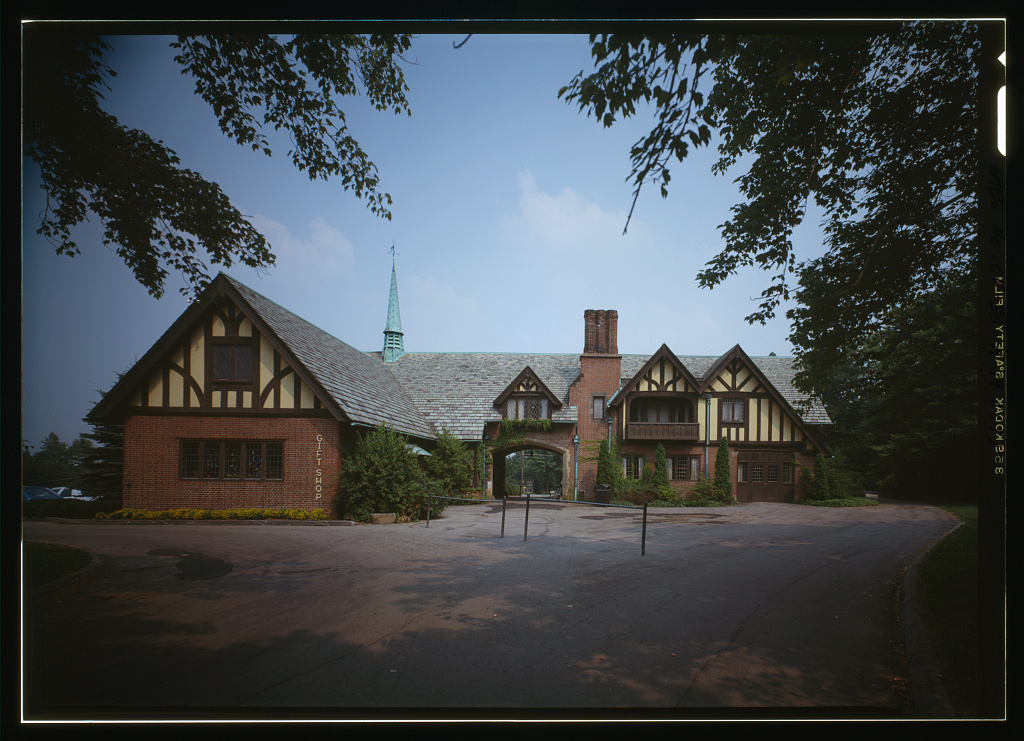
One hundred and seventeen cities held qualifying races for the DERBY DOWNS HALS NO. OH-05 PAGE 2 national competition at Derby Downs in Akron, which was also the year that Chevrolet started the tradition of awarding a college scholarship to the winner. Bain E. "Shorty" Fulton bought a farm in Akron in He cleared the pasture and orchard and opened an airport (now known as the Akron Fulton Airport). Fulton envisioned a winter sports facility on the hill beside his airport, and accomplished this through New Deal-era relief programs. In the Civil Works Administration built a stone shelter house (then nicknamed Shorty's Mansion, now known as Heisman Lodge) and excavated the eastern side of the hill for an amphitheater (now known as the Rubber Bowl).
The excavated soil was used to fill a swampy area at the airport. The National Youth Administration cleared trees and built toboggan chutes, a bobsled run, and ski runs. In Fulton modified his plans to include Derby Downs and supervised the construction of the track by the Works Progress Administration. Derby Downs was used as a sled run during winter until the sleds rails gouged the track. The Works Projects Administration constructed bleachers on both sides of the finish line in By the early improvements at Derby Downs and the Rubber Bowl had encroached on the winter recreation area to the extent that there was not enough room to safely stop at the bottom of the hill, and the winter sports runs were dismantled.
Modern additions are the All-American Soap Box Derby headquarters building below the track and the racecar storage building Topside.
 Block
Block