The significance of the Everett Forest Tree Nursery reached its pinnacle during the early portion of the New Deal Sarah Vradenburg states in her history of the Summit Metro Parks that Franklin Roosevelt s election in was the salvation of the [Summit Metro] parks By March Congress had passed the Emergency Conservation Work Act, which created the Civilian Conservation Corps It would focus on building and maintaining public parks. 1 Harold S. Wagner, the first director of the Akron Metropolitan Park District (now called Summit Metro Parks), pounced on the opportunity to establish two CCC camps in at two of its managed parks, Sand Run Reservation and Virginia Kendall State Park.
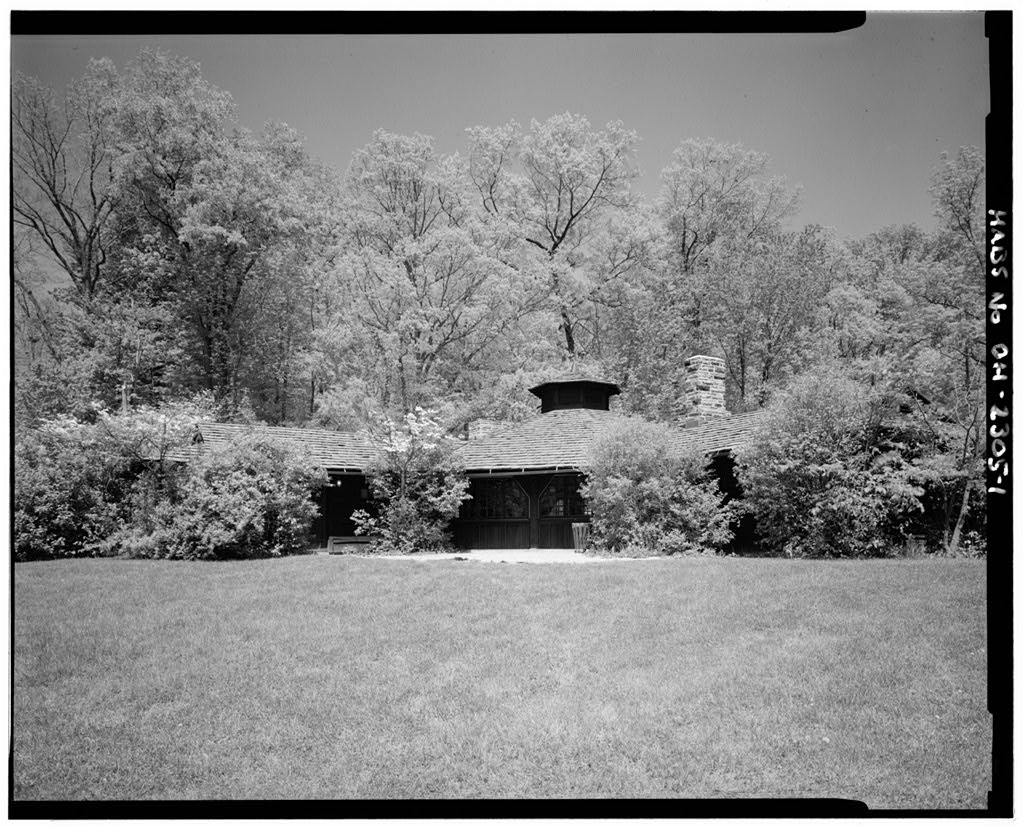
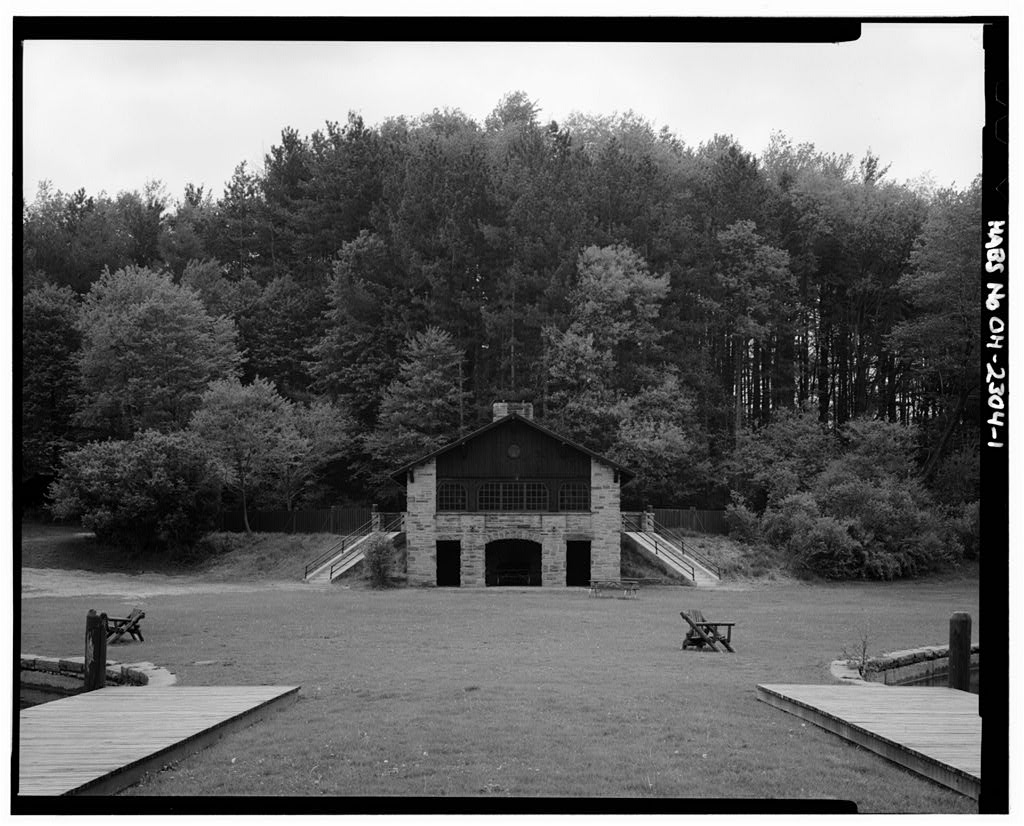
From to the CCC constructed nearly $1 million worth of building and other attractions in the Akron Metropolitan Park District, and more than had been sent home by the recruits to their families. Sand Run had shelters at Wadsworth and Mingo camps, and new trails, bridges and fords. Goodyear Heights had a new shelter, as did the Gorge and Furnace Run. Both Furnace Run and Virginia Kendall had new dams that created swimming lakes and new bathhouses. Virginia Kendall s three new shelters The Ledges, The Octagon and Happy Days all were built with American wormy chestnut, salvaged from the local forests after a killing blight nearly wiped 1 Vradenburg, Steps in Time EVERETT FOREST TREE NURSERY HALS NO. OH-6 PAGE 2 it out.
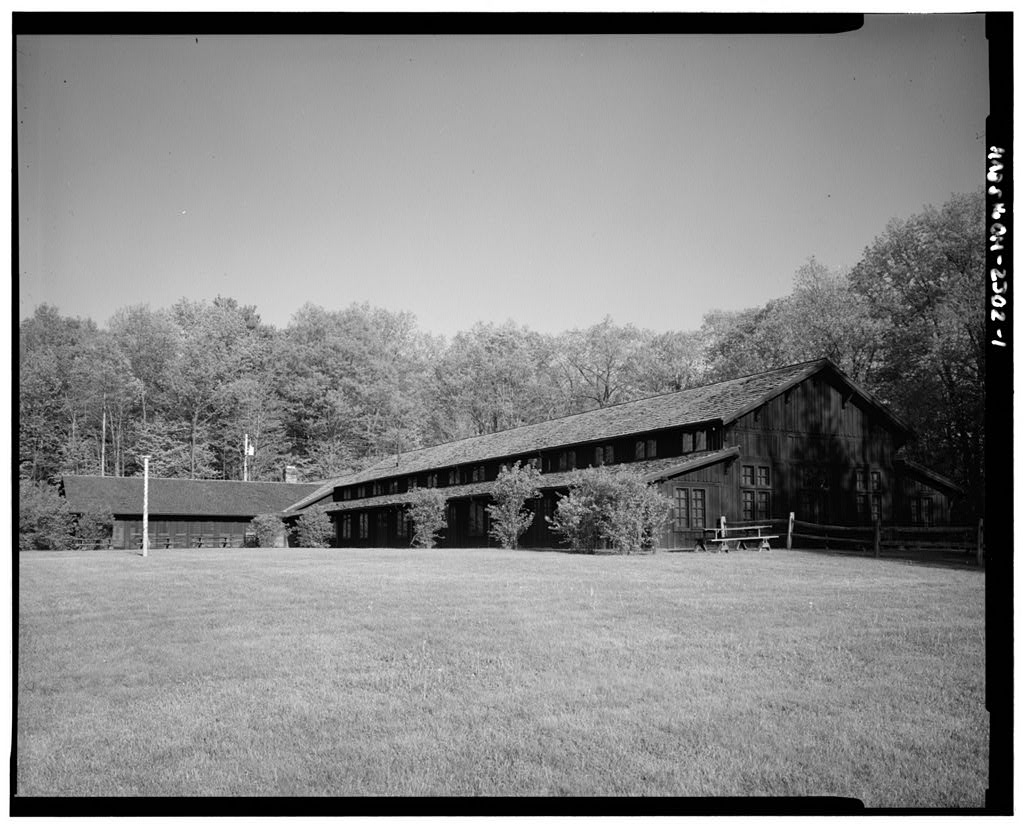
Today, those wormy-chestnut shelters (now managed by Cuyahoga Valley National Park) are historic artifacts. Generations of visitors to Virginia Kendall also enjoyed the toboggan chutes near Kendall Lake, first built by the CCC 2 Beginning in the the Summit Metro Parks had identified the need for a tree and shrub nursery to raise and supply stock for reforestation efforts at the park district s reservations. From about to the amount of forested land cover in Ohio had decreased about In the Park Board passed a resolution approving the purchase of property known as the 240-acre Volke tract near the hamlet of Everett in order to establish such a nursery. By four (Civil Works Administration) CWA projects have been approved for the Park District including Project - Everett Nursery.
Crews from the CCC camps at Sand Run Reservation and Virginia Kendall State Park, began working on the nursery immediately. The nursery remained active through the supplying plants for local parks and other civic projects. Description: The Everett Forest Tree Nursery rests upon approximately 9 acres of land straddling the railroad tracks in the hamlet of Everett, Ohio. The nursery was active from to approximately The nursery has been abandoned since that time but is still distinguishable as a nursery. Blocks of planted trees that were abandoned in still exist in Areas that were not planted have reverted to woodland and/or meadow depending upon the selected management practice.
History: The history of CCC work in the major parks (often referred to as reservations) of the Summit Metro Parks system is well documented by others (see sources listed as part of this submission). However, the significance of the Everett Forest Tree Nursery in this narrative has been overlooked, until now. The story of the Everett Forest Tree Nursery begins with the appointment of W. W. (Maude I.) Milar to the park district s board on March 7, Milar would join James Shaw and Raymond as the first three commissioners for the recently formed Akron Metropolitan Park District. The board members were appointed by Summit County Common Pleas Probate Judge Lewis Slusser.
Milar was a teacher with an avid interest in forestry, an important member of local women s clubs, and a founding member of the Akron Garden Club. 3 At her first park board meeting she explained the plans of the Women s Federation throughout the state which is now making definite plans to encourage reforestation. 4 2 Ibid 3 Ibid 4 Park Board Meeting Minutes, March 7, EVERETT FOREST TREE NURSERY HALS NO. OH-6 PAGE 3 At her second meeting on March 26, Milar reports that Edmund Secrest, Ohio s State Forester, had offered a large number of elm trees about two years of age. While these trees were not of sufficient size for decoration it was deemed advisable to make arrangement to take the trees, obtain a plot of ground and trench them to be used for future work of the park board.
Judge Slusser agreed to take the matter up with the Superintendent of the County Infirmary and ascertain whether an acre of ground is available there for nursery purposes. 5 Nearly a year goes by with little action by the board and, as the story goes, Judge Slusser replaces board members Shaw and Raymond early in to shake things up. 6 At the February 20, meeting Milar reports that Forester Secrest has offered elms, poplars, oaks and walnut trees to the Park Board. The commissioners agree to again ask County Commissioners for a nursery site. Edmond Eckroad, a new board member who is also chief engineer for the Northern Ohio Traction & Light Co., a predecessor of Ohio Edison, offers to provide trucks to deliver the seedling trees.
7 Two months later the board passes a resolution to plant trees on the grounds of the Summit County Hospital Farm (later known as Edwin Shaw Hospital) at Springfield Lake. Two weeks later F.A. Seiberling, founder of Goodyear Tire & Rubber Company, is appointed to the Park Board. On July 29, Seiberling offers to donate land to the Park District for use as a tree nursery. Up to this point there is no evidence that (despite numerous resolutions) the Park District has obtained a nursery site, accepted any trees from the State Forester, or planted any trees. This is largely due to the fact that the Park District, apparently, has no employees to enact the resolutions that the Board passes! At the urging of Mr. Seiberling on September 14, the Board passes a motion to offer Harold S.
Wagner $350/month to take care of the gifts coming to the Board from the State, such as trees and bushes and accommodation for these trees and shrubbery 8 At the time Mr. Wagner is serving as Superintendent of Akron s City Parks Department where he has already established a nursery and planted trees in Perkins Park as part of a reforestation effort. Harold S. Wagner, FASLA had been trained as a landscape architect at Harvard s Arnold Arboretum. He had worked for the Olmsted Brothers, Landscape Architects until he was hired by Warren Manning, FASLA around 5 Park Board Meeting Minutes, March 26, 6 Vradenburg 7 Park Board Meeting Minutes February 20, 8 Park Board Meeting Minutes September 14, EVERETT FOREST TREE NURSERY HALS NO.
OH-6 PAGE 4 He came to Akron, shortly thereafter, to work on Seiberling s country estate known as Stan Hywet. He stayed in the Akron area working on the Fairlawn Golf Club, Goodyear Heights neighborhood and the Fairlawn Heights neighborhood before becoming the superintendent of the Akron City Parks Department. Mr. Wagner is widely recognized as a superb horticulturist, a designer with a keen eye for detail and a very demanding manager with a no- nonsense demeanor. 9 Mr. Wagner is formally hired on a part-time basis in October and immediately directed to coordinate a tree planting effort organized by the Girl Scouts. It appears that he is the first paid employee of the Park District. At the December 5, board meeting Mr.
Wagner is appointed Director-Secretary of the Akron Metropolitan Park District. At that same meeting F.A. Seiberling donates a tree nursery site in Old Portage to the Board for an indefinite time period without cost. Wagner is authorized to hire laborers to plant seedling trees at the nursery donated to the Park District from the State Forester. 10 Wagner spends the first five years of his tenure as Director overseeing a master planning effort by the famed Olmsted Brothers landscape architecture firm, acquiring property at Furnace Run, Sand Run, Gorge, and Goodyear Heights Reservations, and planting trees in both the new reservations and the Old Portage Nursery.
By his own count, between and Wagner plants tree seedlings at the Old Portage Nursery as well as at a second nursery established on property adjacent to the Brushwood Area of the Furnace Run Reservation. 11 By he is ready to begin reforesting Sand Run Park with plants from the Old Portage Nursery. Black Sugar Maple and Scotch Pines are permanently planted in this reservation in Similarly, that same year trees are permanently planted on land that would later become part of Furnace Run Reservation, including Norway Spruce and American Elms. In an additional pine trees are permanently planted at Furnace Run; Scotch Pines are planted at the Gorge and pines and Larch trees are planted at Goodyear Heights Reservation.
12 At this point it is appropriate to pause and consider Wagner s and the Park Board s keen interest in reforestation. From about to the amount of forested land cover in Ohio decreased from 95% to 13 Most of southern and 9 Vradenburg 10 Park Board Meeting Minutes December 5, 11 Handwritten notes from and letter from Secrest dated 12 Ibid 13 ODNR website EVERETT FOREST TREE NURSERY HALS NO. OH-6 PAGE 5 eastern Ohio had been clear cut to create farmland, homesteads, cities and pastureland. Additionally, wood was in high demand as both a construction material and an energy source. As early as operators of the 34 charcoal iron furnaces in southern Ohio were having difficulty finding enough wood to keep operating.
14 Clear cutting the land led to over grazing, over cultivating, and over compaction of the land. In turn, erosion became a major problem facing riverine communities. With the construction of cities, pollution became a major issue because all types of toxic and sewage wastes were dumped into the nation s rivers. In fact, it was pollution of the Cuyahoga River that led directly to the formation of the Akron Metropolitan Park District. Residents of the river town Peninsula, downstream from the City of Akron, petitioned the State of Ohio to create the park district in the hope that such a district would pressure the City of Akron to quit polluting the river.
15 At both the national level and the state level, interest began to grow in reforesting denuded landscapes in the early part of the twentieth century. This interest is an outgrowth from what is known as the Progressive Era in American history that flourished from about In Ohio: The legislature amended the Ohio Constitution in to allow for the creation of a forest reserve system and to pass laws encouraging the propagation and cultivation of forestry on all lands. Soon after, the legislature appropriated funds for the initial purchases of land The Division of Forestry continued to purchase more lands throughout the state, particularly in the hill region of eastern and southeastern Ohio. By the end of the the Division had acquired more than acres of land.
Virtually all of the lands were either cut over forests or poorly degraded farm and pastureland. To aid in reforestation efforts, temporary nurseries were located within several state forests. 16 In the U.S. Congress passed the Clarke-McNary Act, which authorized the federal government to provide matching funds to states for a variety of reasons including nursery stock production. 17 Major tree nurseries in Marietta and Wooster, Ohio were soon developed. Edmund Secrest, the state s first State Forester, was stationed at Wooster and was very proactive in distributing tree seedlings to both public and private sponsors. More locally, the Akron Garden Club was also founded in by Gertrude Ferguson Penfield Seiberling. Among the founding members were W. W.
14 ODNR, A Legacy of Stewardship 15 Vradenburg 16 ODNR Website 17 ODNR, A Legacy of Stewardship EVERETT FOREST TREE NURSERY HALS NO. OH-6 PAGE 6 Milar, E. C. Shaw, C. B. Raymond, and L. D. Slusser. This means that the probate judge that appointed the first three park board commissioners, as well as the commissioners themselves, all had direct ties to this organization. Additionally, F.A. Seiberling, arguably the most influential commissioner to ever serve on the Park Board, was married to the founder and president of the Garden Club. According to this club s website, the focus of these founding members was on three essential phases of education: horticulture, conservation, and all aspects of gardening.
18 It is no wonder that the Park Board, as well as Wagner, who had a friendship with Edmund Secrest were so focused on reforestation during the Furthermore, following the Stock Market Crash in and the election of Franklin D. Roosevelt as president in it became even more evident that this trend would continue. In an interview with Neil Maher, author of Nature's New Deal: The Civilian Conservation Corps and the Roots of the American Environmental Movement, Maher recalls the following story: When Franklin Roosevelt took over the property from his mother [in Hyde Park, he looked in the family archives and discovered that his family had won contests for growing prize- winning corn about a hundred years ago.
And at that point, the Roosevelts could not grow prize-winning corn anymore on their property. And Franklin Roosevelt quickly realized that the reason was because there was soil erosion all over the property. So, he immediately began to plant trees. He actually planted about trees a year for about a ten-year period. And actually where he went to vote, he listed his occupation as tree planter. And this was all to stop soil erosion. And I think that that experience allowed him to sort of think long term. Here, his family could not grow corn anymore. They had grown it a hundred years ago. He took action on planting trees to stop soil erosion so that maybe a hundred years later, his children could once again grow prize-winning corn.
19 Back in Akron, on June 27, the Park Board passes a resolution approving the purchase of property known as the 240-acre Volke tract near the hamlet of Everett adjacent to the north bank of Furnace Run for HSW was interested in this property for two reasons. The first he reveals in a report that his vision for Furnace Run Reservation is to be acres upon completion with an elongated park about 7 miles long extending from Everett in the Cuyahoga Valley to the Cuyahoga County line. 20 The second reason he explains after visiting the site on April 11, It seemed to be the consensus 18 Akron Garden Club Website 19 PBS American Experience Website 20 Akron Metropolitan Park District Report, April 2, EVERETT FOREST TREE NURSERY HALS NO.
OH-6 PAGE 7 of opinion that the 85 acres of valley bottom property would make an especially fine site for a Park Board nursery. This is a fact because the soil in that 85 acre tract is, I believe the finest piece of alluvial, garden soil in Summit County. 21 In February of Wagner better describes his vision for the new tree nursery that is to be established at Everett as follows: In the immediate vicinity of the house we could establish all of our stock which we purchase from nurseries, this stock being of a more expensive type than that we secure from the State Forester. On the balance of the Volke property lying between the West River Road [Riverview Road] and the B. & O.
Railraod [Cuyahoga Valley Scenic Railroad], and lying just north of Furnace Run, we could put pieces of forest planting stock. This area when planted to nursery stock should be completely fenced. The soil on both of these parcels is excellent for our purposes and if this plan is carried out, it would make excellent use of two small pieces which would otherwise be quite useless to the Park Board.
This plan will make it possible to rent the alluvial soil south of the secondarily paved road [Everett Road], together with the big barn as a unit 22 At the following board meeting it is recorded that The matter of the removal of the Park Board Nursery to Everett was given informal approval as was the matter of repairing the three chimneys on the residence on that property and rental of seventy-two out of seventy-seven acres of the creek bottom land south of the paved road, including barn at a consideration of per year. Five acres of the creek bottom property adjacent to the B. & O. Railroad are to be retained for the extension of the Park Board Nursery. 23 Three days later, HSW reports to Eckroad that a Mr.
Don Wilson has agreed to rent the 72 acres lying west of the railroad and south of the paved road including the barn for a consideration of per year This leaves the Park Board in possession of the residence which can be used to house the Nursery Caretaker and an additional family who would pay rent. All of the land east of the railroad and the 5 acres west of the railroad or a total of nearly 9 acres would be available for Park Board Nursery. 24 Four days later Wagner clarifies in a letter to Wilson that he will specifically reserve a 5 acre parcel immediately to the west of the railroad defined by a 21 Site Visit Report, April 11, 22 Site Visit Report, February 5, 23 Park Board Meeting Minute February 18, 24 Site Visit Report, February 21, EVERETT FOREST TREE NURSERY HALS NO.
OH-6 PAGE 8 line parallel to and 160 feet west of the B. & O. Railway Right of Way... Wagner goes on to inform Wilson that the Park District will not need the five acre parcel in but shall desire a portion of it in and in we shall undoubtedly have use for the whole of that five acres. 25 Wagner immediately gets to work establishing the nursery on the east side of the railroad tracks. In a thank you note written to Secrest on March 26, Wagner writes We were much pleased with the Korean Arborvitae which I picked up yesterday at Wooster. We are going to use these to outline a new nursery which we are establishing on an excellent piece of ground at Everett.
We hope to have an excellent example of a forestry nursery and at sometime when you are in Summit County, I will be glad to show you what we have in mind. 26 On May 9, in a letter to Secrest, Wagner reports Just a word to let you know that our planting season is drawing to a close that we have had the best experience, mainly as a result of the weather, that we have had to date. In addition to stock from your department, we have added fine collected hemlocks which we secured from Curtis of Callicoon, New York at a price of 1- 1/2 cents apiece and broad leaven evergreens, also collected stock, which we secured through Berckmans collected in the Linville, field. All told we have planted about pieces in the new nursery in Everett.
27 It appears that when Wagner estimates how many tree seedlings he has planted, he uses the following method: 1. He assumes that an acre of land is 210 X 210 2. Within each acre he plants 70 rows of tree seedlings spaced 3 on center for a total width of 210 3. Within each row he plants seedlings 4 on center, or 3 trees per foot 4. The total number of seedlings planted per acre is then 3 X 210 X 70 = 28 From the above descriptions it is possible to develop a plan of the Everett Forest Tree Nursery that remained relatively unchanged for 25 years from until Wagner s retirement in Figure 1 shows the larger context of the nursery site while Figure 2 is an enlargement of the 9-acre area that Wagner considered to be the boundaries of the Everett Nursery.
The black and white aerial background photograph in the figures is from and therefore taken shortly after Wagner s retirement. 25 Correspondence February 25, 26 Correspondence March 26, 27 Correspondence May 9, 28 From a sketch found in Metro Parks Special Collection, undated EVERETT FOREST TREE NURSERY HALS NO. OH-6 PAGE 9 To this day, it does not appear that the Everett Nursery has been altered since the aerial photograph was taken in The same blocks of planted trees that are evident in that photo are still visible in Some of the blocks of short-lived pine trees visible in have since died. Areas where there were no blocks of trees in have since reverted to a woodland condition.
The trees now growing in these reversion areas are volunteers and were not planted as part of the Everett Nursery. Having filled the Everett Nursery on the east side of the railroad tracks, HSW begins to plant on the west side of the tracks in By his own account it appears that approximately trees are planted in including Red Pine, Corsican Pine, Douglas Fir, Scotch Pine, Norway Spruce, Hemlock, White Spruce, White Oak, Tulip Poplar, Red Cedar, 500 Sweet Gum, 500 Japanese Table Pine, 200 Koyama Spruce, and 100 more Arborvitae to outline the nursery. 29 was also a pivotal national election year. With the Depression deepening, the Hoover administration was pressured into signing the Emergency Relief and Construction Act of July, the nation's first federal relief legislation.
This act made low cost loans to individual states, including Ohio, to provide public employment of unemployed workers. After FDR s election later that year, relief efforts shifted from the state level to the federal level with the passage of the Emergency Conservation Work Act on March 31, This legislation allowed FDR to sign Executive Order establishing the Civilian Conservation Corps on April 5, Again in an interview with Neil Maher, author of Nature's New Deal: The Civilian Conservation Corps and the Roots of the American Environmental Movement, Maher identifies the three major phases of the CCC program: When the Corps began, I think Franklin Roosevelt and the other administrators of the CCC really felt that it was a reforestation program.
The young men would go out there and they would plant trees in areas that had been deforested. And that was sort of the primary goal. This is why the CCC has been called Roosevelt s Tree Army. But, in when the Dust Bowl hit, it really changed the Corps s agenda a bit. Dust Bowl soil blew from the Great Plains to Hyde Park where Franklin Roosevelt lived. And he was very much aware that this was going on. And he immediately expanded the number of CCC camps that were in operation. And placed most of those camps in the Dust Bowl region to help 29 Handwritten notes from EVERETT FOREST TREE NURSERY HALS NO. OH-6 PAGE 10 farmers conserve soil. In the later Franklin Roosevelt and many Americans began to think that there was a third problem that was going on. And this had to do with recreation.
A lot of people during the Great Depression didn t have a lot of money. A very inexpensive way to recreate was to go to a nearby State Park or a nearby National Park and Roosevelt felt that he had to sort of help these people get out of the city and enjoy that. So, he shifted the Corps once again. And the Corps began to do much, much work in State Parks and National Parks. So, there s sort of three phases to the CCC s work. Began in the forest. Moved to the farms. And then ended up in the parks. 30 On May 12, Congress passes the Federal Emergency Relief Act of This act was similar to Hoover s Emergency Relief and Construction Act of July except that it gave grants to states instead of loans to provide worker relief.
Five days later the Akron Metropolitan Park Board passes the following resolution on May 17, WHEREAS, the Akron Metropolitan Park District is eligible to have one or more Camps on Park Board Property, NOW THEREFORE BE IT RESOLVED that the Secretary (Wagner) make the necessary applications and trips to Columbus or Washington if necessary, to obtain said Camps. 31 On November 8, President Roosevelt signs an executive order establishing the Civil Works Administration (CWA). He remarks that this program will put 4 million men to work immediately. Men working in the program are to work 6 hours per day for five days per week for a total of 30 hours per week.
This program is intended to provide short term relief to the nation s unemployed workers through the harsh winter of Three weeks later Wagner reports to the Park Board that four CWA projects have been approved for the Park District including Project Everett Nursery. 32 Wagner was particularly adept at immediately applying for and receiving approval for a multitude of New Deal programs that greatly benefited the park district. While he is most famously known for establishing the CCC Camps at Virginia Kendall Park and Sand Run Reservation, he also used many Relief Workers and CWA workers provided by other New Deal programs for use 30 PBS American Experience Website 31 Park Board Meeting Minutes, May 17, 32 Park Board Meeting Minutes, November 27, EVERETT FOREST TREE NURSERY HALS NO.
OH-6 PAGE 11 in reforesting reservations and working in the park district s nurseries. In addition to announcing CWA project at the November 27, park board meeting, he also announced CWA project Cuyahoga River Gorge Reservation; CWA project Furnace Run Reservation (Brushwood Area); and CWA project Goodyear Heights Reservation.
At the December 18, Park Board Meeting Wagner reports that CCC workers have moved into Virginia Kendall Park on December and that forty-seven men were working at the Everett Nursery as of December At the previous Board Meeting on December 7, he had announced that the CCC Camp at Sand Run had been set up on December 1, As a condition of the CWA program, the Park District was required to provide a supervisor for the relief workers and transportation of the same to the work site. At the December 18 meeting the Park Board passes a resolution to do so with the understanding that the CWA program will provide a minimum of 30 workers to the Everett Nursery for a period of 100 days.
33 At that same meeting it is revealed that Wagner managed to transfer the payroll for two of the Park District s full time employees to the CCC camp at Kendall and to transfer the payroll for ten of the Park District s part time employees to the CWA projects. HSW writes to the supervisor of the CWA project at Furnace Run the following in January At this time you understand that we have made provisions in the Annual Budget to restore some of the wage cuts placed in effect in recent years. At this time it seems proper to give consideration to the matter of your work schedule. It has been deiced to make your own schedule conform to that of the C.W.A.
Labor, and for this reason a schedule is set up herewith This schedule will provide at least thirty-seven hours per week against the original forty-eight hours. Actually it represents something of a compromise between the thirty hour week prevailing on the C.W.A. and the forty-eight hour week formerly prevailing the Park Board Operation. 34 A record of what was planted in the Everett Nursery for and could not be found in the park records highlighting HSW s preoccupation with setting up the new federal relief programs within the Park District during this time period. It is mentioned in the January 18, Park Board Meeting Minutes that HSW was authorized to order worth of tree seedlings from the State Forester.
Correspondence with the Assistant State Forester on December 19, reveals that the Park District has planted a block of Dunkeld Larch at the Everett 33 Park Board Meeting Minures, December 34 Correspondence to A. Sommers, January 16, EVERETT FOREST TREE NURSERY HALS NO. OH-6 PAGE 12 Nursery. 35 A letter to Secrest dated March 21, shows that HSW is interested in acquiring nut trees including shagbark hickory, butternut, and American chestnut. Wagner qualifies his interest in the chestnut by saying Of course, we know how deadly the chestnut blight disease is, but it looks as though somebody ought to continue to experiment with small plantings of seed from many habitats. For our own part, we are going to do this.
36 At the June 22, Board Meeting Wagner presents his annual budget for that totals less than for operation of the Park District (excluding for bond debt payments). Conversely he reports that the Park District has enjoyed the use of over in labor and materials from various New Deal initiatives for the time period of January 1, to April 1, With respect to the Everett Nursery, he quantifies the following: 37 Type of Labor Hours Rate Value Relief Opportunity CWA Similar amounts of labor are listed for Sand Run Reservation, Gorge Reservation, Goodyear Heights Reservation, Furnace Run Park, and Virginia Kendall State Park.
During subsequent years of the New Deal, emphasis would shift to the construction of facilities at the Reservations including shelters, pavilions, lakes, roads, and parking lots. But it is significant to note that, as Maher observed, the early days of the New Deal programs were focused on reforestation efforts that involved a great deal of labor. The value of the work associated with the nurseries and reforestation efforts was equal to nearly double the entire annual operations budget of the Akron Metropolitan Park District in Sometime between September 13, and December 3, the caretaker s home that had just recently been painted by CWA workers is completely destroyed by a fire at the Everett Nursery (see Figure 3).
In his tree stock request letter to Secrest on December 3, Wagner tells Secrest that he intends to relocate the Everett Nursery to Virginia Kendall Park. It appears that he means that the more exotic plants that had been planted around the residence east of the railroad tracks would be relocated. It does not appear that he intends to abandon the majority of the forest tree plantings at Everett. 38 35 Correspondence, December 19, 36 Correspondence, March 21, 37 Park Board Meeting Minutes, June 22, 38 Correspondence to Secrest, December 3, EVERETT FOREST TREE NURSERY HALS NO. OH-6 PAGE 13 In a report to new Probate Judge Dean F. May, Wagner reports the following about the Everett Nursery in February In the lower end of Furnace Run the forest tree nursery is found.
Here approximately trees are growing, enough to plant 325 acres of land. Most of the trees were secured at very low prices from the State Forest Nursery, although large numbers of some of the more rare native species have been grown from seed. The largest of the trees are six or seven feet high and the smallest, approximately one foot. In this nursery there are a number of specimens of a rare Chinese chestnut which is supposed to be blight resistant and which may prove to be of some value in replacing the American chestnut which is practically extinct as a result of the malignant chestnut bark disease. Wagner ends his letter to Judge May with a description of trees and shrubs that have been used in reforesting the Park District s land.
He notes: Very few trees or shrubs which are not native have been used, the exceptions being Scotch pine and Norway spruce. No Norway spruce has been planted in the last three or four years and I expect that no more will be planted because of its too exotic character. There is not a direct tendency, but almost a rigid rule now in force in all areas of this type, calling for the elimination of any exotic species 39 Figure 4 is one of the first, publicly distributed maps of the Park District found in the Park District archives. It is likely from the mid-1930s and describes the Everett Forest Tree Nursery in the same manner as does the report to Judge May.
Figure 5 is a photo that is identified as being located at the Everett Nursery; however, there are other photos in the archives that also seem to be from the nursery. It appears that the importance of the Everett Road Nursery begins to fade after Most of the reforestation efforts at the Park District s reservations are ending and there seems to be less need for nursery stock. The large barn from the Everett leasehold property is removed in the Spring of and the land is re-leased to the current family using this property, the Szalay s. The Park Board only authorizes purchasing worth of tree seedlings for Spring planting. 40 After there does not appear to be any caretaker s permanently assigned to the Everett Tree Nursery. By June the CCC program has ended.
Later that year, the nation enters World War II. HSW writes the following to the Associate State Forester on 39 Correspondence to Judge May, February 8, 40 Park Board Meeting Minutes, November 17, EVERETT FOREST TREE NURSERY HALS NO. OH-6 PAGE 14 March 29, It embarrasses me to tell you that with our staff decimated as it is by war industry and war in this area, I am having quite a time of it to get everything planted that I have had out in nursery rows in recent years. I am afraid I am going to have to tell you that I cannot use any of the surplus stock. Just to tell you everything I know, I might say to you that if in any way it is possible for us to use lining out stock we would be interested in nothing more than the tulip tree and white oak.
Meanwhile I am going to make some increased effort to get some more men, and if I am successful you will hear from me very shortly. Thank you very much. For the next couple of decades the Park District would struggle financially. The economic hardship of the Depression coupled with the sacrifice needed to win World War II would severely restrict park expansion. With the end of the New Deal programs, the abundance of labor necessary to complete the construction of the Metro Parks would disappear. During the plants would mostly leave the Everett Nursery in the form of donations to local hospitals, schools, conservation groups, and highway projects. By a portion of the original Volke tract is sold off as well as the Brush nursery land that had been used as a nursery near Furnace Run.
In the small barn east of the railroad tracks at Everett is removed. Efforts to pass levies to support the Park District fail three times during the 41 By the time Harold S. Wagner retires on April 30, the Everett Nursery is effectively deactivated. With time, the trees remaining in blocks mature and crowd each other out. Short-lived pine groves die off. The arborvitaes continue to grow and form a green wall around portions of the nursery site visible to this day. In a portion of the old nursery, a living fence of Osage orange is barely visible. Fields where seedlings were once planted are abandoned and begin the natural process of succession. Some of the old furrows are still visible today and support the growth of volunteer trees in lines.
A horse trail that now winds through the Everett Nursery site brings users to the old nursery in a new and different way. Those riding through the nursery have no cognizance of the nursery s history in reforesting large portions of Summit County. The echoes of scores of New Deal worker s 41 Summit Metro Parks website EVERETT FOREST TREE NURSERY HALS NO. OH-6 PAGE 15 that labored here are long gone. Even the blocks of planted trees are barely recognizable from some vantage points and their offspring have begun to obliterate their parent s straight line layout. The Everett Forest Tree Nursery is the only remaining remnant nursery from the early days of the Summit Metro Parks history.
The Old Portage, Brush (Furnace Run), and Virginia Kendall nurseries are no longer on land managed by the Park District. Many people have contributed to the rich history of stewardship, conservation, reforestation, research, and display associated with the Everett Nursery. Even more have benefitted from the thousands of acres of reforested land that now comprise the Summit Metro Parks system as well as the Cuyahoga Valley National Park.
Chronology Prior to The property that would become Everett Forest Tree Nursery was owned by Henry Iddings until the opening of the Ohio and Erie Canal in the late Soon after, it was purchased by Alanson Swan who increased his holdings to approximately 500 acres and ran a successful farm, store, warehouse, and packet house for horses/mules pulling boats on the canal. Tax records from note that Swan had two barns and two residential structures on his property.
Swan also donated the .58 acre site for a school house on the south side of Everett Road to the Boston Township School Board on May 25, Around that same time, Swan sold the property to Alexander Stewart, maintaining just a acre parcel fronting on Riverview Road where one of the residences was located for him and transferring an adjacent, acre lot to Abigail Chamberlin. The construction of the Valley Railway in bifurcated the Stewart property. In general, the eastern portion of the property was where the residential buildings were located and the western portion of the property was left for agricultural purposes. Stewart mostly farmed the land but operated the second residence on the property as a hotel/grocery store/saloon.
Sometime in the early century the property was passed on to Frank Volke who continued to farm the property. One of his children leased the property from his father s estate and lived in the hotel/grocery store/saloon structure until the land was purchased by the Park District in December 21, Akron Metropolitan Park District is formed EVERETT FOREST TREE NURSERY HALS NO. OH-6 PAGE 16 March 7, W. W. (Maude I.) Milar is appointed to Park Board for a three year term by Judge L. D. Slusser. Milar joined James Shaw and Raymond as the first three commissioners for the Park District. It should be noted that that Milar is also a founding member of the Akron Garden Club that same year.
She explains to the board at the March 7 meeting the plans of the Women s Federation throughout the state which is now making definite plans to encourage reforestation. March 26, Milar reports that Edmund Secrest, Ohio s State Forester, had offered a large number of elm trees about two years of age. While these trees were not of sufficient size for decoration it was deemed advisable to make arrangement to take the trees, obtain a plot of ground and trench them to be used for future work of the park board. Judge Slusser agreed to take the matter up with the Superintendent of the County Infirmary and ascertain whether an acre of ground is available there for nursery purposes. February 20, Milar reports that Mr. Secrest has offered elms, poplars, oaks and walnut trees to the Park Board.
Board agrees to ask County Commissioners for a nursery site. April 11, Park Board passes motion to plant trees on the grounds of the Summit County Hospital Farm (later known as Edwin Shaw Hospital) at Springfield Lake. Milar presents plans for Arbor Day program at that same meeting. April 25, F.A. Seiberling appointed to the Park Board. His wife, F.A. Seiberling, is the founder and first president of the Akron Garden Club. July 29, F.A. Seiberling suggests that he can donate land to the Board to be used as a nursery site. Sept. 14, Park Board passes a motion to offer Harold S. Wagner $350/month to take care of the gifts coming to the Board from the State, such as trees and bushes and accommodation for these trees and shrubbery should certainly be made. At the time Mr.
Wagner is serving as Superintendent of Akron s City Parks Department where EVERETT FOREST TREE NURSERY HALS NO. OH-6 PAGE 17 he has already established a nursery and planted trees in Perkins Park as part of a reforestation effort. Oct. 20, Wagner is hired on a part time basis (working for the Park Board three weeks per month). At that same meeting Wagner is directed to coordinate a tree planting effort organized by the Girl Scouts. Dec. 5, Mr. Wagner is appointed Director-Secretary of the Akron Metropolitan Park District. At that same meeting F.A. Seiberling donates a nursery site in Old Portage to the Board for an indefinite time period without cost. Wagner is authorized to hire laborers to plant seedling trees donated to the Park District from the State Forester on the new nursery site.
May 5, Wagner reports to Edmund Secrest that Boy Scouts have planted 500 Spruce trees at Camp Manatoc and the Girl Scouts have planted Spruce and 500 Red Pines on County Hospital property. He also reports that trees given to the City of Akron will be planted around Lake Rockwell. March 18, Wagner reports that he has ordered nursery trees from Secrest. March 27, The Board agrees to give Wagner for labor for the maintenance and extension of the nursery at Old Portage. May 23, Wagner reports that he has planted Red Pines, Cosrsican Pines and Scotch Pines at Old Portage Nursery.
He also reports that transplants have been permanently planted at Brush Park Property (then part of Furnace Run Metro Park area but now not owned by the Park District) and that portions of the eastern end of Sand Run Parkway have been reforested with Black Locust and Scotch pines. April 2, Wagner reports that trees were planted at Brush Park property and that another pines and spruces will be planted in He explains his vision for Furnace Run Reservation to be acres upon completion with an elongated park about 7 miles long extending from Everett in the Cuyahoga Valley to the Cuyahoga County line. EVERETT FOREST TREE NURSERY HALS NO. OH-6 PAGE 18 April 19, Wagner explains that he will establish an Elm tree nursery on the Conger Tract of the Brush Property.
elm trees are to be planted on a 4 X 4 grid and the trees are to remain for 5 or 6 years or more in order to provide stock which may be used in planting along roadways that will be built in the future. May 2, Wagner reports that The elm tree nursery on the Conger tract is progressing at the rate of about 700 trees per day at a cost of about 5 cents per tree. This is being done by Gunn and 5 laborers. Oct. 29, Black Tuesday hits Wall Street. Nov. 21, Wagner is authorized to spend on nursery stock for the Old Portage Nursery. Dec. 13, Wagner informs Board President Edmund D. Eckroad that A.V. McNeil reports that he expects to be able to have to offer for sale 240 acres of land owned by the heirs of F.
Volke in Boston and Northampton Townships, a large portion of which embraces land in which we are interested as forming a part of Furnace Run Reservation, at a price of the price at which the land is offered- per acre, the offer should be carefully considered. April 11, Board member Eckroad and Frank H. Adams visit the Volke site with Wagner. Wagner reports It seemed to be the consensus of opinion of Mr. Eckroad and Mr. Adam that the 85 acres of valley bottom property would make an especially fine site for a Park Board nursery. This is a fact because the soil in that 85 acre tract is, I believe the finest piece of alluvial, garden soil in Summit County. June 27, After some negotiation, the Park Board approves spending to purchase the entire Volke site.
February 5, In a memo to Eckroad, Wagner reveals his plan for a nursery at the Volke site: In the immediate vicinity of the house we could establish all of our stock which we purchase from nurseries, this stock being of a more expensive type than that we secure from the State Forester. On the balance of the Volke property lying EVERETT FOREST TREE NURSERY HALS NO. OH-6 PAGE 19 between the West River Road and the B. & O. Railraod, and lying just north of Furnace Run, we could put pieces of forest planting stock. This area when planted to nursery stock should be completely fenced. The soil on both of these parcels is excellent for our purposes and if this plan is carried out, it would make excellent use of two small pieces which would otherwise be quite useless to the Park Board.
This plan will make it possible to rent the alluvial soil south of the secondarily paved road, together with the big barn as a unit The matter of making certain repairs to this building and of moving the nursery from Sand Run to Everett should be considered and decided upon at the next meeting. February 18, Board meeting minutes report: The matter of the removal of the Park Board Nursery to Everett was given informal approval as was the matter of repairing the three chimneys on the residence on that property and rental of seventy-two out of seventy-seven acres of the creek bottom land south of the paved road, including barn at a consideration of per year. Five acres of the creek bottom property adjacent to the B. & O. Railroad are to be retained for the extension of the Park Board Nursery.
At that same meeting the Board approved purchase of nursery stock from Charles G. Curtis Company and the Linville Nurseries for February 21, Wagner reports to Eckroad that a Mr. Don Wilson has agreed to rent the 72 acres lying west of the railroad and south of the paved road including the barn for a consideration of per year This leaves the Park Board in possession of the residence which can be used to house the Nursery Caretaker and an additional family who would pay rent. All of the land east of the railroad and the 5 acres west of the railroad or a total of nearly 9 acres would be available for Park Board Nursery.
February 25, Wagner clarifies in a letter to Wilson that he will specifically reserve a 5 acre parcel immediately to the west of the railroad defined by a line parallel to and 160 feet west of the B. & O. Railway Right of Way... Wagner goes on to inform Wilson that the Park District will not need the five acre parcel in but shall desire a portion of it in and in we shall undoubtedly have use for the whole of that five acres. EVERETT FOREST TREE NURSERY HALS NO. OH-6 PAGE 20 March 26, In a letter to Edmund Secrest, Wagner reports We were much pleased with the Korean Arborvitae which I picked up yesterday at Wooster. We are going to use these to outline a new nursery which we are establishing on an excellent piece of ground at Everett.
We hope to have an excellent example of a forestry nursery and at sometime when you are in Summit County, I will be glad to show you what we have in mind. April 9, In a talk given for the Akron Garden Club Wagner quotes Walt Whitman: American democracy, - through dense streets and houses of cities, and all their manifold sophisticated life must either be fibred, vitalized, by regular contact with outdoor light and air and growths, farm-scenes, animals, fields, trees, birds, sun-warmth and free skies, or it will morbidly dwindle and pale. Wagner goes on to explain that Friends of gardens must feel just the very same fundamental necessity for their small bit of rich brown earth Collectively, gardens are one of any city s most hopeful, most positive assets.
May 9, In a letter to Secrest, Wagner reports Just a word to let you know that our planting season is drawing to a close that we have had the best experience, mainly as a result of the weather, that we have had to date. In addition to stock from your department, we have added fine collected hemlocks which we secured from Curtis of Callicoon, New York at a price of cents apiece and broad leaven evergreens, also collected stock, which we secured through Berckmans collected in the Linville, field. All told we have planted about pieces in the new nursery in Everett. July 14, The Park Board approves budgeting for Nursery Stock; for Nursery Maintenance; and for reforesting 75 acres of land with trees.
At that same meeting the Board approves payments to the following nurseries: State Forester for tree seedlings: Charles G. Curtis Co.: Ghent Ridge Nursery: Linville Nurseries: Richard Beck Nurseries: EVERETT FOREST TREE NURSERY HALS NO. OH-6 PAGE 21 July 16, The Park Board visits the Everett Nursery where it is reported that An inspection was made of the Nursery at Everett where the general condition of the forest stock planted in the Spring of appeared to be entirely satisfactory to the Board. Mr. Seiberling indicated that the next important improvement at Everett should be the establishment of a water system.
January 20, Wagner sends tenant Wilson the following message: Our caretaker at the Everett nursery reports that on a number of occasions, it has been found necessary to drive cattle which you keep in the barn on the west side of the track from the nursery, part of which is of course on the east side of the track. Insamuch as this is liable to cause considerable damage to the young trees, which we have planted there, we expect that you will take measures immediately to prevent a recurrence of this. As a matter of fact, if you use the area which you leased to pasture cattle, it is of course up to you to properly fence the same.
March 4, Wagner writes to Secrest: With this we enclose our application for forest planting stock for the coming spring With reference to the possibility of securing stock of certain other varies which is not listed on the application blank, you are assured that we will be glad to purchase anything that you know is suited to our use. We have ample space in the new Everett nursery, and somehow or other we will find the necessary funds to get the stock properly planted and cared for.
October 14, Wagner sends tenant Wilson the following message: I recall very distinctly that you agreed to mow off and burn up all of the weeds which cover the ground where you had your barley crop this spring I expect that you will begin this work on Monday, and stay at it until it is done, because the weed seed is blowing and much of the work which we have done in our nursery will be spoiled unless you care for the weeds on the ground that you rent. April 5, Franklin D. Roosevelt signs Executive Order establishing the Civilian Conservation Corps May 17, The Park Board passes Resolution EVERETT FOREST TREE NURSERY HALS NO.
OH-6 PAGE 22 WHEREAS, the Akron Metropolitan Park District is eligible to have one or more Camps on Park Board property, NOW THEREFORE BE IT RESOLVED that the Secretary make the necessary applications and trips to Columbus or Washington if necessary, to obtain said camps. November 8, President Roosevelt signs Executive Order establishing the Civil Works Administration (CWA). He remarks that that this program will put 4 million men to work immediately. Men working in the program are to work 6 hours per day for five days per week for a total of 30 hours per week. November 27, Wagner reports that four CWA projects have been approved for the Park District including Project Everett Nursery.
December 18, Wagner reports that Project began on December 12, and employs forty-seven men working at the Everett Nursery. It is further clarified in these meeting minutes that this project will furnish thirty or more men for one hundred days to the Park District. January 18, Meeting Minutes report that Wagner is to order worth of trees from the State Forester. March 21, Wagner writes to Secrest the following: There is a great deal of interest among park people and in the general public in the planting of nut trees on a forest planting scale. I am wondering whether you have for sale, or whether you know of nurseries who have stocks of shagbark hickory, butternut and American Chestnut.
Of course, we know how deadly the chestnut blight disease is, but it looks as though somebody ought to continue to experiment with small plantings of seed from many habitats. For our own part, we are going to do this. March 31, The CWA ends and is replaced with the Emergency Work Relief Program. May 16, Meeting Minutes show that funds were appropriated to purchase paint for use at the Everett Nursery (presumably to paint the caretaker s residence). At this same meeting William Evans is appointed to be supervisor of 30 Relief EVERETT FOREST TREE NURSERY HALS NO. OH-6 PAGE 23 Workers for a period of 100 days at the nursery.
June 22, Wagner reports the following labor and materials have been provided to the Everett Nursery from various relief agencies between January 1, and April 1, Program Hours Rate Value Relief Labor Opportunity Labor CWA Labor Materials Total September 13, Correspondence from Wagner indicates that the caretaker s residence at the nursery as been repainted using two coats of paint which we made using white lead produced by your company. November 15, Wagner offers locust trees (12 height) and red pine trees (24 height) to Secrest. Secrest accepts these on November 22. December 3, Wagner writes the following to Secrest: As I indicated to you recently, it is our intention to abandon the nursery at Everett because of the loss of the building by fire.
However, we maintain a man at that point and will continue to do so until all of that stock is either moved to a final planting location or to a new nursery at the rear of the house occupied by Dittoe at Virginia Kendall State Park. It should be noted that despite what Wagner s letter says, the Everett Nursery is not abandoned in However, the emphasis of the nursery appears to shift from growing exotic trees and shrubs to native trees and shrubs used for reforestation. January 8, Meeting Minutes report that E. Baker is engaged as caretaker at the Everett Nursery. April 18, Meeting Minutes report that a Memorial Grove commemorating the Summit County Federation of Womens Clubs is established at Virginia Kendall State Park and a Memorial Forest is established at Everett for the Garden Forum.
EVERETT FOREST TREE NURSERY HALS NO. OH-6 PAGE 24 January 9, Meeting Minutes report that E. Baker is again engaged as caretaker at the Everett Nursery. February 4, Park Board votes to remove the barn west of the railroad track and decides to terminate the lease for the 72-acre farm at Everett (the lease holder at that time is W.O. Point). At that same meeting the Board passes a resolution to offer the 72-acre farm as well as the 9-acre nursery to the State of Ohio to be used for an armory. Finally, the Board agrees to purchase black locust, chestnut oak, Austrian pine, black walnut, and white oak seedlings from the State Forester for These trees are presumably to be planted at the new Virginia Kendall State Park nursery. February 8, Wagner responds to a letter from Probate Judge Dean F.
May that asks seven specific questions about the Park District. About the Everett Nursery, Wagner states the following: In the lower end of Furnace Run the forest tree nursery is found. Here approximately trees are growing, enough to plant 325 acres of land. Most of the trees were secured at very low prices from the State Forest Nursery, although large numbers of some of the more rare native species have been grown from seed. The largest of the trees are six or seven feet high and the smallest, approximately one foot. In this nursery there are a number of specimens of a rare Chinese chestnut which is supposed to be blight resistant and which may prove to be of some value in replacing the American chestnut which is practically extinct as a result of the malignant chestnut bark disease.
Wagner ends his letter to Judge May with a description of trees and shrubs that have been used in reforesting the Park District s land. He notes: Very few trees or shrubs which are not native have been used, the exceptions being Scotch pine and Norway spruce. No Norway spruce has been planted in the last three or four years and I expect that no more will be planted because of its too exotic character. There is not a direct tendency, but almost a rigid rule now in force in all areas of this type, calling for the elimination of any exotic EVERETT FOREST TREE NURSERY HALS NO. OH-6 PAGE 25 species April 14, Meeting Minutes report that the barn on the west side of the tracks has been sold and that the 72-acre parcel will be leased to G. Szalay of Everett for per year.
May 20, Meeting Minutes report that one-year old, black locust seedlings received from Junction Nursery of the U.S. Forest Service at Harrisburg, IL. November 17, Meeting Minutes approve purchase of worth of nursery stock from State Forester. January 8, Meeting Minutes approve employment of Elmer (E.) Baker as caretaker at Everett Nursery. January 7, Meeting Minutes move E. Baker to caretaker s position at Furnace Run Reservation. No caretaker is listed for Everett Nursery. Sept 26, In a letter to the new State Forester, O. A.
Alderman, Wagner notes During the last ten years this park district and prior to that time for at least five years more, this city and county have engaged in reforestation plantings in a large way and undoubtedly some scientific study of the results obtained would be advisable at this time.
October Happy Days Shelter completed at Virginia Kendall State Park by CCC works on projects at Virginia Kendall Park, Furnace Run Reservation, Goodyear Park, Sand Run Reservation and Firestone Park, CCC Camp at Sand Run is closed March 25, March 29, Wagner writes to the Associate State Forester: It embarrasses me to tell you that with our staff decimated as it is by war industry and war in this area, I am having quite a time of it to get everything planted that I have had out in nursery rows in recent years. I am afraid I am going to have to tell you that I cannot use any of the surplus stock. Just to tell you everything I know, I might say to you that EVERETT FOREST TREE NURSERY HALS NO.
OH-6 PAGE 26 if in any way it is possible for us to use lining out stock we would be interested in nothing more than the tulip tree and white oak. Meanwhile I am going to make some increased effort to get some more men, and if I am successful you will hear from me very shortly. Thank you very much. Fall Wagner donates Hall s Honeysuckle, bushy willows, gray dogwoods, and buckeye trees grown at the Everett Nursery to Crile General Hospital in Parma. This hospital is a military hospital for the U.S. Army. German prisoners-of-war are used to dig and transport these plants from the nursery to the hospital grounds. March 13, Wagner donates honeysuckle shrubs grown at the Everett Nursery to the U.S. Army Corps of Engineers for projects in the Muskingum Watershed Conservation District.
Park Board attempts to sale Everett property but only accepts one bid for a acre tract near the covered bridge at Everett . The nursery site remains in the ownership of the Akron Metropolitan Park District. Wagner donates Hall s Honeysuckle grown at the Everett Nursery to the Akron Board of Education. November Small barn east of the railroad tracks is removed. April 30, Harold S. Wagner retires.
 Block
Block