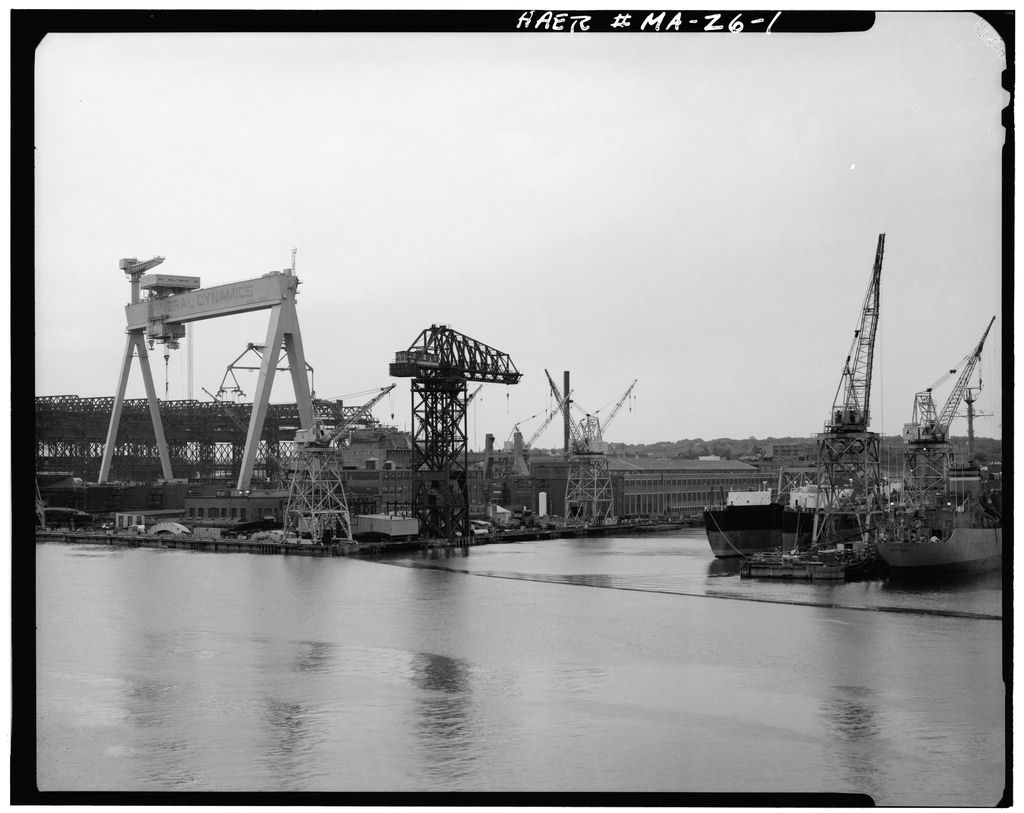
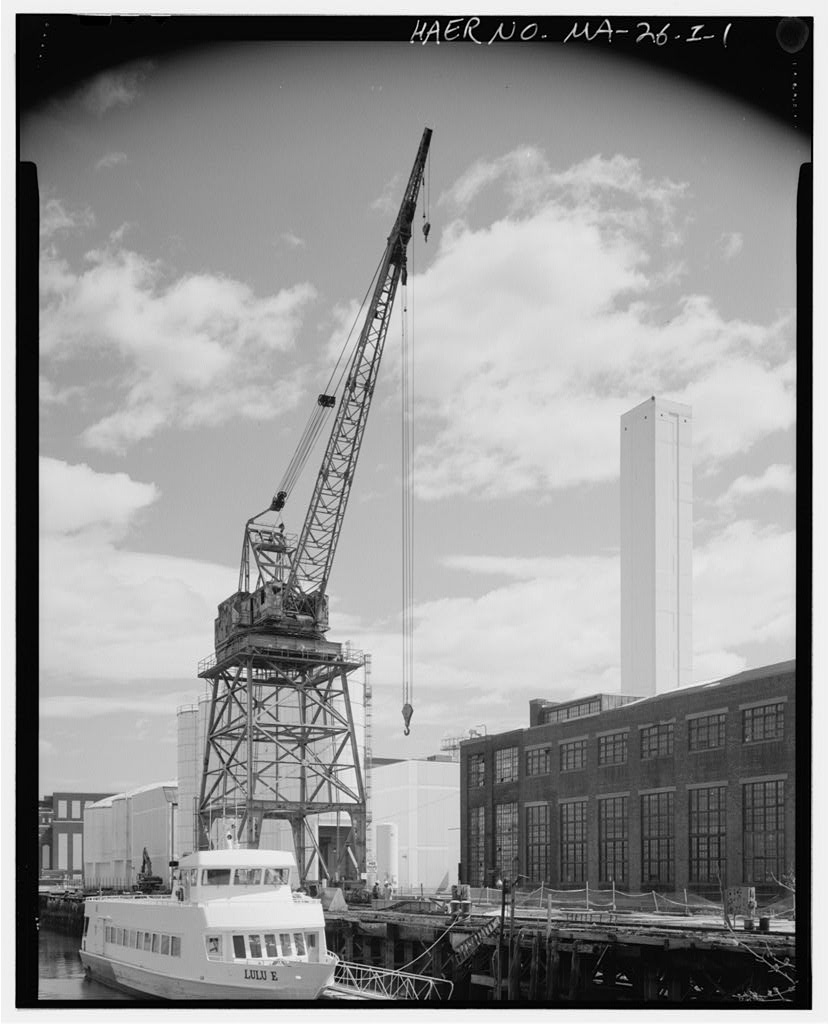
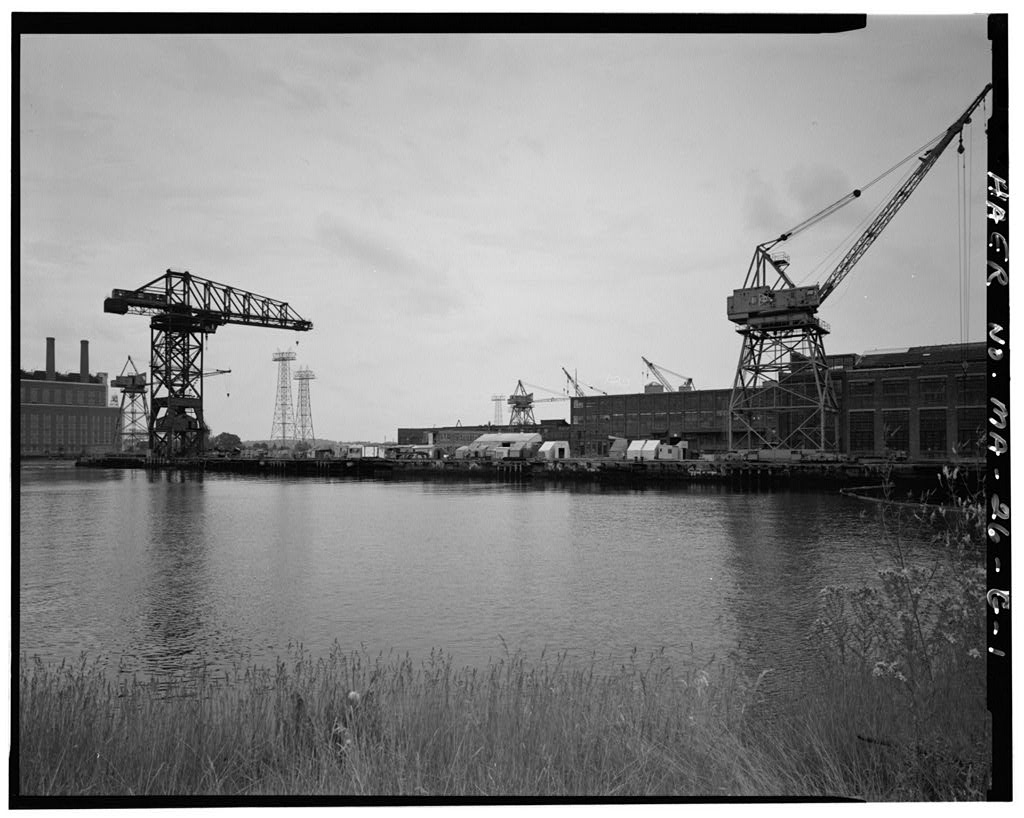
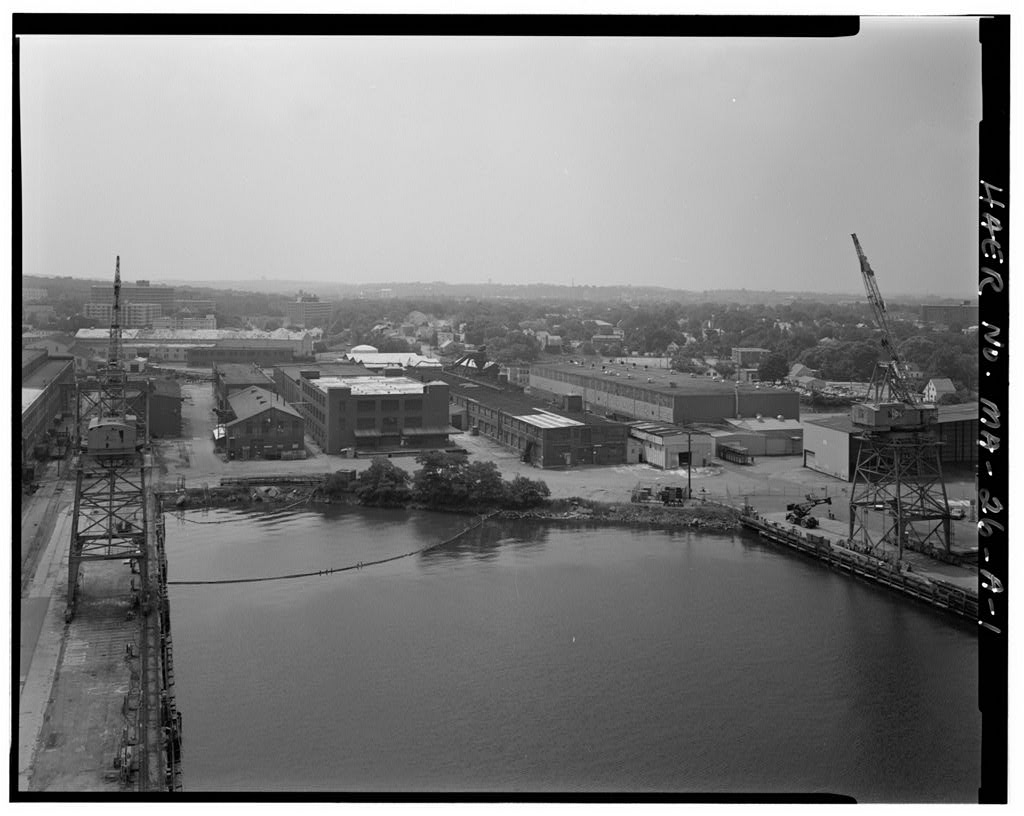
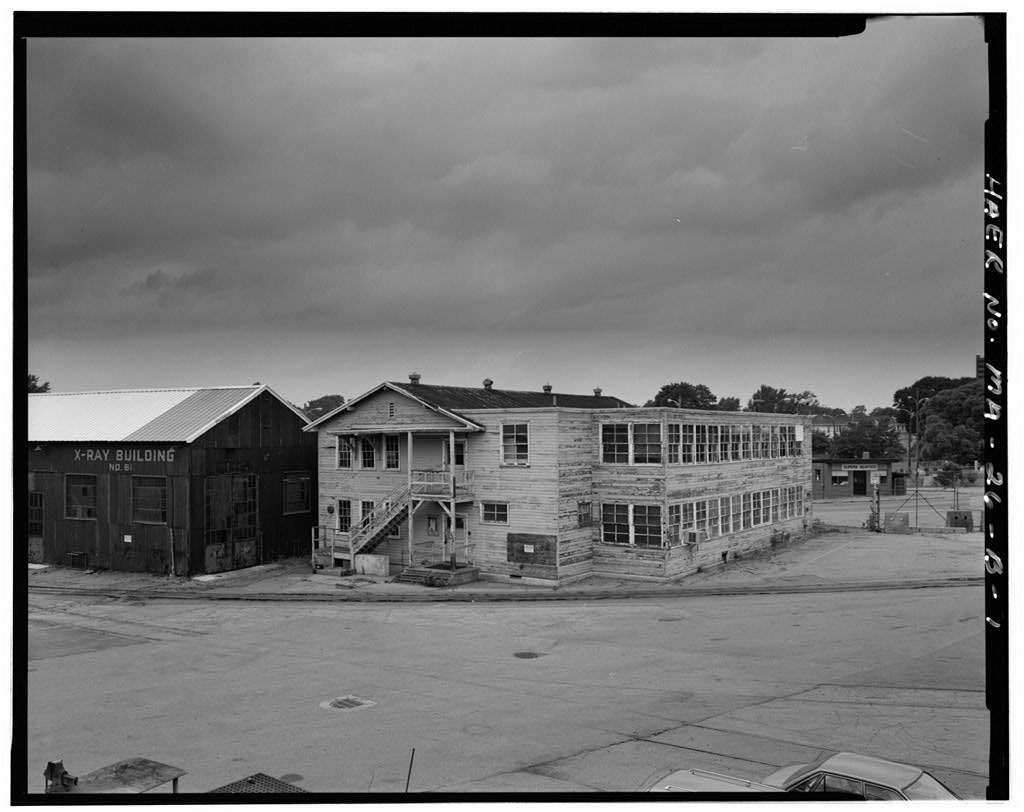
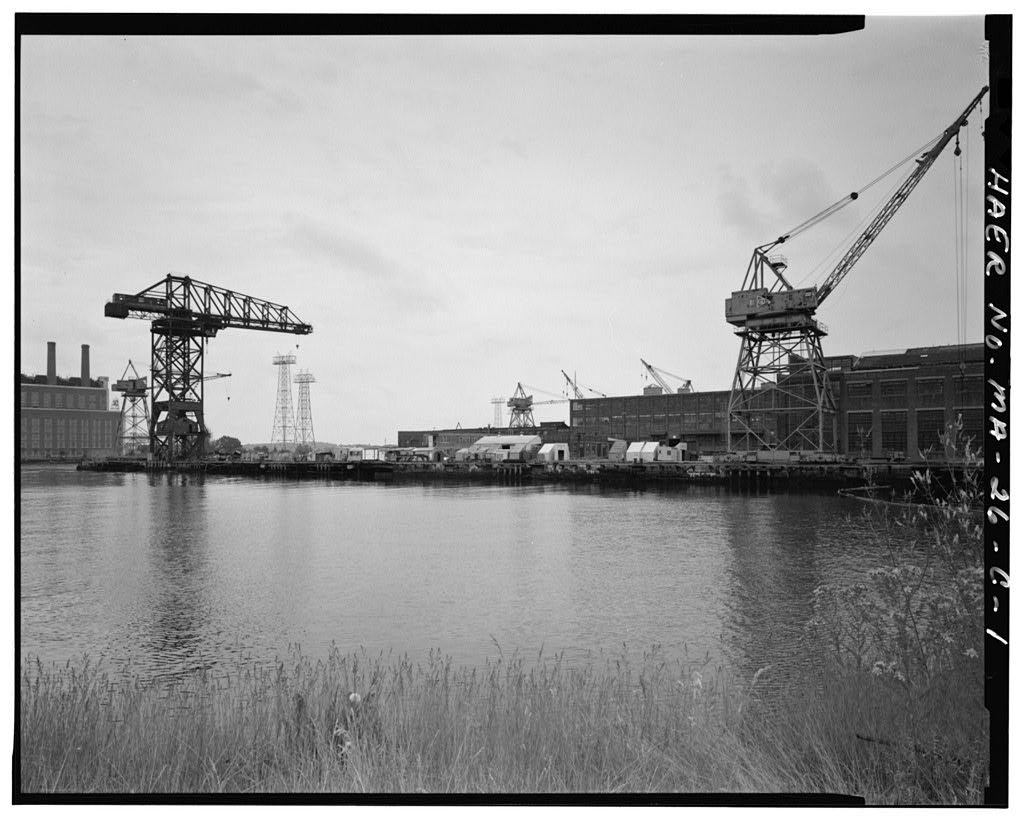
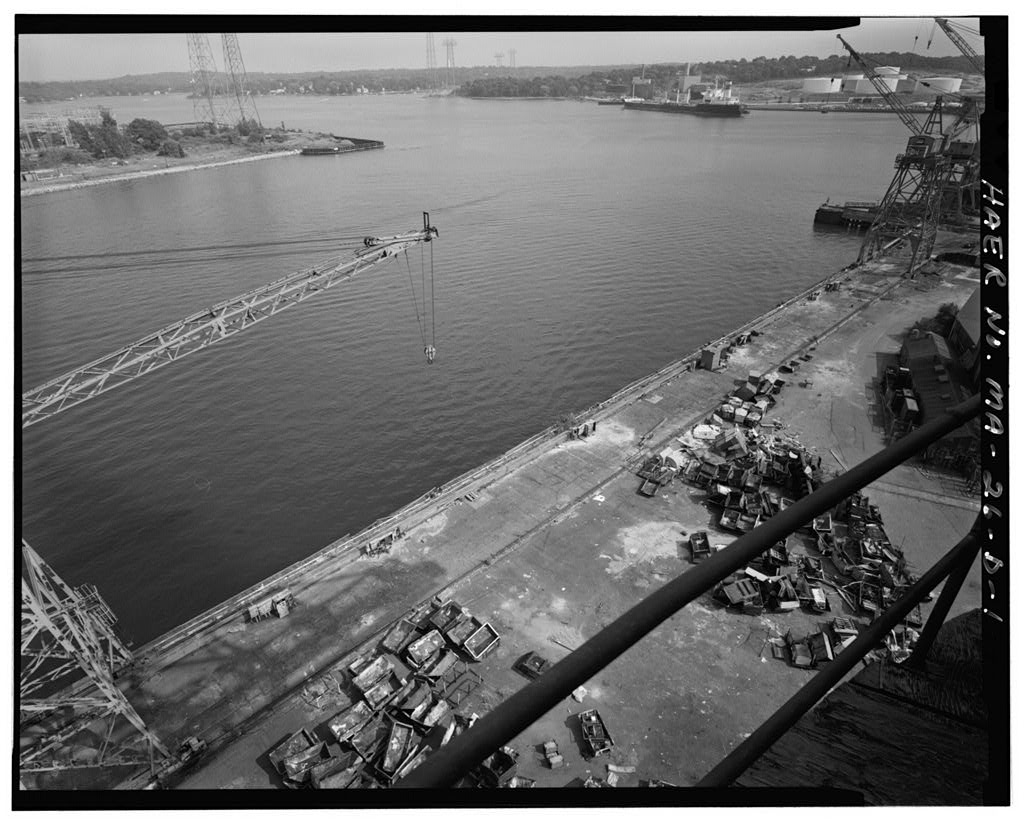
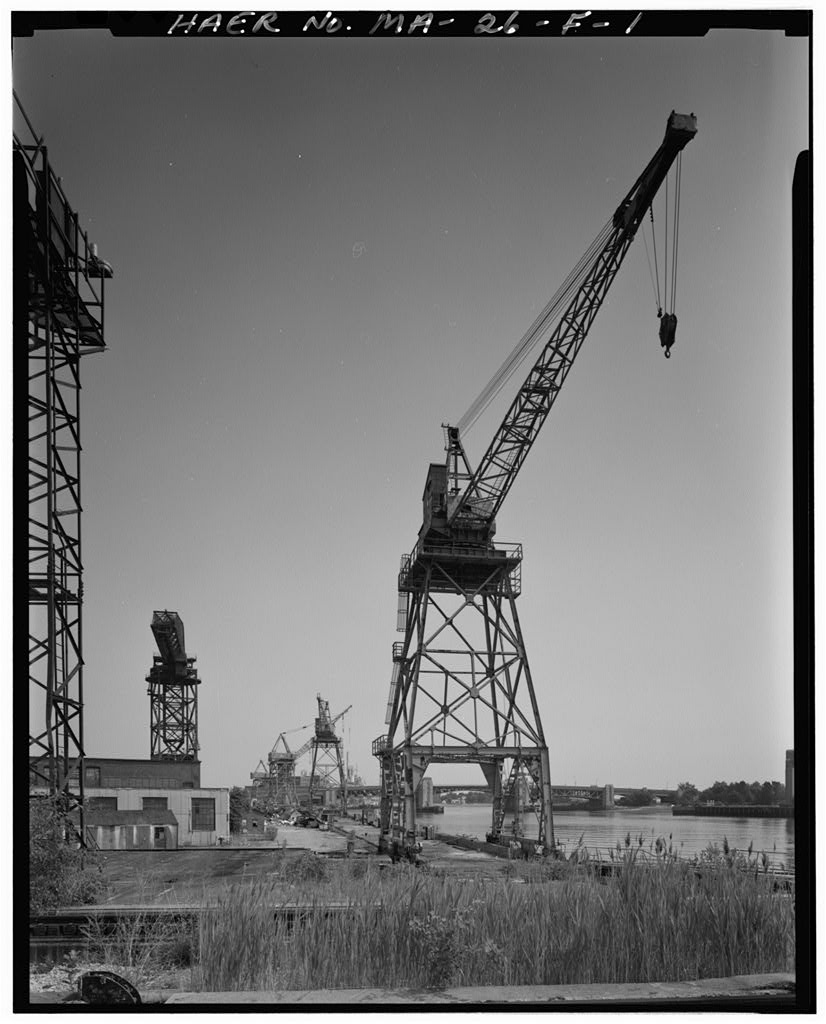
This documentation was undertaken in June/July by the Massachusetts Water Resources Authority (MWRA) in accordance with a Memorandum of Agreement. Portions of the Shipyard will serve as a staging area and shipping point during construction of sewage treatment facilities on Deer Island in Boston Harbor and for other water supply and waste-treatment related activities. The XYZ Crane is proposed for demolition. Preparer: Virginia A. Fitch The Public Archaeology Laboratory, Inc. 387 Lonsdale Avenue Pawtucket, RI
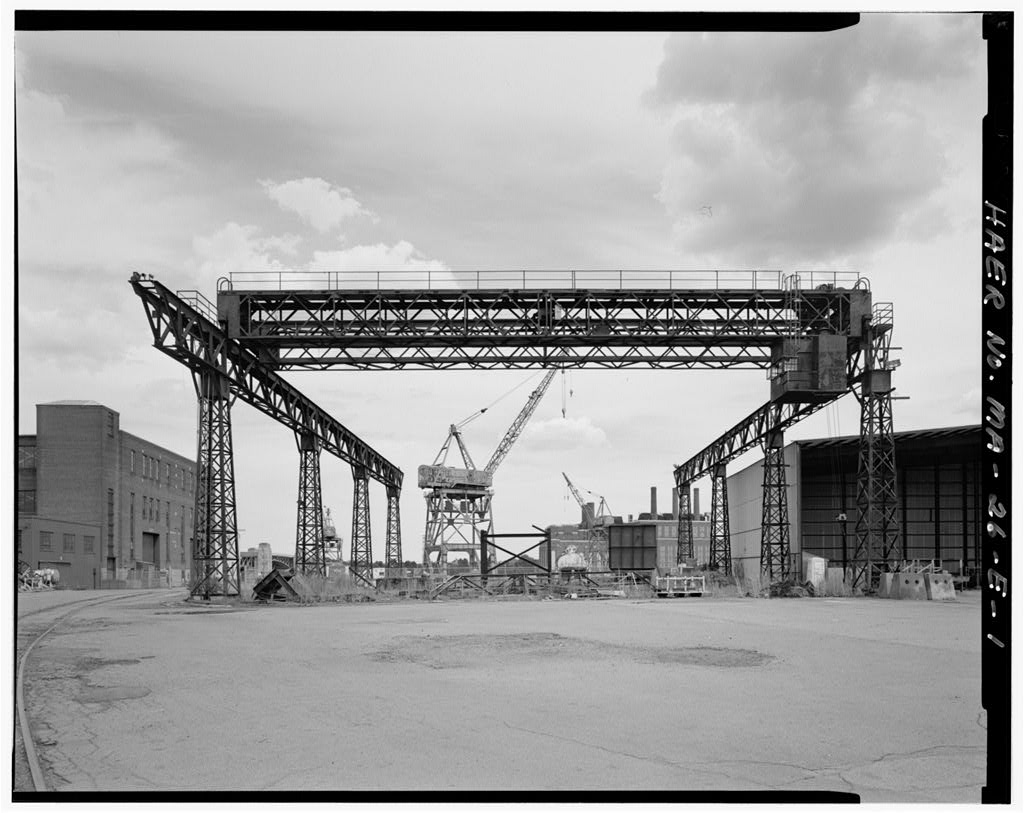
Allllt'lllllMU XYZ Crane & Towers (Structure HAER No. MA-26-E (Page 3) Description and Operation The XYZ Crane and Towers Crane) of the General Dynamics Corporation/Quincy-Fore River Shipyard is located in the north east section of the yard to the west of Outfitting Pier 4. The XYZ Crane is a 10-ton bridge crane fabricated by Boston Bridge Works, Inc., Boston, Massachusetts and erected by the Bethlehem Steel Company in The plans suggest portions of the crane were earlier. It originally functioned as part of the submarine railway and ship complex developed on the north side of Bent's Creek for World War I period construction. The history of the crane is not well documented. As originally designed, the riveted-steel crane structure was two-bridge bays wide and fourteen towers long.
It extended from its present location eastward over the slips to the west edge of the Weymouth Fore River. Between and the slip sections were removed, reducing the length of the crane to seven towers. Between and circa the north bay was removed. In ca. the eastern three towers along each side were removed. Of these, the inner two were scrapped, and the end (eastern most) was turned 180 degrees and relocated at the west end of the crane structure. Today, the XYZ Crane is four towers in length and one bay in width, covering an area 150 feet long and 110 feet wide. The design of the north side structure is heavier than that of the south side, reflecting the former presence of a northern bridge crane.
Along each side, four riveted- steel towers spaced 50 feet apart support the two spanning sections of the bridge crane. The towers are 5 feet 9 inches square at the base, tapering to 3 feet square at their top height of 38 feet. Typically, legs are of inch angle steel; legs of the center two south towers are inches. The legs are braced on four sides by horizontal inch) and diagonal inch) riveted steel members. At the top of the towers, skirt plates support the 50-foot-long sections of lattice track truss. The north side consists of two parallel lengths of true track truss; the south of one track truss (north) and one lighter bracing truss (south). The top of the truss platform is metal grillwork and carries the crane tracks.
The bridge crane structure consists of two parallel sections of lattice truss. It travels on a pair of 16-inch-wide by 14-inch-high cast iron trucks each with a pair of 2-foot-diameter, cast-iron, double- flanged wheels. The motor for crane movement and hoisting is mounted on steel plates and located at the east end of the crane between the two truss sections. Power is transmitted to the west wheel in each truck by shafts and bevel gears mounted within the western truss. The single hoist trolley moves on double flange wheels along the bridge tracks. The hoist hook is capable of being lowered to the ground and raised 40 feet via wire ropes. The operator's cab is mounted to the bottom of the west crane truss at its southern end.
It is constructed of steel plate with a viewing window on the north side. Access to the top of the crane and the cab is accomplished via a ladder mounted on the northwest tower; a ladder mounted to the north end of the west crane truss; a service catwalk on the top of the west truss; and a ladder connecting the catwalk and operator's cab floor-level platform.
Crane & Towers (Structure HAER No. MA-26-E (Page 4) The XYZ Crane originally functioned as part of the upland and slip assembly area at the north edge of the shipyard. After its size reduction in it continued to be used for onshore assembly. Transport for parts and materials was provided by the railroad spurs that entered the crane area from the south at its west and by two spurs that terminated near its southwest corner. Sometime between and ca. the crane was again shortened. The crane's function shifted from assembly to scrap handling, and it was known as the XYZ Scrapyard Crane. Conditions Over its long history of use, the XYZ Crane has been both modified and repaired a number of times. In ca. the crane track bed and rail were replaced (General Dynamics File Memo).
Possibly at the same time, welding and rivet repairs were made to the base of the tower legs. At present the crane is in fair condition. Historical Significance The United States' entry into World War I in occurred initially in response to Germany's unrestricted submarine warfare campaign which threatened national shipping and transportation (Weigley, p. In order to help meet naval needs, the Fore River Ship and Engine Company expanded its facility to the north of Bent's Creek and constructed submarine assembly slips in the vicinity of present-day Pier 4. The XYZ Crane in its earlier, larger configuration was erected as the primary assembly crane for this area and, therefore, has important historical associations with that era of the shipyard's history.
Although portions of the crane may have existed prior to no documentation has been found concerning its location and function. Subsequent modifications to the crane and its function reflect shifts in shipyard arrangement to focus on the main basins south of Bent's Creek, while the northern area became a peripheral storage and scraphandling area. The collection and reuse of scrap steel was viewed as a national patriotic duty during the war (Industrial Management Sept. pp. as well as being good industrial economic practice. In light of the immense financial capital requirements inherent in shipbuilding, the reclamation of scrap was an important cost saving activity throughout the shipyard's history.
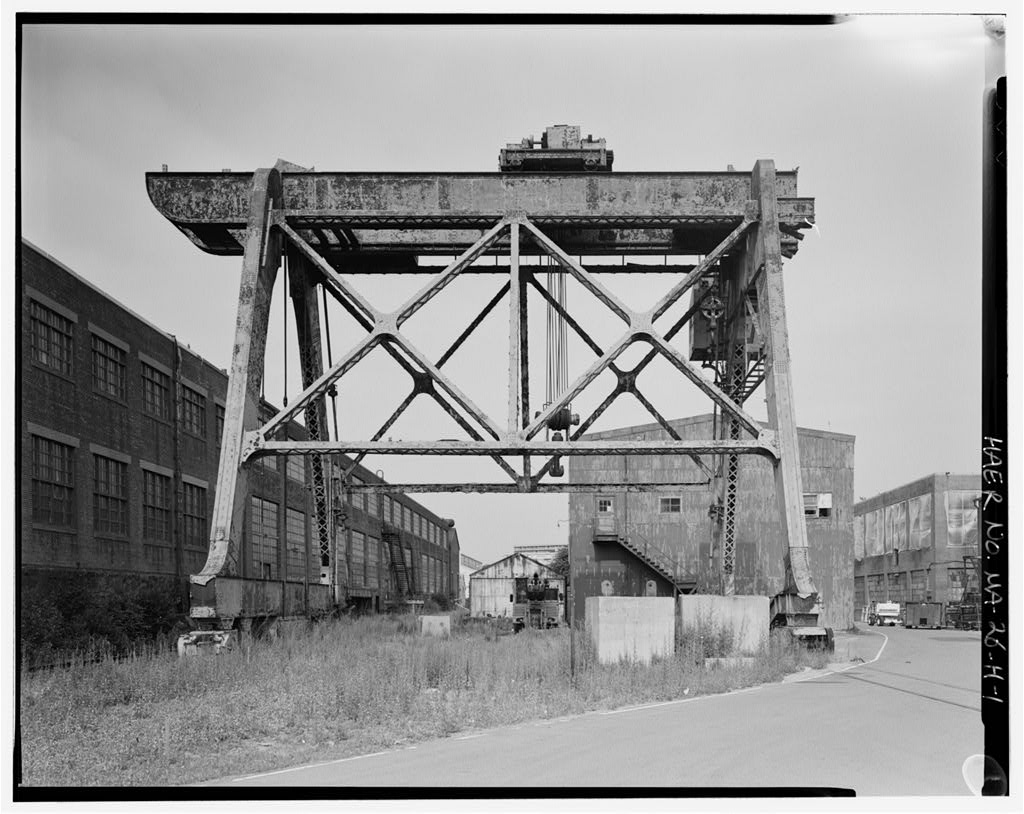
The structural form and operation of the XYZ crane also have significance as a good representative example of the bridge type cranes used in wide ranging industrial applications in the late nineteenth and twentieth centuries (Wright p. The crane's design permits the hoisting mechanism to reach any point within its tower structure; other examples of both open-air and enclosed bridge cranes of different sizes are located elsewhere in the shipyard assembly and fabrication areas. GENERAL DYNAMICS CORPORATION SHIPYARD XYZ Crane & Towers (Structure HAER No. MA-26-E (Page 5) Bibliography Bethlehem Steel Company Yard Plans Sheets 1A, 2, Boston Affiliates, Inc. Quincy-Fore River Shipyard Historic Resources Survey and Addendum.
Prepared for Massachusetts Water Resources Authority, October 20, and January 2, General Dynamics Corporation File Records at Shipyard General Dynamics Corporation Yard Plans Sheets 1A, 2, revised to Weigley, Russel E. History of The United States Army. New York: The MacMillan Co., Wright, Roy V., editor # Material Handling Cyclopedia. New York: Simmons Boardman Co., [Note: For archival and additional sources, see Addendum to General Dynamics Corporation Shipyard HAER No. MA-26.] GENERAL DYNAMICS CORPORATION SHIPYARD XYZ Crane & Towers (Structure HAER No. MA-26-E (Page 6) Location Map ADDENDUM TO: HAER MA-26-E GENERAL DYNAMICS CORPORATION SHIPYARD, XYZ CRANE & HAER MASS,11-QUI,10E- TOWERS (Tower No.
97 East Howard Street Quincy Norfolk County Massachusetts FIELD RECORDS HISTORIC AMERICAN ENGINEERING RECORD National Park Service U.S. Department of the Interior C Street NW Washington, DC
 Block
Block