 Block
Block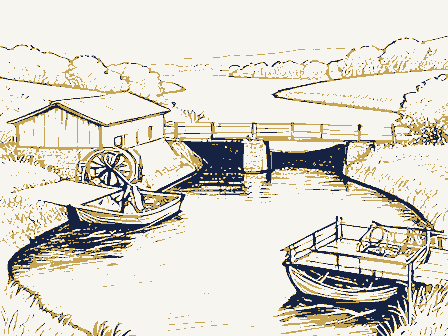
Lexington Town (part 10 of 25)
Part 10 of 25 of the account of this town in History of the Town of Lexington, Middlesex County, Massachusetts, from Its First Settlement to 1868, with a Genealogical Register of Lexington Families, published 1868. 15,928 words, covering 10 settlements. Source changes inside the text are labelled at the exact paragraph where the next book begins.
Contents
13 sectionsThe section headings the book prints inside this chapter, on this part. Each one jumps to where it begins.
Parts
25 pagesThe source prints this as one continuous account. It is split here so no single page grows too heavy to load; the text runs straight on across the parts and nothing is omitted.
The chapter
15,928 wordsReproduced complete and unedited from History of the Town of Lexington, Middlesex County, Massachusetts, from Its First Settlement to 1868, with a Genealogical Register of Lexington Families, published 1868. The text is machine-read from scans, so expect recognition errors: misspelled names, dropped words, and stray characters. Nothing has been corrected, because correcting a proper name invents one. The headings below are the books' own; source changes are labelled in place.
We have no means of giving a full and accurate history of the military organizations which have existed in the town from its first settlement. In fact, the only record, or intimation of one, consists in the titles ffiven to certain individuals from time to time in our Records. Before 1700, we find the title of Captain given to William Reed; in 1712, to Joseph Estabrook ; and in 1717, to Joseph Bowman.
Without pretending to give a full catalogue of the officers, or stating them in the exact order of time, we find the title of Captain given by the Records to Samuel Stone, Benjamin Reed, and William Reed, between the years 1740 and 1750, and in 1761 Benjamin Reed is denominated Major, which shows that he had been promoted ; and soon after Thaddeus Bowman is honored with the title of Captain. This brings us up to the commencement of the Revolution. And it is worthy of special notice that the military men of that day were the leading men of the town. No one has borne the title of Captain, whose name has not been found on the Board of Selectmen, or Assessors, or on some of the most important Committees. Even the honor of Lieutenant was enjoyed by Ebenezer Fiske, Ensign by Robert Harrington, and Quarter Master by John Bridge, who were, in their day, some of the most popular and distinguished men of the town.
The citizens of Lexington, during her whole history, have participated largely in the service of the field in times of war. In the early Indian wars several men from Cambridge Farms were eni^agcd ; but as wliat is noAv Lexington, was then a part of Cambridge, we liave no full or distinct account of that service. But in later periods, we find Lexington men scattered through almost every Massachusetts corps. Though the rolls are very imperfect, and in many instances there is nothing to designate the place from which the soldiers came, we have been enabled to collect the following imperfect lists.
In 1745, at the capture of Louisburg, there must have been some men from Lexington, but as no rolls are preserved, we cannot give their names.
In 1755, the war with the French and Indians assuming a more decided character, a large force from Massachusetts was called out. Some acted under General Winslow at the eastward, and others in the neighborhood of Lake Champlain. The imperfect rolls show that Lexington furnished twenty-one men, and probably more.
Military Affairs
In 1756, the war with the French and their Indian allies continuing unabated, new levies of troops were made, and Lexington, never backward in such a cause, furnished the following soldiers :
In 1757, another call was made for men, a considerable portion of whom were marched to the relief of Fort William-Henry. The following is a partial list of Lexington men :
The fall of Quebec in 1759, did not immediately produce the submission of Canada. The following year called for more Provincial troops, and Lexington had a large number of men in the field. From dilapidated rolls the following names have been gleaned :
Thou^-h the French were in a rjreat measure subdued on the northern frontier, the treaty of peace not having been concluded, a considerable portion of the troops were retained in the field in 1762, particularly to watch the Indians. The following men from Lexino'ton were in the service :
The foregoing is an imperfect list of the men who served in the French and Indian wars from 1755 to 1763 ; and it reflects no disci'edit upon the town. Her Munroes, and Merriams, and Winships were found on every battle-field - at Louisburg, Quebec, Crown Point, Ticonderoga, Fort William-Henry, and wherever a foe was to be encountered, or a daring deed to be performed. Some of the Lexington men were attached to the famous corps known as "Rogers's Rangers," - a corps in which Stark served his military apprenticeship ; - a corps whose name was expressive of the life they led - i-anging through the wilderness, seeking their wary savage foe by day or by night, in silent glens, or secret ambush ; - a corps whose winter quarters were in tedious marchings amid drifted snows, frozen lakes, and ice-clad hills, - relying sometimes upon snow shoes, and sometimes upon skates for locomotion, - and carrying their only arsenal and commissariat in their packs. In such a corps were some of the hardy sons of Lexington trained - they, knoAving that their lives were in their own hands, and that their escape from the tomahawk and scalping knife, the tortures of the faggot, or ignominious slavery, depended entirely upon their own severe trials, perpetual watchings, and determined courage.
Edmund Munroe, of Lexington, was at one time attached to Rogers's Rangers, where he acted as an orderly sergeant, and also as adjutant of the regiment. In a small memorandum book, kept by him at Lake George, in August and September, 1758,^ there are some notices of the events of the day, and a few things of interest. Under date of August 28, 1758, is the following :
" The troops to fire a Rejoicing . - Firing this evening for the success of his Majesty's arms for the taking of Louisburg. The regiments to be under arms, and line the breastwork at six o'clock, - the firing to begin with twenty-one guns from the Royal Artillery, and then proceed from the right of the 27tli Regiment round the line, and to finish with the left of Colonel Bagley's Regiment. This to be repeated till the whole have fired three rounds. The commanding officers of regiments to order a review of their men at twelve o'clock."
" The Rangers to he under arms at six o'clock this evening, to illuminate the rejoicing for the success of his Majesty's army at Louisburg, at which time Major Rogers to give to his Ranging Companies, as a token of his dependence on their Loyalty and Braverv, a Barrdl of Wine treat, to congratulate this good news to them, and the good behavior of the four Companies of Rangers at Louisburg, which has won to the corps a universal, national character."
In 17G1, Ednnmd Munroe was promoted to a Lieutenancy, by Governor Barnard, and in March, 1762, he was commissioned as Adjutant of Colonel Richard Saltonstall's Regiment, and continued in the service till the peace of 1763.
The more recent war of the Revolution, and the great interest we had at stake in the late Rebellion, have thrown the French war in a great measin-e into the shade. Few people at the present time realize the toils, the sufferings, and the sacrifices made by the Colony at that time to sustain the cause, and strengthen the arm of the mother country, which was shortly after raised to crush the patriotic colonists. From 1755 to 1763, the Colony of Massachusetts performed an amount of military service almost unparalleled. Minot, the historian, says, that in the year 1757, one third part of the effective men in the Colony, were in some way or other in the field. The patriotic devotion of the Colony, and the zeal with which our brave soldiers served Great Britain, should have excited her gratitude, and induced her to respect our rights.
We have no full record of the military organization in Lexington at the commencement of the Revolution. In 1770, the officers of the Lexington Company were Thaddeus Bowman, Captain ; Jonathan Smith, Lieutenant ; and Robert Harrington, Ensign. These officers probably considered themselves superseded or discharged, after Governor Gage virtually abdicated government here by refusing to convene the Legislature. The organization of companies of minute-men by the order of the Provincial Congress in 1774, appears to have been entirely outside of the old military organization. The Company which appeared on the Common in 1775, did not owe its organization to any law of the Legislature ; and it is probable that Captain Parker and his subalterns had no commissions, except that of the vote of the Company, and the approbation of the Committee of Safety. This Company comprised the principal men of the place, and probably constituted the only actual organization in town at the time. John Parker was at that time forty-six years of age, and must have been a man who commanded the confidence of the people. There were in town at that period. Lieutenant Edmund Munroe, and Ensign Robert Munroe, both of whom had held commissions in the French War - besides twenty-five or thirty more who had seen service ; and the fact that John Parker was selected to command that Company, and that these officers and soldiers were willing to volunteer and serve under him, shows that he was a man of more than ordinary character, and one to be trusted in any emergency. - And the result showed that this confidence was not misplaced. The important part acted by this Company on the 19th of April and subsequently, justly entitles them to a place in the historic page.
This Company not only served in the morning and in the afternoon of the memorable 19th of April, but on an alarm at Cambridge in jNIay, and on the day of the battle of Bunker Ilill in June, detachments from this Company, with the gallant Parker at their head, repaired promptly to the scene of action,
The imperfect Records of that day do not furnish us with a complete list of the Lexington men who served in the Revolution, or the length of time they were in the field. A large number of names are found on the rolls in the archives of the State, but it is impossible to make out a full list or a complete classification. The best list that we can obtain is the followinjj.
A Committee, of which Benjamin Brown was Chairman, appointed for the purpose, submitted a Report to the Town, dated May 14, 1779, containing the names of the persons who served, the Campaigns in which the service was rendered, and the amount they were to receive.
Military Services rendered hy the Inhabitants of Lexington in the War of the Revolution, from the first Campaign in 1775, to the close of 1778, exclusive of the three years^ men.
The following names are found upon the roll as Lexington men, and certified to by our Selectmen in 1782. Six Months' Men in 1780. Ezra Merriam. Philip Davis.
It will be seen, that in the foregoing lists, the same name in. some cases appears more than once. This arises fi-om the fact that the same person was out in difi^erent campaigns ; and if some of the names here given should be repeated in the following list of those who served in the Continental line, the same explanation will apply - they served in the militia either before or after their service in the regular army. But, after all, the lists are imperfect, a^ many of the rolls are destroyed.
short of the close of the war, and did not include those who were called out suddenly to meet an emergency, like Captain Brown's Company, which went to Rhode Island, we have inserted their names, and others which we found upon the rolls.
The following is the list of the three years' men, as far as we can collect them from the dilapidated rolls. Those whose names are marked with a star (*) enlisted in 1780, for three years, or during the war.
Several on the foregoing list are known to have been colored men, and some of them slaves - among whom are Samuel Crafts, Pomp Blackman, Jupiter Tree, Prince Estabrook, Pomp Fiske, C^ato Tuder, John Tingle, and perhaps others. But notwithstanding the color of their skin, they were deemed worthy to fight side by side with white men to achieve our Independence. And it is due to our fathers to say, that when slaves enlisted into the service, they were generally permitted to take their freedom if they desired it.
It should also be remarked, that some of the foregoinff list had served in the other and shorter campaigns, before entering the Continental Line ; and that some who are enrolled among the first three years' men, continued in the service by re-enlistment, though their names appear but once.
When we consider that Lexington was at the commencement of the Revolution a small town of only about seven hundred inhabitants, no one can pronounce her backward in supplying men to prosecute to success, a war which was so gloriously commenced within her borders.
Militahy Affairs
And in addition to the men who were duly enrolled for the " service, there was another voluntary organization, known as "the Alarm List," composed of those who were too infirm, too old or too young to be subject to military duty in the field. These men stood ready to turn out on any sudden emergency. Such organizations existed in almost every town throughout the Province, and in many cases included the clergymen of the parishes, who had not in those days embraced that sickly sentimentalism, that war in all cases was contrary to the Gospel, and could not innocently be resorted to under any circumstances - a doctrine which has received a stern rebuke by the late slaveholders' rebellion. Men of reflection have become satisfied that a nation, like an individual, is by the laws of nature - the laws of God, clothed with the I'ight of self-preservation ; and when its existence is threatened, it is bound by a religious obligation to sustain its being at every hazard, and by all the fair means that God and nature have put in its power. War is to be dreaded, and prevented as far as practicable ; but like the amputating knife, is allowable to save the life of the body politic. And though war in itself is a great calamity, and leaves many evils in its train, the history of the world shows that some of the grandest steps in civilization have grown out of the wars which at the time were regarded as great calamities. The fact is, God is the God of nations as well as of individuals, and he punishes the one as well as the other for their sins. As the Amorites of old were driven out of Canaan for their iniquities, so nations at the present day often feel the chastening of the Almighty in consequence of their sins. Dealing with men as free moral agents, God bears long with them, but when they become hardened in their sins - when the measure of their iniquity is full, he permits the awful scourge of war to do its strange work.
What else in the course of nature could have humbled the mad ambition of the South, but the mighty struggle through which we have recently passed ! What else could have brought to a speedy termination that systiem of slavery which had interwoven itself into the fibres of southern society, polluting the very fountain of social morality, of political rectitude, and religious faith ! When the lordly masters, prompted by ambition, failed in their attempt to spread their corrupt and corrupting institution through our broad domain, they vainly sought to overthrow the fair fabric of freedom, and establish upon its ruins an inglorious empire, resting upon human servitude as its chief corner-stone ! A purpose so base and inhuman, so repugnant to the spirit of the age, and so at variance with the laws of God, could not fail to draw down upon the devoted heads of these impious rebels, the sore displeasure of Him who has made of one blood all the nations of the earth. And what instrument of punishment was more suitable than the sword which they had wickedly drawn ! And what consequence could be more just and appropriate than the complete overthrow of the very institution they vainly attempted to extend and perpetuate ! Surely the righteous Sovereign of the Universe overrules the base designs of the unrighteous, and teaches the enemies of human freedom, that their unholy schemes shall not prosper.
This signal overthrow of the institution of slavery by the very means employed to sustain and extend it - this converting of the mad ambition and base passions which slavery lias produced in the masters, into instruments for the liberation of the slave, will teach the aspirants after power, that their base machinations to build up an oligarchy on the ruins of free institutions, must prove abortive ; and that the magnitude of their preparations, and the vastness of their appliances will only augment the greatness of their fall.
" Oh sons of earth, in vain ye strive to rise, By mountains piled on mountains to the skies ! Heaven still with laughter the vain toil surveys, Aud buries madmen in the heaps they raise."
It is difficult to tell what the military organization of the town of Lexington was during the Revolution. In 1779, there were two military companies ; for the town at a public meeting voted that the interest of the cause required that the two existing companies be united in one. Immediately after the close of the war, there was an important change in military organizations. The people had seen the importance of a military force ; and the State adopted measures accordingly to make the militia more efficient.
In Lexington, an Artillery Company was formed. The record of its organization is probably lost. It appears by the town Eecords, that at a meeting held December 16, 1784, the town voted, " That the Artillery Company 7io%o forming have liberty to erect an Artillery House on that part of the Common, where the Belfry formerly stood." This record, unimportant in other respects, fixes with a good degree of certainty, the period when that company was formed. Our prescribed limits will not permit us to pursue its history.
The militia organizations were kept up in Massachusetts till about 1825, when the military spirit began to wane. Some were afraid of the expense ; others thought the whole thing unnecessary. Pretended philanthropists ridiculed military parades, and some pious and shortsighted clergymen would supersede war by forming Peace Societies, and restrain the grasping ambition of the nations, by holding Peace Conventions, and passing abstract Resolutions. Such views and feelino-s tended to brinothe military into disrepute, and our militia system was practically given up. In the cities and large towns there were a few volunteer companies ; and this was all the organization which in fact existed at the commencement of the recent rebellion.
But the late struggle through which we have passed, has, we hope, convinced the reflecting, that resolutions are less protective in an hour of danger than batteries, and that rebels have less dread of Peace Conventions than of well appointed armies. When we consider the important services rendered by the few organized regiments of Massachusetts, by appearing promptly at Washington, when that city was threatened, we must see the wisdom of military preparation ; and if our law-makers are wise, they will see to it, that a partial organization at least, be kept up, until the States lately in rebellion show more humility than they do at present, and manifest a spirit more in accordance with the known will of the people. Moral suasion has great power ; but it is rendered more efficient when it is known that there is a military arm which will sustain it in an exigency.
During the rebellion, Lexington, as we have seen, was not behind her neighboring towns. She furnished more than her quota of men. The following is a list of men, with their rank and term of service, as reported by the Selectmen in 1866.
Officers, Soldiers and Seamen, of the Town of Lexington, who have been in the Service of the United States, since the Commencement of the Rebellion.
Army
He was Sergeant in Co. D, promoted to Quartermaster Sergeant, discharged to accept the office of Ist Lieut., in 7th Mo. Cavalry, und served as Adjutant.
Promoted to Quarlerraaster, May, 1862, to Captain and Commissary of Subsistence, March, 1864, and to Major and CommieBary of BubeistCQce, July, 1865.
Navy
Entered the Navy, November, 1861, as Aide and Secretary to Captain Pickering, U. S. Steamer Kearsarge, transferred to Steamer Housatonic, May, 1863, killed by the explosion of a torpedo, in Charleston Harbor, Feb, 18, 1864. G, G. Wheeler, in the Navy. Peter Bannon, in the Navy. Joseph Gammon, Steamer Mississippi. Joseph Gerard, in the Navy.
Discharged. Jeremiah Crowley, in the Navy. John Whitman, in the Navy. Charles Fiske, Jun., U, S, Ship San Jacinto. William B, Fiske, in the Navy.
In the above and the previous military lists, we have generally adopted the spelling found on the rolls, though in many cases it is probably incorrect.
Municipal Affairs
List of Selectmen - School Committees - Assessors - Town Clerks - Treasurers - Committees of Correspondence - Kef rcaentatives - Senators - Justices of the Peace - College Graduates.
It may be gratifying to us to know who have enjoyed the confidence of the people from time to time, and who have filled the principal places of honor and trust in the town. It is proposed to give a list of the Selectmen, School Committees, Assessors, Clerks, and Treasurers. Also to give the names of the Representatives, Senators, and Justices of the Peace, as far as the same can be ascertained. Such lists not only show who were the prominent men at different periods, but they show the views and habits of the people in relation to rotation in oflfice. And if it should appear that our fathers fell into one extreme, it may appear that we have fallen into the other. We will give the list from the incorporation of the town to the present day.
List of Selectmen^ from the Incorporation of the Town to the present day, together with the years they served; arranged in the order in which they first entered upon their office.
Municipal Affairs
- It frequently happens, in this list, that the same name appears at different times; but the individuala are uot the same. The family namtss bcicg the same, create some confuBion.
List of Assessors, from the Incorporation of the Town to the present time, with the years they respectively served ; arranged in the order in which they first appear upon the Record.
As these Committees constituted a kind of government, or at least a channel of communication through the Colony ; and as they were generally composed of the most intelligent and reliable men in the town, it is well to give their names.
List of Representatives to the General Court from the Incorporation of the Town to the present day, with the years they served ; arranged in chronological order.
It will be seen that the above numbers do not include every year. In the vacant years the town was not represented. The five last named Representatives were chosen by the District, consisting of Lexington, Bedford, and Burlington, and the last year, of Carlisle also. These towns furnish the Representatives somewhat in rotation, and only the Lexington men are inserted here.
When Nathan Chandler was chosen, the Senators and Councillors were chosen as one body, and the Legislature selected nine from that body as Councillors. Mr. Chandler was several times selected for that purpose.
Rev. Jonas Clarke was Delegate to the Convention which formed the Constitution in 1779 ; Benjamin Brown, a Delegate to the Convention which ratified the Constitution of the United States, 1788.
Nathan Chandler was a Delegate to the Convention to Revise the Constitution in 1820 ; and Joel Viles in the Convention to Revise the Constitution In 1853.
List of Graduates of Colleges from the Town of Lexington. John Hancock was graduated at Harvard College in 1719 ; was Librarian of that Institution from 1723 to 1726 ; ordained over the North Church in Braintree, November 2, 1728, and died May 7, 1741, aged 41. He was the oldest son of Rev. John Hancock, of Lexington, and the father of the celebrated John Hancock, of the Revolution, who was President of the t Those marked -with an obelisk (X) received their first commissions for other places at an earlier date, and were renewed for Lexington at the dates mentioned above. Charles Hudson's commisBion was for all the counties of the Commonwealth.
Jonathan Bowman graduated at Harvard College in 172-i ; studied theology, and was ordained at Dorchester, November 5, 1729; died May 30, 1775. He was son of Josepli Bowman, Esq., who died In 1752.
EiiENEZER Hancock graduated at Harvard College in 1728. He was the third son of Rev. John Hancock, of Lexington. He was ordained colleague with his father, in Lexington, January 2, 1734, and died January 28, 1740, aged 29 years.
Edmund Bowman graduated at Harvard College in 172S. He was a merchant at Portsmouth, N. H. He was brother of Jonathan mentioned above. He died 1745.
Thaddeus Mason graduated at Harvard College in 1728. He was Clerk of the Court of Common Fleas of Middlesex, and died May 1, 1802, aged 95 years.
Philemon Bobbins graduated at Harvard College in 1729 ; was ordained at Branford, Conn. He had two sons who were liberally educated clergymen, Chandler, (Yale, 1756,) and Ammi Ruhamah, (Yale, 1760,) the former had threS sons who weregraduates at Harvard College. He died 1781.
JosiAH Brown graduated at Harvard College in 1735; was a preacher at Lancaster, INLass., and died March 4, 1774. He was son of Joseph Brown, the first of the Lexington Browns.
Matthew Bridge graduated at Harvard College in 1741 ; was ordained at Framingham, February 19, 174G, and died September 3, 1775, aged 65 years. He was Chaplain to the Army at Cambridge at the breaking out of the Revolution, and contracted the disease of the camp, of which he died in a short time after leaving the army. He was a son of Matthew.
Jonas Merriam graduated at ILirvard College in 1753; was ordained at Newton, Mass., March 22, 1758, and died August 13, 1780, aged 50 years.
JosiAii Bridge graduated at Harvard College in 1758 ; was ordained at East Sudbury, (now Wayland,) November 4, 1761, and died June 19, 1801, aged 62 years.
MiCAii Lawrence graduated at Harvard College in 1759 ; was ordained at AVinchester, N. H., November 14, 1764, and died January, 1794, aged 65 years.
Amos Windship graduated at Harvard College as A. B. in 1771 ; A. M. in 1790; M. B. in 1790; M. D. in 1811, and was a corresponding member of the London Medical Society. He died in 1811.
Bexjamix Muzzy graduated at Harvard College in 1774. He sailed from'Boston, September, 1777, in the privateer Hero Revenge, during the Kevolution, as a Chaplain, and was lost at sea the same year.
Ebenezer Bowman graduated at Harvard College in 1782 ; was an Attorney at Law of considerable distinction at Wilkesbarre, Fenn., and died in 1829.
Joseph Denxie graduated at Harvard College in 1790, Li 179G, he commenced a series of Articles in the Farmer's Museum, published in Walpole, N". H., entitled "Lay Sermons," which continued from time to time for several years. They were extensively copied, and were read with eagerness in all parts of the country. He also instituted and edited the "Portfolio," a literary publication of high merit, at Philadelphia. He died January 7, 1812. He was a scholar of fine literary taste, and has been denominated the American Addison.
Elias Phinney graduated at Harvard College in 1801. He was an Attorney at Law in Charlestown. and afterwards Clerk of the Courts of Middlesex County, lie was greatly distinguished as an agriculturalist, and died in 1849. He was a son of Benjamin Phinney.
Timothy Wellington graduated at Harvard College in 1806. He was a Physician of good professional reputation at West Cambridge. He died in 1853.
AuTEMAS B. MuzzEY graduated at Harvard College in 1824. He was settled as a clergyman in Framingham and Cambridge, Mass., Concord, N. H., and Newburyport, Mass.
Curtis Cutler graduated at Harvard College in 1829 ; was ordained at Gardner, and afterwards installed at Peterboro', N. H. Being affected with a bronchial difficulty, he left the ministry and engaged in commercial business in Boston.
Edward Wellington, was drowned in Cambridge, while in the Scientific School, September 6, 1852. He was a son of Major Benjamin O. Wellington.
John W. Hudson graduated at Harvard College in 1856. He entered the service of the United States in the late Rebellion, as Second Lieutenant, and was promoted successively to First Lieutenant, Captain, Major, and Lieutenant Colonel. He is a Lawyer in Boston. The two preceding are sons of Charles Hudson.
George D. Robinson graduated at Harvard College in 1856. He is M son of Charles Robinson ; has been engaged as a teacher ; is now a Lawyer in Chicopee.
Miscellaneous
Situation and Extent - Soil and Productions - Topography - Health of the Place and Longevity of its Inhabitants - Name of the Town - Old and New- Style - Public Buildings - Private Dwellings - Population - Valuations - Slaves and Slavery - Roads and Railroads - The Great Bridge - Manufactures - Peat - Paint Mine - Names of the Town Streets.
Lexington is a Post town in the County of Middlesex, situated in latitude 42° 26' 50" North, and in longitude 71° 13' 55" West. It is about eleven miles west-northwest from Boston, about six miles easterly from Concord, and about fifteen miles southeast by south from Lowell. It has Winchester, Woburn, and Burlington, on the northeast; Bedford, and Burlington, on the north; Lincoln, on the west; Waltham, on the southwest, and Arlington, on the southeast. The township, like most of those in the neighborhood, is somewhat irregular in its shape, and contains about 19 square miles, or 12,160 acres. It is generally more elevated than any adjoining town, unless it be Lincoln, and hence the water from Lexington runs in almost every direction. As it is the water-shed, the streams are small, and they find their way to the ocean through the Shawshine, Mystic, and Charles Rivers. The water power in the town is inconsiderable, and what there is, is remote from the centre. There is at present but one mill in the town, that being in the easterly part, at the outlet of the Great Meadow, so called ; on or near the site of this mill, was erected the first mill in the township, probably as early as 1650. It was then owned by Edward Winship, of Cambridge, and was given by his Will to his son Edward, and remained more than a century in the family. There is another and more valuable privilege on Vine
The township is generally uneven, furnishing a pleasant variety of hill and dale. Though the surface is frequently broken, the soil for the most part is productive. The rock formation, through a great part of the township, is a species of greenstone ; and though it often crops out of the ground, the rock is so irregular, and the sides so precipitous, that the soil is deep, and often capable of cultivation up to the very face of the ledge. The presence of this rock indicates a hard, but at the same time a warm and productive soil, well adapted to grass and fruit trees.
There are many good farms in the town, and their value is greatly enhanced by the peat swamps, which are found in almost every neighborhood. These swamps, when properly drained, constitute, some of the most valuable land for cultivation, and at the same time serve to fertilize the rest of the farm. The material taken from the ditches is extensively used as a manure, and will of itself pay the labor of draining. Lexington, as a whole, may be considered a first class agricultural town, and has been somewhat distinguished for its hay, fruits, and other agricultural productions ; but more particularly far its milk dairies, which send to market 350,000 gallons of milk annually.
The village of Lexington is pleasantly situated on land comparatively level ; and though it is elevated more than two hundred feet above tide water, being surrounded by hills more or less distant, and having meadows on either hand, it has the appearance of being rather low. It is eleven miles from Boston, five miles from Waltham, Woburn, and Bedford, and four miles from Burlington, and Lincoln. In the centre of the village is the Common, a triangular plot of ground, situated at the junction, and lying between the roads leading to Concord and to Bedford. It contains about two acres, and is nearly level, Avith the exception of a gentle swell rising some five or six feet in a circular form, on the southerly side, on whicli is situated the Monument, erected to the memory of the first revolutionary martyrs. The borders of the Common are skirted by rows of elm, ash, and other ornamental trees ; some of which have braved the blasts of a hundred winters, while others are blushing into youthful beauty. This Green is consecrated by the first blood of the Revolution ; and the sacred associations which cluster around the spot, render it a place of considerable resort ; and many a passer-by pauses to contemplate the scene which renders it classic.
The village extends nearly a mile on the main road ; and, embracing as it does the settlements on Hancock, Bedford, Muzzey, and Waltham streets, comprises about one hundred and twenty houses and shops, and contains nearly eight hundred inhabitants.
The terminus of the Lexington and Arlington Railroad ia near the centre of the village, and has a commodious stationhouse situated about six rods from the street, so as not to impede or endanger the travel on the highway. The approach to the station is by a broad, circular driveway, leaving a crescent lawn of about one third of an acre between the depot and the street. Though the depot is not particularly elegant, it is a neat and well proportioned building, and is so situated as to increase rather than impair the beauty of the place.
Passing on the road towards Boston, as you leave the centre village, the houses grow more sparse for about three fourths of a mile, when they become more frequent ; and you soon find yourself in the midst of another village more than half as populous as tlie centre. Both villages are adorned with ornamental shade trees, which extend to every part ; and in several places on the main street, huge and venerable elms attract the notice of the traveler. The character of the soil is such, that both villages arc, in a remarkable degree, free from those pests of many country villages - mud and dust.
Though Lexington has no elevations which would justify the appellation of mountains, yet there are within her limits a great number of hills, which command extensive prospects, and present fine landscape views. These elevations are generally more or less abrupt, showing fragments of greenstone in their more precipitous sides, and having their summits crowned with the same kind of rock in a more smoothed and flattened form.
In the centre of the town, within five or six rods of the Common from which it is separated by the street, rises 'Belfry Hill,' so called, from the fact that a structure was formerly erected on this hill, in which the church bell was hung. This elevation, which is nearly hidden from the street by the houses and shade trees, is about forty feet above the Common, and standing in a bend of the road, presents a good view of the village, and of the roads approaching it on every side. On this elevation it is proposed to erect the contemplated Monument, commemorative of the opening scene of the American Revolution. The summit of this hill presents a level surface of rock, which seems formed by nature for the base of such a structure ; and when one or two houses standing on the street are removed, and the whole ground opened to the Common, the beauty of the place would be greatly increased. Through the liberality of the heirs of the late William H. Cary, Esq., of Brooklyn, N. Y., this hill has been purchased, and is generously tendered to the Monument Association. If this Monument should be erected according to a design which has been adopted, as it would commemorate one of the greatest events in our history, so it would be one of the most attractive monuments in the country.
the village, is elevated seventy or eighty feet above Main street, and affords a good view of the central part of the town. The village from this eminence presents a fine appearance. The lofty elms and other ornamental trees, which skirt the streets and shade the dwellings, give to the village an aspect peculiarly rural ; and when the trees are in full foliage the prospect is one of great beauty, exhibiting in one view neat, commodious, and even stately dwellings, embowered in shady groves, with fertile fields and wooded hills in the back ground.
Hancock Height. About one hundred and twenty rods northeasterly of Merriam's Hill, and forming a part of the same swell of land, rises abruptly one of the most conspicuous elevations in the town. The altitude of this hill is greater than any other in the township, except the highest portions of the range between Monument and Lincoln streets ; and, rising from a lower level, and standing out isolated and alone, on the margin of the valley of Vine Brook, with an elevation of about one hundred and seventy-five feet above it, this hill has a grand and imposing appearance, and aflfords a magnificent prospect. Standing on its summit, you have almost the whole northern and eastern part of the town in full view. At the base, and almost under your feet, is spread out the valley of Vine Brook, showing its broad meadows, here in a high state of cultivation, and there covered with a growth of oak and maple, while on the other side is the village in its leafy beauty. Beyond, you have the plains waving with grass or grain, hill-sides adorned with orchards, or crowned with forests, - the whole dotted over with farm houses and barns to show the presence of industry and thrift. Here, too, you behold the streamlets meandering through the meadows, the roads winding among the hills, together with the school houses and the churches, showing that the mind and the heart, no less than the face of the earth, are designed for cultivation and improvement.
Nor is the prospect confined to the township. The villages of Burlington and Woburn, with the high grounds beyond, bound your prospect on the northeast. On the east you have the hills in Winchester, Mount Gilboa, and other high lands in Arlington in view ; and between these, a part of Somerville, the towering shaft on Bunker Hill, and a portion of the city of Boston may be seen, reflecting the rays of the rising or setting sun. To the southeast, the eye takes in the Blue Hills in Milton, the elevated lands in Newton, Prospect Hill in Waltham, and the high grounds in Weston. Towards the west and northwest the prospect is still more extensive. Passing over the village of Bedford, the high lands of Westford, Groton and the intermediate towns, the eye rests upon the lofty Wachusett in Princeton, the first land which meets the eye of the mariner as he approaches the coast. Farther to the north, you behold the Watatick in Ashby, and the hills in New Ipswich ; and still farther, in the State of New Hampshire, the grand Monadnock, with brow half seen, and half concealed in clouds, fixes and bounds the view.
This hill is nearly devoid of wood, having only a few stinted pines and cedars upon it. But it has one feature which is somewhat characteristic of a mountain, - a pond of lasting water upon its side, about twenty feet below its summit, containing ftom one to two acres. The whole of this hill has been purchased by Francis B. Hayes, Esq., of Boston, who has constructed a road nearly to its summit, cleared out the pond, and greatly impi'oved the ground around it, thereby rendering this eminence more accessible and attractive. This hill had acquired the insignificant name of Granny Hill, but the inhabitants in town meeting assembled, in November, 1867, gave it the more worthy name of "Hancock Height," in honor of their first permanent minister, and his grandson, Hon. John Hancock, of Revolutionary memory, whose association with, and regard for the town, are well known and recognized.
Davis's Hill, situated about half a mile northwesterly from the Common, is a fine elevation of land, rising about one hundred and forty feet above the meadow which lies at its southeasterly base. This hill is less abrupt and broken than Hancock Height, having in many parts a tolerably good soil, which has been cultivated nearly to its summit. This elevation, like the others in the neighborhood, overlooks the village, and affords much the same prospect toward the north and west as the one last mentioned. This range of high land continues to the southwest, and though it has several depressions, it rises, after passing the road to Concord, to an elevation greater than any land in the town. The highest parts are covered with a good growth of wood.
FiSKE Hell, situated on the road to Concord, about a mile and a third from the village, is elevated at least one hundred feet above the valley with which it is surrounded, and furnishes an extensive view to the north, west, and south. The old road over which the British passed in their expedition to Concord in 1775, wound its way up the sides of this hill, and passed the ridge not far below its highest elevation. Near the summit of this hill. Colonel Smith attempted to rally his flying troops, and make a stand against his pursuers. But his efforts were fruitless. His troops were soon put to flight, and he was severely wounded.
There are several hills of considerable elevation in the southerly part of the town, near the old Concord turnpike, which command views more or less extensive. One on the farm of Mr. Webster Smith, known as the Phinney Place, furnishes a prospect from northwest to southeast of seventy or eighty miles, from the Blue Hills in Milton to the mountains in New Hampshire.
Loeing's Hill, about half a mile southerly from the centre of the town, rises somewhat abruptly from the meadows which skirt Vine Brook, to the height of about one hundred and fifty feet. It is covered with wood ; and the underbrush having been removed, it affords a delightful ramble for those who seek the cooling shade, to meditate upon the beauties of nature. An Observatory has been erected on the hill, from which a fine view is presented in every direction.
There is a range of high lands on the southerly side of the great road leading to Boston, commencing a little southeasterly of the Town Hall, which, though interrupted by several depressions, extends into Arlington. The swell above the old Munroe Tavern is considerably elevated, and overlooks the village and a large portion of the town. It was on the northern declivity of this hill, that Lord Percy placed one of his field pieces on the 19th of April, 1775 ; and from this spot threw his shot in every direction, where he could discover any of the Americans assembling, - one of which perforated the meeting house on the Common. The elevated portions of this range, southwesterly of the Roman Catholic church, command a prospect of great extent and rare beauty. Not only the northeasterly poi'tion of the town, but the village of Medford with its numerous dwellings and public buildings, are displayed to view. Nor rests the prospect here ; the city of Lynn, and the dark blue ocean beyond, whitened by the sails of the hardy fishermen and the enterprising merchants, give variety and grandeur to the scene. i
Mount Independence, near the East Village, rises abruptly about one hundred and thirty feet above the main street. It is nearly opposite the church, and commands a full view of the village, and the high lands on the opposite side of the broad meadows which spread out on each side of Mill Brook. But while Main street, on which are situated the principal houses in the village, lies at the foot of this eminence, and the eye of the beholder on the summit can observe every movement in the village, a more distant prospect attracts the attention ; and in the openings among the hills in Arlington, the growing village of Medford rises in full view. The prospect from this hill is truly delightful, and the people in that part of the town have shown their good sense in giving it a name worthy of its character, and the town where it is situated. On the 4th of July, 1824, a piece of ordnance was presented by a citizen of the village, for the use of the inhabitants ; and the name of "Mount Independence" was given to this hill, under the folds of the Stars and Stripes, and amid the roar of cannon and the huzzas of the citizens. It was near the foot of this hill, that the British on the morning of the 19th of April, 1775, committed one of their first acts of aggression, by disarming one of the Lexington Militia, (Mr. Benjamin Wellington,) who was on his way to join his fellow townsmen in arms at the Common.
Farther to the south, this elevated range rises still higher, with a more extended prospect, particularly to the south and east, enabling the eye to take in the villages of Newton, and the great extent of beautiful country intervening. At the lower end of the East Village, this range is considerably depressed, but soon rises again as it approaches the line of Arlington, giving a good view toward the north.
There is one peculiarity common to almost every elevation in town. We have seen that the rock formation was greenstone, which generally cropped out upon the sides of these hills. The feature to which we now refer is, that on or near their summits are masses of greenstone quite unlike, in form and appeai-ance.
what is found on their sides. While the latter are rouo^h and angular, the rock upon the summit is more compact and smooth, having the upper surface flattened, as though it had been ground off by some immense power. This appearance of the rock is ascribed by geologists to the glaciers which, during what is denominated the " drift period," passed over this portion of the country, and by their enormous weight ground down the tops of these rocky elevations, carrying away the loose and broken fragments, and leaving the solid summits flattened and comparatively* smooth.
Such is the topography of Lexington, and it may with truth be said, that few towns within thirty miles of Boston contain so much to attract the attention, please the eye, and gratify the taste, so far as natural scenery is concerned. Though it is within half an hour's ride of the city, it is as rural, as quiet, and apparently as retired, as though it were fifty miles in the interior. Though the village is well settled, having more than a hundred dwelling houses within half a mile of the Common, five minutes' ride in almost any direction brings you into scenery entirely rural, and leads you to fancy yourself far in the country. Having no manufactures in the town, there is but little of that floating: population found in many of our towns. The inhabitants being mostly farmers, or gentlemen doing business in Boston, we have less of tumult and commotion than most places in the vicinity - the only bustle being a few minutes in each day on the departure and arrival of the cars.
Being an elevated township, the water is pure and the air salubrious ; and hence Lexington in all periods of her history has been regarded as one of the most healthy places in the vicinity. This fact is so well known and acknowledged, that invalids from the city frequently resort here for the improvement of their health. The topography of the country, the rural scenery, the orderly quiet of the place, and the purity of the atmosphere, render Lexington a desirable place of residence.
The sanitary character of the town may be seen in the longevity of its inhabitants. In 1776, among the recorded deaths were one person aged 88 years, one aged 84, three aged 83, and two aged 79. Between 1779 and 1790 inclusive, there were one aged 96, one aged 95, one aged 93, two aged 92, three aged 90, one aged 88, and four aged 85. Nor was this longevity confined to the last century. In 1819, there were among the recorded deaths, one person aged 99, one aged 94J, and tAvo aged 94; and in 1822, two aged 92. In the Church Records of 1835 is the following entry : " Deaths during the preceding fifteen years, three hundred and twenty-one. Over 80 years of age, forty ; over 90, ten; 95, one; 99, one.
We have already seen, that Lexington was incorporated, March 20, 1712, Old Style, which, by our present mode of reckoning, would be March 31, 1713.' It took its name from Robert
' It may be interesting to some to state the occasion for the change from Old to New Style. The Julian Year consisted of three hundred and sixty- five days and six hours - making the year too long by about eleven minutes. In 1682, Pope Gregory XIII attempted to reform the Calendar. From the time of the Council of Nice to the time of Gregory, this excess of eleven miniites amounted to ten days. In order to obviate this error, it was ordained that the year 1582 should consist of only three hundred and sixty-five days, and that ten days, between the -Ith and 14th of October, should be thrown out of the Calendar for that year ; and also to prevent any further irregularity, that no year commencing a century should be leap-year, excepting each four hundredth year ; whereby three days are abated every four hundred years, that being nearly equal to eleven minutes for every year during that period, leaving an error of only one day in five thousand two hundred years.
Sutton, who bore the title of Lord Lexington". The family of Lexington, of which Sir Robert Avas, in the female line, the representative, was of considerable antiquity and note in England. Robert Sutton, Baron de Lexington, lived in the time of Henry III. and died June 4, 1250, without issue. John de Lexington, a younger brother of Robert, was four times appointed Keeper of the Seal by the King. Another brother, Henry de Lexington, was Bishop of Lincoln in 1254. With this generation the line of Lexington became extinct. But a sister, Alice, married Roland de Sutton, from whom descended Robert, Lord Lexington. His father was made Baron of Lexington by Charles I. and died 1688. Robert was his only son, and sustained several important offices, the duties of which he discharged with ability and honor. Li 1698, he was appointed Envoy Extraordinary to the Imperial Court of Vienna, where he remained till the peace of Ryswick, when he returned to England, and was appointed one of the Lords of the Bedchamber. He was, in 1712, selected to conduct the negotiations with Spain. He died in 1723.
When the Precinct of North Cambridge was incorporated as a town in 1713, Lord Lexington was in the very height of his popularity, and his name was familiar among all who stood near the throne. A custom is said to have prevailed in Massachusetts in those days, when a town was incorporated, to pass the Order or Act, and send it to the Governor with a blank for the name
The Calendar before the days of Gregory was called the Julian, after Julius Caesar, who regulated it, and has since the change been commonly denominated Old Style, and the Calendar of Gregory has been denominated New Style. Though the New Style was at once adopted in Romish countries, such was the prejudice of Great Britain to the Romanists, that it was not adopted by her or in her Colonies till 1752. Previous to that year, two methods of beginning the year prevailed in England ; the ecclesiastical and legal year beginning on the 25th of March, and the historical year on the 1st of January. The change of Style adopted by England in 1752, fixed the 1st of January as the commencement of the year, and abolished the distinction between the legal and historical year.
This difference in the commencement of the respective years, led to a system of double dating from the 1st of January to the 25th of March - thus : January 10, 1724-5 or 172f, the 4 denoting the ecclesiastical, and the 5 the historical year. From 1582 to 1699 the difference in the Styles was ten days; from 1700 to 1800, eleven days; and since. 1800, twelve days. In changing Old to New Style, care should be taken not to confound the centuries. Many mistakes have arisen from not regarding the century in which the event occurred.
to be filled by him. Joseph Dudley was at that time Governor of the Province, and the fame of Lord Lexington would naturally suggest his name to any Chief Magistrate as a suitable one for the town. But there is another reason why Governor Dudley should wish to do honor to the popular English negotiator, viz. they were distant relatives ; the Dudleys being of the Sutton family, and taking the surname of Dudley from the Barony of that name. So that the name of Lexington given to this town, would, if given by the Legislature, be a compliment to the Governor, and if given by the Governor himself, would be a compliment to his friend and relative.
But little thought they when they were honoring a British Lord, by giving his name to this township, that Lexington was to become a watcliword for freemen throughout Britfsh America. It has been stated elsewhere that the deeds of the 19th of April so warmed the hearts of the hardy hunters in the wilds of Kentucky, that tliey baptized their camp by the name of Lexington . The veneration for this town, and for the associations which cluster around it, has been such, that the authorities of remote States have recurred to the opening scene of the Revolution, and have given to a poi'tion of their territory the name of our own beloved town. Hence, we have twenty-two counties, cities, and towns by the name of Lexington^ scattered over every section of our wide, extended country, including the Pacific States - a fact of which the inhabitants of old Lexington have just reason to be proud.
The Public Buildings are not remarkable for their size or beauty. The number of churches in the town is five, - three in the Centre, and two in the East Village. The church of the First parish, situated on Elm Avenue, which separates it from the Common, is a neat edifice, sixty-eight feet long by fiftyfour feet wide, with a vestibule twenty-two by twenty-eight feet. The steeple is about one hundred and thirty feet high, and its architectural proportions have generally been admired by critics in such matters. The view on the opposite page, taken from the Common, with the dwelling of Mr. Bowen Harrington on the right, and that of Mr. S. W. Robinson on the left, with the trees and monument in front, shows the church and its surroundings to good advantage.
The Follen Church, as it is frequently called, from Dr. Follen, who furnished the design, situated in the East Village, is a singular structure. It is an octagon in form, and had a steeple of lattice-work, presenting an appearance rather peculiar, but not unpleasant to the eye. This house has recently been remodelled, and the lattice steeple superseded. The three remaining churches are rather small, though respectable in their appearance. The School Houses in the town are all comparatively new, having been erected within the last eighteen years, and contain the improvements of modern houses. The house recently erected in the East Village is a good specimen of architecture.
The Town Hall, situated partly between the two villages, for the purpose of accommodating both, but in fact accommodating neither, is a structure of rather fantastic appearance, having some elements of architectural beauty, but is on the whole poorly adapted to the purpose for which it was erected. It has one large and commodious Hall, but the rest of the building is so constructed as to be of but little use. The site is a pleasant one, and the cost of the building was enough to have insured better accommodations than it now affords.
The dwelling houses in the town are generally good, and are for the most part kept well painted, and in a good state of repair. The largest and most attractive house was that owned by Dr. Dio Lewis, situated on Main street, in the centre of the town. It was erected for a Hotel, and for a number of years was well filled with boarders. It was a three story building, havino- two extensive wings, and was surmounted by a cupola. In 1864, it was purchased by Dr. Lewis, and fitted up for a school for young ladies. The buildings and grounds were greatly improved, and everything was done by the owner to make the place attractive. But on the 7th of September, 1867, it was burned down, to the great regret of the inhabitants.
There are several private residences in the village which would naturally attract the attention of a stranger, as they add materially to the appearance of the place. The house owned and occupied by Mr. David W. Muzzey, some twenty rods easterly of Dr. Lewis's establishment, surrounded as it is by an extensive and beautiful lawn, makes a fine appearance.
As jou approach the Common from the southeast, on your right, three or four rods from the street, a lai'ge and commandino' dwelling house, whose general appearance and style of architecture betoken age, meets your eye. It is the old Buckman Tavern of the Revolution. Here many of Captain Parker's men congregated on the evening of the 18th of April, 1775 ; and here several of the wounded British soldiers were conveyed on the afternoon of the 19th. To this house a few soldiers fled when driven from the Common, and here they returned the British fire, a recognition of which by the foe is attested by the perforated clapboards still visible on the house.
The Mekkiam House
This place was long occupied as a tavern, and here was located the first Post Office in the town. The place is now owned and occupied by the heirs of Rufus Merriam, and though the house has stood for a long period, it is in a good state of preservation, and makes an imposing appearance.
It is a large commodious house with a tower about fifty feet high, [situated eight or ten rods from the street, on elevated ground, and commands a fine prospect. It is one of the handsomest sites in the village. Its approach from the street is by a circular driveway, bordered by a hedge of arbor-vitae, which partially hides the building as you enter from the street, and so produces a pleasant effect as you approach the house.
The cottage of Mr. James Sumner, nearly opposite the Chandler Place, though irregular, and a little fantastic in its appearance, is a neat and attractive dwelling, displaying fine taste, and is calculated to arrest the attention of a passer-by.
A few rods from General Chandler's, on the same side of the street, is situated the largest and most attractive dwelling house in the town. It was owned, and the grounds beautified and adorned by Charles O. Whitmore, Esq., of Boston, who occupied the place as a summer residence for several years. He sold it to ]^ward Lawrence, Esq., of Charlestown, who now makes it his summer residence. He has made further improvements upon the place. The grounds are handsomely laid out in driveways and paths, and ornamented with groves of forest trees. In the rear of the house are a fine garden with fruit trees and flowers, a convenient stable and carriage house, with grass plats and a water pool, and whatever is pleasing to the sight and gratifying to the taste. There is also an elevation covered by a growth of pines, which affords a pleasant rural retreat.
On the opposite side of the street, a few rods above the house of Mr. Lawrence, is the residence of the late John Muzzey, now owned and occupied by Mr. Charles A. Fowle. It is situated on a point of land nearly level with the street, extending a few rods into the more depressed ground, and connected in the rear with a narrow ridge of land which our friends at the West would call an "oak opening," which makes a pleasant summer arbor. The house is tastefully constructed, and the grounds, though somewhat circumscribed, are handsomely laid out ; and the venerable and stately elms standing by the roadside, give the whole a fine appearance.
Nearly opposite the last mentioned estate, we have the summer residence of Francis B. Hayes, Esq., of Boston. It is situated a few rods from the street, on elevated ground, and enjoys an extensive prospect. Not only the northern part of the town, but the distant Wachusett, the grand jNIonadnock, and a long range of the hills of New Hampshire, are in full view. A site thus elevated secures " the cooling western breeze," and so recommends the place to those Avho wish to inhale the air of the mountains. The grounds are laid out in good taste, and fine hedges around the yards give to the premises a rural charm not often surpassed. The house is finished in modern style, with a French roof and cupola ; and when the trees which have been planted upon the premises are grown, the place will be one of beauty and attraction. Mr. Hayes has an extensive farm, of some three hundred acres ; that portion of it which lies near the dwelling, is highly cultivated and planted with fruit trees.
About a third of a mile from the Common, on the Bedford road, is a neat dwelling, situated six or eight rods from the highway, with pleasant ground on eveiy side ; and, as it overlooks the broad cultivated meadow between Bedford and Hancock Streets, it furnishes a wide survey of thrifty agriculture, and at the same time affords a handsome seat of quiet retirement, though within a few minutes' walk of the village. The place is owned and occupied by Mr. George H. Everson.
The prospect of most of the houses near the village has been greatly improved within the last thirty years, by the clearing up of the swamps which skirted it on either side. Formerly a wide belt of birch and maple partially inclosed the settlement - adding nothing to its appearance, save when the variegated leaves of autumn gave a temporary charm. But now these same meadows, with their rude tangled wild-wood, have given place to cultivated fields and grassy lawns, which spread out like a miniature prairie, to regale the sense and reward the labor of the husbandman.
The dwellings above described, with several other neat and pleasant houses upon Hancock street, render it what may be denominated the " Court End " of the village.
But we cannot dismiss this neighborhood, without calling attention to a dwelling somewhat antiquated in appearance, reminding us of other days, and awakening at once pious and patriotic emotions, and inspiring us with grateful recollections of those who have labored to promote the glory of God and the welfare of their country - a dwelling about which cluster more sacred memories than around any other in the town. We allude, of course, to the old Hancock or Clarke House. A part of this house waa erected by Rev. John Hancock immediately after his settlement in 1698, and some thirty-five years after, his son Moses, a successful merchant in Boston, caused a front of a larger size to be erected for his honored father, the first permanent minister of Lexington. This house is still standing, showing the original building and the addition, as seen in the accompanying engraving. Here the venerable Hancock resided till his death, in 1755. Here his grandson, John Hancock, who was afterwards President of the Continental Congress, and Governor of the Commonwealth, and who was a son of Rev. John Hancock of Braintree, spent several years of his boyhood after the death of his father. On the decease of Rev. Mr. Hancock the elder, the Rev. Jonas Clarke succeeded him in the parish, and in the occupancy of this house. Mr. Clarke, being in College with John Hancock the third, early contracted an acquaintance with him, and marrying a grand-daughter of Rev. Mr. Hancock the elder, and of course cousin to his college acquaintance, an intimacy grew up between Mr. Clarke and Mr. Hancock. Nothing is more natural, than that John Hancock should frequently visit the home of his boyhood, and his old acquaintance, and now cousin, in the very house where he had received the instruction of his grandfather, and around which his youthful affections clustered. And as the controversy with the mother country opened, and Mr. Clarke took a deep and lively interest in the subject, Mr. Hancock found a new bond of attachment ; hence the great intimacy between these two friends and patriots.
It was in this now venerable and antiquated dwelling, that the Rev. Mr. Clarke prepared those pious sermons, and those patriotic papers, which taught his people their duty to their God, to themselves, and to their country. It was in this house that Samuel Adams, John Hancock, and Dr. Warren often conferred together on grave matters of State. It was here that Adams and Hancock repaired to escape the contemplated arrest of Governor Gage. It was here that these two patriots lodged on the night of the 18th of April, 1775, when the first intelligence of the march of the British reached Lexington ; and it was from this house that they departed when the British troops arrived. Here, too, the pious priest and patriot spent his days, and expired after a long life of usefulness. Well then, may the people of Lexington, and of places remote, cherish a fond and reverential regard for this sacred place, endeared to them by so many associations.
In the western part of the village, there are several houses of a neat and comfortable appearance ; and among these the pleasant cottage of Mr. George W. Eobinson, and the dwelling of Mr. John C. Blasdell deserve special mention. The former is situated forty or fifty rods from Monument Street, on land a little elevated, in the midst of a productive farm, with an extensive lawn of reclaimed meadow in front, having a private road connecting it with the street at two points. The latter is a handsome mansion, standing some forty rods from the road, with which it is connected by a winding driveway. The grounds, which are separated from the street by a fine hedge of double spruce, are tastefully laid out and ornamented with trees and shrubbery. In the rear of the house the ground rises to a plat of table land, covered with an open grove of forest trees, in the midst of which is a pool of never failing water. Mr. Blasdell has also upon his premises an extensive conservatory, where grapes, shrubs, and flowers are cultivated. These houses and their surroundings furnish a delightful landscape view. With a belt of level and highly cultivated meadow in the foreground, the beautiful hill-side adorned with forest and fruit trees and presenting the houses and grounds above mentioned, the v^^hole resting against a large circular swell of woodland as a back-ground, - the painter would have an excellent view for the exercise of his art.
About a mile westerly from the Common, at the junction of Monument and School Streets, is the late residence of Mr. Joshua B. Fowle. The house and out-buildings are capacious, and of modern style ; and standing upon an elevated site, with a fine lawn around and an extensive prospect in the distance - the place may justly be regarded as a desirable one for any gentleman's residence.
The house of Mr. A. W. Crowningshield, at the junction of School and Lincoln Streets, is a fine building, two stories high, with a cupola, from which you overlook his well cultivated farm.
commanding of any in the town. The house, being a refit of the old mansion, is not remarkable for its size, but is fitted up in good taste, and looks out on every side upon the rich and productive farm. Though the land is comparatively level, the house is situated nearly on the summit of a high swell of land which commands an extensive prospect to the west. This valuable and highly improved farm was generously tendered by Mrs. Cary to the State, for a site of the Agricultural College.
Near the junction of Spring Street and Concord Avenue is the residence of Mr. Webster Smith. The house was built by the late Elias Phinney, Esq., and is a handsome mansion. Situated some eight or ten rods from the street, with a fine lawn in front, and rich grass land spreading out in the rear, this situation combines neatness and good taste, with the appearance of agricultural retirement and thrift.
The old homestead of Peter Wellington and his late brother, Major B. O. Wellington, on Concord Avenue, shaded by an open grove of ornamental trees, would impress the traveler with the very idea of rural enjoyment.
There are several houses in the East Village which add to the appearance of the place. The house owned by Maurice O'Connell, Esq., overlooking a great part of the village, the dwellings of Mr. O. H. Dana, and of Mr. Charles Brown, and the mansion house near the church, would naturally attract the notice of any one coming into the place.
The farm house of Mr. Nathaniel Pierce, with its spacious yard, and the house lately occupied by Judge Redfield, standing on elevated ground, would not escape the notice of a stranger.
The residence of Mr. Charles Nunn, situated near the junction, on the rising land between Main and Middle Streets, is worthy of special notice. The elegance and good taste displayed in the buildings and grounds, the natural beauty of the site, and the fine prospect it commands, render it one of the most desirable situations in the place.
Though considerably elevated above the road, the house is approached by a circular driveway of easy ascent. The land about the buildings is comparatively level, having however a gentle depression, affording a fine pool of lasting water near the mansion. A view of the premises, taken on the high grounds near the edifice, affords a scene of the most pleasing combination of nature and art ; showing at once elegant buildings, native and artificial forests, and a beautiful pool of water. This dwelling, with all its surroundings, has no superior in the township ; and any admirer of natural scenery would find his taste fully gratified by such a location.
The house near the Town Hall, owned and occupied by Mr. W. E. Russell, is a commodious and desirable one, and its location is among the best in the village.
There is another dwelling, which, from its retired position and rather romantic history, deserves notice. It is situated on the western declivity of Loring's Hill, and is hidden fw)m view except on the west, where it looks out upon a pleasant prospect, both immediate and remote. Its secluded situation, and the range of open wood with which it is nearly surrounded, make it a desirable place to retire from public view, and commune with nature in shady groves. The house was built by a stranger in town by the name of Lord, who, after 'the whole was finished according to his taste, visited New York, and for certain obliquity of conduct, found a steady home in the penitentiary instead of his secluded house in Lexington. The premises have changed hands frequently, and the place is now owned and occupied by Mr. Henry Fowle, of Boston, as a summer residence.
The house of Mr. George Munroe, the dwelling of the late Reuben Reed, and the house on the Marshall Locke place, on Lowell Street, furnish examples of fine residences upon productive farms - showing that the calling of the agricidturalist is not repugnant to elegance and good taste.
These are among the largest and most striking dwellings in town. But the boast of Lexington is not that she abounds in princely mansions, but that the mass of her houses are neat and in good repair ; and in this respect she will compare favorably with any of her sister towns. Most of our farmers and mechanics have comfortable houses in a good condition, giving evidence of comfort, taste, and thrift. And though some of these show a somewhat ancient origin, they at the same time bear witness that they have been fondly cherished and carefully preserved, so as to afford to the third and fourth generations a rural and pleasant home. In fact, the venerable old houses which are found on some of our farms are calculated to excite a lively interest, and carry us back to scenes of rural simplicity, when the wants of the people were few and easily supplied ; when nature had its full play, and the enjoyments of life were real, and unadulterated with the false glosses of art.
Residence Of Mr. Charles Tidd
The dwelling of Mr. Charles Tidd is one of this description. Erected by his great-grand-father, it has stood at least one hundred and seventy-five years ; and while its architecture forms a connecting link between the past and the present, and the venerable elm speaks of other days, the present good condition of the dwelling, and the farm with which it is surrounded, shows a just appreciation of ancestral labor and filial care, and that rural
In contrast with the above dwelling, is the elegant cottage of Mr. Luke C. Childs, near the East Village. Situated on a rise of ground, about one hundred and twenty rods from Main Street, with orchards and highly cultivated lands in front, and Mount Ephraim in the back ground, it makes a fine appearance, and shows that agriculture and taste may easily combine. To the lovers of rural scenery there is a charm in locations like this. Nor are the advantages merely imaginary. There is an exemption from the noise and bustle of business, and from the dust of the street ; and every farmer knows the advantages of having his buildings near the centre of his improved land.
As a specimen of the common village dwellings, the houses of Mr. Warren Duren, and Mr. Charles Hudson are given below ; and while they lay no claim to any special elegance, they serve as convenient and comfortable homes. The former is situated at the junction of Hancock and Adams Streets, and marks the boundary of the village proper in that direction. The house stands on grounds elevated above the street, and hence shows to good advantage. It has the refreshing air from the distant high lands which separate the waters which flow into the Connecticut on the one hand, and the Merrimack on the other ; and enjoys the pleasing prospect of the setting sun gilding the summits of the mountain peaks.
Kesiden'Ce Of Mr. Warkes Duren
Situations like the above, representing the middle classes in society, are the best exponents of the prosperity of a town. As the real wealth of a nation consists in the productiveness of its labor, so the prosperity of a town depends more upon the working classes, than upon retired capitalists. It is not upon millionaires that any place can safely rest for its prosperity and growth. However liberal such capitalists may be, their benefixctions amount to a mere trifle, when compared with the annual production of the laboring, business portions of the community. The more equally property is distributed, or which is nearly the same thing, the more uniformly industry and frugality are practiced by its inhabitants, the greater will be the prosperity of any place. Not, however, that wealth is to be despised, or that none are to be resrarded as laborers but those who work with their own hands. Every man is a laborer who pursues any lawful calling which contributes to the prosperity of society.
Residence Of Mr. Charles Hud30N
Eexington, in the commercial sense of the term, has no rich men among her citizens ; on the contrary, wealth is more equally distributed in this town than in most others in the vicinity. And as the dwellings are, as a general thing, an index to the condition of the people, we might naturally expect to find most of the houses of a medium class, representing the farmers, the mechanics, and the business men of the place.
The house of Mr. Hudson has no special attractions, save that of location. Situated opposite the Common, it looks out upon that consecrated spot, and enjoys a full view of the churches, the Monument, and their surroundings.
It will be interesting to witness the growth of the town throuo-h every period of its history from the first settlement to the present day. It will be seen by the following tables, that its progress has not been rapid. In 1754, a portion of the territory and population was taken from Lexington to form the town of Lincoln. The French and Revolutionary wars which followed, kept the population nearly stationary for thirty or forty years.
As Lexington was a part of Cambridge till 1713, we have no records of her population till after that period. Nor have we any authentic census till 1790. But from a careful analysis of all the documents which bear upon the subject, and a full consideration of scattering tax bills, number of polls, the effects of Philip's, the French, and the Revolutionary wars, the known emigration and immigration from and to the township, the change of the town lines, and the general laws of population, we can safely estimate the population of Lexington for each decennial period ; and though the numbers may not be perfectly accurate, they are a close approximation, sufficiently near for all practical purposes.
The valuation of the town is more uncertain than its population. The mode of valuing property, and the fluctuating character of the currency, make it almost impossible for the first one hundred years, to give any just and connected view of the growth of the town in wealth. Up to 1693, there was no valuation or tax separate from that of Cambridge. The first tax bill for the minister's salary in 1693, shows the relative wealth of the different individuals, but furnishes no data for the valuation of the precinct. By presenting in a tabular form the polls and valuations at different periods, we are enabled to form some idea of the growth of the place. Though it must be borne
The fidelity of history requires that something should be said on the subject of Slavery. This evil was introduced into the country before the planting of the Massachusetts Colony ; and though our laws were hostile to the institution, yet the love of gain prompted its gradual introduction into the Colony, till our seaports, and all the towns near the coast, had more or less slaves. Dr. Belknap informs us, that rum distilled in Massachusetts was one fruitful source of the slave trade ; that vessels engaged in that base traffic generally carried out a cargo of our rum.
Lexington did not escape the contamination of this evil. In 1735, it appears from the town valuation, that there were twenty slaves in the town, held by the following persons, viz : Francis Bowman, Esq., held two ; Deacon Samuel Stone, one ; Captain Joseph Bowman, one ; John Overing, two ; Francis Bowman, Jr., one; John Bridge, one; Nehemiah Abbott, one; Joseph Merriam, one ; EbenezerFiske, one ; Isaac Stone, two ; Thomas Cutler, one ; Edward Winship, one ; Jonathan Harrington, one ; Joseph Simonds, one ; John Muzzy, one ; Samuel Locke, one ; and Samuel Green, one. In 1744, the number was eighteen, and they were owned singly by different persons, except Francis Bowman, Joseph Bowman, and Amos Muzzy, who had two each. This number gradually diminished, till in 1775, there were but five slaves in the town, - owned respectively by Ebenezer Fiske, Samuel Bridge, Robert Harrington, William Tidd, and Benjamin Estabrook. Though slaves to some extent were held in Lexington, they were in most cases kept as house servants. Not more than one family, that we are aware of, ever offered a reward for a runaway, whom he describes thus : " He speaks very good English, is about twenty-six years of age, had no hat on, but had a horse loch about one of his legs ; and was lately the property of John Muzzy, of Mendon."
Though Slavery existed in Massachusetts, it was exempt from many of the evils whicli were connected with it in the Southern States. The slaves were generally taken into the families, and were treated like the other servants. They also enjoyed the same religious privileges as the whites. They had seats in the meeting houses ; they owned the covenant, had their children baptized, were admitted to the churches, and sat down at the same communion table with their masters. Lexington Records contain full evidence of the enjoyment of these rights. By the Laws of Massachusetts, slaves were capable of holding property, had free access to our Courts, and whenever they sued for their liberty, it was granted either by the Court or by the jury. Slavery in Massachusetts was never hereditary by law. There never was a time when our Courts would not have given freedom to the children of slaves.
These facts show that Slavery existed here in a modified form ; and Massachusetts was one of the first States to blot it out entirely, which was done by her Constitution in 1780. Though these facts do not justify, they extenuate the conduct of our fathers, and should teach us to judge them by the practice and spirit of the age in which they lived.
Lexington, from its geographical position, has been pretty thoroughly cut up by roads. Before railroads diverted the travel, there were three great thoroughfares from Boston into the country, running through the entire length of the town : - The Concord turnpike through the southern, the Middlesex turnpike through the northern, and the old Concord road through the central part of the town. These, with the roads to Bedford, Lincoln, Weston, Waltham, Watertown, Woburn, and Burlington, brought a large amount of travel through the place. Stages were run daily, and large teams from the northern part of
But the introduction of railroads has diverted all the long travel from the town ; and were it not for the increased local travel, our roads would be left almost desolate. Seeing this diversion of travel, the people of the town felt the necessity of doing something to prevent the population, as well as travel, from leaving the place. Railroads being the order of the day, that mode of communication seemed to be the only thing which would keep Lexington within the list of prosperous towns, and connect her with the commercial metropolis. One of her most enterprising citizens, Benjamin Muzzey, Esq., took the matter in hand, and by his zeal and perseverance, he was enabled by the aid of others, and the liberality of our citizens, to build a railroad connecting Lexington with Boston. This road has been a blessing to the town, and the people owe a debt of gratitude to the memory of him by whose zeal and energy this has been obtained.
Lexington, considering her territory, has a large extent of roads to support. The aggregate length of her roads is about sixty-five miles - making at least three hundred acres devoted to public ways. The town is not particularly burdened with bridges, having only two or three of any- magnitude. But the greatest grievance which the town has ever suffered, has been the support of the " Great Bridge," so called, between the city of Cambridge and the town of Brighton. After paying tribute to the town of Cambridge about a century and a half, in 1859, by the effort of the Chairman of the Selectmen, an Act was obtained from the Legislature, exempting the town from any further support of a bridge eight miles distant from them, and one over which they rarely, if ever traveled.
Lexington is almost entirely destitute of manufactures. In the easterly part of the town, the dressing of furs has been carried on to some extent ; but at the present time that has nearly ceased. Mr. Patrick Mitchell, in the East Village, has a small establishment for currying and dressing leather. Mr. Alonzo Goddard carries on the manufacture of tin and sheet-iron ware, but he does little more than supply his own townsmen. Mr. Patrick Lynam manufactures a few manilla and other mats, but the quantity is inconsiderable.
There are two establishments in Lexington for manufacturing Peat into a compact and portable fuel. The process consists in grinding the material taken from the swamp in its wet condition, removing the roots or fibrous portions, and then pressing it into a solid compact form, thereby expressing the water, and then drying it in the sun. In this way a very good fuel is produced. It burns readily, and is clean to handle, though it has an odor which is rather unpleasant. Whether this preparation can be made profitable, remains to be seen. Lexington, with its extensive meadows of excellent peat, is a favorable place to try the experiment.
There has recently been discovered in Lexington an extensive mine of Paint, which bids fair to prove a valuable article. The existence of the material has long been known, and some of it has been removed to make walks in gardens &c. ; but no one ever thought that it had the properties of paint, till Bo wen Harrington, Esq., caused it to be subjected to a chemical and practical test within the past year. The mine has been purchased, and a Company organized. The paint has been prepared and offered in the market, and meets with a ready sale. Experienced painters and decorators have tested it, and assert that it is superior to any pigment in the market. In its natural state, it is a hard material, of a buff or yellowish hue, and when it is calcined it becomes a reddish brown. Both in its raw or calcined state it forms, when ground, an exceedingly fine powder, and mixes readily with oil, and can be used for common outside painting, or by mixing with other paints, forms a variety of beautiful tints. It dries readily, and forms a smooth and glossy surface, resembling a coat of varnish.
Dr. Hayes adds : " As pigments, they do not require half as much oil as the heavy ochres, while they give a large increase of volume, and the durability inferred from the composition must make the paint very valuable. There was not any substance present of a perishable kind. The basis compound, from its enduring nature, confers great value upon this pigment. In mixing with oil, a partial combination takes place, which produces an elastic and mechanically excellent paint like white lead."
Weston Street. - From Middle Street, opposite the Old Stone Place, to Lincoln line, passing near the Tufts Place, and near to Thomas H. Rhoades's.
Introduction
In the following notices of the Lexington families, I have been desirous to give a full genealogy of those who settled in the town early, or who have resided long in the place. Most of the families which have come into Lexington within the last twenty or thirty years, have little or no record on our town books ; and hence it is impossible to give any connected view of them from our records. In such cases I have applied to the families personally or by circular, to furnish a complete record ; and wherever such a record has been procured, it has been uaed in this volume. But many, I regret to say, have supplied no such lists. This fact is mentioned, to show that the fullest opportunity has been given to every family, to provide the means which v/ould enable me to give them a place in this Register. It would be impossible for me to take up every modern family, and follow them through the records of the respective places where they and their ancestors may have resided, and give their genealogy. A life-time would be insufficient for such a Herculean task ; especially when we consider the changing character of our population at the present' day. I regret the absence of many families from this list, but the fault is not mine.
My plan has been to begin as far back as my means of information would allow, and to trace the line of descent to the family or individual who came to Lexington ; and while he or they remained in town, I have endeavored to embrace in the list every member of the family. When any individual or family have left town, I have dropped their genealogy ; though I have noted all important historical events, connected with the individual or family, known to me, as far as they fell within the scope of this sketch.
While I have endeavored to be accurate, I have not the vanity to suppose that I have avoided all errors. Every one who has had any experience in labors of this kind, knovk^s that errors are unavoidable. The neglect of parents in having the births, deaths, and marriages in their respective families recorded, renders it impossible in many cases, to collect from the town records a correct list of a family. And this difficulty is increased by the recurrence of the same name in the different branches of a family. Where there are two or three Williams^ or Johns, or Samuels, or Sarahs, or Marys, or Ahigails of the same surname, and the record gives the birth, death, or marriage of a person of that name, without giving the name of the parent or the age of the individual, it is difficult, and sometimes impossible, from the record, to decide which of the individuals is intended. In all such cases I have had recourse to other evidence, and have generally satisfied myself on this subject.
Genealogists know what allowances to make. But in this case as in almost all others, those are the most difficult to please, who know the least of the embarrassments in this kind of labor. Every genealogist must make up his mind in advance that his work will be branded as unreliable, by those who have neglected to give accurate information, or have been remiss in having their children recorded.
I regret that the accounts given of some families are so meagre and imperfect ; but the defect is chargeable to the record. What I have given is the fruit of much labor, study, and anxiety. ^I have carefully examined the records of Lexington, and most of the neighboring towns, the published genealogies of numerous fanailies, and also the records of the Probate office and the office of the Register of Deeds for the county. From these sources I have supplied, in numerous cases, the defects of the town records, and have even supplied the record of whole families, not found upon the town recox'ds at all.
Abreviations. - b. stands for horn; bap. for baptized; m. for married ; unm. {or unmarried ; d. for died; dau. for daughter or daughters; wid. for widow; r. for resides or resided; ad. for admitted; o. c. for owned the Covenant; ch. for church; chil. for children. I have also abbreviated many of the towns to which frequent reference is made, as Lex. for Lexington; Camb. for Cambridge; Wo. for Woburn ; Wat. for Watertown; Con. for Concord; Walt, for Waltham; Bed. for Bedford, &c. All towns mentioned will be considered as being within this State, unless another State is mentioned ; or the case is so clear as to exclude doubt, as Philadelphia, Chicago, Detroit, ijc.
In the following tables, the parents' names are given in full, and are printed in small capitals ; the children's Christian name alone is given, and is printed in italics. Children are separated from their
Genealogical Register
The right hand figure on the left margin of the page, denotes the number of persons consecutively from the first named to the last of the family of that name. The firsff male mentioned under each general head or new family, is set down as 1, and his children as 2, 3, 4, &c., and so on consecutively through every branch of the family; and the number set against any person is considered as his number, and no one is ever brought forward again but in connection with that number. Whenever the children are first named in the series, the number of the father is brought down against them, and placed at the left hand, separated by a hyphen, thus: 1-2 or 12-41, as the case may be - the left hand figure denoting the father, and the right hand figures the children - the father's number being understood as applying to each of his children. Whenever an obelisk (f) is prefixed to a name, it denotes that the person will be taken up again ; and the place where he is thus treated of may be found by following down the left margin of the page, till you fiad his number standing in the second place to the left of the marginal line, and the number of his father one place to the left of that, expressed thus: 1-2- or 12-41-. The numbers, of course, will vary with the position of the person in the table.
That the above explanation may be fully understood, I will illustrate it by its application to a particular family in this Register. Take the Smith Family, as an example.
Provenance
Text from History of the Town of Lexington, Middlesex County, Massachusetts, from Its First Settlement to 1868, with a Genealogical Register of Lexington Families, published 1868, in the public domain in the United States and digitised by the Internet Archive. The settlements listed against this township are matched by point-in-polygon test of each Geographic Names Information System coordinate against the Census Bureau's county subdivision boundary, not by name.