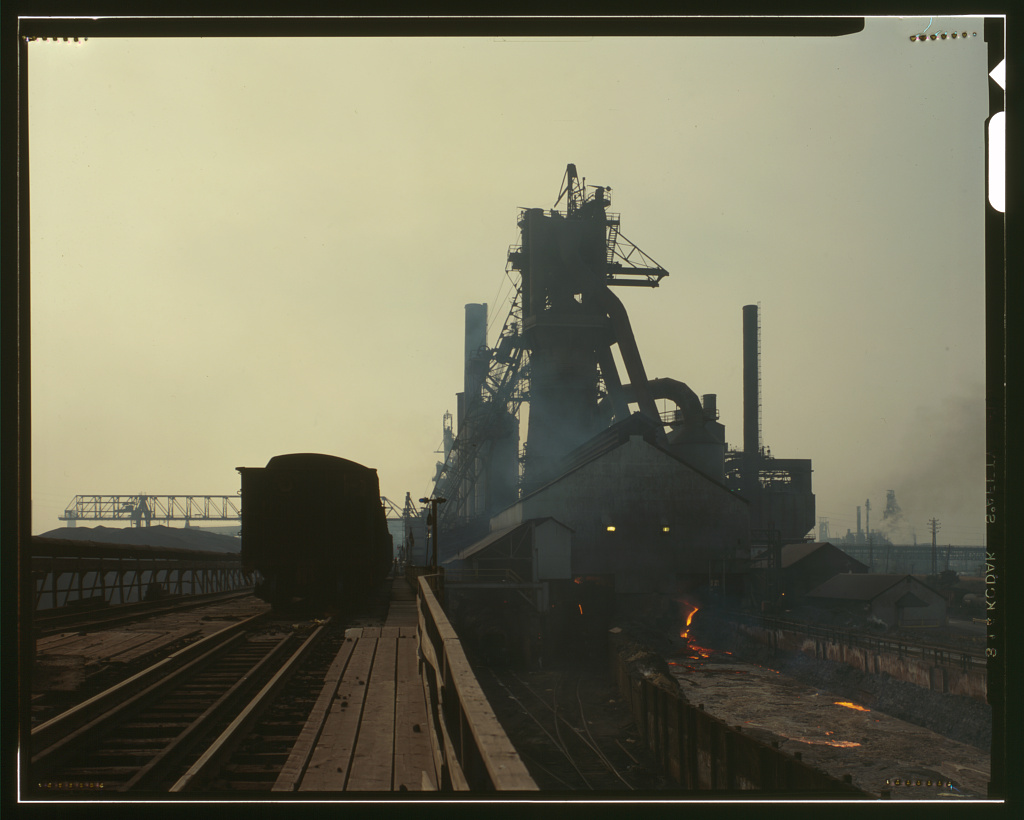
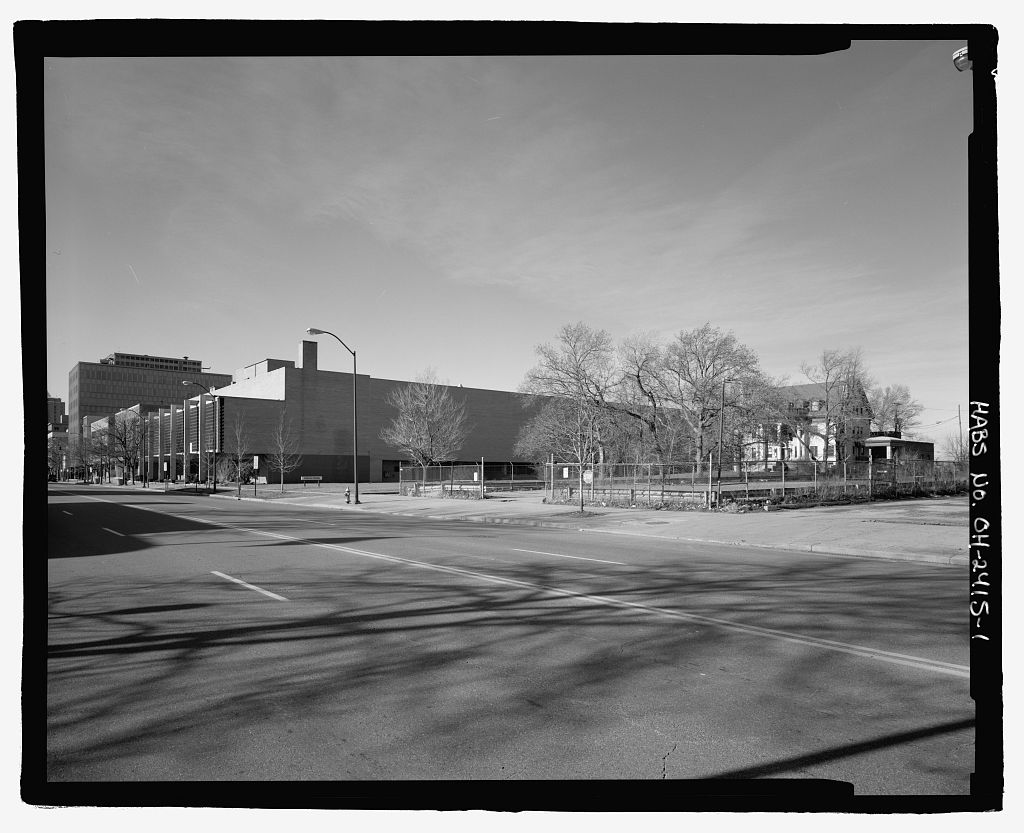
Pennsylvania Railway Ore Dock, Lake Erie at Whiskey Island, approximately 1.5 miles west of Public Square, Cleveland
Pennsylvania Railway Ore Dock, Lake Erie at Whiskey Island, approximately 1.5 miles west of Public Square, Cleveland, Cuyahoga County, OH. Surveyed as HAER OHIO,18-CLEV,33-, with 1 photograph, 1 measured drawing and a 27,887-word written history.
From the record
“Pennsylvania Railway Ore Dock, Lake Erie at Whiskey Island, approximately 1.5 miles west of Public Square, Cleveland, Cuyahoga County, OH”
Survey record header. Machine-read text.
surveyed by the federal HAER program as HAER OHIO,18-CLEV,33- · the record runs 27887 words · one of 115 surveyed structures published for this county.
Source document
Quoted word for word from HAER OHIO,18-CLEV,33-.
Not written, edited or summarised by this site.
On Lake Erie at Whiskey Island, approximately 1.5 miles west of the Public Square, Cleveland, Ohio Cleveland-Cuyahoga County Port Authority Jeffrey L. Durbin, URS Greiner Woodward Clyde, Gaithersburg, Maryland March ADDENDUM TO THE PENNSYLVANIA RAILWAY ORE DOCK HAER No. OH-18 (Page 23)
Historical Narrative
Introduction In November the Cleveland-Cuyahoga County Port Authority announced its intention to substantially redevelop the Cleveland Bulk Terminal. Part of this plan included the removal of the four Hulett Automatic Ore Unloaders 1 located at the former Cleveland & Pittsburgh (C & P) Railroad's 2 unloading facility on Whiskey Island. Because the City of Cleveland had designated these structures and their support buildings a Cleveland Landmark in the city's historic preservation ordinance required the Port Authority to obtain a certificate of appropriateness for its Whiskey Island redevelopment proposal from the Cleveland Landmarks Commission.
On July 8, the Cleveland Landmarks Commission adopted a resolution stating that it had determined that removal of the Hulett unloaders would be necessary if the ore dock was to be used safely and efficiently, in order to preserve the city's industrial heritage, a minimum of one and possibly two of the unloaders and their ancillary equipment should be relocated and interpreted. The resolution further specified what would be required for the Commission's issuance of a certificate of appropriateness.
Among the stipulations was the requirement that the Hulett ore unloaders, their site, and their support buildings, structures, and equipment be documented "to the highest standards of the Historic American Engineering Record (HAER)." 3 The commission's resolution also stipulated that "at least one (1) and preferably two (2) and related equipment be retained, relocated to a suitable site, and preserved in a manner suitable for their interpretation and appreciation by present and future generations." 4 Specifically, the resolution required the Port Authority to pay for the disassembly and storage of at least one of the four unloaders for its eventual relocation and preservation, which would occur within five years of its removal.
The document further stipulated that a second Hulett would be retained for six months during which time local efforts to raise funds and seek a new site would be undertaken. 5 A copy of the Cleveland Landmarks Commission 1 The Hulett is regarded as the first automatic ore unloader because it could fill its own bucket. While the earlier Brown Hoists were mechanized and ran under power generated by steam or electricity to raise a tub filled with ore out of and away from the cargo holds of freighters, the tub still had to be filled by dock workers sent into the holds with shovels. By comparison, the Hulett bucket scooped the ore and raised it. 2 Commonly known as the "C & P Ore Docks," the facility also was once called the Pennsylvania Railway Ore Dock.
Because the Historic American Engineering Record documentation used the latter name, the facility will be referred to as the Pennsylvania Railway Ore Dock. 3 Cleveland Landmarks Commission, "Resolution Regarding Hulett Unloaders, Power House, and other Structures and Equipment on the Ore Dock, July 8, p. 4, hereafter cited as "Landmarks Commission Resolution." 4 Landmarks Commission Resolution, p. 4. 5 Landmarks Commission Resolution, p. 3. but that Hulett Unloader C & P ADDENDUM TO THE PENNSYLVANIA RAILWAY ORE DOCK HAER No. OH-18 (Page 24) resolution may be found in Appendix A of this report. Since July a campaign to raise the funds necessary for disassembly and storage of the second Hulett was successful. Hence, the number ofHuletts to be stored for re-assembly currently totals two.
6 HAER recordation including photography of the Cleveland Hulett ore unloaders and their related structures had previously occurred in and in However, because these structures were proposed for removal from their historic location, and because the Cleveland Ore Unloaders are nationally significant, the staff at the National Park Service's HAER office in Washington, DC recommended that supplemental HAER documentation be prepared, including drawings. These drawings would illustrate the process used to move ore from ships to railroad cars and around the Whiskey Island site. The drawings would also help show the role of the support buildings. In addition, HAER staff recommended that an updated historical report be completed that placed the Hulett ore unloaders in their historic context.
7 In addition to the drawings and historical report, a set of 45 large-format, archival-quality, black-and-white photographs also was taken for inclusion in the supplemental HAER documentation of the structures at the Cleveland ore dock. In the Cleveland Port Authority requested URS Greiner Woodward Clyde (URSGWC) to prepare the necessary photographs, drawings, and narrative report for the supplemental HAER documentation of the Pennsylvania Railway Ore Dock. This report is part of the addendum to the HAER documentation for the Pennsylvania Railway Ore Dock and its four Hulett ore unloaders that Carol Poh Miller prepared in for the HAER program.
8 To help satisfy the requirements of the Cleveland Landmarks Commission and the recommendations of HAER, this addendum to the original historic narrative will accomplish the following objectives: Present an update on the Pennsylvania Railway Ore Dock that discusses the changes to the facility that have occurred during the twenty year-period since the HAER documentation was completed; Provide a contextual analysis focusing on the contribution of the Hulett ore unloaders to an understanding of American Industrial history and their present rarity through documenting the status of the remaining within the Great Lakes region and examine how the unloaders within the Pennsylvania Railway Ore Dock compare to the remaining unloaders, if any; and 6 Tom Breckemidge, "Money Found to Save Another Hulett," Cleveland Plain Dealer, January 15, 7 Letter from Richard O'Connor, Historic American Engineering Record, National Park Service to Mark Edwards, URS Greiner Woodward Clyde, September 30, 8 See Carol Poh Miller, Historical Data Report for the Pennsylvania Railway Ore Dock, Number OH-18, Cleveland, Ohio.
Washington, DC: Historic American Engineering Record (HAER), hereafter cited as "Miller Hulett HAER Report." Hulett unloaders ADDENDUM TO THE PENNSYLVANIA RAILWAY ORE DOCK HAER No. OH-18 (Page 25) Give an inventory of available films, videos, and historic photographs of Hulett ore unloaders at work. The following report is a discussion of the results of these three efforts and is hereby being submitted to the National Park Service for its acceptance and inclusion in the Historic American Engineering Record. ADDENDUM TO THE PENNSYLVANIA RAILWAY ORE DOCK HAER No.
OH-18 (Page 26) Objective One: Update on the Hulett Ore Unloaders at the Pennsylvania Railway Ore Dock in Cleveland Describing Changes to the Facility during the Twenty-year Period, In when Carol Poh Miller completed her historical narrative for the Historic American Engineering Record documentation of Cleveland's Pennsylvania Railway Ore Dock, few changes had previously occurred to the facility since its completion. Comparison of present-day photographs of the ore dock with those taken soon after its opening showed that much of the landscape, buildings, and structures remained from its early days. Missing in was the ore bridge that had been lost in a blizzard the year before.
9 Also noticeably absent were the three smokestacks that once stood to the south of the power house building; however, these structures had been taken down at an undetermined date following the conversion to city electrical power for the energy that the power house generated sometime in the 10 Other than these features, however, the ore dock seems to have had a timeless quality in Since that year, no changes as drastic as the disappearance of the ore bridge and the three smokestacks have occurred. Nevertheless, a few major alterations have taken place.
First, due to the loss of the ore bridge, Conrail, which was then the owner of the ore dock, began the removal of the structure's foundations and runway, completing this task by 11 Despite the absence of the ore bridge, the facility continued to function much as it had done since However, due to recent technological advancements, the Hulett unloaders were no longer the most efficient means of from lake freighters and had therefore become obsolete. On December 18, the Pennsylvania Railroad Huletts performed for the last time when they unloaded ore from the Lemoyne. 12 In the Cleveland-Cuyahoga County Port Authority announced that in order to maximize the capacity with which the ore dock could handle self-unloading freighters, it planned to redevelop the Whisky Island terminal.
In doing the redevelopment, the Port Authority also stated that it would need to remove the four Hulett ore unloaders. Following the cessation of service a number of changes to the ore dock have occurred related to the proposed disassembly of the Huletts. For example, with no further role to 9 Miller Hulett HAER Report, p. 14. 10 Miller Hulett HAER Report, p. 14. No date for the removal of the smokestacks appears in Miller's Hulett HAER Report and none could be determined in the research effort to prepare this update. However, all three smokestacks do not appear in a aerial photograph of the Pennsylvania Railway Ore Dock contained within the Cleveland State University Library Special Collections.
Hence, the structures must have been removed sometime between the but prior to the date of this photo. 11 Author's January 10, telephone conversation with Eric Hirsimaki, Cleveland-Cuyahoga County Port Authority. 12 Program from American Society of Mechanical Engineers (ASME) August 2, Ceremony to Designate the Hulett Iron-Ore Unloaders Historic Mechanical Engineering Landmark, p. 13, hereafter cited as "ASME Ceremony Program." unloading ore their task ADDENDUM TO THE PENNSYLVANIA RAILWAY ORE DOCK HAER No. OH-18 (Page 27) play, the shunt locomotives were also taken out of service and placed near the northwestern comer of the dock property. In the remaining wall from the former ore pit was removed.
Because the shunt cars were no longer needed, in and the existing railroad tracks in the ore yard were taken up and new track installed. While the rails have been replaced with in\255 kind materials, the number of tracks has been reduced from four to three. 13 The most recent change to the ore dock facility is the December demolition of the powerhouse and the shop building. In early the proposed redevelopment project will begin in earnest with the removal of the four Hulett unloaders. 13 Author's January 10, telephone conversation with Eric Hirsimaki, Cleveland-Cuyahoga County Port Authority. ADDENDUM TO THE PENNSYLVANIA RAIL WAY ORE DOCK HAER No.
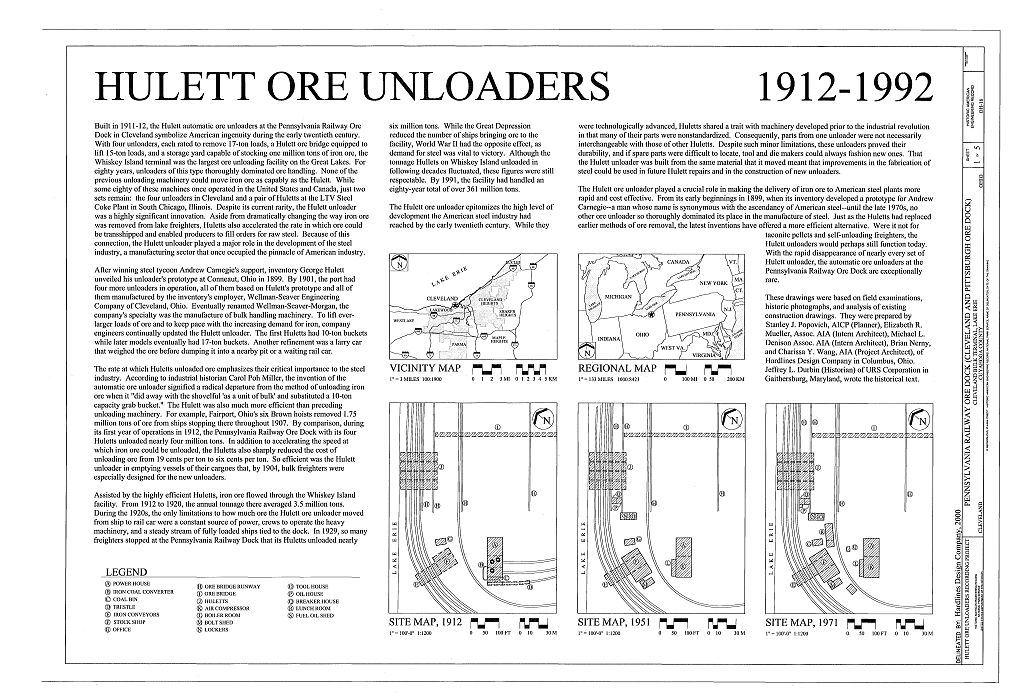
OH-18 (Page 28) Objective Two: Contextual Analysis of the Hulett Ore Unloaders, Including a Comparison of the Cleveland Huletts to Other Extant Hulett Unloaders The Hulett unloaders at the Pennsylvania Railway Ore Dock in Cleveland are highly significant as physical manifestations of American ingenuity at the dawn of the twentieth century. No other bulk handling machinery that preceded the Hulett could move iron ore as efficiently or as rapidly. 14 These unloaders are also especially rare. While some eighty of these bulk-handling machines once operated in the United States and Canada, just two sets rfmain: the four unloaders in Cleveland and a pair ofHuletts at the LTV Steel Coke Plant in South Chicago, Illinois.
Despite the rarity of these resources, the Hulett unloader had an indelible impact upon the American steel industry in that the Hulett enabled steel producers to fill orders for raw steel much more quickly than had been done previously. Because of this connection, the Hulett unloader played a major role in the latter development of the steel industry, a manufacturing sector that occupied the pinnacle of American industry at the start of the twentieth century.
In addition to the Historic American Engineering Record (HAER) documentation completed in both and the Hulett ore unloaders at the Pennsylvania Railway Ore Dock were listed in the National Register of Historic Places in 15 The following year, the American Society of Mechanical Engineers (ASME) designated the Cleveland unloaders a Engineering Landmark. 16 All of these recognition programs have stressed the critical importance of Hulett ore unloaders in enabling dock facilities to increase the rate in which iron ore could be unloaded and how these structures made the American iron and steel industry more productive.
For example, in the original HAER inventory, Bluestone states that the Hulett "revolutionized ore unloading and established a technological plateau which lasted nearly seventy years. By the Huletts reduced the cost of unloading ore from 19 cents per ton to six cents per ton." 17 According to the ASME Plaque: The Hulett's Clear Superiority Over Existing Mechanical Unloaders Revolutionized Ore handling and led to its rapid adoption throughout the lower-lake ports. Through more than 75 were built by Cleveland's Wellman-Seaver-Morgan Co.
and its predecessor 14 See Eric Hirsimaki, Videotape The Hulett Unloader (North Olmsted, OH: Mileposts Publishing, hereafter cited as "Hirsimaki Videotape." According to the video's narrator, the century-long service record of the Hulett is "a strong endorsement of their value to the iron ore industry." 15 Daniel M. Bluestone, HAER Inventory Card, Pennsylvania Railway Ore Dock, hereafter cited as "Bluestone HAER Card"; Carol Poh Miller with Rimantas Saikus, National Register of Historic Places Registration Form, Pennsylvania Railway Ore Dock, hereafter cited as "Miller, Ore Dock National Register Form." 16 ASME Ceremony Program, inside front cover. 17 Bluestone HAER Card. Historic Mechanical ADDENDUM TO THE PENNSYLVANIA RAILWAY ORE DOCK HAER No. OH-18 (Page 29) and successor firms.
With the advent of self-unloading ore boats, most have been dismantled. This battery is the largest and oldest of those that survive. 18 Moreover, as referenced in Carol Poh Miller's HAER historical narrative of Cleveland's Pennsylvania Railway Ore Dock, George H. Hulett's invention of his automatic ore unloader in signified a radical departure from the method of unloading iron ore when it "did away with the shovelful 'as a unit of bulk' and substituted a IO-ton capacity grab bucket." 19 Aside from enabling a dramatic change in the way iron ore was removed from the real significance of the Hulett unloader is how it accelerated the rate in which ore could be transshipped to steel producers.
In the New York, Pennsylvania & Ohio (NYP&O) Railroad built an ore dock on the old Cuyahoga River channel near Cleveland's Street. Equipped with four electric\255 powered Brown hoists, the NYP&O dock unloaded just tons of ore in its first season. During the same time period, six Brown hoists located at Fairport, Ohio removed million tons of ore from the holds of ore ships tied up at its dock facility. By comparison, during its first year of operations in the Pennsylvania Railway ore dock with its four Huletts unloaded nearly four million tons.
20 So efficient was the Hulett unloader in quickly emptying the vessels of their iron cargoes, naval architects changed the overall design of cargo holds and, by bulk freighters especially designed for Hulett unloaders were plying the waters of the Great Lakes. 21 Almost immediately, observers of this innovative technology recognized the increased productivity of the iron and steel industry the automatic unloaders had helped to spur. Writing about the Lorain, Ohio and Buffalo, New York Huletts in its August 3, issue, Engineering News credited the Hulett with "the rapid and economical handling of iron ore." 22 Similarly, trade 18 ASME Ceremony Program. 19 Miller, HAER Report, p. 5.
According to Miller, engineer George Hulett developed the Hulett Automatic Ore Unloader while employed at Webster, Camp & Lane of Akron, Ohio, and though he is generally credited with being the unloader's inventor, Miller also points out that he shared the April 5, patent for the "loading and unloading apparatus" with John McMyler. 20 Harry E. Scott, "Ore Handling Machinery at the & 0. Dock at Cleveland, Ohio," Journal of the Worcester Polytechnic Institute, January 93; and Jay Williams, "Ore-Dock Dinosaurs," Trains, February Author's January 11, conversation with Richard O'Connor, Historic American Engineering Record.
21 Miller adds that ''the increase in size of lake ore carriers from 300 to 625 feet in length and from to tons in capacity during the past twenty years has been largely the result of improvements in unloading"; Miller, HAER Report, 7. 22 "Ore Unloading Machines for Use at Receiving Docks," Engineering News, August 3, vol. Engineering News featured the Lorain Ohio Hulett unloaders for a second time in the article "Magnetic Switch Controllers on Electrically-operated Automatic Ore Unloaders at Lorain, O.," which appeared on pages of the November 9, (vol. 54) issue. lake freighters, ADDENDUM TO THE PENNSYLVANIA RAIL WAY ORE DOCK HAER No. OH-18 (Page 30) journals such as Iron Trade Review and Mining and Engineering World publicized the new dock machinery.
23 However, publications with large audiences also noted the industrious unloaders. The August issue of National Geographic featured a photograph of what appears to be the four Pennsylvania Railway Huletts in its article, "Industry's Greatest Asset-Steel." The caption below the illustration described the cycle of how a Hulett unloaded iron ore from the cargo hold of an ore ship: This view gives one at once a striking idea of the imposing dimensions of a lake freighter and tells an eye story of the unloading equipment. The unloader in the foreground with its 17-ton bucket open, is ready to grab a load when the walking beam dips down.
The second is beginning to bring up its bucketful; the third one is in the act of taking its mouthful; the fourth has been down, has filled itself, and is ready to discharge. A battery of these busy giants has transferred as much as tons of ore from the hold of a ship to the stack pile in three hours and forty minutes. 24 During its October meeting in Cleveland, Ohio, the members of the American Iron and Steel Institute toured several local factories and iron-related facilities including the Pennsylvania Railway ore dock. While at the dock the visitors stood on the deck of the ore freighter J. P. Morgan to have a panoramic photograph taken of their group at the facility.
25 Later that month, the industry publication Iron Trade Review highlighted the event and gave pertinent information about the capabilities of the three-year-old ore dock: The unloaders have a bucket capacity of 17 tons each, and the entire plant in operation has a capacity of tons per hour in unloading a modem vessel in its entirety. The record unloading this plant was made on July 2, on the Steamer James A. Farrell, when-11,083 tons were unloaded in 3 hours, 35 minutes, the vessel being tied to the dock only 3 hours, 40 minutes. 26 23 See "A Modem Ore Dock and Unloading Plant," Iron Trade Review, April 18 pp. and October 28, p. History of the Iron Ore Trade, Annual Report of Lake Carriers' Association, and George E.
Edwards, "Unloading Iron Ores in the Lower Lakes," Mining and Engineering World, June 20, pp. 24 Quote from Joseph Showalter August National Geographic article, "Industry's Greatest Asset-Steel," cited in James H. Korecko February 24, letter to Ohio State Historic Preservation Office. 25 Copyrighted Miller Studio Nov. 8, Photo, Photo Call Number PAN SUBJECT, Groups, no. 245 (E size), Panoramic Photographs Collection, Library of Congress Prints and Photographs Division, Washington, DC, hereafter cited as "Prints and Photographs Division, Library of Congress." 26 "Facts about the Pennsylvania Ore Docks," Iron Trade Review, October 28, p. ADDENDUM TO THE PENNSYLVANIA RAILWAY ORE DOCK HAER No.
OH-18 (Page 31) Assisted by the highly efficient Huletts, iron ore flowed through the Pennsylvania Railway Ore Docks. From to the annual tonnage there averaged 3.5 million tons. 27 To keep pace with the Hulett ore unloaders and responding to the challenge they posed, by the manufacturers of the Hulett's predecessors, including Brown and King hoist, added self\255 loading buckets to their unloaders, thus ending the era of workers shoveling iron ore from cargo holds into the old tubs. 28 During the the only limitations to the amount of iron ore that any unloader-Hulett or otherwise-could move from ship to rail car were a constant source of power, crews to operate the heavy machinery, and a steady stream of fully loaded ships tied to the dock.
In so many freighters tied up at the Pennsylvania Railway Dock that the Huletts there unloaded nearly six million tons of material, much of it ore. Undoubtedly, the economic calamity of the Great Depression curtailed productivity at the Whiskey Island facility, but with the exception of when the Huletts unloaded just over pounds of ore, tonnage still averaged 2.6 million tons each year during the decade. 29 With America's entry into World War II came economic recovery and wartime mobilization; the production of materiel for the war effort likewise had deep impact upon the Pennsylvania Railway Ore Dock. During every year between and the four Huletts removed no less than seven million tons of ore, and in the facility set its all-time, annual record of handling 8.7 million tons.
30 Although the amounts of ore the Huletts on Whiskey Island unloaded during the decades following World War II have fluctuated, tonnage was still quite respectable. In terms of annual tonnage the dock annually removed no less than three million tons of ore between and For many of the same years, the Huletts had unloaded anywhere between five and seven million tons. After these unloaders never exceeded 2.9 million 27 Statistical data about Pennsylvania Railway Ore Dock tonnage on file at Historic American Engineering Record and provided to Author during January 11, meeting with Richard O'Connor of HAER, hereafter cited as ''Tonnage Data." . 28 See fn. 10, Miller Hulett HAER Report, p.
17; and Eric Hirsimaki, ''The Hulett Story," [Great Lakes Historical Society] Inland Seas, Summer Two other types of unloaders were the Thomberger hoist and the unloader made by Hoover & Mason. However, it is unknown if the manufacturers of these unloaders updated their designs to compete with the new Huletts. 29 Tonnage Data. 30 Tonnage Data. So great was the contribution of the Hulett unloader to American victory in World War II, writers of the time recognized them. For example, Harvey Klemmer wrote of the Huletts in the National Geographic article "Michigan Fights": "How these titans of the inland seas have toiled! The D. G. Kerr came to Conneaut, Ohio and unloaded tons of ore in 2 hours 45 minutes.
The Nazis with all their vaunted achievements, have probably never matched that score." In his book, Lake Erie, Harlan Hatcher wrote: "Certainly one of the most characteristic signs along the Detroit River and Lake Erie shore is these giant steel structures, complicated looking against the sky lifting and lowering their legs with elephantine grace as they bite ore from the long freighters moored under them and deposit it in the waiting cars or winter stock piles. Without these machines the country could never have shipped the stupendous total of tons of ore in a single year of war emergency. The Arsenal of Democracy and those dependent upon it, have reason to pay their respects to George and Frank Hulett" (quotes from James H.
Korecko's February 24, letter to the Ohio State Historic Preservation Office). black and ADDENDUM TO THE PENNSYLVANIA RAILWAY ORE DOCK HAER No. OH-18 (Page 32) tons. Yet by the four Huletts at the facility had handled an eighty-year total of over 361 31 m1 10n tons. Although Hulett unloaders were superior to all other types of ore handling machinery at large dock facilities, they were not necessarily the best unloaders in every situation. For example, Huletts were not well suited to steel plant locations that lacked a large storage yard to stockpile iron ore. In such cases, ore bridges and Brown Hoists offloaded the material directly from the holds of the freighter and placed it in small stockpiles.
32 To meet the special requirements of potential clients, Wellman-Seaver-Morgan also manufactured hoists that could be used at steel plants. 33 The success of American iron and steel producers depended upon the efficient movement of raw materials to producing plants. In this sense, all of the constituent components of this industry: ore fields; the Lake Superior loading docks; bulk freighters; the locks at Sault Ste. Marie, Michigan; unloading docks on Lakes Michigan and Erie; rail lines; rail cars; and the furnaces and mills that converted raw ore to finished important to an understanding of how steel was manufactured during the last 150 years.
To ship iron ore from the Lake Superior region, the bulk ore ships and the loading docks at places such as Duluth, Minnesota, Ashland, Wisconsin, and Escanaba, Michigan are obviously just as vital to this understanding as the ore unloaders. 34 However, one of the most difficult parts of transporting iron ore is unloading it from the vessels upon their arrival in the lower Great Lakes. Where gravity aided in the loading of ore into the lake freighters, gravity was also an impediment to unloading the heavy mineral. Finally, the Hulett ore unloader epitomizes the high level of development the American steel industry had reached by the early twentieth century. Before the development of railroad companies, the largest American industrial concerns were textile mills.
However, being a large concern was not necessarily favorable and could become a disadvantage when competing with smaller, more established companies. In order to be competitive and therefore profitable, the railroad companies had to raise large amounts of capital but they also had to independently manage a wide array of resources spread over a large territory: rail lines, bridges, tunnels, 31 Author's January 11, conversation with Richard O'Connor, Historic American Engineering Record. 32 Hirsirnaki Videotape. According to Hirsirnaki, rather than use a ore-handling bridge as was employed at the Pennsylvania Railway Ore Dock, Bethlehem Steel's Lackawanna Plant in Buffalo, New York had its Huletts equipped with long conveyors to place the ore in stockpiles; see Hirsirnaki, Hulett Story, p ..
90. 33 Author's December 16, telephone conversation with Dick Rupnow, LTV Steel Company, East Chicago, Indiana. According to Rupnow, all of the unloaders at this facility are "Wellman Hoists." 34 Examples of ore docks that have been recorded for HAER include the Duluth & Iron Range Railway Ore Dock at Two Harbors, Minnesota {HAER and the Marquette Ore Dock Number 6 in Marquette City, Michigan (HAER MI-45-C). product are ADDENDUM TO THE PENNSYLVANIA RAILWAY ORE DOCK HAER No. OH-18 (Page 33) locomotives, rolling stock, and labor.
Hence, steel industrialist Andrew Carnegie based many of his management assumptions upon his work experience with the Pennsylvania Railroad and emulated his former employer's example of controlling as many functions related to its day-to\255 day function as possible. 35 As a result, the American steel industry quickly reached a high level of sophistication, and the Hulett unloader represents one of the many tools it used to achieve this standard. At the same time, the Hulett unloader displayed a trait more characteristic of machinery developed prior to industrialization in that many of its parts were nonstandardized.
Due to site constraints and the needs of clients, Wellman-Seaver-Morgan designed each Hulett for a specific location and as a result, fabricators fashioned many of the unloader's parts especially for a particular unloader. Consequently, parts from one Hulett were not necessarily interchangeable with other unloaders. 36 Despite such minor limitations, though, the ore unloaders proved to be quite durable and if spare parts were difficult to locate, the tool and die makers in nearby machine shops could always fashion new ones. That the Hulett unloader was fashioned from the same material that it so capably moved from ship to railcar was fortuitous.
This symbiotic relationship meant that improvements in the fabrication of steel could be used in future Hulett repairs and in the construction of new unloaders. Hence, the close association of the Hulett Automatic Ore Unloaders with the successful development of the American steel industry cannot be overemphasized. To lift ever-larger loads of ore and to keep pace with the increasing demand for iron, engineers continually updated the Hulett unloader.
After winning the support of steel tycoon Andrew Carnegie, inventor George Hulett unveiled his unloader's prototype at Conneaut, Ohio in By its port had a set of five Huletts in operation, all of which were based on Hulett's prototype and all of which were manufactured by Hulett's employer, the Wellman\255 Seaver Engineering Company of Cleveland, Ohio. Eventually renamed Wellman-Seaver\255 Morgan, the company specialized in the manufacture of bulk handling machinery and made every Hulett unloader. 37 35 For a discussion of Carnegie's philosophy of horizontal integration, see Harold C. Livesay, Andrew Carnegie and the Rise of Big Business (Boston: Little, Brown, and Co., 36 Author's October 29, conversation with Eric Hirsimaki, Cleveland-Cuyahoga County Port Authority.
According to Hirsimaki, as Huletts were being removed from service and dismantled in other ports, the Port Authority attempted to locate spare parts from these unloaders. Unfortunately, the parts retrieved in these forays seldom fit the Huletts at the Pennsylvania Railway Ore Dock. 37 Webster, Camp & Lane, George Hulett's he invented his automatic ore unloader, eventually merged with the Wellman-Seaver Company of Cleveland, which became Wellman-Seaver-Morgan Company in The finn began in when three Cleveland entrepreneurs began a partnership: Samuel T. Wellman, who was the inventor of the first open-hearth furnace in the U.S., his brother, Charles H. Wellman, and John W. Seaver.
Hulett himself eventually became a Vice President of the company and sat on its board of directors before stepping down in Specializing in the manufacture of materials handling equipment, Wellman-Seaver-Morgan went on to develop other types of structures including the crane at the General Dynamics Corporation Shipyard in Quincy, Massachusetts; see HAER Documentation for General Dynamics Corporation Shipyard in Quincy, Massachusetts, employer when ADDENDUM TO THEPENNSYLVANIARAILWAYOREDOCK HAER No. OH-18 (Page 34) Hulett unloaders built between and may be categorized according to one of three generations. The first-generation automatic unloaders had buckets with a ten-ton loading capacity, were steam-powered.
Because they lacked a larry car, the bucket could only dump iron ore into the hopper where it spilled into a waiting rail car beneath the loader's traveling base. 38 Second-generation Huletts came into service around were electrically powered but were initially fitted with the 10-ton buckets used on their predecessors. A more important change was to the structural appearance of these unloaders. To strengthen the "leg" of the unloader, second\255 generation Huletts had horizontal at the leg's midpoint. 39 Another refinement that came with the new design was the larry car, which could weigh the ore and dump it into a pit as well as a rail car. Additionally, the larry car could move along much of the length of the traveling base.
Presumably the unloading process could be sped up because the trolley supporting the walking beam and leg did not have to move as far back on the traveling base away from the vessel moored at the dockside. Finally, unlike earlier unloaders, the operator's cab in the base of the leg was partially enclosed so newer Huletts gave the operator more protection. 40 Second-generation Huletts were built at Cleveland and Lorain, Ohio, Gary, Indiana, and at the Lackawanna Steel Plant in Buffalo, New York. 41 Beginning in the third (and last) generation of Hulett Automatic Ore Unloaders were placed into service, the first of these at the Superior dock in Ashtabula, Ohio. 42 Initially outfitted with 15-ton buckets, later models came with 17 or 20-ton buckets.
Third-generation Hulett unloaders also provided an operator's cab HAER MA-26-H. The Wellman-Seaver-Morgan Company underwent several other mergers and is now known as Dravo Wellman, a division of Svedala Industries of Sweden. See "Dravo Wellman, Co." and "George H. Hulett" articles from online version of The Cleveland Encyclopedia of History, which is adapted from The Cleveland Encyclopedia of History, David D. Van Tassel and John J. Brabowski, Eds., hereafter cited as "Cleveland Encyclopedia." 38 Hirsimaki, ''The Hulett Story," p. 90; Hirsimaki, Videotape; Miller Hulett HAER Report, p. 5.
39 First-generation Huletts had a type of horizontal stabilizer mounted above the walking beam so that the attachment of the stabilizer to the leg was above the joint between the walking beam and the leg rather than below the connection as was the case with second and third-generation unloaders. 40 This and the following discussion of the operator's cab are based upon an examination of historic photographs showing the cab. For example, a tum-of-the-century photo showing the leg and bucket of a first-generation Hulett unloader at Conneaut also depicts the operator; while two sides of the leg appear to be enclosed, the operator is shown standing but leaning against the interior of the leg.
Hence, operators of the early Huletts also appear to have lacked a seat (Photograph of Conneaut, Ohio Hulett unloader inside the hold of an ore ship, Naef and Joslin Photograph Collection, Cleveland State University Library Special Collections, hereafter cited as ''Naef and Joslin Photo Collection"; and photograph of Huron, Ohio Hulett unloader above vessel cargo bay opening. Cleveland Press Photograph Collection, Cleveland State University Library Special Collections, hereafter cited as "Cleveland Press Photo Collection." 41 Hirsimaki, "Hulett Story," p. 91; and Hirsimaki, Videotape; the first electric-powered Huletts were built at the Buffalo, New York Lackawanna Plant. 42 Hirsimaki, "Hulett Story," 91. stabilizers attached ADDENDUM TO THE PENNSYLVANIA RAILWAY ORE DOCK HAER No.
OH-18 (Page 35) that was completely enclosed. Another notable difference between second and third-generation Huletts is that the sides of the walking beam on the latter unloaders were enclosed with riveted steel girder plates. These plates gave the Hulett a more solid appearance if not a stronger walking beam. Although the earlier first-generation Huletts had these plates, the generation unloaders lacked them and the walking beam's lattice-type members were exposed. While no fourth-generation Hulett was ever developed, 43 early third-generation unloaders could be later updated with higher rated ore buckets or other structural improvements.
For example, the upper end of the horizontal stabilizer was originally connected to the leg at an angle, but at an unspecified date the stabilizers were connected so that the end of the stabilizer was completely perpendicular to the leg. Presumably this modification was made to allow the leg to reach more areas within the cargo hold. 44 With its many improvements beyond the original first-generation Hulett unloaders and its high ore capacity, the third-generation Hulett represents the pinnacle of ore unloader development. It is also the Hulett unloader that many people remember. Following the advent of the third-generation Hulett unloader, several ports already operating first and second\255 generation Huletts began to replace their older equipment.
45 In constructing a well-equipped and modem ore dock on Cleveland's Whiskey Island, the Pennsylvania Railway chose the newly developed, third-generation Hulett unloader. Though some eighty Hulett Ore Unloaders once capably performed the difficult task of offloading iron ore, technological developments in the business of processing iron ore and in shipping and offloading the material have rendered the Huletts obsolete. For instance, ore producers began using iron ore pellets called "taconite~' in the mid-1950s. A more serious threat to the continued use of Huletts, however, came in when the first self-unloading ore freighter the James R. Barker went into service. By the end of the decade, the self-unloading vessel had become the industry standard.
46 Taken together, these two developments have 43 See artist's rendering of a Hulett with a 50-ton bucket on p. 12 of ASME Ceremony Program. Apparently, designers had envisioned creating a "Super Hulett" but possibly due to the development of self-unloading freighters, such plans were never carried out. 44 Author's January 10, telephone conversation with Eric Hirsimaki. A comparison of photographs of the early third-generation Huletts with later photos of the same unloaders confirms that the horizontal stabilizers were changed on several third-generation Huletts, such as the unloaders at Ashtabula, Ohio. 45 Hirsimaki, "Hulett Story," 91; Hirsimaki, Videotape. Christine Rohn Hilston places the construction date of the last three Hulett unloaders to be built in U.S.
Steel built these units to replace the IO-ton unloaders at its Lorain, Ohio facility. The company also outfitted the new Huletts with the latest in bucket capacity, the 20-ton bucket ("Hulett's Mechanical Marvel," Ohio Historical Society Timeline Sept./Oct. 46 ASME Ceremony Program, pp. and Miller Hulett HAER Report, p. 15. In her Society for Industrial Archeology Newsletter article, "Can Cleveland's mighty Huletts be saved?," Carol Poh Miller points out that "since all new lake carriers have been self-unloaders. Of 66 U.S.-owned carriers on the Great Lakes, all but 5 are self-unloaders, according to the Cleveland-based Lake Carriers' Assn." (SIA Newsletter, Summer later second\255 ADDENDUM TO THE PENNSYLVANIA RAILWAY ORE DOCK HAER No.
OH-18 (Page 36) resulted in the disassembly and destruction of nearly every Hulett built. The only Huletts that remain in active service today are the two unloaders located at the old Republic Steel Company dock facility located on the Calumet River near Chicago, Illinois. Both are used to unload coal for the coke plant, which is now operated by LTV Steel. 47 Hence, they are an exceptionally rare industrial resource. Nevertheless, the Hulett unloaders at the Pennsylvania Railway Ore Dock may be compared to the Huletts that once existed at other dock facilities in Cleveland, in other Ohio communities, and in other states having docks with ore unloading capabilities.
Aside from the Ohio unloaders and the machines at Buffalo, New York, Huletts also operated in Erie, Pennsylvania, New York City, New York, Detroit, Michigan, Gary, Indiana, and South Chicago, Illinois. 48 The exact total number ofHuletts built is not currently known but estimates run somewhere between seventy-five and eighty 49 The following is a discussion of ore unloaders at other locations and a description of their current status. Hulett Unloaders at Other Cleveland Ore Docks As discussed above, the Pennsylvania Railway Ore Terminal on Whiskey Island was the largest ore unloading facility anywhere on the Great Lakes.
With four Hulett unloaders, each rated to remove 17-ton loads in their clamshell buckets, a Hulett ore bridge equipped to lift 15- ton loads, and a storage yard capable of stocking one million tons of iron ore, the Pennsylvania Railway dock was superior to all other such facilities. 50 Perhaps because it was so successful, other ore handling concerns attempted to emulate the Whiskey Island facility. Aside from the four Hulett ore unloaders currently standing at the Pennsylvania Railway Ore Dock, the only 47 Author's December 16, telephone conversation with Mike Gratson, Manager, LTV Coke Plant, South Chicago, Illinois.
According to Gratson, one of the two Huletts has been modified so that the operator no longer rides in the cab but operates the leg and bucket by remote control from the dock. Hence, in a perverse way, this Hulett mimics the new equipment used on self-loading ore vessels. Hilston writes in her article "Huletts Mechanical Marvel," that in "fifty-three Huletts worked around the lakes," but by just nine units remained (p. 48 The Hulett unloaders at New York were used to offload only coal.
While many iron ore dock facilities were built on Lakes Erie and Michigan, a tum-of-the-century photograph exists showing an ore-loading dock on Lake Ontario at Oswego, New York (Photo Number 012159/Photo Call Number Detroit Publishing Company Photos, Prints and Photographs Division, LOC) 49 Estimates appear in "Historians Fight to Save Cleveland's Ore Unloaders," New York Times, June 6, "Icons of Cleveland Industry in Peril," Chagrin Falls Preservation Voice, Fall and Mechanical Marvel," 10. In addition to consulting these print sources, the author also conducted a telephone poll of each of the State Historic Preservation Offices (SHPO) in New York, Pennsylvania, Wisconsin, Michigan, and Minnesota.
While the staff at several of these offices answered that they were familiar with Hulett unloaders, not one of the SHPOs could identify whether or not any of these structures stood within their states. Local residents familiar with industrial structures were also consulted upon the advice of SHPO staff but these contacts were likewise unaware of the current existence of any Huletts in their communities. 50 Section 8, "Statement of Significance," page two, Miller Ore Dock National Register Form. Hilston "Hrilett's Indiana, Illinois, ADDENDUM TO THE PENNSYLVANIA RAIL WAY ORE DOCK HAER No. OH-18 (Page 37) extant Huletts in the city, Cleveland once had up to fourteen of these structures.
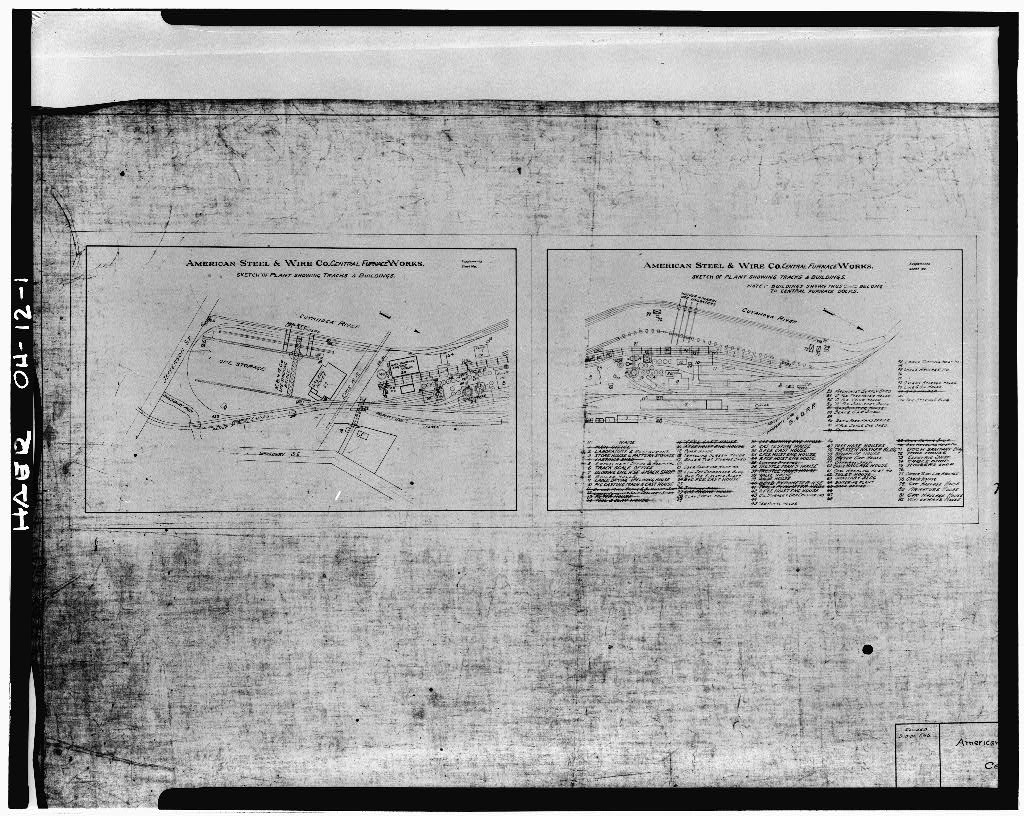
51 These unloaders gave it the distinction of having more Huletts than any other iron ore terminal in the world so the disappearance of the machines from the city's landscape is all the more obvious. 52 Among the Cleveland facilities once operating Hulett unloaders were Central Furnace, the Jones & Laughlin Steel Company Dock, the Corrigan, McKinney Steel Docks, the Erie Railroad Unloading Dock, American Steel and Wire Co. plant, the Republic Steel Docks, and U.S. Steel's Central 'Furnace Dock. 53 The following is a discussion about Cleveland's other ore docks on which Hulett unloaders were once located: American Steel & Wire Company Dock-By a pair of second-generation Hulett unloaders had been placed into service at Cleveland's American Steel & Wire Company plant.
In addition to the two unloaders, the plant also had a Hulett ore bridge. Unfortunately, it is unknown at what date these Huletts and the ore bridge were removed from service. 54 51 Author's telephone conversation with Carol Poh Miller, October 28, and James H. Korecko's February 24, letter to the Ohio State Historic Preservation Office. 52 Author's January 11, conversation with Richard O'Connor, Historic American Engineering Record.
53 Hulett Ore Unloaders article, Cleveland Encyclopedia; Hirsimaki, Videotape; Photographs contained in the Cleveland Public Library Photograph Collection, hereafter cited as "Public Library Photos"; and Cleveland Press Photo Collection; and Photo Number 072374/Photo Call Number Detroit Publishing Company Photograph Collection, Prints and Photographs Division, LOC. In her HAER Report on the Corrigan, McKinney Steel Company (HAER No. OH-13), hereafter cited as "Miller Corrigan HAER Report"; Carol Poh Miller writes that Republic Steel took over Corrigan, McKinney in According to the online version of The Encyclopedia of Cleveland History, Jones & Laughlin later merged with Republic Steel in to form the steel division of Ling-Temco-Vought, Inc.
or LTV Steel as it is currently known (Corrigan-McKinney Steel, Jones & Laughlin Steel Corp., Republic Steel articles, Cleveland Encyclopedia). Based upon an examination of three historic photographs found in the Photographic Collection of the Cleveland Public Library showing Hulett unloaders (a of a set of second-generation Huletts at the McKinney Docks, a view of a set of third-generation Huletts at the Republic Steel Ore Docks, and a photo of three second-generation Hulett Unloaders at Jones & Laughlin), it appears that each of the companies may have operated separate dock facilities in Cleveland; and Greenwood's Guide. 54 Within the Prints and Photograph Division of the Library of Congress are five of the plant taken ca.
including two photos of a pair of second-generation Hulett unloaders. The first image titled "Hulett's hoists in operation, American Steel & Wire Co. plant, Cleveland, O" (Photo Call Number Detroit Publishing Company Photos) depicts an ore freighter in the foreground with the pair ofHuletts, a Hulett ore bridge, the company's steel plant, and a group of blast furnaces all in the background. The second image, "Ore Unloading, American Steel & Wire Co. plant, Cleveland, O" (Photo Call Number Detroit Publishing Company Photos) shows a detailed view of the ore freighter Denmark and the two Hulett unloaders in the process of removing ore from the ship's cargo bays.
See the Library of Congress Internet website (http://www.loc.gov/) for further information about these and other images contained in the library. black-and-white photographs ADDENDUM TO THE PENNSYLVANIA RAIL WAY ORE DOCK HAER No. OH-18 (Page 38) Corrigan McKinney Steel Company Dock-Sometime between and the early three second-generation Hulett unloaders with 10-ton buckets were placed into service at the ore dock at the Corrigan McKinney Steel Company. By a newer pair of Huletts rated at 17-tons had been added to the dock facility. Along with the rest of the steel plant, the Huletts were recorded for HAER in but have since been dismantled. 55 Republic Steel Company Dock-Located along the Cuyahoga River in Cleveland, was the ore dock for Republic Steel Corporation's Mills.
Serving the dock was a pair of third-generation Hulett unloaders. The Huletts have disappeared and it is uncertain when they were dismantled. 56 Jones & Laughlin Steel Company Dock-Three second-generation Hulett unloaders once stood on the ore dock of the Jones & Laughlin Steel Company. As with other Huletts in Cleveland, these were dismantled at an unknown date. According to the edition of Greenwood's Guide to Great Lakes Shipping, a pair of five-ton Brown hoists and a 15-ton Wellman hoist were in operation but no Hulett unloaders remained at the dock 57 55 In the Library of Congress Prints and Photographs Division are five black-and-white photos of the Corrigan McKinney Steel Company plant taken ca. including two photos of a pair of second-generation Hulett unloaders.
The first image titled "Hulett's hoists in operation, American Steel & Wire Co. plant, Cleveland, O" (Photo Call Number Detroit Publishing Company Photos) depicts an ore freighter in the foreground with the pair of Huletts, a Hulett ore bridge, the company's steel plant, and a group of blast furnaces all in the background. The second image, "Ore Unloading, American Steel & Wire Co. plant, Cleveland, O" (Photo Call Number Detroit Publishing Company Photos) shows a detailed view of the ore freighter Denmark and the two Hulett unloaders in the process of removing ore from the ship's cargo bays. In addition to this historic photograph, also see Carol Poh Miller's HAER documentation for the entire Corrigan McKinney plant (HAER OH-13), Cleveland, Cuyahoga County, Ohio.
While the historical narrative section does not give detailed information about the three Hulett ore unloaders that once stood at the company's dock, these unloaders appear in photos number 50 and 55, which are part of the HAER documentation for the plant; and tenth edition of Greenwood's Guide to Great Lakes Shipping appearing on the Great Lakes Industrial History Center website hereafter cited as "Greenwood's Guide." 56 At the Cleveland Public Library Photo Collection is a black-and-white photograph labeled on the reverse "Cleve. Ore, Steel mills, Republic Steel Corp." This image was taken for the company in and shows a pair of third\255 generation Hulett unloaders from the Cuyahoga River.
The Huletts appear in .the photo's foreground while an anonymous freighter lies in the background further down the ore dock; 57 Belonging to the Photo Collection of the Cleveland Public Library is a black-and-white photograph taken by photographer Bernie Noble and labeled "Ore unloader unloading dock Jones & Laughlin Steel Co. in flats." The image was used for the April 30, edition of the Cleveland News and depicts three second-generation Huletts standing idle at the dock. The photo appears to have been taken from the water and shows a portion of a blast furnace; and Greenwood's Guide. ADDENDUM TO THE PENNSYLVANIA RAILWAY ORE DOCK HAER No.
OH-18 (Page 39) Erie Railroad Unloading Dock-By the time of World War II, three third\255 generation Huletts and at least four electric Brown hoists ably served the Erie Railroad Steel Docks. Between the and the railroad company had taken down the older Brown hoists but continued to use its Huletts, which were rated at 17 tons. It is unknown when they disappeared, but no Huletts remain at this dock. 58 U.S. Steel Corporation Docks-In two Hulett unloaders with 10-ton buckets were in service at the United States Steel Corporation's Central Furnace dock on the Cuyahoga River. No further information about the unloaders is available and it is unknown at what date they were dismantled.
59 Hulett Unloaders in Other Ohio Communities Aside from the that once stood in Cleveland, sets of the massive Huletts, all of which were fabricated in Cleveland, were also installed in five other Ohio communities on the Lake Erie shore: Conneaut, Ashtabula, Huron, Lorain, and Toledo. 60 Of the six Ohio communities that once had functioning or idled Huletts, Cleveland remains as the sole place that has extant Huletts. However, until recently, the other five places also had Huletts. The following is a discussion of other Ohio dock facilities equipped with Huletts. Conneaut-Conneaut is notable for being the birthplace of the Hulett Ore Unloader.
As discussed above, the prototype for George Hulett's invention was demonstrated there in and by four more first-generation Huletts had been added to Pittsburgh & Conneaut Ore Dock. Similar to the prototype, the new unloaders had girder plates riveted to the walking beams 58 Contained within the Cleveland State University Library's Special Collections are two black-and-white photographs of Huletts at the Erie Railroad Steel Docks. The first image was taken by photographer Carl M. Dow for the Erie Railroad Magazine but was eventually used by the Cleveland Press for its June 17, issue. The caption on the back of the photo reads ''view showing ore Unloading Machines At Erie Dock, Cleveland, 0. A Vessel is Unloaded in From 4-5 Hours Depending on size [sic].
Also Grade of Ore Unloaded [sic]." The image depicts the railroad's ore cars on the tracks in the foreground, while a freighter, the Coulby is tied up in the background. About to attend to the vessel are four electric hoists and a pair of third-generation Hulett ore unloaders. The second photo of the Erie Dock has a label identifying it as the property of the "Wellman Engineering Company of Cleveland" but apparently the Cleveland Press obtained the image because the newspaper used it in its March 20, edition. The reverse of the photo is labeled "New Hulett ore unloader being erected in the Erie Railroad dock in the old river bed in Cleveland." Most interesting about this image is that it shows a new third-generation Hulett being assembled alongside two other Hulett unloaders.
The photo also depicts a vessel tied up along the dock, but rather than having ore removed from its cargo hold, the ship is being painted by two men, who are standing on a scaffold on the starboard side of the freighter's bow; Greenwood's Guide. 59 Greenwood's Guide. 60 Other Ohio communities on the Lake Erie Shore also had ore dock facilities but it is unclear if any of these ever used Hulett ore unloaders. For example, a ca. photograph of the Fairport Harbor ore docks show what appear to be Brown hoists in the background; Photo Number 01930/Photo Call Number Detroit Publishing Company Photos). Hulett unloaders ADDENDUM TO THE PENNSYLVANIA RAILWAY ORE DOCK HAER No. OH-18 (Page 40) giving the Huletts their distinctive "solid" appearance.
61 Sometime before all five of the original Huletts at Conneaut were replaced by third-generation unloaders. 62 According to the edition of Greenwood's Guide to Great Lake Shipping, the Port of Conneaut had four docks but just one, Dock Number Four, was outfitted to handle iron ore. Hence, it was the oni Conneaut dock served by Huletts, which were listed as "17-ton Automatic Ore Unloaders." 3 The replacement Huletts operated until December when the Pittsburgh & Conneaut Dock Company disconnected power to the machines. Three years later, the company dismantled the five unloaders. Today all that remains of these structures is a single ore bucket, which had been 61 Several photos exist of the unloaders that once stood at Conneaut.
For example, within the Library of Congress Prints and Photographs Division are three black-and-white photographs of the Port of Conneaut taken ca. including a photo showing three of the port's original first-generation Hulett unloaders. This image titled "Clam Shell Ore Unloading Plant, Conneaut, Ohio" Number Detroit Publishing Company Photos) also shows what appears to be a pair of Brown electric hoists alongside three Huletts. Within the Cleveland Public Library Photo Collection, are three black-and-white photographs taken in Conneaut. The first of these images is an overall view of the harbor showing two freighters tied up at dockside, one of which is being unloaded by the five Huletts. This photo was taken for the U.S.
Steel Company but eventually appeared in the July 10, edition of the Cleveland Plain Dealer. On the back side of the photo were two captions; the first reads: "Steamer BENJAMIN F. FAIRLESS being unloaded at Conneaut, O," while the second caption reads: "General view of Conneaut harbor, where the huge Pittsburgh & Conneaut Dock Co. will be open to the public Wednesday." The second photo at the Public Library was taken for the September 24, edition of the Plain Dealer and has the following caption: "These five Hulett unloaders at the Pittsburgh & Conneaut Dock Co.
are modem versions of the first Hulett on the Great Lakes, operated in Conneaut in The ore bridge overhead has a 15-ton bucket capacity and can store 939 tons hourly and can load tons hourly from storage into rail cars." The last photograph at the Public Library was also taken for the Plain Dealer and appeared in the October 6, issue. The caption has the following information: "Conneaut, 0.-Visitors to the Open House being held Tuesday, October 7, from 10 a.m. to 4 by the Pittsburgh & Conneaut Dock Company in Conneaut, 0., will see ships unloading and loading cargoes of iron ore, limestone and coal.
Everyone over 8 years old is invited with children from 8 to 12 having to be accompanied by adults as a safety precaution." At the Cleveland State University Library's Special Collections, are five different images of the Pittsburgh & Conneaut Dock. The first is a black-and-white photo taken for the "Wellman Engineering Company." This view shows two Hulett ore buckets and their operators inside the nearly empty hold ofan ore vessel. The image is stamped with the date January 21, and carries the following caption: "15-ton Hulett Automatic Ore Unloaders Buckets in hold oflake vessel cleaning up. 2 machines. 1 Bucket open, 1 closed." The remaining four photographs date from and each of these provide a glimpse of the Pittsburgh & Conneaut Dock in recent times.
One of these is an aerial photo showing the harbor's overall setting and the Dock, where three ore vessels are docked. One of these ships, the Steamer Leon Fraser, is moored at Dock Number Four and is being unloaded by the five Conneaut Huletts. In addition, an impressive group of images is contained within the Naef & Joslin Photographic collection at Cleveland State University's Special Collections Library, which also appear on a portion of the library's Internet site. These photos are grouped according to one of three different series taken by the The images show the construction and operation of the first Huletts constructed in Conneaut including George Hulett's original prototype as well as the earlier Brown hoists and storage bridges.
Taken between March and September the first series records the construction of the additional Hulett unloaders at Conneaut, while the second series, which are unfortunately the unloaders following their completion in the act of unloading an ore ship. 62 Postcard of Conneaut Ore Unloaders (Chicago: Curt Teich Company, postcard in Curt Teich Company Archives, Lake County Historical Society Museum, Wauconda, Illinois. 63 Greenwood's Guide. (Photo Call P & C two photographers. undated, show ADDENDUM TO THE PENNSYLVANIA RAILWAY ORE DOCK HAER No. OH-18 (Page 41) proposed for re-location in a public park near Conneaut's waterfront, but now lays on its side in a vacant downtown lot near the local credit union.
64 Ashtabula-Located thirteen miles from its sister city Conneaut, Ashtabula is the location where the original third-generation Hulett ore unloaders were placed into service in at the Superior Dock (later operated by the Ashtabula & Buffalo Railroad Dock Company). 65 According to the edition of Greenwood's Guide to Great Lake Shipping, the port for the northeast Ohio city had three ore docks that year.
Of this number, the following docks operated Huletts in that year: The Ashtabula & Buffalo Railroad Dock Company's "Outer Harbor" dock is listed as having four "Wellman Hulett-Type 17-ton Automatic Ore Unloaders"; and The Union Dock Company's "Outer Harbor'' dock, which had four "Wellman Hulett\255 Type 17-ton Automatic Ore Unloaders." 66 As in Conneaut, the two sets of Hulett unloaders in Ashtabula have been dismantled, one set as recently as the early However, the ore bucket from one of these structures stands at the rear of the Great Lakes Marine and U.S. Coast Guard Memorial Museum and remains as a symbol of the city's industrial heritage. Inside the museum is a 1/14-scale model of a third\255 generation Hulett made of separate parts.
Four feet high and six feet long, the model was built by Warner Pearson a former Jarry car operator at the Port of Ashtabula. Completed in the impressive model is reputed to have once been the property of the 64 Hilston, "Hulett's Mechanical Marvel," p. 11; and Mark Todd, "A Bit of Hulett History Remains: Crews Move Bucket to New Site," Ashtabula Star Beacon, January 29, np; and author's January 6, telephone conversation with Bob Herron, City Manager, Conneaut, Ohio. 65 Similar to Cleveland and Conneaut, several historic photographs of the Ashtabula harbor and its Huletts provide visual evidence of the unloaders. For example, three black-and-white photos of the harbor dating to ca. are contained within the collections of the Library of Congress Prints and Photograph Division.
Two of these images show the Lake Shore & Michigan Southern Railway Company's ore docks including one depicting the Brown ore bridges there (Photo Call Number Detroit Publishing Company Photos). In addition, both the Cleveland Public Library and the Cleveland State University library possess several historic photographs of Ashtabula's harbor and its Huletts. Ranging in dates from to each of the photos at the Public Library shows the Huletts that once stood at the city's harbor. One photograph, an aerial view of the harbor taken in by the Aerograph Company of Cleveland clearly depicts two groups of Hulett unloaders each having four of the specialized machines. Photos in the CSU Library Special Collections includes a ca.
real photo postcard, which depicts a pair of the Superior Dock's newly built Hulett unloaders along with an ore bridge. The library also possesses a high-level aerial photograph taken in by Aerial Surveys, Inc. for the Cleveland Press showing not only the port facility, but much of the city of Ashtabula. 66 Greenwood's Guide. ADDENDUM TO THE PENNSYLVANIA RAILWAY ORE DOCK HAER No. OH-18 (Page 42) Smithsonian Institution before the Ashtabula museum acquired it. 67 Standing next to the model is a smaller representation of a first-generation Hulett. Lorain-Lorain, Ohio was one of the first cities to have Hulett ore unloaders installed at its port. In a set of second-generation Huletts were put in service there at the National Tube Company Dock.
Fifty-five years later, Lorain became the last place that a Hulett was installed. In the U.S. Steel Corporation had three third-generation Huletts with the latest 20-ton buckets erected at the Port of Lorain. 68 By the Port of Lorain had two ore dock facilities, but only one of these operated Hulett unloaders: United States Steel's Black River Lorain Works, which had three "Wellman Hulett\255 Type 20-ton Automatic Ore Unloaders." 69 No other information is available for the Lorain unloaders including the date of their destruction. Huron-Scant information remains about the Hulett ore unloaders that once stood at Huron's port including the date of their demise. For example, it is uncertain when Huletts were placed into service in Huron.
Apparently, the port's first Huletts were a pair of third-generation unloaders installed there in 7 Furthermore, according to the edition of Greenwood's Guide to Great Lake Shipping, just one dock equipped with Hulett unloaders that year: 67 August 6, memo from Marvin Brown to Terry Klein, both of URS Greiner Woodward Clyde, Inc.; and author's January 5, telephone conversation with Eric Hirsimaki, Cleveland-Cuyahoga County Port Authority, Cleveland, Ohio. 68 Hirsimaki, Hulett Story, p. 94; and Greenwood's Guide. A number of historic at the Cleveland Public Library and the Cleveland State University Library show a group of Huletts in their dockside context.
Because all of these photos depict the National Tube Company Dock and its second-generation Hulett ore unloaders during the period from to the images pre-date the construction of the last Huletts to have been built. Unfortunately, no photos of the later U.S. Steel ore unloaders were found in either of the photographic repositories. 69 Greenwood's Guide. 70 Much of what can be written to characterize the Huron Huletts comes from historic photos taken during the years to and found within the photo collections of the Public Library and the Cleveland State University Library.
The date is based upon a photograph appearing in the August 11, edition of the Cleveland Press carried the following caption: "Biting 17 Tons of iron ore at one clip, this new electrically operated Hulett unloader was placed in service today at the Nickel Plate dock in Huron O." (caption appearing on the back of photograph showing Huron, Ohio Hulett unloader above vessel cargo bay opening. Cleveland Press Photo Collection). With no earlier photographic or written documentation to substantiate an earlier date or the existence of a larger number of Huletts, it appears that only one pair of third-generation unloaders and a Hulett ore bridge were ever installed at the port. Huron had photographs retained ADDENDUM TO THE PENNSYLVANIA RAILWAY ORE DOCK HAER No.
OH-18 (Page43) The Norfolk & Western Railroad's Dock at Slip Number Two, which had two "Wellman Hulett-Type 17-ton Automatic Ore Unloaders." 71 Toled~The westernmost of Ohio's Lake Erie ports with Hulett ore unloaders, Toledo lies closest to the ore fields of the Lake Superior region. Despite its proximity to the steel industry's raw material, ore-handling facilities were less numerous than might be expected. Moreover, much of the city's bulk materials equipment is related to the handling of coal and grain. It is unknown at what date Hulett unloaders were initially placed into service at the Port of Toledo. In three\267 third-generation Huletts were built at the Chesapeake & Ohio Railroad's ore dock located on Presque Isle near the mouth of the Maumee River.
72 This facility processed the shipment of coal as well as iron ore, so it is likely that the Hulett loaders handled both materials there. 73 The edition of Greenwood's Guide to Great Lake Shipping shows the city's port as having three facilities with the capability to unload iron ore. However, one of these, Interlake Steel Company's Toledo Furnace, used three five-ton Hoover & Masons to unload ore from freighters tying up at its dock. In addition, the guide indicates that at an undetermined time the C & O's three Huletts on Presque Isle had been joined by another set of Huletts when the Baltimore & Ohio Railroad joined with the Penn Central Railroad and erected four of the unloaders on the Lakefront's west pier.
Rather than operate the dock, however, the two railroad companies hired the Toledo Lakefront Dock Company to run the facility. According to the guide, the two docks running Hulett ore unloaders were described as follows: The Toledo Lakefront Dock Company had two "Wellman Hulett-Type 17-ton Automatic Ore Unloaders" and two "Wellman Hulett-Type 20-ton Automatic Ore Unloaders"; and The Chesapeake & Ohio Railway Company had three "Wellman Hulett-Type 17-ton Automatic Ore Unloaders." 74 71 Greenwood's Guide. 72 Hilston, Hulett's Mechanical Marvel, pp. 73 As with Lorain and Huron, scant written information was found to document the history of the Chesapeake & Ohio Huletts or to determine whether or not other Huletts once existed in Toledo.
However, seven black-and-white photos of the harbor dating from the decade between and are contained within the Library of Congress Prints and Photograph Division, and provide a few clues about the port. Interestingly, none of these images show Huletts on the docks of Toledo. Moreover, one of the photos, which is titled "Brown hoist, Hocking Valley coal dock, Toledo, O," depicts a Brown hoists being used to unload coal rather ore (Photo Call Number Detroit Publishing Company Photos). 74 Greenwood's Guide. In addition to Greenwood's Guide, the Cleveland State University Library Special Collections has six photos of Toledo's port including two images taken on November 1, that show the 0 dock including its three Hulett ore unloaders.
The first photograph, which features the railroad's high-speed rotary coal transfer facility, also depicts the railroad dock's Hulett unloaders in the background. The second image, an than iron C & Hulett Unloaders Outside of Ohio ADDENDUM TO THEPENNSYLVANIARAILWAYOREDOCK HAER No. OH-18 (Page 44) Erie, Pennsylvania-The port at Erie, Pennsylvania was served by a single Hulett ore unloader. This Hullet had one of the early ten-ton buckets, which were in use on Huletts built between and so it was likely a first-generation unloader. In addition, this Hulett was installed for the Philadelphia & Erie Dock Company, which was a subsidiary of the Pennsylvania Railroad, and appears to have been demolished sometime before 75 No other information was available about the Erie, Pennsylvania Hulett.
76 As with many of the Hulett ore unloaders in Ohio, the Erie Hulett is no longer extant and it is unclear when the unloader was demolished. 77 Buffalo, New York-Buffalo once had two different sets ofHuletts. The first set was a pair of first-generation unloaders built for the Buffalo, Rochester & Pittsburgh about No other information was available about these Huletts including the date of their destruction. 78 As discussed above, the second set consisted of four unloaders and was owned by Bethlehem Steel at its Lackawanna plant. These unloaders along with the rest of the facility were documented for HAER prior to the destruction of the Huletts. 79 New York, New York-Two Hulett ore unloaders were built in New York City. One of these was used to unload refuse from a garbage scow.
80 Both Huletts no longer survive and no other information is available for these unloaders. 81 aerial photo, gives an overall perspective on the 0 Railroad facility with its three Huletts. In the foreground of this photograph is a lake freighter about to enter a channel to one of Presque Isle's three piers. 75 Author's December 21, telephone conversation with Eric Hirsirnaki, Cleveland Port Authority, Cleveland, Ohio. 76 Author's December 7, telephone conversation with Vance Packard, Industrial Historian. 77 Author's December 6, telephone conversations with Doug Reynolds, Pennsylvania State Historic Preservation Office, and Patrick Martin, Michigan Technological University, and December 7, telephone conversation with Vance Packard, Industrial Historian.
Moreover, a search for historic photographs of the port did not locate any images ofHuletts unloaders there. For example, a ca. photograph of the Erie docks shows what appears to be Brown hoists (Photo Call Number Detroit Publishing Company Photos). Similarly, a ca. photo labeled "Hanna's ore plant, Erie, Pa." depicts a set of Brown hoists unloading an ore freighter (Photo Call Number Detroit Publishing Company Photos). 78 Hirsirnaki, Hulett Story, p. 94; and Author's December 14, telephone conversation with Claire Ross, New York State Historic Preservation Office. 79 Author's January 11, conversation with Richard O'Connor, Historic American Engineering Record; See HAER Documentation for Bethlehem Steel Corporation Lackawanna Plant (HAER Buffalo Vicinity, Erie County, New York.
80 Hirsimaki, Hulett Story, p. 94. 81 Author's December 14, telephone conversation with Claire Ross, New York State Historic Preservation\267 Office. C & ADDENDUM TO THE PENNSYLVANIA RAILWAY ORE DOCK HAER No. OH-18 (Page 45) Sandy Hook, New Jersey-A lone Hulett unloader was built at Sandy Hook, New Jersey. However, because of its saltwater location, the influence of tidal changes, and the inability of Huletts to adjust to such changes, it proved to be ineffective at certain times of the day. 82 No further information about this unloader was found but it is known that the structure was dismantled. 83 Detroit, Michigan-Apparently, Hulett ore unloaders existed somewhere in Detroit or near the city. According to James H.
Korecko in his February 24, letter to the Ohio State Historic Preservation Office, an unspecified number of Huletts stood on the Detroit River. 84 Moreover, Eric Hirsimaki stated that Ford Motor Company used a Hulett at its River Rouge auto assembly plant near Detroit. Two third-generation unloaders at the Ford factory appear in Charles Sheeler' s painting American Landscape. 85 However, no further details about these unloaders were found, and it is presumed that these structures are no longer extant. 86 Chicago, Illinois-The LTV Steel plant located on the Calumet River in South Chicago, Illinois is the only place where Hulett unloaders are known to operate today.
According to Mike Gratson, the Plant Manager, two Huletts there were built in However, both of the unloaders are used to unload coal barges and one has been modified so that the operator no longer rides in the cab inside the Hulett's leg, but operates the unloader at a remote control station attached to an operator's "pulpit." 87 82 Hirisimaki, Hulett Story, p. 94. 83 Author's January 11, conversation with Richard O'Connor, Historic American Engineering Record. 84 James H. Korecko's February 24, letter to Ohio State Historic Preservation Office.
85 According to art critic Robert Hughes: "the painting that most succinctly expressed [Sheeler's] feelings about big industry is American Landscape, It holds no nature at all, except for the sky (into which a plume of effluents rises from a tall smokestack) and the water of a dead canal. Whatever can be seen is man-made, and the view has a curious and embalmed serenity, produced by the regular cylinders of silos and smokestack and the dark authoritarian arms of the (Hulett] loading machinery to the right The ancient tension between nature and culture is over. Culture has won. It has colonized all the space in the American imagination that nature once claimed. The world of Thomas Cole is fmally, irreparably, concreted over.
One human figure remains, and you can hardly see him, or it, at first: a tiny, scurrying ant, on the tracks by the canal, between the uncoupled boxcars" (American Vision: The Epic History of Art in America. New York: Alfred A. Knopf, pp. 86 Author's December 6, telephone conversation with Bob Christiansen, Historic Preservation Office, and December 8, telephone conversation with Charles Hyde, Wayne State University. See also the Detroit News website "Rearview for a aerial photograph of the Ford Ore Dock. 87 Hirsimaki, Hulett Story, p. 94; Williams, Ore Dock Dinosaurs, p. 53; Author's December 13, telephone conversation with Tim Burton, Chicago Landmark Commission; and Author's December 16, telephone conversation with Mike Gratson, LTV Steel Company.
Michigan State ADDENDUM TO THE PENNSYLVANIA RAIL WAY ORE DOCK HAER No. OH-18 (Page 46) Gary, Indiana-Hulett ore unloaders were once used in this important steel-producing city and were located on Lake Michigan. While no further information could be obtained about their number or configuration, no Huletts remain in Gary. 88 Fort William, Ontario, Canada-The only Huletts to be built on Lake Superior were built in this Canadian city. Constructed for the Canadian Pacific Railway, the Huletts were used only to unload coal. Unlike their American counterparts these unloaders had an eight-ton rating. No further information was located about the Fort William Huletts and it is presumed that they have been dismantled.
89 Other Types of Ore Unloaders In addition to Hulett ore unloaders, other types of ore to have been used in Ohio ports until fairly recently. For example, based on the edition of Greenwood's Guide to Great Lake Shipping, several communities continued to employ the earlier Brown hoists. According to the guide, Brown hoists were still in operation in Lorain, which had three "10-ton Brown hoists" at the Baltimore & Ohio Railroad's Black River Dock, and in Cleveland, which had two "5-ton Brown Hoists" at the Jones & Laughlin Steel Company's Otis Dock on the Cuyahoga River. Interestingly, the Otis Dock also is listed as having a single "15-ton" but it is uncertain if this was a Hulett or one of the company's hoist-type unloaders.
By comparison, the Port of Toledo had no Brown hoists, but the Toledo Furnace dock had three "five-ton Hoover & Mason" ore unloaders. 90 88 Author's December 2, telephone conversation with Paul Diebold, Indiana State Historic Preservation Office, December 7, telephone conversation with Paul Myers of East Chicago, Indiana, and January 11, conversation with Richard O'Connor, Historic American Engineering Record. 89 Hirsimaki, Hulett Story, p. 94. 90 Greenwood's Guide. unloaders appear ADDENDUM TO THE PENNSYLVANIA RAIL WAY ORE DOCK HAER No.
OH-18 (Page 47) Objective Three: Describe the Results of a Search for FilmsNideos/Historic Photographs of Hulett Ore Unloaders at Work While progress has exacted a toll on the Hulett unloaders themselves, much photographic documentation already exists to give researchers detailed information about the operation of bulk materials handling equipment, ore unloaders. In addition to the archival\255 quality, large-format photography of the Huletts at Railway Ore Dock already completed for HAER, many other images of these and other Huletts built in Cleveland and in Ohio's four other Lake Erie communities remain.
The majority of these are still photographs: Images of Hulett automatic ore unloaders in Conneaut, Ashtabula, Cleveland, Huron, and Lorain that located in the photographic collections of the Cleveland Public Library (these images include photos from the Cleveland Plain Dealer Collection as well as several other catalogued images); Images of Lake Erie Hulett ore unloaders contained in the Cleveland Press Photographic Collection and the Naef & Joslin Photographs of bulk material handling equipment at Conneaut, Ohio in at Cleveland State University's Special Collections Library, which currently appear on the "Great Lakes Industrial History Center" portion of the library's Internet site; and Photographs from four different photograph collections maintained in the Prints and Photographs Division of the Library of Congress in Washington, DC: "Touring Tum\255 of-the-Century America: Photographs from the Detroit Publishing Company, "Taking the Long View: Panoramic Photographs, "America from the Great Depression to World War II: Photographs from the Farm Security Administration-Office of War Information"; and, of course, the photographs and plan in the Historic American Engineering Record, all of which contain numerous images of facilities related to the American iron and steel industry including many photos of Hulett unloaders in operation.
91 In addition, many of the surviving photographs are of Cleveland Ohio's Huletts and are a potential source of information about the unloaders as well as the city's shipping and ore unloading facilities. For example, many photographs of Huletts are readily available at the two libraries in Cleveland but also on the Internet site for the Library of Congress. So much 91 Another source of images maintained by the Library of Congress but found in its Geography and Map Division is the extensive collection of panoramic maps. Sometimes called "bird's-eye views," these maps are a potential information source for researchers wishing to fmd illustrations of particular industrial buildings and structures as well as the locational information such maps may provide.
Unfortunately, the author found no panoramic maps for the six Ohio communities that post-dated the installation of Hulett ore unloaders. Nevertheless, the panoramic maps for Conneaut, Ashtabula, and Cleveland all contained images of their ore docks and gave important clues about the type of bulk material handling equipment that may have been used in the years just before George Hulett's invention of the automatic ore unloader. including Hulett the Pennsylvania drawings contained ADDENDUM TO THE PENNSYLVANIA RAILWAY ORE DOCK HAER No. OH-18 (Page 48) photographic information exists, it was possible to describe the overall configuration of unloaders used around the city's ore docks and to compile written summaries about the Huletts in the discussion above.
The following table provides information such as the subject and location for each of the photographs found in researching and producing this historical report: Table 1: Archived Photographs of Hulett Unloaders and Other Historic Views of Ore Dock Equipment and Facilities Panoramic Map "Conneaut, Ohio" "Harbor entrance" Conneaut Ca. LOC/PPD/DP Unknown but photo taken for Detroit Publishing Co. "Unloading ore at Conneaut, Conneaut Ca. LOC/PPD/DP Unknown but photo taken Ohio, Brown Conveying for Detroit Publishing Co. Hoists" "Unloading ore at Conneaut, Conneaut Ca: LOC/PPD/DP Unknown but photo taken Ohio, Brown Conveying for Detroit Publishing Co. Hoists" "Clam shell ore unloading Conneaut/ Ca. LOC/PPD/DP Unknown but photo taken plant, Conneaut, Ohio" P&CDock for Detroit Publishing Co.
Conneaut/ CSUL/SC/N&J NIA Naef & Joslin 10, Looking West" P&CDock "Dock 4 Looking North, First Conneaut/ CSUL/SC/N&J NIA Naef & Joslin Ore Cargo Stocked" P&CDock "Pittsburg [sic] & Conneaut Conneaut/ CSUL/SC/N&J NIA Naef & Joslin Dock showing settlement of P&CDock southeast comer Dock 4" "Pittsburg [sic] & Conneaut Conneaut/ CSUL/SC/N&J NIA Naef & Joslin Dock showing settlement of P&CDock southeast comer Dock 4" Interior of Ore Freighter Conneaut Ca. CSUL/SC/N&J NIA Naef & Joslin 1 -generation Huletts & Conneaut/ Ca. CSUL/SC/N&J NIA Naef & Joslin Freighter P&CDock 1 -generation Hulett bucket & Conneaut/ Ca. CSUL/SC/N&J NIA Naef & Joslin operator P&CDock Panoramic photograph of Conneaut Ca.
LOC/PPD/PP PANUS "Naef & Joslin, 208 Main Conneaut Harbor GEOG Ohio, Street, Conneaut, O" no.55 1 s -generation Hulett unloaders Conneaut/ Ca. CSUL/SC/CP NIA Unknown & freighter P&CDock "15-ton Hulett Automatic Ore Conneaut/ CSUL/SC/CP NIA Unknown but photo taken Unloaders Buckets in hold of P&CDock for "Wellman Engineering lake vessel cleaning up" Company" "Conneaut Docks" Conneaut/ NIA Unknown but photo taken P&CDock for "United States Steel" "Huletts at Ore Dock in Conneaut/ NIA Unknown Conneaut, O" P&CDock Jan.
3, Port Authority Conneaut CSUL/SC/CP NIA Unknown but map Map of Conneaut Harbor, Ohio prepared for Port Authority 3' -generation Huletts & Lake Conneaut/ NIA Unknown Freighter P&CDock "Aerial-P&C Dock Company, Conneaut CSUL/SC/CP NIA Unknown Conneaut, Ohio" "Ore dock view with Hulett Conneaut/ CSUL/SC/CP NIA Unknown unloaders transferring iron ore P&CDock pellets from a lake freighter" "Travelling bucket wheel Conneaut/ CSUL/SC/CP NIA Unknown reclaiming ore from storage" P&CDock P & C ADDENDUM TO THE PENNSYLVANIA RAILWAY ORE DOCK HAER No. OH-18 (Page 50) Table 1 continued: Archived Photographs of Hulett Unloaders and Other Historic Views of Ore Dock Equipment and Facilities Panoramic Map "Ashtabula LOC/GMPD G4084.A8A3 Thaddeus M. Fowler Harbor, Ohio" "Harbor entrance" Ashtabula Ca.
LOC/PPD/DP Unknown but photo taken for Detroit Publishing Co. Ry ore docks" Ashtabula Ca. LOC/PPD/DP Unknown but photo taken for Detroit Publishing Co. "Unloading ore at Ry Ashtabula Ca. LOC/PPD/DP Unknown but photo taken ore docks" for Detroit Publishing Co. "Ore at Ry ore docks" Ashtabula Ca. LOC/PPD/DP Unknown but photo taken for Detroit 'Publishing Co. "Car dumping machine" Ashtabula Ca. LOC/PPD/DP Unknown but photo taken for Detroit Publishing Co. "Hulet [sic] Electric Ore Ashtabula Ca. CSUL/SC/CP NIA Unknown but "John J.
Lee, Unloader showing IO-ton Photo Supplies & bucket, Superior Dock" Finishing" appears on reverse Aerial View of Harbor Ashtabula NIA The Aerograph Co., Cleveland, Ohio Rail cars & ore docks Ashtabula NIA Unknown Rail cars & ore docks Ashtabula NIA Unknown "Harbor is scene of Ashtabula CSUL/SC/CP NIA Unknown but "Acme" shipping activity, taken from appears on reverse north" "Ore Unloader at Work on Ashtabula NIA Unknown Steamer John P. Reiss" "Steamer John P. Reiss" Ashtabula NIA Unknown Rail cars & ore docks Ashtabula NIA Unknown Rail Cars & ore bridges Ashtabula CSUL/SC/CP NIA Unknown "Trains of empty cars are Ashtabula NIA Unknown shunted under the Huletts to replace those filled and started on their way to blast furnaces.
The [Harry W.] Croft, shown her being unloaded" Aerial view of ore docks Ashtabula NIA Norbert Yassanye "Ashtabula Harbor Scene" Ashtabula NIA Unknown "Ashtabula Harbor. Part of Ashtabula NIA David Vormellen the coal and iron ore docks at Ashtabula Harbor. The white building at right is the Coast Guard Station." "Iron ore docks & unloaders at Ashtabula NIA David Vormellen Ashtabula Harbor silhouetted against a late November '\ \ l ADDENDUM TO THE PENNSYLVANIA RAILWAY ORE DOCK HAER No. OH-18 (Page 51) Table 1 continued: Archived Photographs of Hulett Unloaders and Other Historic Views of Ore Dock Equipment and Facilities "2 new docks under NIA David Vormellen construction at Ashtabula east of docks in background" "Ashtabula NYC docks" Ashtabula
Csuliscicp Nia
Unknown "Penney docks. White now Ashtabula CSUL/
Scicp Nia
Unknown but possibly U.S. developed. 7 ago." Govt-this is a high-level aerial photograph "Ashtabula Harbor, Ohio Ashtabula CSUL/SCICP NIA Unknown but photo is of Considered Improvements, map drawn by U.S. Army U.S. Army Corps of Engineer Corps of Engineers for its District, Buffalo" Great Lakes Harbor Study-Interim Report on Ashtabula Harbor, Ohio "Ohio, Fairport ore docks" Maybe Ca. LOC/PPD/DP William Henry Jackson for Fairport the Pittsburgh & Western Harbor in Railroad Lake County, OH Panoramic Map "Birds eye Cleveland LOCIGMD G4084.C5A3 A. Ruger for Stoner, view of Cleveland, Ohio" Rug Madison, Wisconsin 157 Panoramic Map "Cleveland, Cleveland LOCIGMD G4084.C5A3 C. H.
Vogt & Son, Ohio" Cleveland, Ohio "Erie Ore Dock in Cleveland Cleveland CSUL/SCICP NIA Unknown but photo taken in for Erie Railroad "Ore docks and harbor" Cleveland Ca. LOC/PPD/DP LC-D4-I0494 Unknown but photo taken for Detroit Publishing Co. "Cleveland & Pittsburgh ore Cleveland Ca. LOC/PPD/DP Unknown but photo taken docks, Cleveland, Brown for Detroit Publishing Co. conveying hoists" "Ore dock and harbor, Cleveland Ca. LOC/PPD/DP Unknown but photo taken Cleveland, Ohio" for Detroit Publishing Co. "Harbor entrance, Cleveland, Cleveland Ca. LOC/PPD/DP Unknown but photo taken O" for Detroit Publishing Co. "Harbor entrance, Cleveland, Cleveland Ca. LOC/PPD/DP Unknown but photo taken O" for Detroit Publishing Co. "Cleveland & Pittsburgh ore Cleveland Ca.
LOC/PPD/DP Unknown but photo taken docks, Cleveland" for Detroit Publishing Co. "Unloading at ore docks, Cleveland Ca. LOC/PPD/DP Unknown but photo taken Cleveland, O" for Detroit Publishing Co. "Ore dock & harbor, Cleveland Ca. LOC/PPD/DP Unknown but photo taken Cleveland, Ohio" for Detroit Publishing Co. "Harbor entrance, Cleveland, Cleveland Ca. LOC/PPD/DP Unknown but photo taken O" for Detroit Publishing Co. J. J. ADDENDUM TO THE PENNSYLVANIA RAILWAY ORE DOCK HAER No. OH-18 (Page 52) Table 1 continued: Archived Photographs of Hulett Unloaders and Other Historic Views of Ore Dock Equipment and Facilities Unknown but photo taken O" for Detroit Publishing Co. "Ore steamer entering harbor, Cleveland Ca. LOC/PPD/DP Unknown but photo taken Cleveland, O" for Detroit Publishing Co.
"Freighter Midland King, Cleveland Ca. LOC/PPD/DP Unknown but photo taken Cleveland, Ohio" for Detroit Publishing Co. "The Manda unloading ore, Cleveland Ca. LOC/PPD/DP Unknown but photo taken Cleveland, Ohio" for Detroit Publishing Co. "Boats on Cuyahoga River, Cleveland Ca. LOC/PPD/DP Unknown but photo taken Cleveland, Ohio" for Detroit Publishing Co. "Brown hoist machine, Cleveland Ca. LOC/PPD/DP Unknown but photo taken Cleveland, Ohio" for Detroit Publishing Co. "View of Cuyahoga River, Cleveland CSUL/SC/CP NIA Unknown Showing Ore Docks & unloading machinery & freighters at anchor" 3r -generation Huletts & Cleveland/ NIA Unknown Brown Hoists unloading D. 0. Erie RR Mills Dock "Hulett's hoists in operation, Cleveland Ca. LOC/PPD/DP Unknown but photo taken American Steel & Wire Co.
for Detroit Publishing Co. plant, Cleveland, O" "Ore unloading, American Cleveland Ca. LOC/PPD/DP Unknown but photo taken Steel & Wire Co. plant" for Detroit Publishing Co. "American Steel & Wire Co. Cleveland Ca LOC/PPD/DP Unknown but photo taken plant, Cleveland, O" for Detroit Publishing Co. "American Steel & Wire Cleveland Ca. LOC/PPD/DP Unknown but photo taken Company's plant" for Detroit Publishing Co. "Hoover & Mason hoists in Cleveland Ca. LOC/PPD/DP Unknown but photo taken operation, American Steel & for Detroit Publishing Co.
Wire Co., Cleveland, O" -generation Huletts Cleveland/ NIA Unknown unloading ore freighter McKinney Docks "View showing ore Unloading Cleveland/ CSUL/SC/CP NIA Unknown but photo taken Machines At Erie Dock, Erie RR for Erie Railroad Magazine Cleveland, O" Dock "New Hulett ore unloaders Cleveland/ CSUL/SC/CP NIA Unknown but photo taken being erected on the Erie Erie RR for the "Wellman Railroad dock in the old river Dock Engineering Company, bed in Cleveland" Cleveland, Ohio" "Cleve. Ore, Steel mills, Cleveland/ NIA Unknown Republic Corp." Republic Steel Dock ADDENDUM TO THE PENNSYLVANIA RAILWAY ORE DOCK HAER No.
OH-18 (Page 53) Table 1 continued: Archived Photographs of Hulett Unloaders and Other Historic Views of Ore Dock Equipment and Facilities "Ore unloader unloading dock NIA Unknown Jones & Laughlin Steel Co. in Jones & flats" Laughlin Dock 3' -generation Huletts Cleveland Ca. NIA Unknown unloading ore freighter Leon Fraser" "Lakefront, Idle cars." Cleveland CSUL/SC/CP NIA Unknown "Cleveland Iron Ore Docks" Cleveland CSUL/SC/CP NIA Unknown "Down in the hold of the ship Cleveland CSUL/SC/CP NIA Unknown C. 0. Jenkins on Hulett unloading" "Ore from Steep Rock" Cleveland CSUL/SC/CP NIA Walter Kneal "15 ton Hulett Automatic Ore Cleveland CSUL/SC/CP NIA Unknown but photo was Unloader Buckets in hold of taken for "Wellman lake vessel cleaning up" Engineering Company" "Steamer Albert E.
Heekin, Cleveland CSUL/SC/CP NIA Clayton Knipper first ore" "New Pa ore docks" Cleveland/ CSUL/SC/CP NIA L. VanOeyen Penn RR Docks "Members of American Iron Cleveland/ LOC/PPD/PP Pan Subject- Miller Studio, Cleveland, and Steel Institute inspecting Penn RR Groups, no Ohio the ore docks, Cleveland" Dock 245 (E size) "At the Pennsylvania Ore Cleveland/ NIA Unknown Docks at Cleveland, the ore Penn RR freighter Emory L. Ford halts Dock while the mechanical Hulett unloaders scoop the ore from her hold" "Great Lakes Traffic on Cleveland/ NIA Unknown but photo Upswing" Penn RR credited to "Acme" Dock "Ice-laden Pioneer" Cleveland/ CSUL/SC/CP NIA Unknown Penn RR Dock "Unloading ore at Cleveland Cleveland/ NIA John Steinke Cliff Iron Co.
Docks, Lake Penn RR Erie, west of the mouth of the Dock Cuyahoga" "Arriving with Cargo Cleveland/ NIA Alex R. Silverberg Freighter, Colonel, with Cargo Penn RR 736 Linn Drive of Ore arriving at the Dock Cleveland, Ohio Cleveland Cliff dock, Lake Erie west of Cuyahoga" ADDENDUM TO THE PENNSYLVANIA RAILWAY ORE DOCK HAER No.
OH-18 (Page 54) Table 1 continued: Archived Photographs of Hulett Unloaders and Other Historic Views of Ore Dock Equipment and Facilities "Iron Ore Moves fast on Great Cleveland/ NIA Unknown but photo Lakes as War Orders Boom" Penn RR credited to "Acme Photo" Dock "Unloading Ore Boats, Cleveland/ NIA Unknown Cleveland, O" Penn RR Dock "Hulett Unloaders at Cleveland/ NIA Walter Kneal Pennsylvania RR Ore Docks" Penn RR Dock "Pennsylvania RR ore docks, Cleveland/ LOC/PPD/FSA- LC-USW36- Jack Delano for the Office unloading ore from a lake Penn RR OWi 666 of War Information freighter by means of Hewlett Dock [sic] unloaders" "Unloading a lake freighter at Cleveland/ LOC/PPD/FSA- LC-USW36- Jack Delano for the Office the Pennsylvania Railroad iron Penn RR OWi 669A of War Information ore docks by means of Hewlett Dock [sic] unloaders" "Pennsylvania RR ore docks Cleveland/ LOC/PPD/FSA- LC-USW36- Jack Delano for the Office unloading iron ore from a lake Penn RR OWi 674 of War Information freighter by means of Hewlett Dock [sic] unloaders" "After the ore is weighed in Cleveland/ LOC/PPD/FSA- LC-USW361- Jack Delano for the Office the Hewlett [sic] machine it is Penn RR OWi 664 of War Information dropped in the waiting hopper Docks cars below" "Pennsylvania RR ore docks Cleveland/ LOC/PPD/FSA- LC-USW36- Jack Delano for the Office unloading ore from a lake Penn RR OWi 677 of War Information freighter by means of Hewlett Docks [sic] unloaders" "Pennsylvania RR ore docks Cleveland/ LOC/PPD/FSA- LC-USW36- Jack Delano for the Office unloading ore from a lake Penn RR OWi 678 of War Information freighter by means of Hewlett Docks [sic] unloaders" "Pennsylvania RR ore docks Cleveland/ LOC/PPD/FSA- LC-USW36- Jack Delano for the Office unloading ore from a lake Penn RR OWi 668 of War Information freighter by means of Hewlett Docks [sic] unloaders" "Pennsylvania RR ore docks Cleveland/ LOC/PPD/FSA- LC-USW36- Jack Delano for the Office unloading iron ore from a lake Penn RR OWi 673 of War Information freighter by means of Hewlett Docks [sic] unloaders" "Pennsylvania RR ore docks, a Cleveland/ LOC/PPD/FSA- LC-USW36- Jack Delano for the Office "Hewlett" [sic] unloader in Penn RR OWi 670 of War Information operation, Cleveland, Ohio" Docks ADDENDUM TO \267THE PENNSYLVANIA RAILWAY ORE DOCK HAER No.
OH-18 (Page 55) Table 1 continued: Archived Photographs of Hulett Unloaders and Other Historic Views of Ore Dock Equipment and Facilities "Pennsylvania RR ore docks, LC-USW36- Jack Delano for the Office a "Hewlett" [sic] ore unloader Penn RR 675 of War Information in operation, Cleveland, Ohio" Docks "Pennsylvania RR ore docks Cleveland/ LOC/PPD/FSA- LC-USW36- Jack Delano for the Office unloading iron ore from a lake Penn RR OWi 667 of War Information freighter by means of Hewlett Docks [sic] unloaders" "Pennsylvania RR ore docks Cleveland/ LOC/PPD/FSA- LC-USW36- Jack Delano for the Office unloading iron ore from a lake Penn RR OWi 671 of War Information freighter by means of Hewlett Docks [sic] unloaders" "Pennsylvania RR ore docks Cleveland/ LOC/PPD/FSA- LC-USW36- Jack Delano for the Office unloading iron ore from a lake Penn RR OWi 676 of War Information freighter by means of Hewlett Docks [sic] unloaders" "Pennsylvania RR ore docks Cleveland/ LOC/PPD/FSA- LC-USW36- Jack Delano for the Office unloading iron ore from a lake Penn RR OWi 672 of War Information freighter by means of Hewlett Docks [sic] unloaders" "Pennsylvania RR ore docks Cleveland/ LOC/PPD/FSA- LC-USW36- Jack Delano for the Office unloading iron ore from a lake Penn RR OWi 665 of War Information freighter by means of Hewlett Docks [sic] unloaders" "Ore from Steep Rock" Cleveland CSUL/SCICP NIA Walter Kneal 3r -generation Huletts Cleveland/ CSULISCICP NIA Unknown unloading ore freighter Penn RR Dock 3r -generation Huletts Cleveland/ CSULISCICP NIA Glenn Zahn unloading George R.
Fink" Penn RR Dock Aerial view of Huletts Cleveland/ CSULISCICP NIA Herman Seid unloading freighter Penn RR Dock Aerial view of ore dock & yard Cleveland/ CSULISCICP NIA Frank Aleksandrowicz Penn RR Dock 3r -generation Huletts from Cleveland/ CSUL/SCICP NIA Bernie Noble water's edge Penn RR Dock "Steamer Albert E. Heekin, Cleveland CSUL/SCICP NIA Clayton Knipper First ore" Huletts unloading ore from 2 Cleveland/ CSUL/SCICP NIA Bernie Noble freighters including the Emory Penn RR L. Ford Dock ADDENDUM TO THE PENNSYLVANIA RAILWAY ORE DOCK HAER No.
OH-18 (Page 56) Table 1 continued: Archived Photographs of Hulett Unloaders and Other Historic Views of Ore Dock Equipment and Facilities 3' -generation Huletts unloading ore from freighter Penn RR Dock 3' -generation Huletts Cleveland/ NIA Unknown unloading ore from freighter Penn RR Dock 3' -generation Huletts Cleveland/ Un- NIA Unknown unloading ore from freighter Penn RR nown Dock Aerial photo of National Tube Lorain CSUL/SC/CP NIA Unknown Steel Mills National Tube Steel Plant Lorain NIA C. W. Ackerman, Cleveland 2n -generation Huletts Lorain/Natio CSUL/SC/CP NIA Byron Filkins unloading ore from the Samuel nal Tube Co. F. B.Morse Steel Mills "Ore freighters unloading their Lorain/Natio Ca. CSUL/SC/CP NIA Unknown cargo at the docks of the nal Tube Co. National Tube Co.
at Lorain" Steel Mills Ore freighters and Ore Docks Lorain/Natio CSUL/SC/CP NIA Unknown nal Tube Co. Steel Mills Ore freighter and Ore Docks Lorain/Natio CSUL/SC/CP NIA Unknown nal Tube Co. Steel Mills "Like fingers grasping at Lorain CSUL/SC/CP NIA Unknown opportunity, Lorain's docks reach into Lake Erie at the mouth of the Black River" 3' -generation Hulett bucket Huron CSUL/SC/CP NIA Unknown descending into ore freighter Aerial photo of Harbor Huron CSUL/SC/CP NIA Unknown Aerial photo of Harbor Huron CSUL/SC/CP NIA Unknown Pleasure boats and 3 Huron CSUL/SC/CP NIA Unknown generation Huletts Freighters and Hulett Huron CSUL/SC/CP NIA Unknown unloaders Panoramic Map "Toledo Ohio" Toledo LOC/GMPD G4084.T6A35 A. Ruger, published by J. J.
Rug Stoner, Madison, WI 167 "Water front, Toledo, O" Toledo Ca. LOC/PPD/DP Unknown but photo taken for Detroit Publishing Co. ADDENDUM TO THE PENNSYLVANIA RAILWAY ORE DOCK HAER No. OH-18 (Page 57) Table 1 continued: Archived Photographs of Hulett Unloaders and Other Historic Views of Ore Dock Equipment and Facilities "Brown Hoist, Hocking Valley Toledo/ Ca. LOC/PPD/DP Unknown but photo taken coal dock, Toledo, O" Hocking for Detroit Publishing Co. Valley "Brown Hoist, Ohio Central Toledo/Ohio Ca. LOC/PPD/DP Unknown but photo taken coal dock, Toledo, O" Central for Detroit Publishing Co.
"Two of the three great coal Toledo/B&O CSUL/SC/CP NIA Unknown dumping machines that will and NYC serve the new lakefront dock Railroads being built by the Baltimore & Ohio and the New York Central Railroads" "Giant railroad docks Toledo CSUL/SC/CP NIA Unknown at mouth of Maumee River" Map of Toledo Harbor Toledo CSUL/SC/CP NIA Unknown but prepared for U.S. Army Engineer District, Detroit for its "Great Lakes Harbor Study-Interim Report on Toledo Harbor, Ohio" "Grain-loading facilities on the Toledo CSUL/SC/CP NIA Unknown Maumee River" Aerial photo of Port of Toledo Toledo CSUL/SC/CP NIA Unknown High speed rotary coal transfer Toledo/ CSUL/SC/CP NIA Unknown facility at Chesapeake & Ohio C&ORR Railway Dock Dock "Hanna's ore plant, Erie, PA" Erie, PA Ca.
LOC/PPD/DP Unknown but photo taken for Detroit Publishing Co. "Whirleys unloading ore, Erie, PA/ Ca. LOC/PPD/DP Unknown but photo taken Penna. RR docks, Erie, PA" PennRR for Detroit Publishing Co. docks "Anchor Line docks and Erie, PA/ Ca. LOC/PPD/DP Unknown but photo taken Penna. RR coal & ore docks" Penn RR for Detroit Publishing Co. docks "Ore and coal docks, Erie. Pa." Erie, PA Ca. LOC/PPD/DP Unknown but photo taken for Detroit Publishing Co. Panoramic Map "Buffalo, Erie Buffalo, NY Ca. LOC/GMD G3804.B9A3 Landis & Alsop, Newark, Co.,N.Y." NJ ''Thornberger hoists unloading Buffalo, NY I Ca. LOC/PPD/DP Unknown but photo taken ore, Lackawanna ore docks, Lackawanna for Detroit Publishing Co. Buffalo, ore docks "Unloading ore and loading Buffalo, NY I Ca.
LOC/PPD/DP Unknown but photo taken fuel, Lackawanna ore docks, Lackawanna for Detroit Publishing Co. Buffalo, ore docks "Unloading ore from Buffalo, NY I Ca. LOC/PPD/DP Unknown but photo taken whaleback, Buffalo" Lackawanna for Detroit Publishing Co. ore docks "Brown electric hoist, Buffalo, NY unloading ore, Buffalo, "Brown electric hoist, Buffalo, NY unloading ore, Buffalo, "Hulett machine unloading Buffalo, NY ore, Buffalo, "Unloading ore from Hulett Buffalo, NY machine, Buffalo, "Hulett machine unloading Buffalo, NY/ ore, Pennsylvania dock, Lackawanna Buffalo, ore docks "Steel plant in Buffalo, New Buffalo, NY York. Cargo comes in ships, is unloaded by crane" "Ship unloading ore at plant.
Buffalo, NY Buffalo, New York" Codes: Libraries-- Cleveland Public Library ADDENDUM TO THE PENNSYLVANIA RAIL WAY ORE DOCK HAER No. OH-18 (Page 58) Ca. LOC/PPD/DP Unknown but photo taken for Detroit Publishing Co. Ca. LOC/PPD/DP Unknown but photo taken for Detroit Publishing Co. Ca. LOC/PPD/DP Unknown but photo taken for Detroit Publishing Co. Ca. LOC/PPD/DP Unknown but photo taken for Detroit Publishing Co. Ca. LOC/PPD/DP Unknown but photo taken for Detroit Publishing Co.
LOC/PPD/FSA LC-USF34- Photographer named OWI "Brown" for the Office of War Information LOC/PPD/FSA LC-USF34- Royden Dixon for the OWI Office of War Information Photo Collections-- CP: Cleveland Press CSULSC: Cleveland State University Library LOC: Library of Congress DP: Detroit Publishing Company Naef &Joslin Library of Congress Divisions-- Prints & Photographs Division : Geography & Map Division Cleveland Plain Dealer FSA-OWi: Farm Security Administration & Office of War Information PP: Panoramic Photographs Samples of images from each of the above collections are being submitted to HAER as part of the "field notes" documentation assembled to write this report.
While these illustrations are not archival-quality photographs, they are being supplied to serve as examples of the breadth of photographic material that remains as a visual record of the Hulett Ore Unloaders once found in Ohio. In addition to still photographs, motion picture images of the Pennsylvania Railway Ore Dock also exist in the form of a short film made by Leo Koskey and a videotape produced by Eric Hirsimaki. While a copy of the Leo Koskey film was unobtainable at the time of the research for this report, a copy of the Hirsimaki videotape was secured and used to compile information for this study.
In particular, the videotape provides a detailed narrative about the components, function, and development of the Hulett unloader as well as a complete picture of the structures in motion. For these reasons, the videotape is being made part of the portion of the HAER documentation of the Pennsylvania Railway Ore Dock for future researchers. "field notes" Conclusion ADDENDUM TO THE PENNSYLVANIA RAILWAY ORE DOCK HAER No. OH-18 (Page 59) As the above narrative illustrates, the Hulett automatic ore unloader played a crucial role in making the delivery of iron ore to American steel plants more rapid and cost effective.
From its early beginnings in when its inventor developed a prototype for Andrew Carnegie-a man whose very name is synonymous with the ascendant importance of American steel-until the late no other unloading device so thoroughly dominated its place in the overall steel manufacturing process. Just as the new technology the Hulett offered had supplanted earlier methods of ore removal, the latest inventions have offered a more efficient alternative. Were it not for taconite pellets and self-unloading ore freighters, the Hulett unloaders would not have become obsolete and would perhaps still function today. Not surprisingly, these two innovations have led to the nearly complete destruction of the old unloaders.
With the disappearance of almost all of this class of industrial structures, the Cleveland Huletts have achieved even greater significance than they had occupied in when the Pennsylvania Railway Ore Dock was documented for the Historic American Engineering Record. While many Hulett ore unloaders have been lost soon after their removal from active service, this addendum illustrates that much photographic information fortunately remains. In addition to many archived Cleveland Huletts were often depicted as the subject of picture featured in magazine articles, and were found in numerous illustrations publicizing the city's industrial heritage including the dust jacket photos of the Port Authority's history.
Moreover, combined with the unloader's long presence at the Whiskey Island ore docks, these photos have helped to make the Hulett synonymous with Cleveland's image. Not only was the Hulett a distinctive feature of the city's landscape for many years, every unloader was designed by Wellman-Seaver-Morgan, a local company famous for creating reliable bulk material handling equipment. So pervasive is the Hulett's imagery that the unloader even appeared on a Labor Day parade float along with Terminal Tower, another prominent Cleveland landmark. 92 Because efforts to preserve Hulett unloaders in their original locations have either not been attempted or have failed, the photographs referenced in this report also assume great importance.
Given the especially high significance of the Hulett to America's industrial history, it is hoped that the fabulous wealth of visual information available may someday become tied to the interpretive exhibits that currently exist in local history museums in the Great Lakes region as well as exhibits that highlight the history of the steel industry. Finally, no intensive historical analysis or book-length histoi has been prepared on the subject of ore unloading from its early beginnings to the present day. 3 92 Author's January 11, discussion with Richard O'Connor, Historic American Engineering Record; "Hulett & Mather Display Winning Awards and Followers," Friends of the Hulett Ore Unloaders and Steamer William G. Mather Newsletter September np.
93 Some ''vanity" histories that have been written for the ore shipping companies about the role that they have played in the American steel industry have been published, however. Examples include: Richard J. Osborne, Celebrating photos, the postcards, were ADDENDUM TO THE PENNSYLVANIA RAILWAY ORE DOCK HAER No. OH-18 (Page 60) Because extensive visual documentation remains about these structures, a thorough search for written records on which to base a scholarly study is direly needed. Potential research questions might include the following: To what degree did the Hulett ore unloader make the American iron and steel industry more productive than it had formerly been? What other technological innovations did these unloaders make possible?
How did proximity to iron and steel producers affect decisions on where to locate Hulett ore unloaders (for example, was northeast Ohio's close proximity to the steel mills of Western Pennsylvania have any influence upon the large concentration of Huletts in three cities-Cleveland, Ashtabula, and Conneaut)? What financial empires directly benefited and which ones suffered from the increasing reliance upon the Hulett unloader? What was the impact of the Hulett upon the work force already employed to unload iron ore and coal, and to what degree did the ore dock work force become more skilled? Numerous photographs remain of Hulett ore unloaders including several taken in the depths of the Great Depression and during the mobilization efforts of World War II.
How did these events affect the operation of the Lake Erie In addition to Canada, did the Wellman-Seaver-Morgan Company manufacture Hulett unloaders for other nation's shipping companies or dock facilities? If so, do any of these survive today? Finally, why did the Hulett unloader persist for over 70 years as an effective means of unloading ore freighters in the Great Lakes region? 150 Years: Cleveland-Cliffs, Inc., (Cleveland: Custom Publishing Group, The Pennsylvania Railroad's Cleveland Docks, Published in Connection with the Pennsylvania Railroad Centennial and the City of Cleveland Sesquicentennial (Cleveland: Ohio and Western Pennsylvania Dock Company, and H.
Stuart Harrison, The Cleveland-Cliffs Iron Company (New York: The Newcomen Society in North America, In addition to these secondary sources, early ore trade publications also exist and may be useful. Examples include: Harry E. Scott, "Ore-Handling Machinery at the & 0. Dock at Cleveland, Ohio," The Journal of the Worcester Polytechnic Institute. Vol. VII (January and History of the Iron Ore Trade, Annual Report of Lake Carriers' Association, For an informative history about a steel plant that had Hulett unloaders, see Thomas E. Leary and Elizabeth C. Shoales From Fire to Rust (Buffalo, NY: Buffalo & Erie County Historical Society, ore docks? ADDENDUM TO THE PENNSYLVANIA RAILWAY ORE DOCK HAER No.
OH-18 (Page 61) With the increasing interest in the built environment that academic historians and university presses are now such a study will be forthcoming and these questions may be answered. displaying, perhaps ADDENDUM TO THE PENNSYLVANIA RAIL WAY ORE DOCK HAER No. OH-18 (Page 62) SOURCES CONSULTED "A Modem Ore Dock and Unloading Plant," Iron Trade Review (18 April American Society of Mechanical Engineers (ASME). Ceremony Program for designation of the Hulett Iron-Ore Unloaders Historic Mechanical Engineering Landmark, August 2, Bethlehem Steel Corporation Lackawanna Plant (HAER Buffalo Vicinity, Erie County, New York. Washington DC: Historic American Engineering Record. Bluestone, Daniel M.
Inventory Card for Pennsylvania Railway Ore Dock, Washington DC: Historic American Engineering Record, Breckenridge, Tom. "Money Found to Save Another Hulett." Cleveland Plain Dealer, 15 January Brown, Marvin. Memo to Terry Klein, URS Greiner Woodward Clyde, Inc., 6 August The Cleveland Encyclopedia of History, online ed., "Corrigan-McKinney Steel," "Dravo Wellman, Co.," "George H. Hulett," "Jones & Laughlin Steel Corp.," and "Republic Steel." Cleveland Landmarks Commission. "Resolution Regarding Hulett Unloaders, Power House, and other Structures and Equipment on the C & P Ore Dock," 8 July Edwards, George E.
"Unloading Iron Ores in the Lower Lakes," Mining and Engineering World (20 June "Facts about the Pennsylvania Ore Docks," Iron Trade Review (28 October Greenwood's Guide to Great Lakes Shipping. Great Lakes Industrial History Center. Home page on-line. Available from Internet; accessed 25 August Hatcher, Harlan. Lake Erie. New York: Bobbs-Merrill Co, Harrison, H. Stuart. The Cleveland-Cliffs Iron Company. New York: Newcomen Society in North America, Hilston, Christine Rohn. "Hulett' s Mechanical Marvel," Timeline Hirsimaki, Eric. "The Hulett Story," Inland Seas (Summer (Sept/Oct. ADDENDUM TO THE PENNSYLVANIA RAILWAY ORE DOCK HAER No. OH-18 (Page 63) Hirsimaki, Eric. The Hulett Unloader (videotape).
North Olmsted, OH: Mileposts Publishing, "Historians Fight to Save Cleveland's Ore Unloaders," New York Times, 6 June History of the Iron Ore Trade, Annual Report of Lake Carriers' Association. Lake Carriers' Association, Hughes, Robert. American Vision: The Epic History of Art in America. New York: Alfred A. Knopf, "Icons of Cleveland Industry in Peril," Chagrin Falls Presel'Vation Voice (Fall Korecko, James H. Letter to the Ohio State Historic Preservation Office, 24 February (letter on file at Ohio State Historic Preservation Office, Ohio State Historical Society, Columbus, Ohio). Leary, Thomas E. and Shoales, Elizabeth C. From Fire to Rust. Buffalo, NY: Buffalo & Erie County Historical Society, Livesay, Harold C. Andrew Carnegie and the Rise of Big Business.
Boston: Little, Brown, and Co., Map collection at the Library of Congress Geography and Map Division "Magnetic Switch Controllers on Electrically-operated Automatic Ore Unloaders at Lorain, O.," Engineering News 54 Miller, Carol Poh and Saikus, Rimantas. National Register of Historic Places Registration Form, Pennsylvania Railway Ore Dock, Miller, Carol Poh. "Can Cleveland's mighty Huletts be saved?," SIA Newsletter (Summer 1. Miller, Carol Poh. Historical Data Report for the Pennsylvania Railway Ore Dock, Number OH-18, Cleveland, Ohio. Washington, DC: Historic American Engineering Record, O'Connor, Richard.
Letter to Mark Edwards, URS Greiner Woodward Clyde, 30 September "Ore Unloading Machines for Use at Receiving Docks," Engineering News 54 ADDENDUM TO THE PENNSYLVANIA RAILWAY ORE DOCK HAER No. OH-18 (Page 64) Osborne, Richard J. Celebrating 150 Years: Cleveland-Cliffs, Inc., Cleveland: Custom Publishing Group, The Pennsylvania Railroad's Cleveland Docks. Cleveland: Ohio and Western Pennsylvania Dock Company, Photographs in the Cleveland Press Photograph Collection, Cleveland State University Library, Cleveland, OH. Photographs in the Detroit Publishing Company Photograph Collection, Library of Congress Prints and Photographs Division, Washington, DC.
Photographs in the Farm Security Administration/Office of War Information Collection, Library of Congress Prints and Photographs Division, Washington, DC. Photographs in the Naef and Joslin Photograph Collection, Cleveland State University Library, Cleveland, OH. Photographs in the Panoramic Photographs Collection, Library of Congress Prints and Photographs Division, Washington, DC. Photographs in the Photographic Collection of the Cleveland Public Library, Cleveland, OH. Postcards in the Curt Teich Company Archives, Lake County Historical Society Museum, Wauconda, IL. Scott, Harry E. "Ore-Handling Machinery at the & 0. Dock at Cleveland, Ohio," The Journal of the Worcester Polytechnic Institute VII Todd, Mark.
"A Bit of Hulett History Remains: Crews Move Bucket to New Site," Ashtabula Star Beacon, 29 January Williams, Jay. "Ore-Dock Dinosaurs," Trains (February ADDENDUM TO THE PENNSYLVANIA RAILWAY ORE DOCK HAER No. OH-18 (Page 65) APPENDIX A JULY 8, RESOLUTION ADOPTED BY CLEVELAND LANDMARKS COMMISSION ADDENDUM TO PENNSYLVANIA RAILWAY ORE DOCK HAER No. OH-18 (page 66) RESOLUTION REGARDING HULEIT UNLOADERS, POWER HOUS~ AND O'IHER STR.UCTIJRES AND
Equipment on the C&p Ore Dock
July 8, WHEREAS, by Ordinance effective June 23, the four Hulett Unloaders, P~ House;, accessoria1 buildings, and land improvcmen1S at the C&P Ore Dock [also known as the Cleveland Bulk Taminal] on Whiskey Island were designated by the City of Cleveland as a CeveJand I ,andrnarlc; and WHEREAS, pursuant to Section 161.0S(a) of1he Codified Ordinances of the City of Cleveland, the Clevdand.Cuyahoga County Port Authority, by letter dated November l 0, applied to the CJevdand Landmarks <;ommission for a Certificate of Appropriateness for the removal of the four Hulett Unloaders and "other buildings and structmes on the site"; and WHEREAS, pursuant to Section and (d) oftbe Codified Ordinan~ of the City of Cleveland, the Cleveland Landmarks Commissio~ on December IO.
following.public testimony, disapproved the application for a Certificate of Appropriareness and imposed a waiting period of six months from the date of said disapproval and commenced negotiations with the appli~ and other parties in an effurt to find a means of preserving the property; and WHEREAS, pmsuant to Scc:tion the Landmarks Commission, during this -waiting period, has undertaken meaningful and continuing discussions for the pmpose of finding a method of saving the four Hulett Unloaders and other buildmgc, I ' l ADDENDUM TO PENNSYLVANIA RAILWAY ORE DOCK HAER No.
OH-18 (page 67) stro~ and equipment on\267the c&P Ore~ including appointing a subcommittee of the CommissiOD, which met monthly dming the waiting period to hear extensive public testimony and to review reports and other documcDts regarding the feasibility of all available ways and means of preserving the improvement;,and during this waiting period, the staffs of the Cleveland Landmadcs Commission and the Cleveland Planning Commission have conducted exhaustive investigations regarding the historic locations of the Hulett Unloaders on the Cleveland lakefnmt and on the Cuyahoga River and the suitability of sites on both the lakefront and the river which were identified during the Subcommittee's hearings and deliberations; and WHEREAS.
the Subcommittee requested specific proposals for the penmment siting of one or more Huletts on 1be Cleveland waterfront and has received and reviewed proposals for the\267 retention of four Hulett Unloaders on the C&P Ore Dock and for the rdocationiof one or more Hulett Unloaders to specific sites on the lakcfnmt east of the Cuyahoga River and on the Cuyahoga River within the Flats Oxbow Busine.u Revitalization District; - and WHEREAS, the Subcommittee requested and received detailed reportS .and ~ony from the Cleveland-~ga County Port Authonty andJ its tenant,\267 Oglebay N~ regarding the safe and efficient operation of the C&P Ore Dock as a contemporary bulk handling facility; and , WHEREASd:!~ requested and received detailed ICpOltS and!
from the Cleveland-Cuyahoga Coumy Port Amhority its alllSultants regardmg them~ methods, and l ADDENDUM TO PENNSYLVANIA RAILWAY ORE DOCK HAER No.
OH-18 (page 68) costs of a systematic and caiefDl disassembly, removal storage and relocation of one or more Hulett Unloaders; and WHEREAS, the Subcommittee requested and received a specific mitigation plan to be executed by the Cleveland.Cuyahoga County Port Authority and others; and WHEREAS" the Landmatks Commission subsequently has received and further reviewed an amc:nded proposal by the Cleveland-Cuyahoga Port Aulhority fur 1) the caiefu1 and systematic clismantling of one (1) Hulett Unloader and its secure storage on the C&P Ore Dock for the purpose of its subsequent relocatiau from the dock with five (S) years and its preservation on a suitable interpletiVC site, and I 2) the retention for a minimum period of six (6) of a second Hulett for the purpose of more fully exploring fimdraising and siting oppottunities, said detailed proposal herein more fully described in Attachment A NOW, THEREFORE., BE IT RESOLVED, that the Cleveland Landmarks Commission detennines the following: 1.
The safe and efficient use of the C&P Ore Dock for the purpose of bulk matrdials hmdJiug requires the removal of the Hulett Unloaders, Power House, and aca:ssorial buildings and strUCtUreS, and all equipment related to the Huletts from the C&P Ore Dock. 3 ADDENDUM TO PENNSYLVANIA RAILWAY ORE DOCK HAER No. OH-18 (page 69) 2. Th.e preservation and interpretation of Cleveland's industrial heritage requires that at lent one (1) and preferably two (2) Hulett Unloader and related equipment be retained, relocated to a suitable si~ and preserved in a manner suitable for their interpretation and appreciation by p~ent and futme generations. 3.
Sites suitable for the long temi p~on and interpretation of one or more Hulett Unloaders arc dctcnnined to be sites on the Cuyahoga River within the Oxbow Business Revitalization District AD other sites ori. the Cleveland lakeftont and along the Cuyahoga River are determined to be inappropriate for further consideration as relocation sites. The Landmarlcs Commi~ion endorses as a mitigation approach the re-erection along the Cuyahoga River in tbe Flats of two (2) complete HuJetts as the centeipiece of an intapretive display of , Greatel" Cleveland's industlial heritage_ The Commission tberefme suggests that the ~olition of the second Hulett be delayed as long as is possi6le and realistic to allow b further exploration of fimdraising and siting opportunities. 4.
A Certificate of Appropriate~ be and is hereby granted for the demolition and removal from the C&P Ore Dode of two (2) Hulett Unloaders following p~utation to the Cleveland Landmarlcs Commission of photographic and written documentation of these machines and their supporting structures, equipment, transport and genercd site to the highest standards of the Historic .American Engineering Record (HAER) for such archival documentation. S. A Cettificate of Appropriamless be and is hereby granted for the c;arefiJl 1 and systematic disassembly of one (1) Hulett Unlo~ and the related~ engines and tmckage and their retention for five (S) years on a secure laydown site on the C&P 4' ADDENDUM TO PENNSYLVANIA RAILWAY ORE DOCK HAER No. OH-18 (page70) Ore.
Dock, said retention being for the purpose of enabling the subsequent removal to and reassembly of these machines on a suitable intctpretive site within the Flats Oxbow Business . R.evita1mtion Disuict. The disassembly and storage of this machine shall be performed in accordance with the manners and methods descn"bcd in the "Cost Analysis of Moving the Huletts"' prepared by Transbulk, Inc. (FebruaryJI and submitted to the Landmarks Commission by the Cleveland\255 Cuyahoga, County Port Authority (Attachment B). Said disassembly and storage shall be undertaken in such a manner as to lllSUii to the gx~ degree possible, that the preserved Hulett U oadcr can be relocated, reassembled, and made operatic on a suitable interpretive site within said District.
Shunt en and sufficient track to support the re-mounted Hulett unit shall also be preserved for 5 yem. The stored Hulett shall be Slq>poned on timber ~locking, braced against movement and covered with sisal paper and tarps leaving enough ~ace between the components for air circulation against undue cmrosion. Plastic sheet cover shall not be used. t 6. A Certificate of Appropriateness for the demolition and removal of an additional one (1) Hulett Unloader is delayed for an additional approximate seven (7} months from June 10> until Jan~ IS, (after which time the Cleveland Landmarks Commission no longer has jurisdiction) in order to enable further exploration bf'rundraising and siting opportunities.
Iffimdraising efforts are successful, the Port will be reimbured for the incrcmental cost to save this second unit over the cost to demolish and remove it. In the .event that this second ~ett is pn:served, the Port shall provide a site for its secure st~e in a similar fashion to the first for a period of five (S) at DO a>sl 5 ADDENDUM TO PENNSYLVANIA RAILWAY ORE DOCK HAER No. OH-18 (page 71) 7 _ .A Certificate of Appropriateness be and is hereby granted for the demolition of the POwcmouse and all accessorial buildinp and muctmes following the presentation to 1hc Cleveland Landmarks Comrnission of photographic and written docmnentation .of these buildings and structures as enumerated in Article 4 to the standards of the Historic American Engineering Record (HAER) for archival documcotation.
&. A Certificate of Appropriateness be and is heieby granted for the removal from the C&P Ore Dock of all machines_ too~ equipment related to the Hulett Unloadeis, following the presentation to the Cleveland Landmarks Commission of photographic and written documentation of these machiurs., tools, and equipment as enumerated in Article 4 to the standards of the Historic American Engineering Record (HAER.) for DICbival docnrnentatioo. Prior to the removal of these machines, tools, and equipment from the Ore Dock,.
the aeveland-Cuyahoga Port Authority shall submit to -the Cleveland Landmarks Commission an agreement with a responsible presc1Vation organization or organizations for the removal from the dock site and the continued presenration and public viewing of the shunt engines and other historic machines, tools, and equiJiment. . 9. Anacbrnent A as amended, and B are hereby made a part of this motion. ' ADDENDUMTO PENNSYLVANIA RAILWAY ORE DOCK HAER No. OH-18 (page 72) Amdrmeat:A 1. Giammg ot a Ce.ni6cale of Appropriatf'!Df'SI firm the I am:hmm Commission mr demoHrinn of two HnJetts and all related buildings at CJeveknd Bulk Tetmmal at Whiskey Islami 1$ de6aed in the adoptal 2.
one complete IUeu disassembled ma manner to permit re-auembly and srored for ap to S years cm property provided by the Port and Og1ebay NOltOD at no dmge. Shunt engines are also to be p1cmval mr s yars. 3. Pon to pay disassembly af one stored Hulm (up to SS~OOO) subject to me folJowing reimhmsem&mt uraogemms: If'1imdraismg eftbm u, ~the HDlett at mmber loc.mon an: 1m\225nccessfhl, me .Pan does J:ID1 su mmbmsed; If~ etmrts ue m:ccssfid, the Poff is nmnlnmed as follows: a maxi@@ of!lSQ.000 ti:am tbe imdraismgpat. sso.ooo m,m the City9 Ji'om Oglcbay Nanon cm tbePmt axis up comributi:ag s1s~ooo o\253me balance afm ss~ooo investrnenr) 4. Fo11ad1Nm consisring of Pon. Oglebay Nonoa. preservatiomm. unions. city otJic:ials farmed to niw: mom:.y for re-assembly.
location ml deve1opmmt of StOred HDlett I i S. Future location of'stored Hweu to be daa oiioed by the bmdarian. bat if no other -,, lacarim ddeamiued. .Pan to prmride aum c:asr.. a. lor\273im il cummly owns in Old River Bed behind CBT 6. If fimds for re-assembly canmt be raised widma S years. Pon to have allbOrir:y u, dispam o\243mnd Hulm 7. I andmarb Commission ro rramnably coaperme in me m1IJle sbauld additional City. State or Fedeal approvals omd to be obtliDed. 8.
To address Cami Comdar and others teqUGIS, Port to delay demo&rion of one additional Hulett for appro-i11wh:iy 7 mombs umil 1amaty 15, to permit for seccmd Hulett disassembly and moving to be raised 'by prewvarirmisr BrOUPS- ThePcrt wiD provide a JocttioD msrme the seuiai Bwca as loag as the &ads as pro,iaus1J mmtiooecl have Mal raised. lffimds (m cash or letter of credit} baw 1mt bcm by 1amwy IS, thePmt. at its disamm. c:ma zmaow:the second. Hulett. Ifmmls 1Rve be.ea secured.. mi die second Hulm Im been disassrmhlerl.. die presenndDl gmup shall haw five years to idezdY and seam: a pea,carM'llt locatioa & the premved Halm. 7 . , ADDENDUM TO PENNSYLVANIA RAILWAY ORE DOCK HAER No. OH-18 (page 73) 10.
If'fbrad raising is snci:essfu1, the muds am to be \1Sed in tbc lvllowing priority: 1) 1lcimbunc the Port mr me cost to disassemble and move Hulm# 2 to a sacure srmap-. 2) Pa, the casts ta mcve 8Dd sr:,ssemble two Hulem OIi a permauut siaa. 3) R.eimb.me the Port. to a ue.- iwmn of S2SO.OOO far the cost to disassemble and move Hulett #1 to a.
secure* , (As cm1t:Ctai bJ the Oaiouao mFriday .July9, to with the aaimi takm at tbe Iuly I, C!evmml Landmadcs CaaiUJeissioa merring ) 8 FIELD RECORDS HAER OHIO,18-CLEV,33- Cleveland HAER O H - 1 8 ADDENDUM T O : PENNSY L VANIA RAILW A Y ORE DOCK ( C leveland & Pitts bur gh O r e Doc k ) Lak e Er ie at W h is k e y Is land, appr ox im ately 1.5 m iles w e s t of Public Squar e Cuy ahoga County Oh i o HIST O R IC AMERICAN ENG I NEERING RECO RD National Par k Ser v ic e U.S. Depar tm ent of the Inter i or C Str eet NW W a s h ington, DC
The original filed report, and the sheets the survey produced. Those published here appear above.
Also surveyed in Cleveland
24 of 83 records shown
The federal surveyors worked through Cleveland building by building. These are the other structures
they measured and filed a report on, longest report first.
 Block
Block