Euclid Avenue is one of the most historically significant streets in Cleveland. It is well known for having over 260 mansions at its zenith in or being home to 53 out of the nation s wealthiest 68 households in Less known, is awareness that these wealthy residents made large, lasting contributions to the civic improvement of the City of Cleveland. A multitude of conditions, including income inequality, political infighting, mass immigration, migration, 1 Euclid Avenue: A Linear Neighborhood of Grandeur and Cleveland in the Gilded Age 2 Cleveland in the Gilded Age EUCLID AVENUE HALS NO. OH-14 PAGE 2 racism, pollution, labor unrest, rapid urban growth and transportation advancements, existed in Cleveland at the turn of the to the centuries.
These conditions culminated in the rapid decline of this famous residential street by and its virtual abandonment by Description: Euclid Avenue s prosperous period occurred when it was considered to be Cleveland s Grand Avenue beginning in peaked during the Gilded Age of and lasted until Throughout the Gilded Age, the three primary characteristics of Euclid Avenue were: 1) a continuous, four-mile panorama of residences ; 2) an open landscape of expansive grounds, one residence after the other, which created a parklike vista ; and 3) a high quality and variety in the design of the residences, which produced a living museum of nineteenth and early twentieth-century architectural styles. 3 However, the street s relevance both predates and postdates its 60-year history as a Grand Avenue.
Looking at its early history from and the actions (or non-actions) that led to the Avenue s decline from helps to develop a fuller picture of its history as Cleveland s premier, residential, street. Prior to Cleveland did not rank in the top ten American cities for total population.
In fact, in it could barely be considered a frontier town with a population of only For comparison, in the population of New York was Baltimore Boston and Philadelphia However, by Cleveland had boomed to number six in the rankings with a population of over and forty years later would peak in at Since its population has dropped dramatically to by Interestingly, the growth and contraction of Cleveland as an industrial boom town has lagged behind the boom and bust experienced on Euclid Avenue by approximately 50 years. Historian John Grabowski describes the period between and (the Gilded Age ) as Cleveland s Urban Adolescence period.
As he expresses it, this was a period when the city grew rapidly but was largely absent of any true control or full understanding of the changes it was experiencing. 4 At the end of this period, several of the millionaires along Euclid Avenue had their mansions demolished upon their deaths so that their homes would not haphazardly become repurposed as apartments, dormitories, or boarding houses to accommodate the burgeoning influx of immigrants. Or worse, the residents did not want developers purchasing their homes, demolishing them and then building department stores, arcades, theaters, hotels, automobile dealerships and 3 Showplace of America 4 A Time of Transition and Challenge: Cleveland in the Gilded Age EUCLID AVENUE HALS NO. OH-14 PAGE 3 office buildings where they once resided.
Likely, but not necessarily to the same degree of magnitude or timeliness, Cleveland s adolescent changes also led to the decline of the entire city, approximately five decades after Euclid Avenue s demise as a Grand Avenue. Moreover, abandonment and sometimes demolition of the mansions on the Avenue by its residents foreshadowed the downturn of the rest of the city because it emphatically signaled the end of the city s industrial boom town era. It would take another 100 years for Euclid Avenue to become repurposed and reinvigorated, giving city residents hope that its resurgence would eventually signal the revitalization of the entire city. Today Euclid Avenue is not known as Cleveland s Grand Avenue.
In fact, only five mansions remain habitable on Euclid Avenue with three being located within the portion referred to as Millionaire s Row . This represents less than two percent of the total number of mansions that once lined Euclid Avenue. Only two of these five mansions are currently listed on the National Register of Historic Places. Recently, much of Euclid Avenue has been rebranded as Midtown Corridor connecting Cleveland s Downtown Business District on its west end to its Cultural District (generally referred to as University Circle) on its east end.
Clevelanders today can thank its former wealthy, Euclid Avenue residents for donating the funds for most, if not all, of the University Circle institutions that exist including its art museum, art institute, churches, concert halls, orchestra, natural history museum, botanical garden, historical society, universities, schools and hospitals. Similarly, the land and funds for the city s signature parks and cemetery near University Circle were also donated by Euclid Avenue s former millionaires, including Jeptha H. Wade and John D. Rockefeller.
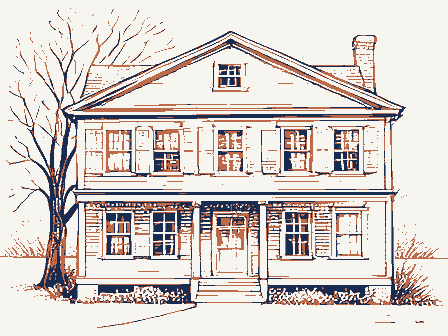
For this reason alone, the memory of those who first made Euclid Avenue great and then contributed to Cleveland s equally wonderful institutions and parks, despite the personal loss and abandonment of their own Grand Avenue neighborhood, should be remembered and acknowledged. History: to Beginning as early as Euclid Avenue was destined for greatness as a residential street. Homes built in the to early were built by local master builders, most notably, Jonathan Goldsmith, in a Greek Revival style on large lots in the bucolic countryside of Euclid Street between Public Square and current day E. Street.5 Most of the wealthy residents from this period were settlers or their descendants from the State of Connecticut with Yankee values. 5 Showplace of America EUCLID AVENUE HALS NO.
OH-14 PAGE 4 They had succeeded in a small, mercantile, canal village that had only become incorporated in and was inhabited by just over residents in Early, notable Connecticut descendants included Euclid Avenue residents Samuel Cowles, Sherlock Andrews, Thomas Kelley, Irad Kelley, Joseph Perkins, and George Hoadley. These Connecticut Yankees were joined by other New England descendants, who had earlier migrated to Upstate New York, and collectively had a profound effect on the early development of the City of Cleveland. The impact of these early Yankees on the city s development was notable to outsiders, as recorded in this article in Harper s Magazine: but the prominent features are still Yankee and Connecticut Yankees at that.
As Connecticut was sown with culled grain from Massachusetts, so northern Ohio was sown with culled grain from Connecticut, and this seed has produced a crop the like of which can be found nowhere else in this country If one were asked what is the prominent characteristic of these men of today, I think we would have to say, A large-minded and large-hearted liberality that does not stop to count any expenditure which may result in public good or benefit Cleveland. 6 And such men are still left in Cleveland.
Now and then they are to be found in other cities but here they are numerous enough to give character and tone to the whole community.7 Through the the architectural styles along Euclid Avenue were a mix of Gothic Country House, Italianate Villa and Tuscan Villa.8 Furthermore, these homes sat on large lots with deep setbacks that were typically 150 from the street (then called Euclid Street) with few homes being closer than 100 . Homes built on the north side of the street, were placed on top of a post-glacial, lake beach ridge that made them quite prominent.
Prior to land on the north side of the street was mostly undeveloped for a distance of approximately two miles between present day East and East Streets, where there were large 10-acre lots that could accommodate the construction of country estates. Geographically, Euclid Avenue grew outward to the east from the city center which is today still considered to be Public Square. When first incorporated in the village s eastern boundary was East 9th Street (Erie Street). By it had grown to East Street (Brownell Street) and by to East Street (North Perry Street).
Continuing, by the city limit had extended out to East Street (Willson Street) and then to East Street (O Conner Street) by Its eastern expansion ended in when the city limit extended out to 6 Harper s Magazine , March 7 Ibid 8 Showplace of America EUCLID AVENUE HALS NO. OH-14 PAGE 5 Lake View Cemetery. Likewise, the eastern boundary of historic Euclid Avenue also shifted outward over time. Nearly all of the mansions were built between Public Square and East Street (Cutler Street). A commercial area developed around East Street called Doan s Corners. The land between East and consisted mostly of land given by Jeptha Wade, a wealthy Avenue resident, for a park and for what is today known as Case Western Reserve University.
With Wade s donation of park and university property, plus a split in the trolley lines near East Street (Fairmount Street), University Circle was created (today it would be considered to be a roundabout) becoming the perceived ending of historical Euclid Avenue in the However, the author propositions that the present, eastern extent of historic Euclid Avenue could go further in that direction through Case Western Reserve University and University Hospitals property, all the way to the main entrance of Lakeview Cemetery near East Street. This prominent cemetery (also founded by Wade and friends) is where many of Euclid Avenue s wealthy residents are buried, making it a befitting terminus for the extent of historical Euclid Avenue and its inhabitants.
Coincidentally, or maybe not, the last city annexation in placed the then recently constructed Garfield Monument, built as a tomb and memorial within Lakeview Cemetery to favorite son, President James A. Garfield, just inside the Cleveland city limits. Fifty-eight mansions were built by mostly between Public Square and East Street. By sixty-eight additional estates were constructed, mostly between East and East Street.9 In the ensuing thirty years, the number of mansions along Euclid Avenue would more than double to over 260 by the end of the Gilded Age . to The Gilded Age in Cleveland was jump-started by the demand for manufactured goods necessitated by the Civil War.
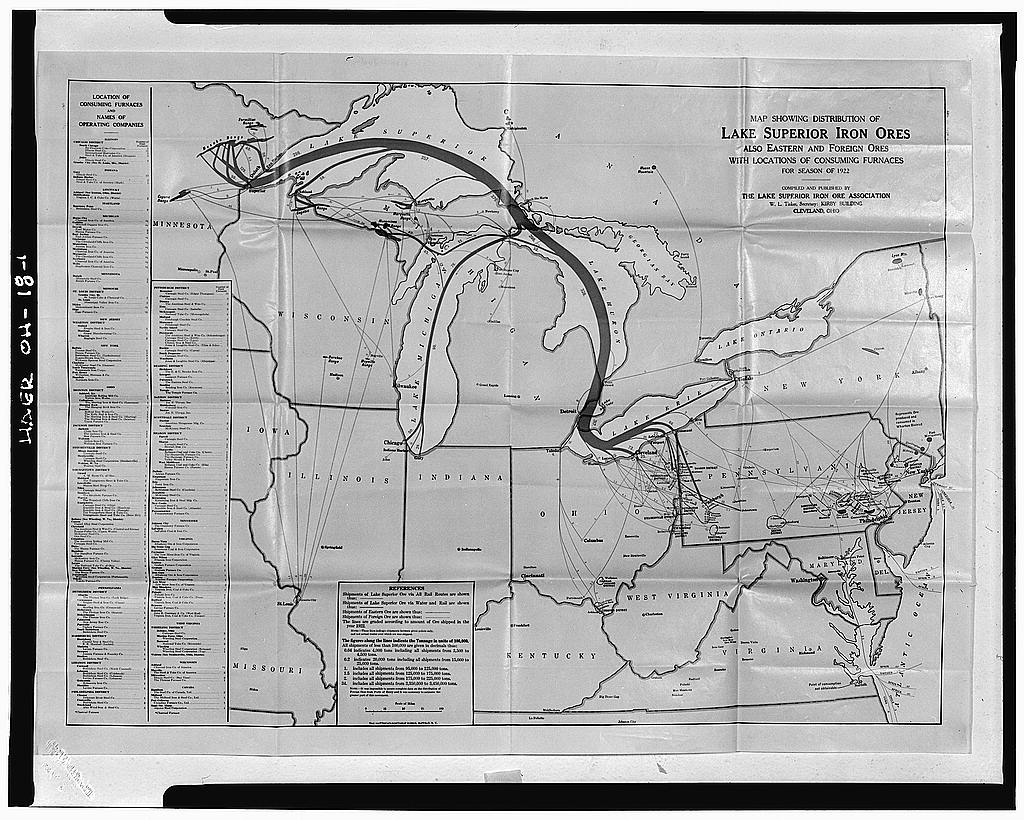
Development of an early military-industrial complex in the city can be summarized in the following account: As the war continued, industrial production increased The number of incorporated iron companies had increased from 3 to 12. Iron-producing firms had begun to increase and diversify their output from heavy castings and forgings to a variety of smaller items, creating a demand for more iron ore. During 65, over half of the ore mined around Lake Superior was shipped into Cleveland, which spurred an increase in shipbuilding. 9 Euclid Avenue: A Linear Neighborhood of Grandeur EUCLID AVENUE HALS NO. OH-14 PAGE 6 In 22% of all ships built for use on the Great Lakes were built in Cleveland.
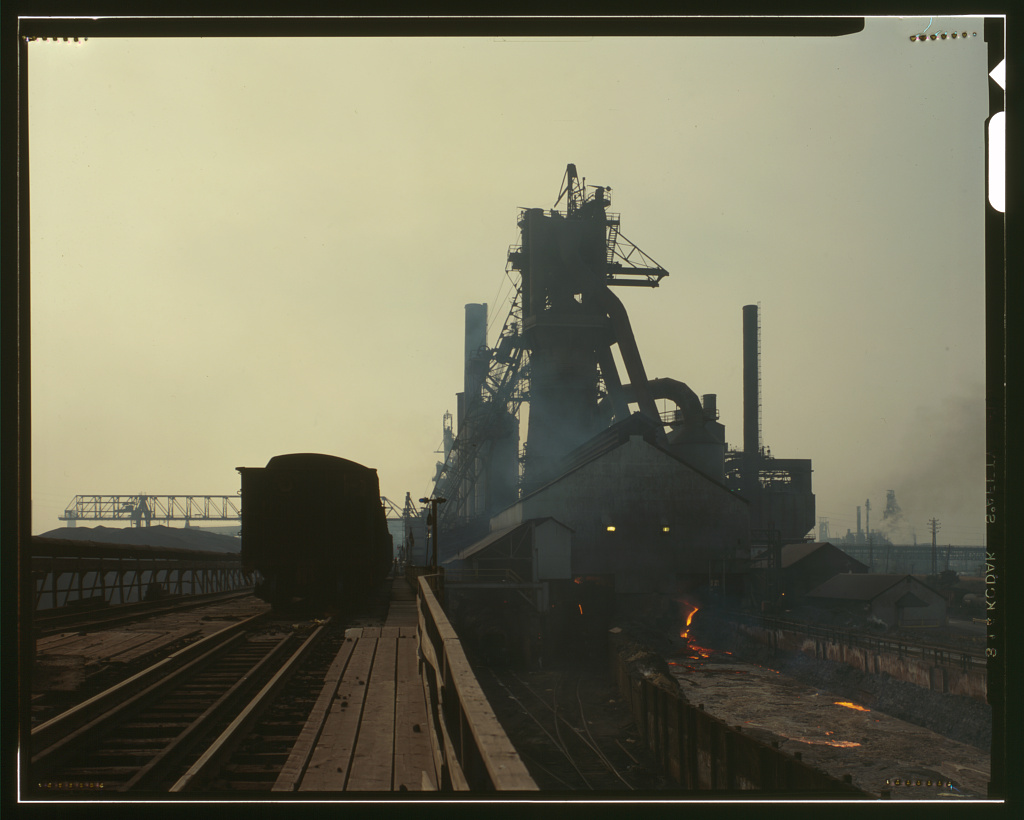
By the figure increased to Spurred by the oil refining industry, which had expanded to 30 refineries by railroad freight tonnage and receipts from passenger fares, mail expresses and rentals, and telegraph service increased dramatically The Cleveland Board of Trade reported in that the value of locally produced products totaled compared to for Cuyahoga County in 10 After the war, industrial growth continued into the with even more railroads, ships, ore loading, and iron/steel mills being built. However, the new oil refining industry, developed by John D. Rockefeller and his partners in Cleveland, was beginning to dominate all growth in terms of economic value.
The newfound, industrial, millionaire owners (most of whom were still descendants of New Englanders) naturally decided to build their Cleveland homes on the most desirable residential street in Cleveland. Soon, another building boom began on Euclid Avenue, with residences that were larger and more ostentatious than those built before the Civil War. To this day, the Gilded Age remains Cleveland s most prosperous era with rich and powerful industrialists John D. Rockefeller, Henry Flagler, Charles Otis, Amasa Stone, Marcus Hanna, Jeptha Wade, and Samuel Mather making fortunes in the city and reaping its rewards.
What began as a rural street in the where entrepreneurs built their homes in the country but where they were still within walking distance to their businesses, quickly evolved into a showcase of mansions for the richest and mightiest families in the nation. Euclid Avenue s streetscape was its most majestic during the Gilded Age. Rows or double rows of American Elm trees arched over a Medina Sandstone roadway. Sidewalks consisting of large sandstone slabs ran on both sides of the road between the tree lawn and wrought iron fences fronting the mansions. Gas light lamps lit the street where horse-drawn carriages and sleighs had free reign of the roadway.
Through the the construction of Italianate and Gothic Revival architectural styles continued along the Avenue; the and featured the Victorian and English Manor House styles; followed by the Romanesque and Neoclassical Revival architectural styles that carried into the twentieth century.11 One of the most substantial homes built during this period included that of John D. Rockefeller s early partner, Samuel Andrews. Andrews began construction of his High Victorian Gothic manor in Three years later, this sandstone residence had thirty-three rooms, encompassed about square feet on each 10 11 Showplace of America EUCLID AVENUE HALS NO. OH-14 PAGE 7 of three floors, and was serviced by the first residential elevator in Cleveland.
The manor was set back 280 from Euclid Avenue and required 100 servants to keep it operational.12 Within a few years, Andrews moved to New York City leaving his sandstone pile vacant for decades, earning it the title of Andrews Folly . Ella Grant Wilson, who, as a celebrated, local florist, knew the Avenue s residents and claimed to have been inside most of the 260 residences that lined Euclid Avenue during her lifetime, wrote this summary description of the Avenue in the Few thoroughfares have ever attained the prominence of Euclid Avenue, Cleveland Ohio it became famous as the Most Beautiful Avenue in the World - a street of country villas, the roadway arched with stately elms, the houses set far back, surrounded by spacious lawns and beautiful gardens.
There has scarcely been a notable event in Cleveland in the past seventy years, in which Euclid Avenue has not borne an important part. Down it have marched, rank upon rank, our soldier boys bound for war. From its stately mansions and along its curbs have gathered throngs to view the pageantry in honor of Grant, Sherman, Foch and other heroes of the Civil, Spanish American and World War. Along it have passed the funeral cortege of the martyred Lincoln and James A. Garfield. In times of peace, our Presidents and other notables have been escorted down its broad expanse. Our joys, our sorrows, our wealth, our pride, our commerce and our history itself has clustered around our Euclid Avenue.
It is The Avenue pointed to with pride by Clevelanders at home and abroad.13 Moreover, the inhabitants of Euclid Avenue during this period remained true to their New England roots. Jan Cigliano, who has written the most comprehensive history book about Euclid Avenue and its residents, says this about them: The energy Avenue residents invested in the larger Cleveland community in fact exceeded that reserved for their own recreation. They had not only the wealth and community pride-- and the women the luxury of leisure time--necessary to direct major philanthropic and cultural endeavors, but collectively they possessed a deep evangelical spirit.
Born out of pious New England roots, these Clevelanders were as generous on behalf of 12 Showplace of America 13 Famous Old Euclid Avenue of Cleveland EUCLID AVENUE HALS NO. OH-14 PAGE 8 others' well-being as they were selfish about their own. They appreciated the fact that they had the means to give something back to the community from which they had prospered so handsomely. Early in his career, Rockefeller stated "I believe it every man's duty to get all he honestly can, and to give all he can." This philanthropic spirit was one of the few beliefs the oil magnate shared with his fellow neighbors. Euclid Avenue men and women led the way in consistently contributing their time, energy, and money to the development of the city's civic, religious, cultural, and charitable institutions.
They built their greatest legacy at the eastern end of the Grand Avenue, the magnificent cultural park around University Circle. The ambitions and tastes that shaped the growth of this institutional arena during the late nineteenth and early twentieth centuries were chiefly those of particular Euclid Avenue patrons and benefactors who gave their collections, money, and management to the Cleveland Museum of Art, the Cleveland Orchestra, the Cleveland Institute of Music, Western Reserve Historical Society, and Case Western Reserve University.
Jeptha Wade was among the chief benefactors, amassing and landscaping the nucleus of this area, 82-acre Wade Park, then giving it to the city in Wade and other patrons saw University Circle as not just a socially desirable playground, a pleasant educational amenity, but also as good business for the city. The creation of this campus-in-the-park was a natural extension of Euclid residents' vision of their Avenue as a civic processional.
Euclid Avenue alone, a shaded linear landscape connecting the Public Square with University Circle, and the open country beyond, had become the megastructure of the city's urban landscape.14 Efforts to commercialize Euclid Avenue s shaded linear landscape and extend trolley car service down it had accelerated by the In response, dwellers of Euclid Avenue tried to find a way to keep their residential street intact by petitioning the Cleveland Park Commission to turn the Avenue into a Boulevard or Parkway thus changing it from a public right of way into a park drive. Not surprisingly, speculative developers filed law suits against the Park Commission claiming that such a conversion would harm them financially as the value of property was skyrocketing along Euclid Avenue.
In the end, Cleveland City Council denied the conversion in to 14 Euclid Avenue: A Linear Neighborhood of Grandeur EUCLID AVENUE HALS NO. OH-14 PAGE 9 As early as the residences close to Public Square were demolished and replaced with offices, banks, theaters and stores. Commercial development continued to expand to the east, first to East 9th Street and then to East Street and finally, by it was knocking on the door of East Street which was considered to be the western end of Millionaires Row that extended out to East Street. In addition to being a commercial destination, the public also wanted to be on Euclid Avenue because of its geography. It was the only state-owned road (and later US 20) that extended from Cleveland northeast along Lake Erie to Buffalo, New York.
This means it was the only through road to any community northeast of Cleveland including Euclid, Wickliffe, Willoughby, Mentor, Painesville, Geneva, Ashtabula, Conneaut, Erie in Pennsylvania, and Buffalo in New York. Its early history as an arterial road is described as follows: Euclid Avenue follows the historic Lake Shore Trail of the Indians. It was laid out by Cleveland village trustees in and surveyed the following year. It takes its name from the small settlement of surveyors to the east in Euclid, but as late as it was known as the Buffalo Rd. because it served as the major route to that city.
It was recognized by the state legislature as a highway in 15 More locally, Euclid Avenue was the most direct route to the Pennsylvania Railroad Station located at the junction of Euclid Avenue and East Street. This passenger station provided the closest, most direct railroad access to points east including Pittsburgh and then Baltimore, connecting to Washington, Philadelphia and New York City. East Street was then and remains today, the main north-south street on the east side of the city and Euclid Avenue was the fastest way to get to East Street. Therefore, it is not surprising that privately-owned trolley franchisers courted city leadership early and often to extend their trolley lines down Euclid Avenue.
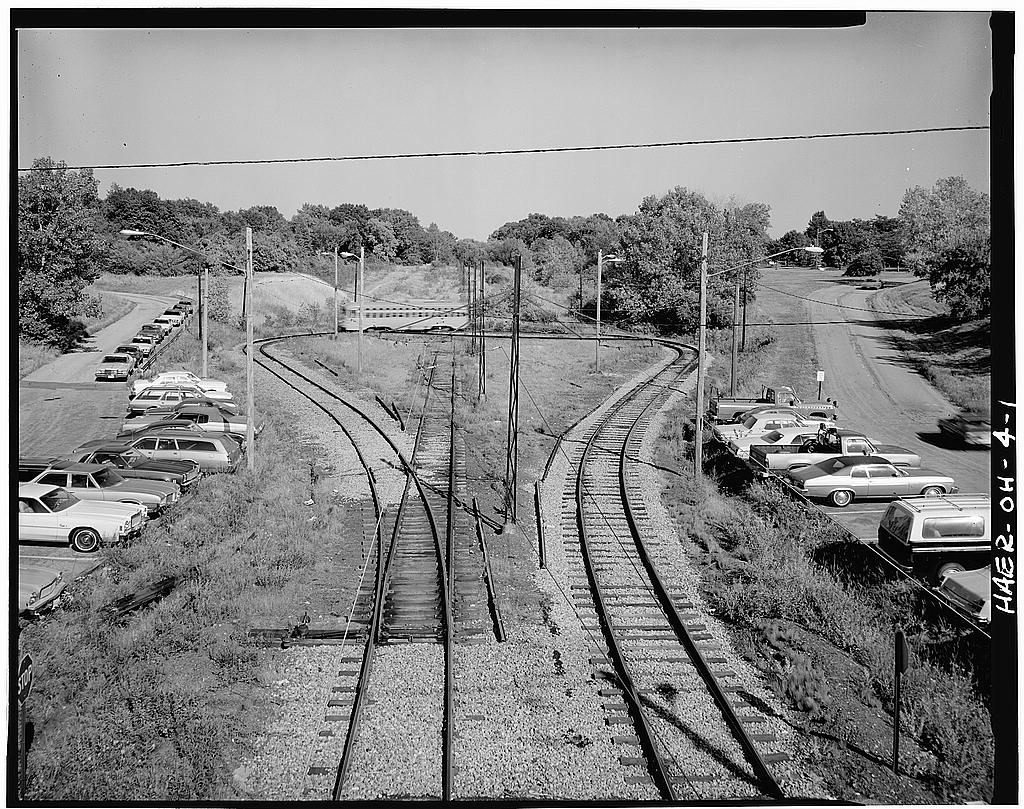
Initially some horse drawn trolleys were welcomed on the Avenue, but as they became more numerous, Avenue resident resistance became stronger and they managed to limit trolley use to west of East 9th Street and east of East Street until But soon, the trolley extended out to E Street and then to East Street. Much to the chagrin of riders, the trolleys were detoured to adjacent Prospect Avenue between East and East Street for years due to Euclid Avenue resident resistance. However, by electric streetcars, powered from overhead wires, ran the entire length of Euclid Avenue from Public Square to the Circle at Wade Park. 15 EUCLID AVENUE HALS NO. OH-14 PAGE 10 The era of the trolley was relatively short-lived as it was already being threatened in the by the mass production of the automobile.
Euclid Avenue millionaires had owned and some of them had even manufactured automobiles since the late although they were often powered by electricity or steam at this early time. Beginning with the assembly line production of the Ford Model T in the internal combustion, automobile soon took over America. By one-half of all the cars in the nation were a Model T and were competitively priced so that a middle-class family could afford one, thereby threatening the long-term tenability of trolley lines. More importantly, the car allowed the rapid suburbanization of America to begin. Class strife, most evident in labor strikes, began as early as the and increased into the twentieth century.
Founding owners of industrial enterprises, many of whom had come from modest means, turned their businesses over to their children or others who led, relatively, privileged lives. Some of these new bosses were not as empathetic with their workers as the founders and either sought wage cuts and/or longer hours from their workers, most of whom where immigrants or first-generation Americans.
In Cleveland, this strife was most famously acted out at the Cleveland Rolling Mills founded by Henry Chisholm in Chisholm lived on Millionaire s Row and was beloved by his workers because he offered company-owned housing and company-store benefits to the workers, whom he knew and regarded as important to the company's success .16 Upon his death, Chisholm s workers contributed generously towards the construction of a monument for their boss in Lake View Cemetery .17 Once Chisholm s son, William, succeeded Henry as the head at the Rolling Mills, the younger instituted a series of wage cuts that were met with labor strikes over a number of years.
To settle one of these strikes, the mayor of Cleveland ordered that wage cuts be rescinded in order to end marching strikers and keep peace in the city. The breakup of John D. Rockefeller s Standard Oil monopoly in that refined over 90% of the world s oil supply at the time, shined a light on the extent of income inequality that existed both in America and the City of Cleveland. To this day, when measured against national GDP and adjusted for inflation, John D. Rockefeller remains the richest, private citizen that has ever lived. Not surprisingly, he owned a mansion on Euclid Avenue that eventually sat empty for decades and was ordered to be demolished upon his death. 16 17 Ibid EUCLID AVENUE HALS NO.
OH-14 PAGE 11 Cleveland s industrial workforce consisted of nearly 75% foreign born immigrants and/or their children.18 It was this large supply of immigrants that powered the industrial growth of Cleveland and America, but they did not, necessarily, reap its rewards.
It was not until the ascendance of labor unions, near the turn of the century, that living conditions for Cleveland s working class began to improve: By 40% of Clevelanders owned their own homes, as opposed to 20% in In men were employed in the building trades, more than a twofold increase over And new generations of workers' homes came equipped with electricity and indoor plumbing...For black workers, who came to Cleveland in large numbers during the (Great) (W)ar to fill the gap created when immigration from Europe ended, union membership was especially a rarity, for, despite the central labor unions' endorsement of efforts to organize black workers, few blacks were ever accepted into craft unions.
Before World War I, over Cleveland women were involved in the garment workers strike of With the coming of the war, the trend to hire women in industry accelerated, but they remained unorganized and when the war ended most lost their jobs. With the organization of the Cleveland-based Consumers League of Ohio, attention came to be focused on working women. As women entered factories and other nontraditional areas, the percentage of women in the workforce rose from 15 in to 18 in Between and Tom L. Johnson (who himself was a millionaire living on Euclid Avenue) was repeatedly elected to successive two-year terms as mayor of Cleveland and took up the Progressive cause of the working class, waging a personal war, ironically, on those he called The Privileged .
Johnson was an advocate for free trade, for a single land tax, for municipal ownership of public utilities and against monopolies. Most famously, he lobbied for and obtained a three-cent trolley fare throughout the City of Cleveland that endeared him to the citizens of Cleveland who were accustomed to paying five-cent fares to the privately-owned, trolley monopolies in the city. Johnson soon became terminally ill after leaving office in but penned a series of articles for Hampton s Magazine where he explained his attack on the privileged: 18 Immigration and the American Industrial Revolution From to 19 EUCLID AVENUE HALS NO.
OH-14 PAGE 12 The thing I shall call my civic consciousness had confirmed me in my belief that crime and vice and misery were for the most part consequences of involuntary poverty, and that involuntary poverty the result of law-made privilege, whereby some men have more than they want while the vast mass of mankind wants more than it gets. More and more I realized that it was the necessities of this legalized privilege in society which created Riverside Drive in New York, a Lake Shore Boulevard in Chicago, a Euclid Avenue in Cleveland, and at the same time an East Side in New York, a Canal Street in Chicago and a slum district in Cleveland. 20 By the federal government adopted a series of laws that greatly curtailed mass immigration into the United States.
These laws, coupled with World War I, allowed migration of southern sharecroppers and subsistence farmers of all races, but notably blacks, to move northward into industrial cities. Until then, the African-American population of Cleveland, which had historically been less than 2% of Cleveland s total population, doubled to over 4% in doubled again to 8% by and then doubled again to 16% by The majority of migrating African-Americans moving to Cleveland settled in an area just to the south of Euclid Avenue. Abolitionist, Yankee Clevelanders historically supported anti-slavery efforts for African-Americans on the national stage.
However, closer to home, Cleveland in consisted of two major racial/ethnic groups: 1) wealthy or middle class, third plus generational, white Americans and 2) white, European immigrants (or their children and/or grandchildren). Immigrants likely saw the arriving African-Americans as an economic challenge to their well-being and third plus generational whites were likely surprised by a new, large, group of blacks moving into their historically, white community. At any rate, a new kind of intolerance soon began to unfold in Cleveland. Finally, environmental changes were decreasing the livability of Euclid Avenue and all of Cleveland. Despite local resolutions against pollution, Cleveland s air and water were chronically toxic from industrial pollution.
Soot quickly blackened the sandstone mansions along Euclid Avenue, so much so, that when Mayor Johnson put a sandstone addition on his house, he had to have it artificially blackened so that it matched the rest of his mansion! Even the famed elm trees lining the Avenue were under attack: 20 Tom L, Johnson, Hampton s Magazine, July 21 Historical Census Statistics on Population Totals by Race EUCLID AVENUE HALS NO. OH-14 PAGE 13 Outbreaks of Dutch elm were reported in various places during the first half of the century, but the entry point in America is often cited as Northeast Ohio around and blamed on a shipment of logs from France.
An account from the Ohio Chapter of the International Society of Arboriculture states in its history that the disease was first discovered after a shipment of elm veneer logs passed through the Cleveland area on a train in The steam train stopped for coal and water in Creston, a village that straddles Medina and Wayne counties. A short time later, elm trees along the tracks started to die.22 By then, Euclid Avenue s millionaires had already begun to evacuate the Grand Avenue. Some of them left the area completely, settling in New York City, Washington, New Jersey, Florida, and California.
The largest group went to the Heights portion of Cleveland including Euclid Heights, Shaker Heights, and parts of Cleveland Heights; the remainder scattered to Bratenahl, Willowick, Eastlake, and points east. James Borchert chronicles the quick demise of Euclid Avenue as follows: From to the Cleveland s upper classes maintained residential patterns like that of other cities with the majority residing on or near a centrally located grand avenue This neighborhood of large homes accounted for at least 61 % of Cleveland s social elite.
Blue Book revealed a pattern of movement from both Euclid (Avenue) and the city (as) new suburban areas increased their proportion of social elites from 1 to 10 %...What appeared as a trickle in became, by a substantial movement of elites from the city Euclid Avenue housed only 11 % of elite families If the shift of elites from city to suburb from to seemed large, the next fifteen years produced a massive exodus By the Blue Book reported (that) Euclid Avenue, once the center of Cleveland s elite life, now claimed only 1 % while suburban Cleveland Heights (35 %) and adjacent Shaker Heights (23 %) each housed more than the city.
Together they became the dominant elite residential cluster with 58 % of elite families.23 Attempts were made to save Euclid Avenue as a Grand Avenue in the early 22 23 From City to Suburb: The Strange Case of Cleveland s Disappearing Elite and Their Changing Residential Landscapes: EUCLID AVENUE HALS NO. OH-14 PAGE 14 twentieth century, but to no avail. Cleveland did not have appropriate land use controls, preservation initiatives, or tax incentive programs available to save the mansions along Euclid Avenue.
As real estate taxes spiraled upward due to the conversion of residential property into commercial property, the owners of the mansions had little choice but to 1) sell their property to commercial interests, or 2) donate or sell their homes to non-profit groups that would not be required to pay property taxes on them. As earlier noted, some of the residents who could not accept the transformation of their street simply chose to demolish their homes. to Current It is said that the last wealthy family to leave Euclid Avenue were the Carlins in Reportedly, they threw the last dinner party on the Avenue and then moved to what had become known as the Euclid Avenue of the Heights .
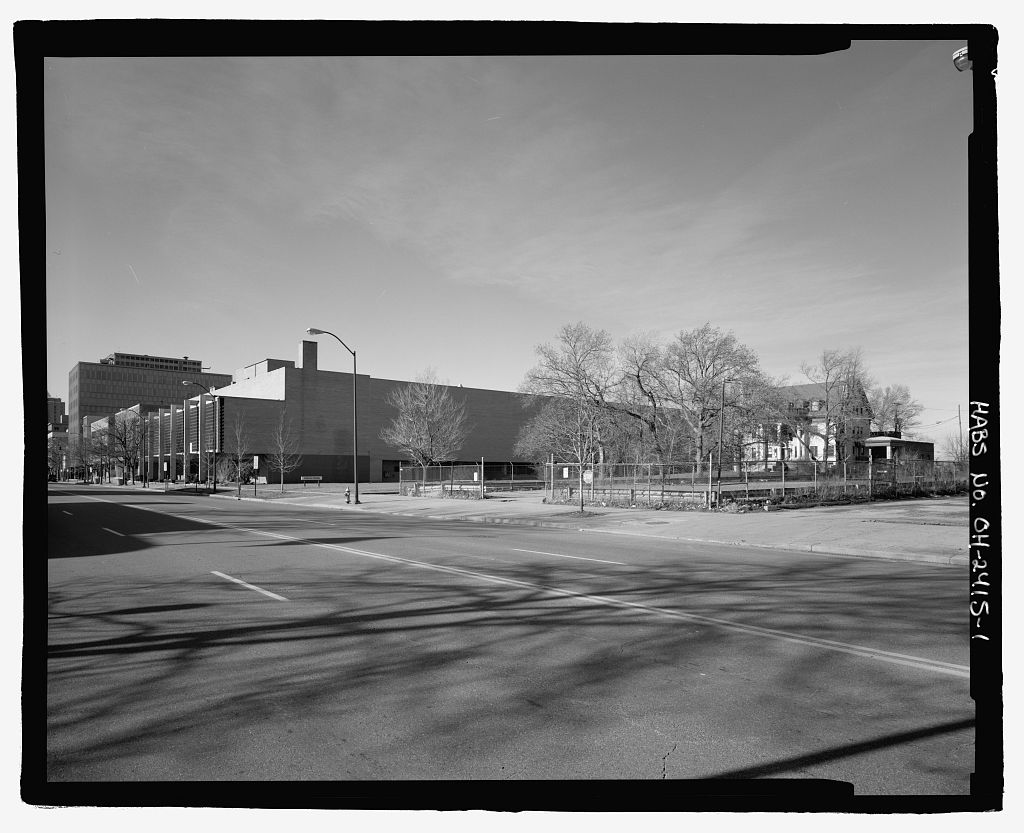
24 By then, the Avenue had become overrun with automobile dealerships, car repair shops, gas stations, shops, apartments, boarding houses, and non-profit institutions that tried, unsuccessfully, to adapt the mansions into offices, dormitories, and museums. Eventually, even these non-profit groups found it impossible to maintain the mansions and left them for ruin. Next, closer to downtown, came the 5-8 story tall, curtain wall office buildings of the to Of these, a article in Architectural Forum notes: The significant point about Euclid Avenue and about "Euclid Avenue" in nearly every major American city is that American enterprise and architecture today seem totally incapable of street formation. Buildings are erected one after another as if each building existed in a vacuum.
An old church, which, unlike the houses, is likely to remain, is depleted, obscured, and defined by the competitive design of the buildings around it. And the opportunity to take positive advantage of the church to provide, by a proper setting, the impressiveness which is so self-consciously attempted in the individual facades, is ignored. Even new buildings, built almost simultaneously, lack relationship to each other. The general proportions and the architectural character of the WEWS Scripps-Howard television station (designed by the Austin Co.) and the IBM building across the street go their totally separate ways.25 24 25 The Glittering Slum on Main Street EUCLID AVENUE HALS NO.
OH-14 PAGE 15 Thus, in less than a one-hundred-year span, Euclid Avenue had grown to be the most beautiful street in America and then plummeted to become one its ugliest. What was once a unified landscape of architecture, green space, streetscape, order and beauty had become a disheveled mess. However, because of its inherent strengths, mostly created by its former residents, Euclid Avenue is now in resurgence.
These strengths include: 1) a beginning at Public Square, the heart of Cleveland s downtown and where merchants first built their homes in the 2) a logical terminus at University Circle, the cultural center of Cleveland that the millionaires created during the Gilded Age; 3) significant institutions along its path including Case Western Reserve University, Cleveland State University, University Hospitals, Cleveland s Theater District, and the Cleveland Clinic, all of which were funded by the millionaire s descendants in the early twentieth century; 4) a mix of other infill uses including residential, office and commercial areas that were made possible with the demolition of the large lot mansions; and 5) a pedigree of design excellence provided by its millionaire residents from long ago.
Today, the right of way of Euclid Avenue contains an intermodal Bus Rapid Transit system for busses, automobiles, bicyclists and pedestrians that offers a fast and convenient connection between Cleveland s downtown and its cultural center at University Circle. This attractive mile long, streetscape was designed by Sasaki Associates and opened in at a construction cost of million. As a result of this transportation improvement, it is reported that, since over $5 billion of redevelopment and/or new construction has occurred within mile of Euclid Avenue.26 Most of the recent improvements have been for institutions, including universities, hospitals, theaters, parks, and museums.
However, there has also been a substantial amount of infill, multi-family residential and office/commercial space renovated and/or newly constructed along the Avenue. Today s Euclid Avenue is much more diverse in every way than Millionaire s Row could ever be and, hopefully, foretells a brighter future for the entire City of Cleveland. It is doubtful that the former, wealthy residents of Euclid Avenue envisioned how their street would change in the future, but nonetheless, they played an important role in its and the city s recent resurgence. In plain terms, a great street is one that helps to build a great community. While the definition of community can be elusive, it always includes people as the most important part of it.
Multiple generations of people from Cleveland, living in a multitude of different communities, have all benefited from the efforts of the residents that once lived on Euclid Avenue: Cleveland s Greatest Street. 26 EUCLID AVENUE HALS NO. OH-14 PAGE 16
 Block
Block