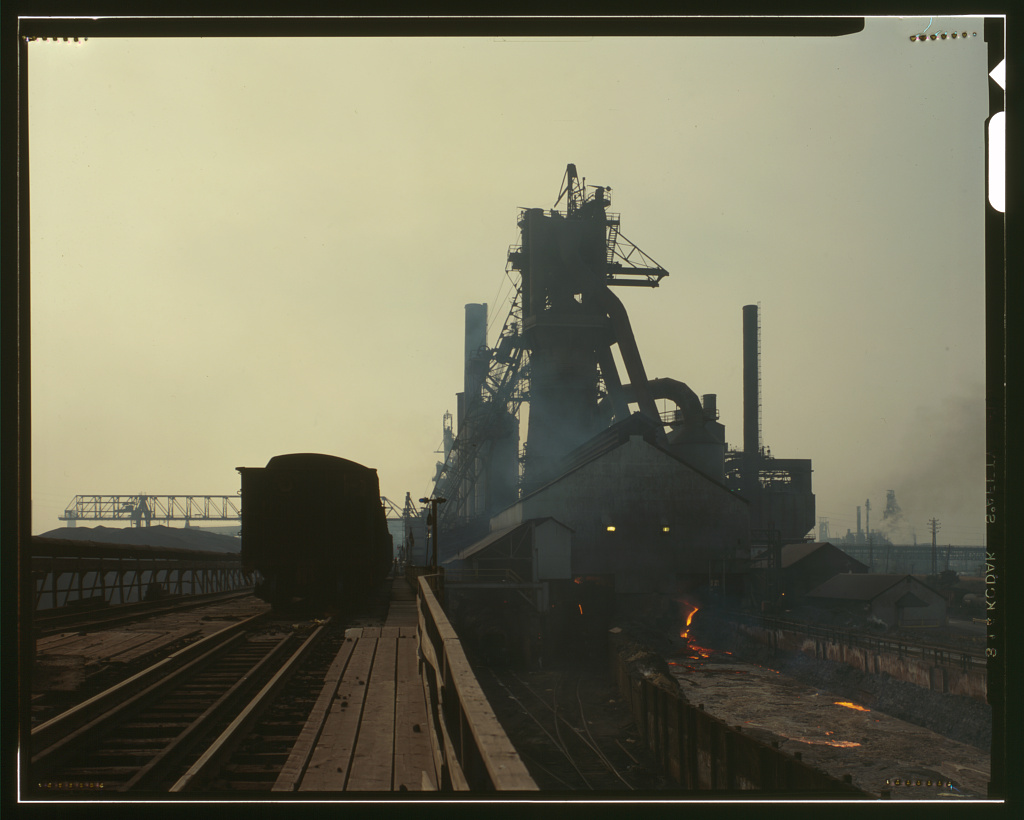
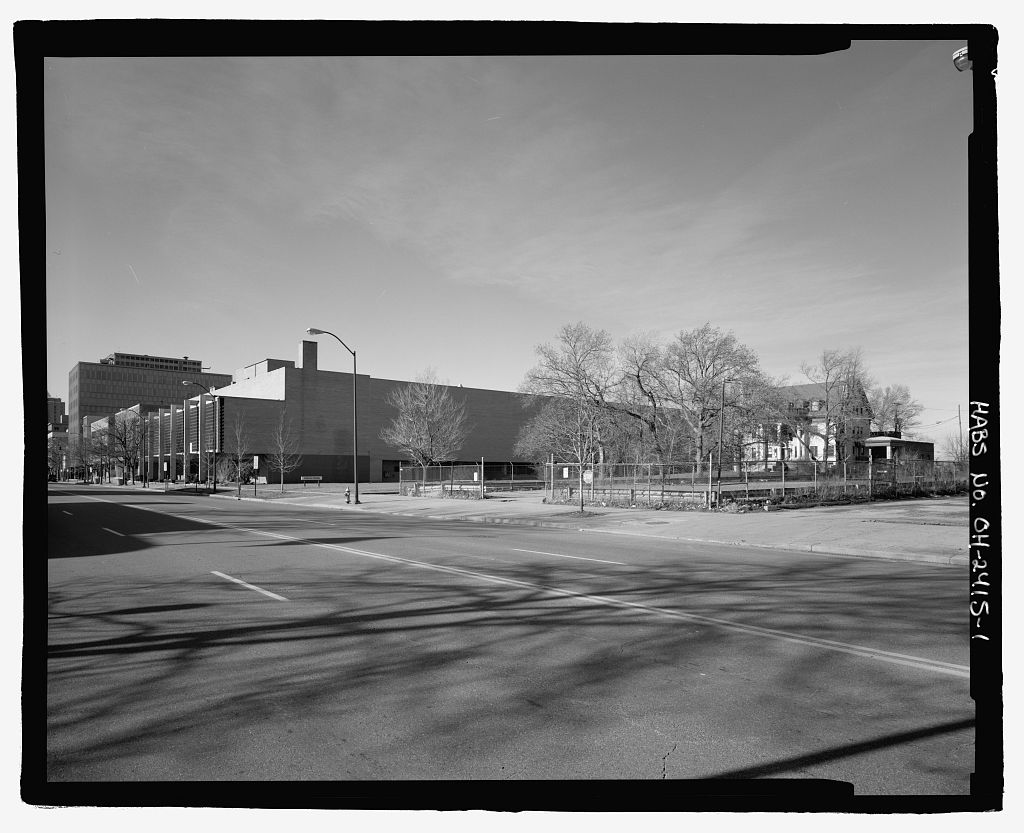
The Historic American Engineering Record (HAER) is a long range program that documents and interprets historically significant engineering sites and structures throughout the United States. HAER is part of Heritage Documentation Programs (Richard O Connor, Manager), a division of the National Park Service, United States Department of the Interior. The Cleveland Gas Light and Coke Company Survey was undertaken in March in cooperation with the Flats East Bank Development Project. Justine Christianson (HAER Historian), Lisa Adkins CLEVELAND GAS LIGHT & COKE COMPANY HAER OH 131 Page | 2 (Ohio Historic Preservation Office) and Dan Musson (Cleveland Landmark s Commission) served as project reviewers.
Measured drawings were provided by URS, project architect for the Flats East Development The following repositories provided research material: City of Cleveland Building and Housing Department, Youngstown Historical Society Cleveland State University Special Collections (CSU), Cleveland Public Library Case Western Reserve University (CWRU), Western Reserve Historical Society Cuyahoga County Archives (CCA), and Cuyahoga County Recorder s Office (CCRO). Part I. Historical Information A. Physical History of Buildings: 1. Date of Construction: ca. 2. Architect/Engineer: Not Known 3. Builder/Contractor/Supplier: Not Known 4. Original Plans: Not Available, Illustrative narrative based on Sanborn maps see page 13. The Cleveland Gas Light and Coke Company site was located in the Flats East Bank.
The Flats is the bottom land or floodplain of the river and starts at the mouth of the Cuyahoga River where it begins at Lake Erie, traveling through a valley about one half mile wide. The geography of the Flats or lowlands was abandoned as settlement area very early in the city s history due to the illnesses that accompanied the marsh like terrain. Alfred Kelley, one of Cleveland s earliest settlers, had purchased the land at the mouth of the river and pursued the opening of the Ohio and Erie Canal in spurring a tremendous increase in lake commerce and industry in the Flats area. The Cleveland Gas Light and Coke Company purchased lots 191 193 of the Kelley subdivision to build the Gas Foundry, later referred to as Plant #1.
The foundry covered the area between Main Street and Front Street from Meadow to the alley beyond the Gas Holder Houses. A Machine Shop was located at 76 78 East River Road, with a coke pile directly adjacent that could be accessed by a trestle bridge over Meadow Street. The foundry had multiple coke sheds, a Retort House containing forty two benches and six Retorts, Offices, Purifying and Lime House, Governor s & Meter Room and by four Gas Holder Houses, two of which were brick and two of which were iron. The Cleveland, Columbus and Cincinnati Railroad and the St. Louis Railroad passed directly through the foundry, with a branch entering the Meadow Street Coal Shed. 5. Alterations and Additions: Retort Houses were abandoned by according to Sanborn maps.
The Purification House was occupied by another business by A second iron gas holder was added in The building permit states the cost of construction was By only the gas holder houses were occupied by East Ohio Gas Company; all other buildings were vacated, leased or sold. CLEVELAND GAS LIGHT & COKE COMPANY HAER OH 131 Page | 3 B. Historical Context Prior to the city of Cleveland relied on oil fired lamps to light city streets and buildings. By smoky oil filled streetlamps were being replaced with gaslights in the downtown area.
By December of that year, gaslights could be seen on Superior from the river to Erie (East Street, on Public Square, and on Water (West Merwin and Bank (West streets.1 In the city approved the laying of gas pipes from Erie Street to Marshall Street.2 As noted earlier, the Flats (or lowlands) was abandoned as settlement area very early in the city s history. However the location proved successful for commercial and industrial development because of the access to the Great Lakes. In the Ahaz Merchant Map notes three warehouses in the Flats. By the industrial heart of the city could be found in the Flats. The industries included transportation, construction and iron.
The lake front inward along the river was covered with shipyards, lumber yards, iron mills, freight depots and roundhouses, furnaces, oil works, chemical works and brick yards. All the railroads led into the Flats and the shipping industry carried millions of loads of material out into the market. The most abundant works was the Standard Oil Company oil refinery. The Cleveland Gas Light and Coke Company Flats Foundry, also known as Coal Gasification Plant #1, was located on two city blocks on the east bank of the Flats. Gas could be manufactured from coal, coke, wood, peat or oil products.
Manufactured gas was processed by heating the coal or other organic substances to produce a flammable gas, sometimes referred to as town gas, composed of a combination of carbon monoxide, hydrogen and other gases depending on the natural resource used during the process. The resulting gas product was stored in a holder or a gasometer for later distribution and use. The Sanborn maps use both gasholder and gasometer to describe the tanks between the three manufacturing sites of Cleveland Gas Light and People s. Artificial gas, employed on the east side of the river, was transported via underground gas pipes and provided gas to municipal buildings for both lighting and heating, as well as street lighting. Gas eventually served residential customers in the city proper.
Commercial employment of manufactured gas occurred prior to natural gas consumption due to the ease of producing manufactured gas. Between and the Cleveland Gas Light and Coke Company constructed the Flats Foundry. East Ohio Gas Company renamed the site Plant #1 when it assumed the property in No records remain of the construction, the architect, engineer, or builder. The accompanying illustrative map and narrative is based on Sanborn maps As earlier described, the Flats foundry covered the area between Main Street and Front Street from Meadow to the alley beyond the Gas Holder Houses. A Machine Shop was located at 76 78 East River Road, with a coke pile directly adjacent which could be accessed by a trestle bridge over Meadow Street.
The foundry had multiple coke sheds, a Retort House housing forty two benches and six Retorts, Offices, Purifying and Lime House, Governor s & Meter Room. By four Gas 1 David D. Van Tassel, ed., The Encyclopedia of Cleveland History (Bloomington: Indiana University Press, 2 Annals of Cleveland: Cleveland, Ohio (Cleveland, Ohio: Cleveland WPA Project, 28 September, 3 Sanborn Map, Cleveland, Ohio, vol. 1, pg. 3. CLEVELAND GAS LIGHT & COKE COMPANY HAER OH 131 Page | 4 Holder Houses existed on the site.4 Three railroads had direct lines into the site including the Cleveland, Columbus and Cincinnati Railroad, the St. Louis Railroad and the Lake Shore & Michigan Southern Railroad.5 The Cleveland, Columbus and Cincinnati Railroad and the St.
Louis Railroad passed directly through the foundry, with a branch entering the Meadow Street Coal Shed. By the Retort Houses were abandoned, according to Sanborn maps. The Purification House was occupied by another business by By only the gas holder houses were occupied by East Ohio Gas Company; all other buildings were vacated, leased or sold. Alfred Kelley originally owned the land on which the Cleveland Gas Light & Coke Company was located. Kelley was president of the Bank of Lake Erie in August but it failed in The bank was reorganized in April with Leonard Case, President and Truman P. Handy, Cashier. The charter expired in when the legislature of Ohio refused to extend the charter of existing banks. The affairs were placed in the hands of T. P. Handy.
The liabilities were paid off and the balances were paid out to the stockholders. A T. P. Handy appointed trustee distributed the final holdings in June The remaining capital was valued at On July 1, Truman P. Handy, Trustee of the Stockholders of the Commercial Bank of Lake Erie, purchased lots 192 and 193 from Alfred Kelley to serve as the site for the Cleveland Gas Light and Coke Company factory and foundry. In the Cleveland Gas Light and Coke Company was incorporated by a board of directors made up of Cleveland business man including Handy, Moses C. Younglove, William Bingham, Morley and David Stinton. Handy was President of the company and officers included T. Dwight Eells Secretary, W.E. Beckwith Treasurer, Gustavus A. Hyde Engineer and Timothy Heath Inspector.
The business commenced in supplying artificial gas to the city.6 The company s first office was located at 195 Superior Street in the Miller s Block. The foundry or coal gasification plant was located on the east bank of the flats between Old River Road and West 9th Street spanning the city block between Main Avenue and Front Street. By the company had introduced some fifty gaslights on Superior and River (West streets. In the city of Cleveland installed eighty two of Peale s magic ring gas lights and by there were 260 gas lights. A light ran $1 each with a meter at The Magic Ring was a gas fixture of 100 burners, which allowed the gas to be adjusted to either dim or brighten the level of light (or flame) that was emitted.
In the directors of the Cleveland Gas Light and Coke Company acquired the right to supply gas to the west side of the city. They named the new west side gas company The People s Gas Light Company and began operations on December 28, Directors for the Cleveland Gas Light and Coke Company from were Price President and C.E. Stanley Secretary. By the Cleveland Gas Light and Coke Company had moved administrative offices to 356 Superior Street. The demand for gas grew as new uses were 4 Cleveland Gas Light and Coke Company building permit, Cleveland Building Department, Building Permits. 5 Sanborn Map, Cleveland, Ohio, vol. 1, vol.1, pg. 3. 6 East Ohio Gas Company Files, Youngstown Historical Society, Youngstown, Ohio.
7 The Cleveland Gas Light and Coke Company, Terms Rules and Regulations, suggestions to Gas Consumers, and Company adopted March 5, (Cleveland: Nevins Print, CLEVELAND GAS LIGHT & COKE COMPANY HAER OH 131 Page | 5 introduced for gas consumption, such as furnaces and stoves. The company moved administrative offices to 356 Superior Street between and By the Cleveland Gas Light and Coke Company, led by J. H Morley, President, had raised the stock value from to $3 million. From directors of the company included Greenough President and General Manager, Morley Vice President, H. Beardslee Secretary, Augustus Hyde Engineer, and J. George Schmitt Superintendent of Streets. In a fourth gas holder was constructed of iron with a brick foundation for at the Flats factory and foundry.
The gas holder could hold cubic feet of artificial gas.8 In Charles F. Brush successful demonstrated his new arc light system on Cleveland s Public Square ushering in the era of electric street lighting. Brush, an associate of the Cleveland Telegraph Supply Company constructed twelve lamps of candlepower on ornate 150 standards on Public Square and adjacent streets for an amount not to exceed annually. The council approved the Brush system and Brush arc lights began to appear on downtown Cleveland streets. A central power station was erected at Ontario and St. Clair streets and wires were strung on street poles, making Cleveland a pioneer city in electric lighting.
In the Cleveland Electric Illuminating Company was established combining Brush Electric Light & Power with the Cleveland Electric Light Company, which was lighting downtown stores. With the onset of electric lighting and further the discovery of natural gas, the Cleveland Gas Light and Coke Company competitors challenged the demand for manufactured gas as a lighting source. The company continued to grow and by a second manufacturing plant, the Cleveland Gas Light and Coke Company Number 2 works, was located at Wilson Avenue and Armitage Street. The Number 2 works consisted of three Gasholder tanks, Numbers 7, 8 and 9; capacity unknown.
The site contained a Retort House, a Governor s House that was connected to Gasholder 7, Purifying House, Coal Shed, Tar Well, Cooper Shop, Carpenter s Shop, Storage Sheds, Wagon Shed and Scales. Railroads led directly onto the site: the Lake Shore & Michigan Southern Railroad, New York Pennsylvania and Ohio Railroads and the Cleveland Pittsburgh Railroad. The People s Gas Light Company processing plant was located further down the Cuyahoga River at Hanover and Old River Road just below the bluff that ran along Hickory Street. Two large Gasometers (or tanks) sat on the site, one held cubic feet while the other s capacity was cubic feet.
In addition, the site consisted of Retort House Numbers 2and 3, the Scrubber House, a Pipe Shop, Purifying House, Coal and Coke Shed, Meter House and Governor s Room.9 The foundry had use of the New York and Pennsylvania Railroad. Offices for the People s Gas Light Company were located at 147 Franklin Boulevard from Offices moved to 412 Pearl Road in S. C. Lewis served originally as the Cashier. His title changed to Secretary and he held that office until S. M. Peck was the first President in In J. Bousfield served as President, while William Chrisite was Superintendent of Works. From Lindsley served as Engineer. In George H. Warmington was appointed President and served in that capacity until C.
McNell was the Treasurer in 8 Building Permit City of Cleveland Building Permit Department, Cleveland City Hall, Lakeside Drive; East Ohio Gas Company Files, Youngstown Historical Society, Youngstown, Ohio. 9 Sanborn Map, Cleveland, Ohio, vol. 2, pg. CLEVELAND GAS LIGHT & COKE COMPANY HAER OH 131 Page | 6 In the Secretary was Julius Carrington. Daniel V. Warmington was General Manager from From W. K. Sladden was Secretary and Treasurer. In Mayor Tom Johnson granted approval for the East Ohio Gas Company franchise, a natural gas supplier, ending the city s dependency on the two manufactured gas and coal supply companies, Cleveland Gas Light and Coke Company and People s Gas Company.
The rates for gas in Cleveland were regulated by city council, however customers complained of the artificial gas prices. The difference between manufactured gas and natural was 45 cents per cubic feet; East Ohio cost 30 cents, while manufactured was 75 cents.10 This competition from natural gas eventually rendered the manufacturing of gas obsolete. The East Ohio Gas Company was incorporated on September 8, with shares of common stock of a value. The development of large diameter steel pipes able to withstand high pressure made it economically feasible to transport natural gas from the supply source or well to cities, homes and businesses. J. D. Rockefeller s National Transit Company, a subsidiary of Standard Oil New Jersey, was East Ohio Gas Company s parent company.
The National Transit Company organized Hope National Gas Company to market and deliver the gas to the customers of East Ohio Gas Company. In and the 10 trunk pipe line No. 1 measuring approximately 93 miles long ran from the Ohio River to Akron, Ohio with branch lines connecting to Canton, Massillon, Canal Dover, New Philadelphia, Uhrichsville and Dennison. It supplied gas to roughly customers. A 12 extension to trunk line No. 1 was completed in February reaching Cleveland. On February 8, Cleveland Gas Light and Coke Company and The People s Gas Light Company consolidated with East Ohio Gas Company. At the time of the consolidation the president of East Ohio Gas Company was M. B. Daly and Shulters was Secretary. The President of Cleveland Gas Light and Coke Company was Charles H.
Beardslee while Walter K. Sladden was Secretary. People s Gas Light President was George H. Warmington and Walter K. Sladden was the Secretary. Additional directors for both were A.S. White and A.S. Carrwyeth. The Cleveland Gas Light and Coke Company directors received shares of both preferred and common stocks plus while the People s Company directors received of both preferred and common stocks plus The new East Ohio Gas Company directors were Caleb E. Gowen General Manager, P. Martin Daly President, Hoyt V. Shulters Treasurer and Secretary, Alfred C. Bedford Vice President, John W. Crawford 2nd Vice President (People s) and Charles Beardslee 3rd Vice President (Cleveland Gas Light and Coke Company).
Before consolidation the East Ohio Gas Company had customers with 2, 106 miles of pipe lines. The consolidation added customers of manufactured gas, street lights and 766 miles of distribution lines along with three artificial gas plants. The county purchased the vacant plant in the Flats in for from the Ohio East Gas Company and by the plant had been razed to make way for the Main Avenue Bridge project. 10 Mary Brignano and Hax McCullough, The Spirit of Progress: The Story of the East Ohio Gas Company and the People Who Made It (Cleveland: The East Ohio Gas Company, CLEVELAND GAS LIGHT & COKE COMPANY HAER OH 131 Page | 7 Part II. Site Information A. General Description: 1.
Character: The site of the gas holder houses in consisted of two brick gas holder houses and one steel gas holder house. The site had a governor's house, a meter shed, purification and lime houses. A second site to the west held coal sheds and a retort house. The existing foundations indicate that gas holders 5 and 6 had diameters of 123 . The foundation walls were nine brick wythe, approximately 4 wide. Sanborn maps indicate that there were pilasters every 16 . 2. Condition of Fabric: Structures razed sometime between and B. Site Layout: The coal gasification plant #1 was located on two city blocks on the east bank of the Flats.
The Retort House, coke sheds and coal sheds, along with the Condensation building and offices, were located west of Spring Street and the Cleveland, Columbus and Cincinnati Railway tracks on the city block between Front Street and Main Street along Meadow Street. A bridge from the Retort House spanned Meadow Street leading to the Coal Pile and the Machine Building whose address was 76 78 Old River Road. The Gas Holder Houses, Purification and Lime House, Governor s Building and Meter Room were located on the city block between Front and Main Avenue east of West Street (Spring Street). Part III. Operations and Process A. Operations: The site was a coal gasification plant. Gas could be manufactured from coal, coke, wood, peat or oil products.
Manufactured gas was processed by heating the coal or other organic substances to produce a flammable gas. The resulting gas product, sometimes referred to as town gas, was composed of a combination of carbon monoxide, hydrogen and other gases depending on the natural resource used during the process. The gas was stored in a holder or a gasometer for later distribution. The Sanborn Map uses both holder and gasometer to describe the tanks between the three manufacturing sites of Cleveland Gas Light and People s. The gas was used for heating, lighting and cooking. The introduction of electric power forced gas distribution companies to merge with either other gas companies or with the new electric firms, consolidating utility operations.
Due in large part to the need for gas, the merger between Cleveland Gas Light and People s with East Ohio proved successful. The processing aspect of the plant was discontinued by Most likely the site held natural gas once the company merged into East Ohio Gas Company, but this could not be verified. East Ohio Gas retained the site until it was sold to the county in for At this time the site was cleared, and all buildings were razed to make way for the Main Avenue Bridge. The gas holder houses were capped with concrete and later a parking lot was built on the site. B. Machines: Not Known C. Technology: Not Known CLEVELAND GAS LIGHT & COKE COMPANY HAER OH 131 Page | 8 D. Management and Workers: Truman P.
Handy, a founding director of the Cleveland Gas Light and Coke Company, provided the financing to purchase the property and begin the gas foundry. It is unknown when he left the company. Handy was born in Paris, Oneida County, New York on January 17, Handy was a banker and financier and helped organize railroads and manufacturing enterprise. He started his banking career as a clerk at the Bank of Geneva. After six years of service he was employed at the Bank of Buffalo. In he arrived in Cleveland and worked as a cashier for the Commercial Bank of Lake Erie. In he started his own bank, T. P. Handy and Company, and by he was the CEO of the State Bank of Ohio.
Handy was the Treasurer of the Cleveland Columbus and Cincinnati Railway, Director of the Cleveland Iron Mining Company and Stockholder of the Cleveland Rolling Mill Company, all of which were successful endeavors. For ten years he served on the Board of Education and was a benefactor to Western Reserve University, Cleveland Industrial School and the Cleveland Homeopathic Hospital. He died on March 25, Moses C. Younglove was one of Cleveland s successful businessmen. He was born on December 13, in Cambridge, New York. He arrived in and joined with Edward P. Wetmore in establishing a book and stationery store in Younglove transformed the stationery business into a publishing business.
In he set up a steam powered printing press in the offices of the Cleveland Herald, using it to print the newspaper and his publishing. In he joined with John Hoyt to establish the Cleveland Paper Mill. Later the company was merged with Lake Erie Paper Company, forming Cleveland Paper Company. In he mortgaged everything he had to finance the construction of the Cleveland Gas Light and Coke Company gas works. He was a company director and served as President in the He founded Younglove & Massie Agricultural Works, helped organize the Society for Savings and served as president of Kelley Island Lime & Transport Company and Lakeside and Marblehead Railroad Company. He was a member of the Cleveland Anti Slavery Society.
He retired from work in and died on April 13, William Bingham was a founding board member of the Cleveland Gas Light and Coke Company. It is unknown when he resigned from his position. Bingham was a prominent Cleveland business man. He was born on March 9, in Andover, Connecticut and arrived in Cleveland at the age of 20. He established a hardware store with George Worthington before purchasing the firm of Clark & Murfey in and establishing Wm. Bingham & Company, dealing with hardware and metals. In 47 Bingham served on Cleveland City Council initiating the city s water works system. His other ventures included the Union Passenger Station and banking endeavors. He was elected senator in and in served on the board of Indian Commissioners.
He served as the first president of the Union Club of Cleveland in He was a trustee of the Case Library Association and encouraged Western Reserve University to relocate to Cleveland. He died on April 17, Gustavus Adolphus Hyde was a civil engineer, surveyor and Cleveland s first official weatherman. He was born on January 15, in Farmington, Massachusetts. Hyde came to Cleveland in He served as an engineer for Cleveland Gas light and Coke Company from to He reported weather in the newspaper and served as the only weather recorder for Cleveland until when the signal corps established a weather station in Cleveland. In he wrote The Weather in Cleveland Ohio, What It Has Been for 40 Years. In he became curator of the Cleveland Academy of Natural Sciences.
He died on November 26, CLEVELAND GAS LIGHT & COKE COMPANY HAER OH 131 Page | 9 Jesse Healy Morley was born in Brutus, New York on May 15, His family settled in Painsville in In he entered the hardware business with H. K. Reynolds under the firm name of Morley and Reynolds. In he began manufacturing white lead under the J. H. Morley & Company name. He served as a director of the Cleveland Gas Light and Coke Company in and in After then President W. H. Price died, Morley served as President from to He next served as Vice President from until his death in He was involved in the first stone quarries and in he was a stockholder in the Cleveland Stone Dressing Company with William E. Beckwith, one of the founding directors of the Cleveland Gas Light and Coke Company.
He was the Director of the First National Bank in and a Director at the Kelly Island Lime and Transport Company and the National Chemical Company. Morley was one of the organizers of the Cleveland Burial Case Company. He was also a member of the Cleveland Library Association and Case Library. He provided the funding in for the Morley Library in Painsville. E. End Product: Artificial gas produced by the company was employed on the east side of the river. The gas was transported via underground gas pipes to municipal buildings for both lighting and heating, as well as street lighting. Gas also served residential customers in the city proper. Service pipes from the street to the building were owned, installed and serviced by the company.
Meters were also owned by the company; installation was paid by the customer before the gas was turned on. The tube and fittings were left to the customer to install and maintain. Gas in cost $3 per cubic feet. By the price of gas per cubic feet had been reduced to 75 cents for manufactured and 45 cents for natural. In gas was an expensive commodity for the masses to consume. Cleveland Gas Light and Coke Company, in its Terms, Rules and Regulations brochure, encouraged for economic purposes that residential consumers still employ candles for lighting to assure quality footlight. The company suggested for interior lighting the use of the Scotch Tip Fish Tail Burner, which gave off a footlight measure of twenty six candles. The company also warned of leaks.
As early as an odor would be released as a distinct and immediate warning of escaping gas. The company warned consumers in cases of potential leaks to immediately shut the stop cock and ventilate the building thoroughly before igniting a light anywhere else in the building. Part IV. Sources of Information A. Primary Sources City of Cleveland Building Department. City of Cleveland Landmark s Commission. Cuyahoga County Recorder s Office Land Deeds, multiple. Bingham Brayton family papers, Western Reserve Historical Society, Cleveland, Ohio. Harold H. Burton papers, Western Reserve Historical Society, Cleveland, Ohio. East Ohio Gas Company Files, Youngstown Historical Society, Youngstown, Ohio. East Ohio Gas Company File, Western Reserve Historical Society, Cleveland, Ohio.
CLEVELAND GAS LIGHT & COKE COMPANY HAER OH 131 Page | 10 Fifty Years of Service, East Ohio Gas Company, Western Reserve Historical Society, Cleveland, Ohio. Gustavus Adolphus Hyde papers, Western Reserve Historical Society, Cleveland, Ohio. Autobiography of Gustavus A. Hyde, October Western Reserve Historical Society, Cleveland, Ohio. Merchants National Bank. Banquet given in honor of Truman P. Handy, May 15, Cleveland: Leader Printing Company, Western Reserve Historical Society, Cleveland, Ohio. Some descendants of Samuel Younglove, Younglove family Red File, Western Reserve Historical Society, Cleveland, Ohio. Annals of Cleveland: Cleveland, Ohio.
Cleveland, Ohio: Cleveland WPA Project, The Cleveland Gas Light and Coke Company, Terms Rules and Regulations, suggestions to Gas Consumers, and Company adopted March 5, Cleveland: Nevins Print, B. Secondary Sources Books Aladdins of Industry: A Textbook especially compiled for use in Schools and Colleges of Ohio, Electricity, Gas, Telephone, Electric Railway. Ohio Commission on Public Utility, Alburn, Wilfred Henry. This Cleveland of Ours. Cleveland, Ohio: S. J. Clarke Publishing, Avery, Elroy McKendree. A History of Cleveland and its Environs Vol. 2. Chicago: Lewis Publishing, Ayers, R. Wayne. Cleveland and the Western Reserve in Vintage Postcards. Chicago: Arcadia Publishing, Bates, James L. Alfred Kelley His Life and Work.
Cincinnati: Press of Robert Clarke and Company, Becker, Thea Gallo. Image of America Cleveland Chicago: Arcadia Publishing, Butler, Margaret Manor. A Pictorial History of The Western Reserve: Cleveland, Ohio: The Early Settlers Association of the Western Reserve and the Western Reserve Historical Society, Brignano, Mary and Hax McCullough. The Spirit of Progress: The Story of the East Ohio Gas Company and the people who made it. Cleveland: The East Ohio Gas Company, Chapman, Edmund H. Cleveland: Village to Metropolis. Cleveland: Western Reserve Historical Society, CLEVELAND GAS LIGHT & COKE COMPANY HAER OH 131 Page | 11 Condon, George E. Yesterday s Cleveland. Miami: E.A. Seeman Publishing, Inc., David D. Van Tassel, ed. The Encyclopedia of Cleveland History.
Bloomington: Indiana University Press, DePetro, Alan. Historical Highlights; History of the Flats. Cleveland: Rivers Bend Parks Corporation, James Harrison Kennedy. The City of Cleveland: Its Settlement, Rise and Progress Cleveland: The Imperial Press, Oates, James F., Jr. The Keepers of the Flame NY Members of the Newcomer Society. Robinson, J. French. The Cinderella Story of Natural Gas. Consolidated Natural Gas Company pamphlet Rose, William Ganson. Cleveland: The Making of a City. Kent, Ohio: Kent State University Press, Maps Ahaz Merchant Map Available at CSU and Sanborn Insurance Maps Available at CSU and C. Likely Sources Not Yet Investigated: Not Known Appendices Architectural Drawings, Historic Illustrations & Historic Photographs 1.
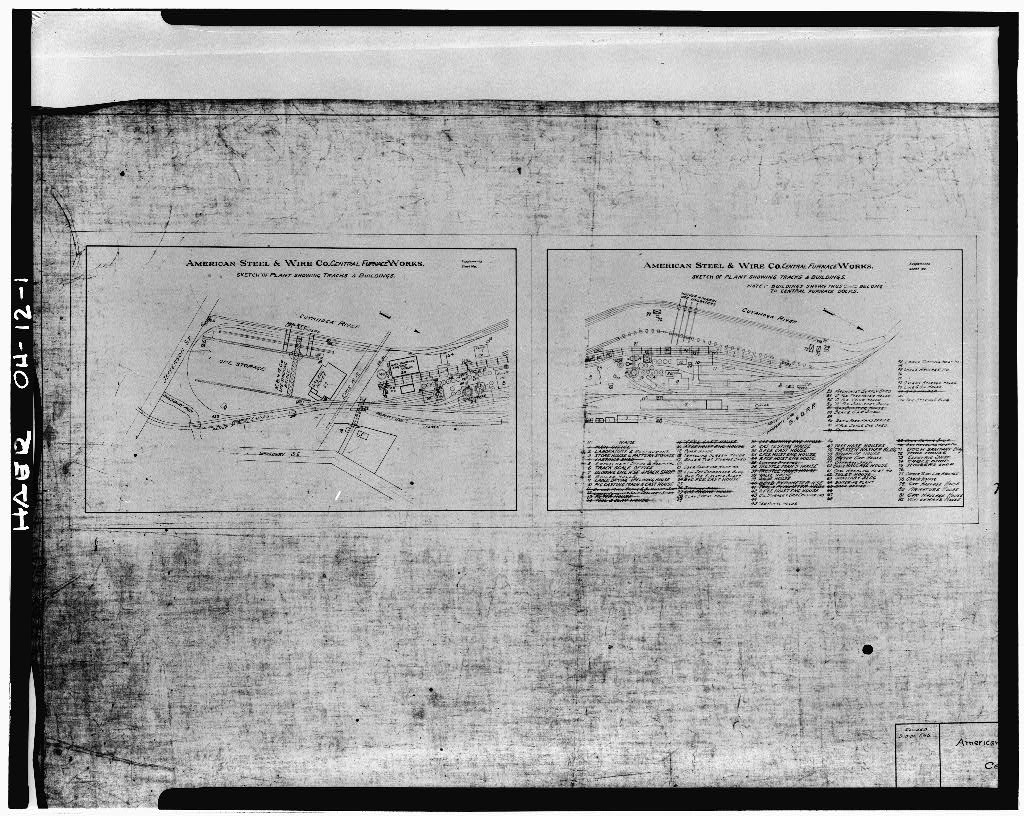
Cleveland Gas Light and Coke Company, View from the River, Library of Congress, 2. Illustrative Site Plan from based on Sanborn Maps, Preservation Principles Consulting, CLEVELAND GAS LIGHT & COKE COMPANY HAER OH 131 Page | 12 The River from the viaduct, Cleveland, O[hio] Digital ID: (digital file from intermediary roll film) det 4a12702 Reproduction Number: glass neg.) Repository: Library of Congress Prints and Photographs Division Washington, USA Gas Holder Houses The Cleveland Gas Light and Coke Company Gas Holder Houses are in the background, nestled on the hill. CLEVELAND GAS LIGHT & COKE COMPANY HAER OH 131 Page | 13
 Block
Block